
教會歷史 — 第 2 部分:當世界佔領教會時(西元 400–1400 年)
筆記: 這篇文章根據 大衛.鮑森 關於 教會史 系列的第二場講座撰寫(第 2 部分:西元 400–1400 年),全長約 69 分鐘。和第 1 部分一樣,我不猜測,也不替講者修飾:每個主要論點都直接取自鮑森。凡是我查閱資料、核對來源或更正細節之處,都以 琥珀色邊注 融入正文。由於這一講觸及教會史中最具爭議的部分,我也閱讀了其他歷史學家和傳教士的著作,讓讀者聽…
本文撰寫過程中,AI 協助了資料蒐集、事實查核、翻譯與編輯;論證與結論屬於作者。
論證脈絡、意義與結論都出自作者本人。哪些來源值得信任,以及如何理解這些來源,是作者的判斷,而不是工具的判斷。
AI 工具用於尋找資料、對照來源查核論點、廣泛閱讀相關主題,將文章在英文與越南文之間轉換,並協助處理文法、清晰度與句子節奏。
工具找到的是需要權衡的材料,而不是結論。作者決定文章要說什麼、取捨什麼,以及它意味著什麼。
本文以作者的名字發表。作者對文章所說的一切負責,包括其中日後發現的錯誤。
平行
筆記: 這篇文章根據 大衛.鮑森 關於 教會史 系列的第二場講座撰寫(第 2 部分:西元 400–1400 年),全長約 69 分鐘。和第 1 部分一樣,我不猜測,也不替講者修飾:每個主要論點都直接取自鮑森。凡是我查閱資料、核對來源或更正細節之處,都以 琥珀色邊注 融入正文。由於這一講觸及教會史中最具爭議的部分,我也閱讀了其他歷史學家和傳教士的著作,讓讀者聽見不止一種聲音。
更不幸的故事
第 1 部分講述 教會如何佔領世界:在最初四個世紀,教會藉著受苦贏得外在的爭戰,藉著對抗異端贏得思想上的爭戰,也藉著堅定抵擋其他宗教站立得住。
鮑森說,他上週忘了提一件重要的事:基督徒之所以得勝,是因為他們活得比別人更久,想得比別人更深,也比別人更能面對死亡。 他們有 持久力,所以贏得了屬靈爭戰;有 深思,所以贏得了思想爭戰;有 忍耐,所以贏得了身體上的爭戰。因此,他們比其他一切更能存留下來。
但今晚的主題悲傷得多,也嚴肅得多:世界如何在接下來的一千年裡擄走了教會。
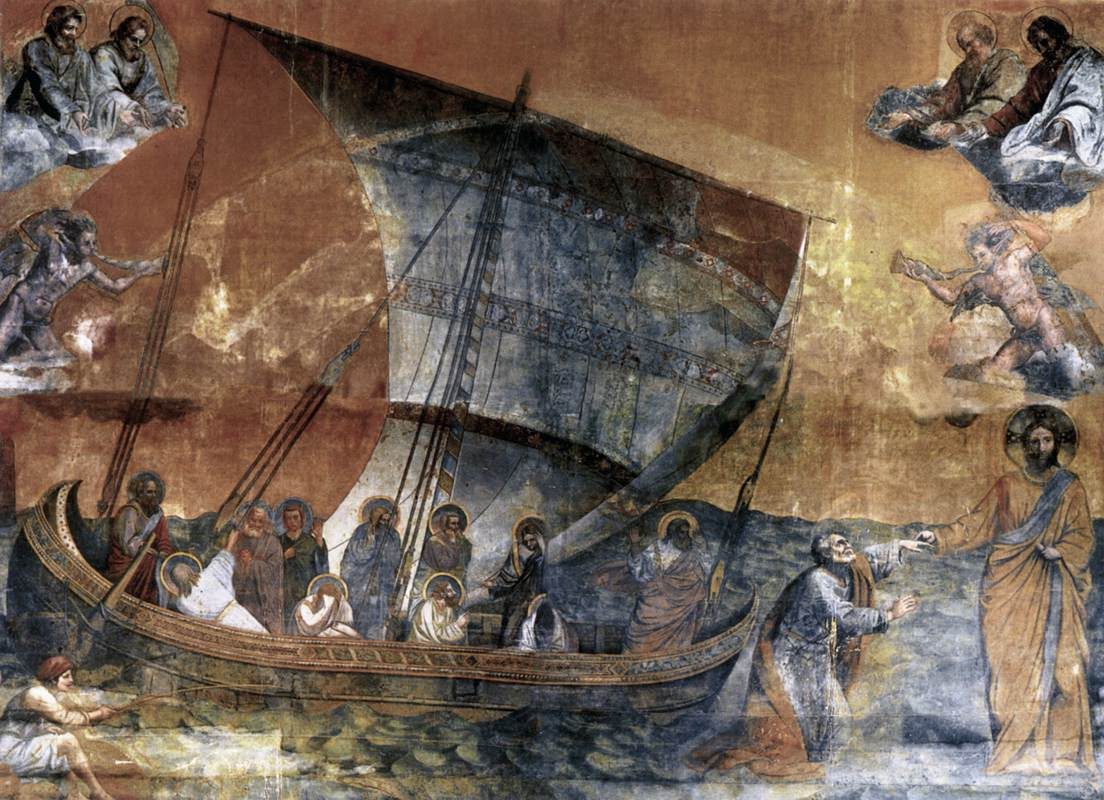
有一幅中世紀的畫,把教堂畫成救生艇。在波濤洶湧的大海中,船上的基督徒伸手將落水者從海浪中救出。這是一幅關於教會的精美圖畫:一艘救生艇響應呼救聲駛向世界。
但鮑森停頓在一件事上:
救生艇必須在海裡。但如果海水進入救生艇,那就麻煩了。教會若要拯救靈魂,就必須在世上。但當世界進入教會時,它就完蛋了,它就沉了。
下一個千年的故事就是海水進了船。鮑森把它分成三章:世界早在初期就開始滲入(西元 100–400 年);接著是黑暗時代(西元 400–1000 年);最後是中世紀(約 1000–1500 年),這段歷史把我們帶到馬丁.路德之前不遠的地方。
救生艇圖景
船必須在海中,但海不能在船中
Pawson以一幅中世紀畫作為開場:教會像暴風海上的救生艇,伸手把溺水者從浪中救出。
海上的救生艇
教會在世上是為要拯救靈魂。這本身就是使命。
救生艇裡的海
當世界進入教會,船就會沉沒。這就是一千年的故事。
「教會若要拯救靈魂,就必須在世上。但當世界進入教會時,一切就完了,船也沉了。」——David Pawson
千年時間線
主後400–1517年:從羅馬陷落到路德
四股潮流交織在一千年間:衰落、教宗權力的興起、抗議的聲音,以及探索的時代。
有些日期為便於理解而作了簡化;文章各處的琥珀色邊注會核對精確的歷史節點。
世界如何進入教會(西元100–400)
既然有那樣的殉道者和傳道者,既然教會在爭戰中得勝,世界究竟是怎樣滲入的呢?鮑森列出四件開始削弱使徒教會的事。
第一,區域主教。 在新約中,每個教會都有 不只一位 監督者,稱作長老或主教,指的是同一類屬靈領袖。後來,每個教會逐漸只剩下 一位 主教;再後來,一位 主教治理 許多 教會,領導權於是集中到少數人手中。你在新約中找不到這種制度;最初一百年沒有這種發展,但到了第二世紀,確實出現了權力和影響力相當大的主教。
第二,對聖禮的神奇化理解。 人們開始相信,真實的水和正確的儀式本身就能拯救人脫離罪,不論年齡大小,而不再把洗禮看作人在相信耶穌、罪得潔淨之後所作的外在記號。若人在洗禮後犯罪,便被認為失去了洗禮的功效;因此有人把洗禮拖到臨終前,等醫生宣告無望才匆忙找牧師。但另一些人擔心孩子夭折,寧可立刻替孩子洗去罪。這兩種想法都帶有迷信色彩,嬰兒洗禮也因此盛行。聖餐同樣被神奇化:人們開始認為餅真的變成基督的肉,酒真的變成祂的血;既然獻上的是肉和血,就成了祭物;既然是祭物,執行的人就必須是祭司。
第三,國教化。 當皇帝去教會,你可以想像所有人也會跟著去;當國家宣布基督教為官方宗教,眾人便紛紛效法。參加正式教會成了時髦而受尊敬的事。鮑森坦白說:一個制度化的國教必然產生時髦、受人尊敬的基督教,但他在新約中找不到這樣的模式。
第四,名義上的會友。 一位二世紀末的作者觀察到:大約在 50 年,屬於教會意味著受洗、領受聖靈並稱耶穌為主;但到了約 180 年,加入教會卻意味著承認信仰規則(信條)、新約正典和主教的權威。換句話說,人們加入的原因不再是相信耶穌、領受祂的聖靈。教會如今成了一個機構。
每當教會犯錯,就會引起抗議。在最初四百年中出現了兩種反動:孟他努主義和修道主義。兩者都抗議教會日益富有、世俗化,並充斥著從未真正歸信的人。
孟他努主義起源於今日所稱的土耳其、小亞細亞。一個名叫孟他努的人看見許多會友身上沒有聖靈的記號,於是重新尋求上帝的靈,結果爆發了一場復興。聖靈的恩賜回到教會,敬拜也恢復了生命、活力和真實。鮑森說,若要找今天最相似的群體,就是五旬節派。他們強調基督再來,堅持沒有真實信仰、聖潔生活和禁食,就不能成為教會會友;主教們當然強烈反對。
悲劇在於,這場早期的五旬節運動也出了問題,因為它缺少教導。他們要的是 熱,卻沒有 光。鮑森說:沒有光的熱會變成狂熱;沒有熱的光則是冰冷的知識;兩者必須兼有。他們沒有聽從聖經對屬靈恩賜的教導。這場運動在狂熱中失敗了。鮑森說:「這是每個五旬節復興運動都必須知道的一句話:我們可以從歷史中學習。」
第二種抗議的方式截然不同。幾年後,有些基督徒說:教會如此世俗、如此死氣沉沉,恢復基督教的唯一希望,就是離開教會 並且 脫離世界。
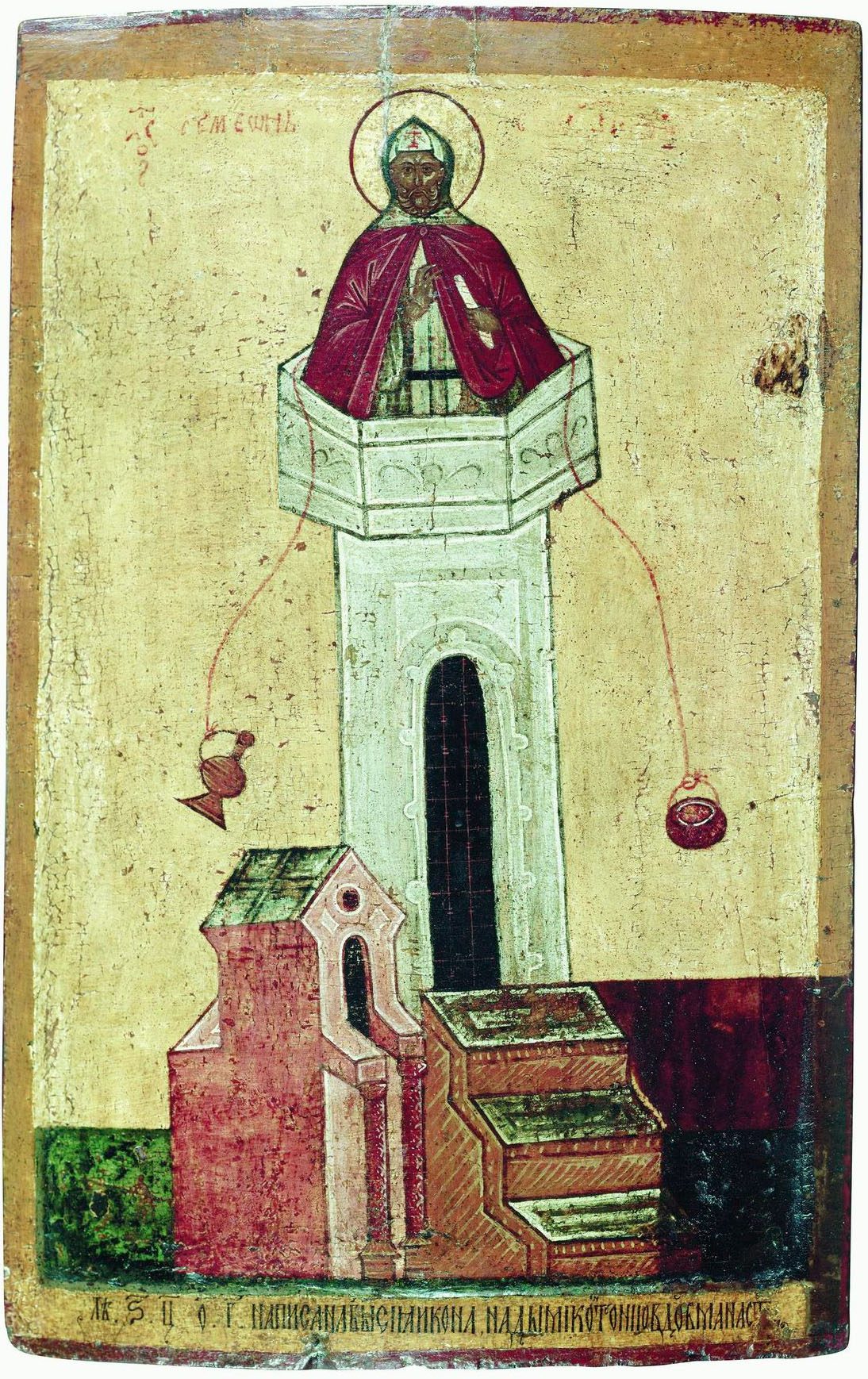
其中有些人獨自實踐這種想法,成了隱士。這是一個奇特的故事。安東尼是最早的人之一:他認為若不進入沙漠深處,就永遠不會成為真正的基督徒。但當他到了那裡,其他基督徒又想來加入他;更糟的是,他發現沙漠洞穴中的誘惑和教會中的誘惑一樣世俗。還有一位更奇特的隱士,柱上西默盎:他建造了一根約六十英尺高、頂端只有一碼寬的柱子,在上面住了幾十年,甚至曾單腳站立一年,以表明基督徒生活是艱苦的。他就那樣站在柱上,滿身潰瘍和蟲子,處於極其淒慘的狀態。
比隱士更成功的是建立共同體的人。發起這場運動的是本篤。在羅馬和那不勒斯之間的卡西諾山,他聚集了一群真正的基督徒;他們看見教會過於世俗、無能為力,便說:「我們要一起生活;不追求富足,而甘願貧窮;不放縱情慾,而守獨身;不悖逆,而是順服。」修道院的管理方式就像羅馬士兵的營地。
悲劇在於,這種抗議和其他抗議一樣,終究走偏了。基督從未要我們過著與他人隔絕的基督徒生活。後來,這些原本出於善意的修道士過度專注於自己的救贖,變得極端內向,以致和世界、甚至和教會隔離。更糟的是,修道主義形成了「兩種 基督徒」的觀念:結婚的是次等基督徒,不婚的是一等基督徒;活在世界中的是次等人,離開世界的是一等人。但這不是耶穌的教導。我們的主不是修道士;祂沒有退出社會,而是在社會中過純潔的生活,並吩咐門徒活在世界中,卻不屬於世界。
兩人都說:教會並不是耶穌基督所想的那樣。有人說我們會透過回到聖靈中來重新發現它。另一個說我們將透過走出世界、走出教會來重新發現它。兩者都一無所獲,因為他們沒有完全回歸新約基督教。
世界如何進入教會——主後100–400年
四道裂縫與兩場抗議
即使在勝利的時代,有四件事開始削弱使徒的教會。每當它走偏,抗議的聲音就會興起。
地方主教
從每個教會有許多長老,變成一位主教管理許多教會。權力集中在少數人手中,仿照羅馬的總督。
魔法式聖禮
洗禮被看作本身就能拯救人,因此被推遲到臨終,或施行於嬰兒。聖餐被當作字面意義上的肉和血,是需要司祭主持的祭獻。
國教
皇帝去教會,所有人也都去。信仰變得時髦而體面,不再是降服。
名義上的成員
人們加入教會,不是因為相信耶穌、領受聖靈,而是出於其他理由。教會變成了一個機構。
兩場抗議
孟他努主義
一場五旬節派的抗議
它重新發現聖靈和屬靈恩賜,強調基督再來和聖潔。但它「有熱心而沒有亮光」,拒絕教導,最終在狂熱中耗盡。
修道主義
以退隱來抗議
它離開世界和教會雙方,以找回真正的基督教。但它產生了「兩個層次」的基督徒,而基督從未呼召我們離開所有人而生活。
兩場抗議都是真誠的,但都沒有結果,因為它們沒有完全回到新約基督教。
黑暗時代:羅馬的陷落(西元 410 年)
現在故事才真正開始。西元 410 年,一場災難臨到:來自北方的「蠻族」向羅馬城施壓。汪達爾人、法蘭克人、匈奴人和哥德人先後出現在帝國邊境;羅馬終於陷落了。
羅馬人當年離開英國去保衛羅馬,但未能拯救它。羅馬人一撤退,朱特人、盎格魯人、撒克遜人就衝進不列顛,摧毀了英格蘭和蘇格蘭東南部的基督教。羅馬士兵在最初400年帶到這裡的基督教消失了。
似乎當羅馬陷落時,一切都結束了。傑羅姆在耶路撒冷寫信說: 「人類也被納入了廢墟之中。」 人們認為這是文明的終結。這讓教會感到困惑:羅馬作為一個異教帝國生存了幾個世紀,但作為基督教帝國卻崩潰了。許多基督徒無法理解。
但有一個人經過深思熟慮,並發表了令人難以置信的聲明。他說:這是發生過的最好的事。他的名字是 奧古斯丁。
奧古斯丁:一顆不安的心找到了安息
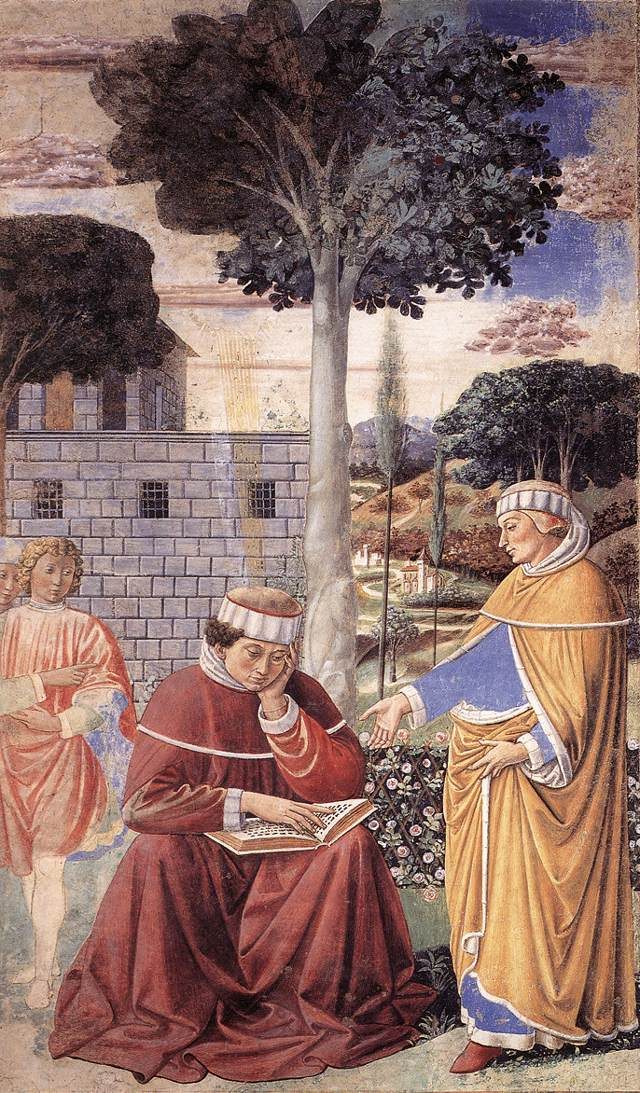
今天在任何書店都能買到他的著作。若我告訴你這位偉人說過的幾句話,你大概會認出來。他說:「我們的心若不在祢裡面得著安息,就不得安息。」這也許是歷史上最常被引用的禱告之一。奧古斯丁曾禱告:「求祢賜我貞潔,但不是現在。」他也說:「愛,然後做你所願意做的事。」
他出生於北非。年輕時到迦太基求學,卻和錯誤的人混在一起;不久便有了妾,並與她生了一個兒子,在這段未婚關係中生活多年。他的父親是異教徒,母親莫尼卡卻是敬虔的婦人,每天流淚為任性的兒子禱告。後來,他因才智出眾受聘到米蘭任修辭學教授,並在那裡聆聽敬虔的安波羅修主教講道。這些講道觸動了這個頭腦敏銳、生活放縱的年輕人。
有一天,他坐在花園裡,為自己把人生弄得一團糟而哭泣,忽然聽見牆外孩子的聲音:「拿起來讀!拿起來讀!」他不知道那孩子是誰,便拿起身旁的書卷閱讀;那是保羅寫給羅馬人的信。奧古斯丁讀完,頓時明白過來。後來,他走在街上,曾與他同住的女人看見他;他便躲開她。她追著哭喊:「奧古斯丁,是我啊!」他回頭回答:「但那已經不是我了。」
他把自己歸信的完整故事寫在《懺悔錄》中。鮑森說,除了使徒保羅之外,奧古斯丁對教會史的影響大概超過任何其他人。
當羅馬衰落時,奧古斯丁已經中年,整個世界似乎都在他耳邊崩潰了。他經過深思熟慮,然後寫出了我們記憶中的第二本偉大的書: 上帝之城。他在文中說:羅馬這個異教城市倒塌是件好事,因為現在上帝之城可以取代它;塵世帝國的終結是一件好事,因為現在可以建立天國帝國了。這本書給許多人帶來了希望和新生命,幫助他們看到,當人類之城消失後,上帝之城仍然存在。
但麻煩也從這裡開始。人們問:這座上帝之城究竟是什麼?是看得見的還是看不見的?在地上還是在天上?奧古斯丁在這裡使許多人走向不同理解。幾個世紀後的宗教改革時期,新教徒說「我們跟隨奧古斯丁」,羅馬天主教徒也說「我們跟隨奧古斯丁」;但新教徒更看重第一本書《懺悔錄》,天主教徒則更看重第二本書《上帝之城》。
事情的經過是這樣的:教會說,如果真是這樣,那麼教會現在就是新帝國了。
教會成為帝國:教皇權的崛起
第一個結果是羅馬主教逐漸取得近乎皇帝的地位。在那些日子裡,人們激烈爭論「教宗」這個稱呼;它本來有「父親」之意。儘管耶穌說不要稱地上的任何人為父,因為天上只有一位父,但人們開始稱當地牧師為「父親」,又稱區域主教為「父親」。最後,五位大主教彷彿在說:「若要稱父親,那就是我們五位。」羅馬主教則說:「羅馬已經不存在,但我現在就是皇帝;我是首席主教。從今以後,你們只稱我為教宗、稱我為父親。」
教宗制度就這樣逐漸形成。教宗甚至採用羅馬皇帝的頭銜和長袍;教會被誤解為新的帝國。一個帝國需要皇帝、袍服、儀式和王座,於是教會變成帝國,教宗成了國王。
當然,許多基督徒並不接受這套安排:法國人不接受,愛爾蘭人不接受,威爾斯人和蘇格蘭人也不接受;可悲的是,英格蘭人接受了。
教會成為帝國之時
權力的階梯與閉合的圓圈
通向「父親」稱號的階梯
地方司祭被稱為「父親」
然後是地方主教
然後五位大牧首都聲稱擁有這個稱號
羅馬主教:「只稱我為教宗」
他取得了皇帝的稱號和長袍(Pontifex Maximus)
「不可稱地上的人為父……」(馬太福音)
410→800的圓圈
410年——羅馬帝國崩潰
教會接管一切,成為新的「帝國」
800年——查理曼加冕為皇帝
帝國回歸——圓圈閉合
奧古斯丁寫《上帝之城》是為了安慰正在崩潰的世界;但人們誤讀它,以為教會就是新的帝國——而帝國必須有皇帝、寶座和長袍。
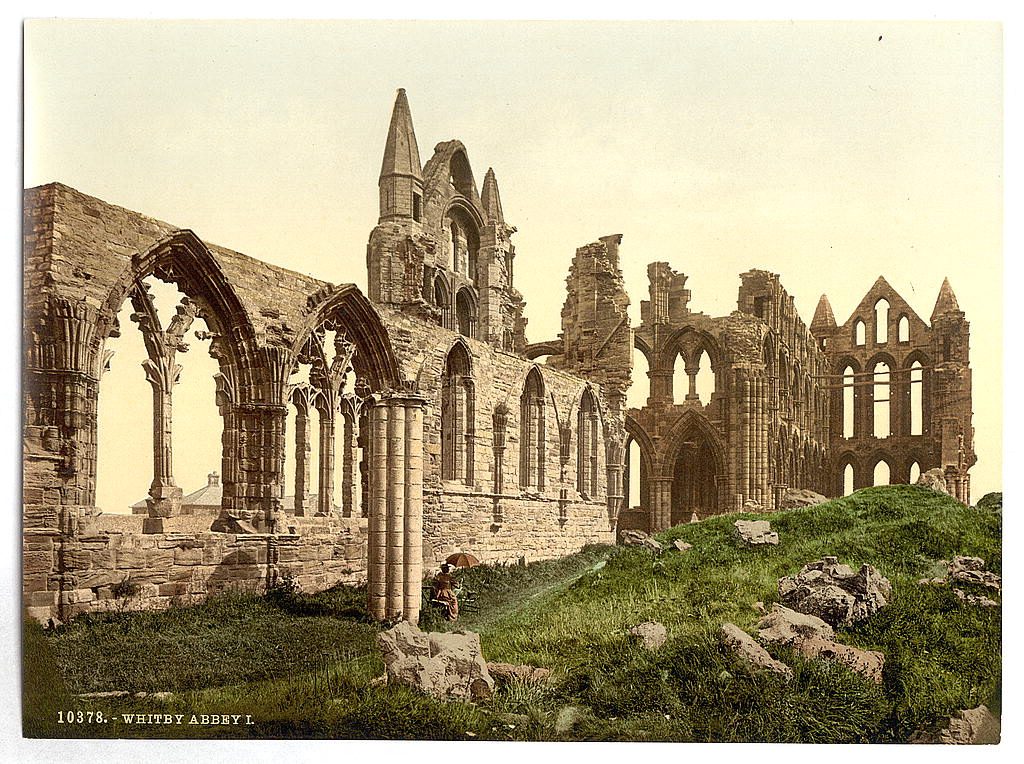
兩股基督教潮流在惠特比相遇
愛爾蘭,透過 聖科倫巴,將信仰帶入愛奧那島和蘇格蘭,帶領蘇格蘭歸向基督。然後 艾丹 來到諾森伯蘭郡附近的林迪斯法恩島。鮑森回憶起幾個月前站在林迪斯法恩的艾丹教堂廢墟旁,他就是從這個小島上向諾森伯蘭郡傳福音的。這種非教皇基督教,即凱爾特基督教,從北部經過愛爾蘭和蘇格蘭傳入英格蘭。
但後來教宗說:「我們必須得到英格蘭,我們必須得到那些盎格魯人(Angles)。」他玩了一個著名的雙關:他們不是 天使(angels),卻可以成為天使。教宗還派出一位同名的傳教士奧古斯丁。這位奧古斯丁登陸薩尼特島,後來前往坎特伯雷;哥倫巴(Columba)則在北方的愛奧那島,而奧古斯丁在南方的薩尼特島。
基督教的兩個流派相遇於 惠特比。您仍然可以看到惠特比港上方他們相遇的廢墟。在那裡,教皇基督教與凱爾特基督教相遇,看看誰會獲勝。悲劇是教皇基督教獲勝了。不列顛群島受教皇統治。蘇格蘭甚至將其守護神改為聖安德魯。整個情況都變了。
兩股潮流在惠特比相遇
英國將走哪條路?(惠特比會議,664年)
凱爾特基督教
愛爾蘭→艾奧納(科倫巴)→林迪斯法恩(艾丹)→英格蘭北部
沒有教宗。簡單而富有宣教性。
羅馬基督教
羅馬→薩森的奧古斯丁→坎特伯雷→南部
忠於教宗。
惠特比,664年
羅馬基督教獲勝。英倫群島歸於教宗寶座之下。Pawson稱這是悲劇;今天你仍可以站在俯瞰惠特比港的廢墟中。
示意圖,非地理比例圖。惠特比會議發生於664年(Pawson說「660年」)。
東西方分裂(1054)
另一群不願接受這些主張的基督徒,是東地中海的教會——希臘、小亞細亞、敘利亞和埃及。他們說:「我們不承認這件事。」聖經和新約都沒有說整個教會應該有一位「爸爸」、一位父親。東西方的分裂最後在 1054 年公開完成,使兩方分離近一千年;直到近代,雙方才重新開始對話。
這是最令人難以置信的事情之一。大約在850年,教皇說:我發現了第一世紀的文獻,證明彼得任命了第一任教皇,他任命了第二任教皇,依此類推。今天,即使是羅馬教會也知道這些文件是 贗品;他們被稱為 偽造法令。然而教皇權卻是建立在偽造之上的。還有另一份偽造文件, 康斯坦丁的捐贈,聲稱整個義大利都屬於教宗。教宗「發現」了這件偽造品並說:在那裡,整個義大利都屬於我。這就是整個結構的基礎,甚至今天的羅馬也知道這一點。
大分裂,1054年
一個教會分裂為兩個,近一千年之久
五大牧首區(五牧首制)
西方(拉丁)
羅馬——一位教宗統治整個教會
• 教宗至上
• 在信經中加入「和子」(filioque)
• 無酵餅
拉丁傳統
東方(希臘)
君士坦丁堡和眾牧首——地位平等,沒有唯一的「教宗」
• 五位地位平等的牧首
• 信經保持不變
• 有酵餅
希臘傳統
1054年的互相絕罰,直到1965年才由教宗保祿六世和牧首雅典納哥拉共同解除——這接近Pawson在20世紀60年代講道時所說的「過去十年」。
查理曼大帝與神聖羅馬帝國(西元 800 年)
這股力量不斷擴張,直到 742 年,一個懷抱夢想的人出生:恢復羅馬帝國,把它重新放回地圖上,自己成為皇帝,並讓教宗位居其下。他的名字是查理曼。這個野心勃勃的人說:「我們要再次擁有羅馬帝國;它的首腦不是教宗,而是皇帝。」
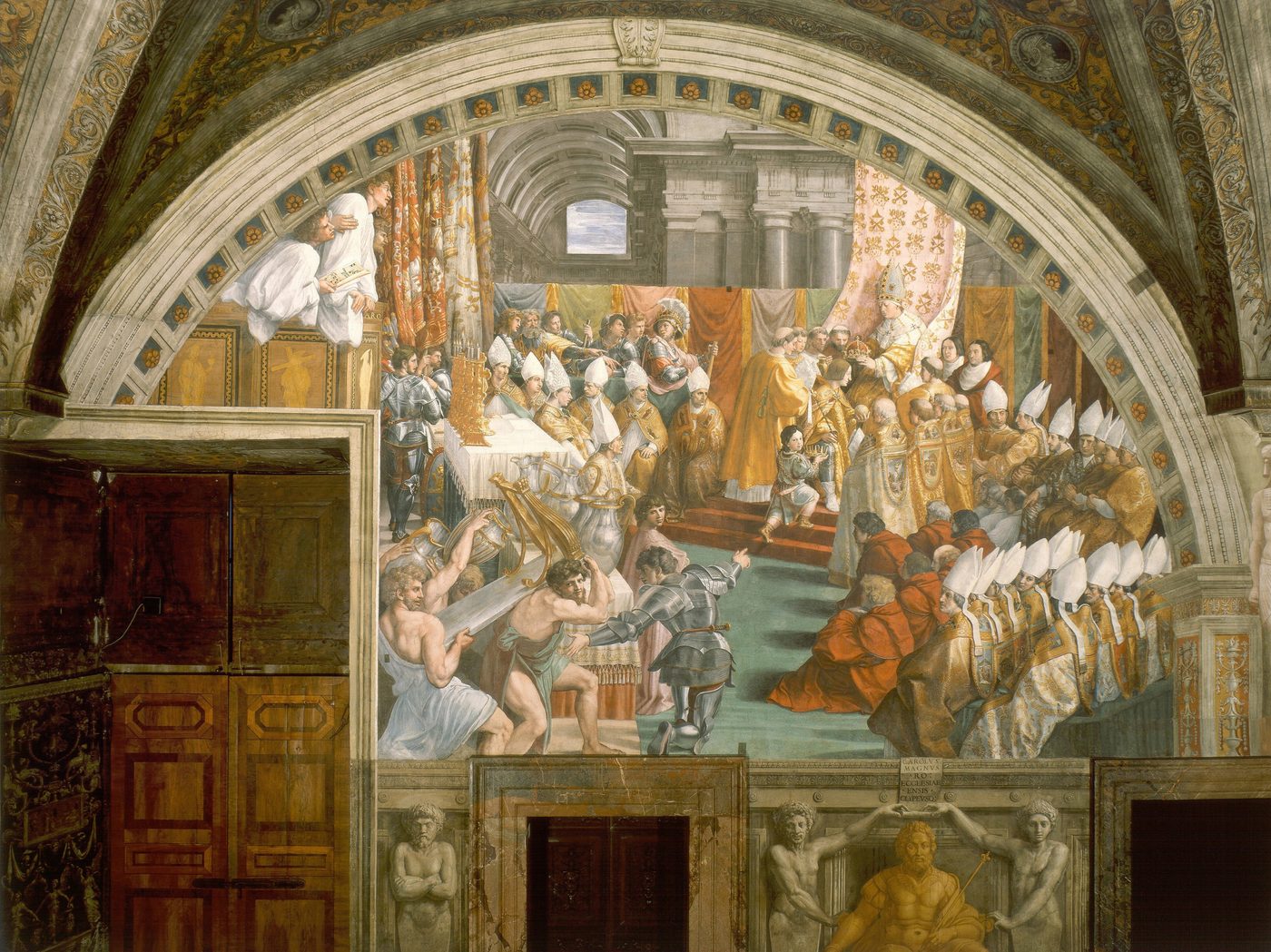
查理曼兩次救了教宗的命:一次使他脫離「蠻族」的威脅,另一次使他脫離羅馬憤怒群眾的手。教宗問:「你兩次救了我的命,要我為你做什麼?」皇帝回答:「在聖誕節為我加冕為皇帝。」800 年聖誕節早晨,教宗在羅馬最大的教堂舉行禮拜時,為法蘭克國王查理曼加冕為皇帝。這就是後來所稱的神聖羅馬帝國。
你看,我們似乎回到了原點:羅馬帝國在 410 年崩潰,教會接管了帝國的角色;到了 800 年,皇帝又回來,從教會手中取回帝國。整件事彷彿重新開始。
查理曼做過好事,也做過壞事。好的一面包括禁止神職人員納妾、酗酒和打獵,並創辦許多學校;壞的一面則是加強禁止神職人員結婚的紀律,後來的神職人員獨身制度常被追溯到這項強化。他也使基督教世界(Christendom)這個觀念具體化——也就是由皇帝統治的基督教王國;這個觀念延續至今。
伊斯蘭教的興起
教會既富有又強大,於是變得腐敗。抗議再次出現,這次來自東方和北方。從東方而來的第一個挑戰是伊斯蘭教。
鮑森稱之為基督教會有史以來最嚴重的審判。他曾在阿拉伯生活,見過這個宗教的一些面貌。穆罕默德於 571 年出生在麥加;那裡是阿拉伯偶像崇拜和迷信的中心。麥加中央有一座披著黑布的巨大方形建築,裡面有一塊被視為神聖的石頭;那就是 天房,傳說石頭從天而降。穆罕默德在阿拉伯的偶像崇拜和迷信中長大,對此感到厭惡。
他先轉向猶太人,後來又轉向基督徒,問道:「你們有真正的宗教信仰嗎?」鮑森認為,悲劇在於穆罕默德從未遇見真正歸信基督的基督徒,也未看見新約所描繪的基督教;他所看見的只是法衣、圖像和十字架,因而把它視為和阿拉伯宗教一樣的偶像崇拜。鮑森說,若穆罕默德在六世紀末遇見一位真正的基督徒,事情或許不同;但他沒有遇見。
於是他說:「我要尋求一種新的、純潔的宗教。」他娶了一位富有的寡婦,在沙漠中度過多年,並說有人在那裡對他說:「除安拉以外,沒有別神;穆罕默德是祂的先知。」他開始宣講這些話,並把自己在異象中聽見的內容寫入《古蘭經》。他受到迫害,於 622 年逃往麥地那;這一年成為穆斯林曆法的起點。後來他帶軍隊回到麥加,推行新的宗教:朝向麥加禱告、禁食、每日祈禱五次、守齋月、朝覲和施捨。鮑森把它描述為一種藉武力推行、靠行善尋求天堂的宗教。
伊斯蘭勢力把基督教從地中海許多地區驅逐出去:從北非海岸、聖地和耶路撒冷,也席捲西班牙,穿過小亞細亞,向法國和東歐推進,彷彿要從東西兩面夾擊基督教。
這是上帝曾允許臨到基督教會、最嚴重的審判。這是應得的;但到此為止。上帝不會讓基督教完全消失。
他們在西方受阻,後來退回到大致從北非海岸延伸至土耳其的疆界。
黑暗時代地圖
兩股潮流席捲基督教世界(主後410–732年)
橙色箭頭:蠻族向南湧向羅馬。綠色箭頭:伊斯蘭從阿拉伯出發,橫掃地中海,經北非和西班牙,直到圖爾。
底圖:羅馬帝國(Wikimedia Commons,公共領域)。箭頭是推進方向的示意,並非確切路線。維也納標示後來鄂圖曼帝國的邊界——Pawson把近千年的邊疆壓縮成一個鉗形攻勢。
黑暗中隱藏的證人
然而,就在那時,歐洲各地仍有小群基督徒圍繞上帝的話聚集。他們看見官方教會腐敗,便三五成群地聚會、讀經,說:「我們要用簡單的方式敬拜上帝。我們不需要祭司,因為耶穌是我們的大祭司;不需要教宗,因為我們有一位天父。我們只需要上帝的話和聖靈。」
我們幾乎不知道他們的故事,因為他們遭受嚴重迫害,連歷史記錄也被摧毀。鮑森問聽眾是否聽過鮑格米勒派:他們主要在保加利亞和波斯尼亞,以小組形式圍繞上帝的話聚會;「Bogomil」在保加利亞語中意為「上帝的朋友」。還有保羅派,活躍於亞美尼亞、色雷斯和小亞細亞;以及卡特里派,名稱意為「純潔的人」,與後來的「Puritan」同源,分布在巴爾幹半島和歐洲各地。
鮑森承認,他過去天真地以為一千年間只有羅馬教會和東方教會;但那並不是真的。他很高興發現,在這些世紀裡,持續有一群樸素的基督徒在地方聚會中圍繞上帝的話聚集。他們為此付上生命代價,卻把信仰的火焰傳給了後代。
中世紀:希爾德布蘭將教皇置於一切之上
現在來到最後一章:1000 至 1500 年的中世紀,因為它位於黑暗時代和近代之間。
首先要談的是希爾德布蘭德。這位修道士成為教宗,卻不願屈居第二。那時羅馬帝國已恢復,也有了新皇帝,但希爾德布蘭德認為教宗應居首位,而他做到了。他做過不少好事:革除教會中的 買賣聖職,也就是用錢購買神職;但他這樣做,是因為相信教宗應控制一切,包括國王。
希爾德布蘭德與皇帝亨利四世的衝突,以最戲劇性、最可怕的方式解決。亨利四世反抗說:「我是第一。」希爾德布蘭德回答:「你不是;讓人民來決定。」民眾站在希爾德布蘭德一邊。後來,在阿爾卑斯山的卡諾莎,教宗讓來自北方的亨利四世赤腳站在雪地裡等候三天,才接見他。希爾德布蘭德就此把皇帝置於次位。
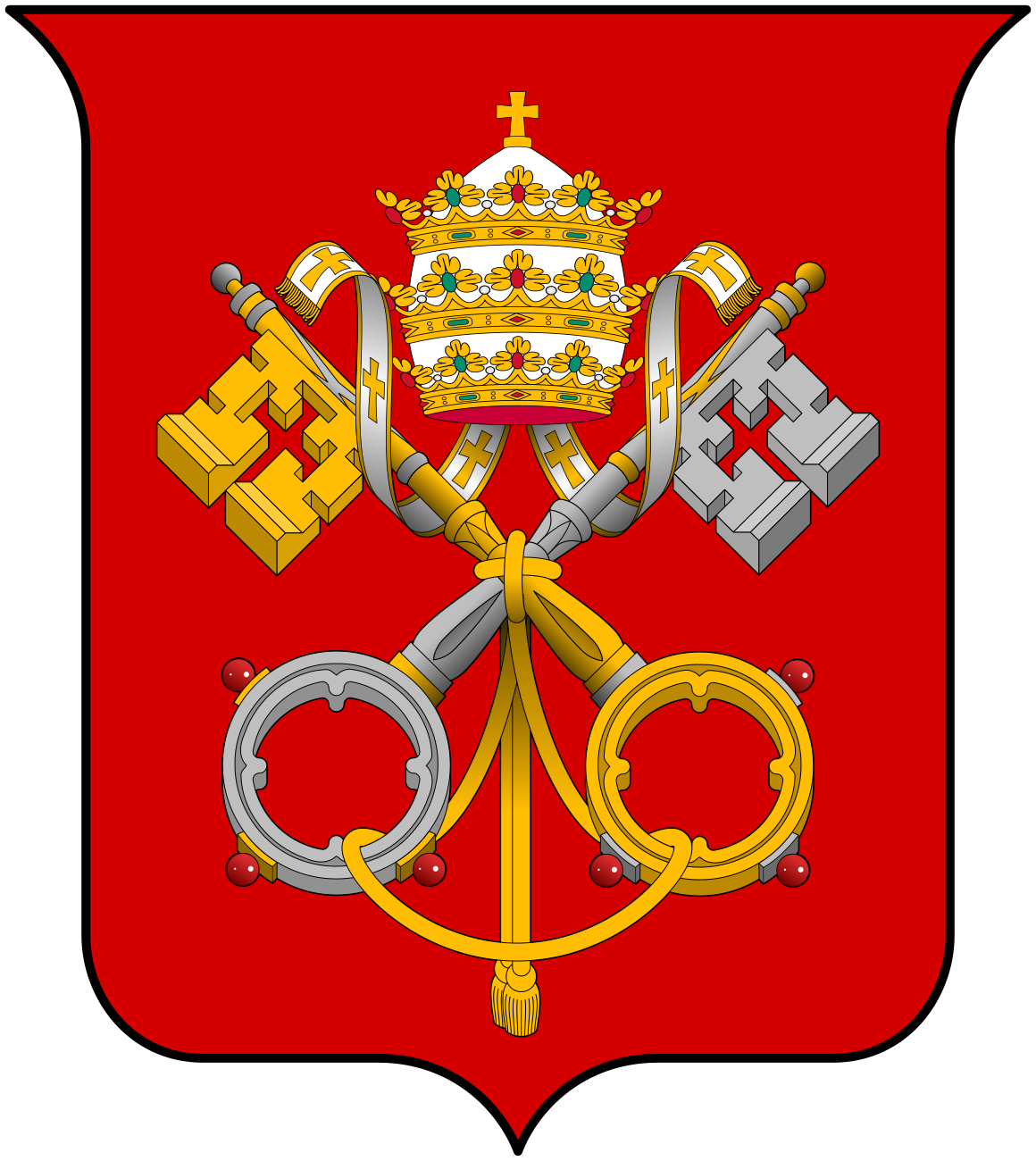
從那時起的五百年間,教宗成為最有影響力的人物,教宗權成了控制西方世界的力量;教會再次成了帝國。後來,人們把聖彼得交叉的鑰匙作為象徵:教宗掌握教會與國家的最高權柄。這正是希爾德布蘭德的主張——教宗要凌駕教會和國家。
十字軍東徵:當教會拿起劍時
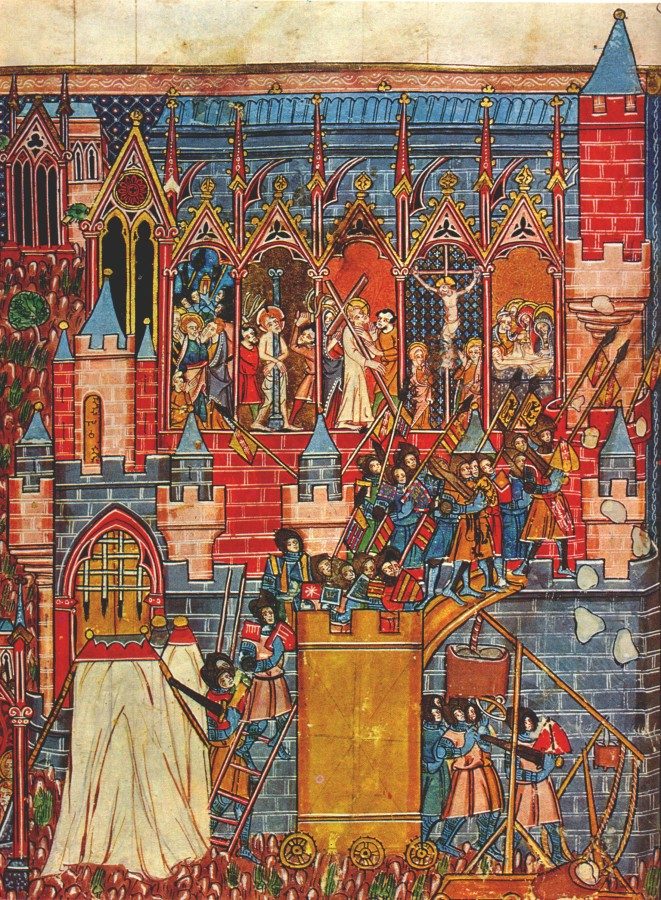
這使軍事力量可以被教會使用。既然希爾德布蘭德如此思想,教會便開始用武力建立基督的國度。教會從未犯過更大的錯誤。 教會可以使用武力的想法,首先導致了八次為聖地而發動的十字軍東征。
當時耶路撒冷和其他聖地都在穆斯林、撒拉遜人和土耳其人手中。教宗決定殺出一條血路,為基督奪回聖地。第一次十字軍東征在 1095 年發起;這是希爾德布蘭德的構想,但他在實現之前已去世。參戰者把十字架掛在肩上,因此被稱為「十字軍」;這也是 「十字軍東征」(crusade)一詞的由來。
第一次十字軍東征由一位蓬頭垢面、狂熱的傳教士隱士彼得號召。他帶著約 20,000–40,000 人出發,但在安那托利亞遭塞爾柱土耳其人擊潰,只有少數倖存。貴族率領的軍隊後來抵達耶路撒冷,於 1099 年攻陷城市,掠奪、姦淫並屠殺城中的穆斯林,在耶路撒冷建立所謂的基督統治。那是基督徒嗎?當然不是;但那些人被誤導,以為教會的旨意就是用武力建立地上的帝國。
當然也有各種誘因:人若為基督作戰,就得到赦免;有人承諾免除多年煉獄之刑、依法取消債務,甚至赦免離開監獄參戰的罪犯。結果可想而知,是一群成分複雜的人。法國國王腓力和英國的獅心王理查也被捲入其中。十字軍一共出征八次,其中一次是兒童十字軍:約 2,000 名兒童穿越歐洲,想為耶穌奪回巴勒斯坦,卻沒有一人抵達。教宗說天使會奇蹟般供應食物;但食物沒有來,天使也沒有出現。
最後,這場運動逐漸失敗。在平坦山地的哈丁戰役中,十字軍軍隊被撒拉丁的軍隊圍困,因缺水而潰敗。1270 年,法國國王路易九世在突尼斯遠征中去世;到 1291 年阿卡陷落,十字軍在聖地的存在才告終結。
這是教會歷史上最悲傷的故事之一。它什麼也沒做。沒有什麼。事實上,它確實比什麼都不做更糟糕。
八次十字軍東征
當教會用劍代替愛(1095–1291年)
希爾德布蘭德相信武力能夠建立基督的國。「從未犯過如此大的錯誤,」Pawson說。
人民十字軍 · 1096
隱士彼得帶領一群暴民;大多數人在小亞細亞的山中喪生。
第一次十字軍東征 · 1095–99
攻占耶路撒冷(1099年)並屠殺居民。唯一的「成功」。
第二次十字軍東征 · 1147–49
伯爾納鐸宣講;失敗。
第三次十字軍東征 · 1189–92
獅心理查對陣薩拉丁;耶路撒冷沒有被奪回。
第四次十字軍東征 · 1202–04
轉向洗劫君士坦丁堡——基督徒對基督徒。
兒童十字軍東征 · 1212
兒童的行軍;沒有一個到達聖地。
後來的十字軍東征 · 1217–54
一次又一次失敗,包括法王路易九世的兩次戰役。
哈丁與崩潰 · 1187 / 1291
在哈丁角戰敗(1187年);最後的據點阿克在1291年陷落。
出征的誘因
到1270年,教宗叫停了它。「它什麼也沒做。什麼也沒有。而且確實比什麼也不做更糟。」——David Pawson
宗教裁判所、兩三位教宗與腐敗
教宗先在教會之外使用武力,現在又決定在教會之內使用武力,開啟了名為 宗教裁判所 的可怕篇章。鮑森說,他甚至不敢描述那些以基督之名所做的事。主教們拒絕操作這部充滿殘忍、惡意和猜疑的機器,但多明我會接受了。多年來,無數人活在對那可怕制度的恐懼中。
從頭到尾,錯誤都在於教會把自己當成地上的帝國,容許以武力建立基督的國度。我們現在知道那不是道路。教會除了愛,不能使用武力;除了藉著愛和傳福音,絕不能強迫任何人接受基督。
這種腐敗很快自我繁殖。阿克頓勳爵說:「權力容易腐敗,絕對的權力絕對腐敗。」很快便有兩位教宗爭奪王位,接著變成三位:阿維尼翁有一位,羅馬有一位,還有另一位。究竟誰是教宗?即使教宗重新統一,腐敗仍進一步蔓延:修道院腐敗而且過於富有,主教權力過大,教區也腐敗。
一般基督教的習俗也變得腐敗。雖然我們從未被吩咐要向馬利亞禱告,人們卻開始向她禱告;她和我們一樣是人。有人為死者和聖徒禱告。最令人恐懼的教義之一是煉獄,即死後要受多少年痛苦;又有把彌撒視為祭物的教義,以及向神父告解的做法。贖罪券甚至讓人以金錢換取多年遠離煉獄。還有朝聖、敬拜遺物和崇拜圖像。新約對這一切毫無所知。
中世紀的附加物
「新約裡連一丁點都沒有」
這些做法在幾個世紀中一次添加一項。右欄給出每項成為正式做法或被正式定義的大致日期。
日期是近似的:許多做法起初只是習俗,後來才由會議正式定義(例如1215年的第四次拉特朗會議、1439年的佛羅倫薩會議)。這是Pawson對它們的新教解讀;天主教和東正教的觀點見「其他聲音」框。
基本錯誤:教會認為她是基督
那麼,這一切背後的根本錯誤是什麼?即使你忘了今晚大部分內容,也請記住這一點。我用一句話說明問題:
教會開始認為她是基督。現在她仍然這樣做。
鮑森回憶說,他曾問一位牧師:「這仍然是真的嗎?」對方回答:「是,而且不會改變。」鮑森說:「我的問題是,我不相信教會就是基督,也不相信教會是先知、祭司和君王;我相信耶穌才是。教會不是我們的先知、祭司或君王。」那位神父坦率回答:「我們不討論這件事,因為它永遠不會改變。」
這就是根本錯誤。如果我相信自己是世界的先知,就能告訴世界該信什麼,並宣告什麼絕對正確;如果我是世界的祭司,就能說:「你若想得救,必須參加我的聖禮,必須向我告解。」如果我把自己當作世界的王,就會盡可能擴張自己的權威。
這是把教會與基督的關係混淆了。頭是神聖的,身體是人;基督是元首,祂是先知、祭司和君王,教會卻不是。這是新教與天主教之間的根本差異,今天仍和從前一樣深。基督說:「我要建造我的教會」,沒有說「你來建造它」。基督是教會的元首;沒有任何人是頭,也沒有人可以取代祂。
基本錯誤
教會開始以為自己就是基督
Pawson說,如果你忘記這篇文章的其他一切,就記住這一點。每一種扭曲都源於一個混淆:把頭和身體混為一談。
頭——神聖
基督
只有他是先知、祭司和君王
身體——人性
教會
順服頭、卻永不取代頭的身體
先知
向世人宣告真理的人
祭司
把人帶到上帝面前的人
君王
統治並建立權柄的人
當身體以為自己是頭
「如果我是世界的先知,我就可以告訴世界該相信什麼。如果我是世界的祭司,你們就必須來到我的聖禮前。如果我是世界的君王,我就要盡可能廣泛地建立我的權柄。」這就是一切的根源。
「政權必擔在他的肩頭上。」(以賽亞書) 基督是頭,任何其他人都不能成為頭。
中世紀的抗議之聲
但鮑森欣慰地說,整個中世紀(1000–1500 年)總有人站出來說:「這不是真的,這不是基督教,也不是耶穌的意思。」小群體再次出現,並以所在地或領袖的名字稱呼自己。
荷蘭有共同生活弟兄會,他們圍繞聖經聚會,宣告基督是教會的元首。還有瓦勒度派,名稱來自瓦爾多山谷;他們相信聖經教導了耶穌對教會的心意。他們甚至去問教宗:「我們看見這些教導;若照著聖經實踐,能否被承認為教會合法的一部分?」他們想留在羅馬教會裡,卻按聖經生活。教宗回答:「不;若你們照自己的方式行,我們就迫害你們。」於是他們被迫從一個山谷逃到另一個山谷。
下一群是法國南部的阿爾比派;他們也讀聖經,尋求教會真正的意義。可悲的是,教宗發動最血腥的十字軍之一來對付他們。教宗派兩位西班牙貴族去消滅他們,但兩人回來說:「這些人是好基督徒,不是罪犯,也不會與你作戰;他們只想按自己的聖經理解在教會中生活。」其中一位名叫多明我,說:「我們要把他們帶進教會。」於是成立了多明我會,像是被置於教會內的阿爾比派複製品。悲劇是,多明我會後來也腐化到願意運作宗教裁判所。德國還有共同生活弟兄會。這些群體都獨立於羅馬天主教的階級制度,以本地語言的聖經為基礎,並遭受迫害。真正的教會一直受到迫害。
教會內部也有人看見問題,退出並私下持守信仰。其中一位是克萊爾沃的伯納德。他是非常嚴肅的年輕人;鮑森講述他年輕時曾帶領一群盜賊,在義大利作了兩年戰俘後醒悟,意識到自己正在浪費生命。身為法國男爵之子,他放棄財富,和十二位朋友退到一個盜賊出沒的山谷,靠煮山毛櫸葉和香草過極度貧困的生活。他每天凌晨兩點叫朋友起床禱告,直到晚上八點才停止工作,並在克萊爾沃山谷建立共同體。
伯納德成為歐洲最有影響力的基督徒之一,卻沒有官職、財富或世俗權力;人們稱他為「教宗製造者」。他私下愛耶穌;馬丁.路德說,在歷代修士和神父中,他最敬重克萊爾沃的伯納德。但在公開場合,伯納德覺得自己必須支持教宗;有人因此評論,他至少使宗教改革延後了兩個世紀。
另一位幾乎同時代的人是方濟各,出生於義大利阿西西。方濟各在街上遇見麻風病人,起初從他身旁走過;但他問自己:「我是怎樣的人,竟然拒絕另一個人?」於是回去親吻那人。從此他開始認真面對生命,尋找基督並找到祂。他聚集朋友,眾人在赤貧中兩人一組出去傳福音,為基督贏得人心。
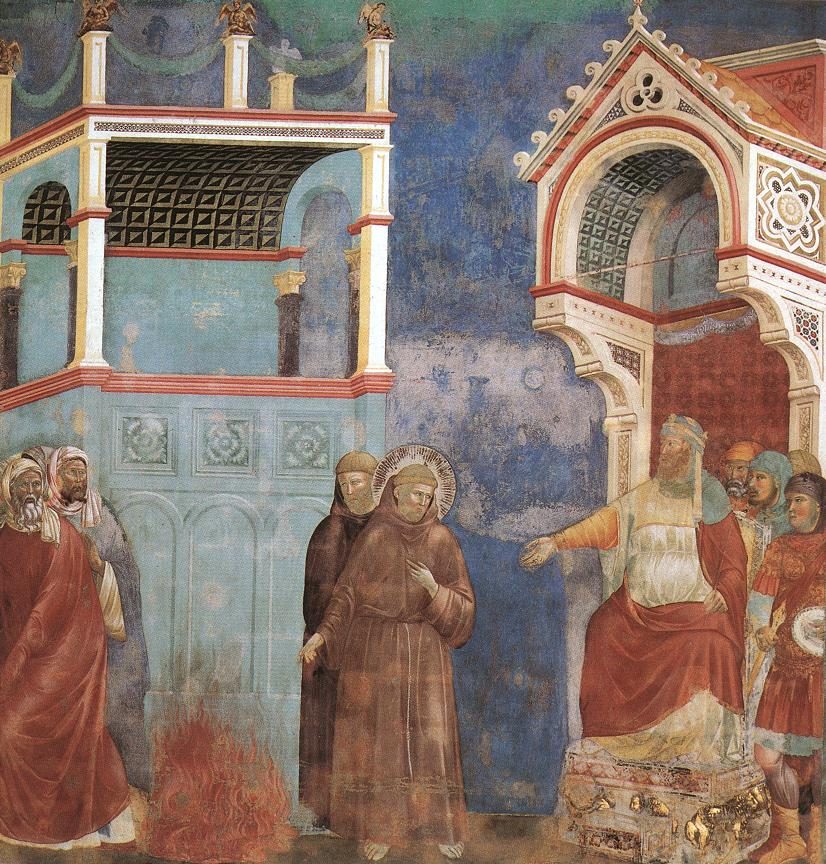
人們常因方濟各善待動物、鳥類以及對自然獨特的愛而記得他;但鮑森說,他也應因另一件事被記得:他是最早向穆斯林傳福音的傳教士之一。他冒生命危險親自會見蘇丹,向穆斯林領袖傳講耶穌的福音。方濟各不是帶著 60 萬名士兵去對抗他們,而是獨自以貧窮傳揚耶穌的愛。幾個世紀後,雷蒙德.盧爾(Raymond Lull)才延續這類工作。方濟各的追隨者穿灰袍,被稱為**小兄弟會;多明我會穿黑衣,因此稱為黑衣修士。兩者都試圖把簡單的基督徒生活帶回教會,卻都失敗並腐化:方濟各會成了職業乞丐,多明我會則經營宗教裁判所。
整個局勢都在呼喚一個能說出真相、並讓人人都聽懂的人。布雷西亞的阿諾德約在 1150 年首先發聲,說財富和世俗權力不應掌握在教會手中;但克萊爾沃的伯納德反對他,使他噤聲。接著是馬西利烏斯:這位醫生讀了聖經後說,聖經是教會唯一的標準,主教和教宗都是人的發明;但他也被迫沉默。曾任巴黎大學教授的英國人奧卡姆的威廉同樣發言,最後也沉默了。
直到一位約克郡人成為所謂的「宗教改革的晨星」。晨星是在太陽升起時仍看得見的星;這位晨星是約克郡人,曾以優異成績進入牛津,成為牛津大學教授,廣泛旅行,又被稱為「福音博士」——他的名字是約翰.威克里夫。
威克里夫重新發現聖經,也許比馬丁.路德以前任何人都更深地發現它。他抗議教宗的濫權,教宗為此向他發布五道詔書(當時稱為 教宗詔書)。他被帶到坎特伯雷受審,卻轉向聖經——教會唯一的律法——說:「我要把聖經從拉丁文翻成英文,讓農夫也明白這本書。」他努力翻譯,因為知道把聖經交到普通人手裡,就給了他們面對教會腐敗的答案。他聚集傳道人,走遍村莊,在市集傳道、唱福音;人們嘲笑他們為「唱搖籃曲的人」,稱他們為羅拉德派。
到阿默舍姆,沿車站路前行,左轉穿過住宅便進入田野;那裡有一座紀念碑,記念一些被迫親手點火、燒死父母的人。為什麼?因為他們的父母在阿默舍姆森林裡讀聖經時被捕。這就是威克里夫和羅拉德派所承受的代價。威克里夫本人則以拉特沃斯教區長的身分安然去世。
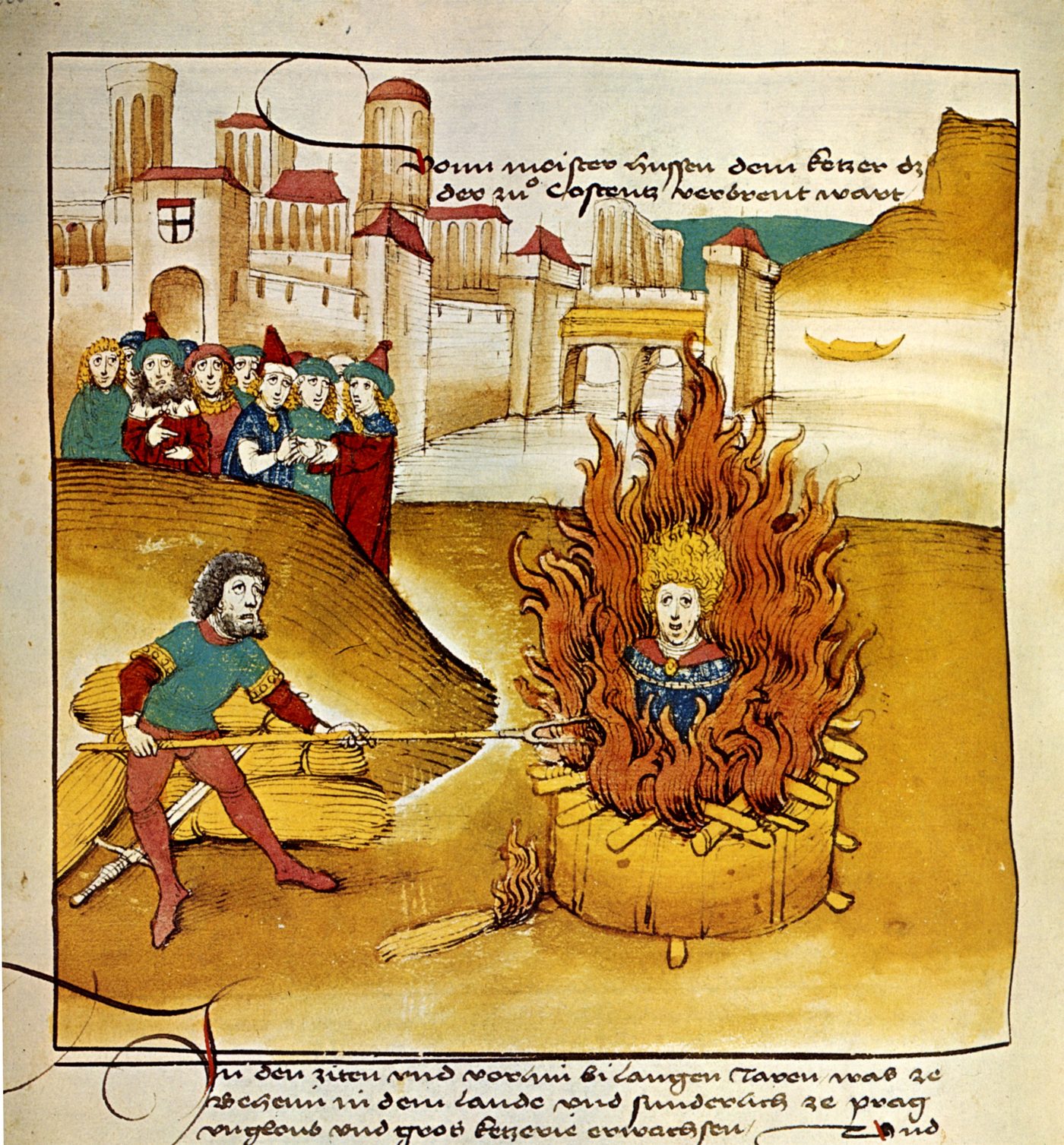
威克里夫曾就讀牛津;歐洲另一所和牛津關係密切的大學是布拉格大學。布拉格的校長是一名出身貧寒的農家子弟,靠努力一路上升;他的名字也叫約翰:約翰.胡斯。胡斯聽說威克里夫,便讀他的著作,在布拉格宣講相同的信息。最後胡斯被捕,教會法庭判他火刑;胡斯派也遭到處死。
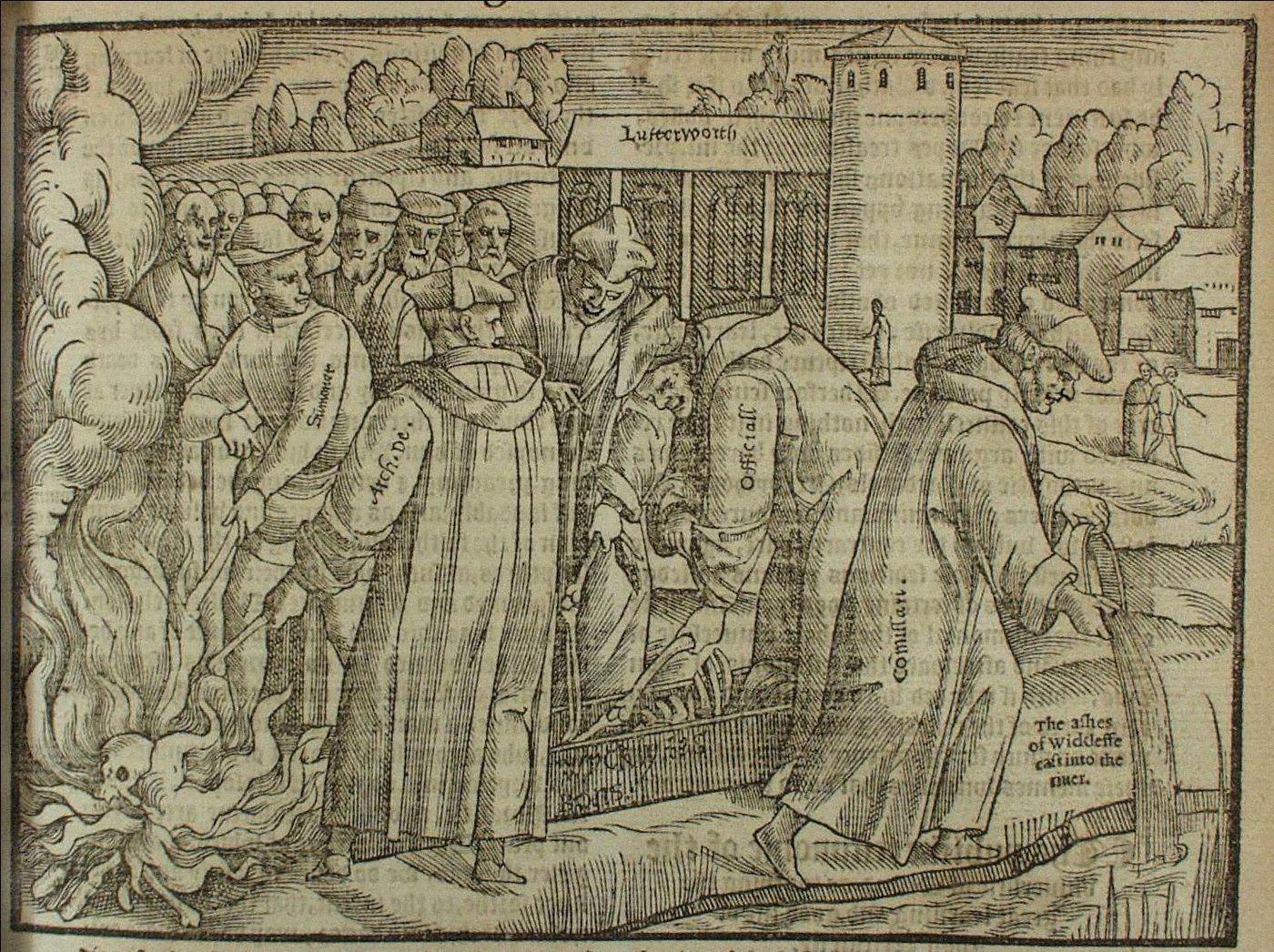
約翰.胡斯被火刑處死的消息傳到英國後,當局做了什麼?教會當局前往拉特沃斯,挖出約翰.威克里夫的遺體,在火刑柱上焚燒,再把骨灰丟進拉特沃斯的斯威夫特河。有人這樣說:
正如斯威夫特河將把這些灰燼帶入埃文河,埃文河帶入塞文河,塞文河帶入我們海岸周圍的河道,最後流入海洋,約翰·威克利夫的教義也將傳播到全世界。
這是一個令人驚奇的預言。
見證人的河流
信仰的火焰從未完全熄滅
Pawson承認,他曾以為一千年來只有羅馬教會存在。事實並非如此。一直有一條由平凡基督徒組成的連續鏈條,他們以生命為代價,卻把火炬留給下一代。
蒙他主義——聖靈在弗呂吉亞被重新發現
隱士與修道團體——反對世俗化
亞美尼亞和小亞細亞的保羅派
保加利亞和波斯尼亞的波格米勒派
阿納爾多·達·布雷西亞——「讓財富離開教會的手」
瓦勒度派——「裡昂的窮人」
法國南部的卡特裡派/阿爾比派
阿西西的方濟各——貧窮與使命
貝居安會與共同生活弟兄會
馬爾西利烏斯——「聖經是標準,沒有別的標準」
奧卡姆的威廉——被噤聲
約翰·威克裡夫——晨星,英文聖經
揚·胡斯——在康斯坦茨被燒死
馬丁·路德——黎明破曉
註:一些群體(保羅派、波格米勒派、卡特裡派)事實上是二元論者;與 Pawson 所描繪的形象相比,他們更接近諾斯底主義,而不是新約基督教——見該部分的琥珀色邊注。
黎明:地理大發現與宗教改革的時代
我們正站在令人興奮的轉折點上。對基督教會的這種濫用不可能永遠持續;人們開始用自己的語言閱讀聖經,而聖經走到哪裡,就在那裡帶來校正。
引發宗教改革的還有另一件事,不只是教會的濫權:人類正進入發現的時代。在物質世界,哥倫布於 1492 年抵達美洲;哥白尼提出地球繞著太陽運行,而非相反;伽利略把望遠鏡對準天空。那是科學時代的黎明,人們開始重新追問一切。
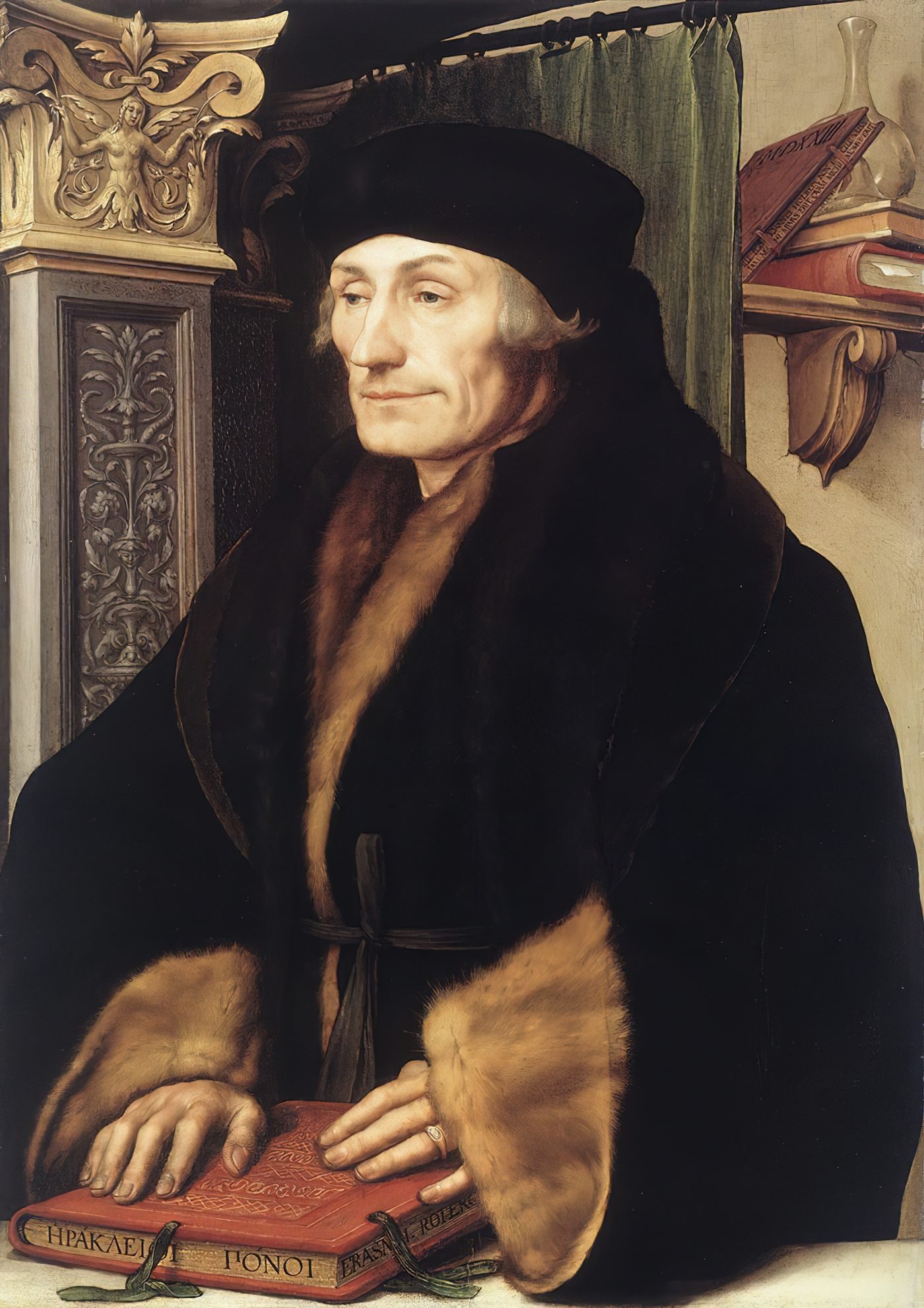
在精神世界,人們重新發現希臘文學和藝術。拉斐爾的畫作顯示古代文化再次興起;君士坦丁堡落入土耳其人手中後,希臘藝術珍藏流入羅馬和義大利。印刷機剛被發明,新的知識得以迅速傳播。新時代最偉大的學者之一是伊拉斯謨;他重新研究希臘文新約和希伯來文舊約。他盼望把新約校訂得如此準確,連最卑微的人也能明白其中的信息;他指出關鍵處應是「悔改」,而不是「懺悔」,許多聖經文本的錯誤也因此被重新檢視。
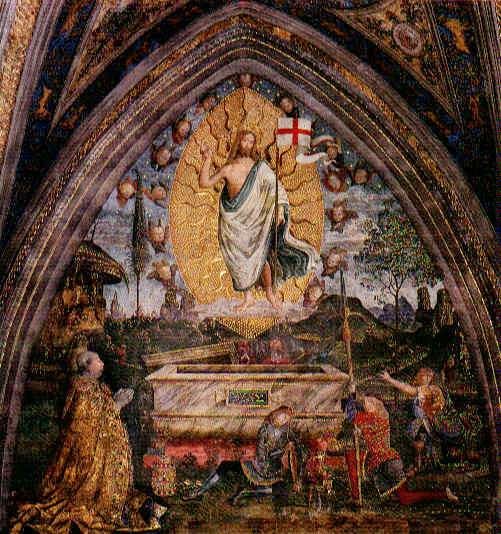
但這是鮑森想說的最後一句話。在人類重新發現精神事物、藝術、音樂和雕塑的偉大運動——我們稱為文藝復興——中,人們發現:智力提升不代表道德也提升。那是教宗宮殿充滿藝術珍品的時代,也是切薩雷.博吉亞和盧克雷齊亞.博吉亞等最不道德教宗家族的時代。人們研究藝術、音樂、文學和天空,卻仍然缺乏道德。
文藝復興純粹是精神和文化的事。它不能滿足罪的需要。全世界都在等待一個人重新發現救贖。
人們等待一個人處理人類、教會和世界的道德問題;一個願意讀聖經,從自己面對罪與救贖的經歷中重新發現基督教改變世界之能力的人。那個人是馬丁.路德,一名修士。就在這場講道前約四百五十年的同一個月份,他公開了自己的發現。文藝復興是精神上的,宗教改革是道德上的。宗教改革處理的不是知識、科學或文化不足,而是人缺乏耶穌基督和救贖的福音。他的故事是本系列第 3 部分。
文藝復興與宗教改革
文藝復興關乎頭腦;宗教改革關乎道德
文藝復興——頭腦
• 哥倫布抵達美洲(1492年)
• 哥白尼和伽利略仰望蒼穹
• 君士坦丁堡陷落(1453年)→希臘珍寶湧向西方
• 印刷術被發明
• 伊拉斯謨重新發現希臘文新約
• 拉斐爾的藝術盛放
但更聰明並不等於更聖潔:這是博爾賈教宗的時代。
宗教改革——道德
世界所缺少的不是知識、科學、藝術或文化。世界所缺少的是耶穌基督和救恩的福音。
全世界都在等待一個重新發現救恩、與罪搏鬥的人。那個人就是修士馬丁·路德。
「文藝復興觸及頭腦;宗教改革觸及內心。」本系列第3部分將講述路德的故事。
不止一個聲音
其他歷史學家和講道者如何解讀這千年
Pawson以強烈的新教立場講述歷史。為了公平起見,也為了讓你聽見不止一方的聲音,下面呈現其他人如何講述同一個故事:有些人讚同,有些人提出反駁。
歷史學家與綜述
Justo L. González ·《基督教故事》,第1捲(1984年)
他把這千年讀成一個悖論:「君士坦丁轉向」把「窄門」拓寬成大道,群眾湧入其中,而修道主義興起成為抗議。然而,他拒絕把這個時代一概寫成背道。
「當教會與世上的權勢聯合……人怎能抵擋時代巨大的誘惑?」
與Pawson的不同: 他讚同Pawson所說「世界俘獲了教會」,但加以緩和:當時確有真實的虔誠,修士們也保存了學問。
Bruce L. Shelley ·《用平實語言講教會史》(1982年)
一部通俗的福音派綜述:君士坦丁轉向帶來了真正的權力,但「代價很高」;修道者、異議者和改革者是教會的良心,呼召教會回到更純正的使徒生活。
「那些為將來的世界最虔誠地生活的人,往往最有能力改變現在。」
與Pawson的不同: 他大體讚同Pawson,但更公平、更溫和,把更新看作內部的改革,而不只是抗議。
Diarmaid MacCulloch ·《基督教史》(2009年)
他警告不要把中世紀讀成單純的「衰落」:那是一個豐富而複雜的世界,其中的「異端」高度多樣,多數與後來的新教格格不入,而不是新教的先驅。
「……一個更有趣也更複雜的敘事,在其中宗教與懷疑、褻瀆與虔誠始終保持對話。」
與Pawson的不同: 他對Pawson作了緩和:強調中世紀基督教的豐富與成就,也指出不應把其中的異議者據為宗教改革的祖先。
Kenneth Scott Latourette ·《基督教史》(1953年)
他把這千年看作「前進與後退」的節奏:儘管有腐敗和黯淡,信仰仍在歐洲的「蠻族」中推進,從未熄滅。他把這個時代稱為「充滿不確定性的千年」。
「縱觀基督教歷史,它通過巨大的脈動向前推進。每一次前進都把它帶得比上一次更遠。」
與Pawson的不同: 他用歷史學家的長遠視野緩和Pawson的判詞:即使在腐敗中,信仰仍扎根並擴展。
Robert Louis Wilken ·《最初的一千年》(2012年)
他展示基督教從來不只是羅馬的或西方的:波斯、亞美尼亞、埃塞俄比亞、中亞、印度和中國的群體積極塑造了它的進程。
「亞美尼亞人、希臘人和埃塞俄比亞人有許多共同點:他們由主教治理;他們培育修道生活;他們承認尼西亞信經。」
與Pawson的不同: 他把Pawson的框架擴展為全球性的基督教,而只面向西方的敘事往往會漏掉這一點。
Tom Holland ·《統治》(2019年)
一位信仰之外的歷史學家認為,中世紀改革本身——尤其是格列高利七世十一世紀的「革命」——塑造了西方的道德良知:把「世俗」與「神聖」分開,並成為人權的溫床。
「[改革者]確實使[神聖與世俗的區分]成為西方未來的根本,『這是第一次,而且永久如此』。」
與Pawson的不同: 他反駁Pawson:中世紀教會——甚至教宗權力——播下了西方道德的種子,重塑世界,而不是僅僅被世界俘獲。
福音派講道者
John Piper ·《至高喜樂的遺產》(2000年)
他把奧古斯丁(5世紀初)看作恩典的禮物:使人脫離罪的不是意志力,而是上帝裡的「至高喜樂」,從根源上製服罪的享樂。
「不可抗拒的恩典……會以更高喜樂的至高權能釋放我們。」
與Pawson的不同: 他補充Pawson的敘述:在這段時期開始時,從奧古斯丁那裡挖掘恩典活水的源頭,而不只看到制度的衰落。
Michael Reeves ·《不滅的火焰》(2009年)
他把這千年讀作宗教改革必須回應的「背景」:中世紀晚期教會把恩典教導為使自己變得足夠聖潔的力量,使信徒沒有確據。然而福音的火焰從未完全熄滅(威克裡夫、胡斯)。
「中世紀的恩典『像一罐屬靈的紅牛』,使人『沒有確據』;被重新發現的是作為『給罪人的禮物』的義。」
與Pawson的不同: 他同意Pawson認為福音的核心已經失落,但語氣更溫和:強調「重新發現」和連續性,把宗教改革描述為回到上帝的話語。
W. Robert Godfrey ·《教會史概覽》(Ligonier)
這是一種改革宗的解讀:奧古斯丁關於恩典的福音是明亮的線索,但在整個中世紀逐漸被迷信和教宗製度「遮蔽」。然而教會從未完全死亡——忠心的餘民使福音保持活力。
「我們在中世紀看到的確實是迷信不斷增長、混亂不斷增長,以及福音被遮蔽的時期。」
與Pawson的不同: 他大體讚同Pawson,但緩和「世界俘獲教會」的說法:堅持整個千年始終有「一顆明亮的星」守護真理。
天主教與東正教的聲音
Eamon Duffy ·《聖徒與罪人:教宗史》(1997年)
他認為這千年比讚美或論戰所允許的更具人性、也更混亂:腐敗和買賣聖職是真實的,但他拒絕把教會史歸結為控诉;持續存在的是職分,而不是擔任者的美德。
「儘管有它的一切罪……教宗制度在總體上似乎是促進人類自由和寬廣精神的力量。」
與Pawson的不同: 他緩和Pawson的新教立場:承認腐敗,但拒絕把一切歸結為單一原因的論戰,把教宗制度看作糾結複雜的人類機構。
Kallistos Ware ·《東正教會》(1963年)
對Ware而言,1054年的分裂不是某一天發生的事件,而是「漫長而複雜的過程」;使裂痕成為定局的,尤其是十字軍,特別是1204年洗劫君士坦丁堡。從東方看,真正的「創新」是羅馬把榮譽上的首席地位變成管轄權上的至高權。
「愛的首席職分」
與Pawson的不同: 他從東正教一方而非新教一方看待同一問題,強調分裂是逐漸發生的,而不是某個戲劇性時刻突然發生。
Henri Daniel-Rops ·《大教堂與十字軍》(1957年)
一位天主教歷史學家不把這千年看作「世界俘獲教會」,而看作教會使歐洲基督教化並文明化——在混亂中保存文字和學問。他並不粉飾衰敗(稱14世紀為「慘敗」),卻堅持教會不斷在內部產生聖徒和改革者。
「從最低層到最高層,社會都相信——教會是『確保文明得救的最有效手段』。」
與Pawson的不同: 他既緩和又反駁Pawson:承認腐敗,卻認為即使在衰敗中,教會仍拯救了文明,並從內部改革自己。
這些觀點取自標準的教會史綜述,以及當代教師的信息和著作。目的不是反駁Pawson,而是在眾聲合唱中聽見他。
結束祈禱
鮑森的結尾不是總結,而是在多年、數世紀的歷史於聽眾眼前流過後所作的禱告:
「天父,願我們成為祢所盼望的教會。願我們從過去的錯誤和歷史的教訓中學習。我們感謝祢,在漫長歲月中從未缺少見證人,也從未缺少認識真理的人;他們常為此付上生命代價,卻點燃我們所承受的信仰火炬,並把它傳給後代。」
一千年的海水已滲入船內,但火焰從未完全熄滅。漫長隧道盡頭,黎明即將破曉。第 3 部分將講述一名修士看見問題所在,並用一本書重新校正方向的故事。
Note: This post is compiled from the second lecture in David Pawson's History of the Church series (Part 2: AD 400–1400), about 69 minutes long. As in Part 1, I do not guess or embellish: every major argument comes straight from Pawson. Wherever I looked something up, checked it against the sources, or corrected a detail, I left it as an amber margin note woven into the text. For this part especially, because the lecture touches the most contested stretches of church history, I also read other historians and preachers, so that you hear more than one voice.
The unhappier story
Part 1 told how the Church captured the world in the first four centuries: it won the physical battle by suffering, the mental battle by confronting heresy, and the spiritual battle by standing firm against other religions.
Pawson says there is one thing he forgot to mention last week, and it matters: the Christians won because they out-lived, they out-thought, and they out-died everyone else. They out-lived, and so won the spiritual battle. They out-thought, and so won the mental battle. They out-died, and so won the physical battle. And therefore they out-survived everything else.
But tonight, he says, the subject is far sadder and far more serious. The subject is: how the world captured the Church over the next thousand years.
There is a medieval painting of the Church as a lifeboat. In a tossing sea, the Christians in the boat reach out to pluck the drowning from the waves. It is a fine picture of the Church: a lifeboat gone out into the world in answer to the cry for help.
But Pawson pauses on one thing:
The lifeboat must be in the sea. But if the sea gets into the lifeboat, then there is real trouble. The church must be in the world if it is going to save souls. But when the world gets into the church, then it is finished and it sinks.
The next thousand years is the story of the sea getting into the boat. Pawson takes it in three chapters: the world began to get in even in the early ages (AD 100–400); then the Dark Ages (AD 400–1000); then the Middle Ages (roughly 1000–1500), which bring us to within a year or two of Martin Luther.
The Lifeboat Picture
The boat must be in the sea, but the sea must not be in the boat
Pawson opens with a medieval painting: the Church as a lifeboat in a tossing sea, reaching out to pluck the drowning from the waves.
The lifeboat in the sea
The Church is in the world to save souls. This is the mission itself.
The sea inside the lifeboat
When the world gets into the Church, the boat sinks. That is the story of a thousand years.
"The church must be in the world if it is going to save souls. But when the world gets into the church, then it is finished and it sinks." — David Pawson
A Thousand-Year Timeline
AD 400–1517: from the fall of Rome to Luther
Four currents braid through a thousand years: decline, the rise of papal power, voices of protest, and an age of discovery.
Some dates are simplified for clarity; precise milestones are checked in the amber margin notes throughout the essay.
How the World Got Into the Church (AD 100–400)
When there were martyrs like that, preachers like that, when the battle was being won, how did the world get in? Pawson names four things that began to water down the apostles' Church.
First, regional bishops. In the New Testament every church had a number of bishops, called elders or bishops or presbyters, all the same office: spiritual leaders. Then came a stage where each church reduced its bishops to one. Then a stage where one bishop ruled many churches. Leadership was concentrated in fewer hands. You cannot find this in the New Testament; it did not happen for the first hundred years; but in the second century there emerged men of considerable power and influence. Not many bishops to one church, but many churches to one bishop.
Second, a magic view of the sacraments. Take baptism. Instead of being an outward sign of the spiritual washing away of sins that comes when a man believes in Jesus, people began to believe that the actual water and the right formula saved a person from sin, whatever their age; and that if you sinned after baptism, you undid it. So people put off baptism until the deathbed: they waited until the doctor said there was no hope, then rushed for the minister. But others worried: what if our baby dies, we would rather have its sins washed away at once. Both views were superstitious. Sadly, infant baptism prevailed. The Lord's Supper too was treated magically: people began to think the bread actually was Christ's flesh and the wine his blood; since real flesh and blood were being offered, it was a sacrifice; and since it was a sacrifice, the one handling it must be a priest.
Third, established religion. When the emperor went to church, you can imagine everyone did. When the state declared Christianity the official religion, everyone climbed on the bandwagon. Going to the established church became fashionable and respectable. Pawson says plainly: an established religion is bound to produce fashionable, respectable Christianity, and he cannot find that in the New Testament.
Kit's note
One thing I'll return here: it was not Constantine who made Christianity the official religion. The Edict of Milan (313, Constantine with Licinius) granted only toleration — freedom of worship and the return of property, ending persecution. It was Theodosius I who, by the Edict of Thessalonica in 380, made Nicene Christianity the state religion. Pawson's larger point — that once faith becomes 'fashionable and respectable' the world seeps in — stands; only the milestone belongs to Theodosius, not Constantine.
Fourth, nominal membership. A writer at the end of the second century observed: around the year 50, to belong to the Church meant a person had received baptism and the Holy Spirit and called Jesus Lord; but by around 180, it meant a person acknowledged the rule of faith (the creed), the New Testament canon, and the authority of the bishops. In other words, people were joining for reasons other than believing in Jesus and receiving his Spirit. It was now an institution.
And whenever the Church went wrong, there were protests. In the first 400 years there were two movements: Montanism and monasticism. Both protested against a Church growing wealthy, worldly, and filled with people who had never even been converted.
Montanism arose in what we now call Turkey, Asia Minor. A man called Montanus saw that in scores of members there was no trace of the Holy Spirit, so he sought the Spirit of God afresh. A revival broke out. The gifts of the Spirit came back into the Church; life, vigour, and reality came back into worship. Pawson says if you want to know who they were most like today, they were Pentecostals. There was a tremendous emphasis on Christ's return, an insistence that no one be a member without a real faith, with holiness and fasting. But the bishops opposed it severely, and you can guess why.
The tragedy is that, as so often, this first Pentecostal movement went wrong. It went wrong because these people would not have teaching. They wanted the heat without the light. Pawson says: light without heat is cold; heat without light is too hot; you must have both. They would not listen to the Scriptures on how to exercise spiritual gifts. And the movement fizzled out in fanaticism. "That is a word every Pentecostal revival needs to know," Pawson says. "We can learn from history."
Kit's note
I'll gently push back on 'the women spoilt it.' The pastoral caution — heat without light — is fair, and the ecstatic, trance-like prophecy was indeed what the mainstream church attacked most. But pinning it on 'the women,' Priscilla and Maximilla, isn't fair: Montanus himself prophesied passively ('I am as a lyre, and the Spirit sweeps over me like a plectrum'). Modern study (Christine Trevett) shows what was really condemned was their claim to a new authority over the church — not the fact that the prophets were women.
The second protest came in a very different way. Some years later certain Christians said: this Church is so worldly, so dead, that the only hope of recovering Christianity is to get out of the Church and out of the world.
The first of them did it alone. They were hermits. It is the strangest tale. Anthony was the first: he decided he would never be a real Christian until he got into the middle of the desert. The trouble was that when he got there, other Christians wanted to join him, and he did not want that; and above all, he found his temptations in a desert cave just as worldly as they had been in the Church. There was an even stranger hermit, Simeon Stylites: he built a pillar some sixty feet high, a yard across at the top, and lived up there for decades. He even stood on one leg for a year, as a protest declaring that Christianity is something hard and tough. And there he was, up the pole, covered in ulcers and worms, in a frightful state.
More successful than the hermits were those who started communities. The man who began this movement was Benedict. On Monte Cassino, halfway between Rome and Naples, he gathered a group of real Christians who saw the Church was too worldly to do anything with, and said: we will come and live together. We will not be wealthy but poor. We will not be lustful but celibate. We will not be rebellious but obedient. They took the threefold vow: poverty, chastity, obedience. And the monastery was run like a Roman soldier's garrison.
Kit's note
A small but real correction: Benedict (c. 480–547) did not start communal monasticism. Pachomius founded cenobitic communities in Egypt around 318–323, nearly two centuries earlier. Benedict is the father of Western monasticism and wrote its most influential Rule — but not its founder. And his Rule's vows are really stabilitas (staying in one house), conversatio morum (conversion of life) and obedience; the familiar 'poverty, chastity, obedience' formula belongs to later orders.
The tragedy is that this protest went wrong just as surely as the other. Christ never meant us to live the Christian life away from everybody else. Later these monks, who began with a good intention, became so wrapped up in their own salvation, so introverted, that they were isolated from the world and the Church. Worse, monasticism produced the idea that there are two kinds of Christians: second-class ones who marry and first-class ones who do not; second-class ones who live in the world and first-class ones who live out of it. But that is not the teaching of Jesus. Our Lord was not a monk. He did not withdraw from society; he lived a pure life in society, and told his disciples to be in the world without being of it.
Both said: the Church is not what Jesus Christ meant it to be. One said we will rediscover it by getting back into the Spirit. The other said we will rediscover it by getting out of the world and out of the Church. Both came to nothing, because they did not return fully to New Testament Christianity.
How the World Got In — AD 100–400
Four cracks and two protests
Even in the age of victory, four things began to water down the apostles' Church. And whenever it went wrong, voices of protest rose up.
Regional bishops
From many elders per church to one bishop over many churches. Power concentrated in few hands, copying Rome's governors.
Magic sacraments
Baptism seen as saving in itself, so delayed to the deathbed or given to infants. The Lord's Supper taken as literal flesh and blood, a sacrifice needing a priest.
Established religion
When the emperor went to church, everyone went. Faith became fashionable and respectable instead of a surrender.
Nominal membership
People joined for reasons other than believing in Jesus and receiving the Spirit. The Church became an institution.
Two protests
Montanism
A Pentecostal protest
Rediscovered the Spirit and the gifts, stressing Christ's return and holiness. But it had "heat without light," refused teaching, and burned out in fanaticism.
Monasticism
A protest by withdrawal
Left both the world and the Church to recover real Christianity. But it produced "two-tier" Christians, and Christ never called us to live apart from everyone.
Both protests were sincere, yet both came to nothing because they did not return fully to New Testament Christianity.
The Dark Ages: The Fall of Rome (AD 410)
Now the story truly begins. In 410, a catastrophe came. Barbarians from the north pressed down on the city of Rome. The Vandals came (from their name we get the word "vandalism"). The Franks came, the Huns came, the Goths came. These barbarians pressed into Rome and took it. The Rome of that day fell.
Kit's note
Let me check this one: the sack of Rome on 24 August 410 was carried out by one people — Alaric's Visigoths — not a combined army of Vandals, Franks, Huns and Goths. The Vandals were then pushing into Spain (they would sack Rome only in 455), and Attila's Huns struck the West only in 451–452. Pawson's larger picture — a whole wave of 'barbarian' peoples pressing on the Empire — holds; but the army that breached Rome in 410 was Alaric's Goths alone.
The Romans left Britain that year to defend Rome, but could not save it. And as soon as the Romans withdrew, the Jutes, the Angles, and the Saxons charged into Britain and destroyed Christianity in England and south-east Scotland. The Christianity that Roman soldiers had brought here in the first 400 years vanished.
It seemed that when Rome fell, it was the end of everything. Jerome, writing in Jerusalem, said: "the human race is included in the ruins." People thought it was the end of civilization. And it puzzled the Church: Rome had survived for centuries as a pagan empire, yet as a Christian one it collapsed. Many Christians could not understand it.
Kit's note
A small geographic note (the Part-1 kind): Jerome was not in Jerusalem but in Bethlehem (very near it), where he lived in a monastery from 386 until his death in 420. His most famous line is from the Preface to his Commentary on Ezekiel (c. 410–414): 'when the bright light of all the world was put out... the whole world perished in one city' (in una urbe totus orbis interiit). Pawson's 'the human race is included in the ruins' faithfully catches Jerome's grief.
But one man thought it through and made an incredible statement. He said: it is the best thing that ever happened. His name was Augustine.
Augustine: A Restless Heart That Found Its Rest
You can buy his books at the railway bookstall today. And if I tell you some of the things this great man said, you would recognize them. He said: "Our hearts are restless, and they can find no rest until they find their rest in thee." Perhaps the most quoted prayer in history. It was Augustine who prayed: "Give me chastity, but not just yet." And it was Augustine who said: "Love, and do what you like."
He was born in North Africa. When he went as a student to Carthage, he fell in with the wrong crowd. Soon he had a concubine and a son by her, and lived in that illegal relationship for years. His father was pagan, but his mother was a godly woman who prayed for her wayward son with tears every day. Later, because of his brilliant mind, he was invited to be a professor of rhetoric in Milan. There he went to hear the saintly Bishop Ambrose preach. Under that preaching, the young man with the brilliant mind but the profligate life was brought into a deep conviction of sin.
Then one day, sitting in a garden weeping over the mess he had made of his life, he heard a child's voice over the garden wall: "Tolle lege, tolle lege" — "take up and read." He never knew who the child was. But he saw a scroll on the seat beside him, took it up, and read. It was Paul's letter to the Romans. Augustine read it through, and the light dawned. When he walked into the street afterward, the woman he had lived with saw him, and he ran from her. She ran after him crying: "Augustine, it is I, it is I." He answered over his shoulder: "But it is not I, it is not I."
Kit's note
The exchange — 'It is I, Augustine!' / 'But it is not I' — is a lovely pious anecdote, but it is not in the Confessions or any early source. By Augustine's own account (Confessions 6.15), the woman had already been sent away before his conversion (c. 385); she returned to Africa vowing to remain unmarried. The clever retort appears only in much later retellings — a moving tradition rather than history.
He wrote the whole story of his conversion in a book called Confessions. Pawson says Augustine has had more influence on church history than any man after the apostle Paul.
When Rome fell, Augustine being in middle age, the whole world seemed to collapse about his ears. He thought it through, then wrote the second great book we remember: City of God. In it he says: it is a good thing this pagan city of Rome has collapsed, because now the city of God can replace it; it is a good thing an earthly empire has ended, because the heavenly empire can now be established. The book brought hope and new life to many, helping them see that a city of God still survived when the city of men had gone.
But that was the trouble. People began to ask: what is this city of God? Visible or invisible? Earthly or heavenly? And at this point Augustine led many into a misunderstanding. The funny thing is that centuries later, in the Reformation, the Protestants said "we follow Augustine," and the Roman Catholics said "we follow Augustine." But the Protestants were following the first book, Confessions; and the Catholics were following the second book, City of God.
For what happened was this: the Church said, if that is so, then the Church is now the new empire.
The Church Becomes an Empire: The Rise of the Papacy
One of the first results was the rise of the bishop of Rome to the position of an emperor. In those days there was a great debate about the word "pope," which means essentially "father." Although Jesus had said never to call anyone on earth father, for you have one Father in heaven, people began to call the local priest "father." Then they called the regional bishop "father." Then finally the five great patriarchs said: if anyone is to be called father, it ought to be us five. And at last, the bishop of Rome said: the city of Rome is gone, but I am the emperor now; I am the chief bishop, and from now on you call only me pope, you call only me father.
And the papacy, as we know it, came into being. The striking thing is that the pope adopted the very titles and even the robes of the Roman emperor. He took the title Pontifex Maximus, known today as the pontiff — the Roman emperor's title. Augustine was misunderstood, and people thought the Church was the new empire. And an empire must have its emperor, its robes, its ceremonies, its throne. So the Church became an empire, and the pope became a king.
Of course, many Christians would have none of it. The French would not, the Irish would not, the Welsh would not, the Scots would not. Sadly, the English did.
When the Church Became an Empire
The ladder of power and the closing circle
The ladder to "father"
The local priest is called "father"
Then the regional bishop
Then the five great patriarchs claim the title
The bishop of Rome: "call only ME pope"
Takes the emperor's titles & robes (Pontifex Maximus)
"Call no man on earth your father…" (Matthew’s Gospel)
The circle 410 → 800
410 — The Roman Empire collapses
The Church takes over, becomes the new "empire"
800 — Charlemagne crowned Emperor
The empire returns — full circle
Augustine wrote City of God to console a collapsing world; but people misread it to mean the Church was the new empire — and an empire must have its emperor, its throne, its robes.
Two Streams of Christianity Meet at Whitby
Ireland, through St. Columba, brought the faith into Iona and Scotland, leading Scotland to Christ. Then Aidan came down to the island of Lindisfarne off Northumberland. Pawson recalls standing on Lindisfarne a few months earlier, by the ruins of Aidan's church, the little island from which he evangelized Northumberland. This non-papal Christianity, Celtic Christianity, came into England from the north through Ireland and Scotland.
But later the pope said: we must get England, we must get those Angles. He made the famous pun: they are not Angles but angels. And he sent a missionary also named Augustine. This Augustine landed on the island of Thanet, then went to Canterbury. Columba on the island of Iona in the north; Augustine on the island of Thanet in the south.
The two streams of Christianity met at Whitby. You can still see the ruins above Whitby harbour where they met. There, papal Christianity met Celtic Christianity, to see which would win. The tragedy is that papal Christianity won. The British Isles came under the papal throne. Scotland even changed its patron saint to St. Andrew. The whole situation was changed.
Kit's note
Let me clarify one thing: the two streams in the British Isles were real, but saying Celtic Christianity 'rejected the pope' overstates it. They didn't oppose Rome on doctrine; they kept older customs — the dating of Easter and the style of tonsure — because they'd been cut off from the continent during the Anglo-Saxon period. The Synod of Whitby (664) was a dispute over custom and calendar, not a schism; Pawson is right that Rome's side prevailed.
Two Streams Meet at Whitby
Which way would Britain go? (Synod of Whitby, 664)
Celtic Christianity
Ireland → Iona (Columba) → Lindisfarne (Aidan) → northern England
No pope. Simple, missionary.
Roman Christianity
Rome → Augustine on Thanet → Canterbury → the south
Loyal to the pope.
Whitby, 664
Roman Christianity won. The British Isles came under the papal throne. Pawson calls it a tragedy; you can still stand among the ruins above Whitby harbour today.
Schematic, not to geographic scale. Whitby took place in 664 (Pawson says "660").
East and West Divide (1054)
The other great group of Christians who would have none of this were the churches of the eastern Mediterranean: Greece, Asia Minor, Syria, Egypt. They said: we are not acknowledging this. That there should be one "papa," one father of the whole Church, is not in Scripture, not in the New Testament. And they began a split, finally completed by the year 1054. That division kept the eastern and western churches apart for a thousand years, and only in recent years have the two begun to talk again.
Kit's note
A detail worth marking: Pawson saying the two sides 'have only in recent years begun to talk again' is exactly right for a sermon around 1967. On 7 December 1965, in simultaneous ceremonies in Rome and Constantinople, Pope Paul VI and Ecumenical Patriarch Athenagoras I lifted the mutual excommunications of 1054, after their historic meeting in Jerusalem in January 1964. So his 'recent years' was, for him, fresh news.
And here is one of the most incredible things. Around the year 850, the pope said: I have discovered documents from the first century, proving that Peter appointed the first pope, who appointed the second, and so on down the line. Today even the Roman Church knows those documents were forgeries; they are called the forged decretals. And yet the papacy was built on a forgery. There was another forged document, the Donation of Constantine, claiming that all of Italy belonged to the pope. The pope "discovered" this forgery and said: there, all Italy belongs to me. That is the kind of foundation on which the whole structure was based, and even Rome knows it today.
Kit's note
Let me return a detail on 'the pope produced these documents': Pawson's date, 'around 850,' is very close — the Pseudo-Isidorian Decretals (False Decretals), under the pen-name 'Isidorus Mercator,' were forged around 847–852. But the forgers were Frankish clergy near Reims, not the pope himself, and the first aim was to protect ordinary bishops from being deposed. Still, Pawson's larger point holds: those forgeries were later cited by Rome to buttress papal supremacy.
The Great Schism, 1054
One Church split in two for nearly a thousand years
The five patriarchates (the Pentarchy)
The West (Latin)
Rome — one pope over the whole Church
• Supremacy of the pope
• Added "and the Son" (filioque) to the Creed
• Unleavened bread
Latin tradition
The East (Greek)
Constantinople + the patriarchs — equals, no single "papa"
• Five equal patriarchs
• The Creed left unchanged
• Leavened bread
Greek tradition
The mutual excommunications of 1054 were only lifted together by Pope Paul VI and Patriarch Athenagoras in 1965 — close to Pawson's "the last ten years" when he preached in the 1960s.
Charlemagne and the Holy Roman Empire (AD 800)
The power kept spreading, until the year 742, when a man was born with a dream: to restore the empire of Rome, put it back on the map, with himself as emperor and the pope beneath him. His name was Charlemagne. A ruthless man who said: we will have a Roman empire again, and its head will not be the pope but an emperor.
Charlemagne twice saved the pope's life: once from the barbarians, once from the crowds in Rome who were angry with him. The pope said: you have saved my life twice, what would you have me do for you? The emperor answered: on Christmas Day, crown me emperor. And in the year 800, on Christmas Day, in the largest church in Rome, at the Christmas morning service, the pope crowned the king of the Franks, Charlemagne, emperor of the Holy Roman Empire. A thousand years later, the Holy Roman Empire still existed.
You see, we have come full circle. The empire of Rome collapsed in 410. The Church took over the empire. Then in 800 the emperor came back and took the empire from the Church. The whole thing seemed back to where it started.
Charlemagne did some good things and some bad. Among the good: he forbade the clergy to keep concubines, frequent taverns, and go hunting; he started many schools. Among the bad: he forbade the clergy ever to marry, and it is to Charlemagne that we owe the celibate priesthood. He also coined the word Christendom — the kingdom that would be Christian under the emperor. And the idea of Christendom persists to this day.
Kit's note
Two small fixes. First — the celibate priesthood isn't owed to Charlemagne: he tightened clerical discipline, but the ban on clergy marrying became universal law only with the eleventh-century Gregorian reform and the Lateran Councils of 1123 and 1139 — three centuries after him. Second — 'Christendom' is a native Old English word (cristen + -dom); a Latin-speaking Frankish king could hardly coin it. If Pawson means he crystallized the idea of Christendom, that holds — the 800 coronation is its emblem.
The Rise of Islam
Because the Church was now wealthy and powerful, it became corrupt. And once again protests came, this time from the east and the north. From the east, the protest came from two things. The first was Islam.
Pawson calls this the greatest judgment ever to fall on the Christian Church. He had lived in Arabia and seen something of this religion. Mohammed was born in 571 in Mecca, the centre of Arab idolatry and superstition. In the middle of Mecca was a great square building draped in black, and inside it a sacred stone, the Kaaba, a meteorite fallen from the sky. Mohammed grew up amid the idolatry and superstition of the Arabs, and he was revolted by it.
Then he turned first to the Jews, then to the Christians, and asked: have you the true religion? The tragedy is that Mohammed never met a converted Christian. The tragedy is that he never saw the real Christianity of the New Testament. All he saw was the vestments of priests, images, and crucifixes. And he said: this is as idolatrous as the Arabs' religion. If only Mohammed had met one true Christian at the end of the sixth century. But he did not.
So he said: right, I will seek a new religion that is pure. He married a wealthy widow, spent years in the desert, and there he said he was spoken to: there is no God but Allah, and Mohammed is his prophet. He began to preach this, writing down what he heard in his visions in a book, the Quran (Al-Quran). He was persecuted and had to flee to Medina in 622. That is the date from which the Arabs reckon their calendar. He returned to Mecca with an army and imposed the new religion. From then on everyone had to pray toward Mecca, and by a religion of good works — fasting, praying five times a day, keeping Ramadan, making the pilgrimage to Mecca, giving alms — one could get to heaven. And that religion was imposed by force of arms.
Islam swept Christianity out of the Mediterranean. It swept Christianity off the North African coast, where there was no church for centuries. It swept Christianity out of the Holy Land itself, out of Jerusalem, out of the place where Jesus died. It swept up through Spain, up through Asia Minor, into France as far as the gates of Lyon, into Eastern Europe as far as Vienna. It seemed Islam would crush Christianity in a gigantic pincer movement.
Kit's note
An important geographic and chronological note: the Muslim advance into the West was halted at Tours/Poitiers in 732 (Charles Martel over the Umayyads), in western France — about 360 km from Lyon, not 'the gates of Lyon.' And the two sieges of Vienna were Ottoman Turkish, in 1529 and 1683 — roughly 800–950 years after the 8th-century Arab advance. These are two powers and two eras, not one coordinated 'pincer.' Pawson's theological instinct — that God stopped the tide — can still stand.
It is the greatest judgment God has ever allowed to come on the Christian Church. And it was deserved. But so far and no further. God was not going to have Christianity wiped out altogether.
He stopped them at Lyon and Vienna, and they withdrew to their present boundaries: the North African coast and up to Turkey.
Map of the Dark Ages
Two tides break over the Christian world (AD 410–732)
Orange arrows: barbarians pour south onto Rome. Green arrows: Islam sweeps the Mediterranean from Arabia, across North Africa and Spain, as far as Tours.
Base map: the Roman Empire (Wikimedia Commons, public domain). Arrows are schematic directions of advance, not exact routes. Vienna marks the later Ottoman limit — Pawson telescopes nearly a thousand years of frontier into one pincer.
Hidden Witnesses in the Dark
For at that very time, all over Europe there were little groups of Christians meeting around the word of God. They saw that the official church was corrupt, so they simply met in tiny groups, read this book, and said: we will worship God in simplicity. We do not need priests, for we have Jesus our high priest. We do not need a pope, for we have a Father in heaven. We just need the word of God and the Holy Spirit.
We know hardly anything about them, because they were so persecuted that even the records of their history were destroyed. Pawson asks his hearers whether any have ever heard of a group called the Bogomils. They were a group meeting around the word of God, chiefly in Bulgaria and Bosnia; the word "Bogomil," Pawson says, is Bulgarian for "friends of God." There were the Paulicians, who met in Armenia, Thrace, and Asia Minor. There were the Cathars, a name meaning "the pure ones," the same root as the later word "Puritan"; they met in the Balkans and across Europe.
Pawson confesses: in his simplicity he used to think that for a thousand years there was only the Roman church and the eastern churches. That is not true. He was thrilled to discover that all through those centuries there was a continuous train of simple Christians meeting around the word of God in local churches. They paid for it with their lives, but they met, and the flame of faith was kept alight for the generations to come.
Kit's note
Let me return something, in fairness to Pawson and to history. What he says is true and moving: the Bogomils, Paulicians and Cathars rejected the clergy and the pope, were savagely persecuted, and had their writings nearly all destroyed. But modern scholarship classes them as dualist movements — holding the material world to be the work of an evil power — shaped by Mani and the Gnostics; this is not the later Protestant faith. They witness to protest, but they weren't quite 'simple New-Testament Christians.'
The Middle Ages: Hildebrand Sets the Pope Above All
Now we come to the final chapter, from the year 1000 to 1500, called the Middle Ages because it lies between the Dark Ages and the Modern Age.
The first man to speak of is Hildebrand. This monk became pope, and he did not like being number two. By now there was a restored Roman Empire with a new emperor, but the pope was number two. Hildebrand decided the pope should be number one, and he achieved it. He did many good things: he cut out the simony in the church, the buying of priesthoods. But he did it because he believed the pope should control everything, including kings.
The clash between Hildebrand and Emperor Henry IV was settled in a most dramatic and terrible way. Henry IV defied Hildebrand, saying: I am number one. Hildebrand answered: you are not. Let the people decide. And the people decided that Hildebrand was. Up in the Alps, the pope met Emperor Henry IV, who came from the north. The pope was in a mountain house, and he kept Emperor Henry IV waiting outside in the snow, barefoot, for three days, before he would speak to him. In this way Hildebrand put the emperor decisively in a secondary place.
From then on, for the next 500 years, the pope was the most influential figure, and the papacy was the power that controlled the Western world. The Church was the empire again. It was this pope who began the symbol of the crossed keys of St. Peter: one key is the authority of sacred power over the Church, the other the authority of secular power over the state. Those crossed keys are Hildebrand's claim: to be top dog, over both the Church and the state.
Kit's note
Let me return two points. First, Hildebrand (Gregory VII, 11th c.) did not create the 'crossed keys' emblem: the device appears only in the 14th–15th c. — the oldest belongs to Pope Martin V (1417–1431), over 300 years later. Second, the keys traditionally do not mean 'one sacred, one secular'; both belong to spiritual authority (the power to 'bind and loose'). What Pawson has right is Hildebrand's ambition: to set the pope over both Church and state.
The Crusades: When the Church Took Up the Sword
This put the force of armies at the Church's disposal. And because Hildebrand thought that way, he began to use force to establish the kingdom of Christ. Never was a greater mistake made. The first outcome of the idea that force is valid for the Church to use was eight crusades to the Holy Land.
By now the holy places, Jerusalem and others, were in the hands of the Muslims, the Saracens, the Turks. The pope decided the Church would fight its way in and capture the Holy Land for Christ. The First Crusade was born in 1095. It was Hildebrand's idea, but he died before it could be done. People wore a cross on the shoulder, called a crux, and from that we get the word crusade.
The First Crusade was pulled together by an unkempt, fanatical preacher called Peter the Hermit. He set off with 600,000 men, and only a tenth arrived; most died in the high mountains of Turkey. But they got there, and they took Jerusalem. They pillaged it, raped the women, and established the so-called rule of Christ in Jerusalem by slaughtering all the Saracens of that city. Is that Christian? You say at once: of course not. But bear in mind, they were misled. Thousands thought this was what the Church was meant to be: an earthly empire establishing itself by force.
Kit's note
Two corrections. One — 600,000 is wildly inflated: historians put Peter the Hermit's 'People's Crusade' at roughly 20,000–40,000 (the whole First Crusade together was only about 60,000–100,000). Two — Peter's band did not take Jerusalem: arriving in Anatolia, it was annihilated by the Seljuk Turks at Civetot (21 Oct 1096). Jerusalem fell nearly three years later — 15 July 1099 — to the nobles' armies. The bloody massacre is real, but it was 1099, not the work of Peter's poor.
Of course there were incentives. People were promised absolution if they went to fight for Christ; promised indulgences, so many years off purgatory; promised their debts cancelled by law; promised pardon for criminals who would leave prison to go and fight. You can imagine the motley crew that resulted. King Philip of France was caught up in it. King Richard the Lionheart of England was caught up in it. Eight times they set off. One was a children's crusade: 2,000 little ones set off across Europe to try to get Palestine back for Jesus. Not one of them arrived. The pope said angels would miraculously provide food; but the food never came and the angels never appeared.
The last one was an utter failure. At the flat-topped mountain of the Horns of Hattin, the last crusader army died of thirst, besieged by the Saracen. And in 1270, Europe breathed a sigh of relief when the pope called the whole thing off.
Kit's note
Pawson's picture of the Horns of Hattin is right (4 July 1187, Saladin luring King Guy's army into waterless ground and breaking it through thirst) — but it was not 'the last crusade'; it was a battle of the Kingdom of Jerusalem, and the loss of Jerusalem that followed is precisely what sparked the Third Crusade (Richard and Philip). As for 1270: the campaign collapsed not because the pope 'called it off' but because its leader, King Louis IX of France, died of disease before Tunis (25 Aug 1270). The crusader presence ended only when Acre fell in 1291.
It is one of the saddest stories in the history of the Church. It did nothing. Nothing. And indeed it did worse than nothing.
The Eight Crusades
When the Church used the sword instead of love (1095–1291)
Hildebrand believed force could establish the kingdom of Christ. "Never was a greater mistake made," says Pawson.
People's Crusade · 1096
Peter the Hermit leads a mob; most die in the mountains of Asia Minor.
First Crusade · 1095–99
Takes Jerusalem (1099) and massacres its people. The only "success."
Second Crusade · 1147–49
Preached by Bernard of Clairvaux; fails.
Third Crusade · 1189–92
Richard the Lionheart vs Saladin; Jerusalem not retaken.
Fourth Crusade · 1202–04
Diverts to sack Constantinople — Christians against Christians.
Children's Crusade · 1212
A march of children; not one reaches the Holy Land.
Later Crusades · 1217–54
Failure after failure, including the two campaigns of King Louis IX.
Hattin & the collapse · 1187 / 1291
Routed at the Horns of Hattin (1187); Acre, the last stronghold, falls in 1291.
The incentives to go
By 1270 the pope called it off. "It did nothing. Nothing. And indeed it did worse than nothing." — David Pawson
The Inquisition, Two or Three Popes, and the Corruption
From using force outside the Church, the pope now decided to use force inside the Church, opening another dreadful chapter called the Inquisition. Pawson says he dare not describe the things done in the name of Christ. The bishops refused to run this machine of cruelty, malice, and suspicion; but the Dominicans took it up. And for many years, countless people lived in fear of their lives through that dreadful thing.
All the way through, what was wrong was this: the Church thought of itself as an earthly empire allowed to use force to establish the cause of Christ. We now know this is not the way. The Church must use no force but love, and must never force anyone, except through love and through preaching the gospel, to accept Christ.
And this kind of corruption soon turns in on itself. Power tends to corrupt, said Lord Acton, and absolute power tends to corrupt absolutely. Soon there were two popes fighting for the throne, then three. There was a pope at Avignon, a pope at Rome. Who was pope now? They managed to pull the papacy back together, but then the corruption spread further down: the monasteries became corrupt and too wealthy, the bishops too powerful, the parishes corrupt.
Kit's note
For accuracy (and Pawson quotes it rightly here): Lord Acton's line is 'Power tends to corrupt, and absolute power corrupts absolutely' — without the 'All' the popular version often adds. He wrote it in a letter of 5 April 1887 to Bishop Mandell Creighton, and the very next sentence is 'Great men are almost always bad men...'. Tellingly, Acton wrote it while arguing that even popes must be judged by the same moral standard — exactly the context Pawson is in.
And the practices of ordinary Christian religion became corrupt. There were prayers to Mary, though we were never told to pray to Mary; she is a human being like the rest of us. There were prayers for the dead, prayers to the saints. There was the doctrine that caused the greatest fear: purgatory, how many years of suffering after you die. There was the doctrine of the mass as a sacrifice. There was confession to a priest. There were indulgences, so that for a sum of money you could buy so many years off purgatory. There were pilgrimages. There was the worship of relics. There were images in worship. Not a scrap of this is in the New Testament.
The Medieval Accretions
"Not a scrap of this is in the New Testament"
One practice at a time, added across the centuries. The right column gives the (approximate) date each became official or was formally defined.
Dates are approximate: many began as customs and were only later defined at councils (e.g. Lateran IV 1215, Florence 1439). This is Pawson's Protestant reading of them; see the "other voices" box for Catholic & Orthodox perspectives.
The Basic Fault: The Church Thought She Was Christ
So what was the basic fault behind all this? If you forget most of what I have said tonight, this is important. I will tell you what was wrong in one sentence:
The Church had begun to think she was Christ. And she still does.
Pawson recounts asking a leading priest: is this still true? He answered: yes, and it will not change. Pawson said: my one problem is that I do not believe the Church is Christ, and I do not believe she is prophet, priest, and king. I believe Jesus is. The Church is not our prophet, or our priest, or our king. And the priest answered frankly: we will not discuss that, because it will never change.
That is the basic fault. If I believe I am the prophet to the world, I can tell the world what to believe, and declare infallibly what is true. If I am the world's priest, I can say: you must come to my sacraments, you must confess to me if you are ever to be saved. And if I think I am the king of the world, I will establish my authority as widely as I can.
It is a confusion between the head and the body of the Church. The head is divine; the body is human. It is Christ who is the head, and he who is prophet, priest, and king. The Church is not. That is the fundamental difference between Protestantism and Catholicism, and it is as big today as it ever was. Christ said: I will build my church. He did not say: you build it. And Christ is the head of the church; no one else is the head, and no one else may be.
The Basic Fault
The Church began to think she was Christ
If you forget everything else in this essay, Pawson says, remember this. Every distortion flows from one confusion: between the head and the body.
The Head — divine
Christ
He alone is Prophet, Priest, and King
The Body — human
The Church
A body that obeys the head, never replaces it
Prophet
the one who declares truth to the world
Priest
the one who joins people to God
King
the one who rules and establishes authority
When the body thinks it is the head
"If I am the world's prophet, I can tell the world what to believe. If I am its priest, you must come to my sacraments. If I am its king, I will establish my authority as widely as I can." That is the root of it all.
"The government shall be upon his shoulder." (the book of Isaiah) Christ is the head, and no one else may be.
The Voices of Protest in the Middle Ages
But Pawson is glad to say that all through the Middle Ages, from 1000 to 1500, there were always people who said: this is not true, this is not Christianity, this is not what Jesus meant. Little groups appeared again, bearing all sorts of names from the places they lived.
There were the Beghards of the Netherlands, just people who met around the book and said: Christ is the head of our church. There were the Waldenses, named after the Waldensian valley; they believed this book told them what Jesus meant the Church to be. To their credit, they went to the pope and asked: this is what we see, could we be recognized as a valid part of the Church if we practise this book? Could they have done more? They wanted to stay in the Roman church but follow the book. The pope said: no, if you do what you intend, we will persecute you. And they were persecuted, fleeing from one valley to another.
Kit's note
Let me check the name's origin. The Waldenses are actually named after Peter Waldo (Valdes), a wealthy merchant of Lyon in southern France, who gave away his goods around 1173 and formed the 'Poor of Lyon.' The Alpine valleys Pawson mentions are where they fled and hid under persecution, not where the movement was born. His main point — a lay movement living by the Bible, asking to be recognized and refused by Rome — stands intact.
The next group were the Albigenses of southern France; they too read the book and saw what the Church was meant to be. Sadly, the most bloody campaign ever launched from the papacy was against these people. The pope sent two Spanish noblemen to put them to death. But they came back and told the pope: these are good Christians, not criminals, not fighting you, they only want to be in the Church and practise their understanding of Scripture. And one of them, named Dominic, said: we will bring this within the Church. And they founded the Dominicans, a copy of the Albigenses but inside the church. The tragedy is that later the Dominican order so corrupted itself that it was willing to run the Inquisition. There were also the Brethren of the Common Life in Germany. All were independent of the Roman Catholic hierarchy, based everything on the Bible in the people's language, and all were persecuted to the death. The true Church has always been persecuted.
Among those inside the church who also saw this were people who withdrew and held the faith privately. One was Bernard of Clairvaux. A very serious young man, though in his youth he had led a real gang of thieves. After two years as a prisoner of war in Italy, he came to himself and realized he was wasting his life. The son of a French baron, he gave up his riches and withdrew with twelve friends into a valley full of robbers. There he lived on cooked beech leaves and herbs, a terribly poor life; he got his friends up at two every morning for prayer, did not let them stop work until eight at night, and they built a community in the valley of Clairvaux.
Kit's note
Let me return something on Bernard's youth. The most reliable sources (Britannica, and the Vita prima by his contemporary William of St-Thierry) do not record him leading a gang of thieves or spending two years as a prisoner of war; they describe a noble youth fond of letters who, after his mother's death (c. 1112–1113), freely entered the monastery. This is likely Pawson recalling a touch too vividly. Even so, his point — a young man giving his whole life to God — holds.
Bernard became one of the most powerful Christians in Europe, without office, without money, without any material or psychological force. He was called the "pope maker." In private, he loved Jesus; Martin Luther said that of all the monks and priests of history, he held Bernard of Clairvaux in the highest esteem. But in public, he felt bound to support the papacy. Someone has wisely said he set back the Reformation by at least two centuries.
The other man, almost contemporary, was Francis, born in the little town of Assisi. Francis was brought to face life by meeting a leper in the street. He walked past the leper on the other side. But as he passed, he asked himself: what kind of man am I to turn away from a fellow man? He went back and kissed the leper. From then Francis began to be serious about life. He sought Christ, and he found him. He gathered around him a group of friends who went out two by two, in utter poverty, preaching the gospel, winning people for Christ.
Though he is remembered more for his way with animals and birds and his unique love of nature, Pawson says Francis ought to be remembered for something else: he was the first missionary to the Muslims. Risking his life, he went to the Sultan himself to preach the gospel of Jesus to the head of the Muslims. Instead of going with 600,000 soldiers to fight them, Francis went alone in poverty to preach the love of Jesus. And he was the first and last missionary to the Arab Muslims for many a century, until Raymond Lull. Francis's followers wore grey robes, so they were called Greyfriars; the Dominicans wore black, so they were called Blackfriars. Both tried to bring the simple Christian life back into the church, but both failed and became corrupt: the Franciscans became professional beggars, and the Dominicans ran the Inquisition.
The whole situation was crying out for a man to speak the truth, and to speak it so well that everyone would hear and understand. Arnold of Brescia, in 1150, began it when he said: wealth and worldly power should not be in the Church's hands. But Bernard of Clairvaux opposed him and got him silenced. Then came Marsilius, a medical doctor, who read his Bible and said: the Bible is the standard of the Church, and no other; bishops and popes are human inventions. But he was silenced. An Englishman who was a professor at the University of Paris, William of Ockham, also spoke up and was silenced.
Until it fell to the lot of a Yorkshireman to be what is called the morning star of the Reformation. The morning star is the star you can still see when the sun is coming up. And the morning star of the Reformation was a Yorkshireman who came to Oxford as a brilliant student, became a professor at Oxford, travelled widely, and was nicknamed Doctor Evangelicus. His name: John Wycliffe.
That man rediscovered the Bible, perhaps more than anyone else until Martin Luther. He protested against papal abuse. Five decrees (called bulls in those days) were issued against him. He was taken to trial at Canterbury. But he turned to the Scriptures, the only law of the Church, and said: I am going to put this Bible from Latin into English; I will cause the plowboys to know this book. And Wycliffe laboured at the translation, knowing that if you put the Bible into ordinary people's hands, you have given them the answer to all corruption in the church. He gathered around him a band of preachers who walked the villages, preaching and singing the gospel in the market square. People mocked them as singers of lullabies, calling them Lollards.
Kit's note
A small note on a famous line: 'I will cause a plowboy to know the Scriptures better than...' is actually William Tyndale's (1520s, reported by John Foxe in 1563), not Wycliffe's — Pawson has shifted it back a century and a half. Also the Wycliffe Bible was a team effort (Nicholas of Hereford and John Purvey did much of it), translated from the Latin Vulgate. But Pawson's spirit is right: the Lollards really did mean to put an English Bible into ordinary hands.
Go to Amersham. Up Station Road, turn left through the houses, out into the field. There is a monument to people burned alive by their own children, who were forced to light the bonfires and burn their parents to death. Why? Because their parents were caught in Amersham woods reading their Bibles. That was the result of Wycliffe and the Lollards. And Wycliffe himself died peacefully as the rector of Lutterworth.
Wycliffe was at Oxford, and there was another university in Europe closely linked with Oxford: the University of Prague. The rector of Prague was a poor peasant boy who had risen by sheer hard work. His name was also John: John Huss. Huss heard of Wycliffe, began to read Wycliffe's books, and began to preach the same thing in Prague. Finally John Huss was arrested, and the pope condemned him to be burned to death; the Hussites too were put to death.
When word reached England that the pope had burned John Huss, what did they do? Church authorities went to Lutterworth, dug up the body of John Wycliffe, burned it on a bonfire, and threw the ashes into the River Swift at Lutterworth. But someone said of that:
As the River Swift will bear those ashes into the Avon, and the Avon into the Severn, and the Severn into the channels round our shores, and the channels into the oceans, so will the teaching of John Wycliffe spread throughout the world.
And that was an amazing prophecy.
Kit's note
This lovely image is real, but a few details. The order to exhume and burn Wycliffe's remains was carried out in 1428 — 44 years after his death — and the ashes were cast into the River Swift at Lutterworth. The 'prophecy' Swift → Avon → Severn → the seas → the world is actually a reflection written by the historian Thomas Fuller in his Church History of Britain (1655), not something said at the time. The meaning Pawson draws is beautiful and true; only the saying's origin needs noting.
The River of Witnesses
The flame of faith was never quite put out
Pawson admits he once thought that for a thousand years there was only the Roman church. Not true. There was always a continuous train of simple Christians who paid with their lives but kept the torch for the next generation.
Montanism — the Spirit rediscovered in Phrygia
Hermits & monastic communities — protest against worldliness
Paulicians in Armenia & Asia Minor
Bogomils in Bulgaria & Bosnia
Arnold of Brescia — "wealth out of the Church's hands"
Waldensians — the "Poor of Lyon"
Cathars / Albigensians in southern France
Francis of Assisi — poverty & mission
Beghards & the Brethren of the Common Life
Marsilius — "the Bible is the standard, no other"
William of Ockham — silenced
John Wycliffe — morning star, the English Bible
Jan Hus — burned at Constance
Martin Luther — the dawn breaks
Note: some groups (Paulicians, Bogomils, Cathars) were in fact dualist, closer to Gnosticism than to New Testament Christianity as Pawson paints them — see the amber note in that section.
The Dawn: The Age of Discovery and the Reformation
We are on the brink of something exciting. You can see that such abuse of the Church of Christ could not go on forever. People were beginning to see, and the one thing enabling them to see was that they were beginning to read this book in their own language. This book, wherever it goes, will put things right.
But there was another thing that caused the Reformation, not just the abuse of the church. It was that men were entering an age of discovery. In the material realm: Columbus discovered America in 1492; Copernicus discovered that the earth goes round the sun and not the other way; Galileo put the telescope to his failing eyes and looked at the stars. It was the dawn of the age of science, when men began to question things.
In the mental realm, men were rediscovering Greek literature and art. In Raphael's paintings you see ancient culture rising again, because Constantinople had fallen to the Turks and the Greek art treasures had been swept into Rome and Italy. The new learning was spread because the printing press had just been invented. One of the great scholars of the new age was Erasmus. He began to rediscover the Greek New Testament and the Hebrew Old Testament. Erasmus said: I will make a New Testament so accurate that even the humblest will get the message. And he produced an accurate New Testament in which, instead of the word "penance," the word "repentance" appeared. Many things wrong in the Bibles they had were put right.
Kit's note
A small correction: Erasmus did not produce a Hebrew Old Testament — he printed only the Greek New Testament with a fresh Latin translation (1516), and admitted his own Hebrew was weak. The recovery of the Hebrew OT was the Complutensian Polyglot, directed by Cardinal Cisneros in Spain (printed 1514–1517). Pawson merges the two; but his larger point — that the age was returning to the original texts — is exactly right. (It was Erasmus's Greek metanoeite, 'repent / change of mind,' that underwrote Luther's first theses.)
But this is the final thing Pawson wants to say. In all that great discovery of mental things, of art, music, and sculpture, the whole great movement we call the Renaissance, men discovered one thing: that if people are intellectually better, they are not therefore morally better. It was the age when the popes filled their palaces with art treasures, the age of Cesare and Lucrezia Borgia, the most immoral papal family there has been. An age when men studied art, music, and literature, studied the heavens, and were still immoral.
The Renaissance was a purely mental and cultural thing. It did not meet the need of sin. The whole world was waiting for a man to rediscover salvation.
Waiting for a man to grapple with the moral problem of the human race, of the church and the world; a man who would go to this book and, out of his own experience of sin and salvation, rediscover the secret of Christian power to change the world. And that man was Martin Luther, a monk. This very month 450 years ago, he made his discovery public. The Renaissance was mental, but the Reformation was moral. It tackled the real problem, which is not our lack of knowledge, science, or culture, but our lack of Jesus Christ and the gospel of salvation. His story is Part 3 of this series.
Kit's note
A nice detail that dates the sermon: Luther's 95 Theses are dated 31 October 1517, so 'this very month 450 years ago' places Pawson's sermon in October 1967. One small scholarly footnote: it is still debated whether Luther physically nailed the theses to the Wittenberg door that day or simply sent them to Archbishop Albert — but the date, and the spark to the indulgences controversy, are not in doubt.
Renaissance & Reformation
The Renaissance was mental; the Reformation was moral
Renaissance — mental
• Columbus reaches the Americas (1492)
• Copernicus & Galileo look to the heavens
• Constantinople falls (1453) → Greek treasures flood west
• The printing press is invented
• Erasmus recovers the Greek New Testament
• The art of Raphael flowers
But cleverer is not holier: this was the age of the Borgia popes.
Reformation — moral
What the world lacked was not knowledge, science, art or culture. What the world lacked was Jesus Christ and the gospel of salvation.
The whole world waited for a man to rediscover salvation, to grapple with sin. That man was Martin Luther — a monk.
"The Renaissance addressed the head; the Reformation addressed the heart." Part 3 of this series will tell Luther's story.
More Than One Voice
How other historians and preachers read this millennium
Pawson preaches from a strongly Protestant stance. For fairness, and so you hear more than one side, here is how others tell the same story, some agreeing, some pushing back.
Historians & surveys
Justo L. González · The Story of Christianity, Vol. 1 (1984)
Reads the millennium as a paradox: the "Constantinian shift" widened the "narrow gate" into an avenue and the crowds poured in, with monasticism rising as a protest. Yet he refuses to write the era off as apostasy.
“When the church joins the powers of the world… how is one to resist the enormous temptations of the times?”
Vs. Pawson: Agrees with Pawson's "the world captured the Church," but tempers it: there was real devotion, and the monks preserved learning.
Bruce L. Shelley · Church History in Plain Language (1982)
A popular evangelical survey: the Constantinian shift brought real power but "at a price to pay"; monastics, dissenters and reformers were the church's conscience, calling it back to a purer apostolic life.
“Those who live most devoutly for the world to come are often in the best position to change the present.”
Vs. Pawson: Largely agrees with Pawson, but is fairer and gentler, treating renewal as reform from within rather than only protest.
Diarmaid MacCulloch · A History of Christianity (2009)
Warns against reading the Middle Ages as mere "decline": it was a rich, complex world, and its "heretics" were highly diverse, mostly alien to later Protestantism rather than proto-Protestants.
“…a more interestingly complex narrative in which religion and doubt, blasphemy and devotion remained in dialogue.”
Vs. Pawson: Tempers Pawson: stresses the richness and achievements of medieval Christianity, and that its dissenters shouldn't be claimed as ancestors of the Reformation.
Kenneth Scott Latourette · A History of Christianity (1953)
Reads the millennium as a rhythm of "advance and recession": despite corruption and eclipse, the faith pressed on among Europe's "barbarian" peoples and was never extinguished. He titled the era "The Thousand Years of Uncertainty."
“Throughout its history Christianity has gone forward by major pulsations. Each advance has carried it further than the one before.”
Vs. Pawson: Tempers Pawson's verdict with a historian's long view: even amid corruption the faith took root and expanded.
Robert Louis Wilken · The First Thousand Years (2012)
Shows Christianity was never merely Roman or Western: communities in Persia, Armenia, Ethiopia, Central Asia, India and China actively shaped its course.
“The Armenians, Greeks, and Ethiopians had much in common: they were governed by bishops; they fostered monastic life; they confessed the Creed of Nicaea.”
Vs. Pawson: Broadens Pawson's frame to a global Christianity that a Western-only narrative tends to miss.
Tom Holland · Dominion (2019)
A historian from outside the faith argues that the medieval reforms themselves — above all Gregory VII's eleventh-century "revolution" — forged the West's moral conscience: the split of "secular" from "sacred," and the seedbed of human rights.
“[The reformers] did render [the distinction between the sacred and the profane] something fundamental to the future of the West, 'for the first time and permanently.'”
Vs. Pawson: Pushes back on Pawson: the medieval church — even papal power — planted the West's moral seedbed, remaking the world rather than only being captured by it.
Evangelical preachers
John Piper · The Legacy of Sovereign Joy (2000)
Reads Augustine (early 5th c.) as a gift of grace: what frees a person from sin is not willpower but "sovereign joy" in God, mastering sinful pleasures at the root.
“Irresistible grace… will set us free by the sovereign power of superior delights.”
Vs. Pawson: Complements Pawson: mines Augustine at the start of the period as a living headwater of grace, rather than only institutional decline.
Michael Reeves · The Unquenchable Flame (2009)
Reads the millennium as the "backdrop" the Reformation had to answer: the late-medieval church taught grace as power to make yourself holy enough — leaving believers no assurance. Yet the gospel flame was never fully quenched (Wycliffe, Hus).
“Medieval grace worked 'like a spiritual can of Red Bull,' leaving people 'with no assurance'; what was recovered was righteousness as 'a gift to sinners.'”
Vs. Pawson: Agrees with Pawson that the gospel's center was lost, but is gentler: stresses "recovery" and continuity, framing the Reformation as a return to God's Word.
W. Robert Godfrey · A Survey of Church History (Ligonier)
A Reformed reading: Augustine's gospel of grace is the bright thread, but across the Middle Ages it is progressively "clouded" by superstition and the papacy. Yet the church never wholly died — a faithful remnant kept the gospel alive.
“What we see in the Middle Ages is indeed a time of growing superstition, of growing confusion, of a clouding of the gospel.”
Vs. Pawson: Largely agrees with Pawson, but tempers "the world captured the church": insists there was always "one bright star" keeping the truth across the millennium.
Catholic & Orthodox voices
Eamon Duffy · Saints & Sinners: A History of the Popes (1997)
Reads the millennium as more human and messier than praise or polemic allows: corruption and simony were real, but he refuses to reduce church history to an indictment; it was the office, not the holder's virtue, that endured.
“For all its sins… the papacy does seem to me to have been on balance a force for human freedom, and largeness of spirit.”
Vs. Pawson: Tempers Pawson's Protestant stance: concedes the corruption but resists single-cause polemic, seeing the papacy as a tangled human institution.
Kallistos Ware · The Orthodox Church (1963)
For Ware, the 1054 schism was no single-day event but "a long and complicated process"; it was the Crusades, above all the 1204 sack of Constantinople, that made the breach definitive. From the East, the real "innovation" was Rome turning a primacy of honour into a supremacy of jurisdiction.
“Rome's mistake — so Orthodox believe — has been to turn this primacy or 'presidency of love' into a supremacy of external power and jurisdiction.”
Vs. Pawson: Views the same problem from the Orthodox side rather than the Protestant one, stressing the schism came gradually, not at one dramatic moment.
Henri Daniel-Rops · Cathedral and Crusade (1957)
A Catholic historian reads the millennium not as "the world capturing the Church" but as the Church Christianizing and civilizing Europe — preserving letters and learning amid chaos. Without whitewashing the decay (he calls the 14th century a "debacle"), he insists the Church kept producing saints and reformers from within.
“From the lowest to the highest, society believed — the Church being "the most effective means of ensuring the salvation of civilization."”
Vs. Pawson: Both tempers and pushes back on Pawson: concedes the corruption, yet argues that even amid decay the Church rescued civilization and reformed itself from within.
Drawn from standard church-history surveys and the messages and books of contemporary teachers. The aim is not to rebut Pawson, but to hear him within a chorus.
A Closing Prayer
Pawson ends not with a summary, but with a prayer, after so many years and centuries have rolled by before his hearers' eyes:
"Father, may we be the sort of church you want us to be. May we learn from the mistakes of the past, the lessons of history. We thank you that through all those ages you were never without witness, never without those who knew the truth, who often paid for it with their lives, but kept alight that flaming torch of faith which we inherit to pass on to succeeding generations. Where the church is corrupt, cleanse it. Where it is in error, lead her to the truth. Where she is divided, unite her. And above all, may Jesus Christ be seen to be the head of the church, and the only head of the church."
A thousand years of the sea seeping into the boat. But the flame was never quite put out. And at the end of that long tunnel, the dawn is breaking. Part 3 will tell the story of the monk who saw what had gone wrong, and who, with one book, set it all right again.