
Storia della Chiesa – Parte 2: Quando il mondo conquistò la Chiesa (400–1400 d.C.)
Nota: Questo post è tratto dalla seconda conferenza di David Pawson della serie Storia della Chiesa (Parte 2: d.C. 400–1400), della durata di circa 69 minuti. Come nella Parte 1, n…
In questo saggio, AI ha aiutato a cercare, verificare, tradurre e curare; argomento e conclusioni sono dell’autore.
Il filo dell’argomentazione, il significato e le conclusioni sono dell’autore. Scegliere a quali fonti affidarsi e come comprenderle è giudizio dell’autore, non degli strumenti.
Gli strumenti AI sono stati usati per cercare fonti, confrontare con esse le affermazioni, leggere ampiamente sul tema, portare il testo tra inglese e vietnamita e aiutare con grammatica, chiarezza e ritmo delle frasi.
Ciò che hanno trovato è materiale da valutare, non un verdetto. L’autore ha deciso cosa dire, cosa omettere e cosa significa questo saggio.
Il saggio esce con il nome dell’autore. L’autore ne risponde, compreso ogni errore che dovesse emergere.
Parallelo
Nota: Questo post è tratto dalla seconda conferenza di David Pawson della serie Storia della Chiesa (Parte 2: d.C. 400–1400), della durata di circa 69 minuti. Come nella Parte 1, non indovino né abbellisco: ogni argomento importante viene direttamente da Pawson. Ogni volta che verificavo qualcosa confrontandolo con le fonti o correggevo un dettaglio, lo lasciavo come Nota a margine ambrata intessuta nel testo. Soprattutto in questa parte, poiché la conferenza tocca i passaggi più controversi della storia della Chiesa, consulto anche altri storici e predicatori, così da ascoltare più di una voce.
La storia più infelice
La parte 1 spiega come la Chiesa ha conquistato il mondo nei primi quattro secoli: vinse la battaglia fisica soffrendo, la battaglia mentale affrontando l’eresia e la battaglia spirituale resistendo alle altre religioni.
Pawson dice che c'è una cosa che ha dimenticato di menzionare la scorsa settimana, e che è importante: i cristiani hanno vinto perché sono sopravvissuti, hanno pensato meglio e sono morti più di tutti gli altri. Sopravvissero, e così vinsero la battaglia spirituale. Pensarono meglio, e così vinsero la battaglia mentale. Morirono, e così vinsero la battaglia fisica. E quindi sopravvissero a tutto il resto.
Ma stasera, dice, l'argomento è molto più triste e molto più serio. L'argomento è: come il mondo conquistò la Chiesa nei successivi mille anni.
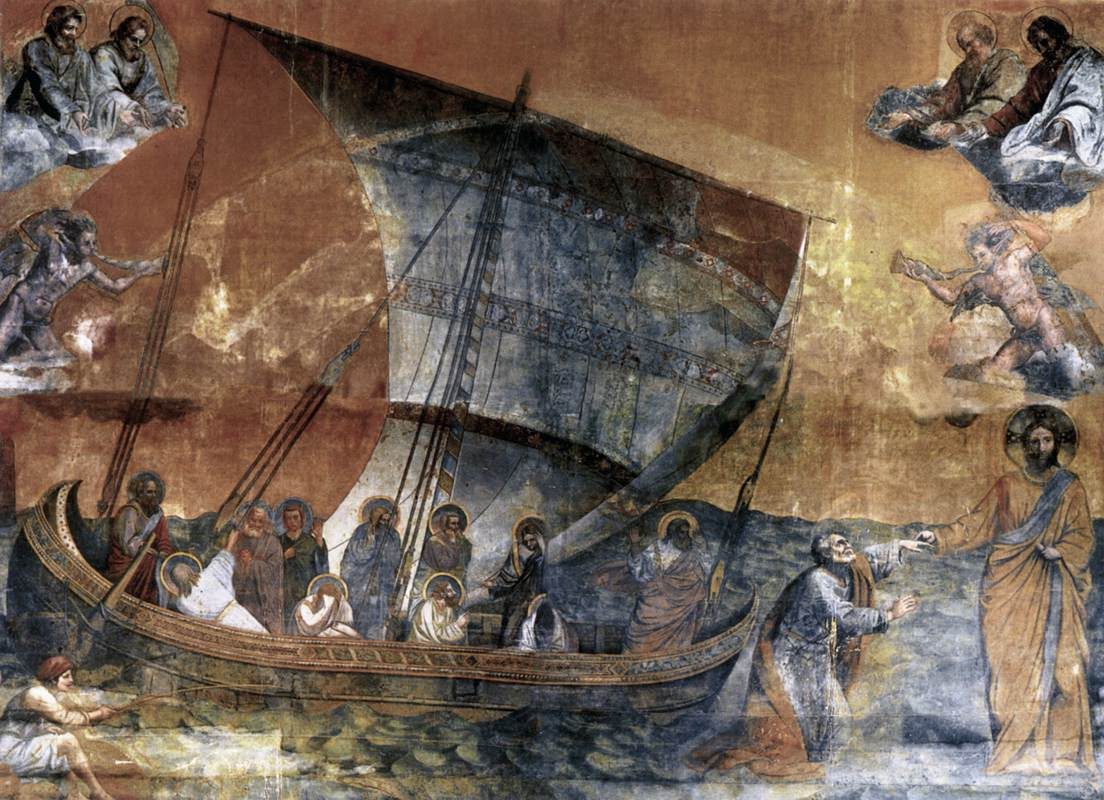
C'è un dipinto medievale della Chiesa come scialuppa di salvataggio. In un mare agitato, i cristiani sulla barca si protendono per strappare dalle onde coloro che stanno annegando. È una bella immagine della Chiesa: una scialuppa uscita nel mondo in risposta al grido di aiuto.
Ma Pawson si sofferma su una cosa:
La scialuppa di salvataggio deve essere in mare. Ma se il mare entra nella scialuppa di salvataggio, allora sono guai veri. La Chiesa deve essere nel mondo se vuole salvare le anime. Ma quando il mondo entra nella Chiesa, allora è finito e affonda.
I prossimi mille anni sono la storia del mare che entra nella barca. Pawson lo spiega in tre capitoli: il mondo cominciò a entrare già in epoche remote (d.C. 100–400); poi vennero i secoli bui (d.C. 400–1000); infine il Medioevo (all'incirca 1000–1500), che ci porta a uno o due anni prima di Martino Lutero.
L'immagine della scialuppa di salvataggio
La barca deve essere nel mare, ma il mare non deve essere nella barca
Pawson apre con un dipinto medievale: la Chiesa come una scialuppa di salvataggio in un mare agitato, che si protende per strappare dalle onde chi sta annegando.
La scialuppa di salvataggio nel mare
La Chiesa è nel mondo per salvare le anime. Questa è la missione stessa.
Il mare dentro la scialuppa di salvataggio
Quando il mondo entra nella Chiesa, la barca affonda. Questa è la storia di mille anni.
«La chiesa deve essere nel mondo se vuole salvare le anime. Ma quando il mondo entra nella chiesa, allora è finita e affonda». — David Pawson
Una cronologia di mille anni
400–1517 d.C.: dalla caduta di Roma a Lutero
Quattro correnti si intrecciano lungo mille anni: il declino, l'ascesa del potere papale, le voci di protesta e un'epoca di scoperte.
Alcune date sono semplificate per chiarezza; le tappe precise sono verificate nelle note ambrate a margine lungo tutto il saggio.
Come il mondo è entrato nella Chiesa (d.C. 100–400)
Quando c'erano martiri così, predicatori così, quando la battaglia veniva vinta, come è entrato il mondo? Pawson nomina quattro cose che cominciarono ad annacquare la Chiesa degli apostoli.
Innanzitutto i vescovi regionali. Nel Nuovo Testamento ogni chiesa aveva più vescovi, chiamati anziani, vescovi o presbiteri, tutti con lo stesso ufficio: guide spirituali. Poi arrivò la fase in cui ogni chiesa ridusse i propri vescovi a uno. Poi una fase in cui un solo vescovo governava molte chiese. La leadership era concentrata in meno mani. Non puoi trovare questo nel Nuovo Testamento; non accadde per i primi cento anni; ma nel secondo secolo emersero uomini di notevole potere e influenza. Non molti vescovi per una chiesa, ma molte chiese per un vescovo.
In secondo luogo, una visione magica dei sacramenti. Prendi il battesimo. Invece di essere un segno esteriore della purificazione spirituale dai peccati che avviene quando una persona crede in Gesù, le persone cominciarono a credere che l'acqua vera e la formula giusta salvassero dal peccato, qualunque fosse l'età; e che, se si fosse peccato dopo il battesimo, lo si sarebbe annullato. Allora la gente rimandava il battesimo fino al letto di morte: aspettava finché il medico diceva che non c'erano speranze, poi correva dal ministro. Ma altri si preoccupavano: e se il nostro bambino morisse? Preferiremmo che i suoi peccati fossero mondati subito. Entrambi i punti di vista erano superstiziosi. Purtroppo prevalse il battesimo dei bambini. Anche la Cena del Signore venne trattata magicamente: la gente cominciò a pensare che il pane fosse davvero la carne di Cristo e il vino il suo sangue; poiché venivano offerti carne e sangue veri, si trattava di un sacrificio; e poiché si trattava di un sacrificio, colui che lo celebrava doveva essere un sacerdote.
Terzo, la religione ufficiale. Quando l'imperatore andava in chiesa, puoi immaginare che lo facessero tutti. Quando lo Stato dichiarò il cristianesimo religione ufficiale, tutti salirono sul carro. Frequentare la Chiesa ufficiale divenne di moda e rispettabile. Pawson dice chiaramente: una religione ufficiale è destinata a produrre un cristianesimo alla moda e rispettabile, e questo non si trova nel Nuovo Testamento.
In quarto luogo, l'appartenenza nominale. Uno scrittore della fine del II secolo osservava: intorno all'anno 50, appartenere alla Chiesa significava che una persona aveva ricevuto il battesimo e lo Spirito Santo e chiamava Gesù Signore; ma intorno al 180 significava che una persona riconosceva la regola della fede (il credo), il canone del Nuovo Testamento e l'autorità dei vescovi. In altre parole, le persone si univano per ragioni diverse dal credere in Gesù e dal ricevere il suo Spirito. Ormai era un'istituzione.
E ogni volta che la Chiesa andava male, c'erano proteste. Nei primi 400 anni ci furono due movimenti: montanismo e monachesimo. Entrambi protestavano contro una Chiesa sempre più ricca, mondana e piena di persone che non si erano mai nemmeno convertite.
Il montanismo sorse in quella che oggi chiamiamo Turchia, in Asia Minore. Un uomo chiamato Montano vide che in molti membri non c'era traccia dello Spirito Santo, così cercò di nuovo lo Spirito di Dio. Scoppiò un risveglio. I doni dello Spirito tornarono nella Chiesa; la vita, il vigore e la realtà tornarono nel culto. Pawson dice che, se vuoi sapere a chi assomigliavano di più oggi, erano pentecostali. C'era un'enorme enfasi sul ritorno di Cristo, un'insistenza sul fatto che nessuno fosse membro senza una vera fede, con santità e digiuno. Ma i vescovi si opposero duramente, e potete indovinare il perché.
La tragedia è che, come spesso accade, questo primo movimento pentecostale prese una brutta piega. Andò male perché queste persone non ricevevano insegnamento. Volevano il calore senza la luce. Pawson dice: la luce senza calore è fredda; il calore senza luce è troppo caldo; devi averli entrambi. Non ascoltavano le Scritture su come esercitare i doni spirituali. E il movimento svanì nel fanatismo. «Questa è una parola che ogni risveglio pentecostale deve conoscere», dice Pawson. «Possiamo imparare dalla storia».
La seconda protesta avvenne in modo molto diverso. Alcuni anni dopo alcuni cristiani dissero: questa Chiesa è così mondana, così morta, che l'unica speranza di recuperare il cristianesimo è uscire dalla Chiesa e dal mondo.
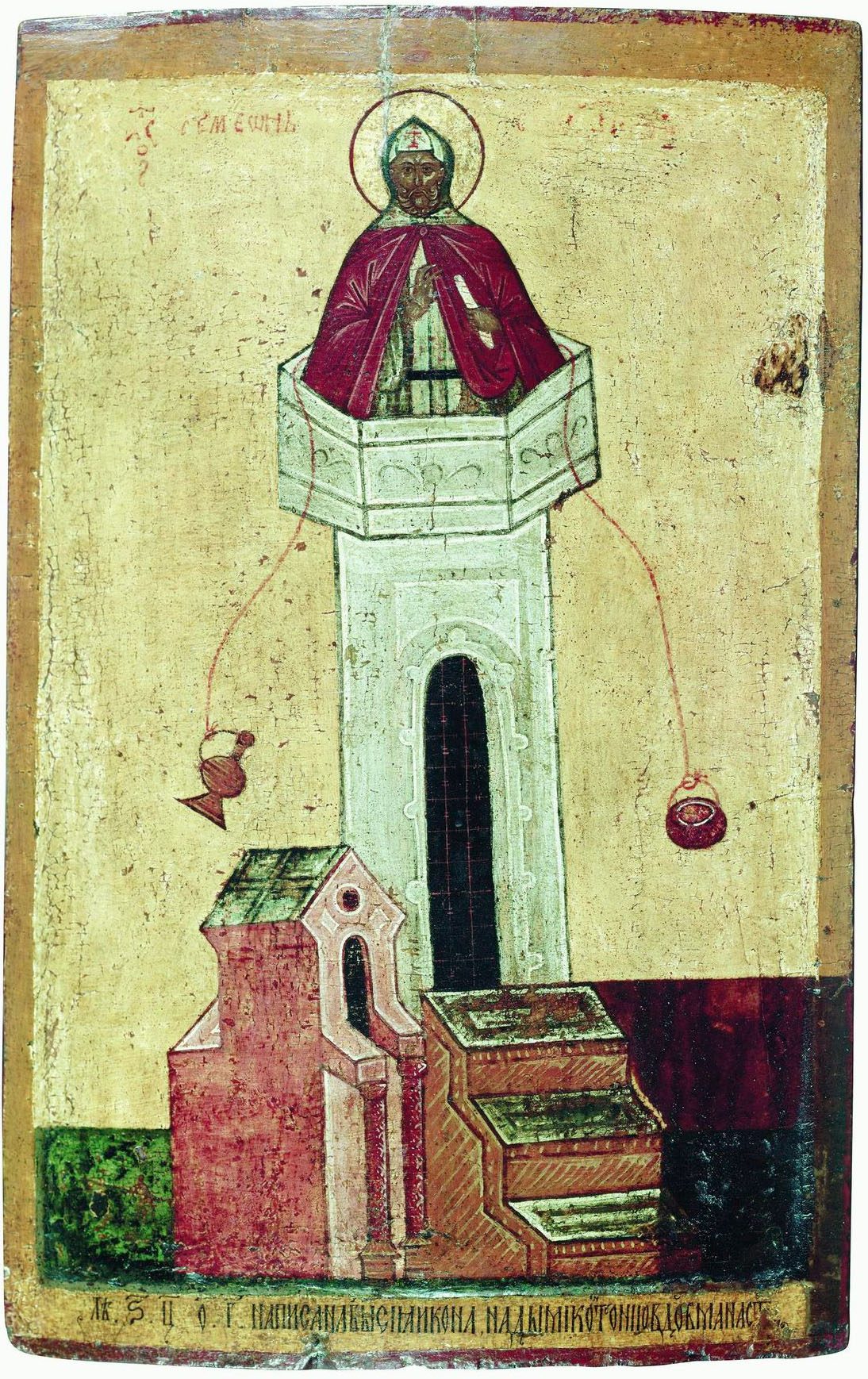
I primi lo fecero da soli: erano eremiti. È la storia più strana. Antonio fu il primo: decise che non sarebbe mai stato un vero cristiano finché non si fosse ritirato in mezzo al deserto. Il problema era che, quando arrivò lì, altri cristiani volevano unirsi a lui, mentre lui non voleva; e soprattutto trovò le sue tentazioni in una grotta deserta non meno forti di quelle che aveva avuto nella Chiesa. C'era un eremita ancora più strano, Simeone Stilita: costruì un pilastro alto circa sessanta piedi, largo un metro in cima, e visse lassù per decenni. Rimase addirittura su una gamba sola per un anno, in segno di protesta, dichiarando che il cristianesimo è qualcosa di duro e tenace. Ed eccolo lì, sul palo, coperto di ulcere e di vermi, in uno stato spaventoso.
Più successo degli eremiti ebbero coloro che fondarono comunità. L'uomo che avviò questo movimento fu Benedetto. A Montecassino, a metà strada tra Roma e Napoli, radunò un gruppo di veri cristiani che vedevano la Chiesa troppo mondana per poterci fare qualcosa e dicevano: verremo a vivere insieme. Non saremo ricchi ma poveri. Non saremo lussuriosi ma celibi. Non saremo ribelli ma obbedienti. Fecero il triplice voto: povertà, castità, obbedienza. E il monastero era gestito come una guarnigione di soldati romani.
La tragedia è che questa protesta andò male esattamente come l'altra. Cristo non ha mai voluto che vivessimo la vita cristiana lontano da tutti gli altri. Successivamente questi monaci, partiti con buone intenzioni, divennero così assorbiti dalla propria salvezza, così introversi, da isolarsi dal mondo e dalla Chiesa. Quel che è peggio, il monachesimo produsse l'idea che esistessero due tipi di cristiani: quelli di seconda classe che si sposano e quelli di prima classe che non lo fanno; quelli di seconda classe che vivono nel mondo e quelli di prima classe che vivono fuori da esso. Ma questo non è l'insegnamento di Gesù. Nostro Signore non era un monaco. Non si ritirò dalla società; visse una vita pura nella società e disse ai suoi discepoli di essere nel mondo senza farne parte.
Entrambi dicevano: la Chiesa non è ciò che Gesù Cristo ha voluto. Uno diceva che lo avremmo riscoperto rientrando nello Spirito. L'altro diceva che lo avremmo riscoperto uscendo dal mondo e dalla Chiesa. Entrambi finirono nel nulla, perché non ritornarono pienamente al cristianesimo del Nuovo Testamento.
Come entrò il mondo — 100–400 d.C.
Quattro crepe e due proteste
Anche nell'epoca della vittoria, quattro cose cominciarono a diluire la Chiesa degli apostoli. E ogni volta che qualcosa andava storto, si levavano voci di protesta.
Vescovi regionali
Da molti anziani per ogni chiesa a un solo vescovo su molte chiese. Il potere si concentrò in poche mani, imitando i governatori di Roma.
Sacramenti magici
Il battesimo era visto come salvifico in sé, quindi veniva rimandato al letto di morte o amministrato ai bambini. La Cena del Signore era presa come carne e sangue letterali, un sacrificio che richiedeva un sacerdote.
Religione ufficiale
Quando l'imperatore andava in chiesa, ci andavano tutti. La fede divenne alla moda e rispettabile invece di essere una resa.
Appartenenza nominale
Le persone si univano per ragioni diverse dal credere in Gesù e ricevere lo Spirito. La Chiesa divenne un'istituzione.
Due proteste
Montanismo
Una protesta pentecostale
Riscoprì lo Spirito e i doni, sottolineando il ritorno di Cristo e la santità. Ma aveva «calore senza luce», rifiutava l'insegnamento e si consumò nel fanatismo.
Monachesimo
Una protesta attraverso il ritiro
Lasciò sia il mondo sia la Chiesa per recuperare il cristianesimo autentico. Ma produsse cristiani «a due livelli», e Cristo non ci ha mai chiamati a vivere separati da tutti.
Entrambe le proteste erano sincere, eppure entrambe non approdarono a nulla perché non tornarono pienamente al cristianesimo del Nuovo Testamento.
I secoli bui: la caduta di Roma (d.C. 410)
Adesso la storia comincia davvero. Nel 410 avvenne una catastrofe. I barbari del nord incombevano sulla città di Roma. Il 24 agosto i Visigoti di Alarico entrarono a Roma e la saccheggiarono. La Roma di quel giorno cadde.
I romani lasciarono la Gran Bretagna in quegli anni per difendere l'Impero, ma non riuscirono a salvare Roma. Non appena i romani si ritirarono, gli Juti, gli Angli e i Sassoni attaccarono la Gran Bretagna e distrussero il cristianesimo in Inghilterra e nel sud-est della Scozia. Il cristianesimo che i soldati romani avevano portato lì nei primi 400 anni scomparve.
Sembrava che la caduta di Roma fosse la fine di tutto. Girolamo, scrivendo da Betlemme, disse: «la razza umana è inclusa nelle rovine». La gente pensava che fosse la fine della civiltà. E questo lasciava perplessa la Chiesa: Roma era sopravvissuta per secoli come impero pagano, ma come impero cristiano era crollata. Molti cristiani non riuscivano a capirlo.
Ma un uomo ci rifletté e fece una dichiarazione incredibile. Disse: è la cosa migliore che sia mai accaduta. Il suo nome era Agostino.
Agostino: un cuore inquieto che trovò il suo riposo
Oggi puoi comprare i suoi libri alla bancarella della stazione. E se ti dicessi alcune delle cose che ha detto questo grande uomo, le riconosceresti. Ha detto: «I nostri cuori sono inquieti e non potranno trovare riposo finché non troveranno riposo in te». Forse la preghiera più citata della storia. Fu Agostino a pregare: «Dammi la castità, ma non subito». E fu Agostino a dire: «Ama e fai ciò che ti piace».
Agostino nacque in Nord Africa. Quando andò a Cartagine come studente, si imbatté nella gente sbagliata. Ben presto ebbe una concubina e un figlio da lei, e visse in quella relazione per anni. Suo padre era pagano, ma sua madre era una donna devota che pregava ogni giorno con le lacrime per il figlio ribelle. In seguito, grazie alla sua mente brillante, fu invitato a diventare professore di retorica a Milano. Là si recò ad ascoltare la predicazione del santo vescovo Ambrogio. Sotto quella predicazione, il giovane dalla mente brillante ma dalla vita dissoluta fu portato a una profonda convinzione di peccato.
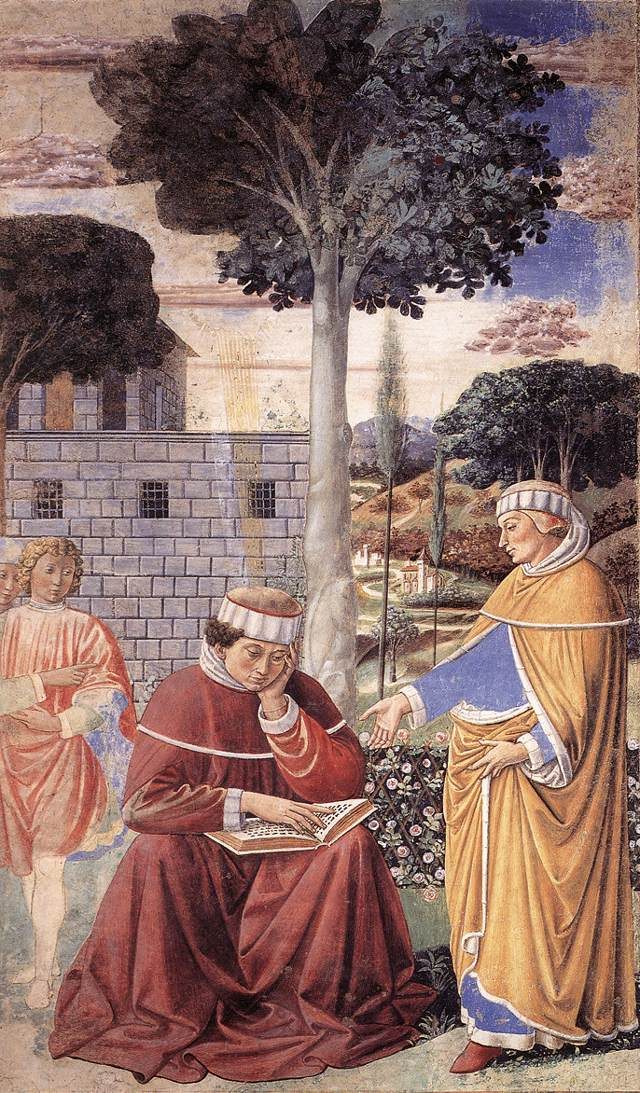
Poi un giorno, seduto in un giardino a piangere per il disastro che aveva combinato nella sua vita, udì la voce di un bambino oltre il muro del giardino: «Tolle lege, tolle lege» — «prendi e leggi». Non seppe mai chi fosse il bambino. Vide però un rotolo sul sedile accanto a lui, lo prese e lesse. Era la Lettera di Paolo ai Romani. Agostino la lesse da cima a fondo e la luce spuntò. Quando in seguito camminò per strada, la donna con cui aveva vissuto lo vide e lui fuggì da lei. Gli corse dietro gridando: «Agostino, sono io, sono io». Lui rispose voltandosi: «Ma non sono io, non sono io».
Scrisse l'intera storia della sua conversione in un libro intitolato Confessioni. Pawson afferma che Agostino ebbe più influenza sulla storia della Chiesa di qualsiasi altro uomo dopo l'apostolo Paolo.
Quando Roma cadde, e Agostino era ormai nella mezza età, il mondo intero sembrò crollargli addosso. Ci rifletté, poi scrisse il secondo grande libro che ricordiamo: La città di Dio. In esso dice: è un bene che questa città pagana di Roma sia crollata, perché ora la città di Dio può sostituirla; è un bene che sia finito un impero terreno, perché ora si può instaurare l'impero celeste. Il libro portò speranza e nuova vita a molti, aiutandoli a capire che la città di Dio sopravviveva ancora quando la città degli uomini se n'era andata.
Ma quello era il problema. La gente cominciò a chiedersi: cos'è questa città di Dio? Visibile o invisibile? Terrestre o celeste? E a questo punto Agostino portò molti a un malinteso. La cosa divertente è che secoli dopo, nella Riforma, i protestanti dissero «noi seguiamo Agostino» e i cattolici romani dissero «noi seguiamo Agostino». Ma i protestanti seguivano il primo libro, Confessioni, e i cattolici il secondo, La città di Dio.
Perché quello che è successo è stato questo: la Chiesa ha detto, se è così, allora la Chiesa ora è il nuovo impero.
La Chiesa diventa un impero: l'ascesa del papato
Uno dei primi risultati fu l'ascesa del vescovo di Roma a un'autorità imperiale. In quei giorni c'era un grande dibattito sulla parola «papa», che significa essenzialmente «padre». Sebbene Gesù avesse detto di non chiamare mai nessuno sulla terra padre, poiché abbiamo un solo Padre nei cieli, la gente cominciò a chiamare «padre» il sacerdote locale. Poi chiamò «padre» il vescovo regionale. Poi finalmente i cinque grandi patriarchi dissero: se qualcuno deve essere chiamato padre, dovremmo essere noi cinque. E alla fine il vescovo di Roma disse: la città di Roma non c'è più, ma adesso sono io l'imperatore; io sono il vescovo capo, e d'ora in poi mi chiamerete solo papa, solo padre.
E il papato, come lo conosciamo, nacque. La cosa sorprendente è che il papa adottò gli stessi titoli e persino le vesti dell'imperatore romano. Prese il titolo Pontifex Maximus, conosciuto oggi come pontefice: il titolo dell'imperatore romano. Agostino fu frainteso e la gente pensò che la Chiesa fosse il nuovo impero. E un impero deve avere il suo imperatore, le sue vesti, le sue cerimonie e il suo trono. Così la Chiesa divenne un impero e il papa divenne un re.
Naturalmente molti cristiani non ne vollero sapere. I francesi no, gli irlandesi no, i gallesi no, gli scozzesi no. Purtroppo lo fecero gli inglesi.
Quando la Chiesa divenne un impero
La scala del potere e il cerchio che si chiude
La scala verso «padre»
Il sacerdote locale viene chiamato «padre»
Poi il vescovo regionale
Poi i cinque grandi patriarchi rivendicano il titolo
Il vescovo di Roma: «chiamate papa solo ME»
Assume i titoli e le vesti dell'imperatore (Pontifex Maximus)
«Non chiamate padre nessuno sulla terra…» (il Vangelo secondo Matteo)
Il cerchio 410 → 800
410 — L'Impero romano crolla
La Chiesa subentra e diventa il nuovo «impero»
800 — Carlo Magno viene incoronato imperatore
L'impero ritorna — il cerchio si chiude
Agostino scrisse La città di Dio per consolare un mondo che crollava; ma la gente lo interpretò erroneamente come se la Chiesa fosse il nuovo impero — e un impero deve avere il suo imperatore, il suo trono e le sue vesti.
Due correnti di cristianesimo si incontrano a Whitby
L'Irlanda, attraverso San Columba, portò la fede a Iona e in Scozia, conducendo la Scozia a Cristo. Poi Aidan arrivò sull'isola di Lindisfarne, al largo del Northumberland. Pawson ricorda di essere stato a Lindisfarne qualche mese prima, accanto alle rovine della chiesa di Aidan, la piccola isola da cui aveva evangelizzato il Northumberland. Questo cristianesimo non papale, il cristianesimo celtico, arrivò in Inghilterra dal nord attraverso l'Irlanda e la Scozia.
Ma poi il papa disse: dobbiamo avere l'Inghilterra, dobbiamo avere quegli Angli. Fece il famoso gioco di parole: non Angli ma Angeli — non Angli, ma angeli. E mandò un missionario anch'egli chiamato Agostino. Questo Agostino sbarcò sull'isola di Thanet, poi si recò a Canterbury. Columba era sull'isola di Iona, nel nord; Agostino sull'isola di Thanet, nel sud.
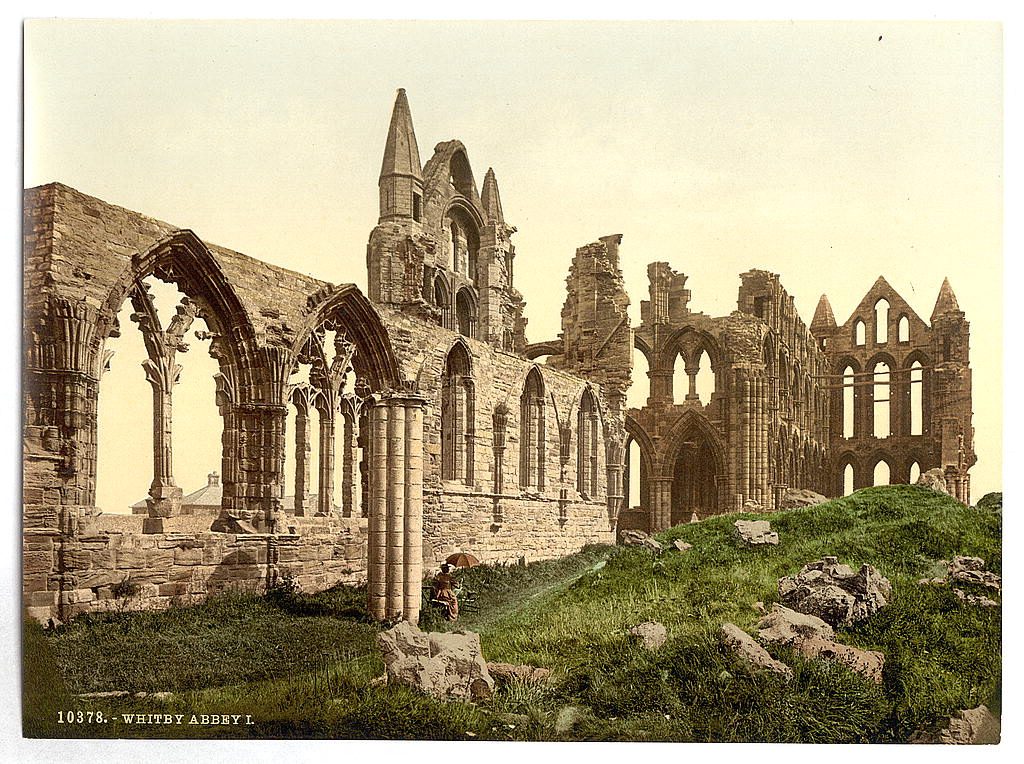
Le due correnti del cristianesimo si incontrarono a Whitby. Puoi ancora vedere le rovine sopra il porto di Whitby dove si incontrarono. Lì, il cristianesimo papale incontrò il cristianesimo celtico, per vedere quale avrebbe vinto. La tragedia è che il cristianesimo papale vinse. Le Isole Britanniche passarono sotto il trono papale. La Scozia cambiò addirittura il suo santo patrono in Sant'Andrea. L'intera situazione era cambiata.
Due correnti si incontrano a Whitby
Quale strada avrebbe preso la Britannia? (Sinodo di Whitby, 664)
Cristianesimo celtico
Irlanda → Iona (Columba) → Lindisfarne (Aidan) → Inghilterra settentrionale
Nessun papa. Semplice, missionario.
Cristianesimo romano
Roma → Agostino a Thanet → Canterbury → il sud
Leale al papa.
Whitby, 664
Vinse il cristianesimo romano. Le isole britanniche passarono sotto il trono papale. Pawson lo chiama una tragedia; ancora oggi si può stare tra le rovine sopra il porto di Whitby.
Schema, non in scala geografica. Whitby ebbe luogo nel 664 (Pawson dice «660»).
Divisione est e ovest (1054)
L'altro grande gruppo di cristiani che non vollero nulla di tutto ciò furono le Chiese del Mediterraneo orientale: Grecia, Asia Minore, Siria, Egitto. Hanno detto: non lo riconosciamo. Che ci sia un solo "papa", un solo padre di tutta la Chiesa, non è nella Scrittura, né nel Nuovo Testamento. E iniziarono una scissione, finalmente completata entro l'anno 1054. Quella divisione ha tenuto separate le Chiese orientale e occidentale per mille anni, e solo negli ultimi anni le due hanno ripreso a dialogare.
Ed ecco una delle cose più incredibili. Intorno all'anno 850, il papa disse: ho scoperto documenti del I secolo che dimostrano che Pietro nominò il primo papa, che nominò il secondo, e così via. Oggi anche la Chiesa romana sa che quei documenti erano falsificazioni; sono chiamati le Decretali pseudo-isidoriane. Eppure il papato fu costruito anche su un falso. C'era un altro documento contraffatto, la Donazione di Costantino, che sosteneva che tutta l'Italia appartenesse al papa. Il papa «scoprì» questo falso e disse: allora tutta l'Italia mi appartiene. Questo è il tipo di fondamento su cui poggiava l'intera struttura, e anche Roma oggi lo sa.
Il Grande Scisma, 1054
Una Chiesa si divise in due per quasi mille anni
I cinque patriarcati (la Pentarchia)
L'Occidente (latino)
Roma — un papa su tutta la Chiesa
• Supremazia del papa
• Aggiunse «e dal Figlio» (filioque) al Credo
• Pane azzimo
Tradizione latina
L'Oriente (greco)
Costantinopoli + i patriarchi — uguali, senza un unico «papa»
• Cinque patriarchi uguali
• Il Credo lasciato invariato
• Pane lievitato
Tradizione greca
Le scomuniche reciproche del 1054 furono revocate insieme solo da papa Paolo VI e dal patriarca Atenagora nel 1965 — vicino agli «ultimi dieci anni» di Pawson, quando predicava negli anni Sessanta.
Carlo Magno e il Sacro Romano Impero (d.C. 800)
Il potere continuò a espandersi, fino all'anno 742, quando nacque un uomo con un sogno: restaurare l'Impero romano, rimetterlo sulla mappa, con se stesso come imperatore e il papa sotto di lui. Il suo nome era Carlo Magno. Era un uomo spietato che diceva: avremo di nuovo un impero romano, e il suo capo non sarà il papa ma un imperatore.
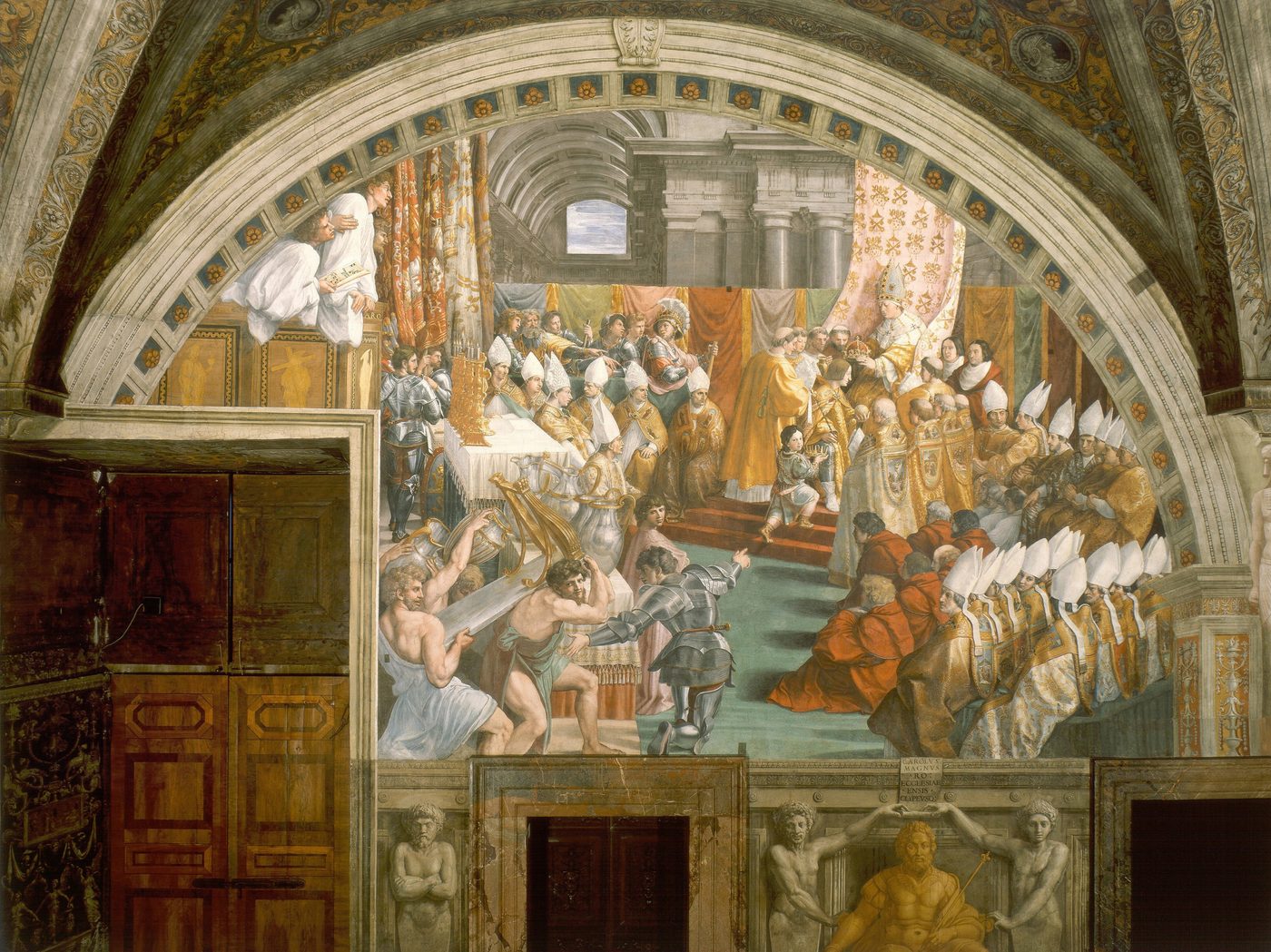
Carlo Magno salvò due volte la vita del papa: una volta dai barbari, una volta dalla folla romana inferocita contro di lui. Il papa disse: mi hai salvato la vita due volte, cosa vorresti che facessi per te? L'imperatore rispose: il giorno di Natale, incoronami imperatore. E nell'anno 800, il giorno di Natale, nella chiesa più grande di Roma, durante la funzione mattutina, il papa incoronò il re dei Franchi, Carlo Magno, come imperatore di quello che sarebbe stato chiamato Sacro Romano Impero. Mille anni dopo, il Sacro Romano Impero esisteva ancora.
Ecco, abbiamo chiuso il cerchio. L'Impero romano crollò nel 410. La Chiesa prese il controllo dell'impero. Poi nell'800 l'imperatore ritornò e tolse l'impero alla Chiesa. Tutto sembrava tornato al punto di partenza.
Carlo Magno fece alcune cose buone e altre cattive. Tra le buone: proibì al clero di tenere concubine, di frequentare taverne e di andare a caccia; fondò molte scuole. Tra le cattive: cercò di limitare il matrimonio del clero, ma non fu lui a introdurre il sacerdozio celibe. Rese inoltre centrale l'idea di cristianità, il regno che sarebbe stato cristiano sotto l'imperatore. E l'idea di cristianità persiste fino a oggi.
L'ascesa dell'Islam
Poiché ora la Chiesa era ricca e potente, divenne corrotta. E ancora una volta arrivarono le proteste, questa volta da est e da nord. Da est, la protesta proveniva da due fonti. La prima era l'Islam.
Pawson lo chiama il più grande giudizio mai caduto sulla Chiesa cristiana. Aveva vissuto in Arabia e aveva visto qualcosa di questa religione. Maometto nacque nel 571 alla Mecca, il centro dell'idolatria e della superstizione araba. Nel mezzo della Mecca c'era un grande edificio quadrato drappeggiato di nero, e al suo interno una pietra sacra, la Kaaba, ritenuta un meteorite caduto dal cielo. Maometto crebbe in mezzo all'idolatria e alla superstizione degli arabi, e ne fu disgustato.
Allora si rivolse prima agli ebrei, poi ai cristiani, e chiese: avete voi la vera religione? La tragedia, dice Pawson, è che Maometto non incontrò mai un cristiano convertito e non vide mai il cristianesimo del Nuovo Testamento. Tutto ciò che vide furono i paramenti dei sacerdoti, immagini e crocifissi. E disse: questa è idolatra come la religione degli arabi. Se solo Maometto avesse incontrato un vero cristiano alla fine del VI secolo! Ma non lo fece.
Allora disse: bene, cercherò una nuova religione che sia pura. Sposò una ricca vedova, trascorse anni nel deserto e lì disse di aver ricevuto questo messaggio: non c'è altro Dio all'infuori di Allah, e Maometto è il suo profeta. Iniziò a predicarlo, scrivendo ciò che aveva udito nelle sue visioni in un libro, il Corano. Fu perseguitato e dovette fuggire a Medina nel 622. Questa è la data da cui gli arabi calcolano il loro calendario. Tornò alla Mecca con un esercito e impose la nuova religione. Da allora in poi tutti dovettero pregare verso la Mecca e, attraverso una religione di buone opere — digiunando, pregando cinque volte al giorno, osservando il Ramadan, facendo il pellegrinaggio alla Mecca e facendo l'elemosina — si poteva arrivare in paradiso. E quella religione fu imposta con la forza delle armi.
L'Islam spazzò via gran parte della presenza cristiana dal Mediterraneo e lungo le coste nordafricane, dove per secoli erano esistite chiese. Si diffuse dalla Spagna attraverso l'Asia Minore. La sua avanzata verso l'Occidente fu fermata a Tours/Poitiers nel 732; gli assedi di Vienna del 1529 e del 1683 appartengono invece all'espansione ottomana, molti secoli dopo. Sembrava che l'Islam avrebbe schiacciato il cristianesimo con una gigantesca manovra a tenaglia.
È il giudizio più grande che Dio abbia mai permesso che si abbattesse sulla Chiesa cristiana. Ed è stato meritato. Ma fin qui e non oltre. Dio non avrebbe permesso che il cristianesimo fosse spazzato via del tutto.
Secondo la sintesi teologica di Pawson, Dio li fermò; storicamente, l'avanzata araba fu arrestata a Tours/Poitiers, mentre gli assedi di Vienna furono ottomani e molto posteriori. L'espansione musulmana lasciò la presenza cristiana concentrata soprattutto sulla costa nordafricana e nell'area dell'attuale Turchia.
Mappa dei secoli bui
Due maree irrompono sul mondo cristiano (410–732 d.C.)
Frecce arancioni: i barbari avanzano verso sud su Roma. Frecce verdi: l'islam spazza il Mediterraneo dall'Arabia, attraverso il Nord Africa e la Spagna, fino a Tours.
Mappa di base: l'Impero romano (Wikimedia Commons, pubblico dominio). Le frecce sono direzioni schematiche dell'avanzata, non percorsi esatti. Vienna indica il successivo limite ottomano — Pawson comprime quasi mille anni di frontiera in un'unica tenaglia.
Testimoni nascosti nell'oscurità
Perché proprio allora, in tutta Europa c’erano piccoli gruppi di cristiani che si incontravano attorno alla Parola di Dio. Hanno visto che la chiesa ufficiale era corrotta, quindi si sono semplicemente incontrati in piccoli gruppi, hanno letto questo libro e hanno detto: adoreremo Dio con semplicità. Non abbiamo bisogno di sacerdoti, perché abbiamo Gesù, il nostro sommo sacerdote. Non abbiamo bisogno di un papa, perché abbiamo un Padre in cielo. Abbiamo solo bisogno della parola di Dio e dello Spirito Santo.
Di loro non sappiamo quasi nulla perché furono così perseguitati che perfino i documenti della loro storia furono distrutti. Pawson chiede ai suoi ascoltatori se qualcuno abbia mai sentito parlare di un gruppo chiamato Bogomili. Erano gruppi che si riunivano intorno alla Parola di Dio, soprattutto in Bulgaria e Bosnia; la parola «Bogomil», dice Pawson, in bulgaro significa «amici di Dio». C'erano i Pauliciani, che si incontravano in Armenia, Tracia e Asia Minore. C'erano i Catari, un nome che significa «i puri», la stessa radice della parola successiva «puritano»; si incontravano nei Balcani e in tutta Europa.
Pawson confessa: nella sua semplicità pensava che per mille anni fossero esistite solo la Chiesa romana e le Chiese orientali. Questo non è vero. Era entusiasta di scoprire che in tutti quei secoli c'era un flusso continuo di semplici cristiani che si incontravano attorno alla Parola di Dio nelle chiese locali. Pagarono con la vita, ma si incontrarono e mantennero accesa la fiamma della fede per le generazioni a venire.
Il Medioevo: Ildebrando mette il papa al di sopra di tutto
Arriviamo ora al capitolo finale, dall'anno 1000 al 1500, chiamato Medioevo perché compreso tra i secoli bui e l'Età Moderna.
Il primo uomo di cui parlare è Ildebrando. Questo monaco divenne papa e non gli piaceva essere il numero due. Ormai esisteva un Impero romano restaurato con un nuovo imperatore, ma il papa era il numero due. Ildebrando decise che il papa dovesse essere il numero uno e ci riuscì. Fece tante cose buone: combatté la simonia nella Chiesa, la compravendita degli incarichi ecclesiastici. Ma lo fece perché credeva che il papa dovesse controllare tutto, compresi i re.
Lo scontro tra Ildebrando e l'imperatore Enrico IV fu risolto nel modo più drammatico e terribile. Enrico IV sfidò Ildebrando dicendo: sono io il numero uno. Ildebrando rispose: non lo sei. Lasciamo che siano le persone a decidere. E la gente decise che Ildebrando lo fosse. Lassù sulle Alpi il papa incontrò l'imperatore Enrico IV, che veniva dal nord. Il papa si trovava in una casa di montagna e fece aspettare l'imperatore fuori, nella neve, a piedi nudi, per tre giorni, prima di parlargli. In questo modo Ildebrando mise decisamente in secondo piano l'imperatore.
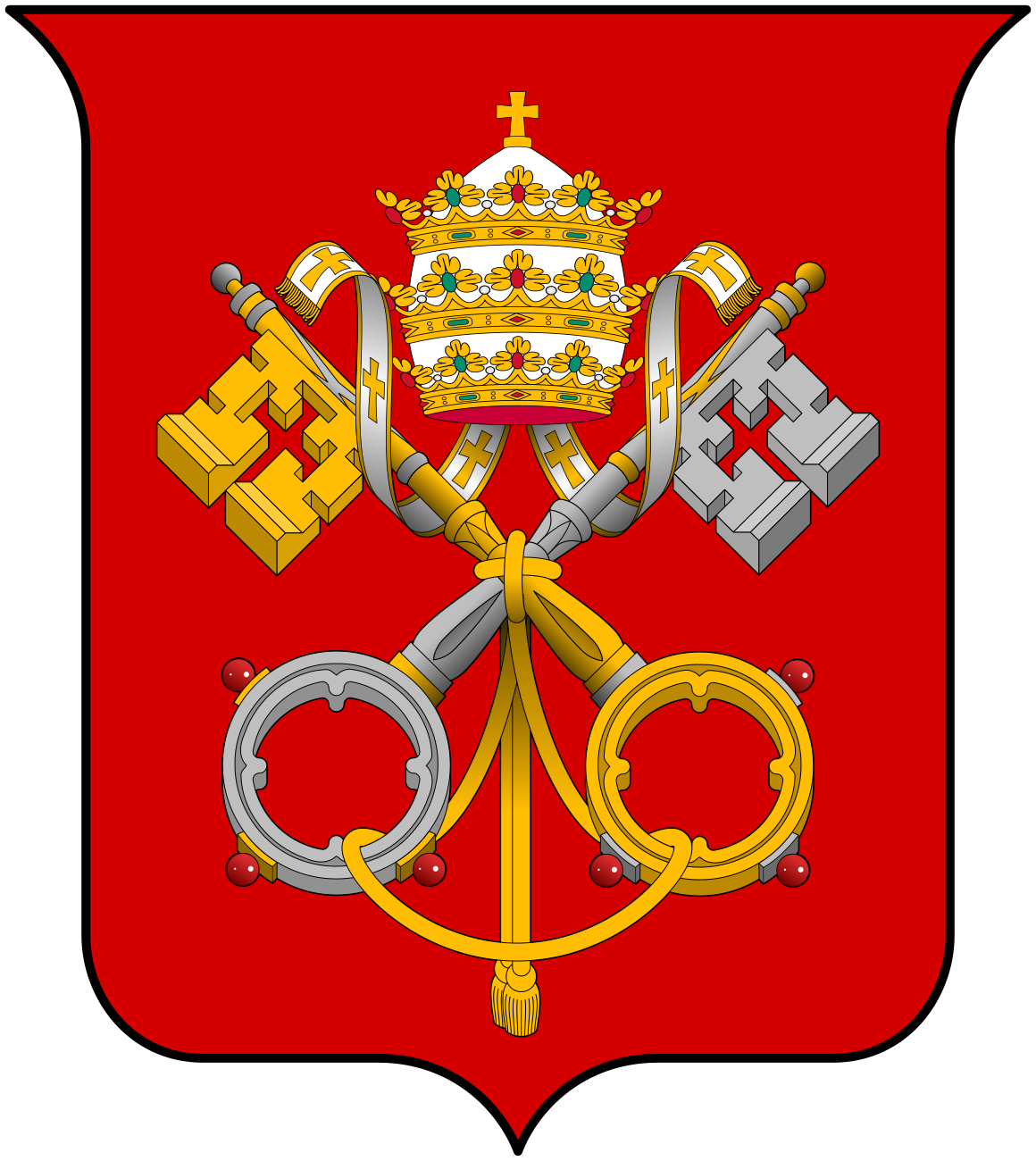
Da quel momento in poi, per i successivi 500 anni, il papa fu la figura più influente e il papato fu la potenza che controllava il mondo occidentale. La Chiesa era di nuovo l'impero. Pawson collega a questo papa il simbolo delle chiavi incrociate di San Pietro: una chiave rappresenterebbe l'autorità del potere sacro sulla Chiesa, l'altra l'autorità del potere secolare sullo Stato. Quelle chiavi incrociate esprimono la pretesa di Ildebrando: essere il capo sia della Chiesa sia dello Stato.
Le Crociate: quando la Chiesa prese la spada
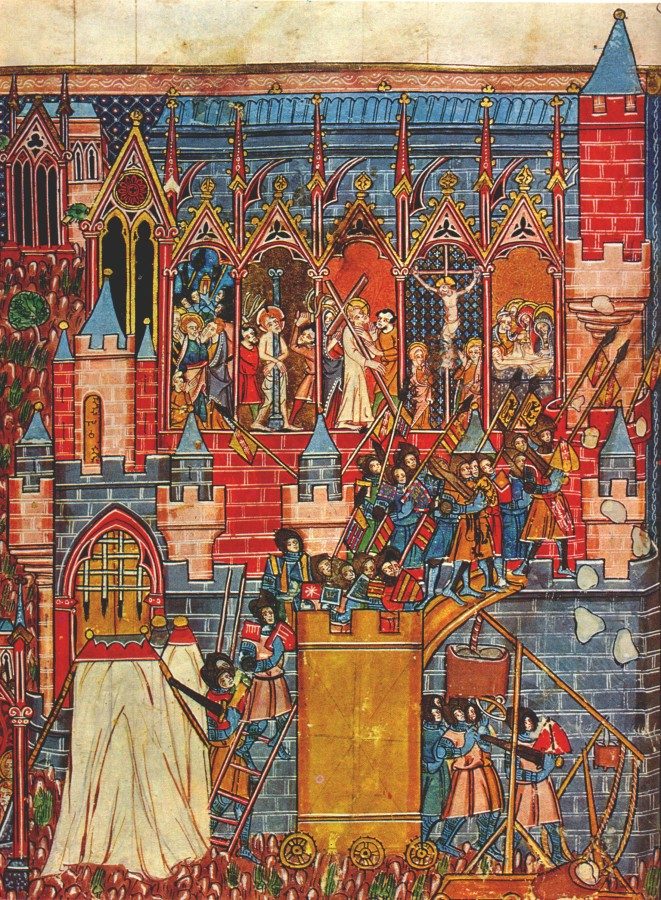
Ciò metteva a disposizione della Chiesa la forza degli eserciti. E poiché Ildebrando la pensava così, cominciò a usare la forza per instaurare il regno di Cristo. Non è mai stato commesso un errore più grande. Il primo risultato dell'idea che la forza sia valida per la Chiesa fu la realizzazione di otto crociate in Terra Santa.
Ormai i luoghi santi, Gerusalemme e altri, erano in mano ai musulmani, ai saraceni e ai turchi. Il papa decise che la Chiesa si sarebbe fatta strada e avrebbe conquistato la Terra Santa per Cristo. La Prima Crociata nacque nel 1095. L'idea era stata di Ildebrando, ma egli morì prima che potesse essere realizzata. Le persone portavano una croce sulla spalla, chiamata crux, e da ciò deriva la parola crociata.
La Prima Crociata fu organizzata da un predicatore trasandato e fanatico chiamato Pietro l'Eremita. Partì con 600.000 uomini, e ne arrivò solo un decimo; la maggior parte morì sulle alte montagne della Turchia. Ma arrivarono e presero Gerusalemme. La saccheggiarono, violentarono le donne e instaurarono il cosiddetto dominio di Cristo a Gerusalemme massacrando tutti i saraceni della città. È cristiano? Dici subito: certo che no. Ma tenete presente che erano stati ingannati. Migliaia di persone pensavano che questo fosse ciò che la Chiesa avrebbe dovuto essere: un impero terreno che si affermava con la forza.
Naturalmente c'erano degli incentivi. Alle persone veniva promessa l'assoluzione se fossero andate a combattere per Cristo; indulgenze che le avrebbero tenute lontane dal purgatorio per molti anni; la cancellazione legale dei debiti; e la grazia ai criminali che lasciassero il carcere per andare a combattere. Puoi immaginare l'equipaggio eterogeneo che ne risultò. Il re Filippo di Francia ne fu coinvolto. Il re Riccardo Cuor di Leone d'Inghilterra ne fu coinvolto. Otto volte partirono. Una fu la crociata dei bambini: 2.000 piccoli partirono per l'Europa per cercare di riportare la Palestina a Gesù. Non ne arrivò uno. Il papa disse che gli angeli avrebbero miracolosamente fornito cibo; ma il cibo non arrivò mai e gli angeli non apparvero mai.
Una delle sconfitte decisive fu quella alle Corna di Hattin. Il 4 luglio 1187 l'esercito crociato morì di sete, attirato in un terreno arido e spezzato da Saladino. E nel 1270 la campagna fallì quando il suo leader, re Luigi IX di Francia, morì di malattia prima di Tunisi; la presenza crociata finì soltanto con la caduta di Acri nel 1291.
È una delle storie più tristi della storia della Chiesa. Non ha fatto nulla. Niente. E infatti ha fatto peggio di niente.
Le otto crociate
Quando la Chiesa usò la spada invece dell'amore (1095–1291)
Ildebrando credeva che la forza potesse instaurare il regno di Cristo. «Non fu mai commesso errore più grande», dice Pawson.
Crociata dei poveri · 1096
Pietro l'Eremita guida una folla; la maggior parte muore sulle montagne dell'Asia Minore.
Prima crociata · 1095–99
Conquista Gerusalemme (1099) e massacra i suoi abitanti. L'unico «successo».
Seconda crociata · 1147–49
Predicata da Bernardo di Chiaravalle; fallisce.
Terza crociata · 1189–92
Riccardo Cuor di Leone contro Saladino; Gerusalemme non viene riconquistata.
Quarta crociata · 1202–04
Devia per saccheggiare Costantinopoli — cristiani contro cristiani.
Crociata dei bambini · 1212
Una marcia di bambini; nessuno raggiunge la Terra Santa.
Crociate successive · 1217–54
Fallimento dopo fallimento, comprese le due campagne del re Luigi IX.
Hattin e il crollo · 1187 / 1291
Sconfitti ai Corni di Hattin (1187); Acri, l'ultima roccaforte, cade nel 1291.
Gli incentivi a partire
Nel 1270 il papa la fece cessare. «Non fece nulla. Nulla. E anzi fece peggio di nulla». — David Pawson
L'Inquisizione, due o tre Papi e la corruzione
Dall'uso della forza all'esterno della Chiesa, il papa decise ora di usare la forza all'interno della Chiesa, aprendo un altro terribile capitolo chiamato Inquisizione. Pawson dice che non osa descrivere le cose fatte nel nome di Cristo. I vescovi si rifiutarono di gestire questa macchina di crudeltà, malizia e sospetto; ma i domenicani la presero in carico. E per molti anni innumerevoli persone vissero nella paura per la propria vita a causa di quella cosa terribile.
Tutto sommato, ciò che era sbagliato era questo: la Chiesa si considerava un impero terreno a cui era consentito usare la forza per affermare la causa di Cristo. Ora sappiamo che questa non è la strada. La Chiesa non deve usare la forza ma l'amore e non deve mai costringere nessuno ad accettare Cristo, se non attraverso l'amore e la predicazione del Vangelo.
E questo tipo di corruzione presto si ritorce su se stessa. Il potere tende a corrompere, disse Lord Acton, e il potere assoluto corrompe assolutamente. Ben presto ci furono due papi in lotta per il trono, poi tre: un papa ad Avignone e un papa a Roma. Chi era il papa, a quel punto? Riuscirono a ricomporre il papato, ma poi la corruzione si diffuse più in basso: i monasteri divennero corrotti e troppo ricchi, i vescovi troppo potenti e le parrocchie corrotte.
E le pratiche della religione cristiana ordinaria divennero corrotte. C'erano preghiere a Maria, anche se non ci è mai stato detto di pregare Maria; lei è un essere umano come il resto di noi. C'erano preghiere per i morti, preghiere ai santi. C'era la dottrina che faceva più paura: il purgatorio, quanti anni di sofferenza dopo la morte. C'era la dottrina della messa come sacrificio. C'era una confessione a un prete. C'erano le indulgenze, per cui con una somma di denaro si potevano comprare tanti anni di purgatorio. C'erano pellegrinaggi. C'era il culto delle reliquie. C'erano immagini nel culto. Non c'è un briciolo di questo nel Nuovo Testamento.
Le aggiunte medievali
«Di tutto questo non c'è neppure una briciola nel Nuovo Testamento»
Una pratica alla volta, aggiunta nel corso dei secoli. La colonna di destra indica la data (approssimativa) in cui ciascuna divenne ufficiale o fu definita formalmente.
Le date sono approssimative: molte pratiche iniziarono come consuetudini e furono definite solo in seguito nei concili (per esempio, Laterano IV nel 1215 e Firenze nel 1439). Questa è la lettura protestante di Pawson; vedi il riquadro «altre voci» per le prospettive cattolica e ortodossa.
La colpa fondamentale: la Chiesa pensava di essere Cristo
Allora qual era il difetto fondamentale dietro tutto questo? Se dimentichi la maggior parte di ciò che ho detto stasera, questo è importante. Ti dirò cosa c'era che non andava in una frase:
La Chiesa aveva cominciato a pensare che lei fosse Cristo. E lo fa ancora.
Pawson racconta di aver chiesto a un importante sacerdote: è ancora vero? Lui ha risposto: sì, e non cambierà. Pawson ha detto: il mio unico problema è che non credo che la Chiesa sia Cristo e non credo che sia profeta, sacerdote e re. Credo che Gesù lo sia. La Chiesa non è il nostro profeta, né il nostro sacerdote, né il nostro re. E il prete ha risposto con franchezza: non ne discuteremo, perché non cambierà mai.
Questo è il difetto fondamentale. Se credo di essere il profeta del mondo, posso dire al mondo cosa credere e dichiarare infallibilmente ciò che è vero. Se sono il sacerdote del mondo, posso dire: devi venire ai miei sacramenti, devi confessarti a me se vuoi essere salvato. E se penso di essere il re del mondo, affermerò la mia autorità il più ampiamente possibile.
È una confusione tra il capo e il corpo della Chiesa. La testa è divina; il corpo è umano. È Cristo che è il capo, e lui che è profeta, sacerdote e re. La Chiesa no. Questa è la differenza fondamentale tra protestantesimo e cattolicesimo, ed è più grande oggi che mai. Cristo ha detto: Costruirò la mia chiesa. Non ha detto: lo costruisci tu. E Cristo è il capo della chiesa; nessun altro è il capo e nessun altro può esserlo.
L'errore fondamentale
La Chiesa cominciò a pensare di essere Cristo
Se dimentichi tutto il resto di questo saggio, dice Pawson, ricorda questo. Ogni distorsione nasce da una sola confusione: tra il capo e il corpo.
Il capo — divino
Cristo
Lui solo è Profeta, Sacerdote e Re
Il corpo — umano
La Chiesa
Un corpo che obbedisce al capo, senza mai sostituirlo
Profeta
colui che dichiara la verità al mondo
Sacerdote
colui che unisce le persone a Dio
Re
colui che governa e stabilisce l'autorità
Quando il corpo pensa di essere il capo
«Se sono il profeta del mondo, posso dire al mondo che cosa credere. Se sono il suo sacerdote, dovete venire ai miei sacramenti. Se sono il suo re, stabilirò la mia autorità il più ampiamente possibile». Questa è la radice di tutto.
«Il governo sarà sulle sue spalle». (il libro di Isaia) Cristo è il capo, e nessun altro può esserlo.
Le voci di protesta nel Medioevo
Ma Pawson è felice di dire che per tutto il Medioevo, dal 1000 al 1500, c'erano sempre persone che dicevano: questo non è vero, questo non è cristianesimo, non è questo ciò che Gesù intendeva. Riapparvero piccoli gruppi, che portavano spesso i nomi dei luoghi in cui vivevano.
C'erano i Beghardi dei Paesi Bassi, persone che si incontravano attorno al libro e dicevano: Cristo è il capo della nostra Chiesa. C'erano i Valdesi, dal nome di Pietro Valdo; credevano che questo libro dicesse loro ciò che Gesù intendeva per Chiesa. A loro merito, andarono dal papa e chiesero: questo è ciò che vediamo, potremmo essere riconosciuti come parte valida della Chiesa se mettiamo in pratica questo libro? Avrebbero potuto fare di più? Volevano restare nella Chiesa romana ma seguire il libro. Il papa disse: no, se fate ciò che intendete, vi perseguiteremo. Ed essi furono perseguitati, fuggendo da una valle all'altra.
Il gruppo successivo era quello degli Albigesi del sud della Francia; anche loro lessero il libro e videro cosa doveva essere la Chiesa. Purtroppo, la campagna più sanguinosa mai lanciata dal papato fu contro queste persone. Il papa inviò due nobili spagnoli per metterli a morte. Ma tornarono e dissero al papa: questi sono buoni cristiani, non criminali, non ti combattono, vogliono solo stare nella Chiesa e praticare la loro comprensione della Scrittura. E uno di loro, di nome Domenico, disse: questo lo porteremo all'interno della Chiesa. E fondarono i Domenicani, una controparte degli Albigesi all'interno della Chiesa. La tragedia è che in seguito l'ordine domenicano si corruppe a tal punto da voler gestire l'Inquisizione. C'erano anche i Fratelli della vita comune in Germania. Tutti erano indipendenti dalla gerarchia cattolica romana, basavano tutto sulla Bibbia nella lingua del popolo e tutti furono perseguitati fino alla morte. La vera Chiesa è sempre stata perseguitata.
Tra quelli all'interno della Chiesa che videro questo c'erano anche persone che si ritirarono e mantennero la fede in privato. Uno di questi era Bernardo di Chiaravalle. Era un giovane nobile molto serio e appassionato di lettere. Dopo la morte della madre, intorno al 1112–1113, entrò liberamente nel monastero, rinunciò alle sue ricchezze e si ritirò con dodici amici in una valle piena di ladri. Là viveva di foglie ed erbe di faggio cotte, in una povertà estrema; ogni mattina faceva alzare i suoi amici alle due per la preghiera, non lasciava che smettessero di lavorare fino alle otto di sera e fondò una comunità nella valle di Chiaravalle.
Bernardo divenne uno dei cristiani più potenti d'Europa, senza carica, senza denaro, senza alcuna forza materiale o psicologica. Era chiamato il «creatore di papi». In privato amava Gesù; Martino Lutero disse che, tra tutti i monaci e i preti della storia, stimava soprattutto Bernardo di Chiaravalle. Ma in pubblico si sentiva obbligato a sostenere il papato. Qualcuno ha detto saggiamente che ritardò la Riforma di almeno due secoli.
L'altro uomo, quasi contemporaneo, era Francesco, nato nella cittadina di Assisi. Francesco venne portato ad affrontare la vita incontrando per strada un lebbroso. Passò davanti al lebbroso dall'altra parte. Ma mentre passava si chiedeva: che razza di uomo sono io per allontanarmi da un prossimo? Tornò indietro e baciò il lebbroso. Da allora Francesco cominciò a prendere sul serio la vita. Cercò Cristo e lo trovò. Radunò intorno a sé un gruppo di amici che uscivano a due a due, nella più assoluta povertà, predicando il Vangelo e conquistando le persone a Cristo.
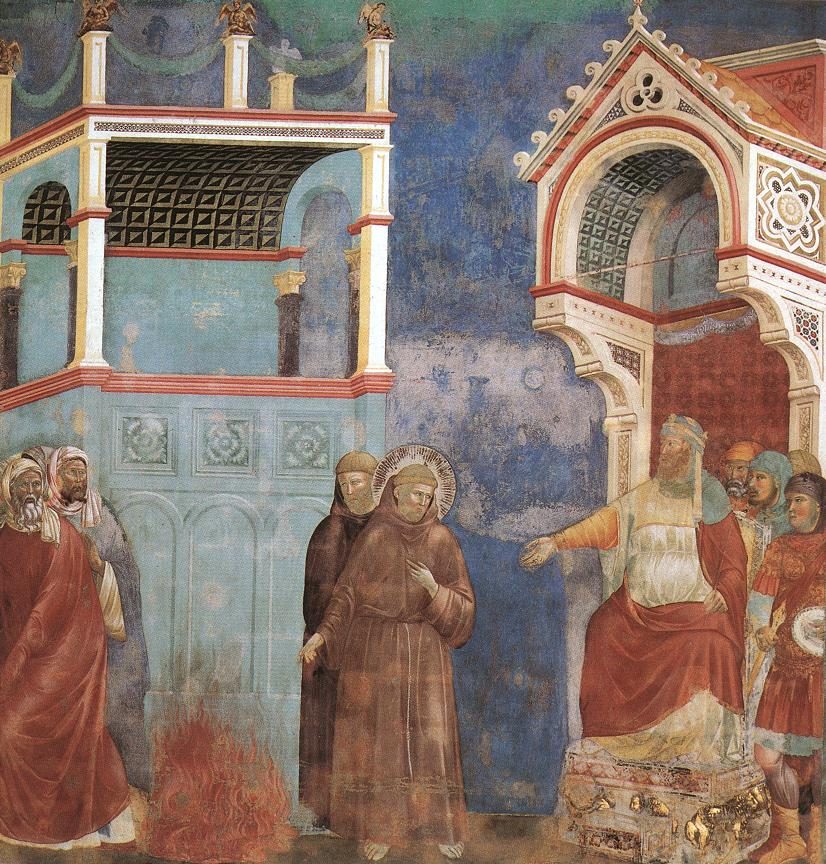
Sebbene sia ricordato più per il suo modo di trattare gli animali e gli uccelli e per il suo amore unico per la natura, Pawson afferma che Francesco dovrebbe essere ricordato per qualcos'altro: fu il primo missionario presso i musulmani. Rischiando la vita, si recò dallo stesso sultano per predicare il Vangelo di Gesù al capo dei musulmani. Invece di andare con 600.000 soldati per combatterli, Francesco andò da solo, in povertà, a predicare l'amore di Gesù. E fu il primo e l'ultimo missionario presso i musulmani arabi per molti secoli, fino a Raimondo Lullo. I seguaci di Francesco indossavano vesti grigie, così venivano chiamati Greyfriars («frati grigi»); i domenicani vestivano di nero, così venivano chiamati Blackfriars («frati neri»). Entrambi tentarono di riportare la semplice vita cristiana nella Chiesa, ma entrambi fallirono e si corruppero: i francescani divennero mendicanti professionisti e i domenicani gestirono l'Inquisizione.
L'intera situazione richiedeva a gran voce che un uomo dicesse la verità e che la dicesse così bene che tutti potessero sentirla e capirla. Arnaldo da Brescia, intorno al 1150, iniziò dicendo: la ricchezza e il potere mondano non dovrebbero essere nelle mani della Chiesa. Ma Bernardo di Chiaravalle gli si oppose e lo fece tacere. Poi arrivò Marsilio, un medico, che lesse la sua Bibbia e disse: la Bibbia è la norma della Chiesa, e nessun'altra; vescovi e papi sono invenzioni umane. Ma fu messo a tacere. Un inglese che era professore all'Università di Parigi, Guglielmo di Ockham, parlò anch'egli e fu messo a tacere.
Poi arrivò un uomo dello Yorkshire, destinato a diventare la cosiddetta stella mattutina della Riforma. La stella del mattino è la stella che puoi ancora vedere quando sorge il sole. E la stella mattutina della Riforma fu un abitante dello Yorkshire che arrivò a Oxford come studente brillante, divenne professore a Oxford, viaggiò molto e fu soprannominato Dottor Evangelico. Il suo nome: John Wycliffe.
Quell'uomo riscoprì la Bibbia, forse più di chiunque altro fino a Martino Lutero. Protestò contro gli abusi papali. Cinque decreti (le cosiddette bolle) furono emessi contro di lui. Fu portato in tribunale a Canterbury. Ma si rivolse alle Scritture, l'unica legge della Chiesa, e disse: metterò questa Bibbia dal latino in inglese; farò conoscere questo libro ai contadini. E Wycliffe lavorò alla traduzione, sapendo che, se avesse messo la Bibbia nelle mani della gente comune, avrebbe dato loro la risposta a tutta la corruzione nella Chiesa. Radunò intorno a sé un gruppo di predicatori che giravano per i villaggi, predicando e cantando il Vangelo nella piazza del mercato. La gente li prendeva in giro come cantanti di ninne nanne, chiamandoli Lollardi.
Vai ad Amersham. Su Station Road, svolta a sinistra attraverso le case, fuori nel campo. C'è un monumento alle persone bruciate vive dai propri figli, costretti ad accendere i falò e a bruciare i loro genitori. Perché? Perché i loro genitori furono sorpresi nei boschi di Amersham a leggere la Bibbia. Questo fu il risultato di Wycliffe e dei Lollardi. E lo stesso Wycliffe morì pacificamente come rettore di Lutterworth.
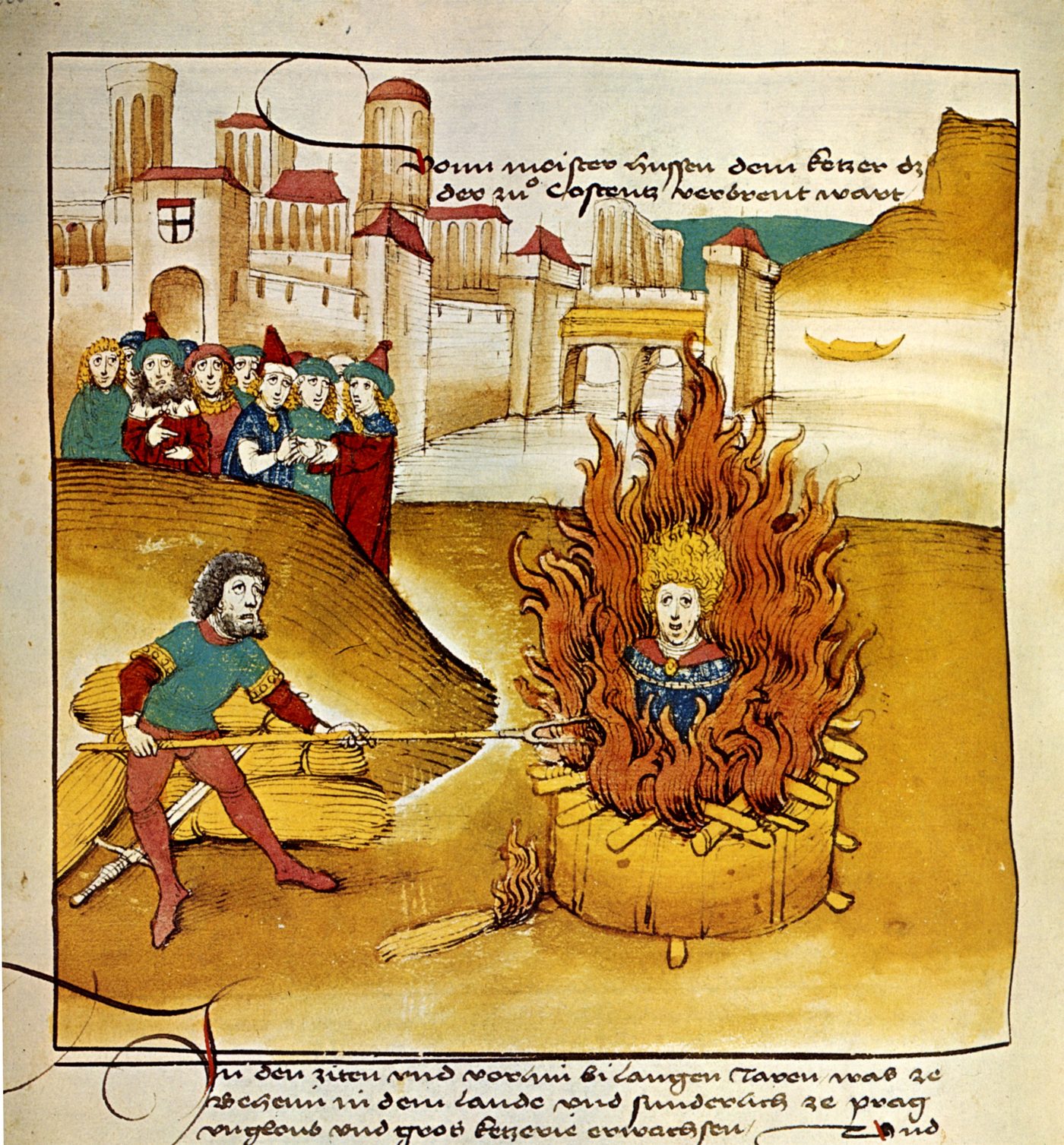
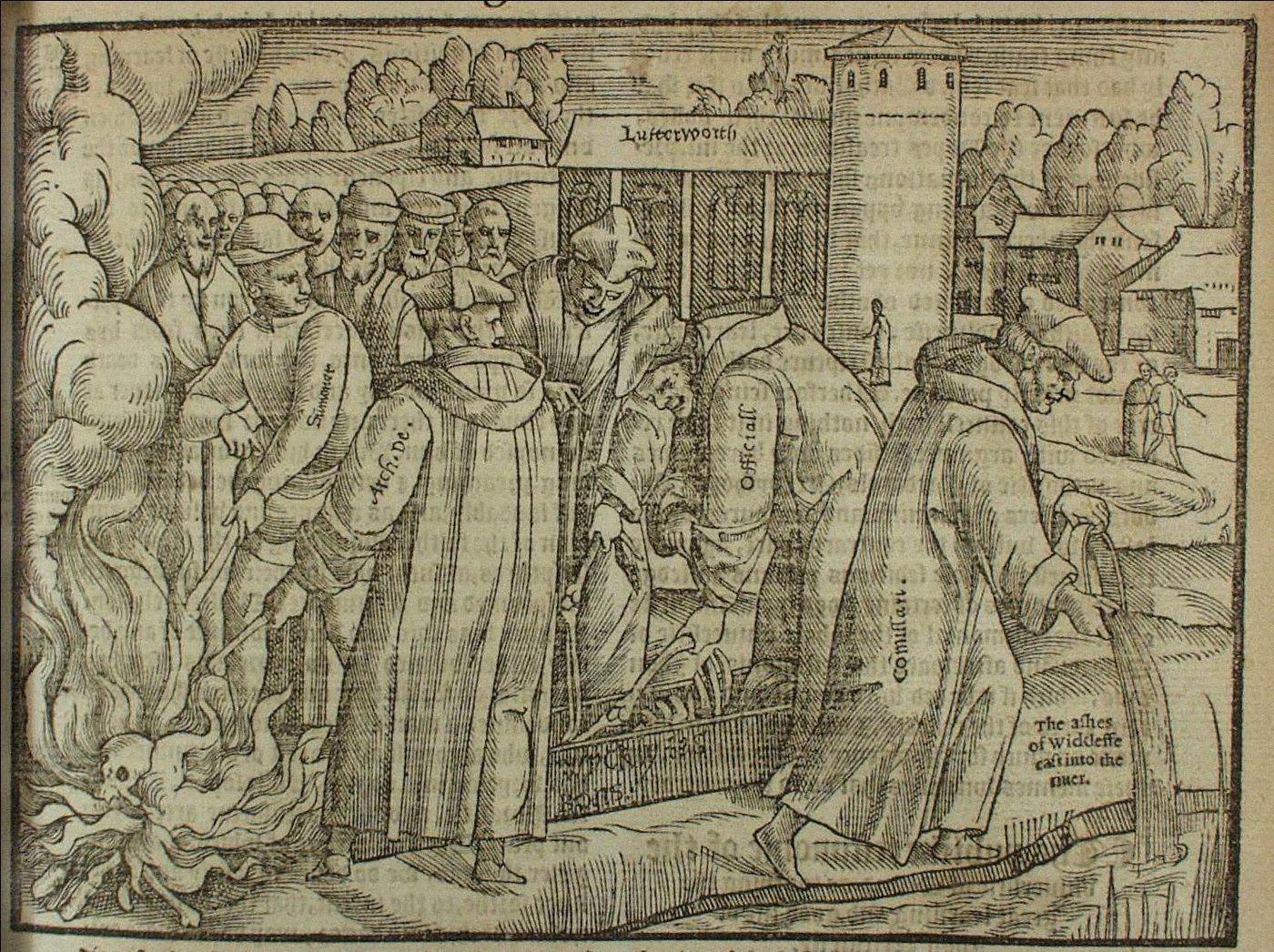
Wycliffe era a Oxford, e c'era un'altra università in Europa strettamente legata a Oxford: l'Università di Praga. Il rettore di Praga era un povero contadino cresciuto grazie al duro lavoro. Anche il suo nome era Giovanni: Jan Hus. Hus sentì parlare di Wycliffe, cominciò a leggere i suoi libri e cominciò a predicare la stessa cosa a Praga. Alla fine Jan Hus fu arrestato e il papa lo condannò a essere bruciato vivo; anche gli ussiti furono messi a morte.
Quando in Inghilterra giunse la voce che il papa aveva bruciato Jan Hus, cosa fecero? Le autorità della Chiesa andarono a Lutterworth, dissotterrarono il corpo di John Wycliffe, lo bruciarono su un falò e gettarono le ceneri nel fiume Swift a Lutterworth. Ma qualcuno ha detto a riguardo:
Come il fiume Swift porterà quelle ceneri nell’Avon, e l’Avon nella Severn, e la Severn nei canali attorno alle nostre coste, e i canali negli oceani, così l’insegnamento di John Wycliffe si diffonderà in tutto il mondo.
E quella era una profezia straordinaria.
Il fiume dei testimoni
La fiamma della fede non fu mai del tutto spenta
Pawson ammette che un tempo pensava che per mille anni ci fosse stata solo la Chiesa romana. Non è vero. Ci fu sempre una successione continua di cristiani semplici che pagarono con la vita, ma conservarono la fiaccola per la generazione successiva.
Montanismo — lo Spirito riscoperto in Frigia
Eremiti e comunità monastiche — protesta contro la mondanità
Pauliciani in Armenia e Asia Minore
Bogomili in Bulgaria e Bosnia
Arnaldo da Brescia — «la ricchezza fuori dalle mani della Chiesa»
Valdesi — i «poveri di Lione»
Catari / albigesi nella Francia meridionale
Francesco d'Assisi — povertà e missione
Beghardi e Fratelli della Vita Comune
Marsilio — «la Bibbia è la norma, nessun'altra»
Guglielmo di Ockham — messo a tacere
John Wycliffe — stella del mattino, la Bibbia inglese
Jan Hus — bruciato a Costanza
Martin Lutero — spunta l'alba
Nota: alcuni gruppi (pauliciani, bogomili e catari) erano in realtà dualisti, più vicini allo gnosticismo che al cristianesimo del Nuovo Testamento come li presenta Pawson — vedi la nota ambrata in quella sezione.
L'alba: l'età delle scoperte e la Riforma
Siamo sull'orlo di qualcosa di entusiasmante. Puoi vedere che tale abuso della Chiesa di Cristo non potrebbe continuare per sempre. Le persone cominciavano a vedere, e ciò che permetteva loro di vedere era che stavano cominciando a leggere questo libro nella loro lingua. Questo libro, dovunque andasse, avrebbe rimesso le cose a posto.
Ma c’era un’altra cosa che causò la Riforma, non solo l’abuso della chiesa. Era che gli uomini stavano entrando in un'era di scoperte. Nel regno materiale: Colombo scoprì l'America nel 1492; Copernico scoprì che è la terra a girare intorno al sole e non il contrario; Galileo accostò il telescopio ai suoi occhi deboli e guardò le stelle. Era l'alba dell'era della scienza, quando gli uomini cominciarono a mettere in discussione le cose.
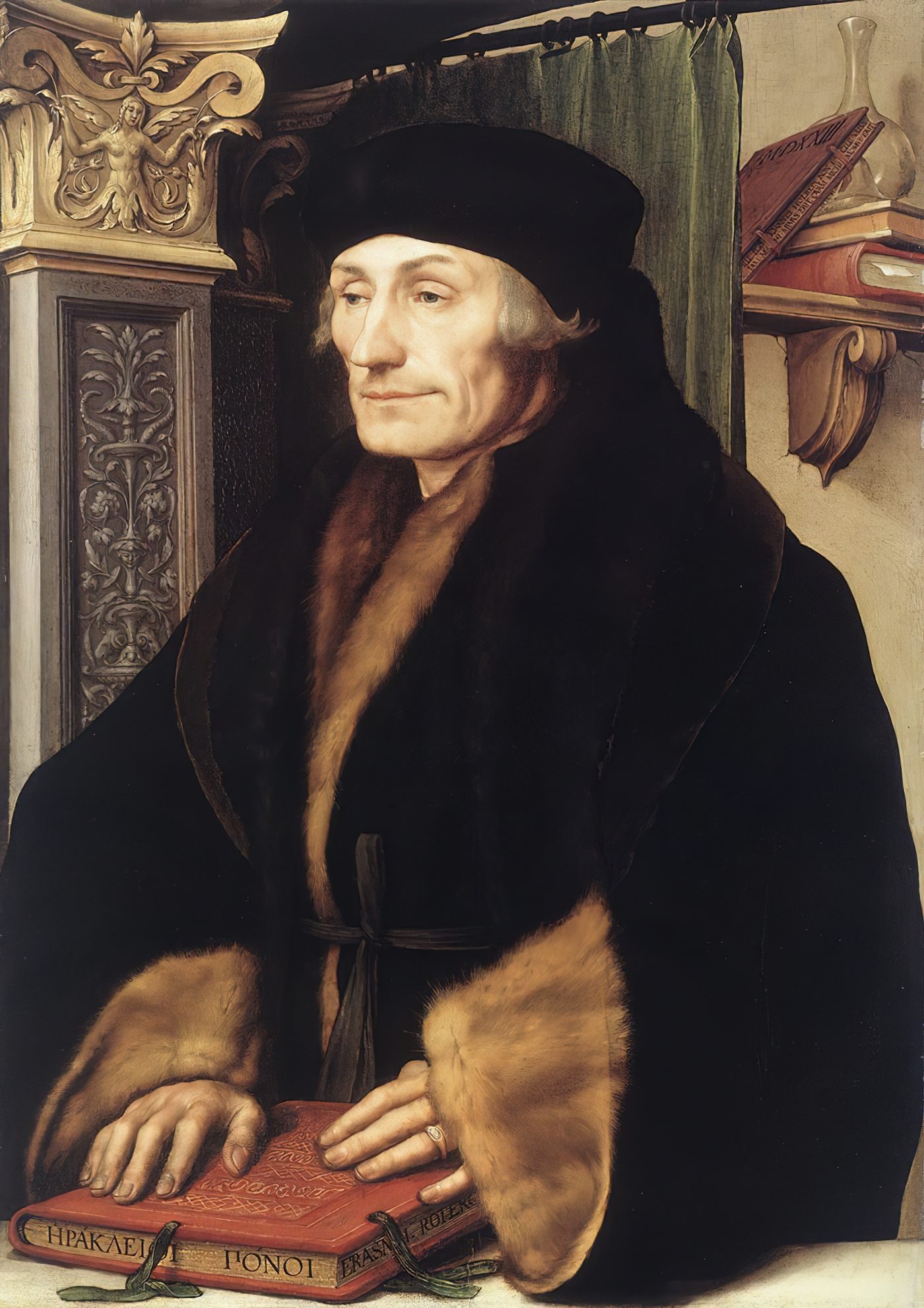
Nel regno mentale, gli uomini stavano riscoprendo la letteratura e l'arte greca. Nei dipinti di Raffaello si vede risorgere la cultura antica, perché Costantinopoli era caduta in mano ai turchi e i tesori dell'arte greca erano stati portati a Roma e in Italia. La nuova conoscenza si diffuse perché la macchina da stampa era appena stata inventata. Uno dei grandi studiosi della nuova era fu Erasmo. Cominciò a riscoprire il Nuovo Testamento greco e l'Antico Testamento ebraico. Erasmo disse: farò un Nuovo Testamento così accurato che anche i più umili capiranno il messaggio. E produsse un accurato Nuovo Testamento in cui, al posto della parola «penitenza», appariva la parola «pentimento». Molti errori presenti nella Bibbia furono corretti.
Ma questa è l'ultima cosa che Pawson vuole dire. In tutta quella grande scoperta delle cose mentali, dell'arte, della musica e della scultura, l'intero grande movimento che chiamiamo Rinascimento, gli uomini hanno scoperto una cosa: che se le persone sono intellettualmente migliori, non sono per questo moralmente migliori. Era l'epoca in cui i papi riempivano i loro palazzi di tesori d'arte, l'epoca di Cesare e Lucrezia Borgia, la famiglia papale più immorale che ci sia stata. Un'epoca in cui gli uomini studiavano l'arte, la musica e la letteratura, studiavano il cielo ed erano ancora immorali.
Il Rinascimento fu una cosa puramente mentale e culturale. Non soddisfaceva il bisogno del peccato. Il mondo intero aspettava un uomo che riscoprisse la salvezza.
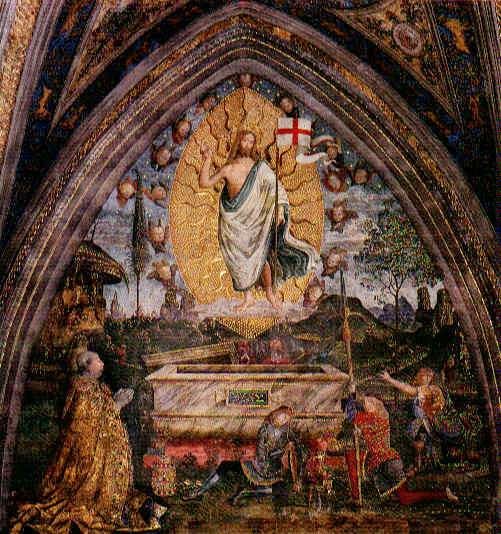
In attesa che un uomo affrontasse il problema morale del genere umano, della Chiesa e del mondo; un uomo che leggesse questo libro e, partendo dalla propria esperienza di peccato e di salvezza, riscoprisse il segreto del potere cristiano di cambiare il mondo. E quell'uomo era Martino Lutero, un monaco. Proprio questo mese, 450 anni fa, rese pubblica la sua scoperta. Il Rinascimento fu mentale, ma la Riforma fu morale. Affrontò il vero problema, che non è la nostra mancanza di conoscenza, scienza o cultura, ma la nostra mancanza di Gesù Cristo e del Vangelo della salvezza. La sua storia fa parte della Parte 3 di questa serie.
Rinascimento e Riforma
Il Rinascimento fu intellettuale; la Riforma fu morale
Rinascimento — intellettuale
• Colombo raggiunge le Americhe (1492)
• Copernico e Galileo guardano ai cieli
• Costantinopoli cade (1453) → i tesori greci dilagano verso occidente
• Viene inventata la stampa
• Erasmo recupera il Nuovo Testamento greco
• Fiorisce l'arte di Raffaello
Ma essere più intelligenti non significa essere più santi: questa fu l'epoca dei papi Borgia.
Riforma — morale
Al mondo non mancavano conoscenza, scienza, arte o cultura. Al mondo mancavano Gesù Cristo e il Vangelo della salvezza.
Il mondo intero aspettava un uomo che riscoprisse la salvezza e affrontasse il peccato. Quell'uomo era Martin Lutero — un monaco.
«Il Rinascimento si occupò della testa; la Riforma si occupò del cuore». La Parte 3 di questa serie racconterà la storia di Lutero.
Più di una voce
Come altri storici e predicatori leggono questo millennio
Pawson predica da una posizione fortemente protestante. Per correttezza, e perché tu possa ascoltare più di una parte, ecco come altri raccontano la stessa storia: alcuni concordano, altri dissentono.
Storici e rassegne
Justo L. González · The Story of Christianity, Vol. 1 (1984)
Legge il millennio come un paradosso: la «svolta costantiniana» ampliò la «porta stretta» trasformandola in un viale per il quale entrarono le folle, mentre il monachesimo sorse come protesta. Eppure rifiuta di liquidare l'epoca come apostasia.
«Quando la chiesa si unisce ai poteri del mondo… come si può resistere alle enormi tentazioni dei tempi?»
Rispetto a Pawson: Concorda con l'idea di Pawson che «il mondo catturò la Chiesa», ma la tempera: ci fu una devozione autentica e i monaci conservarono il sapere.
Bruce L. Shelley · Church History in Plain Language (1982)
Una rassegna evangelica popolare: la svolta costantiniana portò un potere reale, ma «a un prezzo»; monaci, dissidenti e riformatori furono la coscienza della Chiesa e la richiamarono a una vita apostolica più pura.
«Coloro che vivono con maggiore devozione per il mondo futuro si trovano spesso nella posizione migliore per cambiare il presente».
Rispetto a Pawson: Concorda in larga misura con Pawson, ma è più giusto e benevolo, poiché tratta il rinnovamento come una riforma dall'interno e non solo come protesta.
Diarmaid MacCulloch · A History of Christianity (2009)
Mette in guardia dal leggere il Medioevo come semplice «declino»: fu un mondo ricco e complesso, e i suoi «eretici» erano molto diversi, per lo più estranei al protestantesimo successivo più che proto-protestanti.
«…una narrazione più interessante e complessa, nella quale religione e dubbio, blasfemia e devozione rimasero in dialogo».
Rispetto a Pawson: Tempera Pawson: sottolinea la ricchezza e i risultati del cristianesimo medievale, e che i suoi dissidenti non dovrebbero essere rivendicati come antenati della Riforma.
Kenneth Scott Latourette · A History of Christianity (1953)
Legge il millennio come un ritmo di «avanzata e arretramento»: nonostante la corruzione e l'eclissi, la fede avanzò tra i popoli «barbari» d'Europa e non si estinse mai. Intitolò l'epoca «I mille anni dell'incertezza».
«Nel corso della sua storia il cristianesimo è andato avanti attraverso grandi pulsazioni. Ogni avanzata lo ha portato più lontano di quella precedente».
Rispetto a Pawson: Tempera il giudizio di Pawson con la prospettiva ampia di uno storico: anche in mezzo alla corruzione, la fede mise radici e si espanse.
Robert Louis Wilken · The First Thousand Years (2012)
Mostra che il cristianesimo non fu mai semplicemente romano o occidentale: comunità di Persia, Armenia, Etiopia, Asia centrale, India e Cina ne plasmarono attivamente il corso.
«Armeni, greci ed etiopi avevano molto in comune: erano governati da vescovi, promuovevano la vita monastica e confessavano il Credo di Nicea».
Rispetto a Pawson: Allarga la prospettiva di Pawson verso un cristianesimo globale che una narrazione esclusivamente occidentale tende a ignorare.
Tom Holland · Dominion (2019)
Uno storico esterno alla fede sostiene che le stesse riforme medievali, soprattutto la «rivoluzione» di Gregorio VII nell'XI secolo, forgiarono la coscienza morale dell'Occidente: la separazione tra «secolare» e «sacro» e il terreno fertile dei diritti umani.
«[I riformatori] resero [la distinzione tra sacro e profano] fondamentale per il futuro dell'Occidente, “per la prima volta e in modo permanente”».
Rispetto a Pawson: Contrasta Pawson: la Chiesa medievale, persino il potere papale, piantò il seme morale dell'Occidente e rifoggiò il mondo, invece di limitarsi a esserne catturata.
Predicatori evangelici
John Piper · The Legacy of Sovereign Joy (2000)
Legge Agostino, all'inizio del V secolo, come un dono della grazia: ciò che libera dal peccato non è la forza di volontà, ma la «gioia sovrana» in Dio, che domina alla radice i piaceri peccaminosi.
«La grazia irresistibile… ci libererà mediante il potere sovrano di delizie superiori».
Rispetto a Pawson: Completa Pawson: attinge da Agostino, all'inizio del periodo, una sorgente viva della grazia, invece di vedere soltanto il declino istituzionale.
Michael Reeves · The Unquenchable Flame (2009)
Legge il millennio come lo «sfondo» a cui la Riforma dovette rispondere: la Chiesa del tardo Medioevo insegnava la grazia come una forza per diventare abbastanza santi, lasciando i credenti senza certezza. Eppure la fiamma del Vangelo non fu mai del tutto spenta (Wycliffe, Hus).
«La grazia medievale funzionava “come una lattina spirituale di Red Bull”, lasciando le persone “senza certezza”; ciò che fu recuperato fu la giustizia come “un dono per i peccatori”».
Rispetto a Pawson: Concorda con Pawson sul fatto che il centro del Vangelo andò perduto, ma è più benevolo: sottolinea il «recupero» e la continuità, presentando la Riforma come un ritorno alla Parola di Dio.
W. Robert Godfrey · A Survey of Church History (Ligonier)
Una lettura riformata: il Vangelo della grazia di Agostino è il filo luminoso, ma nel corso del Medioevo fu progressivamente «offuscato» dalla superstizione e dal papato. Eppure la Chiesa non morì mai del tutto: un residuo fedele mantenne vivo il Vangelo.
«Ciò che vediamo nel Medioevo è davvero un tempo di superstizione crescente, di confusione crescente e di oscuramento del Vangelo».
Rispetto a Pawson: Concorda in larga misura con Pawson, ma attenua «il mondo catturò la Chiesa»: insiste che ci fu sempre «una stella luminosa» a custodire la verità durante il millennio.
Voci cattoliche e ortodosse
Eamon Duffy · Saints & Sinners: A History of the Popes (1997)
Legge il millennio come più umano e disordinato di quanto consentano l'elogio o la polemica: la corruzione e la simonia erano reali, ma rifiuta di ridurre la storia della Chiesa a un atto d'accusa; a durare fu l'ufficio, non la virtù di chi lo ricopriva.
«Con tutti i suoi peccati… il papato mi sembra, nel complesso, una forza a favore della libertà umana e dell'ampiezza di spirito».
Rispetto a Pawson: Attenua la posizione protestante di Pawson: ammette la corruzione, ma resiste a una polemica monocausale e vede il papato come un'istituzione umana intricata.
Kallistos Ware · The Orthodox Church (1963)
Per Ware, lo scisma del 1054 non fu un evento di un solo giorno, ma «un processo lungo e complicato»; furono le crociate, soprattutto il saccheggio di Costantinopoli nel 1204, a rendere definitiva la frattura. Dall'Oriente, la vera «innovazione» fu che Roma trasformò un primato d'onore in una supremazia di giurisdizione.
«L'errore di Roma — così credono gli ortodossi — è stato trasformare questo primato, o “presidenza dell'amore”, in una supremazia di potere e giurisdizione esterni».
Rispetto a Pawson: Guarda lo stesso problema dal lato ortodosso anziché da quello protestante, sottolineando che lo scisma arrivò gradualmente, non in un unico momento drammatico.
Henri Daniel-Rops · Cathedral and Crusade (1957)
Uno storico cattolico legge il millennio non come «il mondo che cattura la Chiesa», ma come la Chiesa che cristianizza e civilizza l'Europa, preservando lettere e sapere nel caos. Senza nascondere il decadimento (chiama il XIV secolo una «debacle»), insiste che la Chiesa continuò a produrre santi e riformatori dall'interno.
«Dal più umile al più alto, la società credeva — essendo la Chiesa “il mezzo più efficace per assicurare la salvezza della civiltà”».
Rispetto a Pawson: Sia attenua sia contrasta Pawson: ammette la corruzione, ma sostiene che anche nel decadimento la Chiesa salvò la civiltà e si riformò dall'interno.
Tratto da rassegne standard di storia della Chiesa e dai messaggi e libri di insegnanti contemporanei. L'obiettivo non è confutare Pawson, ma ascoltarlo all'interno di un coro.
Una preghiera di chiusura
Pawson non termina con un riassunto, ma con una preghiera, dopo che tanti anni e secoli sono passati davanti agli occhi dei suoi ascoltatori:
«Padre, possiamo essere il tipo di Chiesa che vuoi che siamo. Possiamo imparare dagli errori del passato, dalle lezioni della storia. Ti ringraziamo perché in tutte quelle epoche non sei mai stato senza testimonianza, mai senza coloro che conoscevano la verità, che spesso pagarono per essa con la loro vita, ma mantennero accesa quella fiaccola della fede che ereditiamo per trasmettere alle generazioni successive. Dove la Chiesa è corrotta, purificala. Dove è nell'errore, conducila alla verità. Dove è divisa, uniscila. E soprattutto, possa Gesù Cristo essere visto come il capo della Chiesa, l'unico capo della Chiesa».
Mille anni di mare che filtra nella barca. Ma la fiamma non si è mai spenta del tutto. E alla fine di quel lungo tunnel sta sorgendo l'alba. La Parte 3 racconterà la storia del monaco che vide cosa era andato storto e che, con un libro, rimise tutto a posto.
Note: This post is compiled from the second lecture in David Pawson's History of the Church series (Part 2: AD 400–1400), about 69 minutes long. As in Part 1, I do not guess or embellish: every major argument comes straight from Pawson. Wherever I looked something up, checked it against the sources, or corrected a detail, I left it as an amber margin note woven into the text. For this part especially, because the lecture touches the most contested stretches of church history, I also read other historians and preachers, so that you hear more than one voice.
The unhappier story
Part 1 told how the Church captured the world in the first four centuries: it won the physical battle by suffering, the mental battle by confronting heresy, and the spiritual battle by standing firm against other religions.
Pawson says there is one thing he forgot to mention last week, and it matters: the Christians won because they out-lived, they out-thought, and they out-died everyone else. They out-lived, and so won the spiritual battle. They out-thought, and so won the mental battle. They out-died, and so won the physical battle. And therefore they out-survived everything else.
But tonight, he says, the subject is far sadder and far more serious. The subject is: how the world captured the Church over the next thousand years.
There is a medieval painting of the Church as a lifeboat. In a tossing sea, the Christians in the boat reach out to pluck the drowning from the waves. It is a fine picture of the Church: a lifeboat gone out into the world in answer to the cry for help.
But Pawson pauses on one thing:
The lifeboat must be in the sea. But if the sea gets into the lifeboat, then there is real trouble. The church must be in the world if it is going to save souls. But when the world gets into the church, then it is finished and it sinks.
The next thousand years is the story of the sea getting into the boat. Pawson takes it in three chapters: the world began to get in even in the early ages (AD 100–400); then the Dark Ages (AD 400–1000); then the Middle Ages (roughly 1000–1500), which bring us to within a year or two of Martin Luther.
The Lifeboat Picture
The boat must be in the sea, but the sea must not be in the boat
Pawson opens with a medieval painting: the Church as a lifeboat in a tossing sea, reaching out to pluck the drowning from the waves.
The lifeboat in the sea
The Church is in the world to save souls. This is the mission itself.
The sea inside the lifeboat
When the world gets into the Church, the boat sinks. That is the story of a thousand years.
"The church must be in the world if it is going to save souls. But when the world gets into the church, then it is finished and it sinks." — David Pawson
A Thousand-Year Timeline
AD 400–1517: from the fall of Rome to Luther
Four currents braid through a thousand years: decline, the rise of papal power, voices of protest, and an age of discovery.
Some dates are simplified for clarity; precise milestones are checked in the amber margin notes throughout the essay.
How the World Got Into the Church (AD 100–400)
When there were martyrs like that, preachers like that, when the battle was being won, how did the world get in? Pawson names four things that began to water down the apostles' Church.
First, regional bishops. In the New Testament every church had a number of bishops, called elders or bishops or presbyters, all the same office: spiritual leaders. Then came a stage where each church reduced its bishops to one. Then a stage where one bishop ruled many churches. Leadership was concentrated in fewer hands. You cannot find this in the New Testament; it did not happen for the first hundred years; but in the second century there emerged men of considerable power and influence. Not many bishops to one church, but many churches to one bishop.
Second, a magic view of the sacraments. Take baptism. Instead of being an outward sign of the spiritual washing away of sins that comes when a man believes in Jesus, people began to believe that the actual water and the right formula saved a person from sin, whatever their age; and that if you sinned after baptism, you undid it. So people put off baptism until the deathbed: they waited until the doctor said there was no hope, then rushed for the minister. But others worried: what if our baby dies, we would rather have its sins washed away at once. Both views were superstitious. Sadly, infant baptism prevailed. The Lord's Supper too was treated magically: people began to think the bread actually was Christ's flesh and the wine his blood; since real flesh and blood were being offered, it was a sacrifice; and since it was a sacrifice, the one handling it must be a priest.
Third, established religion. When the emperor went to church, you can imagine everyone did. When the state declared Christianity the official religion, everyone climbed on the bandwagon. Going to the established church became fashionable and respectable. Pawson says plainly: an established religion is bound to produce fashionable, respectable Christianity, and he cannot find that in the New Testament.
Kit's note
One thing I'll return here: it was not Constantine who made Christianity the official religion. The Edict of Milan (313, Constantine with Licinius) granted only toleration — freedom of worship and the return of property, ending persecution. It was Theodosius I who, by the Edict of Thessalonica in 380, made Nicene Christianity the state religion. Pawson's larger point — that once faith becomes 'fashionable and respectable' the world seeps in — stands; only the milestone belongs to Theodosius, not Constantine.
Fourth, nominal membership. A writer at the end of the second century observed: around the year 50, to belong to the Church meant a person had received baptism and the Holy Spirit and called Jesus Lord; but by around 180, it meant a person acknowledged the rule of faith (the creed), the New Testament canon, and the authority of the bishops. In other words, people were joining for reasons other than believing in Jesus and receiving his Spirit. It was now an institution.
And whenever the Church went wrong, there were protests. In the first 400 years there were two movements: Montanism and monasticism. Both protested against a Church growing wealthy, worldly, and filled with people who had never even been converted.
Montanism arose in what we now call Turkey, Asia Minor. A man called Montanus saw that in scores of members there was no trace of the Holy Spirit, so he sought the Spirit of God afresh. A revival broke out. The gifts of the Spirit came back into the Church; life, vigour, and reality came back into worship. Pawson says if you want to know who they were most like today, they were Pentecostals. There was a tremendous emphasis on Christ's return, an insistence that no one be a member without a real faith, with holiness and fasting. But the bishops opposed it severely, and you can guess why.
The tragedy is that, as so often, this first Pentecostal movement went wrong. It went wrong because these people would not have teaching. They wanted the heat without the light. Pawson says: light without heat is cold; heat without light is too hot; you must have both. They would not listen to the Scriptures on how to exercise spiritual gifts. And the movement fizzled out in fanaticism. "That is a word every Pentecostal revival needs to know," Pawson says. "We can learn from history."
Kit's note
I'll gently push back on 'the women spoilt it.' The pastoral caution — heat without light — is fair, and the ecstatic, trance-like prophecy was indeed what the mainstream church attacked most. But pinning it on 'the women,' Priscilla and Maximilla, isn't fair: Montanus himself prophesied passively ('I am as a lyre, and the Spirit sweeps over me like a plectrum'). Modern study (Christine Trevett) shows what was really condemned was their claim to a new authority over the church — not the fact that the prophets were women.
The second protest came in a very different way. Some years later certain Christians said: this Church is so worldly, so dead, that the only hope of recovering Christianity is to get out of the Church and out of the world.
The first of them did it alone. They were hermits. It is the strangest tale. Anthony was the first: he decided he would never be a real Christian until he got into the middle of the desert. The trouble was that when he got there, other Christians wanted to join him, and he did not want that; and above all, he found his temptations in a desert cave just as worldly as they had been in the Church. There was an even stranger hermit, Simeon Stylites: he built a pillar some sixty feet high, a yard across at the top, and lived up there for decades. He even stood on one leg for a year, as a protest declaring that Christianity is something hard and tough. And there he was, up the pole, covered in ulcers and worms, in a frightful state.
More successful than the hermits were those who started communities. The man who began this movement was Benedict. On Monte Cassino, halfway between Rome and Naples, he gathered a group of real Christians who saw the Church was too worldly to do anything with, and said: we will come and live together. We will not be wealthy but poor. We will not be lustful but celibate. We will not be rebellious but obedient. They took the threefold vow: poverty, chastity, obedience. And the monastery was run like a Roman soldier's garrison.
Kit's note
A small but real correction: Benedict (c. 480–547) did not start communal monasticism. Pachomius founded cenobitic communities in Egypt around 318–323, nearly two centuries earlier. Benedict is the father of Western monasticism and wrote its most influential Rule — but not its founder. And his Rule's vows are really stabilitas (staying in one house), conversatio morum (conversion of life) and obedience; the familiar 'poverty, chastity, obedience' formula belongs to later orders.
The tragedy is that this protest went wrong just as surely as the other. Christ never meant us to live the Christian life away from everybody else. Later these monks, who began with a good intention, became so wrapped up in their own salvation, so introverted, that they were isolated from the world and the Church. Worse, monasticism produced the idea that there are two kinds of Christians: second-class ones who marry and first-class ones who do not; second-class ones who live in the world and first-class ones who live out of it. But that is not the teaching of Jesus. Our Lord was not a monk. He did not withdraw from society; he lived a pure life in society, and told his disciples to be in the world without being of it.
Both said: the Church is not what Jesus Christ meant it to be. One said we will rediscover it by getting back into the Spirit. The other said we will rediscover it by getting out of the world and out of the Church. Both came to nothing, because they did not return fully to New Testament Christianity.
How the World Got In — AD 100–400
Four cracks and two protests
Even in the age of victory, four things began to water down the apostles' Church. And whenever it went wrong, voices of protest rose up.
Regional bishops
From many elders per church to one bishop over many churches. Power concentrated in few hands, copying Rome's governors.
Magic sacraments
Baptism seen as saving in itself, so delayed to the deathbed or given to infants. The Lord's Supper taken as literal flesh and blood, a sacrifice needing a priest.
Established religion
When the emperor went to church, everyone went. Faith became fashionable and respectable instead of a surrender.
Nominal membership
People joined for reasons other than believing in Jesus and receiving the Spirit. The Church became an institution.
Two protests
Montanism
A Pentecostal protest
Rediscovered the Spirit and the gifts, stressing Christ's return and holiness. But it had "heat without light," refused teaching, and burned out in fanaticism.
Monasticism
A protest by withdrawal
Left both the world and the Church to recover real Christianity. But it produced "two-tier" Christians, and Christ never called us to live apart from everyone.
Both protests were sincere, yet both came to nothing because they did not return fully to New Testament Christianity.
The Dark Ages: The Fall of Rome (AD 410)
Now the story truly begins. In 410, a catastrophe came. Barbarians from the north pressed down on the city of Rome. The Vandals came (from their name we get the word "vandalism"). The Franks came, the Huns came, the Goths came. These barbarians pressed into Rome and took it. The Rome of that day fell.
Kit's note
Let me check this one: the sack of Rome on 24 August 410 was carried out by one people — Alaric's Visigoths — not a combined army of Vandals, Franks, Huns and Goths. The Vandals were then pushing into Spain (they would sack Rome only in 455), and Attila's Huns struck the West only in 451–452. Pawson's larger picture — a whole wave of 'barbarian' peoples pressing on the Empire — holds; but the army that breached Rome in 410 was Alaric's Goths alone.
The Romans left Britain that year to defend Rome, but could not save it. And as soon as the Romans withdrew, the Jutes, the Angles, and the Saxons charged into Britain and destroyed Christianity in England and south-east Scotland. The Christianity that Roman soldiers had brought here in the first 400 years vanished.
It seemed that when Rome fell, it was the end of everything. Jerome, writing in Jerusalem, said: "the human race is included in the ruins." People thought it was the end of civilization. And it puzzled the Church: Rome had survived for centuries as a pagan empire, yet as a Christian one it collapsed. Many Christians could not understand it.
Kit's note
A small geographic note (the Part-1 kind): Jerome was not in Jerusalem but in Bethlehem (very near it), where he lived in a monastery from 386 until his death in 420. His most famous line is from the Preface to his Commentary on Ezekiel (c. 410–414): 'when the bright light of all the world was put out... the whole world perished in one city' (in una urbe totus orbis interiit). Pawson's 'the human race is included in the ruins' faithfully catches Jerome's grief.
But one man thought it through and made an incredible statement. He said: it is the best thing that ever happened. His name was Augustine.
Augustine: A Restless Heart That Found Its Rest
You can buy his books at the railway bookstall today. And if I tell you some of the things this great man said, you would recognize them. He said: "Our hearts are restless, and they can find no rest until they find their rest in thee." Perhaps the most quoted prayer in history. It was Augustine who prayed: "Give me chastity, but not just yet." And it was Augustine who said: "Love, and do what you like."
He was born in North Africa. When he went as a student to Carthage, he fell in with the wrong crowd. Soon he had a concubine and a son by her, and lived in that illegal relationship for years. His father was pagan, but his mother was a godly woman who prayed for her wayward son with tears every day. Later, because of his brilliant mind, he was invited to be a professor of rhetoric in Milan. There he went to hear the saintly Bishop Ambrose preach. Under that preaching, the young man with the brilliant mind but the profligate life was brought into a deep conviction of sin.
Then one day, sitting in a garden weeping over the mess he had made of his life, he heard a child's voice over the garden wall: "Tolle lege, tolle lege" — "take up and read." He never knew who the child was. But he saw a scroll on the seat beside him, took it up, and read. It was Paul's letter to the Romans. Augustine read it through, and the light dawned. When he walked into the street afterward, the woman he had lived with saw him, and he ran from her. She ran after him crying: "Augustine, it is I, it is I." He answered over his shoulder: "But it is not I, it is not I."
Kit's note
The exchange — 'It is I, Augustine!' / 'But it is not I' — is a lovely pious anecdote, but it is not in the Confessions or any early source. By Augustine's own account (Confessions 6.15), the woman had already been sent away before his conversion (c. 385); she returned to Africa vowing to remain unmarried. The clever retort appears only in much later retellings — a moving tradition rather than history.
He wrote the whole story of his conversion in a book called Confessions. Pawson says Augustine has had more influence on church history than any man after the apostle Paul.
When Rome fell, Augustine being in middle age, the whole world seemed to collapse about his ears. He thought it through, then wrote the second great book we remember: City of God. In it he says: it is a good thing this pagan city of Rome has collapsed, because now the city of God can replace it; it is a good thing an earthly empire has ended, because the heavenly empire can now be established. The book brought hope and new life to many, helping them see that a city of God still survived when the city of men had gone.
But that was the trouble. People began to ask: what is this city of God? Visible or invisible? Earthly or heavenly? And at this point Augustine led many into a misunderstanding. The funny thing is that centuries later, in the Reformation, the Protestants said "we follow Augustine," and the Roman Catholics said "we follow Augustine." But the Protestants were following the first book, Confessions; and the Catholics were following the second book, City of God.
For what happened was this: the Church said, if that is so, then the Church is now the new empire.
The Church Becomes an Empire: The Rise of the Papacy
One of the first results was the rise of the bishop of Rome to the position of an emperor. In those days there was a great debate about the word "pope," which means essentially "father." Although Jesus had said never to call anyone on earth father, for you have one Father in heaven, people began to call the local priest "father." Then they called the regional bishop "father." Then finally the five great patriarchs said: if anyone is to be called father, it ought to be us five. And at last, the bishop of Rome said: the city of Rome is gone, but I am the emperor now; I am the chief bishop, and from now on you call only me pope, you call only me father.
And the papacy, as we know it, came into being. The striking thing is that the pope adopted the very titles and even the robes of the Roman emperor. He took the title Pontifex Maximus, known today as the pontiff — the Roman emperor's title. Augustine was misunderstood, and people thought the Church was the new empire. And an empire must have its emperor, its robes, its ceremonies, its throne. So the Church became an empire, and the pope became a king.
Of course, many Christians would have none of it. The French would not, the Irish would not, the Welsh would not, the Scots would not. Sadly, the English did.
When the Church Became an Empire
The ladder of power and the closing circle
The ladder to "father"
The local priest is called "father"
Then the regional bishop
Then the five great patriarchs claim the title
The bishop of Rome: "call only ME pope"
Takes the emperor's titles & robes (Pontifex Maximus)
"Call no man on earth your father…" (Matthew’s Gospel)
The circle 410 → 800
410 — The Roman Empire collapses
The Church takes over, becomes the new "empire"
800 — Charlemagne crowned Emperor
The empire returns — full circle
Augustine wrote City of God to console a collapsing world; but people misread it to mean the Church was the new empire — and an empire must have its emperor, its throne, its robes.
Two Streams of Christianity Meet at Whitby
Ireland, through St. Columba, brought the faith into Iona and Scotland, leading Scotland to Christ. Then Aidan came down to the island of Lindisfarne off Northumberland. Pawson recalls standing on Lindisfarne a few months earlier, by the ruins of Aidan's church, the little island from which he evangelized Northumberland. This non-papal Christianity, Celtic Christianity, came into England from the north through Ireland and Scotland.
But later the pope said: we must get England, we must get those Angles. He made the famous pun: they are not Angles but angels. And he sent a missionary also named Augustine. This Augustine landed on the island of Thanet, then went to Canterbury. Columba on the island of Iona in the north; Augustine on the island of Thanet in the south.
The two streams of Christianity met at Whitby. You can still see the ruins above Whitby harbour where they met. There, papal Christianity met Celtic Christianity, to see which would win. The tragedy is that papal Christianity won. The British Isles came under the papal throne. Scotland even changed its patron saint to St. Andrew. The whole situation was changed.
Kit's note
Let me clarify one thing: the two streams in the British Isles were real, but saying Celtic Christianity 'rejected the pope' overstates it. They didn't oppose Rome on doctrine; they kept older customs — the dating of Easter and the style of tonsure — because they'd been cut off from the continent during the Anglo-Saxon period. The Synod of Whitby (664) was a dispute over custom and calendar, not a schism; Pawson is right that Rome's side prevailed.
Two Streams Meet at Whitby
Which way would Britain go? (Synod of Whitby, 664)
Celtic Christianity
Ireland → Iona (Columba) → Lindisfarne (Aidan) → northern England
No pope. Simple, missionary.
Roman Christianity
Rome → Augustine on Thanet → Canterbury → the south
Loyal to the pope.
Whitby, 664
Roman Christianity won. The British Isles came under the papal throne. Pawson calls it a tragedy; you can still stand among the ruins above Whitby harbour today.
Schematic, not to geographic scale. Whitby took place in 664 (Pawson says "660").
East and West Divide (1054)
The other great group of Christians who would have none of this were the churches of the eastern Mediterranean: Greece, Asia Minor, Syria, Egypt. They said: we are not acknowledging this. That there should be one "papa," one father of the whole Church, is not in Scripture, not in the New Testament. And they began a split, finally completed by the year 1054. That division kept the eastern and western churches apart for a thousand years, and only in recent years have the two begun to talk again.
Kit's note
A detail worth marking: Pawson saying the two sides 'have only in recent years begun to talk again' is exactly right for a sermon around 1967. On 7 December 1965, in simultaneous ceremonies in Rome and Constantinople, Pope Paul VI and Ecumenical Patriarch Athenagoras I lifted the mutual excommunications of 1054, after their historic meeting in Jerusalem in January 1964. So his 'recent years' was, for him, fresh news.
And here is one of the most incredible things. Around the year 850, the pope said: I have discovered documents from the first century, proving that Peter appointed the first pope, who appointed the second, and so on down the line. Today even the Roman Church knows those documents were forgeries; they are called the forged decretals. And yet the papacy was built on a forgery. There was another forged document, the Donation of Constantine, claiming that all of Italy belonged to the pope. The pope "discovered" this forgery and said: there, all Italy belongs to me. That is the kind of foundation on which the whole structure was based, and even Rome knows it today.
Kit's note
Let me return a detail on 'the pope produced these documents': Pawson's date, 'around 850,' is very close — the Pseudo-Isidorian Decretals (False Decretals), under the pen-name 'Isidorus Mercator,' were forged around 847–852. But the forgers were Frankish clergy near Reims, not the pope himself, and the first aim was to protect ordinary bishops from being deposed. Still, Pawson's larger point holds: those forgeries were later cited by Rome to buttress papal supremacy.
The Great Schism, 1054
One Church split in two for nearly a thousand years
The five patriarchates (the Pentarchy)
The West (Latin)
Rome — one pope over the whole Church
• Supremacy of the pope
• Added "and the Son" (filioque) to the Creed
• Unleavened bread
Latin tradition
The East (Greek)
Constantinople + the patriarchs — equals, no single "papa"
• Five equal patriarchs
• The Creed left unchanged
• Leavened bread
Greek tradition
The mutual excommunications of 1054 were only lifted together by Pope Paul VI and Patriarch Athenagoras in 1965 — close to Pawson's "the last ten years" when he preached in the 1960s.
Charlemagne and the Holy Roman Empire (AD 800)
The power kept spreading, until the year 742, when a man was born with a dream: to restore the empire of Rome, put it back on the map, with himself as emperor and the pope beneath him. His name was Charlemagne. A ruthless man who said: we will have a Roman empire again, and its head will not be the pope but an emperor.
Charlemagne twice saved the pope's life: once from the barbarians, once from the crowds in Rome who were angry with him. The pope said: you have saved my life twice, what would you have me do for you? The emperor answered: on Christmas Day, crown me emperor. And in the year 800, on Christmas Day, in the largest church in Rome, at the Christmas morning service, the pope crowned the king of the Franks, Charlemagne, emperor of the Holy Roman Empire. A thousand years later, the Holy Roman Empire still existed.
You see, we have come full circle. The empire of Rome collapsed in 410. The Church took over the empire. Then in 800 the emperor came back and took the empire from the Church. The whole thing seemed back to where it started.
Charlemagne did some good things and some bad. Among the good: he forbade the clergy to keep concubines, frequent taverns, and go hunting; he started many schools. Among the bad: he forbade the clergy ever to marry, and it is to Charlemagne that we owe the celibate priesthood. He also coined the word Christendom — the kingdom that would be Christian under the emperor. And the idea of Christendom persists to this day.
Kit's note
Two small fixes. First — the celibate priesthood isn't owed to Charlemagne: he tightened clerical discipline, but the ban on clergy marrying became universal law only with the eleventh-century Gregorian reform and the Lateran Councils of 1123 and 1139 — three centuries after him. Second — 'Christendom' is a native Old English word (cristen + -dom); a Latin-speaking Frankish king could hardly coin it. If Pawson means he crystallized the idea of Christendom, that holds — the 800 coronation is its emblem.
The Rise of Islam
Because the Church was now wealthy and powerful, it became corrupt. And once again protests came, this time from the east and the north. From the east, the protest came from two things. The first was Islam.
Pawson calls this the greatest judgment ever to fall on the Christian Church. He had lived in Arabia and seen something of this religion. Mohammed was born in 571 in Mecca, the centre of Arab idolatry and superstition. In the middle of Mecca was a great square building draped in black, and inside it a sacred stone, the Kaaba, a meteorite fallen from the sky. Mohammed grew up amid the idolatry and superstition of the Arabs, and he was revolted by it.
Then he turned first to the Jews, then to the Christians, and asked: have you the true religion? The tragedy is that Mohammed never met a converted Christian. The tragedy is that he never saw the real Christianity of the New Testament. All he saw was the vestments of priests, images, and crucifixes. And he said: this is as idolatrous as the Arabs' religion. If only Mohammed had met one true Christian at the end of the sixth century. But he did not.
So he said: right, I will seek a new religion that is pure. He married a wealthy widow, spent years in the desert, and there he said he was spoken to: there is no God but Allah, and Mohammed is his prophet. He began to preach this, writing down what he heard in his visions in a book, the Quran (Al-Quran). He was persecuted and had to flee to Medina in 622. That is the date from which the Arabs reckon their calendar. He returned to Mecca with an army and imposed the new religion. From then on everyone had to pray toward Mecca, and by a religion of good works — fasting, praying five times a day, keeping Ramadan, making the pilgrimage to Mecca, giving alms — one could get to heaven. And that religion was imposed by force of arms.
Islam swept Christianity out of the Mediterranean. It swept Christianity off the North African coast, where there was no church for centuries. It swept Christianity out of the Holy Land itself, out of Jerusalem, out of the place where Jesus died. It swept up through Spain, up through Asia Minor, into France as far as the gates of Lyon, into Eastern Europe as far as Vienna. It seemed Islam would crush Christianity in a gigantic pincer movement.
Kit's note
An important geographic and chronological note: the Muslim advance into the West was halted at Tours/Poitiers in 732 (Charles Martel over the Umayyads), in western France — about 360 km from Lyon, not 'the gates of Lyon.' And the two sieges of Vienna were Ottoman Turkish, in 1529 and 1683 — roughly 800–950 years after the 8th-century Arab advance. These are two powers and two eras, not one coordinated 'pincer.' Pawson's theological instinct — that God stopped the tide — can still stand.
It is the greatest judgment God has ever allowed to come on the Christian Church. And it was deserved. But so far and no further. God was not going to have Christianity wiped out altogether.
He stopped them at Lyon and Vienna, and they withdrew to their present boundaries: the North African coast and up to Turkey.
Map of the Dark Ages
Two tides break over the Christian world (AD 410–732)
Orange arrows: barbarians pour south onto Rome. Green arrows: Islam sweeps the Mediterranean from Arabia, across North Africa and Spain, as far as Tours.
Base map: the Roman Empire (Wikimedia Commons, public domain). Arrows are schematic directions of advance, not exact routes. Vienna marks the later Ottoman limit — Pawson telescopes nearly a thousand years of frontier into one pincer.
Hidden Witnesses in the Dark
For at that very time, all over Europe there were little groups of Christians meeting around the word of God. They saw that the official church was corrupt, so they simply met in tiny groups, read this book, and said: we will worship God in simplicity. We do not need priests, for we have Jesus our high priest. We do not need a pope, for we have a Father in heaven. We just need the word of God and the Holy Spirit.
We know hardly anything about them, because they were so persecuted that even the records of their history were destroyed. Pawson asks his hearers whether any have ever heard of a group called the Bogomils. They were a group meeting around the word of God, chiefly in Bulgaria and Bosnia; the word "Bogomil," Pawson says, is Bulgarian for "friends of God." There were the Paulicians, who met in Armenia, Thrace, and Asia Minor. There were the Cathars, a name meaning "the pure ones," the same root as the later word "Puritan"; they met in the Balkans and across Europe.
Pawson confesses: in his simplicity he used to think that for a thousand years there was only the Roman church and the eastern churches. That is not true. He was thrilled to discover that all through those centuries there was a continuous train of simple Christians meeting around the word of God in local churches. They paid for it with their lives, but they met, and the flame of faith was kept alight for the generations to come.
Kit's note
Let me return something, in fairness to Pawson and to history. What he says is true and moving: the Bogomils, Paulicians and Cathars rejected the clergy and the pope, were savagely persecuted, and had their writings nearly all destroyed. But modern scholarship classes them as dualist movements — holding the material world to be the work of an evil power — shaped by Mani and the Gnostics; this is not the later Protestant faith. They witness to protest, but they weren't quite 'simple New-Testament Christians.'
The Middle Ages: Hildebrand Sets the Pope Above All
Now we come to the final chapter, from the year 1000 to 1500, called the Middle Ages because it lies between the Dark Ages and the Modern Age.
The first man to speak of is Hildebrand. This monk became pope, and he did not like being number two. By now there was a restored Roman Empire with a new emperor, but the pope was number two. Hildebrand decided the pope should be number one, and he achieved it. He did many good things: he cut out the simony in the church, the buying of priesthoods. But he did it because he believed the pope should control everything, including kings.
The clash between Hildebrand and Emperor Henry IV was settled in a most dramatic and terrible way. Henry IV defied Hildebrand, saying: I am number one. Hildebrand answered: you are not. Let the people decide. And the people decided that Hildebrand was. Up in the Alps, the pope met Emperor Henry IV, who came from the north. The pope was in a mountain house, and he kept Emperor Henry IV waiting outside in the snow, barefoot, for three days, before he would speak to him. In this way Hildebrand put the emperor decisively in a secondary place.
From then on, for the next 500 years, the pope was the most influential figure, and the papacy was the power that controlled the Western world. The Church was the empire again. It was this pope who began the symbol of the crossed keys of St. Peter: one key is the authority of sacred power over the Church, the other the authority of secular power over the state. Those crossed keys are Hildebrand's claim: to be top dog, over both the Church and the state.
Kit's note
Let me return two points. First, Hildebrand (Gregory VII, 11th c.) did not create the 'crossed keys' emblem: the device appears only in the 14th–15th c. — the oldest belongs to Pope Martin V (1417–1431), over 300 years later. Second, the keys traditionally do not mean 'one sacred, one secular'; both belong to spiritual authority (the power to 'bind and loose'). What Pawson has right is Hildebrand's ambition: to set the pope over both Church and state.
The Crusades: When the Church Took Up the Sword
This put the force of armies at the Church's disposal. And because Hildebrand thought that way, he began to use force to establish the kingdom of Christ. Never was a greater mistake made. The first outcome of the idea that force is valid for the Church to use was eight crusades to the Holy Land.
By now the holy places, Jerusalem and others, were in the hands of the Muslims, the Saracens, the Turks. The pope decided the Church would fight its way in and capture the Holy Land for Christ. The First Crusade was born in 1095. It was Hildebrand's idea, but he died before it could be done. People wore a cross on the shoulder, called a crux, and from that we get the word crusade.
The First Crusade was pulled together by an unkempt, fanatical preacher called Peter the Hermit. He set off with 600,000 men, and only a tenth arrived; most died in the high mountains of Turkey. But they got there, and they took Jerusalem. They pillaged it, raped the women, and established the so-called rule of Christ in Jerusalem by slaughtering all the Saracens of that city. Is that Christian? You say at once: of course not. But bear in mind, they were misled. Thousands thought this was what the Church was meant to be: an earthly empire establishing itself by force.
Kit's note
Two corrections. One — 600,000 is wildly inflated: historians put Peter the Hermit's 'People's Crusade' at roughly 20,000–40,000 (the whole First Crusade together was only about 60,000–100,000). Two — Peter's band did not take Jerusalem: arriving in Anatolia, it was annihilated by the Seljuk Turks at Civetot (21 Oct 1096). Jerusalem fell nearly three years later — 15 July 1099 — to the nobles' armies. The bloody massacre is real, but it was 1099, not the work of Peter's poor.
Of course there were incentives. People were promised absolution if they went to fight for Christ; promised indulgences, so many years off purgatory; promised their debts cancelled by law; promised pardon for criminals who would leave prison to go and fight. You can imagine the motley crew that resulted. King Philip of France was caught up in it. King Richard the Lionheart of England was caught up in it. Eight times they set off. One was a children's crusade: 2,000 little ones set off across Europe to try to get Palestine back for Jesus. Not one of them arrived. The pope said angels would miraculously provide food; but the food never came and the angels never appeared.
The last one was an utter failure. At the flat-topped mountain of the Horns of Hattin, the last crusader army died of thirst, besieged by the Saracen. And in 1270, Europe breathed a sigh of relief when the pope called the whole thing off.
Kit's note
Pawson's picture of the Horns of Hattin is right (4 July 1187, Saladin luring King Guy's army into waterless ground and breaking it through thirst) — but it was not 'the last crusade'; it was a battle of the Kingdom of Jerusalem, and the loss of Jerusalem that followed is precisely what sparked the Third Crusade (Richard and Philip). As for 1270: the campaign collapsed not because the pope 'called it off' but because its leader, King Louis IX of France, died of disease before Tunis (25 Aug 1270). The crusader presence ended only when Acre fell in 1291.
It is one of the saddest stories in the history of the Church. It did nothing. Nothing. And indeed it did worse than nothing.
The Eight Crusades
When the Church used the sword instead of love (1095–1291)
Hildebrand believed force could establish the kingdom of Christ. "Never was a greater mistake made," says Pawson.
People's Crusade · 1096
Peter the Hermit leads a mob; most die in the mountains of Asia Minor.
First Crusade · 1095–99
Takes Jerusalem (1099) and massacres its people. The only "success."
Second Crusade · 1147–49
Preached by Bernard of Clairvaux; fails.
Third Crusade · 1189–92
Richard the Lionheart vs Saladin; Jerusalem not retaken.
Fourth Crusade · 1202–04
Diverts to sack Constantinople — Christians against Christians.
Children's Crusade · 1212
A march of children; not one reaches the Holy Land.
Later Crusades · 1217–54
Failure after failure, including the two campaigns of King Louis IX.
Hattin & the collapse · 1187 / 1291
Routed at the Horns of Hattin (1187); Acre, the last stronghold, falls in 1291.
The incentives to go
By 1270 the pope called it off. "It did nothing. Nothing. And indeed it did worse than nothing." — David Pawson
The Inquisition, Two or Three Popes, and the Corruption
From using force outside the Church, the pope now decided to use force inside the Church, opening another dreadful chapter called the Inquisition. Pawson says he dare not describe the things done in the name of Christ. The bishops refused to run this machine of cruelty, malice, and suspicion; but the Dominicans took it up. And for many years, countless people lived in fear of their lives through that dreadful thing.
All the way through, what was wrong was this: the Church thought of itself as an earthly empire allowed to use force to establish the cause of Christ. We now know this is not the way. The Church must use no force but love, and must never force anyone, except through love and through preaching the gospel, to accept Christ.
And this kind of corruption soon turns in on itself. Power tends to corrupt, said Lord Acton, and absolute power tends to corrupt absolutely. Soon there were two popes fighting for the throne, then three. There was a pope at Avignon, a pope at Rome. Who was pope now? They managed to pull the papacy back together, but then the corruption spread further down: the monasteries became corrupt and too wealthy, the bishops too powerful, the parishes corrupt.
Kit's note
For accuracy (and Pawson quotes it rightly here): Lord Acton's line is 'Power tends to corrupt, and absolute power corrupts absolutely' — without the 'All' the popular version often adds. He wrote it in a letter of 5 April 1887 to Bishop Mandell Creighton, and the very next sentence is 'Great men are almost always bad men...'. Tellingly, Acton wrote it while arguing that even popes must be judged by the same moral standard — exactly the context Pawson is in.
And the practices of ordinary Christian religion became corrupt. There were prayers to Mary, though we were never told to pray to Mary; she is a human being like the rest of us. There were prayers for the dead, prayers to the saints. There was the doctrine that caused the greatest fear: purgatory, how many years of suffering after you die. There was the doctrine of the mass as a sacrifice. There was confession to a priest. There were indulgences, so that for a sum of money you could buy so many years off purgatory. There were pilgrimages. There was the worship of relics. There were images in worship. Not a scrap of this is in the New Testament.
The Medieval Accretions
"Not a scrap of this is in the New Testament"
One practice at a time, added across the centuries. The right column gives the (approximate) date each became official or was formally defined.
Dates are approximate: many began as customs and were only later defined at councils (e.g. Lateran IV 1215, Florence 1439). This is Pawson's Protestant reading of them; see the "other voices" box for Catholic & Orthodox perspectives.
The Basic Fault: The Church Thought She Was Christ
So what was the basic fault behind all this? If you forget most of what I have said tonight, this is important. I will tell you what was wrong in one sentence:
The Church had begun to think she was Christ. And she still does.
Pawson recounts asking a leading priest: is this still true? He answered: yes, and it will not change. Pawson said: my one problem is that I do not believe the Church is Christ, and I do not believe she is prophet, priest, and king. I believe Jesus is. The Church is not our prophet, or our priest, or our king. And the priest answered frankly: we will not discuss that, because it will never change.
That is the basic fault. If I believe I am the prophet to the world, I can tell the world what to believe, and declare infallibly what is true. If I am the world's priest, I can say: you must come to my sacraments, you must confess to me if you are ever to be saved. And if I think I am the king of the world, I will establish my authority as widely as I can.
It is a confusion between the head and the body of the Church. The head is divine; the body is human. It is Christ who is the head, and he who is prophet, priest, and king. The Church is not. That is the fundamental difference between Protestantism and Catholicism, and it is as big today as it ever was. Christ said: I will build my church. He did not say: you build it. And Christ is the head of the church; no one else is the head, and no one else may be.
The Basic Fault
The Church began to think she was Christ
If you forget everything else in this essay, Pawson says, remember this. Every distortion flows from one confusion: between the head and the body.
The Head — divine
Christ
He alone is Prophet, Priest, and King
The Body — human
The Church
A body that obeys the head, never replaces it
Prophet
the one who declares truth to the world
Priest
the one who joins people to God
King
the one who rules and establishes authority
When the body thinks it is the head
"If I am the world's prophet, I can tell the world what to believe. If I am its priest, you must come to my sacraments. If I am its king, I will establish my authority as widely as I can." That is the root of it all.
"The government shall be upon his shoulder." (the book of Isaiah) Christ is the head, and no one else may be.
The Voices of Protest in the Middle Ages
But Pawson is glad to say that all through the Middle Ages, from 1000 to 1500, there were always people who said: this is not true, this is not Christianity, this is not what Jesus meant. Little groups appeared again, bearing all sorts of names from the places they lived.
There were the Beghards of the Netherlands, just people who met around the book and said: Christ is the head of our church. There were the Waldenses, named after the Waldensian valley; they believed this book told them what Jesus meant the Church to be. To their credit, they went to the pope and asked: this is what we see, could we be recognized as a valid part of the Church if we practise this book? Could they have done more? They wanted to stay in the Roman church but follow the book. The pope said: no, if you do what you intend, we will persecute you. And they were persecuted, fleeing from one valley to another.
Kit's note
Let me check the name's origin. The Waldenses are actually named after Peter Waldo (Valdes), a wealthy merchant of Lyon in southern France, who gave away his goods around 1173 and formed the 'Poor of Lyon.' The Alpine valleys Pawson mentions are where they fled and hid under persecution, not where the movement was born. His main point — a lay movement living by the Bible, asking to be recognized and refused by Rome — stands intact.
The next group were the Albigenses of southern France; they too read the book and saw what the Church was meant to be. Sadly, the most bloody campaign ever launched from the papacy was against these people. The pope sent two Spanish noblemen to put them to death. But they came back and told the pope: these are good Christians, not criminals, not fighting you, they only want to be in the Church and practise their understanding of Scripture. And one of them, named Dominic, said: we will bring this within the Church. And they founded the Dominicans, a copy of the Albigenses but inside the church. The tragedy is that later the Dominican order so corrupted itself that it was willing to run the Inquisition. There were also the Brethren of the Common Life in Germany. All were independent of the Roman Catholic hierarchy, based everything on the Bible in the people's language, and all were persecuted to the death. The true Church has always been persecuted.
Among those inside the church who also saw this were people who withdrew and held the faith privately. One was Bernard of Clairvaux. A very serious young man, though in his youth he had led a real gang of thieves. After two years as a prisoner of war in Italy, he came to himself and realized he was wasting his life. The son of a French baron, he gave up his riches and withdrew with twelve friends into a valley full of robbers. There he lived on cooked beech leaves and herbs, a terribly poor life; he got his friends up at two every morning for prayer, did not let them stop work until eight at night, and they built a community in the valley of Clairvaux.
Kit's note
Let me return something on Bernard's youth. The most reliable sources (Britannica, and the Vita prima by his contemporary William of St-Thierry) do not record him leading a gang of thieves or spending two years as a prisoner of war; they describe a noble youth fond of letters who, after his mother's death (c. 1112–1113), freely entered the monastery. This is likely Pawson recalling a touch too vividly. Even so, his point — a young man giving his whole life to God — holds.
Bernard became one of the most powerful Christians in Europe, without office, without money, without any material or psychological force. He was called the "pope maker." In private, he loved Jesus; Martin Luther said that of all the monks and priests of history, he held Bernard of Clairvaux in the highest esteem. But in public, he felt bound to support the papacy. Someone has wisely said he set back the Reformation by at least two centuries.
The other man, almost contemporary, was Francis, born in the little town of Assisi. Francis was brought to face life by meeting a leper in the street. He walked past the leper on the other side. But as he passed, he asked himself: what kind of man am I to turn away from a fellow man? He went back and kissed the leper. From then Francis began to be serious about life. He sought Christ, and he found him. He gathered around him a group of friends who went out two by two, in utter poverty, preaching the gospel, winning people for Christ.
Though he is remembered more for his way with animals and birds and his unique love of nature, Pawson says Francis ought to be remembered for something else: he was the first missionary to the Muslims. Risking his life, he went to the Sultan himself to preach the gospel of Jesus to the head of the Muslims. Instead of going with 600,000 soldiers to fight them, Francis went alone in poverty to preach the love of Jesus. And he was the first and last missionary to the Arab Muslims for many a century, until Raymond Lull. Francis's followers wore grey robes, so they were called Greyfriars; the Dominicans wore black, so they were called Blackfriars. Both tried to bring the simple Christian life back into the church, but both failed and became corrupt: the Franciscans became professional beggars, and the Dominicans ran the Inquisition.
The whole situation was crying out for a man to speak the truth, and to speak it so well that everyone would hear and understand. Arnold of Brescia, in 1150, began it when he said: wealth and worldly power should not be in the Church's hands. But Bernard of Clairvaux opposed him and got him silenced. Then came Marsilius, a medical doctor, who read his Bible and said: the Bible is the standard of the Church, and no other; bishops and popes are human inventions. But he was silenced. An Englishman who was a professor at the University of Paris, William of Ockham, also spoke up and was silenced.
Until it fell to the lot of a Yorkshireman to be what is called the morning star of the Reformation. The morning star is the star you can still see when the sun is coming up. And the morning star of the Reformation was a Yorkshireman who came to Oxford as a brilliant student, became a professor at Oxford, travelled widely, and was nicknamed Doctor Evangelicus. His name: John Wycliffe.
That man rediscovered the Bible, perhaps more than anyone else until Martin Luther. He protested against papal abuse. Five decrees (called bulls in those days) were issued against him. He was taken to trial at Canterbury. But he turned to the Scriptures, the only law of the Church, and said: I am going to put this Bible from Latin into English; I will cause the plowboys to know this book. And Wycliffe laboured at the translation, knowing that if you put the Bible into ordinary people's hands, you have given them the answer to all corruption in the church. He gathered around him a band of preachers who walked the villages, preaching and singing the gospel in the market square. People mocked them as singers of lullabies, calling them Lollards.
Kit's note
A small note on a famous line: 'I will cause a plowboy to know the Scriptures better than...' is actually William Tyndale's (1520s, reported by John Foxe in 1563), not Wycliffe's — Pawson has shifted it back a century and a half. Also the Wycliffe Bible was a team effort (Nicholas of Hereford and John Purvey did much of it), translated from the Latin Vulgate. But Pawson's spirit is right: the Lollards really did mean to put an English Bible into ordinary hands.
Go to Amersham. Up Station Road, turn left through the houses, out into the field. There is a monument to people burned alive by their own children, who were forced to light the bonfires and burn their parents to death. Why? Because their parents were caught in Amersham woods reading their Bibles. That was the result of Wycliffe and the Lollards. And Wycliffe himself died peacefully as the rector of Lutterworth.
Wycliffe was at Oxford, and there was another university in Europe closely linked with Oxford: the University of Prague. The rector of Prague was a poor peasant boy who had risen by sheer hard work. His name was also John: John Huss. Huss heard of Wycliffe, began to read Wycliffe's books, and began to preach the same thing in Prague. Finally John Huss was arrested, and the pope condemned him to be burned to death; the Hussites too were put to death.
When word reached England that the pope had burned John Huss, what did they do? Church authorities went to Lutterworth, dug up the body of John Wycliffe, burned it on a bonfire, and threw the ashes into the River Swift at Lutterworth. But someone said of that:
As the River Swift will bear those ashes into the Avon, and the Avon into the Severn, and the Severn into the channels round our shores, and the channels into the oceans, so will the teaching of John Wycliffe spread throughout the world.
And that was an amazing prophecy.
Kit's note
This lovely image is real, but a few details. The order to exhume and burn Wycliffe's remains was carried out in 1428 — 44 years after his death — and the ashes were cast into the River Swift at Lutterworth. The 'prophecy' Swift → Avon → Severn → the seas → the world is actually a reflection written by the historian Thomas Fuller in his Church History of Britain (1655), not something said at the time. The meaning Pawson draws is beautiful and true; only the saying's origin needs noting.
The River of Witnesses
The flame of faith was never quite put out
Pawson admits he once thought that for a thousand years there was only the Roman church. Not true. There was always a continuous train of simple Christians who paid with their lives but kept the torch for the next generation.
Montanism — the Spirit rediscovered in Phrygia
Hermits & monastic communities — protest against worldliness
Paulicians in Armenia & Asia Minor
Bogomils in Bulgaria & Bosnia
Arnold of Brescia — "wealth out of the Church's hands"
Waldensians — the "Poor of Lyon"
Cathars / Albigensians in southern France
Francis of Assisi — poverty & mission
Beghards & the Brethren of the Common Life
Marsilius — "the Bible is the standard, no other"
William of Ockham — silenced
John Wycliffe — morning star, the English Bible
Jan Hus — burned at Constance
Martin Luther — the dawn breaks
Note: some groups (Paulicians, Bogomils, Cathars) were in fact dualist, closer to Gnosticism than to New Testament Christianity as Pawson paints them — see the amber note in that section.
The Dawn: The Age of Discovery and the Reformation
We are on the brink of something exciting. You can see that such abuse of the Church of Christ could not go on forever. People were beginning to see, and the one thing enabling them to see was that they were beginning to read this book in their own language. This book, wherever it goes, will put things right.
But there was another thing that caused the Reformation, not just the abuse of the church. It was that men were entering an age of discovery. In the material realm: Columbus discovered America in 1492; Copernicus discovered that the earth goes round the sun and not the other way; Galileo put the telescope to his failing eyes and looked at the stars. It was the dawn of the age of science, when men began to question things.
In the mental realm, men were rediscovering Greek literature and art. In Raphael's paintings you see ancient culture rising again, because Constantinople had fallen to the Turks and the Greek art treasures had been swept into Rome and Italy. The new learning was spread because the printing press had just been invented. One of the great scholars of the new age was Erasmus. He began to rediscover the Greek New Testament and the Hebrew Old Testament. Erasmus said: I will make a New Testament so accurate that even the humblest will get the message. And he produced an accurate New Testament in which, instead of the word "penance," the word "repentance" appeared. Many things wrong in the Bibles they had were put right.
Kit's note
A small correction: Erasmus did not produce a Hebrew Old Testament — he printed only the Greek New Testament with a fresh Latin translation (1516), and admitted his own Hebrew was weak. The recovery of the Hebrew OT was the Complutensian Polyglot, directed by Cardinal Cisneros in Spain (printed 1514–1517). Pawson merges the two; but his larger point — that the age was returning to the original texts — is exactly right. (It was Erasmus's Greek metanoeite, 'repent / change of mind,' that underwrote Luther's first theses.)
But this is the final thing Pawson wants to say. In all that great discovery of mental things, of art, music, and sculpture, the whole great movement we call the Renaissance, men discovered one thing: that if people are intellectually better, they are not therefore morally better. It was the age when the popes filled their palaces with art treasures, the age of Cesare and Lucrezia Borgia, the most immoral papal family there has been. An age when men studied art, music, and literature, studied the heavens, and were still immoral.
The Renaissance was a purely mental and cultural thing. It did not meet the need of sin. The whole world was waiting for a man to rediscover salvation.
Waiting for a man to grapple with the moral problem of the human race, of the church and the world; a man who would go to this book and, out of his own experience of sin and salvation, rediscover the secret of Christian power to change the world. And that man was Martin Luther, a monk. This very month 450 years ago, he made his discovery public. The Renaissance was mental, but the Reformation was moral. It tackled the real problem, which is not our lack of knowledge, science, or culture, but our lack of Jesus Christ and the gospel of salvation. His story is Part 3 of this series.
Kit's note
A nice detail that dates the sermon: Luther's 95 Theses are dated 31 October 1517, so 'this very month 450 years ago' places Pawson's sermon in October 1967. One small scholarly footnote: it is still debated whether Luther physically nailed the theses to the Wittenberg door that day or simply sent them to Archbishop Albert — but the date, and the spark to the indulgences controversy, are not in doubt.
Renaissance & Reformation
The Renaissance was mental; the Reformation was moral
Renaissance — mental
• Columbus reaches the Americas (1492)
• Copernicus & Galileo look to the heavens
• Constantinople falls (1453) → Greek treasures flood west
• The printing press is invented
• Erasmus recovers the Greek New Testament
• The art of Raphael flowers
But cleverer is not holier: this was the age of the Borgia popes.
Reformation — moral
What the world lacked was not knowledge, science, art or culture. What the world lacked was Jesus Christ and the gospel of salvation.
The whole world waited for a man to rediscover salvation, to grapple with sin. That man was Martin Luther — a monk.
"The Renaissance addressed the head; the Reformation addressed the heart." Part 3 of this series will tell Luther's story.
More Than One Voice
How other historians and preachers read this millennium
Pawson preaches from a strongly Protestant stance. For fairness, and so you hear more than one side, here is how others tell the same story, some agreeing, some pushing back.
Historians & surveys
Justo L. González · The Story of Christianity, Vol. 1 (1984)
Reads the millennium as a paradox: the "Constantinian shift" widened the "narrow gate" into an avenue and the crowds poured in, with monasticism rising as a protest. Yet he refuses to write the era off as apostasy.
“When the church joins the powers of the world… how is one to resist the enormous temptations of the times?”
Vs. Pawson: Agrees with Pawson's "the world captured the Church," but tempers it: there was real devotion, and the monks preserved learning.
Bruce L. Shelley · Church History in Plain Language (1982)
A popular evangelical survey: the Constantinian shift brought real power but "at a price to pay"; monastics, dissenters and reformers were the church's conscience, calling it back to a purer apostolic life.
“Those who live most devoutly for the world to come are often in the best position to change the present.”
Vs. Pawson: Largely agrees with Pawson, but is fairer and gentler, treating renewal as reform from within rather than only protest.
Diarmaid MacCulloch · A History of Christianity (2009)
Warns against reading the Middle Ages as mere "decline": it was a rich, complex world, and its "heretics" were highly diverse, mostly alien to later Protestantism rather than proto-Protestants.
“…a more interestingly complex narrative in which religion and doubt, blasphemy and devotion remained in dialogue.”
Vs. Pawson: Tempers Pawson: stresses the richness and achievements of medieval Christianity, and that its dissenters shouldn't be claimed as ancestors of the Reformation.
Kenneth Scott Latourette · A History of Christianity (1953)
Reads the millennium as a rhythm of "advance and recession": despite corruption and eclipse, the faith pressed on among Europe's "barbarian" peoples and was never extinguished. He titled the era "The Thousand Years of Uncertainty."
“Throughout its history Christianity has gone forward by major pulsations. Each advance has carried it further than the one before.”
Vs. Pawson: Tempers Pawson's verdict with a historian's long view: even amid corruption the faith took root and expanded.
Robert Louis Wilken · The First Thousand Years (2012)
Shows Christianity was never merely Roman or Western: communities in Persia, Armenia, Ethiopia, Central Asia, India and China actively shaped its course.
“The Armenians, Greeks, and Ethiopians had much in common: they were governed by bishops; they fostered monastic life; they confessed the Creed of Nicaea.”
Vs. Pawson: Broadens Pawson's frame to a global Christianity that a Western-only narrative tends to miss.
Tom Holland · Dominion (2019)
A historian from outside the faith argues that the medieval reforms themselves — above all Gregory VII's eleventh-century "revolution" — forged the West's moral conscience: the split of "secular" from "sacred," and the seedbed of human rights.
“[The reformers] did render [the distinction between the sacred and the profane] something fundamental to the future of the West, 'for the first time and permanently.'”
Vs. Pawson: Pushes back on Pawson: the medieval church — even papal power — planted the West's moral seedbed, remaking the world rather than only being captured by it.
Evangelical preachers
John Piper · The Legacy of Sovereign Joy (2000)
Reads Augustine (early 5th c.) as a gift of grace: what frees a person from sin is not willpower but "sovereign joy" in God, mastering sinful pleasures at the root.
“Irresistible grace… will set us free by the sovereign power of superior delights.”
Vs. Pawson: Complements Pawson: mines Augustine at the start of the period as a living headwater of grace, rather than only institutional decline.
Michael Reeves · The Unquenchable Flame (2009)
Reads the millennium as the "backdrop" the Reformation had to answer: the late-medieval church taught grace as power to make yourself holy enough — leaving believers no assurance. Yet the gospel flame was never fully quenched (Wycliffe, Hus).
“Medieval grace worked 'like a spiritual can of Red Bull,' leaving people 'with no assurance'; what was recovered was righteousness as 'a gift to sinners.'”
Vs. Pawson: Agrees with Pawson that the gospel's center was lost, but is gentler: stresses "recovery" and continuity, framing the Reformation as a return to God's Word.
W. Robert Godfrey · A Survey of Church History (Ligonier)
A Reformed reading: Augustine's gospel of grace is the bright thread, but across the Middle Ages it is progressively "clouded" by superstition and the papacy. Yet the church never wholly died — a faithful remnant kept the gospel alive.
“What we see in the Middle Ages is indeed a time of growing superstition, of growing confusion, of a clouding of the gospel.”
Vs. Pawson: Largely agrees with Pawson, but tempers "the world captured the church": insists there was always "one bright star" keeping the truth across the millennium.
Catholic & Orthodox voices
Eamon Duffy · Saints & Sinners: A History of the Popes (1997)
Reads the millennium as more human and messier than praise or polemic allows: corruption and simony were real, but he refuses to reduce church history to an indictment; it was the office, not the holder's virtue, that endured.
“For all its sins… the papacy does seem to me to have been on balance a force for human freedom, and largeness of spirit.”
Vs. Pawson: Tempers Pawson's Protestant stance: concedes the corruption but resists single-cause polemic, seeing the papacy as a tangled human institution.
Kallistos Ware · The Orthodox Church (1963)
For Ware, the 1054 schism was no single-day event but "a long and complicated process"; it was the Crusades, above all the 1204 sack of Constantinople, that made the breach definitive. From the East, the real "innovation" was Rome turning a primacy of honour into a supremacy of jurisdiction.
“Rome's mistake — so Orthodox believe — has been to turn this primacy or 'presidency of love' into a supremacy of external power and jurisdiction.”
Vs. Pawson: Views the same problem from the Orthodox side rather than the Protestant one, stressing the schism came gradually, not at one dramatic moment.
Henri Daniel-Rops · Cathedral and Crusade (1957)
A Catholic historian reads the millennium not as "the world capturing the Church" but as the Church Christianizing and civilizing Europe — preserving letters and learning amid chaos. Without whitewashing the decay (he calls the 14th century a "debacle"), he insists the Church kept producing saints and reformers from within.
“From the lowest to the highest, society believed — the Church being "the most effective means of ensuring the salvation of civilization."”
Vs. Pawson: Both tempers and pushes back on Pawson: concedes the corruption, yet argues that even amid decay the Church rescued civilization and reformed itself from within.
Drawn from standard church-history surveys and the messages and books of contemporary teachers. The aim is not to rebut Pawson, but to hear him within a chorus.
A Closing Prayer
Pawson ends not with a summary, but with a prayer, after so many years and centuries have rolled by before his hearers' eyes:
"Father, may we be the sort of church you want us to be. May we learn from the mistakes of the past, the lessons of history. We thank you that through all those ages you were never without witness, never without those who knew the truth, who often paid for it with their lives, but kept alight that flaming torch of faith which we inherit to pass on to succeeding generations. Where the church is corrupt, cleanse it. Where it is in error, lead her to the truth. Where she is divided, unite her. And above all, may Jesus Christ be seen to be the head of the church, and the only head of the church."
A thousand years of the sea seeping into the boat. But the flame was never quite put out. And at the end of that long tunnel, the dawn is breaking. Part 3 will tell the story of the monk who saw what had gone wrong, and who, with one book, set it all right again.