
Histoire de l’Église et Réforme
Histoire de l'Église — Partie 2 : Quand le monde s'est emparé de l'Église (400–1400 apr. J.-C.)
Note : Cet article est compilé à partir de la deuxième conférence de David Pawson dans sa série Histoire de l'Église (partie 2 : 400–1400 apr. J.-C.), d'une durée d'environ 69 minu…
Pour cet essai, AI a aidé à chercher, vérifier, traduire et éditer ; l’argument et les conclusions sont à l’auteur.
La ligne d’argument, le sens et les conclusions appartiennent à l’auteur. Le choix des sources et leur interprétation relèvent du jugement de l’auteur, non des outils.
Des outils AI ont servi à rechercher des sources, confronter les arguments à ces sources, lire largement sur le sujet, faire passer le texte de l’anglais au vietnamien et aider pour la grammaire, la clarté et le rythme.
Ce qu’ils ont trouvé est une matière à examiner, pas un verdict. L’auteur a décidé ce que cet essai dirait, ce qu’il omettrait et ce qu’il signifie.
L’essai paraît sous le nom de l’auteur. L’auteur en répond, y compris de toute erreur qui s’y révélerait.
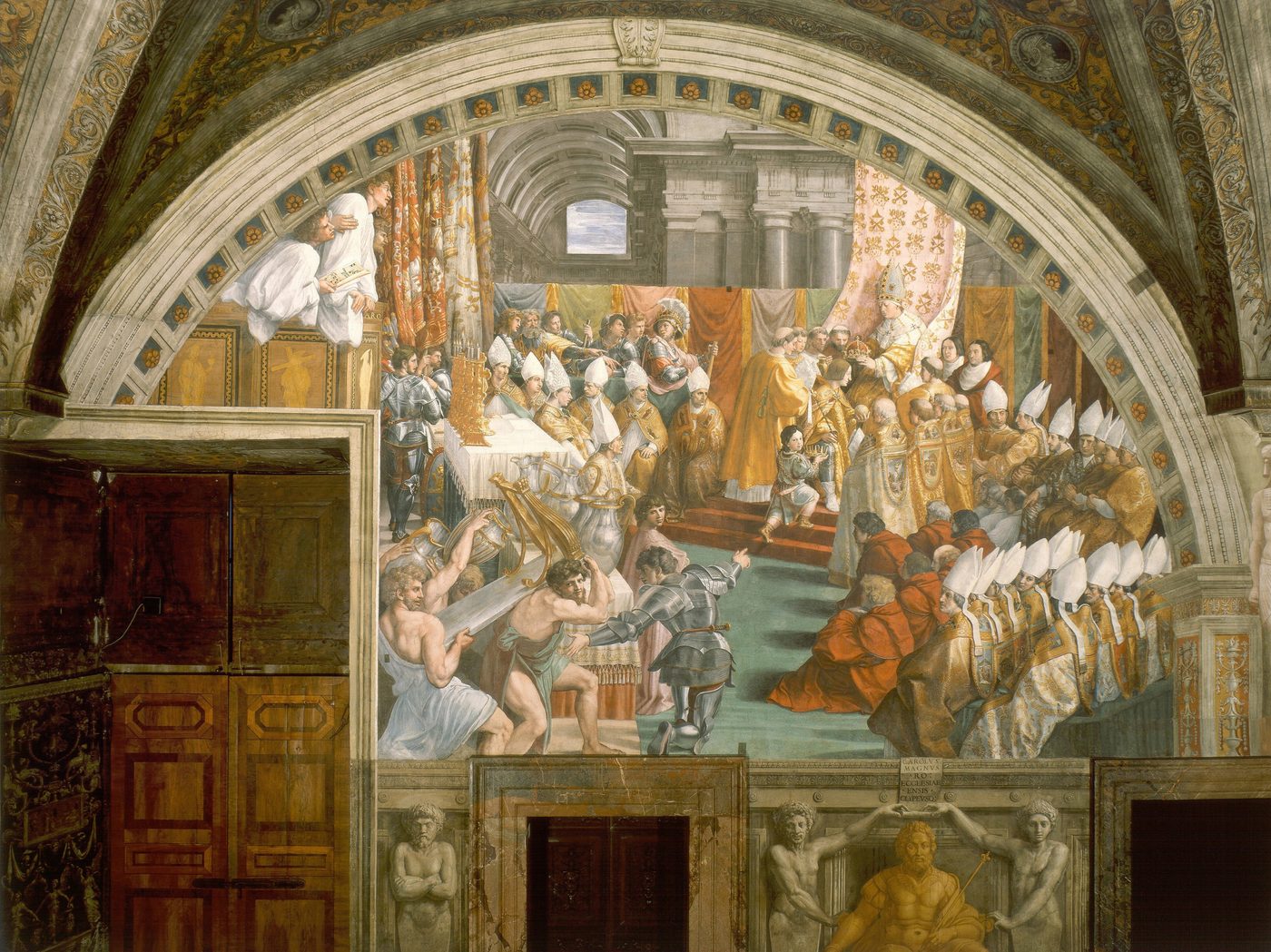
Parallèle
Note : Cet article est compilé à partir de la deuxième conférence de David Pawson dans sa série Histoire de l'Église (partie 2 : 400–1400 apr. J.-C.), d'une durée d'environ 69 minutes. Comme dans la partie 1, je ne devine ni n'embellis : chaque argument majeur vient directement de Pawson. Chaque fois que j'ai vérifié un point dans les sources ou corrigé un détail, je l'ai signalé dans une note marginale ambrée intégrée au texte. Pour cette partie, qui traite des périodes les plus controversées de l'histoire de l'Église, j'ai également consulté d'autres historiens et prédicateurs, afin que vous entendiez plus d'une voix.
Une histoire plus triste
La partie 1 explique comment l'Église a conquis le monde au cours des quatre premiers siècles : elle a gagné la bataille physique par la souffrance, la bataille intellectuelle en affrontant l'hérésie et la bataille spirituelle en tenant ferme contre les autres religions.
Pawson dit qu'il a oublié de mentionner une chose la semaine précédente, et qu'elle compte : les chrétiens ont gagné parce qu'ils ont surpassé tous les autres par leur manière de vivre, de penser et de mourir. Par leur manière de vivre, ils ont remporté la bataille spirituelle. Par leur pensée, la bataille intellectuelle. Par leur manière de mourir, la bataille physique. C'est ainsi qu'ils ont survécu à tout le reste.
Mais ce soir, dit-il, le sujet est bien plus triste et bien plus grave. Le sujet est : comment le monde a capturé l’Église au cours des mille années suivantes.
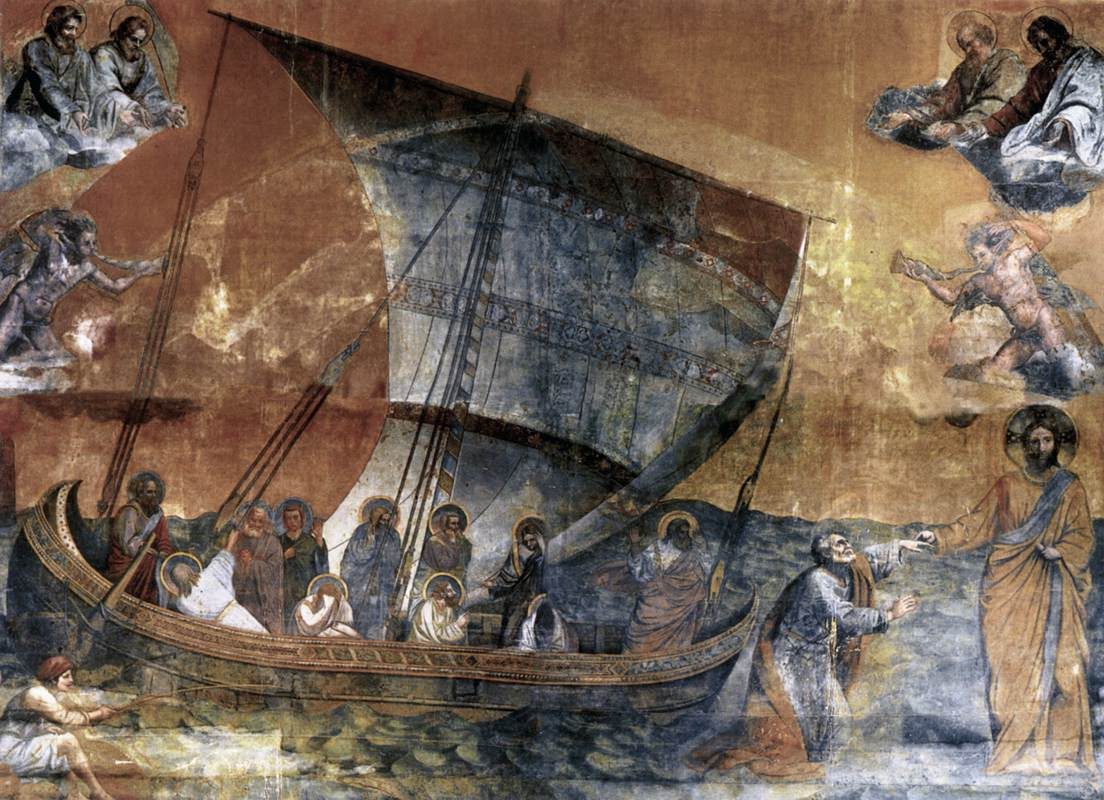
Il y a une peinture médiévale de l'église comme canot de sauvetage. Dans une mer agitée, les chrétiens dans le bateau tendent la main pour arracher aux vagues ceux qui se noient. C'est une belle image de l'Église : un canot de sauvetage parti dans le monde en réponse à l'appel à l'aide.
Mais Pawson s'arrête sur une chose :
Le canot de sauvetage doit être en mer. Mais si la mer pénètre dans le canot de sauvetage, il y a alors de réels problèmes. L’Église doit être présente dans le monde si elle veut sauver les âmes. Mais quand le monde entre dans l’Église, alors c’est fini et elle sombre.
Les mille années suivantes racontent la mer qui entre dans le bateau. Pawson les divise en trois chapitres : le monde a commencé à s'y infiltrer dès les premiers siècles (100–400 apr. J.-C.) ; puis l'âge des ténèbres (400–1000) ; puis le Moyen Âge (environ 1000–1500), qui nous amène à un an ou deux de Martin Luther.
L’image du canot de sauvetage
Le bateau doit être dans la mer, mais la mer ne doit pas être dans le bateau
Pawson commence par une peinture médiévale : l’Église y apparaît comme un canot de sauvetage sur une mer agitée, tendant la main pour arracher aux vagues ceux qui se noient.
Le canot sur la mer
L’Église est dans le monde pour sauver des âmes. C’est sa mission même.
La mer dans le canot
Quand le monde entre dans l’Église, le bateau coule. C’est l’histoire de mille ans.
« L’Église doit être dans le monde si elle veut sauver des âmes. Mais quand le monde entre dans l’Église, c’en est fini : elle coule. » — David Pawson
Une chronologie de mille ans
400–1517 apr. J.-C. : de la chute de Rome à Luther
Quatre courants s’entrecroisent au fil de mille ans : le déclin, l’essor du pouvoir pontifical, les voix de contestation et l’âge des découvertes.
Certaines dates sont simplifiées pour faciliter la lecture. Les repères précis sont vérifiés dans les notes ambrées qui accompagnent l’essai.
Comment le monde est entré dans l’Église (100–400 apr. J.-C.)
Quand il y avait des martyrs comme ça, des prédicateurs comme ça, quand la bataille était gagnée, comment le monde est-il entré ? Pawson cite quatre choses qui ont commencé à diluer l’Église des apôtres.
Premièrement, les évêques régionaux. Dans le Nouveau Testament, chaque église avait plusieurs évêques, appelés anciens, évêques ou presbytres, tous chargés de la même fonction : la direction spirituelle. Vint ensuite une étape où chaque église réduisit ses évêques à un. Puis une étape où un évêque gouverna plusieurs églises. Le pouvoir fut ainsi concentré entre moins de mains. On ne trouve pas ce modèle dans le Nouveau Testament ; il n'apparut pas pendant les cent premières années, mais au IIe siècle émergèrent des hommes dotés d'un pouvoir et d'une influence considérables. Non plus plusieurs évêques pour une église, mais plusieurs églises pour un évêque.
Deuxièmement, une vision magique des sacrements. Prenez le baptême. Au lieu d’être un signe extérieur de l’effacement spirituel des péchés qui se produit lorsqu’un homme croit en Jésus, les gens ont commencé à croire que l’eau elle-même et la formule appropriée sauvaient une personne du péché, quel que soit son âge ; et que pécher après le baptême en annulait les effets. Alors les gens reportaient le baptême jusqu'au lit de mort : ils attendaient que le médecin leur dise qu'il n'y avait plus d'espoir, puis se dépêchaient de faire venir le pasteur. Mais d’autres s’inquiétaient : et si notre bébé mourait, nous préférerions que ses péchés soient effacés immédiatement. Les deux points de vue étaient superstitieux. Malheureusement, le baptême des enfants a prévalu. La Cène du Seigneur a également été considérée comme un rite magique : les gens ont commencé à penser que le pain était en réalité la chair du Christ et le vin son sang ; puisque de la vraie chair et du vrai sang étaient offerts, c'était un sacrifice ; et comme c'était un sacrifice, celui qui le célébrait devait être un prêtre.
Troisièmement, la religion établie. Lorsque l’empereur allait à l’église, vous pouvez imaginer que tout le monde le faisait. Lorsque l’État a déclaré le christianisme comme religion officielle, tout le monde a pris le train en marche. Aller à l’église établie est devenu à la mode et respectable. Pawson le dit clairement : une religion établie est vouée à produire un christianisme à la mode et respectable, et il ne trouve pas cela dans le Nouveau Testament.
Quatrièmement, l'adhésion nominale. Un écrivain de la fin du deuxième siècle observait : vers l'année 50, appartenir à l'Église signifiait qu'une personne avait reçu le baptême et le Saint-Esprit et avait appelé Jésus Seigneur ; mais vers 180, cela signifiait qu'une personne reconnaissait la règle de la foi (le credo), le canon du Nouveau Testament et l'autorité des évêques. En d’autres termes, les gens rejoignaient l’Église pour d’autres raisons que de croire en Jésus et de recevoir son Esprit. C'était désormais une institution.
Et chaque fois que l’Église allait mal, il y avait des protestations. Au cours des 400 premières années, il y a eu deux mouvements : Montanisme et monachisme. Tous deux protestaient contre une Église de plus en plus riche, mondaine et peuplée de gens qui n’avaient même jamais été convertis.
Le montanisme naquit dans ce que nous appelons aujourd'hui la Turquie, en Asie Mineure. Un homme appelé Montanus vit que, chez des dizaines de membres, il n'y avait aucune trace du Saint-Esprit ; il chercha donc à nouveau l'Esprit de Dieu. Un réveil éclata. Les dons de l'Esprit revinrent dans l'Église ; la vie, la vigueur et la réalité revinrent dans le culte. Pawson dit que, si l'on veut savoir à qui ils ressemblaient le plus aujourd'hui, ce sont les pentecôtistes. L'accent était fortement mis sur le retour du Christ, sur la nécessité d'une foi réelle pour devenir membre, ainsi que sur la sainteté et le jeûne. Mais les évêques s'y opposèrent sévèrement, et l'on devine pourquoi.
Le drame est que, comme bien souvent, ce premier mouvement pentecôtiste a mal tourné. Cela a mal tourné parce que ces gens refusaient de recevoir un enseignement. Ils voulaient la chaleur sans la lumière. Pawson dit : la lumière sans chaleur est froide ; la chaleur sans lumière est brûlante ; il faut les deux. Ils n'écoutaient pas les Écritures sur la manière d'exercer les dons spirituels. Et le mouvement s'effondra dans le fanatisme. « C'est un mot que tout réveil pentecôtiste doit connaître », dit Pawson. « Nous pouvons apprendre de l'histoire. »
La deuxième protestation se déroula d'une manière très différente. Quelques années plus tard, certains chrétiens disaient : cette Église est si mondaine, si morte, que le seul espoir de retrouver le christianisme est de sortir de l'Église et du monde.
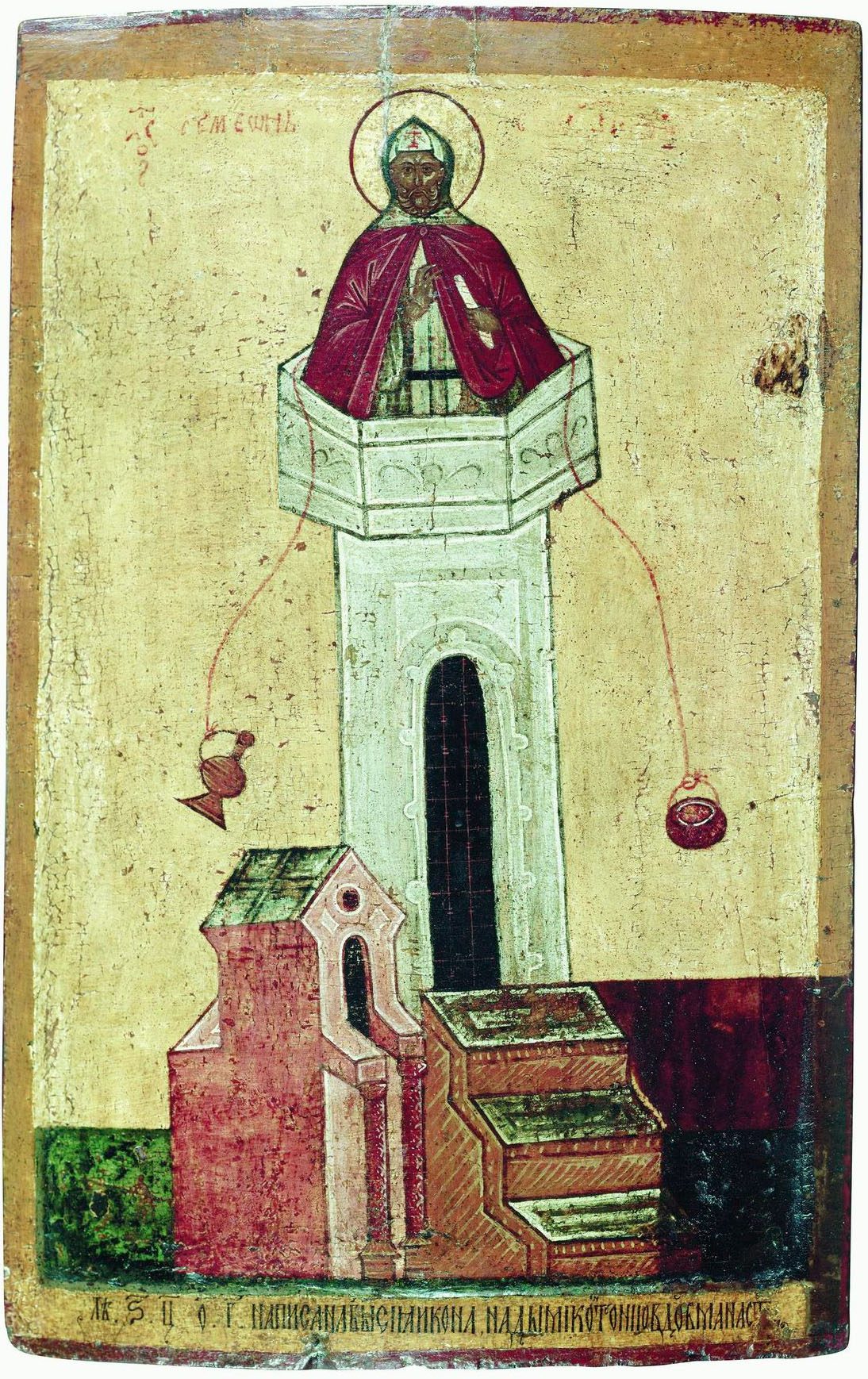
Le premier le fit seul : c'était un ermite. C'est l'histoire la plus étrange. Antoine fut le premier : il décida qu'il ne serait jamais un vrai chrétien tant qu'il n'aurait pas atteint le milieu du désert. Le problème, c'est que lorsqu'il y arriva, d'autres chrétiens voulurent le rejoindre, ce qu'il ne souhaitait pas ; et surtout, il trouva ses tentations dans une grotte du désert tout aussi mondaines qu'elles l'avaient été dans l'Église. Il y avait un ermite encore plus étrange, Siméon Stylite : il construisit une colonne d'une soixantaine de pieds de haut, d'environ un mètre de large au sommet, et y vécut pendant des décennies. Il se tint même sur une jambe pendant un an, en signe de protestation, affirmant que le christianisme était une chose dure et exigeante. Et il resta là, au sommet de sa colonne, couvert d'ulcères et de vers, dans un état épouvantable.
Ceux qui fondèrent des communautés eurent plus de succès que les ermites. L'homme qui lança ce mouvement fut Benoît. Sur le mont Cassin, à mi-chemin entre Rome et Naples, il réunit un groupe de vrais chrétiens qui jugeaient l'Église trop mondaine pour qu'on puisse encore en faire quoi que ce soit. Ils se dirent : nous viendrons vivre ensemble. Nous ne serons pas riches, mais pauvres ; pas livrés à la convoitise, mais célibataires ; pas rebelles, mais obéissants. Ils prononcèrent les trois vœux de pauvreté, de chasteté et d'obéissance. Et le monastère était dirigé comme une garnison de soldats romains.
Le drame est que cette protestation tourna mal, tout comme l'autre. Le Christ n'a jamais voulu que nous vivions la vie chrétienne loin des autres. Plus tard, ces moines, qui avaient commencé avec de bonnes intentions, devinrent si absorbés par leur propre salut et si introvertis qu'ils s'isolèrent du monde et de l'Église. Pire encore, le monachisme produisit l'idée qu'il existe deux catégories de chrétiens : ceux de seconde zone qui se marient et ceux de première classe qui ne le font pas ; ceux de seconde zone qui vivent dans le monde et ceux de première classe qui vivent à l’écart. Mais ce n'est pas l'enseignement de Jésus. Notre Seigneur n'était pas un moine : il ne se retira pas de la société, mais vécut une vie pure dans la société et dit à ses disciples d'être dans le monde sans être du monde.
Tous deux disaient : l’Église n’est pas ce que Jésus-Christ voulait qu’elle soit. L’un d’eux a dit que nous le redécouvririons en retournant dans l’Esprit. L'autre a dit que nous le retrouverons en sortant du monde et de l'Église. Les deux n’ont abouti à rien, parce qu’ils ne sont pas entièrement revenus au christianisme du Nouveau Testament.
Comment le monde est entré dans l’Église — 100–400 apr. J.-C.
Quatre fissures et deux contestations
Même au temps des victoires, quatre évolutions ont commencé à affaiblir l’Église des apôtres. Et chaque fois qu’elle s’égarait, des voix s’élevaient pour protester.
Des évêques régionaux
De plusieurs anciens par Église, on passe à un évêque pour plusieurs Églises. Le pouvoir se concentre entre quelques mains, sur le modèle des gouverneurs romains.
Des sacrements magiques
Le baptême est considéré comme salvateur en lui-même ; on le repousse donc au lit de mort ou on l’administre aux nourrissons. La Cène est comprise comme chair et sang au sens littéral, un sacrifice qui nécessite un prêtre.
Une religion établie
Quand l’empereur va à l’église, tout le monde y va. La foi devient à la mode et respectable, au lieu d’être un abandon de soi.
Une appartenance de façade
On rejoint l’Église pour d’autres raisons que la foi en Jésus et la réception de l’Esprit. L’Église devient une institution.
Deux contestations
Le montanisme
Une contestation pentecôtiste
Il redécouvre l’Esprit et ses dons, en insistant sur le retour du Christ et la sainteté. Mais il a « de la chaleur sans lumière », refuse l’enseignement et s’épuise dans le fanatisme.
Le monachisme
Contester en se retirant
Il quitte à la fois le monde et l’Église pour retrouver le christianisme authentique. Mais il produit des chrétiens « à deux vitesses », alors que le Christ ne nous a jamais appelés à vivre à l’écart de tous.
Ces deux contestations étaient sincères, mais elles n’ont rien donné, faute d’un retour complet au christianisme du Nouveau Testament.
L'Âge des Ténèbres : la chute de Rome (410 apr. J.-C.)
C'est maintenant que l'histoire commence véritablement. En 410, une catastrophe survint. Des peuples barbares venus du nord marchèrent sur Rome. Les Vandales arrivèrent — c'est de leur nom que vient le mot « vandalisme ». Les Francs arrivèrent, puis les Huns, puis les Goths. Ces barbares pénétrèrent dans Rome et s'en emparèrent. La Rome de cette époque s'effondra.
Les Romains quittèrent la Grande-Bretagne cette année-là pour défendre Rome, sans parvenir à la sauver. Dès leur retrait, les Jutes, les Angles et les Saxons déferlèrent sur la Grande-Bretagne et détruisirent le christianisme en Angleterre et dans le sud-est de l'Écosse. Le christianisme que les soldats romains y avaient apporté au cours des quatre premiers siècles disparut.
Il semblait que la chute de Rome signifiait la fin de tout. Jérôme, écrivant depuis Jérusalem, déclara : « le genre humain est inclus dans les ruines. » Les gens pensaient que c'était la fin de la civilisation. Et cela a intrigué l’Église : Rome avait survécu pendant des siècles en tant qu’empire païen, mais en tant qu’empire chrétien, elle s’est effondrée. Beaucoup de chrétiens ne pouvaient pas le comprendre.
Mais un homme y a réfléchi et a fait une déclaration incroyable. Il a dit : c’est la meilleure chose qui soit jamais arrivée. Son nom était Augustin.
Augustin : un cœur agité qui a trouvé son repos
Vous pouvez acheter ses livres au kiosque à livres de la gare aujourd'hui. Et si je vous disais certaines des choses que ce grand homme a dites, vous les reconnaîtriez. Il a dit : « Nos cœurs sont agités, et ils ne peuvent trouver de repos tant qu'ils ne trouvent pas leur repos en toi. » Peut-être la prière la plus citée de l’histoire. C'est Augustin qui a prié : « Donnez-moi la chasteté, mais pas tout de suite. » Et c'est Augustin qui dit : « Aime et fais ce que tu veux. »
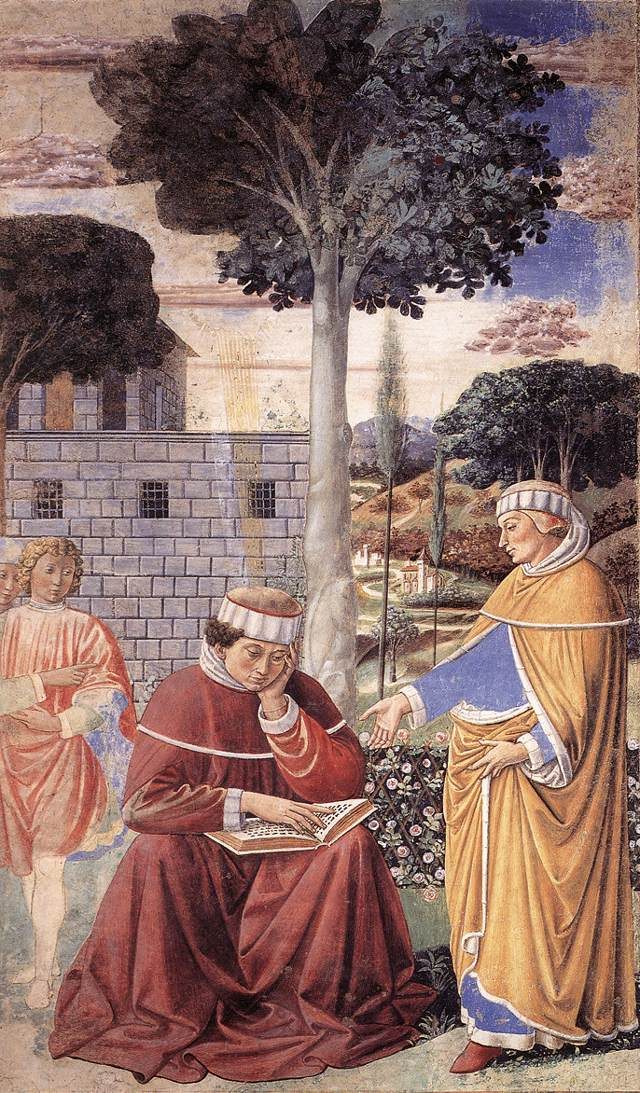
Il est né en Afrique du Nord. Lorsqu’il se rendit à Carthage comme étudiant, il se laissa entraîner par de mauvaises fréquentations. Bientôt, il eut une concubine et un fils avec elle, et vécut dans cette relation illégale pendant des années. Son père était païen, mais sa mère était une femme pieuse qui priait chaque jour en larmes pour son fils rebelle. Plus tard, en raison de son esprit brillant, il fut invité à devenir professeur de rhétorique à Milan. Là, il alla entendre prêcher le saint évêque Ambroise. Sous cette prédication, le jeune homme à l’esprit brillant mais à la vie débauchée fut amené à une profonde conviction de péché.
Puis un jour, alors qu'il était assis dans un jardin, pleurant le gâchis qu'il avait fait dans sa vie, il entendit une voix d'enfant par-dessus le mur du jardin : « Tolle lege, tolle lege » — « prenez et lisez ». Il n'a jamais su qui était l'enfant. Mais il aperçut un rouleau sur le siège à côté de lui, le prit et lut. C'était la lettre de Paul aux Romains. Augustin l'a lu et la lumière s'est levée. Lorsqu'il est ensuite sorti dans la rue, la femme avec laquelle il vivait l'a vu et il s'est enfui. Elle courut après lui en criant : « Augustin, c'est moi, c'est moi. » Il répondit par-dessus son épaule : « Mais ce n'est pas moi, ce n'est pas moi. »
Il a écrit toute l'histoire de sa conversion dans un livre intitulé Confessions. Pawson dit qu'Augustin a eu plus d'influence sur l'histoire de l'Église que n'importe quel homme après l'apôtre Paul.
Lorsque Rome tomba, Augustin étant alors au milieu de sa vie, le monde entier sembla s'effondrer autour de lui. Il y réfléchit, puis écrivit le deuxième grand livre dont nous nous souvenons : La Cité de Dieu. Il y dit que c'est une bonne chose que la ville païenne de Rome se soit effondrée, car la cité de Dieu peut désormais la remplacer ; qu'un empire terrestre ait pris fin, car l'empire céleste peut désormais être établi. Le livre apporta espoir et vie nouvelle à beaucoup, les aidant à comprendre qu'une cité de Dieu survivait encore lorsque la cité des hommes avait disparu.
Mais c'était là le problème. Les gens ont commencé à se demander : quelle est cette cité de Dieu ? Visible ou invisible ? Terrestre ou céleste ? Et à ce stade, Augustin a conduit beaucoup de gens à un malentendu. Ce qui est drôle, c'est que des siècles plus tard, lors de la Réforme, les protestants ont dit « nous suivons Augustin » et les catholiques romains ont dit « nous suivons Augustin ». Mais les protestants suivaient le premier livre, Confessions; et les catholiques suivaient le deuxième livre, Cité de Dieu.
Car voici ce qui s’est passé : l’Église a dit : si tel est le cas, alors l’Église est désormais le nouvel empire.
L'Église devient un empire : la montée de la papauté
L’un des premiers résultats fut l’élévation de l’évêque de Rome au rang d’empereur. À cette époque, il y avait un grand débat sur le mot « pape », qui signifie essentiellement « père ». Bien que Jésus ait dit de ne jamais appeler quelqu'un sur terre père, car vous n'avez qu'un seul Père au ciel, les gens ont commencé à appeler le prêtre local « père ». Puis ils appelèrent l'évêque régional « père ». Finalement, les cinq grands patriarches dirent : si quelqu'un doit être appelé père, ce doit être nous cinq. Et enfin, l'évêque de Rome dit : la ville de Rome n'est plus, mais je suis l'empereur maintenant ; je suis l'évêque en chef, et désormais, moi seul serai appelé pape, moi seul serai appelé père.
Et la papauté, telle que nous la connaissons, prit forme. Ce qui est frappant, c'est que le pape adopta les titres et même les vêtements de l'empereur romain. Il prit le titre Pontifex Maximus, connu aujourd'hui sous le nom de pontife — le titre de l'empereur romain. Augustin avait été mal compris et l'on pensait que l'Église était le nouvel empire. Or un empire doit avoir son empereur, ses vêtements, ses cérémonies et son trône. Ainsi l'Église devint un empire et le pape un roi.
Bien sûr, de nombreux chrétiens n’accepteraient rien de tout cela. Les Français ne le feraient pas, les Irlandais non plus, les Gallois non plus, les Écossais non plus. Malheureusement, les Anglais l’ont fait.
Quand l’Église est devenue un empire
L’ascension du pouvoir et la boucle qui se referme
Les échelons du titre de « père »
Le prêtre local est appelé « père »
Puis l’évêque régional
Puis les cinq grands patriarches revendiquent ce titre
L’évêque de Rome : « N’appelez que MOI pape »
Il reprend les titres et les vêtements de l’empereur (Pontifex Maximus)
« N’appelez personne sur la terre votre père… » (l’Évangile selon Matthieu)
La boucle : 410 → 800
410 : l’Empire romain s’effondre
L’Église prend le relais et devient le nouvel « empire »
800 : Charlemagne est couronné empereur
L’empire revient : la boucle est bouclée
Augustin a écrit La Cité de Dieu pour consoler un monde qui s’effondrait. Mais on l’a lu à tort comme si l’Église devait être le nouvel empire ; et un empire devait avoir son empereur, son trône et ses vêtements d’apparat.
Deux courants du christianisme se rencontrent à Whitby
L'Irlande, à travers Colomba, apporta la foi à Iona et en Écosse, conduisant l'Écosse au Christ. Puis Aidan descendit sur l'île de Lindisfarne, au large du Northumberland. Pawson se souvient d'être allé à Lindisfarne quelques mois plus tôt, près des ruines de l'église d'Aidan, la petite île depuis laquelle il évangélisa le Northumberland. Ce christianisme non papal, le christianisme celtique, arriva en Angleterre par le nord, à travers l'Irlande et l'Écosse.
Mais plus tard, le pape a dit : nous devons avoir l’Angleterre, nous devons avoir ces Angles. Il a fait le célèbre jeu de mots : ce ne sont pas des Angles mais des anges. Et il envoya un missionnaire également nommé Augustin. Cet Augustin débarqua sur l'île de Thanet, puis se rendit à Cantorbéry. Colomba sur l’île d'Iona au nord ; Augustin sur l'île de Thanet au sud.
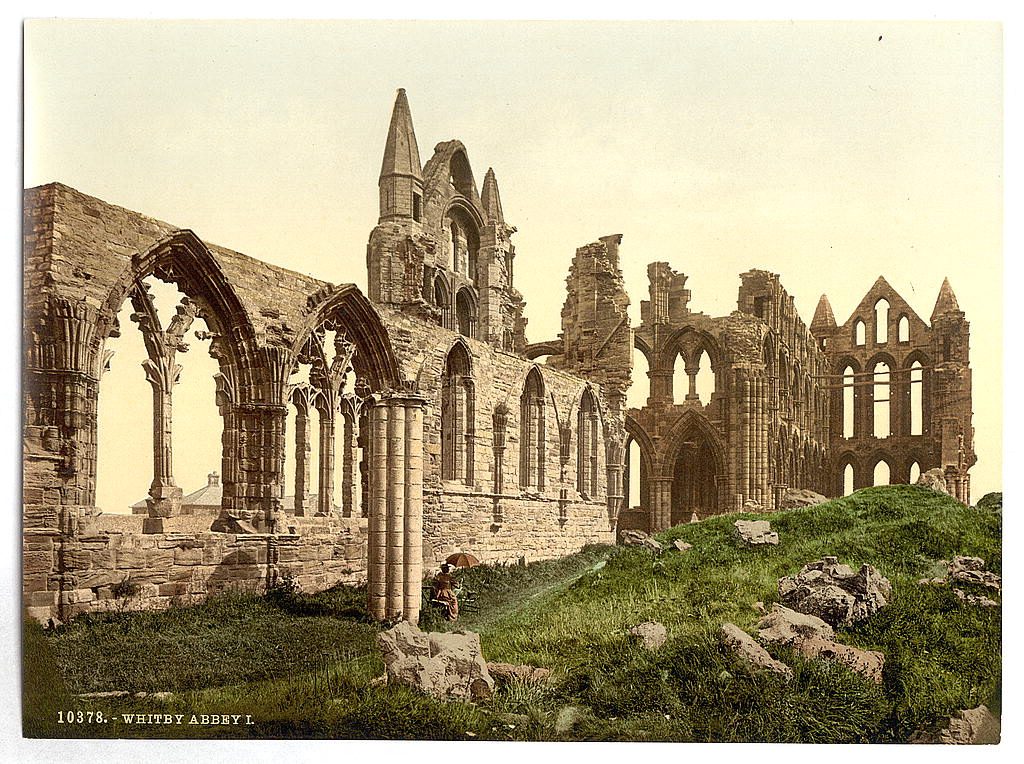
Les deux courants du christianisme se rencontrèrent à Whitby. Vous pouvez encore voir les ruines au-dessus du port de Whitby, là où ils se réunirent. Là, le christianisme lié à Rome rencontra le christianisme celtique pour voir lequel l’emporterait. La tragédie, selon Pawson, est que le camp romain l'emporta. Les îles Britanniques passèrent sous l’autorité du trône papal. L'Écosse changea même de saint patron pour adopter saint André. Toute la situation fut transformée.
Deux courants se rencontrent à Whitby
Quelle voie la Grande-Bretagne allait-elle suivre ? (Synode de Whitby, 664)
Le christianisme celtique
Irlande → Iona (Colomba) → Lindisfarne (Aidan) → nord de l’Angleterre
Sans pape. Simple et missionnaire.
Le christianisme romain
Rome → Augustin à Thanet → Cantorbéry → le sud
Fidèle au pape.
Whitby, 664
Le christianisme romain l’a emporté. Les îles Britanniques sont passées sous l’autorité du trône pontifical. Pawson y voit une tragédie ; on peut encore aujourd’hui se tenir au milieu des ruines qui surplombent le port de Whitby.
Schéma non à l’échelle géographique. Le synode de Whitby a eu lieu en 664 ; Pawson dit « 660 ».
La séparation de l’Orient et de l’Occident (1054)
L’autre grand groupe de chrétiens qui ne voulaient rien de tout cela étaient les Églises de la Méditerranée orientale : Grèce, Asie Mineure, Syrie, Égypte. Ils ont dit : nous ne le reconnaissons pas. Qu'il devrait y avoir un seul « papa », un seul père de toute l'Église, n'est pas dans les Écritures, ni dans le Nouveau Testament. Ils entamèrent alors une séparation, finalement achevée en 1054. Cette division a séparé les Églises orientales et occidentales pendant mille ans, et ce n’est que ces dernières années que les deux ont recommencé à se parler.
Et voici l'une des choses les plus incroyables. Vers l'année 850, le pape a déclaré : « J'ai découvert des documents du premier siècle, prouvant que Pierre a nommé le premier pape, qui a nommé le second, et ainsi de suite. » Aujourd'hui, même l'Église romaine sait que ces documents étaient des contrefaçons ; on les appelle les fausses décrétales. Et pourtant, la papauté a été bâtie sur un faux. Il y avait un autre faux document, la Donation de Constantin, affirmant que toute l'Italie appartenait au pape. Le pape « découvrit » ce faux et dit : « Toute l'Italie m'appartient. » C’est le genre de fondement sur lequel reposait toute la structure, et même Rome le sait aujourd’hui.
Le grand schisme de 1054
Une Église divisée en deux pendant près de mille ans
Les cinq patriarcats (la pentarchie)
L’Occident latin
Rome : un seul pape à la tête de toute l’Église
• La suprématie du pape
• Ajout de « et du Fils » (filioque) au Credo
• Pain sans levain
Tradition latine
L’Orient grec
Constantinople et les patriarches : égaux, sans « papa » unique
• Cinq patriarches égaux
• Le Credo laissé inchangé
• Pain levé
Tradition grecque
Les excommunications réciproques de 1054 n’ont été levées conjointement par le pape Paul VI et le patriarche Athénagoras qu’en 1965 : une date proche des « dix dernières années » évoquées par Pawson lorsqu’il prêchait dans les années 1960.
Charlemagne et le Saint Empire romain germanique (800 apr. J.-C.)
Le pouvoir ne cessait de s'étendre, jusqu'à l'année 742, où un homme naquit avec un rêve : restaurer l'empire de Rome, le remettre sur la carte, avec lui-même comme empereur et le pape sous lui. Son nom était Charlemagne. Un homme impitoyable qui disait : nous aurons à nouveau un empire romain, et son chef ne sera pas le pape mais un empereur.
Charlemagne a sauvé la vie du pape à deux reprises : une fois des barbares, une fois des foules de Rome qui étaient en colère contre lui. Le pape a dit : vous m’avez sauvé la vie deux fois, que voudriez-vous que je fasse pour vous ? L'empereur répondit : le jour de Noël, couronnez-moi empereur. Et, en l'an 800, le jour de Noël, dans la plus grande église de Rome, lors de l'office du matin, le pape couronna le roi des Francs, Charlemagne, empereur du Saint Empire romain germanique. Mille ans plus tard, le Saint Empire romain germanique existait toujours.
Vous voyez, nous avons bouclé la boucle. L'empire de Rome s'est effondré en 410. L'Église s'est emparée de l'empire. Puis, en 800, l'empereur revint et prit l'empire à l'Église. Tout semblait revenir là où il avait commencé.
Charlemagne fit de bonnes choses et de mauvaises. Parmi les bonnes : il interdit au clergé d'entretenir des concubines, de fréquenter les tavernes et de chasser ; il fonda de nombreuses écoles. Parmi les mauvaises : il interdit au clergé de se marier, et c'est à Charlemagne que nous devons le célibat des prêtres. Il forgea aussi le mot Christendom, « chrétienté » : le royaume qui serait chrétien sous l'autorité de l'empereur. Et cette idée de chrétienté perdure jusqu'à aujourd'hui.
La montée de l'Islam
Parce que l’Église était désormais riche et puissante, elle est devenue corrompue. Et une fois de plus, des protestations éclatèrent, cette fois venant de l’est et du nord. Depuis l’Est, la protestation venait de deux sources. La première était l’Islam.
Pawson appelle cela le plus grand jugement qui soit jamais tombé sur l'Église chrétienne. Il avait vécu en Arabie et connaissait un peu cette religion. Mahomet naquit en 571 à La Mecque, centre de l'idolâtrie et de la superstition arabes. Au cœur de la ville se dressait un grand bâtiment carré drapé de noir, abritant une pierre sacrée, la Kaaba, une météorite tombée du ciel. Mahomet grandit au milieu de l'idolâtrie et de la superstition des Arabes, et cela le révoltait.
Il se tourna d'abord vers les Juifs, puis vers les chrétiens, et demanda : avez-vous la vraie religion ? Le drame, c'est que Mahomet ne rencontra jamais de chrétien converti. Le drame, c'est qu'il ne vit jamais le véritable christianisme du Nouveau Testament. Tout ce qu'il vit, ce furent les vêtements des prêtres, les images et les crucifix. Et il se dit : c'est aussi idolâtre que la religion des Arabes. Si seulement Mahomet avait rencontré un vrai chrétien à la fin du VIe siècle. Mais ce ne fut pas le cas.
Alors il se dit : très bien, je chercherai une nouvelle religion qui soit pure. Il épousa une riche veuve, passa des années dans le désert et déclara qu'on lui y avait parlé : il n'y a de Dieu qu'Allah, et Mahomet est son prophète. Il se mit à prêcher cela, consignant ce qu'il entendait dans ses visions dans un livre, le Coran (Al-Quran). Persécuté, il dut fuir à Médine en 622. C'est à partir de cette date que les Arabes comptent les années de leur calendrier. Il revint à La Mecque avec une armée et imposa la nouvelle religion. Dès lors, chacun devait prier en direction de La Mecque, et une religion de bonnes œuvres — jeûner, prier cinq fois par jour, observer le Ramadan, faire le pèlerinage à La Mecque, donner l'aumône — permettait d'aller au ciel. Et cette religion fut imposée par la force des armes.
L'islam balaya le christianisme de la Méditerranée. Il le balaya de la côte nord-africaine, où il n'y eut plus d'Église pendant des siècles. Il le balaya de la Terre sainte elle-même, de Jérusalem, du lieu où Jésus était mort. Il s'étendit à travers l'Espagne et l'Asie Mineure, pénétra en France jusqu'aux portes de Lyon, et en Europe orientale jusqu'à Vienne. Il semblait que l'islam allait écraser le christianisme dans un gigantesque mouvement de tenaille.
C’est le plus grand jugement que Dieu ait jamais laissé s’abattre sur l’Église chrétienne. Et c'était mérité. Mais jusqu’ici et pas plus loin. Dieu n’allait pas faire disparaître complètement le christianisme.
Il les arrêta à Lyon et à Vienne, et ils se replièrent jusqu'à leurs frontières actuelles : la côte nord-africaine et, plus au nord, la Turquie.
Carte des siècles obscurs
Deux vagues déferlent sur le monde chrétien (410–732 apr. J.-C.)
Flèches orange : les barbares descendent vers Rome. Flèches vertes : l’islam se répand autour de la Méditerranée depuis l’Arabie, à travers l’Afrique du Nord et l’Espagne, jusqu’à Tours.
Fond de carte : l’Empire romain (Wikimedia Commons, domaine public). Les flèches indiquent schématiquement le sens des avancées, pas des trajets exacts. Vienne marque la limite ottomane, plus tardive : Pawson condense près de mille ans d’évolution des frontières en un seul mouvement de tenaille.
Témoins cachés dans le noir
Car à cette époque-là, partout en Europe, de petits groupes de chrétiens se réunissaient autour de la parole de Dieu. Ils ont vu que l’Église officielle était corrompue, alors ils se sont simplement réunis en petits groupes, ont lu ce livre et ont dit : nous adorerons Dieu dans la simplicité. Nous n’avons pas besoin de prêtres, car nous avons Jésus notre souverain sacrificateur. Nous n’avons pas besoin d’un pape, car nous avons un Père aux cieux. Nous avons juste besoin de la parole de Dieu et du Saint-Esprit.
Nous ne savons presque rien d’eux, car ils ont été tellement persécutés que même les archives de leur histoire ont été détruites. Pawson demande à ses auditeurs si certains ont déjà entendu parler d'un groupe appelé les Bogomiles. C'était un groupe réuni autour de la parole de Dieu, surtout en Bulgarie et en Bosnie ; le mot « Bogomil », dit Pawson, signifie en bulgare « amis de Dieu ». Il y avait les Pauliciens, présents en Arménie, en Thrace et en Asie Mineure. Il y avait les Cathares, un nom signifiant « les purs », de la même racine que le mot ultérieur « puritain » ; ils se réunissaient dans les Balkans et à travers l’Europe.
Pawson l'avoue : dans sa naïveté, il pensait autrefois que, pendant mille ans, il n'y avait eu que l'Église romaine et les Églises orientales. Ce n'est pas vrai. Il fut bouleversé de découvrir qu'à travers tous ces siècles se succédaient sans interruption de simples chrétiens réunis autour de la parole de Dieu dans des Églises locales. Ils le payaient de leur vie, mais ils se réunissaient, et la flamme de la foi restait allumée pour les générations à venir.
Le Moyen Âge : Hildebrand place le pape au-dessus de tous
Nous arrivons maintenant au dernier chapitre, de l'année 1000 à 1500, appelé le Moyen Âge car il se situe entre l'âge des ténèbres et l'ère moderne.
Le premier homme dont on parle est Hildebrand. Ce moine devint pape et n’aimait pas être numéro deux. Il existait désormais un Empire romain restauré avec un nouvel empereur, mais le pape était le numéro deux. Hildebrand décida que le pape devait être le numéro un, et il y parvint. Il fit beaucoup de bonnes choses : il combattit la simonie dans l'Église, c'est-à-dire l'achat de charges ecclésiastiques. Mais il le fit parce qu’il pensait que le pape devait tout contrôler, y compris les rois.
L'affrontement entre Hildebrand et l'Empereur Henri IV a été réglé de la manière la plus dramatique et la plus terrible. Henri IV défia Hildebrand en disant : « Je suis le numéro un. » Hildebrand répondit : « Vous ne l'êtes pas. » « Que le peuple décide. » Et le peuple décida que le premier était Hildebrand. Dans les Alpes, le pape rencontra l'empereur Henri IV, venu du nord. Le pape se trouvait dans une maison de montagne et il fit attendre l'empereur dehors dans la neige, pieds nus, pendant trois jours, avant de lui parler. Hildebrand plaçait ainsi l'empereur au second plan.
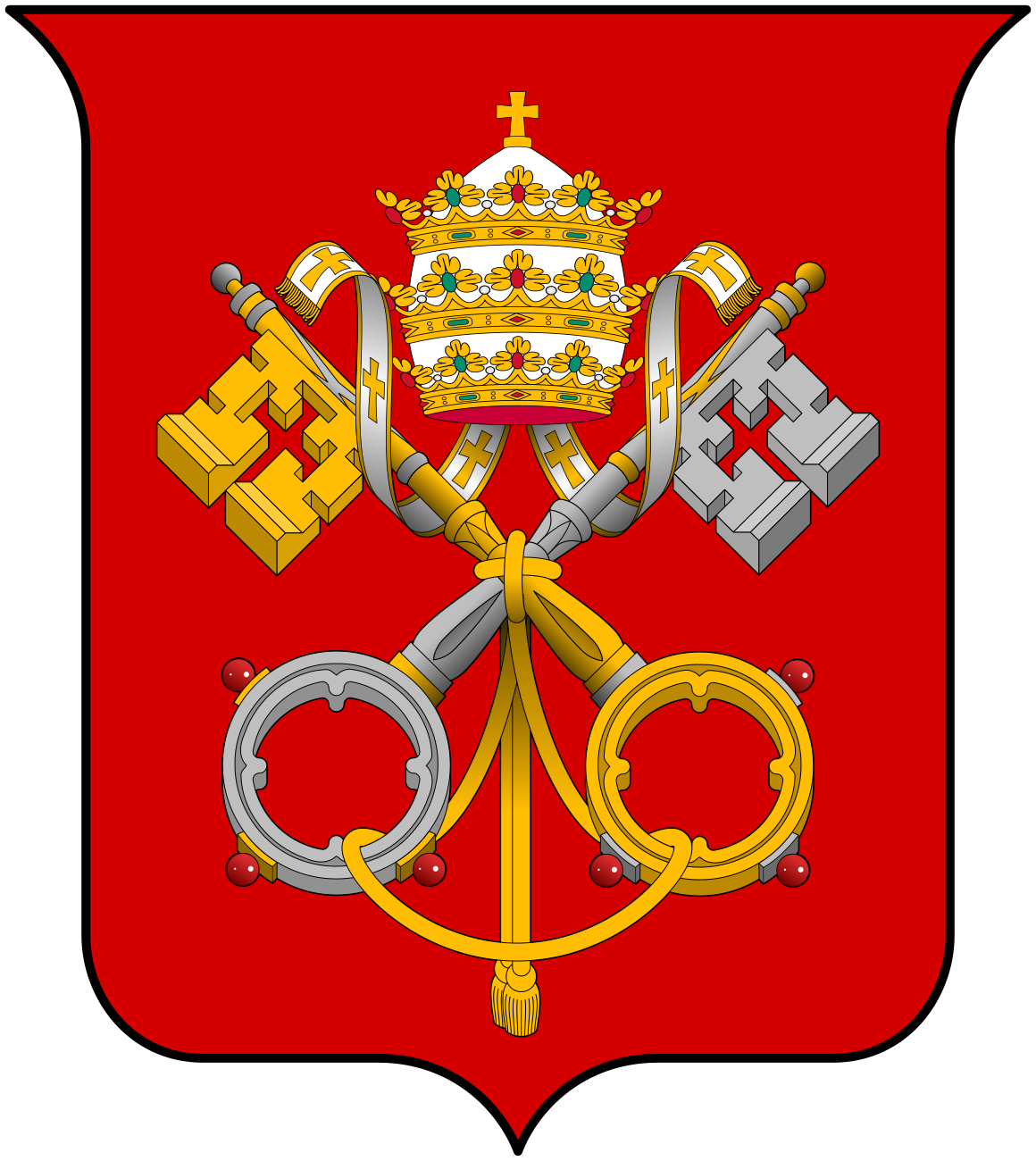
Dès lors, pendant les cinq cents années suivantes, le pape fut la figure la plus influente, et la papauté la puissance qui contrôlait le monde occidental. L'Église était redevenue l'empire. Ce fut ce pape qui introduisit le symbole des clés croisées de saint Pierre : l'une représente l'autorité du pouvoir sacré sur l'Église, l'autre celle du pouvoir séculier sur l'État. Ces clés croisées expriment la prétention d'Hildebrand à dominer à la fois l'Église et l'État.
Les Croisades : quand l’Église prenait l’épée
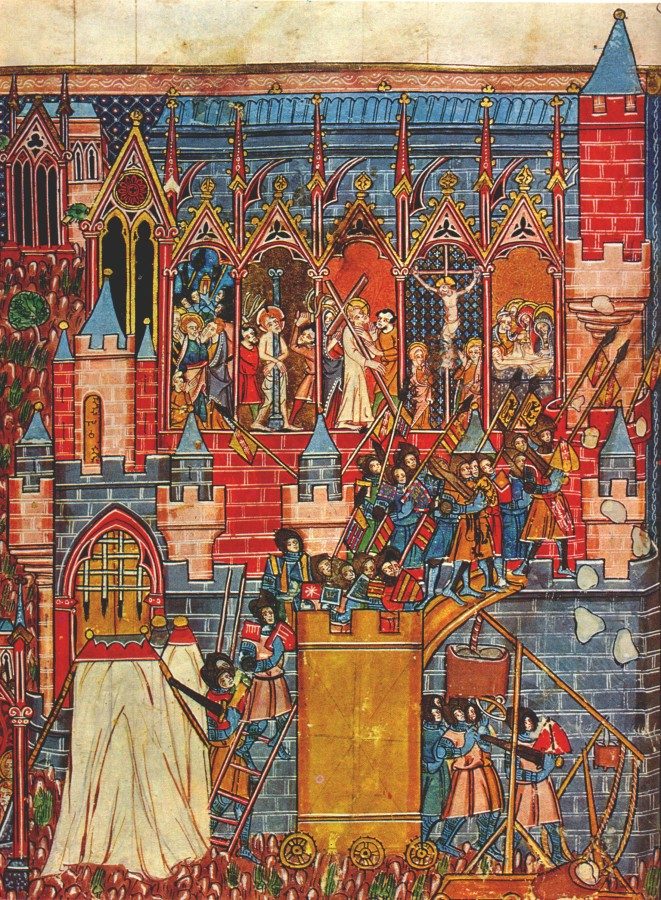
Cela mettait la force des armées à la disposition de l'Église. Et parce que Hildebrand pensait ainsi, il commença à recourir à la force pour établir le royaume du Christ. Jamais une plus grande erreur n’a été commise. Le premier résultat de l’idée selon laquelle la force est valable pour l’Église a été huit croisades en Terre Sainte.
Désormais, les lieux saints, Jérusalem et d'autres villes, étaient aux mains des musulmans, des Sarrasins et des Turcs. Le pape décida que l’Église se frayerait un chemin et s’emparerait de la Terre Sainte pour le Christ. La première croisade fut prêchée en 1095. L'idée remontait au projet d'Hildebrand, mais il mourut avant sa réalisation. Les gens portaient une croix sur l’épaule, appelée crux ; de là vient le mot croisade.
La première croisade fut rassemblée par un prédicateur négligé et fanatique appelé Pierre l'Ermite. Il partit avec 600 000 hommes, dont seulement un dixième arriva ; la plupart moururent dans les hautes montagnes de Turquie. Mais ils arrivèrent et prirent Jérusalem. Ils la pillèrent, violèrent les femmes et instaurèrent le prétendu règne du Christ en massacrant tous les Sarrasins de la ville. Est-ce chrétien ? Vous répondez aussitôt : bien sûr que non. Mais souvenez-vous qu'ils avaient été trompés. Des milliers croyaient que c'était la vocation de l'Église : devenir un empire terrestre qui s'établit par la force.
Bien sûr, il y avait des incitations. On promettait aux gens l’absolution s’ils allaient se battre pour le Christ, des indulgences réduisant les peines du purgatoire, l'annulation légale de leurs dettes et le pardon aux criminels qui quitteraient la prison pour aller se battre. Vous pouvez imaginer l’équipage hétéroclite qui en a résulté. Le roi Philippe de France en fut pris. Le roi Richard Cœur de Lion d'Angleterre en fut victime. Ils partirent huit fois. L'une d'elles fut la croisade des enfants : 2 000 petits enfants partirent à travers l'Europe pour tenter de récupérer la Palestine pour Jésus. Aucun n'y arriva. Le pape déclara que les anges fourniraient miraculeusement de la nourriture ; mais la nourriture n'arriva jamais et les anges ne se montrèrent pas.
La dernière fut un échec total. Sur la montagne au sommet plat des cornes de Hattin, la dernière armée croisée mourut de soif, assiégée par les Sarrasins. Et en 1270, l'Europe poussa un soupir de soulagement lorsque le pape mit fin à toute l'entreprise.
C’est l’une des histoires les plus tristes de l’histoire de l’Église. Cela n'a rien fait. Rien. Et effectivement, cela a fait pire que rien.
Les huit croisades
Quand l’Église a choisi l’épée plutôt que l’amour (1095–1291)
Hildebrand croyait que la force pouvait établir le royaume du Christ. « Jamais on n’a commis de plus grande erreur », dit Pawson.
La croisade populaire · 1096
Pierre l’Ermite conduit une foule ; la plupart meurent dans les montagnes d’Asie Mineure.
Première croisade · 1095–99
Prend Jérusalem en 1099 et massacre sa population. Le seul « succès ».
Deuxième croisade · 1147–49
Prêchée par Bernard de Clairvaux ; elle échoue.
Troisième croisade · 1189–92
Richard Cœur de Lion face à Saladin ; Jérusalem n’est pas reprise.
Quatrième croisade · 1202–04
Détournée vers le sac de Constantinople : des chrétiens contre des chrétiens.
La croisade des enfants · 1212
Une marche d’enfants ; aucun n’atteint la Terre sainte.
Les croisades suivantes · 1217–54
Des échecs successifs, dont les deux campagnes du roi Louis IX.
Hattin et l’effondrement · 1187 / 1291
Déroute aux cornes de Hattin en 1187 ; Acre, dernier bastion, tombe en 1291.
Les incitations à partir
En 1270, le pape y met fin. « Cela n’a rien accompli. Rien. Et à vrai dire, cela a fait pire que rien. » — David Pawson
L'Inquisition, deux ou trois papes et la corruption
Après avoir utilisé la force en dehors de l'Église, le pape décida d'utiliser la force à l'intérieur de l'Église, ouvrant ainsi un autre chapitre terrible appelé l'Inquisition. Pawson dit qu'il n'ose pas décrire les choses faites au nom du Christ. Les évêques refusèrent de diriger cette machine de cruauté, de méchanceté et de suspicion ; mais les Dominicains la prirent en charge. Et pendant de nombreuses années, d’innombrables personnes vécurent dans la peur pour leur vie à cause de cette terrible institution.
Ce qui n’allait pas, c’était que l’Église se considérait comme un empire terrestre autorisé à utiliser la force pour établir la cause du Christ. Nous savons maintenant que ce n’est pas la bonne solution. L'Église ne doit employer aucune autre force que l’amour, et ne doit jamais forcer personne, sauf par l’amour et par la prédication de l’Évangile, à accepter Christ.
Et ce genre de corruption se retourne vite contre lui-même. Le pouvoir a tendance à corrompre, dit Lord Acton, et le pouvoir absolu tend à corrompre absolument. Bientôt, deux papes se battent pour le trône, puis trois. Il y avait un pape à Avignon, un pape à Rome. Qui était pape maintenant ? Ils réussirent à reconstituer la papauté, mais ensuite la corruption s'étendit plus bas : les monastères devinrent corrompus et trop riches, les évêques trop puissants, les paroisses corrompues.
Et les pratiques de la religion chrétienne ordinaire se sont corrompues. Il y avait des prières à Marie, même si on ne nous a jamais dit de prier Marie ; c'est un être humain comme nous tous. Il y avait des prières pour les morts, des prières aux saints. Il y avait la doctrine qui faisait le plus peur : le purgatoire, combien d’années de souffrance après la mort. Il y avait la doctrine de la messe comme sacrifice. Il y a eu confession à un prêtre. Il y avait des indulgences, de sorte que, pour une somme d'argent, on pouvait acheter une réduction de tant d'années au purgatoire. Il y avait des pèlerinages. Il y avait le culte des reliques. Il y avait des images dans le culte. Il n’y a pas une miette de cela dans le Nouveau Testament.
Les ajouts du Moyen Âge
« Pas la moindre trace de tout cela dans le Nouveau Testament »
Des pratiques ajoutées une à une au fil des siècles. La colonne de droite indique la date approximative à laquelle chacune a été officialisée ou formellement définie.
Les dates sont approximatives : beaucoup de ces pratiques étaient d’abord des coutumes, définies seulement plus tard par des conciles, comme Latran IV en 1215 ou Florence en 1439. C’est la lecture protestante qu’en fait Pawson ; voir l’encadré « D’autres voix » pour les perspectives catholiques et orthodoxes.
La faute fondamentale : l’Église pensait qu’elle était le Christ
Alors, quelle était la faute fondamentale derrière tout cela ? Si vous oubliez la plupart de ce que j'ai dit ce soir, c'est important. Je vais vous dire ce qui n'allait pas en une phrase :
L'Église avait commencé à penser qu'elle était le Christ. Et elle le fait toujours.
Pawson raconte avoir demandé à un prêtre éminent : est-ce toujours vrai ? Il a répondu : oui, et cela ne changera pas. Pawson a déclaré : Mon seul problème est que je ne crois pas que l'Église soit le Christ, et je ne crois pas qu'elle soit prophète, prêtre et roi. Je crois que Jésus l'est. L’Église n’est pas notre prophète, ni notre prêtre, ni notre roi. Et le prêtre a répondu franchement : nous n'en discuterons pas, car cela ne changera jamais.
C'est le défaut fondamental. Si je crois que je suis le prophète du monde, je peux dire au monde ce qu’il doit croire et déclarer de manière infaillible ce qui est vrai. Si je suis le prêtre du monde, je peux dire : vous devez venir à mes sacrements, vous devez vous confesser à moi si vous voulez un jour être sauvé. Et si je pense que je suis le roi du monde, j’établirai mon autorité aussi largement que possible.
Il s'agit d'une confusion entre la tête et le corps de l'Église. La tête est divine ; le corps est humain. C'est le Christ qui est le chef, le prophète, le prêtre et le roi. L'Église ne l'est pas. C'est la différence fondamentale entre le protestantisme et le catholicisme, et elle est aussi grande aujourd’hui qu’elle l’a toujours été. Le Christ a dit : « Je construirai mon Église. » Il n'a pas dit : « Vous la construirez. » Le Christ est le chef de l'Église ; personne d'autre ne l'est ni ne peut l'être.
L’erreur fondamentale
L’Église a commencé à se prendre pour le Christ
Si vous oubliez tout le reste de cet essai, dit Pawson, retenez ceci : toutes les déformations découlent d’une seule confusion, celle de la tête et du corps.
La tête : divine
Le Christ
Lui seul est prophète, prêtre et roi
Le corps : humain
L’Église
Un corps qui obéit à la tête, sans jamais la remplacer
Prophète
celui qui annonce la vérité au monde
Prêtre
celui qui unit les personnes à Dieu
Roi
celui qui gouverne et établit l’autorité
Quand le corps se prend pour la tête
« Si je suis le prophète du monde, je peux lui dire ce qu’il doit croire. Si je suis son prêtre, vous devez venir à mes sacrements. Si je suis son roi, j’établirai mon autorité aussi largement que possible. » Tout prend racine dans cette confusion.
« Le pouvoir reposera sur son épaule. » (le livre d’Ésaïe) Le Christ est la tête, et personne d’autre ne peut l’être.
Les voix de la protestation au Moyen Âge
Mais Pawson est heureux de dire que tout au long du Moyen Âge, de 1000 à 1500, il y a toujours eu des gens qui disaient : ce n'est pas vrai, ce n'est pas le christianisme, ce n'est pas ce que Jésus voulait dire. De petits groupes réapparurent, portant toutes sortes de noms issus des lieux où ils vivaient.
Il y avait les Béguins des Pays-Bas, des gens qui se réunissaient autour du livre et disaient : le Christ est le chef de notre Église. Il y avait les Vaudois, nommés d’après la vallée vaudoise ; ils croyaient que ce livre leur enseignait ce que Jésus voulait dire par l'Église. À leur honneur, ils allèrent voir le pape et lui demandèrent : « Voici ce que nous voyons ; pourrions-nous être reconnus comme une partie légitime de l'Église si nous mettions ce livre en pratique ? » Auraient-ils pu faire davantage ? Ils voulaient rester dans l’Église romaine tout en suivant le livre. Le pape répondit : non, si vous faites ce que vous projetez, nous vous persécuterons. Et ils furent persécutés, fuyant de vallée en vallée.
Le groupe suivant était constitué des Albigeois du sud de la France ; eux aussi ont lu le livre et ont vu ce que l’Église était censée être. Malheureusement, la campagne la plus sanglante jamais lancée par la papauté fut menée contre eux. Le pape envoya deux nobles espagnols pour les mettre à mort. Mais ils revinrent et lui dirent : « Ce sont de bons chrétiens, pas des criminels ; ils ne vous combattent pas, ils veulent seulement rester dans l'Église et mettre en pratique leur compréhension de l'Écriture. » Et l'un d'eux, nommé Dominique, dit : « Nous apporterons cela au sein de l’Église. » Ils fondèrent les Dominicains, une copie des Albigeois, mais à l’intérieur de l’Église. La tragédie est que plus tard, l’ordre dominicain s’est tellement corrompu qu’il prit en charge l’Inquisition. Il y avait aussi les Frères de la Vie Commune en Allemagne. Tous étaient indépendants de la hiérarchie catholique romaine, fondaient tout sur la Bible dans la langue du peuple, et furent persécutés jusqu'à la mort. La véritable Église a toujours été persécutée.
Parmi ceux qui, au sein même de l'Église, voyaient aussi le problème, certains se retirèrent pour garder la foi dans l'intimité. L'un d'eux était Bernard de Clairvaux. C'était un jeune homme très sérieux, bien qu'il eût dirigé dans sa jeunesse une véritable bande de voleurs. Après deux ans comme prisonnier de guerre en Italie, il revint à lui et comprit qu'il gaspillait sa vie. Fils d'un baron français, il renonça à ses richesses et se retira avec douze amis dans une vallée infestée de brigands. Il y vécut dans une extrême pauvreté, se nourrissant de feuilles de hêtre cuites et d'herbes. Il levait ses amis à deux heures du matin pour prier, ne les laissait cesser le travail qu'à huit heures du soir, et ensemble ils bâtirent une communauté dans la vallée de Clairvaux.
Bernard est devenu l'un des chrétiens les plus puissants d'Europe, sans fonction, sans argent, sans aucune force matérielle ou psychologique. On l’appelait le « faiseur de pape ». En privé, il aimait Jésus ; Martin Luther disait que de tous les moines et prêtres de l’histoire, il tenait Bernard de Clairvaux dans la plus haute estime. Mais en public, il se sentait obligé de soutenir la papauté. Quelqu’un a sagement dit qu’il avait retardé la Réforme d’au moins deux siècles.
L'autre homme, presque contemporain, était François, né dans la petite ville d'Assise. François a été amené à affronter la vie en rencontrant un lépreux dans la rue. Il passa devant le lépreux de l’autre côté. Mais en passant, il s'est demandé : quel genre d'homme suis-je pour me détourner d'un prochain ? Il revint et embrassa le lépreux. À partir de ce moment-là, François a commencé à prendre la vie au sérieux. Il a cherché Christ et il l'a trouvé. Il rassemblait autour de lui un groupe d'amis qui sortaient deux par deux, dans une pauvreté totale, prêchant l'Évangile, gagnant des gens au Christ.
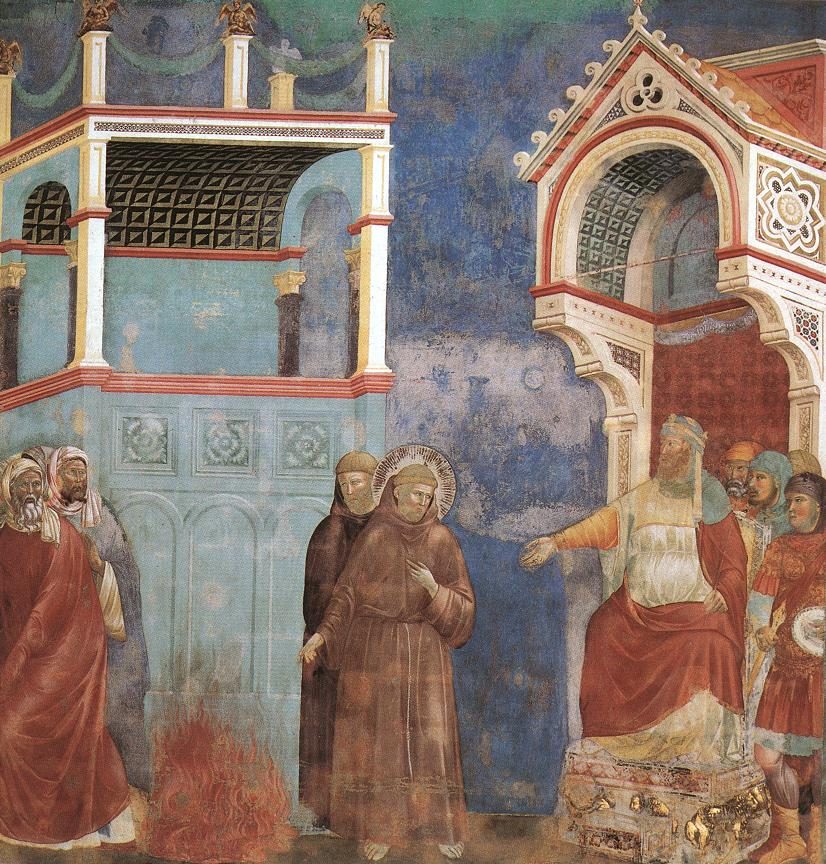
Bien qu'on se souvienne davantage de lui pour son attitude envers les animaux et les oiseaux et pour son amour unique de la nature, Pawson dit que l'on devrait se souvenir de François d'Assise pour autre chose : il fut le premier missionnaire auprès des musulmans. Au péril de sa vie, il se rendit lui-même chez le sultan pour prêcher l'Évangile de Jésus au chef des musulmans. Au lieu d'aller les combattre avec 600 000 soldats, François alla seul dans la pauvreté pour prêcher l'amour de Jésus. Il fut le premier et le dernier missionnaire auprès des musulmans arabes pendant de nombreux siècles, jusqu'à Raymond Lulle. Les disciples de François portaient des robes grises, c'est pourquoi on les appelait Frères gris ; les Dominicains portaient du noir, c'est pourquoi on les appelait Frères noirs. Tous deux ont essayé de ramener la vie chrétienne simple dans l’Église, mais tous deux ont échoué et sont devenus corrompus : les franciscains sont devenus des mendiants professionnels et les dominicains ont dirigé l’Inquisition.
La situation dans son ensemble exigeait qu’un homme dise la vérité et qu’il la dise si bien que tout le monde puisse l’entendre et la comprendre. Arnold de Brescia, en 1150, a commencé en disant : la richesse et le pouvoir du monde ne devraient pas être entre les mains de l'Église. Mais Bernard de Clairvaux s'y oppose et le fait taire. Puis vint Marsile, médecin, qui a lu sa Bible et a dit : la Bible est la norme de l'Église, et aucune autre ; les évêques et les papes sont des inventions humaines. Mais on le réduisit au silence. Un Anglais qui était professeur à l'Université de Paris, Guillaume d'Ockham, a également pris la parole et a été réduit au silence.
Puis vint un homme originaire du Yorkshire qui allait devenir ce qu'on appelle l'étoile du matin de la Réforme. L'étoile du matin est celle que l'on peut encore voir lorsque le soleil se lève. Cet homme du Yorkshire vint à Oxford comme étudiant brillant, devint professeur, voyagea beaucoup et fut surnommé Doctor Evangelicus. Son nom : Jean Wyclif.
Cet homme redécouvrit la Bible, peut-être plus que quiconque jusqu'à Martin Luther. Il protesta contre les abus de la papauté. Cinq décrets, appelés bulles, furent émis contre lui. On le traduisit en justice à Cantorbéry. Mais il se tourna vers les Écritures, seule loi de l'Église, et déclara : je vais traduire cette Bible du latin en anglais ; je ferai connaître ce livre aux jeunes laboureurs. Wyclif s'attela à la traduction, sachant que remettre la Bible entre les mains des gens ordinaires, c'était leur donner la réponse à toute la corruption de l'Église. Il réunit un groupe de prédicateurs qui parcouraient les villages, prêchant et chantant l'Évangile sur les places des marchés. On se moquait d'eux en les traitant de chanteurs de berceuses et en les appelant Lollards.
Allez à Amersham. En haut de Station Road, tournez à gauche à travers les maisons et sortez dans le champ. Il y a un monument aux personnes brûlées vives par leurs propres enfants, qui ont été forcés d'allumer des bûchers et de brûler leurs parents à mort. Pourquoi ? Parce que leurs parents ont été surpris dans les bois d'Amersham en train de lire leur Bible. C'était le résultat de Wyclif et des Lollards. Et Wyclif lui-même mourut paisiblement en tant que recteur de Lutterworth.
Wyclif était à Oxford, et il existait une autre université en Europe étroitement liée à Oxford : l'Université de Prague. Le recteur de Prague était un pauvre paysan qui s'était élevé grâce à un travail acharné. Son nom était aussi Jean : Jean Hus. Hus entendit parler de Wyclif, commença à lire ses livres et commença à prêcher la même chose à Prague. Finalement, Jean Hus fut arrêté et le pape le condamna à être brûlé vif ; les Hussites furent également mis à mort.
Quand la nouvelle est parvenue en Angleterre que le pape avait fait brûler Jean Hus, qu’ont-ils fait ? Les autorités de l'Église se sont rendues à Lutterworth, ont déterré le corps de Jean Wyclif, l'ont brûlé sur un bûcher et ont jeté les cendres dans la rivière Swift à Lutterworth. Mais quelqu'un a dit à ce propos :
De même que la rivière Swift emportera ces cendres dans l'Avon, et l'Avon dans la Severn, et la Severn dans les bras de mer autour de nos côtes, et les bras de mer dans les océans, ainsi l'enseignement de Jean Wyclif se répandra à travers le monde.
Et c’était une prophétie étonnante.
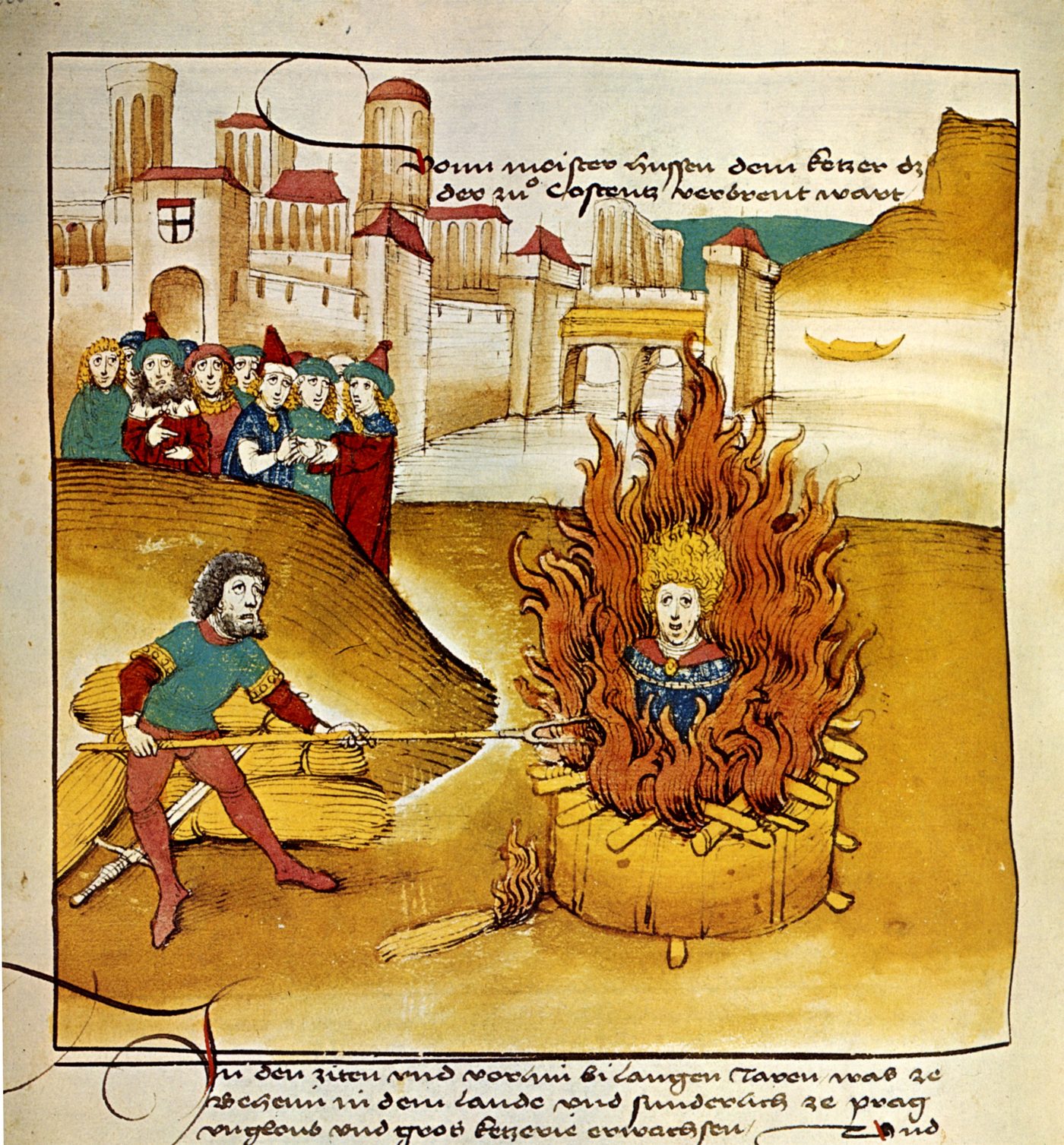
Le fleuve des témoins
La flamme de la foi ne s’est jamais tout à fait éteinte
Pawson reconnaît avoir cru autrefois que, pendant mille ans, seule l’Église romaine avait existé. Ce n’était pas le cas. Il y a toujours eu une suite ininterrompue de simples chrétiens qui l’ont payé de leur vie, mais ont gardé le flambeau pour la génération suivante.
Montanisme : l’Esprit redécouvert en Phrygie
Ermites et communautés monastiques : contestation de la mondanité
Pauliciens en Arménie et en Asie Mineure
Bogomiles en Bulgarie et en Bosnie
Arnaud de Brescia : « Que les richesses sortent des mains de l’Église »
Vaudois : les « Pauvres de Lyon »
Cathares et Albigeois dans le sud de la France
François d’Assise : pauvreté et mission
Bégards et Frères de la vie commune
Marsile : « La Bible est la norme, aucune autre »
Guillaume d’Ockham : réduit au silence
John Wycliffe : l’étoile du matin, la Bible en anglais
Jan Hus : brûlé à Constance
Martin Luther : l’aube se lève
Remarque : certains groupes, comme les pauliciens, les bogomiles et les cathares, étaient en réalité dualistes, plus proches du gnosticisme que du christianisme du Nouveau Testament auquel Pawson les associe. Voir la note ambrée de cette section.
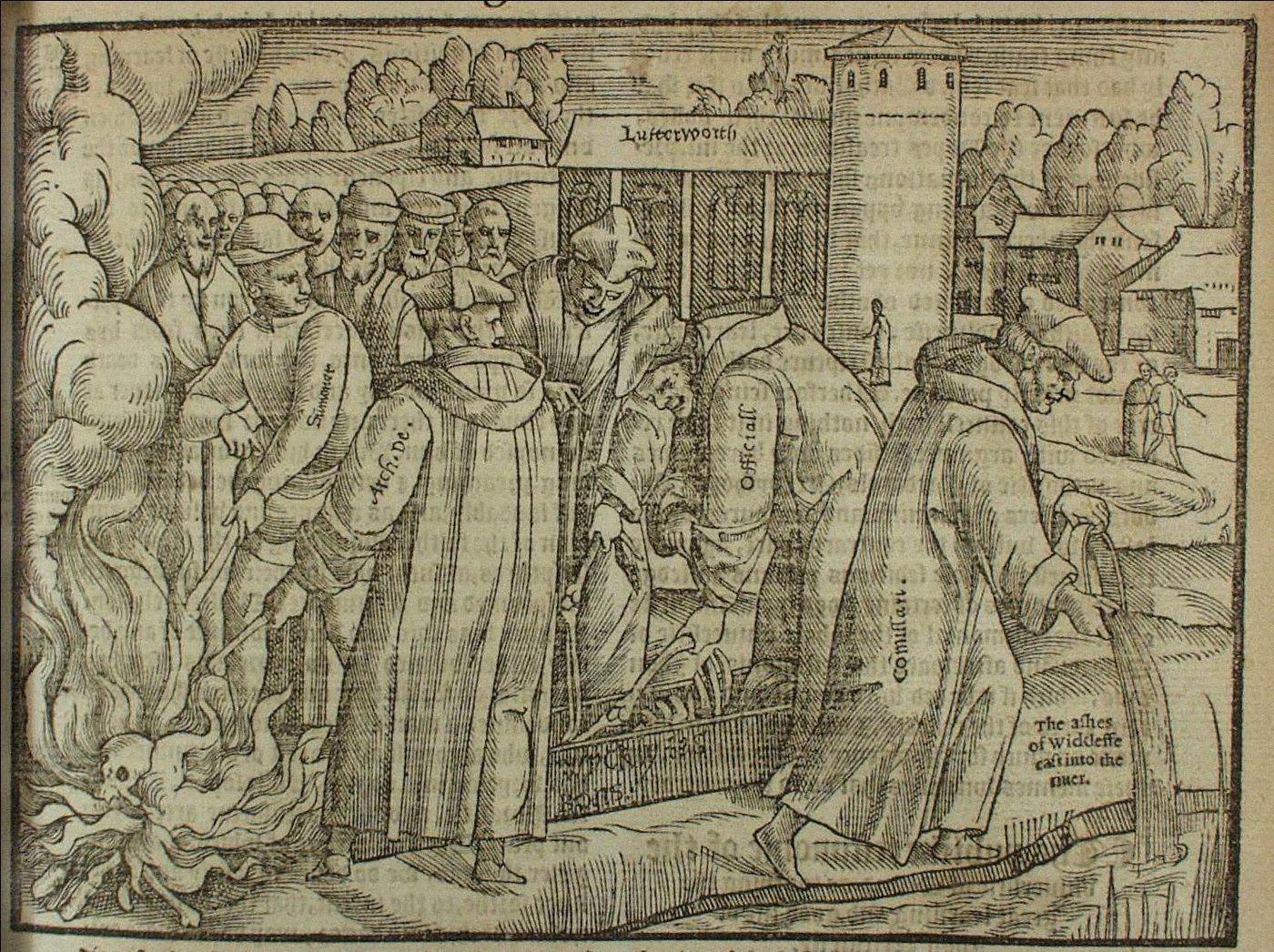
L'aube : l'ère de la découverte et de la réforme
Nous sommes au bord de quelque chose d’excitant. Vous pouvez voir qu’un tel abus envers l’Église du Christ ne pourrait pas durer éternellement. Les gens commençaient à voir, et la seule chose qui leur permettait de voir, c'était qu'ils commençaient à lire ce livre dans leur propre langue. Ce livre, où qu'il aille, remettra les choses à plat.
Mais il y a autre chose qui a causé la Réforme, pas seulement les abus contre l’Église. C’était alors que les hommes entraient dans une ère de découverte. Dans le domaine matériel : Colomb a découvert l’Amérique en 1492 ; Copernic a découvert que la terre tourne autour du soleil et non l'inverse ; Galilée a mis le télescope devant ses yeux défaillants et a regardé les étoiles. C’était l’aube de l’ère de la science, lorsque les hommes commençaient à remettre les choses en question.
Dans le domaine mental, les hommes redécouvrirent la littérature et l’art grecs. Dans les peintures de Raphaël, on voit la culture antique renaître, notamment parce que Constantinople était tombée aux mains des Turcs et que des trésors de l'art grec avaient été emportés à Rome et en Italie. Les nouveaux savoirs se répandirent parce que l'imprimerie venait d'être inventée. L'un des grands érudits de la nouvelle ère était Érasme. Il commença à redécouvrir le Nouveau Testament grec et l’Ancien Testament hébreu. Érasme disait : « Je ferai un Nouveau Testament si précis que même les plus humbles comprendront le message. » Il produisit un texte précis dans lequel, au lieu du mot « pénitence », apparaissait le mot « repentir ». Beaucoup d'erreurs des Bibles dont ils disposaient furent corrigées.
Mais voici la dernière chose que Pawson veut dire. Dans toute cette grande redécouverte de l'art, de la musique et de la sculpture, dans tout le grand mouvement que nous appelons la Renaissance, les hommes ont découvert une chose : si les gens sont meilleurs intellectuellement, ils ne le sont pas pour autant moralement. C'était l'époque où les papes remplissaient leurs palais de trésors artistiques, l'époque de Cesare et Lucrezia Borgia, la famille papale la plus immorale qui ait jamais existé. Une époque où les hommes étudiaient l’art, la musique et la littérature, étudiaient les cieux et restaient pourtant immoraux.
La Renaissance était un mouvement purement intellectuel et culturel. Elle n’apportait pas de réponse au problème du péché. Le monde entier attendait qu’un homme retrouve le salut.
Il attendait qu’un homme s’attaque au problème moral de la race humaine, de l'Église et du monde ; un homme qui consulterait ce livre et, à partir de sa propre expérience du péché et du salut, redécouvrirait le secret de la puissance chrétienne pour changer le monde. Et cet homme était Martin Luther, un moine. Ce mois-ci, il y a 450 ans, il a rendu sa découverte publique. La Renaissance était intellectuelle, mais la Réforme était morale. Il s’attaque au vrai problème, qui n’est pas notre manque de connaissances, de science ou de culture, mais notre manque de Jésus-Christ et de l’Évangile du salut. Son histoire constitue la partie 3 de cette série.
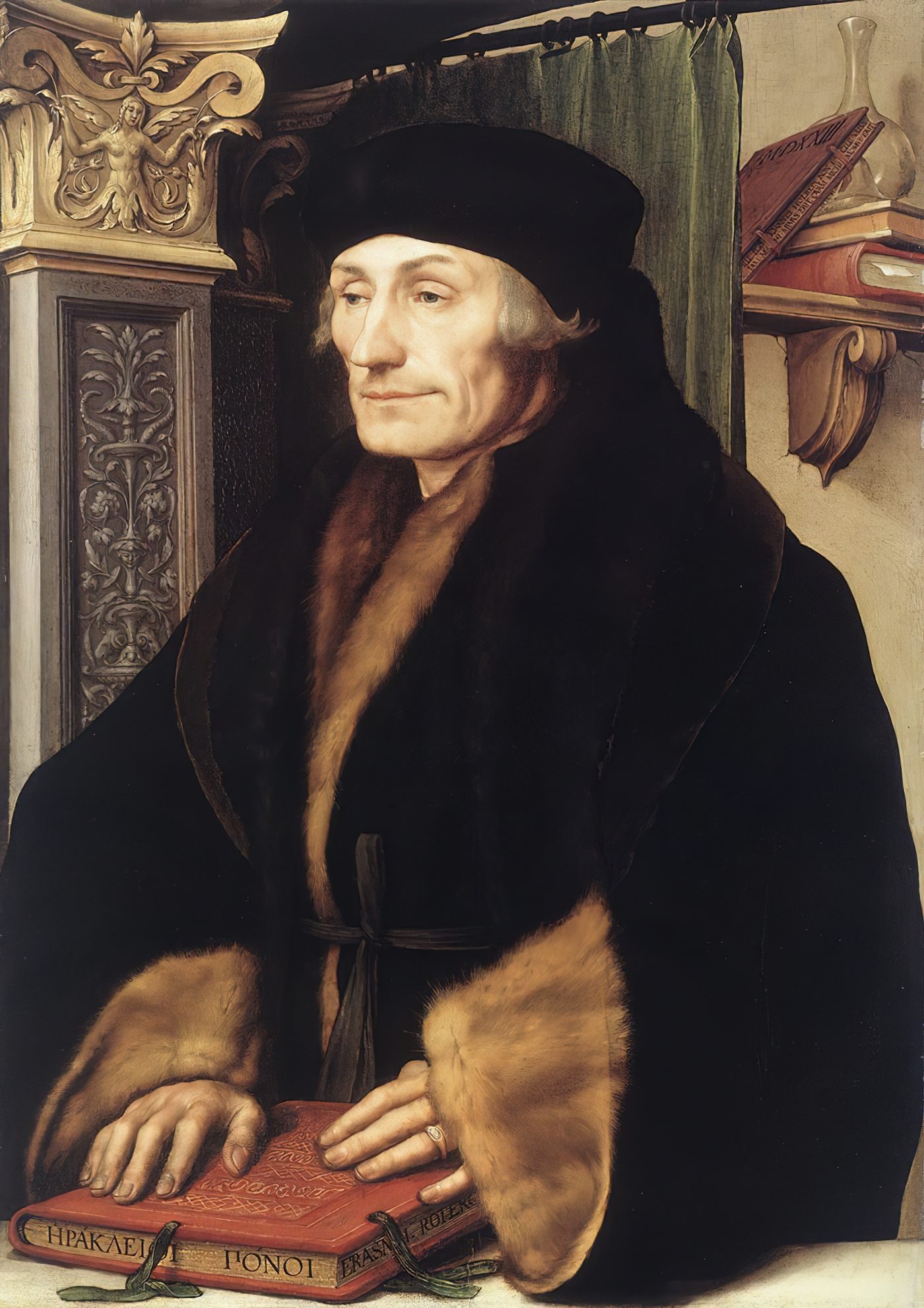
Renaissance et Réforme
La Renaissance était intellectuelle ; la Réforme était morale
Renaissance : l’intellect
• Colomb atteint les Amériques en 1492
• Copernic et Galilée regardent vers les cieux
• Chute de Constantinople en 1453 : les trésors grecs affluent vers l’Ouest
• Invention de l’imprimerie
• Érasme retrouve le Nouveau Testament grec
• L’art de Raphaël s’épanouit
Mais plus d’intelligence ne signifie pas plus de sainteté : c’est l’époque des papes Borgia.
Réforme : la vie morale
Ce qui manquait au monde, ce n’était ni le savoir, ni la science, ni l’art, ni la culture. C’était Jésus-Christ et l’Évangile du salut.
Le monde entier attendait qu’un homme redécouvre le salut et se confronte au péché. Cet homme était Martin Luther, un moine.
« La Renaissance s’adressait à la tête ; la Réforme s’adressait au cœur. » La partie 3 de cette série racontera l’histoire de Luther.
Plus d’une voix
Comment d’autres historiens et prédicateurs lisent ce millénaire
Pawson prêche depuis une position nettement protestante. Pour lui rendre justice tout en vous permettant d’entendre plusieurs points de vue, voici comment d’autres racontent la même histoire : certains le rejoignent, d’autres le contestent.
Historiens et ouvrages de synthèse
Justo L. González · The Story of Christianity, vol. 1 (1984)
Il lit ce millénaire comme un paradoxe : le « tournant constantinien » a transformé la « porte étroite » en une avenue où les foules se sont engouffrées, suscitant la protestation du monachisme. Il refuse pourtant de réduire cette époque à l’apostasie.
« Quand l’Église s’allie aux puissances du monde… comment résister aux immenses tentations de l’époque ? »
Par rapport à Pawson : Il rejoint son idée selon laquelle « le monde a capturé l’Église », mais la nuance : il existait une véritable piété, et les moines ont préservé le savoir.
Bruce L. Shelley · Church History in Plain Language (1982)
Cette synthèse évangélique accessible montre que le tournant constantinien a apporté un véritable pouvoir, mais « à un prix ». Moines, dissidents et réformateurs étaient la conscience de l’Église, la rappelant à une vie apostolique plus pure.
« Ceux qui vivent le plus pieusement pour le monde à venir sont souvent les mieux placés pour changer le présent. »
Par rapport à Pawson : Il le rejoint largement, mais avec plus d’équité et de douceur, voyant dans le renouveau une réforme de l’intérieur plutôt qu’une simple contestation.
Diarmaid MacCulloch · A History of Christianity (2009)
Il met en garde contre une lecture du Moyen Âge comme simple « déclin » : c’était un monde riche et complexe. Ses « hérétiques » étaient très divers, généralement étrangers au protestantisme ultérieur plutôt que des protestants avant l’heure.
« …un récit d’une complexité plus intéressante, dans lequel religion et doute, blasphème et dévotion restaient en dialogue. »
Par rapport à Pawson : Il nuance son récit en soulignant la richesse et les réalisations du christianisme médiéval, et rappelle qu’on ne devrait pas s’approprier ses dissidents comme des ancêtres de la Réforme.
Kenneth Scott Latourette · A History of Christianity (1953)
Il lit ce millénaire comme une alternance « d’avancées et de reculs » : malgré la corruption et les éclipses, la foi a progressé chez les peuples « barbares » d’Europe sans jamais s’éteindre. Il a intitulé cette époque « Les mille ans d’incertitude ».
« Tout au long de son histoire, le christianisme a progressé par grandes pulsations. Chaque avancée l’a porté plus loin que la précédente. »
Par rapport à Pawson : Il nuance son verdict par le regard au long cours de l’historien : même au milieu de la corruption, la foi s’est enracinée et étendue.
Robert Louis Wilken · The First Thousand Years (2012)
Il montre que le christianisme n’a jamais été seulement romain ou occidental : les communautés de Perse, d’Arménie, d’Éthiopie, d’Asie centrale, d’Inde et de Chine ont activement façonné son histoire.
« Arméniens, Grecs et Éthiopiens avaient beaucoup en commun : ils étaient gouvernés par des évêques, favorisaient la vie monastique et confessaient le Symbole de Nicée. »
Par rapport à Pawson : Il élargit son cadre à un christianisme mondial, qu’un récit exclusivement occidental tend à laisser de côté.
Tom Holland · Dominion (2019)
Cet historien extérieur à la foi soutient que les réformes médiévales elles-mêmes, surtout la « révolution » de Grégoire VII au onzième siècle, ont forgé la conscience morale de l’Occident : la séparation du « séculier » et du « sacré », et le terreau des droits humains.
« [Les réformateurs] ont bien fait [de la distinction entre le sacré et le profane] quelque chose de fondamental pour l’avenir de l’Occident, “pour la première fois et de façon durable”. »
Par rapport à Pawson : Il le conteste : l’Église médiévale, y compris le pouvoir pontifical, a préparé le terreau moral de l’Occident, transformant le monde plutôt que de simplement se laisser capturer par lui.
Prédicateurs évangéliques
John Piper · The Legacy of Sovereign Joy (2000)
Il voit en Augustin, au début du 5e siècle, un don de la grâce : ce qui libère une personne du péché n’est pas la force de sa volonté, mais une « joie souveraine » en Dieu qui domine les plaisirs du péché à leur racine.
« La grâce irrésistible… nous libérera par la puissance souveraine de délices supérieurs. »
Par rapport à Pawson : Il complète son récit en puisant chez Augustin, au début de cette période, une source vivante de grâce, au lieu de n’y voir que le déclin institutionnel.
Michael Reeves · The Unquenchable Flame (2009)
Il lit ce millénaire comme l’« arrière-plan » auquel la Réforme devait répondre : l’Église de la fin du Moyen Âge présentait la grâce comme la force permettant de se rendre assez saint, laissant les croyants sans assurance. Pourtant, la flamme de l’Évangile ne s’est jamais complètement éteinte, notamment chez Wycliffe et Hus.
« La grâce médiévale agissait “comme une canette de Red Bull spirituel”, laissant les gens “sans assurance” ; ce qui a été retrouvé, c’est la justice comme “un don fait aux pécheurs”. »
Par rapport à Pawson : Il rejoint Pawson sur le constat que le cœur de l’Évangile avait été perdu, mais adopte un ton plus doux : il insiste sur la « redécouverte » et la continuité, présentant la Réforme comme un retour à la Parole de Dieu.
W. Robert Godfrey · A Survey of Church History (Ligonier)
Dans cette lecture réformée, l’Évangile de la grâce chez Augustin est le fil lumineux, progressivement « obscurci » au Moyen Âge par la superstition et la papauté. L’Église n’est pourtant jamais entièrement morte : un reste fidèle a gardé l’Évangile vivant.
« Ce que nous voyons au Moyen Âge est bien une période de superstition croissante, de confusion croissante, d’obscurcissement de l’Évangile. »
Par rapport à Pawson : Il le rejoint largement, mais nuance l’idée selon laquelle « le monde a capturé l’Église » : il insiste sur la présence constante d’« une étoile brillante » qui a préservé la vérité pendant ce millénaire.
Voix catholiques et orthodoxes
Eamon Duffy · Saints & Sinners: A History of the Popes (1997)
Il lit ce millénaire comme plus humain et plus chaotique que ne le permettent l’éloge ou la polémique. La corruption et la simonie étaient réelles, mais il refuse de réduire l’histoire de l’Église à un réquisitoire : c’est la fonction qui a duré, pas la vertu de son titulaire.
« Malgré tous ses péchés… la papauté me semble avoir été, tout bien pesé, une force en faveur de la liberté humaine et de l’ouverture d’esprit. »
Par rapport à Pawson : Il nuance sa position protestante : il reconnaît la corruption, mais refuse une polémique ramenant tout à une seule cause et voit dans la papauté une institution humaine enchevêtrée.
Kallistos Ware · The Orthodox Church (1963)
Pour Ware, le schisme de 1054 n’est pas l’événement d’un seul jour, mais « un processus long et compliqué ». Ce sont les croisades, surtout le sac de Constantinople en 1204, qui ont rendu la rupture définitive. Vu d’Orient, la véritable « innovation » a été la transformation, par Rome, d’une primauté d’honneur en suprématie de juridiction.
« L’erreur de Rome, selon les orthodoxes, a été de transformer cette primauté, ou “présidence d’amour”, en suprématie de pouvoir extérieur et de juridiction. »
Par rapport à Pawson : Il considère le même problème du côté orthodoxe plutôt que protestant, en soulignant que le schisme s’est installé progressivement, et non en un seul moment spectaculaire.
Henri Daniel-Rops · Cathedral and Crusade (1957)
Cet historien catholique ne voit pas dans ce millénaire « le monde capturant l’Église », mais l’Église christianisant et civilisant l’Europe, préservant les lettres et le savoir au milieu du chaos. Sans masquer la décadence — il qualifie le 14e siècle de « débâcle » —, il souligne que l’Église a continué à faire naître en son sein des saints et des réformateurs.
« Du plus humble au plus élevé, la société croyait, l’Église étant “le moyen le plus efficace d’assurer le salut de la civilisation”. »
Par rapport à Pawson : Il le nuance et le conteste à la fois : il reconnaît la corruption, mais soutient que, même en pleine décadence, l’Église a sauvé la civilisation et s’est réformée de l’intérieur.
Ces perspectives sont tirées de synthèses classiques de l’histoire de l’Église ainsi que de messages et de livres d’enseignants contemporains. Le but n’est pas de réfuter Pawson, mais de l’entendre au milieu d’un chœur de voix.
Une prière de clôture
Pawson ne termine pas par un résumé, mais par une prière, après tant d'années et de siècles écoulés sous les yeux de ses auditeurs :
« Père, puissions-nous être le genre d'Église que tu veux que nous soyons. Puissions-nous tirer les leçons des erreurs du passé et de l'histoire. Nous te remercions de ce qu'à travers tous ces âges, tu n'as jamais été sans témoignage, jamais sans ceux qui connaissaient la vérité, qui l'ont souvent payée de leur vie, mais ont gardé allumé ce flambeau de la foi dont nous héritons pour le transmettre aux générations suivantes. Là où l'Église est corrompue, purifie-la. Là où elle est dans l'erreur, conduis-la à la vérité. Là où elle est divisée, unis-la. Et par-dessus tout, que Jésus-Christ soit reconnu comme le chef de l'Église, son seul chef. »
Mille ans de mer qui s'infiltre dans le bateau. Mais la flamme n'a jamais été complètement éteinte. Et au bout de ce long tunnel, l’aube se lève. La partie 3 racontera l'histoire du moine qui a vu ce qui n'allait pas et qui, avec un seul livre, a tout remis en ordre.
Note: This post is compiled from the second lecture in David Pawson's History of the Church series (Part 2: AD 400–1400), about 69 minutes long. As in Part 1, I do not guess or embellish: every major argument comes straight from Pawson. Wherever I looked something up, checked it against the sources, or corrected a detail, I left it as an amber margin note woven into the text. For this part especially, because the lecture touches the most contested stretches of church history, I also read other historians and preachers, so that you hear more than one voice.
The unhappier story
Part 1 told how the Church captured the world in the first four centuries: it won the physical battle by suffering, the mental battle by confronting heresy, and the spiritual battle by standing firm against other religions.
Pawson says there is one thing he forgot to mention last week, and it matters: the Christians won because they out-lived, they out-thought, and they out-died everyone else. They out-lived, and so won the spiritual battle. They out-thought, and so won the mental battle. They out-died, and so won the physical battle. And therefore they out-survived everything else.
But tonight, he says, the subject is far sadder and far more serious. The subject is: how the world captured the Church over the next thousand years.
There is a medieval painting of the Church as a lifeboat. In a tossing sea, the Christians in the boat reach out to pluck the drowning from the waves. It is a fine picture of the Church: a lifeboat gone out into the world in answer to the cry for help.
But Pawson pauses on one thing:
The lifeboat must be in the sea. But if the sea gets into the lifeboat, then there is real trouble. The church must be in the world if it is going to save souls. But when the world gets into the church, then it is finished and it sinks.
The next thousand years is the story of the sea getting into the boat. Pawson takes it in three chapters: the world began to get in even in the early ages (AD 100–400); then the Dark Ages (AD 400–1000); then the Middle Ages (roughly 1000–1500), which bring us to within a year or two of Martin Luther.
The Lifeboat Picture
The boat must be in the sea, but the sea must not be in the boat
Pawson opens with a medieval painting: the Church as a lifeboat in a tossing sea, reaching out to pluck the drowning from the waves.
The lifeboat in the sea
The Church is in the world to save souls. This is the mission itself.
The sea inside the lifeboat
When the world gets into the Church, the boat sinks. That is the story of a thousand years.
"The church must be in the world if it is going to save souls. But when the world gets into the church, then it is finished and it sinks." — David Pawson
A Thousand-Year Timeline
AD 400–1517: from the fall of Rome to Luther
Four currents braid through a thousand years: decline, the rise of papal power, voices of protest, and an age of discovery.
Some dates are simplified for clarity; precise milestones are checked in the amber margin notes throughout the essay.
How the World Got Into the Church (AD 100–400)
When there were martyrs like that, preachers like that, when the battle was being won, how did the world get in? Pawson names four things that began to water down the apostles' Church.
First, regional bishops. In the New Testament every church had a number of bishops, called elders or bishops or presbyters, all the same office: spiritual leaders. Then came a stage where each church reduced its bishops to one. Then a stage where one bishop ruled many churches. Leadership was concentrated in fewer hands. You cannot find this in the New Testament; it did not happen for the first hundred years; but in the second century there emerged men of considerable power and influence. Not many bishops to one church, but many churches to one bishop.
Second, a magic view of the sacraments. Take baptism. Instead of being an outward sign of the spiritual washing away of sins that comes when a man believes in Jesus, people began to believe that the actual water and the right formula saved a person from sin, whatever their age; and that if you sinned after baptism, you undid it. So people put off baptism until the deathbed: they waited until the doctor said there was no hope, then rushed for the minister. But others worried: what if our baby dies, we would rather have its sins washed away at once. Both views were superstitious. Sadly, infant baptism prevailed. The Lord's Supper too was treated magically: people began to think the bread actually was Christ's flesh and the wine his blood; since real flesh and blood were being offered, it was a sacrifice; and since it was a sacrifice, the one handling it must be a priest.
Third, established religion. When the emperor went to church, you can imagine everyone did. When the state declared Christianity the official religion, everyone climbed on the bandwagon. Going to the established church became fashionable and respectable. Pawson says plainly: an established religion is bound to produce fashionable, respectable Christianity, and he cannot find that in the New Testament.
Kit's note
One thing I'll return here: it was not Constantine who made Christianity the official religion. The Edict of Milan (313, Constantine with Licinius) granted only toleration — freedom of worship and the return of property, ending persecution. It was Theodosius I who, by the Edict of Thessalonica in 380, made Nicene Christianity the state religion. Pawson's larger point — that once faith becomes 'fashionable and respectable' the world seeps in — stands; only the milestone belongs to Theodosius, not Constantine.
Fourth, nominal membership. A writer at the end of the second century observed: around the year 50, to belong to the Church meant a person had received baptism and the Holy Spirit and called Jesus Lord; but by around 180, it meant a person acknowledged the rule of faith (the creed), the New Testament canon, and the authority of the bishops. In other words, people were joining for reasons other than believing in Jesus and receiving his Spirit. It was now an institution.
And whenever the Church went wrong, there were protests. In the first 400 years there were two movements: Montanism and monasticism. Both protested against a Church growing wealthy, worldly, and filled with people who had never even been converted.
Montanism arose in what we now call Turkey, Asia Minor. A man called Montanus saw that in scores of members there was no trace of the Holy Spirit, so he sought the Spirit of God afresh. A revival broke out. The gifts of the Spirit came back into the Church; life, vigour, and reality came back into worship. Pawson says if you want to know who they were most like today, they were Pentecostals. There was a tremendous emphasis on Christ's return, an insistence that no one be a member without a real faith, with holiness and fasting. But the bishops opposed it severely, and you can guess why.
The tragedy is that, as so often, this first Pentecostal movement went wrong. It went wrong because these people would not have teaching. They wanted the heat without the light. Pawson says: light without heat is cold; heat without light is too hot; you must have both. They would not listen to the Scriptures on how to exercise spiritual gifts. And the movement fizzled out in fanaticism. "That is a word every Pentecostal revival needs to know," Pawson says. "We can learn from history."
Kit's note
I'll gently push back on 'the women spoilt it.' The pastoral caution — heat without light — is fair, and the ecstatic, trance-like prophecy was indeed what the mainstream church attacked most. But pinning it on 'the women,' Priscilla and Maximilla, isn't fair: Montanus himself prophesied passively ('I am as a lyre, and the Spirit sweeps over me like a plectrum'). Modern study (Christine Trevett) shows what was really condemned was their claim to a new authority over the church — not the fact that the prophets were women.
The second protest came in a very different way. Some years later certain Christians said: this Church is so worldly, so dead, that the only hope of recovering Christianity is to get out of the Church and out of the world.
The first of them did it alone. They were hermits. It is the strangest tale. Anthony was the first: he decided he would never be a real Christian until he got into the middle of the desert. The trouble was that when he got there, other Christians wanted to join him, and he did not want that; and above all, he found his temptations in a desert cave just as worldly as they had been in the Church. There was an even stranger hermit, Simeon Stylites: he built a pillar some sixty feet high, a yard across at the top, and lived up there for decades. He even stood on one leg for a year, as a protest declaring that Christianity is something hard and tough. And there he was, up the pole, covered in ulcers and worms, in a frightful state.
More successful than the hermits were those who started communities. The man who began this movement was Benedict. On Monte Cassino, halfway between Rome and Naples, he gathered a group of real Christians who saw the Church was too worldly to do anything with, and said: we will come and live together. We will not be wealthy but poor. We will not be lustful but celibate. We will not be rebellious but obedient. They took the threefold vow: poverty, chastity, obedience. And the monastery was run like a Roman soldier's garrison.
Kit's note
A small but real correction: Benedict (c. 480–547) did not start communal monasticism. Pachomius founded cenobitic communities in Egypt around 318–323, nearly two centuries earlier. Benedict is the father of Western monasticism and wrote its most influential Rule — but not its founder. And his Rule's vows are really stabilitas (staying in one house), conversatio morum (conversion of life) and obedience; the familiar 'poverty, chastity, obedience' formula belongs to later orders.
The tragedy is that this protest went wrong just as surely as the other. Christ never meant us to live the Christian life away from everybody else. Later these monks, who began with a good intention, became so wrapped up in their own salvation, so introverted, that they were isolated from the world and the Church. Worse, monasticism produced the idea that there are two kinds of Christians: second-class ones who marry and first-class ones who do not; second-class ones who live in the world and first-class ones who live out of it. But that is not the teaching of Jesus. Our Lord was not a monk. He did not withdraw from society; he lived a pure life in society, and told his disciples to be in the world without being of it.
Both said: the Church is not what Jesus Christ meant it to be. One said we will rediscover it by getting back into the Spirit. The other said we will rediscover it by getting out of the world and out of the Church. Both came to nothing, because they did not return fully to New Testament Christianity.
How the World Got In — AD 100–400
Four cracks and two protests
Even in the age of victory, four things began to water down the apostles' Church. And whenever it went wrong, voices of protest rose up.
Regional bishops
From many elders per church to one bishop over many churches. Power concentrated in few hands, copying Rome's governors.
Magic sacraments
Baptism seen as saving in itself, so delayed to the deathbed or given to infants. The Lord's Supper taken as literal flesh and blood, a sacrifice needing a priest.
Established religion
When the emperor went to church, everyone went. Faith became fashionable and respectable instead of a surrender.
Nominal membership
People joined for reasons other than believing in Jesus and receiving the Spirit. The Church became an institution.
Two protests
Montanism
A Pentecostal protest
Rediscovered the Spirit and the gifts, stressing Christ's return and holiness. But it had "heat without light," refused teaching, and burned out in fanaticism.
Monasticism
A protest by withdrawal
Left both the world and the Church to recover real Christianity. But it produced "two-tier" Christians, and Christ never called us to live apart from everyone.
Both protests were sincere, yet both came to nothing because they did not return fully to New Testament Christianity.
The Dark Ages: The Fall of Rome (AD 410)
Now the story truly begins. In 410, a catastrophe came. Barbarians from the north pressed down on the city of Rome. The Vandals came (from their name we get the word "vandalism"). The Franks came, the Huns came, the Goths came. These barbarians pressed into Rome and took it. The Rome of that day fell.
Kit's note
Let me check this one: the sack of Rome on 24 August 410 was carried out by one people — Alaric's Visigoths — not a combined army of Vandals, Franks, Huns and Goths. The Vandals were then pushing into Spain (they would sack Rome only in 455), and Attila's Huns struck the West only in 451–452. Pawson's larger picture — a whole wave of 'barbarian' peoples pressing on the Empire — holds; but the army that breached Rome in 410 was Alaric's Goths alone.
The Romans left Britain that year to defend Rome, but could not save it. And as soon as the Romans withdrew, the Jutes, the Angles, and the Saxons charged into Britain and destroyed Christianity in England and south-east Scotland. The Christianity that Roman soldiers had brought here in the first 400 years vanished.
It seemed that when Rome fell, it was the end of everything. Jerome, writing in Jerusalem, said: "the human race is included in the ruins." People thought it was the end of civilization. And it puzzled the Church: Rome had survived for centuries as a pagan empire, yet as a Christian one it collapsed. Many Christians could not understand it.
Kit's note
A small geographic note (the Part-1 kind): Jerome was not in Jerusalem but in Bethlehem (very near it), where he lived in a monastery from 386 until his death in 420. His most famous line is from the Preface to his Commentary on Ezekiel (c. 410–414): 'when the bright light of all the world was put out... the whole world perished in one city' (in una urbe totus orbis interiit). Pawson's 'the human race is included in the ruins' faithfully catches Jerome's grief.
But one man thought it through and made an incredible statement. He said: it is the best thing that ever happened. His name was Augustine.
Augustine: A Restless Heart That Found Its Rest
You can buy his books at the railway bookstall today. And if I tell you some of the things this great man said, you would recognize them. He said: "Our hearts are restless, and they can find no rest until they find their rest in thee." Perhaps the most quoted prayer in history. It was Augustine who prayed: "Give me chastity, but not just yet." And it was Augustine who said: "Love, and do what you like."
He was born in North Africa. When he went as a student to Carthage, he fell in with the wrong crowd. Soon he had a concubine and a son by her, and lived in that illegal relationship for years. His father was pagan, but his mother was a godly woman who prayed for her wayward son with tears every day. Later, because of his brilliant mind, he was invited to be a professor of rhetoric in Milan. There he went to hear the saintly Bishop Ambrose preach. Under that preaching, the young man with the brilliant mind but the profligate life was brought into a deep conviction of sin.
Then one day, sitting in a garden weeping over the mess he had made of his life, he heard a child's voice over the garden wall: "Tolle lege, tolle lege" — "take up and read." He never knew who the child was. But he saw a scroll on the seat beside him, took it up, and read. It was Paul's letter to the Romans. Augustine read it through, and the light dawned. When he walked into the street afterward, the woman he had lived with saw him, and he ran from her. She ran after him crying: "Augustine, it is I, it is I." He answered over his shoulder: "But it is not I, it is not I."
Kit's note
The exchange — 'It is I, Augustine!' / 'But it is not I' — is a lovely pious anecdote, but it is not in the Confessions or any early source. By Augustine's own account (Confessions 6.15), the woman had already been sent away before his conversion (c. 385); she returned to Africa vowing to remain unmarried. The clever retort appears only in much later retellings — a moving tradition rather than history.
He wrote the whole story of his conversion in a book called Confessions. Pawson says Augustine has had more influence on church history than any man after the apostle Paul.
When Rome fell, Augustine being in middle age, the whole world seemed to collapse about his ears. He thought it through, then wrote the second great book we remember: City of God. In it he says: it is a good thing this pagan city of Rome has collapsed, because now the city of God can replace it; it is a good thing an earthly empire has ended, because the heavenly empire can now be established. The book brought hope and new life to many, helping them see that a city of God still survived when the city of men had gone.
But that was the trouble. People began to ask: what is this city of God? Visible or invisible? Earthly or heavenly? And at this point Augustine led many into a misunderstanding. The funny thing is that centuries later, in the Reformation, the Protestants said "we follow Augustine," and the Roman Catholics said "we follow Augustine." But the Protestants were following the first book, Confessions; and the Catholics were following the second book, City of God.
For what happened was this: the Church said, if that is so, then the Church is now the new empire.
The Church Becomes an Empire: The Rise of the Papacy
One of the first results was the rise of the bishop of Rome to the position of an emperor. In those days there was a great debate about the word "pope," which means essentially "father." Although Jesus had said never to call anyone on earth father, for you have one Father in heaven, people began to call the local priest "father." Then they called the regional bishop "father." Then finally the five great patriarchs said: if anyone is to be called father, it ought to be us five. And at last, the bishop of Rome said: the city of Rome is gone, but I am the emperor now; I am the chief bishop, and from now on you call only me pope, you call only me father.
And the papacy, as we know it, came into being. The striking thing is that the pope adopted the very titles and even the robes of the Roman emperor. He took the title Pontifex Maximus, known today as the pontiff — the Roman emperor's title. Augustine was misunderstood, and people thought the Church was the new empire. And an empire must have its emperor, its robes, its ceremonies, its throne. So the Church became an empire, and the pope became a king.
Of course, many Christians would have none of it. The French would not, the Irish would not, the Welsh would not, the Scots would not. Sadly, the English did.
When the Church Became an Empire
The ladder of power and the closing circle
The ladder to "father"
The local priest is called "father"
Then the regional bishop
Then the five great patriarchs claim the title
The bishop of Rome: "call only ME pope"
Takes the emperor's titles & robes (Pontifex Maximus)
"Call no man on earth your father…" (Matthew’s Gospel)
The circle 410 → 800
410 — The Roman Empire collapses
The Church takes over, becomes the new "empire"
800 — Charlemagne crowned Emperor
The empire returns — full circle
Augustine wrote City of God to console a collapsing world; but people misread it to mean the Church was the new empire — and an empire must have its emperor, its throne, its robes.
Two Streams of Christianity Meet at Whitby
Ireland, through St. Columba, brought the faith into Iona and Scotland, leading Scotland to Christ. Then Aidan came down to the island of Lindisfarne off Northumberland. Pawson recalls standing on Lindisfarne a few months earlier, by the ruins of Aidan's church, the little island from which he evangelized Northumberland. This non-papal Christianity, Celtic Christianity, came into England from the north through Ireland and Scotland.
But later the pope said: we must get England, we must get those Angles. He made the famous pun: they are not Angles but angels. And he sent a missionary also named Augustine. This Augustine landed on the island of Thanet, then went to Canterbury. Columba on the island of Iona in the north; Augustine on the island of Thanet in the south.
The two streams of Christianity met at Whitby. You can still see the ruins above Whitby harbour where they met. There, papal Christianity met Celtic Christianity, to see which would win. The tragedy is that papal Christianity won. The British Isles came under the papal throne. Scotland even changed its patron saint to St. Andrew. The whole situation was changed.
Kit's note
Let me clarify one thing: the two streams in the British Isles were real, but saying Celtic Christianity 'rejected the pope' overstates it. They didn't oppose Rome on doctrine; they kept older customs — the dating of Easter and the style of tonsure — because they'd been cut off from the continent during the Anglo-Saxon period. The Synod of Whitby (664) was a dispute over custom and calendar, not a schism; Pawson is right that Rome's side prevailed.
Two Streams Meet at Whitby
Which way would Britain go? (Synod of Whitby, 664)
Celtic Christianity
Ireland → Iona (Columba) → Lindisfarne (Aidan) → northern England
No pope. Simple, missionary.
Roman Christianity
Rome → Augustine on Thanet → Canterbury → the south
Loyal to the pope.
Whitby, 664
Roman Christianity won. The British Isles came under the papal throne. Pawson calls it a tragedy; you can still stand among the ruins above Whitby harbour today.
Schematic, not to geographic scale. Whitby took place in 664 (Pawson says "660").
East and West Divide (1054)
The other great group of Christians who would have none of this were the churches of the eastern Mediterranean: Greece, Asia Minor, Syria, Egypt. They said: we are not acknowledging this. That there should be one "papa," one father of the whole Church, is not in Scripture, not in the New Testament. And they began a split, finally completed by the year 1054. That division kept the eastern and western churches apart for a thousand years, and only in recent years have the two begun to talk again.
Kit's note
A detail worth marking: Pawson saying the two sides 'have only in recent years begun to talk again' is exactly right for a sermon around 1967. On 7 December 1965, in simultaneous ceremonies in Rome and Constantinople, Pope Paul VI and Ecumenical Patriarch Athenagoras I lifted the mutual excommunications of 1054, after their historic meeting in Jerusalem in January 1964. So his 'recent years' was, for him, fresh news.
And here is one of the most incredible things. Around the year 850, the pope said: I have discovered documents from the first century, proving that Peter appointed the first pope, who appointed the second, and so on down the line. Today even the Roman Church knows those documents were forgeries; they are called the forged decretals. And yet the papacy was built on a forgery. There was another forged document, the Donation of Constantine, claiming that all of Italy belonged to the pope. The pope "discovered" this forgery and said: there, all Italy belongs to me. That is the kind of foundation on which the whole structure was based, and even Rome knows it today.
Kit's note
Let me return a detail on 'the pope produced these documents': Pawson's date, 'around 850,' is very close — the Pseudo-Isidorian Decretals (False Decretals), under the pen-name 'Isidorus Mercator,' were forged around 847–852. But the forgers were Frankish clergy near Reims, not the pope himself, and the first aim was to protect ordinary bishops from being deposed. Still, Pawson's larger point holds: those forgeries were later cited by Rome to buttress papal supremacy.
The Great Schism, 1054
One Church split in two for nearly a thousand years
The five patriarchates (the Pentarchy)
The West (Latin)
Rome — one pope over the whole Church
• Supremacy of the pope
• Added "and the Son" (filioque) to the Creed
• Unleavened bread
Latin tradition
The East (Greek)
Constantinople + the patriarchs — equals, no single "papa"
• Five equal patriarchs
• The Creed left unchanged
• Leavened bread
Greek tradition
The mutual excommunications of 1054 were only lifted together by Pope Paul VI and Patriarch Athenagoras in 1965 — close to Pawson's "the last ten years" when he preached in the 1960s.
Charlemagne and the Holy Roman Empire (AD 800)
The power kept spreading, until the year 742, when a man was born with a dream: to restore the empire of Rome, put it back on the map, with himself as emperor and the pope beneath him. His name was Charlemagne. A ruthless man who said: we will have a Roman empire again, and its head will not be the pope but an emperor.
Charlemagne twice saved the pope's life: once from the barbarians, once from the crowds in Rome who were angry with him. The pope said: you have saved my life twice, what would you have me do for you? The emperor answered: on Christmas Day, crown me emperor. And in the year 800, on Christmas Day, in the largest church in Rome, at the Christmas morning service, the pope crowned the king of the Franks, Charlemagne, emperor of the Holy Roman Empire. A thousand years later, the Holy Roman Empire still existed.
You see, we have come full circle. The empire of Rome collapsed in 410. The Church took over the empire. Then in 800 the emperor came back and took the empire from the Church. The whole thing seemed back to where it started.
Charlemagne did some good things and some bad. Among the good: he forbade the clergy to keep concubines, frequent taverns, and go hunting; he started many schools. Among the bad: he forbade the clergy ever to marry, and it is to Charlemagne that we owe the celibate priesthood. He also coined the word Christendom — the kingdom that would be Christian under the emperor. And the idea of Christendom persists to this day.
Kit's note
Two small fixes. First — the celibate priesthood isn't owed to Charlemagne: he tightened clerical discipline, but the ban on clergy marrying became universal law only with the eleventh-century Gregorian reform and the Lateran Councils of 1123 and 1139 — three centuries after him. Second — 'Christendom' is a native Old English word (cristen + -dom); a Latin-speaking Frankish king could hardly coin it. If Pawson means he crystallized the idea of Christendom, that holds — the 800 coronation is its emblem.
The Rise of Islam
Because the Church was now wealthy and powerful, it became corrupt. And once again protests came, this time from the east and the north. From the east, the protest came from two things. The first was Islam.
Pawson calls this the greatest judgment ever to fall on the Christian Church. He had lived in Arabia and seen something of this religion. Mohammed was born in 571 in Mecca, the centre of Arab idolatry and superstition. In the middle of Mecca was a great square building draped in black, and inside it a sacred stone, the Kaaba, a meteorite fallen from the sky. Mohammed grew up amid the idolatry and superstition of the Arabs, and he was revolted by it.
Then he turned first to the Jews, then to the Christians, and asked: have you the true religion? The tragedy is that Mohammed never met a converted Christian. The tragedy is that he never saw the real Christianity of the New Testament. All he saw was the vestments of priests, images, and crucifixes. And he said: this is as idolatrous as the Arabs' religion. If only Mohammed had met one true Christian at the end of the sixth century. But he did not.
So he said: right, I will seek a new religion that is pure. He married a wealthy widow, spent years in the desert, and there he said he was spoken to: there is no God but Allah, and Mohammed is his prophet. He began to preach this, writing down what he heard in his visions in a book, the Quran (Al-Quran). He was persecuted and had to flee to Medina in 622. That is the date from which the Arabs reckon their calendar. He returned to Mecca with an army and imposed the new religion. From then on everyone had to pray toward Mecca, and by a religion of good works — fasting, praying five times a day, keeping Ramadan, making the pilgrimage to Mecca, giving alms — one could get to heaven. And that religion was imposed by force of arms.
Islam swept Christianity out of the Mediterranean. It swept Christianity off the North African coast, where there was no church for centuries. It swept Christianity out of the Holy Land itself, out of Jerusalem, out of the place where Jesus died. It swept up through Spain, up through Asia Minor, into France as far as the gates of Lyon, into Eastern Europe as far as Vienna. It seemed Islam would crush Christianity in a gigantic pincer movement.
Kit's note
An important geographic and chronological note: the Muslim advance into the West was halted at Tours/Poitiers in 732 (Charles Martel over the Umayyads), in western France — about 360 km from Lyon, not 'the gates of Lyon.' And the two sieges of Vienna were Ottoman Turkish, in 1529 and 1683 — roughly 800–950 years after the 8th-century Arab advance. These are two powers and two eras, not one coordinated 'pincer.' Pawson's theological instinct — that God stopped the tide — can still stand.
It is the greatest judgment God has ever allowed to come on the Christian Church. And it was deserved. But so far and no further. God was not going to have Christianity wiped out altogether.
He stopped them at Lyon and Vienna, and they withdrew to their present boundaries: the North African coast and up to Turkey.
Map of the Dark Ages
Two tides break over the Christian world (AD 410–732)
Orange arrows: barbarians pour south onto Rome. Green arrows: Islam sweeps the Mediterranean from Arabia, across North Africa and Spain, as far as Tours.
Base map: the Roman Empire (Wikimedia Commons, public domain). Arrows are schematic directions of advance, not exact routes. Vienna marks the later Ottoman limit — Pawson telescopes nearly a thousand years of frontier into one pincer.
Hidden Witnesses in the Dark
For at that very time, all over Europe there were little groups of Christians meeting around the word of God. They saw that the official church was corrupt, so they simply met in tiny groups, read this book, and said: we will worship God in simplicity. We do not need priests, for we have Jesus our high priest. We do not need a pope, for we have a Father in heaven. We just need the word of God and the Holy Spirit.
We know hardly anything about them, because they were so persecuted that even the records of their history were destroyed. Pawson asks his hearers whether any have ever heard of a group called the Bogomils. They were a group meeting around the word of God, chiefly in Bulgaria and Bosnia; the word "Bogomil," Pawson says, is Bulgarian for "friends of God." There were the Paulicians, who met in Armenia, Thrace, and Asia Minor. There were the Cathars, a name meaning "the pure ones," the same root as the later word "Puritan"; they met in the Balkans and across Europe.
Pawson confesses: in his simplicity he used to think that for a thousand years there was only the Roman church and the eastern churches. That is not true. He was thrilled to discover that all through those centuries there was a continuous train of simple Christians meeting around the word of God in local churches. They paid for it with their lives, but they met, and the flame of faith was kept alight for the generations to come.
Kit's note
Let me return something, in fairness to Pawson and to history. What he says is true and moving: the Bogomils, Paulicians and Cathars rejected the clergy and the pope, were savagely persecuted, and had their writings nearly all destroyed. But modern scholarship classes them as dualist movements — holding the material world to be the work of an evil power — shaped by Mani and the Gnostics; this is not the later Protestant faith. They witness to protest, but they weren't quite 'simple New-Testament Christians.'
The Middle Ages: Hildebrand Sets the Pope Above All
Now we come to the final chapter, from the year 1000 to 1500, called the Middle Ages because it lies between the Dark Ages and the Modern Age.
The first man to speak of is Hildebrand. This monk became pope, and he did not like being number two. By now there was a restored Roman Empire with a new emperor, but the pope was number two. Hildebrand decided the pope should be number one, and he achieved it. He did many good things: he cut out the simony in the church, the buying of priesthoods. But he did it because he believed the pope should control everything, including kings.
The clash between Hildebrand and Emperor Henry IV was settled in a most dramatic and terrible way. Henry IV defied Hildebrand, saying: I am number one. Hildebrand answered: you are not. Let the people decide. And the people decided that Hildebrand was. Up in the Alps, the pope met Emperor Henry IV, who came from the north. The pope was in a mountain house, and he kept Emperor Henry IV waiting outside in the snow, barefoot, for three days, before he would speak to him. In this way Hildebrand put the emperor decisively in a secondary place.
From then on, for the next 500 years, the pope was the most influential figure, and the papacy was the power that controlled the Western world. The Church was the empire again. It was this pope who began the symbol of the crossed keys of St. Peter: one key is the authority of sacred power over the Church, the other the authority of secular power over the state. Those crossed keys are Hildebrand's claim: to be top dog, over both the Church and the state.
Kit's note
Let me return two points. First, Hildebrand (Gregory VII, 11th c.) did not create the 'crossed keys' emblem: the device appears only in the 14th–15th c. — the oldest belongs to Pope Martin V (1417–1431), over 300 years later. Second, the keys traditionally do not mean 'one sacred, one secular'; both belong to spiritual authority (the power to 'bind and loose'). What Pawson has right is Hildebrand's ambition: to set the pope over both Church and state.
The Crusades: When the Church Took Up the Sword
This put the force of armies at the Church's disposal. And because Hildebrand thought that way, he began to use force to establish the kingdom of Christ. Never was a greater mistake made. The first outcome of the idea that force is valid for the Church to use was eight crusades to the Holy Land.
By now the holy places, Jerusalem and others, were in the hands of the Muslims, the Saracens, the Turks. The pope decided the Church would fight its way in and capture the Holy Land for Christ. The First Crusade was born in 1095. It was Hildebrand's idea, but he died before it could be done. People wore a cross on the shoulder, called a crux, and from that we get the word crusade.
The First Crusade was pulled together by an unkempt, fanatical preacher called Peter the Hermit. He set off with 600,000 men, and only a tenth arrived; most died in the high mountains of Turkey. But they got there, and they took Jerusalem. They pillaged it, raped the women, and established the so-called rule of Christ in Jerusalem by slaughtering all the Saracens of that city. Is that Christian? You say at once: of course not. But bear in mind, they were misled. Thousands thought this was what the Church was meant to be: an earthly empire establishing itself by force.
Kit's note
Two corrections. One — 600,000 is wildly inflated: historians put Peter the Hermit's 'People's Crusade' at roughly 20,000–40,000 (the whole First Crusade together was only about 60,000–100,000). Two — Peter's band did not take Jerusalem: arriving in Anatolia, it was annihilated by the Seljuk Turks at Civetot (21 Oct 1096). Jerusalem fell nearly three years later — 15 July 1099 — to the nobles' armies. The bloody massacre is real, but it was 1099, not the work of Peter's poor.
Of course there were incentives. People were promised absolution if they went to fight for Christ; promised indulgences, so many years off purgatory; promised their debts cancelled by law; promised pardon for criminals who would leave prison to go and fight. You can imagine the motley crew that resulted. King Philip of France was caught up in it. King Richard the Lionheart of England was caught up in it. Eight times they set off. One was a children's crusade: 2,000 little ones set off across Europe to try to get Palestine back for Jesus. Not one of them arrived. The pope said angels would miraculously provide food; but the food never came and the angels never appeared.
The last one was an utter failure. At the flat-topped mountain of the Horns of Hattin, the last crusader army died of thirst, besieged by the Saracen. And in 1270, Europe breathed a sigh of relief when the pope called the whole thing off.
Kit's note
Pawson's picture of the Horns of Hattin is right (4 July 1187, Saladin luring King Guy's army into waterless ground and breaking it through thirst) — but it was not 'the last crusade'; it was a battle of the Kingdom of Jerusalem, and the loss of Jerusalem that followed is precisely what sparked the Third Crusade (Richard and Philip). As for 1270: the campaign collapsed not because the pope 'called it off' but because its leader, King Louis IX of France, died of disease before Tunis (25 Aug 1270). The crusader presence ended only when Acre fell in 1291.
It is one of the saddest stories in the history of the Church. It did nothing. Nothing. And indeed it did worse than nothing.
The Eight Crusades
When the Church used the sword instead of love (1095–1291)
Hildebrand believed force could establish the kingdom of Christ. "Never was a greater mistake made," says Pawson.
People's Crusade · 1096
Peter the Hermit leads a mob; most die in the mountains of Asia Minor.
First Crusade · 1095–99
Takes Jerusalem (1099) and massacres its people. The only "success."
Second Crusade · 1147–49
Preached by Bernard of Clairvaux; fails.
Third Crusade · 1189–92
Richard the Lionheart vs Saladin; Jerusalem not retaken.
Fourth Crusade · 1202–04
Diverts to sack Constantinople — Christians against Christians.
Children's Crusade · 1212
A march of children; not one reaches the Holy Land.
Later Crusades · 1217–54
Failure after failure, including the two campaigns of King Louis IX.
Hattin & the collapse · 1187 / 1291
Routed at the Horns of Hattin (1187); Acre, the last stronghold, falls in 1291.
The incentives to go
By 1270 the pope called it off. "It did nothing. Nothing. And indeed it did worse than nothing." — David Pawson
The Inquisition, Two or Three Popes, and the Corruption
From using force outside the Church, the pope now decided to use force inside the Church, opening another dreadful chapter called the Inquisition. Pawson says he dare not describe the things done in the name of Christ. The bishops refused to run this machine of cruelty, malice, and suspicion; but the Dominicans took it up. And for many years, countless people lived in fear of their lives through that dreadful thing.
All the way through, what was wrong was this: the Church thought of itself as an earthly empire allowed to use force to establish the cause of Christ. We now know this is not the way. The Church must use no force but love, and must never force anyone, except through love and through preaching the gospel, to accept Christ.
And this kind of corruption soon turns in on itself. Power tends to corrupt, said Lord Acton, and absolute power tends to corrupt absolutely. Soon there were two popes fighting for the throne, then three. There was a pope at Avignon, a pope at Rome. Who was pope now? They managed to pull the papacy back together, but then the corruption spread further down: the monasteries became corrupt and too wealthy, the bishops too powerful, the parishes corrupt.
Kit's note
For accuracy (and Pawson quotes it rightly here): Lord Acton's line is 'Power tends to corrupt, and absolute power corrupts absolutely' — without the 'All' the popular version often adds. He wrote it in a letter of 5 April 1887 to Bishop Mandell Creighton, and the very next sentence is 'Great men are almost always bad men...'. Tellingly, Acton wrote it while arguing that even popes must be judged by the same moral standard — exactly the context Pawson is in.
And the practices of ordinary Christian religion became corrupt. There were prayers to Mary, though we were never told to pray to Mary; she is a human being like the rest of us. There were prayers for the dead, prayers to the saints. There was the doctrine that caused the greatest fear: purgatory, how many years of suffering after you die. There was the doctrine of the mass as a sacrifice. There was confession to a priest. There were indulgences, so that for a sum of money you could buy so many years off purgatory. There were pilgrimages. There was the worship of relics. There were images in worship. Not a scrap of this is in the New Testament.
The Medieval Accretions
"Not a scrap of this is in the New Testament"
One practice at a time, added across the centuries. The right column gives the (approximate) date each became official or was formally defined.
Dates are approximate: many began as customs and were only later defined at councils (e.g. Lateran IV 1215, Florence 1439). This is Pawson's Protestant reading of them; see the "other voices" box for Catholic & Orthodox perspectives.
The Basic Fault: The Church Thought She Was Christ
So what was the basic fault behind all this? If you forget most of what I have said tonight, this is important. I will tell you what was wrong in one sentence:
The Church had begun to think she was Christ. And she still does.
Pawson recounts asking a leading priest: is this still true? He answered: yes, and it will not change. Pawson said: my one problem is that I do not believe the Church is Christ, and I do not believe she is prophet, priest, and king. I believe Jesus is. The Church is not our prophet, or our priest, or our king. And the priest answered frankly: we will not discuss that, because it will never change.
That is the basic fault. If I believe I am the prophet to the world, I can tell the world what to believe, and declare infallibly what is true. If I am the world's priest, I can say: you must come to my sacraments, you must confess to me if you are ever to be saved. And if I think I am the king of the world, I will establish my authority as widely as I can.
It is a confusion between the head and the body of the Church. The head is divine; the body is human. It is Christ who is the head, and he who is prophet, priest, and king. The Church is not. That is the fundamental difference between Protestantism and Catholicism, and it is as big today as it ever was. Christ said: I will build my church. He did not say: you build it. And Christ is the head of the church; no one else is the head, and no one else may be.
The Basic Fault
The Church began to think she was Christ
If you forget everything else in this essay, Pawson says, remember this. Every distortion flows from one confusion: between the head and the body.
The Head — divine
Christ
He alone is Prophet, Priest, and King
The Body — human
The Church
A body that obeys the head, never replaces it
Prophet
the one who declares truth to the world
Priest
the one who joins people to God
King
the one who rules and establishes authority
When the body thinks it is the head
"If I am the world's prophet, I can tell the world what to believe. If I am its priest, you must come to my sacraments. If I am its king, I will establish my authority as widely as I can." That is the root of it all.
"The government shall be upon his shoulder." (the book of Isaiah) Christ is the head, and no one else may be.
The Voices of Protest in the Middle Ages
But Pawson is glad to say that all through the Middle Ages, from 1000 to 1500, there were always people who said: this is not true, this is not Christianity, this is not what Jesus meant. Little groups appeared again, bearing all sorts of names from the places they lived.
There were the Beghards of the Netherlands, just people who met around the book and said: Christ is the head of our church. There were the Waldenses, named after the Waldensian valley; they believed this book told them what Jesus meant the Church to be. To their credit, they went to the pope and asked: this is what we see, could we be recognized as a valid part of the Church if we practise this book? Could they have done more? They wanted to stay in the Roman church but follow the book. The pope said: no, if you do what you intend, we will persecute you. And they were persecuted, fleeing from one valley to another.
Kit's note
Let me check the name's origin. The Waldenses are actually named after Peter Waldo (Valdes), a wealthy merchant of Lyon in southern France, who gave away his goods around 1173 and formed the 'Poor of Lyon.' The Alpine valleys Pawson mentions are where they fled and hid under persecution, not where the movement was born. His main point — a lay movement living by the Bible, asking to be recognized and refused by Rome — stands intact.
The next group were the Albigenses of southern France; they too read the book and saw what the Church was meant to be. Sadly, the most bloody campaign ever launched from the papacy was against these people. The pope sent two Spanish noblemen to put them to death. But they came back and told the pope: these are good Christians, not criminals, not fighting you, they only want to be in the Church and practise their understanding of Scripture. And one of them, named Dominic, said: we will bring this within the Church. And they founded the Dominicans, a copy of the Albigenses but inside the church. The tragedy is that later the Dominican order so corrupted itself that it was willing to run the Inquisition. There were also the Brethren of the Common Life in Germany. All were independent of the Roman Catholic hierarchy, based everything on the Bible in the people's language, and all were persecuted to the death. The true Church has always been persecuted.
Among those inside the church who also saw this were people who withdrew and held the faith privately. One was Bernard of Clairvaux. A very serious young man, though in his youth he had led a real gang of thieves. After two years as a prisoner of war in Italy, he came to himself and realized he was wasting his life. The son of a French baron, he gave up his riches and withdrew with twelve friends into a valley full of robbers. There he lived on cooked beech leaves and herbs, a terribly poor life; he got his friends up at two every morning for prayer, did not let them stop work until eight at night, and they built a community in the valley of Clairvaux.
Kit's note
Let me return something on Bernard's youth. The most reliable sources (Britannica, and the Vita prima by his contemporary William of St-Thierry) do not record him leading a gang of thieves or spending two years as a prisoner of war; they describe a noble youth fond of letters who, after his mother's death (c. 1112–1113), freely entered the monastery. This is likely Pawson recalling a touch too vividly. Even so, his point — a young man giving his whole life to God — holds.
Bernard became one of the most powerful Christians in Europe, without office, without money, without any material or psychological force. He was called the "pope maker." In private, he loved Jesus; Martin Luther said that of all the monks and priests of history, he held Bernard of Clairvaux in the highest esteem. But in public, he felt bound to support the papacy. Someone has wisely said he set back the Reformation by at least two centuries.
The other man, almost contemporary, was Francis, born in the little town of Assisi. Francis was brought to face life by meeting a leper in the street. He walked past the leper on the other side. But as he passed, he asked himself: what kind of man am I to turn away from a fellow man? He went back and kissed the leper. From then Francis began to be serious about life. He sought Christ, and he found him. He gathered around him a group of friends who went out two by two, in utter poverty, preaching the gospel, winning people for Christ.
Though he is remembered more for his way with animals and birds and his unique love of nature, Pawson says Francis ought to be remembered for something else: he was the first missionary to the Muslims. Risking his life, he went to the Sultan himself to preach the gospel of Jesus to the head of the Muslims. Instead of going with 600,000 soldiers to fight them, Francis went alone in poverty to preach the love of Jesus. And he was the first and last missionary to the Arab Muslims for many a century, until Raymond Lull. Francis's followers wore grey robes, so they were called Greyfriars; the Dominicans wore black, so they were called Blackfriars. Both tried to bring the simple Christian life back into the church, but both failed and became corrupt: the Franciscans became professional beggars, and the Dominicans ran the Inquisition.
The whole situation was crying out for a man to speak the truth, and to speak it so well that everyone would hear and understand. Arnold of Brescia, in 1150, began it when he said: wealth and worldly power should not be in the Church's hands. But Bernard of Clairvaux opposed him and got him silenced. Then came Marsilius, a medical doctor, who read his Bible and said: the Bible is the standard of the Church, and no other; bishops and popes are human inventions. But he was silenced. An Englishman who was a professor at the University of Paris, William of Ockham, also spoke up and was silenced.
Until it fell to the lot of a Yorkshireman to be what is called the morning star of the Reformation. The morning star is the star you can still see when the sun is coming up. And the morning star of the Reformation was a Yorkshireman who came to Oxford as a brilliant student, became a professor at Oxford, travelled widely, and was nicknamed Doctor Evangelicus. His name: John Wycliffe.
That man rediscovered the Bible, perhaps more than anyone else until Martin Luther. He protested against papal abuse. Five decrees (called bulls in those days) were issued against him. He was taken to trial at Canterbury. But he turned to the Scriptures, the only law of the Church, and said: I am going to put this Bible from Latin into English; I will cause the plowboys to know this book. And Wycliffe laboured at the translation, knowing that if you put the Bible into ordinary people's hands, you have given them the answer to all corruption in the church. He gathered around him a band of preachers who walked the villages, preaching and singing the gospel in the market square. People mocked them as singers of lullabies, calling them Lollards.
Kit's note
A small note on a famous line: 'I will cause a plowboy to know the Scriptures better than...' is actually William Tyndale's (1520s, reported by John Foxe in 1563), not Wycliffe's — Pawson has shifted it back a century and a half. Also the Wycliffe Bible was a team effort (Nicholas of Hereford and John Purvey did much of it), translated from the Latin Vulgate. But Pawson's spirit is right: the Lollards really did mean to put an English Bible into ordinary hands.
Go to Amersham. Up Station Road, turn left through the houses, out into the field. There is a monument to people burned alive by their own children, who were forced to light the bonfires and burn their parents to death. Why? Because their parents were caught in Amersham woods reading their Bibles. That was the result of Wycliffe and the Lollards. And Wycliffe himself died peacefully as the rector of Lutterworth.
Wycliffe was at Oxford, and there was another university in Europe closely linked with Oxford: the University of Prague. The rector of Prague was a poor peasant boy who had risen by sheer hard work. His name was also John: John Huss. Huss heard of Wycliffe, began to read Wycliffe's books, and began to preach the same thing in Prague. Finally John Huss was arrested, and the pope condemned him to be burned to death; the Hussites too were put to death.
When word reached England that the pope had burned John Huss, what did they do? Church authorities went to Lutterworth, dug up the body of John Wycliffe, burned it on a bonfire, and threw the ashes into the River Swift at Lutterworth. But someone said of that:
As the River Swift will bear those ashes into the Avon, and the Avon into the Severn, and the Severn into the channels round our shores, and the channels into the oceans, so will the teaching of John Wycliffe spread throughout the world.
And that was an amazing prophecy.
Kit's note
This lovely image is real, but a few details. The order to exhume and burn Wycliffe's remains was carried out in 1428 — 44 years after his death — and the ashes were cast into the River Swift at Lutterworth. The 'prophecy' Swift → Avon → Severn → the seas → the world is actually a reflection written by the historian Thomas Fuller in his Church History of Britain (1655), not something said at the time. The meaning Pawson draws is beautiful and true; only the saying's origin needs noting.
The River of Witnesses
The flame of faith was never quite put out
Pawson admits he once thought that for a thousand years there was only the Roman church. Not true. There was always a continuous train of simple Christians who paid with their lives but kept the torch for the next generation.
Montanism — the Spirit rediscovered in Phrygia
Hermits & monastic communities — protest against worldliness
Paulicians in Armenia & Asia Minor
Bogomils in Bulgaria & Bosnia
Arnold of Brescia — "wealth out of the Church's hands"
Waldensians — the "Poor of Lyon"
Cathars / Albigensians in southern France
Francis of Assisi — poverty & mission
Beghards & the Brethren of the Common Life
Marsilius — "the Bible is the standard, no other"
William of Ockham — silenced
John Wycliffe — morning star, the English Bible
Jan Hus — burned at Constance
Martin Luther — the dawn breaks
Note: some groups (Paulicians, Bogomils, Cathars) were in fact dualist, closer to Gnosticism than to New Testament Christianity as Pawson paints them — see the amber note in that section.
The Dawn: The Age of Discovery and the Reformation
We are on the brink of something exciting. You can see that such abuse of the Church of Christ could not go on forever. People were beginning to see, and the one thing enabling them to see was that they were beginning to read this book in their own language. This book, wherever it goes, will put things right.
But there was another thing that caused the Reformation, not just the abuse of the church. It was that men were entering an age of discovery. In the material realm: Columbus discovered America in 1492; Copernicus discovered that the earth goes round the sun and not the other way; Galileo put the telescope to his failing eyes and looked at the stars. It was the dawn of the age of science, when men began to question things.
In the mental realm, men were rediscovering Greek literature and art. In Raphael's paintings you see ancient culture rising again, because Constantinople had fallen to the Turks and the Greek art treasures had been swept into Rome and Italy. The new learning was spread because the printing press had just been invented. One of the great scholars of the new age was Erasmus. He began to rediscover the Greek New Testament and the Hebrew Old Testament. Erasmus said: I will make a New Testament so accurate that even the humblest will get the message. And he produced an accurate New Testament in which, instead of the word "penance," the word "repentance" appeared. Many things wrong in the Bibles they had were put right.
Kit's note
A small correction: Erasmus did not produce a Hebrew Old Testament — he printed only the Greek New Testament with a fresh Latin translation (1516), and admitted his own Hebrew was weak. The recovery of the Hebrew OT was the Complutensian Polyglot, directed by Cardinal Cisneros in Spain (printed 1514–1517). Pawson merges the two; but his larger point — that the age was returning to the original texts — is exactly right. (It was Erasmus's Greek metanoeite, 'repent / change of mind,' that underwrote Luther's first theses.)
But this is the final thing Pawson wants to say. In all that great discovery of mental things, of art, music, and sculpture, the whole great movement we call the Renaissance, men discovered one thing: that if people are intellectually better, they are not therefore morally better. It was the age when the popes filled their palaces with art treasures, the age of Cesare and Lucrezia Borgia, the most immoral papal family there has been. An age when men studied art, music, and literature, studied the heavens, and were still immoral.
The Renaissance was a purely mental and cultural thing. It did not meet the need of sin. The whole world was waiting for a man to rediscover salvation.
Waiting for a man to grapple with the moral problem of the human race, of the church and the world; a man who would go to this book and, out of his own experience of sin and salvation, rediscover the secret of Christian power to change the world. And that man was Martin Luther, a monk. This very month 450 years ago, he made his discovery public. The Renaissance was mental, but the Reformation was moral. It tackled the real problem, which is not our lack of knowledge, science, or culture, but our lack of Jesus Christ and the gospel of salvation. His story is Part 3 of this series.
Kit's note
A nice detail that dates the sermon: Luther's 95 Theses are dated 31 October 1517, so 'this very month 450 years ago' places Pawson's sermon in October 1967. One small scholarly footnote: it is still debated whether Luther physically nailed the theses to the Wittenberg door that day or simply sent them to Archbishop Albert — but the date, and the spark to the indulgences controversy, are not in doubt.
Renaissance & Reformation
The Renaissance was mental; the Reformation was moral
Renaissance — mental
• Columbus reaches the Americas (1492)
• Copernicus & Galileo look to the heavens
• Constantinople falls (1453) → Greek treasures flood west
• The printing press is invented
• Erasmus recovers the Greek New Testament
• The art of Raphael flowers
But cleverer is not holier: this was the age of the Borgia popes.
Reformation — moral
What the world lacked was not knowledge, science, art or culture. What the world lacked was Jesus Christ and the gospel of salvation.
The whole world waited for a man to rediscover salvation, to grapple with sin. That man was Martin Luther — a monk.
"The Renaissance addressed the head; the Reformation addressed the heart." Part 3 of this series will tell Luther's story.
More Than One Voice
How other historians and preachers read this millennium
Pawson preaches from a strongly Protestant stance. For fairness, and so you hear more than one side, here is how others tell the same story, some agreeing, some pushing back.
Historians & surveys
Justo L. González · The Story of Christianity, Vol. 1 (1984)
Reads the millennium as a paradox: the "Constantinian shift" widened the "narrow gate" into an avenue and the crowds poured in, with monasticism rising as a protest. Yet he refuses to write the era off as apostasy.
“When the church joins the powers of the world… how is one to resist the enormous temptations of the times?”
Vs. Pawson: Agrees with Pawson's "the world captured the Church," but tempers it: there was real devotion, and the monks preserved learning.
Bruce L. Shelley · Church History in Plain Language (1982)
A popular evangelical survey: the Constantinian shift brought real power but "at a price to pay"; monastics, dissenters and reformers were the church's conscience, calling it back to a purer apostolic life.
“Those who live most devoutly for the world to come are often in the best position to change the present.”
Vs. Pawson: Largely agrees with Pawson, but is fairer and gentler, treating renewal as reform from within rather than only protest.
Diarmaid MacCulloch · A History of Christianity (2009)
Warns against reading the Middle Ages as mere "decline": it was a rich, complex world, and its "heretics" were highly diverse, mostly alien to later Protestantism rather than proto-Protestants.
“…a more interestingly complex narrative in which religion and doubt, blasphemy and devotion remained in dialogue.”
Vs. Pawson: Tempers Pawson: stresses the richness and achievements of medieval Christianity, and that its dissenters shouldn't be claimed as ancestors of the Reformation.
Kenneth Scott Latourette · A History of Christianity (1953)
Reads the millennium as a rhythm of "advance and recession": despite corruption and eclipse, the faith pressed on among Europe's "barbarian" peoples and was never extinguished. He titled the era "The Thousand Years of Uncertainty."
“Throughout its history Christianity has gone forward by major pulsations. Each advance has carried it further than the one before.”
Vs. Pawson: Tempers Pawson's verdict with a historian's long view: even amid corruption the faith took root and expanded.
Robert Louis Wilken · The First Thousand Years (2012)
Shows Christianity was never merely Roman or Western: communities in Persia, Armenia, Ethiopia, Central Asia, India and China actively shaped its course.
“The Armenians, Greeks, and Ethiopians had much in common: they were governed by bishops; they fostered monastic life; they confessed the Creed of Nicaea.”
Vs. Pawson: Broadens Pawson's frame to a global Christianity that a Western-only narrative tends to miss.
Tom Holland · Dominion (2019)
A historian from outside the faith argues that the medieval reforms themselves — above all Gregory VII's eleventh-century "revolution" — forged the West's moral conscience: the split of "secular" from "sacred," and the seedbed of human rights.
“[The reformers] did render [the distinction between the sacred and the profane] something fundamental to the future of the West, 'for the first time and permanently.'”
Vs. Pawson: Pushes back on Pawson: the medieval church — even papal power — planted the West's moral seedbed, remaking the world rather than only being captured by it.
Evangelical preachers
John Piper · The Legacy of Sovereign Joy (2000)
Reads Augustine (early 5th c.) as a gift of grace: what frees a person from sin is not willpower but "sovereign joy" in God, mastering sinful pleasures at the root.
“Irresistible grace… will set us free by the sovereign power of superior delights.”
Vs. Pawson: Complements Pawson: mines Augustine at the start of the period as a living headwater of grace, rather than only institutional decline.
Michael Reeves · The Unquenchable Flame (2009)
Reads the millennium as the "backdrop" the Reformation had to answer: the late-medieval church taught grace as power to make yourself holy enough — leaving believers no assurance. Yet the gospel flame was never fully quenched (Wycliffe, Hus).
“Medieval grace worked 'like a spiritual can of Red Bull,' leaving people 'with no assurance'; what was recovered was righteousness as 'a gift to sinners.'”
Vs. Pawson: Agrees with Pawson that the gospel's center was lost, but is gentler: stresses "recovery" and continuity, framing the Reformation as a return to God's Word.
W. Robert Godfrey · A Survey of Church History (Ligonier)
A Reformed reading: Augustine's gospel of grace is the bright thread, but across the Middle Ages it is progressively "clouded" by superstition and the papacy. Yet the church never wholly died — a faithful remnant kept the gospel alive.
“What we see in the Middle Ages is indeed a time of growing superstition, of growing confusion, of a clouding of the gospel.”
Vs. Pawson: Largely agrees with Pawson, but tempers "the world captured the church": insists there was always "one bright star" keeping the truth across the millennium.
Catholic & Orthodox voices
Eamon Duffy · Saints & Sinners: A History of the Popes (1997)
Reads the millennium as more human and messier than praise or polemic allows: corruption and simony were real, but he refuses to reduce church history to an indictment; it was the office, not the holder's virtue, that endured.
“For all its sins… the papacy does seem to me to have been on balance a force for human freedom, and largeness of spirit.”
Vs. Pawson: Tempers Pawson's Protestant stance: concedes the corruption but resists single-cause polemic, seeing the papacy as a tangled human institution.
Kallistos Ware · The Orthodox Church (1963)
For Ware, the 1054 schism was no single-day event but "a long and complicated process"; it was the Crusades, above all the 1204 sack of Constantinople, that made the breach definitive. From the East, the real "innovation" was Rome turning a primacy of honour into a supremacy of jurisdiction.
“Rome's mistake — so Orthodox believe — has been to turn this primacy or 'presidency of love' into a supremacy of external power and jurisdiction.”
Vs. Pawson: Views the same problem from the Orthodox side rather than the Protestant one, stressing the schism came gradually, not at one dramatic moment.
Henri Daniel-Rops · Cathedral and Crusade (1957)
A Catholic historian reads the millennium not as "the world capturing the Church" but as the Church Christianizing and civilizing Europe — preserving letters and learning amid chaos. Without whitewashing the decay (he calls the 14th century a "debacle"), he insists the Church kept producing saints and reformers from within.
“From the lowest to the highest, society believed — the Church being "the most effective means of ensuring the salvation of civilization."”
Vs. Pawson: Both tempers and pushes back on Pawson: concedes the corruption, yet argues that even amid decay the Church rescued civilization and reformed itself from within.
Drawn from standard church-history surveys and the messages and books of contemporary teachers. The aim is not to rebut Pawson, but to hear him within a chorus.
A Closing Prayer
Pawson ends not with a summary, but with a prayer, after so many years and centuries have rolled by before his hearers' eyes:
"Father, may we be the sort of church you want us to be. May we learn from the mistakes of the past, the lessons of history. We thank you that through all those ages you were never without witness, never without those who knew the truth, who often paid for it with their lives, but kept alight that flaming torch of faith which we inherit to pass on to succeeding generations. Where the church is corrupt, cleanse it. Where it is in error, lead her to the truth. Where she is divided, unite her. And above all, may Jesus Christ be seen to be the head of the church, and the only head of the church."
A thousand years of the sea seeping into the boat. But the flame was never quite put out. And at the end of that long tunnel, the dawn is breaking. Part 3 will tell the story of the monk who saw what had gone wrong, and who, with one book, set it all right again.