
教会の歴史 — パート 2: 世界が教会を占領したとき (西暦 400 ~ 1400 年)
注記: この投稿は、デイビッド・ポーソンの2番目の講義から編集したものです。教会の歴史 シリーズのパート2(西暦400〜1400年)で、長さは約69分です。パート1と同様、推測や粉飾は加えていません。主要な議論はすべてポーソンから直接得ています。調査、史料との照合、細部の修正を行った箇所は、その旨を残しました。琥珀色の余白メモ のように、本文へ直接織り込んで…
この記事では、AIが資料、事実確認、翻訳、編集を補助しました。論旨と結論は著者のものです。
論旨の流れ、意味、結論は著者自身のものです。どの資料を信頼し、どう理解するかは、ツールではなく著者の判断です。
AIツールは、資料を探し、出典と照らして主張を確認し、主題を広く読み、文章を英語とベトナム語の間で翻訳し、文法・明瞭さ・文のリズムを整えるために使われました。
ツールが見つけたのは、吟味すべき材料であって結論ではありません。何を語り、何を省き、何を意味するかは著者が決めました。
この記事は著者の名で公開されます。記事の内容と、そこに後から見つかる誤りを含め、著者が責任を負います。
パラレル
注記: この投稿は、デイビッド・ポーソンの2番目の講義から編集したものです。教会の歴史 シリーズのパート2(西暦400〜1400年)で、長さは約69分です。パート1と同様、推測や粉飾は加えていません。主要な議論はすべてポーソンから直接得ています。調査、史料との照合、細部の修正を行った箇所は、その旨を残しました。琥珀色の余白メモ のように、本文へ直接織り込んでいます。この講義は教会史上もっとも論争の多い時代に触れるため、複数の声を聞けるよう、他の歴史家や説教者の著作も参照しました。
より不幸な物語
パート1では、教会が最初の世紀に、苦しみに耐える物理的な戦い、異端に対抗する知的な戦い、他宗教に対して信仰を守る霊的な戦いに勝利したことを説明しました。
ポーソンは、先週一つ言い忘れたことがあり、それが重要だと述べます。 キリスト者が勝ったのは、誰よりも長く生き、誰よりも深く考え、誰よりも多く死んだからである。 彼らは 長く生き抜き、霊的な戦いに勝ちました。彼らは 深く考え抜き、知的な戦いに勝ちました。彼らは 死においても勝ち抜き、肉体的な戦いに勝ちました。だからこそ、彼らは他のすべてを生き延びたのです。
しかし、今夜の主題ははるかに悲しく、はるかに深刻だ、と彼は言う。主題は次のとおりです。 次の千年にわたって世界が教会をどのようにとらえたか。
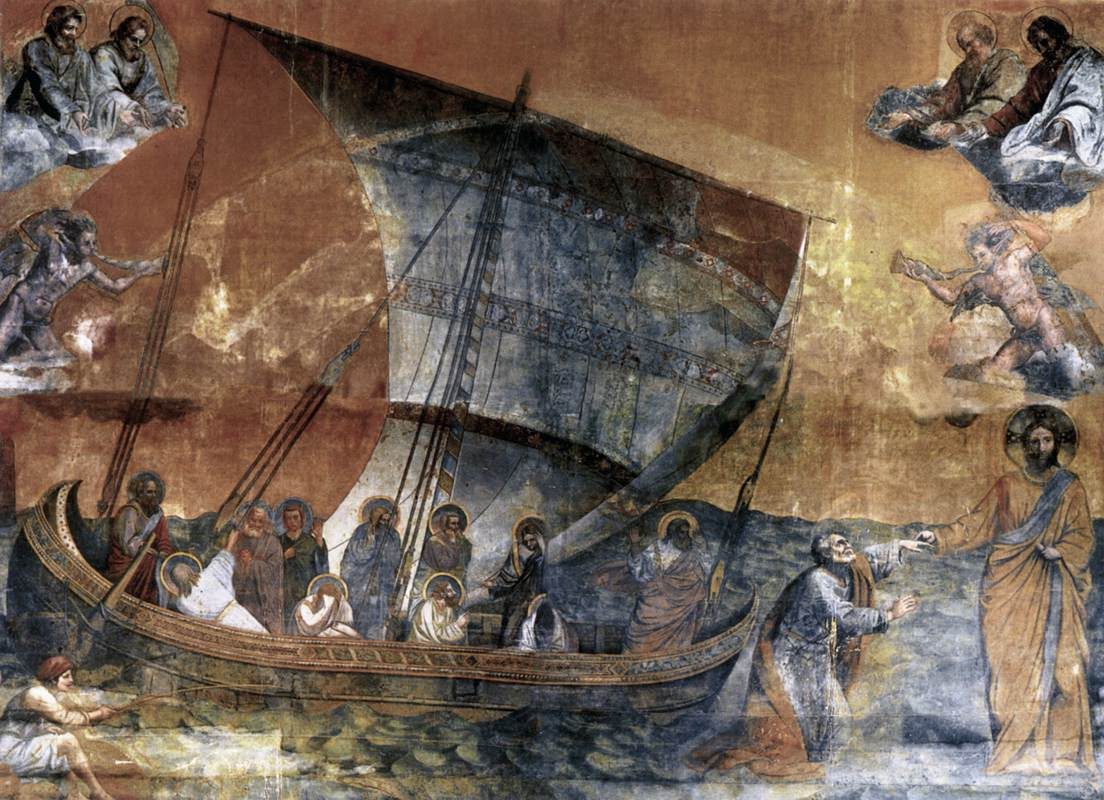
救命ボートとしての教会を描いた中世の絵画があります。揺れる海の中、ボートに乗っているクリスチャンたちは手を伸ばして波の中から溺れている人を拾い上げます。これは教会の素晴らしい絵です。助けを求める叫びに応えて世界へ出て行った救命ボートです。
しかし、ポーソン氏はある点で立ち止まります。
救命ボートは海にいなければなりません。しかし、救命ボートに海が入ってしまったら、大変なことになります。魂を救うためには、教会がこの世に存在しなければなりません。しかし、世界が教会に入り込むと、教会は終わり、沈んでしまいます。
これは、次の千年間に海が救命ボートに入り込んだ物語です。ポーソンは三つの章で扱います。世界は初期の時代(西暦100〜400年)、暗黒時代(西暦400〜1000年)、中世(およそ1000〜1500年)を通じて入り込み、マルティン・ルターの時代の1〜2年前に至ります。
救命ボートの絵
船は海の中にいなければならないが、海が船の中に入ってはならない
ポーソンは中世の絵画から話を始める。荒れた海に浮かぶ救命ボートとしての教会が、波にのまれる人へ手を伸ばして引き上げようとしている。
海の中の救命ボート
教会は魂を救うために世にいる。それこそが使命である。
救命ボートの中に入った海
世が教会の中に入ると、船は沈む。それが千年の物語である。
「魂を救おうとするなら、教会は世の中にいなければならない。しかし世が教会の中に入れば、教会は終わり、船は沈む。」— デイヴィッド・ポーソン
千年の年表
西暦400~1517年:ローマの崩壊からルターまで
四つの流れが千年を貫いている。衰退、教皇権力の台頭、抗議の声、そして発見の時代である。
一部の日付は分かりやすさのため簡略化している。正確な節目は、エッセイ全体に置かれた琥珀色の注記で確認している。
世界がどのようにして教会に加わったのか (西暦 100–400)
あのような殉教者、あのような説教者がいたとき、戦いに勝利していたとき、世界はどうやって入ったのでしょうか? ポーソン氏は、使徒たちの教会を骨抜きにし始めた4つの事柄を挙げています。
第一に、地域の司教たち。 新約聖書では、各教会に複数の長老、すなわち司教と呼ばれる霊的指導者の集まりがいました。その後、各教会に一人の司教を置く段階が来て、やがて一人の司教が多くの教会を統治するようになりました。指導権は少数の手に集中しました。新約聖書にも最初の百年にも、この制度は見られません。しかし2世紀になると、大きな権力と影響力を持つ司教たちが現れました。
第二に、秘跡を魔術のように捉える見方です。 人々は、洗礼を、イエスを信じたときに起こる罪の洗い清めの外的なしるしではなく、実際の水と定められた儀式によって、年齢にかかわらず人を罪から救うものだと考え始めました。では、洗礼を受けた後に罪を犯したらどうすればよいのでしょうか。そこで人々は、死の床まで洗礼を延期しました。医師から助からないと告げられるまで待ち、それから牧師のもとへ急ぐのです。しかし、「赤ん坊が死んだら、その罪をすぐ洗い清めてもらいたい」と心配する人もいました。どちらの考え方も迷信的でした。悲しいことに、幼児洗礼が広まりました。主の晩餐も魔術のように扱われました。人々は、パンは実際にキリストの肉、ぶどう酒はキリストの血だと考えるようになりました。そこでは本物の肉と血がささげられるので、それは犠牲であり、犠牲を扱うのは祭司でなければならない、というわけです。
第三に、確立された宗教。 皇帝が教会に行ったとき、誰もが教会に行ったことが想像できます。州がキリスト教を国教と宣言したとき、誰もがその流れに乗りました。確立された教会に行くことがファッショナブルになり、尊敬されるようになりました。ポーソンははっきりと言いました。確立された宗教は必ずファッショナブルで立派なキリスト教を生み出しますが、新約聖書にはそれを見つけることができません。
第四に、名目上のメンバーシップ。 ある著者によれば、50年頃に教会に属するとは、洗礼と聖霊を受け、イエスを主と呼ぶことでした。しかし180年頃までには、信仰の規則(信条)、新約聖書の正典、司教の権威を認めることを意味するようになりました。つまり、人々はイエスを信じ、御霊を受けること以外の理由でも教会に加わるようになったのです。教会は制度になっていました。
教会が誤った方向へ進むたびに、抗議運動が起こりました。最初の400年には二つの運動、モンタニズムと修道院生活がありました。どちらも、教会が富み、世俗化し、回心していない人々で満たされていることへの抗議でした。
モンタニズム 私たちが現在トルコと呼んでいる地域、小アジアで生まれました。モンタヌスと呼ばれる男は、多数の会員の中に聖霊の痕跡がないことに気づき、改めて神の霊を求めました。リバイバルが勃発した。御霊の賜物が教会に戻ってきました。生命、活力、現実が礼拝に戻ってきました。ポーソン氏は、今日の彼らが誰に最も似ていたかを知りたければ、彼らはペンテコステ派だったと言う。キリストの再臨が非常に強調され、真の信仰と聖さと断食を持たない者は会員にならないという主張があった。しかし、司教たちはそれに厳しく反対しました。その理由は想像できるでしょう。
悲劇は、しばしばそうであるように、この最初のペンテコステ運動が道を誤ったことです。教えを受け入れようとしなかったためでした。彼らは 光 なしの 熱 を求めました。ポーソンは言います。光だけなら冷たく、熱だけなら熱すぎる。両方が必要なのです。彼らは霊的な賜物をどう用いるべきかについて、聖書の教えに耳を傾けようとしませんでした。そして その運動は狂信主義のうちに消え去りました。 「これは、すべてのペンテコステ派のリバイバルが知っておくべき教訓です」 とポーソンは言います。「私たちは歴史から学べます。」
二つ目の抗議は、まったく違う形で現れました。数年後、あるキリスト者たちはこう言いました。「この教会はあまりにも世俗的で、あまりにも死んでいる。キリスト教を回復する唯一の望みは、教会から、そしてこの世から出ることだ」と。
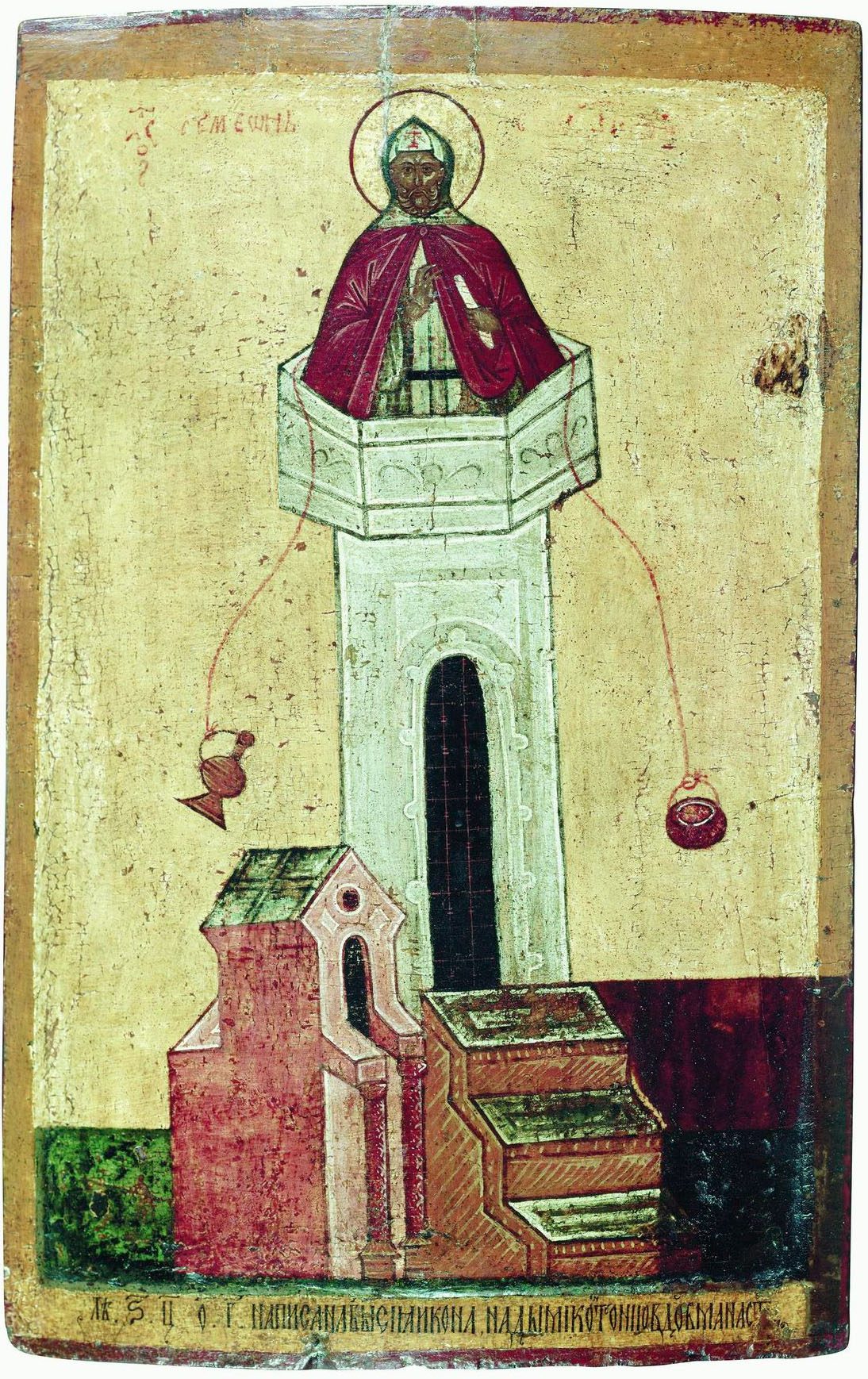
最初にそれを実践した人々は、一人で世を離れた隠者たちでした。最も奇妙な物語です。アンソニーは、砂漠の真ん中に入らなければ本当のキリスト者にはなれないと決心しました。ところが彼がそこへ行くと、他のキリスト者たちが加わりたがったのに、彼はそれを望みませんでした。そして何より、砂漠の洞窟にいても、誘惑は教会にいたときと同じように世俗的であると気づいたのです。さらに奇妙な隠者がいました。柱上のシメオンです。彼は高さ約18メートル、頂上の幅約90センチの柱を建て、何十年もその上で暮らしました。キリスト教は厳しく厳格であるべきだと示す抗議として、片足で一年間立ち続けたことさえあります。彼は柱の上で、潰瘍と虫に覆われ、ひどい状態でした。
隠者よりも成功したのは、コミュニティを立ち上げた人々でした。共同修道制を始めたのはパコミオスで、西方でそれを確立した人物が ベネディクトです。ローマとナポリの中間にあるモンテ・カッシーノで、彼は教会が世俗的すぎて何もできないと考える真のキリスト教徒のグループを集め、「私たちは来て一緒に暮らそう」と言いました。私たちは裕福になるのではなく、貧乏になるのです。私たちは情欲を抱くのではなく、独身を貫きます。私たちは反抗的ではなく、従順になります。彼らは、貧困、純潔、従順という三つの誓いを立てました。そして修道院はローマ兵士の守備隊のように運営されていました。
悲劇的なのは、この抗議活動も他の抗議活動と同じく、最終的には失敗したことです。キリストは、私たちが他の人々から離れてキリスト者として生きることを望んだのではありません。善意から始まった修道士たちは、やがて自分の救いに没頭し、内向きになって、世間や教会から孤立しました。さらに悪いことに、修道院生活は、キリスト者には二つの階級があるという考えを生みました。結婚する者は二流、結婚しない者は一流。世の中で生きる者は二流、世の外で生きる者は一流。しかし、それはイエスの教えではありません。主は修道士ではなく、社会から身を引いたこともありません。主は純潔な生を送り、弟子たちには社会に属さずに世に生きるよう教えました。
二人とも、「教会はイエス・キリストが意図したものではない」と言いました。ある人は、私たちは御霊の中に戻ることでそれを再発見できるだろうと言いました。もう一人は、私たちはこの世からも教会からも出ることで、それを再発見するだろうと言いました。新約聖書のキリスト教に完全に立ち返らなかったため、どちらも無駄になりました。
世が教会の中に入った過程—西暦100~400年
四つのひび割れと二つの抗議
勝利の時代でさえ、使徒たちの教会を薄める四つの事柄が始まった。そして道を誤るたびに、抗議の声が上がった。
地域の司教
一つの教会に多くの長老がいた状態から、多くの教会を治める一人の司教へ。権力が少数の手に集中し、ローマの総督をまねるようになった。
魔術的な秘跡
洗礼そのものに救いの力があると考えられ、死の床まで遅らせたり、幼児に施したりした。主の晩餐は文字通りの肉と血、司祭を必要とする犠牲と受け取られた。
国教化された宗教
皇帝が教会に行けば、皆も行った。信仰は献身ではなく、流行し立派に見えるものになった。
名目上の所属
人々はイエスを信じ、霊を受けるためではなく、別の理由で教会に加わった。教会は制度になった。
二つの抗議
モンタヌス主義
ペンテコステ派的な抗議
霊と賜物を再発見し、キリストの再来と聖さを強調した。しかし「光のない熱」を持ち、教えを拒み、狂信の中で燃え尽きた。
修道主義
退くことによる抗議
世と教会の両方を離れ、本当のキリスト教を取り戻そうとした。しかし「二層」のキリスト者を生み、キリストは私たちを皆から離れて生きるようには召していない。
二つの抗議は誠実だったが、新約聖書のキリスト教へ完全には戻らなかったため、どちらも実を結ばなかった。
暗黒時代: ローマの崩壊 (西暦 410)
今、物語が本当に始まります。 410 に大惨事が起こりました。北からの蛮族がローマ市を圧迫しました。ヴァンダル族がやって来ました(彼らの名前から「破壊行為」という言葉が生まれました)。フランク人が来て、フン人が来て、ゴート人が来ました。これらの野蛮人たちはローマに押し入って占領しました。その日のローマは陥落した。
ローマ人はローマを守るためにその年イギリスを離れたが、ローマを救うことはできなかった。そしてローマ人が撤退するとすぐに、ジュート人、アングル人、サクソン人がブリテン島に突撃し、イングランドとスコットランド南東部のキリスト教を破壊した。最初の400年間にローマ兵がここにもたらしたキリスト教は消滅した。
ローマが滅びると、すべてが終わったかのように思えた。ヒエロニムスはベツレヘムでこう書きました。 「人類も遺跡の中に含まれています。」 人々はそれが文明の終わりだと考えました。そしてそれは教会を当惑させました。ローマは異教の帝国として何世紀にもわたって生き残りましたが、キリスト教の帝国としては崩壊しました。多くのクリスチャンはそれを理解できませんでした。
しかし、一人の男がそれを考え抜き、驚くべき発言をしました。彼はこう言いました:これはこれまでに起こった最高の出来事です。彼の名前は アウグスティヌス。
アウグスティヌス: 休息を見つけた落ち着かない心
今日でも書店で彼の本を購入できます。この偉大な人物が語ったことをいくつか紹介すれば、彼を理解できるでしょう。彼はこう言いました。 「私たちの心は落ち着かず、あなたのうちに安らぎを見いだすまで安らぎません。」 おそらく歴史上もっとも引用された祈りです。アウグスティヌスはこう祈りました。 「貞潔を与えてください、ただし今すぐではなく。」 そしてこう言いました。 「愛しなさい。そうすれば、したいことをしなさい。」
彼は北アフリカで生まれました。彼は学生としてカルタゴに行ったとき、間違った群衆に巻き込まれました。すぐに彼は側室と息子をもうけ、その違法な関係を何年も続けた。彼の父親は異教徒でしたが、母親は敬虔な女性で、わがままな息子のために毎日涙を流して祈っていました。その後、その優れた頭脳のおかげで、ミラノの修辞学の教授に招かれました。そこで彼は聖人アンブローズ司教の説教を聞きに行きました。その説教のもとで、聡明な頭脳を持ちながらも放蕩生活を送っていた青年は、深い罪の意識に陥りました。
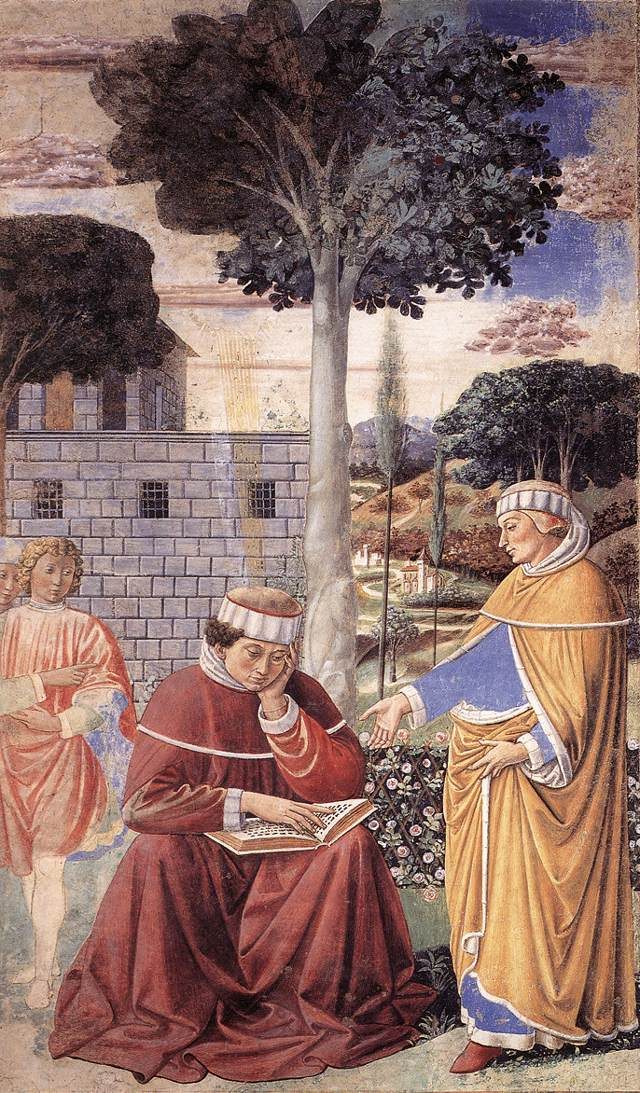
ある日、庭に座って自分の人生を台無しにしてしまったことを悔やみ、泣いていると、庭の壁越しに子どもの声が聞こえました。 「トッレ・レゲ、トッレ・レゲ」――「取って読め、取って読め」。彼はその子どもが誰なのか知りませんでしたが、そばに置かれた巻物を取り上げて読みました。それはパウロのローマ人への手紙でした。アウグスティヌスは読み進め、光が差し込むのを感じました。その後、通りへ出ると、かつて同居していた女性が彼を見つけ、泣きながら追いかけてきた――「アウグスティヌス、私よ、私よ」。彼は振り返らず、*「もう私は、かつての私ではない」*と答えた、と語られます。
彼は自分の改宗の全経緯を『告白』という本の中で書きました。ポーソン氏は、アウグスティヌスは使徒パウロ以降のどの人物よりも教会の歴史に大きな影響を与えたと言います。
ローマが滅亡したとき、アウグスティヌスは中年でしたが、彼の耳元で全世界が崩壊したように見えました。彼はそれを徹底的に考え、私たちが記憶に残る二冊目の素晴らしい本を書きました。 神の都市。その中で彼は次のように述べています。「この異教の都市ローマが崩壊したのは良いことだ。今では神の都市がそれに取って代わることができるからだ。」地上の帝国が終わったのは良いことです。今では天の帝国を設立できるからです。この本は多くの人に希望と新たな命をもたらし、人間の都市が滅んだ後も神の都市がまだ生き残っていることを理解するのに役立ちました。
しかし、そこに問題がありました。人々は「この神の都市とは何なのか。目に見えるものなのか、見えないものなのか。地上のものなのか、天上のものなのか」と尋ね始めたのです。ここでアウグスティヌスの議論は多くの人に誤解されました。数世紀後の宗教改革で、プロテスタントもローマ・カトリックも「私たちはアウグスティヌスに従う」と言いました。ただしプロテスタントは第一の著作、告白を、カトリックは第二の著作、神の国をより強く受け継いだのです。
というのは、何が起こったのかというと、教会は、もしそうだとしたら、教会は今や新しい帝国だ、と言ったのです。
教会は帝国となる: 教皇制の台頭
最初の変化の一つは、ローマ司教が皇帝のような地位へ押し上げられたことでした。当時、「父」を意味する「教皇」という呼称をめぐって大きな議論がありました。イエスは地上の誰も父と呼ぶな、天には一人の父がいるからだ、と教えました。それでも人々は地元の司祭や司教を「父」と呼び始め、やがて五人の大総主教が「父と呼ばれるなら私たち五人であるべきだ」と言うようになりました。最後にローマ司教は、「ローマ市は滅びたが、今や私が皇帝だ。私は首席司教であり、これからは私だけを教皇、父と呼べ」と言ったのです。
こうして、私たちが知る教皇制が生まれました。驚くべきことに、教皇はローマ皇帝の称号そのものだけでなく、その衣装まで採用しました。ポンティフェクス・マクシムスという称号も、もとはローマ皇帝の称号でしたが、やがて教皇の称号として知られるようになりました。アウグスティヌスの議論は誤解され、人々は教会を新しい帝国だと考えました。帝国には皇帝、その衣装、儀式、玉座が必要です。こうして教会は帝国となり、教皇は王となりました。
もちろん、多くのクリスチャンはそのどれも持っていないでしょう。フランス人も、アイルランド人も、ウェールズ人も、スコットランド人も、そうしません。悲しいことに、イギリス人はそうしました。
教会が帝国になったとき
権力の階段と閉じる円環
「父」と呼ばれるまでの階段
地元の司祭が「父」と呼ばれる
次に地域の司教
次に五人の大総主教がその称号を主張する
ローマの司教:「私だけを教皇と呼べ」
皇帝の称号と衣装(Pontifex Maximus)を受け継ぐ
「地上のだれをも父と呼んではならない……」(マタイによる福音書)
410年から800年への円環
410年—ローマ帝国が崩壊する
教会が引き継ぎ、新しい「帝国」になる
800年—カール大帝が皇帝として戴冠する
帝国が戻る—円環が閉じる
アウグスティヌスは崩れゆく世界を慰めるために『神の国』を書いた。しかし人々はそれを、教会が新しい帝国であるという意味に読み違えた。帝国には皇帝、玉座、衣装が必要だった。
キリスト教の二つの流れがウィットビーで出会う
アイルランドは、聖コルンバを通じてアイオナ島とスコットランドに信仰をもたらし、スコットランドをキリストへ導きました。続いてエイダンが、ノーサンバーランド沖のリンディスファーン島へ渡りました。ポーソンは数か月前、リンディスファーンでエイダンの教会の廃墟のそばに立ったことを思い出します。そこは、エイダンがノーサンバーランド一帯に福音を伝えた小さな島です。この非教皇的なキリスト教、すなわちケルト・キリスト教は、アイルランドとスコットランドを経て北からイングランドへ入ってきました。
しかし後に教皇はこう述べた、「われわれはイングランドを手に入れなければならない、あのアングル人を手に入れなければならない」。彼は有名なダジャレを作りました:彼らはアングル人ではなく天使です。そして彼は同じ名前の宣教師を送りました アウグスティヌス。このアウグスティヌスはサネット島に上陸し、その後カンタベリーへ向かいました。北のアイオナ島にあるコルンバ。南のサネット島のアウグスティヌス。
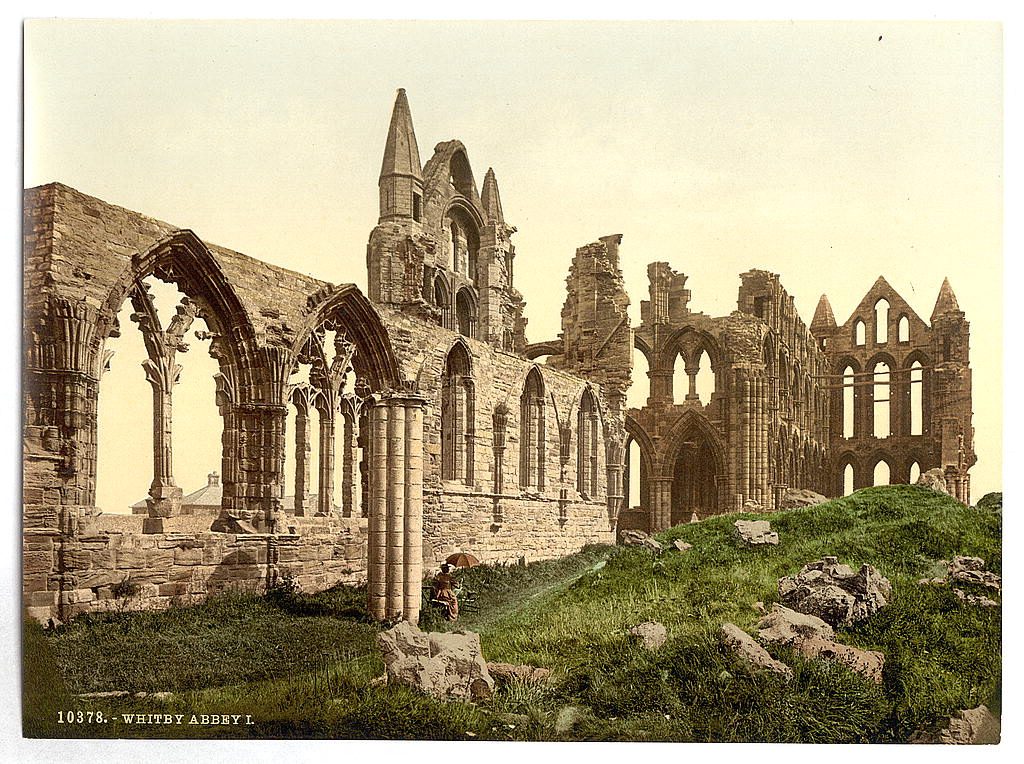
キリスト教の二つの流れは、ウィットビーで出会いました。両者が出会ったウィットビー港を見下ろす修道院跡は、今も見ることができます。そこではローマ側のキリスト教とケルト系キリスト教が対峙し、どちらが優勢になるかが決まりました。悲劇は、ローマ側が勝利したことです。ブリテン諸島は教皇の統治下に置かれ、スコットランドの守護聖人も聖アンドリューへと変わりました。状況全体が変わったのです。
ウィットビーで二つの流れが出会う
ブリテンはどちらへ進むのか。(ウィットビー教会会議、664年)
ケルト系キリスト教
アイルランド→アイオナ(コルンバ)→リンディスファーン(エイダン)→イングランド北部
教皇なし。素朴で宣教的。
ローマ系キリスト教
ローマ→タネットのアウグスティヌス→カンタベリー→南部
教皇に忠実。
ウィットビー、664年
ローマ系キリスト教が勝った。ブリテン諸島は教皇の座のもとに入った。ポーソンはこれを悲劇と呼ぶ。今日でもウィットビー港を見下ろす廃墟の中に立つことができる。
地理的な縮尺ではない模式図。ウィットビー会議は664年に行われた(ポーソンは「660年」と言う)。
東西分断 (1054)
このような制度を持たなかったのが、東地中海、ギリシャ、小アジア、シリア、エジプトの教会でした。彼らは「教会全体に一人の『パパ』、すなわち一人の父がいるべきだという教えは、聖書にも新約聖書にもない」と言いました。分裂は進み、ついに1054年に決定的な形となりました。この東西分裂によって東方教会と西方教会は千年にわたり隔てられましたが、両者が再び対話を始めたのは近年のことです。
そして、最も驚くべきことが一つあります。850年頃、教皇は、ペテロが初代教皇を任命し、その後の教皇も同じ権限で任命されたことを証明する、1世紀にさかのぼる文書を発見したと主張しました。今日ではローマ教会でさえ、それらを偽造文書、すなわち偽イシドール教令集と認めています。それでも教皇制度は、こうした偽造に基づく主張によって強化されました。もう一つはコンスタンティヌスの寄進状で、イタリア全土が教皇のものだと主張する偽文書でした。
大分裂、1054年
一つの教会が二つに分かれ、ほぼ千年にわたった
五つの総主教座(ペンタルキア)
西方(ラテン)
ローマ—教会全体の上に立つ一人の教皇
・教皇の至上権
・信条に「子からも」(フィリオクェ)を加えた
・種なしパン
ラテンの伝統
東方(ギリシア)
コンスタンティノポリスと総主教たち—対等で、唯一の「教皇」はいない
・対等な五人の総主教
・信条を変更しなかった
・発酵パン
ギリシアの伝統
1054年の相互破門は、1965年になって初めて教皇パウロ6世と総主教アテナゴラスによって共に解かれた。これは、1960年代に説教したポーソンの「この10年ほど」に近い。
カール大帝と神聖ローマ帝国 (西暦 800)
その後も教皇の権力は広がり続けました。しかし、やがて一人の男が、ローマ帝国を復興して自ら皇帝となり、その下に教皇を置くという夢を抱きました。彼の名はシャルルマーニュ(カール大帝)です。「再びローマ帝国を持ち、その首長は教皇ではなく皇帝になる」と考えた、冷徹な人物でした。
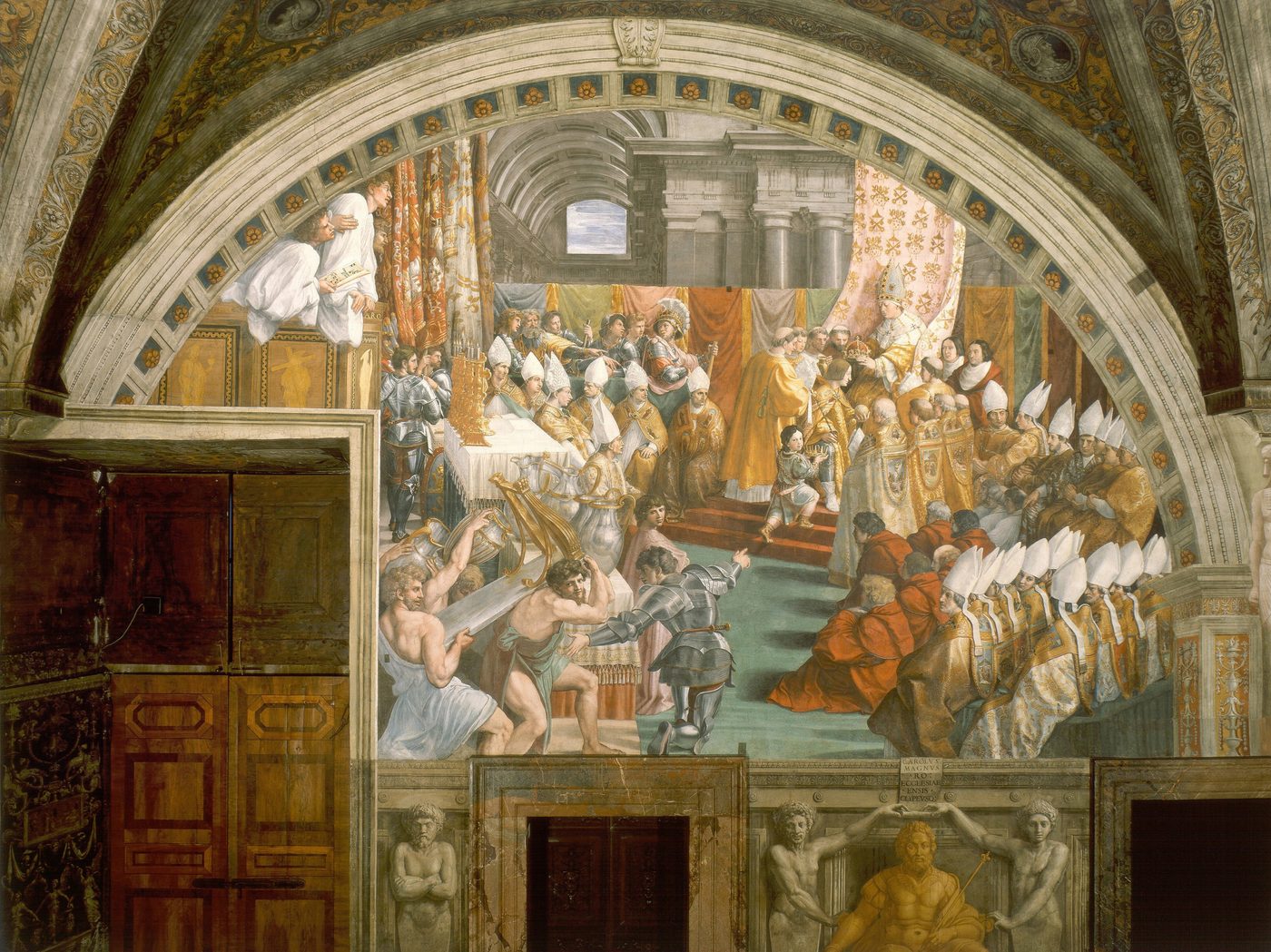
カール大帝は二度教皇の命を救いました。一度は野蛮人から、もう一度は彼に怒ったローマの群衆からです。教皇は、「あなたは私の命を二度救ってくれましたが、私に何をしてほしいですか?」と言いました。皇帝は答えた、「クリスマスの日に、私に皇帝の冠を授けてください。」そして800年、クリスマスの日、ローマ最大の教会でのクリスマス朝の礼拝で、教皇はフランク王、神聖ローマ帝国皇帝カール大帝に戴冠式を行った。千年後、神聖ローマ帝国はまだ存在していました。
ご覧のとおり、私たちは一周してきました。ローマ帝国は410年に崩壊しました。教会は帝国を引き継ぎました。その後、800 に皇帝が戻ってきて、教会から帝国を奪い取りました。すべてが始まりの場所に戻ったように見えました。
カール大帝は良いことも行いましたが、悪いことも行いました。良い点としては、聖職者が側室を持つこと、頻繁に酒場へ行くこと、狩猟に行くことを禁じたことが挙げられます。彼は多くの学校も設立しました。悪い点としては、聖職者の結婚を禁じ、独身の司祭職を彼のおかげで生まれたもののようにしたことです。彼は キリスト教世界 という言葉も作ったとされました――皇帝のもとでキリスト教徒が治める王国という意味です。そして、キリスト教世界 という考えは今日まで続いています。
イスラム教の台頭
教会は富と権力を持つようになったため、腐敗しました。そして再び抗議の声が上がります。今度は東方と北方からです。東方からの抗議には二つの流れがありました。第一はイスラム教です。
ポーソンはこれをキリスト教会に降りかかった史上最大の裁きと呼びます。ムハンマドはアラブの偶像崇拝と迷信の中心地であるメッカで571年に生まれました。メッカの中央には黒い布で覆われた大きな四角い建物、聖なる石を収めたカーバ神殿がありました。ムハンマドはアラブ人の偶像崇拝と迷信の中で育ち、それに反発しました。
それから彼はまずユダヤ人に向き直り、次にキリスト教徒に向き直って尋ねました、「あなたは本当の宗教を持っていますか?」悲劇的なのは、ムハンマドが改宗したキリスト教徒に会わなかったことだ。悲劇的なのは、彼が新約聖書の本当のキリスト教を一度も見ていなかったことです。彼が見たのは、司祭の祭服、像、そして十字架だけでした。そして彼は、「これはアラブ人の宗教と同じくらい偶像崇拝的だ」と言いました。 6世紀末にムハンマドが一人の真のキリスト教徒に出会っていたら。しかし、彼はそうしませんでした。
そこで彼は「純粋な新しい宗教を探そう」と考えました。裕福な未亡人と結婚し、何年も砂漠で過ごした後、「アッラーのほかに神はなく、ムハンマドはその預言者である」と聞いたと語りました。彼はそれを説き始め、幻視の中で聞いたことを『コーラン(アル・クルアーン)』に書き留めました。迫害された彼は622年にメディナへ逃れました。これはイスラム暦の起点です。彼は軍隊を率いてメッカへ戻り、新しい宗教を広めました。信者はメッカに向かって祈り、ラマダーンの断食、一日5回の祈り、メッカへの巡礼、施しを行うよう求められます。
イスラム教は地中海からキリスト教を一掃した。何世紀にもわたって教会が存在しなかった北アフリカの海岸沖でキリスト教を席巻しました。それはキリスト教を聖地そのものから、エルサレムから、イエスが死んだ場所から一掃しました。それはスペインを通り、小アジアを通って、リヨンの門までフランスに入り、ウィーンまで東ヨーロッパにまで押し寄せました。イスラム教が巨大な挟撃運動でキリスト教を粉砕するかに見えた。
これは神がキリスト教会に対して許した最大の裁きです。そしてそれは当然のことでした。しかし、これまでのところ、そしてそれ以上はありません。神はキリスト教を完全に絶滅させるつもりはありませんでした。
彼はリヨンとウィーンで彼らを阻止し、彼らは現在の境界線である北アフリカの海岸からトルコまで撤退した。
暗黒時代の地図
二つの潮流がキリスト教世界を襲う(西暦410~732年)
オレンジの矢印:蛮族が南へ下りローマに押し寄せる。緑の矢印:イスラムがアラビアから地中海を横切り、北アフリカとスペインを経てトゥールまで広がる。
基図:ローマ帝国(Wikimedia Commons、パブリックドメイン)。矢印は前進の模式的な方向で、正確な経路ではない。ウィーンは後世のオスマン帝国の限界を示す。ポーソンはほぼ千年にわたる国境を一つの挟撃に縮めている。
暗闇に隠れた目撃者
というのは、まさにその当時、ヨーロッパ中で、神の言葉を中心にキリスト教徒の小さなグループが集まっていたからです。彼らは公式の教会が腐敗しているのを見て、小さなグループに分かれて集まり、この本を読み、「私たちは素朴に神を礼拝します」と言いました。私たちには祭司は必要ありません、なぜなら私たちには大祭司イエスがいるからです。私たちには教皇は必要ありません、なぜなら私たちには天の父がいるからです。私たちに必要なのは神の言葉と聖霊だけです。
彼らは激しく迫害され、記録さえ破壊されたため、私たちは彼らについてほとんど知りません。ポーソンは聴衆に、ボゴミル派という集団を聞いたことがあるかと尋ねます。彼らは主にブルガリアとボスニアで、神の言葉を中心に集まりました。「ボゴミル」はブルガリア語で「神の友」を意味するとポーソンは言います。ほかにも、アルメニア、トラキア、小アジアで集まったパウロ派がいました。そして「純粋な人々」を意味し、後の「ピューリタン」と同じ語源を持つカタリ派が、バルカン半島からヨーロッパ各地にいました。
ポーソンは告白します。単純な性格で、彼は千年間、ローマ教会と東方教会だけが存在すると考えていました。それは真実ではありません。彼は、何世紀にもわたって、地元の教会で神の言葉を中心に集まっている素朴なキリスト教徒の列が継続的に存在していたことを発見して興奮しました。彼らは命をかけてその代償を払いましたが、彼らは出会い、信仰の火は後世まで灯され続けました。
中世: ヒルデブラントは教皇を何よりも優先した
さて、1000 年から 1500 年までの最終章に入ります。暗黒時代と現代の間にあるため、中世と呼ばれます。
最初に登場するのは、ヒルデブランドです。この修道士は教皇になりましたが、第二位であることを受け入れませんでした。この頃にはローマ帝国が復活し、新しい皇帝が生まれていましたが、教皇は第二位に置かれていたのです。ヒルデブランドは、教皇が第一位であるべきだと決意し、それを実現しました。彼は多くの良い改革を行いました。たとえば、教会の職を金で買うシモニアを取り締まりました。しかし、彼がそうしたのは、教皇が国王を含めてすべてを管理すべきだと信じていたからでもあります。
ヒルデブランドと皇帝ハインリヒ4世の衝突は、最も劇的かつ恐ろしい方法で決着しました。ハインリヒ4世はヒルデブランドに反抗し、「私が第一だ」と言いました。ヒルデブランドは「あなたは第一ではない。民に決めてもらおう」と答えました。そして民はヒルデブランドの側に立ったのです。アルプスで、北から来た皇帝ハインリヒ4世と教皇が会見しました。教皇は山荘にこもり、皇帝を三日間、雪の中で裸足のまま外に待たせてから、ようやく話をしました。このようにしてヒルデブランドは、皇帝を決定的に二番目の地位へ押し下げました。
それ以来、次の500年間、教皇が最も影響力のある人物となり、教皇庁が西側世界を支配する権力となった。教会は再び帝国となった。聖ペテロの十字の鍵のシンボルを始めたのはこの教皇でした。一方の鍵は教会に対する神聖な権力の権威であり、もう一方の鍵は国家に対する世俗的な権力の権威です。これらの十字の鍵は、教会と国家の両方を超えて一流になるというヒルデブランドの主張です。
十字軍: 教会が剣を取り上げたとき
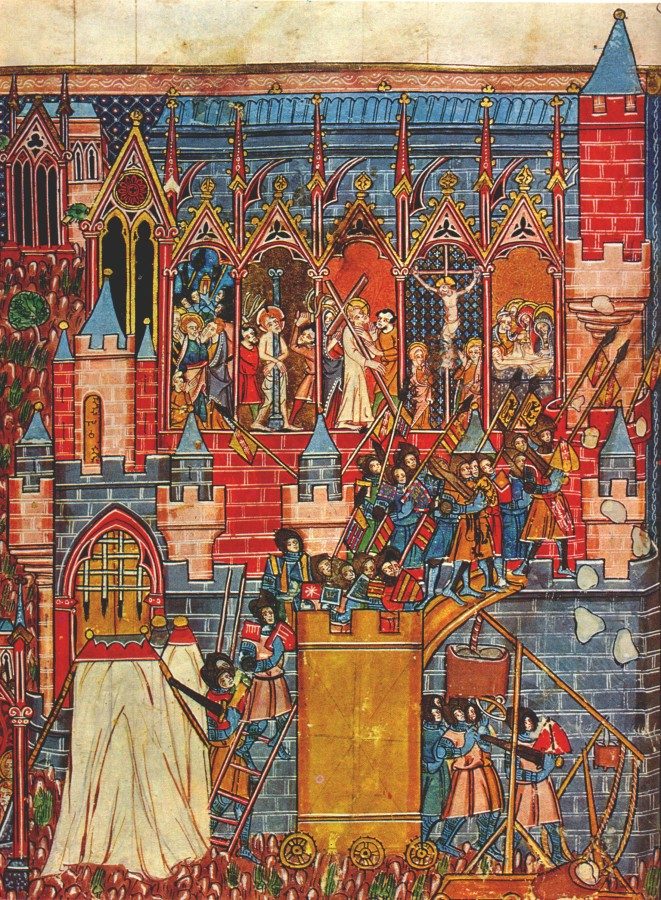
これにより、教会は軍隊を自由に使えるようになりました。そしてヒルデブランド(後の教皇グレゴリウス7世)が教会の権威を強める一方、後の教皇たちはキリストの王国を打ち立てるために武力を用い始めました。これほど大きな間違いは、かつてありませんでした。 教会が武力を用いることは正当だという考えが最初にもたらした結果が、聖地への 8回の十字軍 でした。
そのころには、エルサレムをはじめとする聖地はイスラム教徒、サラセン人、トルコ人の手に渡っていました。教皇は、教会が戦ってキリストの聖地を奪還することを決めました。第一回十字軍は1095年に始まりました。その構想はヒルデブランドの時代に形づくられましたが、第一回十字軍が始まる前に彼は亡くなっていました。人々は肩に十字架を掛けました。ラテン語で十字架を意味するcruxから、英語のcrusade(十字軍)という語が生まれたのです。十字架を身につけたことが、この遠征を「十字軍」と呼ぶ由来になりました。
第一次十字軍には、無学で熱狂的な説教者、隠者ピョートルも人々を集めました。彼は約60万人を率いて出発したとポーソンは語りますが、実際の推定では、彼の「民衆十字軍」は約2万〜4万人、第一回十字軍全体でも約6万〜10万人です。ピョートルの一行はエルサレムには到達せず、アナトリアでセルジューク朝軍に敗れました。エルサレムを占領したのは約3年後の1099年、貴族の軍隊です。略奪、女性への暴行、住民の虐殺は現実でしたが、ピョートルの一行の仕業ではありません。
もちろん動機もありました。キリストのために戦えば赦免され、煉獄で過ごす年月が免除され、法律によって借金が帳消しになり、刑務所を出て戦う犯罪者には恩赦が与えられる、と約束されたのです。その結果、どれほど雑多な集団になったか想像できるでしょう。フランス王フィリップも、イングランド王リチャード獅子心王も加わりました。彼らは8回出発し、そのうちの一つが子どもたちの十字軍でした。約2,000人の子どもたちが、イエスのためにパレスチナを取り戻そうとヨーロッパを旅しましたが、一人も到着しませんでした。教皇は天使が奇跡的に食物を与えるだろうと言いましたが、食物も天使も現れませんでした。
最後は完全な失敗でした。1187年7月4日、ハッティンの角で、十字軍の軍勢はサラディンに水のない土地へ誘い込まれ、渇きで敗れました。そして1270年8月25日、遠征を率いたフランス王ルイ9世がチュニスで病死すると、ヨーロッパは安堵のため息をつきました。十字軍国家の終わりは、アッコが1291年に陥落したときです。
それは教会の歴史の中で最も悲しい物語の一つです。教会は何もしませんでした。何もしなかっただけでなく、実際には事態をさらに悪化させました。
八回の十字軍遠征
教会が愛ではなく剣を用いたとき(1095~1291年)
ヒルデブランドは武力でキリストの王国を築けると考えた。「これほど大きな間違いはなかった」とポーソンは言う。
民衆十字軍 · 1096
隠者ピエールが群衆を率い、その大半が小アジアの山中で死んだ。
第1回十字軍 · 1095–99
エルサレムを奪い(1099年)、住民を虐殺した。唯一の「成功」。
第2回十字軍 · 1147–49
クレルヴォーのベルナルドゥスが説教したが、失敗した。
第3回十字軍 · 1189–92
獅子心王リチャード対サラディン。エルサレムは奪回されなかった。
第4回十字軍 · 1202–04
コンスタンティノポリス略奪へ方向を変えた—キリスト者がキリスト者に向かった。
少年十字軍 · 1212
子どもたちの行進。一人も聖地に着かなかった。
後期の十字軍 · 1217–54
失敗に次ぐ失敗。ルイ9世の二度の遠征も含まれる。
ハッティンと崩壊 · 1187 / 1291
ハッティンの角で敗走(1187年)。最後の拠点アッコンも1291年に陥落した。
出征を促したもの
1270年までに教皇は中止を命じた。「何も成し遂げなかった。何も。そして実際、何もしないより悪かった。」— デイヴィッド・ポーソン
異端審問、二人か三人の教皇、そして汚職
教皇は教会の外で武力を用いるだけでなく、今度は教会の内でも武力を用いることを決め、恐ろしい章である 異端審問 を始めました。ポーソンは、キリストの名のもとに行われたことをあえて説明しないと言います。司教たちは、この残酷さと悪意と疑惑の機械を動かすことを拒みました。しかしドミニコ会士たちはそれを引き受けました。そして長年にわたり、数えきれない人々が、その恐ろしい制度のために命の危険を感じながら生きました。
最初から最後まで、間違っていたのはこの点でした。教会は、自らをキリストの大義を確立するために武力を用いてよい地上の帝国だと考えていたのです。私たちは今、それが正しい方法ではないと知っています。教会は 愛以外のいかなる力も用いてはならず、愛と福音の宣教によって以外は、決して誰にもキリストを受け入れるよう強いてはなりません。
そして、この種の腐敗はすぐに自ずと表面化します。 権力は腐敗する傾向があり、 アクトン卿は言いました。 そして絶対的な権力は絶対的に腐敗する傾向があります。 すぐに2人の教皇が王位を争うようになり、さらに3人になりました。アヴィニョンにも教皇がいたし、ローマにも教皇がいた。今の教皇って誰だったっけ?彼らは教皇制度をなんとか立て直すことに成功したが、その後腐敗はさらに下に広がり、修道院は腐敗して裕福になりすぎ、司教は権力を持ちすぎ、教区は腐敗した。
そして、通常のキリスト教の実践は腐敗してしまいました。マリアへの祈りはありましたが、私たちはマリアに祈るように言われたことはありませんでした。彼女も私たちと同じ人間です。死者のための祈り、聖人たちへの祈りがありました。最大の恐怖を引き起こす教義がありました。それは煉獄、死後何年間苦しみ続けるかというものです。犠牲としての大衆の教義がありました。司祭への告白がありました。免罪符があったので、大金を払えば何年も煉獄から逃れることができた。巡礼もありました。遺物崇拝がありました。礼拝中の像がありました。 新約聖書にはその一片もありません。
中世の付加物
「新約聖書にはこれらのかけらさえない」
慣行は何世紀にもわたって一つずつ加えられた。右の欄には、それぞれが公的に認められた、または正式に定義されたおおよその年代を示す。
年代はおおよそのものである。多くは慣習として始まり、後になって公会議で定義された(例:1215年の第4ラテラン公会議、1439年のフィレンツェ公会議)。これはポーソンによるプロテスタントの読みであり、カトリックと正教会の見方は「別の声」の欄を参照してほしい。
基本的な欠点: 教会は彼女をキリストだと思い込んだ
では、このすべての背後にある根本的な欠陥は何だったのでしょうか?今夜私が言ったことのほとんどを忘れてしまったとしても、これは重要です。何が間違っていたのかを一文で説明します。
教会は彼女がキリストであると考え始めていました。そして彼女は今もそうしています。
ポーソン氏は、有力な司祭に「これは今も本当ですか?」と尋ねた様子を語った。彼は「はい、そしてそれは変わりません」と答えました。ポーソン氏は、「私の唯一の問題は、教会がキリストであると信じていないこと、そして彼女が預言者であり、司祭であり、王であるとは信じていないことです」と言いました。私はイエスがそうだと信じます。教会は私たちの預言者でも、司祭でも、王でもありません。すると司祭は率直に答えました。「それは決して変わらないので、私たちはそれについて議論しません。」
それが基本的な欠点です。自分が世界に対する預言者であると信じるなら、何を信じるべきかを世界に伝え、何が真実であるかを確実に宣言することができます。もし私が世界の司祭なら、こう言えます。もしあなたが救われるためには、あなたは私の秘跡に来なければなりません、あなたは私に告白しなければなりません。そして、私が世界の王であると考えるなら、私はできる限り広く自分の権威を確立します。
それは教会の頭と体の間の混乱です。頭は神聖です。体は人間です。キリストが頭であり、預言者、祭司、王であるのです。教会はそうではありません。それがプロテスタントとカトリックの根本的な違いであり、それは今も昔も大きな違いです。キリストはこう言いました。 私は私の教会を建てます。 彼は「あなたがそれを建てる」とは言いませんでした。そしてキリストは教会の頭です。他の誰も頭ではありませんし、他の人が頭になる可能性はありません。
基本的な誤り
教会は自分がキリストだと思い始めた
このエッセイの他のことをすべて忘れても、これだけは覚えてほしいとポーソンは言う。あらゆる歪みは、頭と体を混同する一つの混乱から生じる。
頭—神性
キリスト
預言者、祭司、王であるのはただこの方だけ
体—人間性
教会
頭に従い、決して頭に取って代わらない体
預言者
世に真理を告げる者
祭司
人々を神と結びつける者
王
統治し、権威を確立する者
体が自分を頭だと思うとき
「私が世界の預言者なら、世界が何を信じるべきかを告げられる。私が世界の祭司なら、あなたがたは私の秘跡のもとに来なければならない。私が世界の王なら、できる限り広く私の権威を確立する。」それがすべての根である。
「彼の肩に統治がある。」(イザヤ書) キリストが頭であり、他のだれも頭にはなれない。
中世の抗議の声
しかしポーソン氏は、1000 から 1500 までの中世を通じて、「これは真実ではない、これはキリスト教ではない、これはイエスが言いたかったことではない」と言う人が常にいたと喜んで言います。小さなグループが再び現れ、住んでいた場所のあらゆる種類の名前が付けられました。
そこには、オランダのベギン会のように、この書物を中心に集まり、「キリストこそ私たちの教会の頭である」と語った人々がいました。また、ワルド派もいました。彼らはこの書物に、イエスが教会をどうあるべきものとして語ったかが示されていると信じました。彼らは教皇のもとへ行き、「これを実践するなら、私たちを教会の正当な一員として認めていただけますか」と尋ねました。ローマ教会にとどまりながら聖書に従いたかったのです。しかし教皇は拒み、彼らは迫害されて谷から谷へ逃れました。
次のグループは、南フランスのアルビ派(カタリ派)でした。彼らも聖書を読み、教会がどうあるべきかを考えました。教皇庁が彼らに対して始めた運動は、後に血なまぐさいアルビジョア十字軍へとつながります。ドミニク(ドミニコ)は、彼らに対抗するには教会の内側で質素な説教と教育を行う必要があると考え、ドミニコ会の基礎を築きました。しかし、後のドミニコ会は異端審問にも加わりました。ドイツには共同生活の兄弟たちもいました。彼らはローマ・カトリックの階層から独立し、民衆の言語による聖書に基づいて生きようとし、迫害を受けました。真の教会は常に迫害されてきました。
これを見て、信仰を公に撤回して個人的に守った人々もいました。その一人がクレルヴォーのベルナルドです。ポーソンは、若い頃に盗賊団を率い、イタリアで2年間捕虜となった後に回心した人物として語ります。しかし、同時代に近い史料はその逸話を裏づけません。確かなのは、フランスの貴族の家に生まれた彼が富を捨て、友人たちとクレルヴォーに退き、厳しい祈りと労働の共同体を築いたことです。
バーナードは、役職もお金も物質的、精神的な力も持たずに、ヨーロッパで最も強力なキリスト教徒の一人になりました。彼は「教皇を作る人」と呼ばれていました。プライベートでは、彼はイエスを愛していました。マルティン・ルターは、歴史上のすべての修道士や司祭の中で、クレルヴォーのベルナルドを最も高く評価していると述べた。しかし公の場では、彼は教皇制を支持しなければならないと感じていた。ある人は賢明にも、宗教改革を少なくとも 2 世紀遅らせたと言いました。
もう一人の男はほぼ同時代人で、アッシジの小さな町に生まれた フランシス です。彼は路上でハンセン病患者に出会い、人生と向き合うことになりました。最初は道の反対側を通り過ぎましたが、そのとき「私はどんな人間で、仲間から目を背けるべきなのだろうか」と自問しました。彼は引き返してハンセン病患者にキスをしました。それ以来、フランシスは人生について真剣に考え始めました。彼はキリストを探し求め、そして見いだしました。やがて友人たちが彼の周りに集まり、彼らは極度の貧困の中で二人ずつ出かけ、福音を宣べ伝え、人々をキリストへ導きました。
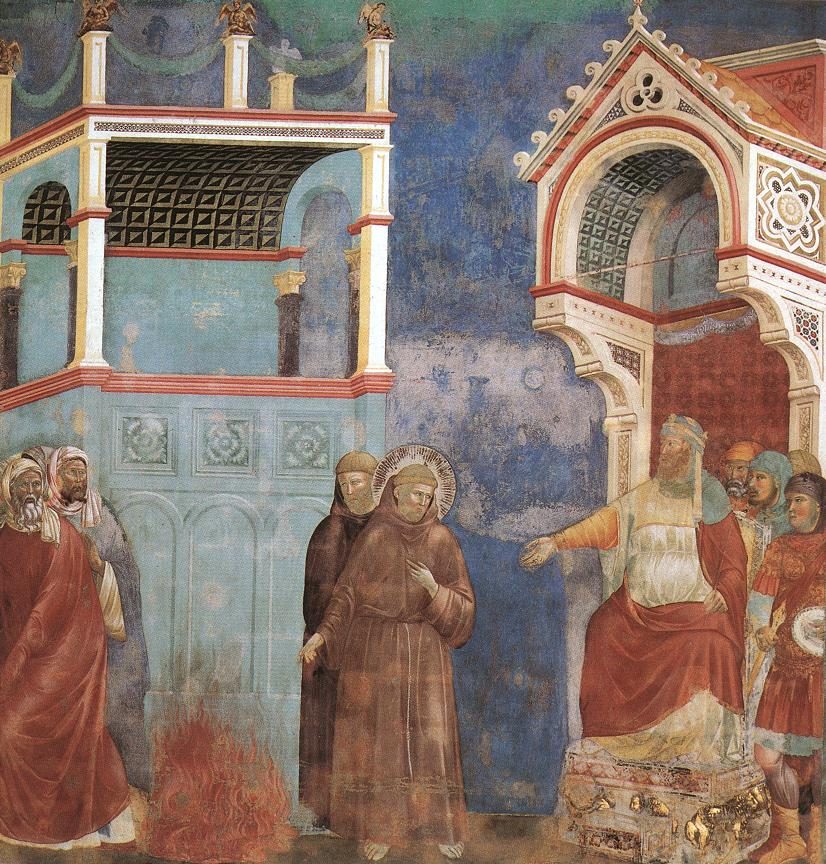
フランシスは動物や鳥との親しさ、自然への愛で知られていますが、ポーソンは別の点を強調します。彼はイスラム教徒への最初期の宣教師の一人でした。 彼は命の危険を冒してスルタンのもとへ行き、イスラム教徒の指導者にイエスの福音を説きました。大軍で戦う代わりに、貧しい身なりの一人の人間としてイエスの愛を語ったのです。彼の後には、何世紀も後のライムンドゥス・ルルスに至るまで、イスラム世界への宣教師たちが続きました。灰色の修道服を着たフランシスコ会はグレイフライアーズ、黒い服を着たドミニコ会はブラックフライアーズと呼ばれました。両者は質素なキリスト教生活を教会へ戻そうとしましたが、フランシスコ会は職業的な托鉢へ、ドミニコ会は異端審問へ傾いていきました。
状況全体が、真実を語り、誰もが聞いて理解できるように語る人物を求めていました。1150年頃、ブレシアのアーノルドが、富と世俗の権力を教会が持つべきではないと主張しましたが、クレルヴォーのベルナルドが反対し、彼を沈黙させました。続いてマルシリウスは、聖書こそ教会の基準であり、司教と教皇は人間の制度だと論じました。パリ大学の教授だったイギリス人、オッカムのウィリアムも声を上げましたが、彼らの声は抑えられました。
その後、宗教改革の明けの明星と呼ばれるヨークシャー人が現れました。明けの明星は、太陽が昇るときにも見える星です。彼は優秀な学生としてオックスフォードへ進み、同大学の教授となり、広く旅をした人物でした。あだ名はエヴァンゲリカス博士。その名はジョン・ウィクリフです。
その男は、おそらくマルティン・ルターに至るまで、誰よりも聖書を再発見しました。彼は教皇による虐待に抗議し、当時「ブル」と呼ばれた五つの教書が彼に対して発行されました。彼はカンタベリーで裁判にかけられました。しかし彼は、教会の唯一の法である聖書に立ち返り、「この聖書をラテン語から英語に翻訳する。耕作者たちにもこの本を知ってもらう」と言いました。ウィクリフは、聖書を一般の人々の手に渡せば、教会のあらゆる腐敗に対する答えを彼らに与えられると知り、翻訳に力を尽くしました。彼の周りには説教者の一団が集まり、村々を歩き回って市場広場で説教し、福音を歌いました。人々は彼らを子守唄の歌い手と嘲笑し、ロラード派と呼びました。
アマシャムへ行きます。ステーション・ロードを上り、左折して家々の間を抜け、畑に出ます。そこには、自分の子どもたちに生きたまま焼かれた人々の記念碑があります。子どもたちは、両親を焼き殺すよう強いられました。なぜでしょうか。両親がアマシャムの森で聖書を読んでいるところを捕らえられたからです。それがウィクリフとロラード派の運動の結果でした。しかしウィクリフ自身は、ラターワースの牧師として安らかに死にました。
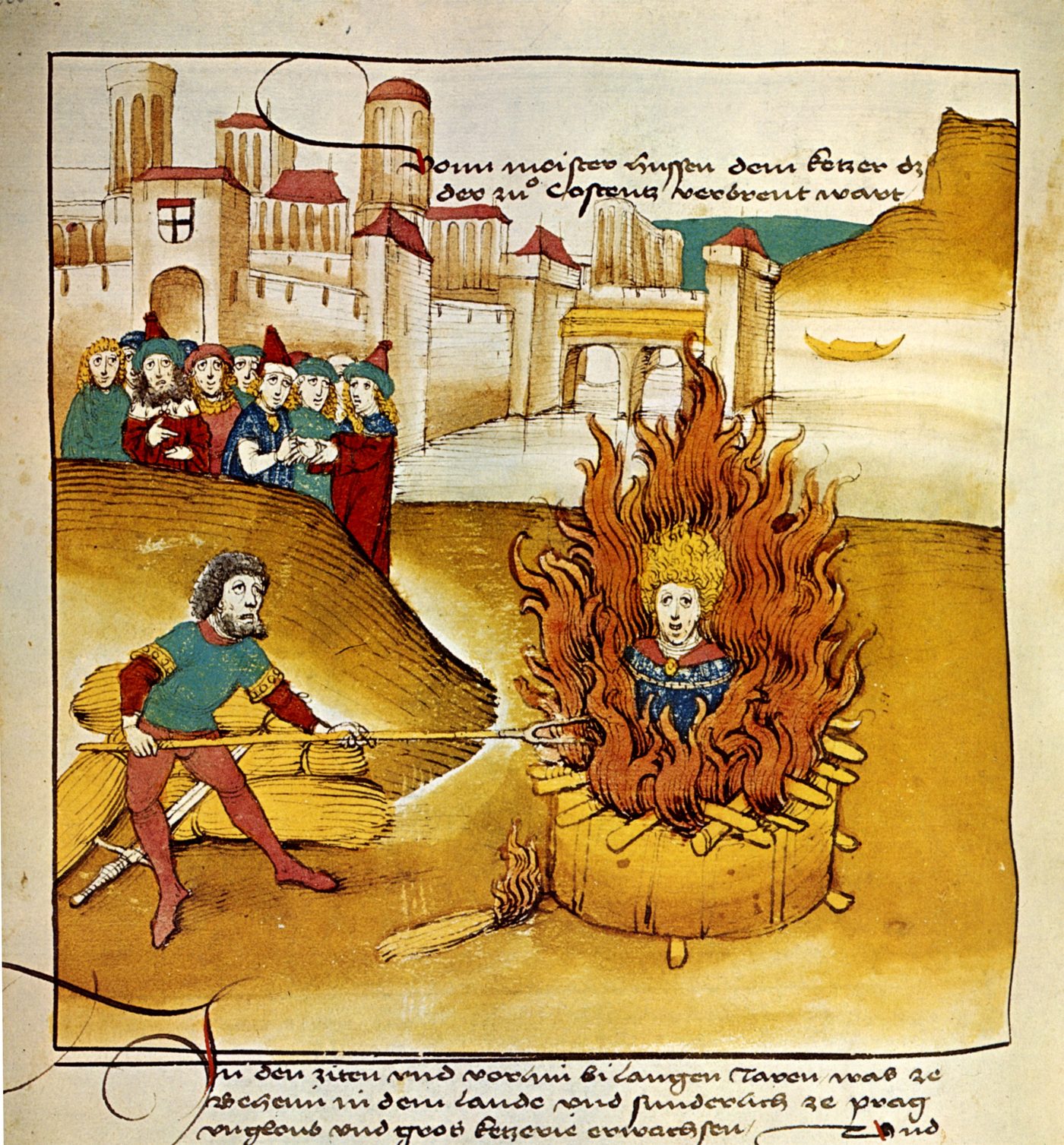
ウィクリフがオックスフォードにいた一方、ヨーロッパには同大学と密接な関係を持つもう一つの大学、プラハ大学がありました。プラハ大学の学長は、貧しい農民の少年から、ひたむきな努力によって身を起こした人物でした。彼の名前もジョン、ジョン・フスでした。フスはウィクリフのことを聞き、その本を読み始め、プラハでも同じことを説き始めました。やがてジョン・フスは逮捕され、教皇は彼に火刑を宣告しました。フス派の人々も処刑されました。
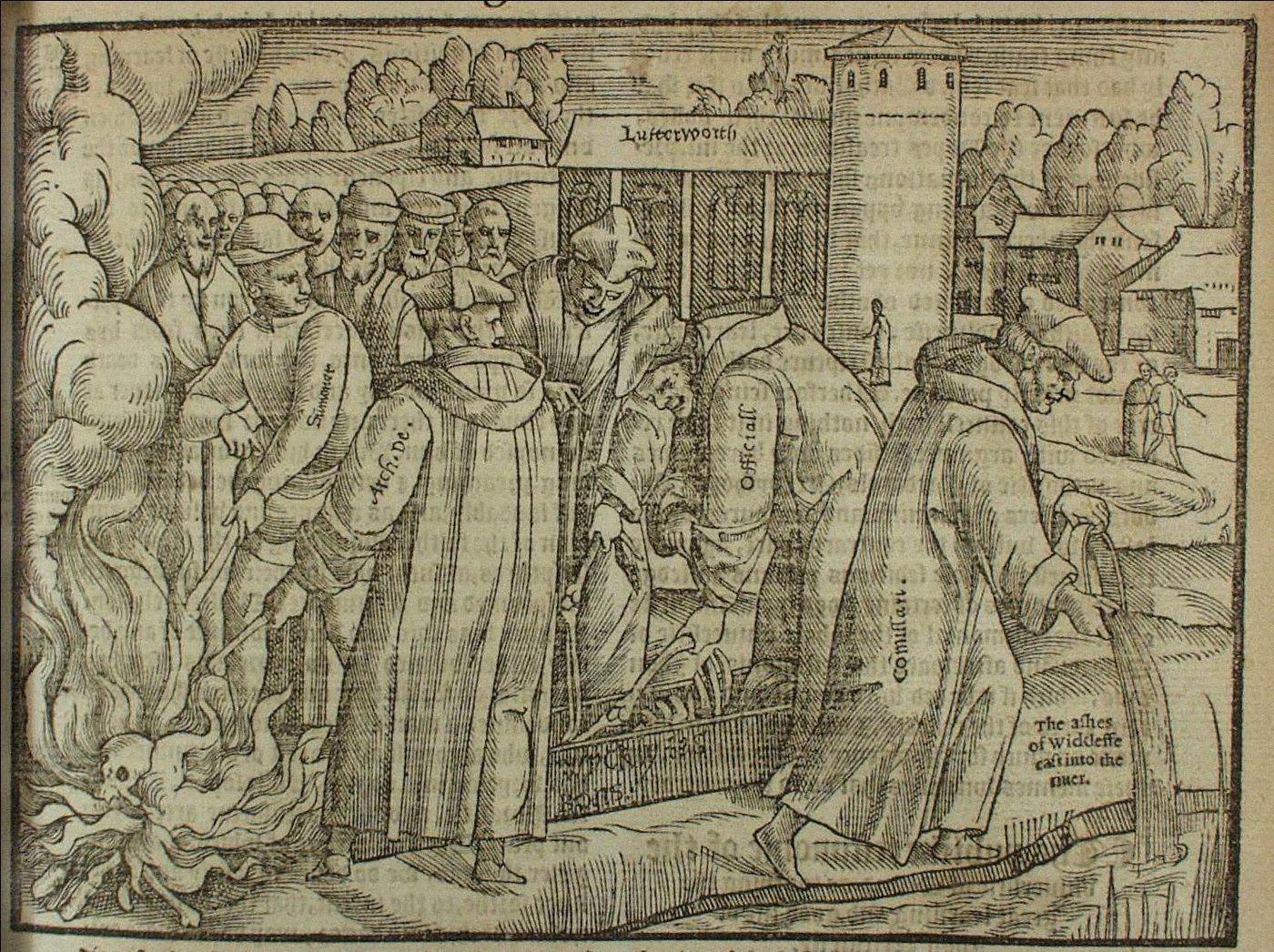
教皇がジョン・フスを火刑にしたという知らせがイギリスに届いたとき、教会当局は何をしたでしょうか。彼らはラターワースへ行き、ジョン・ウィクリフの遺体を掘り起こして火刑にし、その灰をラターワースのスウィフト川に投げ捨てました。しかし、ある人はそれについてこう言いました。
スウィフト川がそれらの灰をエイボン川に運び、エイボン川がセヴァーン川に、そしてセヴァーン川が私たちの海岸の周りの水路と海へと流れるように、ジョン・ウィクリフの教えも世界中に広がるでしょう。
そしてそれは驚くべき預言でした。
証人たちの川
信仰の炎は決して完全には消えなかった
ポーソンは、千年の間ローマ教会だけが存在したと思っていたことを認める。それは事実ではない。命を代価にしても、次の世代のためにたいまつを守った素朴なキリスト者たちの連なりは、いつも途切れなかった。
モンタヌス主義—フリギアで霊が再発見される
隠者と修道共同体—世俗化への抗議
アルメニアと小アジアのパウロ派
ブルガリアとボスニアのボゴミル派
ブレシアのアルノルド—「教会の手から富を取り去る」
ワルド派—「リヨンの貧者」
南フランスのカタリ派/アルビ派
アッシジのフランチェスコ—貧困と使命
ベガルド派と共同生活兄弟団
マルシリウス—「聖書が基準であり、ほかにはない」
オッカムのウィリアム—沈黙させられる
ジョン・ウィクリフ—明けの明星、英語聖書
ヤン・フス—コンスタンツで火刑
マルティン・ルター—夜明けが来る
注:パウロ派、ボゴミル派、カタリ派など一部の集団は、実際には二元論者であり、ポーソンが描く姿よりも新約聖書のキリスト教ではなくグノーシス主義に近かった—その節の琥珀色の注記を参照。
夜明け: 大航海時代と宗教改革
私たちは今、何かエキサイティングな出来事の瀬戸際にいます。キリスト教会に対するそのような虐待が永遠に続くはずがないことがわかります。人々は物事が見え始めており、彼らがそれを理解できるようになったのは、彼らがこの本を自分たちの言語で読み始めたことでした。この本は、どこに行っても、物事を正してくれるでしょう。
しかし宗教改革を引き起こしたのは、教会の濫用だけではありませんでした。人々は物質的にも新しい発見の時代へ入ろうとしていました。コロンブスは1492年にアメリカを発見し、コペルニクスは地球が太陽の周りを回ることを示し、ガリレオは望遠鏡で星を観察しました。これは、人々がさまざまな事柄を問い始めた科学時代の夜明けでした。
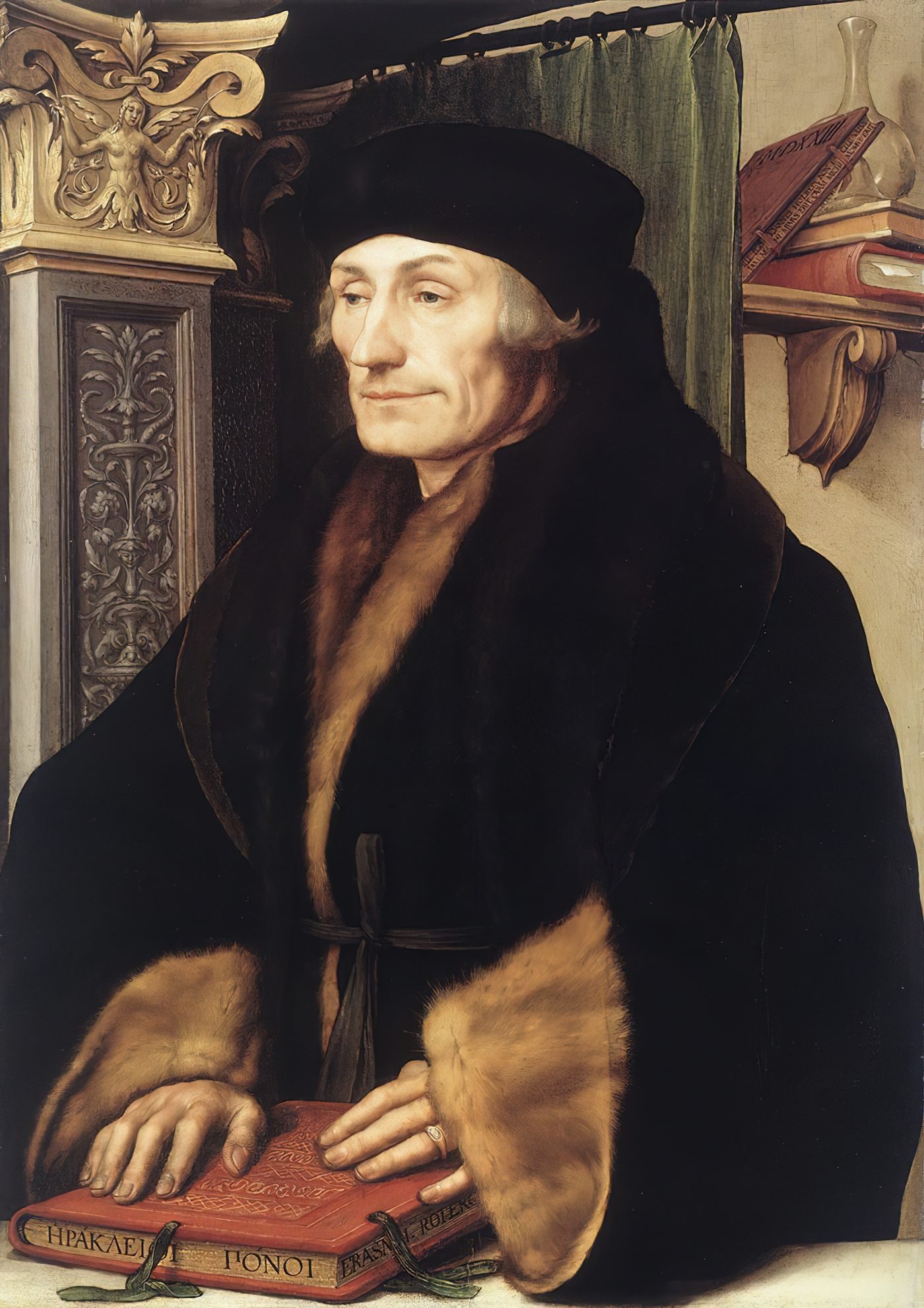
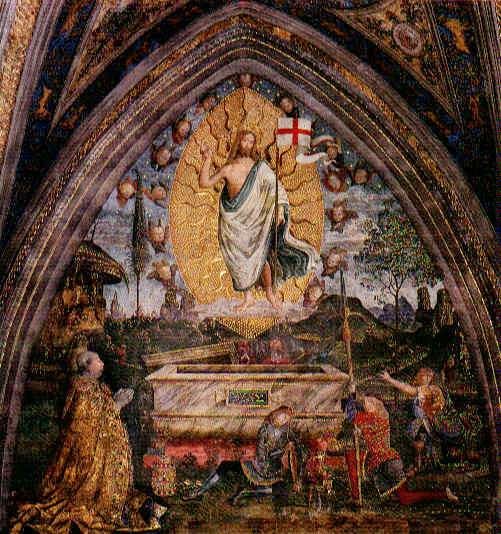
知的な領域では、人々はギリシャの文学と芸術を再発見していました。ラファエロの絵画では、コンスタンティノープルがトルコ人に陥落し、ギリシャ美術の宝物がローマとイタリアに流されたため、古代文化が再び台頭しているのがわかります。印刷機が発明されたばかりだったため、新しい学問が広まりました。新時代の偉大な学者の一人は エラスムス です。彼はギリシャ語の新約聖書とヘブライ語の旧約聖書を再発見し始めました。エラスムスは「最も謙虚な人でもメッセージを理解できるほど正確な新約聖書を作る」と言いました。そして彼は正確な新約聖書を刊行し、従来の聖書にあった多くの誤りを正しました。その中では、「penance(償い)」ではなく「repentance(悔い改め)」に当たる語が用いられました。
しかし、これがポーソンの最後の論点です。知性、芸術、音楽、彫刻についての偉大な発見、すなわち私たちがルネサンスと呼ぶ大きな知的・文化的運動の中で、人々は一つのことを発見しました。知的に優れているからといって、道徳的に優れているとは限らないのです。それは教皇たちが宮殿を美術品で満たした時代であり、チェーザレとルクレツィア・ボルジアという、史上最も不道徳な教皇一族の時代でした。人々が芸術、音楽、文学、天文学を研究しながら、それでも不道徳であり得た時代です。
ルネサンスは純粋に精神的、文化的なものでした。それは罪の必要を満たしていませんでした。全世界が、ある男が救いを再発見するのを待っていた。
人類と教会と世界の道徳的問題に取り組む人が待たれていました。この書物を読み、罪と救いについての自分の経験から、世界を変えるキリスト教の力を再発見する人です。その人物が修道士マルティン・ルターでした。約450年前、彼はその発見を公表しました。ルネサンスが文化的なものであったのに対し、宗教改革は道徳的なものでした。問題は知識、科学、文化の不足ではなく、イエス・キリストと救いの福音の不足だったのです。彼の物語は、このシリーズのパート3で扱います。
ルネサンスと宗教改革
ルネサンスは知性の問題、宗教改革は道徳の問題だった
ルネサンス—知性
・コロンブスがアメリカ大陸に到達(1492年)
・コペルニクスとガリレオが天を見上げる
・コンスタンティノポリス陥落(1453年)→ギリシアの宝が西へ流れ込む
・印刷機が発明される
・エラスムスがギリシア語新約聖書を回復する
・ラファエロの芸術が花開く
しかし賢くなることは、聖くなることではない。ボルジア教皇たちの時代であった。
宗教改革—道徳
世界に欠けていたのは知識でも科学でも芸術でも文化でもなかった。欠けていたのはイエス・キリストと救いの福音だった。
全世界は、救いを再発見し、罪と格闘する一人の人を待っていた。その人は修道士マルティン・ルターだった。
「ルネサンスは頭に向き合い、宗教改革は心に向き合った。」このシリーズの第3部ではルターの物語を語る。
一つだけではない声
他の歴史家や説教者はこの千年をどう読むか
ポーソンは強いプロテスタントの立場から説教する。公平を期し、一方だけでなく複数の声を聞けるように、同じ物語を他の人々がどう語るかを示す。賛成する人もいれば、反論する人もいる。
歴史家と概説書
フスト・L・ゴンサレス ・『キリスト教の物語』第1巻(1984年)
彼はこの千年を逆説として読む。「コンスタンティヌス的転換」は「狭い門」を大通りへ広げ、群衆が流れ込んだ一方、修道主義が抗議として起こった。それでもこの時代を背教と決めつけることは拒む。
「教会が世の権力と結びつくとき……時代の巨大な誘惑にどう抵抗できるのか。」
ポーソンとの違い: ポーソンの「世が教会を捕らえた」という見方に同意するが、現実の信仰があり、修道士たちが学問を守ったことも付け加える。
ブルース・L・シェリー ・『平易な言葉による教会史』(1982年)
この通俗的な福音派の概説は、コンスタンティヌス的転換が本当の権力をもたらしたが「支払うべき代価があった」とする。修道士、反対者、改革者は教会の良心であり、より純粋な使徒的生活へ呼び戻した。
「来るべき世のために最も敬虔に生きる人々は、現在を変える最良の位置にいることが多い。」
ポーソンとの違い: ポーソンに大筋で同意するが、より公正で穏やかであり、刷新を単なる抗議でなく内側からの改革として扱う。
ディアメイド・マカロック ・『キリスト教史』(2009年)
中世を単なる「衰退」として読むことを戒める。そこは豊かで複雑な世界であり、「異端者」も多様で、後のプロテスタントとは異質であって原プロテスタントではなかった。
「宗教と疑い、冒瀆と信心が対話し続けた、より興味深く複雑な物語。」
ポーソンとの違い: 中世キリスト教の豊かさと成果を強調し、異議を唱えた人々を宗教改革の祖先とみなすべきではないとする。
ケネス・スコット・ラトゥレット ・『キリスト教史』(1953年)
この千年を「前進と後退」のリズムとして読む。腐敗と暗闇の中でも信仰はヨーロッパの「蛮族」の間で進み、決して消えなかった。彼はこの時代を「不確実性の千年」と呼んだ。
「歴史を通じ、キリスト教は大きな脈動によって前進した。進むたびに、その前より遠くへ運ばれた。」
ポーソンとの違い: 歴史家の長い視野でポーソンの判定を和らげ、腐敗のただ中でも信仰は根を張り広がったとする。
ロバート・ルイス・ウィルケン ・『最初の千年』(2012年)
キリスト教は決してローマや西方だけのものではなかった。ペルシア、アルメニア、エチオピア、中央アジア、インド、中国の共同体がその歩みを形づくった。
「アルメニア人、ギリシア人、エチオピア人には多くの共通点があった。司教に治められ、修道生活を育て、ニカイア信条を告白した。」
ポーソンとの違い: 西方だけの物語が見落としがちな、世界的なキリスト教へポーソンの枠組みを広げる。
トム・ホランド ・『ドミニオン』(2019年)
信仰の外にいる歴史家は、中世の改革そのもの、とりわけ11世紀のグレゴリウス7世の「革命」が西方の道徳的良心を形づくったと論じる。「世俗」と「聖なるもの」の分離、人権の温床である。
「[改革者たち]は[聖なるものと俗なるものの区別]を、西方の未来にとって根本的なもの、〈初めて、そして永久に〉した。」
ポーソンとの違い: 中世教会、教皇権力さえもが西方の道徳の土壌を植え、世界に捕らえられただけでなく世界を作り変えたとポーソンに反論する。
福音派の説教者
ジョン・パイパー ・『主権の喜びの遺産』(2000年)
アウグスティヌス(5世紀初め)を恵みの贈り物として読む。人を罪から自由にするのは意志の力ではなく、罪深い快楽を根から支配する神における「主権の喜び」だ。
「抗しがたい恵みは、より優れた喜びの主権的な力によって私たちを自由にする。」
ポーソンとの違い: 制度の衰退だけでなく、この時代の初めに恵みの生きた源流をアウグスティヌスから掘り出してポーソンの物語を補う。
マイケル・リーヴス ・『消えない炎』(2009年)
この千年を、宗教改革が答えなければならなかった「背景」と読む。中世後期の教会は、恵みを自分を十分に聖くする力と教え、信徒から確信を奪った。それでも福音の炎は完全には消えなかった(ウィクリフ、フス)。
「中世の恵みは〈霊的なレッドブルの缶のように〉働き、人々を〈確信のない状態〉にした。回復されたのは〈罪人への贈り物〉としての義だった。」
ポーソンとの違い: 福音の中心が失われたというポーソンに同意するが、より穏やかに「回復」と連続性を強調し、宗教改革を神の言葉への回帰と捉える。
W・ロバート・ゴドフリー ・『教会史概論』(Ligonier)
改革派の読みでは、アウグスティヌスの恵みの福音が明るい糸だが、中世を通して迷信と教皇制によって次第に「曇らされた」。それでも教会は完全には死なず、忠実な残りの者が福音を生かした。
「中世に見えるのは、まさに迷信の増大、混乱の増大、福音の曇りの時代である。」
ポーソンとの違い: ポーソンに大筋で同意しつつ、「世が教会を捕らえた」という言い方を和らげ、千年を通して真理を守る「一つの明るい星」があったとする。
カトリックと正教会の声
イーモン・ダフィ ・『聖人と罪人:教皇たちの歴史』(1997年)
この千年を、賛美や論争が許すより人間的で混沌としたものと読む。腐敗と聖職売買は現実だったが、教会史を告発に還元せず、続いたのは職務であって職務を担う者の徳ではないとする。
「そのすべての罪にもかかわらず、教皇制は総じて人間の自由と精神の広さの力だったように思う。」
ポーソンとの違い: 腐敗を認めながら単一原因の論争を退け、教皇制を複雑に絡み合った人間の制度と見ることで、ポーソンのプロテスタント的立場を和らげる。
カリストス・ウェア ・『正教会』(1963年)
ウェアにとって1054年の分裂は一日の出来事ではなく「長く複雑な過程」だった。とりわけ1204年のコンスタンティノポリス略奪を含む十字軍が断絶を決定的にした。東方から見れば、真の「革新」はローマが名誉の首位を管轄権の至上権に変えたことだった。
「ローマの過ち—正教徒が信じるところでは—この首位、つまり『愛の議長職』を外的な権力と管轄権の至上権に変えたことだった。」
ポーソンとの違い: プロテスタント側ではなく正教会側から同じ問題を見て、分裂が劇的な一瞬ではなく徐々に来たことを強調する。
アンリ・ダニエル=ロップス ・『大聖堂と十字軍』(1957年)
カトリックの歴史家は、この千年を「世が教会を捕らえた」とは読まず、教会がヨーロッパをキリスト教化し文明化し、混乱の中で文字と学問を守ったと読む。衰退を美化せず(14世紀を「破綻」と呼ぶ)、教会が内部から聖人と改革者を生み続けたと主張する。
「最も低い者から最も高い者まで、社会は信じていた。教会は『文明の救いを確実にする最も有効な手段』だった。」
ポーソンとの違い: 腐敗を認めながら、衰退の中でも教会は文明を救い内部から改革したと論じ、ポーソンを和らげ、また反論する。
標準的な教会史の概説、現代の教師たちのメッセージと著書からまとめた。目的はポーソンに反論することではなく、合唱の中で彼の声を聞くことにある。
終わりの祈り
何年も何世紀も聞き手の目の前で過ぎ去った後、ポーソンは要約ではなく祈りで終わります。
「父よ、私たちがあなたの望む教会となれますように。過去の過ちと歴史の教訓から学べますように。あなたがあらゆる時代を通じて証人を起こし、真理を知る人々を備え、しばしば命を差し出して信仰の灯火を次の世代へ渡してくださったことを感謝します。教会が腐敗しているところを清めてください。誤っているところを真理へ導いてください。分裂しているところを一つにしてください。そして何よりも、イエス・キリストこそ教会の頭、ただ一人の頭であると認められますように。」
船に染み込む千年の海。しかし 炎は完全に消えることはなかった。そして、その長いトンネルの終わりに夜が明けます。パート 3 では、何がうまくいかなかったかを知り、一冊の本ですべてを再び正した僧侶の物語が語られます。
Note: This post is compiled from the second lecture in David Pawson's History of the Church series (Part 2: AD 400–1400), about 69 minutes long. As in Part 1, I do not guess or embellish: every major argument comes straight from Pawson. Wherever I looked something up, checked it against the sources, or corrected a detail, I left it as an amber margin note woven into the text. For this part especially, because the lecture touches the most contested stretches of church history, I also read other historians and preachers, so that you hear more than one voice.
The unhappier story
Part 1 told how the Church captured the world in the first four centuries: it won the physical battle by suffering, the mental battle by confronting heresy, and the spiritual battle by standing firm against other religions.
Pawson says there is one thing he forgot to mention last week, and it matters: the Christians won because they out-lived, they out-thought, and they out-died everyone else. They out-lived, and so won the spiritual battle. They out-thought, and so won the mental battle. They out-died, and so won the physical battle. And therefore they out-survived everything else.
But tonight, he says, the subject is far sadder and far more serious. The subject is: how the world captured the Church over the next thousand years.
There is a medieval painting of the Church as a lifeboat. In a tossing sea, the Christians in the boat reach out to pluck the drowning from the waves. It is a fine picture of the Church: a lifeboat gone out into the world in answer to the cry for help.
But Pawson pauses on one thing:
The lifeboat must be in the sea. But if the sea gets into the lifeboat, then there is real trouble. The church must be in the world if it is going to save souls. But when the world gets into the church, then it is finished and it sinks.
The next thousand years is the story of the sea getting into the boat. Pawson takes it in three chapters: the world began to get in even in the early ages (AD 100–400); then the Dark Ages (AD 400–1000); then the Middle Ages (roughly 1000–1500), which bring us to within a year or two of Martin Luther.
The Lifeboat Picture
The boat must be in the sea, but the sea must not be in the boat
Pawson opens with a medieval painting: the Church as a lifeboat in a tossing sea, reaching out to pluck the drowning from the waves.
The lifeboat in the sea
The Church is in the world to save souls. This is the mission itself.
The sea inside the lifeboat
When the world gets into the Church, the boat sinks. That is the story of a thousand years.
"The church must be in the world if it is going to save souls. But when the world gets into the church, then it is finished and it sinks." — David Pawson
A Thousand-Year Timeline
AD 400–1517: from the fall of Rome to Luther
Four currents braid through a thousand years: decline, the rise of papal power, voices of protest, and an age of discovery.
Some dates are simplified for clarity; precise milestones are checked in the amber margin notes throughout the essay.
How the World Got Into the Church (AD 100–400)
When there were martyrs like that, preachers like that, when the battle was being won, how did the world get in? Pawson names four things that began to water down the apostles' Church.
First, regional bishops. In the New Testament every church had a number of bishops, called elders or bishops or presbyters, all the same office: spiritual leaders. Then came a stage where each church reduced its bishops to one. Then a stage where one bishop ruled many churches. Leadership was concentrated in fewer hands. You cannot find this in the New Testament; it did not happen for the first hundred years; but in the second century there emerged men of considerable power and influence. Not many bishops to one church, but many churches to one bishop.
Second, a magic view of the sacraments. Take baptism. Instead of being an outward sign of the spiritual washing away of sins that comes when a man believes in Jesus, people began to believe that the actual water and the right formula saved a person from sin, whatever their age; and that if you sinned after baptism, you undid it. So people put off baptism until the deathbed: they waited until the doctor said there was no hope, then rushed for the minister. But others worried: what if our baby dies, we would rather have its sins washed away at once. Both views were superstitious. Sadly, infant baptism prevailed. The Lord's Supper too was treated magically: people began to think the bread actually was Christ's flesh and the wine his blood; since real flesh and blood were being offered, it was a sacrifice; and since it was a sacrifice, the one handling it must be a priest.
Third, established religion. When the emperor went to church, you can imagine everyone did. When the state declared Christianity the official religion, everyone climbed on the bandwagon. Going to the established church became fashionable and respectable. Pawson says plainly: an established religion is bound to produce fashionable, respectable Christianity, and he cannot find that in the New Testament.
Kit's note
One thing I'll return here: it was not Constantine who made Christianity the official religion. The Edict of Milan (313, Constantine with Licinius) granted only toleration — freedom of worship and the return of property, ending persecution. It was Theodosius I who, by the Edict of Thessalonica in 380, made Nicene Christianity the state religion. Pawson's larger point — that once faith becomes 'fashionable and respectable' the world seeps in — stands; only the milestone belongs to Theodosius, not Constantine.
Fourth, nominal membership. A writer at the end of the second century observed: around the year 50, to belong to the Church meant a person had received baptism and the Holy Spirit and called Jesus Lord; but by around 180, it meant a person acknowledged the rule of faith (the creed), the New Testament canon, and the authority of the bishops. In other words, people were joining for reasons other than believing in Jesus and receiving his Spirit. It was now an institution.
And whenever the Church went wrong, there were protests. In the first 400 years there were two movements: Montanism and monasticism. Both protested against a Church growing wealthy, worldly, and filled with people who had never even been converted.
Montanism arose in what we now call Turkey, Asia Minor. A man called Montanus saw that in scores of members there was no trace of the Holy Spirit, so he sought the Spirit of God afresh. A revival broke out. The gifts of the Spirit came back into the Church; life, vigour, and reality came back into worship. Pawson says if you want to know who they were most like today, they were Pentecostals. There was a tremendous emphasis on Christ's return, an insistence that no one be a member without a real faith, with holiness and fasting. But the bishops opposed it severely, and you can guess why.
The tragedy is that, as so often, this first Pentecostal movement went wrong. It went wrong because these people would not have teaching. They wanted the heat without the light. Pawson says: light without heat is cold; heat without light is too hot; you must have both. They would not listen to the Scriptures on how to exercise spiritual gifts. And the movement fizzled out in fanaticism. "That is a word every Pentecostal revival needs to know," Pawson says. "We can learn from history."
Kit's note
I'll gently push back on 'the women spoilt it.' The pastoral caution — heat without light — is fair, and the ecstatic, trance-like prophecy was indeed what the mainstream church attacked most. But pinning it on 'the women,' Priscilla and Maximilla, isn't fair: Montanus himself prophesied passively ('I am as a lyre, and the Spirit sweeps over me like a plectrum'). Modern study (Christine Trevett) shows what was really condemned was their claim to a new authority over the church — not the fact that the prophets were women.
The second protest came in a very different way. Some years later certain Christians said: this Church is so worldly, so dead, that the only hope of recovering Christianity is to get out of the Church and out of the world.
The first of them did it alone. They were hermits. It is the strangest tale. Anthony was the first: he decided he would never be a real Christian until he got into the middle of the desert. The trouble was that when he got there, other Christians wanted to join him, and he did not want that; and above all, he found his temptations in a desert cave just as worldly as they had been in the Church. There was an even stranger hermit, Simeon Stylites: he built a pillar some sixty feet high, a yard across at the top, and lived up there for decades. He even stood on one leg for a year, as a protest declaring that Christianity is something hard and tough. And there he was, up the pole, covered in ulcers and worms, in a frightful state.
More successful than the hermits were those who started communities. The man who began this movement was Benedict. On Monte Cassino, halfway between Rome and Naples, he gathered a group of real Christians who saw the Church was too worldly to do anything with, and said: we will come and live together. We will not be wealthy but poor. We will not be lustful but celibate. We will not be rebellious but obedient. They took the threefold vow: poverty, chastity, obedience. And the monastery was run like a Roman soldier's garrison.
Kit's note
A small but real correction: Benedict (c. 480–547) did not start communal monasticism. Pachomius founded cenobitic communities in Egypt around 318–323, nearly two centuries earlier. Benedict is the father of Western monasticism and wrote its most influential Rule — but not its founder. And his Rule's vows are really stabilitas (staying in one house), conversatio morum (conversion of life) and obedience; the familiar 'poverty, chastity, obedience' formula belongs to later orders.
The tragedy is that this protest went wrong just as surely as the other. Christ never meant us to live the Christian life away from everybody else. Later these monks, who began with a good intention, became so wrapped up in their own salvation, so introverted, that they were isolated from the world and the Church. Worse, monasticism produced the idea that there are two kinds of Christians: second-class ones who marry and first-class ones who do not; second-class ones who live in the world and first-class ones who live out of it. But that is not the teaching of Jesus. Our Lord was not a monk. He did not withdraw from society; he lived a pure life in society, and told his disciples to be in the world without being of it.
Both said: the Church is not what Jesus Christ meant it to be. One said we will rediscover it by getting back into the Spirit. The other said we will rediscover it by getting out of the world and out of the Church. Both came to nothing, because they did not return fully to New Testament Christianity.
How the World Got In — AD 100–400
Four cracks and two protests
Even in the age of victory, four things began to water down the apostles' Church. And whenever it went wrong, voices of protest rose up.
Regional bishops
From many elders per church to one bishop over many churches. Power concentrated in few hands, copying Rome's governors.
Magic sacraments
Baptism seen as saving in itself, so delayed to the deathbed or given to infants. The Lord's Supper taken as literal flesh and blood, a sacrifice needing a priest.
Established religion
When the emperor went to church, everyone went. Faith became fashionable and respectable instead of a surrender.
Nominal membership
People joined for reasons other than believing in Jesus and receiving the Spirit. The Church became an institution.
Two protests
Montanism
A Pentecostal protest
Rediscovered the Spirit and the gifts, stressing Christ's return and holiness. But it had "heat without light," refused teaching, and burned out in fanaticism.
Monasticism
A protest by withdrawal
Left both the world and the Church to recover real Christianity. But it produced "two-tier" Christians, and Christ never called us to live apart from everyone.
Both protests were sincere, yet both came to nothing because they did not return fully to New Testament Christianity.
The Dark Ages: The Fall of Rome (AD 410)
Now the story truly begins. In 410, a catastrophe came. Barbarians from the north pressed down on the city of Rome. The Vandals came (from their name we get the word "vandalism"). The Franks came, the Huns came, the Goths came. These barbarians pressed into Rome and took it. The Rome of that day fell.
Kit's note
Let me check this one: the sack of Rome on 24 August 410 was carried out by one people — Alaric's Visigoths — not a combined army of Vandals, Franks, Huns and Goths. The Vandals were then pushing into Spain (they would sack Rome only in 455), and Attila's Huns struck the West only in 451–452. Pawson's larger picture — a whole wave of 'barbarian' peoples pressing on the Empire — holds; but the army that breached Rome in 410 was Alaric's Goths alone.
The Romans left Britain that year to defend Rome, but could not save it. And as soon as the Romans withdrew, the Jutes, the Angles, and the Saxons charged into Britain and destroyed Christianity in England and south-east Scotland. The Christianity that Roman soldiers had brought here in the first 400 years vanished.
It seemed that when Rome fell, it was the end of everything. Jerome, writing in Jerusalem, said: "the human race is included in the ruins." People thought it was the end of civilization. And it puzzled the Church: Rome had survived for centuries as a pagan empire, yet as a Christian one it collapsed. Many Christians could not understand it.
Kit's note
A small geographic note (the Part-1 kind): Jerome was not in Jerusalem but in Bethlehem (very near it), where he lived in a monastery from 386 until his death in 420. His most famous line is from the Preface to his Commentary on Ezekiel (c. 410–414): 'when the bright light of all the world was put out... the whole world perished in one city' (in una urbe totus orbis interiit). Pawson's 'the human race is included in the ruins' faithfully catches Jerome's grief.
But one man thought it through and made an incredible statement. He said: it is the best thing that ever happened. His name was Augustine.
Augustine: A Restless Heart That Found Its Rest
You can buy his books at the railway bookstall today. And if I tell you some of the things this great man said, you would recognize them. He said: "Our hearts are restless, and they can find no rest until they find their rest in thee." Perhaps the most quoted prayer in history. It was Augustine who prayed: "Give me chastity, but not just yet." And it was Augustine who said: "Love, and do what you like."
He was born in North Africa. When he went as a student to Carthage, he fell in with the wrong crowd. Soon he had a concubine and a son by her, and lived in that illegal relationship for years. His father was pagan, but his mother was a godly woman who prayed for her wayward son with tears every day. Later, because of his brilliant mind, he was invited to be a professor of rhetoric in Milan. There he went to hear the saintly Bishop Ambrose preach. Under that preaching, the young man with the brilliant mind but the profligate life was brought into a deep conviction of sin.
Then one day, sitting in a garden weeping over the mess he had made of his life, he heard a child's voice over the garden wall: "Tolle lege, tolle lege" — "take up and read." He never knew who the child was. But he saw a scroll on the seat beside him, took it up, and read. It was Paul's letter to the Romans. Augustine read it through, and the light dawned. When he walked into the street afterward, the woman he had lived with saw him, and he ran from her. She ran after him crying: "Augustine, it is I, it is I." He answered over his shoulder: "But it is not I, it is not I."
Kit's note
The exchange — 'It is I, Augustine!' / 'But it is not I' — is a lovely pious anecdote, but it is not in the Confessions or any early source. By Augustine's own account (Confessions 6.15), the woman had already been sent away before his conversion (c. 385); she returned to Africa vowing to remain unmarried. The clever retort appears only in much later retellings — a moving tradition rather than history.
He wrote the whole story of his conversion in a book called Confessions. Pawson says Augustine has had more influence on church history than any man after the apostle Paul.
When Rome fell, Augustine being in middle age, the whole world seemed to collapse about his ears. He thought it through, then wrote the second great book we remember: City of God. In it he says: it is a good thing this pagan city of Rome has collapsed, because now the city of God can replace it; it is a good thing an earthly empire has ended, because the heavenly empire can now be established. The book brought hope and new life to many, helping them see that a city of God still survived when the city of men had gone.
But that was the trouble. People began to ask: what is this city of God? Visible or invisible? Earthly or heavenly? And at this point Augustine led many into a misunderstanding. The funny thing is that centuries later, in the Reformation, the Protestants said "we follow Augustine," and the Roman Catholics said "we follow Augustine." But the Protestants were following the first book, Confessions; and the Catholics were following the second book, City of God.
For what happened was this: the Church said, if that is so, then the Church is now the new empire.
The Church Becomes an Empire: The Rise of the Papacy
One of the first results was the rise of the bishop of Rome to the position of an emperor. In those days there was a great debate about the word "pope," which means essentially "father." Although Jesus had said never to call anyone on earth father, for you have one Father in heaven, people began to call the local priest "father." Then they called the regional bishop "father." Then finally the five great patriarchs said: if anyone is to be called father, it ought to be us five. And at last, the bishop of Rome said: the city of Rome is gone, but I am the emperor now; I am the chief bishop, and from now on you call only me pope, you call only me father.
And the papacy, as we know it, came into being. The striking thing is that the pope adopted the very titles and even the robes of the Roman emperor. He took the title Pontifex Maximus, known today as the pontiff — the Roman emperor's title. Augustine was misunderstood, and people thought the Church was the new empire. And an empire must have its emperor, its robes, its ceremonies, its throne. So the Church became an empire, and the pope became a king.
Of course, many Christians would have none of it. The French would not, the Irish would not, the Welsh would not, the Scots would not. Sadly, the English did.
When the Church Became an Empire
The ladder of power and the closing circle
The ladder to "father"
The local priest is called "father"
Then the regional bishop
Then the five great patriarchs claim the title
The bishop of Rome: "call only ME pope"
Takes the emperor's titles & robes (Pontifex Maximus)
"Call no man on earth your father…" (Matthew’s Gospel)
The circle 410 → 800
410 — The Roman Empire collapses
The Church takes over, becomes the new "empire"
800 — Charlemagne crowned Emperor
The empire returns — full circle
Augustine wrote City of God to console a collapsing world; but people misread it to mean the Church was the new empire — and an empire must have its emperor, its throne, its robes.
Two Streams of Christianity Meet at Whitby
Ireland, through St. Columba, brought the faith into Iona and Scotland, leading Scotland to Christ. Then Aidan came down to the island of Lindisfarne off Northumberland. Pawson recalls standing on Lindisfarne a few months earlier, by the ruins of Aidan's church, the little island from which he evangelized Northumberland. This non-papal Christianity, Celtic Christianity, came into England from the north through Ireland and Scotland.
But later the pope said: we must get England, we must get those Angles. He made the famous pun: they are not Angles but angels. And he sent a missionary also named Augustine. This Augustine landed on the island of Thanet, then went to Canterbury. Columba on the island of Iona in the north; Augustine on the island of Thanet in the south.
The two streams of Christianity met at Whitby. You can still see the ruins above Whitby harbour where they met. There, papal Christianity met Celtic Christianity, to see which would win. The tragedy is that papal Christianity won. The British Isles came under the papal throne. Scotland even changed its patron saint to St. Andrew. The whole situation was changed.
Kit's note
Let me clarify one thing: the two streams in the British Isles were real, but saying Celtic Christianity 'rejected the pope' overstates it. They didn't oppose Rome on doctrine; they kept older customs — the dating of Easter and the style of tonsure — because they'd been cut off from the continent during the Anglo-Saxon period. The Synod of Whitby (664) was a dispute over custom and calendar, not a schism; Pawson is right that Rome's side prevailed.
Two Streams Meet at Whitby
Which way would Britain go? (Synod of Whitby, 664)
Celtic Christianity
Ireland → Iona (Columba) → Lindisfarne (Aidan) → northern England
No pope. Simple, missionary.
Roman Christianity
Rome → Augustine on Thanet → Canterbury → the south
Loyal to the pope.
Whitby, 664
Roman Christianity won. The British Isles came under the papal throne. Pawson calls it a tragedy; you can still stand among the ruins above Whitby harbour today.
Schematic, not to geographic scale. Whitby took place in 664 (Pawson says "660").
East and West Divide (1054)
The other great group of Christians who would have none of this were the churches of the eastern Mediterranean: Greece, Asia Minor, Syria, Egypt. They said: we are not acknowledging this. That there should be one "papa," one father of the whole Church, is not in Scripture, not in the New Testament. And they began a split, finally completed by the year 1054. That division kept the eastern and western churches apart for a thousand years, and only in recent years have the two begun to talk again.
Kit's note
A detail worth marking: Pawson saying the two sides 'have only in recent years begun to talk again' is exactly right for a sermon around 1967. On 7 December 1965, in simultaneous ceremonies in Rome and Constantinople, Pope Paul VI and Ecumenical Patriarch Athenagoras I lifted the mutual excommunications of 1054, after their historic meeting in Jerusalem in January 1964. So his 'recent years' was, for him, fresh news.
And here is one of the most incredible things. Around the year 850, the pope said: I have discovered documents from the first century, proving that Peter appointed the first pope, who appointed the second, and so on down the line. Today even the Roman Church knows those documents were forgeries; they are called the forged decretals. And yet the papacy was built on a forgery. There was another forged document, the Donation of Constantine, claiming that all of Italy belonged to the pope. The pope "discovered" this forgery and said: there, all Italy belongs to me. That is the kind of foundation on which the whole structure was based, and even Rome knows it today.
Kit's note
Let me return a detail on 'the pope produced these documents': Pawson's date, 'around 850,' is very close — the Pseudo-Isidorian Decretals (False Decretals), under the pen-name 'Isidorus Mercator,' were forged around 847–852. But the forgers were Frankish clergy near Reims, not the pope himself, and the first aim was to protect ordinary bishops from being deposed. Still, Pawson's larger point holds: those forgeries were later cited by Rome to buttress papal supremacy.
The Great Schism, 1054
One Church split in two for nearly a thousand years
The five patriarchates (the Pentarchy)
The West (Latin)
Rome — one pope over the whole Church
• Supremacy of the pope
• Added "and the Son" (filioque) to the Creed
• Unleavened bread
Latin tradition
The East (Greek)
Constantinople + the patriarchs — equals, no single "papa"
• Five equal patriarchs
• The Creed left unchanged
• Leavened bread
Greek tradition
The mutual excommunications of 1054 were only lifted together by Pope Paul VI and Patriarch Athenagoras in 1965 — close to Pawson's "the last ten years" when he preached in the 1960s.
Charlemagne and the Holy Roman Empire (AD 800)
The power kept spreading, until the year 742, when a man was born with a dream: to restore the empire of Rome, put it back on the map, with himself as emperor and the pope beneath him. His name was Charlemagne. A ruthless man who said: we will have a Roman empire again, and its head will not be the pope but an emperor.
Charlemagne twice saved the pope's life: once from the barbarians, once from the crowds in Rome who were angry with him. The pope said: you have saved my life twice, what would you have me do for you? The emperor answered: on Christmas Day, crown me emperor. And in the year 800, on Christmas Day, in the largest church in Rome, at the Christmas morning service, the pope crowned the king of the Franks, Charlemagne, emperor of the Holy Roman Empire. A thousand years later, the Holy Roman Empire still existed.
You see, we have come full circle. The empire of Rome collapsed in 410. The Church took over the empire. Then in 800 the emperor came back and took the empire from the Church. The whole thing seemed back to where it started.
Charlemagne did some good things and some bad. Among the good: he forbade the clergy to keep concubines, frequent taverns, and go hunting; he started many schools. Among the bad: he forbade the clergy ever to marry, and it is to Charlemagne that we owe the celibate priesthood. He also coined the word Christendom — the kingdom that would be Christian under the emperor. And the idea of Christendom persists to this day.
Kit's note
Two small fixes. First — the celibate priesthood isn't owed to Charlemagne: he tightened clerical discipline, but the ban on clergy marrying became universal law only with the eleventh-century Gregorian reform and the Lateran Councils of 1123 and 1139 — three centuries after him. Second — 'Christendom' is a native Old English word (cristen + -dom); a Latin-speaking Frankish king could hardly coin it. If Pawson means he crystallized the idea of Christendom, that holds — the 800 coronation is its emblem.
The Rise of Islam
Because the Church was now wealthy and powerful, it became corrupt. And once again protests came, this time from the east and the north. From the east, the protest came from two things. The first was Islam.
Pawson calls this the greatest judgment ever to fall on the Christian Church. He had lived in Arabia and seen something of this religion. Mohammed was born in 571 in Mecca, the centre of Arab idolatry and superstition. In the middle of Mecca was a great square building draped in black, and inside it a sacred stone, the Kaaba, a meteorite fallen from the sky. Mohammed grew up amid the idolatry and superstition of the Arabs, and he was revolted by it.
Then he turned first to the Jews, then to the Christians, and asked: have you the true religion? The tragedy is that Mohammed never met a converted Christian. The tragedy is that he never saw the real Christianity of the New Testament. All he saw was the vestments of priests, images, and crucifixes. And he said: this is as idolatrous as the Arabs' religion. If only Mohammed had met one true Christian at the end of the sixth century. But he did not.
So he said: right, I will seek a new religion that is pure. He married a wealthy widow, spent years in the desert, and there he said he was spoken to: there is no God but Allah, and Mohammed is his prophet. He began to preach this, writing down what he heard in his visions in a book, the Quran (Al-Quran). He was persecuted and had to flee to Medina in 622. That is the date from which the Arabs reckon their calendar. He returned to Mecca with an army and imposed the new religion. From then on everyone had to pray toward Mecca, and by a religion of good works — fasting, praying five times a day, keeping Ramadan, making the pilgrimage to Mecca, giving alms — one could get to heaven. And that religion was imposed by force of arms.
Islam swept Christianity out of the Mediterranean. It swept Christianity off the North African coast, where there was no church for centuries. It swept Christianity out of the Holy Land itself, out of Jerusalem, out of the place where Jesus died. It swept up through Spain, up through Asia Minor, into France as far as the gates of Lyon, into Eastern Europe as far as Vienna. It seemed Islam would crush Christianity in a gigantic pincer movement.
Kit's note
An important geographic and chronological note: the Muslim advance into the West was halted at Tours/Poitiers in 732 (Charles Martel over the Umayyads), in western France — about 360 km from Lyon, not 'the gates of Lyon.' And the two sieges of Vienna were Ottoman Turkish, in 1529 and 1683 — roughly 800–950 years after the 8th-century Arab advance. These are two powers and two eras, not one coordinated 'pincer.' Pawson's theological instinct — that God stopped the tide — can still stand.
It is the greatest judgment God has ever allowed to come on the Christian Church. And it was deserved. But so far and no further. God was not going to have Christianity wiped out altogether.
He stopped them at Lyon and Vienna, and they withdrew to their present boundaries: the North African coast and up to Turkey.
Map of the Dark Ages
Two tides break over the Christian world (AD 410–732)
Orange arrows: barbarians pour south onto Rome. Green arrows: Islam sweeps the Mediterranean from Arabia, across North Africa and Spain, as far as Tours.
Base map: the Roman Empire (Wikimedia Commons, public domain). Arrows are schematic directions of advance, not exact routes. Vienna marks the later Ottoman limit — Pawson telescopes nearly a thousand years of frontier into one pincer.
Hidden Witnesses in the Dark
For at that very time, all over Europe there were little groups of Christians meeting around the word of God. They saw that the official church was corrupt, so they simply met in tiny groups, read this book, and said: we will worship God in simplicity. We do not need priests, for we have Jesus our high priest. We do not need a pope, for we have a Father in heaven. We just need the word of God and the Holy Spirit.
We know hardly anything about them, because they were so persecuted that even the records of their history were destroyed. Pawson asks his hearers whether any have ever heard of a group called the Bogomils. They were a group meeting around the word of God, chiefly in Bulgaria and Bosnia; the word "Bogomil," Pawson says, is Bulgarian for "friends of God." There were the Paulicians, who met in Armenia, Thrace, and Asia Minor. There were the Cathars, a name meaning "the pure ones," the same root as the later word "Puritan"; they met in the Balkans and across Europe.
Pawson confesses: in his simplicity he used to think that for a thousand years there was only the Roman church and the eastern churches. That is not true. He was thrilled to discover that all through those centuries there was a continuous train of simple Christians meeting around the word of God in local churches. They paid for it with their lives, but they met, and the flame of faith was kept alight for the generations to come.
Kit's note
Let me return something, in fairness to Pawson and to history. What he says is true and moving: the Bogomils, Paulicians and Cathars rejected the clergy and the pope, were savagely persecuted, and had their writings nearly all destroyed. But modern scholarship classes them as dualist movements — holding the material world to be the work of an evil power — shaped by Mani and the Gnostics; this is not the later Protestant faith. They witness to protest, but they weren't quite 'simple New-Testament Christians.'
The Middle Ages: Hildebrand Sets the Pope Above All
Now we come to the final chapter, from the year 1000 to 1500, called the Middle Ages because it lies between the Dark Ages and the Modern Age.
The first man to speak of is Hildebrand. This monk became pope, and he did not like being number two. By now there was a restored Roman Empire with a new emperor, but the pope was number two. Hildebrand decided the pope should be number one, and he achieved it. He did many good things: he cut out the simony in the church, the buying of priesthoods. But he did it because he believed the pope should control everything, including kings.
The clash between Hildebrand and Emperor Henry IV was settled in a most dramatic and terrible way. Henry IV defied Hildebrand, saying: I am number one. Hildebrand answered: you are not. Let the people decide. And the people decided that Hildebrand was. Up in the Alps, the pope met Emperor Henry IV, who came from the north. The pope was in a mountain house, and he kept Emperor Henry IV waiting outside in the snow, barefoot, for three days, before he would speak to him. In this way Hildebrand put the emperor decisively in a secondary place.
From then on, for the next 500 years, the pope was the most influential figure, and the papacy was the power that controlled the Western world. The Church was the empire again. It was this pope who began the symbol of the crossed keys of St. Peter: one key is the authority of sacred power over the Church, the other the authority of secular power over the state. Those crossed keys are Hildebrand's claim: to be top dog, over both the Church and the state.
Kit's note
Let me return two points. First, Hildebrand (Gregory VII, 11th c.) did not create the 'crossed keys' emblem: the device appears only in the 14th–15th c. — the oldest belongs to Pope Martin V (1417–1431), over 300 years later. Second, the keys traditionally do not mean 'one sacred, one secular'; both belong to spiritual authority (the power to 'bind and loose'). What Pawson has right is Hildebrand's ambition: to set the pope over both Church and state.
The Crusades: When the Church Took Up the Sword
This put the force of armies at the Church's disposal. And because Hildebrand thought that way, he began to use force to establish the kingdom of Christ. Never was a greater mistake made. The first outcome of the idea that force is valid for the Church to use was eight crusades to the Holy Land.
By now the holy places, Jerusalem and others, were in the hands of the Muslims, the Saracens, the Turks. The pope decided the Church would fight its way in and capture the Holy Land for Christ. The First Crusade was born in 1095. It was Hildebrand's idea, but he died before it could be done. People wore a cross on the shoulder, called a crux, and from that we get the word crusade.
The First Crusade was pulled together by an unkempt, fanatical preacher called Peter the Hermit. He set off with 600,000 men, and only a tenth arrived; most died in the high mountains of Turkey. But they got there, and they took Jerusalem. They pillaged it, raped the women, and established the so-called rule of Christ in Jerusalem by slaughtering all the Saracens of that city. Is that Christian? You say at once: of course not. But bear in mind, they were misled. Thousands thought this was what the Church was meant to be: an earthly empire establishing itself by force.
Kit's note
Two corrections. One — 600,000 is wildly inflated: historians put Peter the Hermit's 'People's Crusade' at roughly 20,000–40,000 (the whole First Crusade together was only about 60,000–100,000). Two — Peter's band did not take Jerusalem: arriving in Anatolia, it was annihilated by the Seljuk Turks at Civetot (21 Oct 1096). Jerusalem fell nearly three years later — 15 July 1099 — to the nobles' armies. The bloody massacre is real, but it was 1099, not the work of Peter's poor.
Of course there were incentives. People were promised absolution if they went to fight for Christ; promised indulgences, so many years off purgatory; promised their debts cancelled by law; promised pardon for criminals who would leave prison to go and fight. You can imagine the motley crew that resulted. King Philip of France was caught up in it. King Richard the Lionheart of England was caught up in it. Eight times they set off. One was a children's crusade: 2,000 little ones set off across Europe to try to get Palestine back for Jesus. Not one of them arrived. The pope said angels would miraculously provide food; but the food never came and the angels never appeared.
The last one was an utter failure. At the flat-topped mountain of the Horns of Hattin, the last crusader army died of thirst, besieged by the Saracen. And in 1270, Europe breathed a sigh of relief when the pope called the whole thing off.
Kit's note
Pawson's picture of the Horns of Hattin is right (4 July 1187, Saladin luring King Guy's army into waterless ground and breaking it through thirst) — but it was not 'the last crusade'; it was a battle of the Kingdom of Jerusalem, and the loss of Jerusalem that followed is precisely what sparked the Third Crusade (Richard and Philip). As for 1270: the campaign collapsed not because the pope 'called it off' but because its leader, King Louis IX of France, died of disease before Tunis (25 Aug 1270). The crusader presence ended only when Acre fell in 1291.
It is one of the saddest stories in the history of the Church. It did nothing. Nothing. And indeed it did worse than nothing.
The Eight Crusades
When the Church used the sword instead of love (1095–1291)
Hildebrand believed force could establish the kingdom of Christ. "Never was a greater mistake made," says Pawson.
People's Crusade · 1096
Peter the Hermit leads a mob; most die in the mountains of Asia Minor.
First Crusade · 1095–99
Takes Jerusalem (1099) and massacres its people. The only "success."
Second Crusade · 1147–49
Preached by Bernard of Clairvaux; fails.
Third Crusade · 1189–92
Richard the Lionheart vs Saladin; Jerusalem not retaken.
Fourth Crusade · 1202–04
Diverts to sack Constantinople — Christians against Christians.
Children's Crusade · 1212
A march of children; not one reaches the Holy Land.
Later Crusades · 1217–54
Failure after failure, including the two campaigns of King Louis IX.
Hattin & the collapse · 1187 / 1291
Routed at the Horns of Hattin (1187); Acre, the last stronghold, falls in 1291.
The incentives to go
By 1270 the pope called it off. "It did nothing. Nothing. And indeed it did worse than nothing." — David Pawson
The Inquisition, Two or Three Popes, and the Corruption
From using force outside the Church, the pope now decided to use force inside the Church, opening another dreadful chapter called the Inquisition. Pawson says he dare not describe the things done in the name of Christ. The bishops refused to run this machine of cruelty, malice, and suspicion; but the Dominicans took it up. And for many years, countless people lived in fear of their lives through that dreadful thing.
All the way through, what was wrong was this: the Church thought of itself as an earthly empire allowed to use force to establish the cause of Christ. We now know this is not the way. The Church must use no force but love, and must never force anyone, except through love and through preaching the gospel, to accept Christ.
And this kind of corruption soon turns in on itself. Power tends to corrupt, said Lord Acton, and absolute power tends to corrupt absolutely. Soon there were two popes fighting for the throne, then three. There was a pope at Avignon, a pope at Rome. Who was pope now? They managed to pull the papacy back together, but then the corruption spread further down: the monasteries became corrupt and too wealthy, the bishops too powerful, the parishes corrupt.
Kit's note
For accuracy (and Pawson quotes it rightly here): Lord Acton's line is 'Power tends to corrupt, and absolute power corrupts absolutely' — without the 'All' the popular version often adds. He wrote it in a letter of 5 April 1887 to Bishop Mandell Creighton, and the very next sentence is 'Great men are almost always bad men...'. Tellingly, Acton wrote it while arguing that even popes must be judged by the same moral standard — exactly the context Pawson is in.
And the practices of ordinary Christian religion became corrupt. There were prayers to Mary, though we were never told to pray to Mary; she is a human being like the rest of us. There were prayers for the dead, prayers to the saints. There was the doctrine that caused the greatest fear: purgatory, how many years of suffering after you die. There was the doctrine of the mass as a sacrifice. There was confession to a priest. There were indulgences, so that for a sum of money you could buy so many years off purgatory. There were pilgrimages. There was the worship of relics. There were images in worship. Not a scrap of this is in the New Testament.
The Medieval Accretions
"Not a scrap of this is in the New Testament"
One practice at a time, added across the centuries. The right column gives the (approximate) date each became official or was formally defined.
Dates are approximate: many began as customs and were only later defined at councils (e.g. Lateran IV 1215, Florence 1439). This is Pawson's Protestant reading of them; see the "other voices" box for Catholic & Orthodox perspectives.
The Basic Fault: The Church Thought She Was Christ
So what was the basic fault behind all this? If you forget most of what I have said tonight, this is important. I will tell you what was wrong in one sentence:
The Church had begun to think she was Christ. And she still does.
Pawson recounts asking a leading priest: is this still true? He answered: yes, and it will not change. Pawson said: my one problem is that I do not believe the Church is Christ, and I do not believe she is prophet, priest, and king. I believe Jesus is. The Church is not our prophet, or our priest, or our king. And the priest answered frankly: we will not discuss that, because it will never change.
That is the basic fault. If I believe I am the prophet to the world, I can tell the world what to believe, and declare infallibly what is true. If I am the world's priest, I can say: you must come to my sacraments, you must confess to me if you are ever to be saved. And if I think I am the king of the world, I will establish my authority as widely as I can.
It is a confusion between the head and the body of the Church. The head is divine; the body is human. It is Christ who is the head, and he who is prophet, priest, and king. The Church is not. That is the fundamental difference between Protestantism and Catholicism, and it is as big today as it ever was. Christ said: I will build my church. He did not say: you build it. And Christ is the head of the church; no one else is the head, and no one else may be.
The Basic Fault
The Church began to think she was Christ
If you forget everything else in this essay, Pawson says, remember this. Every distortion flows from one confusion: between the head and the body.
The Head — divine
Christ
He alone is Prophet, Priest, and King
The Body — human
The Church
A body that obeys the head, never replaces it
Prophet
the one who declares truth to the world
Priest
the one who joins people to God
King
the one who rules and establishes authority
When the body thinks it is the head
"If I am the world's prophet, I can tell the world what to believe. If I am its priest, you must come to my sacraments. If I am its king, I will establish my authority as widely as I can." That is the root of it all.
"The government shall be upon his shoulder." (the book of Isaiah) Christ is the head, and no one else may be.
The Voices of Protest in the Middle Ages
But Pawson is glad to say that all through the Middle Ages, from 1000 to 1500, there were always people who said: this is not true, this is not Christianity, this is not what Jesus meant. Little groups appeared again, bearing all sorts of names from the places they lived.
There were the Beghards of the Netherlands, just people who met around the book and said: Christ is the head of our church. There were the Waldenses, named after the Waldensian valley; they believed this book told them what Jesus meant the Church to be. To their credit, they went to the pope and asked: this is what we see, could we be recognized as a valid part of the Church if we practise this book? Could they have done more? They wanted to stay in the Roman church but follow the book. The pope said: no, if you do what you intend, we will persecute you. And they were persecuted, fleeing from one valley to another.
Kit's note
Let me check the name's origin. The Waldenses are actually named after Peter Waldo (Valdes), a wealthy merchant of Lyon in southern France, who gave away his goods around 1173 and formed the 'Poor of Lyon.' The Alpine valleys Pawson mentions are where they fled and hid under persecution, not where the movement was born. His main point — a lay movement living by the Bible, asking to be recognized and refused by Rome — stands intact.
The next group were the Albigenses of southern France; they too read the book and saw what the Church was meant to be. Sadly, the most bloody campaign ever launched from the papacy was against these people. The pope sent two Spanish noblemen to put them to death. But they came back and told the pope: these are good Christians, not criminals, not fighting you, they only want to be in the Church and practise their understanding of Scripture. And one of them, named Dominic, said: we will bring this within the Church. And they founded the Dominicans, a copy of the Albigenses but inside the church. The tragedy is that later the Dominican order so corrupted itself that it was willing to run the Inquisition. There were also the Brethren of the Common Life in Germany. All were independent of the Roman Catholic hierarchy, based everything on the Bible in the people's language, and all were persecuted to the death. The true Church has always been persecuted.
Among those inside the church who also saw this were people who withdrew and held the faith privately. One was Bernard of Clairvaux. A very serious young man, though in his youth he had led a real gang of thieves. After two years as a prisoner of war in Italy, he came to himself and realized he was wasting his life. The son of a French baron, he gave up his riches and withdrew with twelve friends into a valley full of robbers. There he lived on cooked beech leaves and herbs, a terribly poor life; he got his friends up at two every morning for prayer, did not let them stop work until eight at night, and they built a community in the valley of Clairvaux.
Kit's note
Let me return something on Bernard's youth. The most reliable sources (Britannica, and the Vita prima by his contemporary William of St-Thierry) do not record him leading a gang of thieves or spending two years as a prisoner of war; they describe a noble youth fond of letters who, after his mother's death (c. 1112–1113), freely entered the monastery. This is likely Pawson recalling a touch too vividly. Even so, his point — a young man giving his whole life to God — holds.
Bernard became one of the most powerful Christians in Europe, without office, without money, without any material or psychological force. He was called the "pope maker." In private, he loved Jesus; Martin Luther said that of all the monks and priests of history, he held Bernard of Clairvaux in the highest esteem. But in public, he felt bound to support the papacy. Someone has wisely said he set back the Reformation by at least two centuries.
The other man, almost contemporary, was Francis, born in the little town of Assisi. Francis was brought to face life by meeting a leper in the street. He walked past the leper on the other side. But as he passed, he asked himself: what kind of man am I to turn away from a fellow man? He went back and kissed the leper. From then Francis began to be serious about life. He sought Christ, and he found him. He gathered around him a group of friends who went out two by two, in utter poverty, preaching the gospel, winning people for Christ.
Though he is remembered more for his way with animals and birds and his unique love of nature, Pawson says Francis ought to be remembered for something else: he was the first missionary to the Muslims. Risking his life, he went to the Sultan himself to preach the gospel of Jesus to the head of the Muslims. Instead of going with 600,000 soldiers to fight them, Francis went alone in poverty to preach the love of Jesus. And he was the first and last missionary to the Arab Muslims for many a century, until Raymond Lull. Francis's followers wore grey robes, so they were called Greyfriars; the Dominicans wore black, so they were called Blackfriars. Both tried to bring the simple Christian life back into the church, but both failed and became corrupt: the Franciscans became professional beggars, and the Dominicans ran the Inquisition.
The whole situation was crying out for a man to speak the truth, and to speak it so well that everyone would hear and understand. Arnold of Brescia, in 1150, began it when he said: wealth and worldly power should not be in the Church's hands. But Bernard of Clairvaux opposed him and got him silenced. Then came Marsilius, a medical doctor, who read his Bible and said: the Bible is the standard of the Church, and no other; bishops and popes are human inventions. But he was silenced. An Englishman who was a professor at the University of Paris, William of Ockham, also spoke up and was silenced.
Until it fell to the lot of a Yorkshireman to be what is called the morning star of the Reformation. The morning star is the star you can still see when the sun is coming up. And the morning star of the Reformation was a Yorkshireman who came to Oxford as a brilliant student, became a professor at Oxford, travelled widely, and was nicknamed Doctor Evangelicus. His name: John Wycliffe.
That man rediscovered the Bible, perhaps more than anyone else until Martin Luther. He protested against papal abuse. Five decrees (called bulls in those days) were issued against him. He was taken to trial at Canterbury. But he turned to the Scriptures, the only law of the Church, and said: I am going to put this Bible from Latin into English; I will cause the plowboys to know this book. And Wycliffe laboured at the translation, knowing that if you put the Bible into ordinary people's hands, you have given them the answer to all corruption in the church. He gathered around him a band of preachers who walked the villages, preaching and singing the gospel in the market square. People mocked them as singers of lullabies, calling them Lollards.
Kit's note
A small note on a famous line: 'I will cause a plowboy to know the Scriptures better than...' is actually William Tyndale's (1520s, reported by John Foxe in 1563), not Wycliffe's — Pawson has shifted it back a century and a half. Also the Wycliffe Bible was a team effort (Nicholas of Hereford and John Purvey did much of it), translated from the Latin Vulgate. But Pawson's spirit is right: the Lollards really did mean to put an English Bible into ordinary hands.
Go to Amersham. Up Station Road, turn left through the houses, out into the field. There is a monument to people burned alive by their own children, who were forced to light the bonfires and burn their parents to death. Why? Because their parents were caught in Amersham woods reading their Bibles. That was the result of Wycliffe and the Lollards. And Wycliffe himself died peacefully as the rector of Lutterworth.
Wycliffe was at Oxford, and there was another university in Europe closely linked with Oxford: the University of Prague. The rector of Prague was a poor peasant boy who had risen by sheer hard work. His name was also John: John Huss. Huss heard of Wycliffe, began to read Wycliffe's books, and began to preach the same thing in Prague. Finally John Huss was arrested, and the pope condemned him to be burned to death; the Hussites too were put to death.
When word reached England that the pope had burned John Huss, what did they do? Church authorities went to Lutterworth, dug up the body of John Wycliffe, burned it on a bonfire, and threw the ashes into the River Swift at Lutterworth. But someone said of that:
As the River Swift will bear those ashes into the Avon, and the Avon into the Severn, and the Severn into the channels round our shores, and the channels into the oceans, so will the teaching of John Wycliffe spread throughout the world.
And that was an amazing prophecy.
Kit's note
This lovely image is real, but a few details. The order to exhume and burn Wycliffe's remains was carried out in 1428 — 44 years after his death — and the ashes were cast into the River Swift at Lutterworth. The 'prophecy' Swift → Avon → Severn → the seas → the world is actually a reflection written by the historian Thomas Fuller in his Church History of Britain (1655), not something said at the time. The meaning Pawson draws is beautiful and true; only the saying's origin needs noting.
The River of Witnesses
The flame of faith was never quite put out
Pawson admits he once thought that for a thousand years there was only the Roman church. Not true. There was always a continuous train of simple Christians who paid with their lives but kept the torch for the next generation.
Montanism — the Spirit rediscovered in Phrygia
Hermits & monastic communities — protest against worldliness
Paulicians in Armenia & Asia Minor
Bogomils in Bulgaria & Bosnia
Arnold of Brescia — "wealth out of the Church's hands"
Waldensians — the "Poor of Lyon"
Cathars / Albigensians in southern France
Francis of Assisi — poverty & mission
Beghards & the Brethren of the Common Life
Marsilius — "the Bible is the standard, no other"
William of Ockham — silenced
John Wycliffe — morning star, the English Bible
Jan Hus — burned at Constance
Martin Luther — the dawn breaks
Note: some groups (Paulicians, Bogomils, Cathars) were in fact dualist, closer to Gnosticism than to New Testament Christianity as Pawson paints them — see the amber note in that section.
The Dawn: The Age of Discovery and the Reformation
We are on the brink of something exciting. You can see that such abuse of the Church of Christ could not go on forever. People were beginning to see, and the one thing enabling them to see was that they were beginning to read this book in their own language. This book, wherever it goes, will put things right.
But there was another thing that caused the Reformation, not just the abuse of the church. It was that men were entering an age of discovery. In the material realm: Columbus discovered America in 1492; Copernicus discovered that the earth goes round the sun and not the other way; Galileo put the telescope to his failing eyes and looked at the stars. It was the dawn of the age of science, when men began to question things.
In the mental realm, men were rediscovering Greek literature and art. In Raphael's paintings you see ancient culture rising again, because Constantinople had fallen to the Turks and the Greek art treasures had been swept into Rome and Italy. The new learning was spread because the printing press had just been invented. One of the great scholars of the new age was Erasmus. He began to rediscover the Greek New Testament and the Hebrew Old Testament. Erasmus said: I will make a New Testament so accurate that even the humblest will get the message. And he produced an accurate New Testament in which, instead of the word "penance," the word "repentance" appeared. Many things wrong in the Bibles they had were put right.
Kit's note
A small correction: Erasmus did not produce a Hebrew Old Testament — he printed only the Greek New Testament with a fresh Latin translation (1516), and admitted his own Hebrew was weak. The recovery of the Hebrew OT was the Complutensian Polyglot, directed by Cardinal Cisneros in Spain (printed 1514–1517). Pawson merges the two; but his larger point — that the age was returning to the original texts — is exactly right. (It was Erasmus's Greek metanoeite, 'repent / change of mind,' that underwrote Luther's first theses.)
But this is the final thing Pawson wants to say. In all that great discovery of mental things, of art, music, and sculpture, the whole great movement we call the Renaissance, men discovered one thing: that if people are intellectually better, they are not therefore morally better. It was the age when the popes filled their palaces with art treasures, the age of Cesare and Lucrezia Borgia, the most immoral papal family there has been. An age when men studied art, music, and literature, studied the heavens, and were still immoral.
The Renaissance was a purely mental and cultural thing. It did not meet the need of sin. The whole world was waiting for a man to rediscover salvation.
Waiting for a man to grapple with the moral problem of the human race, of the church and the world; a man who would go to this book and, out of his own experience of sin and salvation, rediscover the secret of Christian power to change the world. And that man was Martin Luther, a monk. This very month 450 years ago, he made his discovery public. The Renaissance was mental, but the Reformation was moral. It tackled the real problem, which is not our lack of knowledge, science, or culture, but our lack of Jesus Christ and the gospel of salvation. His story is Part 3 of this series.
Kit's note
A nice detail that dates the sermon: Luther's 95 Theses are dated 31 October 1517, so 'this very month 450 years ago' places Pawson's sermon in October 1967. One small scholarly footnote: it is still debated whether Luther physically nailed the theses to the Wittenberg door that day or simply sent them to Archbishop Albert — but the date, and the spark to the indulgences controversy, are not in doubt.
Renaissance & Reformation
The Renaissance was mental; the Reformation was moral
Renaissance — mental
• Columbus reaches the Americas (1492)
• Copernicus & Galileo look to the heavens
• Constantinople falls (1453) → Greek treasures flood west
• The printing press is invented
• Erasmus recovers the Greek New Testament
• The art of Raphael flowers
But cleverer is not holier: this was the age of the Borgia popes.
Reformation — moral
What the world lacked was not knowledge, science, art or culture. What the world lacked was Jesus Christ and the gospel of salvation.
The whole world waited for a man to rediscover salvation, to grapple with sin. That man was Martin Luther — a monk.
"The Renaissance addressed the head; the Reformation addressed the heart." Part 3 of this series will tell Luther's story.
More Than One Voice
How other historians and preachers read this millennium
Pawson preaches from a strongly Protestant stance. For fairness, and so you hear more than one side, here is how others tell the same story, some agreeing, some pushing back.
Historians & surveys
Justo L. González · The Story of Christianity, Vol. 1 (1984)
Reads the millennium as a paradox: the "Constantinian shift" widened the "narrow gate" into an avenue and the crowds poured in, with monasticism rising as a protest. Yet he refuses to write the era off as apostasy.
“When the church joins the powers of the world… how is one to resist the enormous temptations of the times?”
Vs. Pawson: Agrees with Pawson's "the world captured the Church," but tempers it: there was real devotion, and the monks preserved learning.
Bruce L. Shelley · Church History in Plain Language (1982)
A popular evangelical survey: the Constantinian shift brought real power but "at a price to pay"; monastics, dissenters and reformers were the church's conscience, calling it back to a purer apostolic life.
“Those who live most devoutly for the world to come are often in the best position to change the present.”
Vs. Pawson: Largely agrees with Pawson, but is fairer and gentler, treating renewal as reform from within rather than only protest.
Diarmaid MacCulloch · A History of Christianity (2009)
Warns against reading the Middle Ages as mere "decline": it was a rich, complex world, and its "heretics" were highly diverse, mostly alien to later Protestantism rather than proto-Protestants.
“…a more interestingly complex narrative in which religion and doubt, blasphemy and devotion remained in dialogue.”
Vs. Pawson: Tempers Pawson: stresses the richness and achievements of medieval Christianity, and that its dissenters shouldn't be claimed as ancestors of the Reformation.
Kenneth Scott Latourette · A History of Christianity (1953)
Reads the millennium as a rhythm of "advance and recession": despite corruption and eclipse, the faith pressed on among Europe's "barbarian" peoples and was never extinguished. He titled the era "The Thousand Years of Uncertainty."
“Throughout its history Christianity has gone forward by major pulsations. Each advance has carried it further than the one before.”
Vs. Pawson: Tempers Pawson's verdict with a historian's long view: even amid corruption the faith took root and expanded.
Robert Louis Wilken · The First Thousand Years (2012)
Shows Christianity was never merely Roman or Western: communities in Persia, Armenia, Ethiopia, Central Asia, India and China actively shaped its course.
“The Armenians, Greeks, and Ethiopians had much in common: they were governed by bishops; they fostered monastic life; they confessed the Creed of Nicaea.”
Vs. Pawson: Broadens Pawson's frame to a global Christianity that a Western-only narrative tends to miss.
Tom Holland · Dominion (2019)
A historian from outside the faith argues that the medieval reforms themselves — above all Gregory VII's eleventh-century "revolution" — forged the West's moral conscience: the split of "secular" from "sacred," and the seedbed of human rights.
“[The reformers] did render [the distinction between the sacred and the profane] something fundamental to the future of the West, 'for the first time and permanently.'”
Vs. Pawson: Pushes back on Pawson: the medieval church — even papal power — planted the West's moral seedbed, remaking the world rather than only being captured by it.
Evangelical preachers
John Piper · The Legacy of Sovereign Joy (2000)
Reads Augustine (early 5th c.) as a gift of grace: what frees a person from sin is not willpower but "sovereign joy" in God, mastering sinful pleasures at the root.
“Irresistible grace… will set us free by the sovereign power of superior delights.”
Vs. Pawson: Complements Pawson: mines Augustine at the start of the period as a living headwater of grace, rather than only institutional decline.
Michael Reeves · The Unquenchable Flame (2009)
Reads the millennium as the "backdrop" the Reformation had to answer: the late-medieval church taught grace as power to make yourself holy enough — leaving believers no assurance. Yet the gospel flame was never fully quenched (Wycliffe, Hus).
“Medieval grace worked 'like a spiritual can of Red Bull,' leaving people 'with no assurance'; what was recovered was righteousness as 'a gift to sinners.'”
Vs. Pawson: Agrees with Pawson that the gospel's center was lost, but is gentler: stresses "recovery" and continuity, framing the Reformation as a return to God's Word.
W. Robert Godfrey · A Survey of Church History (Ligonier)
A Reformed reading: Augustine's gospel of grace is the bright thread, but across the Middle Ages it is progressively "clouded" by superstition and the papacy. Yet the church never wholly died — a faithful remnant kept the gospel alive.
“What we see in the Middle Ages is indeed a time of growing superstition, of growing confusion, of a clouding of the gospel.”
Vs. Pawson: Largely agrees with Pawson, but tempers "the world captured the church": insists there was always "one bright star" keeping the truth across the millennium.
Catholic & Orthodox voices
Eamon Duffy · Saints & Sinners: A History of the Popes (1997)
Reads the millennium as more human and messier than praise or polemic allows: corruption and simony were real, but he refuses to reduce church history to an indictment; it was the office, not the holder's virtue, that endured.
“For all its sins… the papacy does seem to me to have been on balance a force for human freedom, and largeness of spirit.”
Vs. Pawson: Tempers Pawson's Protestant stance: concedes the corruption but resists single-cause polemic, seeing the papacy as a tangled human institution.
Kallistos Ware · The Orthodox Church (1963)
For Ware, the 1054 schism was no single-day event but "a long and complicated process"; it was the Crusades, above all the 1204 sack of Constantinople, that made the breach definitive. From the East, the real "innovation" was Rome turning a primacy of honour into a supremacy of jurisdiction.
“Rome's mistake — so Orthodox believe — has been to turn this primacy or 'presidency of love' into a supremacy of external power and jurisdiction.”
Vs. Pawson: Views the same problem from the Orthodox side rather than the Protestant one, stressing the schism came gradually, not at one dramatic moment.
Henri Daniel-Rops · Cathedral and Crusade (1957)
A Catholic historian reads the millennium not as "the world capturing the Church" but as the Church Christianizing and civilizing Europe — preserving letters and learning amid chaos. Without whitewashing the decay (he calls the 14th century a "debacle"), he insists the Church kept producing saints and reformers from within.
“From the lowest to the highest, society believed — the Church being "the most effective means of ensuring the salvation of civilization."”
Vs. Pawson: Both tempers and pushes back on Pawson: concedes the corruption, yet argues that even amid decay the Church rescued civilization and reformed itself from within.
Drawn from standard church-history surveys and the messages and books of contemporary teachers. The aim is not to rebut Pawson, but to hear him within a chorus.
A Closing Prayer
Pawson ends not with a summary, but with a prayer, after so many years and centuries have rolled by before his hearers' eyes:
"Father, may we be the sort of church you want us to be. May we learn from the mistakes of the past, the lessons of history. We thank you that through all those ages you were never without witness, never without those who knew the truth, who often paid for it with their lives, but kept alight that flaming torch of faith which we inherit to pass on to succeeding generations. Where the church is corrupt, cleanse it. Where it is in error, lead her to the truth. Where she is divided, unite her. And above all, may Jesus Christ be seen to be the head of the church, and the only head of the church."
A thousand years of the sea seeping into the boat. But the flame was never quite put out. And at the end of that long tunnel, the dawn is breaking. Part 3 will tell the story of the monk who saw what had gone wrong, and who, with one book, set it all right again.