
Historia de la Iglesia y Reforma
Historia de la Iglesia - Parte 2: Cuando el mundo capturó a la Iglesia (400-1400 d.C.)
Nota: Esta publicación está basada en la segunda conferencia de David Pawson de la serie Historia de la Iglesia (Parte 2: 400–1400 d. C.), de aproximadamente 69 minutos de duración…
Al preparar este ensayo, AI ayudó a buscar, comprobar, traducir y editar; el argumento y las conclusiones son del autor.
La línea argumental, el sentido y las conclusiones son del propio autor. Elegir en qué fuentes confiar y cómo entenderlas es juicio del autor, no de las herramientas.
Se usaron herramientas de AI para buscar fuentes, contrastar con ellas las afirmaciones, leer ampliamente sobre el tema, pasar el texto entre inglés y vietnamita y ayudar con la gramática, la claridad y el ritmo.
Lo que encontraron fue material para sopesar, no un veredicto. El autor decidió qué diría este ensayo, qué dejaría fuera y qué significa.
El ensayo aparece bajo el nombre del autor. El autor responde por él, incluso por cualquier error que contenga.
Paralelo
Nota: Esta publicación está basada en la segunda conferencia de David Pawson de la serie Historia de la Iglesia (Parte 2: 400–1400 d. C.), de aproximadamente 69 minutos de duración. Como en la Parte 1, no adivino ni embellezco: cada argumento importante proviene directamente de Pawson. Siempre que investigué algo, lo comparé con las fuentes o corregí un detalle, lo dejé como una nota al margen ámbar entretejida en el texto. Especialmente en esta parte, como la conferencia aborda los tramos más controvertidos de la historia de la Iglesia, también consulté a otros historiadores y predicadores, para que escuches más de una voz.
La historia más infeliz
La parte 1 contó cómo la Iglesia capturó el mundo en los primeros cuatro siglos: ganó la batalla física mediante el sufrimiento, la batalla intelectual enfrentando la herejía y la batalla espiritual manteniéndose firme contra otras religiones.
Pawson dice que hay una cosa que olvidó mencionar la semana pasada y que es importante: los cristianos vencieron porque superaron a los demás en su forma de vivir, de pensar y de morir. Vivieron mejor, y así ganaron la batalla espiritual. Pensaron mejor, y así ganaron la batalla intelectual. Supieron morir mejor, y así ganaron la batalla física. Por eso perduraron cuando todo lo demás desapareció.
Pero esta noche, dice, el tema es mucho más triste y más serio. El tema es: cómo el mundo capturó a la Iglesia durante los siguientes mil años.
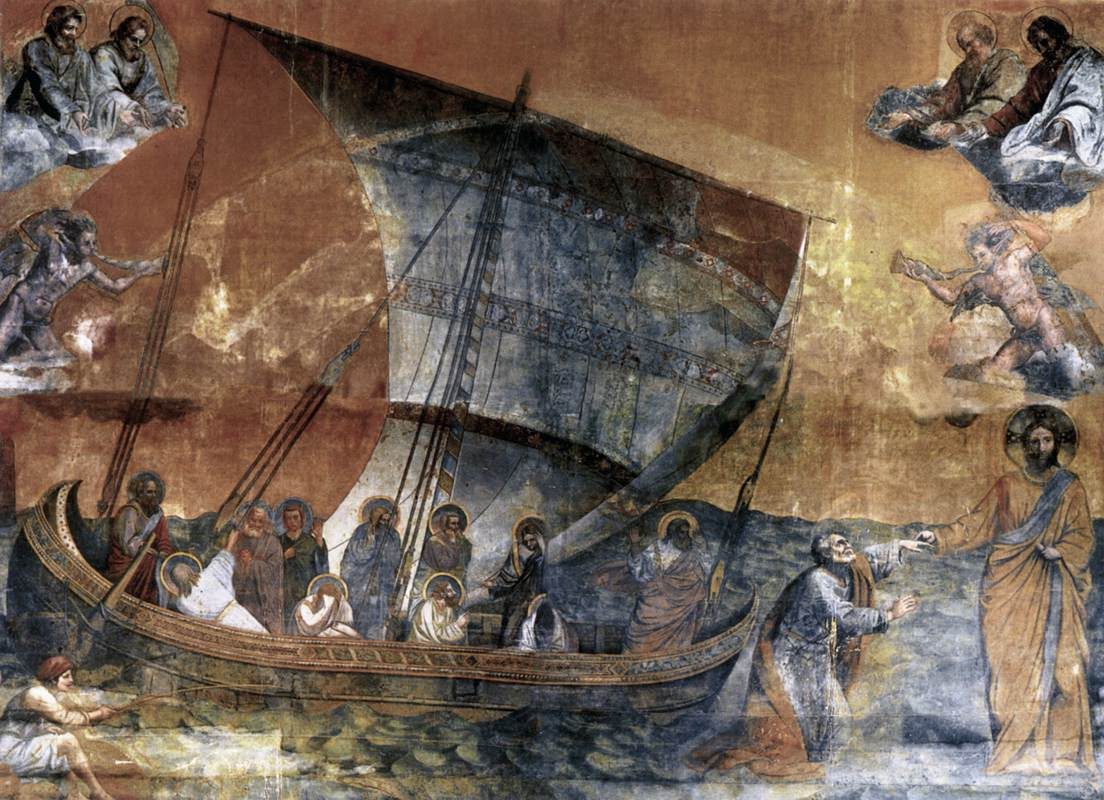
Hay una pintura medieval de la Iglesia como bote salvavidas. En un mar agitado, los cristianos del barco tienden los brazos para sacar de las olas a los que se están ahogando. Es un hermoso cuadro de la Iglesia: un bote salvavidas que sale al mundo en respuesta al grito de ayuda.
Pero Pawson se detiene en una cosa:
El bote salvavidas debe estar en el mar. Pero si el mar entra en el bote salvavidas, entonces habrá verdaderos problemas. La iglesia debe estar en el mundo si quiere salvar almas. Pero cuando el mundo entra en la iglesia, entonces se acaba y se hunde.
Los mil años siguientes son la historia del mar entrando en el barco. Pawson lo explica en tres capítulos: el mundo comenzó a entrar incluso en la Iglesia primitiva (100–400 d. C.); luego llegó la primera Edad Media (400–1000); y después la Baja Edad Media (aproximadamente 1000–1500), que nos sitúa a uno o dos años de Martín Lutero.
La imagen de la barca salvavidas
La barca debe estar en el mar, pero el mar no debe estar dentro de la barca
Pawson comienza con una pintura medieval: la Iglesia como una barca salvavidas en un mar agitado, que acude a rescatar de las olas a quienes se ahogan.
La barca salvavidas en el mar
La Iglesia está en el mundo para salvar almas. Esa es la misión misma.
El mar dentro de la barca salvavidas
Cuando el mundo entra en la Iglesia, la barca se hunde. Esa es la historia de mil años.
«La iglesia debe estar en el mundo si va a salvar almas. Pero cuando el mundo entra en la iglesia, entonces todo termina y se hunde». — David Pawson
Una cronología de mil años
400–1517 d. C.: de la caída de Roma a Lutero
Cuatro corrientes recorren mil años entrelazadas: el declive, el ascenso del poder papal, las voces de protesta y una era de descubrimientos.
Algunas fechas se han simplificado para mayor claridad; los hitos precisos se comprueban en las notas ámbar del margen a lo largo del ensayo.
Cómo llegó el mundo a la Iglesia (100–400 d. C.)
Cuando había mártires así, predicadores así, cuando se estaba ganando la batalla, ¿cómo entró el mundo? Pawson menciona cuatro cosas que comenzaron a diluir la Iglesia de los apóstoles.
Primero, los obispos regionales. En el Nuevo Testamento cada iglesia tenía varios obispos, llamados también ancianos o presbíteros, todos con el mismo oficio: líderes espirituales. Luego vino una etapa en la que cada iglesia redujo sus obispos a uno. Después llegó una etapa en la que un obispo gobernaba muchas iglesias. El liderazgo se concentró en menos manos. No puedes encontrar esto en el Nuevo Testamento; no sucedió durante los primeros cien años; pero en el siglo II surgieron hombres de considerable poder e influencia. No muchos obispos por iglesia, sino muchas iglesias por obispo.
En segundo lugar, una visión mágica de los sacramentos. Toma el bautismo. En lugar de ser una señal externa del lavado espiritual de los pecados que se produce cuando un hombre cree en Jesús, la gente comenzó a creer que el agua misma y la fórmula correcta salvaban a una persona del pecado, sin importar su edad; y que si pecaste después del bautismo, lo deshiciste. Entonces la gente posponía el bautismo hasta el lecho de muerte: esperaban hasta que el médico dijera que no había esperanza y luego corrían a buscar al ministro. Pero a otros les preocupaba: ¿y si nuestro bebé muriera? Preferiríamos que sus pecados fueran lavados de inmediato. Ambas opiniones eran supersticiosas. Lamentablemente, prevaleció el bautismo infantil. La Cena del Señor también fue tratada mágicamente: la gente empezó a pensar que el pan en realidad era la carne de Cristo y el vino su sangre; como se ofrecía carne y sangre real, era un sacrificio; y como era sacrificio, el que lo hiciera debía ser un sacerdote.
En tercer lugar, la religión establecida. Cuando el emperador iba a la iglesia, puedes imaginar que todos lo hacían. Cuando el Estado declaró el cristianismo como religión oficial, todos se subieron al carro. Ir a la iglesia establecida se volvió respetable y de moda. Pawson dice claramente: una religión establecida está destinada a producir un cristianismo respetable y de moda, y no puede encontrar eso en el Nuevo Testamento.
Cuarto, membresía nominal. Un escritor de finales del siglo II observó: hacia el año 50, pertenecer a la Iglesia significaba que una persona había recibido el bautismo y el Espíritu Santo y había llamado a Jesús Señor; pero alrededor de 180, significaba que una persona reconocía la regla de fe (el credo), el canon del Nuevo Testamento y la autoridad de los obispos. En otras palabras, la gente se unía por razones distintas de creer en Jesús y recibir su Espíritu. Ahora era una institución.
Y cada vez que la Iglesia iba mal, había protestas. En los primeros 400 años hubo dos movimientos: Montanismo y monacato. Ambos protestaron contra una Iglesia cada vez más rica, mundana y llena de personas que ni siquiera se habían convertido.
Montanismo. Surgió en lo que hoy llamamos Turquía, Asia Menor. Un hombre llamado Montano vio que entre muchos miembros no había rastro del Espíritu Santo, por lo que buscó de nuevo el Espíritu de Dios. Estalló un avivamiento. Los dones del Espíritu regresaron a la Iglesia; la vida, el vigor y la realidad volvieron a la adoración. Pawson dice que, si quieres saber a quién se parecían más en la actualidad, eran los pentecostales. Hubo un tremendo énfasis en el regreso de Cristo, una insistencia en que nadie fuera miembro sin una fe real, con santidad y ayuno. Pero los obispos se opusieron severamente, y se puede adivinar por qué.
La tragedia es que, como tantas veces, este primer movimiento pentecostal salió mal. Salió mal porque sus miembros no quisieron instrucción: querían el calor sin luz. Pawson dice: la luz sin calor es fría; el calor sin luz es demasiado intenso; debes tener ambos. No escucharon las Escrituras sobre cómo ejercitar los dones espirituales. Y el movimiento terminó en fanatismo. "Esa es una palabra que todo avivamiento pentecostal necesita conocer", dice Pawson. "Podemos aprender de la historia".
La segunda protesta se produjo de una manera muy diferente. Algunos años después ciertos cristianos decían: esta Iglesia es tan mundana, tan muerta, que la única esperanza de recuperar el cristianismo es salir de la Iglesia y del mundo.
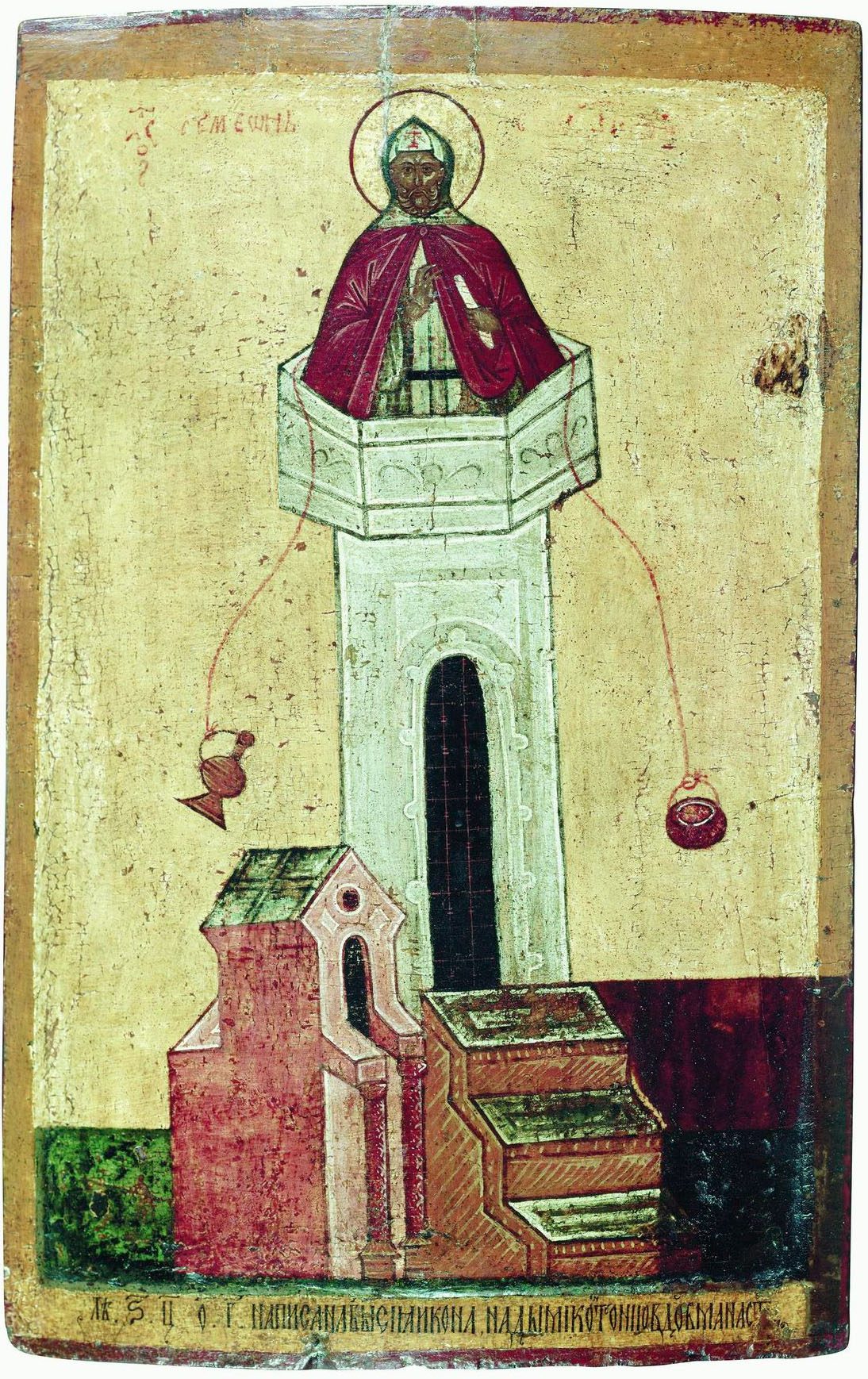
El primero de ellos lo hizo solo. Eran ermitaños. Es la historia más extraña. Antonio fue el primero: decidió que nunca sería un verdadero cristiano hasta estar en medio del desierto. El problema fue que, cuando llegó allí, otros cristianos querían unirse a él y él no quería eso; y, sobre todo, descubrió que sus tentaciones en una cueva del desierto eran tan fuertes como lo habían sido en la Iglesia. Había un ermitaño aún más extraño, Simeón el Estilita: construyó un pilar de unos sesenta pies de altura y una yarda de ancho en la parte superior, y vivió allí durante décadas. Incluso pasó un año de pie sobre una sola pierna, como protesta, declarando que el cristianismo es difícil, muy difícil. Y allí estaba, en lo alto del poste, cubierto de úlceras y gusanos, en un estado espantoso.
Más exitosos que los ermitaños fueron aquellos que fundaron comunidades. El hombre que inició este movimiento fue Benito. En Monte Cassino, a medio camino entre Roma y Nápoles, reunió a un grupo de verdaderos cristianos que veían que la Iglesia era demasiado mundana para tener nada que ver con ella y les dijo: vendremos y viviremos juntos. No seremos ricos sino pobres. No seremos lujuriosos sino célibes. No seremos rebeldes sino obedientes. Hicieron un triple voto: pobreza, castidad y obediencia. Y el monasterio estaba dirigido como una guarnición de soldados romanos.
La tragedia es que esta protesta salió tan mal como la otra. Cristo nunca quiso que viviéramos la vida cristiana lejos de los demás. Más tarde estos monjes, que comenzaron con buena intención, se volvieron tan absortos en su propia salvación, tan introvertidos, que quedaron aislados del mundo y de la Iglesia. Peor aún, el monaquismo produjo la idea de que hay dos tipos de cristianos: los de segunda que se casan y los de primera que no; los de segunda que viven en el mundo y los de primera que viven fuera de él. Pero esa no es la enseñanza de Jesús. Nuestro Señor no era un monje. No se retiró de la sociedad; vivió una vida pura en sociedad, y dijo a sus discípulos que estuvieran en el mundo sin ser de él.
Ambos dijeron: la Iglesia no es lo que Jesucristo quiso que fuera. Uno dijo que lo redescubriríamos volviendo al Espíritu. El otro decía que lo redescubriríamos saliendo del mundo y de la Iglesia. Ambos fracasaron porque no regresaron plenamente al cristianismo del Nuevo Testamento.
Cómo entró el mundo — 100–400 d. C.
Cuatro grietas y dos protestas
Incluso en la era de la victoria, cuatro cosas comenzaron a diluir la Iglesia de los apóstoles. Y cada vez que algo salía mal, se alzaban voces de protesta.
Obispos regionales
De muchos ancianos por iglesia a un obispo sobre muchas iglesias. El poder se concentró en pocas manos, imitando a los gobernadores de Roma.
Sacramentos mágicos
El bautismo se veía como algo que salvaba por sí mismo, así que se retrasaba hasta el lecho de muerte o se administraba a los bebés. La Cena del Señor se tomaba como carne y sangre literales, un sacrificio que necesitaba un sacerdote.
Religión establecida
Cuando el emperador iba a la iglesia, todos iban. La fe se puso de moda y pasó a ser respetable, en vez de ser una entrega.
Membresía nominal
La gente se unía por razones distintas de creer en Jesús y recibir el Espíritu. La Iglesia se convirtió en una institución.
Dos protestas
Montanismo
Una protesta pentecostal
Redescubrió el Espíritu y los dones, haciendo hincapié en el regreso de Cristo y la santidad. Pero tenía «fuego sin luz», rechazaba la enseñanza y se consumió en el fanatismo.
Monacato
Una protesta mediante el retiro
Abandonó tanto el mundo como la Iglesia para recuperar el cristianismo auténtico. Pero produjo cristianos «de dos niveles», y Cristo nunca nos llamó a vivir apartados de todos.
Ambas protestas fueron sinceras, pero ninguna llegó a nada porque no volvieron plenamente al cristianismo del Nuevo Testamento.
La Edad Media: La caída de Roma (410 d. C.)
Ahora la historia realmente comienza. En 410, ocurrió una catástrofe. Los bárbaros del norte presionaron la ciudad de Roma. Vinieron los vándalos (de su nombre deriva la palabra "vandalismo"). Vinieron los francos, vinieron los hunos, vinieron los godos. Estos bárbaros irrumpieron en Roma y la tomaron. La Roma de aquel día cayó.
Los romanos abandonaron Gran Bretaña ese año para defender Roma, pero no pudieron salvarla. Y tan pronto como los romanos se retiraron, los jutos, los anglos y los sajones atacaron Gran Bretaña y destruyeron el cristianismo en Inglaterra y el sureste de Escocia. El cristianismo que los soldados romanos habían traído aquí en los primeros 400 años desapareció.
Parecía que cuando cayó Roma, fue el fin de todo. Jerónimo, escribiendo desde Jerusalén, dijo: "La raza humana está incluida en las ruinas". La gente pensó que era el fin de la civilización. Y esto desconcertó a la Iglesia: Roma había sobrevivido durante siglos como imperio pagano, pero como imperio cristiano colapsó. Muchos cristianos no pudieron entenderlo.
Pero un hombre lo pensó detenidamente e hizo una declaración increíble. Dijo: es lo mejor que jamás ha pasado. Su nombre era Agustín.
Agustín: un corazón inquieto que encontró su descanso
Puedes comprar sus libros hoy en el puesto de libros de la estación. Y si te cuento algunas de las cosas que dijo este gran hombre, las reconocerías. Él dijo: "Nuestros corazones están inquietos y no pueden encontrar descanso hasta que encuentren su descanso en ti". Quizás la oración más citada de la historia. Fue Agustín quien oró: "Dame castidad, pero todavía no". Y fue Agustín quien dijo: "Ama y haz lo que quieras".
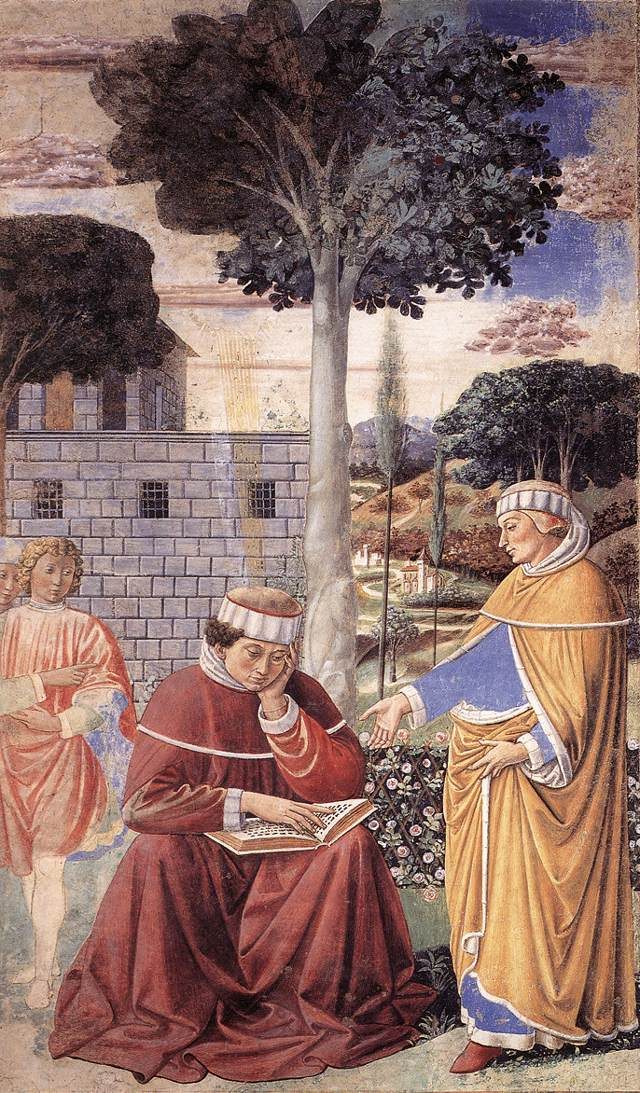
Nació en el norte de África. Cuando fue como estudiante a Cartago, se encontró con la gente equivocada. Pronto tuvo una concubina y un hijo con ella, y vivió durante años en esa relación ilícita. Su padre era pagano, pero su madre era una mujer piadosa que oraba con lágrimas por su hijo descarriado todos los días. Más tarde, debido a su brillante mente, fue invitado a ser profesor de retórica en Milán. Allí fue a escuchar predicar al santo obispo Ambrosio. Bajo esa predicación, el joven de mente brillante pero de vida disoluta llegó a una profunda convicción de pecado.
Entonces, un día, sentado en un jardín llorando por el desastre que había causado en su vida, escuchó la voz de un niño por encima del muro del jardín: "Tolle lege, tolle lege" - "toma y lee". Nunca supo quién era el niño. Pero vio un pergamino en el asiento junto a él, lo tomó y lo leyó. Era la carta de Pablo a los romanos. Agustín lo leyó hasta el final y se hizo la luz. Cuando después salió a la calle, la mujer con la que había vivido lo vio y él huyó de ella. Ella corrió tras él llorando: "Agustín, soy yo, soy yo". Él respondió por encima del hombro: "Pero no soy yo, no soy yo".
Escribió toda la historia de su conversión en un libro llamado Confesiones. Pawson dice que Agustín ha tenido más influencia en la historia de la Iglesia que cualquier hombre después del apóstol Pablo.
Cuando Roma cayó, Agustín estaba en la madurez de su vida y el mundo entero pareció derrumbarse a su alrededor. Reflexionó sobre ello y luego escribió el segundo gran libro que recordamos: La ciudad de Dios. En él dice: es bueno que esta ciudad pagana de Roma se haya derrumbado, porque ahora la ciudad de Dios puede reemplazarla; es bueno que un imperio terrenal haya terminado, porque ahora se puede establecer el imperio celestial. El libro trajo esperanza y nueva vida a muchos, ayudándoles a ver que la ciudad de Dios aún sobrevivía cuando la ciudad de los hombres había desaparecido.
Pero ahí estaba el problema. La gente empezó a preguntar: ¿qué es esta ciudad de Dios? ¿Visible o invisible? ¿Terrenal o celestial? Y en este punto Agustín llevó a muchos a un malentendido. Lo curioso es que siglos después, en la Reforma, los protestantes dijeron "seguimos a Agustín" y los católicos romanos dijeron "seguimos a Agustín". Pero los protestantes seguían el primer libro, Confesiones; y los católicos seguían el segundo libro, La ciudad de Dios.
Porque lo que ocurrió fue esto: la Iglesia dijo, si eso es así, entonces la Iglesia es ahora el nuevo imperio.
La Iglesia se convierte en un imperio: el surgimiento del papado
Uno de los primeros resultados fue el ascenso del obispo de Roma hasta asumir una posición imperial. En aquellos días hubo un gran debate sobre la palabra "papa", que significa esencialmente "padre". Aunque Jesús había dicho que nunca llamaran padre a nadie en la tierra, porque hay un Padre en el cielo, la gente comenzó a llamar "padre" al sacerdote local. Luego llamaron "padre" al obispo regional. Entonces finalmente los cinco grandes patriarcas dijeron: si alguien debe ser llamado padre, debemos ser nosotros cinco. Y por fin, el obispo de Roma dijo: la ciudad de Roma ha desaparecido, pero yo soy el emperador ahora; soy el obispo principal, y de ahora en adelante sólo me llamaréis papa, sólo me llamaréis padre.
Y surgió el papado, tal como lo conocemos. Lo llamativo es que el Papa adoptó los mismos títulos e incluso las vestiduras del emperador romano. Tomó el título Pontífice Máximo, conocido hoy como el pontífice - el título del emperador romano. Agustín fue mal entendido y la gente pensó que la Iglesia era el nuevo imperio. Y un imperio debe tener su emperador, sus túnicas, sus ceremonias, su trono. Entonces la Iglesia se convirtió en un imperio y el Papa en rey.
Por supuesto, muchos cristianos no aceptarían nada de eso. Los franceses no lo harían, los irlandeses no lo harían, los galeses no lo harían y los escoceses no lo harían. Lamentablemente, los ingleses lo hicieron.
Cuando la Iglesia se convirtió en un imperio
La escalera del poder y el círculo que se cierra
La escalera hasta «padre»
Al sacerdote local se le llama «padre»
Después, el obispo regional
Después, los cinco grandes patriarcas reclaman el título
El obispo de Roma: «llamad papa solo a MÍ»
Adopta los títulos y las vestiduras del emperador (Pontifex Maximus)
«No llaméis padre a nadie en la tierra…» (el Evangelio según Mateo)
El círculo 410 → 800
410 — El Imperio romano se derrumba
La Iglesia toma el relevo y se convierte en el nuevo «imperio»
800 — Carlomagno es coronado emperador
El imperio regresa — el círculo se cierra
Agustín escribió La ciudad de Dios para consolar a un mundo que se derrumbaba; pero la gente lo interpretó erróneamente como si la Iglesia fuera el nuevo imperio — y un imperio debe tener su emperador, su trono y sus vestiduras.
Dos corrientes del cristianismo se encuentran en Whitby
Irlanda, a través de San Columba, llevó la fe a Iona y Escocia, llevando a Escocia a Cristo. Entonces Aidan llegó a la isla de Lindisfarne frente a Northumberland. Pawson recuerda haber estado en Lindisfarne unos meses antes, junto a las ruinas de la iglesia de Aidan, la pequeña isla desde la que evangelizó Northumberland. Este cristianismo no papal, el cristianismo celta, llegó a Inglaterra desde el norte a través de Irlanda y Escocia.
Pero más tarde el Papa dijo: debemos recuperar Inglaterra, debemos recuperar a esos anglos. Hizo el famoso juego de palabras: no son anglos, sino ángeles. Y envió un misionero llamado también Agustín. Este Agustín desembarcó en la isla de Thanet y luego fue a Canterbury. Columba en la isla de Iona en el norte; Agustín en la isla de Thanet en el sur.
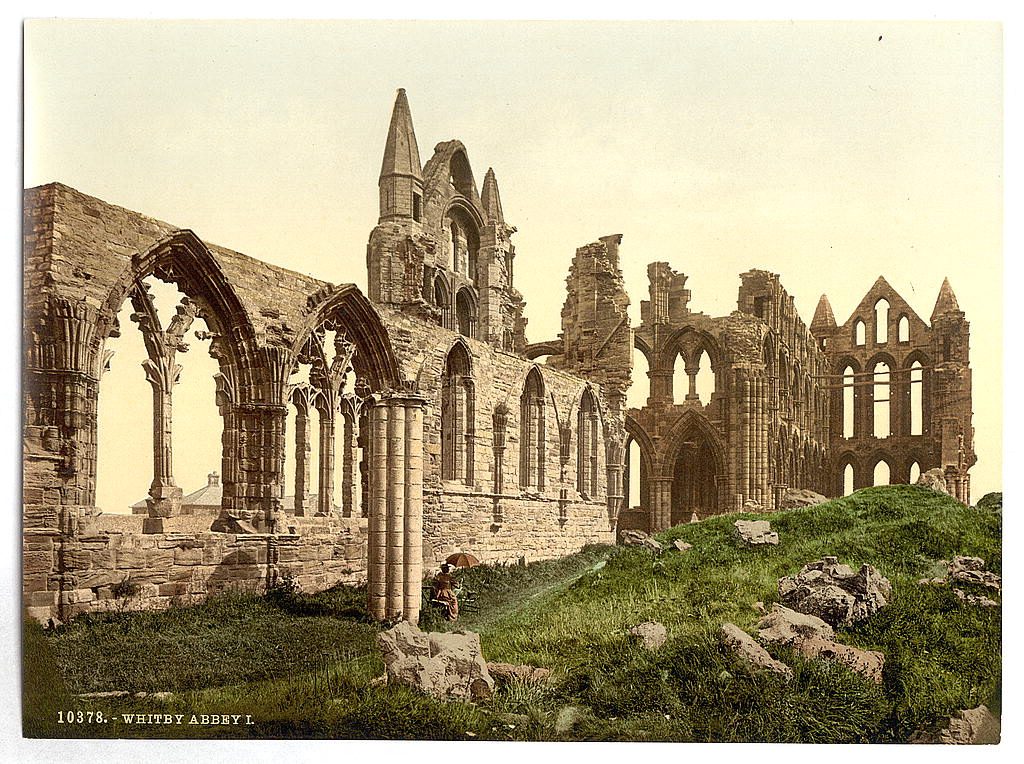
Las dos corrientes del cristianismo se encontraron en Whitby. Todavía se pueden ver las ruinas sobre el puerto de Whitby, donde se encontraron. Allí, el cristianismo papal se enfrentó al cristianismo celta, para ver cuál ganaría. La tragedia es que ganó el cristianismo papal. Las Islas Británicas quedaron bajo el trono papal. Escocia incluso cambió su santo patrón por el de San Andrés. Toda la situación cambió.
Dos corrientes se encuentran en Whitby
¿Qué camino seguiría Britania? (Sínodo de Whitby, 664)
Cristianismo celta
Irlanda → Iona (Columba) → Lindisfarne (Aidan) → norte de Inglaterra
Sin papa. Sencillo, misionero.
Cristianismo romano
Roma → Agustín en Thanet → Canterbury → el sur
Leal al papa.
Whitby, 664
Ganó el cristianismo romano. Las islas británicas quedaron bajo el trono papal. Pawson lo llama una tragedia; todavía hoy puedes estar entre las ruinas sobre el puerto de Whitby.
Esquema, no a escala geográfica. Whitby tuvo lugar en 664 (Pawson dice «660»).
División Este y Oeste (1054)
El otro gran grupo de cristianos que no aceptaron nada de esto fueron las iglesias del Mediterráneo oriental: Grecia, Asia Menor, Siria y Egipto. Dijeron: no lo reconocemos. Que debería haber un "papa", un padre de toda la Iglesia, no está en las Escrituras ni en el Nuevo Testamento. Y comenzó una separación que finalmente quedó consumada en 1054. Esa división mantuvo separadas a las iglesias oriental y occidental durante mil años, y sólo en los últimos años las dos han comenzado a hablar nuevamente.
Y aquí está una de las cosas más increíbles. Alrededor del año 850, el Papa dijo: he descubierto documentos del primer siglo que prueban que Pedro nombró al primer papa, quien nombró al segundo, y así sucesivamente. Hoy incluso la Iglesia romana sabe que esos documentos eran falsificaciones; se los llama las Falsas Decretales. Y, sin embargo, el papado se construyó sobre una falsificación. Había otro documento falsificado, la Donación de Constantino, que afirmaba que toda Italia pertenecía al papa. El papa "descubrió" esta falsificación y dijo: ahí está, toda Italia me pertenece. Ése es el tipo de fundamento sobre el que se basó toda la estructura, y hasta Roma lo sabe hoy.
El Gran Cisma, 1054
Una Iglesia se dividió en dos durante casi mil años
Los cinco patriarcados (la Pentarquía)
Occidente (latino)
Roma — un papa sobre toda la Iglesia
• Supremacía del papa
• Añadió «y del Hijo» (filioque) al Credo
• Pan sin levadura
Tradición latina
Oriente (griego)
Constantinopla + los patriarcas — iguales, sin un «papa» único
• Cinco patriarcas iguales
• El Credo se dejó sin cambios
• Pan con levadura
Tradición griega
Las excomuniones mutuas de 1054 solo fueron levantadas conjuntamente por el papa Pablo VI y el patriarca Atenágoras en 1965 — cerca de los «últimos diez años» de Pawson cuando predicaba en la década de 1960.
Carlomagno y el Sacro Imperio Romano (800 d. C.)
El poder siguió extendiéndose, hasta el año 742, cuando nació un hombre con un sueño: restaurar el imperio de Roma, volver a ponerlo en el mapa, con él mismo como emperador y el Papa debajo de él. Su nombre era Carlomagno. Un hombre despiadado que dijo: volveremos a tener un imperio romano, y su jefe no será el papa sino un emperador.
Carlomagno salvó la vida del Papa dos veces: una vez de los bárbaros, otra de las multitudes de Roma que estaban enojadas con él. El Papa dijo: me has salvado la vida dos veces, ¿qué quieres que haga por ti? El emperador respondió: el día de Navidad, coróname emperador. Y en el año 800, el día de Navidad, en la iglesia más grande de Roma, en el servicio matutino de Navidad, el Papa coronó al rey de los francos, Carlomagno, emperador del Sacro Imperio Romano. Mil años después, el Sacro Imperio Romano todavía existía.
Verás, hemos cerrado el círculo. El imperio de Roma colapsó en 410. La Iglesia se apoderó del imperio. Luego en 800 el emperador regresó y le quitó el imperio a la Iglesia. Todo parecía volver al punto donde empezó.
Carlomagno hizo algunas cosas buenas y otras malas. Entre las buenas: prohibió al clero tener concubinas, frecuentar tabernas e ir de caza; fundó muchas escuelas. Entre las malas: prohibió al clero casarse, y a Carlomagno le debemos el sacerdocio célibe. También acuñó la palabra Christendom, «cristiandad»: el reino que sería cristiano bajo el emperador. Y esa idea persiste hasta el día de hoy.
El ascenso del Islam
Debido a que la Iglesia ahora era rica y poderosa, se corrompió. Y una vez más llegaron las protestas, esta vez desde el este y el norte. Desde el este, la protesta provino de dos fuentes. La primera fue el islam.
Pawson llama a esto el mayor juicio que jamás haya caído sobre la Iglesia cristiana. Había vivido en Arabia y visto algo de esta religión. Mahoma nació en 571 en La Meca, el centro de la idolatría y la superstición árabes. En medio de La Meca había un gran edificio cuadrado cubierto de negro y, en su interior, una piedra sagrada: la Kaaba, que Pawson describe como un meteorito caído del cielo. Mahoma creció en medio de la idolatría y la superstición de los árabes, y eso le repugnaba.
Luego se dirigió primero a los judíos y después a los cristianos, y preguntó: ¿tenéis la verdadera religión? La tragedia, dice Pawson, es que Mahoma nunca conoció a un cristiano convertido. Nunca vio el verdadero cristianismo del Nuevo Testamento. Todo lo que vio fueron vestiduras sacerdotales, imágenes y crucifijos, y dijo: esto es tan idólatra como la religión de los árabes. Si Mahoma hubiera conocido a un verdadero cristiano a finales del siglo VI, quizá la historia habría sido distinta. Pero no lo hizo.
Entonces dijo: bien, buscaré una nueva religión que sea pura. Se casó con una viuda rica, pasó años en el desierto, y allí dijo que le hablaron: no hay más Dios que Alá, y Mahoma es su profeta. Comenzó a predicar esto, escribiendo en un libro lo que había oído en sus visiones, el Corán (Al-Corán). Fue perseguido y tuvo que huir a Medina en 622. Ésa es la fecha a partir de la cual los árabes cuentan su calendario. Regresó a La Meca con un ejército e impuso la nueva religión. A partir de entonces todo el mundo tuvo que orar hacia La Meca, y mediante una religión de buenas obras (ayuno, oración cinco veces al día, guardar el Ramadán, peregrinar a La Meca, dar limosna) se podía llegar al cielo. Y esa religión se impuso por la fuerza de las armas.
El islam expulsó al cristianismo del Mediterráneo. Arrasó con el cristianismo de la costa norteafricana, donde no hubo iglesia durante siglos. Barrió al cristianismo de la propia Tierra Santa, de Jerusalén, del lugar donde murió Jesús. Atravesó España, Asia Menor, Francia hasta las puertas de Lyon, Europa del Este hasta Viena. Parecía que el islam aplastaría al cristianismo con un gigantesco movimiento de pinza.
Es el juicio más grande que Dios jamás haya permitido que caiga sobre la Iglesia cristiana. Y fue merecido. Pero hasta aquí y nada más. Dios no iba a hacer que el cristianismo fuera aniquilado por completo.
Dios los detuvo en Lyon y Viena, y se retiraron a sus fronteras actuales: la costa norteafricana y hasta Turquía.
Mapa de la Edad Oscura
Dos mareas irrumpen sobre el mundo cristiano (410–732 d. C.)
Flechas naranjas: los bárbaros avanzan hacia el sur sobre Roma. Flechas verdes: el islam barre el Mediterráneo desde Arabia, atravesando el norte de África y España, hasta Tours.
Mapa base: el Imperio romano (Wikimedia Commons, dominio público). Las flechas son direcciones esquemáticas del avance, no rutas exactas. Viena marca el límite otomano posterior; Pawson comprime casi mil años de frontera en una sola pinza.
Testigos ocultos en la oscuridad
Porque en aquel mismo momento, en toda Europa había pequeños grupos de cristianos que se reunían en torno a la palabra de Dios. Vieron que la iglesia oficial era corrupta, así que simplemente se reunieron en pequeños grupos, leyeron este libro y dijeron: adoraremos a Dios con sencillez. No necesitamos sacerdotes, porque tenemos a Jesús nuestro sumo sacerdote. No necesitamos un Papa, porque tenemos un Padre en el cielo. Sólo necesitamos la palabra de Dios y el Espíritu Santo.
Apenas sabemos nada sobre ellos, porque fueron tan perseguidos que incluso los registros de su historia fueron destruidos. Pawson pregunta a sus oyentes si alguno ha oído hablar alguna vez de un grupo llamado bogomilos. Era un grupo que se reunía en torno a la palabra de Dios, principalmente en Bulgaria y Bosnia; la palabra "Bogomil", dice Pawson, significa "amigos de Dios" en búlgaro. También estaban los paulicianos, que se reunían en Armenia, Tracia y Asia Menor, y los cátaros, un nombre que significa "los puros", de la misma raíz que la palabra posterior "puritano"; se reunían en los Balcanes y por toda Europa.
Pawson confiesa: en su sencillez solía pensar que durante mil años sólo existieron la iglesia romana y las iglesias orientales. Eso no es cierto. Le emocionó descubrir que a lo largo de esos siglos hubo una sucesión ininterrumpida de cristianos sencillos que se reunían en torno a la palabra de Dios en las iglesias locales. Lo pagaron con sus vidas, pero se encontraron y la llama de la fe se mantuvo encendida para las generaciones venideras.
La Edad Media: Hildebrando pone al papa por encima de todo
Ahora llegamos al capítulo final, del año 1000 al 1500, llamado Edad Media porque se encuentra entre la llamada Edad Oscura y la Edad Moderna.
El primer hombre del que hablar es Hildebrando. Este monje se convirtió en papa y no le gustaba ser el número dos. Para entonces ya había un Sacro Imperio Romano restaurado con un nuevo emperador, pero el papa era el número dos. Hildebrando decidió que el papa debería ser el número uno y lo logró. Hizo muchas cosas buenas: combatió la simonía en la Iglesia, es decir, la compra de cargos eclesiásticos. Pero lo hizo porque creía que el papa debía controlarlo todo, incluidos los reyes.
El enfrentamiento entre Hildebrando y el emperador Enrique IV se resolvió de la manera más dramática y terrible. Enrique IV desafió a Hildebrando diciendo: soy el número uno. Hildebrando respondió: no lo eres; que el pueblo decida. Y el pueblo decidió que Hildebrando lo era. En los Alpes, el papa se reunió con el emperador Enrique IV, que venía del norte. El papa estaba en una casa de montaña y mantuvo al emperador esperando afuera, descalzo, en la nieve, durante tres días antes de hablar con él. De esta manera, Hildebrando puso decisivamente al emperador en un lugar secundario.
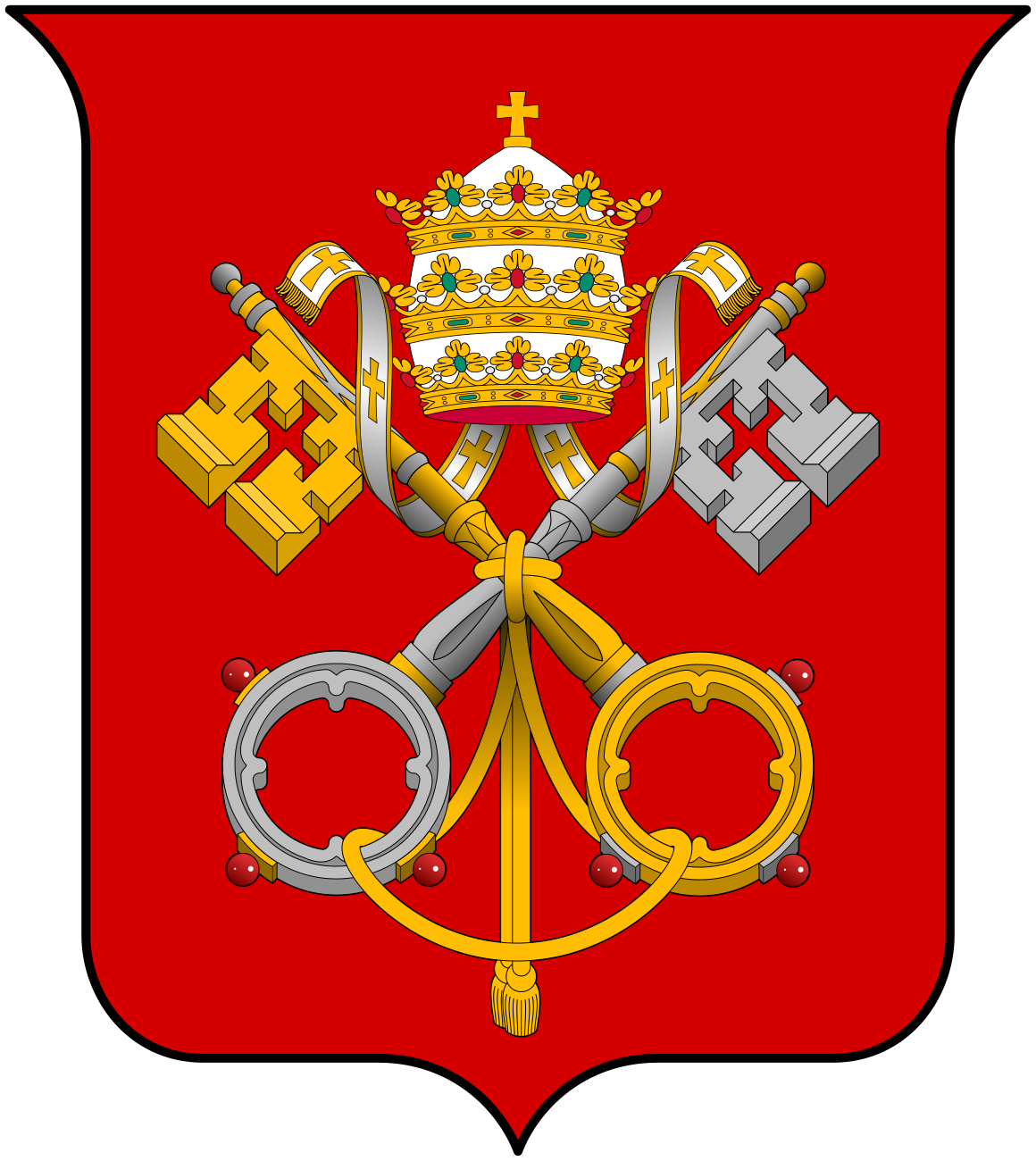
A partir de entonces, durante los siguientes 500 años, el papa fue la figura más influyente y el papado fue la potencia que controlaba el mundo occidental. La Iglesia volvió a ser el imperio. Fue este papa quien introdujo el símbolo de las llaves cruzadas de san Pedro: una llave representa la autoridad del poder sagrado sobre la Iglesia; la otra, la autoridad del poder secular sobre el Estado. Esas llaves cruzadas expresan la pretensión de Hildebrando: mandar por encima de todos, tanto en la Iglesia como en el Estado.
Las Cruzadas: Cuando la Iglesia tomó la espada
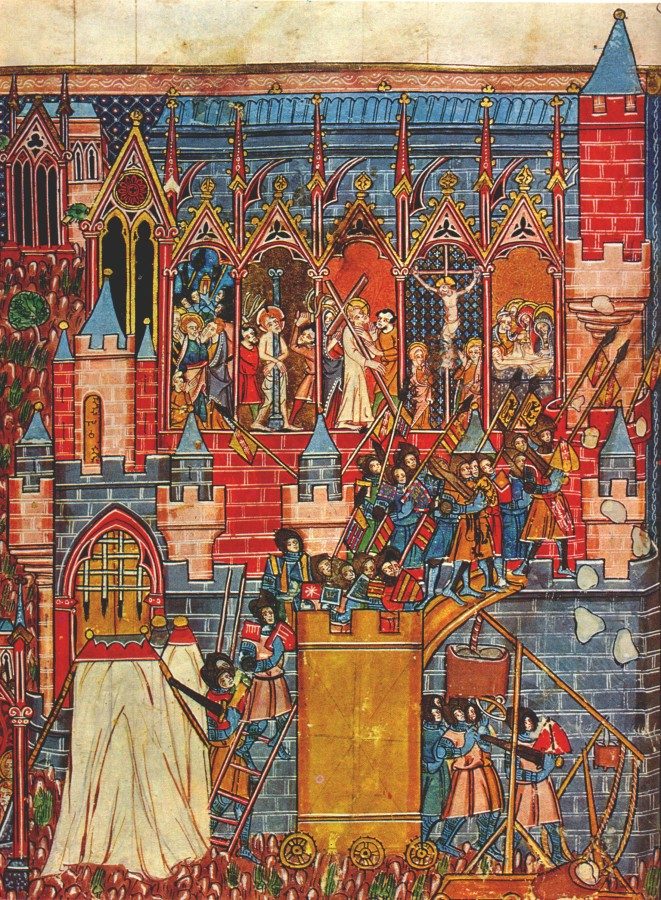
Esto puso la fuerza de los ejércitos a disposición de la Iglesia. Y como Hildebrando pensaba así, comenzó a usar la fuerza para establecer el reino de Cristo. Nunca se cometió un error mayor. El primer resultado de la idea de que la fuerza es válida para el uso de la Iglesia fueron ocho cruzadas a Tierra Santa.
Para entonces los lugares santos, Jerusalén y otros, estaban en manos de musulmanes, sarracenos y turcos. El papa decidió que la Iglesia se abriría camino y capturaría Tierra Santa para Cristo. La Primera Cruzada nació en 1095. Fue idea de Hildebrando, pero murió antes de que pudiera realizarse. La gente llevaba una cruz sobre el hombro, llamada crux, y de ahí procede la palabra cruzada.
La Primera Cruzada fue organizada por un predicador desaliñado y fanático llamado Pedro el Ermitaño. Partió con 600.000 hombres, y sólo una décima parte llegó; la mayoría murió en las altas montañas de Turquía. Pero llegaron y tomaron Jerusalén. La saquearon, violaron a las mujeres y establecieron el supuesto gobierno de Cristo en Jerusalén masacrando a todos los sarracenos de la ciudad. ¿Eso es cristiano? Dices en seguida: claro que no. Pero ten en cuenta que miles de personas fueron engañadas y pensaron que esto era lo que debía ser la Iglesia: un imperio terrenal que se establecía por la fuerza.
Por supuesto que hubo incentivos. A la gente se le prometió la absolución si iba a luchar por Cristo, indulgencias —tantos años fuera del purgatorio—, la cancelación legal de sus deudas y el perdón para los criminales que salieran de prisión para luchar. Puedes imaginar el variopinto grupo que resultó. El rey Felipe de Francia quedó atrapado en ello. El rey Ricardo Corazón de León de Inglaterra también. Ocho veces partieron; una fue una cruzada infantil: 2.000 niños partieron por Europa para intentar recuperar Palestina para Jesús. Ninguno llegó. El papa dijo que los ángeles proporcionarían alimento milagrosamente; pero la comida nunca llegó y los ángeles nunca aparecieron.
La última fue un fracaso absoluto. En la montaña de cima plana de los Cuernos de Hattin, el último ejército cruzado murió de sed, sitiado por los sarracenos. Y en 1270, Europa respiró aliviada cuando el papa puso fin a todo aquello.
Es una de las historias más tristes de la historia de la Iglesia. No hizo nada. Nada. Y de hecho fue peor que nada.
Las ocho cruzadas
Cuando la Iglesia usó la espada en lugar del amor (1095–1291)
Hildebrando creía que la fuerza podía establecer el reino de Cristo. «Nunca se cometió un error mayor», dice Pawson.
Cruzada Popular · 1096
Pedro el Ermitaño guía a una turba; la mayoría muere en las montañas de Asia Menor.
Primera Cruzada · 1095–99
Toma Jerusalén (1099) y masacra a sus habitantes. El único «éxito».
Segunda Cruzada · 1147–49
Predicada por Bernardo de Claraval; fracasa.
Tercera Cruzada · 1189–92
Ricardo Corazón de León contra Saladino; Jerusalén no es recuperada.
Cuarta Cruzada · 1202–04
Se desvía para saquear Constantinopla — cristianos contra cristianos.
Cruzada de los Niños · 1212
Una marcha de niños; ninguno llega a Tierra Santa.
Cruzadas posteriores · 1217–54
Fracaso tras fracaso, incluidas las dos campañas del rey Luis IX.
Hattin y el derrumbe · 1187 / 1291
Derrotados en los Cuernos de Hattin (1187); Acre, el último bastión, cae en 1291.
Los incentivos para ir
En 1270 el papa la canceló. «No hizo nada. Nada. Y, de hecho, hizo algo peor que nada». — David Pawson
La Inquisición, dos o tres papas y la corrupción
Después de usar la fuerza fuera de la Iglesia, el papa decidió usarla dentro de la Iglesia, abriendo otro capítulo terrible llamado la Inquisición. Pawson dice que no se atreve a describir las cosas hechas en el nombre de Cristo. Los obispos se negaron a dirigir esta máquina de crueldad, malicia y sospecha; pero los dominicos la aceptaron. Y durante muchos años, innumerables personas vivieron temiendo por sus vidas a causa de esa cosa terrible.
En todo momento, lo que estuvo mal fue esto: la Iglesia se consideró a sí misma un imperio terrenal al que se le permitía usar la fuerza para establecer la causa de Cristo. Ahora sabemos que éste no es el camino. La Iglesia no debe usar otra fuerza que el amor y nunca debe obligar a nadie, sino invitar mediante el amor y la predicación del evangelio a aceptar a Cristo.
Y este tipo de corrupción pronto se vuelve sobre sí misma. El poder tiende a corromper, dijo Lord Acton, y el poder absoluto tiende a corromper absolutamente. Pronto hubo dos papas luchando por el trono, luego tres. Hubo un Papa en Aviñón, un Papa en Roma. ¿Quién era Papa ahora? Consiguieron recomponer el papado, pero luego la corrupción se extendió más abajo: los monasterios se volvieron corruptos y demasiado ricos, los obispos demasiado poderosos, las parroquias corruptas.
Y las prácticas de la religión cristiana ordinaria se corrompieron. Hubo oraciones a María, aunque nunca nos dijeron que oráramos a María; ella es un ser humano como el resto de nosotros. Hubo oraciones por los muertos, oraciones a los santos. Estaba la doctrina que causaba mayor temor: el purgatorio, cuántos años de sufrimiento después de morir. Existía la doctrina de la misa como sacrificio. Hubo confesión a un sacerdote. Existían indulgencias, de modo que por una suma de dinero se podían comprar una reducción de tantos años de purgatorio. Hubo peregrinaciones. Existía el culto a las reliquias. Había imágenes en el culto. No hay ni una pizca de esto en el Nuevo Testamento.
Las adiciones medievales
«Ni una sola pizca de esto está en el Nuevo Testamento»
Una práctica cada vez, añadida a lo largo de los siglos. La columna derecha indica la fecha (aproximada) en que cada una se hizo oficial o se definió formalmente.
Las fechas son aproximadas: muchas comenzaron como costumbres y solo más tarde fueron definidas en concilios (por ejemplo, Letrán IV en 1215 y Florencia en 1439). Esta es la lectura protestante de Pawson; consulta el recuadro «otras voces» para conocer las perspectivas católica y ortodoxa.
La falla básica: la Iglesia pensó que era Cristo
Entonces, ¿cuál fue el error básico detrás de todo esto? Si olvidan la mayor parte de lo que dije esta noche, esto es importante. Te diré lo que estaba mal en una frase:
La Iglesia había comenzado a pensar que ella era Cristo. Y todavía lo hace.
Pawson cuenta que le preguntó a un sacerdote destacado: ¿sigue siendo cierto esto? Él respondió: sí, y no cambiará. Pawson dijo: Mi único problema es que no creo que la Iglesia sea Cristo, y no creo que ella sea profeta, sacerdote y rey. Yo creo que Jesús lo es. La Iglesia no es nuestro profeta, ni nuestro sacerdote, ni nuestro rey. Y el sacerdote respondió con franqueza: no discutiremos eso, porque nunca cambiará.
Ésa es la falla básica. Si creo que soy el profeta del mundo, puedo decirle al mundo qué creer y declarar infaliblemente lo que es verdad. Si soy sacerdote del mundo, puedo decir: debes venir a mis sacramentos, debes confesarte conmigo si alguna vez quieres ser salvo. Y si creo que soy el rey del mundo, estableceré mi autoridad lo más ampliamente que pueda.
Es una confusión entre la cabeza y el cuerpo de la Iglesia. La cabeza es divina; el cuerpo es humano. Es Cristo quien es la cabeza, y él quien es profeta, sacerdote y rey. La Iglesia no lo es. Ésa es la diferencia fundamental entre el protestantismo y el catolicismo, y hoy es tan grande como siempre. Cristo dijo: Construiré mi iglesia. No dijo: constrúyela tú. Y Cristo es la cabeza de la iglesia; nadie más es la cabeza, y nadie más puede serlo.
El error fundamental
La Iglesia comenzó a pensar que era Cristo
Si olvidas todo lo demás de este ensayo, dice Pawson, recuerda esto. Toda distorsión nace de una sola confusión: entre la cabeza y el cuerpo.
La cabeza — divina
Cristo
Él solo es Profeta, Sacerdote y Rey
El cuerpo — humano
La Iglesia
Un cuerpo que obedece a la cabeza, nunca la reemplaza
Profeta
el que declara la verdad al mundo
Sacerdote
el que une a las personas con Dios
Rey
el que gobierna y establece la autoridad
Cuando el cuerpo piensa que es la cabeza
«Si soy el profeta del mundo, puedo decirle al mundo qué debe creer. Si soy su sacerdote, debéis acudir a mis sacramentos. Si soy su rey, estableceré mi autoridad tanto como pueda». Esa es la raíz de todo.
«El gobierno estará sobre sus hombros». (el libro de Isaías) Cristo es la cabeza, y nadie más puede serlo.
Las voces de protesta en la Edad Media
Pero Pawson se alegra de decir que, a lo largo de la Edad Media, desde 1000 hasta 1500, siempre hubo gente que decía: esto no es cierto, esto no es cristianismo, esto no es lo que Jesús quiso decir. Nuevamente aparecieron pequeños grupos que llevaban todo tipo de nombres, a menudo tomados de los lugares donde vivían.
Estaban los beghardos de los Países Bajos, simplemente gente que se reunió en torno al libro y dijo: Cristo es la cabeza de nuestra Iglesia. También estaban los valdenses, cuyo nombre se relaciona con el valle valdense. Creían que este libro les decía cómo quería Jesús que fuera la Iglesia. Hay que reconocer que acudieron al papa y le preguntaron: esto es lo que vemos, ¿podríamos ser reconocidos como parte válida de la Iglesia si practicamos este libro? ¿Podrían haber hecho más? Querían permanecer en la Iglesia romana, pero seguir el libro. El papa dijo: no; si hacéis lo que queréis, os perseguiremos. Y fueron perseguidos, huyendo de un valle a otro.
El siguiente grupo fueron los albigenses del sur de Francia; ellos también leyeron el libro y vieron lo que debía ser la Iglesia. Lamentablemente, la campaña más sangrienta jamás lanzada desde el papado fue contra esta gente. El papa envió a dos nobles españoles para matarlos. Pero regresaron y le dijeron al papa: estos son buenos cristianos, no criminales; no luchan contra ti, sólo quieren estar en la Iglesia y practicar su comprensión de las Escrituras. Y uno de ellos, llamado Domingo, dijo: llevaremos esto dentro de la Iglesia. Y fundaron a los dominicos, una copia de los albigenses, pero dentro de la Iglesia. La tragedia es que más tarde la orden dominicana se corrompió tanto que estuvo dispuesta a dirigir la Inquisición. También estaban los Hermanos de la vida común en Alemania. Todos eran independientes de la jerarquía católica romana, basaban todo en la Biblia en el idioma del pueblo y todos fueron perseguidos hasta la muerte. La verdadera Iglesia siempre ha sido perseguida.
Entre aquellos dentro de la Iglesia que también vieron esto había personas que se retiraron y mantuvieron la fe en privado. Uno era Bernardo de Claraval. Era un joven muy serio, aunque en su juventud había dirigido una auténtica banda de ladrones. Tras pasar dos años como prisionero de guerra en Italia, recapacitó y se dio cuenta de que estaba desperdiciando su vida. Hijo de un barón francés, renunció a sus riquezas y se retiró con doce amigos a un valle lleno de ladrones. Allí se alimentaba de hojas de haya cocidas y hierbas, llevando una vida de extrema pobreza; levantaba a sus amigos a las dos de la mañana para orar, no les permitía dejar de trabajar hasta las ocho de la noche y construyeron una comunidad en el valle de Claraval.
Bernardo se convirtió en uno de los cristianos más poderosos de Europa, sin cargo, sin dinero, sin fuerza material ni psicológica. Fue llamado el "hacedor de papas". En privado, amaba a Jesús; Martín Lutero dijo que de todos los monjes y sacerdotes de la historia, tenía en la más alta estima a Bernardo de Claraval. Pero en público se sentía obligado a apoyar al papado. Alguien ha dicho sabiamente que hizo retroceder la Reforma al menos dos siglos.
El otro hombre, casi contemporáneo, era Francisco, nacido en el pequeño pueblo de Asís. Francisco se enfrentó a la vida al encontrarse con un leproso en la calle. Pasó junto al leproso al otro lado. Pero al pasar se preguntó: ¿qué clase de hombre soy yo para alejarme de mi prójimo? Volvió y besó al leproso. A partir de entonces Francisco empezó a tomarse en serio la vida. Buscó a Cristo y lo encontró. Reunió a su alrededor un grupo de amigos que salían de dos en dos, en absoluta pobreza, a predicar el evangelio, ganando gente para Cristo.
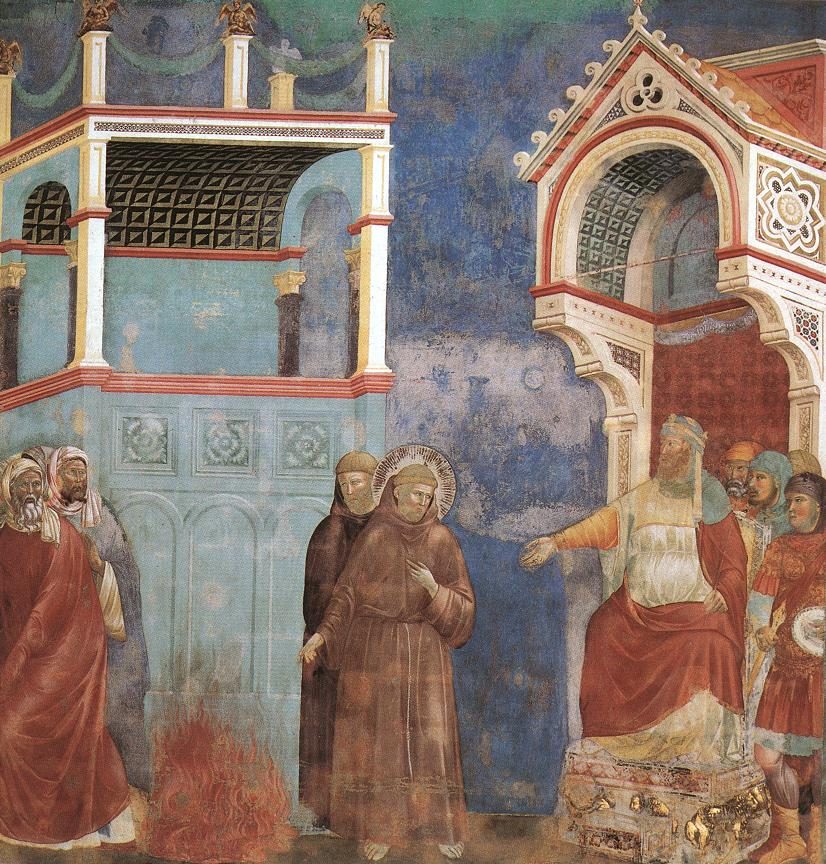
Aunque se le recuerda más por su trato con los animales y las aves y por su amor único por la naturaleza, Pawson dice que Francisco debería ser recordado por algo más: fue el primer misionero entre los musulmanes. Arriesgando su vida, acudió al propio sultán para predicar el evangelio de Jesús al jefe de los musulmanes. En lugar de ir con 600.000 soldados a luchar contra ellos, Francisco fue solo, en pobreza, a predicar el amor de Jesús. Y fue el primer y último misionero entre los árabes musulmanes durante muchos siglos, hasta Raimundo Lulio. Los seguidores de Francisco vestían túnicas grises, por eso fueron llamados Frailes Grises (Greyfriars, en inglés); los dominicos vestían de negro, por eso fueron llamados Frailes Negros (Blackfriars, en inglés). Ambos intentaron devolver la vida cristiana sencilla a la Iglesia, pero fracasaron y se corrompieron: los franciscanos se convirtieron en mendigos profesionales y los dominicos dirigieron la Inquisición.
Toda la situación pedía a gritos un hombre que dijera la verdad y que la dijera tan bien que todos pudieran escucharla y comprenderla. Arnoldo de Brescia, en 1150, lo comenzó diciendo: la riqueza y el poder mundano no deben estar en manos de la Iglesia. Pero Bernardo de Claraval se le opuso y consiguió silenciarlo. Luego vino Marsilio, un médico, que leyó su Biblia y dijo: la Biblia es la norma de la Iglesia, y ninguna otra; Los obispos y los papas son invenciones humanas. Pero fue silenciado. Un inglés que fue profesor en la Universidad de París, Guillermo de Ockham, también habló y fue silenciado.
Hasta que a un hombre de Yorkshire le tocó ser lo que se llama el lucero del alba de la Reforma. El lucero del alba es la estrella que todavía puedes ver cuando sale el sol. Y el lucero del alba de la Reforma fue un hombre de Yorkshire que llegó a Oxford como un estudiante brillante, se convirtió en profesor en Oxford, viajó mucho y fue apodado Doctor Evangélico. Su nombre: Juan Wycliffe.
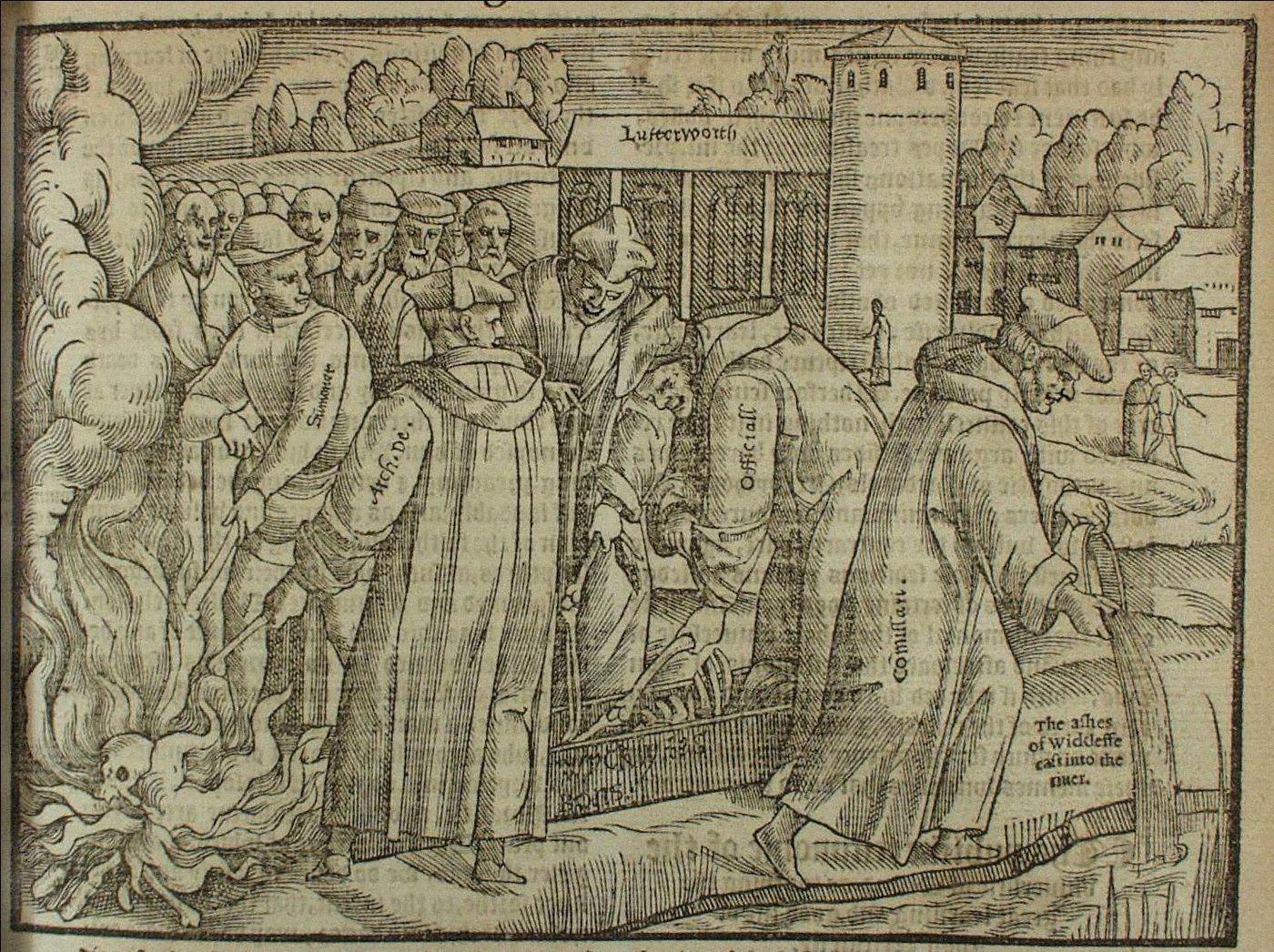
Ese hombre redescubrió la Biblia, quizás más que nadie hasta Martín Lutero. Protestó contra los abusos papales. Cinco decretos (llamados bulas en aquellos días) se dictaron en su contra. Fue llevado a juicio en Canterbury. Pero recurrió a las Escrituras, única ley de la Iglesia, y dijo: Voy a pasar esta Biblia del latín al inglés; haré que los labradores conozcan este libro. Y Wycliffe trabajó en la traducción, sabiendo que si pones la Biblia en manos de la gente común, les habrás dado la respuesta a toda la corrupción en la Iglesia. Reunió a su alrededor un grupo de predicadores que recorrían las aldeas, predicando y cantando el evangelio en la plaza del mercado. La gente se burlaba de ellos llamándolos cantantes de canciones de cuna: lolardos.
Ve a Amersham. Subiendo por Station Road, gira a la izquierda entre las casas y salga al campo. Hay un monumento a las personas quemadas vivas por sus propios hijos, quienes fueron obligados a encender hogueras y quemar vivos a sus padres. ¿Por qué? Porque sus padres fueron sorprendidos en los bosques de Amersham leyendo sus Biblias. Ése fue el resultado de Wycliffe y los lolardos. Y el propio Wycliffe murió pacíficamente como rector de Lutterworth.
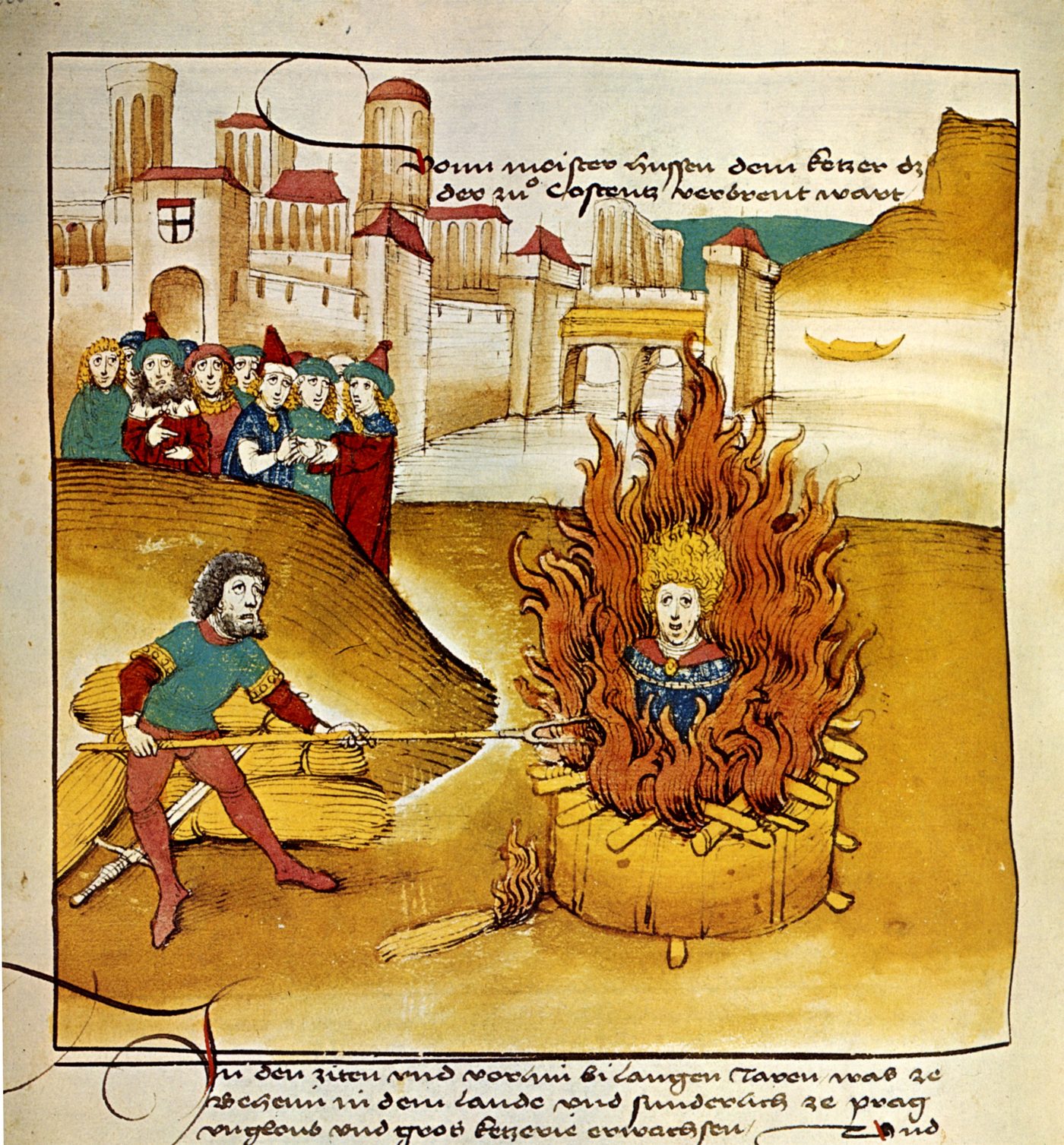
Wycliffe estaba en Oxford y había otra universidad en Europa estrechamente vinculada con Oxford: la Universidad de Praga. El rector de Praga era un muchacho campesino pobre que había ascendido gracias a su duro trabajo. Su nombre también era Juan: Juan Hus. Hus oyó hablar de Wycliffe, comenzó a leer sus libros y empezó a predicar lo mismo en Praga. Finalmente, Juan Hus fue arrestado y el papa lo condenó a morir quemado; muchos husitas también fueron ejecutados.
Cuando llegó a Inglaterra la noticia de que el papa había quemado a Juan Hus, ¿qué hicieron? Las autoridades de la Iglesia fueron a Lutterworth, desenterraron el cuerpo de Juan Wycliffe, lo quemaron en una hoguera y arrojaron las cenizas al río Swift en Lutterworth. Pero alguien dijo de aquello:
Así como el río Swift llevará esas cenizas al Avon, y el Avon al Severn, y el Severn a los canales que rodean nuestras costas, y los canales a los océanos, así se difundirá por todo el mundo la enseñanza de Juan Wycliffe.
Y esa fue una profecía asombrosa.
El río de los testigos
La llama de la fe nunca se apagó del todo
Pawson admite que en otro tiempo pensaba que durante mil años solo existió la Iglesia romana. No es cierto. Siempre hubo una sucesión continua de cristianos sencillos que pagaron con sus vidas, pero conservaron la antorcha para la siguiente generación.
Montanismo — el Espíritu redescubierto en Frigia
Ermitaños y comunidades monásticas — protesta contra la mundanidad
Paulicianos en Armenia y Asia Menor
Bogomilos en Bulgaria y Bosnia
Arnaldo de Brescia — «la riqueza fuera de las manos de la Iglesia»
Valdenses — los «pobres de Lyon»
Cátaros / albigenses en el sur de Francia
Francisco de Asís — pobreza y misión
Begardos y Hermanos de la Vida Común
Marsilio — «la Biblia es la norma, ninguna otra»
Guillermo de Ockham — silenciado
John Wycliffe — estrella de la mañana, la Biblia inglesa
Jan Hus — quemado en Constanza
Martín Lutero — despunta el alba
Nota: algunos grupos (paulicianos, bogomilos y cátaros) eran de hecho dualistas, más cercanos al gnosticismo que al cristianismo del Nuevo Testamento tal como los pinta Pawson; consulta la nota ámbar de esa sección.
El amanecer: la era de los descubrimientos y la reforma
Estamos al borde de algo emocionante. Se puede ver que semejante abuso de la Iglesia de Cristo no podía continuar para siempre. La gente empezaba a ver la verdad porque empezaba a leer este libro en su propio idioma. Este libro, dondequiera que vaya, arreglará las cosas.
Pero hubo otra cosa que causó la Reforma, no sólo el abuso de la Iglesia. Era que los hombres estaban entrando en una era de descubrimientos. En el ámbito material: Colón descubrió América en 1492; Copérnico descubrió que la Tierra gira alrededor del Sol y no al revés; Galileo acercó el telescopio a sus ojos debilitados y miró las estrellas. Eran los albores de la era de la ciencia, cuando los hombres empezaron a cuestionar las cosas.
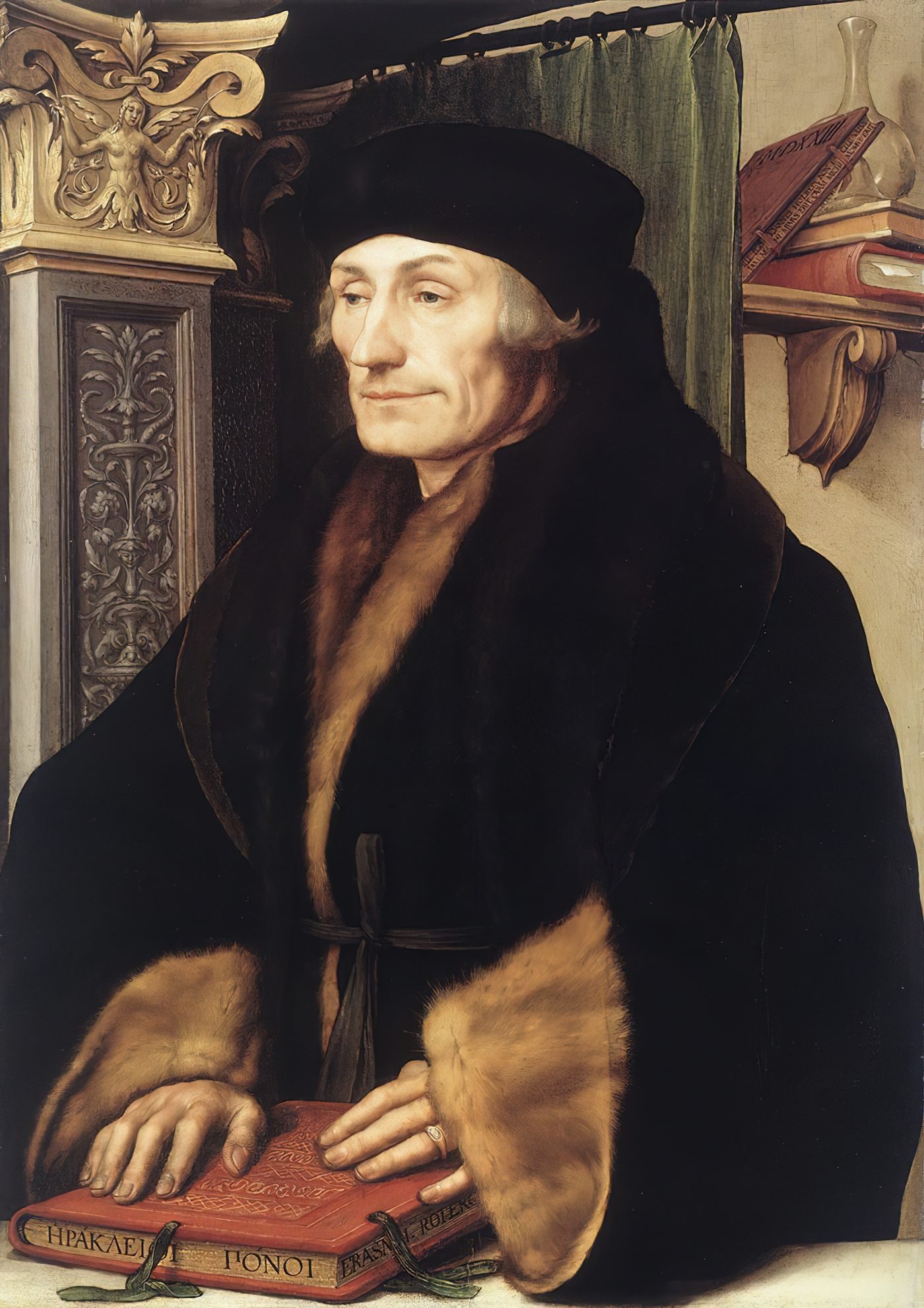
En el ámbito intelectual, los hombres estaban redescubriendo la literatura y el arte griegos. En las pinturas de Rafael se ve el resurgimiento de la cultura antigua, porque Constantinopla había caído en manos de los turcos y los tesoros del arte griego habían sido arrastrados a Roma e Italia. Los nuevos conocimientos se difundieron porque se acababa de inventar la imprenta. Uno de los grandes eruditos de la nueva era fue Erasmo. Comenzó a redescubrir el Nuevo Testamento griego y el Antiguo Testamento hebreo. Erasmo dijo: Haré un Nuevo Testamento tan preciso que incluso los más humildes captarán el mensaje. Y produjo un Nuevo Testamento exacto en el que, en lugar de la palabra "penitencia", aparecía la palabra "arrepentimiento". Muchas cosas que estaban mal en las Biblias que tenían fueron corregidas.
Pero esto es lo último que quiere decir Pawson. En todo ese gran descubrimiento de las cosas mentales, del arte, la música y la escultura, todo el gran movimiento que llamamos Renacimiento, los hombres descubrieron una cosa: que si las personas son intelectualmente mejores, no por eso son moralmente mejores. Era la época en la que los papas llenaban sus palacios de tesoros artísticos, la época de César y Lucrecia Borgia, la familia papal más inmoral que ha existido. Una época en la que los hombres estudiaban arte, música y literatura, estudiaban los cielos y todavía eran inmorales.
El Renacimiento fue un movimiento puramente intelectual y cultural. No dio respuesta al problema del pecado. El mundo entero esperaba que un hombre redescubriera la salvación.
El mundo esperaba a un hombre que afrontara el problema moral de la raza humana, de la Iglesia y del mundo; un hombre que leyera este libro y, a partir de su propia experiencia del pecado y la salvación, redescubriera el secreto del poder cristiano para cambiar el mundo. Y ese hombre era Martín Lutero, un monje. Este mismo mes, hace 450 años, hizo público su descubrimiento. El Renacimiento fue intelectual, pero la Reforma fue moral. Abordó el verdadero problema, que no es nuestra falta de conocimiento, ciencia o cultura, sino nuestra falta de Jesucristo y del evangelio de salvación. Su historia es la Parte 3 de esta serie.
Renacimiento y Reforma
El Renacimiento fue intelectual; la Reforma fue moral
Renacimiento — intelectual
• Colón llega a las Américas (1492)
• Copérnico y Galileo miran a los cielos
• Constantinopla cae (1453) → los tesoros griegos inundan Occidente
• Se inventa la imprenta
• Erasmo recupera el Nuevo Testamento griego
• Florece el arte de Rafael
Pero ser más inteligente no significa ser más santo: esta fue la era de los papas Borgia.
Reforma — moral
Lo que le faltaba al mundo no era conocimiento, ciencia, arte ni cultura. Lo que le faltaba al mundo era Jesucristo y el evangelio de la salvación.
El mundo entero esperaba a un hombre que redescubriera la salvación y se enfrentara al pecado. Ese hombre era Martín Lutero — un monje.
«El Renacimiento se ocupó de la cabeza; la Reforma se ocupó del corazón». La Parte 3 de esta serie contará la historia de Lutero.
Más de una voz
Cómo leen este milenio otros historiadores y predicadores
Pawson predica desde una postura marcadamente protestante. Para hacer justicia y permitirte escuchar más de un lado, así cuentan otros la misma historia: algunos coinciden y otros discrepan.
Historiadores y estudios
Justo L. González · The Story of Christianity, vol. 1 (1984)
Lee el milenio como una paradoja: el «giro constantiniano» ensanchó la «puerta estrecha» hasta convertirla en una avenida por la que entraron las multitudes, mientras el monacato surgía como protesta. Sin embargo, se niega a descartar la época como apostasía.
«Cuando la Iglesia se une a los poderes del mundo… ¿cómo se resiste a las enormes tentaciones de la época?»
Frente a Pawson: Coincide con la idea de Pawson de que «el mundo capturó a la Iglesia», pero la matiza: hubo devoción verdadera y los monjes conservaron el saber.
Bruce L. Shelley · Church History in Plain Language (1982)
Un estudio evangélico popular: el giro constantiniano trajo poder real, pero «a un precio»; monjes, disidentes y reformadores fueron la conciencia de la Iglesia y la llamaron de vuelta a una vida apostólica más pura.
«Quienes viven con mayor devoción para el mundo venidero suelen estar en la mejor posición para cambiar el presente».
Frente a Pawson: Coincide en gran medida con Pawson, pero es más justo y amable, pues entiende la renovación como una reforma desde dentro y no solo como protesta.
Diarmaid MacCulloch · A History of Christianity (2009)
Advierte contra leer la Edad Media como un simple «declive»: fue un mundo rico y complejo, y sus «herejes» fueron muy diversos, en su mayoría ajenos al protestantismo posterior, más que protestantes adelantados a su tiempo.
«…una narración de complejidad más interesante, en la que religión y duda, blasfemia y devoción permanecieron en diálogo».
Frente a Pawson: Matiza a Pawson: subraya la riqueza y los logros del cristianismo medieval, y que sus disidentes no deben reclamarse como antepasados de la Reforma.
Kenneth Scott Latourette · A History of Christianity (1953)
Lee el milenio como un ritmo de «avance y retroceso»: pese a la corrupción y el eclipse, la fe avanzó entre los pueblos «bárbaros» de Europa y nunca se extinguió. Tituló la época «Los mil años de incertidumbre».
«A lo largo de su historia, el cristianismo ha avanzado mediante grandes pulsaciones. Cada avance lo ha llevado más lejos que el anterior».
Frente a Pawson: Matiza el veredicto de Pawson con la perspectiva amplia de un historiador: incluso en medio de la corrupción, la fe echó raíces y se expandió.
Robert Louis Wilken · The First Thousand Years (2012)
Muestra que el cristianismo nunca fue meramente romano u occidental: comunidades de Persia, Armenia, Etiopía, Asia Central, India y China dieron forma activa a su curso.
«Los armenios, griegos y etíopes tenían mucho en común: estaban gobernados por obispos, fomentaban la vida monástica y confesaban el Credo de Nicea».
Frente a Pawson: Amplía el marco de Pawson hacia un cristianismo mundial que una narración exclusivamente occidental tiende a pasar por alto.
Tom Holland · Dominion (2019)
Un historiador ajeno a la fe sostiene que las propias reformas medievales, sobre todo la «revolución» de Gregorio VII en el siglo XI, forjaron la conciencia moral de Occidente: la separación de lo «secular» y lo «sagrado», y el semillero de los derechos humanos.
«[Los reformadores] convirtieron [la distinción entre lo sagrado y lo profano] en algo fundamental para el futuro de Occidente, “por primera vez y de forma permanente”».
Frente a Pawson: Cuestiona a Pawson: la Iglesia medieval, incluso el poder papal, plantó el semillero moral de Occidente y rehízo el mundo, en vez de limitarse a ser capturada por él.
Predicadores evangélicos
John Piper · The Legacy of Sovereign Joy (2000)
Lee a Agustín, a comienzos del siglo V, como un don de la gracia: lo que libera del pecado no es la fuerza de voluntad, sino la «alegría soberana» en Dios, que domina desde la raíz los placeres pecaminosos.
«La gracia irresistible… nos liberará mediante el poder soberano de deleites superiores».
Frente a Pawson: Complementa a Pawson: extrae de Agustín, al comienzo del período, un manantial vivo de la gracia, en vez de ver solo el declive institucional.
Michael Reeves · The Unquenchable Flame (2009)
Lee el milenio como el «telón de fondo» al que la Reforma tuvo que responder: la Iglesia medieval tardía enseñaba la gracia como un poder para hacerse lo bastante santo, dejando a los creyentes sin seguridad. Sin embargo, la llama del evangelio nunca se apagó del todo (Wycliffe, Hus).
«La gracia medieval funcionaba “como una lata espiritual de Red Bull”, dejando a la gente “sin seguridad”; lo que se recuperó fue la justicia como “un don para pecadores”».
Frente a Pawson: Coincide con Pawson en que se perdió el centro del evangelio, pero es más amable: subraya la «recuperación» y la continuidad, y presenta la Reforma como un regreso a la Palabra de Dios.
W. Robert Godfrey · A Survey of Church History (Ligonier)
Una lectura reformada: el evangelio de la gracia de Agustín es el hilo luminoso, pero durante la Edad Media quedó progresivamente «nublado» por la superstición y el papado. Sin embargo, la Iglesia nunca murió por completo: un remanente fiel mantuvo vivo el evangelio.
«Lo que vemos en la Edad Media es, en efecto, un tiempo de superstición creciente, confusión creciente y oscurecimiento del evangelio».
Frente a Pawson: Coincide en gran medida con Pawson, pero matiza que «el mundo capturó a la Iglesia»: siempre hubo «una estrella luminosa» que conservó la verdad durante el milenio.
Voces católicas y ortodoxas
Eamon Duffy · Saints & Sinners: A History of the Popes (1997)
Lee el milenio como algo más humano y desordenado de lo que permiten el elogio o la polémica: la corrupción y la simonía fueron reales, pero se niega a reducir la historia de la Iglesia a una acusación; lo que perduró fue el cargo, no la virtud de quien lo ocupaba.
«Con todos sus pecados… el papado me parece, en conjunto, una fuerza a favor de la libertad humana y de la amplitud de espíritu».
Frente a Pawson: Matiza la postura protestante de Pawson: concede la corrupción, pero se resiste a una polémica monocausal y ve el papado como una institución humana enmarañada.
Kallistos Ware · The Orthodox Church (1963)
Para Ware, el cisma de 1054 no fue un acontecimiento de un solo día, sino «un proceso largo y complicado»; fueron las cruzadas, sobre todo el saqueo de Constantinopla en 1204, las que hicieron definitiva la ruptura. Desde Oriente, la verdadera «innovación» fue que Roma convirtió una primacía de honor en una supremacía de jurisdicción.
«El error de Roma —así lo creen los ortodoxos— ha sido convertir esta primacía o “presidencia del amor” en una supremacía de poder externo y jurisdicción».
Frente a Pawson: Ve el mismo problema desde el lado ortodoxo y no desde el protestante, y subraya que el cisma llegó gradualmente y no en un solo momento dramático.
Henri Daniel-Rops · Cathedral and Crusade (1957)
Un historiador católico lee el milenio no como «el mundo capturando a la Iglesia», sino como la Iglesia cristianizando y civilizando Europa, y conservando las letras y el saber en medio del caos. Sin encubrir el deterioro (llama «debacle» al siglo XIV), insiste en que la Iglesia siguió produciendo santos y reformadores desde dentro.
«Desde el más bajo hasta el más alto, la sociedad creía: la Iglesia era “el medio más eficaz para asegurar la salvación de la civilización”».
Frente a Pawson: Tanto matiza como cuestiona a Pawson: concede la corrupción, pero sostiene que incluso en medio del deterioro la Iglesia rescató la civilización y se reformó desde dentro.
Tomado de estudios estándar de historia de la Iglesia y de los mensajes y libros de maestros contemporáneos. El objetivo no es refutar a Pawson, sino escucharlo dentro de un coro.
Una oración final
Pawson no termina con un resumen, sino con una oración, después de que tantos años y siglos han pasado ante los ojos de sus oyentes:
"Padre, que seamos el tipo de Iglesia que quieres que seamos. Que aprendamos de los errores del pasado y de las lecciones de la historia. Te damos gracias porque, a lo largo de todas esas épocas, nunca estuviste sin testimonio ni sin aquellos que conocieron la verdad; a menudo pagaron por ella con sus vidas, pero mantuvieron encendida la antorcha de la fe que heredamos para transmitirla a las generaciones venideras. Donde la Iglesia esté corrupta, límpiala. Donde esté en error, condúcela a la verdad. Donde esté dividida, únela. Y, sobre todo, que Jesucristo sea visto como la cabeza de la Iglesia, la única cabeza de la Iglesia".
Mil años del mar filtrándose en el barco. Pero la llama nunca se apagó del todo. Y al final de ese largo túnel, amanece. La parte 3 contará la historia del monje que vio lo que había salido mal y que, con un libro, lo arregló todo nuevamente.
Note: This post is compiled from the second lecture in David Pawson's History of the Church series (Part 2: AD 400–1400), about 69 minutes long. As in Part 1, I do not guess or embellish: every major argument comes straight from Pawson. Wherever I looked something up, checked it against the sources, or corrected a detail, I left it as an amber margin note woven into the text. For this part especially, because the lecture touches the most contested stretches of church history, I also read other historians and preachers, so that you hear more than one voice.
The unhappier story
Part 1 told how the Church captured the world in the first four centuries: it won the physical battle by suffering, the mental battle by confronting heresy, and the spiritual battle by standing firm against other religions.
Pawson says there is one thing he forgot to mention last week, and it matters: the Christians won because they out-lived, they out-thought, and they out-died everyone else. They out-lived, and so won the spiritual battle. They out-thought, and so won the mental battle. They out-died, and so won the physical battle. And therefore they out-survived everything else.
But tonight, he says, the subject is far sadder and far more serious. The subject is: how the world captured the Church over the next thousand years.
There is a medieval painting of the Church as a lifeboat. In a tossing sea, the Christians in the boat reach out to pluck the drowning from the waves. It is a fine picture of the Church: a lifeboat gone out into the world in answer to the cry for help.
But Pawson pauses on one thing:
The lifeboat must be in the sea. But if the sea gets into the lifeboat, then there is real trouble. The church must be in the world if it is going to save souls. But when the world gets into the church, then it is finished and it sinks.
The next thousand years is the story of the sea getting into the boat. Pawson takes it in three chapters: the world began to get in even in the early ages (AD 100–400); then the Dark Ages (AD 400–1000); then the Middle Ages (roughly 1000–1500), which bring us to within a year or two of Martin Luther.
The Lifeboat Picture
The boat must be in the sea, but the sea must not be in the boat
Pawson opens with a medieval painting: the Church as a lifeboat in a tossing sea, reaching out to pluck the drowning from the waves.
The lifeboat in the sea
The Church is in the world to save souls. This is the mission itself.
The sea inside the lifeboat
When the world gets into the Church, the boat sinks. That is the story of a thousand years.
"The church must be in the world if it is going to save souls. But when the world gets into the church, then it is finished and it sinks." — David Pawson
A Thousand-Year Timeline
AD 400–1517: from the fall of Rome to Luther
Four currents braid through a thousand years: decline, the rise of papal power, voices of protest, and an age of discovery.
Some dates are simplified for clarity; precise milestones are checked in the amber margin notes throughout the essay.
How the World Got Into the Church (AD 100–400)
When there were martyrs like that, preachers like that, when the battle was being won, how did the world get in? Pawson names four things that began to water down the apostles' Church.
First, regional bishops. In the New Testament every church had a number of bishops, called elders or bishops or presbyters, all the same office: spiritual leaders. Then came a stage where each church reduced its bishops to one. Then a stage where one bishop ruled many churches. Leadership was concentrated in fewer hands. You cannot find this in the New Testament; it did not happen for the first hundred years; but in the second century there emerged men of considerable power and influence. Not many bishops to one church, but many churches to one bishop.
Second, a magic view of the sacraments. Take baptism. Instead of being an outward sign of the spiritual washing away of sins that comes when a man believes in Jesus, people began to believe that the actual water and the right formula saved a person from sin, whatever their age; and that if you sinned after baptism, you undid it. So people put off baptism until the deathbed: they waited until the doctor said there was no hope, then rushed for the minister. But others worried: what if our baby dies, we would rather have its sins washed away at once. Both views were superstitious. Sadly, infant baptism prevailed. The Lord's Supper too was treated magically: people began to think the bread actually was Christ's flesh and the wine his blood; since real flesh and blood were being offered, it was a sacrifice; and since it was a sacrifice, the one handling it must be a priest.
Third, established religion. When the emperor went to church, you can imagine everyone did. When the state declared Christianity the official religion, everyone climbed on the bandwagon. Going to the established church became fashionable and respectable. Pawson says plainly: an established religion is bound to produce fashionable, respectable Christianity, and he cannot find that in the New Testament.
Kit's note
One thing I'll return here: it was not Constantine who made Christianity the official religion. The Edict of Milan (313, Constantine with Licinius) granted only toleration — freedom of worship and the return of property, ending persecution. It was Theodosius I who, by the Edict of Thessalonica in 380, made Nicene Christianity the state religion. Pawson's larger point — that once faith becomes 'fashionable and respectable' the world seeps in — stands; only the milestone belongs to Theodosius, not Constantine.
Fourth, nominal membership. A writer at the end of the second century observed: around the year 50, to belong to the Church meant a person had received baptism and the Holy Spirit and called Jesus Lord; but by around 180, it meant a person acknowledged the rule of faith (the creed), the New Testament canon, and the authority of the bishops. In other words, people were joining for reasons other than believing in Jesus and receiving his Spirit. It was now an institution.
And whenever the Church went wrong, there were protests. In the first 400 years there were two movements: Montanism and monasticism. Both protested against a Church growing wealthy, worldly, and filled with people who had never even been converted.
Montanism arose in what we now call Turkey, Asia Minor. A man called Montanus saw that in scores of members there was no trace of the Holy Spirit, so he sought the Spirit of God afresh. A revival broke out. The gifts of the Spirit came back into the Church; life, vigour, and reality came back into worship. Pawson says if you want to know who they were most like today, they were Pentecostals. There was a tremendous emphasis on Christ's return, an insistence that no one be a member without a real faith, with holiness and fasting. But the bishops opposed it severely, and you can guess why.
The tragedy is that, as so often, this first Pentecostal movement went wrong. It went wrong because these people would not have teaching. They wanted the heat without the light. Pawson says: light without heat is cold; heat without light is too hot; you must have both. They would not listen to the Scriptures on how to exercise spiritual gifts. And the movement fizzled out in fanaticism. "That is a word every Pentecostal revival needs to know," Pawson says. "We can learn from history."
Kit's note
I'll gently push back on 'the women spoilt it.' The pastoral caution — heat without light — is fair, and the ecstatic, trance-like prophecy was indeed what the mainstream church attacked most. But pinning it on 'the women,' Priscilla and Maximilla, isn't fair: Montanus himself prophesied passively ('I am as a lyre, and the Spirit sweeps over me like a plectrum'). Modern study (Christine Trevett) shows what was really condemned was their claim to a new authority over the church — not the fact that the prophets were women.
The second protest came in a very different way. Some years later certain Christians said: this Church is so worldly, so dead, that the only hope of recovering Christianity is to get out of the Church and out of the world.
The first of them did it alone. They were hermits. It is the strangest tale. Anthony was the first: he decided he would never be a real Christian until he got into the middle of the desert. The trouble was that when he got there, other Christians wanted to join him, and he did not want that; and above all, he found his temptations in a desert cave just as worldly as they had been in the Church. There was an even stranger hermit, Simeon Stylites: he built a pillar some sixty feet high, a yard across at the top, and lived up there for decades. He even stood on one leg for a year, as a protest declaring that Christianity is something hard and tough. And there he was, up the pole, covered in ulcers and worms, in a frightful state.
More successful than the hermits were those who started communities. The man who began this movement was Benedict. On Monte Cassino, halfway between Rome and Naples, he gathered a group of real Christians who saw the Church was too worldly to do anything with, and said: we will come and live together. We will not be wealthy but poor. We will not be lustful but celibate. We will not be rebellious but obedient. They took the threefold vow: poverty, chastity, obedience. And the monastery was run like a Roman soldier's garrison.
Kit's note
A small but real correction: Benedict (c. 480–547) did not start communal monasticism. Pachomius founded cenobitic communities in Egypt around 318–323, nearly two centuries earlier. Benedict is the father of Western monasticism and wrote its most influential Rule — but not its founder. And his Rule's vows are really stabilitas (staying in one house), conversatio morum (conversion of life) and obedience; the familiar 'poverty, chastity, obedience' formula belongs to later orders.
The tragedy is that this protest went wrong just as surely as the other. Christ never meant us to live the Christian life away from everybody else. Later these monks, who began with a good intention, became so wrapped up in their own salvation, so introverted, that they were isolated from the world and the Church. Worse, monasticism produced the idea that there are two kinds of Christians: second-class ones who marry and first-class ones who do not; second-class ones who live in the world and first-class ones who live out of it. But that is not the teaching of Jesus. Our Lord was not a monk. He did not withdraw from society; he lived a pure life in society, and told his disciples to be in the world without being of it.
Both said: the Church is not what Jesus Christ meant it to be. One said we will rediscover it by getting back into the Spirit. The other said we will rediscover it by getting out of the world and out of the Church. Both came to nothing, because they did not return fully to New Testament Christianity.
How the World Got In — AD 100–400
Four cracks and two protests
Even in the age of victory, four things began to water down the apostles' Church. And whenever it went wrong, voices of protest rose up.
Regional bishops
From many elders per church to one bishop over many churches. Power concentrated in few hands, copying Rome's governors.
Magic sacraments
Baptism seen as saving in itself, so delayed to the deathbed or given to infants. The Lord's Supper taken as literal flesh and blood, a sacrifice needing a priest.
Established religion
When the emperor went to church, everyone went. Faith became fashionable and respectable instead of a surrender.
Nominal membership
People joined for reasons other than believing in Jesus and receiving the Spirit. The Church became an institution.
Two protests
Montanism
A Pentecostal protest
Rediscovered the Spirit and the gifts, stressing Christ's return and holiness. But it had "heat without light," refused teaching, and burned out in fanaticism.
Monasticism
A protest by withdrawal
Left both the world and the Church to recover real Christianity. But it produced "two-tier" Christians, and Christ never called us to live apart from everyone.
Both protests were sincere, yet both came to nothing because they did not return fully to New Testament Christianity.
The Dark Ages: The Fall of Rome (AD 410)
Now the story truly begins. In 410, a catastrophe came. Barbarians from the north pressed down on the city of Rome. The Vandals came (from their name we get the word "vandalism"). The Franks came, the Huns came, the Goths came. These barbarians pressed into Rome and took it. The Rome of that day fell.
Kit's note
Let me check this one: the sack of Rome on 24 August 410 was carried out by one people — Alaric's Visigoths — not a combined army of Vandals, Franks, Huns and Goths. The Vandals were then pushing into Spain (they would sack Rome only in 455), and Attila's Huns struck the West only in 451–452. Pawson's larger picture — a whole wave of 'barbarian' peoples pressing on the Empire — holds; but the army that breached Rome in 410 was Alaric's Goths alone.
The Romans left Britain that year to defend Rome, but could not save it. And as soon as the Romans withdrew, the Jutes, the Angles, and the Saxons charged into Britain and destroyed Christianity in England and south-east Scotland. The Christianity that Roman soldiers had brought here in the first 400 years vanished.
It seemed that when Rome fell, it was the end of everything. Jerome, writing in Jerusalem, said: "the human race is included in the ruins." People thought it was the end of civilization. And it puzzled the Church: Rome had survived for centuries as a pagan empire, yet as a Christian one it collapsed. Many Christians could not understand it.
Kit's note
A small geographic note (the Part-1 kind): Jerome was not in Jerusalem but in Bethlehem (very near it), where he lived in a monastery from 386 until his death in 420. His most famous line is from the Preface to his Commentary on Ezekiel (c. 410–414): 'when the bright light of all the world was put out... the whole world perished in one city' (in una urbe totus orbis interiit). Pawson's 'the human race is included in the ruins' faithfully catches Jerome's grief.
But one man thought it through and made an incredible statement. He said: it is the best thing that ever happened. His name was Augustine.
Augustine: A Restless Heart That Found Its Rest
You can buy his books at the railway bookstall today. And if I tell you some of the things this great man said, you would recognize them. He said: "Our hearts are restless, and they can find no rest until they find their rest in thee." Perhaps the most quoted prayer in history. It was Augustine who prayed: "Give me chastity, but not just yet." And it was Augustine who said: "Love, and do what you like."
He was born in North Africa. When he went as a student to Carthage, he fell in with the wrong crowd. Soon he had a concubine and a son by her, and lived in that illegal relationship for years. His father was pagan, but his mother was a godly woman who prayed for her wayward son with tears every day. Later, because of his brilliant mind, he was invited to be a professor of rhetoric in Milan. There he went to hear the saintly Bishop Ambrose preach. Under that preaching, the young man with the brilliant mind but the profligate life was brought into a deep conviction of sin.
Then one day, sitting in a garden weeping over the mess he had made of his life, he heard a child's voice over the garden wall: "Tolle lege, tolle lege" — "take up and read." He never knew who the child was. But he saw a scroll on the seat beside him, took it up, and read. It was Paul's letter to the Romans. Augustine read it through, and the light dawned. When he walked into the street afterward, the woman he had lived with saw him, and he ran from her. She ran after him crying: "Augustine, it is I, it is I." He answered over his shoulder: "But it is not I, it is not I."
Kit's note
The exchange — 'It is I, Augustine!' / 'But it is not I' — is a lovely pious anecdote, but it is not in the Confessions or any early source. By Augustine's own account (Confessions 6.15), the woman had already been sent away before his conversion (c. 385); she returned to Africa vowing to remain unmarried. The clever retort appears only in much later retellings — a moving tradition rather than history.
He wrote the whole story of his conversion in a book called Confessions. Pawson says Augustine has had more influence on church history than any man after the apostle Paul.
When Rome fell, Augustine being in middle age, the whole world seemed to collapse about his ears. He thought it through, then wrote the second great book we remember: City of God. In it he says: it is a good thing this pagan city of Rome has collapsed, because now the city of God can replace it; it is a good thing an earthly empire has ended, because the heavenly empire can now be established. The book brought hope and new life to many, helping them see that a city of God still survived when the city of men had gone.
But that was the trouble. People began to ask: what is this city of God? Visible or invisible? Earthly or heavenly? And at this point Augustine led many into a misunderstanding. The funny thing is that centuries later, in the Reformation, the Protestants said "we follow Augustine," and the Roman Catholics said "we follow Augustine." But the Protestants were following the first book, Confessions; and the Catholics were following the second book, City of God.
For what happened was this: the Church said, if that is so, then the Church is now the new empire.
The Church Becomes an Empire: The Rise of the Papacy
One of the first results was the rise of the bishop of Rome to the position of an emperor. In those days there was a great debate about the word "pope," which means essentially "father." Although Jesus had said never to call anyone on earth father, for you have one Father in heaven, people began to call the local priest "father." Then they called the regional bishop "father." Then finally the five great patriarchs said: if anyone is to be called father, it ought to be us five. And at last, the bishop of Rome said: the city of Rome is gone, but I am the emperor now; I am the chief bishop, and from now on you call only me pope, you call only me father.
And the papacy, as we know it, came into being. The striking thing is that the pope adopted the very titles and even the robes of the Roman emperor. He took the title Pontifex Maximus, known today as the pontiff — the Roman emperor's title. Augustine was misunderstood, and people thought the Church was the new empire. And an empire must have its emperor, its robes, its ceremonies, its throne. So the Church became an empire, and the pope became a king.
Of course, many Christians would have none of it. The French would not, the Irish would not, the Welsh would not, the Scots would not. Sadly, the English did.
When the Church Became an Empire
The ladder of power and the closing circle
The ladder to "father"
The local priest is called "father"
Then the regional bishop
Then the five great patriarchs claim the title
The bishop of Rome: "call only ME pope"
Takes the emperor's titles & robes (Pontifex Maximus)
"Call no man on earth your father…" (Matthew’s Gospel)
The circle 410 → 800
410 — The Roman Empire collapses
The Church takes over, becomes the new "empire"
800 — Charlemagne crowned Emperor
The empire returns — full circle
Augustine wrote City of God to console a collapsing world; but people misread it to mean the Church was the new empire — and an empire must have its emperor, its throne, its robes.
Two Streams of Christianity Meet at Whitby
Ireland, through St. Columba, brought the faith into Iona and Scotland, leading Scotland to Christ. Then Aidan came down to the island of Lindisfarne off Northumberland. Pawson recalls standing on Lindisfarne a few months earlier, by the ruins of Aidan's church, the little island from which he evangelized Northumberland. This non-papal Christianity, Celtic Christianity, came into England from the north through Ireland and Scotland.
But later the pope said: we must get England, we must get those Angles. He made the famous pun: they are not Angles but angels. And he sent a missionary also named Augustine. This Augustine landed on the island of Thanet, then went to Canterbury. Columba on the island of Iona in the north; Augustine on the island of Thanet in the south.
The two streams of Christianity met at Whitby. You can still see the ruins above Whitby harbour where they met. There, papal Christianity met Celtic Christianity, to see which would win. The tragedy is that papal Christianity won. The British Isles came under the papal throne. Scotland even changed its patron saint to St. Andrew. The whole situation was changed.
Kit's note
Let me clarify one thing: the two streams in the British Isles were real, but saying Celtic Christianity 'rejected the pope' overstates it. They didn't oppose Rome on doctrine; they kept older customs — the dating of Easter and the style of tonsure — because they'd been cut off from the continent during the Anglo-Saxon period. The Synod of Whitby (664) was a dispute over custom and calendar, not a schism; Pawson is right that Rome's side prevailed.
Two Streams Meet at Whitby
Which way would Britain go? (Synod of Whitby, 664)
Celtic Christianity
Ireland → Iona (Columba) → Lindisfarne (Aidan) → northern England
No pope. Simple, missionary.
Roman Christianity
Rome → Augustine on Thanet → Canterbury → the south
Loyal to the pope.
Whitby, 664
Roman Christianity won. The British Isles came under the papal throne. Pawson calls it a tragedy; you can still stand among the ruins above Whitby harbour today.
Schematic, not to geographic scale. Whitby took place in 664 (Pawson says "660").
East and West Divide (1054)
The other great group of Christians who would have none of this were the churches of the eastern Mediterranean: Greece, Asia Minor, Syria, Egypt. They said: we are not acknowledging this. That there should be one "papa," one father of the whole Church, is not in Scripture, not in the New Testament. And they began a split, finally completed by the year 1054. That division kept the eastern and western churches apart for a thousand years, and only in recent years have the two begun to talk again.
Kit's note
A detail worth marking: Pawson saying the two sides 'have only in recent years begun to talk again' is exactly right for a sermon around 1967. On 7 December 1965, in simultaneous ceremonies in Rome and Constantinople, Pope Paul VI and Ecumenical Patriarch Athenagoras I lifted the mutual excommunications of 1054, after their historic meeting in Jerusalem in January 1964. So his 'recent years' was, for him, fresh news.
And here is one of the most incredible things. Around the year 850, the pope said: I have discovered documents from the first century, proving that Peter appointed the first pope, who appointed the second, and so on down the line. Today even the Roman Church knows those documents were forgeries; they are called the forged decretals. And yet the papacy was built on a forgery. There was another forged document, the Donation of Constantine, claiming that all of Italy belonged to the pope. The pope "discovered" this forgery and said: there, all Italy belongs to me. That is the kind of foundation on which the whole structure was based, and even Rome knows it today.
Kit's note
Let me return a detail on 'the pope produced these documents': Pawson's date, 'around 850,' is very close — the Pseudo-Isidorian Decretals (False Decretals), under the pen-name 'Isidorus Mercator,' were forged around 847–852. But the forgers were Frankish clergy near Reims, not the pope himself, and the first aim was to protect ordinary bishops from being deposed. Still, Pawson's larger point holds: those forgeries were later cited by Rome to buttress papal supremacy.
The Great Schism, 1054
One Church split in two for nearly a thousand years
The five patriarchates (the Pentarchy)
The West (Latin)
Rome — one pope over the whole Church
• Supremacy of the pope
• Added "and the Son" (filioque) to the Creed
• Unleavened bread
Latin tradition
The East (Greek)
Constantinople + the patriarchs — equals, no single "papa"
• Five equal patriarchs
• The Creed left unchanged
• Leavened bread
Greek tradition
The mutual excommunications of 1054 were only lifted together by Pope Paul VI and Patriarch Athenagoras in 1965 — close to Pawson's "the last ten years" when he preached in the 1960s.
Charlemagne and the Holy Roman Empire (AD 800)
The power kept spreading, until the year 742, when a man was born with a dream: to restore the empire of Rome, put it back on the map, with himself as emperor and the pope beneath him. His name was Charlemagne. A ruthless man who said: we will have a Roman empire again, and its head will not be the pope but an emperor.
Charlemagne twice saved the pope's life: once from the barbarians, once from the crowds in Rome who were angry with him. The pope said: you have saved my life twice, what would you have me do for you? The emperor answered: on Christmas Day, crown me emperor. And in the year 800, on Christmas Day, in the largest church in Rome, at the Christmas morning service, the pope crowned the king of the Franks, Charlemagne, emperor of the Holy Roman Empire. A thousand years later, the Holy Roman Empire still existed.
You see, we have come full circle. The empire of Rome collapsed in 410. The Church took over the empire. Then in 800 the emperor came back and took the empire from the Church. The whole thing seemed back to where it started.
Charlemagne did some good things and some bad. Among the good: he forbade the clergy to keep concubines, frequent taverns, and go hunting; he started many schools. Among the bad: he forbade the clergy ever to marry, and it is to Charlemagne that we owe the celibate priesthood. He also coined the word Christendom — the kingdom that would be Christian under the emperor. And the idea of Christendom persists to this day.
Kit's note
Two small fixes. First — the celibate priesthood isn't owed to Charlemagne: he tightened clerical discipline, but the ban on clergy marrying became universal law only with the eleventh-century Gregorian reform and the Lateran Councils of 1123 and 1139 — three centuries after him. Second — 'Christendom' is a native Old English word (cristen + -dom); a Latin-speaking Frankish king could hardly coin it. If Pawson means he crystallized the idea of Christendom, that holds — the 800 coronation is its emblem.
The Rise of Islam
Because the Church was now wealthy and powerful, it became corrupt. And once again protests came, this time from the east and the north. From the east, the protest came from two things. The first was Islam.
Pawson calls this the greatest judgment ever to fall on the Christian Church. He had lived in Arabia and seen something of this religion. Mohammed was born in 571 in Mecca, the centre of Arab idolatry and superstition. In the middle of Mecca was a great square building draped in black, and inside it a sacred stone, the Kaaba, a meteorite fallen from the sky. Mohammed grew up amid the idolatry and superstition of the Arabs, and he was revolted by it.
Then he turned first to the Jews, then to the Christians, and asked: have you the true religion? The tragedy is that Mohammed never met a converted Christian. The tragedy is that he never saw the real Christianity of the New Testament. All he saw was the vestments of priests, images, and crucifixes. And he said: this is as idolatrous as the Arabs' religion. If only Mohammed had met one true Christian at the end of the sixth century. But he did not.
So he said: right, I will seek a new religion that is pure. He married a wealthy widow, spent years in the desert, and there he said he was spoken to: there is no God but Allah, and Mohammed is his prophet. He began to preach this, writing down what he heard in his visions in a book, the Quran (Al-Quran). He was persecuted and had to flee to Medina in 622. That is the date from which the Arabs reckon their calendar. He returned to Mecca with an army and imposed the new religion. From then on everyone had to pray toward Mecca, and by a religion of good works — fasting, praying five times a day, keeping Ramadan, making the pilgrimage to Mecca, giving alms — one could get to heaven. And that religion was imposed by force of arms.
Islam swept Christianity out of the Mediterranean. It swept Christianity off the North African coast, where there was no church for centuries. It swept Christianity out of the Holy Land itself, out of Jerusalem, out of the place where Jesus died. It swept up through Spain, up through Asia Minor, into France as far as the gates of Lyon, into Eastern Europe as far as Vienna. It seemed Islam would crush Christianity in a gigantic pincer movement.
Kit's note
An important geographic and chronological note: the Muslim advance into the West was halted at Tours/Poitiers in 732 (Charles Martel over the Umayyads), in western France — about 360 km from Lyon, not 'the gates of Lyon.' And the two sieges of Vienna were Ottoman Turkish, in 1529 and 1683 — roughly 800–950 years after the 8th-century Arab advance. These are two powers and two eras, not one coordinated 'pincer.' Pawson's theological instinct — that God stopped the tide — can still stand.
It is the greatest judgment God has ever allowed to come on the Christian Church. And it was deserved. But so far and no further. God was not going to have Christianity wiped out altogether.
He stopped them at Lyon and Vienna, and they withdrew to their present boundaries: the North African coast and up to Turkey.
Map of the Dark Ages
Two tides break over the Christian world (AD 410–732)
Orange arrows: barbarians pour south onto Rome. Green arrows: Islam sweeps the Mediterranean from Arabia, across North Africa and Spain, as far as Tours.
Base map: the Roman Empire (Wikimedia Commons, public domain). Arrows are schematic directions of advance, not exact routes. Vienna marks the later Ottoman limit — Pawson telescopes nearly a thousand years of frontier into one pincer.
Hidden Witnesses in the Dark
For at that very time, all over Europe there were little groups of Christians meeting around the word of God. They saw that the official church was corrupt, so they simply met in tiny groups, read this book, and said: we will worship God in simplicity. We do not need priests, for we have Jesus our high priest. We do not need a pope, for we have a Father in heaven. We just need the word of God and the Holy Spirit.
We know hardly anything about them, because they were so persecuted that even the records of their history were destroyed. Pawson asks his hearers whether any have ever heard of a group called the Bogomils. They were a group meeting around the word of God, chiefly in Bulgaria and Bosnia; the word "Bogomil," Pawson says, is Bulgarian for "friends of God." There were the Paulicians, who met in Armenia, Thrace, and Asia Minor. There were the Cathars, a name meaning "the pure ones," the same root as the later word "Puritan"; they met in the Balkans and across Europe.
Pawson confesses: in his simplicity he used to think that for a thousand years there was only the Roman church and the eastern churches. That is not true. He was thrilled to discover that all through those centuries there was a continuous train of simple Christians meeting around the word of God in local churches. They paid for it with their lives, but they met, and the flame of faith was kept alight for the generations to come.
Kit's note
Let me return something, in fairness to Pawson and to history. What he says is true and moving: the Bogomils, Paulicians and Cathars rejected the clergy and the pope, were savagely persecuted, and had their writings nearly all destroyed. But modern scholarship classes them as dualist movements — holding the material world to be the work of an evil power — shaped by Mani and the Gnostics; this is not the later Protestant faith. They witness to protest, but they weren't quite 'simple New-Testament Christians.'
The Middle Ages: Hildebrand Sets the Pope Above All
Now we come to the final chapter, from the year 1000 to 1500, called the Middle Ages because it lies between the Dark Ages and the Modern Age.
The first man to speak of is Hildebrand. This monk became pope, and he did not like being number two. By now there was a restored Roman Empire with a new emperor, but the pope was number two. Hildebrand decided the pope should be number one, and he achieved it. He did many good things: he cut out the simony in the church, the buying of priesthoods. But he did it because he believed the pope should control everything, including kings.
The clash between Hildebrand and Emperor Henry IV was settled in a most dramatic and terrible way. Henry IV defied Hildebrand, saying: I am number one. Hildebrand answered: you are not. Let the people decide. And the people decided that Hildebrand was. Up in the Alps, the pope met Emperor Henry IV, who came from the north. The pope was in a mountain house, and he kept Emperor Henry IV waiting outside in the snow, barefoot, for three days, before he would speak to him. In this way Hildebrand put the emperor decisively in a secondary place.
From then on, for the next 500 years, the pope was the most influential figure, and the papacy was the power that controlled the Western world. The Church was the empire again. It was this pope who began the symbol of the crossed keys of St. Peter: one key is the authority of sacred power over the Church, the other the authority of secular power over the state. Those crossed keys are Hildebrand's claim: to be top dog, over both the Church and the state.
Kit's note
Let me return two points. First, Hildebrand (Gregory VII, 11th c.) did not create the 'crossed keys' emblem: the device appears only in the 14th–15th c. — the oldest belongs to Pope Martin V (1417–1431), over 300 years later. Second, the keys traditionally do not mean 'one sacred, one secular'; both belong to spiritual authority (the power to 'bind and loose'). What Pawson has right is Hildebrand's ambition: to set the pope over both Church and state.
The Crusades: When the Church Took Up the Sword
This put the force of armies at the Church's disposal. And because Hildebrand thought that way, he began to use force to establish the kingdom of Christ. Never was a greater mistake made. The first outcome of the idea that force is valid for the Church to use was eight crusades to the Holy Land.
By now the holy places, Jerusalem and others, were in the hands of the Muslims, the Saracens, the Turks. The pope decided the Church would fight its way in and capture the Holy Land for Christ. The First Crusade was born in 1095. It was Hildebrand's idea, but he died before it could be done. People wore a cross on the shoulder, called a crux, and from that we get the word crusade.
The First Crusade was pulled together by an unkempt, fanatical preacher called Peter the Hermit. He set off with 600,000 men, and only a tenth arrived; most died in the high mountains of Turkey. But they got there, and they took Jerusalem. They pillaged it, raped the women, and established the so-called rule of Christ in Jerusalem by slaughtering all the Saracens of that city. Is that Christian? You say at once: of course not. But bear in mind, they were misled. Thousands thought this was what the Church was meant to be: an earthly empire establishing itself by force.
Kit's note
Two corrections. One — 600,000 is wildly inflated: historians put Peter the Hermit's 'People's Crusade' at roughly 20,000–40,000 (the whole First Crusade together was only about 60,000–100,000). Two — Peter's band did not take Jerusalem: arriving in Anatolia, it was annihilated by the Seljuk Turks at Civetot (21 Oct 1096). Jerusalem fell nearly three years later — 15 July 1099 — to the nobles' armies. The bloody massacre is real, but it was 1099, not the work of Peter's poor.
Of course there were incentives. People were promised absolution if they went to fight for Christ; promised indulgences, so many years off purgatory; promised their debts cancelled by law; promised pardon for criminals who would leave prison to go and fight. You can imagine the motley crew that resulted. King Philip of France was caught up in it. King Richard the Lionheart of England was caught up in it. Eight times they set off. One was a children's crusade: 2,000 little ones set off across Europe to try to get Palestine back for Jesus. Not one of them arrived. The pope said angels would miraculously provide food; but the food never came and the angels never appeared.
The last one was an utter failure. At the flat-topped mountain of the Horns of Hattin, the last crusader army died of thirst, besieged by the Saracen. And in 1270, Europe breathed a sigh of relief when the pope called the whole thing off.
Kit's note
Pawson's picture of the Horns of Hattin is right (4 July 1187, Saladin luring King Guy's army into waterless ground and breaking it through thirst) — but it was not 'the last crusade'; it was a battle of the Kingdom of Jerusalem, and the loss of Jerusalem that followed is precisely what sparked the Third Crusade (Richard and Philip). As for 1270: the campaign collapsed not because the pope 'called it off' but because its leader, King Louis IX of France, died of disease before Tunis (25 Aug 1270). The crusader presence ended only when Acre fell in 1291.
It is one of the saddest stories in the history of the Church. It did nothing. Nothing. And indeed it did worse than nothing.
The Eight Crusades
When the Church used the sword instead of love (1095–1291)
Hildebrand believed force could establish the kingdom of Christ. "Never was a greater mistake made," says Pawson.
People's Crusade · 1096
Peter the Hermit leads a mob; most die in the mountains of Asia Minor.
First Crusade · 1095–99
Takes Jerusalem (1099) and massacres its people. The only "success."
Second Crusade · 1147–49
Preached by Bernard of Clairvaux; fails.
Third Crusade · 1189–92
Richard the Lionheart vs Saladin; Jerusalem not retaken.
Fourth Crusade · 1202–04
Diverts to sack Constantinople — Christians against Christians.
Children's Crusade · 1212
A march of children; not one reaches the Holy Land.
Later Crusades · 1217–54
Failure after failure, including the two campaigns of King Louis IX.
Hattin & the collapse · 1187 / 1291
Routed at the Horns of Hattin (1187); Acre, the last stronghold, falls in 1291.
The incentives to go
By 1270 the pope called it off. "It did nothing. Nothing. And indeed it did worse than nothing." — David Pawson
The Inquisition, Two or Three Popes, and the Corruption
From using force outside the Church, the pope now decided to use force inside the Church, opening another dreadful chapter called the Inquisition. Pawson says he dare not describe the things done in the name of Christ. The bishops refused to run this machine of cruelty, malice, and suspicion; but the Dominicans took it up. And for many years, countless people lived in fear of their lives through that dreadful thing.
All the way through, what was wrong was this: the Church thought of itself as an earthly empire allowed to use force to establish the cause of Christ. We now know this is not the way. The Church must use no force but love, and must never force anyone, except through love and through preaching the gospel, to accept Christ.
And this kind of corruption soon turns in on itself. Power tends to corrupt, said Lord Acton, and absolute power tends to corrupt absolutely. Soon there were two popes fighting for the throne, then three. There was a pope at Avignon, a pope at Rome. Who was pope now? They managed to pull the papacy back together, but then the corruption spread further down: the monasteries became corrupt and too wealthy, the bishops too powerful, the parishes corrupt.
Kit's note
For accuracy (and Pawson quotes it rightly here): Lord Acton's line is 'Power tends to corrupt, and absolute power corrupts absolutely' — without the 'All' the popular version often adds. He wrote it in a letter of 5 April 1887 to Bishop Mandell Creighton, and the very next sentence is 'Great men are almost always bad men...'. Tellingly, Acton wrote it while arguing that even popes must be judged by the same moral standard — exactly the context Pawson is in.
And the practices of ordinary Christian religion became corrupt. There were prayers to Mary, though we were never told to pray to Mary; she is a human being like the rest of us. There were prayers for the dead, prayers to the saints. There was the doctrine that caused the greatest fear: purgatory, how many years of suffering after you die. There was the doctrine of the mass as a sacrifice. There was confession to a priest. There were indulgences, so that for a sum of money you could buy so many years off purgatory. There were pilgrimages. There was the worship of relics. There were images in worship. Not a scrap of this is in the New Testament.
The Medieval Accretions
"Not a scrap of this is in the New Testament"
One practice at a time, added across the centuries. The right column gives the (approximate) date each became official or was formally defined.
Dates are approximate: many began as customs and were only later defined at councils (e.g. Lateran IV 1215, Florence 1439). This is Pawson's Protestant reading of them; see the "other voices" box for Catholic & Orthodox perspectives.
The Basic Fault: The Church Thought She Was Christ
So what was the basic fault behind all this? If you forget most of what I have said tonight, this is important. I will tell you what was wrong in one sentence:
The Church had begun to think she was Christ. And she still does.
Pawson recounts asking a leading priest: is this still true? He answered: yes, and it will not change. Pawson said: my one problem is that I do not believe the Church is Christ, and I do not believe she is prophet, priest, and king. I believe Jesus is. The Church is not our prophet, or our priest, or our king. And the priest answered frankly: we will not discuss that, because it will never change.
That is the basic fault. If I believe I am the prophet to the world, I can tell the world what to believe, and declare infallibly what is true. If I am the world's priest, I can say: you must come to my sacraments, you must confess to me if you are ever to be saved. And if I think I am the king of the world, I will establish my authority as widely as I can.
It is a confusion between the head and the body of the Church. The head is divine; the body is human. It is Christ who is the head, and he who is prophet, priest, and king. The Church is not. That is the fundamental difference between Protestantism and Catholicism, and it is as big today as it ever was. Christ said: I will build my church. He did not say: you build it. And Christ is the head of the church; no one else is the head, and no one else may be.
The Basic Fault
The Church began to think she was Christ
If you forget everything else in this essay, Pawson says, remember this. Every distortion flows from one confusion: between the head and the body.
The Head — divine
Christ
He alone is Prophet, Priest, and King
The Body — human
The Church
A body that obeys the head, never replaces it
Prophet
the one who declares truth to the world
Priest
the one who joins people to God
King
the one who rules and establishes authority
When the body thinks it is the head
"If I am the world's prophet, I can tell the world what to believe. If I am its priest, you must come to my sacraments. If I am its king, I will establish my authority as widely as I can." That is the root of it all.
"The government shall be upon his shoulder." (the book of Isaiah) Christ is the head, and no one else may be.
The Voices of Protest in the Middle Ages
But Pawson is glad to say that all through the Middle Ages, from 1000 to 1500, there were always people who said: this is not true, this is not Christianity, this is not what Jesus meant. Little groups appeared again, bearing all sorts of names from the places they lived.
There were the Beghards of the Netherlands, just people who met around the book and said: Christ is the head of our church. There were the Waldenses, named after the Waldensian valley; they believed this book told them what Jesus meant the Church to be. To their credit, they went to the pope and asked: this is what we see, could we be recognized as a valid part of the Church if we practise this book? Could they have done more? They wanted to stay in the Roman church but follow the book. The pope said: no, if you do what you intend, we will persecute you. And they were persecuted, fleeing from one valley to another.
Kit's note
Let me check the name's origin. The Waldenses are actually named after Peter Waldo (Valdes), a wealthy merchant of Lyon in southern France, who gave away his goods around 1173 and formed the 'Poor of Lyon.' The Alpine valleys Pawson mentions are where they fled and hid under persecution, not where the movement was born. His main point — a lay movement living by the Bible, asking to be recognized and refused by Rome — stands intact.
The next group were the Albigenses of southern France; they too read the book and saw what the Church was meant to be. Sadly, the most bloody campaign ever launched from the papacy was against these people. The pope sent two Spanish noblemen to put them to death. But they came back and told the pope: these are good Christians, not criminals, not fighting you, they only want to be in the Church and practise their understanding of Scripture. And one of them, named Dominic, said: we will bring this within the Church. And they founded the Dominicans, a copy of the Albigenses but inside the church. The tragedy is that later the Dominican order so corrupted itself that it was willing to run the Inquisition. There were also the Brethren of the Common Life in Germany. All were independent of the Roman Catholic hierarchy, based everything on the Bible in the people's language, and all were persecuted to the death. The true Church has always been persecuted.
Among those inside the church who also saw this were people who withdrew and held the faith privately. One was Bernard of Clairvaux. A very serious young man, though in his youth he had led a real gang of thieves. After two years as a prisoner of war in Italy, he came to himself and realized he was wasting his life. The son of a French baron, he gave up his riches and withdrew with twelve friends into a valley full of robbers. There he lived on cooked beech leaves and herbs, a terribly poor life; he got his friends up at two every morning for prayer, did not let them stop work until eight at night, and they built a community in the valley of Clairvaux.
Kit's note
Let me return something on Bernard's youth. The most reliable sources (Britannica, and the Vita prima by his contemporary William of St-Thierry) do not record him leading a gang of thieves or spending two years as a prisoner of war; they describe a noble youth fond of letters who, after his mother's death (c. 1112–1113), freely entered the monastery. This is likely Pawson recalling a touch too vividly. Even so, his point — a young man giving his whole life to God — holds.
Bernard became one of the most powerful Christians in Europe, without office, without money, without any material or psychological force. He was called the "pope maker." In private, he loved Jesus; Martin Luther said that of all the monks and priests of history, he held Bernard of Clairvaux in the highest esteem. But in public, he felt bound to support the papacy. Someone has wisely said he set back the Reformation by at least two centuries.
The other man, almost contemporary, was Francis, born in the little town of Assisi. Francis was brought to face life by meeting a leper in the street. He walked past the leper on the other side. But as he passed, he asked himself: what kind of man am I to turn away from a fellow man? He went back and kissed the leper. From then Francis began to be serious about life. He sought Christ, and he found him. He gathered around him a group of friends who went out two by two, in utter poverty, preaching the gospel, winning people for Christ.
Though he is remembered more for his way with animals and birds and his unique love of nature, Pawson says Francis ought to be remembered for something else: he was the first missionary to the Muslims. Risking his life, he went to the Sultan himself to preach the gospel of Jesus to the head of the Muslims. Instead of going with 600,000 soldiers to fight them, Francis went alone in poverty to preach the love of Jesus. And he was the first and last missionary to the Arab Muslims for many a century, until Raymond Lull. Francis's followers wore grey robes, so they were called Greyfriars; the Dominicans wore black, so they were called Blackfriars. Both tried to bring the simple Christian life back into the church, but both failed and became corrupt: the Franciscans became professional beggars, and the Dominicans ran the Inquisition.
The whole situation was crying out for a man to speak the truth, and to speak it so well that everyone would hear and understand. Arnold of Brescia, in 1150, began it when he said: wealth and worldly power should not be in the Church's hands. But Bernard of Clairvaux opposed him and got him silenced. Then came Marsilius, a medical doctor, who read his Bible and said: the Bible is the standard of the Church, and no other; bishops and popes are human inventions. But he was silenced. An Englishman who was a professor at the University of Paris, William of Ockham, also spoke up and was silenced.
Until it fell to the lot of a Yorkshireman to be what is called the morning star of the Reformation. The morning star is the star you can still see when the sun is coming up. And the morning star of the Reformation was a Yorkshireman who came to Oxford as a brilliant student, became a professor at Oxford, travelled widely, and was nicknamed Doctor Evangelicus. His name: John Wycliffe.
That man rediscovered the Bible, perhaps more than anyone else until Martin Luther. He protested against papal abuse. Five decrees (called bulls in those days) were issued against him. He was taken to trial at Canterbury. But he turned to the Scriptures, the only law of the Church, and said: I am going to put this Bible from Latin into English; I will cause the plowboys to know this book. And Wycliffe laboured at the translation, knowing that if you put the Bible into ordinary people's hands, you have given them the answer to all corruption in the church. He gathered around him a band of preachers who walked the villages, preaching and singing the gospel in the market square. People mocked them as singers of lullabies, calling them Lollards.
Kit's note
A small note on a famous line: 'I will cause a plowboy to know the Scriptures better than...' is actually William Tyndale's (1520s, reported by John Foxe in 1563), not Wycliffe's — Pawson has shifted it back a century and a half. Also the Wycliffe Bible was a team effort (Nicholas of Hereford and John Purvey did much of it), translated from the Latin Vulgate. But Pawson's spirit is right: the Lollards really did mean to put an English Bible into ordinary hands.
Go to Amersham. Up Station Road, turn left through the houses, out into the field. There is a monument to people burned alive by their own children, who were forced to light the bonfires and burn their parents to death. Why? Because their parents were caught in Amersham woods reading their Bibles. That was the result of Wycliffe and the Lollards. And Wycliffe himself died peacefully as the rector of Lutterworth.
Wycliffe was at Oxford, and there was another university in Europe closely linked with Oxford: the University of Prague. The rector of Prague was a poor peasant boy who had risen by sheer hard work. His name was also John: John Huss. Huss heard of Wycliffe, began to read Wycliffe's books, and began to preach the same thing in Prague. Finally John Huss was arrested, and the pope condemned him to be burned to death; the Hussites too were put to death.
When word reached England that the pope had burned John Huss, what did they do? Church authorities went to Lutterworth, dug up the body of John Wycliffe, burned it on a bonfire, and threw the ashes into the River Swift at Lutterworth. But someone said of that:
As the River Swift will bear those ashes into the Avon, and the Avon into the Severn, and the Severn into the channels round our shores, and the channels into the oceans, so will the teaching of John Wycliffe spread throughout the world.
And that was an amazing prophecy.
Kit's note
This lovely image is real, but a few details. The order to exhume and burn Wycliffe's remains was carried out in 1428 — 44 years after his death — and the ashes were cast into the River Swift at Lutterworth. The 'prophecy' Swift → Avon → Severn → the seas → the world is actually a reflection written by the historian Thomas Fuller in his Church History of Britain (1655), not something said at the time. The meaning Pawson draws is beautiful and true; only the saying's origin needs noting.
The River of Witnesses
The flame of faith was never quite put out
Pawson admits he once thought that for a thousand years there was only the Roman church. Not true. There was always a continuous train of simple Christians who paid with their lives but kept the torch for the next generation.
Montanism — the Spirit rediscovered in Phrygia
Hermits & monastic communities — protest against worldliness
Paulicians in Armenia & Asia Minor
Bogomils in Bulgaria & Bosnia
Arnold of Brescia — "wealth out of the Church's hands"
Waldensians — the "Poor of Lyon"
Cathars / Albigensians in southern France
Francis of Assisi — poverty & mission
Beghards & the Brethren of the Common Life
Marsilius — "the Bible is the standard, no other"
William of Ockham — silenced
John Wycliffe — morning star, the English Bible
Jan Hus — burned at Constance
Martin Luther — the dawn breaks
Note: some groups (Paulicians, Bogomils, Cathars) were in fact dualist, closer to Gnosticism than to New Testament Christianity as Pawson paints them — see the amber note in that section.
The Dawn: The Age of Discovery and the Reformation
We are on the brink of something exciting. You can see that such abuse of the Church of Christ could not go on forever. People were beginning to see, and the one thing enabling them to see was that they were beginning to read this book in their own language. This book, wherever it goes, will put things right.
But there was another thing that caused the Reformation, not just the abuse of the church. It was that men were entering an age of discovery. In the material realm: Columbus discovered America in 1492; Copernicus discovered that the earth goes round the sun and not the other way; Galileo put the telescope to his failing eyes and looked at the stars. It was the dawn of the age of science, when men began to question things.
In the mental realm, men were rediscovering Greek literature and art. In Raphael's paintings you see ancient culture rising again, because Constantinople had fallen to the Turks and the Greek art treasures had been swept into Rome and Italy. The new learning was spread because the printing press had just been invented. One of the great scholars of the new age was Erasmus. He began to rediscover the Greek New Testament and the Hebrew Old Testament. Erasmus said: I will make a New Testament so accurate that even the humblest will get the message. And he produced an accurate New Testament in which, instead of the word "penance," the word "repentance" appeared. Many things wrong in the Bibles they had were put right.
Kit's note
A small correction: Erasmus did not produce a Hebrew Old Testament — he printed only the Greek New Testament with a fresh Latin translation (1516), and admitted his own Hebrew was weak. The recovery of the Hebrew OT was the Complutensian Polyglot, directed by Cardinal Cisneros in Spain (printed 1514–1517). Pawson merges the two; but his larger point — that the age was returning to the original texts — is exactly right. (It was Erasmus's Greek metanoeite, 'repent / change of mind,' that underwrote Luther's first theses.)
But this is the final thing Pawson wants to say. In all that great discovery of mental things, of art, music, and sculpture, the whole great movement we call the Renaissance, men discovered one thing: that if people are intellectually better, they are not therefore morally better. It was the age when the popes filled their palaces with art treasures, the age of Cesare and Lucrezia Borgia, the most immoral papal family there has been. An age when men studied art, music, and literature, studied the heavens, and were still immoral.
The Renaissance was a purely mental and cultural thing. It did not meet the need of sin. The whole world was waiting for a man to rediscover salvation.
Waiting for a man to grapple with the moral problem of the human race, of the church and the world; a man who would go to this book and, out of his own experience of sin and salvation, rediscover the secret of Christian power to change the world. And that man was Martin Luther, a monk. This very month 450 years ago, he made his discovery public. The Renaissance was mental, but the Reformation was moral. It tackled the real problem, which is not our lack of knowledge, science, or culture, but our lack of Jesus Christ and the gospel of salvation. His story is Part 3 of this series.
Kit's note
A nice detail that dates the sermon: Luther's 95 Theses are dated 31 October 1517, so 'this very month 450 years ago' places Pawson's sermon in October 1967. One small scholarly footnote: it is still debated whether Luther physically nailed the theses to the Wittenberg door that day or simply sent them to Archbishop Albert — but the date, and the spark to the indulgences controversy, are not in doubt.
Renaissance & Reformation
The Renaissance was mental; the Reformation was moral
Renaissance — mental
• Columbus reaches the Americas (1492)
• Copernicus & Galileo look to the heavens
• Constantinople falls (1453) → Greek treasures flood west
• The printing press is invented
• Erasmus recovers the Greek New Testament
• The art of Raphael flowers
But cleverer is not holier: this was the age of the Borgia popes.
Reformation — moral
What the world lacked was not knowledge, science, art or culture. What the world lacked was Jesus Christ and the gospel of salvation.
The whole world waited for a man to rediscover salvation, to grapple with sin. That man was Martin Luther — a monk.
"The Renaissance addressed the head; the Reformation addressed the heart." Part 3 of this series will tell Luther's story.
More Than One Voice
How other historians and preachers read this millennium
Pawson preaches from a strongly Protestant stance. For fairness, and so you hear more than one side, here is how others tell the same story, some agreeing, some pushing back.
Historians & surveys
Justo L. González · The Story of Christianity, Vol. 1 (1984)
Reads the millennium as a paradox: the "Constantinian shift" widened the "narrow gate" into an avenue and the crowds poured in, with monasticism rising as a protest. Yet he refuses to write the era off as apostasy.
“When the church joins the powers of the world… how is one to resist the enormous temptations of the times?”
Vs. Pawson: Agrees with Pawson's "the world captured the Church," but tempers it: there was real devotion, and the monks preserved learning.
Bruce L. Shelley · Church History in Plain Language (1982)
A popular evangelical survey: the Constantinian shift brought real power but "at a price to pay"; monastics, dissenters and reformers were the church's conscience, calling it back to a purer apostolic life.
“Those who live most devoutly for the world to come are often in the best position to change the present.”
Vs. Pawson: Largely agrees with Pawson, but is fairer and gentler, treating renewal as reform from within rather than only protest.
Diarmaid MacCulloch · A History of Christianity (2009)
Warns against reading the Middle Ages as mere "decline": it was a rich, complex world, and its "heretics" were highly diverse, mostly alien to later Protestantism rather than proto-Protestants.
“…a more interestingly complex narrative in which religion and doubt, blasphemy and devotion remained in dialogue.”
Vs. Pawson: Tempers Pawson: stresses the richness and achievements of medieval Christianity, and that its dissenters shouldn't be claimed as ancestors of the Reformation.
Kenneth Scott Latourette · A History of Christianity (1953)
Reads the millennium as a rhythm of "advance and recession": despite corruption and eclipse, the faith pressed on among Europe's "barbarian" peoples and was never extinguished. He titled the era "The Thousand Years of Uncertainty."
“Throughout its history Christianity has gone forward by major pulsations. Each advance has carried it further than the one before.”
Vs. Pawson: Tempers Pawson's verdict with a historian's long view: even amid corruption the faith took root and expanded.
Robert Louis Wilken · The First Thousand Years (2012)
Shows Christianity was never merely Roman or Western: communities in Persia, Armenia, Ethiopia, Central Asia, India and China actively shaped its course.
“The Armenians, Greeks, and Ethiopians had much in common: they were governed by bishops; they fostered monastic life; they confessed the Creed of Nicaea.”
Vs. Pawson: Broadens Pawson's frame to a global Christianity that a Western-only narrative tends to miss.
Tom Holland · Dominion (2019)
A historian from outside the faith argues that the medieval reforms themselves — above all Gregory VII's eleventh-century "revolution" — forged the West's moral conscience: the split of "secular" from "sacred," and the seedbed of human rights.
“[The reformers] did render [the distinction between the sacred and the profane] something fundamental to the future of the West, 'for the first time and permanently.'”
Vs. Pawson: Pushes back on Pawson: the medieval church — even papal power — planted the West's moral seedbed, remaking the world rather than only being captured by it.
Evangelical preachers
John Piper · The Legacy of Sovereign Joy (2000)
Reads Augustine (early 5th c.) as a gift of grace: what frees a person from sin is not willpower but "sovereign joy" in God, mastering sinful pleasures at the root.
“Irresistible grace… will set us free by the sovereign power of superior delights.”
Vs. Pawson: Complements Pawson: mines Augustine at the start of the period as a living headwater of grace, rather than only institutional decline.
Michael Reeves · The Unquenchable Flame (2009)
Reads the millennium as the "backdrop" the Reformation had to answer: the late-medieval church taught grace as power to make yourself holy enough — leaving believers no assurance. Yet the gospel flame was never fully quenched (Wycliffe, Hus).
“Medieval grace worked 'like a spiritual can of Red Bull,' leaving people 'with no assurance'; what was recovered was righteousness as 'a gift to sinners.'”
Vs. Pawson: Agrees with Pawson that the gospel's center was lost, but is gentler: stresses "recovery" and continuity, framing the Reformation as a return to God's Word.
W. Robert Godfrey · A Survey of Church History (Ligonier)
A Reformed reading: Augustine's gospel of grace is the bright thread, but across the Middle Ages it is progressively "clouded" by superstition and the papacy. Yet the church never wholly died — a faithful remnant kept the gospel alive.
“What we see in the Middle Ages is indeed a time of growing superstition, of growing confusion, of a clouding of the gospel.”
Vs. Pawson: Largely agrees with Pawson, but tempers "the world captured the church": insists there was always "one bright star" keeping the truth across the millennium.
Catholic & Orthodox voices
Eamon Duffy · Saints & Sinners: A History of the Popes (1997)
Reads the millennium as more human and messier than praise or polemic allows: corruption and simony were real, but he refuses to reduce church history to an indictment; it was the office, not the holder's virtue, that endured.
“For all its sins… the papacy does seem to me to have been on balance a force for human freedom, and largeness of spirit.”
Vs. Pawson: Tempers Pawson's Protestant stance: concedes the corruption but resists single-cause polemic, seeing the papacy as a tangled human institution.
Kallistos Ware · The Orthodox Church (1963)
For Ware, the 1054 schism was no single-day event but "a long and complicated process"; it was the Crusades, above all the 1204 sack of Constantinople, that made the breach definitive. From the East, the real "innovation" was Rome turning a primacy of honour into a supremacy of jurisdiction.
“Rome's mistake — so Orthodox believe — has been to turn this primacy or 'presidency of love' into a supremacy of external power and jurisdiction.”
Vs. Pawson: Views the same problem from the Orthodox side rather than the Protestant one, stressing the schism came gradually, not at one dramatic moment.
Henri Daniel-Rops · Cathedral and Crusade (1957)
A Catholic historian reads the millennium not as "the world capturing the Church" but as the Church Christianizing and civilizing Europe — preserving letters and learning amid chaos. Without whitewashing the decay (he calls the 14th century a "debacle"), he insists the Church kept producing saints and reformers from within.
“From the lowest to the highest, society believed — the Church being "the most effective means of ensuring the salvation of civilization."”
Vs. Pawson: Both tempers and pushes back on Pawson: concedes the corruption, yet argues that even amid decay the Church rescued civilization and reformed itself from within.
Drawn from standard church-history surveys and the messages and books of contemporary teachers. The aim is not to rebut Pawson, but to hear him within a chorus.
A Closing Prayer
Pawson ends not with a summary, but with a prayer, after so many years and centuries have rolled by before his hearers' eyes:
"Father, may we be the sort of church you want us to be. May we learn from the mistakes of the past, the lessons of history. We thank you that through all those ages you were never without witness, never without those who knew the truth, who often paid for it with their lives, but kept alight that flaming torch of faith which we inherit to pass on to succeeding generations. Where the church is corrupt, cleanse it. Where it is in error, lead her to the truth. Where she is divided, unite her. And above all, may Jesus Christ be seen to be the head of the church, and the only head of the church."
A thousand years of the sea seeping into the boat. But the flame was never quite put out. And at the end of that long tunnel, the dawn is breaking. Part 3 will tell the story of the monk who saw what had gone wrong, and who, with one book, set it all right again.