
教會歷史:第六部分-教會的未來和基督的再來
註:這篇文章合併了最後兩講,也就是大衛·鮑森十一部分《教會歷史》系列中的〈未來的教會〉(42.1 分鐘,自有目錄中的第 10 部分)和〈耶穌再來〉(74.9 分鐘,第 11 部分,也是最後一講)。不同於第四、第五部分,這不是我把兩場分開的講座合併起來;它們本來就是收尾的一對。第一講從近程、中程和永恆三個層面描繪教會的未來,停在最敏感的問題——「被提」和「大災…
本文撰寫過程中,AI 協助了資料蒐集、事實查核、翻譯與編輯;論證與結論屬於作者。
論證脈絡、意義與結論都出自作者本人。哪些來源值得信任,以及如何理解這些來源,是作者的判斷,而不是工具的判斷。
AI 工具用於尋找資料、對照來源查核論點、廣泛閱讀相關主題,將文章在英文與越南文之間轉換,並協助處理文法、清晰度與句子節奏。
工具找到的是需要權衡的材料,而不是結論。作者決定文章要說什麼、取捨什麼,以及它意味著什麼。
本文以作者的名字發表。作者對文章所說的一切負責,包括其中日後發現的錯誤。

平行
註:這篇文章合併了最後兩講,也就是大衛·鮑森十一部分《教會歷史》系列中的〈未來的教會〉(42.1 分鐘,自有目錄中的第 10 部分)和〈耶穌再來〉(74.9 分鐘,第 11 部分,也是最後一講)。不同於第四、第五部分,這不是我把兩場分開的講座合併起來;它們本來就是收尾的一對。第一講從近程、中程和永恆三個層面描繪教會的未來,停在最敏感的問題——「被提」和「大災難」的先後次序——並說「我要踩幾個人的痛腳」。第二講也許只隔了幾週,在吉爾福德米爾米德浸信會同一個週日晚間系列中,完全踏進了這個爭議。
這也是鮑森本人標為最具爭議的一講。他提出一個具體的神學立場:教會會在基督再來以前經歷大災難,不存在另一次更早的「秘密被提」;他也明說,許多真誠的基督徒不同意。本文把這保留為 Pawson 的觀點,不是已確定的歷史事實,並在重要處補充今天天主教、東正教和福音派內部如何有不同理解。
開始之前:一篇講道,兩個問題
第五部分在 1968 年結束,停留在兩次世界大戰和塑造二十世紀的三種「主義」之間。收尾的兩講自然提出下一個問題:然後呢? 第一講問教會將往哪裡去;第二講問基督如何再來,以及教會應如何等候。
第一部分:教會的未來
Pawson 首先提出一個既嚴肅又帶諷刺的問題:教會是「半空」還是「半滿」?他以新約版本 Good News for Modern Man(美國聖經公會羅伯特·布拉徹翻譯)為例;這本書「一年多前出版……已售出九百五十萬本……每天以 13,000 本的速度銷售」,顯示在充滿壞消息的世界裡,人仍渴望「好消息」。
他讀了三段經文作為整個講道的基礎:保羅寫給帖撒羅尼迦信徒的第一封信(號角吹響,在基督裡死了的人首先復活)、啟示錄(無數群眾脫離大災難)和啟示錄中關於千禧年和新創造的部分(千禧年、新天新地)。然後他引用了使徒行傳中的迦瑪列:「如果這個計劃或這項事業是人的,它就會失敗。但如果它是神的,你將無法推翻他們。」 這是他整個演講的基礎: 不試圖強求未來 發生,只是想看看它已經朝哪個方向移動。
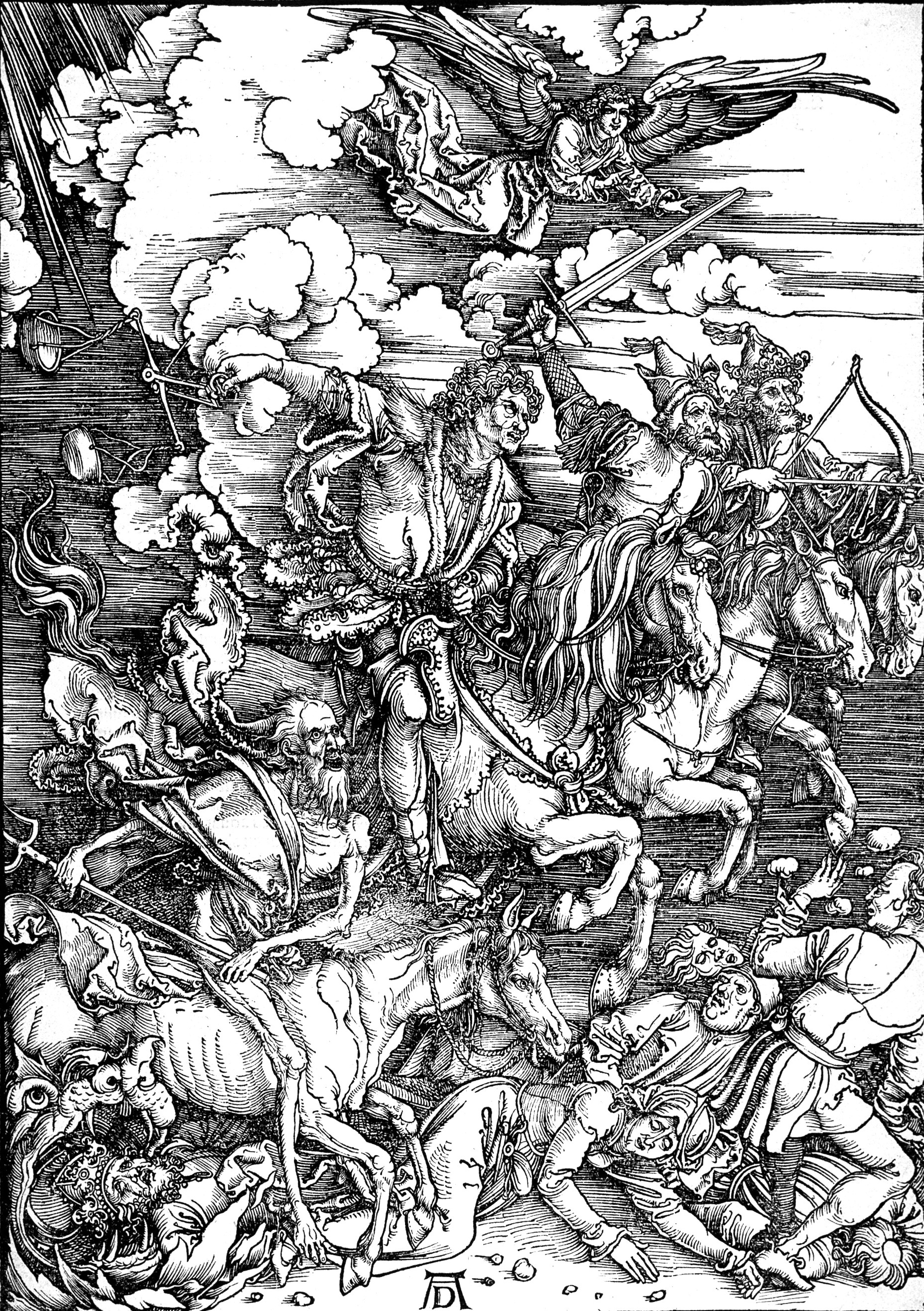
一、不久的將來:他的預測和實際發生的情況
鮑森將他的預測分為信念和行為。關於行為,他給了四個具體預測。
一,教會在歷史上永遠不會明顯地團結在一個組織中。他沒有期望它,也不相信它會發生。
二,教會將變得較少制度化,也較少依賴神職人員。 「未來的基督教將是非正式的基督教,可能沒有建築物,也可能沒有神職人員……但可能在家庭、工作場所和各種其他地方自發興起。」
三,教會領袖將從北半球轉移到南半球。 「傳統上派出福音使者、傳遞基督信仰的教會,將需要成為接受者。這將使它們大大謙卑。」 他用上週一晚間聚會播放的一段錄音來說明:巴拉圭基督徒「沒有我們那些豪華建築,也沒有我們的財力」,卻擁有「我們所渴望的生命與活力」。
四,關於信念,他回到先前使用的三組框架(天主教、自由派、福音派),預測中間陣營(聖公會、長老會、衛理公會、公理會)將「在未來 20 年更加緊密……正如他們已在加拿大和南印度所做的,也正如他們在巴基斯坦正尋求做到的」,而英格蘭的聖公會和衛理公會「正在交談」。他引用馬爾科姆·馬格里奇,把教會合一比作「一群醉漢,必須互相抓住才能站起來」,又引用一位未具名的耶魯教會史教授:「我們不太確定自己相信什麼,但讓我們一起不信吧。」
基督徒人口的中心正在移動
1910–2050年世界各地的基督徒居住地
灰色 = 居住在全球北方(歐洲 + 北美)的世界基督徒比例。金色 = 全球南方(非洲、亞洲、拉丁美洲);這裡指社會地理區域,而非半球。2020年之後的虛線段是延伸至2050年的示意性預測,並非觀測到的時間序列。1970年時,全球北方仍佔多數(59%)。
來源/彙編:全球基督教研究中心《世界基督教數據庫》(圖中各點及2050年終點);皮尤研究中心《世界宗教的未來》(2015),用於區域框架。2050年終點並不是皮尤新發布的觀測更新。
有些聯合實現了,其中一次沒有
教會聯合運動,1925–1972年
1925年6月10日
加拿大聯合教會:衛理公會 + 公理會 + 約70%的長老會在多倫多合併
1947年9月27日
南印度教會在馬德拉斯成立:這是自宗教改革以來第一個跨越主教制與非主教制界線的聯合教會
1969年7月8日
聖公會—衛理公會合一方案在坎特伯雷/約克教務會議上失敗:69%贊成,而所需比例為75%
1970年11月1日
巴基斯坦教會成立:聖公會、衛理公會、長老會(蘇格蘭教會)和路德宗團體聯合
1972年5月
聖公會—衛理公會合一方案在新的總議會上第二次失敗
保羅森講道時,巴基斯坦仍在「尋求」聯合(當時尚未實現)。他沒有預料到自己國家的聖公會—衛理公會合一方案會失敗,不是一次,而是兩次。
關於天主教徒和福音派。 Pawson預測「這個領域將留給天主教徒和福音派」,這兩個將重塑西方宗教的集團,而天主教徒「如果他們調整自己的方法,將在南歐失去地位,但在北歐獲得地位。」他預測福音派「將變得更加團結,同時也更加分裂」。
我相信教會的領導權將從北半球轉移到南半球。傳統上作為福音傳播者的教會需要成為福音的接受者。這將使他們感到非常謙卑。
到達每個國家。 鮑森樂觀地認為,「利用現代的大眾傳播方法」,按照馬太福音 向每個國家傳福音(不是使每個人都歸信,只是確保每個人都聽見),「至少在 2000 年前完成」。他引用威克里夫聖經翻譯家的工作,說他們「有時會到一個只有 13 人的部落」,為他們翻譯上帝話語的一部分。
關於屬靈衰退與迫害。 他預言「大規模離道」和「許多基督徒的愛心漸漸冷淡」,並用會眾成員貝特曼先生的照片說明:貝特曼年輕時在戶外傳道,幾十年後仍做同樣的事,許多同代人卻已放棄。他說迫害會「越來越多」,教會如今需要為將來艱難的日子預備。
二、中期未來:苦難、被提和千禧年(一個框架,還不是定論)
鮑森轉向「世界歷史中的下一件大事」:不是第三次世界大戰,也不是第一個登上月球的人,而是「我們的主耶穌基督以肉身、可見的形體重返世界……手腳上仍有釘痕的身體」。他依次介紹三個術語:大災難、被提和千禧年,並說基督徒對中間那件事——基督親自以肉身再來、迎接祂的子民,也就是被提——是一致的。分歧在兩端:如何理解大災難,以及如何理解千禧年。
關於千禧年,他迅速勾勒出三種解讀:有些人認為它只是象徵性的數字,而非實際的時間跨度;有些人相信教會會迎接這一千年,基督在千年結束時才來。鮑森和另一些人一樣,相信經文按字面應驗:基督在把國度交還給父之前,會在地上真正作王一千年。換句話說,鮑森是前千禧年論者,相信基督在千禧年之前再來,而不是之後。
然後是第一堂課中最生動的段落:他回憶起「去年在溫布利」舉行的比利·格雷厄姆十字軍閉幕集會,成千上萬的人在看台上歌頌讚美。他想知道:如果這已經像一次巨大的集會,那麼雲中的聚會會有多大,與歷世歷代的每一位基督徒一起?「地球上沒有一個足夠大的體育場,所以耶穌安排在空氣中。」他引用耶穌對那一天最嚴厲的警告,來自路加福音:「將有兩個人在一張床上,一個被接去,一個被留下。」他說,一代基督徒將永遠不會死,不會再為一群基督徒舉行葬禮。然後他講述祖父的墓碑,墓碑上只寫著:「多麼好的一次聚會!」這句話讓附近讀墓碑的遊客感到困惑。
然後他在最緊張的時刻停下來說:「在這裡我要踩幾個人的痛腳。」 他概述被提和大災難先後次序的三種立場:教會在苦難以前被提(最普遍)、在苦難中途被提(少數),或在苦難以後、也就是基督再來時被提(他自己的立場);他承諾在下一講完整闡述理由。
三.永恆的未來:難以想像
鮑森以最短、最簡單的一段結束第一講:永恆的未來。他引用保羅寫給哥林多信徒的第一封信:「上帝為愛祂的人所預備的,是眼睛未曾看見、耳朵未曾聽見、人心也未曾想到的。」 他把我們現在與基督的關係比作婚姻,把「永恆的未來」稱為「真正的未來實況」。
最後他引用利物浦主教 J.C. Ryle 小冊子《真正的教會》中的話:「人以為加入這個教會或那個教會,領受聖餐,或經歷某種形式,靈魂就必然無虞。這完全是幻覺……你可能是忠心的聖公會、長老會、公理會、浸信會、衛理公會或普利茅斯弟兄會信徒,卻不屬於真正的教會。」
第二部分:基督的再來
第二講幾乎是第一講的兩倍長,鮑森完全踏進了爭議。他一開始提出雙重要求:不要來挑錯,而要以開放的心態思考基督徒彼此分裂的問題。他說,這個主題顯然來自米爾米德的兩個平行講道系列(週日早上的撒迦利亞書、週日晚上的帖撒羅尼迦書),以及查考撒迦利亞書後一再浮現的問題:還會有基督徒活著,看見他所描述的事件嗎?
一、兩種觀點,而非一個既定事實
鮑森一開始就清楚說明:每一位相信聖經的基督徒都同意有兩件未來事件——基督的再來(新約提到約 300 次)和敵基督的到來。分歧完全在於 這兩件事的先後次序。
他提出了兩個系統:
傳統觀點,他說這是教會歷史最初十七個世紀、直到約 1800 年的看法:敵基督先出現,基督後來再來,僅此而已。敵基督以極權獨裁統治、要求人絕對敬拜,然後基督回來毀滅他並建立國度。他把這種看法歸於教父、宗教改革者(雖然他說改革者錯把教宗視為敵基督)、清教徒和衛斯理。
時代論觀點約在 1825 年出現,至今仍廣泛占主導地位:基督先為祂的聖徒而來(秘密被提,把教會從世界移走),接著敵基督在教會缺席時統治七年,最後基督再來、除滅敵基督並建立國度。他稱之為「任何時刻」觀點,因為它教導基督今晚就可能再來,不必先有任何預兆發生。
在進入這兩個系統前,鮑森先停下來談「敵基督」這個詞。他說希臘前綴 anti「不表示我們今天所說的反對,而是代替、取代」。按他的解讀,敵基督是冒充基督、取代基督的人,不是公開反對基督的人;他也用同一解讀來說明撒但為何曾在曠野向耶穌提供「敵基督的職位」。
為同樣兩個事件排序的兩種方式
敵基督與基督再來:哪一個先發生?
傳統觀點(最初約1800年:教父、宗教改革者、清教徒、衛斯理和保羅森)
教會始終在場:沒有預先發生的秘密「被提」。
時代論觀點(約1830年起:達秘、司可福,以及大多數現代美國福音派)
兩個階段,相隔七年。
保羅森把自己歸在傳統路線中——不是因為它更古老,而是因為他說自己在新約經文中找不到時代論觀點,儘管他承認如今大多數五旬節派和獨立福音派都持這一觀點。
二.時代論的真正來源
鮑森講述一個相當簡短的起源故事:「它始於一個名叫 J.N. Darby 的人……起初是英國聖公會牧師……1825 年從都柏林開始……1830 年左右在普利茅斯開始。」他又說,這個想法「直到十九世紀才出現」,後來「出現在兩個人身上:愛德華·歐文……和 J.N. Darby」。
歷經十九個世紀才形成的教義(當時卻是新說)
災前被提教義的起源,1825–1909年
1825年8月
達秘在愛爾蘭教會(聖公會)按立為執事,任職於威克洛郡卡拉里教區
1827–1828年冬
一個小團體(達秘、克羅寧、貝萊特、格羅夫斯等)開始在都柏林私下擘餅聚會:弟兄會真正的起點
1830
15歲的瑪格麗特·麥克唐納在蘇格蘭波特格拉斯哥、愛德華·歐文圈子中得到一個異象
1830–1838
愛爾蘭的鮑爾斯科特會議:達秘的未來論/時代論體系在那裡逐漸成形
1831年12月
弟兄會首次在英格蘭普利茅斯聚會
1833
愛德華·歐文被蘇格蘭教會革職;他創立了天主教使徒教會
1909
《司可福研讀版聖經》出版(牛津大學出版社),推動時代論在美國福音派中傳播
歐文和麥克唐納是否真的把這一思想「傳給」達秘,仍是學界未解決的爭議(見下方琥珀色提示)。
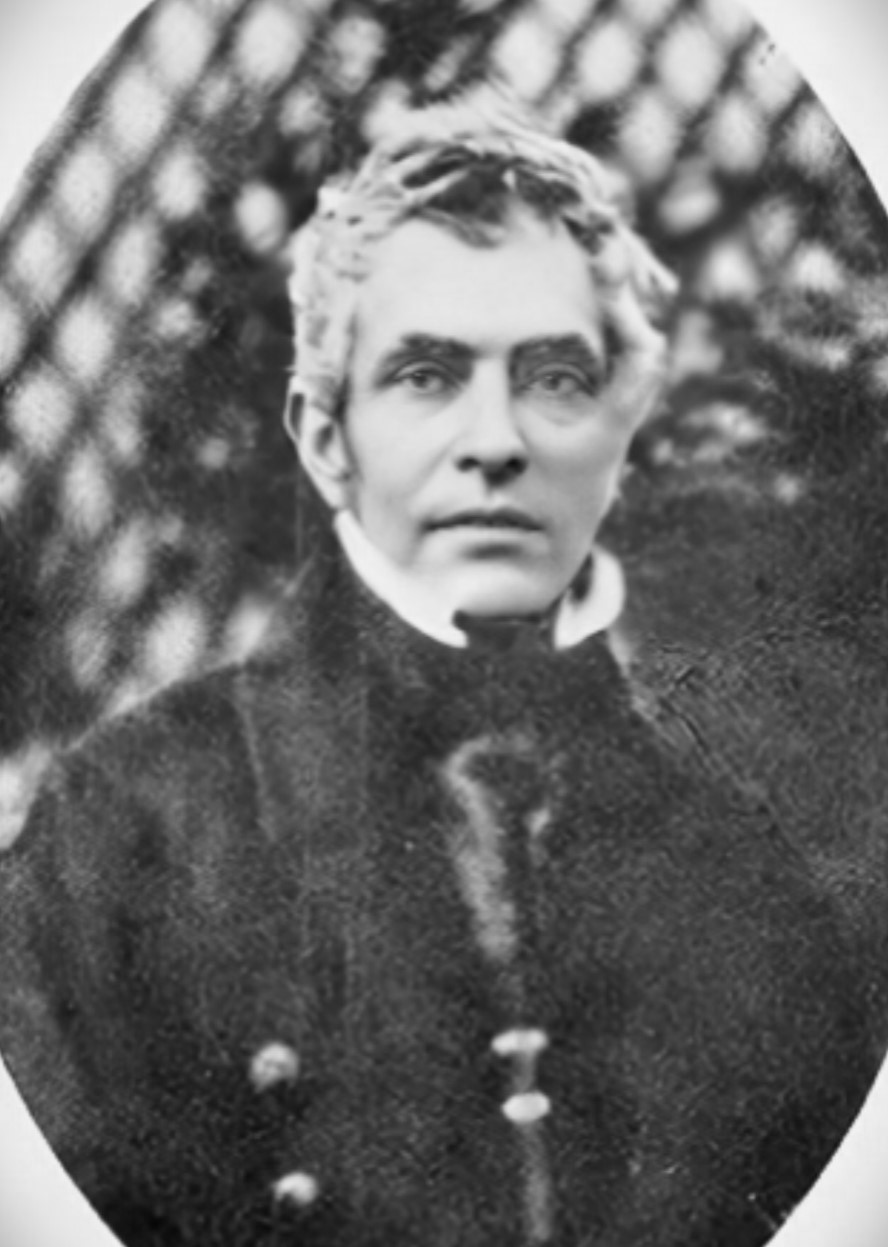
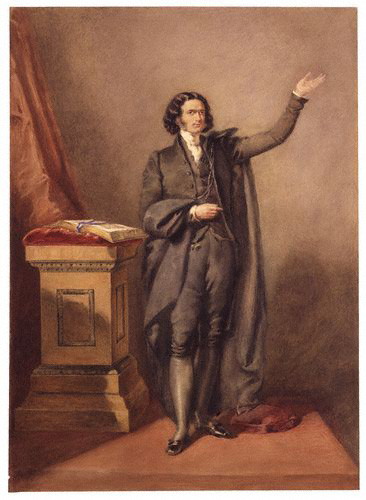
這套教義從達比傳入弟兄會運動,後來經由美國牧師 C.I. Scofield(鮑森稱他為「一位公理會牧師……被 D.L. Moody 邀請到自己的教會牧會」)寫入《斯科菲爾德研讀聖經》的註釋,該書於 1909 年出版;從那裡,它傳入美國福音派,尤其透過後來的五旬節派。
他也點名了與達比意見不同的弟兄會人物:學者 S.P. Tregelles、「G.H. Leng」,最重要的是George Müller,布里斯托爾孤兒院的創始人。
三.測驗理論:詞彙和「像黑夜裡的小偷」
鮑森拒絕用歷史(「新出現」不自動等於錯誤:宗教改革也恢復了被遺忘數百年的真理)或心理學(突然被提的想法在情感上很有力量,但「我們宣講的必須是真理,不能只因它在心理上有效」)來檢驗這項教義。他只接受一個問題:聖經怎麼說?
他從詞彙開始。基督的「降臨」用了三個希臘詞:parousia(君王到訪)、epiphaneia(顯現)和 apokalypsis(揭露、顯明)。他認為,若「為聖徒」和「向世人顯現」是兩個階段,那麼每個詞應各自站在正確的一側;但逐節查看,三個詞都出現在 兩邊,不能用來證明兩個階段。
同一事件所用的三個詞
表示基督「來臨」的三個希臘詞
| 詞語 | 含義 | 用於教會 | 用於世界 |
|---|---|---|---|
| παρουσία(parousia) | 「來臨」(通常指君王的訪問) | 帖撒羅尼迦前書中關於主再來的段落 | 帖撒羅尼迦後書中關於主再來的段落 |
| ἐπιφάνεια(epiphaneia) | 「顯現」 | 提摩太前書中關於顯現的段落 | 提摩太後書中關於顯現的段落 和 提摩太後書中關於他顯現時冠冕的段落 |
| ἀποκάλυψις(apokalypsis) | 「揭示」(像拉開帷幕) | 哥林多前書中關於啟示的段落 | 帖撒羅尼迦後書中關於啟示的段落 |
如果這三個詞真的把「秘密被提」和「公開顯現」區分開來,那麼每個詞都應該只出現在一列中。然而,三個詞都出現在兩列:同一個詞用於兩種場景。
他又分析其他短語:「像夜間的賊」(總是指毫無準備的人,從不指警醒的信徒)、「迫近」(他區分兩個希臘詞:一個指可預見、可能發生的未來事件,另一個指「隨時可能發生」;保羅只在保羅寫給帖撒羅尼迦信徒的第二封信用過後者一次,而且是用來排除迫近性,不是肯定它),以及「警醒」(不是盯著天空,而是像無花果樹的比喻那樣辨識正在展開的跡象)。
四.新約的主旨
這是講道中最長的部分:鮑森依次透過福音書、書信和《啟示錄》論證,新約的重點是「信徒得到許多警告,非信徒卻沒有得到任何警告」,這與秘密被提所暗示的情形相反(信徒毫無預警地消失,世界卻有充分跡象可解釋)。他先提出一個實際論點:若每個基督徒突然消失,很難「不被注意」;他引用「當今世界有 8.5 億名自稱為基督徒的人」。
福音書。 馬太福音是他最倚重的一章:耶穌不是向群眾或猶太人泛泛而談,而是警告門徒戰爭、離道、耶路撒冷的毀滅、敵基督的出現和大災難,接著說:「那些日子的災難一過去……祂要差遣使者,用號筒的大聲,將祂的選民都招聚了來。」這段以大災難開始、以被提結束,中間沒有間隔。
他也訴諸歷史:大多數書信在主後 70 年以前、耶路撒冷被圍以前寫成,而耶路撒冷陷落正是耶穌預言的事件。按照優西比烏所記錄的傳統,基督徒在圍城前逃離耶路撒冷,渡過約旦河到佩拉;「一百五十萬名猶太人被殺,卻沒有基督徒被殺」,因為他們聽從警告而逃走。
《啟示錄》。 鮑森列出二十多節經文,其中「聖徒」或「上帝的子民」被描述為在整個大災難期間仍在地上;教會沒有缺席的間隙。他特別引用啟示錄,正位於哈米吉多頓之戰的描述中:「看哪,我來像賊一樣。那警醒、看守衣服的有福了。」 如果聖徒早已在大災難以前被提,為什麼在哈米吉多頓中間還有「警醒,不要像夜間的賊那樣被抓住」的警告(這警告一向是對基督徒說的)?
然後是實際的結論:他說新約中關於苦難的教導比關於被提的教導「多一百倍」,而他自己的牧師任務是讓羊群為苦難做好準備,而不是承諾他們會逃脫苦難。
五、教牧總結:為苦難做好準備,而不是逃避苦難
鮑森提出兩個題外細節,說明他對未來迫害的警告。他說,「今天在中國,《啟示錄》是基督徒讀得最多的書」,又像是巧合般補充:「中華人民共和國政府中有 666 名代表。」 他還回憶一項極端的城市化預測:「到 2074 年,規劃者告訴我們,世界人口的 98% 將住在一座城市……只剩 2% 留在鄉間。」
鮑森以他稱為「關鍵字、關鍵經文」的一節經文建立實際重點:路加福音,「祈求你們得以逃避這一切要來的事,得以站立在人子面前。」 他強調「站立」是個艱難的詞,用於人被擊退、再無退路的時刻;教會需要為兩者禱告:在可以逃避時有力量逃避,在不能逃避時有力量站立。他也提到以諾和以利亞——聖經中僅有的兩個未經死亡便被帶離世界的人——作為末代基督徒的「預嘗」,但小心說明這只適用於經歷大災難而活著的人,不保證可以事先跳過大災難。
他講了一個親身故事:有人曾告訴他,如果現在能承受小壓力、一些社會嘲笑,將來更大危機臨到時就會得著恩典;現在小事上站立不住,將來大事上也站立不住。他提到自己認識的基督徒已搬到遠離城市的自給農場,預備危難來臨時可能需要離開城市中心:不是追求殉道,而是按照耶穌在馬太福音的教導、也按照路加福音 的禱告,明智地保護家人。
他以一本自己讀過的書的序言作結;作者知道讀者可能不同意他的觀點:「假設你不信服。我們既倚靠同一位救贖主、受同一個魔鬼攻擊、被同一個世界憎恨、從同一個地獄蒙拯救,也同樣被定意得著榮耀,難道我們有這麼多共同之處,還要因為在這件事上見解不同,就容許自己在心志或服事上分裂嗎?斷乎不可。」
鮑森沒有告訴你的事:天主教、東正教和福音派自身的現狀
正如第五部分把梵蒂岡第二次大公會議補進一篇完全沒有提及它的講道,本篇也需要一個更寬廣的視角;鮑森在 1967 年向英國浸信會會眾講道時,沒有理由帶入這個視角。
天主教沒有獨立的「被提」概念。天主教教理(§668-682)和 Lumen Gentium 48 教導單一、不可分割的第二次降臨:基督如今透過教會作王(已開始但尚未完成的國度),教會經歷敵基督統治下的最後試煉(§675-676),這試煉隨即由一次再來、一次普遍復活和一次最後審判解決(§678-682),沒有另一場更早的「被提」。聖座聖務院 1944 年的法令進一步規定,即使是「緩和的千禧年論」(基督在審判前於地上可見的統治)也「不能安全地教導」,使天主教末世論屬於無千禧年論(奧古斯丁)陣營,在結構上不同於鮑森和時代論共同的前千禧年框架。
東正教同樣根據尼西亞信經肯定一次可見、普世的第二次降臨,也堅決拒絕把被提視為十九世紀西方新教的新發明;但它從未建立鮑森式的大災難/被提/千禧年次序系統。主流東正教對啟示錄(七世紀凱撒利亞的安德烈)的詮釋是無千禧年論、偏象徵性,與西方奧古斯丁相近。東正教的主要末世視角不是事件時間表,而是 theosis(神化)、「第八日」和受造界的宇宙轉化:末日是教會和受造界已在聖禮中進入的實況,最具體地在聖體中,而非一張未來事件圖表。
今天福音派自身的光景也不像鮑森的兩陣營框架那麼簡單。皮尤研究中心 2022 年調查發現,只有 44% 的美國福音派持有任何前千禧年立場(時代論與歷史前千禧年論合計),45% 則坦言不知道時間。時代論仍主導流行文化(Left Behind 小說售出 6,500–8,000 萬冊),但自 1970–90 年代高峰以來,在學術和機構層面顯著衰退,甚至在斯科菲爾德所屬的達拉斯神學院也是如此。鮑森自己的災後被提觀點與學者喬治·埃爾登·拉德相關,仍是受尊重的學術傳統,雖然從未達到時代論的大眾影響力。
今日圖景
2022年美國福音派如何看待時間安排
分母相同 · 受調查的福音派
受調查福音派中的44%;不一定等同於時代論的災前被提。
同一福音派群體、同一調查問題中的45%。
後千禧年論
所有美國成年人中的3%——分母不同,此處僅作背景。
44%和45%共用同一個福音派調查框架;3%則針對全體美國成年人,因此不能把它們相加為92%。分欄佈局讓分母差異清晰可見,避免讓人誤以為這是一個合計100%的構成。
來源:皮尤研究中心,2022年——關於耶穌再來情形的問題;3%這一數字來自全體美國成年人。
系列結束
六個部分,從一群身無分文、無權無勢的漁民,走到關於世界如何終結的激烈辯論:這仍是鮑森在第一部分畫出的同一條主線。教會沒有軍隊、金錢或有影響力的人,卻贏得前三場戰役。最後一講沒有承諾教會會按人們通常想像的方式獲勝——組織合一、廣受接納、免受苦難;它承諾的是別的事:教會在南方弟兄姊妹面前學習謙卑,為苦難預備,而非逃避苦難,持守的盼望不是一廂情願,而是對未來絕對的確信。
他最準確的預測——教會會更合一、也更分裂,且其重心將向南移動——結果正是他講道時最不確定的事,只和他對未來二十年的「純粹猜測」一同提出。他最確定的事,即大災難和再來的先後次序,在這篇講道五十八年後,仍有許多真誠的基督徒不同意。
Note: This piece merges the last two lectures, literally, in David Pawson's eleven-part History of the Church series: The Church in the Future (42.1 minutes, Part 10 in his own catalogue) and The Return of Jesus (74.9 minutes, Part 11, the final one). Unlike Parts 4 and 5, this isn't me choosing to fold together separate lectures: these two were already the closing pair. The first sketches the Church's future at three levels (near, intermediate, and eternal) and stops right at the most sensitive point, the order between the "rapture" and the "tribulation", saying "I'm going to tread on a few corns." The second, preached perhaps only weeks later in the same Sunday-evening series at Millmead Baptist Church, Guildford, is where he treads on that corn fully.
This is also the installment Pawson himself flags as the most contentious. He lays out a specific theological position: the Church will go through the tribulation before Christ returns, with no separate prior "secret rapture", and says plainly that many sincere Christians disagree. I've kept that position framed as Pawson's view, not settled historical fact, and added, where it matters, how Catholicism, Eastern Orthodoxy, and Evangelicalism's own internal landscape see this differently today.
Before we start: one sermon, two questions
Part 5 closed in 1968, between two world wars and the three isms that shaped the 20th century. The two lectures closing out Pawson's series raise the natural next question: then what? The first asks where the Church is headed. The second asks how Christ will return, and how the Church should wait for it.
PHẦN MỘT: TƯƠNG LAI HỘI THÁNH
Pawson opens with a question at once serious and wry: is the Church "half empty" or "half full"? He points to the New Testament edition Good News for Modern Men (translated by Robert Bratcher, American Bible Society), "produced just over a year ago… nine and a half million copies have been sold… selling at the rate of 13,000 a day", as evidence people still crave "good news" in a world overflowing with bad news.
Kit's note
Good News for Modern Man (the Today's English Version New Testament) was actually released by the American Bible Society in September 1966, as two independent sources confirm. "Just over a year ago" puts this sermon at the earliest around late 1967. I couldn't find any source confirming Pawson's "nine and a half million copies, 13,000 a day" figures. What is documented is 5.5 million copies in the first year (by roughly September 1967), and over 30 million cumulative copies within the first five years (by roughly 1971), making it the best-selling paperback of all time by May 1971. Pawson's numbers should be treated as his own stated figures, not independently verified fact.
He also recalls "the final rally of the Billy Graham crusade last year in Wembley… 120,000 Christians." The Greater London Crusade actually ran 1 June – 2 July 1966 at Earl's Court, with the closing service moved to Wembley Stadium on 2 July (not 22 May). Christianity Today's contemporary report states plainly: "some 86,000 got into Wembley"; the Billy Graham organization's own retrospective sources round this up to "95,000" or "over 94,000" inside plus about 8,000 who couldn't get in and stood outside. Even the most generous total comes to roughly 102,000–103,000, still a quarter to a third short of Pawson's 120,000.
Combining the clues, including the GNMM floor (earliest ~Oct 1967), Wembley "last year" (satisfied by any point in 1967), and the immediately preceding lecture in the series ("1900–1968") being independently dated to 1967, the best-supported estimate is late 1967, comfortably inside Pawson's pastorate at Gold Hill Baptist Church (1961–1968, per Wikipedia) before his move to Millmead, Guildford.
Source: bible-researcher.com/tev.html; thewayofimprovement.blog (25 May 2016); Christianity Today, "London Crusade Produces Historic Climax" (July 1966); billygrahamlibrary.org; Wikipedia, "David Pawson."
He reads three scripture passages as the foundation for the whole sermon: Paul’s first letter to the Thessalonians (the trumpet sounding, the dead in Christ rising first), Revelation (the innumerable multitude out of the great tribulation), and the millennium-and-new-creation section in Revelation (the millennium, the new heaven and new earth). Then he quotes Gamaliel from Acts: "If this plan or this undertaking is of men, it will fail. But if it is of God, you will not be able to overthrow them." That's the verse he builds the whole talk on: not trying to force the future to happen, just trying to see which way it's already moving.
I. The immediate future: what he predicted, and what actually happened
Pawson splits his forecast into belief and behavior. On behavior, he gives four specific predictions.
One, the Church will never be visibly united in one organization in history. He doesn't expect it and doesn't believe it could happen.
Two, the Church will become less institutional and less clerical. "Future Christianity will be the informal Christianity that may not have buildings and may not have clergymen… but may spring up everywhere spontaneously within homes, within places of work, in all sorts of other ways."
Three, church leadership will pass from the northern hemisphere to the southern. "The churches that have been traditionally the senders of the gospel and the givers of Christianity will need to become the receivers. And this will humble them greatly." He illustrates it with a recording played at the previous Monday-night meeting: Paraguayan Christians, "without any of our posh buildings, without any of our financial resources," but with "a life and a vigor that we covet."
Four, on belief, he returns to a three-group framework he'd used earlier (Catholic, Liberal, Evangelical) and predicts the middle bloc (Anglican, Presbyterian, Methodist, Congregational) will "draw much closer together over the next 20 years… as they have already done in Canada and South India, and are already seeking to do in Pakistan," while in England, Anglicans and Methodists "are talking together." He quotes Malcolm Muggeridge comparing church unity to "a group of drunk men who had to hold on to each other to stand up," and an unnamed Yale church history professor: "we're not quite sure what we believe, but let's unbelieve together."
The Christian Population's Center Is Moving
Where the world's Christians live, 1910–2050
Grey = the share of the world's Christians living in the Global North (Europe + Northern America). Gold = the Global South (Africa, Asia, Latin America); these are socio-geographic regions, not hemispheres. The dashed segment after 2020 is an illustrative projection to 2050, not an observed series. In 1970, the Global North still held a majority (59%).
Sources/compilation: Center for the Study of Global Christianity, World Christian Database (the plotted points and 2050 endpoint); Pew Research Center, The Future of World Religions (2015) for the regional framing. The 2050 endpoint is not a new observed Pew update.
Kit's note
This is the single most impressive prediction in the whole talk, and it predates most of the literature usually credited with popularizing the idea. The qualitative observation, "younger churches" in Africa, Asia, and Latin America outpacing an aging Western church, had circulated since the mid-1950s (Donald McGavran's Church Growth movement from 1955; John V. Taylor, The Growth of the Church in Buganda, 1958). But the confident "leadership shifting north to south" framing Pawson uses predates the book usually credited as the opening shot of this argument, Walbert Buhlmann's The Coming of the Third Church (Italian 1974, English 1976), by roughly six to nine years, and predates David Barrett's full statistical treatment in the World Christian Encyclopedia (1982) by more than a decade and a half.
On the hard numbers: per the Center for the Study of Global Christianity (Gordon-Conwell) and Pew Research, in 1910 roughly 80% to 93% of the world's Christians lived in the Global North (Europe and Northern America). By 1970 itself, around the time Pawson preached this, the Global North still held a clear majority: 58.7% against the Global South's 41.3%. The actual crossover (Global South passing 50%) is generally dated to the 1980s. In other words, Pawson wasn't describing something that had happened, he was forecasting something still roughly a decade and a half away. Today the Global South holds 67% to 69% of the world's Christians, with sub-Saharan Africa alone the single largest Christian region (about 31%).
On the Paraguay example: I couldn't identify a specific source Pawson is referring to. The two closest fits for his description, the Anglican South American Missionary Society's work among the Enxet people of the Chaco from 1889, or the Paraguayan Mennonite Chaco colonies, offer no direct link to this sermon. Treat this as illustration, not a confirmed event.
Source: gordonconwell.edu/blog/the-100-year-shift-of-christianity-to-the-south; Pew Research, "Global Christianity" (2011) and 2025 update; lausanne.org/global-analysis/highlights-of-christianity-in-its-global-context-1970-2020.
Some Unions Happened, One Didn't
Church union movements, 1925–1972
June 10, 1925
United Church of Canada: Methodists + Congregationalists + ~70% of Presbyterians merge in Toronto
September 27, 1947
Church of South India inaugurated in Madras: the first union to cross the episcopal/non-episcopal line since the Reformation
July 8, 1969
Anglican–Methodist unity scheme fails at Convocations of Canterbury/York: 69% in favour, 75% required
November 1, 1970
Church of Pakistan inaugurated: Anglican, Methodist, Presbyterian (Church of Scotland), and Lutheran bodies unite
May 1972
Anglican–Methodist unity scheme fails a second time in the new General Synod
Pawson was preaching while Pakistan was still "seeking" union (it hadn't happened yet). He did not foresee that the Anglican–Methodist union scheme in his own country would fail, not once but twice.
Kit's note
Pawson's three examples all check out. The United Church of Canada formed 10 June 1925 in Toronto, uniting the Methodist Church, the Congregational Union of Canada, and about 70% of the Presbyterian Church in Canada (784 of 4,512 Presbyterian congregations chose to stay out), usually considered the world's first union across major historic denominational lines. The Church of South India was inaugurated 27 September 1947 in Madras, after 28 years of negotiation, uniting the episcopal Anglican tradition with non-episcopal traditions: the first such union since the Reformation, and controversial with some Anglo-Catholics for exactly that reason. The Church of Pakistan genuinely did form, on 1 November 1970. Pawson's "seeking to do" phrasing suggests this sermon was recorded not long before that date, not decades earlier as one might assume.
What he didn't foresee: the Anglican-Methodist union scheme back home in England, which he describes as promisingly "talking together", failed twice: at the Convocations of Canterbury and York on 8 July 1969 (69% in favour, 75% required, even though the Methodist Conference approved it the same day with 77.4%), then again at the new General Synod in May 1972. Worth correcting a commonly repeated online claim: several summaries attribute both failures partly to disagreement over women's ordination. This is anachronistic, since British Methodism didn't ordain its first women presbyters until 2 July 1974, after both votes. The real sticking point was disagreement over the proposed "Service of Reconciliation" for uniting the two ministries.
The Muggeridge quote and the unnamed Yale professor: I could not trace either to a source after extensive searching; nothing in any Muggeridge book, interview, or quotation archive, and no trace of a Yale professor who said that line. Both should be treated as pulpit-circuit anecdotes, not verifiable quotations.
Source: united-church.ca; britannica.com "Church of South India," "Church of Pakistan"; christianitytoday.com/1969/08/where-defeat-is-mandate; methodist.org.uk (50th anniversary of women's ordination).
On Catholics and evangelicals. Pawson predicts "the field will be left to the Catholics and the evangelicals", the two blocs that will reshape Western religion, while Catholics "will lose ground in southern Europe, but gain ground in northern Europe, if they adapt their methods." He predicts evangelicals "will become at once more united and more divided."
I believe that the leadership of the church is going to pass from the northern hemisphere to the southern hemisphere. And the churches that have been traditionally the senders of the gospel will need to become the receivers. And this will humble them greatly.
Kit's note
The first half, Catholics losing ground in southern Europe, is strongly confirmed, if anything understated: in Spain, Sunday Mass attendance fell from 68% (1973) to roughly 11% to 17% today; in Italy, from 36.4% (2001) to 18.8% (2022); in Portugal, only 49% of 18-34-year-olds still self-identify Catholic against 80% of the population overall. The second half, gaining ground in northern Europe via adaptation, holds only in small, patchy pockets: real growth exists in Scandinavia, but it's driven mostly by Catholic immigration (Polish, Filipino, African, Latin American) rather than the institutional Church's "adaptation" winning native Northern Europeans, while larger Northern European Catholic populations (Germany, the Netherlands, Ireland, the UK) have seen sharp declines, especially Germany's Kirchenaustritt wave tied to the abuse scandal.
But what Pawson didn't foresee matters more: his Catholic-vs-evangelical binary misses the force that actually reshaped Western religion from 1970 onward, the rise of the religiously unaffiliated ("nones"). In the US, Pew's 2023-24 survey finds 29% of adults unaffiliated (up from 16% in 2007), a bigger group than Catholics and rivaling all of Protestantism. He correctly named the two most resilient Christian streams, but didn't foresee that the "third force" would be no religion at all.
The "evangelicals more united and more divided" prediction, meanwhile, is the single most accurate one in the passage: cross-denominational Pentecostal/charismatic identity grew from 58 million (1970) to 635–644 million people (2020), roughly an 11x increase (a genuine unifying thread), while at the same time the United Methodist Church underwent the largest US denominational schism since the Civil War (about 7,659 congregations, a quarter of the total, splitting off 2019–2023 to form the Global Methodist Church), and the Southern Baptist Convention has seen 18 straight years of membership decline.
Source: harvard.edu/gazette (Vatican II and Mass-attendance data, 2025); pewresearch.org/religion/2013/02/13/the-global-catholic-population; pewresearch.org/religion/2025/02/26/religious-landscape-study-executive-summary; gordonconwell.edu/center-for-global-christianity; christianitytoday.com/2023/12 (UMC schism).
On reaching every nation. Pawson is optimistic that "with modern methods of mass communication," preaching the gospel to every nation per Matthew’s Gospel (not converting everyone, just making sure everyone hears) "will be completed, at least by the year 2000." He cites Wycliffe Bible Translators, "going sometimes to a tribe of 13 people" to translate part of God's word for them.
Kit's note
Pawson's "done by 2000" forecast wasn't just personal optimism: it shared its deadline with a real, organized evangelical movement: the AD2000 & Beyond Movement (grown out of Lausanne II, Manila 1989, watchword "a church for every people and the gospel for every person by the year 2000"), which spawned Joshua Project 2000 to track roughly 1,700 "unreached people groups." The movement's own internal June 2000 report, from its own leader, Luis Bush, found the goal was not met: over 1,100 people groups still lacked even a minimal indigenous believing fellowship, 265 had no mission initiative at all, and roughly 7,400 smaller groups still lacked a viable church.
A quarter century past Pawson's deadline, Joshua Project now counts roughly 7,188 "unreached people groups" (3.42 billion people) and about 3,218 "frontier" groups (under 0.1% Christian, nearly 1.9 billion people) with almost no gospel access at all. Wycliffe still had 544 languages (about 36.8 million people) with no translation work even begun as of its August 2025 report, and even Wycliffe's own current internal target ("Vision 2025") is only to start a translation for every remaining language, not finish one.
The "13-person tribe" detail: I couldn't locate a specific documented case; it may be Pawson's own illustration, though it's consistent with Wycliffe/SIL's genuine policy of translating for even the smallest language communities (roughly 1 in 12 of the world's languages has fewer than 100 speakers).
Source: Robert T. Coote, "'AD 2000' and the '10/40 Window': A Preliminary Assessment," International Bulletin of Missionary Research (Oct 2000); joshuaproject.net/about/details; wycliffe.net/2025/08/25/2025-scripture-access-statistics.
On spiritual decline and persecution. He predicts "a great falling away" and that "the love of many Christians will grow cold", illustrated with a photograph of a member of his own congregation, Mr. Bateman, as a young man preaching in the open air, still doing the same thing decades later while many of his contemporaries had given it up. And he says persecution will "increase and increase," and the Church needs to prepare now for difficult days ahead.
II. The intermediate future: tribulation, rapture, and millennium (a frame, not yet a position)
Pawson turns to "the next great event in world history", not World War III, not the first man on the moon, but "the return of our Lord Jesus Christ to this world, in physical, visible form… a body that has nail prints in hands and feet." He introduces three technical terms, in the order he lists them: Tribulation, Rapture, and Millennium, and says Christians agree on the middle one: the Rapture itself, Christ literally, bodily returning for his people. The disagreement sits at the two ends: how to understand the Tribulation, and how to understand the Millennium.
On the Millennium, he sketches three readings quickly: some see it as "a purely symbolic figure," not an actual span of time; others believe the Church itself will "usher in" that thousand years, with Christ only arriving at its close; and he, with others, believes it "means what it says", a real thousand years in which Christ reigns visibly on earth before handing the kingdom back to the Father. In other words, Pawson himself is a premillennialist, holding that Christ returns before the millennium, not after it.
Then comes the most vivid passage in the first lecture: he recalls the closing rally of the Billy Graham crusade "last year at Wembley", with tens of thousands of people singing praise in the stands, and wonders: if that already felt like a huge gathering, how large will the meeting in the clouds be, with every Christian who has ever lived across every era: "there wouldn't be a stadium big enough on earth, so Jesus has arranged to meet in the air." He quotes Jesus's own starkest warning about that day, from Luke 17: "there will be two women in one kitchen and one will go and the other will be left. There will be two people in the same bed and husband and wife will be left alone." One generation of Christians, he says, will never die at all, "there will be no funerals for one group of Christians." Then he tells of his grandfather's gravestone, which reads only two words: "What a meeting!", a line that puzzles other visitors reading tombstones nearby.
Then he stops, right at the point of maximum tension: "Here I'm going to tread on a few corns." He sketches three positions on the order between the Rapture and the Tribulation: the Church raptured before the tribulation (the most popular), midway through it (a minority), or after it, at the same moment Christ returns (his own position), and promises to lay out the full argument in the sermon that follows.
III. The eternal future: the unimaginable
Pawson closes the first lecture with its shortest, most modest section: the eternal future. He quotes Paul’s first letter to the Corinthians: "What eye has not seen, what ear has not heard, what has never entered into the heart of man to conceive, God has prepared for them that love him." He compares the present relationship with Christ to an engagement, and the eternal future to a marriage, "the real thing."
Then he closes with a quote from Bishop J.C. Ryle of Liverpool, from the pamphlet The True Church: "Men fancy if they join this church or that church, and become communicants, or go through certain forms, that all must be right with their souls. It is an utter delusion… you may be a staunch Anglican, or Presbyterian, or Congregationalist, or Baptist, or Methodist, or Plymouth Brother, and yet not belong to the true Church."
PHẦN HAI: SỰ TRỞ LẠI CỦA ĐẤNG CHRIST
The second lecture, nearly twice the length of the first, is where Pawson treads on the corn in full. He opens with a double request: don't come looking for fault, and come with an open mind on an issue that divides Christians from one another. He says plainly the topic arose from two parallel sermon series running at Millmead (Zechariah on Sunday mornings, Thessalonians on Sunday evenings) and from a question that kept recurring after the Zechariah studies: would any Christians still be alive to witness the events he'd been describing?
I. Two views, not one settled fact
Pawson lays out the problem clearly from the start: every Bible-believing Christian agrees there are two future events, the coming of Christ (mentioned over 300 times in the New Testament) and the coming of Antichrist. The disagreement is purely about how these two events are ordered in time.
He presents two systems:
The traditional view, which he says held "for the first 17 centuries of church history… right up to about 1800": Antichrist comes first, Christ comes second, full stop. Antichrist rules through a totalitarian dictatorship demanding absolute worship, then Christ returns to destroy him and establish the kingdom. He attributes this view to the church fathers, the Reformers (though he says they "made a mistake" identifying the Pope as Antichrist), the Puritans, and Wesley.
The dispensational view, appearing "from about 1825" and still widely dominant today: Christ comes for his saints first (a secret rapture, removing the Church from the world), then Antichrist reigns for seven years while the Church is absent, then Christ comes with his saints to destroy Antichrist and establish the kingdom on earth. He calls this the "any-moment" view because it teaches Christ could come tonight, with nothing needing to happen first.
Before getting into the two systems, Pawson pauses on the word "Antichrist" itself: he says the Greek prefix anti "does not mean against, as we use it today. It means instead of, it means substitute." Antichrist, in his reading, is someone impersonating Christ, not someone openly opposing him, and he uses this same reading to explain why Satan once offered Jesus "the post of Antichrist" in the wilderness.
Kit's note
This is a checkable linguistic claim, and it's only partly right. The Greek prefix anti carries two main senses in Koine Greek: the more common one, and the dominant sense in the actual usage of antichristos itself, is "against, opposed to", exactly the everyday reading Pawson is trying to overturn. But anti genuinely does carry a "substitute for, in place of" sense in some other New Testament compounds, e.g. antilytron ("a ransom in place of," Paul’s first letter to Timothy) or antimisthia ("a corresponding recompense"). The "Antichrist = an impersonator of Christ, a substitute for him" reading isn't Pawson inventing something from nothing: it has support from some scholars (e.g. Kenneth Wuest) and fits comfortably with Paul’s second letter to the Thessalonians, where "the man of lawlessness" sits in God's temple claiming to be God. But saying the prefix "does not mean against" overstates it: standard Greek lexicons (BDAG) list "against/opposed to" as the primary sense of anti in this context, with "substitute" as a secondary sense, not the only or the dominant one.
Source: BDAG (A Greek-English Lexicon of the New Testament); Kenneth Wuest, Word Studies in the Greek New Testament.
Two Ways to Order the Same Two Events
Antichrist and Christ's return: which order?
The traditional view (the first ~1,800 years: the Fathers, the Reformers, the Puritans, Wesley, and Pawson)
The Church is present the whole way through: no prior secret "rapture."
The dispensational view (from ~1830: Darby, Scofield, most of modern American evangelicalism)
Two stages, separated by seven years.
Pawson places himself in the traditional line: not because it's older, but because he says he cannot find the dispensational view in the New Testament text itself, though he acknowledges it's the view held by most Pentecostal and independent evangelicals today.
Kit's note
This is one of the more solidly verified passages in the whole talk. The earliest post-apostolic fathers, Justin Martyr (Dialogue with Trypho), Irenaeus (Against Heresies, Book V), and Tertullian, all teach exactly the sequence Pawson describes: Antichrist reigns, then Christ visibly appears to destroy him, then the millennium begins. No patristic text mentions a secret rapture prior to Antichrist's appearing.
The Reformers identifying the Pope with Antichrist wasn't a fringe view, it was mainstream confessional doctrine for Reformed and Puritan Protestantism. The original 1646 text of Westminster Confession 25.6 reads: "There is no other head of the Church but the Lord Jesus Christ. Nor can the Pope of Rome, in any sense, be head thereof; but is that Antichrist, that man of sin, and son of perdition." This clause was only removed in later (mostly American, 19th-20th century) revisions. Luther wrote similarly in the Smalcald Articles (1537): "the Pope is the very Antichrist."
Wesley needs a small footnote: he did hold the historicist (Bengel-following) reading identifying the Pope as Antichrist, with no secret-rapture concept, but he was a postmillennialist, believing that after Antichrist's fall there would be a long golden age of gospel advance before Christ's return, not that Christ returns immediately after Antichrist falls, as Pawson's simple two-step framework implies.
Source: christianhistoryinstitute.org/magazine/article/historic-premillennialism; opc.org/documents/WCF_orig.html (1646 text); thebookofconcord.org (Smalcald Articles); wesleyscholar.com/john-wesleys-order-of-eschatological-events.
II. Where the dispensational view actually came from
Pawson tells a fairly compact origin story: "it started with a man called J.N. Darby… an Anglican curate at first… 1825, beginnings in Dublin… 1830 or thereabouts, beginnings in Plymouth." He also says the idea "never appeared until the 19th century," then "appeared in two people, Edward Irving… and J.N. Darby."
A Doctrine Nineteen Centuries in the Making (Then New)
The origins of the pretribulation rapture doctrine, 1825–1909
August 1825
Darby ordained deacon in the Church of Ireland (Anglican), parish of Calary, Wicklow
Winter 1827–28
A small group (Darby, Cronin, Bellett, Groves…) begins breaking bread privately in Dublin: the real start of the Brethren
1830
Margaret Macdonald, aged 15, has a vision at Port Glasgow, Scotland, within Edward Irving's circle
1830–1838
The Powerscourt Conferences (Ireland): where Darby's futurist/dispensational system gradually takes shape
December 1831
First Brethren meeting at Plymouth, England
1833
Edward Irving deposed by the Church of Scotland; founds the Catholic Apostolic Church
1909
The Scofield Reference Bible is published (Oxford University Press): spreading dispensationalism across American evangelicalism
Whether Irving and Macdonald actually "transmitted" the idea to Darby remains an unresolved scholarly dispute (see the amber note below).
Kit's note
Darby really was ordained deacon in the Church of Ireland (the Anglican province in Ireland, the established state church at the time) in August 1825, and served the isolated rural parish of Calary, County Wicklow, not Dublin. "Anglican" is an accurate shorthand; "Church of Ireland" is the precise denominational name.
But "1825, beginnings in Dublin" compresses two separate events into one: 1825 is when Darby was ordained and posted to Wicklow, while the first informal Dublin bread-breaking gatherings (Darby with Edward Cronin, John Gifford Bellett, Anthony Norris Groves…) only began in winter 1827-28, after a riding accident left Darby convalescing. "1830 or thereabouts, beginnings in Plymouth" is close but slightly early: the first Brethren meeting at Plymouth was held in December 1831.
Source: Sweetnam & Gribben, "J.N. Darby and the Irish Origins of Dispensationalism," Journal of the Evangelical Theological Society 52/3 (2009); Dictionary of Irish Biography.
Kit's note
This is where Pawson simplifies a genuinely tangled history. Pairing Irving and Darby as two people independently arriving at the same secret-rapture doctrine isn't quite accurate. Close study of Irving's own teaching (C.G. Flegg, 'Gathered Under Apostles', Oxford, 1992) shows Irving taught the "translation" of the saints as part of the same Second Advent event, a brief interval within it, not a secret removal years before a future seven-year tribulation. Irving was also a historicist (prophecy fulfilled progressively through church history), while Darby was a futurist (most prophecy still awaiting future fulfillment): different interpretive systems, not one idea independently held by two men.
The more widely known story Pawson may be gesturing at without naming: that the secret-rapture doctrine originated in the 1830 vision of Margaret Macdonald, a 15-year-old in Port Glasgow, Scotland, within Irving's circle, then passed to Darby (who may have "covered up" its origin). This is journalist Dave MacPherson's thesis, argued across several books from 1973 to 1994. Most historians, both sympathetic to and critical of dispensationalism, reject direct dependence: F.F. Bruce called it "unlikely"; R.A. Huebner and Thomas Ice point out Darby's own pretrib-leaning writings predate 1830; and a close reading of Macdonald's own published vision text (1840) reads as describing being tried through the tribulation, i.e. posttribulational, not pretribulational, the ambiguity only appearing in an 1861 reprint that dropped a few lines. But this isn't fully settled either: a King's College London PhD thesis (Mark Patterson, 2001) seriously argues Irving really did play a pioneering role. In short: a real, not-fully-resolved scholarly dispute, not a simple case of two men independently having the same idea.
Source: C. Graham Flegg, 'Gathered Under Apostles' (Oxford: Clarendon Press, 1992); Thomas Ice, "Edward Irving and the Rapture," pre-trib.org; Sweetnam & Gribben, JETS 52/3 (2009); Timothy C.F. Stunt, "Influences in the Early Development of J.N. Darby," in Prisoners of Hope? (Paternoster, 2004).
From Darby, the doctrine passed into the Brethren movement, then through an American minister, C.I. Scofield (described by Pawson as "a congregational minister… called to his pastorate by D.L. Moody"), who wrote it into the notes of the Scofield Reference Bible, published 1909, from where it spread across American evangelicalism, especially through later Pentecostal groups.
He also names Brethren figures who disagreed with Darby: the scholar S.P. Tregelles, "G.H. Leng," and above all George Müller, founder of the Bristol orphan houses.
Kit's note
Scofield was ordained Congregationalist in 1883 and took up his own pastorate at a small Dallas church (now Scofield Memorial Church), not at Moody's calling. The Moody connection predates that (he assisted Moody's 1879 St. Louis campaign) and postdates it: only in 1895 did he actually leave Dallas to become pastor at Moody's own church, Trinitarian Congregational Church in East Northfield, Massachusetts. Pawson has merged two separate pastorates into one.
The Scofield Reference Bible was published in 1909 (Oxford University Press, as Pawson says), sold over 2 million copies by the end of WWII, and became known as "the Bible of fundamentalism" for its outsized influence on how a generation of American evangelicals read prophecy.
One thing Pawson doesn't mention: Scofield's pre-conversion past is documented in the public/court record and rough: forced to resign as US District Attorney for Kansas in 1873 amid bribery allegations; arrested for forgery in 1878; deserted his first wife and two young daughters c. 1877-1881 (divorce finalized 8 Dec 1883); then remarried only about three months later, 11 March 1884, close enough that some critics call it "near-bigamy," though there's no evidence of two concurrent legal marriages. Worth flagging: the most detailed and harshest version of this story traces largely to one critical biography, Joseph M. Canfield's The Incredible Scofield and His Book (1988), regarded by Scofield's defenders as biased and overstating the severity. The core events (resignation, forgery, divorce, fast remarriage) are grounded in the public record, but the framing of them as a "dark past" is contested, not an uncontroversial consensus.
Source: en.wikipedia.org/wiki/C._I._Scofield; library.dts.edu/Pages/TL/Special/scofield.shtml; tshaonline.org/handbook/entries/scofield-cyrus-ingerson; Joseph M. Canfield, The Incredible Scofield and His Book (1988).
Kit's note
S.P. Tregelles (1813-1875), the eminent Greek New Testament textual scholar, of a stature comparable to Tischendorf, really did publicly dissent from Darby's secret-rapture doctrine. In The Hope of Christ's Second Coming (1864) he argued the doctrine had no basis in Scripture or the church fathers, and traced its origin to an emotional "utterance" in Edward Irving's congregation.
"G.H. Leng" is almost certainly a mis-transcription of G.H. Lang (George Henry Lang, 1874-1958), a well-known Brethren author on resurrection and rapture. Worth noting: Lang was born decades after Darby's own lifetime (Darby died 1882), so his "dissent" is a later intra-Brethren tradition, not a face-to-face contemporary debate with Darby the way Tregelles's or Müller's was.
George Müller (1805-1898), founder of the Bristol orphan houses through the Scriptural Knowledge Institution (1834), held a futurist premillennial system largely parallel to Darby's, but clearly rejected the rapture happening before the tribulation, leaning posttribulational: he's described as "very suspicious" of the new doctrine spreading in Brethren literature.
Source: christianobserver.net (series on Darby and the pretribulation rapture); en.wikipedia.org/wiki/George_H._Lang; theopedia.com/george-muller.
III. Testing the theory: vocabulary, and "like a thief in the night"
Pawson refuses to test the doctrine by history ("newly appeared" doesn't automatically mean wrong: the Reformation also recovered truths forgotten for centuries) or by psychology (the idea of a sudden rapture is emotionally powerful, but "what we preach must be the truth, not because it's psychologically effective"). He accepts only one question: what does the Bible say?
He starts with vocabulary. Three Greek words are used for Christ's "coming": parousia (a royal visit), epiphaneia (an appearing), and apokalypsis (an unveiling), and argues that if the dispensational split between "coming for the saints" and "appearing to the world" were right, each word should only show up on one side. But going verse by verse, all three show up on both sides.
The Same Three Words, Used of the Same Event
Three Greek words for Christ's "coming"
| Word | Meaning | Used of the church | Used of the world |
|---|---|---|---|
| παρουσία (parousia) | "Coming" (usually a royal visit) | the coming-of-the-Lord passage in First Thessalonians | the coming-of-the-Lord passage in Second Thessalonians |
| ἐπιφάνεια (epiphaneia) | "Appearing" | the appearing passage in First Timothy | the appearing passage in Second Timothy and the crown-at-his-appearing passage in Second Timothy |
| ἀποκάλυψις (apokalypsis) | "Unveiling" (pulling back a curtain) | the unveiling passage in First Corinthians | the unveiling passage in Second Thessalonians |
If these three words really separated a "secret rapture" from a "public appearing," each should only show up in one column. Instead all three appear in both: the same word, used for both settings.
Kit's note
Checking each verse: epiphaneia at the appearing passage in First Timothy and the appearing passage in Second Timothy and the crown-at-his-appearing passage in Second Timothy is correct. Apokalypsis at the unveiling passage in First Corinthians and the unveiling passage in Second Thessalonians is correct. For parousia: the coming-of-the-Lord passage in Second Thessalonians is right, but the word actually occurs at the coming-of-the-Lord passage in First Thessalonians, not at the location Pawson names, though the whole passage the whole caught-up passage in First Thessalonians (the correct "caught up" passage) is what he's referring to, so this is a minor verse-number slip, not a content error.
Pawson's central thesis, that these three words aren't technical terms splitting two stages, matches mainstream NT scholarship: George Eldon Ladd's The Blessed Hope (1956) and Robert Gundry's The Church and the Tribulation (1973) both conclude no two-stage coming can be deduced from NT word usage; BDAG classifies parousia as the general term for the whole return, not a label for a secret sub-phase.
But one fairness note is worth adding: this was the standard dispensationalist argument before roughly 1945. By the time Pawson preached this, dispensationalism's own leading theologian, John Walvoord, had already conceded exactly this lexical point himself, writing that parousia has "no technical meaning… limiting its use to either one" side, but is used "in a general… sense… descriptive of both the rapture and the glorious return." Walvoord defended the pretribulation rapture on other grounds (imminence, distinct audiences, the "restrainer" of Paul’s second letter to the Thessalonians), no longer relying on the lexical split. So Pawson is accurately refuting dispensationalism's older, more popular argument, not necessarily its most sophisticated, contemporary form.
Source: George Eldon Ladd, The Blessed Hope (Eerdmans, 1956); Robert Gundry, The Church and the Tribulation (Zondervan, 1973); walvoord.com/article/68 (Walvoord's review of Ladd).
He works through other phrases: "as a thief in the night" (always applied to the unprepared, never to the watchful believer), "at hand" (he distinguishes two Greek words: one for the foreseeable future with events possibly intervening, one for "any moment"; Paul uses the second only once, in Paul’s second letter to the Thessalonians, and uses it precisely to rule out imminence, not affirm it), and "watch" (not staring at the sky, but discerning unfolding signs, like the lesson of the fig tree).
IV. The New Testament's main thrust
This is the longest section of the sermon: Pawson works through the Gospels, the Epistles, and Revelation in turn to argue the New Testament's main thrust is "believers get much warning, unbelievers get none", the opposite of what the secret-rapture doctrine implies (believers vanish without warning, while the world gets ample signs). He opens with a practical argument: the sudden disappearance of every Christian could hardly go "unnoticed": he cites "850 million professing Christians in the world today."
Kit's note
If this sermon dates to late 1967 as argued at the top of this piece, Pawson's figure runs meaningfully below modern scholarly reconstructions for the same period. The World Christian Encyclopedia (Barrett), the same source used to build the chart in Part 5, estimates Christians at about 33.7% of world population in 1970, against a world population of roughly 3.7 billion, or about 1.25 billion people, not 850 million: a gap of roughly 30%, in the same direction as Pawson's general pattern of understating global Christianity's scale (see Part 5). Either way, his core point, that whether the true figure is 850 million or 1.25 billion, a mass disappearance on that scale would be impossible to miss, holds regardless of the exact number.
Source: World Christian Encyclopedia (Barrett), as cited in Part 5 of this series.
The Gospels. Matthew’s Gospel is the chapter he leans on most: Jesus warns the disciples, not the crowds, not the Jews, about wars, apostasy, Jerusalem restored, the appearance of Antichrist, and the tribulation, then says: "Immediately after the tribulation of those days… he will send out his angels with a loud trumpet call and they will gather the elect." The paragraph begins with the tribulation and ends with the rapture, with no gap between them.
He also draws on history: most of the epistles were written before AD 70, before the siege of Jerusalem, an event Jesus himself had predicted. Per the tradition recorded by Eusebius, the Christians fled Jerusalem for the town of Pella across the Jordan before the siege, and "one and a half million Jews were killed but no Christians were," because they had heeded the warning and fled.
Kit's note
The "flight to Pella" tradition is real, but only attested in 4th-century sources: Eusebius, Historia Ecclesiastica 3.5.3 (written c. AD 312-324) and Epiphanius, Panarion 29-30 (late 4th century), more than 240 years after the event. There's no first-century evidence at all: not in the New Testament, not in Josephus's Jewish War (written c. AD 75-79, covering the siege in exhaustive detail but never mentioning a Christian evacuation). Historians have debated the tradition's reliability since S.G.F. Brandon's 1951 challenge (arguing the flight was implausible given Roman control of escape routes); other historians (Craig Koester, 1989; Jonathan Bourgel, 2010) argue it does preserve a genuine historical memory, though none of them endorses the strong version Pawson gives, that all Christians were safe.
On the "one and a half million" figure: no ancient or modern source gives this number. Josephus himself (Jewish War 6.9.3, paragraph 420), presumably Pawson's loose source, records the siege death toll at roughly 1,100,000 (plus about 97,000 taken captive), and states plainly most of the dead were Passover pilgrims from across Judea trapped in the city, not only Jerusalem residents. Modern historians (such as Menahem Stern) already treat Josephus's own 1.1 million as a substantial exaggeration: Jerusalem's walled-city population is estimated at roughly 60,000-70,000, and even swollen by wartime refugees and pilgrims, falls far short of a million. So Pawson's figure isn't just one and a half times Josephus's own (already-inflated) number: the claim that "no Christians" died is also his own inference, not a verifiable historical statistic; no ancient source counts Christian survivors.
Source: Eusebius, Historia Ecclesiastica 3.5.3; Craig R. Koester, "The Origin and Significance of the Flight to Pella Tradition," Catholic Biblical Quarterly 51.1 (1989); Josephus, Jewish War 6.9.3 (paragraph 420); Siege of Jerusalem (70 CE), summarizing Menahem Stern's assessment.
The Book of Revelation. Pawson lists over twenty verses where "the saints" or "God's people" are described as present on earth throughout the tribulation: no gap in which the Church is absent. He leans especially on Revelation, right in the middle of the description of the battle of Armageddon: "Behold, I am coming like a thief. Blessed is he who is awake." If the saints had already been raptured before the tribulation, why does the warning to "stay awake, don't be caught like a thief in the night" (always addressed to Christians) show up right in the middle of Armageddon?
Then the practical conclusion: he says there is "a hundred times more" teaching on suffering than on the rapture in the New Testament, and his own pastoral task is to prepare the flock for suffering, not to promise they'll escape it.
V. A pastoral conclusion: preparing for suffering, not escaping it
Pawson offers two topical details to illustrate the warning about future persecution. He says "in China today the book of Revelation is the most read book by Christians," adding, as if a coincidence, that "the Chinese People's Republic has 666 representatives sitting in government." He also recalls an extreme urbanization forecast: "by 2074, the planners tell us that 98% of the world's population will be living in one city… only 2% will be left in the country."
Kit's note
No session of China's National People's Congress has ever had exactly 666 members. The 3rd NPC, the nominal session spanning the Cultural Revolution (1964-1975), had 3,040 delegates; the 2nd (1959-1964) had 1,235; the 4th (1975-1978) had 2,864; and since 1982 the law has capped the NPC at no more than 3,000 delegates. The "666" figure matches no documented record: this reads almost certainly as pulpit-style "Revelation numerology," not a historical fact. On Revelation being China's "most-read book": no scholarly, denominational, or Bible-society source quantifies reading habits this way, emotionally plausible (apocalyptic literature often resonates strongly with the persecuted), but unverifiable as a statistic.
What's real and more worth noting: the Cultural Revolution (1966-1976) genuinely was the harshest persecution period for Chinese Christianity in the modern era: churches closed, Bibles burned, clergy imprisoned and tortured, public worship banned outright. Yet underground house-church Christianity survived, and later grew explosively, well documented in Tony Lambert's The Resurrection of the Chinese Church (1991): believers met in coal-mine tunnels and mountain caves, hid hymnbooks inside covers of Mao's Little Red Book, and growth was driven substantially by lay "Bible women" who had memorized Scripture.
On "98% in one city by 2074": this isn't a UN or World Bank projection, but a garbled echo of a real but non-consensus 1962 forecast by Greek urban planner Constantinos Doxiadis, inventor of the "Ecumenopolis" concept (a hypothetical single planet-spanning city). He extrapolated then-current growth rates to predict world population reaching 50 billion by 2100, 98% urban, covering about 48 million sq km along growth corridors: a strand of 1960s "megastructuralist" urban futurism (alongside Jean Gottmann's 1961 "Megalopolis" and Herman Kahn/Anthony Wiener's 1967 "The Year 2000"), never mainstream demographic consensus even at the time. The reality: global urbanization was about 57.7% in 2024 (World Bank), with the UN projecting roughly 68% by 2050 (nowhere near 98%), while world population is projected to peak around 10-10.3 billion, not the 50 billion Doxiadis assumed.
Source: npcobserver.com (NPC seat allocation); Tony Lambert, The Resurrection of the Chinese Church (1991); en.wikipedia.org/wiki/Ecumenopolis; World Bank, urban population 2024; UN, World Urbanization Prospects (2018, 2025 update).
Pawson frames the whole practical takeaway around a verse he calls outright "a key word, key verse": Luke’s Gospel, "Pray that you may have strength… to escape." He stresses that "stand" is a tough word, used for the moment you're beaten back with nowhere left to retreat, and says the Church needs to pray for both: strength to escape when escape is possible, and strength to stand when it isn't. He also recalls Enoch and Elijah, the only two people in Scripture taken out of the world without dying, as a "foretaste" for the final generation of Christians, but is careful to say that only applies to those who live through the tribulation, not a guarantee of skipping it beforehand.
He tells a personal story: someone once told him that if you stand under small pressures now, a little social ridicule, you'll receive grace for the bigger crisis when it comes; if you don't stand in small things now, you won't stand in the big ones later. He mentions Christians he knows who have moved to self-sufficient farms far from cities, preparing for the possibility of needing to leave urban centers when trouble comes: not courting martyrdom, but wisely protecting their families exactly as Jesus instructed in Matthew’s Gospel, and exactly as Luke’s Gospel prays for.
He closes with a quotation from the preface of a book he'd read, written by an author who knew readers would disagree with him: "Suppose you are not convinced. Shall we who are relying on the same redeemer… assaulted by the same devil, hated by the same world, delivered from the same hell and destined to the same glory, shall we who have so much in common allow ourselves to be divided in heart or service because we are of different minds on this secondary matter? God forbid."
What Pawson doesn't tell you: Catholicism, Orthodoxy, and evangelicalism's own landscape today
Just as Part 5 added the Second Vatican Council to a sermon that never mentioned it at all, this installment needs a wider lens that Pawson, preaching to an English Baptist congregation in 1967, had no reason to bring in.
Catholicism has no separate "rapture" concept. The Catechism of the Catholic Church (§668-682) and Lumen Gentium 48 teach a single, undivided Second Coming: Christ already reigns through the Church now (an inaugurated-but-incomplete Kingdom), the Church passes through one final trial under Antichrist (§675-676), and that trial is resolved immediately by one Parousia, one general resurrection, one Last Judgment (§678-682), with no room for a separate earlier "rapture" event. A 1944 decree of the Holy Office further ruled that even "mitigated millenarianism" (a visible pre-judgment earthly reign of Christ) "cannot be taught safely," placing Catholic eschatology in the amillennial (Augustinian) camp, structurally different from both Pawson's and dispensationalism's shared premillennial framework.
Eastern Orthodoxy likewise affirms one visible, universal Second Coming (per the Nicene Creed), and firmly rejects the rapture as a 19th-century Western Protestant novelty, but has never built a Pawson-style sequenced tribulation/rapture/millennium system. Mainstream Orthodox exegesis of Revelation (Andrew of Caesarea, 7th century) is amillennial/symbolic, paralleling Augustine in the West. In place of a timeline, Orthodoxy's dominant eschatological lens is theosis (deification), the "eighth day," and the cosmic transfiguration of creation: treating the End as something the Church and creation are already sacramentally entering, most concretely in the Eucharist, rather than a chart of coming events.
Evangelicalism's own landscape today is also not as simple as Pawson's two-camp framework. A 2022 Pew survey found only 44% of American evangelicals hold any premillennial position at all (dispensational or historic combined), while 45% say outright they don't know the timing. Dispensationalism still dominates popular culture (the Left Behind novels sold 65-80 million copies) but has declined markedly at the scholarly/institutional level since its 1970s-90s peak, even at Dallas Theological Seminary itself, Scofield's own institutional home. Pawson's own posttribulational view, associated with scholar George Eldon Ladd, remains a respected academic tradition, even though it never achieved dispensationalism's mass popular reach.
The Picture Today
What American evangelicals think about the timing, 2022
Same denominator · surveyed evangelicals
44% of surveyed evangelicals; not automatically the same as dispensational pretribulation.
45% of the same evangelical group and the same survey question.
Postmillennial
3% of all U.S. adults — a different denominator, shown only as context.
The 44% and 45% figures share the evangelical survey frame; the 3% figure is for U.S. adults overall, so they must not be added to 92%. The split layout makes the denominator difference visible instead of implying a 100% composition.
Source: Pew Research Center, 2022 — questions about the circumstances of Jesus' return; the 3% figure is among all U.S. adults.
Closing the series
Six parts, from a group of penniless, powerless fishermen to a debate that's still hot about how the world will end: the same thread Pawson drew back in Part 1. The Church won its first three battles without an army, without money, without influential people. His final lecture doesn't promise the Church will win the way people usually imagine winning, united in one organization, broadly embraced, spared from suffering. He promises something else: a Church learning humility before its southern brothers and sisters, preparing for suffering instead of fleeing it, and holding a hope that isn't wishful thinking but absolute certainty about the future.
The thing he predicted most accurately, that the Church would become both more united and more divided, and that its center of gravity would shift south, turns out to be exactly what he was least certain about when he preached it, filed alongside his own "just speculation" about the next twenty years. And the thing he was most certain about, the order between the tribulation and the return, is still the thing many other sincere Christians disagree with him on, fifty-eight years after this sermon.