
Kirchengeschichte und Reformation
Kirchengeschichte: Teil 6 – Die Zukunft der Kirche und die Wiederkunft Christi
Hinweis: Dieser Beitrag vereint die letzten beiden Vorträge aus David Pawsons elfteiliger Reihe Kirchengeschichte: Die Kirche in der Zukunft (42,1 Minuten, Teil 10 in seinem eigene…
Bei diesem Essay half AI bei Quellen, Fakten, Übersetzung und Redaktion; Argument und Schlussfolgerungen stammen vom Autor.
Gedankengang, Bedeutung und Schlussfolgerungen gehören dem Autor selbst. Welche Quellen vertrauenswürdig sind und wie sie zu verstehen sind, entscheidet der Autor, nicht die Werkzeuge.
AI-Werkzeuge wurden genutzt, um Quellen zu suchen, Aussagen mit ihnen abzugleichen, breit zum Thema zu lesen, den Text zwischen Englisch und Vietnamesisch zu übertragen und bei Grammatik, Klarheit und Satzrhythmus zu helfen.
Was sie fanden, war abzuwägendes Material, kein Urteil. Der Autor entschied, was dieser Essay sagen, auslassen und bedeuten sollte.
Der Essay erscheint unter dem Namen des Autors. Der Autor steht dafür ein, auch für alles, was sich darin als falsch erweist.

Parallel
Hinweis: Dieser Beitrag vereint die letzten beiden Vorträge aus David Pawsons elfteiliger Reihe Kirchengeschichte: Die Kirche in der Zukunft (42,1 Minuten, Teil 10 in seinem eigenen Katalog) und Die Wiederkunft Jesu (74,9 Minuten, Teil 11, der letzte). Anders als bei den Teilen 4 und 5 ist es hier nicht meine eigene Entscheidung, getrennte Vorträge zusammenzufassen: Diese beiden bildeten bereits das Abschlusspaar. Der erste skizziert die Zukunft der Kirche auf drei Ebenen – der nahen, der mittleren und der ewigen Zukunft – und hält genau am sensibelsten Punkt inne: an der zeitlichen Reihenfolge von „Entrückung“ und „Trübsal“. Dazu sagt er: „Ich werde auf ein paar Zehen treten.“ Die zweite Predigt, die vielleicht nur wenige Wochen später in derselben Sonntagsabendreihe in der Millmead Baptist Church in Guildford gehalten wurde, prüft diese Frage vollständig.
Dies ist auch der Teil, den Pawson selbst als den umstrittensten bezeichnet. Er legt eine spezifische theologische Position dar: Die Kirche wird die Trübsal durchmachen, bevor Christus zurückkehrt, ohne eine separate vorherige „heimliche Entrückung“, und sagt deutlich, dass viele aufrichtige Christen anderer Meinung sind. Ich habe diese Position als Pawsons Ansicht und nicht als gefestigte historische Tatsache formuliert und hinzugefügt, wo es darauf ankommt, wie der Katholizismus, die östliche Orthodoxie und die heutige Landschaft des Evangelikalismus dies anders sehen.
Bevor wir beginnen: eine Predigt, zwei Fragen
Teil 5 endete im Jahr 1968, zwischen zwei Weltkriegen und den drei Ismen, die das 20. Jahrhundert prägten. Die beiden Vorträge, die Pawsons Reihe abschließen, werfen natürlich die nächste Frage auf: Was kommt dann? Der erste fragt, wohin die Kirche geht. Der zweite fragt, wie Christus wiederkommen wird und wie die Kirche darauf warten soll.
ERSTER TEIL: DIE ZUKUNFT DER KIRCHE
Pawson beginnt mit einer zugleich ernsten und ironischen Frage: Ist die Kirche „halb leer“ oder „halb voll“? Er verweist auf die neutestamentliche Ausgabe Good News for Modern Men (übersetzt von Robert Bratcher, American Bible Society), die laut seiner Erinnerung „vor etwas mehr als einem Jahr produziert wurde … neuneinhalb Millionen Exemplare wurden verkauft … mit einer Rate von 13.000 pro Tag“, als Beweis dafür, dass sich Menschen in einer Welt voller schlechter Nachrichten immer noch nach „guten Nachrichten“ sehnen.
Er liest drei Schriftstellen als Grundlage für die gesamte Predigt: der erste Brief des Paulus an die Thessalonicher (der Posaunenschall, die Toten in Christus stehen zuerst auf), die Offenbarung (die unzählbare Schar aus der großen Trübsal) und der Abschnitt über das tausendjährige Reich und die neue Schöpfung in der Offenbarung (das Tausendjährige Reich, der neue Himmel und die neue Erde). Dann zitiert er Gamaliel aus der Apostelgeschichte: „Wenn dieser Plan oder dieses Unternehmen von Menschen stammt, wird es scheitern. Aber wenn es von Gott ist, wirst du sie nicht stürzen können.“ Das ist der Vers, auf dem er die ganze Rede aufbaut: Ich versuche nicht, die Zukunft zu erzwingen. Ich versuche nur herauszufinden, in welche Richtung sie sich bereits bewegt.
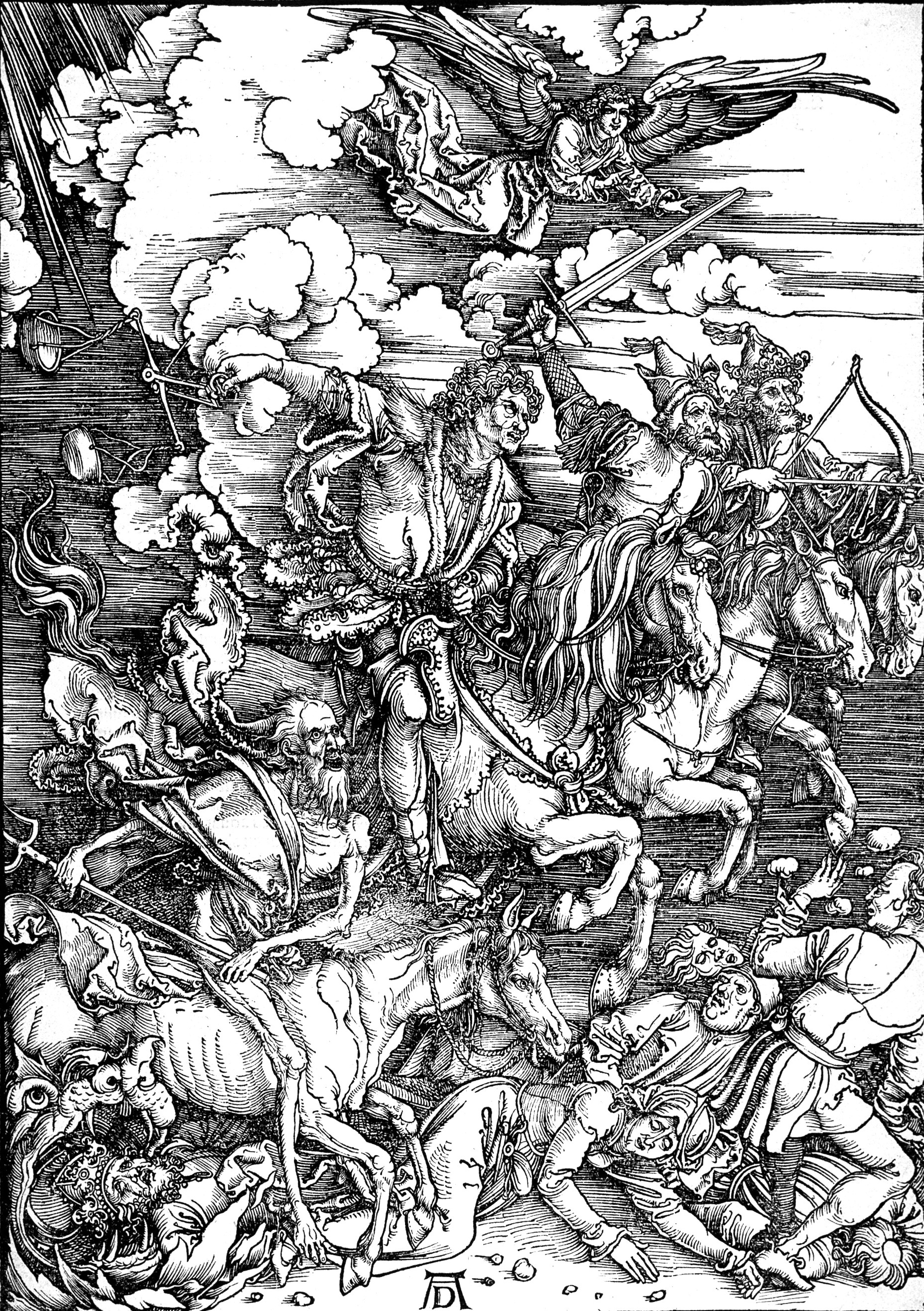
I. Die unmittelbare Zukunft: Was er vorhersagte und was tatsächlich geschah
Pawson unterteilt seine Prognose in Glauben und Verhalten. Zum Verhalten gibt er vier konkrete Vorhersagen.
Erstens wird die Kirche niemals in der Geschichte sichtbar in einer Organisation vereint sein. Er erwartet es nicht und glaubt nicht, dass es passieren könnte.
Zweitens wird die Kirche weniger institutionell und weniger klerikal werden. „Das zukünftige Christentum wird das informelle Christentum sein, das vielleicht keine Gebäude und keine Geistlichen hat … aber überall spontan in Häusern, an Arbeitsstätten und auf alle möglichen anderen Arten entstehen kann.“
Drittens wird die Kirchenführung von der nördlichen Hemisphäre auf die südliche Hemisphäre übergehen. „Die Kirchen, die traditionell die Absender des Evangeliums und die Geber des Christentums waren, müssen zu Empfängern werden. Und das wird sie sehr demütigen.“ Er veranschaulicht es mit einer Aufnahme, die beim Treffen am Montagabend zuvor abgespielt wurde: paraguayische Christen „ohne unsere vornehmen Gebäude, ohne unsere finanziellen Mittel“, aber mit „einem Leben und einer Kraft, die wir begehren“.
Viertens, in Glaubensfragen, kehrt er zu einem Drei-Gruppen-System zurück, das er zuvor verwendet hatte (Katholiken, Liberale, Evangelikale), und prognostiziert, dass der mittlere Block (Anglikaner, Presbyterianer, Methodisten, Kongregationalisten) „in den nächsten 20 Jahren viel enger zusammenrücken wird … wie sie es bereits in Kanada und Südindien getan haben und dies bereits in Pakistan versuchen“, während in England Anglikaner und Methodisten „miteinander reden“. Er zitiert Malcolm Muggeridge, der die Einheit der Kirche mit „einer Gruppe betrunkener Männer, die sich aneinander festhalten mussten, um auf den Beinen zu bleiben“, verglich, und einen namentlich nicht genannten Yale-Professor für Kirchengeschichte: „Wir sind uns nicht ganz sicher, was wir glauben, aber lasst uns gemeinsam ungläubig sein.“
Das Zentrum der christlichen Bevölkerung verschiebt sich
Wo die Christen der Welt leben, 1910–2050
Grau = der Anteil der Christen weltweit, die im Globalen Norden (Europa + Nordamerika) leben. Gold = der Globale Süden (Afrika, Asien, Lateinamerika); dies sind soziogeografische Regionen, keine Hemisphären. Das gestrichelte Segment nach 2020 ist eine beispielhafte Projektion bis 2050, keine beobachtete Zeitreihe. 1970 hielt der Globale Norden noch die Mehrheit (59 %).
Quellen/Zusammenstellung: Center for the Study of Global Christianity, World Christian Database (die dargestellten Punkte und der Endpunkt 2050); Pew Research Center, The Future of World Religions (2015) zur regionalen Einordnung. Der Endpunkt 2050 ist kein neues beobachtetes Pew-Update.
Einige Vereinigungen fanden statt, eine nicht
Bewegungen zur Kirchenunion, 1925–1972
10. Juni 1925
United Church of Canada: Methodisten + Kongregationalisten + etwa 70 % der Presbyterianer vereinigen sich in Toronto
27. September 1947
Church of South India in Madras eingeweiht: die erste Union, die seit der Reformation die bischöfliche und die nichtbischöfliche Linie überschritt
8. Juli 1969
Anglikanisch-methodistischer Einigungsplan scheitert bei den Versammlungen von Canterbury/York: 69 % dafür, 75 % erforderlich
1. November 1970
Church of Pakistan eingeweiht: anglikanische, methodistische, presbyterianische (Church of Scotland) und lutherische Körperschaften vereinigen sich
Mai 1972
Anglikanisch-methodistischer Einigungsplan scheitert ein zweites Mal in der neuen Generalsynode
Pawson predigte, während Pakistan noch „eine Union anstrebte“ (sie war noch nicht zustande gekommen). Er sah nicht voraus, dass der anglikanisch-methodistische Einigungsplan in seinem eigenen Land nicht einmal, sondern zweimal scheitern würde.
Über Katholiken und Evangelikale. Pawson prognostiziert, dass „das Feld den Katholiken und den Evangelikalen überlassen wird“, den beiden Blöcken, die die westliche Religion umgestalten werden, während die Katholiken „in Südeuropa an Boden verlieren, in Nordeuropa jedoch an Boden gewinnen werden, wenn sie ihre Methoden anpassen.“ Er prognostiziert, dass die Evangelikalen „gleichzeitig vereinter und gespaltener werden“.
Ich glaube, dass die Führung der Kirche von der Nordhalbkugel auf die Südhalbkugel übergehen wird. Und die Kirchen, die traditionell die Absender des Evangeliums waren, müssen zu Empfängern werden. Und das wird sie sehr demütigen.
Um jede Nation zu erreichen. Pawson ist optimistisch, dass „mit modernen Methoden der Massenkommunikation“ die Verkündigung des Evangeliums an jede Nation gemäß das Matthäusevangelium (nicht alle bekehren, nur sicherstellen, dass jeder hört) „zumindest bis zum Jahr 2000 abgeschlossen sein wird.“ Er zitiert Wycliffe-Bibelübersetzer, die „manchmal zu einem Stamm von 13 Menschen gehen“, um ihnen einen Teil des Wortes Gottes zu übersetzen.
Über spirituellen Niedergang und Verfolgung. Er sagt „einen großen Abfall“ voraus und dass „die Liebe vieler Christen erkalten wird“, illustriert mit einem Foto eines Mitglieds seiner eigenen Gemeinde, Herrn Bateman, als junger Mann, der unter freiem Himmel predigt und Jahrzehnte später immer noch das Gleiche tut, während viele seiner Zeitgenossen es aufgegeben hatten. Und er sagt, die Verfolgung werde „immer zunehmen“ und die Kirche müsse sich jetzt auf die bevorstehenden schwierigen Tage vorbereiten.
II. Die Zwischenzukunft: Trübsal, Entrückung und tausendjähriges Reich (ein Rahmen, noch keine Position)
Pawson wendet sich dem „nächsten großen Ereignis der Weltgeschichte“ zu, nicht dem Dritten Weltkrieg, nicht dem ersten Menschen auf dem Mond, sondern „der Rückkehr unseres Herrn Jesus Christus in diese Welt, in physischer, sichtbarer Form … einem Körper, der Nagelspuren an Händen und Füßen aufweist“. Er führt drei technische Begriffe in der Reihenfolge ein, in der er sie auflistet: Trübsal, Entrückung und Tausendjähriges Reich, und sagt, dass Christen beim mittleren Punkt übereinstimmen: bei der Entrückung selbst, der leibhaftigen Rückkehr Christi zu seinem Volk. Die Meinungsverschiedenheit besteht an den beiden Enden: Wie ist die Trübsal zu verstehen und wie das Tausendjährige Reich?
Zum Tausendjährigen Reich skizziert er schnell drei Lesarten: Manche sehen darin eine „rein symbolische Zahl“, nicht eine tatsächliche Zeitspanne; andere glauben, dass die Kirche selbst diese tausend Jahre „einläuten“ wird und dass Christus erst an ihrem Ende kommt; und er glaubt zusammen mit anderen, dass es „bedeutet, was es sagt“, dass es sich um echte tausend Jahre handelt, in denen Christus sichtbar auf der Erde regiert, bevor er das Königreich dem Vater zurückgibt. Mit anderen Worten: Pawson selbst ist Prämillennialist und vertritt die Auffassung, dass Christus vor dem Jahrtausend wiederkommt, nicht danach.
Dann kommt die anschaulichste Passage im ersten Vortrag: Er erinnert sich an die Abschlusskundgebung des Billy-Graham-Evangelisation „letztes Jahr im Wembley-Stadion“, bei der Zehntausende Menschen auf der Tribüne Loblieder sangen, und fragt sich: Wenn sich das schon wie eine riesige Versammlung anfühlte, wie groß wird das Treffen in den Wolken sein, mit jedem Christen, der jemals in allen Epochen gelebt hat? „Es gäbe auf der Erde kein Stadion, das groß genug wäre, also hat Jesus ein Treffen in den Wolken vereinbart.“ Er zitiert Jesu eigene schärfste Warnung zu diesem Tag aus das Lukasevangelium: „Es werden zwei Frauen in einer Küche sein und eine wird gehen und die andere wird zurückgelassen. Es werden zwei Menschen im selben Bett sein und Mann und Frau werden allein gelassen.“ Eine Generation von Christen, sagt er, wird niemals sterben; „für eine Gruppe von Christen wird es keine Beerdigungen geben.“ Dann erzählt er vom Grabstein seines Großvaters, auf dem nur zwei Worte zu lesen sind: „Was für ein Treffen!“, eine Zeile, die andere Besucher beim Lesen von Grabsteinen in der Nähe verwirrt.
Dann bleibt er genau am Punkt der höchsten Spannung stehen: „Hier werde ich auf ein paar Zehen treten.“ Er skizziert drei Positionen zur Reihenfolge von Entrückung und Trübsal: Die Kirche wird vor der Trübsal entrückt (die beliebteste Position), in ihrer Mitte (eine Minderheit) oder danach, wenn Christus selbst zurückkehrt (seine eigene Position). Er verspricht, in der folgenden Predigt das vollständige Argument darzulegen.
III. Die ewige Zukunft: das Unvorstellbare
Pawson schließt die erste Vorlesung mit seinem kürzesten und bescheidensten Abschnitt ab: der ewigen Zukunft. Er zitiert der erste Brief des Paulus an die Korinther: „Was kein Auge gesehen und kein Ohr gehört hat und was keinem Menschen je eingefallen ist oder von ihm erdacht wurde, das hat Gott denen bereitet, die ihn lieben.“ Er vergleicht die gegenwärtige Beziehung mit Christus mit einer Verlobung und die ewige Zukunft mit einer Ehe, „der eigentlichen Wirklichkeit“.
Dann schließt er mit einem Zitat von Bischof J.C. Ryle von Liverpool aus der Broschüre The True Church: „Menschen bilden sich ein, mit ihrer Seele müsse alles in Ordnung sein, wenn sie dieser oder jener Kirche beitreten, am Abendmahl teilnehmen oder bestimmte Riten vollziehen. Das ist eine völlige Täuschung … Sie können ein überzeugter Anglikaner, Presbyterianer, Kongregationalist, Baptist, Methodist oder Plymouth-Bruder sein und dennoch nicht zur wahren Kirche gehören.“
ZWEITER TEIL: DIE WIEDERKUNFT CHRISTI
In der zweiten Vorlesung, die fast doppelt so lang ist wie die erste, tritt Pawson nun richtig auf die empfindliche Stelle. Er beginnt mit einer doppelten Bitte: Suchen Sie nicht nach Fehlern und seien Sie offen gegenüber einem Thema, das Christen voneinander trennt. Er sagt ganz klar, das Thema sei aus zwei parallelen Predigtreihen in Millmead entstanden (Sacharja am Sonntagmorgen, die Thessalonicherbriefe am Sonntagabend) und aus einer Frage, die nach den Sacharja-Studien immer wieder aufkam: Würden noch Christen am Leben sein, um Zeuge der von ihm beschriebenen Ereignisse zu werden?
I. Zwei Ansichten, nicht eine feststehende Tatsache
Pawson legt das Problem von Anfang an klar dar: Jeder bibelgläubige Christ ist sich einig, dass es zwei zukünftige Ereignisse gibt, das Kommen Christi (über 300 Mal im Neuen Testament erwähnt) und das Kommen des Antichristen. Bei der Meinungsverschiedenheit geht es lediglich darum, wie diese beiden Ereignisse zeitlich angeordnet sind.
Er stellt zwei Systeme vor:
Die traditionelle Ansicht, die seiner Meinung nach „während der ersten 17 Jahrhunderte der Kirchengeschichte … bis etwa 1800“ galt: Der Antichrist kommt zuerst, Christus kommt an zweiter Stelle, Punkt. Der Antichrist regiert durch eine totalitäre Diktatur, die absolute Anbetung fordert, dann kehrt Christus zurück, um ihn zu zerstören und das Königreich zu errichten. Er führt diese Ansicht auf die Kirchenväter, die Reformatoren (obwohl er sagt, sie hätten „einen Fehler gemacht“, den Papst als Antichristen zu identifizieren), die Puritaner und Wesley zurück.
Die dispensationalistische Sichtweise, die „ab etwa 1825“ auftaucht und auch heute noch weit verbreitet ist: Christus kommt zuerst für seine Heiligen (eine geheime Entrückung, die die Kirche aus der Welt entfernt), dann regiert der Antichrist sieben Jahre lang, während die Kirche abwesend ist; danach kommt Christus mit seinen Heiligen, um den Antichristen zu zerstören und das Königreich auf der Erde zu errichten. Er nennt dies die „Jederzeit-Sicht“, weil sie lehrt, dass Christus heute Abend kommen könnte, ohne dass zuvor etwas geschehen müsste.
Bevor er auf die beiden Systeme eingeht, hält Pawson beim Wort „Antichrist“ selbst inne: Er sagt, das griechische Präfix anti „bedeutet nicht gegen, wie wir es heute verwenden. Es bedeutet statt, es bedeutet Ersatz“. In seiner Lesart ist der Antichrist jemand, der sich als Christus ausgibt, nicht jemand, der sich ihm offen widersetzt, und er verwendet dieselbe Lesart, um zu erklären, warum Satan Jesus einst in der Wüste „die Stellung des Antichristen“ anbot.
Zwei Arten, dieselben zwei Ereignisse zu ordnen
Antichrist und Wiederkunft Christi: Welche Reihenfolge?
Die traditionelle Sicht (die ersten etwa 1.800 Jahre: die Kirchenväter, die Reformatoren, die Puritaner, Wesley und Pawson)
Die Kirche ist den gesamten Weg hindurch gegenwärtig: keine vorherige geheime „Entrückung“.
Die dispensationalistische Sicht (seit etwa 1830: Darby, Scofield, der größte Teil des modernen amerikanischen Evangelikalismus)
Zwei Phasen, durch sieben Jahre getrennt.
Pawson ordnet sich der traditionellen Linie zu – nicht weil sie älter ist, sondern weil er die dispensationalistische Sicht im Text des Neuen Testaments selbst nicht finden kann, obwohl er anerkennt, dass sie heute von den meisten pfingstlerischen und unabhängigen Evangelikalen vertreten wird.
II. Woher die dispensationale Sichtweise tatsächlich kam
Pawson erzählt eine ziemlich kompakte Entstehungsgeschichte: „Es begann mit einem Mann namens J.N. Darby … zunächst ein anglikanischer Pfarrer … 1825, Anfänge in Dublin … 1830 oder so ungefähr, Anfänge in Plymouth.“ Er sagt auch, dass die Idee „erst im 19. Jahrhundert auftauchte“ und dann „bei zwei Personen auftauchte, Edward Irving … und J. N. Darby“.
Eine Lehre, neunzehn Jahrhunderte in der Entstehung (und dann neu)
Die Ursprünge der Lehre von der Entrückung vor der Drangsal, 1825–1909
August 1825
Darby wird Diakon in der (anglikanischen) Church of Ireland, Gemeinde Calary, Wicklow
Winter 1827–28
Eine kleine Gruppe (Darby, Cronin, Bellett, Groves …) beginnt, sich in Dublin privat zum Brotbrechen zu versammeln: der eigentliche Beginn der Brethren
1830
Margaret Macdonald, 15 Jahre alt, hat in Port Glasgow, Schottland, im Umfeld Edward Irvings eine Vision
1830–1838
Die Powerscourt-Konferenzen (Irland): Hier nimmt Darbys futuristisches dispensationalistisches System allmählich Gestalt an
Dezember 1831
Erstes Treffen der Brethren in Plymouth, England
1833
Edward Irving wird von der Church of Scotland abgesetzt und gründet die Catholic Apostolic Church
1909
Die Scofield Reference Bible wird veröffentlicht (Oxford University Press) und verbreitet den Dispensationalismus im amerikanischen Evangelikalismus
Ob Irving und Macdonald die Idee tatsächlich an Darby „übermittelt“ haben, bleibt eine ungelöste wissenschaftliche Kontroverse (siehe den bernsteinfarbenen Hinweis unten).
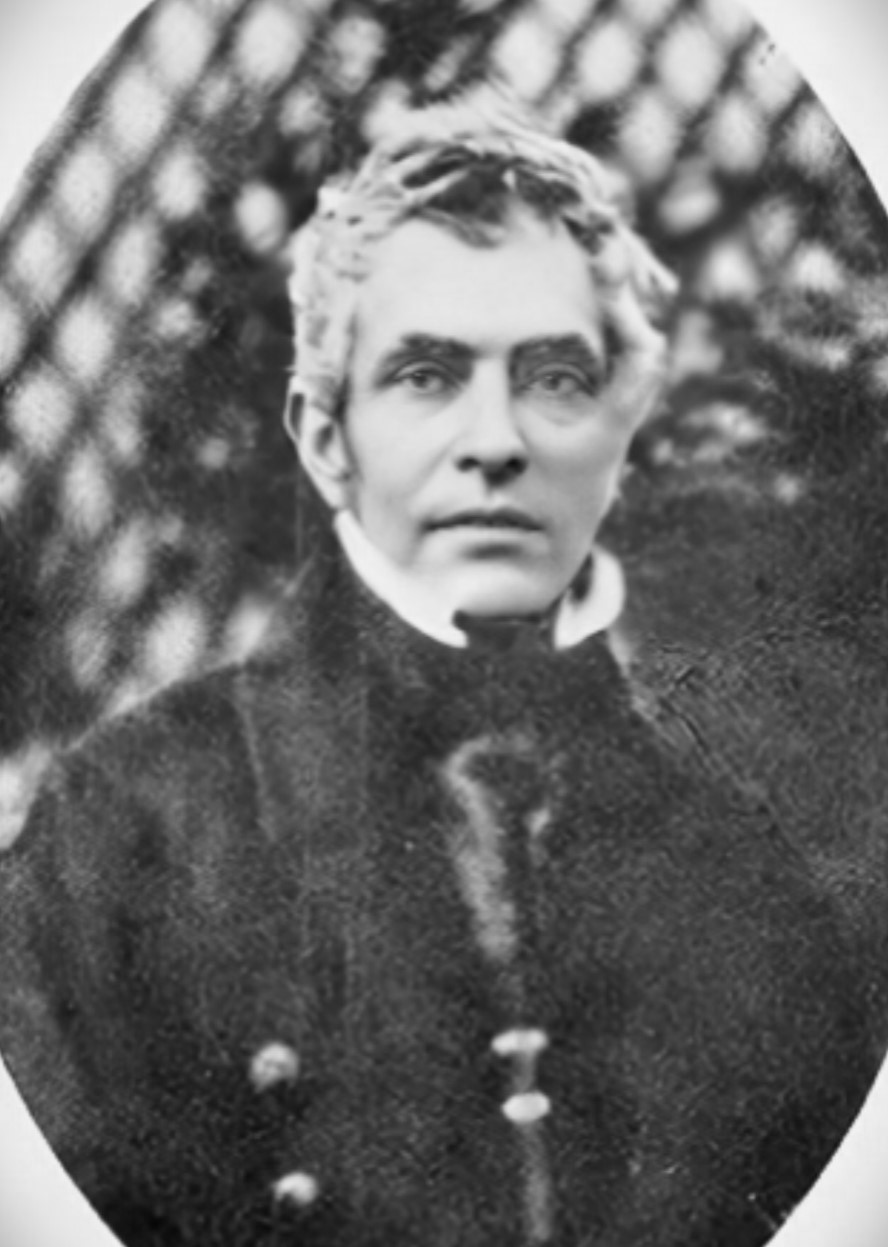
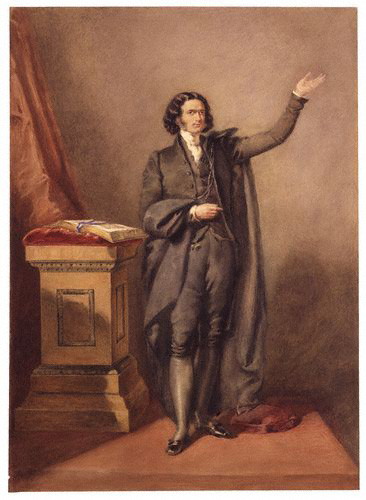
Von Darby aus gelangte die Lehre in die Brüderbewegung und dann durch den amerikanischen Geistlichen C.I. Scofield, den Pawson als „einen kongregationalistischen Pfarrer … von D.L. Moody in sein Pfarramt berufen“ beschreibt. Scofield schrieb sie in die Anmerkungen der Scofield Reference Bible, die 1909 veröffentlicht wurde; von dort aus verbreitete sie sich im gesamten amerikanischen Evangelikalismus, insbesondere durch spätere Pfingstgruppen.
Er nennt auch Brüderfiguren, die mit Darby nicht einverstanden waren: den Gelehrten S.P. Tregelles, „G.H. Leng“ und vor allem George Müller, Gründer der Waisenhäuser in Bristol.
III. Testen der Theorie: Wortschatz und „Wie ein Dieb in der Nacht“
Pawson lehnt es ab, die Lehre anhand der Geschichte („neu erschienen“ bedeutet nicht automatisch falsch: Die Reformation hat auch jahrhundertelang vergessene Wahrheiten wiedergefunden) oder anhand der Psychologie zu überprüfen (die Vorstellung einer plötzlichen Entrückung ist emotional kraftvoll, aber „was wir predigen, muss die Wahrheit sein, nicht weil es psychologisch wirksam ist“). Er akzeptiert nur eine Frage: Was sagt die Bibel?
Er beginnt mit dem Wortschatz. Drei griechische Wörter werden für das „Kommen“ Christi verwendet: parousia (ein königlicher Besuch), epiphaneia (ein Erscheinen) und apokalypsis (eine Enthüllung). Er argumentiert, dass jedes Wort nur auf einer Seite vorkommen dürfte, wenn die dispensationale Trennung zwischen „Kommen für die Heiligen“ und „Erscheinen für die Welt“ richtig wäre. Doch wenn man Vers für Vers vorgeht, tauchen alle drei auf beiden Seiten auf.
Dieselben drei Wörter, für dasselbe Ereignis verwendet
Drei griechische Wörter für das „Kommen“ Christi
| Wort | Bedeutung | Bei der Kirche verwendet | Bei der Welt verwendet |
|---|---|---|---|
| παρουσία (parousia) | „Kommen“ (gewöhnlich ein königlicher Besuch) | die Stelle über die Ankunft des Herrn im ersten Thessalonicherbrief | die Stelle über die Ankunft des Herrn im zweiten Thessalonicherbrief |
| ἐπιφάνεια (epiphaneia) | „Erscheinen“ | die Stelle über das Erscheinen im ersten Timotheusbrief | die Stelle über das Erscheinen im zweiten Timotheusbrief und die Stelle über die Krone bei seinem Erscheinen im zweiten Timotheusbrief |
| ἀποκάλυψις (apokalypsis) | „Enthüllung“ (das Zurückziehen eines Vorhangs) | die Stelle über die Offenbarung im ersten Korintherbrief | die Stelle über die Offenbarung im zweiten Thessalonicherbrief |
Wenn diese drei Wörter tatsächlich eine „geheime Entrückung“ von einem „öffentlichen Erscheinen“ unterschieden, müsste jedes nur in einer Spalte vorkommen. Stattdessen erscheinen alle drei in beiden: dasselbe Wort, für beide Situationen verwendet.
Er untersucht weitere Ausdrücke: „wie ein Dieb in der Nacht“ (dies wird immer auf den Unvorbereiteten angewendet, niemals auf den wachsamen Gläubigen), „nahe bevorstehend“ (er unterscheidet zwei griechische Wörter: eines für die absehbare Zukunft mit möglicherweise dazwischenliegenden Ereignissen, eines für „jeden Moment“; Paulus verwendet das zweite nur einmal, in der zweite Brief des Paulus an die Thessalonicher, und zwar gerade, um die Unmittelbarkeit auszuschließen, nicht sie zu bestätigen) und „wachen“ (nicht in den Himmel starren, sondern sich entfaltende Zeichen erkennen, wie in der Lektion vom Feigenbaum).
IV. Die Hauptaussage des Neuen Testaments
Dies ist der längste Abschnitt der Predigt: Pawson arbeitet sich abwechselnd durch die Evangelien, die Briefe und die Offenbarung, um zu argumentieren, dass die Hauptaussage des Neuen Testaments lautet: „Gläubige erhalten viele Warnungen, Ungläubige keine“ – das Gegenteil von dem, was die Lehre von der geheimen Entrückung impliziert (Gläubige verschwinden ohne Vorwarnung, während die Welt reichlich Zeichen erhält). Er beginnt mit einem praktischen Argument: Das plötzliche Verschwinden jedes Christen könnte kaum „unbemerkt“ bleiben; er zitiert „850 Millionen bekennende Christen in der heutigen Welt“.
Die Evangelien. das Matthäusevangelium ist das Kapitel, auf das er sich am meisten stützt: Jesus warnt die Jünger – nicht die Menschenmengen und nicht die Juden – vor Kriegen, Abfall, der Wiederherstellung Jerusalems, dem Erscheinen des Antichristen und der Trübsal und sagt dann: „Unmittelbar nach der Trübsal dieser Tage ... wird er seine Engel mit einem lauten Posaunenruf aussenden, und sie werden die Auserwählten sammeln.“ Der Abschnitt beginnt mit der Trübsal und endet mit der Entrückung, ohne Lücke zwischen ihnen.
Er greift auch auf die Geschichte zurück: Die meisten Briefe wurden vor 70 n. Chr. geschrieben, vor der Belagerung Jerusalems, einem Ereignis, das Jesus selbst vorhergesagt hatte. Gemäß der von Eusebius aufgezeichneten Überlieferung flohen die Christen vor der Belagerung aus Jerusalem in die Stadt Pella jenseits des Jordan, und „eineinhalb Millionen Juden wurden getötet, aber keine Christen“, weil sie die Warnung beachtet hatten und flohen.
Das Buch der Offenbarung. Pawson listet über zwanzig Verse auf, in denen „die Heiligen“ oder „Gottes Volk“ als während der gesamten Trübsal auf der Erde präsent beschrieben werden: keine Lücke, in der die Kirche abwesend ist. Er stützt sich insbesondere auf die Offenbarung, genau in der Mitte der Beschreibung der Schlacht von Harmagedon: „Siehe, ich komme wie ein Dieb. Gesegnet ist, wer wach ist.“ Wenn die Heiligen bereits vor der Trübsal entrückt worden wären, warum steht dann mitten in der Schilderung von Harmagedon die Warnung „Bleib wach, lass dich nicht wie von einem Dieb in der Nacht überraschen“, die sich stets an Christen richtet?
Dann die praktische Schlussfolgerung: Er sagt, dass es im Neuen Testament „hundertmal mehr“ Lehren über das Leiden gibt als über die Entrückung, und dass seine eigene pastorale Aufgabe darin besteht, die Herde auf das Leiden vorzubereiten, und nicht zu versprechen, dass sie ihm entkommen wird.
V. Ein pastorales Fazit: Sich auf das Leiden vorbereiten, ihm nicht entkommen
Pawson greift zwei Beispiele aus dem damaligen Zeitgeschehen auf, um die Warnung vor künftiger Verfolgung zu veranschaulichen. Er sagt: „Heutzutage ist das Buch der Offenbarung in China das meistgelesene Buch der Christen.“ Er fügt hinzu, wie eine beiläufige Koinzidenz, dass „die Volksrepublik China 666 Vertreter in der Regierung hat.“ Außerdem erinnert er sich an eine extreme Urbanisierungsprognose: „Bis 2074, sagen uns die Planer, werden 98 % der Weltbevölkerung in einer Stadt leben … nur 2 % werden auf dem Land übrig bleiben.“
Pawson ordnet die gesamte praktische Erkenntnis um einen Vers an, den er als „ein Schlüsselwort, einen Schlüsselvers“ bezeichnet: das Lukasevangelium, „Betet, dass ihr die Kraft habt zu entkommen.“ Er betont, dass „stehen“ ein starkes Wort ist, das für den Moment verwendet wird, in dem man zurückgeschlagen wird und keinen Rückzugsort mehr hat. Die Kirche müsse um beides beten: um Kraft zu entkommen, wenn Flucht möglich ist, und um Kraft zu stehen, wenn sie nicht möglich ist. Er erinnert auch an Henoch und Elia, die einzigen beiden Menschen in der Heiligen Schrift, die ohne zu sterben aus der Welt genommen wurden, als „Vorgeschmack“ für die letzte Generation von Christen. Zugleich achtet er darauf zu sagen, dass dies nur für diejenigen gilt, die die Trübsal durchstehen, und keine Garantie dafür ist, sie vorher zu überspringen.
Er erzählt eine persönliche Geschichte: Jemand hat ihm einmal gesagt, dass man Gnade für die größere Krise erhält, wenn man jetzt unter kleinem Druck steht und ein wenig Spott aus seinem Umfeld aushält. Wer im Kleinen nicht standhält, wird später im Großen nicht standhalten. Er erwähnt Christen, die er kennt und die auf autarke Bauernhöfe weit weg von den Städten gezogen sind und sich auf die Möglichkeit vorbereitet haben, städtische Zentren verlassen zu müssen, wenn es zu Unruhen kommt: Sie suchen nicht das Martyrium, sondern beschützen ihre Familien klugerweise genau so, wie Jesus es in das Matthäusevangelium angewiesen hat und wie es in das Lukasevangelium heißt.
Er schließt mit einem Zitat aus dem Vorwort eines Buches, das er gelesen hatte und das von einem Autor geschrieben wurde, der wusste, dass die Leser nicht mit ihm übereinstimmen würden: „Angenommen, Sie sind nicht überzeugt. Sollen wir, die wir uns auf denselben Erlöser verlassen … vom selben Teufel angegriffen, von derselben Welt gehasst, aus derselben Hölle befreit und zur gleichen Herrlichkeit bestimmt, sollen wir, die wir so viel gemeinsam haben, zulassen, dass wir uns in Herzen oder Diensten spalten, weil wir in dieser nebensächlichen Frage unterschiedlicher Meinung sind? Gott bewahre.“
Was Pawson Ihnen nicht sagt: Katholizismus, Orthodoxie und die heutige Landschaft des Evangelikalismus
So wie Teil 5 das Zweite Vatikanische Konzil zu einer Predigt hinzufügte, in der es überhaupt nicht erwähnt wurde, bedarf dieser Teil einer weiteren Betrachtung, für die Pawson, der im Jahr 1967 vor einer englischen Baptistengemeinde predigte, keinen Grund hatte, sie einzubringen.
Katholizismus hat kein separates „Entrückungs“-Konzept. Der Katechismus der Katholischen Kirche (§668–682) und Lumen Gentium 48 lehren eine einzige, ungeteilte Wiederkunft: Christus regiert bereits jetzt durch die Kirche (ein bereits begonnenes, aber noch nicht vollendetes Reich), die Kirche durchläuft eine letzte Prüfung unter dem Antichristen (§675–676), und diese Prüfung wird sofort durch eine Parusie, eine allgemeine Auferstehung und ein Jüngstes Gericht (§678–682) gelöst, ohne dass Raum für ein separates früheres „Entrückungsereignis“ bliebe. In einem Erlass des Heiligen Offiziums aus dem Jahr 1944 wurde außerdem entschieden, dass selbst „gemilderter Millenarismus“ (eine sichtbare irdische Herrschaft Christi vor dem Jüngsten Gericht) „nicht sicher gelehrt werden kann“; damit wurde die katholische Eschatologie dem amillennialen (augustinischen) Lager zugeordnet, was sie strukturell vom gemeinsamen prämillennialen Rahmen Pawsons und des Dispensationalismus unterscheidet.
Die östliche Orthodoxie bekräftigt ebenfalls eine sichtbare, universelle Wiederkunft (nach dem Glaubensbekenntnis von Nicäa) und lehnt die Entrückung entschieden als westliche protestantische Neuerung des 19. Jahrhunderts ab. Sie hat jedoch nie ein aufeinanderfolgendes System aus Trübsal, Entrückung und Tausendjährigem Reich im Pawson-Stil aufgebaut. Die gängige orthodoxe Auslegung der die Offenbarung (Andreas von Cäsarea, 7. Jahrhundert) ist amillennial und symbolisch und ähnelt Augustinus im Westen. Anstelle einer Zeitleiste ist die vorherrschende eschatologische Linse der Orthodoxie theosis (Vergöttlichung), der „achte Tag“ und die kosmische Verklärung der Schöpfung: Sie versteht das Ende als etwas, in das Kirche und Schöpfung bereits sakramental eintreten, am konkretesten in der Eucharistie, und nicht als einen Plan kommender Ereignisse.
Die heutige Landschaft des Evangelikalismus ist ebenfalls nicht so einfach wie Pawsons Zwei-Lager-System. Eine Pew-Umfrage von 2022 ergab, dass nur 44 % der amerikanischen Evangelikalen überhaupt eine prämillennialistische Position vertreten (dispensationalistisch oder historisch zusammengenommen), während 45 % ausdrücklich sagen, dass sie den Zeitpunkt nicht kennen. Der Dispensationalismus dominiert weiterhin die Populärkultur (die Left Behind-Romane wurden 65–80 Millionen Mal verkauft), ist aber auf wissenschaftlicher und institutioneller Ebene seit seinem Höhepunkt in den 1970er- bis 1990er-Jahren deutlich zurückgegangen, sogar am Dallas Theological Seminary, Scofields eigener institutioneller Heimat. Pawsons eigene posttribulationistische Sichtweise, die mit dem Gelehrten George Eldon Ladd verbunden wird, bleibt eine angesehene akademische Tradition, auch wenn sie nie die breite Verbreitung des Dispensationalismus erreichte.
Das Bild heute
Was amerikanische Evangelikale über den Zeitpunkt denken, 2022
Gleicher Nenner · befragte Evangelikale
44 % der befragten Evangelikalen; nicht automatisch dasselbe wie dispensationalistische Entrückung vor der Drangsal.
45 % derselben evangelikalen Gruppe und derselben Umfragefrage.
Postmillennialismus
3 % aller Erwachsenen in den USA – ein anderer Nenner, hier nur als Kontext gezeigt.
Die Zahlen 44 % und 45 % beziehen sich auf denselben Rahmen der Evangelikalenbefragung; die Zahl 3 % gilt für Erwachsene in den USA insgesamt und darf daher nicht zu 92 % addiert werden. Die geteilte Darstellung macht den Unterschied der Nenner sichtbar, statt eine Zusammensetzung von 100 % nahezulegen.
Quelle: Pew Research Center, 2022 – Fragen zu den Umständen der Wiederkunft Jesu; die 3-%-Angabe bezieht sich auf alle Erwachsenen in den USA.
Abschluss der Serie
Die sechs Teile reichen von einer Gruppe mittelloser, machtloser Fischer bis zu einer immer noch hitzigen Debatte darüber, wie die Welt untergehen wird; derselbe rote Faden zieht sich durch, den Pawson in Teil 1 aufgenommen hat. Die Kirche gewann ihre ersten drei Schlachten ohne Armee, ohne Geld und ohne einflussreiche Menschen. In seinem letzten Vortrag verspricht er nicht, dass die Kirche so gewinnen wird, wie die Menschen es sich normalerweise vorstellen: geeint in einer Organisation, weithin anerkannt und von Leid verschont. Er verspricht etwas anderes: eine Kirche, die Demut vor ihren südlichen Brüdern und Schwestern lernt, sich auf das Leiden vorbereitet, statt ihm zu entfliehen, und eine Hoffnung hegt, die kein Wunschdenken, sondern absolute Gewissheit über die Zukunft ist.
Seine treffendsten Vorhersagen – dass die Kirche zugleich geeinter und gespaltener werden und sich ihr Schwerpunkt nach Süden verlagern würde – waren ausgerechnet diejenigen, bei denen er sich beim Predigen am wenigsten sicher war. Er ordnete sie seinen eigenen Worten nach als „bloße Spekulation“ über die nächsten zwanzig Jahre ein. Worüber er sich dagegen am sichersten war, nämlich über die Reihenfolge von Trübsal und Wiederkunft, ist auch achtundfünfzig Jahre nach dieser Predigt noch ein Punkt, bei dem viele andere aufrichtige Christen nicht mit ihm übereinstimmen.
Note: This piece merges the last two lectures, literally, in David Pawson's eleven-part History of the Church series: The Church in the Future (42.1 minutes, Part 10 in his own catalogue) and The Return of Jesus (74.9 minutes, Part 11, the final one). Unlike Parts 4 and 5, this isn't me choosing to fold together separate lectures: these two were already the closing pair. The first sketches the Church's future at three levels (near, intermediate, and eternal) and stops right at the most sensitive point, the order between the "rapture" and the "tribulation", saying "I'm going to tread on a few corns." The second, preached perhaps only weeks later in the same Sunday-evening series at Millmead Baptist Church, Guildford, is where he treads on that corn fully.
This is also the installment Pawson himself flags as the most contentious. He lays out a specific theological position: the Church will go through the tribulation before Christ returns, with no separate prior "secret rapture", and says plainly that many sincere Christians disagree. I've kept that position framed as Pawson's view, not settled historical fact, and added, where it matters, how Catholicism, Eastern Orthodoxy, and Evangelicalism's own internal landscape see this differently today.
Before we start: one sermon, two questions
Part 5 closed in 1968, between two world wars and the three isms that shaped the 20th century. The two lectures closing out Pawson's series raise the natural next question: then what? The first asks where the Church is headed. The second asks how Christ will return, and how the Church should wait for it.
PHẦN MỘT: TƯƠNG LAI HỘI THÁNH
Pawson opens with a question at once serious and wry: is the Church "half empty" or "half full"? He points to the New Testament edition Good News for Modern Men (translated by Robert Bratcher, American Bible Society), "produced just over a year ago… nine and a half million copies have been sold… selling at the rate of 13,000 a day", as evidence people still crave "good news" in a world overflowing with bad news.
Kit's note
Good News for Modern Man (the Today's English Version New Testament) was actually released by the American Bible Society in September 1966, as two independent sources confirm. "Just over a year ago" puts this sermon at the earliest around late 1967. I couldn't find any source confirming Pawson's "nine and a half million copies, 13,000 a day" figures. What is documented is 5.5 million copies in the first year (by roughly September 1967), and over 30 million cumulative copies within the first five years (by roughly 1971), making it the best-selling paperback of all time by May 1971. Pawson's numbers should be treated as his own stated figures, not independently verified fact.
He also recalls "the final rally of the Billy Graham crusade last year in Wembley… 120,000 Christians." The Greater London Crusade actually ran 1 June – 2 July 1966 at Earl's Court, with the closing service moved to Wembley Stadium on 2 July (not 22 May). Christianity Today's contemporary report states plainly: "some 86,000 got into Wembley"; the Billy Graham organization's own retrospective sources round this up to "95,000" or "over 94,000" inside plus about 8,000 who couldn't get in and stood outside. Even the most generous total comes to roughly 102,000–103,000, still a quarter to a third short of Pawson's 120,000.
Combining the clues, including the GNMM floor (earliest ~Oct 1967), Wembley "last year" (satisfied by any point in 1967), and the immediately preceding lecture in the series ("1900–1968") being independently dated to 1967, the best-supported estimate is late 1967, comfortably inside Pawson's pastorate at Gold Hill Baptist Church (1961–1968, per Wikipedia) before his move to Millmead, Guildford.
Source: bible-researcher.com/tev.html; thewayofimprovement.blog (25 May 2016); Christianity Today, "London Crusade Produces Historic Climax" (July 1966); billygrahamlibrary.org; Wikipedia, "David Pawson."
He reads three scripture passages as the foundation for the whole sermon: Paul’s first letter to the Thessalonians (the trumpet sounding, the dead in Christ rising first), Revelation (the innumerable multitude out of the great tribulation), and the millennium-and-new-creation section in Revelation (the millennium, the new heaven and new earth). Then he quotes Gamaliel from Acts: "If this plan or this undertaking is of men, it will fail. But if it is of God, you will not be able to overthrow them." That's the verse he builds the whole talk on: not trying to force the future to happen, just trying to see which way it's already moving.
I. The immediate future: what he predicted, and what actually happened
Pawson splits his forecast into belief and behavior. On behavior, he gives four specific predictions.
One, the Church will never be visibly united in one organization in history. He doesn't expect it and doesn't believe it could happen.
Two, the Church will become less institutional and less clerical. "Future Christianity will be the informal Christianity that may not have buildings and may not have clergymen… but may spring up everywhere spontaneously within homes, within places of work, in all sorts of other ways."
Three, church leadership will pass from the northern hemisphere to the southern. "The churches that have been traditionally the senders of the gospel and the givers of Christianity will need to become the receivers. And this will humble them greatly." He illustrates it with a recording played at the previous Monday-night meeting: Paraguayan Christians, "without any of our posh buildings, without any of our financial resources," but with "a life and a vigor that we covet."
Four, on belief, he returns to a three-group framework he'd used earlier (Catholic, Liberal, Evangelical) and predicts the middle bloc (Anglican, Presbyterian, Methodist, Congregational) will "draw much closer together over the next 20 years… as they have already done in Canada and South India, and are already seeking to do in Pakistan," while in England, Anglicans and Methodists "are talking together." He quotes Malcolm Muggeridge comparing church unity to "a group of drunk men who had to hold on to each other to stand up," and an unnamed Yale church history professor: "we're not quite sure what we believe, but let's unbelieve together."
The Christian Population's Center Is Moving
Where the world's Christians live, 1910–2050
Grey = the share of the world's Christians living in the Global North (Europe + Northern America). Gold = the Global South (Africa, Asia, Latin America); these are socio-geographic regions, not hemispheres. The dashed segment after 2020 is an illustrative projection to 2050, not an observed series. In 1970, the Global North still held a majority (59%).
Sources/compilation: Center for the Study of Global Christianity, World Christian Database (the plotted points and 2050 endpoint); Pew Research Center, The Future of World Religions (2015) for the regional framing. The 2050 endpoint is not a new observed Pew update.
Kit's note
This is the single most impressive prediction in the whole talk, and it predates most of the literature usually credited with popularizing the idea. The qualitative observation, "younger churches" in Africa, Asia, and Latin America outpacing an aging Western church, had circulated since the mid-1950s (Donald McGavran's Church Growth movement from 1955; John V. Taylor, The Growth of the Church in Buganda, 1958). But the confident "leadership shifting north to south" framing Pawson uses predates the book usually credited as the opening shot of this argument, Walbert Buhlmann's The Coming of the Third Church (Italian 1974, English 1976), by roughly six to nine years, and predates David Barrett's full statistical treatment in the World Christian Encyclopedia (1982) by more than a decade and a half.
On the hard numbers: per the Center for the Study of Global Christianity (Gordon-Conwell) and Pew Research, in 1910 roughly 80% to 93% of the world's Christians lived in the Global North (Europe and Northern America). By 1970 itself, around the time Pawson preached this, the Global North still held a clear majority: 58.7% against the Global South's 41.3%. The actual crossover (Global South passing 50%) is generally dated to the 1980s. In other words, Pawson wasn't describing something that had happened, he was forecasting something still roughly a decade and a half away. Today the Global South holds 67% to 69% of the world's Christians, with sub-Saharan Africa alone the single largest Christian region (about 31%).
On the Paraguay example: I couldn't identify a specific source Pawson is referring to. The two closest fits for his description, the Anglican South American Missionary Society's work among the Enxet people of the Chaco from 1889, or the Paraguayan Mennonite Chaco colonies, offer no direct link to this sermon. Treat this as illustration, not a confirmed event.
Source: gordonconwell.edu/blog/the-100-year-shift-of-christianity-to-the-south; Pew Research, "Global Christianity" (2011) and 2025 update; lausanne.org/global-analysis/highlights-of-christianity-in-its-global-context-1970-2020.
Some Unions Happened, One Didn't
Church union movements, 1925–1972
June 10, 1925
United Church of Canada: Methodists + Congregationalists + ~70% of Presbyterians merge in Toronto
September 27, 1947
Church of South India inaugurated in Madras: the first union to cross the episcopal/non-episcopal line since the Reformation
July 8, 1969
Anglican–Methodist unity scheme fails at Convocations of Canterbury/York: 69% in favour, 75% required
November 1, 1970
Church of Pakistan inaugurated: Anglican, Methodist, Presbyterian (Church of Scotland), and Lutheran bodies unite
May 1972
Anglican–Methodist unity scheme fails a second time in the new General Synod
Pawson was preaching while Pakistan was still "seeking" union (it hadn't happened yet). He did not foresee that the Anglican–Methodist union scheme in his own country would fail, not once but twice.
Kit's note
Pawson's three examples all check out. The United Church of Canada formed 10 June 1925 in Toronto, uniting the Methodist Church, the Congregational Union of Canada, and about 70% of the Presbyterian Church in Canada (784 of 4,512 Presbyterian congregations chose to stay out), usually considered the world's first union across major historic denominational lines. The Church of South India was inaugurated 27 September 1947 in Madras, after 28 years of negotiation, uniting the episcopal Anglican tradition with non-episcopal traditions: the first such union since the Reformation, and controversial with some Anglo-Catholics for exactly that reason. The Church of Pakistan genuinely did form, on 1 November 1970. Pawson's "seeking to do" phrasing suggests this sermon was recorded not long before that date, not decades earlier as one might assume.
What he didn't foresee: the Anglican-Methodist union scheme back home in England, which he describes as promisingly "talking together", failed twice: at the Convocations of Canterbury and York on 8 July 1969 (69% in favour, 75% required, even though the Methodist Conference approved it the same day with 77.4%), then again at the new General Synod in May 1972. Worth correcting a commonly repeated online claim: several summaries attribute both failures partly to disagreement over women's ordination. This is anachronistic, since British Methodism didn't ordain its first women presbyters until 2 July 1974, after both votes. The real sticking point was disagreement over the proposed "Service of Reconciliation" for uniting the two ministries.
The Muggeridge quote and the unnamed Yale professor: I could not trace either to a source after extensive searching; nothing in any Muggeridge book, interview, or quotation archive, and no trace of a Yale professor who said that line. Both should be treated as pulpit-circuit anecdotes, not verifiable quotations.
Source: united-church.ca; britannica.com "Church of South India," "Church of Pakistan"; christianitytoday.com/1969/08/where-defeat-is-mandate; methodist.org.uk (50th anniversary of women's ordination).
On Catholics and evangelicals. Pawson predicts "the field will be left to the Catholics and the evangelicals", the two blocs that will reshape Western religion, while Catholics "will lose ground in southern Europe, but gain ground in northern Europe, if they adapt their methods." He predicts evangelicals "will become at once more united and more divided."
I believe that the leadership of the church is going to pass from the northern hemisphere to the southern hemisphere. And the churches that have been traditionally the senders of the gospel will need to become the receivers. And this will humble them greatly.
Kit's note
The first half, Catholics losing ground in southern Europe, is strongly confirmed, if anything understated: in Spain, Sunday Mass attendance fell from 68% (1973) to roughly 11% to 17% today; in Italy, from 36.4% (2001) to 18.8% (2022); in Portugal, only 49% of 18-34-year-olds still self-identify Catholic against 80% of the population overall. The second half, gaining ground in northern Europe via adaptation, holds only in small, patchy pockets: real growth exists in Scandinavia, but it's driven mostly by Catholic immigration (Polish, Filipino, African, Latin American) rather than the institutional Church's "adaptation" winning native Northern Europeans, while larger Northern European Catholic populations (Germany, the Netherlands, Ireland, the UK) have seen sharp declines, especially Germany's Kirchenaustritt wave tied to the abuse scandal.
But what Pawson didn't foresee matters more: his Catholic-vs-evangelical binary misses the force that actually reshaped Western religion from 1970 onward, the rise of the religiously unaffiliated ("nones"). In the US, Pew's 2023-24 survey finds 29% of adults unaffiliated (up from 16% in 2007), a bigger group than Catholics and rivaling all of Protestantism. He correctly named the two most resilient Christian streams, but didn't foresee that the "third force" would be no religion at all.
The "evangelicals more united and more divided" prediction, meanwhile, is the single most accurate one in the passage: cross-denominational Pentecostal/charismatic identity grew from 58 million (1970) to 635–644 million people (2020), roughly an 11x increase (a genuine unifying thread), while at the same time the United Methodist Church underwent the largest US denominational schism since the Civil War (about 7,659 congregations, a quarter of the total, splitting off 2019–2023 to form the Global Methodist Church), and the Southern Baptist Convention has seen 18 straight years of membership decline.
Source: harvard.edu/gazette (Vatican II and Mass-attendance data, 2025); pewresearch.org/religion/2013/02/13/the-global-catholic-population; pewresearch.org/religion/2025/02/26/religious-landscape-study-executive-summary; gordonconwell.edu/center-for-global-christianity; christianitytoday.com/2023/12 (UMC schism).
On reaching every nation. Pawson is optimistic that "with modern methods of mass communication," preaching the gospel to every nation per Matthew’s Gospel (not converting everyone, just making sure everyone hears) "will be completed, at least by the year 2000." He cites Wycliffe Bible Translators, "going sometimes to a tribe of 13 people" to translate part of God's word for them.
Kit's note
Pawson's "done by 2000" forecast wasn't just personal optimism: it shared its deadline with a real, organized evangelical movement: the AD2000 & Beyond Movement (grown out of Lausanne II, Manila 1989, watchword "a church for every people and the gospel for every person by the year 2000"), which spawned Joshua Project 2000 to track roughly 1,700 "unreached people groups." The movement's own internal June 2000 report, from its own leader, Luis Bush, found the goal was not met: over 1,100 people groups still lacked even a minimal indigenous believing fellowship, 265 had no mission initiative at all, and roughly 7,400 smaller groups still lacked a viable church.
A quarter century past Pawson's deadline, Joshua Project now counts roughly 7,188 "unreached people groups" (3.42 billion people) and about 3,218 "frontier" groups (under 0.1% Christian, nearly 1.9 billion people) with almost no gospel access at all. Wycliffe still had 544 languages (about 36.8 million people) with no translation work even begun as of its August 2025 report, and even Wycliffe's own current internal target ("Vision 2025") is only to start a translation for every remaining language, not finish one.
The "13-person tribe" detail: I couldn't locate a specific documented case; it may be Pawson's own illustration, though it's consistent with Wycliffe/SIL's genuine policy of translating for even the smallest language communities (roughly 1 in 12 of the world's languages has fewer than 100 speakers).
Source: Robert T. Coote, "'AD 2000' and the '10/40 Window': A Preliminary Assessment," International Bulletin of Missionary Research (Oct 2000); joshuaproject.net/about/details; wycliffe.net/2025/08/25/2025-scripture-access-statistics.
On spiritual decline and persecution. He predicts "a great falling away" and that "the love of many Christians will grow cold", illustrated with a photograph of a member of his own congregation, Mr. Bateman, as a young man preaching in the open air, still doing the same thing decades later while many of his contemporaries had given it up. And he says persecution will "increase and increase," and the Church needs to prepare now for difficult days ahead.
II. The intermediate future: tribulation, rapture, and millennium (a frame, not yet a position)
Pawson turns to "the next great event in world history", not World War III, not the first man on the moon, but "the return of our Lord Jesus Christ to this world, in physical, visible form… a body that has nail prints in hands and feet." He introduces three technical terms, in the order he lists them: Tribulation, Rapture, and Millennium, and says Christians agree on the middle one: the Rapture itself, Christ literally, bodily returning for his people. The disagreement sits at the two ends: how to understand the Tribulation, and how to understand the Millennium.
On the Millennium, he sketches three readings quickly: some see it as "a purely symbolic figure," not an actual span of time; others believe the Church itself will "usher in" that thousand years, with Christ only arriving at its close; and he, with others, believes it "means what it says", a real thousand years in which Christ reigns visibly on earth before handing the kingdom back to the Father. In other words, Pawson himself is a premillennialist, holding that Christ returns before the millennium, not after it.
Then comes the most vivid passage in the first lecture: he recalls the closing rally of the Billy Graham crusade "last year at Wembley", with tens of thousands of people singing praise in the stands, and wonders: if that already felt like a huge gathering, how large will the meeting in the clouds be, with every Christian who has ever lived across every era: "there wouldn't be a stadium big enough on earth, so Jesus has arranged to meet in the air." He quotes Jesus's own starkest warning about that day, from Luke 17: "there will be two women in one kitchen and one will go and the other will be left. There will be two people in the same bed and husband and wife will be left alone." One generation of Christians, he says, will never die at all, "there will be no funerals for one group of Christians." Then he tells of his grandfather's gravestone, which reads only two words: "What a meeting!", a line that puzzles other visitors reading tombstones nearby.
Then he stops, right at the point of maximum tension: "Here I'm going to tread on a few corns." He sketches three positions on the order between the Rapture and the Tribulation: the Church raptured before the tribulation (the most popular), midway through it (a minority), or after it, at the same moment Christ returns (his own position), and promises to lay out the full argument in the sermon that follows.
III. The eternal future: the unimaginable
Pawson closes the first lecture with its shortest, most modest section: the eternal future. He quotes Paul’s first letter to the Corinthians: "What eye has not seen, what ear has not heard, what has never entered into the heart of man to conceive, God has prepared for them that love him." He compares the present relationship with Christ to an engagement, and the eternal future to a marriage, "the real thing."
Then he closes with a quote from Bishop J.C. Ryle of Liverpool, from the pamphlet The True Church: "Men fancy if they join this church or that church, and become communicants, or go through certain forms, that all must be right with their souls. It is an utter delusion… you may be a staunch Anglican, or Presbyterian, or Congregationalist, or Baptist, or Methodist, or Plymouth Brother, and yet not belong to the true Church."
PHẦN HAI: SỰ TRỞ LẠI CỦA ĐẤNG CHRIST
The second lecture, nearly twice the length of the first, is where Pawson treads on the corn in full. He opens with a double request: don't come looking for fault, and come with an open mind on an issue that divides Christians from one another. He says plainly the topic arose from two parallel sermon series running at Millmead (Zechariah on Sunday mornings, Thessalonians on Sunday evenings) and from a question that kept recurring after the Zechariah studies: would any Christians still be alive to witness the events he'd been describing?
I. Two views, not one settled fact
Pawson lays out the problem clearly from the start: every Bible-believing Christian agrees there are two future events, the coming of Christ (mentioned over 300 times in the New Testament) and the coming of Antichrist. The disagreement is purely about how these two events are ordered in time.
He presents two systems:
The traditional view, which he says held "for the first 17 centuries of church history… right up to about 1800": Antichrist comes first, Christ comes second, full stop. Antichrist rules through a totalitarian dictatorship demanding absolute worship, then Christ returns to destroy him and establish the kingdom. He attributes this view to the church fathers, the Reformers (though he says they "made a mistake" identifying the Pope as Antichrist), the Puritans, and Wesley.
The dispensational view, appearing "from about 1825" and still widely dominant today: Christ comes for his saints first (a secret rapture, removing the Church from the world), then Antichrist reigns for seven years while the Church is absent, then Christ comes with his saints to destroy Antichrist and establish the kingdom on earth. He calls this the "any-moment" view because it teaches Christ could come tonight, with nothing needing to happen first.
Before getting into the two systems, Pawson pauses on the word "Antichrist" itself: he says the Greek prefix anti "does not mean against, as we use it today. It means instead of, it means substitute." Antichrist, in his reading, is someone impersonating Christ, not someone openly opposing him, and he uses this same reading to explain why Satan once offered Jesus "the post of Antichrist" in the wilderness.
Kit's note
This is a checkable linguistic claim, and it's only partly right. The Greek prefix anti carries two main senses in Koine Greek: the more common one, and the dominant sense in the actual usage of antichristos itself, is "against, opposed to", exactly the everyday reading Pawson is trying to overturn. But anti genuinely does carry a "substitute for, in place of" sense in some other New Testament compounds, e.g. antilytron ("a ransom in place of," Paul’s first letter to Timothy) or antimisthia ("a corresponding recompense"). The "Antichrist = an impersonator of Christ, a substitute for him" reading isn't Pawson inventing something from nothing: it has support from some scholars (e.g. Kenneth Wuest) and fits comfortably with Paul’s second letter to the Thessalonians, where "the man of lawlessness" sits in God's temple claiming to be God. But saying the prefix "does not mean against" overstates it: standard Greek lexicons (BDAG) list "against/opposed to" as the primary sense of anti in this context, with "substitute" as a secondary sense, not the only or the dominant one.
Source: BDAG (A Greek-English Lexicon of the New Testament); Kenneth Wuest, Word Studies in the Greek New Testament.
Two Ways to Order the Same Two Events
Antichrist and Christ's return: which order?
The traditional view (the first ~1,800 years: the Fathers, the Reformers, the Puritans, Wesley, and Pawson)
The Church is present the whole way through: no prior secret "rapture."
The dispensational view (from ~1830: Darby, Scofield, most of modern American evangelicalism)
Two stages, separated by seven years.
Pawson places himself in the traditional line: not because it's older, but because he says he cannot find the dispensational view in the New Testament text itself, though he acknowledges it's the view held by most Pentecostal and independent evangelicals today.
Kit's note
This is one of the more solidly verified passages in the whole talk. The earliest post-apostolic fathers, Justin Martyr (Dialogue with Trypho), Irenaeus (Against Heresies, Book V), and Tertullian, all teach exactly the sequence Pawson describes: Antichrist reigns, then Christ visibly appears to destroy him, then the millennium begins. No patristic text mentions a secret rapture prior to Antichrist's appearing.
The Reformers identifying the Pope with Antichrist wasn't a fringe view, it was mainstream confessional doctrine for Reformed and Puritan Protestantism. The original 1646 text of Westminster Confession 25.6 reads: "There is no other head of the Church but the Lord Jesus Christ. Nor can the Pope of Rome, in any sense, be head thereof; but is that Antichrist, that man of sin, and son of perdition." This clause was only removed in later (mostly American, 19th-20th century) revisions. Luther wrote similarly in the Smalcald Articles (1537): "the Pope is the very Antichrist."
Wesley needs a small footnote: he did hold the historicist (Bengel-following) reading identifying the Pope as Antichrist, with no secret-rapture concept, but he was a postmillennialist, believing that after Antichrist's fall there would be a long golden age of gospel advance before Christ's return, not that Christ returns immediately after Antichrist falls, as Pawson's simple two-step framework implies.
Source: christianhistoryinstitute.org/magazine/article/historic-premillennialism; opc.org/documents/WCF_orig.html (1646 text); thebookofconcord.org (Smalcald Articles); wesleyscholar.com/john-wesleys-order-of-eschatological-events.
II. Where the dispensational view actually came from
Pawson tells a fairly compact origin story: "it started with a man called J.N. Darby… an Anglican curate at first… 1825, beginnings in Dublin… 1830 or thereabouts, beginnings in Plymouth." He also says the idea "never appeared until the 19th century," then "appeared in two people, Edward Irving… and J.N. Darby."
A Doctrine Nineteen Centuries in the Making (Then New)
The origins of the pretribulation rapture doctrine, 1825–1909
August 1825
Darby ordained deacon in the Church of Ireland (Anglican), parish of Calary, Wicklow
Winter 1827–28
A small group (Darby, Cronin, Bellett, Groves…) begins breaking bread privately in Dublin: the real start of the Brethren
1830
Margaret Macdonald, aged 15, has a vision at Port Glasgow, Scotland, within Edward Irving's circle
1830–1838
The Powerscourt Conferences (Ireland): where Darby's futurist/dispensational system gradually takes shape
December 1831
First Brethren meeting at Plymouth, England
1833
Edward Irving deposed by the Church of Scotland; founds the Catholic Apostolic Church
1909
The Scofield Reference Bible is published (Oxford University Press): spreading dispensationalism across American evangelicalism
Whether Irving and Macdonald actually "transmitted" the idea to Darby remains an unresolved scholarly dispute (see the amber note below).
Kit's note
Darby really was ordained deacon in the Church of Ireland (the Anglican province in Ireland, the established state church at the time) in August 1825, and served the isolated rural parish of Calary, County Wicklow, not Dublin. "Anglican" is an accurate shorthand; "Church of Ireland" is the precise denominational name.
But "1825, beginnings in Dublin" compresses two separate events into one: 1825 is when Darby was ordained and posted to Wicklow, while the first informal Dublin bread-breaking gatherings (Darby with Edward Cronin, John Gifford Bellett, Anthony Norris Groves…) only began in winter 1827-28, after a riding accident left Darby convalescing. "1830 or thereabouts, beginnings in Plymouth" is close but slightly early: the first Brethren meeting at Plymouth was held in December 1831.
Source: Sweetnam & Gribben, "J.N. Darby and the Irish Origins of Dispensationalism," Journal of the Evangelical Theological Society 52/3 (2009); Dictionary of Irish Biography.
Kit's note
This is where Pawson simplifies a genuinely tangled history. Pairing Irving and Darby as two people independently arriving at the same secret-rapture doctrine isn't quite accurate. Close study of Irving's own teaching (C.G. Flegg, 'Gathered Under Apostles', Oxford, 1992) shows Irving taught the "translation" of the saints as part of the same Second Advent event, a brief interval within it, not a secret removal years before a future seven-year tribulation. Irving was also a historicist (prophecy fulfilled progressively through church history), while Darby was a futurist (most prophecy still awaiting future fulfillment): different interpretive systems, not one idea independently held by two men.
The more widely known story Pawson may be gesturing at without naming: that the secret-rapture doctrine originated in the 1830 vision of Margaret Macdonald, a 15-year-old in Port Glasgow, Scotland, within Irving's circle, then passed to Darby (who may have "covered up" its origin). This is journalist Dave MacPherson's thesis, argued across several books from 1973 to 1994. Most historians, both sympathetic to and critical of dispensationalism, reject direct dependence: F.F. Bruce called it "unlikely"; R.A. Huebner and Thomas Ice point out Darby's own pretrib-leaning writings predate 1830; and a close reading of Macdonald's own published vision text (1840) reads as describing being tried through the tribulation, i.e. posttribulational, not pretribulational, the ambiguity only appearing in an 1861 reprint that dropped a few lines. But this isn't fully settled either: a King's College London PhD thesis (Mark Patterson, 2001) seriously argues Irving really did play a pioneering role. In short: a real, not-fully-resolved scholarly dispute, not a simple case of two men independently having the same idea.
Source: C. Graham Flegg, 'Gathered Under Apostles' (Oxford: Clarendon Press, 1992); Thomas Ice, "Edward Irving and the Rapture," pre-trib.org; Sweetnam & Gribben, JETS 52/3 (2009); Timothy C.F. Stunt, "Influences in the Early Development of J.N. Darby," in Prisoners of Hope? (Paternoster, 2004).
From Darby, the doctrine passed into the Brethren movement, then through an American minister, C.I. Scofield (described by Pawson as "a congregational minister… called to his pastorate by D.L. Moody"), who wrote it into the notes of the Scofield Reference Bible, published 1909, from where it spread across American evangelicalism, especially through later Pentecostal groups.
He also names Brethren figures who disagreed with Darby: the scholar S.P. Tregelles, "G.H. Leng," and above all George Müller, founder of the Bristol orphan houses.
Kit's note
Scofield was ordained Congregationalist in 1883 and took up his own pastorate at a small Dallas church (now Scofield Memorial Church), not at Moody's calling. The Moody connection predates that (he assisted Moody's 1879 St. Louis campaign) and postdates it: only in 1895 did he actually leave Dallas to become pastor at Moody's own church, Trinitarian Congregational Church in East Northfield, Massachusetts. Pawson has merged two separate pastorates into one.
The Scofield Reference Bible was published in 1909 (Oxford University Press, as Pawson says), sold over 2 million copies by the end of WWII, and became known as "the Bible of fundamentalism" for its outsized influence on how a generation of American evangelicals read prophecy.
One thing Pawson doesn't mention: Scofield's pre-conversion past is documented in the public/court record and rough: forced to resign as US District Attorney for Kansas in 1873 amid bribery allegations; arrested for forgery in 1878; deserted his first wife and two young daughters c. 1877-1881 (divorce finalized 8 Dec 1883); then remarried only about three months later, 11 March 1884, close enough that some critics call it "near-bigamy," though there's no evidence of two concurrent legal marriages. Worth flagging: the most detailed and harshest version of this story traces largely to one critical biography, Joseph M. Canfield's The Incredible Scofield and His Book (1988), regarded by Scofield's defenders as biased and overstating the severity. The core events (resignation, forgery, divorce, fast remarriage) are grounded in the public record, but the framing of them as a "dark past" is contested, not an uncontroversial consensus.
Source: en.wikipedia.org/wiki/C._I._Scofield; library.dts.edu/Pages/TL/Special/scofield.shtml; tshaonline.org/handbook/entries/scofield-cyrus-ingerson; Joseph M. Canfield, The Incredible Scofield and His Book (1988).
Kit's note
S.P. Tregelles (1813-1875), the eminent Greek New Testament textual scholar, of a stature comparable to Tischendorf, really did publicly dissent from Darby's secret-rapture doctrine. In The Hope of Christ's Second Coming (1864) he argued the doctrine had no basis in Scripture or the church fathers, and traced its origin to an emotional "utterance" in Edward Irving's congregation.
"G.H. Leng" is almost certainly a mis-transcription of G.H. Lang (George Henry Lang, 1874-1958), a well-known Brethren author on resurrection and rapture. Worth noting: Lang was born decades after Darby's own lifetime (Darby died 1882), so his "dissent" is a later intra-Brethren tradition, not a face-to-face contemporary debate with Darby the way Tregelles's or Müller's was.
George Müller (1805-1898), founder of the Bristol orphan houses through the Scriptural Knowledge Institution (1834), held a futurist premillennial system largely parallel to Darby's, but clearly rejected the rapture happening before the tribulation, leaning posttribulational: he's described as "very suspicious" of the new doctrine spreading in Brethren literature.
Source: christianobserver.net (series on Darby and the pretribulation rapture); en.wikipedia.org/wiki/George_H._Lang; theopedia.com/george-muller.
III. Testing the theory: vocabulary, and "like a thief in the night"
Pawson refuses to test the doctrine by history ("newly appeared" doesn't automatically mean wrong: the Reformation also recovered truths forgotten for centuries) or by psychology (the idea of a sudden rapture is emotionally powerful, but "what we preach must be the truth, not because it's psychologically effective"). He accepts only one question: what does the Bible say?
He starts with vocabulary. Three Greek words are used for Christ's "coming": parousia (a royal visit), epiphaneia (an appearing), and apokalypsis (an unveiling), and argues that if the dispensational split between "coming for the saints" and "appearing to the world" were right, each word should only show up on one side. But going verse by verse, all three show up on both sides.
The Same Three Words, Used of the Same Event
Three Greek words for Christ's "coming"
| Word | Meaning | Used of the church | Used of the world |
|---|---|---|---|
| παρουσία (parousia) | "Coming" (usually a royal visit) | the coming-of-the-Lord passage in First Thessalonians | the coming-of-the-Lord passage in Second Thessalonians |
| ἐπιφάνεια (epiphaneia) | "Appearing" | the appearing passage in First Timothy | the appearing passage in Second Timothy and the crown-at-his-appearing passage in Second Timothy |
| ἀποκάλυψις (apokalypsis) | "Unveiling" (pulling back a curtain) | the unveiling passage in First Corinthians | the unveiling passage in Second Thessalonians |
If these three words really separated a "secret rapture" from a "public appearing," each should only show up in one column. Instead all three appear in both: the same word, used for both settings.
Kit's note
Checking each verse: epiphaneia at the appearing passage in First Timothy and the appearing passage in Second Timothy and the crown-at-his-appearing passage in Second Timothy is correct. Apokalypsis at the unveiling passage in First Corinthians and the unveiling passage in Second Thessalonians is correct. For parousia: the coming-of-the-Lord passage in Second Thessalonians is right, but the word actually occurs at the coming-of-the-Lord passage in First Thessalonians, not at the location Pawson names, though the whole passage the whole caught-up passage in First Thessalonians (the correct "caught up" passage) is what he's referring to, so this is a minor verse-number slip, not a content error.
Pawson's central thesis, that these three words aren't technical terms splitting two stages, matches mainstream NT scholarship: George Eldon Ladd's The Blessed Hope (1956) and Robert Gundry's The Church and the Tribulation (1973) both conclude no two-stage coming can be deduced from NT word usage; BDAG classifies parousia as the general term for the whole return, not a label for a secret sub-phase.
But one fairness note is worth adding: this was the standard dispensationalist argument before roughly 1945. By the time Pawson preached this, dispensationalism's own leading theologian, John Walvoord, had already conceded exactly this lexical point himself, writing that parousia has "no technical meaning… limiting its use to either one" side, but is used "in a general… sense… descriptive of both the rapture and the glorious return." Walvoord defended the pretribulation rapture on other grounds (imminence, distinct audiences, the "restrainer" of Paul’s second letter to the Thessalonians), no longer relying on the lexical split. So Pawson is accurately refuting dispensationalism's older, more popular argument, not necessarily its most sophisticated, contemporary form.
Source: George Eldon Ladd, The Blessed Hope (Eerdmans, 1956); Robert Gundry, The Church and the Tribulation (Zondervan, 1973); walvoord.com/article/68 (Walvoord's review of Ladd).
He works through other phrases: "as a thief in the night" (always applied to the unprepared, never to the watchful believer), "at hand" (he distinguishes two Greek words: one for the foreseeable future with events possibly intervening, one for "any moment"; Paul uses the second only once, in Paul’s second letter to the Thessalonians, and uses it precisely to rule out imminence, not affirm it), and "watch" (not staring at the sky, but discerning unfolding signs, like the lesson of the fig tree).
IV. The New Testament's main thrust
This is the longest section of the sermon: Pawson works through the Gospels, the Epistles, and Revelation in turn to argue the New Testament's main thrust is "believers get much warning, unbelievers get none", the opposite of what the secret-rapture doctrine implies (believers vanish without warning, while the world gets ample signs). He opens with a practical argument: the sudden disappearance of every Christian could hardly go "unnoticed": he cites "850 million professing Christians in the world today."
Kit's note
If this sermon dates to late 1967 as argued at the top of this piece, Pawson's figure runs meaningfully below modern scholarly reconstructions for the same period. The World Christian Encyclopedia (Barrett), the same source used to build the chart in Part 5, estimates Christians at about 33.7% of world population in 1970, against a world population of roughly 3.7 billion, or about 1.25 billion people, not 850 million: a gap of roughly 30%, in the same direction as Pawson's general pattern of understating global Christianity's scale (see Part 5). Either way, his core point, that whether the true figure is 850 million or 1.25 billion, a mass disappearance on that scale would be impossible to miss, holds regardless of the exact number.
Source: World Christian Encyclopedia (Barrett), as cited in Part 5 of this series.
The Gospels. Matthew’s Gospel is the chapter he leans on most: Jesus warns the disciples, not the crowds, not the Jews, about wars, apostasy, Jerusalem restored, the appearance of Antichrist, and the tribulation, then says: "Immediately after the tribulation of those days… he will send out his angels with a loud trumpet call and they will gather the elect." The paragraph begins with the tribulation and ends with the rapture, with no gap between them.
He also draws on history: most of the epistles were written before AD 70, before the siege of Jerusalem, an event Jesus himself had predicted. Per the tradition recorded by Eusebius, the Christians fled Jerusalem for the town of Pella across the Jordan before the siege, and "one and a half million Jews were killed but no Christians were," because they had heeded the warning and fled.
Kit's note
The "flight to Pella" tradition is real, but only attested in 4th-century sources: Eusebius, Historia Ecclesiastica 3.5.3 (written c. AD 312-324) and Epiphanius, Panarion 29-30 (late 4th century), more than 240 years after the event. There's no first-century evidence at all: not in the New Testament, not in Josephus's Jewish War (written c. AD 75-79, covering the siege in exhaustive detail but never mentioning a Christian evacuation). Historians have debated the tradition's reliability since S.G.F. Brandon's 1951 challenge (arguing the flight was implausible given Roman control of escape routes); other historians (Craig Koester, 1989; Jonathan Bourgel, 2010) argue it does preserve a genuine historical memory, though none of them endorses the strong version Pawson gives, that all Christians were safe.
On the "one and a half million" figure: no ancient or modern source gives this number. Josephus himself (Jewish War 6.9.3, paragraph 420), presumably Pawson's loose source, records the siege death toll at roughly 1,100,000 (plus about 97,000 taken captive), and states plainly most of the dead were Passover pilgrims from across Judea trapped in the city, not only Jerusalem residents. Modern historians (such as Menahem Stern) already treat Josephus's own 1.1 million as a substantial exaggeration: Jerusalem's walled-city population is estimated at roughly 60,000-70,000, and even swollen by wartime refugees and pilgrims, falls far short of a million. So Pawson's figure isn't just one and a half times Josephus's own (already-inflated) number: the claim that "no Christians" died is also his own inference, not a verifiable historical statistic; no ancient source counts Christian survivors.
Source: Eusebius, Historia Ecclesiastica 3.5.3; Craig R. Koester, "The Origin and Significance of the Flight to Pella Tradition," Catholic Biblical Quarterly 51.1 (1989); Josephus, Jewish War 6.9.3 (paragraph 420); Siege of Jerusalem (70 CE), summarizing Menahem Stern's assessment.
The Book of Revelation. Pawson lists over twenty verses where "the saints" or "God's people" are described as present on earth throughout the tribulation: no gap in which the Church is absent. He leans especially on Revelation, right in the middle of the description of the battle of Armageddon: "Behold, I am coming like a thief. Blessed is he who is awake." If the saints had already been raptured before the tribulation, why does the warning to "stay awake, don't be caught like a thief in the night" (always addressed to Christians) show up right in the middle of Armageddon?
Then the practical conclusion: he says there is "a hundred times more" teaching on suffering than on the rapture in the New Testament, and his own pastoral task is to prepare the flock for suffering, not to promise they'll escape it.
V. A pastoral conclusion: preparing for suffering, not escaping it
Pawson offers two topical details to illustrate the warning about future persecution. He says "in China today the book of Revelation is the most read book by Christians," adding, as if a coincidence, that "the Chinese People's Republic has 666 representatives sitting in government." He also recalls an extreme urbanization forecast: "by 2074, the planners tell us that 98% of the world's population will be living in one city… only 2% will be left in the country."
Kit's note
No session of China's National People's Congress has ever had exactly 666 members. The 3rd NPC, the nominal session spanning the Cultural Revolution (1964-1975), had 3,040 delegates; the 2nd (1959-1964) had 1,235; the 4th (1975-1978) had 2,864; and since 1982 the law has capped the NPC at no more than 3,000 delegates. The "666" figure matches no documented record: this reads almost certainly as pulpit-style "Revelation numerology," not a historical fact. On Revelation being China's "most-read book": no scholarly, denominational, or Bible-society source quantifies reading habits this way, emotionally plausible (apocalyptic literature often resonates strongly with the persecuted), but unverifiable as a statistic.
What's real and more worth noting: the Cultural Revolution (1966-1976) genuinely was the harshest persecution period for Chinese Christianity in the modern era: churches closed, Bibles burned, clergy imprisoned and tortured, public worship banned outright. Yet underground house-church Christianity survived, and later grew explosively, well documented in Tony Lambert's The Resurrection of the Chinese Church (1991): believers met in coal-mine tunnels and mountain caves, hid hymnbooks inside covers of Mao's Little Red Book, and growth was driven substantially by lay "Bible women" who had memorized Scripture.
On "98% in one city by 2074": this isn't a UN or World Bank projection, but a garbled echo of a real but non-consensus 1962 forecast by Greek urban planner Constantinos Doxiadis, inventor of the "Ecumenopolis" concept (a hypothetical single planet-spanning city). He extrapolated then-current growth rates to predict world population reaching 50 billion by 2100, 98% urban, covering about 48 million sq km along growth corridors: a strand of 1960s "megastructuralist" urban futurism (alongside Jean Gottmann's 1961 "Megalopolis" and Herman Kahn/Anthony Wiener's 1967 "The Year 2000"), never mainstream demographic consensus even at the time. The reality: global urbanization was about 57.7% in 2024 (World Bank), with the UN projecting roughly 68% by 2050 (nowhere near 98%), while world population is projected to peak around 10-10.3 billion, not the 50 billion Doxiadis assumed.
Source: npcobserver.com (NPC seat allocation); Tony Lambert, The Resurrection of the Chinese Church (1991); en.wikipedia.org/wiki/Ecumenopolis; World Bank, urban population 2024; UN, World Urbanization Prospects (2018, 2025 update).
Pawson frames the whole practical takeaway around a verse he calls outright "a key word, key verse": Luke’s Gospel, "Pray that you may have strength… to escape." He stresses that "stand" is a tough word, used for the moment you're beaten back with nowhere left to retreat, and says the Church needs to pray for both: strength to escape when escape is possible, and strength to stand when it isn't. He also recalls Enoch and Elijah, the only two people in Scripture taken out of the world without dying, as a "foretaste" for the final generation of Christians, but is careful to say that only applies to those who live through the tribulation, not a guarantee of skipping it beforehand.
He tells a personal story: someone once told him that if you stand under small pressures now, a little social ridicule, you'll receive grace for the bigger crisis when it comes; if you don't stand in small things now, you won't stand in the big ones later. He mentions Christians he knows who have moved to self-sufficient farms far from cities, preparing for the possibility of needing to leave urban centers when trouble comes: not courting martyrdom, but wisely protecting their families exactly as Jesus instructed in Matthew’s Gospel, and exactly as Luke’s Gospel prays for.
He closes with a quotation from the preface of a book he'd read, written by an author who knew readers would disagree with him: "Suppose you are not convinced. Shall we who are relying on the same redeemer… assaulted by the same devil, hated by the same world, delivered from the same hell and destined to the same glory, shall we who have so much in common allow ourselves to be divided in heart or service because we are of different minds on this secondary matter? God forbid."
What Pawson doesn't tell you: Catholicism, Orthodoxy, and evangelicalism's own landscape today
Just as Part 5 added the Second Vatican Council to a sermon that never mentioned it at all, this installment needs a wider lens that Pawson, preaching to an English Baptist congregation in 1967, had no reason to bring in.
Catholicism has no separate "rapture" concept. The Catechism of the Catholic Church (§668-682) and Lumen Gentium 48 teach a single, undivided Second Coming: Christ already reigns through the Church now (an inaugurated-but-incomplete Kingdom), the Church passes through one final trial under Antichrist (§675-676), and that trial is resolved immediately by one Parousia, one general resurrection, one Last Judgment (§678-682), with no room for a separate earlier "rapture" event. A 1944 decree of the Holy Office further ruled that even "mitigated millenarianism" (a visible pre-judgment earthly reign of Christ) "cannot be taught safely," placing Catholic eschatology in the amillennial (Augustinian) camp, structurally different from both Pawson's and dispensationalism's shared premillennial framework.
Eastern Orthodoxy likewise affirms one visible, universal Second Coming (per the Nicene Creed), and firmly rejects the rapture as a 19th-century Western Protestant novelty, but has never built a Pawson-style sequenced tribulation/rapture/millennium system. Mainstream Orthodox exegesis of Revelation (Andrew of Caesarea, 7th century) is amillennial/symbolic, paralleling Augustine in the West. In place of a timeline, Orthodoxy's dominant eschatological lens is theosis (deification), the "eighth day," and the cosmic transfiguration of creation: treating the End as something the Church and creation are already sacramentally entering, most concretely in the Eucharist, rather than a chart of coming events.
Evangelicalism's own landscape today is also not as simple as Pawson's two-camp framework. A 2022 Pew survey found only 44% of American evangelicals hold any premillennial position at all (dispensational or historic combined), while 45% say outright they don't know the timing. Dispensationalism still dominates popular culture (the Left Behind novels sold 65-80 million copies) but has declined markedly at the scholarly/institutional level since its 1970s-90s peak, even at Dallas Theological Seminary itself, Scofield's own institutional home. Pawson's own posttribulational view, associated with scholar George Eldon Ladd, remains a respected academic tradition, even though it never achieved dispensationalism's mass popular reach.
The Picture Today
What American evangelicals think about the timing, 2022
Same denominator · surveyed evangelicals
44% of surveyed evangelicals; not automatically the same as dispensational pretribulation.
45% of the same evangelical group and the same survey question.
Postmillennial
3% of all U.S. adults — a different denominator, shown only as context.
The 44% and 45% figures share the evangelical survey frame; the 3% figure is for U.S. adults overall, so they must not be added to 92%. The split layout makes the denominator difference visible instead of implying a 100% composition.
Source: Pew Research Center, 2022 — questions about the circumstances of Jesus' return; the 3% figure is among all U.S. adults.
Closing the series
Six parts, from a group of penniless, powerless fishermen to a debate that's still hot about how the world will end: the same thread Pawson drew back in Part 1. The Church won its first three battles without an army, without money, without influential people. His final lecture doesn't promise the Church will win the way people usually imagine winning, united in one organization, broadly embraced, spared from suffering. He promises something else: a Church learning humility before its southern brothers and sisters, preparing for suffering instead of fleeing it, and holding a hope that isn't wishful thinking but absolute certainty about the future.
The thing he predicted most accurately, that the Church would become both more united and more divided, and that its center of gravity would shift south, turns out to be exactly what he was least certain about when he preached it, filed alongside his own "just speculation" about the next twenty years. And the thing he was most certain about, the order between the tribulation and the return, is still the thing many other sincere Christians disagree with him on, fifty-eight years after this sermon.