
교회사: 6부 – 교회의 미래와 그리스도의 재림
참고: 이 글은 David Pawson의 교회사 시리즈 가운데 두 강의를 하나로 엮은 것입니다. 첫 번째 강의는 교회의 미래(42.1분, 10부)이고, 두 번째 강의는 예수님의 재림(74.9분, 11부 마지막 편)입니다. 서로 무관한 강의를 임의로 합친 것이 아니라 이미 한 쌍으로 마무리된 두 강의입니다. 첫 강의는 교회…
이 글을 만드는 동안 AI가 자료 조사, 사실 확인, 번역과 편집을 도왔습니다. 논지와 결론은 저자의 것입니다.
논지의 흐름과 의미, 결론은 모두 저자의 것입니다. 어떤 자료를 신뢰하고 어떻게 해석할지는 도구가 아니라 저자의 판단입니다.
AI 도구는 자료를 찾고 출처와 대조해 주장을 확인하며 주제를 폭넓게 읽고, 글을 영어와 베트남어 사이에서 옮기고, 문법과 명료성 및 문장 리듬을 다듬는 데 사용되었습니다.
도구가 찾아낸 것은 판단해야 할 자료이지 결론이 아닙니다. 무엇을 말하고 무엇을 덜어 내며 어떤 의미를 부여할지는 저자가 결정했습니다.
이 글은 저자의 이름으로 나갑니다. 글의 내용과 그 안에서 드러나는 오류를 포함해 저자가 책임집니다.

병렬
참고: 이 글은 David Pawson의 교회사 시리즈 가운데 두 강의를 하나로 엮은 것입니다. 첫 번째 강의는 교회의 미래(42.1분, 10부)이고, 두 번째 강의는 예수님의 재림(74.9분, 11부 마지막 편)입니다. 서로 무관한 강의를 임의로 합친 것이 아니라 이미 한 쌍으로 마무리된 두 강의입니다. 첫 강의는 교회의 미래를 가까운 미래·중간 미래·영원의 세 수준으로 그리다가 “휴거와 환난의 순서”에서 멈추며 “이제 지뢰를 밟겠다”고 말합니다. 두 번째 설교는 아마 몇 주 뒤 Guildford의 Millmead Baptist Church에서 같은 주일 저녁 시리즈로 전해졌고, 그 쟁점을 본격적으로 다룹니다.
이것은 또한 Pawson 자신이 가장 논쟁의 여지가 있다고 표시한 부분이기도 합니다. 그는 구체적인 신학적 입장을 제시합니다. 교회는 그리스도께서 재림하시기 전에 환난을 겪게 될 것이다라고 말하며, 별도의 사전 “비밀 휴거”는 없다고 주장합니다. 많은 진실한 그리스도인이 이에 동의하지 않는다는 점도 분명히 합니다. 나는 그 입장을 역사적 사실로 확정되지 않은 Pawson의 견해로 틀 지어 유지했으며, 중요한 곳에는 오늘날 가톨릭, 동방 정교회, 복음주의 내부의 풍경이 이 문제를 어떻게 다르게 보는지 덧붙였습니다.
시작하기 전에: 설교 하나, 질문 두 개
5부는 1968년, 두 차례의 세계 대전과 세계를 형성한 세 가지 사상 속에서 끝났습니다. Pawson의 시리즈를 마무리하는 이 두 강의는 자연스러운 다음 질문을 제기합니다. 그렇다면 이제 어떻게 되는가? 첫 강의는 교회가 어디로 향하는지 묻고, 두 번째 강의는 그리스도께서 어떻게 재림하시며 교회가 어떻게 기다려야 하는지를 묻습니다.
제1부: 교회의 미래
Pawson은 심각하면서도 날카로운 질문으로 시작합니다. 교회는 “반쯤 비어 있나요”, 아니면 “반쯤 차 있나요”? 그는 신약판 현대인을 위한 좋은 소식(미국성서공회 로버트 브래처 번역)이 “약 1년 전에 출판되었고, 950만 부가 팔렸으며, 하루 13,000부의 속도로 판매되고 있다”고 말합니다. 이는 나쁜 소식이 넘쳐나는 세상에서도 사람들이 여전히 “좋은 소식”을 갈망한다는 증거입니다.
그는 전체 설교의 기초로 세 가지 성경 구절을 읽습니다. 바울의 데살로니가전서(나팔 소리와 그리스도 안에서 죽은 사람들이 먼저 일어남), 요한계시록(큰 환난에서 나온 셀 수 없는 무리), 요한계시록의 천년왕국과 새 창조 부분장(천년왕국, 새 하늘과 새 땅)입니다. 그런 다음 사도행전에서 가말리엘을 인용합니다. “이 계획과 이 사업이 사람에게서 났으면 무너질 것이요, 만일 하나님에게서 났으면 너희가 그들을 무너뜨릴 수 없으리라.” 이것이 그가 전체 대화를 구성하는 구절입니다. 미래를 강요하려 하지 않고 이미 어떤 방향으로 움직이고 있는지 확인하려는 것입니다.
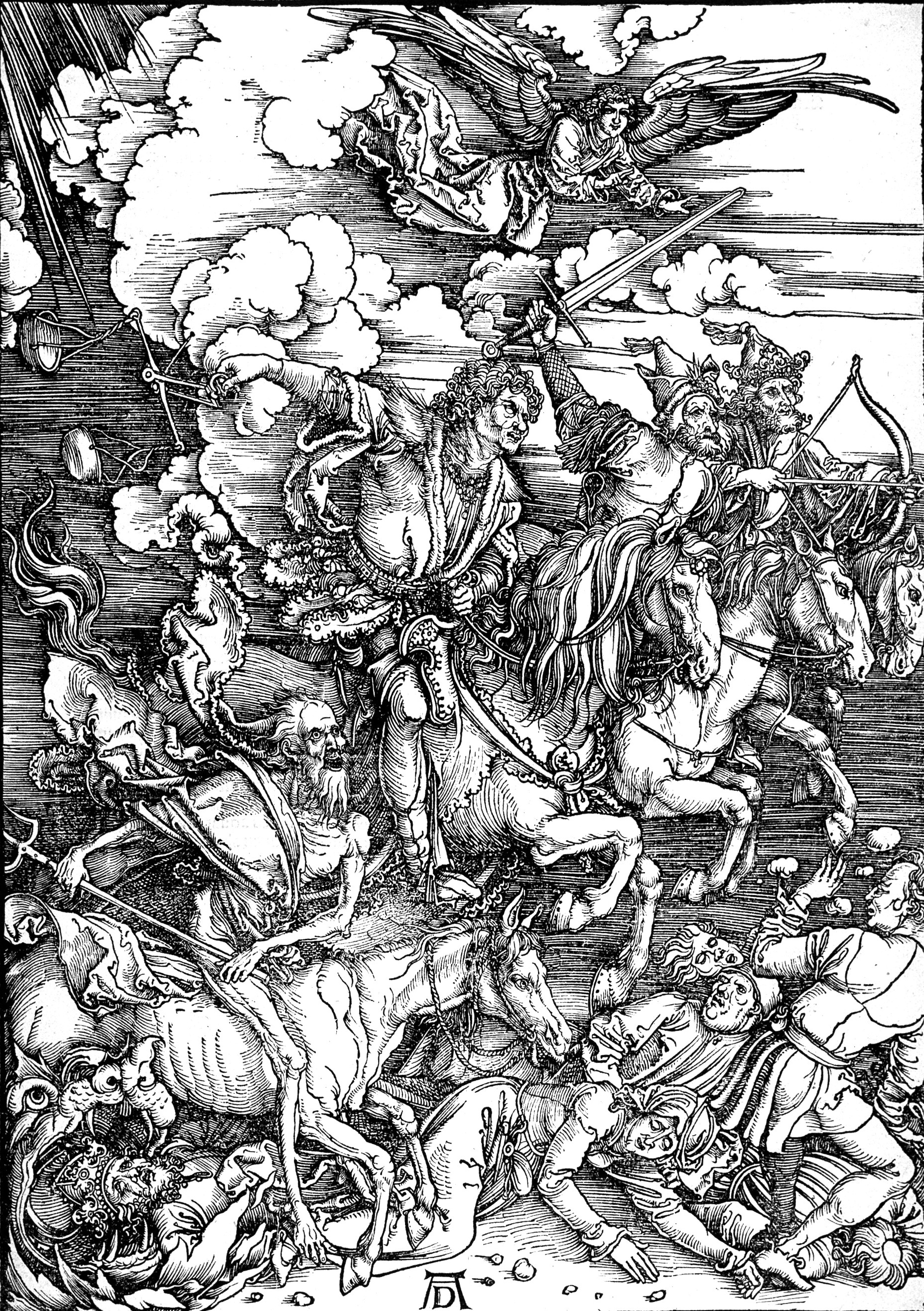
I. 가까운 미래: 그가 예측한 것과 실제로 일어난 일은 무엇인가
Pawson은 자신의 예측을 믿음과 행동으로 나눕니다. 행동에 관해 그는 네 가지 구체적인 예측을 제시합니다.
하나, 교회는 역사상 결코 눈에 띄게 하나의 조직으로 연합되지 않을 것입니다. 그는 그것을 기대하지도 않고 그것이 일어날 수 있다고 믿지도 않습니다.
둘째, 교회는 덜 제도화되고 덜 사무적이 될 것입니다. "미래의 기독교는 건물도 없고 성직자도 없을 수 있지만… 가정, 직장, 기타 모든 종류의 방식으로 모든 곳에서 자발적으로 나타날 수 있는 비공식 기독교가 될 것입니다."
셋, 교회 리더십은 북반구에서 남반구로 넘어갈 것입니다. "전통적으로 복음을 전하고 기독교를 전하는 교회들이 수신자가 되어야 할 것입니다. 그리고 이것은 그들을 크게 겸손하게 할 것입니다." 그는 이전 월요일 밤 모임에서 재생된 녹음을 통해 이를 설명합니다. 파라과이의 한 기독교인은 "우리의 호화로운 건물도 없고 재정적 여유도 없지만, 우리가 탐내는 생명과 활력을 갖고 있습니다"라고 말합니다.
네 번째 예측에서 Pawson은 앞서 사용한 세 집단의 틀(가톨릭, 자유주의, 복음주의)로 돌아갑니다. 그는 중간 집단인 성공회·장로교·감리교·회중교회가 향후 20년 동안 캐나다와 남인도에서 이미 일어났고 파키스탄에서도 추진 중인 것처럼 서로 훨씬 가까워질 것이라고 예측합니다. 성공회와 감리교가 “함께 논의하고 있다”고 말하며, Malcolm Muggeridge의 교회 연합 비유와 익명의 예일대 교회사 교수의 말을 인용합니다. “우리는 무엇을 믿는지 잘 모르지만, 함께 믿지는 말자.”
기독교 인구의 중심이 이동한다
세계 기독교인들의 거주 지역, 1910–2050년
회색은 세계 기독교인 중 글로벌 북부(유럽과 북아메리카)에 사는 비율이다. 금색은 글로벌 남부(아프리카·아시아·라틴아메리카)이며, 이는 반구가 아니라 사회·지리적 지역이다. 2020년 이후 점선 구간은 2050년까지의 예시적 전망이지 관측된 계열이 아니다. 1970년에도 글로벌 북부가 여전히 다수(59%)였다.
출처/편집: Center for the Study of Global Christianity, World Christian Database(그래프의 점과 2050년 끝점); 지역 구분은 Pew Research Center, The Future of World Religions(2015). 2050년 끝점은 새로 관측된 Pew 업데이트가 아니다.
일부 연합은 이루어졌고, 하나는 이루어지지 않았다
교회 연합 운동, 1925–1972년
1925년 6월 10일
캐나다 연합교회: 감리교 + 회중교회 + 장로교도의 약 70%가 토론토에서 통합
1947년 9월 27일
마드라스에서 남인도교회가 출범했다. 종교개혁 이후 감독제와 비감독제의 경계를 넘은 첫 연합이었다.
1969년 7월 8일
캔터베리와 요크 소집회의에서 성공회·감리교 연합안이 부결되었다. 찬성 69%, 필요한 비율 75%였다.
1970년 11월 1일
파키스탄교회가 출범했다. 성공회·감리교·장로교(스코틀랜드교회)·루터교 단체가 연합했다.
1972년 5월
새 총회에서 성공회·감리교 연합안이 두 번째로 부결되었다.
팝슨이 설교할 때 파키스탄은 아직 연합을 “찾는” 중이었다(아직 이루어지지 않았다). 그는 자기 나라의 성공회·감리교 연합안이 한 번이 아니라 두 번 실패할 것을 내다보지 못했다.
가톨릭과 복음주의에 대하여. Pawson은 서구 종교를 재편성할 두 블록인 "이 분야는 가톨릭과 복음주의자들에게 맡겨질 것"이라고 예측하는 반면, 가톨릭은 "그들의 방법을 채택한다면 남부 유럽에서는 입지를 잃게 되지만 북부 유럽에서는 입지를 굳힐 것"이라고 예측했습니다. 그는 복음주의자들이 “한 번에 더욱 연합되고 더욱 분열될 것”이라고 예측합니다.
나는 교회의 리더십이 북반구에서 남반구로 옮겨갈 것이라고 믿습니다. 그리고 전통적으로 복음을 전하는 교회들이 복음을 받는 이들이 되어야 할 것입니다. 그리고 이것은 그들을 크게 겸손하게 할 것입니다.
모든 민족에게 복음을 전하는 일. Pawson은 마태복음에 따라 모든 민족에게 복음을 전하는 일이 “현대적인 대중매체를 통해 적어도 2000년까지는 완료될 것”이라고 낙관합니다. 모든 사람을 개종시킨다는 뜻이 아니라, 모두가 복음을 듣게 한다는 뜻입니다. 그는 위클리프 성경 번역가들이 하나님의 말씀 일부를 번역해 주기 위해 “때로는 사람이 겨우 13명인 부족에게도 간다”고 말합니다.
영적 쇠퇴와 박해에 대하여. 그는 “큰 배교”와 “많은 그리스도교인의 사랑이 식어질 것”을 예언합니다. 그는 자신의 회중의 일원인 베이트먼 씨가 젊은 시절 야외에서 설교하던 사진을 보여 줍니다. 베이트먼 씨는 수십 년이 지난 뒤에도 같은 일을 계속하고 있지만, 많은 동시대 사람들은 그 일을 포기했습니다. Pawson은 박해가 “점점 더 커질” 것이며, 교회는 앞으로 다가올 어려운 시기를 지금 준비해야 한다고 말합니다.
II. 중간 미래: 환난, 휴거, 천년왕국(아직 위치가 아닌 틀)
Pawson은 제3차 세계 대전이나 최초의 달 착륙이 아니라 “우리 주 예수 그리스도께서 손과 발에 못 자국이 있는 육체적이고 눈에 보이는 모습으로 이 세상에 다시 오시는 것”을 세계 역사의 다음 위대한 사건으로 말합니다. 그는 환난, 휴거, 천년왕국이라는 세 가지 기술 용어를 차례로 소개하며, 그리스도인들이 가운데 용어인 휴거 자체에는 동의한다고 말합니다. 휴거는 그리스도께서 자신의 백성을 위해 육체적으로 돌아오시는 사건입니다. 의견이 갈리는 것은 환난과 천년왕국을 어떻게 이해하는지입니다.
천년왕국에 대해서 그는 세 가지 해석을 빠르게 제시합니다. 어떤 사람들은 그것을 실제 기간이 아니라 “순전히 상징적인 숫자”로 봅니다. 다른 사람들은 교회 자체가 그 천년을 “열어 갈” 것이며 그리스도께서는 그 끝에 오신다고 믿습니다. Pawson은 다른 사람들과 함께 이것이 “말씀 그대로”를 뜻한다고 믿습니다. 곧 그리스도께서 왕국을 아버지께 돌려드리기 전에 이 땅에서 눈에 보이게 통치하시는 실제 천년이 있다는 것입니다. 따라서 Pawson 자신은 전천년설을 따르는 사람이며, 그리스도께서 천년왕국 이후가 아니라 그 전에 돌아오신다고 주장합니다.
그런 다음 첫 번째 강의에서 가장 생생한 구절이 나옵니다. 그는 수만 명의 사람들이 관중석에서 찬양을 부르던 “지난해 웸블리에서” 열린 빌리 그래함 집회의 폐막 집회를 회상하며 궁금해합니다. 그것이 이미 거대한 모임처럼 느껴졌다면, 모든 시대를 거쳐 살아온 모든 그리스도인과 함께 구름 속에서 만나는 모임은 얼마나 클까요? “공중에서 말입니다.” 그는 누가복음에서 그날에 대한 예수님의 가장 엄중한 경고를 인용합니다. “두 사람이 한 침대에 있는데 한 사람은 데려가고 다른 한 사람은 남겨 둘 것입니다. 두 여자가 함께 맷돌질하고 있는데 한 사람은 데려가고 다른 한 사람은 남겨 둘 것입니다.” 한 세대의 그리스도인은 결코 죽지 않을 것이라고 그는 말합니다. “한 무리의 그리스도인에게는 장례식이 없을 것입니다.” 그런 다음 할아버지의 묘비를 보며 *“What a meeting!”*이라고만 말합니다. 가까운 묘비를 읽던 다른 방문객들을 당황하게 만드는 대사입니다.
그런 다음 그는 최대 긴장 지점에서 바로 멈춥니다. “여기서 나는 몇 가지 지뢰를 밟을 것입니다.” 그는 휴거와 환난 사이의 순서에 대한 세 가지 입장을 간략하게 설명합니다. 교회가 환난 전에 휴거된다는 입장(가장 인기 있음), 환난 중간에 휴거된다는 입장(소수), 그리고 환난 후에 휴거된다는 입장(자신의 견해)입니다. 그는 이어지는 설교에서 자신의 주장을 완전히 펼치겠다고 약속합니다.
III. 영원한 미래: 상상할 수 없는 것
Pawson은 가장 짧고 겸손한 부분인 영원한 미래로 첫 번째 강의를 마무리합니다. 그는 바울의 고린도전서을 인용합니다. “눈으로 보지 못한 것, 귀로 듣지 못한 것, 사람의 마음으로 생각하지 못한 것을 하나님이 자기를 사랑하는 자들을 위하여 예비하셨느니라.” 그는 그리스도와의 현재의 관계를 약혼에 비유하고, 영원한 미래를 결혼, 즉 “실체”에 비유합니다.
그런 다음 그는 리버풀의 J.C. Ryle 주교가 쓴 팸플릿 The True Church에서 인용한 말로 마무리합니다. “사람들은 이 교회나 저 교회에 가입하고 성찬을 받는 사람이 되거나 특정 형태를 거치면 모든 것이 그들의 영혼에 옳아야 한다고 상상합니다. 그것은 완전한 착각입니다.… 여러분은 열렬한 성공회 신자, 장로교인, 회중교회 신자, 침례교인, 감리교인, 또는 플리머스 형제회 신자일 수 있지만, 여전히 참된 교회에 속하지 않을 수 있습니다.”
제2부: 그리스도의 재림
첫 번째 강의의 거의 두 배에 달하는 두 번째 강의에서는 Pawson이 가장 논쟁적인 주제를 본격적으로 다룹니다. 그는 두 가지 요청으로 시작합니다. 결점을 찾지 말고, 그리스도인들을 서로 나누는 문제에 대해 열린 마음을 가지고 오십시오. 그는 이 주제가 Millmead에서 진행된 두 개의 병행 설교 시리즈(일요일 아침에는 스가랴서, 일요일 저녁에는 데살로니가전서)와 스가랴서 연구 후에 계속 반복되는 질문에서 비롯되었다고 분명히 말합니다. 그가 묘사한 사건을 목격하기 위해 아직 살아 있는 그리스도인이 있을까요?
I. 하나의 확정된 사실이 아닌 두 가지 관점
Pawson은 처음부터 문제를 명확하게 설명합니다. 모든 성경을 믿는 그리스도인은 두 가지 미래 사건, 즉 그리스도의 오심(신약에서 300번 이상 언급됨)과 적그리스도의 도래 가 있다는 데 동의합니다. 의견 차이는 순전히 이 두 사건이 시간에 맞춰 어떻게 정렬되는지.
그는 두 가지 시스템을 제시합니다.
전통적인 견해는 “교회 역사의 처음 17세기 동안… 약 1800년까지” 유지되었다고 말합니다. 적그리스도가 먼저 오고, 그리스도가 두 번째로 옵니다. 적그리스도는 절대 예배를 요구하는 전체주의 독재를 통해 통치하고, 그리스도는 그를 멸망시키고 왕국을 세우기 위해 다시 오십니다. 그는 이러한 견해를 교부들, 종교개혁자들(교황을 적그리스도로 규정하는 “실수”를 저질렀다고 말하긴 하지만), 청교도들, 웨슬리의 견해로 돌립니다.
세대주의적 견해는 “대략 1825년”에 등장했으며 오늘날에도 널리 퍼져 있습니다. 그리스도께서 먼저 성도들을 위해 오십니다(은밀한 휴거로 세상에서 교회를 데려가심). 교회가 없는 동안 적그리스도가 7년 동안 통치하고, 그다음 그리스도께서 성도들과 함께 오셔서 적그리스도를 멸망시키고 지상에 왕국을 세우십니다. Pawson은 이를 “언제든지 일어날 수 있다”는 관점이라고 부릅니다. 이 견해에 따르면 그리스도께서 오늘 밤 오실 수 있고, 그 전에 반드시 일어나야 할 사건은 없습니다.
두 체계에 들어가기 전에 Pawson은 “적그리스도”라는 단어 자체를 잠시 언급합니다. 그는 그리스어 접두사 anti가 “오늘날 우리가 사용하는 것처럼 반대를 의미하지 않고, 대신 대체를 의미한다”고 말합니다. 그의 해석에서 적그리스도는 그리스도를 공개적으로 반대하는 사람이 아니라 그리스도를 사칭하는 사람입니다. 그는 이 해석을 사용해 사탄이 광야에서 예수님께 “적그리스도의 지위”와 같은 역할을 제안한 이유도 설명합니다.
같은 두 사건을 배열하는 두 방식
적그리스도와 그리스도의 재림: 어떤 순서인가?
전통적 견해(처음 약 1,800년: 교부들, 종교개혁자들, 청교도들, 웨슬리, 팝슨)
교회는 처음부터 끝까지 함께 있다. 사전의 비밀 “휴거”는 없다.
세대주의적 견해(약 1830년부터: 다비, 스코필드, 현대 미국 복음주의의 대부분)
두 단계이며 7년으로 나뉜다.
팝슨은 전통적 계열에 자신을 둔다. 더 오래된 견해라서가 아니라, 신약성경 본문 자체에서 세대주의적 견해를 찾을 수 없다고 말하기 때문이다. 다만 오늘날 오순절교도와 독립 복음주의자의 다수가 이 견해를 가진다는 점은 인정한다.
II. 세대주의적 견해가 실제로 어디서 나온 것인가?
Pawson은 상당히 간결한 기원 이야기를 들려줍니다. “그것은 J.N. Darby라는 남자로부터 시작되었습니다… 처음에는 성공회 큐레이트였습니다… 1825년, 더블린에서 시작… 1830년 무렵, 플리머스에서 시작.” 그는 또한 이 아이디어가 “19세기까지 전혀 나타나지 않았다”고 말한 후 “Edward Irving…과 J.N. Darby라는 두 사람에게 나타났습니다”라고 말했습니다.
19세기 동안 형성되었지만 당시에는 새로웠던 교리
환난 전 휴거 교리의 기원, 1825–1909년
1825년 8월
다비가 아일랜드교회(성공회)에서 부제로 서품되었다. 위클로주 칼러리 교구였다.
1827–28년 겨울
다비·크로닌·벨레트·그로브스 등이 포함된 작은 모임이 더블린에서 비공개로 빵을 떼기 시작했다. 이것이 형제단의 실제 시작이다.
1830
15세의 마거릿 맥도널드가 스코틀랜드 포트글래스고에서 에드워드 어빙의 모임 안에서 환상을 보았다.
1830–1838
파워스코트 회의(아일랜드). 이곳에서 다비의 미래주의·세대주의 체계가 점차 모습을 갖추었다.
1831년 12월
잉글랜드 플리머스에서 첫 형제단 모임이 열렸다.
1833
에드워드 어빙은 스코틀랜드교회에서 면직되었고 가톨릭 사도교회를 세웠다.
1909
스코필드 관주성경이 출판되었다(Oxford University Press). 세대주의가 미국 복음주의권 전체로 퍼졌다.
어빙과 맥도널드가 실제로 그 사상을 다비에게 “전달했는지”는 아직 해결되지 않은 학술적 논쟁이다(아래 황색 주석 참조).
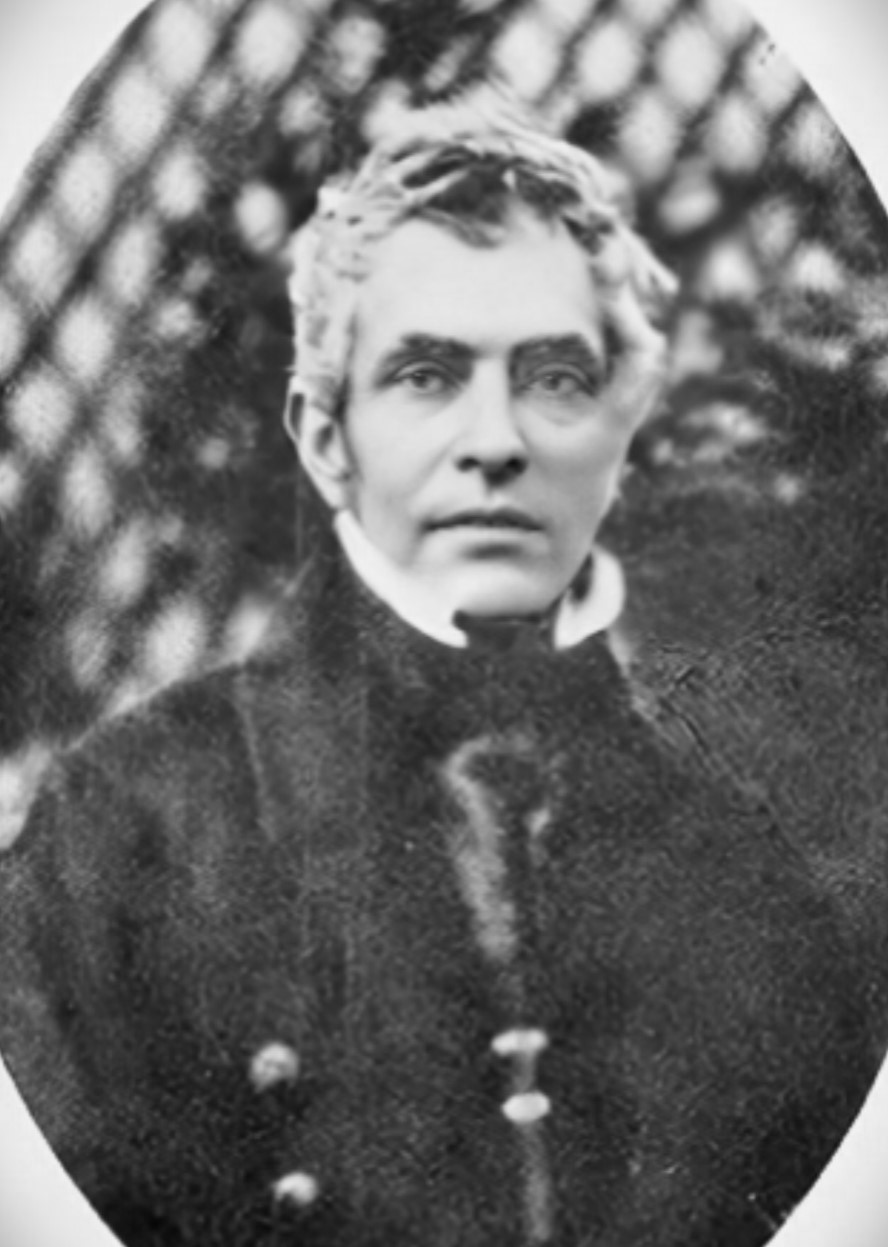
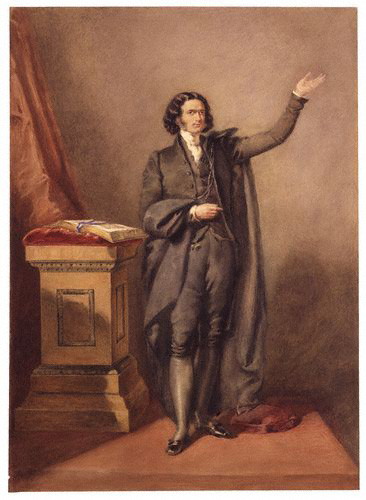
다비로부터 이 교리는 형제회 운동으로 전달되었고, 그 후 미국 목사인 C.I. Scofield(Pawson은 "D.L. Moody에 의해 목회자로 부름받은 회중 목사"라고 설명함)는 이 내용을 Scofield Reference Bible(1909 출판)의 노트에 기록했으며, 거기서부터 미국 복음주의, 특히 후기 오순절 그룹을 통해 퍼졌습니다.
그는 또한 Darby의 의견에 동의하지 않는 형제단 인물인 학자 S.P. Tregelles, "G.H. Leng", 그리고 무엇보다도 브리스톨 고아원의 설립자인 George Müller를 언급합니다.
III. 이론 테스트: 어휘 및 "밤의 도둑처럼"
Pawson은 역사("새롭게 나타났다"는 것이 자동으로 잘못된 것을 의미하지는 않습니다. 종교 개혁은 또한 수세기 동안 잊혀진 진리를 회복했습니다) 또는 심리학(갑작스러운 휴거에 대한 생각은 감정적으로 강력하지만 "우리가 설교하는 것은 그것이 심리적으로 효과적이기 때문이 아니라 진리여야 합니다")에 의해 교리를 테스트하는 것을 거부합니다. 그는 단 하나의 질문만 받아들입니다: 성경은 무엇이라고 말합니까?
그는 어휘부터 시작합니다. 그리스도의 “오심”에는 세 가지 헬라어가 사용됩니다: parousia(왕의 방문), epiphaneia(나타남), apokalypsis(드러남). 한쪽에만 나타나야 할 것처럼 보이지만, 구절을 하나씩 살펴보면 세 단어 모두 양쪽에 나타납니다.
같은 사건에 사용된 같은 세 단어
그리스도의 “오심”을 뜻하는 세 그리스어
| 단어 | 뜻 | 교회에 사용됨 | 세상에 사용됨 |
|---|---|---|---|
| παρουσία (parousia) | “오심”(보통 왕의 방문) | 데살로니가전서의 주님의 오심 본문 | 데살로니가후서의 주님의 오심 본문 |
| ἐπιφάνεια (epiphaneia) | “나타나심” | 디모데전서의 나타나심 본문 | 디모데후서의 나타나심 본문 및 디모데후서의 나타나실 때 받을 면류관 본문 |
| ἀποκάλυψις (apokalypsis) | “벗겨 드러냄”(휘장을 걷음) | 고린도전서의 나타남 본문 | 데살로니가후서의 나타남 본문 |
이 세 단어가 정말 “비밀 휴거”와 “공개적 나타나심”을 구분한다면 각각 한 열에만 나와야 한다. 그러나 세 단어 모두 양쪽에 나온다. 같은 단어가 두 상황에 모두 사용된 것이다.
그는 다른 표현도 사용합니다. “밤의 도둑과 같이”(항상 준비되지 않은 사람에게 해당하며, 깨어 있는 신자에게는 결코 해당하지 않음), “가까이”(그는 두 개의 헬라어 단어를 구별합니다. 하나는 개입할 수 있는 사건이 있는 예측 가능한 미래를, 다른 하나는 “어떤 순간”을 뜻합니다. 바울은 두 번째 단어를 바울의 데살로니가후서에서 단 한 번 사용하며, 그 용법은 임박성을 단언하는 것이 아니라 오히려 배제합니다), 그리고 “주의”(하늘을 쳐다보지 말고 무화과나무의 교훈처럼 펼쳐지는 표징을 식별함)입니다.
IV. 신약성서의 주요 논점
이것은 설교의 가장 긴 부분입니다. Pawson은 복음서와 서신서, 요한계시록을 차례로 살펴보며 신약성경의 주된 요지가 다음과 같다고 주장합니다. 신자들은 많은 경고를 받지만, 불신자들은 아무 경고도 받지 못합니다. 이는 비밀 휴거 교리가 전제하는 것과 정반대입니다(신자들은 아무 경고 없이 사라지고 세상에는 그 뒤에 많은 징조가 나타난다는 주장입니다). 그는 실용적인 주장으로 시작합니다. 모든 그리스도교인이 갑자기 사라진다면 거의 “눈에 띄지 않을” 수 없습니다. 그는 “오늘날 세계에 명목상 그리스도교인이 8억 5천만 명”이라고 인용합니다.
복음서. 마태복음은 Pawson이 가장 많이 의지하는 본문입니다. 예수님께서는 군중이나 유대 민족 전체가 아니라 제자들에게 전쟁, 배교, 예루살렘의 회복, 적그리스도의 출현과 환난을 경고하신 뒤 이렇게 말씀하십니다. “그날 환난 후에… 그가 큰 나팔 소리와 함께 천사들을 보내리니 그들이 택하신 자들을 모으리라.” 이 단락은 환난으로 시작해 휴거로 끝납니다. 그 사이에는 간격이 없습니다.
그는 또한 역사를 인용합니다. 신약성경 서신 대부분은 예수님께서 예언하신 사건, 곧 예루살렘 포위가 일어나기 전인 서기 70년 이전에 기록되었습니다. 유세비우스(Eusebius)가 기록한 전승에 따르면, 그리스도교인들은 포위 공격 전에 요르단 건너편 펠라(Pella)로 예루살렘을 떠났습니다. 그래서 *“150만 명의 유대인이 죽었지만 그리스도교인은 아무도 없었습니다”*라고 말합니다. 그들이 경고를 듣고 도망쳤기 때문이라는 설명입니다.
요한계시록. Pawson은 환난 기간 내내 “성도들” 또는 “하나님의 백성”이 지상에 존재하는 것으로 묘사되는 수십 개가 넘는 구절을 나열합니다. 교회가 사라져 있는 공백은 없습니다. 그는 특히 아마겟돈 전쟁을 묘사하는 가운데의 요한계시록에 주목합니다. “보라 내가 도둑같이 오리니 깨어 있는 자가 복이 있도다.” 성도들이 환난 전에 이미 휴거되었다면, 왜 아마겟돈 한가운데서 그리스도인들에게 “깨어 있으라, 밤에 도둑같이 덮치지 않게 하라”는 경고가 주어질까요?
그런 다음 실질적인 결론은 다음과 같습니다. 그는 신약성경에 휴거에 대한 가르침보다 고통에 대한 가르침이 “100배 더 많다”고 말합니다. 그리고 자신의 목회 임무는 양 떼가 고통을 피할 것이라고 약속하는 것이 아니라 고통에 대비시키는 것이라고 말합니다.
V. 목회적 결론: 고난을 피하는 것이 아니라 고난에 대비하라
Pawson은 미래의 박해에 대한 경고를 설명하기 위해 두 가지 주제별 세부 사항을 제공합니다. 그는 *“오늘날 중국에서 요한계시록은 기독교인들이 가장 많이 읽는 책입니다”*라고 말합니다. 이어 우연인 듯 *“중화인민공화국에는 666명의 대표자가 정부에 앉아 있습니다”*라고 덧붙입니다. 그는 또한 극단적인 도시화 전망을 회상합니다. “2074년이 되면 기획자들은 세계 인구의 98%가 하나의 도시에 살고 2%만이 농촌에 남게 될 것이라고 말합니다.”
Pawson은 자신이 노골적으로 “주요 단어, 핵심 구절”이라고 부르는 구절을 중심으로 실제적인 교훈을 구성합니다. 누가복음의 *“능히 피하고 … 능히 서도록 기도하라”*는 말씀입니다. 그는 “서다”라는 말이 후퇴할 곳이 없는 순간에 사용되는 어려운 단어라고 강조하며, 교회는 두 가지 모두를 위해 기도해야 한다고 말합니다. 피할 수 있을 때 피할 힘과, 피할 수 없을 때 견디고 설 힘입니다. 그는 또한 성경에서 죽지 않고 세상에서 들려 올라간 유일한 두 사람인 에녹과 엘리야를 그리스도인의 마지막 세대를 위한 “미리 맛보기”로 회상하지만, 이는 환난을 통과해 살아가는 사람들에게 적용되는 것이지 환난을 미리 건너뛰는 것을 보장하는 것은 아니라고 조심스럽게 말합니다.
그는 개인적인 이야기를 들려줍니다. 누군가가 지금 작은 압박, 곧 약간의 사회적 조롱을 받고 있다면 더 큰 위기가 닥쳤을 때 은혜를 받을 것이라고 말했습니다. 지금 작은 일에 서지 않으면 나중에 큰 일에도 서지 못할 것입니다. 그는 도시에서 멀리 떨어진 자급자족 농장으로 이주해 문제가 닥쳤을 때 도시 중심을 떠날 가능성에 대비하는 그리스도인들을 언급합니다. 그들은 순교를 구걸하지 않고, 예수님께서 마태복음에서 지시하신 것처럼 지혜롭게 가족을 보호하며, 누가복음처럼 기도합니다.
그는 자신이 읽은 책의 서문에서 인용문을 인용하며 끝을 맺습니다. 독자들이 자신의 의견에 동의하지 않을 것임을 알았던 저자가 쓴 것입니다. "당신이 확신하지 못한다고 가정해 보십시오. 같은 구속자를 의지하는 우리가... 같은 마귀에게 공격당하고, 같은 세상에게 미움을 받고, 같은 지옥에서 구출되고, 같은 영광을 받게 될 운명에 처해 있습니까? 공통점이 너무 많은 우리가 이 부차적인 문제에 대해 서로 다른 생각을 가지고 있기 때문에 마음이나 섬김에 있어서 분열되도록 허용해야 합니까? 금지합니다."
Pawson이 말하지 않는 것: 오늘날 천주교, 정교회, 복음주의의 풍경
5부에서 전혀 언급되지 않은 설교에 제2차 바티칸 공의회를 덧붙였던 것처럼, 이번 회기에도 1967년 영국 침례교회에서 설교하던 Pawson이 가져올 이유가 전혀 없었던 더 넓은 시각이 필요합니다.
가톨릭교에는 별도의 “휴거” 개념이 없습니다. 가톨릭 교회 교리서(§668-682)와 Lumen Gentium 48은 하나의 분리되지 않은 재림을 가르칩니다. 그리스도께서는 이미 교회를 통해 통치하시지만, 교회는 적그리스도 아래에서 한 번의 최종 시험(§675-676)을 겪습니다. 그 시험은 하나의 파루시아, 하나의 일반 부활, 하나의 최후 심판(§678-682)으로 곧바로 끝나며, 그보다 앞선 별도의 “휴거” 사건은 없습니다. 1944년 교황청 법령은 “완화된 천년왕국설”조차 안전하게 가르칠 수 없다고 판결하여 가톨릭 종말론을 무천년설(어거스틴 전통)에 두었습니다. 이는 Pawson과 세대주의가 공유하는 전천년설의 틀과 구조적으로 다릅니다.
동방 정교회도 마찬가지로 하나의 가시적이고 보편적인 재림(니케아 신조에 따라)을 확인하고 19세기 서구 개신교의 새로운 휴거 개념을 단호하게 거부하지만, Pawson식의 순차적인 환난·휴거·천년왕국 체계를 구축한 적은 없습니다. 요한계시록에 대한 주류 정교회 주석(7세기의 가이사랴의 안드레)은 서구의 어거스틴과 평행을 이루는 무천년설 또는 상징적 해석입니다. 연표 대신 정교회에서 지배적인 종말론적 렌즈는 theosis(신격화), “여덟째 날”, 창조의 우주적 변형입니다. 종말을 교회와 창조에 다가올 사건을 보여 주는 차트가 아니라, 이미 성사적으로, 가장 구체적으로는 성찬례 안에서 들어가고 있는 현실로 취급합니다.
오늘날 복음주의의 풍경도 Pawson의 두 진영 구도만큼 단순하지 않습니다. 2022년 Pew 조사에 따르면 미국 복음주의자의 44%만이 어떤 전천년설 입장을 취했고, 45%는 시기를 모른다고 답했습니다. 세대주의는 여전히 대중문화에서 강력하지만(Left Behind 소설은 6,500만~8,000만 부 판매), 1990년대의 정점 이후 학문·제도권에서는 Dallas Theological Seminary에서도 뚜렷하게 쇠퇴했습니다. George Eldon Ladd와 연관된 Pawson의 환난 후 견해는 존중받는 학문적 전통으로 남아 있습니다.
오늘의 모습
2022년 미국 복음주의자들이 시기에 대해 생각하는 것
같은 분모 · 조사된 복음주의자들
조사된 복음주의자의 44%. 세대주의적 환난 전 휴거와 자동으로 같은 뜻은 아니다.
같은 복음주의자 집단과 같은 조사 문항에서 45%.
후천년설
미국 성인 전체의 3%. 분모가 다르므로 맥락을 위해서만 제시한다.
44%와 45%는 복음주의자 조사라는 같은 틀을 공유하지만 3%는 미국 성인 전체를 대상으로 한다. 따라서 92%로 더해서는 안 된다. 분리된 배치는 분모의 차이를 보이므로 100% 구성처럼 오해하게 만들지 않는다.
출처: Pew Research Center, 2022년. 예수의 재림 상황에 관한 문항이며 3% 수치는 미국 성인 전체 기준이다.
시리즈를 마무리하다
무일푼이고 무력한 어부들의 무리에서 세상이 어떻게 끝날 것인지에 대한 여전히 뜨거운 논쟁까지 여섯 부분으로 구성됩니다. Pawson이 1부에서 다룬 것과 같은 내용입니다. 교회는 군대도, 돈도, 영향력 있는 인물도 없이 처음 세 번의 전투에서 승리했습니다. 그의 마지막 강의는 사람들이 일반적으로 승리한다고 상상하는 방식으로 교회가 하나의 조직으로 연합하고, 널리 포용되고, 고통에서 벗어나 승리할 것이라고 약속하지 않습니다. 그는 다른 것을 약속합니다. 교회가 남쪽의 형제자매들 앞에서 겸손을 배우고, 고통을 피하는 대신 고통을 준비하며, 희망적인 생각이 아닌 미래에 대한 확신으로 희망을 품는 것입니다.
그가 가장 정확하게 예언한 것은 교회가 더욱 연합되고 더욱 분열될 것이라는 점이었습니다. 무게중심이 남쪽으로 이동하게 됩니다. 그가 설교할 당시 가장 확신하지 못했던 이 예측이 정확히 드러났으며, 향후 20년에 대한 그 자신의 “그냥 추측”과 함께 제시되었습니다. 그리고 그가 가장 확신했던 것, 즉 환난과 귀환 사이의 순서에는 이 설교가 있은 지 58년이 지난 지금도 다른 많은 신실한 그리스도인들이 동의하지 않습니다.
Note: This piece merges the last two lectures, literally, in David Pawson's eleven-part History of the Church series: The Church in the Future (42.1 minutes, Part 10 in his own catalogue) and The Return of Jesus (74.9 minutes, Part 11, the final one). Unlike Parts 4 and 5, this isn't me choosing to fold together separate lectures: these two were already the closing pair. The first sketches the Church's future at three levels (near, intermediate, and eternal) and stops right at the most sensitive point, the order between the "rapture" and the "tribulation", saying "I'm going to tread on a few corns." The second, preached perhaps only weeks later in the same Sunday-evening series at Millmead Baptist Church, Guildford, is where he treads on that corn fully.
This is also the installment Pawson himself flags as the most contentious. He lays out a specific theological position: the Church will go through the tribulation before Christ returns, with no separate prior "secret rapture", and says plainly that many sincere Christians disagree. I've kept that position framed as Pawson's view, not settled historical fact, and added, where it matters, how Catholicism, Eastern Orthodoxy, and Evangelicalism's own internal landscape see this differently today.
Before we start: one sermon, two questions
Part 5 closed in 1968, between two world wars and the three isms that shaped the 20th century. The two lectures closing out Pawson's series raise the natural next question: then what? The first asks where the Church is headed. The second asks how Christ will return, and how the Church should wait for it.
PHẦN MỘT: TƯƠNG LAI HỘI THÁNH
Pawson opens with a question at once serious and wry: is the Church "half empty" or "half full"? He points to the New Testament edition Good News for Modern Men (translated by Robert Bratcher, American Bible Society), "produced just over a year ago… nine and a half million copies have been sold… selling at the rate of 13,000 a day", as evidence people still crave "good news" in a world overflowing with bad news.
Kit's note
Good News for Modern Man (the Today's English Version New Testament) was actually released by the American Bible Society in September 1966, as two independent sources confirm. "Just over a year ago" puts this sermon at the earliest around late 1967. I couldn't find any source confirming Pawson's "nine and a half million copies, 13,000 a day" figures. What is documented is 5.5 million copies in the first year (by roughly September 1967), and over 30 million cumulative copies within the first five years (by roughly 1971), making it the best-selling paperback of all time by May 1971. Pawson's numbers should be treated as his own stated figures, not independently verified fact.
He also recalls "the final rally of the Billy Graham crusade last year in Wembley… 120,000 Christians." The Greater London Crusade actually ran 1 June – 2 July 1966 at Earl's Court, with the closing service moved to Wembley Stadium on 2 July (not 22 May). Christianity Today's contemporary report states plainly: "some 86,000 got into Wembley"; the Billy Graham organization's own retrospective sources round this up to "95,000" or "over 94,000" inside plus about 8,000 who couldn't get in and stood outside. Even the most generous total comes to roughly 102,000–103,000, still a quarter to a third short of Pawson's 120,000.
Combining the clues, including the GNMM floor (earliest ~Oct 1967), Wembley "last year" (satisfied by any point in 1967), and the immediately preceding lecture in the series ("1900–1968") being independently dated to 1967, the best-supported estimate is late 1967, comfortably inside Pawson's pastorate at Gold Hill Baptist Church (1961–1968, per Wikipedia) before his move to Millmead, Guildford.
Source: bible-researcher.com/tev.html; thewayofimprovement.blog (25 May 2016); Christianity Today, "London Crusade Produces Historic Climax" (July 1966); billygrahamlibrary.org; Wikipedia, "David Pawson."
He reads three scripture passages as the foundation for the whole sermon: Paul’s first letter to the Thessalonians (the trumpet sounding, the dead in Christ rising first), Revelation (the innumerable multitude out of the great tribulation), and the millennium-and-new-creation section in Revelation (the millennium, the new heaven and new earth). Then he quotes Gamaliel from Acts: "If this plan or this undertaking is of men, it will fail. But if it is of God, you will not be able to overthrow them." That's the verse he builds the whole talk on: not trying to force the future to happen, just trying to see which way it's already moving.
I. The immediate future: what he predicted, and what actually happened
Pawson splits his forecast into belief and behavior. On behavior, he gives four specific predictions.
One, the Church will never be visibly united in one organization in history. He doesn't expect it and doesn't believe it could happen.
Two, the Church will become less institutional and less clerical. "Future Christianity will be the informal Christianity that may not have buildings and may not have clergymen… but may spring up everywhere spontaneously within homes, within places of work, in all sorts of other ways."
Three, church leadership will pass from the northern hemisphere to the southern. "The churches that have been traditionally the senders of the gospel and the givers of Christianity will need to become the receivers. And this will humble them greatly." He illustrates it with a recording played at the previous Monday-night meeting: Paraguayan Christians, "without any of our posh buildings, without any of our financial resources," but with "a life and a vigor that we covet."
Four, on belief, he returns to a three-group framework he'd used earlier (Catholic, Liberal, Evangelical) and predicts the middle bloc (Anglican, Presbyterian, Methodist, Congregational) will "draw much closer together over the next 20 years… as they have already done in Canada and South India, and are already seeking to do in Pakistan," while in England, Anglicans and Methodists "are talking together." He quotes Malcolm Muggeridge comparing church unity to "a group of drunk men who had to hold on to each other to stand up," and an unnamed Yale church history professor: "we're not quite sure what we believe, but let's unbelieve together."
The Christian Population's Center Is Moving
Where the world's Christians live, 1910–2050
Grey = the share of the world's Christians living in the Global North (Europe + Northern America). Gold = the Global South (Africa, Asia, Latin America); these are socio-geographic regions, not hemispheres. The dashed segment after 2020 is an illustrative projection to 2050, not an observed series. In 1970, the Global North still held a majority (59%).
Sources/compilation: Center for the Study of Global Christianity, World Christian Database (the plotted points and 2050 endpoint); Pew Research Center, The Future of World Religions (2015) for the regional framing. The 2050 endpoint is not a new observed Pew update.
Kit's note
This is the single most impressive prediction in the whole talk, and it predates most of the literature usually credited with popularizing the idea. The qualitative observation, "younger churches" in Africa, Asia, and Latin America outpacing an aging Western church, had circulated since the mid-1950s (Donald McGavran's Church Growth movement from 1955; John V. Taylor, The Growth of the Church in Buganda, 1958). But the confident "leadership shifting north to south" framing Pawson uses predates the book usually credited as the opening shot of this argument, Walbert Buhlmann's The Coming of the Third Church (Italian 1974, English 1976), by roughly six to nine years, and predates David Barrett's full statistical treatment in the World Christian Encyclopedia (1982) by more than a decade and a half.
On the hard numbers: per the Center for the Study of Global Christianity (Gordon-Conwell) and Pew Research, in 1910 roughly 80% to 93% of the world's Christians lived in the Global North (Europe and Northern America). By 1970 itself, around the time Pawson preached this, the Global North still held a clear majority: 58.7% against the Global South's 41.3%. The actual crossover (Global South passing 50%) is generally dated to the 1980s. In other words, Pawson wasn't describing something that had happened, he was forecasting something still roughly a decade and a half away. Today the Global South holds 67% to 69% of the world's Christians, with sub-Saharan Africa alone the single largest Christian region (about 31%).
On the Paraguay example: I couldn't identify a specific source Pawson is referring to. The two closest fits for his description, the Anglican South American Missionary Society's work among the Enxet people of the Chaco from 1889, or the Paraguayan Mennonite Chaco colonies, offer no direct link to this sermon. Treat this as illustration, not a confirmed event.
Source: gordonconwell.edu/blog/the-100-year-shift-of-christianity-to-the-south; Pew Research, "Global Christianity" (2011) and 2025 update; lausanne.org/global-analysis/highlights-of-christianity-in-its-global-context-1970-2020.
Some Unions Happened, One Didn't
Church union movements, 1925–1972
June 10, 1925
United Church of Canada: Methodists + Congregationalists + ~70% of Presbyterians merge in Toronto
September 27, 1947
Church of South India inaugurated in Madras: the first union to cross the episcopal/non-episcopal line since the Reformation
July 8, 1969
Anglican–Methodist unity scheme fails at Convocations of Canterbury/York: 69% in favour, 75% required
November 1, 1970
Church of Pakistan inaugurated: Anglican, Methodist, Presbyterian (Church of Scotland), and Lutheran bodies unite
May 1972
Anglican–Methodist unity scheme fails a second time in the new General Synod
Pawson was preaching while Pakistan was still "seeking" union (it hadn't happened yet). He did not foresee that the Anglican–Methodist union scheme in his own country would fail, not once but twice.
Kit's note
Pawson's three examples all check out. The United Church of Canada formed 10 June 1925 in Toronto, uniting the Methodist Church, the Congregational Union of Canada, and about 70% of the Presbyterian Church in Canada (784 of 4,512 Presbyterian congregations chose to stay out), usually considered the world's first union across major historic denominational lines. The Church of South India was inaugurated 27 September 1947 in Madras, after 28 years of negotiation, uniting the episcopal Anglican tradition with non-episcopal traditions: the first such union since the Reformation, and controversial with some Anglo-Catholics for exactly that reason. The Church of Pakistan genuinely did form, on 1 November 1970. Pawson's "seeking to do" phrasing suggests this sermon was recorded not long before that date, not decades earlier as one might assume.
What he didn't foresee: the Anglican-Methodist union scheme back home in England, which he describes as promisingly "talking together", failed twice: at the Convocations of Canterbury and York on 8 July 1969 (69% in favour, 75% required, even though the Methodist Conference approved it the same day with 77.4%), then again at the new General Synod in May 1972. Worth correcting a commonly repeated online claim: several summaries attribute both failures partly to disagreement over women's ordination. This is anachronistic, since British Methodism didn't ordain its first women presbyters until 2 July 1974, after both votes. The real sticking point was disagreement over the proposed "Service of Reconciliation" for uniting the two ministries.
The Muggeridge quote and the unnamed Yale professor: I could not trace either to a source after extensive searching; nothing in any Muggeridge book, interview, or quotation archive, and no trace of a Yale professor who said that line. Both should be treated as pulpit-circuit anecdotes, not verifiable quotations.
Source: united-church.ca; britannica.com "Church of South India," "Church of Pakistan"; christianitytoday.com/1969/08/where-defeat-is-mandate; methodist.org.uk (50th anniversary of women's ordination).
On Catholics and evangelicals. Pawson predicts "the field will be left to the Catholics and the evangelicals", the two blocs that will reshape Western religion, while Catholics "will lose ground in southern Europe, but gain ground in northern Europe, if they adapt their methods." He predicts evangelicals "will become at once more united and more divided."
I believe that the leadership of the church is going to pass from the northern hemisphere to the southern hemisphere. And the churches that have been traditionally the senders of the gospel will need to become the receivers. And this will humble them greatly.
Kit's note
The first half, Catholics losing ground in southern Europe, is strongly confirmed, if anything understated: in Spain, Sunday Mass attendance fell from 68% (1973) to roughly 11% to 17% today; in Italy, from 36.4% (2001) to 18.8% (2022); in Portugal, only 49% of 18-34-year-olds still self-identify Catholic against 80% of the population overall. The second half, gaining ground in northern Europe via adaptation, holds only in small, patchy pockets: real growth exists in Scandinavia, but it's driven mostly by Catholic immigration (Polish, Filipino, African, Latin American) rather than the institutional Church's "adaptation" winning native Northern Europeans, while larger Northern European Catholic populations (Germany, the Netherlands, Ireland, the UK) have seen sharp declines, especially Germany's Kirchenaustritt wave tied to the abuse scandal.
But what Pawson didn't foresee matters more: his Catholic-vs-evangelical binary misses the force that actually reshaped Western religion from 1970 onward, the rise of the religiously unaffiliated ("nones"). In the US, Pew's 2023-24 survey finds 29% of adults unaffiliated (up from 16% in 2007), a bigger group than Catholics and rivaling all of Protestantism. He correctly named the two most resilient Christian streams, but didn't foresee that the "third force" would be no religion at all.
The "evangelicals more united and more divided" prediction, meanwhile, is the single most accurate one in the passage: cross-denominational Pentecostal/charismatic identity grew from 58 million (1970) to 635–644 million people (2020), roughly an 11x increase (a genuine unifying thread), while at the same time the United Methodist Church underwent the largest US denominational schism since the Civil War (about 7,659 congregations, a quarter of the total, splitting off 2019–2023 to form the Global Methodist Church), and the Southern Baptist Convention has seen 18 straight years of membership decline.
Source: harvard.edu/gazette (Vatican II and Mass-attendance data, 2025); pewresearch.org/religion/2013/02/13/the-global-catholic-population; pewresearch.org/religion/2025/02/26/religious-landscape-study-executive-summary; gordonconwell.edu/center-for-global-christianity; christianitytoday.com/2023/12 (UMC schism).
On reaching every nation. Pawson is optimistic that "with modern methods of mass communication," preaching the gospel to every nation per Matthew’s Gospel (not converting everyone, just making sure everyone hears) "will be completed, at least by the year 2000." He cites Wycliffe Bible Translators, "going sometimes to a tribe of 13 people" to translate part of God's word for them.
Kit's note
Pawson's "done by 2000" forecast wasn't just personal optimism: it shared its deadline with a real, organized evangelical movement: the AD2000 & Beyond Movement (grown out of Lausanne II, Manila 1989, watchword "a church for every people and the gospel for every person by the year 2000"), which spawned Joshua Project 2000 to track roughly 1,700 "unreached people groups." The movement's own internal June 2000 report, from its own leader, Luis Bush, found the goal was not met: over 1,100 people groups still lacked even a minimal indigenous believing fellowship, 265 had no mission initiative at all, and roughly 7,400 smaller groups still lacked a viable church.
A quarter century past Pawson's deadline, Joshua Project now counts roughly 7,188 "unreached people groups" (3.42 billion people) and about 3,218 "frontier" groups (under 0.1% Christian, nearly 1.9 billion people) with almost no gospel access at all. Wycliffe still had 544 languages (about 36.8 million people) with no translation work even begun as of its August 2025 report, and even Wycliffe's own current internal target ("Vision 2025") is only to start a translation for every remaining language, not finish one.
The "13-person tribe" detail: I couldn't locate a specific documented case; it may be Pawson's own illustration, though it's consistent with Wycliffe/SIL's genuine policy of translating for even the smallest language communities (roughly 1 in 12 of the world's languages has fewer than 100 speakers).
Source: Robert T. Coote, "'AD 2000' and the '10/40 Window': A Preliminary Assessment," International Bulletin of Missionary Research (Oct 2000); joshuaproject.net/about/details; wycliffe.net/2025/08/25/2025-scripture-access-statistics.
On spiritual decline and persecution. He predicts "a great falling away" and that "the love of many Christians will grow cold", illustrated with a photograph of a member of his own congregation, Mr. Bateman, as a young man preaching in the open air, still doing the same thing decades later while many of his contemporaries had given it up. And he says persecution will "increase and increase," and the Church needs to prepare now for difficult days ahead.
II. The intermediate future: tribulation, rapture, and millennium (a frame, not yet a position)
Pawson turns to "the next great event in world history", not World War III, not the first man on the moon, but "the return of our Lord Jesus Christ to this world, in physical, visible form… a body that has nail prints in hands and feet." He introduces three technical terms, in the order he lists them: Tribulation, Rapture, and Millennium, and says Christians agree on the middle one: the Rapture itself, Christ literally, bodily returning for his people. The disagreement sits at the two ends: how to understand the Tribulation, and how to understand the Millennium.
On the Millennium, he sketches three readings quickly: some see it as "a purely symbolic figure," not an actual span of time; others believe the Church itself will "usher in" that thousand years, with Christ only arriving at its close; and he, with others, believes it "means what it says", a real thousand years in which Christ reigns visibly on earth before handing the kingdom back to the Father. In other words, Pawson himself is a premillennialist, holding that Christ returns before the millennium, not after it.
Then comes the most vivid passage in the first lecture: he recalls the closing rally of the Billy Graham crusade "last year at Wembley", with tens of thousands of people singing praise in the stands, and wonders: if that already felt like a huge gathering, how large will the meeting in the clouds be, with every Christian who has ever lived across every era: "there wouldn't be a stadium big enough on earth, so Jesus has arranged to meet in the air." He quotes Jesus's own starkest warning about that day, from Luke 17: "there will be two women in one kitchen and one will go and the other will be left. There will be two people in the same bed and husband and wife will be left alone." One generation of Christians, he says, will never die at all, "there will be no funerals for one group of Christians." Then he tells of his grandfather's gravestone, which reads only two words: "What a meeting!", a line that puzzles other visitors reading tombstones nearby.
Then he stops, right at the point of maximum tension: "Here I'm going to tread on a few corns." He sketches three positions on the order between the Rapture and the Tribulation: the Church raptured before the tribulation (the most popular), midway through it (a minority), or after it, at the same moment Christ returns (his own position), and promises to lay out the full argument in the sermon that follows.
III. The eternal future: the unimaginable
Pawson closes the first lecture with its shortest, most modest section: the eternal future. He quotes Paul’s first letter to the Corinthians: "What eye has not seen, what ear has not heard, what has never entered into the heart of man to conceive, God has prepared for them that love him." He compares the present relationship with Christ to an engagement, and the eternal future to a marriage, "the real thing."
Then he closes with a quote from Bishop J.C. Ryle of Liverpool, from the pamphlet The True Church: "Men fancy if they join this church or that church, and become communicants, or go through certain forms, that all must be right with their souls. It is an utter delusion… you may be a staunch Anglican, or Presbyterian, or Congregationalist, or Baptist, or Methodist, or Plymouth Brother, and yet not belong to the true Church."
PHẦN HAI: SỰ TRỞ LẠI CỦA ĐẤNG CHRIST
The second lecture, nearly twice the length of the first, is where Pawson treads on the corn in full. He opens with a double request: don't come looking for fault, and come with an open mind on an issue that divides Christians from one another. He says plainly the topic arose from two parallel sermon series running at Millmead (Zechariah on Sunday mornings, Thessalonians on Sunday evenings) and from a question that kept recurring after the Zechariah studies: would any Christians still be alive to witness the events he'd been describing?
I. Two views, not one settled fact
Pawson lays out the problem clearly from the start: every Bible-believing Christian agrees there are two future events, the coming of Christ (mentioned over 300 times in the New Testament) and the coming of Antichrist. The disagreement is purely about how these two events are ordered in time.
He presents two systems:
The traditional view, which he says held "for the first 17 centuries of church history… right up to about 1800": Antichrist comes first, Christ comes second, full stop. Antichrist rules through a totalitarian dictatorship demanding absolute worship, then Christ returns to destroy him and establish the kingdom. He attributes this view to the church fathers, the Reformers (though he says they "made a mistake" identifying the Pope as Antichrist), the Puritans, and Wesley.
The dispensational view, appearing "from about 1825" and still widely dominant today: Christ comes for his saints first (a secret rapture, removing the Church from the world), then Antichrist reigns for seven years while the Church is absent, then Christ comes with his saints to destroy Antichrist and establish the kingdom on earth. He calls this the "any-moment" view because it teaches Christ could come tonight, with nothing needing to happen first.
Before getting into the two systems, Pawson pauses on the word "Antichrist" itself: he says the Greek prefix anti "does not mean against, as we use it today. It means instead of, it means substitute." Antichrist, in his reading, is someone impersonating Christ, not someone openly opposing him, and he uses this same reading to explain why Satan once offered Jesus "the post of Antichrist" in the wilderness.
Kit's note
This is a checkable linguistic claim, and it's only partly right. The Greek prefix anti carries two main senses in Koine Greek: the more common one, and the dominant sense in the actual usage of antichristos itself, is "against, opposed to", exactly the everyday reading Pawson is trying to overturn. But anti genuinely does carry a "substitute for, in place of" sense in some other New Testament compounds, e.g. antilytron ("a ransom in place of," Paul’s first letter to Timothy) or antimisthia ("a corresponding recompense"). The "Antichrist = an impersonator of Christ, a substitute for him" reading isn't Pawson inventing something from nothing: it has support from some scholars (e.g. Kenneth Wuest) and fits comfortably with Paul’s second letter to the Thessalonians, where "the man of lawlessness" sits in God's temple claiming to be God. But saying the prefix "does not mean against" overstates it: standard Greek lexicons (BDAG) list "against/opposed to" as the primary sense of anti in this context, with "substitute" as a secondary sense, not the only or the dominant one.
Source: BDAG (A Greek-English Lexicon of the New Testament); Kenneth Wuest, Word Studies in the Greek New Testament.
Two Ways to Order the Same Two Events
Antichrist and Christ's return: which order?
The traditional view (the first ~1,800 years: the Fathers, the Reformers, the Puritans, Wesley, and Pawson)
The Church is present the whole way through: no prior secret "rapture."
The dispensational view (from ~1830: Darby, Scofield, most of modern American evangelicalism)
Two stages, separated by seven years.
Pawson places himself in the traditional line: not because it's older, but because he says he cannot find the dispensational view in the New Testament text itself, though he acknowledges it's the view held by most Pentecostal and independent evangelicals today.
Kit's note
This is one of the more solidly verified passages in the whole talk. The earliest post-apostolic fathers, Justin Martyr (Dialogue with Trypho), Irenaeus (Against Heresies, Book V), and Tertullian, all teach exactly the sequence Pawson describes: Antichrist reigns, then Christ visibly appears to destroy him, then the millennium begins. No patristic text mentions a secret rapture prior to Antichrist's appearing.
The Reformers identifying the Pope with Antichrist wasn't a fringe view, it was mainstream confessional doctrine for Reformed and Puritan Protestantism. The original 1646 text of Westminster Confession 25.6 reads: "There is no other head of the Church but the Lord Jesus Christ. Nor can the Pope of Rome, in any sense, be head thereof; but is that Antichrist, that man of sin, and son of perdition." This clause was only removed in later (mostly American, 19th-20th century) revisions. Luther wrote similarly in the Smalcald Articles (1537): "the Pope is the very Antichrist."
Wesley needs a small footnote: he did hold the historicist (Bengel-following) reading identifying the Pope as Antichrist, with no secret-rapture concept, but he was a postmillennialist, believing that after Antichrist's fall there would be a long golden age of gospel advance before Christ's return, not that Christ returns immediately after Antichrist falls, as Pawson's simple two-step framework implies.
Source: christianhistoryinstitute.org/magazine/article/historic-premillennialism; opc.org/documents/WCF_orig.html (1646 text); thebookofconcord.org (Smalcald Articles); wesleyscholar.com/john-wesleys-order-of-eschatological-events.
II. Where the dispensational view actually came from
Pawson tells a fairly compact origin story: "it started with a man called J.N. Darby… an Anglican curate at first… 1825, beginnings in Dublin… 1830 or thereabouts, beginnings in Plymouth." He also says the idea "never appeared until the 19th century," then "appeared in two people, Edward Irving… and J.N. Darby."
A Doctrine Nineteen Centuries in the Making (Then New)
The origins of the pretribulation rapture doctrine, 1825–1909
August 1825
Darby ordained deacon in the Church of Ireland (Anglican), parish of Calary, Wicklow
Winter 1827–28
A small group (Darby, Cronin, Bellett, Groves…) begins breaking bread privately in Dublin: the real start of the Brethren
1830
Margaret Macdonald, aged 15, has a vision at Port Glasgow, Scotland, within Edward Irving's circle
1830–1838
The Powerscourt Conferences (Ireland): where Darby's futurist/dispensational system gradually takes shape
December 1831
First Brethren meeting at Plymouth, England
1833
Edward Irving deposed by the Church of Scotland; founds the Catholic Apostolic Church
1909
The Scofield Reference Bible is published (Oxford University Press): spreading dispensationalism across American evangelicalism
Whether Irving and Macdonald actually "transmitted" the idea to Darby remains an unresolved scholarly dispute (see the amber note below).
Kit's note
Darby really was ordained deacon in the Church of Ireland (the Anglican province in Ireland, the established state church at the time) in August 1825, and served the isolated rural parish of Calary, County Wicklow, not Dublin. "Anglican" is an accurate shorthand; "Church of Ireland" is the precise denominational name.
But "1825, beginnings in Dublin" compresses two separate events into one: 1825 is when Darby was ordained and posted to Wicklow, while the first informal Dublin bread-breaking gatherings (Darby with Edward Cronin, John Gifford Bellett, Anthony Norris Groves…) only began in winter 1827-28, after a riding accident left Darby convalescing. "1830 or thereabouts, beginnings in Plymouth" is close but slightly early: the first Brethren meeting at Plymouth was held in December 1831.
Source: Sweetnam & Gribben, "J.N. Darby and the Irish Origins of Dispensationalism," Journal of the Evangelical Theological Society 52/3 (2009); Dictionary of Irish Biography.
Kit's note
This is where Pawson simplifies a genuinely tangled history. Pairing Irving and Darby as two people independently arriving at the same secret-rapture doctrine isn't quite accurate. Close study of Irving's own teaching (C.G. Flegg, 'Gathered Under Apostles', Oxford, 1992) shows Irving taught the "translation" of the saints as part of the same Second Advent event, a brief interval within it, not a secret removal years before a future seven-year tribulation. Irving was also a historicist (prophecy fulfilled progressively through church history), while Darby was a futurist (most prophecy still awaiting future fulfillment): different interpretive systems, not one idea independently held by two men.
The more widely known story Pawson may be gesturing at without naming: that the secret-rapture doctrine originated in the 1830 vision of Margaret Macdonald, a 15-year-old in Port Glasgow, Scotland, within Irving's circle, then passed to Darby (who may have "covered up" its origin). This is journalist Dave MacPherson's thesis, argued across several books from 1973 to 1994. Most historians, both sympathetic to and critical of dispensationalism, reject direct dependence: F.F. Bruce called it "unlikely"; R.A. Huebner and Thomas Ice point out Darby's own pretrib-leaning writings predate 1830; and a close reading of Macdonald's own published vision text (1840) reads as describing being tried through the tribulation, i.e. posttribulational, not pretribulational, the ambiguity only appearing in an 1861 reprint that dropped a few lines. But this isn't fully settled either: a King's College London PhD thesis (Mark Patterson, 2001) seriously argues Irving really did play a pioneering role. In short: a real, not-fully-resolved scholarly dispute, not a simple case of two men independently having the same idea.
Source: C. Graham Flegg, 'Gathered Under Apostles' (Oxford: Clarendon Press, 1992); Thomas Ice, "Edward Irving and the Rapture," pre-trib.org; Sweetnam & Gribben, JETS 52/3 (2009); Timothy C.F. Stunt, "Influences in the Early Development of J.N. Darby," in Prisoners of Hope? (Paternoster, 2004).
From Darby, the doctrine passed into the Brethren movement, then through an American minister, C.I. Scofield (described by Pawson as "a congregational minister… called to his pastorate by D.L. Moody"), who wrote it into the notes of the Scofield Reference Bible, published 1909, from where it spread across American evangelicalism, especially through later Pentecostal groups.
He also names Brethren figures who disagreed with Darby: the scholar S.P. Tregelles, "G.H. Leng," and above all George Müller, founder of the Bristol orphan houses.
Kit's note
Scofield was ordained Congregationalist in 1883 and took up his own pastorate at a small Dallas church (now Scofield Memorial Church), not at Moody's calling. The Moody connection predates that (he assisted Moody's 1879 St. Louis campaign) and postdates it: only in 1895 did he actually leave Dallas to become pastor at Moody's own church, Trinitarian Congregational Church in East Northfield, Massachusetts. Pawson has merged two separate pastorates into one.
The Scofield Reference Bible was published in 1909 (Oxford University Press, as Pawson says), sold over 2 million copies by the end of WWII, and became known as "the Bible of fundamentalism" for its outsized influence on how a generation of American evangelicals read prophecy.
One thing Pawson doesn't mention: Scofield's pre-conversion past is documented in the public/court record and rough: forced to resign as US District Attorney for Kansas in 1873 amid bribery allegations; arrested for forgery in 1878; deserted his first wife and two young daughters c. 1877-1881 (divorce finalized 8 Dec 1883); then remarried only about three months later, 11 March 1884, close enough that some critics call it "near-bigamy," though there's no evidence of two concurrent legal marriages. Worth flagging: the most detailed and harshest version of this story traces largely to one critical biography, Joseph M. Canfield's The Incredible Scofield and His Book (1988), regarded by Scofield's defenders as biased and overstating the severity. The core events (resignation, forgery, divorce, fast remarriage) are grounded in the public record, but the framing of them as a "dark past" is contested, not an uncontroversial consensus.
Source: en.wikipedia.org/wiki/C._I._Scofield; library.dts.edu/Pages/TL/Special/scofield.shtml; tshaonline.org/handbook/entries/scofield-cyrus-ingerson; Joseph M. Canfield, The Incredible Scofield and His Book (1988).
Kit's note
S.P. Tregelles (1813-1875), the eminent Greek New Testament textual scholar, of a stature comparable to Tischendorf, really did publicly dissent from Darby's secret-rapture doctrine. In The Hope of Christ's Second Coming (1864) he argued the doctrine had no basis in Scripture or the church fathers, and traced its origin to an emotional "utterance" in Edward Irving's congregation.
"G.H. Leng" is almost certainly a mis-transcription of G.H. Lang (George Henry Lang, 1874-1958), a well-known Brethren author on resurrection and rapture. Worth noting: Lang was born decades after Darby's own lifetime (Darby died 1882), so his "dissent" is a later intra-Brethren tradition, not a face-to-face contemporary debate with Darby the way Tregelles's or Müller's was.
George Müller (1805-1898), founder of the Bristol orphan houses through the Scriptural Knowledge Institution (1834), held a futurist premillennial system largely parallel to Darby's, but clearly rejected the rapture happening before the tribulation, leaning posttribulational: he's described as "very suspicious" of the new doctrine spreading in Brethren literature.
Source: christianobserver.net (series on Darby and the pretribulation rapture); en.wikipedia.org/wiki/George_H._Lang; theopedia.com/george-muller.
III. Testing the theory: vocabulary, and "like a thief in the night"
Pawson refuses to test the doctrine by history ("newly appeared" doesn't automatically mean wrong: the Reformation also recovered truths forgotten for centuries) or by psychology (the idea of a sudden rapture is emotionally powerful, but "what we preach must be the truth, not because it's psychologically effective"). He accepts only one question: what does the Bible say?
He starts with vocabulary. Three Greek words are used for Christ's "coming": parousia (a royal visit), epiphaneia (an appearing), and apokalypsis (an unveiling), and argues that if the dispensational split between "coming for the saints" and "appearing to the world" were right, each word should only show up on one side. But going verse by verse, all three show up on both sides.
The Same Three Words, Used of the Same Event
Three Greek words for Christ's "coming"
| Word | Meaning | Used of the church | Used of the world |
|---|---|---|---|
| παρουσία (parousia) | "Coming" (usually a royal visit) | the coming-of-the-Lord passage in First Thessalonians | the coming-of-the-Lord passage in Second Thessalonians |
| ἐπιφάνεια (epiphaneia) | "Appearing" | the appearing passage in First Timothy | the appearing passage in Second Timothy and the crown-at-his-appearing passage in Second Timothy |
| ἀποκάλυψις (apokalypsis) | "Unveiling" (pulling back a curtain) | the unveiling passage in First Corinthians | the unveiling passage in Second Thessalonians |
If these three words really separated a "secret rapture" from a "public appearing," each should only show up in one column. Instead all three appear in both: the same word, used for both settings.
Kit's note
Checking each verse: epiphaneia at the appearing passage in First Timothy and the appearing passage in Second Timothy and the crown-at-his-appearing passage in Second Timothy is correct. Apokalypsis at the unveiling passage in First Corinthians and the unveiling passage in Second Thessalonians is correct. For parousia: the coming-of-the-Lord passage in Second Thessalonians is right, but the word actually occurs at the coming-of-the-Lord passage in First Thessalonians, not at the location Pawson names, though the whole passage the whole caught-up passage in First Thessalonians (the correct "caught up" passage) is what he's referring to, so this is a minor verse-number slip, not a content error.
Pawson's central thesis, that these three words aren't technical terms splitting two stages, matches mainstream NT scholarship: George Eldon Ladd's The Blessed Hope (1956) and Robert Gundry's The Church and the Tribulation (1973) both conclude no two-stage coming can be deduced from NT word usage; BDAG classifies parousia as the general term for the whole return, not a label for a secret sub-phase.
But one fairness note is worth adding: this was the standard dispensationalist argument before roughly 1945. By the time Pawson preached this, dispensationalism's own leading theologian, John Walvoord, had already conceded exactly this lexical point himself, writing that parousia has "no technical meaning… limiting its use to either one" side, but is used "in a general… sense… descriptive of both the rapture and the glorious return." Walvoord defended the pretribulation rapture on other grounds (imminence, distinct audiences, the "restrainer" of Paul’s second letter to the Thessalonians), no longer relying on the lexical split. So Pawson is accurately refuting dispensationalism's older, more popular argument, not necessarily its most sophisticated, contemporary form.
Source: George Eldon Ladd, The Blessed Hope (Eerdmans, 1956); Robert Gundry, The Church and the Tribulation (Zondervan, 1973); walvoord.com/article/68 (Walvoord's review of Ladd).
He works through other phrases: "as a thief in the night" (always applied to the unprepared, never to the watchful believer), "at hand" (he distinguishes two Greek words: one for the foreseeable future with events possibly intervening, one for "any moment"; Paul uses the second only once, in Paul’s second letter to the Thessalonians, and uses it precisely to rule out imminence, not affirm it), and "watch" (not staring at the sky, but discerning unfolding signs, like the lesson of the fig tree).
IV. The New Testament's main thrust
This is the longest section of the sermon: Pawson works through the Gospels, the Epistles, and Revelation in turn to argue the New Testament's main thrust is "believers get much warning, unbelievers get none", the opposite of what the secret-rapture doctrine implies (believers vanish without warning, while the world gets ample signs). He opens with a practical argument: the sudden disappearance of every Christian could hardly go "unnoticed": he cites "850 million professing Christians in the world today."
Kit's note
If this sermon dates to late 1967 as argued at the top of this piece, Pawson's figure runs meaningfully below modern scholarly reconstructions for the same period. The World Christian Encyclopedia (Barrett), the same source used to build the chart in Part 5, estimates Christians at about 33.7% of world population in 1970, against a world population of roughly 3.7 billion, or about 1.25 billion people, not 850 million: a gap of roughly 30%, in the same direction as Pawson's general pattern of understating global Christianity's scale (see Part 5). Either way, his core point, that whether the true figure is 850 million or 1.25 billion, a mass disappearance on that scale would be impossible to miss, holds regardless of the exact number.
Source: World Christian Encyclopedia (Barrett), as cited in Part 5 of this series.
The Gospels. Matthew’s Gospel is the chapter he leans on most: Jesus warns the disciples, not the crowds, not the Jews, about wars, apostasy, Jerusalem restored, the appearance of Antichrist, and the tribulation, then says: "Immediately after the tribulation of those days… he will send out his angels with a loud trumpet call and they will gather the elect." The paragraph begins with the tribulation and ends with the rapture, with no gap between them.
He also draws on history: most of the epistles were written before AD 70, before the siege of Jerusalem, an event Jesus himself had predicted. Per the tradition recorded by Eusebius, the Christians fled Jerusalem for the town of Pella across the Jordan before the siege, and "one and a half million Jews were killed but no Christians were," because they had heeded the warning and fled.
Kit's note
The "flight to Pella" tradition is real, but only attested in 4th-century sources: Eusebius, Historia Ecclesiastica 3.5.3 (written c. AD 312-324) and Epiphanius, Panarion 29-30 (late 4th century), more than 240 years after the event. There's no first-century evidence at all: not in the New Testament, not in Josephus's Jewish War (written c. AD 75-79, covering the siege in exhaustive detail but never mentioning a Christian evacuation). Historians have debated the tradition's reliability since S.G.F. Brandon's 1951 challenge (arguing the flight was implausible given Roman control of escape routes); other historians (Craig Koester, 1989; Jonathan Bourgel, 2010) argue it does preserve a genuine historical memory, though none of them endorses the strong version Pawson gives, that all Christians were safe.
On the "one and a half million" figure: no ancient or modern source gives this number. Josephus himself (Jewish War 6.9.3, paragraph 420), presumably Pawson's loose source, records the siege death toll at roughly 1,100,000 (plus about 97,000 taken captive), and states plainly most of the dead were Passover pilgrims from across Judea trapped in the city, not only Jerusalem residents. Modern historians (such as Menahem Stern) already treat Josephus's own 1.1 million as a substantial exaggeration: Jerusalem's walled-city population is estimated at roughly 60,000-70,000, and even swollen by wartime refugees and pilgrims, falls far short of a million. So Pawson's figure isn't just one and a half times Josephus's own (already-inflated) number: the claim that "no Christians" died is also his own inference, not a verifiable historical statistic; no ancient source counts Christian survivors.
Source: Eusebius, Historia Ecclesiastica 3.5.3; Craig R. Koester, "The Origin and Significance of the Flight to Pella Tradition," Catholic Biblical Quarterly 51.1 (1989); Josephus, Jewish War 6.9.3 (paragraph 420); Siege of Jerusalem (70 CE), summarizing Menahem Stern's assessment.
The Book of Revelation. Pawson lists over twenty verses where "the saints" or "God's people" are described as present on earth throughout the tribulation: no gap in which the Church is absent. He leans especially on Revelation, right in the middle of the description of the battle of Armageddon: "Behold, I am coming like a thief. Blessed is he who is awake." If the saints had already been raptured before the tribulation, why does the warning to "stay awake, don't be caught like a thief in the night" (always addressed to Christians) show up right in the middle of Armageddon?
Then the practical conclusion: he says there is "a hundred times more" teaching on suffering than on the rapture in the New Testament, and his own pastoral task is to prepare the flock for suffering, not to promise they'll escape it.
V. A pastoral conclusion: preparing for suffering, not escaping it
Pawson offers two topical details to illustrate the warning about future persecution. He says "in China today the book of Revelation is the most read book by Christians," adding, as if a coincidence, that "the Chinese People's Republic has 666 representatives sitting in government." He also recalls an extreme urbanization forecast: "by 2074, the planners tell us that 98% of the world's population will be living in one city… only 2% will be left in the country."
Kit's note
No session of China's National People's Congress has ever had exactly 666 members. The 3rd NPC, the nominal session spanning the Cultural Revolution (1964-1975), had 3,040 delegates; the 2nd (1959-1964) had 1,235; the 4th (1975-1978) had 2,864; and since 1982 the law has capped the NPC at no more than 3,000 delegates. The "666" figure matches no documented record: this reads almost certainly as pulpit-style "Revelation numerology," not a historical fact. On Revelation being China's "most-read book": no scholarly, denominational, or Bible-society source quantifies reading habits this way, emotionally plausible (apocalyptic literature often resonates strongly with the persecuted), but unverifiable as a statistic.
What's real and more worth noting: the Cultural Revolution (1966-1976) genuinely was the harshest persecution period for Chinese Christianity in the modern era: churches closed, Bibles burned, clergy imprisoned and tortured, public worship banned outright. Yet underground house-church Christianity survived, and later grew explosively, well documented in Tony Lambert's The Resurrection of the Chinese Church (1991): believers met in coal-mine tunnels and mountain caves, hid hymnbooks inside covers of Mao's Little Red Book, and growth was driven substantially by lay "Bible women" who had memorized Scripture.
On "98% in one city by 2074": this isn't a UN or World Bank projection, but a garbled echo of a real but non-consensus 1962 forecast by Greek urban planner Constantinos Doxiadis, inventor of the "Ecumenopolis" concept (a hypothetical single planet-spanning city). He extrapolated then-current growth rates to predict world population reaching 50 billion by 2100, 98% urban, covering about 48 million sq km along growth corridors: a strand of 1960s "megastructuralist" urban futurism (alongside Jean Gottmann's 1961 "Megalopolis" and Herman Kahn/Anthony Wiener's 1967 "The Year 2000"), never mainstream demographic consensus even at the time. The reality: global urbanization was about 57.7% in 2024 (World Bank), with the UN projecting roughly 68% by 2050 (nowhere near 98%), while world population is projected to peak around 10-10.3 billion, not the 50 billion Doxiadis assumed.
Source: npcobserver.com (NPC seat allocation); Tony Lambert, The Resurrection of the Chinese Church (1991); en.wikipedia.org/wiki/Ecumenopolis; World Bank, urban population 2024; UN, World Urbanization Prospects (2018, 2025 update).
Pawson frames the whole practical takeaway around a verse he calls outright "a key word, key verse": Luke’s Gospel, "Pray that you may have strength… to escape." He stresses that "stand" is a tough word, used for the moment you're beaten back with nowhere left to retreat, and says the Church needs to pray for both: strength to escape when escape is possible, and strength to stand when it isn't. He also recalls Enoch and Elijah, the only two people in Scripture taken out of the world without dying, as a "foretaste" for the final generation of Christians, but is careful to say that only applies to those who live through the tribulation, not a guarantee of skipping it beforehand.
He tells a personal story: someone once told him that if you stand under small pressures now, a little social ridicule, you'll receive grace for the bigger crisis when it comes; if you don't stand in small things now, you won't stand in the big ones later. He mentions Christians he knows who have moved to self-sufficient farms far from cities, preparing for the possibility of needing to leave urban centers when trouble comes: not courting martyrdom, but wisely protecting their families exactly as Jesus instructed in Matthew’s Gospel, and exactly as Luke’s Gospel prays for.
He closes with a quotation from the preface of a book he'd read, written by an author who knew readers would disagree with him: "Suppose you are not convinced. Shall we who are relying on the same redeemer… assaulted by the same devil, hated by the same world, delivered from the same hell and destined to the same glory, shall we who have so much in common allow ourselves to be divided in heart or service because we are of different minds on this secondary matter? God forbid."
What Pawson doesn't tell you: Catholicism, Orthodoxy, and evangelicalism's own landscape today
Just as Part 5 added the Second Vatican Council to a sermon that never mentioned it at all, this installment needs a wider lens that Pawson, preaching to an English Baptist congregation in 1967, had no reason to bring in.
Catholicism has no separate "rapture" concept. The Catechism of the Catholic Church (§668-682) and Lumen Gentium 48 teach a single, undivided Second Coming: Christ already reigns through the Church now (an inaugurated-but-incomplete Kingdom), the Church passes through one final trial under Antichrist (§675-676), and that trial is resolved immediately by one Parousia, one general resurrection, one Last Judgment (§678-682), with no room for a separate earlier "rapture" event. A 1944 decree of the Holy Office further ruled that even "mitigated millenarianism" (a visible pre-judgment earthly reign of Christ) "cannot be taught safely," placing Catholic eschatology in the amillennial (Augustinian) camp, structurally different from both Pawson's and dispensationalism's shared premillennial framework.
Eastern Orthodoxy likewise affirms one visible, universal Second Coming (per the Nicene Creed), and firmly rejects the rapture as a 19th-century Western Protestant novelty, but has never built a Pawson-style sequenced tribulation/rapture/millennium system. Mainstream Orthodox exegesis of Revelation (Andrew of Caesarea, 7th century) is amillennial/symbolic, paralleling Augustine in the West. In place of a timeline, Orthodoxy's dominant eschatological lens is theosis (deification), the "eighth day," and the cosmic transfiguration of creation: treating the End as something the Church and creation are already sacramentally entering, most concretely in the Eucharist, rather than a chart of coming events.
Evangelicalism's own landscape today is also not as simple as Pawson's two-camp framework. A 2022 Pew survey found only 44% of American evangelicals hold any premillennial position at all (dispensational or historic combined), while 45% say outright they don't know the timing. Dispensationalism still dominates popular culture (the Left Behind novels sold 65-80 million copies) but has declined markedly at the scholarly/institutional level since its 1970s-90s peak, even at Dallas Theological Seminary itself, Scofield's own institutional home. Pawson's own posttribulational view, associated with scholar George Eldon Ladd, remains a respected academic tradition, even though it never achieved dispensationalism's mass popular reach.
The Picture Today
What American evangelicals think about the timing, 2022
Same denominator · surveyed evangelicals
44% of surveyed evangelicals; not automatically the same as dispensational pretribulation.
45% of the same evangelical group and the same survey question.
Postmillennial
3% of all U.S. adults — a different denominator, shown only as context.
The 44% and 45% figures share the evangelical survey frame; the 3% figure is for U.S. adults overall, so they must not be added to 92%. The split layout makes the denominator difference visible instead of implying a 100% composition.
Source: Pew Research Center, 2022 — questions about the circumstances of Jesus' return; the 3% figure is among all U.S. adults.
Closing the series
Six parts, from a group of penniless, powerless fishermen to a debate that's still hot about how the world will end: the same thread Pawson drew back in Part 1. The Church won its first three battles without an army, without money, without influential people. His final lecture doesn't promise the Church will win the way people usually imagine winning, united in one organization, broadly embraced, spared from suffering. He promises something else: a Church learning humility before its southern brothers and sisters, preparing for suffering instead of fleeing it, and holding a hope that isn't wishful thinking but absolute certainty about the future.
The thing he predicted most accurately, that the Church would become both more united and more divided, and that its center of gravity would shift south, turns out to be exactly what he was least certain about when he preached it, filed alongside his own "just speculation" about the next twenty years. And the thing he was most certain about, the order between the tribulation and the return, is still the thing many other sincere Christians disagree with him on, fifty-eight years after this sermon.