
Historia de la Iglesia y Reforma
Historia de la Iglesia: Parte 6 – El futuro de la Iglesia y el regreso de Cristo
Nota: Esta pieza fusiona las dos últimas conferencias de la serie de once partes Historia de la Iglesia de David Pawson: La Iglesia en el futuro (42,1 minutos, Parte 10 en su propi…
Al preparar este ensayo, AI ayudó a buscar, comprobar, traducir y editar; el argumento y las conclusiones son del autor.
La línea argumental, el sentido y las conclusiones son del propio autor. Elegir en qué fuentes confiar y cómo entenderlas es juicio del autor, no de las herramientas.
Se usaron herramientas de AI para buscar fuentes, contrastar con ellas las afirmaciones, leer ampliamente sobre el tema, pasar el texto entre inglés y vietnamita y ayudar con la gramática, la claridad y el ritmo.
Lo que encontraron fue material para sopesar, no un veredicto. El autor decidió qué diría este ensayo, qué dejaría fuera y qué significa.
El ensayo aparece bajo el nombre del autor. El autor responde por él, incluso por cualquier error que contenga.

Paralelo
Nota: Esta pieza fusiona las dos últimas conferencias de la serie de once partes Historia de la Iglesia de David Pawson: La Iglesia en el futuro (42,1 minutos, Parte 10 en su propio catálogo) y El Retorno de Jesús (74,9 minutos, Parte 11, la final). A diferencia de las partes 4 y 5, aquí no soy yo quien elige juntar conferencias separadas: estas dos ya eran el par final. La primera esboza el futuro de la Iglesia en tres niveles (cercano, intermedio y eterno) y se detiene justo en el punto más sensible, el orden entre el "arrebatamiento" y la "tribulación", diciendo "voy a pisar algunos callos". La segunda, predicada quizás sólo unas semanas después en la misma serie del domingo por la tarde en la Iglesia Bautista Millmead, Guildford, es donde pisa esos callos por completo.
Esta es también la entrega que el propio Pawson señala como la más polémica. Él expone una posición teológica específica: la Iglesia pasará por la tribulación antes de que Cristo regrese, sin ningún "arrebatamiento secreto" previo separado, y dice claramente que muchos cristianos sinceros no están de acuerdo. He mantenido esa posición presentada como la postura de Pawson, no como un hecho histórico establecido, y agregué, donde importa, cómo el catolicismo, la ortodoxia oriental y el propio panorama interno del evangelicalismo ven esto de manera diferente hoy.
Antes de comenzar: un sermón, dos preguntas
La Parte 5 cerró en 1968, entre dos guerras mundiales y los tres ismos que dieron forma al siglo XX. Las dos conferencias que cierran la serie de Pawson plantean la siguiente pregunta natural: ¿entonces qué? La primera pregunta hacia dónde se dirige la Iglesia; la segunda, cómo regresará Cristo y cómo deberá esperarlo la Iglesia.
PRIMERA PARTE: EL FUTURO DE LA IGLESIA
Pawson comienza con una pregunta a la vez seria e irónica: ¿está la Iglesia "medio vacía" o "medio llena"? Señala la edición del Nuevo Testamento Buenas noticias para el hombre moderno (traducida por Robert Bratcher, Sociedad Bíblica Americana), "producida hace poco más de un año... se han vendido nueve millones y medio de copias... a un ritmo de 13.000 por día", como evidencia de que la gente todavía anhela "buenas noticias" en un mundo rebosante de malas noticias.
Lee tres pasajes de las Escrituras como fundamento de todo el sermón: la primera carta de Pablo a los Tesalonicenses (el sonido de la trompeta, los muertos en Cristo resucitan primero), el Apocalipsis (la multitud innumerable que salió de la gran tribulación) y la sección sobre el milenio y la nueva creación en Apocalipsis (el milenio, el cielo nuevo y la tierra nueva). Luego cita a Gamaliel de Hechos: "Si este plan o esta empresa es de hombres, fracasará. Pero si es de Dios, no los podréis derribar." Ese es el versículo sobre el que construye toda la charla: no intento forzar el futuro para que suceda; simplemente intento ver en qué dirección ya se está moviendo.
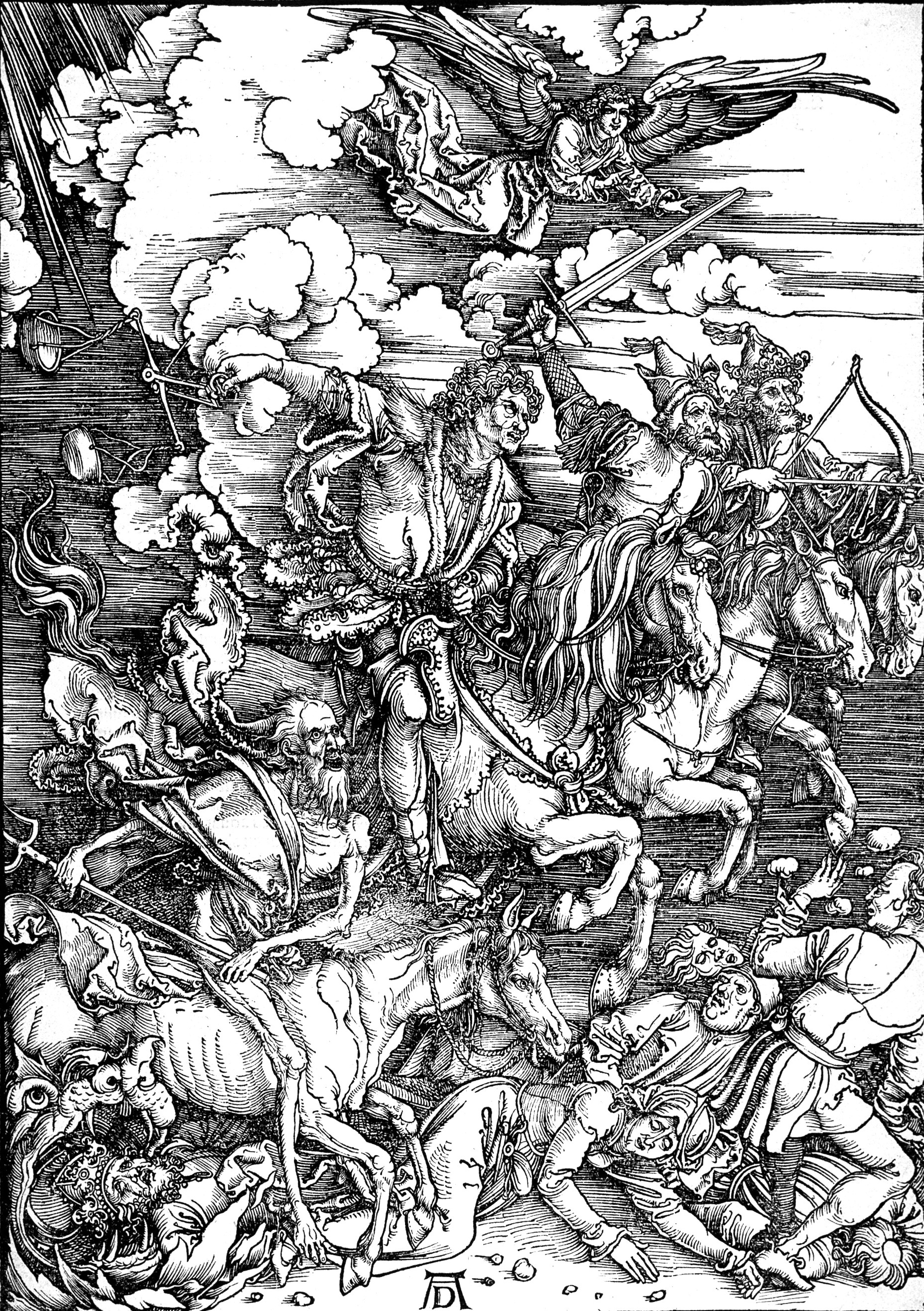
I. El futuro inmediato: lo que predijo y lo que realmente sucedió
Pawson divide su pronóstico en creencia y comportamiento. Sobre el comportamiento, da cuatro predicciones específicas.
Primero, la Iglesia nunca estará visiblemente unida en una sola organización en la historia. No lo espera y no cree que pueda suceder.
Segundo, la Iglesia se volverá menos institucional y menos clerical. "El cristianismo futuro será el cristianismo informal que puede no tener edificios ni clérigos... pero puede surgir espontáneamente en todas partes, dentro de los hogares, dentro de los lugares de trabajo, en todo tipo de otras formas."
Tercero, el liderazgo de la iglesia pasará del hemisferio norte al sur. "Las iglesias que han sido tradicionalmente transmisoras del evangelio y dadoras del cristianismo necesitarán convertirse en receptoras. Y esto las humillará grandemente." Lo ilustra con una grabación reproducida en la reunión anterior del lunes por la noche: cristianos paraguayos, "sin ninguno de nuestros elegantes edificios, sin ninguno de nuestros recursos financieros", pero con "una vida y un vigor que codiciamos".
Cuarto, en cuanto a las creencias, regresa a un marco de tres grupos que había usado anteriormente (católico, liberal, evangélico) y predice que el bloque medio (anglicano, presbiteriano, metodista, congregacional) "se acercará mucho más en los próximos 20 años... como ya lo han hecho en Canadá y el sur de la India, y ya están tratando de hacerlo en Pakistán", mientras que en Inglaterra, los anglicanos y los metodistas "están hablando juntos". Cita a Malcolm Muggeridge comparando la unidad de la Iglesia con "un grupo de hombres borrachos que tuvieron que agarrarse unos a otros para ponerse de pie", y a un profesor anónimo de historia de la Iglesia de Yale: "no estamos muy seguros de lo que creemos, pero dejemos de creer juntos".
El centro de la población cristiana se desplaza
Dónde viven los cristianos del mundo, 1910–2050
Gris = la proporción de los cristianos del mundo que vive en el Norte Global (Europa + Norteamérica). Dorado = el Sur Global (África, Asia y América Latina); son regiones sociogeográficas, no hemisferios. El segmento discontinuo después de 2020 es una proyección ilustrativa hasta 2050, no una serie observada. En 1970, el Norte Global todavía reunía la mayoría (59%).
Fuentes/compilación: Center for the Study of Global Christianity, World Christian Database (puntos representados y extremo de 2050); Pew Research Center, The Future of World Religions (2015), para el marco regional. El extremo de 2050 no es una nueva actualización observada de Pew.
Algunas uniones ocurrieron; una no
Movimientos de unión de las iglesias, 1925–1972
10 de junio de 1925
Iglesia Unida de Canadá: metodistas + congregacionalistas + ~70% de los presbiterianos se fusionan en Toronto
27 de septiembre de 1947
Se inaugura la Iglesia del Sur de la India en Madrás: la primera unión que cruzó la línea entre episcopales y no episcopales desde la Reforma
8 de julio de 1969
El proyecto de unidad anglicano-metodista fracasa en las asambleas eclesiásticas de Canterbury/York: 69% a favor, se requería 75%
1 de noviembre de 1970
Se inaugura la Iglesia de Pakistán: comunidades anglicanas, metodistas, presbiterianos (Iglesia de Escocia) y luteranos se unen
mayo de 1972
El proyecto de unidad anglicano-metodista fracasa por segunda vez en el nuevo Sínodo General
Pawson predicaba mientras Pakistán aún estaba «buscando» la unión (todavía no había ocurrido). No previó que el proyecto de unión anglicano-metodista de su propio país fracasaría, no una sino dos veces.
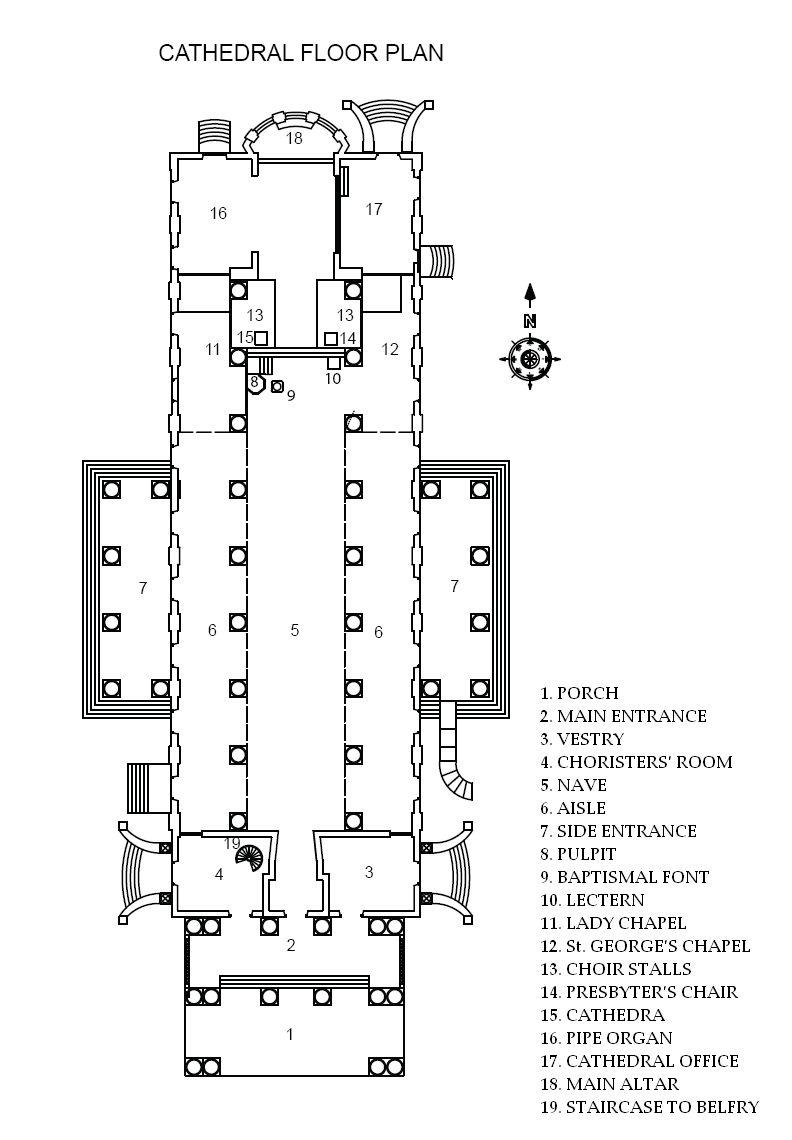
Sobre católicos y evangélicos. Pawson predice que "el campo quedará en manos de los católicos y los evangélicos", los dos bloques que remodelarán la religión occidental, mientras que los católicos "perderán terreno en el sur de Europa, pero ganarán terreno en el norte de Europa, si adaptan sus métodos". Predice que los evangélicos "estarán a la vez más unidos y más divididos".
Yo creo que el liderazgo de la iglesia va a pasar del hemisferio norte al hemisferio sur. Y las iglesias que tradicionalmente han sido las emisoras del evangelio necesitarán convertirse en las receptoras. Y esto las humillará mucho.
Sobre llegar a cada nación. Pawson es optimista de que "con métodos modernos de comunicación masiva", predicar el evangelio a cada nación según el Evangelio según Mateo (sin convertir a todos, sólo asegurarse de que todos escuchen) "se completará, al menos para el año 2000". Cita a Wycliffe Bible Translators, "yendo a veces a una tribu de 13 personas" para traducirles parte de la palabra de Dios.
Sobre la decadencia espiritual y la persecución. Predice "una gran apostasía" y que "el amor de muchos cristianos se enfriará", ilustrado con una fotografía de un miembro de su propia congregación, el Sr. Bateman, de joven predicando al aire libre, y que sigue haciendo lo mismo décadas después, mientras que muchos de sus contemporáneos lo habían abandonado. Y dice que la persecución "aumentará y aumentará", y que la Iglesia necesita prepararse ahora para los días difíciles que se avecinan.
II. El futuro intermedio: tribulación, arrebatamiento y milenio (un marco, aún no una posición)
Pawson se centra en "el próximo gran acontecimiento de la historia mundial", no la Tercera Guerra Mundial ni el primer hombre en la luna, sino "el regreso de nuestro Señor Jesucristo a este mundo, en forma física y visible... un cuerpo que tiene huellas de clavos en manos y pies". Introduce tres términos técnicos, en el orden en que los enumera: Tribulación, Arrebatamiento y Milenio, y dice que los cristianos coinciden en el punto central: el Arrebatamiento mismo, Cristo regresando literalmente y corporalmente por su pueblo. El desacuerdo se sitúa en dos extremos: cómo entender la Tribulación y cómo entender el Milenio.
Sobre el Milenio, esboza rápidamente tres lecturas: algunos lo ven como "una figura puramente simbólica", no un lapso de tiempo real; otros creen que la Iglesia misma "marcará el comienzo" de esos mil años, y que Cristo solo llegará al final de ese período; y él, como otros, cree que "significa lo que dice", mil años reales en los que Cristo reina visiblemente en la tierra antes de devolver el reino al Padre. En otras palabras, el propio Pawson es un premilenialista, y sostiene que Cristo regresa antes del milenio, no después de él.
Luego viene el pasaje más vívido de la primera conferencia: recuerda el mitin de clausura de la cruzada de Billy Graham "el año pasado en Wembley", con decenas de miles de personas cantando alabanzas en las gradas, y se pregunta: si eso ya parecía una gran reunión, ¿cuán grande será la reunión en las nubes, con cada cristiano que haya vivido en todas las épocas: "no habría un estadio lo suficientemente grande en la tierra, por eso Jesús ha dispuesto un encuentro en el aire". Cita la advertencia más cruda de Jesús sobre ese día, de el Evangelio según Lucas: "habrá dos mujeres en una cocina y una se irá y la otra se quedará. Habrá dos personas en la misma cama y marido y mujer quedarán solos". Una generación de cristianos, dice, nunca morirá en absoluto, "no habrá funerales para un grupo de cristianos". Luego habla de la lápida de su abuelo, que dice sólo dos palabras: "¡Qué reunión!", una línea que desconcierta a otros visitantes que leen lápidas cercanas.
Luego se detiene, justo en el punto de máxima tensión: "Aquí voy a pisar unos cuantos callos." Esboza tres posiciones sobre el orden entre el Arrebatamiento y la Tribulación: la Iglesia es arrebatada antes de la tribulación (la más popular), a medio camino a través de ella (una minoría), o después, en el mismo momento en que Cristo regresa (su propia posición) y promete exponer el argumento completo en el sermón que sigue.
III. El futuro eterno: lo inimaginable
Pawson cierra la primera conferencia con su sección más breve y modesta: el futuro eterno. Cita la primera carta de Pablo a los Corintios: "Lo que ojo no vio, lo que oído no oyó, lo que nunca entró en el corazón del hombre para concebir, Dios lo ha preparado para los que le aman." Compara la relación presente con Cristo con un noviazgo formal, y el futuro eterno con el matrimonio, «la realidad plena».
Luego cierra con una cita del obispo J.C. Ryle de Liverpool, del folleto The True Church: "Los hombres creen que si se unen a esta o aquella iglesia, y se vuelven comulgantes, o cumplen ciertos ritos, todo debe estar bien con sus almas. Es una completa ilusión... puedes ser un anglicano acérrimo, o presbiteriano, o congregacionalista, o bautista, o Metodista, o Hermano de Plymouth, y, sin embargo, no pertenecer a la verdadera Iglesia."
SEGUNDA PARTE: EL REGRESO DE CRISTO
La segunda conferencia, que dura casi el doble que la primera, es donde Pawson aborda plenamente ese tema. Comienza con una doble petición: no vengan buscando faltas y vengan con la mente abierta sobre un tema que divide a los cristianos unos de otros. Dice claramente que el tema surgió de dos series de sermones paralelos que se daban en Millmead (Zacarías los domingos por la mañana, Tesalonicenses los domingos por la tarde) y de una pregunta que se repetía después de los estudios de Zacarías: ¿habría algún cristiano todavía vivo para presenciar los eventos que había estado describiendo?
I. Dos posturas, no un hecho establecido
Pawson plantea el problema claramente desde el principio: todo cristiano creyente en la Biblia está de acuerdo en que hay dos eventos futuros, la venida de Cristo (mencionada más de 300 veces en el Nuevo Testamento) y la venida del Anticristo. El desacuerdo es puramente sobre cómo se ordenan estos dos eventos en el tiempo.
Presenta dos sistemas:
La visión tradicional, que según él se mantuvo "durante los primeros 17 siglos de la historia de la iglesia... hasta aproximadamente 1800": El anticristo viene primero, Cristo viene después, punto. El Anticristo gobierna a través de una dictadura totalitaria que exige adoración absoluta, luego Cristo regresa para destruirlo y establecer el reino. Atribuye este punto de vista a los padres de la iglesia, los reformadores (aunque dice que "cometieron un error" al identificar al Papa como el Anticristo), los puritanos y Wesley.
La visión dispensacional, que aparece "desde aproximadamente 1825" y todavía es ampliamente dominante hoy en día: Cristo viene primero por sus santos (un arrebatamiento secreto, sacando a la Iglesia del mundo), luego el Anticristo reina durante siete años mientras la Iglesia está ausente, luego Cristo viene con sus santos para destruir al Anticristo y establecer el reino en la tierra. Él llama a esto la visión de "cualquier momento" porque enseña que Cristo podría venir esta noche, sin que sea necesario que suceda nada primero.
Antes de entrar en los dos sistemas, Pawson hace una pausa en la palabra "Anticristo" en sí: dice que el prefijo griego anti "no significa en contra, como lo usamos hoy. Significa en lugar de, significa sustituto". El Anticristo, en su lectura, es alguien que se hace pasar por Cristo, no alguien que se opone abiertamente a él, y usa esta misma lectura para explicar por qué Satanás una vez le ofreció a Jesús "el puesto del Anticristo" en el desierto.
Dos maneras de ordenar los mismos dos acontecimientos
El Anticristo y el regreso de Cristo: ¿en qué orden?
La visión tradicional (los primeros ~1.800 años: los Padres, los reformadores, los puritanos, Wesley y Pawson)
La Iglesia está presente durante todo el proceso: no hay un «arrebatamiento» secreto previo.
La visión dispensacionalista (desde ~1830: Darby, Scofield y la mayor parte del evangelicalismo estadounidense moderno)
Dos etapas, separadas por siete años.
Pawson se sitúa en la línea tradicional: no porque sea más antigua, sino porque dice que no encuentra la visión dispensacionalista en el propio texto del Nuevo Testamento, aunque reconoce que hoy es la visión de la mayoría de los pentecostales y evangélicos independientes.
II. De dónde vino realmente la visión dispensacional
Pawson cuenta una historia de origen bastante compacta: "comenzó con un hombre llamado J. N. Darby... un coadjutor anglicano al principio... 1825, inicios en Dublín… 1830 más o menos, comienzos en Plymouth". También dice que la idea "nunca apareció hasta el siglo XIX", luego "apareció en dos personas, Edward Irving... y J. N. Darby".
Una doctrina gestada durante diecinueve siglos (pero entonces nueva)
Los orígenes de la doctrina del arrebatamiento pretribulacional, 1825–1909
agosto de 1825
Darby es ordenado diácono en la Iglesia de Irlanda (anglicana), parroquia de Calary, Wicklow
invierno de 1827–28
Un pequeño grupo (Darby, Cronin, Bellett, Groves…) empieza a partir el pan en privado en Dublín: el verdadero inicio del movimiento de los Hermanos
1830
Margaret Macdonald, de 15 años, tiene una visión en Port Glasgow, Escocia, dentro del círculo de Edward Irving
1830–1838
Las conferencias de Powerscourt (Irlanda): allí va tomando forma gradualmente el sistema futurista/dispensacionalista de Darby
diciembre de 1831
Primera reunión de los Hermanos en Plymouth, Inglaterra
1833
Edward Irving es depuesto por la Iglesia de Escocia; funda la Iglesia Católica Apostólica
1909
Se publica la Biblia de referencia Scofield (Oxford University Press): extiende el dispensacionalismo por el evangelicalismo estadounidense
Sigue sin resolverse entre los especialistas si Irving y Macdonald realmente «transmitieron» la idea a Darby (véase la nota ámbar más abajo).
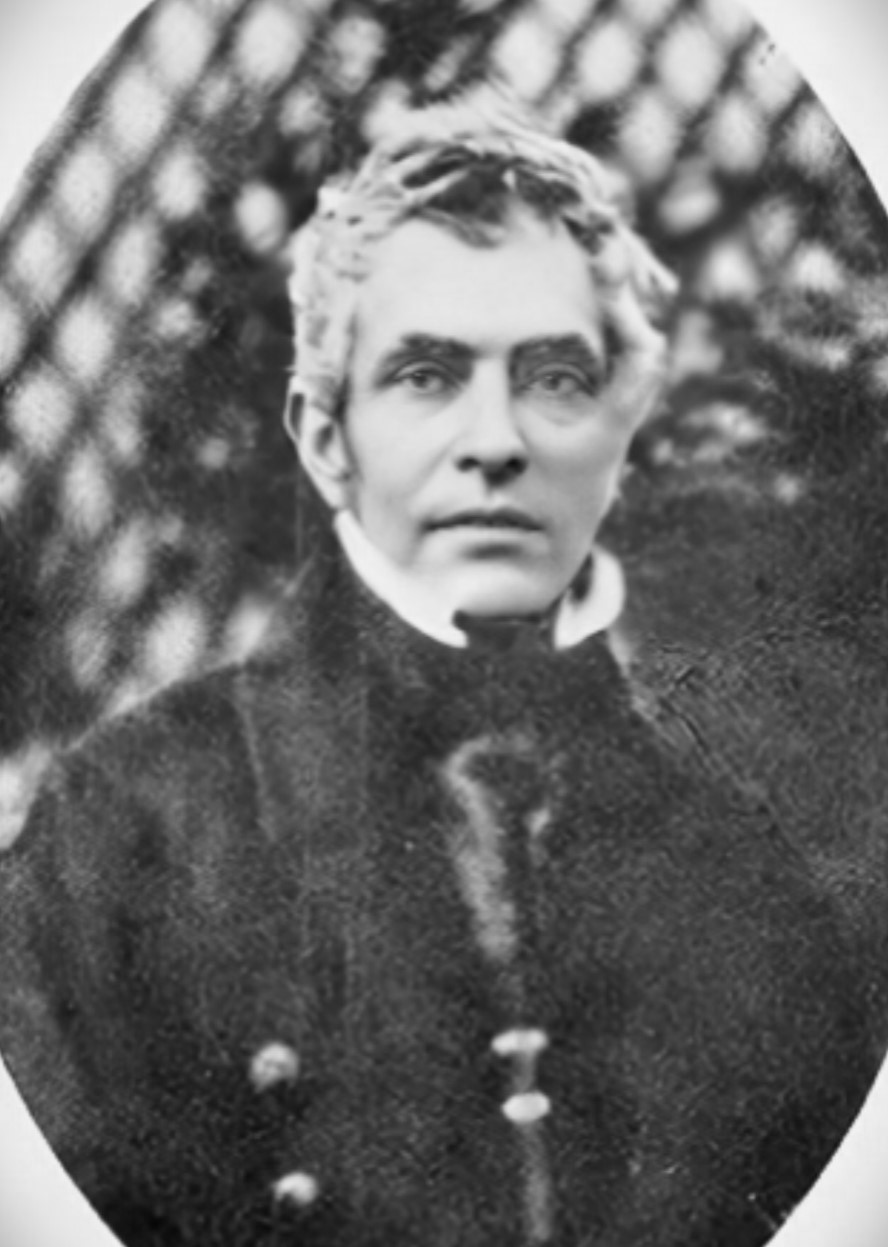
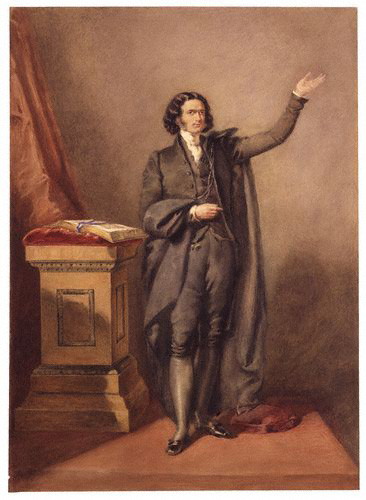
De Darby, la doctrina pasó al movimiento de los Hermanos, luego a través de un ministro estadounidense, C. I. Scofield (descrito por Pawson como "un ministro congregacional... llamado a su pastorado por D. L. Moody"), quien la escribió en las notas de la Scofield Reference Bible, publicada en 1909, desde donde se extendió por todo el evangelicalismo estadounidense, especialmente a través de grupos pentecostales posteriores.
También nombra figuras de los Hermanos que no estaban de acuerdo con Darby: el erudito S.P. Tregelles, "G.H. Leng" y, sobre todo, George Müller, fundador de los hogares para huérfanos de Bristol.
III. Poniendo a prueba la teoría: vocabulario y "como un ladrón en la noche"
Pawson se niega a probar la doctrina por la historia ("recién aparecido" no significa automáticamente incorrecto: la Reforma también recuperó verdades olvidadas durante siglos) o por la psicología (la idea de un arrebatamiento repentino es emocionalmente poderosa, pero "lo que predicamos debe ser la verdad, no porque sea psicológicamente efectivo"). Acepta solo una pregunta: ¿qué dice la Biblia?
Comienza con el vocabulario. Se usan tres palabras griegas para la "venida" de Cristo: parousia (una visita real), epiphaneia (una aparición) y apokalypsis (una revelación), y sostiene que si la división dispensacional entre "venir por los santos" y "aparecer al mundo" fuera correcta, cada palabra sólo debería aparecer en un lado. Pero, al examinar versículo por versículo, las tres aparecen en ambos lados.
Las mismas tres palabras, usadas para el mismo acontecimiento
Tres palabras griegas para la «venida» de Cristo
| Palabra | Significado | Usada para la Iglesia | Usada para el mundo |
|---|---|---|---|
| παρουσία (parousia) | «Venida» (normalmente una visita real) | el pasaje sobre la venida del Señor en la primera carta a los Tesalonicenses | el pasaje sobre la venida del Señor en la segunda carta a los Tesalonicenses |
| ἐπιφάνεια (epiphaneia) | «Aparición» | el pasaje sobre la manifestación en la primera carta a Timoteo | el pasaje sobre la manifestación en la segunda carta a Timoteo y el pasaje sobre la corona en su manifestación en la segunda carta a Timoteo |
| ἀποκάλυψις (apokalypsis) | «Revelación» (como retirar una cortina) | el pasaje sobre la revelación en la primera carta a los Corintios | el pasaje sobre la revelación en la segunda carta a los Tesalonicenses |
Si estas tres palabras realmente separaran un «arrebatamiento secreto» de una «aparición pública», cada una debería aparecer en una sola columna. En cambio, las tres aparecen en ambas: la misma palabra, usada para ambos contextos.
Examina otras expresiones: "como ladrón en la noche" (siempre aplicado al no preparado, nunca al creyente vigilante), «cercano» (distingue dos palabras griegas: una para el futuro previsible con eventos posiblemente intermedios, otra para "cualquier momento"; Pablo usa la segunda sólo una vez, en la segunda carta de Pablo a los Tesalonicenses, y la usa precisamente para descartar la inminencia, no afirmarla), y «velar» (no quedarse mirando al cielo, sino discernir las señales que se desarrollan, como la lección de la higuera).
IV. El énfasis central del Nuevo Testamento
Esta es la sección más larga del sermón: Pawson recorre los Evangelios, las Epístolas y el Apocalipsis para argumentar que la idea principal del Nuevo Testamento es "Los creyentes reciben muchas advertencias, los incrédulos no reciben ninguna.", lo contrario de lo que implica la doctrina del arrebatamiento secreto (los creyentes desaparecen sin previo aviso, mientras que el mundo recibe abundantes señales). Comienza con un argumento práctico: la desaparición repentina de cada cristiano difícilmente podría pasar "desapercibida": cita "850 millones de cristianos profesantes en el mundo de hoy".
Los Evangelios. el Evangelio según Mateo es el capítulo en el que más se apoya: Jesús advierte a los discípulos, no a las multitudes ni a los judíos, sobre las guerras, la apostasía, la restauración de Jerusalén, la aparición del Anticristo y la tribulación, luego dice: "Inmediatamente después de la tribulación de aquellos días… enviará a sus ángeles con fuerte toque de trompeta y reunirá a los elegidos." El párrafo comienza con la tribulación y termina con el arrebatamiento, sin espacio entre ellos.
También se basa en la historia: la mayoría de las epístolas fueron escritas antes del 70 d.C., antes del asedio de Jerusalén, un evento que el mismo Jesús había predicho. Según la tradición registrada por Eusebio, los cristianos huyeron de Jerusalén hacia la ciudad de Pella al otro lado del Jordán antes del asedio, y "un millón y medio de judíos fueron asesinados pero ningún cristiano", porque habían prestado atención a la advertencia y huyeron.
El Libro del Apocalipsis. Pawson enumera más de veinte versículos donde "los santos" o "el pueblo de Dios" se describen como presentes en la tierra durante toda la tribulación: no hay brecha en la que la Iglesia esté ausente. Se apoya especialmente en el Apocalipsis, justo en medio de la descripción de la batalla de Armagedón: "He aquí, vengo como ladrón. Bienaventurado el que permanece despierto." Si los santos ya habían sido arrebatados antes de la tribulación, ¿por qué aparece la advertencia de "mantente despierto, no dejes que te sorprenda como un ladrón en la noche" (siempre dirigida a los cristianos) justo en medio del Armagedón?
Luego, la conclusión práctica: dice que hay "cien veces más" enseñanza sobre el sufrimiento que sobre el arrebatamiento en el Nuevo Testamento, y su propia tarea pastoral es preparar al rebaño para el sufrimiento, no prometer que escaparán de él.
V. Una conclusión pastoral: prepararse para el sufrimiento, no escapar de él
Pawson ofrece dos detalles de actualidad para ilustrar la advertencia sobre una futura persecución. Dice "en China hoy el libro del Apocalipsis es el libro más leído por los cristianos", añade, como si fuera una coincidencia, que "la República Popular China tiene 666 representantes sentados en el gobierno". También recuerda una previsión de urbanización extrema: "para 2074, los planificadores nos dicen que 98% de la población mundial vivirá en una ciudad... solo el 2 % permanecerá en el campo."
Pawson enmarca toda la conclusión práctica en torno a un versículo que él llama directamente "una palabra clave, un versículo clave": el Evangelio según Lucas, "Orad para que tengáis fuerza... para escapar". Destaca que «mantenerse firme» es una expresión contundente, que se usa cuando te hacen retroceder y ya no tienes adónde retirarte, y dice que la Iglesia necesita orar por ambos: fuerza para escapar cuando es posible y fuerza para aguantar cuando no lo es. También recuerda a Enoc y Elías, las dos únicas personas en las Escrituras sacadas del mundo sin morir, como un "anticipo" de la última generación de cristianos, pero tiene cuidado de decir que eso sólo se aplica a aquellos que viven a través de la tribulación, no una garantía de evitarla de antemano.
Cuenta una historia personal: alguien le dijo una vez que si ahora soportas pequeñas presiones, un poco de ridículo social, recibirás gracia para la crisis más grande cuando llegue. Si no te mantienes firme en las cosas pequeñas ahora, no te mantendrás firme en las grandes más adelante. Menciona a cristianos que conoce que se han mudado a granjas autosuficientes lejos de las ciudades, preparándose para la posibilidad de tener que abandonar los centros urbanos cuando surjan problemas: sin buscar el martirio, sino protegiendo sabiamente a sus familias exactamente como Jesús instruyó en el Evangelio según Mateo, y exactamente como pide el Evangelio según Lucas.
Cierra con una cita del prefacio de un libro que había leído, escrito por un autor que sabía que los lectores no estarían de acuerdo con él: "Supongamos que no estáis convencidos. Nosotros, que confiamos en el mismo redentor... acosados por el mismo diablo, odiados por el mismo mundo, librados del mismo infierno y destinados a la misma gloria, nosotros, que tenemos tanto en común, ¿permitiremos que una diferencia de opinión sobre este asunto secundario nos divida de corazón o en el servicio? ¡Dios no lo quiera!"
Lo que Pawson no te dice: el catolicismo, la ortodoxia y el propio panorama actual del evangelicalismo
Así como la Parte 5 agregó el Concilio Vaticano Segundo a un sermón que nunca lo mencionó en absoluto, esta entrega necesita una lente más amplia que Pawson, predicando a una congregación bautista inglesa en 1967, no tenía motivos para incluir.
El catolicismo no tiene un concepto de "arrebatamiento" separado. El Catecismo de la Iglesia Católica (§668-682) y Lumen Gentium 48 enseñan una Segunda Venida única e indivisa: Cristo ya reina ahora a través de la Iglesia (un Reino inaugurado pero incompleto), la Iglesia pasa por una prueba final bajo el Anticristo (§675-676), y esa prueba se resuelve inmediatamente por una Parusía, una resurrección general y un Juicio Final (§678-682), sin lugar para un evento de "arrebatamiento" anterior separado. Un decreto de 1944 del Santo Oficio dictaminó además que incluso el "milenarismo mitigado" (un reinado terrenal de Cristo visible previo al juicio) "no puede enseñarse con seguridad", colocando la escatología católica en el campo amilenial (agustiniano), estructuralmente diferente del marco premilenial compartido tanto por Pawson como por el dispensacionalismo.
La ortodoxia oriental afirma una Segunda Venida visible y universal (según el Credo de Nicea) y rechaza firmemente el arrebatamiento como una novedad protestante occidental del siglo XIX, pero nunca ha construido un sistema secuenciado de tribulación/arrebatamiento/milenio al estilo Pawson. La exégesis ortodoxa convencional del el Apocalipsis (Andrés de Cesarea, siglo VII) es amilenial y simbólica, paralela a Agustín en Occidente. En lugar de una línea de tiempo, la lente escatológica dominante de la ortodoxia es la teosis (deificación), el "octavo día" y la transfiguración cósmica de la creación: tratar el Fin como algo en lo que la Iglesia y la creación ya están entrando sacramentalmente, más concretamente en la Eucaristía, en lugar de un cuadro de eventos venideros.
El panorama actual del evangelicalismo tampoco es tan simple como el marco de dos campos de Pawson. Una encuesta de Pew de 2022 encontró que sólo el 44% de los evangélicos estadounidenses mantiene alguna posición premilenial (dispensacional o histórica combinada), mientras que el 45% dice abiertamente que no conoce el momento. El dispensacionalismo todavía domina la cultura popular (las novelas Left Behind vendieron 65–80 millones de copias), pero ha disminuido notablemente a nivel académico e institucional desde su auge entre las décadas de 1970 y 1990, incluso en el propio Seminario Teológico de Dallas, hogar institucional de Scofield. La propia visión postribulacional de Pawson, asociada con el erudito George Eldon Ladd, sigue siendo una tradición académica respetada, aunque nunca alcanzó el alcance popular masivo del dispensacionalismo.
El panorama actual
Qué piensan los evangélicos estadounidenses sobre el momento de estos acontecimientos, 2022
Mismo denominador · evangélicos encuestados
44% de los evangélicos encuestados; no equivale automáticamente al pretribulacionismo dispensacionalista.
45% del mismo grupo evangélico y de la misma pregunta de la encuesta.
Postmilenial
3% de todos los adultos estadounidenses — un denominador diferente, mostrado sólo como contexto.
Las cifras del 44% y el 45% comparten el marco de la encuesta evangélica; el 3% corresponde a todos los adultos estadounidenses, así que no deben sumarse hasta 92%. La disposición separada hace visible la diferencia de denominador en vez de sugerir una composición del 100%.
Fuente: Pew Research Center, 2022 — preguntas sobre las circunstancias del regreso de Jesús; el 3% corresponde a todos los adultos estadounidenses.
Cerrando la serie
Seis partes, desde un grupo de pescadores sin poder ni dinero hasta un debate aún candente sobre cómo terminará el mundo: el mismo hilo que Pawson retomó en la Parte 1. La Iglesia ganó sus tres primeras batallas sin ejército, sin dinero, sin gente influyente. Su discurso final no promete que la Iglesia ganará de la forma en que la gente suele imaginarlo: unida en una organización, ampliamente aceptada y libre de sufrimiento. Promete algo más: una Iglesia que aprende la humildad ante sus hermanos y hermanas del sur, que se prepara para el sufrimiento en lugar de huir de él, y que mantiene una esperanza que no es una ilusión sino una certeza absoluta sobre el futuro.
Lo que predijo con mayor precisión —que la Iglesia estaría más unida y más dividida, y que su centro de gravedad se desplazaría hacia el sur— resulta ser exactamente aquello de lo que menos seguro estaba cuando lo predicó, junto con lo que él mismo llamaba «mera especulación» sobre los próximos veinte años. Y aquello de lo que estaba más seguro, el orden entre la tribulación y el regreso, sigue siendo un punto en el que muchos otros cristianos sinceros no están de acuerdo con él, cincuenta y ocho años después de este sermón.
Note: This piece merges the last two lectures, literally, in David Pawson's eleven-part History of the Church series: The Church in the Future (42.1 minutes, Part 10 in his own catalogue) and The Return of Jesus (74.9 minutes, Part 11, the final one). Unlike Parts 4 and 5, this isn't me choosing to fold together separate lectures: these two were already the closing pair. The first sketches the Church's future at three levels (near, intermediate, and eternal) and stops right at the most sensitive point, the order between the "rapture" and the "tribulation", saying "I'm going to tread on a few corns." The second, preached perhaps only weeks later in the same Sunday-evening series at Millmead Baptist Church, Guildford, is where he treads on that corn fully.
This is also the installment Pawson himself flags as the most contentious. He lays out a specific theological position: the Church will go through the tribulation before Christ returns, with no separate prior "secret rapture", and says plainly that many sincere Christians disagree. I've kept that position framed as Pawson's view, not settled historical fact, and added, where it matters, how Catholicism, Eastern Orthodoxy, and Evangelicalism's own internal landscape see this differently today.
Before we start: one sermon, two questions
Part 5 closed in 1968, between two world wars and the three isms that shaped the 20th century. The two lectures closing out Pawson's series raise the natural next question: then what? The first asks where the Church is headed. The second asks how Christ will return, and how the Church should wait for it.
PHẦN MỘT: TƯƠNG LAI HỘI THÁNH
Pawson opens with a question at once serious and wry: is the Church "half empty" or "half full"? He points to the New Testament edition Good News for Modern Men (translated by Robert Bratcher, American Bible Society), "produced just over a year ago… nine and a half million copies have been sold… selling at the rate of 13,000 a day", as evidence people still crave "good news" in a world overflowing with bad news.
Kit's note
Good News for Modern Man (the Today's English Version New Testament) was actually released by the American Bible Society in September 1966, as two independent sources confirm. "Just over a year ago" puts this sermon at the earliest around late 1967. I couldn't find any source confirming Pawson's "nine and a half million copies, 13,000 a day" figures. What is documented is 5.5 million copies in the first year (by roughly September 1967), and over 30 million cumulative copies within the first five years (by roughly 1971), making it the best-selling paperback of all time by May 1971. Pawson's numbers should be treated as his own stated figures, not independently verified fact.
He also recalls "the final rally of the Billy Graham crusade last year in Wembley… 120,000 Christians." The Greater London Crusade actually ran 1 June – 2 July 1966 at Earl's Court, with the closing service moved to Wembley Stadium on 2 July (not 22 May). Christianity Today's contemporary report states plainly: "some 86,000 got into Wembley"; the Billy Graham organization's own retrospective sources round this up to "95,000" or "over 94,000" inside plus about 8,000 who couldn't get in and stood outside. Even the most generous total comes to roughly 102,000–103,000, still a quarter to a third short of Pawson's 120,000.
Combining the clues, including the GNMM floor (earliest ~Oct 1967), Wembley "last year" (satisfied by any point in 1967), and the immediately preceding lecture in the series ("1900–1968") being independently dated to 1967, the best-supported estimate is late 1967, comfortably inside Pawson's pastorate at Gold Hill Baptist Church (1961–1968, per Wikipedia) before his move to Millmead, Guildford.
Source: bible-researcher.com/tev.html; thewayofimprovement.blog (25 May 2016); Christianity Today, "London Crusade Produces Historic Climax" (July 1966); billygrahamlibrary.org; Wikipedia, "David Pawson."
He reads three scripture passages as the foundation for the whole sermon: Paul’s first letter to the Thessalonians (the trumpet sounding, the dead in Christ rising first), Revelation (the innumerable multitude out of the great tribulation), and the millennium-and-new-creation section in Revelation (the millennium, the new heaven and new earth). Then he quotes Gamaliel from Acts: "If this plan or this undertaking is of men, it will fail. But if it is of God, you will not be able to overthrow them." That's the verse he builds the whole talk on: not trying to force the future to happen, just trying to see which way it's already moving.
I. The immediate future: what he predicted, and what actually happened
Pawson splits his forecast into belief and behavior. On behavior, he gives four specific predictions.
One, the Church will never be visibly united in one organization in history. He doesn't expect it and doesn't believe it could happen.
Two, the Church will become less institutional and less clerical. "Future Christianity will be the informal Christianity that may not have buildings and may not have clergymen… but may spring up everywhere spontaneously within homes, within places of work, in all sorts of other ways."
Three, church leadership will pass from the northern hemisphere to the southern. "The churches that have been traditionally the senders of the gospel and the givers of Christianity will need to become the receivers. And this will humble them greatly." He illustrates it with a recording played at the previous Monday-night meeting: Paraguayan Christians, "without any of our posh buildings, without any of our financial resources," but with "a life and a vigor that we covet."
Four, on belief, he returns to a three-group framework he'd used earlier (Catholic, Liberal, Evangelical) and predicts the middle bloc (Anglican, Presbyterian, Methodist, Congregational) will "draw much closer together over the next 20 years… as they have already done in Canada and South India, and are already seeking to do in Pakistan," while in England, Anglicans and Methodists "are talking together." He quotes Malcolm Muggeridge comparing church unity to "a group of drunk men who had to hold on to each other to stand up," and an unnamed Yale church history professor: "we're not quite sure what we believe, but let's unbelieve together."
The Christian Population's Center Is Moving
Where the world's Christians live, 1910–2050
Grey = the share of the world's Christians living in the Global North (Europe + Northern America). Gold = the Global South (Africa, Asia, Latin America); these are socio-geographic regions, not hemispheres. The dashed segment after 2020 is an illustrative projection to 2050, not an observed series. In 1970, the Global North still held a majority (59%).
Sources/compilation: Center for the Study of Global Christianity, World Christian Database (the plotted points and 2050 endpoint); Pew Research Center, The Future of World Religions (2015) for the regional framing. The 2050 endpoint is not a new observed Pew update.
Kit's note
This is the single most impressive prediction in the whole talk, and it predates most of the literature usually credited with popularizing the idea. The qualitative observation, "younger churches" in Africa, Asia, and Latin America outpacing an aging Western church, had circulated since the mid-1950s (Donald McGavran's Church Growth movement from 1955; John V. Taylor, The Growth of the Church in Buganda, 1958). But the confident "leadership shifting north to south" framing Pawson uses predates the book usually credited as the opening shot of this argument, Walbert Buhlmann's The Coming of the Third Church (Italian 1974, English 1976), by roughly six to nine years, and predates David Barrett's full statistical treatment in the World Christian Encyclopedia (1982) by more than a decade and a half.
On the hard numbers: per the Center for the Study of Global Christianity (Gordon-Conwell) and Pew Research, in 1910 roughly 80% to 93% of the world's Christians lived in the Global North (Europe and Northern America). By 1970 itself, around the time Pawson preached this, the Global North still held a clear majority: 58.7% against the Global South's 41.3%. The actual crossover (Global South passing 50%) is generally dated to the 1980s. In other words, Pawson wasn't describing something that had happened, he was forecasting something still roughly a decade and a half away. Today the Global South holds 67% to 69% of the world's Christians, with sub-Saharan Africa alone the single largest Christian region (about 31%).
On the Paraguay example: I couldn't identify a specific source Pawson is referring to. The two closest fits for his description, the Anglican South American Missionary Society's work among the Enxet people of the Chaco from 1889, or the Paraguayan Mennonite Chaco colonies, offer no direct link to this sermon. Treat this as illustration, not a confirmed event.
Source: gordonconwell.edu/blog/the-100-year-shift-of-christianity-to-the-south; Pew Research, "Global Christianity" (2011) and 2025 update; lausanne.org/global-analysis/highlights-of-christianity-in-its-global-context-1970-2020.
Some Unions Happened, One Didn't
Church union movements, 1925–1972
June 10, 1925
United Church of Canada: Methodists + Congregationalists + ~70% of Presbyterians merge in Toronto
September 27, 1947
Church of South India inaugurated in Madras: the first union to cross the episcopal/non-episcopal line since the Reformation
July 8, 1969
Anglican–Methodist unity scheme fails at Convocations of Canterbury/York: 69% in favour, 75% required
November 1, 1970
Church of Pakistan inaugurated: Anglican, Methodist, Presbyterian (Church of Scotland), and Lutheran bodies unite
May 1972
Anglican–Methodist unity scheme fails a second time in the new General Synod
Pawson was preaching while Pakistan was still "seeking" union (it hadn't happened yet). He did not foresee that the Anglican–Methodist union scheme in his own country would fail, not once but twice.
Kit's note
Pawson's three examples all check out. The United Church of Canada formed 10 June 1925 in Toronto, uniting the Methodist Church, the Congregational Union of Canada, and about 70% of the Presbyterian Church in Canada (784 of 4,512 Presbyterian congregations chose to stay out), usually considered the world's first union across major historic denominational lines. The Church of South India was inaugurated 27 September 1947 in Madras, after 28 years of negotiation, uniting the episcopal Anglican tradition with non-episcopal traditions: the first such union since the Reformation, and controversial with some Anglo-Catholics for exactly that reason. The Church of Pakistan genuinely did form, on 1 November 1970. Pawson's "seeking to do" phrasing suggests this sermon was recorded not long before that date, not decades earlier as one might assume.
What he didn't foresee: the Anglican-Methodist union scheme back home in England, which he describes as promisingly "talking together", failed twice: at the Convocations of Canterbury and York on 8 July 1969 (69% in favour, 75% required, even though the Methodist Conference approved it the same day with 77.4%), then again at the new General Synod in May 1972. Worth correcting a commonly repeated online claim: several summaries attribute both failures partly to disagreement over women's ordination. This is anachronistic, since British Methodism didn't ordain its first women presbyters until 2 July 1974, after both votes. The real sticking point was disagreement over the proposed "Service of Reconciliation" for uniting the two ministries.
The Muggeridge quote and the unnamed Yale professor: I could not trace either to a source after extensive searching; nothing in any Muggeridge book, interview, or quotation archive, and no trace of a Yale professor who said that line. Both should be treated as pulpit-circuit anecdotes, not verifiable quotations.
Source: united-church.ca; britannica.com "Church of South India," "Church of Pakistan"; christianitytoday.com/1969/08/where-defeat-is-mandate; methodist.org.uk (50th anniversary of women's ordination).
On Catholics and evangelicals. Pawson predicts "the field will be left to the Catholics and the evangelicals", the two blocs that will reshape Western religion, while Catholics "will lose ground in southern Europe, but gain ground in northern Europe, if they adapt their methods." He predicts evangelicals "will become at once more united and more divided."
I believe that the leadership of the church is going to pass from the northern hemisphere to the southern hemisphere. And the churches that have been traditionally the senders of the gospel will need to become the receivers. And this will humble them greatly.
Kit's note
The first half, Catholics losing ground in southern Europe, is strongly confirmed, if anything understated: in Spain, Sunday Mass attendance fell from 68% (1973) to roughly 11% to 17% today; in Italy, from 36.4% (2001) to 18.8% (2022); in Portugal, only 49% of 18-34-year-olds still self-identify Catholic against 80% of the population overall. The second half, gaining ground in northern Europe via adaptation, holds only in small, patchy pockets: real growth exists in Scandinavia, but it's driven mostly by Catholic immigration (Polish, Filipino, African, Latin American) rather than the institutional Church's "adaptation" winning native Northern Europeans, while larger Northern European Catholic populations (Germany, the Netherlands, Ireland, the UK) have seen sharp declines, especially Germany's Kirchenaustritt wave tied to the abuse scandal.
But what Pawson didn't foresee matters more: his Catholic-vs-evangelical binary misses the force that actually reshaped Western religion from 1970 onward, the rise of the religiously unaffiliated ("nones"). In the US, Pew's 2023-24 survey finds 29% of adults unaffiliated (up from 16% in 2007), a bigger group than Catholics and rivaling all of Protestantism. He correctly named the two most resilient Christian streams, but didn't foresee that the "third force" would be no religion at all.
The "evangelicals more united and more divided" prediction, meanwhile, is the single most accurate one in the passage: cross-denominational Pentecostal/charismatic identity grew from 58 million (1970) to 635–644 million people (2020), roughly an 11x increase (a genuine unifying thread), while at the same time the United Methodist Church underwent the largest US denominational schism since the Civil War (about 7,659 congregations, a quarter of the total, splitting off 2019–2023 to form the Global Methodist Church), and the Southern Baptist Convention has seen 18 straight years of membership decline.
Source: harvard.edu/gazette (Vatican II and Mass-attendance data, 2025); pewresearch.org/religion/2013/02/13/the-global-catholic-population; pewresearch.org/religion/2025/02/26/religious-landscape-study-executive-summary; gordonconwell.edu/center-for-global-christianity; christianitytoday.com/2023/12 (UMC schism).
On reaching every nation. Pawson is optimistic that "with modern methods of mass communication," preaching the gospel to every nation per Matthew’s Gospel (not converting everyone, just making sure everyone hears) "will be completed, at least by the year 2000." He cites Wycliffe Bible Translators, "going sometimes to a tribe of 13 people" to translate part of God's word for them.
Kit's note
Pawson's "done by 2000" forecast wasn't just personal optimism: it shared its deadline with a real, organized evangelical movement: the AD2000 & Beyond Movement (grown out of Lausanne II, Manila 1989, watchword "a church for every people and the gospel for every person by the year 2000"), which spawned Joshua Project 2000 to track roughly 1,700 "unreached people groups." The movement's own internal June 2000 report, from its own leader, Luis Bush, found the goal was not met: over 1,100 people groups still lacked even a minimal indigenous believing fellowship, 265 had no mission initiative at all, and roughly 7,400 smaller groups still lacked a viable church.
A quarter century past Pawson's deadline, Joshua Project now counts roughly 7,188 "unreached people groups" (3.42 billion people) and about 3,218 "frontier" groups (under 0.1% Christian, nearly 1.9 billion people) with almost no gospel access at all. Wycliffe still had 544 languages (about 36.8 million people) with no translation work even begun as of its August 2025 report, and even Wycliffe's own current internal target ("Vision 2025") is only to start a translation for every remaining language, not finish one.
The "13-person tribe" detail: I couldn't locate a specific documented case; it may be Pawson's own illustration, though it's consistent with Wycliffe/SIL's genuine policy of translating for even the smallest language communities (roughly 1 in 12 of the world's languages has fewer than 100 speakers).
Source: Robert T. Coote, "'AD 2000' and the '10/40 Window': A Preliminary Assessment," International Bulletin of Missionary Research (Oct 2000); joshuaproject.net/about/details; wycliffe.net/2025/08/25/2025-scripture-access-statistics.
On spiritual decline and persecution. He predicts "a great falling away" and that "the love of many Christians will grow cold", illustrated with a photograph of a member of his own congregation, Mr. Bateman, as a young man preaching in the open air, still doing the same thing decades later while many of his contemporaries had given it up. And he says persecution will "increase and increase," and the Church needs to prepare now for difficult days ahead.
II. The intermediate future: tribulation, rapture, and millennium (a frame, not yet a position)
Pawson turns to "the next great event in world history", not World War III, not the first man on the moon, but "the return of our Lord Jesus Christ to this world, in physical, visible form… a body that has nail prints in hands and feet." He introduces three technical terms, in the order he lists them: Tribulation, Rapture, and Millennium, and says Christians agree on the middle one: the Rapture itself, Christ literally, bodily returning for his people. The disagreement sits at the two ends: how to understand the Tribulation, and how to understand the Millennium.
On the Millennium, he sketches three readings quickly: some see it as "a purely symbolic figure," not an actual span of time; others believe the Church itself will "usher in" that thousand years, with Christ only arriving at its close; and he, with others, believes it "means what it says", a real thousand years in which Christ reigns visibly on earth before handing the kingdom back to the Father. In other words, Pawson himself is a premillennialist, holding that Christ returns before the millennium, not after it.
Then comes the most vivid passage in the first lecture: he recalls the closing rally of the Billy Graham crusade "last year at Wembley", with tens of thousands of people singing praise in the stands, and wonders: if that already felt like a huge gathering, how large will the meeting in the clouds be, with every Christian who has ever lived across every era: "there wouldn't be a stadium big enough on earth, so Jesus has arranged to meet in the air." He quotes Jesus's own starkest warning about that day, from Luke 17: "there will be two women in one kitchen and one will go and the other will be left. There will be two people in the same bed and husband and wife will be left alone." One generation of Christians, he says, will never die at all, "there will be no funerals for one group of Christians." Then he tells of his grandfather's gravestone, which reads only two words: "What a meeting!", a line that puzzles other visitors reading tombstones nearby.
Then he stops, right at the point of maximum tension: "Here I'm going to tread on a few corns." He sketches three positions on the order between the Rapture and the Tribulation: the Church raptured before the tribulation (the most popular), midway through it (a minority), or after it, at the same moment Christ returns (his own position), and promises to lay out the full argument in the sermon that follows.
III. The eternal future: the unimaginable
Pawson closes the first lecture with its shortest, most modest section: the eternal future. He quotes Paul’s first letter to the Corinthians: "What eye has not seen, what ear has not heard, what has never entered into the heart of man to conceive, God has prepared for them that love him." He compares the present relationship with Christ to an engagement, and the eternal future to a marriage, "the real thing."
Then he closes with a quote from Bishop J.C. Ryle of Liverpool, from the pamphlet The True Church: "Men fancy if they join this church or that church, and become communicants, or go through certain forms, that all must be right with their souls. It is an utter delusion… you may be a staunch Anglican, or Presbyterian, or Congregationalist, or Baptist, or Methodist, or Plymouth Brother, and yet not belong to the true Church."
PHẦN HAI: SỰ TRỞ LẠI CỦA ĐẤNG CHRIST
The second lecture, nearly twice the length of the first, is where Pawson treads on the corn in full. He opens with a double request: don't come looking for fault, and come with an open mind on an issue that divides Christians from one another. He says plainly the topic arose from two parallel sermon series running at Millmead (Zechariah on Sunday mornings, Thessalonians on Sunday evenings) and from a question that kept recurring after the Zechariah studies: would any Christians still be alive to witness the events he'd been describing?
I. Two views, not one settled fact
Pawson lays out the problem clearly from the start: every Bible-believing Christian agrees there are two future events, the coming of Christ (mentioned over 300 times in the New Testament) and the coming of Antichrist. The disagreement is purely about how these two events are ordered in time.
He presents two systems:
The traditional view, which he says held "for the first 17 centuries of church history… right up to about 1800": Antichrist comes first, Christ comes second, full stop. Antichrist rules through a totalitarian dictatorship demanding absolute worship, then Christ returns to destroy him and establish the kingdom. He attributes this view to the church fathers, the Reformers (though he says they "made a mistake" identifying the Pope as Antichrist), the Puritans, and Wesley.
The dispensational view, appearing "from about 1825" and still widely dominant today: Christ comes for his saints first (a secret rapture, removing the Church from the world), then Antichrist reigns for seven years while the Church is absent, then Christ comes with his saints to destroy Antichrist and establish the kingdom on earth. He calls this the "any-moment" view because it teaches Christ could come tonight, with nothing needing to happen first.
Before getting into the two systems, Pawson pauses on the word "Antichrist" itself: he says the Greek prefix anti "does not mean against, as we use it today. It means instead of, it means substitute." Antichrist, in his reading, is someone impersonating Christ, not someone openly opposing him, and he uses this same reading to explain why Satan once offered Jesus "the post of Antichrist" in the wilderness.
Kit's note
This is a checkable linguistic claim, and it's only partly right. The Greek prefix anti carries two main senses in Koine Greek: the more common one, and the dominant sense in the actual usage of antichristos itself, is "against, opposed to", exactly the everyday reading Pawson is trying to overturn. But anti genuinely does carry a "substitute for, in place of" sense in some other New Testament compounds, e.g. antilytron ("a ransom in place of," Paul’s first letter to Timothy) or antimisthia ("a corresponding recompense"). The "Antichrist = an impersonator of Christ, a substitute for him" reading isn't Pawson inventing something from nothing: it has support from some scholars (e.g. Kenneth Wuest) and fits comfortably with Paul’s second letter to the Thessalonians, where "the man of lawlessness" sits in God's temple claiming to be God. But saying the prefix "does not mean against" overstates it: standard Greek lexicons (BDAG) list "against/opposed to" as the primary sense of anti in this context, with "substitute" as a secondary sense, not the only or the dominant one.
Source: BDAG (A Greek-English Lexicon of the New Testament); Kenneth Wuest, Word Studies in the Greek New Testament.
Two Ways to Order the Same Two Events
Antichrist and Christ's return: which order?
The traditional view (the first ~1,800 years: the Fathers, the Reformers, the Puritans, Wesley, and Pawson)
The Church is present the whole way through: no prior secret "rapture."
The dispensational view (from ~1830: Darby, Scofield, most of modern American evangelicalism)
Two stages, separated by seven years.
Pawson places himself in the traditional line: not because it's older, but because he says he cannot find the dispensational view in the New Testament text itself, though he acknowledges it's the view held by most Pentecostal and independent evangelicals today.
Kit's note
This is one of the more solidly verified passages in the whole talk. The earliest post-apostolic fathers, Justin Martyr (Dialogue with Trypho), Irenaeus (Against Heresies, Book V), and Tertullian, all teach exactly the sequence Pawson describes: Antichrist reigns, then Christ visibly appears to destroy him, then the millennium begins. No patristic text mentions a secret rapture prior to Antichrist's appearing.
The Reformers identifying the Pope with Antichrist wasn't a fringe view, it was mainstream confessional doctrine for Reformed and Puritan Protestantism. The original 1646 text of Westminster Confession 25.6 reads: "There is no other head of the Church but the Lord Jesus Christ. Nor can the Pope of Rome, in any sense, be head thereof; but is that Antichrist, that man of sin, and son of perdition." This clause was only removed in later (mostly American, 19th-20th century) revisions. Luther wrote similarly in the Smalcald Articles (1537): "the Pope is the very Antichrist."
Wesley needs a small footnote: he did hold the historicist (Bengel-following) reading identifying the Pope as Antichrist, with no secret-rapture concept, but he was a postmillennialist, believing that after Antichrist's fall there would be a long golden age of gospel advance before Christ's return, not that Christ returns immediately after Antichrist falls, as Pawson's simple two-step framework implies.
Source: christianhistoryinstitute.org/magazine/article/historic-premillennialism; opc.org/documents/WCF_orig.html (1646 text); thebookofconcord.org (Smalcald Articles); wesleyscholar.com/john-wesleys-order-of-eschatological-events.
II. Where the dispensational view actually came from
Pawson tells a fairly compact origin story: "it started with a man called J.N. Darby… an Anglican curate at first… 1825, beginnings in Dublin… 1830 or thereabouts, beginnings in Plymouth." He also says the idea "never appeared until the 19th century," then "appeared in two people, Edward Irving… and J.N. Darby."
A Doctrine Nineteen Centuries in the Making (Then New)
The origins of the pretribulation rapture doctrine, 1825–1909
August 1825
Darby ordained deacon in the Church of Ireland (Anglican), parish of Calary, Wicklow
Winter 1827–28
A small group (Darby, Cronin, Bellett, Groves…) begins breaking bread privately in Dublin: the real start of the Brethren
1830
Margaret Macdonald, aged 15, has a vision at Port Glasgow, Scotland, within Edward Irving's circle
1830–1838
The Powerscourt Conferences (Ireland): where Darby's futurist/dispensational system gradually takes shape
December 1831
First Brethren meeting at Plymouth, England
1833
Edward Irving deposed by the Church of Scotland; founds the Catholic Apostolic Church
1909
The Scofield Reference Bible is published (Oxford University Press): spreading dispensationalism across American evangelicalism
Whether Irving and Macdonald actually "transmitted" the idea to Darby remains an unresolved scholarly dispute (see the amber note below).
Kit's note
Darby really was ordained deacon in the Church of Ireland (the Anglican province in Ireland, the established state church at the time) in August 1825, and served the isolated rural parish of Calary, County Wicklow, not Dublin. "Anglican" is an accurate shorthand; "Church of Ireland" is the precise denominational name.
But "1825, beginnings in Dublin" compresses two separate events into one: 1825 is when Darby was ordained and posted to Wicklow, while the first informal Dublin bread-breaking gatherings (Darby with Edward Cronin, John Gifford Bellett, Anthony Norris Groves…) only began in winter 1827-28, after a riding accident left Darby convalescing. "1830 or thereabouts, beginnings in Plymouth" is close but slightly early: the first Brethren meeting at Plymouth was held in December 1831.
Source: Sweetnam & Gribben, "J.N. Darby and the Irish Origins of Dispensationalism," Journal of the Evangelical Theological Society 52/3 (2009); Dictionary of Irish Biography.
Kit's note
This is where Pawson simplifies a genuinely tangled history. Pairing Irving and Darby as two people independently arriving at the same secret-rapture doctrine isn't quite accurate. Close study of Irving's own teaching (C.G. Flegg, 'Gathered Under Apostles', Oxford, 1992) shows Irving taught the "translation" of the saints as part of the same Second Advent event, a brief interval within it, not a secret removal years before a future seven-year tribulation. Irving was also a historicist (prophecy fulfilled progressively through church history), while Darby was a futurist (most prophecy still awaiting future fulfillment): different interpretive systems, not one idea independently held by two men.
The more widely known story Pawson may be gesturing at without naming: that the secret-rapture doctrine originated in the 1830 vision of Margaret Macdonald, a 15-year-old in Port Glasgow, Scotland, within Irving's circle, then passed to Darby (who may have "covered up" its origin). This is journalist Dave MacPherson's thesis, argued across several books from 1973 to 1994. Most historians, both sympathetic to and critical of dispensationalism, reject direct dependence: F.F. Bruce called it "unlikely"; R.A. Huebner and Thomas Ice point out Darby's own pretrib-leaning writings predate 1830; and a close reading of Macdonald's own published vision text (1840) reads as describing being tried through the tribulation, i.e. posttribulational, not pretribulational, the ambiguity only appearing in an 1861 reprint that dropped a few lines. But this isn't fully settled either: a King's College London PhD thesis (Mark Patterson, 2001) seriously argues Irving really did play a pioneering role. In short: a real, not-fully-resolved scholarly dispute, not a simple case of two men independently having the same idea.
Source: C. Graham Flegg, 'Gathered Under Apostles' (Oxford: Clarendon Press, 1992); Thomas Ice, "Edward Irving and the Rapture," pre-trib.org; Sweetnam & Gribben, JETS 52/3 (2009); Timothy C.F. Stunt, "Influences in the Early Development of J.N. Darby," in Prisoners of Hope? (Paternoster, 2004).
From Darby, the doctrine passed into the Brethren movement, then through an American minister, C.I. Scofield (described by Pawson as "a congregational minister… called to his pastorate by D.L. Moody"), who wrote it into the notes of the Scofield Reference Bible, published 1909, from where it spread across American evangelicalism, especially through later Pentecostal groups.
He also names Brethren figures who disagreed with Darby: the scholar S.P. Tregelles, "G.H. Leng," and above all George Müller, founder of the Bristol orphan houses.
Kit's note
Scofield was ordained Congregationalist in 1883 and took up his own pastorate at a small Dallas church (now Scofield Memorial Church), not at Moody's calling. The Moody connection predates that (he assisted Moody's 1879 St. Louis campaign) and postdates it: only in 1895 did he actually leave Dallas to become pastor at Moody's own church, Trinitarian Congregational Church in East Northfield, Massachusetts. Pawson has merged two separate pastorates into one.
The Scofield Reference Bible was published in 1909 (Oxford University Press, as Pawson says), sold over 2 million copies by the end of WWII, and became known as "the Bible of fundamentalism" for its outsized influence on how a generation of American evangelicals read prophecy.
One thing Pawson doesn't mention: Scofield's pre-conversion past is documented in the public/court record and rough: forced to resign as US District Attorney for Kansas in 1873 amid bribery allegations; arrested for forgery in 1878; deserted his first wife and two young daughters c. 1877-1881 (divorce finalized 8 Dec 1883); then remarried only about three months later, 11 March 1884, close enough that some critics call it "near-bigamy," though there's no evidence of two concurrent legal marriages. Worth flagging: the most detailed and harshest version of this story traces largely to one critical biography, Joseph M. Canfield's The Incredible Scofield and His Book (1988), regarded by Scofield's defenders as biased and overstating the severity. The core events (resignation, forgery, divorce, fast remarriage) are grounded in the public record, but the framing of them as a "dark past" is contested, not an uncontroversial consensus.
Source: en.wikipedia.org/wiki/C._I._Scofield; library.dts.edu/Pages/TL/Special/scofield.shtml; tshaonline.org/handbook/entries/scofield-cyrus-ingerson; Joseph M. Canfield, The Incredible Scofield and His Book (1988).
Kit's note
S.P. Tregelles (1813-1875), the eminent Greek New Testament textual scholar, of a stature comparable to Tischendorf, really did publicly dissent from Darby's secret-rapture doctrine. In The Hope of Christ's Second Coming (1864) he argued the doctrine had no basis in Scripture or the church fathers, and traced its origin to an emotional "utterance" in Edward Irving's congregation.
"G.H. Leng" is almost certainly a mis-transcription of G.H. Lang (George Henry Lang, 1874-1958), a well-known Brethren author on resurrection and rapture. Worth noting: Lang was born decades after Darby's own lifetime (Darby died 1882), so his "dissent" is a later intra-Brethren tradition, not a face-to-face contemporary debate with Darby the way Tregelles's or Müller's was.
George Müller (1805-1898), founder of the Bristol orphan houses through the Scriptural Knowledge Institution (1834), held a futurist premillennial system largely parallel to Darby's, but clearly rejected the rapture happening before the tribulation, leaning posttribulational: he's described as "very suspicious" of the new doctrine spreading in Brethren literature.
Source: christianobserver.net (series on Darby and the pretribulation rapture); en.wikipedia.org/wiki/George_H._Lang; theopedia.com/george-muller.
III. Testing the theory: vocabulary, and "like a thief in the night"
Pawson refuses to test the doctrine by history ("newly appeared" doesn't automatically mean wrong: the Reformation also recovered truths forgotten for centuries) or by psychology (the idea of a sudden rapture is emotionally powerful, but "what we preach must be the truth, not because it's psychologically effective"). He accepts only one question: what does the Bible say?
He starts with vocabulary. Three Greek words are used for Christ's "coming": parousia (a royal visit), epiphaneia (an appearing), and apokalypsis (an unveiling), and argues that if the dispensational split between "coming for the saints" and "appearing to the world" were right, each word should only show up on one side. But going verse by verse, all three show up on both sides.
The Same Three Words, Used of the Same Event
Three Greek words for Christ's "coming"
| Word | Meaning | Used of the church | Used of the world |
|---|---|---|---|
| παρουσία (parousia) | "Coming" (usually a royal visit) | the coming-of-the-Lord passage in First Thessalonians | the coming-of-the-Lord passage in Second Thessalonians |
| ἐπιφάνεια (epiphaneia) | "Appearing" | the appearing passage in First Timothy | the appearing passage in Second Timothy and the crown-at-his-appearing passage in Second Timothy |
| ἀποκάλυψις (apokalypsis) | "Unveiling" (pulling back a curtain) | the unveiling passage in First Corinthians | the unveiling passage in Second Thessalonians |
If these three words really separated a "secret rapture" from a "public appearing," each should only show up in one column. Instead all three appear in both: the same word, used for both settings.
Kit's note
Checking each verse: epiphaneia at the appearing passage in First Timothy and the appearing passage in Second Timothy and the crown-at-his-appearing passage in Second Timothy is correct. Apokalypsis at the unveiling passage in First Corinthians and the unveiling passage in Second Thessalonians is correct. For parousia: the coming-of-the-Lord passage in Second Thessalonians is right, but the word actually occurs at the coming-of-the-Lord passage in First Thessalonians, not at the location Pawson names, though the whole passage the whole caught-up passage in First Thessalonians (the correct "caught up" passage) is what he's referring to, so this is a minor verse-number slip, not a content error.
Pawson's central thesis, that these three words aren't technical terms splitting two stages, matches mainstream NT scholarship: George Eldon Ladd's The Blessed Hope (1956) and Robert Gundry's The Church and the Tribulation (1973) both conclude no two-stage coming can be deduced from NT word usage; BDAG classifies parousia as the general term for the whole return, not a label for a secret sub-phase.
But one fairness note is worth adding: this was the standard dispensationalist argument before roughly 1945. By the time Pawson preached this, dispensationalism's own leading theologian, John Walvoord, had already conceded exactly this lexical point himself, writing that parousia has "no technical meaning… limiting its use to either one" side, but is used "in a general… sense… descriptive of both the rapture and the glorious return." Walvoord defended the pretribulation rapture on other grounds (imminence, distinct audiences, the "restrainer" of Paul’s second letter to the Thessalonians), no longer relying on the lexical split. So Pawson is accurately refuting dispensationalism's older, more popular argument, not necessarily its most sophisticated, contemporary form.
Source: George Eldon Ladd, The Blessed Hope (Eerdmans, 1956); Robert Gundry, The Church and the Tribulation (Zondervan, 1973); walvoord.com/article/68 (Walvoord's review of Ladd).
He works through other phrases: "as a thief in the night" (always applied to the unprepared, never to the watchful believer), "at hand" (he distinguishes two Greek words: one for the foreseeable future with events possibly intervening, one for "any moment"; Paul uses the second only once, in Paul’s second letter to the Thessalonians, and uses it precisely to rule out imminence, not affirm it), and "watch" (not staring at the sky, but discerning unfolding signs, like the lesson of the fig tree).
IV. The New Testament's main thrust
This is the longest section of the sermon: Pawson works through the Gospels, the Epistles, and Revelation in turn to argue the New Testament's main thrust is "believers get much warning, unbelievers get none", the opposite of what the secret-rapture doctrine implies (believers vanish without warning, while the world gets ample signs). He opens with a practical argument: the sudden disappearance of every Christian could hardly go "unnoticed": he cites "850 million professing Christians in the world today."
Kit's note
If this sermon dates to late 1967 as argued at the top of this piece, Pawson's figure runs meaningfully below modern scholarly reconstructions for the same period. The World Christian Encyclopedia (Barrett), the same source used to build the chart in Part 5, estimates Christians at about 33.7% of world population in 1970, against a world population of roughly 3.7 billion, or about 1.25 billion people, not 850 million: a gap of roughly 30%, in the same direction as Pawson's general pattern of understating global Christianity's scale (see Part 5). Either way, his core point, that whether the true figure is 850 million or 1.25 billion, a mass disappearance on that scale would be impossible to miss, holds regardless of the exact number.
Source: World Christian Encyclopedia (Barrett), as cited in Part 5 of this series.
The Gospels. Matthew’s Gospel is the chapter he leans on most: Jesus warns the disciples, not the crowds, not the Jews, about wars, apostasy, Jerusalem restored, the appearance of Antichrist, and the tribulation, then says: "Immediately after the tribulation of those days… he will send out his angels with a loud trumpet call and they will gather the elect." The paragraph begins with the tribulation and ends with the rapture, with no gap between them.
He also draws on history: most of the epistles were written before AD 70, before the siege of Jerusalem, an event Jesus himself had predicted. Per the tradition recorded by Eusebius, the Christians fled Jerusalem for the town of Pella across the Jordan before the siege, and "one and a half million Jews were killed but no Christians were," because they had heeded the warning and fled.
Kit's note
The "flight to Pella" tradition is real, but only attested in 4th-century sources: Eusebius, Historia Ecclesiastica 3.5.3 (written c. AD 312-324) and Epiphanius, Panarion 29-30 (late 4th century), more than 240 years after the event. There's no first-century evidence at all: not in the New Testament, not in Josephus's Jewish War (written c. AD 75-79, covering the siege in exhaustive detail but never mentioning a Christian evacuation). Historians have debated the tradition's reliability since S.G.F. Brandon's 1951 challenge (arguing the flight was implausible given Roman control of escape routes); other historians (Craig Koester, 1989; Jonathan Bourgel, 2010) argue it does preserve a genuine historical memory, though none of them endorses the strong version Pawson gives, that all Christians were safe.
On the "one and a half million" figure: no ancient or modern source gives this number. Josephus himself (Jewish War 6.9.3, paragraph 420), presumably Pawson's loose source, records the siege death toll at roughly 1,100,000 (plus about 97,000 taken captive), and states plainly most of the dead were Passover pilgrims from across Judea trapped in the city, not only Jerusalem residents. Modern historians (such as Menahem Stern) already treat Josephus's own 1.1 million as a substantial exaggeration: Jerusalem's walled-city population is estimated at roughly 60,000-70,000, and even swollen by wartime refugees and pilgrims, falls far short of a million. So Pawson's figure isn't just one and a half times Josephus's own (already-inflated) number: the claim that "no Christians" died is also his own inference, not a verifiable historical statistic; no ancient source counts Christian survivors.
Source: Eusebius, Historia Ecclesiastica 3.5.3; Craig R. Koester, "The Origin and Significance of the Flight to Pella Tradition," Catholic Biblical Quarterly 51.1 (1989); Josephus, Jewish War 6.9.3 (paragraph 420); Siege of Jerusalem (70 CE), summarizing Menahem Stern's assessment.
The Book of Revelation. Pawson lists over twenty verses where "the saints" or "God's people" are described as present on earth throughout the tribulation: no gap in which the Church is absent. He leans especially on Revelation, right in the middle of the description of the battle of Armageddon: "Behold, I am coming like a thief. Blessed is he who is awake." If the saints had already been raptured before the tribulation, why does the warning to "stay awake, don't be caught like a thief in the night" (always addressed to Christians) show up right in the middle of Armageddon?
Then the practical conclusion: he says there is "a hundred times more" teaching on suffering than on the rapture in the New Testament, and his own pastoral task is to prepare the flock for suffering, not to promise they'll escape it.
V. A pastoral conclusion: preparing for suffering, not escaping it
Pawson offers two topical details to illustrate the warning about future persecution. He says "in China today the book of Revelation is the most read book by Christians," adding, as if a coincidence, that "the Chinese People's Republic has 666 representatives sitting in government." He also recalls an extreme urbanization forecast: "by 2074, the planners tell us that 98% of the world's population will be living in one city… only 2% will be left in the country."
Kit's note
No session of China's National People's Congress has ever had exactly 666 members. The 3rd NPC, the nominal session spanning the Cultural Revolution (1964-1975), had 3,040 delegates; the 2nd (1959-1964) had 1,235; the 4th (1975-1978) had 2,864; and since 1982 the law has capped the NPC at no more than 3,000 delegates. The "666" figure matches no documented record: this reads almost certainly as pulpit-style "Revelation numerology," not a historical fact. On Revelation being China's "most-read book": no scholarly, denominational, or Bible-society source quantifies reading habits this way, emotionally plausible (apocalyptic literature often resonates strongly with the persecuted), but unverifiable as a statistic.
What's real and more worth noting: the Cultural Revolution (1966-1976) genuinely was the harshest persecution period for Chinese Christianity in the modern era: churches closed, Bibles burned, clergy imprisoned and tortured, public worship banned outright. Yet underground house-church Christianity survived, and later grew explosively, well documented in Tony Lambert's The Resurrection of the Chinese Church (1991): believers met in coal-mine tunnels and mountain caves, hid hymnbooks inside covers of Mao's Little Red Book, and growth was driven substantially by lay "Bible women" who had memorized Scripture.
On "98% in one city by 2074": this isn't a UN or World Bank projection, but a garbled echo of a real but non-consensus 1962 forecast by Greek urban planner Constantinos Doxiadis, inventor of the "Ecumenopolis" concept (a hypothetical single planet-spanning city). He extrapolated then-current growth rates to predict world population reaching 50 billion by 2100, 98% urban, covering about 48 million sq km along growth corridors: a strand of 1960s "megastructuralist" urban futurism (alongside Jean Gottmann's 1961 "Megalopolis" and Herman Kahn/Anthony Wiener's 1967 "The Year 2000"), never mainstream demographic consensus even at the time. The reality: global urbanization was about 57.7% in 2024 (World Bank), with the UN projecting roughly 68% by 2050 (nowhere near 98%), while world population is projected to peak around 10-10.3 billion, not the 50 billion Doxiadis assumed.
Source: npcobserver.com (NPC seat allocation); Tony Lambert, The Resurrection of the Chinese Church (1991); en.wikipedia.org/wiki/Ecumenopolis; World Bank, urban population 2024; UN, World Urbanization Prospects (2018, 2025 update).
Pawson frames the whole practical takeaway around a verse he calls outright "a key word, key verse": Luke’s Gospel, "Pray that you may have strength… to escape." He stresses that "stand" is a tough word, used for the moment you're beaten back with nowhere left to retreat, and says the Church needs to pray for both: strength to escape when escape is possible, and strength to stand when it isn't. He also recalls Enoch and Elijah, the only two people in Scripture taken out of the world without dying, as a "foretaste" for the final generation of Christians, but is careful to say that only applies to those who live through the tribulation, not a guarantee of skipping it beforehand.
He tells a personal story: someone once told him that if you stand under small pressures now, a little social ridicule, you'll receive grace for the bigger crisis when it comes; if you don't stand in small things now, you won't stand in the big ones later. He mentions Christians he knows who have moved to self-sufficient farms far from cities, preparing for the possibility of needing to leave urban centers when trouble comes: not courting martyrdom, but wisely protecting their families exactly as Jesus instructed in Matthew’s Gospel, and exactly as Luke’s Gospel prays for.
He closes with a quotation from the preface of a book he'd read, written by an author who knew readers would disagree with him: "Suppose you are not convinced. Shall we who are relying on the same redeemer… assaulted by the same devil, hated by the same world, delivered from the same hell and destined to the same glory, shall we who have so much in common allow ourselves to be divided in heart or service because we are of different minds on this secondary matter? God forbid."
What Pawson doesn't tell you: Catholicism, Orthodoxy, and evangelicalism's own landscape today
Just as Part 5 added the Second Vatican Council to a sermon that never mentioned it at all, this installment needs a wider lens that Pawson, preaching to an English Baptist congregation in 1967, had no reason to bring in.
Catholicism has no separate "rapture" concept. The Catechism of the Catholic Church (§668-682) and Lumen Gentium 48 teach a single, undivided Second Coming: Christ already reigns through the Church now (an inaugurated-but-incomplete Kingdom), the Church passes through one final trial under Antichrist (§675-676), and that trial is resolved immediately by one Parousia, one general resurrection, one Last Judgment (§678-682), with no room for a separate earlier "rapture" event. A 1944 decree of the Holy Office further ruled that even "mitigated millenarianism" (a visible pre-judgment earthly reign of Christ) "cannot be taught safely," placing Catholic eschatology in the amillennial (Augustinian) camp, structurally different from both Pawson's and dispensationalism's shared premillennial framework.
Eastern Orthodoxy likewise affirms one visible, universal Second Coming (per the Nicene Creed), and firmly rejects the rapture as a 19th-century Western Protestant novelty, but has never built a Pawson-style sequenced tribulation/rapture/millennium system. Mainstream Orthodox exegesis of Revelation (Andrew of Caesarea, 7th century) is amillennial/symbolic, paralleling Augustine in the West. In place of a timeline, Orthodoxy's dominant eschatological lens is theosis (deification), the "eighth day," and the cosmic transfiguration of creation: treating the End as something the Church and creation are already sacramentally entering, most concretely in the Eucharist, rather than a chart of coming events.
Evangelicalism's own landscape today is also not as simple as Pawson's two-camp framework. A 2022 Pew survey found only 44% of American evangelicals hold any premillennial position at all (dispensational or historic combined), while 45% say outright they don't know the timing. Dispensationalism still dominates popular culture (the Left Behind novels sold 65-80 million copies) but has declined markedly at the scholarly/institutional level since its 1970s-90s peak, even at Dallas Theological Seminary itself, Scofield's own institutional home. Pawson's own posttribulational view, associated with scholar George Eldon Ladd, remains a respected academic tradition, even though it never achieved dispensationalism's mass popular reach.
The Picture Today
What American evangelicals think about the timing, 2022
Same denominator · surveyed evangelicals
44% of surveyed evangelicals; not automatically the same as dispensational pretribulation.
45% of the same evangelical group and the same survey question.
Postmillennial
3% of all U.S. adults — a different denominator, shown only as context.
The 44% and 45% figures share the evangelical survey frame; the 3% figure is for U.S. adults overall, so they must not be added to 92%. The split layout makes the denominator difference visible instead of implying a 100% composition.
Source: Pew Research Center, 2022 — questions about the circumstances of Jesus' return; the 3% figure is among all U.S. adults.
Closing the series
Six parts, from a group of penniless, powerless fishermen to a debate that's still hot about how the world will end: the same thread Pawson drew back in Part 1. The Church won its first three battles without an army, without money, without influential people. His final lecture doesn't promise the Church will win the way people usually imagine winning, united in one organization, broadly embraced, spared from suffering. He promises something else: a Church learning humility before its southern brothers and sisters, preparing for suffering instead of fleeing it, and holding a hope that isn't wishful thinking but absolute certainty about the future.
The thing he predicted most accurately, that the Church would become both more united and more divided, and that its center of gravity would shift south, turns out to be exactly what he was least certain about when he preached it, filed alongside his own "just speculation" about the next twenty years. And the thing he was most certain about, the order between the tribulation and the return, is still the thing many other sincere Christians disagree with him on, fifty-eight years after this sermon.