
教會歷史 — 第 1 部分:三場戰役(西元 30–400 年)
筆記: 這篇文章根據大衛.鮑森的 教會史 系列講座撰寫(第 1 部分:西元 30–400 年),全長約 58 分鐘。所有主要論點都直接取自鮑森。凡是我查閱資料、核對歷史或更正細節之處,都以 琥珀色邊注 融入正文,就像在正在閱讀的書頁邊寫下的註記。 史上最驚人的故事 保羅寫給羅馬人的信:「他們的聲音傳遍天下,他們的言語傳到地極。」 大衛.鮑森以一個簡單卻令人震…
本文撰寫過程中,AI 協助了資料蒐集、事實查核、翻譯與編輯;論證與結論屬於作者。
論證脈絡、意義與結論都出自作者本人。哪些來源值得信任,以及如何理解這些來源,是作者的判斷,而不是工具的判斷。
AI 工具用於尋找資料、對照來源查核論點、廣泛閱讀相關主題,將文章在英文與越南文之間轉換,並協助處理文法、清晰度與句子節奏。
工具找到的是需要權衡的材料,而不是結論。作者決定文章要說什麼、取捨什麼,以及它意味著什麼。
本文以作者的名字發表。作者對文章所說的一切負責,包括其中日後發現的錯誤。
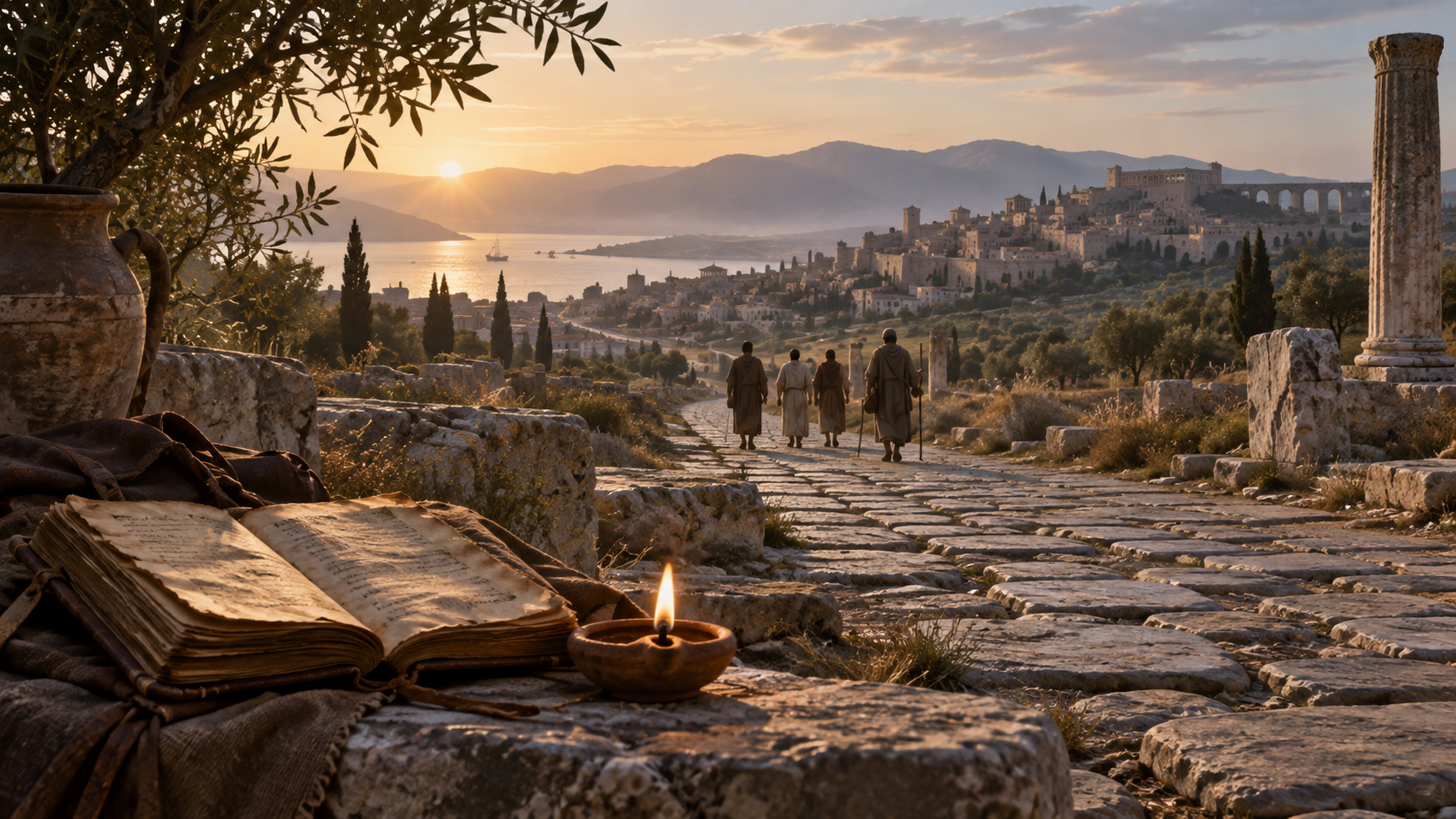
平行
筆記: 這篇文章根據大衛.鮑森的 教會史 系列講座撰寫(第 1 部分:西元 30–400 年),全長約 58 分鐘。所有主要論點都直接取自鮑森。凡是我查閱資料、核對歷史或更正細節之處,都以 琥珀色邊注 融入正文,就像在正在閱讀的書頁邊寫下的註記。
史上最驚人的故事
保羅寫給羅馬人的信:「他們的聲音傳遍天下,他們的言語傳到地極。」
大衛.鮑森以一個簡單卻令人震驚的問題開始:基督教如何從西元 30 年少數漁夫的群體,傳遍西元 400 年已知的世界,甚至取代其他宗教?
他們做到了,沒有軍隊,沒有錢,也沒有有影響力的人;而且是在對抗羅馬帝國全部力量的情況下做到的。
他們是誰?鮑森強調:大多數都是無名小卒。保羅寫信給哥林多教會說:「看看你們自己:按肉體有智慧的不多,有能力的不多,尊貴的也不多。」早期教會主要由奴隸和社會最底層的人組成——但正是這些人贏得了一個帝國。
這是人類史上最驚人的故事。
起點:使徒行傳結束(西元 60 年)
使徒行傳涵蓋教會史最初三十年,即西元 30 至 60 年。這是一個未完成的故事:從屬靈世界的首都耶路撒冷,走到世俗世界的首都羅馬。
但這個故事卻不斷向外傳播。
鮑森總結了早期教會的優勢:
羅馬道路。 筆直的道路橫貫地中海世界,使使徒和商人無需護照或簽證即可出行。
通用希臘語。 整個帝國都說一種語言──福音可以用一種語言傳播。
羅馬和平。 帝國境內相對穩定,人們可以從一個地區旅行到另一個地區,不必時刻擔心戰爭。
猶太社區。 在大多數大城市,成群結隊的猶太人已經了解舊約並願意聆聽。
一個在道德和精神上都病態的帝國。 人們渴望真正的東西。
然而鮑森說:即使有這些優勢,這仍然是驚人的勝利。
他們沒有建築物。無宗派組織。沒有總部。沒有經濟來源。沒有委員會。然而他們做到了。
早期教會的組織。 非常簡單:地方群體稱為教會,每個群體有作屬靈領袖的長老,以及負責實際服事的執事。在各教會之間往來的,有建立新群體的使徒、傳福音的傳福音者,以及帶來上帝話語的先知。這是新約所呈現的組織。
他們的敬拜。 以浸入水中的方式受洗;在聖餐中領受餅和酒;固定禱告與自由禱告並行;唱詩——沒有樂器,也沒有合唱團,但他們喜愛歌唱。
早期教會地圖
從耶路撒冷到羅馬帝國四極(主後30–400年)
各點使用城市的相對經度和緯度;從耶路撒冷發出的細線表示擴展方向,而非實際行程。
這是一個相對座標示意圖,不是海岸線或古代疆界地圖。經度和緯度保持東西、南北關係一致;下方的靜態列表承載歷史細節,不依賴懸停查看。
三場戰役
鮑森的核心分析架構是:前四個世紀,教會必須面對三場大戰,而且每一場都得勝。
第一戰——屬靈的,對抗猶太教化。 第二戰——思想的,對抗希臘哲學。 第三戰——身體的,對抗羅馬迫害。
鮑森說:今天我們正在進行同樣的三場戰鬥。這就是他教導歷史的原因——那不是過去。那就是現在。
主後30–400年的三場爭戰
早期教會經歷並贏得的三場爭戰
三種不同的壓力,三種不同的回應——也是一個沒有軍隊卻存續下來的群體的故事。
- 主後30–400年及以後
屬靈爭戰
壓力
異端以及把基督教與其他宗教混合的企圖。
回應
教會持守了「耶穌是唯一的救贖之道」這一信仰告白。
持久結果
鮮明且不妥協的基督徒身分。
- 主後50–325年
思想爭戰
壓力
諾斯底主義、馬吉安主義、亞流主義,以及重新定義信仰的哲學。
回應
領袖解釋聖經,並形成正典和信經。
持久結果
信仰藉著信經和尼西亞會議得到澄清。
- 主後64–312年
肉身爭戰
壓力
從尼祿到戴克里先的羅馬迫害。
回應
群體堅持到底;有些人殉道,另一些人屈服或逃亡。
持久結果
君士坦丁之後迫害結束;教會仍然存在。
選定的定位點
彩色面板區分三種壓力;標籤和閱讀順序傳達意義,不依賴顏色。金色點是定位標記,不是連續的時間序列。
第一場戰役:屬靈的——反對宗教混融
無論過去或現在,有一種流行的觀點認為基督教必須與其他宗教混合。所有宗教基本上都是相同的。我們都在透過不同的道路走向同一個上帝。
鮑森講述自己搭便車的故事:那時他是接受宗教知識教育訓練的學生。那個年輕人不相信上帝,卻想向孩子展示所有宗教本質上都一樣。
這是早期教會面臨的屬靈爭戰。
第一個殉道者:司提反
第一個為耶穌獻出生命的人是司提反;他為一個宣告而死:基督教不能和猶太教混為一談。猶太教所代表的舊約時代已經完成,基督教是獨一無二的,不可被稀釋。
猶太人非常憤怒,把他拖到城牆外,用石頭打死。
耶穌自己知道兩者不會混合。鮑森回憶起他的教導:這樣做就像 將新酒倒入舊皮袋,或把一塊未縮水的布縫在舊衣服上——遲早會把衣服撕裂。兩者不能混為一談。
但這場爭戰沒有隨司提反結束。保羅被捲入其中,彼得則被迫捲入其中;彼得是十足的猶太人,原本不願接觸外邦人,直到上帝親自教導他。耶路撒冷聖殿在西元 70 年被羅馬軍隊摧毀,人們可能以為猶太教就此終結,但事實並非如此。
三百年來,各群體持續試圖把基督徒拉回猶太律法之下。鮑森提到拿撒勒派和以便尼派;他們堅持外邦歸信者仍須遵守摩西律法和安息日,這樣的主張延續了整整三個世紀。
「今天這樣做的人,」 鮑森觀察到,「是基督復臨安息日會——他們中的許多人都是好基督徒,但他們試圖讓我們回到第七日的安息日律法之下。」
最終這場戰鬥取得了勝利:基督教是獨特的、純粹的、獨立於猶太教的。
萬神殿與宗教融合的誘惑
隨著羅馬帝國的擴張,他們建造了萬神殿——字面意思是「眾神的殿堂」(pan = 所有,theon = 眾神)。每當有新的宗教出現時,其神的雕像就會被放置在壁龕中。
羅馬人 邀請 基督徒在其中一個壁龕中放置一尊耶穌雕像。
基督徒拒絕了。堅決拒絕。
鮑森觀察到:當他參觀萬神殿時,所有壁龕都是空的;但那裡曾經有過雕像,因為這座建築後來被教會接管,成為敬拜場所。那是勝利,而不是妥協。
這種政策可稱為融合——把不同宗教混在一起。這是教會必須面對的爭戰。
「Religio Licita」——合法宗教
羅馬帝國有宗教登記制度。若登記,該信仰便成為合法宗教——一種獲國家承認的信仰。
基督徒 拒絕註冊。他們說:我們不是宗教。我們是耶穌基督的跟隨者。
這使他們的生活變得更加危險。
當凱撒成為神時
漸漸地,所有宗教都在萬神殿中找到了自己的位置;最後,人們也在那裡放置了凱撒的雕像。凱撒成了神。羅馬帝國宣布:從現在起,國家的宗教就是敬拜凱撒——向凱撒燒香,宣告「凱撒是主」。
這就是肉體戰鬥開始的時候。
「無神論者」這個稱呼有一個有趣的雙重用法:羅馬人因基督徒拒絕敬拜眾神,稱他們為無神論者;基督徒也稱羅馬人為無神論者,因為他們雖有眾神,卻沒有上帝。「無神論者」一詞在聖經中出現一次——保羅寫給以弗所人的信,保羅說外邦人「在世上沒有上帝」。
因此保羅在雅典對雅典人說:「我觀看你們所敬拜的,遇見一座壇,上面寫著『獻給未識之神』。我現在把你們所不認識的那位告訴你們。」就這個意義而言,他們每一個人都是「無神論者」。
第二場戰役:思想——對抗哲學
這是更難的爭戰,因為它發生在教會裡面,不是教會之外。
希臘人是卓越的思想家、知識分子和博學者。基督教遇到知識界時,最大的危險是知識分子會改造基督教,創造他們所謂的高級形式,為了迎合智力而犧牲真理。
鮑森說:「我的理智仍有許多問題沒有答案;但感謝上帝,在理智完全滿意之前,我已經預備好相信。」
這場爭戰必須用文字和筆進行;教會史上一些最優秀的著作由此而生。愛任紐以《反異端》為題寫了五卷,系統駁斥諾斯底主義的各個分支。亞歷山大的奧利根為捍衛信仰,留下驚人的6,000 部著作、書信和小冊子。早期教會的知識庫非常強大。
與馬吉安的戰鬥
馬吉安是第一個彷彿用剪刀剪聖經的人。他不喜歡舊約中發怒的上帝,便得出結論:舊約的神是不同於新約之神的另一位神。
他的解決方案是:刪掉整本舊約聖經。
但他後來發現還要刪更多:《啟示錄》太像舊約,刪掉;保羅說了令人不舒服的話,刪掉;連福音書中不合他意的段落,也一併刪除。
鮑森指出:「他是第一個發現當你用剪刀剪聖經時,你無法停止的人。」
最後,他得到的是兩位神——一位屬於舊約,一位屬於新約。
這是我們今天仍在與之鬥爭的異端。
與諾斯底主義的戰鬥
這是一場規模更大的戰鬥。諾斯底主義來自一種思想的混合——埃及的、波斯的,可能還有印度的——具有一個基本哲學:
精神上的東西都是好的。物質的東西是邪惡的。
這導致一系列破壞性的結論:
- 如果物質是邪惡的,上帝就不可能創造它。
- 如果物質是邪惡的,耶穌就不可能有肉身。
- 因此,耶穌只是看起來有身體;祂是幻影。
- 因此,祂沒有真正死過,也從不會餓或累。
- 因此,身體復活是荒謬的。
鮑森解釋說:「這就是約翰寫福音書和第一封書信的原因——他在教會內部與這種想法作鬥爭。」
約翰一書開頭說:「我們所聽見、親眼看見、親自觀看、親手摸過的——這生命之道,我們現在宣揚……」這正是在反駁諾斯底主義。
教會中最偉大的思想家都反對它:北非迦太基的德爾圖良、亞歷山大港的革利免和奧利根,以及居普良;他們都寫作反駁這種思想。
思想爭戰的三項成果
教會做了三件事來贏得這場戰鬥:
1.新約正典。 由於假福音大量流傳,教會需要辨別何者真實,於是收集那些真正追溯至使徒、由直接從耶穌領受真理之人所寫的書。到西元 200 年,新約已大致彙編完成。因著那場爭戰,我們有了今天的新約。
2.信經。 為了清楚表達信仰,教會開始整理信仰告白;「信經」一詞來自「我相信」。使徒信經直接回答諾斯底主義:
- 「我相信全能的父上帝,天地的創造者」—上帝 做過 使物質成為現實。
- 「耶穌……在本丟彼拉多手下受苦,被釘在十字架上,死了並被埋葬」——他 有 一個真實的身體。
- 「我相信身體的復活」—身體 是 好的。
3.公會。 公會不是為了建立行政組織,而是讓教會為信仰共同爭戰、彼此緊密聯合。
與亞流主義的鬥爭-耶穌是完全的神嗎?
當君士坦丁在西元 312 年成為基督徒時,教會正陷入一場可怕的爭論。起因是一位來自亞歷山大、高大英俊且才華橫溢的傳道人亞流;他所教導的,與今天耶和華見證人的教導相似:耶穌基督不是完全的上帝。
亞流說:耶穌是「上帝的兒子」,卻不是上帝本身;祂是被造的,不是生出的。祂只是像上帝,而不是上帝。
這種教導像熱潮一樣席捲教會;幾乎整個帝國都追隨亞流。
只有一個人看見正在發生的事,並敢於反抗。
他的名字是亞他那修。他是身材矮小的年輕執事,有人甚至叫他侏儒;亞流則是高大威嚴、擁有成千上萬支持者的主教。亞他那修說:「這是錯的;我要與它爭戰。」
拉丁諺語由此而生:Athanasius contra mundum——「亞他那修對抗世界」。
他一生被四位不同的皇帝五次流放。他從未放棄。
我事奉他八十六年了,他從來沒有虧待過我。那我怎麼能褻瀆我所侍奉的國王呢?——坡旅甲(約西元 155 年)
諾斯底主義的連鎖反應
一個錯誤前提瓦解整個信仰
Pawson展示了諾斯底主義如何從一個錯誤觀念開始,然後像倒下的多米諾骨牌一樣,依次否定基督教信仰的每一根支柱。
物質是邪惡的,靈是良善的
錯誤前提
→ 上帝不可能創造物質
否認造物主
→ 耶穌不可能擁有真實的身體
否認道成肉身
→ 他只是一道幻影——從未飢餓或疲倦
否認他的人性
→ 他並沒有真正死在十字架上
否認十字架
→ 身體復活是荒謬的
否認復活
教會的回應
「道成了肉身,住在我們中間。」—— 約翰福音. 約翰寫下福音書和書信,正是為了在這連鎖反應的第一步就將其止住。
尼西亞會議——主後325年
一封永遠改變教會神學的書信
亞流的教導
ὁμοιούσιος
homoiousios
「相似的本質」——耶穌像上帝,卻不是上帝。他是被造的,並非永恆所生。
含義:
如果耶穌不是完全的上帝,他就不能真正連接上帝與人類——整個信仰便會崩塌。
差異:一個字母ι(iota)
一個字母——iota——把「耶穌像上帝」與「耶穌就是上帝」分開。這就是為什麼Pawson指出:「人們覺得因為一個詞就分裂教會很奇怪,但那是一個非常重要的詞。」
亞他那修——對抗全世界
當亞流主義像一股時尚狂潮席捲帝國時,年輕而身材矮小的執事亞他那修獨自站立。他被四位不同的皇帝放逐五次。拉丁諺語:Athanasius contra mundum——「亞他那修對抗全世界。」最終,他取得了勝利。
尼西亞信經(主後325年):「……獨一的主耶穌基督,上帝的獨生子,在萬世以前為父所生;出於上帝的上帝,出於光的光,出於真神的真神;受生而非被造,與父同一本質……」
尼西亞會議(西元 325 年)
君士坦丁召集了來自帝國各地約 300 位主教。會議沒有在君士坦丁堡舉行,而是在馬爾馬拉海對岸的尼西亞(今土耳其伊茲尼克),因為君士坦丁堡直到 330 年才正式命名。
主教們進入大廳時,身上帶著迫害留下的傷痕;用鮑森的話說,*「殘廢的和瘸腿的進來了。」*身體上的爭戰剛結束,這些老兵便坐在房間裡進行思想上的爭戰。
亞他那修當時仍是年輕執事,沒有主教的投票權,卻是爭論的核心人物。他透過朋友傳遞論點:朋友進場提出他的觀點,再出去轉達亞流的回應,好讓他反駁。
辯論就此展開 兩個字:
- ὁμοούσιος(homoousios):耶穌與天父「同質」——耶穌是上帝。
- ὁμοιούσιος(homoiousios):耶穌「本質相似」——耶穌只是像上帝。
區別:一個字母 ι (iota)。但這就是信仰和異端的差別。
亞他那修獲勝了。 尼西亞會議制定了尼西亞信經:
「我相信一位主耶穌基督……上帝之神,光之光,上帝之上帝,受生而非被造,與天父同質……」
每年聖誕節,我們仍唱詩歌:「聽啊!天使高聲唱——上帝之神,永恆之光……」我們其實正在歌頌尼西亞會議的成果。
第三場戰役:肉體上的——抵抗羅馬迫害
在最初的四個世紀裡,教會 絕不 使用武力來傳播福音。宗教裁判所晚得多。他們使用的唯一力量是 愛。
但羅馬卻一次又一次以肉身暴力對付他們。
為什麼基督徒要遭受這麼多的苦難?
人們散播謠言:基督徒是食人者(誤解聖餐),舉行淫穢的「愛筵」,拒絕正常社會習俗,是威脅帝國安全的秘密社團。
但鮑森說,那些不是真正的原因。
真正的原因是耶穌自己的話: 「他們無緣無故地恨我。」 人心深處對上帝──因而對祂的子民──存在著一種不合理的仇恨。
鮑森進一步說——這需要背景說明——「反猶太主義的另一面,是猶太人對基督徒的態度」,甚至說「是猶太人首先一次又一次使基督徒受苦」。(註:這是鮑森在 1960 年代的框架。使徒行傳確實記載部分猶太領袖早期反對,但現代歷史學家對這種集體歸因保持謹慎;後來的迫害絕大多數來自羅馬國家,而非猶太社群。)
尼祿與迫害的開始(西元 64)
有一天,鮑森站在羅馬尼祿皇宮花園的廢墟上,知道土壤已被鮮血浸透。
據稱,瘋狂的皇帝尼祿為了把羅馬重建成偉大都市而放火燒城;十七個地區中的十四個被夷為平地,數百人死亡。當責任開始歸到尼祿身上,他便尋找代罪羔羊:「是基督徒做的。」
他逮捕羅馬境內的基督徒,以獸皮包裹他們,讓狗撕咬;有些被斬首,有些被釘十字架。最後,他把人塗上瀝青,活活塞進桶裡,在花園裡點燃作為人形火把,自己則在黑暗中瘋狂駕車。
這就是開始。從那時直到西元 300 年,教會經歷了十次迫害——這是它所知道最可怕的時期。
鮑森舉起一本他二手撿到的舊書—— 福克斯的烈士書,曾經是基督徒的必修主日讀物。他指出,這表明,直到寫下這本書的時候,從來沒有一個十年沒有基督徒遭受殉難—— 「而且直到今天仍然沒有。」
使徒約翰在拔摩島
約在西元 95 年,傳統認為圖密善皇帝把約翰(十二使徒中最後仍在世的一位)流放到愛琴海的小小拔摩島。啟示錄只說他「為了上帝的道」在那裡,沒有可靠證據證明他被關在鹽礦或鎖在監獄牆上。
從那間牢房裡誕生了《啟示錄》——正如班揚後來所寫的那樣 天路歷程 來自貝德福德監獄。
鮑森引用保羅的話:「我可能被鎖鏈鎖住,但神的話語不受束縛。」
普林尼和圖拉真(約西元 110 年)
約西元 110 年,新任總督小普林尼抵達小亞細亞西北部的比提尼亞和本都。他驚訝地發現異教神廟冷清,便問原因。
「基督徒,先生。他們太多了。」
普林尼開始逮捕並處決基督徒,卻對他們不斷增加的人數和生活方式感到困惑。最後,他派人觀察他們的清晨聚會。
間諜帶著報告回來了:「他們在黎明前聚會。他們唱讚美詩,頌贊基督如同上帝。然後他們立下誓約——不偷竊、不通姦、不謀殺。」
普林尼很困惑,便寫信給圖拉真皇帝。圖拉真答覆:不接受匿名指控;若有人被確認為基督徒,就測試他是否願意向眾神獻祭並說「凱撒是主」。若拒絕,便處決。
安提阿的依納爵
依納爵是安提阿的主教;鮑森稱他為「當時教會最年輕的牧者之一」。他被捕,從安提阿押解到羅馬,並在競技場被野獸吞噬。
他的旅程是一場勝利的盛會。一路上,基督徒離開家,與他同行,與這位走向死亡的人分享團契。
鮑森從依納爵自己的一封信中讀到: 「現在我開始成為門徒。靠近刀劍的人就靠近上帝。在野獸中的人就與上帝為伍。」
依納爵在被羅馬士兵押解、夜間停留時寫下令人難忘的書信。他寫信給士麥那主教坡旅甲:「即使常受捶打,也要站穩,像鐵砧一樣堅定。」
四十年後,坡旅甲殉道。
士麥那的坡旅甲(約西元 155 年)
士麥那舉行紀念皇帝的競技活動,人群逐漸狂熱。有人喊:「除掉無神論者!」十一名基督徒被拖進競技場,丟給獅子;接著人群要求處置坡旅甲。
一名士兵奉命逮捕他。士兵來到士麥那郊外一間小屋,敲門;坡旅甲來到門口。士兵不認識他,便問:「這裡有一個叫坡旅甲的人嗎?」
他本可以否認,也很想這麼做;但主使他得勝。他說:「我就是坡旅甲」,然後伸出手腕,讓人給他戴上鎖鏈。
在競技場上,總督看著老人的白髮說:「可憐你這把年紀;只要咒罵基督,就可以回你的小屋。」
坡旅甲回答:
「我事奉他八十六年了,他從來沒有虧待過我。我怎麼能褻瀆我所事奉的國王呢?」
他們只好殺死他。獅子已被帶走,於是他們生火,把他綁在木樁上;但風把火焰吹向一旁,令群眾印象深刻。最後,一名羅馬士兵憐憫這位老人,用匕首刺入他的心臟。
基督徒記錄了那次殉道,並以這句話結束記載:「……盧修斯.斯塔提烏斯.夸德拉圖斯任執政官,但耶穌基督永遠是王。」夸德拉圖斯的名字因執行刑罰而留在史冊;耶穌基督的名字則因祂是王而流傳。
里昂的布蘭迪娜(西元 177 年)
迫害蔓延到高盧。在里昂,年邁的主教波蒂努斯被囚禁並死在獄中;接著當局帶走一名十幾歲的女奴,她名叫布蘭迪娜。
他們從早到晚折磨她。那些折磨她的人變得疲憊不堪,並承認他們被征服了——他們無法再對她做更多的事情了。
她在痛苦中反覆呼喊,藉此得到安慰:「我是基督徒;我們沒有做任何卑鄙的事。」
第二天,在鞭打、野獸襲擊和灼熱座椅之後,她被放進網裡,扔到公牛面前;公牛把她拋向空中,她便死了。
史家記載: 「她就像一位高貴的母親,為她的孩子們歡呼,帶著喜悅和狂喜趕到他們身邊,就像她被邀請去參加一場婚宴一樣。」
北非監獄中的一名婦女
鮑森又講述一個北非故事:一名基督徒婦女被囚禁,嬰兒在隔壁牢房挨餓哭泣,她卻不准餵奶。拷問者提出條件:「只要你說『凱撒是主』,就可以餵孩子。」
她拒絕了。這是她的回答:
「我們尊敬凱撒為凱撒;但我們敬畏並敬拜基督為主。」
德修斯與戴克里先的迫害
約三十年的和平後,在德修斯皇帝統治期間(約西元 249–251 年),羅馬第一次有系統地試圖在全帝國鎮壓基督教,而不只是局部地區。
鮑森說這是一個悲傷的時刻,因為許多基督徒 屈服了。有人說「凱撒是主」。有些人賄賂官員。有些人逃跑了。這造成了一個痛苦的問題:當和平回歸時,那些否認基督的人想要回到教會。應該做什麼?這幾乎將教會撕成兩半。
德修斯之後迎來約四十年的和平;教會的數量、財富和影響力都在增長。
然後是「撒但最後一次放縱」——戴克里先在西元 303 年下令摧毀每一座教堂、焚燒每一本聖經、免除基督徒的公職,並使基督徒面臨斬首、焚燒或溺死的威脅。
鮑森指出:「撒但知道他正在失敗。現在基督徒太多了。帝國正在被蹂躪。這是最後的戰鬥。」
十次羅馬迫害
主後64–311年:從尼祿到戴克里先
這十個標記用於定位故事;它們不是衡量整個帝國迫害強度的連續指標。
- 尼祿主後64–68年相對強度
把羅馬大火歸咎於基督徒;在城內最為猛烈。
- 圖密善主後81–96年相對強度
傳統認為約翰被放逐到拔摩;迫害仍局限於地方。
- 圖拉真主後98–117年相對強度
伊格那丟殉道;普林尼的書信顯示各地政策並不一致。
- 哈德良主後117–138年相對強度
相對溫和,但地方騷擾仍在繼續。
- 馬可·奧勒留主後161–180年相對強度
主後177年的里昂迫害;布蘭蒂娜殉道。
- 塞普蒂米烏斯·塞維魯主後202–211年相對強度
禁止改信基督教;非洲和埃及發生迫害。
- 馬克西米努斯·色雷克斯主後235–238年相對強度
專門針對教會領袖。
- 德基烏斯主後249–251年相對強度
第一次遍及全帝國的系統性迫害;許多基督徒背棄信仰。
- 瓦勒良主後257–260年相對強度
針對主教、神職人員和上層階級基督徒。
- 戴克里先主後303–311年相對強度
大迫害:教堂被毀,聖經被焚,大規模處決。
這份十次迫害的列表是一種傳統框架;強度格子是對文章描述的相對編碼,不是量化資料,也不是說每個地方都遭受了同樣的苦難。
勝利:君士坦丁與米爾維安橋(西元 312 年)
西元 312 年,君士坦丁正要向羅馬的敵人進軍。就在那時——鮑森坦承,他無法分辨傳說與事實——君士坦丁看見異象:十字架,並聽到一句話:「以此記號得勝。」
據後來的傳統,他命令士兵在盾牌上標記基督教符號;不能把這概括成每一名士兵都立即成為基督徒。
鮑森不確定這完全是件好事。但皇帝已經成為基督徒。
君士坦丁宣稱:
- 將星期日設為部分公共事務的休息日(並非歷史上第一次設立休息日)
- 改善婦女和家庭在法律中的處境
- 限制部分殘酷刑罰和奴隸虐待
羅馬帝國的肉身戰爭就此結束。迫害停止了。
但屬靈和思想上的爭戰尚未完全得勝。
君士坦丁的親戚朱利安和異教復興嘗試
鮑森說:「君士坦丁有兩位年輕的親戚,其中一位叫朱利安。」他們宣稱:「我們不喜歡他的作為,要恢復羅馬的異教諸神。」
他們重新開設異教寺廟。
沒有人來。
但這場復興很短暫。到西元 380 年,狄奧多西一世以尼西亞信仰為帝國規範;到西元 400 年,基督教已成為羅馬帝國最受官方支持的宗教,但異教並未瞬間消失。
蔓延至整個帝國
到西元 400 年,基督教已經抵達:
- 英國:聖奧爾本——傳統中的殉道者;早期記載把他描述為庇護逃亡神職人員的維魯拉米烏姆居民,並未說他是羅馬士兵。
- 非洲:教會深入非洲。
- 敘利亞和印度:教會向東傳播。
- 整個羅馬帝國:當時世界已聽見福音。
身體上的戰鬥取得了勝利。心理戰勝利了。屬靈的爭戰取得了勝利。
到西元 400 時,教會已經為耶穌基督佔領了世界。
在迫害中增長
羅馬帝國人口中基督徒所占比例估算
三個估算錨點展示變化的尺度;由於沒有連續觀測序列,它們不會被連接成平滑曲線。
≈1,000名信徒
一個非常小的起點
≈600萬人
君士坦丁轉折點之前的估算
≈3,300萬人
超過帝國人口一半的估算
關鍵在於規模悖論:迫害並沒有阻止擴張。這些數字仍然只是估算。
估算採用文章引用的Rodney Stark《基督教的興起》(1996)中的錨點:約1,000人(主後40年)、600萬人/約10%(主後300年),以及3,300萬人/超過一半(主後350年)。沒有繪製插值線;各點之間的間隔不代表缺失資料。
是什麼讓教會在苦難中成長
鮑森對這些迫害提出兩個重要觀察。
第一個觀察-痛苦的事實: 雖然我們知道許多殉道者的名字,也知道成千上萬的基督徒在迫害中屈服:有人說「凱撒是主」,有人賄賂官員,有人逃跑。這是痛苦的事實。和平到來後,他們想回到教會;這幾乎把基督教群體撕成兩半。
第二個觀察——最大的悖論: 教會從未像在這些苦難下成長得如此強大或如此迅速。
北非基督徒德爾圖良說過這樣一句不朽的話: 「殉道者的血是教會的種子。」
若想建立教會,就栽種一位殉道者;德爾圖良的意思正是如此。
這是教會受苦的一個痛苦卻真實的答案:迫害篩選了會友。它使基甸的軍隊只留下能承受考驗的三百人,也使教會成為它應有的樣子——一支高貴的軍隊。
鮑森總結:痛苦的答案不是我能完全理解的。但這是事實: 教會在哪裡受苦,哪裡就成長。
鐵幕以東,是身體上的爭戰。在鐵幕以西——在英格蘭,在我們這裡——是思想上的爭戰,而且更難。——大衛.鮑森
三場爭戰一覽
屬靈爭戰
主後30–400年及以後對手: 猶太教和異教
核心問題: 基督教能否與其他宗教混合?
代表人物: 司提反、保羅、彼得
「天下人間沒有別的名……我們必須靠著得救。」(使徒行傳)
✓ 勝利:基督教獨特且不妥協的身分
思想爭戰
主後50–325年對手: 希臘思想家——諾斯底主義、馬吉安主義、亞流主義
核心問題: 哲學能否重新定義基督教?
代表人物: 愛任紐、特土良、俄利根、亞他那修
「真神出於真神,受生而非被造……」(尼西亞信經)
✓ 勝利:新約正典形成,信經確立,尼西亞會議召開
肉身爭戰
主後64–312年對手: 羅馬帝國——十輪迫害
核心問題: 肉體的力量能否消滅教會?
代表人物: 伊格那丟、坡旅甲、布蘭蒂娜以及無數殉道者
「他們因羔羊的血和自己所見證的道勝過他。」(啟示錄)
✓ 勝利:主後312年的君士坦丁——迫害結束
今天我們正在打同樣的仗
這就是鮑森教授歷史的原因。
今天的屬靈爭戰: 就在這場演講前幾週(1960 年代),劍橋最著名的教堂舉行「世界信仰大會」儀式;佛教徒、印度教徒、巴哈伊教徒、猶太人和基督徒一起敬拜。參與條件是不得提及耶穌基督的名字。
這就是我們正在進行的戰鬥。
鮑森以啟示錄的圖景警告,未來可能出現要求所有人服從的統一宗教與政治秩序;這是他的末世解釋,不應寫成已經得到歷史證明的預言時間表。
今天的思想爭戰: 我們這個時代的哲學不叫諾斯底主義,而叫存在主義。你可以在尚-保羅·沙特的文學、德布西的音樂、畢卡索的藝術和流行文化中看到它,也可以在年輕人的毒品文化和馬歇爾·麥克魯漢「媒介即訊息」的宣言中看到類似影響。在神學中,布特曼、蒂利希,以及伍爾維奇主教約翰·羅賓遜的《對神誠實》都反映了這種重新理解人的傾向;時任浸信會聯盟主席的霍華德·威廉斯也被鮑森列入其中。
這些人根據異教哲學重新定義基督教——一種基本上是無神論的哲學,使上帝非人格化或不存在。「上帝死了」——這句話是基督教神學家遵循這哲學的結果。
鮑森說:思想爭戰需要我們培養出最優秀的頭腦。必須用言語和筆去戰鬥。我們需要勇氣說:「這不是基督教信仰。這不是我們所相信的。」
今天的身體對抗: 在鐵幕以東(這場演講是在冷戰期間進行的),身體上的爭戰像第一世紀一樣激烈。
鮑森講述了理查德·溫布蘭德的故事——他曾在羅馬尼亞共產主義監獄中遭受酷刑,當時正前往劍橋,準備質疑一位主持「世界信仰大會」儀式、甚至稱耶穌為同性戀者的教會人士。
馬丁.路德(Martin Luther)在這場演講前 450 年,把論綱釘在教堂門上。鮑森問:「今天我們要把什麼釘在教堂門上?」這就是思想爭戰;它就在這裡,就在我們的教會裡。
鮑森總結:
「為什麼要讓溫布蘭德——他已經在東方打過肉身之戰——去打這兩場仗?這是我們必須打的仗。我們必須非常清楚而又充滿愛地說:這是信仰。我們不會為了今天的知識分子而改變它。這是帶來救恩的福音。」
三場爭戰留下三項持久遺產
不妥協的身分
教會在混合宗教的壓力下,仍持守關於耶穌的信仰告白。
一份變得清晰的信仰
聖經、正典和信經幫助教會回應思想上的挑戰。
一個堅持到底的群體
群體經歷了迫害;君士坦丁之後迫害結束,但故事並未結束。
這份遺產不是裝飾性的圖像;它是教會保持身分、清晰表達信仰並在壓力中生活的方式。
Note: This post is compiled from David Pawson's History of the Church lecture series (Part 1: AD 30–400), approximately 58 minutes long. All major arguments come directly from Pawson. Wherever I looked something up, checked it against the historical sources, or corrected a small detail, I've left it as an amber margin note woven right into the text — the way you'd jot in the margin of a book you're reading.
The most astonishing story in history
Paul’s letter to the Romans: "Their voice has gone out to all the earth, and their words to the ends of the world."
David Pawson opens with a simple but stunning question: How did Christianity spread from a handful of fishermen in AD 30, across the then-known world by AD 400, replacing every other religion along the way?
They did it without an army. Without money. Without influential people. And they did it against the full might of the Roman Empire.
And who were they? Pawson stresses the point: mostly nobodies. Paul wrote to the church at Corinth, "Look at yourselves — not many wise, not many powerful, not many of noble birth." The early Church was largely made up of slaves and the lowest ranks of society — and yet these were the people who won an empire.
Kit's note
Two small things I checked here. First — Paul's line in Paul’s first letter to the Corinthians: the Greek reads οὐ πολλοὶ δυνατοί (dunatoi = mighty, powerful), which is why ESV/NIV/KJV render it closer to "not many powerful" than "high calling." Second — the "60 million slaves" figure Pawson liked to cite comes from Edward Gibbon (1776) and is overstated; modern estimates put it at 5–10 million slaves out of a total population of ~60–70 million (10–15%). But whatever the number, his point holds: the Church began among society's lowest.
This is the most astonishing story in human history.
The Starting Point: End of Acts (AD 60)
The Book of Acts covers the first 30 years of Church history — AD 30 to AD 60. It's an unfinished story: from Jerusalem, the capital of the sacred world, to Rome, the capital of the secular world.
But the story kept spreading outward in ripples.
Pawson summarizes the advantages the early Church had:
Roman roads. Straight roads running around the Mediterranean world, allowing apostles and merchants to travel without passports or visas.
Common Greek language. The whole empire spoke one language — the gospel could be preached in one tongue.
Pax Romana. The Roman peace — people could travel from country to country without fear of war.
Jewish communities. In most large towns, groups of Jews already knew the Old Testament and were willing to listen.
A morally and spiritually sick empire. People were hungry for something real.
And yet Pawson says: even with these advantages, this was an astonishing triumph.They had no buildings. No denominational organizations. No headquarters. No financial resources. No committees. And yet they did it.
The organization of the early Church. Utterly simple: local groups called churches, each with elders for spiritual leadership and deacons for practical service. Between churches moved apostles who planted new ones, evangelists who preached the gospel, and prophets who brought the word of God. That is the only organization you find in the New Testament.
Their worship. Baptism by immersion. Bread and wine at the Lord's Supper. A mixture of fixed prayers and free prayer. Singing — no instruments, no choirs, but they loved to sing.
Early Church Map
From Jerusalem to the ends of the Roman Empire (AD 30–400)
Points use the cities' relative longitude and latitude; fine lines from Jerusalem show the direction of expansion, not literal travel routes.
This is a relative coordinate diagram, not a coastline or ancient-boundary map. Longitude and latitude keep the east–west and north–south relationships consistent; the static list below carries the historical detail without relying on hover.
Three Battles
Pawson's core analytical framework: in the first four centuries, the Church had to fight three great battles — and in each one, it won.
The first battle — Spiritual, beginning with the Jews. The second battle — Mental, beginning with the Greeks. The third battle — Physical, beginning with the Romans.
Pawson says: we are fighting the same three battles today. That is why he teaches history — because this is not the past. It is the present.
Three Battles AD 30–400
Three battles the early Church fought and won
Three different pressures, three different responses—and one story of a community that endured without an army.
- AD 30–400+
Spiritual battle
Pressure
Heresy and attempts to blend Christianity with other religions.
Response
The Church held to the confession that Jesus is the unique way of salvation.
Enduring result
A distinct, uncompromised Christian identity.
- AD 50–325
Mental battle
Pressure
Gnosticism, Marcionism, Arianism, and philosophies redefining the faith.
Response
Leaders interpreted Scripture and formed the canon and creeds.
Enduring result
The faith was clarified through the Creed and Council of Nicaea.
- AD 64–312
Physical battle
Pressure
Roman persecution, from Nero to Diocletian.
Response
Communities endured; some were martyred, while others capitulated or fled.
Enduring result
Persecution ended after Constantine; the Church remained.
Selected orientation points
The colored panels distinguish three kinds of pressure; labels and reading order carry the meaning without color. Gold points are orientation markers, not a continuous time series.
First Battle: Spiritual — Against Syncretism
There is a popular idea — then and now — that Christianity must be mixed with other religions. That all religions are basically the same. That we're all traveling to the same God by different roads.
Pawson tells of picking up a hitchhiker, a student training to teach religious knowledge. The young man didn't believe in God, but his goal was to show children that all religions are fundamentally the same.
This is the spiritual battle the early Church faced.
The first martyr: Stephen
The first person to give his life for Jesus was Stephen — and he died for this one thing: declaring that Christianity would never mix with Judaism. That Judaism had become obsolete. That Christianity was unique and could not be diluted.
The Jews were so angry they dragged him outside the city wall and stoned him to death.
Jesus himself knew the two would not mix. Pawson recalls his teaching: to do so is like pouring new wine into old wineskins, or sewing a patch of unshrunk cloth onto an old garment — sooner or later it pulls and tears away. The two cannot be blended.
But the battle didn't end with Stephen. Paul was drawn in, and Peter was flung into it against his will — Peter, a Jew to his fingertips who had no time for Gentiles until God had to teach him otherwise. When the Temple in Jerusalem was destroyed by the Roman armies in AD 70, people might have thought that was the end of Judaism. But it wasn't.
For three hundred more years, various sects kept trying to drag Christians back under the Jewish law. Pawson names them: the Nazarenes and the Ebionites — who insisted that Gentile converts must still observe the Mosaic law and the Sabbath. They persisted for three full centuries.
"The people doing it today," Pawson observes, "are the Seventh-day Adventists — good Christians, many of them, but they are trying to bring us back under the Sabbath law of the seventh day."
Finally the battle was won: Christianity was unique, unmixed, independent of Judaism.
The Pantheon and the sin of syncretism
As the Roman Empire expanded, they built the Pantheon — literally "the house of all gods" (pan = all, theon = gods). Every time a new religion appeared, a statue of its deity was placed in a niche.
The Romans invited Christians to place a statue of Jesus in one of those niches.
The Christians refused. Absolutely refused.
Pawson observes: when he visited the Pantheon, all the niches were empty — but there was a statue of Jesus, because the building was eventually taken over by the Church and turned into a place of worship. That was victory, not compromise.
Kit's note
One honest caveat: the detail about Romans "inviting" Christians to put a statue of Jesus in the Pantheon is a lovely story but appears in no primary source — the closest analogue is Eusebius (HE 2.2), where Emperor Tiberius proposes enrolling Christ among the gods and the Senate refuses, itself a legend. (The idea that the niches held the "seven planetary gods" is also just a modern hypothesis from Mommsen; the only ancient source, Cassius Dio 53.27.2, names only Mars and Venus.) But the core fact is real: the Pantheon really was taken over by the Church — consecrated as Santa Maria ad Martyres in AD 609. That victory genuinely happened.
This policy is called syncretism — the mixing of religions. This was the battle the Church had to fight.
"Religio Licita" — Legal Religion
The Roman Empire had a religion registration system. If you registered, your religion became religio licita — a legal faith recognized by the state.
Christians refused to register. They said: We are not a religion. We are followers of Jesus Christ.
This made their lives considerably more dangerous.
When Caesar Became God
Gradually, all the religions found their niches in the Pantheon — and finally, they placed a statue of Caesar there. Caesar became a god. And the Roman Empire declared: from now on, our religion is the worship of Caesar. Burn incense to Caesar. Say "Caesar is Lord."
That is when the physical battle began.
But there is an interesting double charge of atheism: the Romans called Christians atheists because they refused to worship the Roman gods. And Christians called the Romans atheists — because despite all their gods, they had no God. The word "atheist" appears once in the Bible — in Paul’s letter to the Ephesians, where Paul tells the Gentiles they were "without God in the world."
That is why Paul at Athens said to the Athenians: "I have seen all your altars — but I noticed one inscribed: To The Unknown God. I have come to tell you about that God — the one God you do not know." Atheists, every one of them.
Second Battle: Mental — Against Philosophy
This was the harder battle because it happened inside the Church, not outside it.
The Greeks were the brilliant thinkers. The intellectuals. The know-alls. And when Christianity encountered the intellectual world, the greatest danger was that intellectuals would alter Christianity — producing what they claimed was a superior form of it, compromising truth to fit the intellect.
Pawson says: "There are many questions that I have with my intellect that I still haven't got answered. But thank God I got to the point where I was prepared to believe before I got my intellect entirely satisfied."
This battle had to be fought with words and pens — and some of the finest writings in Church history come from it. Irenaeus wrote five books under the title Against Heresies — a systematic refutation of every branch of Gnostic thought. Origen of Alexandria produced an astonishing 6,000 books, letters, and pamphlets in defence of the faith. The intellectual arsenal of the early Church was formidable.
Kit's note
About that "6,000": it comes from Epiphanius (Panarion 64.63) and is usually considered an exaggeration. A more modest figure — about 2,000 works — is often credited to Eusebius, but it's actually not in Historia Ecclesiastica 6.32 (there Eusebius declines to catalogue them); it survives via Jerome (Epistle 33), quoting the now-lost Life of Pamphilus. Whether 6,000 or 2,000, Pawson's point holds: Origen's output was extraordinary.
The battle with Marcion
Marcion was the first to take scissors to the Bible. He didn't like the God of wrath in the Old Testament, and concluded that the God of the Old Testament was a different God from the God of the New Testament.
His solution: cut out the whole Old Testament.
But then he found he needed to cut more. Revelation looked too much like the Old Testament — out. Paul said some uncomfortable things — out. Even the Gospels had passages he didn't like — out.
Pawson notes: "He was the first to discover that when you apply the scissors to the Bible, you cannot stop."
He ended up with two Gods — one for the Old Testament, one for the New.
That is a heresy we are still fighting today.
The battle with Gnosticism
This was a much larger battle. Gnosticism came from a mixture of thought — Egyptian, Persian, possibly Indian — with one basic philosophy:
Spiritual things are good. Material things are evil.
This led to a chain of damaging conclusions:
- If matter is evil → God could not have created it.
- If matter is evil → Jesus could not have had a physical body.
- Therefore → Jesus only appeared to have a body. He was a phantom.
- Therefore → He did not really die. He was never hungry or tired.
- Therefore → The resurrection of the body is absurd.
Pawson explains: "This is why John wrote his Gospel and his First Epistle — he was fighting this thinking inside the Church."
The opening of 1 John: "That which we have heard, which we have seen with our eyes, which we have looked at and our hands have touched — this we proclaim concerning the Word of life..." — that is combat against Gnosticism.
The greatest minds of the Church set themselves against it: Tertullian of Carthage in North Africa, Clement and Origen of Alexandria, and Cyprian — all wrote to refute this thinking.
Three achievements of the mental battle
The Church did three things to win this battle:
1. The New Testament Canon. With so many false gospels circulating, the Church needed to identify what was real. They collected all the books that genuinely traced back to the apostles — those who received truth directly from Jesus. By AD 200, the New Testament had been assembled. We have the New Testament today because of that battle.
2. The Creeds. To state the faith clearly, the Church began making lists — creeds (from credo = "I believe"). The Apostles' Creed is a direct answer to Gnosticism:
- "I believe in God the Father Almighty, Maker of heaven and earth" — God did make material reality.
- "Jesus... suffered under Pontius Pilate, was crucified, dead and buried" — He had a real body.
- "I believe in the resurrection of the body" — the body is good.
3. Councils. Not to organize the Church, but to share the battle and close ranks for the faith.
The battle with Arianism — Is Jesus fully God?
When Constantine became a Christian in AD 312, he discovered the Church was in a terrible state of argument. The cause: a tall, handsome, brilliantly gifted preacher from Alexandria named Arius was teaching exactly what Jehovah's Witnesses teach today — that Jesus Christ is not quite God.
Arius said: Jesus is the "Son of God" but not God Himself. He was created, not begotten. He is like God but not God.
This swept through the Church like a craze, like a women's fashion trend — almost the entire empire followed Arius.
Only one person saw what was happening and dared to stand against it.
His name was Athanasius. He was a young deacon, physically small — some called him a dwarf. Arius was a tall, commanding bishop with thousands of admirers. Athanasius said: "That is wrong. And I will fight it."
The Latin proverb was born: Athanasius contra mundum — "Athanasius against the world."
In his lifetime he was exiled five times by four different emperors. He never gave up.
Eighty and six years have I served Him, and He has never done me wrong. How then can I blaspheme my King whom I serve? — Polycarp (c. AD 155)
The Gnostic Cascade
One false premise unravels the whole faith
Pawson shows how Gnosticism began with one wrong idea, then — like falling dominoes — denied each pillar of the Christian faith in turn.
Matter is evil, spirit is good
The false premise
→ God could not have created matter
Denies the Creator
→ Jesus could not have had a real body
Denies the Incarnation
→ He was only a phantom — never hungry or tired
Denies His humanity
→ He did not really die on the cross
Denies the cross
→ The resurrection of the body is absurd
Denies the resurrection
The Church's answer
"The Word became flesh and dwelt among us." — John’s Gospel. John wrote his Gospel and Epistles precisely to stop this cascade at its very first step.
Council of Nicaea — AD 325
One letter that changed Church theology forever
Arius taught
ὁμοιούσιος
homoiousios
"of similar substance" — Jesus is like God, but not God. He was created, not eternally begotten.
Implication:
If Jesus is not fully God, He cannot truly bridge God and humanity — the entire faith collapses.
Athanasius defended
ὁμοούσιος
homoousios
"of the same substance" — Jesus IS God. Not just like God, but one in being with the Father.
Scripture basis:
"In the beginning was the Word... and the Word was God." — John’s Gospel
The difference: one letter ι (iota)
One letter — iota — separates "Jesus is similar to God" from "Jesus IS God." This is why Pawson notes: "People thought it strange to split the church over a word, but it was a very important word."
Athanasius — Against the world
As Arianism swept the empire like a fashion craze, Athanasius — a young deacon, physically small — stood alone. He was exiled five times by four different emperors. Latin proverb: Athanasius contra mundum — "Athanasius against the world." In the end, he prevailed.
Nicene Creed (325 AD): "...one Lord Jesus Christ, the only-begotten Son of God, begotten of the Father before all worlds, God of God, Light of Light, very God of very God, begotten not made, being of one substance with the Father..."
The Council of Nicaea (AD 325)
Constantine summoned about 300 bishops from across the empire — he had no room large enough in Constantinople, so they crossed the Sea of Marmara to a city called Nicaea (modern-day İznik, Turkey).
Kit's note
A small geographical correction: Constantinople didn't actually exist yet in AD 325 — Constantine only formally named the city on 11 May 330, five years after Nicaea. The real reason Nicaea was chosen was its closeness to Nicomedia, Constantine's residence at the time, so the emperor could attend and intervene easily.
The bishops entered the hall bearing the marks of persecution on their bodies — in Pawson's words, "the maimed and the lame came in." The physical battle had just ended, and its veterans were sitting in the room to fight the mental battle.
Athanasius — still only a deacon, too young to be admitted to the main debate — sat outside. But he was the central figure in the argument. He continuously passed arguments through a friend: the friend ran in, presented Athanasius's point, then ran out to relay Arius's response so Athanasius could counter it.
Kit's note
The image of Athanasius "barred from the room" is a familiar legend with no basis in the primary sources. The gentler truth: as a deacon he had no vote (that was reserved for bishops), but he was fully present in the hall and took part in the debate. The "sitting outside" detail is dramatic retelling, not quite history.
The debate turned on two words:
- ὁμοούσιος (homoousios): Jesus is "of the same substance" as the Father — Jesus is God.
- ὁμοιούσιος (homoiousios): Jesus is "of similar substance" — Jesus is like God.
The difference: one letter ι (iota). But it was the difference between faith and heresy.
Athanasius prevailed. The Council of Nicaea produced the Nicene Creed:
"I believe in one Lord Jesus Christ... God of God, Light of Light, very God of very God, begotten not made, being of one substance with the Father..."
And every Christmas, we still sing it: "Hark! The Herald Angels Sing — God of God, Light of Light eternal..." We are singing the outcome of the Council of Nicaea.
Third Battle: Physical — Against Roman Persecution
In the first four centuries, the Church never used physical force to establish the gospel. The Inquisition was to come much later. The only force they used was love.
But physical force was used against them, again and again.
Why did Christians suffer so much?
People blamed the rumors — that Christians were cannibals (a misunderstanding of the Lord's Supper), that they held obscene "love feasts," that they refused to participate in normal social customs, that they were a secret society threatening imperial security.
But Pawson says: those were not the real reason.
The real reason is the words of Jesus himself: "They have hated me without a cause." There is an irrational hatred in the depths of the human heart toward God — and therefore toward His people.
Pawson goes further — and this needs context: he argues that "the other side of anti-Semitism is the attitude of the Jews toward Christians," and that "it was the Jews who first caused the sufferings of Christians, again and again." (Note: this is how Pawson framed it in the 1960s. Acts does record early opposition from some Jewish leaders, but modern historians are cautious about such collective attribution — the great majority of later persecutions came from the Roman state, not Jewish communities.)
Nero and the beginning of persecution (AD 64)
One day Pawson stood in the ruins of Nero's palace gardens in Rome, knowing that the soil was soaked with blood.
The mad emperor Nero, in his ambition to rebuild Rome as a great metropolis, allegedly set the city on fire. Fourteen of seventeen districts were razed. Hundreds died. When blame began to fall on Nero, he looked for a scapegoat: "The Christians did it."
He arrested every Christian within reach of Rome. He wrapped them in the skins of wild beasts and set his dogs on them. He beheaded them. He crucified them. And finally — he covered them with pitch, stuffed them alive into barrels, and lit them as human torches in his garden while he drove his chariot madly around in the darkness.
That was the beginning. And from then until AD 300, the Church endured ten periods of persecution — the most frightful it had ever known.
Kit's note
The "ten persecutions" figure is more symbolic than an exact count — later historians (Sulpicius Severus, Orosius) chose ten to echo the ten plagues of Egypt and the ten horns of Revelation. Some "waves" on the list were very brief or purely local, and the one attributed to Domitian is heavily disputed by modern historians. The ferocity, though, was not exaggerated at all.
Pawson holds up an old book he picked up secondhand — Foxe's Book of Martyrs, once compulsory Sunday reading for Christians. He notes it shows that, down to the time it was written, there had never been a ten-year period without Christians suffering martyrdom — "and there still isn't."
The Apostle John on Patmos
Around AD 95, Emperor Domitian exiled John — the last of the twelve apostles — to the salt mines, then to the tiny island of Patmos in the Aegean Sea, where he was chained to a prison wall.
Kit's note
The "salt mines" is a detail I couldn't find in any primary source. Revelation only says John was on Patmos "because of the word of God"; the earliest source linking him to a mine (Victorinus, ~3rd century) just says he was condemned to labor in the mines generally — not salt mines. That detail is a later embellishment.
From that prison cell came the Book of Revelation — just as Bunyan would later write Pilgrim's Progress from Bedford jail.
Pawson cites Paul: "I may be in chains, but the word of God is not bound."
Pliny and Trajan (c. AD 110)
Around AD 110, the new governor Pliny arrived in Bithynia in Asia Minor. He was astonished — the pagan temples were deserted, the idolatrous shrines had no business. He asked why.
"The Christians, sir. There are too many of them."
Pliny began arresting and executing Christians. But he was puzzled — both by their ever-growing numbers and by the quality of their lives. Finally he sent a spy into one of their early morning services.
The spy returned with his report: "They meet before daybreak. They sing hymns to Christ as God. Then they take an oath — a sacramentum — not to steal, not to commit adultery, not to murder."
Pliny was so puzzled he wrote to Emperor Trajan. Trajan's reply: don't accept anonymous accusations, but if someone is confirmed as anti-Roman religion, test whether they will say "Caesar is Lord." If they won't — execute them.
Kit's note
For precision: Pliny governed the province of Bithynia et Pontus (northwestern Asia Minor), not all of Asia Minor; his letter (Letters 10.96–97, c. AD 111–112) is one of the earliest non-Christian documents about Christians. The spy's report — that they sang carmen Christo quasi deo, "a hymn to Christ as to a god" — is the letter's actual wording.
Ignatius of Antioch
Ignatius was the bishop of Antioch — Pawson calls him "one of the youngest ministers of the Church in those days." He was arrested and escorted from Antioch to Rome to be thrown to the wild beasts in the Colosseum.
His journey was a pageant of triumph. All along the road, Christians left their homes and walked with him for stretches, sharing fellowship with the man walking to his death.
Pawson reads from one of Ignatius's own letters: "Now I begin to be a disciple. He who is near the sword is near to God. He who is among the wild beasts is in company with God."
Ignatius wrote unforgettable letters every night as he rested — chained to his Roman soldier. He wrote to Polycarp, the bishop of Smyrna: "Stand fast, firm as an anvil, though often smitten."
Kit's note
A small note on sourcing: the passage Pawson reads as one breath actually fuses three different letters. "Now I begin to be a disciple" is from the Letter to the Romans (5.3); "He who is near the sword is near to God…" comes from the Letter to the Smyrnaeans (4.2); and "Stand fast, firm as an anvil" is from the Letter to Polycarp (3.1). All seven of Ignatius's letters (the middle recension) are accepted as authentic, written c. AD 107–110 as he was marched to Rome.
Forty years later, Polycarp was martyred.
Polycarp at Smyrna (c. AD 155)
The Roman games were being held at Smyrna to honor the emperor. The crowd grew excited. Blood began to flow. Then someone cried, "Away with the atheists!" — and eleven Christians were dragged into the arena, called atheists, and thrown to the lions. Then the crowd cried for Polycarp.
A soldier was sent to arrest him. They came to a small cottage outside Smyrna. They knocked. Polycarp came to the door. They didn't recognize him and asked: "Is there a man called Polycarp here?"
He could have said no. He was tempted to. But the Lord gave him the victory. He said, "I am Polycarp," and held out his wrists for the chains.
In the arena, the governor looked at the old man's white hair and said: "Have pity on your age. Just curse Christ and you can go back to your cottage."
Polycarp replied:
"Eighty and six years have I served Him, and He has never done me wrong. How then can I blaspheme my King whom I serve?"
They could do nothing but kill him. The lions had been taken away, so they built a bonfire and tied him to a stake. But the wind was strong and blew the flames away from Polycarp — which deeply impressed the crowd. Finally, a Roman soldier, out of pity for the old man, plunged a dagger into his heart.
The Christians recorded that martyrdom, and ended the account with these words: "...Quintus Statius Quadratus being consul, but Jesus Christ being King forever." Quadratus's name goes down as the executor. Jesus Christ's name goes down as King.
Kit's note
A small transcription slip in the recording: the proconsul's real name was Lucius Statius Quadratus, not "Quintus" (Quintus is actually a different figure in the same story — the man who apostatized at the sight of the beasts). The "eighty and six years" line, though, is entirely authentic — recorded in the Martyrium Polycarpi (~AD 155–156), the earliest surviving Christian martyrdom account.
Blandina at Lyon (AD 177)
The persecution spread to France. At Lyon, the aged minister Pothinus was thrown into prison and died there. Then they took a young slave girl in her teens — her name was Blandina.
They tortured her from morning till evening. Her tormentors grew tired and weary and acknowledged they were conquered — they could do no more to her.
Her comfort and relief in the pain was this repeated cry: "I am a Christian, and there is nothing vile done by us."
The next day — after the scourging, after the wild beasts, after the red-hot chair — she was enclosed in a net and thrown before a bull. The bull tossed her. And she died.
The historian records: "She, like a noble mother who had cheered on her children, hastened to them with joy and exultation, as though she were bidden to a marriage feast."
Kit's note
Blandina's story rests on solid ground: the source is the Letter of the Churches of Vienne and Lyon, preserved by Eusebius (Historia Ecclesiastica 5.1). She really was a slave; the aged bishop Pothinus was "more than ninety" and died in prison two days after his trial; and the very arena — the Amphitheatre of the Three Gauls at Lyon — still stands and is archaeologically confirmed.
A Woman in a North African Prison
Pawson recounts another story from North Africa. A Christian woman was imprisoned. Her infant was in the cell next door — starving, crying. She was not allowed to nurse her child. Her tormentors made the offer: "You can feed your baby as soon as you say Caesar is Lord."
She refused. And this was her answer:
"We give honour to Caesar as Caesar. But we render fear and worship to Christ as Lord."
Kit's note
This woman is most likely Vibia Perpetua, martyred at Carthage in AD 203 — her story survives in the Passio Perpetuae et Felicitatis, one of the earliest texts written by a Christian woman's own hand. One honest caveat: the "say 'Caesar is Lord' and you can feed your baby" exchange is Pawson's compressed retelling. In the original, the procurator Hilarianus demands she "sacrifice for the welfare of the emperors," and she answers simply: "I am a Christian." But the heart of it — a mother choosing Christ over her crying infant — is exactly right.
The persecutions of Decius and Diocletian
After about 30 years of peace, under Emperor Decius (c. AD 249–251), for the first time Rome systematically tried to crush Christianity empire-wide — not just locally.
Pawson says this was a time of grief because many Christians gave in. Some said "Caesar is Lord." Some bribed officials. Some fled. This created a painful problem: when peace returned, those who had denied Christ wanted to come back to the Church. What should be done? This nearly tore the Church in two.
After Decius came 40 years of peace — and the Church grew in numbers, wealth, and influence.
Then came "Satan's last fling" — under Diocletian (AD 303): he ordered every church destroyed, every Bible burned, every Christian in Roman office dismissed, and every Christian to be beheaded, burned, or drowned.
Kit's note
It actually unfolded in escalating stages, not one immediate massacre. The first edict (23 Feb 303) carried no death penalty — only church demolition, Bible burning, and loss of office; Lactantius even records that Diocletian wanted it done "without bloodshed," with Galerius pushing for executions. Only the fourth edict (early 304) required everyone to sacrifice on pain of death. Pawson's point holds — this was the largest and last persecution — it just escalated over about two years.
Pawson notes: "Satan knew he was losing. There were too many Christians now. The Empire was being overrun. And this was the final battle."
Ten Roman Persecutions
AD 64–311: From Nero to Diocletian
These ten markers orient the story; they are not a continuous measure of persecution intensity across the whole empire.
- NeroAD 64–68Relative intensity
Blamed Christians for Rome's fire; fiercest in the city itself.
- DomitianAD 81–96Relative intensity
Tradition places John in exile on Patmos; persecution remained local.
- TrajanAD 98–117Relative intensity
Ignatius was martyred; Pliny's letter shows uneven local policy.
- HadrianAD 117–138Relative intensity
More moderate, while local harassment continued.
- Marcus AureliusAD 161–180Relative intensity
The Lyon persecution in AD 177; Blandina was martyred.
- Septimius SeverusAD 202–211Relative intensity
Banned conversion to Christianity; persecution in Africa and Egypt.
- Maximinus ThraxAD 235–238Relative intensity
Targeted church leadership specifically.
- DeciusAD 249–251Relative intensity
The first systematic empire-wide persecution; many Christians apostatized.
- ValerianAD 257–260Relative intensity
Targeted bishops, clergy, and upper-class Christians.
- DiocletianAD 303–311Relative intensity
The Great Persecution: churches destroyed, Bibles burned, and mass executions.
The ten-persecution list is a traditional framing; the intensity cells are a relative encoding of the article's descriptions, not quantitative data or a claim that every place suffered equally.
Victory: Constantine and the Milvian Bridge (AD 312)
AD 312. Constantine was about to march against the enemies of Rome. And in that moment — Pawson honestly says he cannot separate truth from fiction in what has come down to us — Constantine saw a vision in the sky. He saw a cross, and heard a voice: "In hoc signo vinces" — "In this sign, conquer."
Kit's note
Pawson is admirably honest that he "can't separate truth from fiction" — and indeed the sources give two versions. Lactantius (earliest, ~AD 315) describes only a nighttime dream, with no cross in the sky and no Latin phrase. Eusebius (writing 25 years later) gives the daytime vision witnessed by the whole army; his Greek is τούτῳ νίκα ("conquer by this"). The actual sign was the Chi-Rho monogram (☧) — the first two letters of Christos — not a Latin cross; and the famous "In hoc signo vinces" appears in no ancient source (Constantine's Arch, dedicated AD 315, bears no Christian symbol at all). What's certain: after that battle, the emperor turned decisively toward Christianity.
He painted the cross on the shield of every Roman soldier. And declared: "From now on, I am a Christian. And so are you."
Pawson is not sure this was entirely a good thing. But the emperor had become a Christian.
And Constantine declared:
- Sunday would be a day of rest (for the first time in history)
- Women would be valued more highly in the Empire
- Slaves would be treated properly
That was the end of the physical battle in the Roman Empire. The persecutions ceased.
But the spiritual and mental battles were not yet fully won.
Julian, Constantine's kinsman, and the pagan revival attempt
Pawson says: "Constantine had two young kinsmen — one called Julian." They declared: "We don't like what he did. We are going to restore the Roman pagan gods."
Kit's note
Pawson calls Julian a "grandson," but he was actually Constantine's nephew — son of Julius Constantius, Constantine's half-brother. Julian reigned AD 361–363 and died of wounds sustained during his Persian campaign.
They reopened the pagan temples.
Nobody came.
It was too late. The spiritual battle had been won. By AD 400, only one religion was prominent across the Roman Empire.
The spread across the empire
By AD 400, Christianity had reached:
- Britain: St. Alban — the first martyr in Britain, a Roman soldier dying for Jesus. We still call the place St. Albans.
- Africa: The Church spread deep into Africa
- Syria and India: The Church spread eastward
- All of the Roman Empire: The then-known world had heard the gospel
The physical battle was won. The mental battle was won. The spiritual battle was won.
The Church had captured the world for Jesus Christ by AD 400.
Kit's note
On St Alban: in the two earliest sources — Gildas (De Excidio, 6th century) and Bede (Historia Ecclesiastica, AD 731) — he's described as a townsman of Verulamium (modern St Albans), a still-pagan householder who sheltered a fleeing priest and swapped clothes to die in his place. The "soldier" image only appears in later traditions, and even his martyrdom date is disputed (AD 209, 254–259, or 304).
Growth Through Persecution
Estimated % of Roman Empire population that was Christian
Three estimated anchors show the scale of change; they are not joined into a smooth curve because there is no continuous observation series.
≈1,000 believers
A very small starting point
≈6 million people
Estimate before Constantine's turning point
≈33 million people
Estimate above half of the empire
The point is a scale paradox: persecution did not stop expansion. The numbers remain estimates.
Estimates use the anchors stated in the essay from Rodney Stark, The Rise of Christianity (1996): about 1,000 (AD 40), 6 million/~10% (AD 300), and 33 million/more than half (AD 350). No interpolation line is drawn; the gaps are not missing data.
What Made the Church Grow Under Suffering
Pawson makes two important observations about all those persecutions.
First observation — The painful truth: While we know the names of many martyrs, we also know that thousands of Christians gave in under persecution. Some said "Caesar is Lord." Some bribed officials. Some fled. This is the painful truth. And when peace came, they wanted to return to the Church — which nearly tore the Christian community in two.
Second observation — The great paradox: The Church never grew so strongly or so quickly as under those sufferings.
Tertullian — the North African Christian — said the immortal words: "The blood of the martyrs is the seed of the Church."
If you want to plant a church — plant a martyr. That is what Tertullian said.
Kit's note
The numbers that make this paradox concrete: sociologist Rodney Stark (The Rise of Christianity, 1996) estimates the Church grew about 40% per decade — from ~1,000 believers (AD 40) to ~6 million (AD 300, ~10% of the empire) to ~33 million (AD 350, over half the empire). These are estimates, of course; but such a steady curve climbing straight through waves of persecution is genuinely astonishing — and it fits what the ancient sources record. (See the chart above.)
And this is the painful but real answer to why the Church suffered: because persecution sifted the membership. It reduced Gideon's men to the 300 who could take it. It made the Church what it ought to be — a noble army.
Pawson concludes: the answer to the suffering is not something I can fully understand. But it is true: where a Church suffers, it grows.
East of the iron curtain, it is the physical battle. West of the iron curtain — here in England, here where we are — it is the mental battle. And it is harder. — David Pawson
Three Battles at a Glance
Spiritual Battle
AD 30–400+Opponent: Judaism + pagan religions
Core question: Can Christianity be mixed with other religions?
Champions: Stephen, Paul, Peter
"There is no other name under heaven... by which we must be saved." (Acts)
✓ Won: Christianity's unique, uncompromised identity
Mental Battle
AD 50–325Opponent: Greek intellectuals — Gnosticism, Marcionism, Arianism
Core question: Can philosophy redefine Christianity?
Champions: Irenaeus, Tertullian, Origen, Athanasius
"Very God of very God, begotten not made..." (Nicene Creed)
✓ Won: NT Canon formed, Creeds established, Council of Nicaea
Physical Battle
AD 64–312Opponent: The Roman Empire — ten waves of persecution
Core question: Can physical force exterminate the Church?
Champions: Ignatius, Polycarp, Blandina, countless martyrs
"They overcame him by the blood of the Lamb and the word of their testimony." (Revelation)
✓ Won: Constantine 312 AD — persecutions ended
We Are Fighting the Same Battles Today
This is why Pawson teaches history.
The spiritual battle today: Just weeks before this lecture was given (1960s), at the most prominent church in Cambridge, a service was held for the "World Congress of Faiths" — Buddhists, Hindus, Baha'is, Jews, Christians, all present to worship together. Condition of participation: the name of Jesus Christ must not be mentioned.
That is the battle we are fighting.
The Bible predicts there will be a unified world religion — and those who refuse to join will not be allowed to buy food (Revelation).
The mental battle today: The philosophy of our time isn't called Gnosticism — it's called existentialism. You find it in the literature of Jean-Paul Sartre, in Debussy's music, in Picasso's art, in pop culture. You find it in the drug culture of the young. You find it in Marshall McLuhan's declaration that "the medium is the message." And in theology, you see it in people like Bultmann and Tillich — popularized by people like John Robinson (Bishop of Woolwich) with his controversial book Honest to God, and Howard Williams, then president of the Baptist Union.
These are people redefining Christianity according to a pagan philosophy — one that is fundamentally atheist, making God impersonal or nonexistent. "God is dead" — that phrase is the result of Christian theologians following this philosophy.
Pawson says: the mental battle needs the finest brains we can produce. It must be fought with words and pens. And we need the courage to say: "This is not the Christian faith. This is not what we believe."
The physical battle today: East of the Iron Curtain (this lecture was given during the Cold War), the physical battle rages — just like the first century.
Pawson tells of Richard Wurmbrand — who had been tortured in Romanian Communist prisons and was present at this meeting — who was on his way to Cambridge to confront a churchman who had hosted the "World Congress of Faiths" service and had called Jesus a homosexual.
Martin Luther, 450 years before this lecture, nailed his theses to the church door. Pawson asks: "Where would we go today to nail things to church doors?" This is the mental battle. It is here. It is inside our churches.
Pawson concludes:
"Why should it be left to Wurmbrand — who has already fought the physical battle in the east — to fight both battles? This is the battle we must fight. And we must say very clearly and lovingly: this is the faith. We are not altering it for the intellectuals of today. This is the only gospel that saves."
Three battles left three enduring legacies
An uncompromised identity
The Church held to its confession about Jesus under pressure to blend religions.
A faith made articulate
Scripture, canon, and creeds helped the Church answer intellectual challenges.
A community that endured
Communities endured persecution; after Constantine it ended, but the story did not.
The legacy is not a decorative image; it is the way the Church keeps its identity, articulates its faith, and lives through pressure.