
Storia della Chiesa – Parte 1: Tre battaglie (30–400 d.C.)
Nota: Questo post è tratto dalla serie di conferenze Storia della Chiesa di David Pawson (Parte 1: d.C. 30–400), della durata di circa 58 minuti. Tutti gli argomenti principali pro…
In questo saggio, AI ha aiutato a cercare, verificare, tradurre e curare; argomento e conclusioni sono dell’autore.
Il filo dell’argomentazione, il significato e le conclusioni sono dell’autore. Scegliere a quali fonti affidarsi e come comprenderle è giudizio dell’autore, non degli strumenti.
Gli strumenti AI sono stati usati per cercare fonti, confrontare con esse le affermazioni, leggere ampiamente sul tema, portare il testo tra inglese e vietnamita e aiutare con grammatica, chiarezza e ritmo delle frasi.
Ciò che hanno trovato è materiale da valutare, non un verdetto. L’autore ha deciso cosa dire, cosa omettere e cosa significa questo saggio.
Il saggio esce con il nome dell’autore. L’autore ne risponde, compreso ogni errore che dovesse emergere.
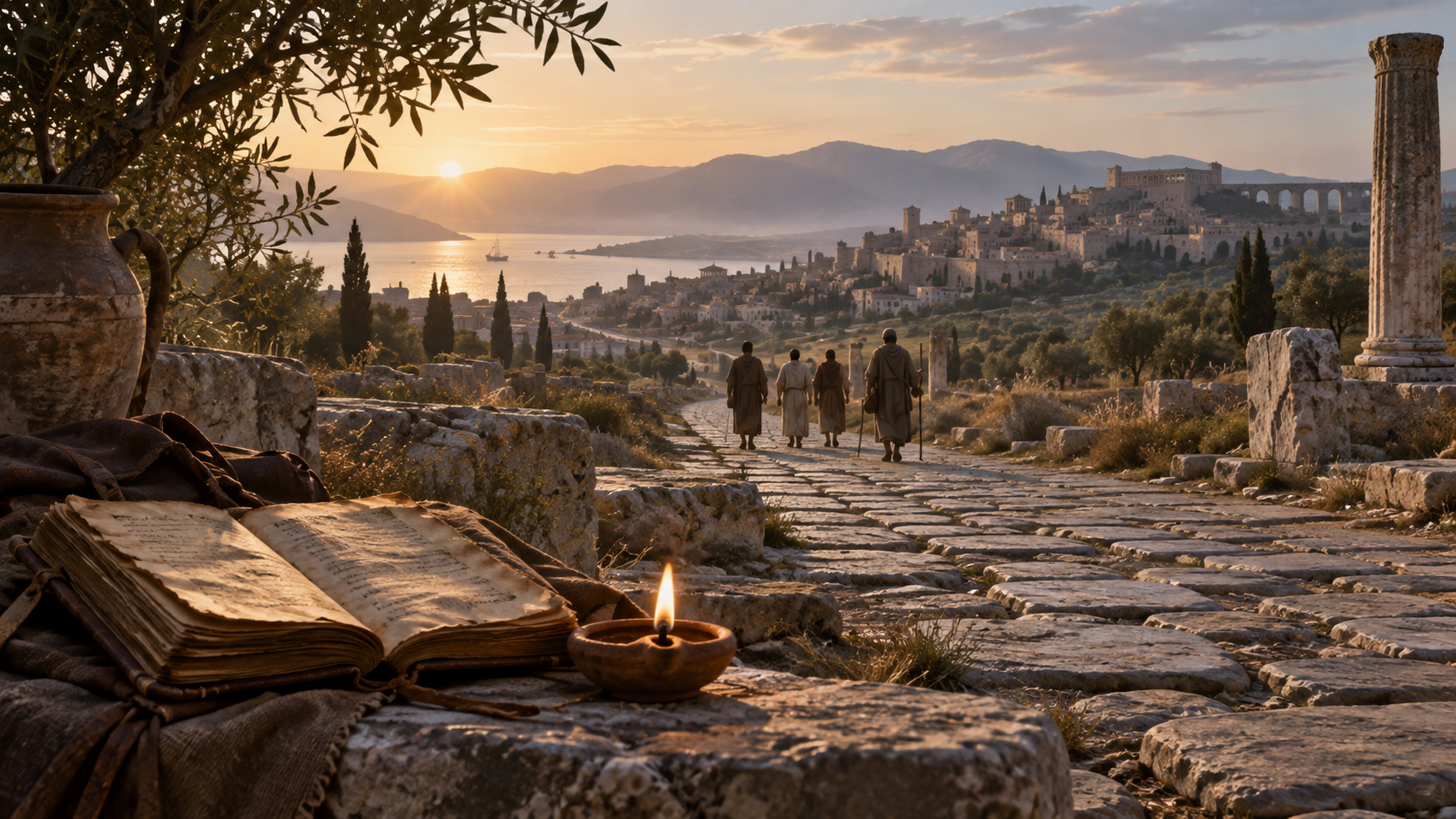
Parallelo
Nota: Questo post è tratto dalla serie di conferenze Storia della Chiesa di David Pawson (Parte 1: d.C. 30–400), della durata di circa 58 minuti. Tutti gli argomenti principali provengono direttamente da Pawson. Ogni volta che ho verificato qualcosa nelle fonti storiche o corretto un piccolo dettaglio, l'ho lasciato come nota a margine color ambra inserita nel testo, proprio come si annoterebbe il margine di un libro che si sta leggendo.
La storia più sorprendente della storia
la lettera di Paolo ai Romani: «La loro voce si è diffusa per tutta la terra e le loro parole fino ai confini del mondo».
David Pawson apre con una domanda semplice ma sorprendente: come si è diffuso il cristianesimo da una manciata di pescatori nel 30 d.C. fino a raggiungere, nel 400 d.C., tutto il mondo allora conosciuto, sostituendo lungo il cammino ogni altra religione?
Lo hanno fatto senza un esercito. Senza soldi. Senza persone influenti. E lo fecero contro tutta la potenza dell’Impero Romano.
E chi erano? Pawson sottolinea il punto: per lo più nessuno. Paolo scrisse alla chiesa di Corinto: «Guardate voi stessi: non molti saggi, non molti potenti, non molti di nobile nascita». La Chiesa primitiva era composta in gran parte da schiavi e dagli strati più bassi della società; eppure furono proprio loro a conquistare un impero.
Questa è la storia più sorprendente della storia umana.
Il punto di partenza: la fine degli Atti (d.C. 60)
Il libro degli Atti copre i primi 30 anni della storia della Chiesa, dal 30 d.C. al 60 d.C. È una storia incompiuta: da Gerusalemme, capitale del mondo sacro, fino a Roma, capitale del mondo secolare.
Ma la storia continuava a diffondersi a ondate.
Pawson riassume i vantaggi che aveva la Chiesa primitiva:
Strade romane. Strade diritte che attraversano il mondo mediterraneo, permettendo ad apostoli e mercanti di viaggiare senza passaporti né visti.
Lingua greca comune. L’intero impero parlava una lingua: il Vangelo poteva essere predicato in una sola lingua.
Pax Romana. La pace romana: le persone potevano viaggiare da un paese all'altro senza paura della guerra.
Comunità ebraiche. Nella maggior parte delle grandi città, gruppi di ebrei conoscevano già l’Antico Testamento ed erano disposti ad ascoltarlo.
Un impero moralmente e spiritualmente malato. La gente aveva fame di qualcosa di reale.
Eppure Pawson dice: nonostante questi vantaggi, questo è stato un trionfo sorprendente.
Non avevano edifici. Nessuna organizzazione confessionale. Nessuna sede. Nessuna risorsa finanziaria. Nessun comitato. Eppure lo hanno fatto.
L'organizzazione della Chiesa primitiva. Era assolutamente semplice: gruppi locali chiamati chiese, ciascuno con anziani per la guida spirituale e diaconi per il servizio pratico. Tra le chiese si spostavano apostoli, che ne fondavano di nuove, evangelisti, che predicavano il Vangelo, e profeti, che portavano la parola di Dio. Questa è l'unica organizzazione che troviamo nel Nuovo Testamento.
Il loro culto. Battesimo per immersione. Pane e vino nella Cena del Signore. Un misto di preghiere fisse e preghiera libera. Canto: niente strumenti, niente cori, ma amavano cantare.
Mappa della Chiesa delle origini
Da Gerusalemme ai confini dell'Impero romano (30–400 d.C.)
I punti usano la longitudine e la latitudine relative delle città; le linee sottili da Gerusalemme mostrano la direzione dell'espansione, non percorsi di viaggio letterali.
Questo è un diagramma di coordinate relative, non una mappa delle coste o dei confini antichi. Longitudine e latitudine mantengono coerenti le relazioni est–ovest e nord–sud; l'elenco statico qui sotto offre i dettagli storici senza dipendere dal passaggio del cursore.
Tre battaglie
Il nucleo dell'analisi di Pawson è questo: nei primi quattro secoli la Chiesa dovette combattere tre grandi battaglie e in ciascuna di esse vinse.
La prima battaglia — spirituale, contro l'ebraismo. La seconda battaglia — mentale, contro la filosofia greca. La terza battaglia — fisica, contro i Romani.
Pawson dice: oggi combattiamo le stesse tre battaglie. Ecco perché insegna la storia: perché questa non è soltanto storia passata. È il presente.
Tre battaglie 30–400 d.C.
Tre battaglie combattute e vinte dalla Chiesa delle origini
Tre pressioni diverse, tre risposte diverse e una storia di una comunità che resistette senza un esercito.
- 30–400+ d.C.
Battaglia spirituale
Pressione
Eresia e tentativi di mescolare il cristianesimo con altre religioni.
Risposta
La Chiesa rimase fedele alla confessione che Gesù è l'unica via di salvezza.
Risultato duraturo
Un'identità cristiana distinta e senza compromessi.
- 50–325 d.C.
Battaglia intellettuale
Pressione
Gnosticismo, marcionismo, arianesimo e filosofie che ridefinivano la fede.
Risposta
I responsabili interpretarono la Scrittura e formarono il canone e i credi.
Risultato duraturo
La fede fu chiarita attraverso il Credo e il Concilio di Nicea.
- 64–312 d.C.
Battaglia fisica
Pressione
Persecuzione romana, da Nerone a Diocleziano.
Risposta
Le comunità resistettero; alcune subirono il martirio, mentre altre capitolarono o fuggirono.
Risultato duraturo
La persecuzione terminò dopo Costantino; la Chiesa rimase.
Punti di orientamento selezionati
I pannelli colorati distinguono tre tipi di pressione; le etichette e l'ordine di lettura trasmettono il significato senza il colore. I punti dorati sono indicatori di orientamento, non una serie temporale continua.
Prima battaglia: spirituale – contro il sincretismo
C’è un’idea popolare – allora come oggi – secondo cui il cristianesimo deve essere mescolato con le altre religioni. Che tutte le religioni sono fondamentalmente uguali. Che stiamo tutti viaggiando verso lo stesso Dio per strade diverse.
Pawson racconta di aver dato un passaggio a un autostoppista, uno studente che si stava preparando per insegnare la conoscenza religiosa. Il giovane non credeva in Dio, ma il suo obiettivo era mostrare ai bambini che fondamentalmente tutte le religioni sono uguali.
Questa è la battaglia spirituale che la Chiesa primitiva dovette affrontare.
Il primo martire: Stefano
La prima persona a dare la vita per Gesù fu Stefano — e morì per quest'unica cosa: dichiarare che il cristianesimo non si sarebbe mai mescolato con l'ebraismo, che l'ebraismo era diventato obsoleto, e che il cristianesimo era unico e non poteva essere annacquato.
Gli ebrei erano così arrabbiati che lo trascinarono fuori dalle mura della città e lo lapidarono a morte.
Gesù stesso sapeva che le due cose non si sarebbero mescolate. Pawson ricorda il suo insegnamento: farlo è come versare vino nuovo in otri vecchi o cucire una toppa di stoffa non follata su un abito vecchio — prima o poi il tessuto si strappa. Le due cose non possono essere mescolate.
Ma la battaglia non finì con Stefano. Paolo fu coinvolto e Pietro vi fu trascinato contro la propria volontà: Pietro, ebreo fino al midollo, non aveva tempo per i gentili finché Dio non dovette insegnargli il contrario. Quando il Tempio di Gerusalemme fu distrutto dagli eserciti romani nel 70 d.C., si sarebbe potuto pensare che quella fosse la fine del giudaismo. Ma non lo era.
Per altri trecento anni varie sette tentarono di riportare i cristiani sotto la legge ebraica. Pawson le nomina: i Nazareni e gli Ebioniti, che insistevano affinché i convertiti gentili osservassero comunque la legge mosaica e il sabato. Persistettero per tre secoli interi.
«Le persone che lo fanno oggi», osserva Pawson, «sono gli avventisti del settimo giorno: molti di loro sono buoni cristiani, ma cercano di riportarci sotto la legge del sabato del settimo giorno».
Alla fine la battaglia fu vinta: il cristianesimo era unico, puro, indipendente dal giudaismo.
Il Pantheon e il peccato del sincretismo
Con l'espansione dell'Impero Romano, fu costruito il Pantheon, letteralmente "la casa di tutti gli dei" (pan = tutti, theon = dei). Ogni volta che appariva una nuova religione, in una nicchia veniva collocata una statua della sua divinità.
I romani invitarono i cristiani a collocare una statua di Gesù in una di quelle nicchie.
I cristiani rifiutarono. Rifiutarono categoricamente.
Pawson osserva: quando visitò il Pantheon, tutte le nicchie erano vuote, ma lì era una statua di Gesù, perché l'edificio venne poi rilevato dalla Chiesa e adibito a luogo di culto. Quella era la vittoria, non il compromesso.
Questa pratica si chiama sincretismo: la mescolanza delle religioni. Era questa la battaglia che la Chiesa dovette combattere.
"Religio Licita" - Religione legale
L'Impero Romano aveva un sistema di registrazione delle religioni. Se ti registravi, la tua religione diventava religio licita: una fede legale riconosciuta dallo Stato.
I cristiani rifiutarono di registrarsi. Dicevano: «Non siamo una religione. Siamo seguaci di Gesù Cristo».
Ciò ha reso le loro vite notevolmente più pericolose.
Quando Cesare divenne Dio
A poco a poco tutte le religioni trovarono la loro nicchia nel Pantheon e, infine, vi fu collocata una statua di Cesare. Cesare divenne un dio. E l'Impero Romano dichiarò: «D'ora in poi la nostra religione sarà il culto di Cesare. Brucia incenso a Cesare. Di': “Cesare è il Signore”».
Fu allora che iniziò la battaglia fisica.
Ma c'è un'interessante doppia accusa di ateismo: i romani chiamavano i cristiani atei perché si rifiutavano di adorare gli dèi romani. E i cristiani chiamavano i romani atei, perché, nonostante tutti i loro dèi, non avevano Dio. La parola «ateo» compare una volta nella Bibbia, in la lettera di Paolo agli Efesini, dove Paolo dice ai gentili che erano «senza Dio nel mondo».
Per questo Paolo disse agli Ateniesi: «Ho visto tutti i vostri altari, ma ne ho notato uno con la scritta: “Al Dio sconosciuto”. Sono venuto a parlarvi di quel Dio, dell'unico Dio che non conoscete». Atei, tutti quanti.
Seconda battaglia: mentale – contro la filosofia
Questa era la battaglia più difficile, perché si svolgeva dentro la Chiesa, non fuori di essa.
I Greci erano pensatori brillanti: gli intellettuali, i sapientoni. E quando il cristianesimo incontrò il mondo intellettuale, il pericolo più grande fu che gli intellettuali alterassero il cristianesimo, producendo quella che sostenevano essere una sua forma superiore e compromettendo la verità per adattarla all'intelletto.
Pawson dice: "Ci sono molte domande che ho con il mio intelletto a cui non ho ancora avuto risposta. Ma grazie a Dio sono arrivato al punto in cui ero pronto a credere prima di avere il mio intelletto completamente soddisfatto".
Questa battaglia dovette essere combattuta con parole e penne — e da essa provengono alcuni degli scritti più belli della storia della Chiesa. Ireneo scrisse cinque libri intitolati Contro le eresie, una confutazione sistematica di ogni ramo del pensiero gnostico. Origene di Alessandria produsse la cifra sorprendente di 6.000 libri, lettere e opuscoli in difesa della fede. L'arsenale intellettuale della Chiesa primitiva era formidabile.
La battaglia con Marcione
Marcione fu il primo a portare le forbici sulla Bibbia. Non gli piaceva il Dio dell'ira dell'Antico Testamento e concluse che il Dio dell'Antico Testamento era un Dio diverso dal Dio del Nuovo Testamento.
La sua soluzione: tagliare l'intero Antico Testamento.
Ma poi scoprì di dover tagliare ancora. L'Apocalisse assomigliava troppo all'Antico Testamento: fuori. Paolo aveva detto alcune cose scomode: fuori. Anche i Vangeli contenevano passi che non gli piacevano: fuori.
Pawson nota: "Fu il primo a scoprire che quando applichi le forbici alla Bibbia, non puoi fermarti".
Ha finito con due Dei - uno per l'Antico Testamento, uno per il Nuovo.
Questa è un’eresia che combattiamo ancora oggi.
La battaglia con lo gnosticismo
Questa è stata una battaglia molto più grande. Lo gnosticismo proveniva da una miscela di pensiero – egiziano, persiano, forse indiano – con una filosofia di base:
Le cose spirituali sono buone. Le cose materiali sono malvagie.
Ciò ha portato a una catena di conclusioni dannose:
- Se la materia è malvagia → Dio non avrebbe potuto crearla.
- Se la materia è malvagia → Gesù non avrebbe potuto avere un corpo fisico.
- Quindi → Gesù era solo apparso avere un corpo. Era un fantasma.
- Quindi → non era realmente morto; non aveva mai fame né stanchezza.
- Quindi → la risurrezione del corpo è assurda.
Pawson spiega: «Questo è il motivo per cui Giovanni scrisse il suo Vangelo e la sua Prima lettera: stava combattendo questo modo di pensare all'interno della Chiesa».
L'inizio di 1 Giovanni: «Ciò che abbiamo udito, ciò che abbiamo visto con i nostri occhi, ciò che abbiamo contemplato e che le nostre mani hanno toccato — questo vi annunciamo riguardo alla Parola della vita...» — è la lotta contro lo gnosticismo.
Le più grandi menti della Chiesa vi si opposero: Tertulliano di Cartagine, nel Nord Africa, Clemente e Origene di Alessandria e Cipriano — tutti scrissero per confutare questo pensiero.
Tre risultati della battaglia mentale
La Chiesa fece tre cose per vincere questa battaglia:
1. Il canone del Nuovo Testamento. Con così tanti falsi vangeli in circolazione, la Chiesa doveva identificare ciò che era autentico. Raccolse tutti i libri che risalivano realmente agli apostoli, coloro che avevano ricevuto la verità direttamente da Gesù. Nel 200 d.C. il Nuovo Testamento era stato raccolto. Oggi abbiamo il Nuovo Testamento grazie a quella battaglia.
2. I credi. Per affermare chiaramente la fede, la Chiesa cominciò a formulare dichiarazioni: credo (dal latino credo = «io credo»). Il Credo degli Apostoli è una risposta diretta allo gnosticismo:
- «Credo in Dio Padre onnipotente, Creatore del cielo e della terra» — Dio ha creato la realtà materiale.
- «Gesù... patì sotto Ponzio Pilato, fu crocifisso, morì e fu sepolto» — Egli aveva un corpo reale.
- «Credo nella risurrezione del corpo»: il corpo è buono.
3. I concili. Non per organizzare la Chiesa, ma per condividere la battaglia e serrare le fila nella fede.
La battaglia con l’arianesimo: Gesù è pienamente Dio?
Quando Costantino divenne cristiano nel 312 d.C., scoprì che la Chiesa era in uno stato di terribile disputa. La causa era un predicatore alto, bello e brillantemente dotato di Alessandria, di nome Ario, che insegnava esattamente ciò che insegnano oggi i Testimoni di Geova: che Gesù Cristo non è pienamente Dio.
Ario diceva: Gesù è il «Figlio di Dio», ma non Dio stesso. È stato creato, non generato. È simile a Dio, ma non è Dio.
Questa idea si diffuse nella Chiesa come una mania, come una moda femminile: quasi l'intero impero seguì Ario.
Soltanto una persona vide cosa stava accadendo e osò opporsi.
Il suo nome era Atanasio. Era un giovane diacono, fisicamente piccolo: alcuni lo chiamavano nano. Ario era un vescovo alto e imponente, con migliaia di ammiratori. Atanasio disse: «Questo è sbagliato. E io lo combatterò».
Nacque così il proverbio latino: Atanasio contra mundum — «Atanasio contro il mondo».
Nel corso della sua vita fu esiliato cinque volte da quattro imperatori diversi. Non si arrese mai.
Sono ottantasei anni che servo il Signore, ed egli non mi ha mai fatto alcun male. Come potrei bestemmiare il mio Re, che servo? — Policarpo (circa d.C. 155)
La cascata gnostica
Una premessa falsa disfa l'intera fede
Pawson mostra come lo gnosticismo iniziò con un'idea sbagliata e poi — come tessere del domino che cadono — negò uno dopo l'altro ogni pilastro della fede cristiana.
La materia è malvagia, lo spirito è buono
La premessa falsa
→ Dio non avrebbe potuto creare la materia
Nega il Creatore
→ Gesù non avrebbe potuto avere un corpo reale
Nega l'Incarnazione
→ Era solo un fantasma — non ebbe mai fame né si stancò
Nega la sua umanità
→ Non morì davvero sulla croce
Nega la croce
→ La risurrezione del corpo è assurda
Nega la risurrezione
La risposta della Chiesa
«La Parola divenne carne e dimorò fra noi». — il Vangelo secondo Giovanni. Giovanni scrisse proprio il suo Vangelo e le sue Lettere per fermare questa cascata al suo primo passo.
Concilio di Nicea — 325 d.C.
Una lettera che cambiò per sempre la teologia della Chiesa
Ario insegnava
ὁμοιούσιος
homoiousios
«di sostanza simile» — Gesù è simile a Dio, ma non è Dio. Fu creato, non generato eternamente.
Implicazione:
Se Gesù non è pienamente Dio, non può davvero fare da ponte tra Dio e l'umanità — l'intera fede crolla.
Atanasio difendeva
ὁμοούσιος
homoousios
«della stessa sostanza» — Gesù È Dio. Non è semplicemente simile a Dio, ma è uno nell'essere con il Padre.
Base scritturale:
«In principio era la Parola... e la Parola era Dio». — il Vangelo secondo Giovanni
La differenza: una lettera, la iota (ι)
Una lettera — la iota — separa «Gesù è simile a Dio» da «Gesù È Dio». Per questo Pawson osserva: «La gente trovava strano dividere la Chiesa per una parola, ma era una parola molto importante».
Atanasio — contro il mondo
Mentre l'arianesimo spazzava l'impero come una moda passeggera, Atanasio — un giovane diacono, fisicamente piccolo — rimase solo. Fu esiliato cinque volte da quattro imperatori diversi. Proverbio latino: Athanasius contra mundum — «Atanasio contro il mondo». Alla fine prevalse.
Credo niceno (325 d.C.): «...un solo Signore Gesù Cristo, l'unigenito Figlio di Dio, generato dal Padre prima di tutti i mondi, Dio da Dio, Luce da Luce, vero Dio da vero Dio, generato non creato, della stessa sostanza del Padre...»
Il Concilio di Nicea (d.C. 325)
Costantino convocò circa 300 vescovi da tutto l'impero: non aveva una sala abbastanza grande a Costantinopoli, così essi attraversarono il Mar di Marmara fino a una città chiamata Nicea (l'odierna İznik, in Turchia).
I vescovi entrarono nella sala portando sul corpo i segni della persecuzione — secondo le parole di Pawson, «entrarono gli storpi e gli zoppi». La battaglia fisica era appena finita e i suoi veterani sedevano nella sala per combattere quella mentale.
Atanasio — ancora soltanto un diacono, troppo giovane per essere ammesso al dibattito principale — sedeva fuori. Ma era lui la figura centrale della disputa. Faceva passare continuamente gli argomenti attraverso un amico: l'amico correva dentro, presentava il punto di Atanasio, poi correva fuori a riferire la risposta di Ario, perché Atanasio potesse ribattere.
Il dibattito ruotava attorno a due parole:
- ὁμοούσιος (homoousios): Gesù è «della stessa sostanza» del Padre — Gesù è Dio.
- ὁμοιούσιος (homoiousios): Gesù è «di sostanza simile» — Gesù è simile a Dio.
La differenza era una sola lettera, ι (iota). Ma era la differenza tra la fede e l'eresia.
Atanasio prevalse. Il Concilio di Nicea produsse il Credo niceno:
«Credo in un solo Signore Gesù Cristo... Dio da Dio, Luce da Luce, Dio vero da Dio vero, generato, non creato, consustanziale al Padre...»
E ogni Natale lo cantiamo ancora: «Ascolta! Gli angeli araldi cantano: Dio da Dio, Luce della Luce eterna...» Stiamo cantando l'esito del Concilio di Nicea.
Terza battaglia: la battaglia fisica contro la persecuzione romana
Nei primi quattro secoli la Chiesa non usò mai la forza fisica per affermare il Vangelo. L'Inquisizione sarebbe arrivata molto più tardi. L'unica forza che usò fu l'amore.
Ma è stata usata la forza fisica contro loro, ancora e ancora.
Perché i cristiani hanno sofferto così tanto?
La gente alimentava voci secondo cui i cristiani erano cannibali (un malinteso sulla Cena del Signore), organizzavano oscene «feste d'amore», si rifiutavano di partecipare ai normali costumi sociali e formavano una società segreta che minacciava la sicurezza imperiale.
Ma Pawson dice che questo non era il vero motivo.
La vera ragione sta nelle parole di Gesù stesso: "Mi hanno odiato senza motivo." C’è un odio irrazionale nel profondo del cuore umano verso Dio – e quindi verso il suo popolo.
Pawson va oltre — e questo ha bisogno di contesto: sostiene che «l'altra faccia dell'antisemitismo è l'atteggiamento degli ebrei verso i cristiani» e che «sono stati gli ebrei a causare per primi le sofferenze dei cristiani, ancora e ancora». (Nota: questo è il modo in cui Pawson lo inquadrava negli anni 1960. Gli Atti registrano la prima opposizione di alcuni leader ebrei, ma gli storici moderni sono cauti riguardo a tale attribuzione collettiva: la grande maggioranza delle persecuzioni successive proveniva dallo Stato romano, non dalle comunità ebraiche.)
Nerone e l'inizio delle persecuzioni (d.C. 64)
Un giorno Pawson si trovava tra le rovine dei giardini del palazzo di Nerone a Roma, sapendo che il terreno era inzuppato di sangue.
Il folle imperatore Nerone, nella sua ambizione di ricostruire Roma come una grande metropoli, avrebbe dato fuoco alla città. Quattordici dei diciassette distretti furono rasi al suolo. Morirono a centinaia. Quando la colpa cominciò a ricadere su Nerone, cercò un capro espiatorio: «Sono stati i cristiani».
Arrestò ogni cristiano alla sua portata a Roma. Li avvolse in pelli di bestie feroci e vi mise sopra i suoi cani. Li decapitò. Li crocifisse. Infine li ricoprì di pece, li ficcò vivi in barili e li accese come torce umane nel suo giardino mentre guidava all'impazzata il suo carro nell'oscurità.
Questo è stato l'inizio. E da allora fino al 300 d.C., la Chiesa sopportò dieci periodi di persecuzione, i più spaventosi che avesse mai conosciuto.
Pawson solleva un vecchio libro che ha acquistato di seconda mano — Il libro dei martiri di Foxe, un tempo lettura domenicale obbligatoria per i cristiani. Nota che dimostra come, fino al momento in cui fu scritto, non ci fosse mai stato un periodo di dieci anni senza che i cristiani subissero il martirio — «e ancora non c'è».
L'apostolo Giovanni a Patmos
Intorno al 95 d.C., l'imperatore Domiziano esiliò Giovanni, l'ultimo dei dodici apostoli, nelle miniere di sale e poi nella piccola isola di Patmos, nel Mar Egeo, dove fu incatenato al muro di una prigione.
Da quella cella di prigione venne il libro dell'Apocalisse, proprio come Bunyan avrebbe scritto in seguito Il progresso del pellegrino dalla prigione di Bedford.
Pawson cita Paolo: «Io posso essere in catene, ma la parola di Dio non è legata».
Plinio e Traiano (c. d.C. 110)
Intorno al 110 d.C., il nuovo governatore Plinio arrivò in Bitinia, nell'Asia Minore. Era stupito: i templi pagani erano deserti e i santuari idolatri non avevano più fedeli. Chiese perché.
"I cristiani, signore. Sono troppi."
Plinio iniziò ad arrestare e giustiziare i cristiani. Ma era sconcertato sia dal loro numero in continua crescita sia dalla qualità della loro vita. Alla fine mandò una spia a uno dei loro culti mattutini.
La spia tornò con il suo rapporto: «Si incontrano prima dell'alba. Cantano inni a Cristo come a un dio. Poi fanno un giuramento — un sacramentum — di non rubare, non commettere adulterio e non uccidere».
Plinio era così perplesso che scrisse all'imperatore Traiano. La risposta di Traiano fu di non accettare accuse anonime, ma di verificare se una persona accusata di pratiche antiromane avrebbe detto «Cesare è il Signore». Se si fosse rifiutata, doveva essere giustiziata.
Ignazio di Antiochia
Ignazio era vescovo di Antiochia — Pawson lo definisce «uno dei ministri più giovani della Chiesa a quei tempi». Fu arrestato e scortato da Antiochia a Roma per essere gettato in pasto alle bestie feroci nel Colosseo.
Il suo viaggio è stato uno spettacolo di trionfo. Lungo tutta la strada, i cristiani lasciarono le loro case e camminarono con lui per alcuni tratti, facendogli compagnia mentre camminava verso la morte.
Pawson legge da una delle lettere di Ignazio: «Ora comincio a essere un discepolo. Chi è vicino alla spada è vicino a Dio. Chi è tra le bestie selvagge è in compagnia di Dio».
Ignazio scriveva lettere indimenticabili ogni notte mentre riposava, incatenato al suo soldato romano. Scrisse a Policarpo, vescovo di Smirne: «Stai fermo, fermo come un'incudine, anche se spesso colpito».
Quaranta anni dopo Policarpo venne martirizzato.
Policarpo a Smirne (c. d.C. 155)
I giochi romani si tenevano a Smirne per onorare l'imperatore. La folla si entusiasmò. Il sangue cominciò a scorrere. Allora qualcuno gridò: «Via con gli atei!» — e undici cristiani furono trascinati nell'arena, chiamati atei, e gettati in pasto ai leoni. Poi la folla reclamò Policarpo.
Un soldato fu inviato per arrestarlo. Giunsero a una piccola casa fuori Smirne. Bussarono. Policarpo venne alla porta. Non lo riconobbero e chiesero: «C'è qui un uomo chiamato Policarpo?»
Avrebbe potuto dire di no. Ne fu tentato. Ma il Signore gli diede la vittoria. Disse: «Io sono Policarpo» e tese i polsi per le catene.
Nell'arena, il governatore guardò i capelli bianchi del vecchio e disse: «Abbi pietà della tua età. Maledici Cristo e potrai tornare alla tua casetta».
Policarpo rispose:
«Sono ottantasei anni che lo servo, e non mi ha mai fatto del male. Come posso dunque bestemmiare il mio Re che servo?»
Non potevano fare altro che ucciderlo. I leoni erano stati portati via, così accesero un falò e lo legarono a un palo. Ma il vento era forte e allontanò le fiamme da Policarpo, cosa che impressionò profondamente la folla. Alla fine, un soldato romano, mosso da pietà per il vecchio, gli conficcò un pugnale nel cuore.
I cristiani ricordarono quel martirio e terminarono il racconto con queste parole: «...essendo console Lucio Stazio Quadrato, ma essendo Gesù Cristo Re per sempre». Il nome di Quadrato è ricordato come quello del carnefice. Il nome di Gesù Cristo viene ricordato come Re.
Blandina a Lione (d.C. 177)
La persecuzione si estese alla Francia. A Lione, l'anziano ministro Potino fu gettato in prigione e lì morì. Poi presero una giovane schiava adolescente: il suo nome era Blandina.
La torturarono dalla mattina alla sera. I suoi tormentatori si stancarono e riconobbero di essere stati sconfitti: non potevano farle altro.
Il suo conforto e sollievo dal dolore era questo grido ripetuto: «Sono cristiana e non c'è niente di vile da parte nostra».
Il giorno dopo — dopo la flagellazione, dopo le bestie feroci, dopo la sedia arroventata — fu chiusa in una rete e gettata davanti a un toro. Il toro la scagliò in aria. E morì.
Lo storico registra: «Lei, come una nobile madre che aveva esortato i suoi figli, si affrettò verso di loro con gioia ed esultanza, come se fosse stata invitata a una festa di nozze».
Una donna in una prigione nordafricana
Pawson racconta un'altra storia dal Nord Africa. Una donna cristiana fu imprigionata. Il suo bambino era nella cella accanto: stava morendo di fame e piangeva. Non le era permesso allattare suo figlio. I suoi aguzzini le offrirono un accordo: «Puoi allattare il tuo bambino non appena dici che Cesare è il Signore».
Lei rifiutò. E questa fu la sua risposta:
«Rendiamo a Cesare l'onore dovuto a Cesare. Ma a Cristo rendiamo timore e adorazione come al Signore».
Le persecuzioni di Decio e Diocleziano
Dopo circa 30 anni di pace, sotto l'imperatore Decio (c. d.C. 249–251), per la prima volta Roma cercò sistematicamente di schiacciare il cristianesimo in tutto l'impero, non solo a livello locale.
Pawson dice che questo fu un momento di dolore: molti cristiani cedettero. Alcuni dissero: «Cesare è il Signore». Alcuni pagarono funzionari corrotti. Alcuni fuggirono. Ciò creò un problema doloroso: quando tornò la pace, coloro che avevano rinnegato Cristo vollero ritornare nella Chiesa. Cosa si sarebbe dovuto fare? La questione quasi spezzò in due la Chiesa.
Dopo Decio arrivarono 40 anni di pace e la Chiesa crebbe in numero, ricchezza e influenza.
Poi venne «l'ultima iniziativa di Satana» — sotto Diocleziano (d.C. 303): ordinò che ogni chiesa fosse distrutta, ogni Bibbia bruciata, ogni cristiano che ricopriva un incarico romano fosse destituito e che ogni cristiano fosse decapitato, bruciato o annegato.
Pawson nota: «Satana sapeva che stava perdendo. C'erano ormai troppi cristiani. L'Impero era stato invaso. E questa era la battaglia finale».
Dieci persecuzioni romane
64–311 d.C.: da Nerone a Diocleziano
Questi dieci indicatori orientano la storia; non sono una misura continua dell'intensità della persecuzione in tutto l'impero.
- Nerone64–68 d.C.Intensità relativa
Accusò i cristiani dell'incendio di Roma; la persecuzione fu più feroce nella città stessa.
- Domiziano81–96 d.C.Intensità relativa
La tradizione colloca Giovanni in esilio a Patmos; la persecuzione rimase locale.
- Traiano98–117 d.C.Intensità relativa
Ignazio fu martirizzato; la lettera di Plinio mostra una politica locale disomogenea.
- Adriano117–138 d.C.Intensità relativa
Più moderata, mentre continuarono le vessazioni a livello locale.
- Marco Aurelio161–180 d.C.Intensità relativa
La persecuzione di Lione nel 177 d.C.; Blandina fu martirizzata.
- Settimio Severo202–211 d.C.Intensità relativa
Vietò la conversione al cristianesimo; persecuzione in Africa e in Egitto.
- Massimino il Trace235–238 d.C.Intensità relativa
Prese di mira in modo specifico i responsabili della Chiesa.
- Decio249–251 d.C.Intensità relativa
La prima persecuzione sistematica in tutto l'impero; molti cristiani apostatarono.
- Valeriano257–260 d.C.Intensità relativa
Prese di mira vescovi, clero e cristiani delle classi alte.
- Diocleziano303–311 d.C.Intensità relativa
La Grande Persecuzione: chiese distrutte, Bibbie bruciate ed esecuzioni di massa.
L'elenco delle dieci persecuzioni è una rappresentazione tradizionale; le celle dell'intensità sono una codifica relativa delle descrizioni dell'articolo, non dati quantitativi né una pretesa che ogni luogo abbia sofferto allo stesso modo.
Vittoria: Costantino e Ponte Milvio (d.C. 312)
Nel 312 d.C. Costantino stava per marciare contro i nemici di Roma. E in quel momento — Pawson dice onestamente di non poter separare la verità dalla finzione in ciò che è giunto fino a noi — Costantino ebbe una visione nel cielo. Vide una croce e udì una voce: «In hoc signo vinces» — «Con questo segno vincerai».
Dipinse la croce sullo scudo di ogni soldato romano. E dichiarò: "D'ora in poi io sono cristiano. E lo sei anche tu".
Pawson non è sicuro che questa sia stata del tutto una buona cosa. Ma l'imperatore era diventato cristiano.
E Costantino dichiarò:
- La domenica sarebbe un giorno di riposo (per la prima volta nella storia)
- Le donne sarebbero apprezzate di più nell'Impero
- Gli schiavi sarebbero trattati adeguatamente
Quella fu la fine della battaglia fisica nell’Impero Romano. Le persecuzioni cessarono.
Ma le battaglie spirituali e mentali non erano ancora del tutto vinte.
Giuliano, parente di Costantino, e il tentativo di rinascita pagana
Pawson dice: «Costantino aveva due giovani parenti: uno si chiamava Giuliano». Essi dichiararono: «Non ci piace ciò che ha fatto. Restaureremo gli dèi pagani romani».
Riaprirono i templi pagani.
Non venne nessuno.
Era troppo tardi. La battaglia spirituale era stata vinta. Verso il 400 d.C. una religione era ormai predominante in tutto l'Impero Romano.
La diffusione in tutto l'impero
Nel 400 d.C. il cristianesimo aveva raggiunto:
- Gran Bretagna: Sant'Albano, il primo martire in Gran Bretagna, un cittadino di Verulamio che protesse un sacerdote e morì al suo posto. Chiamiamo ancora quel luogo St Albans.
- Africa: la Chiesa si era diffusa in profondità nell'Africa.
- Siria e India: la Chiesa si era diffusa verso est.
- Tutto l'Impero Romano: il mondo allora conosciuto aveva udito il Vangelo.
La battaglia fisica è stata vinta. La battaglia mentale è stata vinta. La battaglia spirituale è stata vinta.
La Chiesa aveva conquistato il mondo per Gesù Cristo nel 400 d.C.
La crescita attraverso la persecuzione
Percentuale stimata della popolazione dell'Impero romano che era cristiana
Tre punti di riferimento stimati mostrano la scala del cambiamento; non sono collegati in una curva uniforme perché non esiste una serie di osservazioni continua.
≈1.000 credenti
Un punto di partenza molto piccolo
≈6 milioni di persone
Stima precedente alla svolta di Costantino
≈33 milioni di persone
Stima superiore alla metà dell'impero
Il punto è un paradosso di scala: la persecuzione non fermò l'espansione. I numeri restano stime.
Le stime usano i punti di riferimento riportati in questo saggio e tratti da Rodney Stark, The Rise of Christianity (1996): circa 1.000 (40 d.C.), 6 milioni/~10% (300 d.C.) e 33 milioni/più della metà (350 d.C.). Non viene tracciata alcuna linea d'interpolazione; le lacune non sono dati mancanti.
Ciò che ha fatto crescere la Chiesa nella sofferenza
Pawson fa due importanti osservazioni su tutte quelle persecuzioni.
Prima osservazione – La dolorosa verità: Mentre conosciamo i nomi di molti martiri, sappiamo anche che migliaia di cristiani cedettero sotto la persecuzione. Alcuni dissero: «Cesare è il Signore». Alcuni pagarono funzionari corrotti. Alcuni fuggirono. Questa è la dolorosa verità. E quando arrivò la pace, vollero tornare nella Chiesa, una questione che quasi divise in due la comunità cristiana.
Seconda osservazione – Il grande paradosso: La Chiesa non è mai cresciuta così fortemente e così rapidamente come sotto quelle sofferenze.
Tertulliano – il cristiano nordafricano – pronunciò le parole immortali: "Il sangue dei martiri è il seme della Chiesa".
Se vuoi fondare una chiesa, fonda un martire. Così diceva Tertulliano.
E questa è la risposta dolorosa ma reale al perché la Chiesa ha sofferto: perché la persecuzione ha setacciato l'appartenenza. Ridusse gli uomini di Gedeone ai 300 che potevano combattere. Ha reso la Chiesa ciò che dovrebbe essere: un nobile esercito.
Pawson conclude: la risposta alla sofferenza non è qualcosa che riesco a comprendere appieno. Ma è vero: dove una Chiesa soffre, cresce.
A est della cortina di ferro c’è la battaglia fisica. A ovest della cortina di ferro – qui in Inghilterra, qui dove ci troviamo – c’è la battaglia mentale. Ed è più difficile. —David Pawson
Tre battaglie a colpo d'occhio
Battaglia spirituale
30–400+ d.C.Avversario: Ebraismo + religioni pagane
Domanda fondamentale: Il cristianesimo può essere mescolato con altre religioni?
Difensori: Stefano, Paolo, Pietro
«Non vi è altro nome sotto il cielo... mediante il quale dobbiamo essere salvati». (gli Atti degli Apostoli)
✓ Vittoria: l'identità unica e senza compromessi del cristianesimo
Battaglia intellettuale
50–325 d.C.Avversario: Intellettuali greci — gnosticismo, marcionismo, arianesimo
Domanda fondamentale: La filosofia può ridefinire il cristianesimo?
Difensori: Ireneo, Tertulliano, Origene, Atanasio
«Vero Dio da vero Dio, generato non creato...» (Credo niceno)
✓ Vittoria: canone del NT formato, credi stabiliti, Concilio di Nicea
Battaglia fisica
64–312 d.C.Avversario: L'Impero romano — dieci ondate di persecuzione
Domanda fondamentale: La forza fisica può sterminare la Chiesa?
Difensori: Ignazio, Policarpo, Blandina, innumerevoli martiri
«Essi lo hanno vinto per mezzo del sangue dell'Agnello e della parola della loro testimonianza». (l’Apocalisse)
✓ Vittoria: Costantino 312 d.C. — le persecuzioni terminarono
Oggi stiamo combattendo le stesse battaglie
Questo è il motivo per cui Pawson insegna storia.
La battaglia spirituale oggi: Poche settimane prima che questa conferenza fosse tenuta (negli anni 1960), nella chiesa più importante di Cambridge si tenne una funzione per il «Congresso mondiale delle fedi» — buddisti, indù, bahá'í, ebrei e cristiani, tutti presenti per adorare insieme. Condizione di partecipazione: non si doveva menzionare il nome di Gesù Cristo.
Questa è la battaglia che stiamo combattendo.
La Bibbia predice che ci sarà una religione mondiale unificata e a coloro che rifiutano di aderirvi non sarà permesso di comprare cibo (l’Apocalisse).
La battaglia mentale oggi: La filosofia del nostro tempo non si chiama gnosticismo: si chiama esistenzialismo. La trovi nella letteratura di Jean-Paul Sartre, nella musica di Debussy, nell'arte di Picasso, nella cultura pop e nella cultura della droga dei giovani. La trovi nella dichiarazione di Marshall McLuhan secondo cui «il mezzo è il messaggio». E in teologia la vedi in persone come Bultmann e Tillich, rese popolari da persone come John Robinson (vescovo di Woolwich) con il suo controverso libro Onesto con Dio, e da Howard Williams, allora presidente dell'Unione Battista.
Queste sono persone che ridefiniscono il cristianesimo secondo una filosofia pagana, una filosofia fondamentalmente atea, che rende Dio impersonale o inesistente. "Dio è morto" - questa frase è il risultato del fatto che i teologi cristiani seguono questa filosofia.
Pawson dice: la battaglia mentale ha bisogno dei migliori cervelli che possiamo produrre. Va combattuta con parole e penne. E occorre il coraggio di dire: “Questa non è la fede cristiana. Non è questo ciò in cui crediamo”.
La battaglia fisica oggi: A est della cortina di ferro (questa conferenza è stata tenuta durante la Guerra Fredda), la battaglia fisica infuria, proprio come nel primo secolo.
Pawson racconta di Richard Wurmbrand – che era stato torturato nelle carceri comuniste rumene ed era presente a questo incontro – che era in viaggio a Cambridge per affrontare un uomo di chiesa che aveva ospitato il servizio del “Congresso mondiale delle fedi” e aveva definito Gesù un omosessuale.
Martino Lutero, 450 anni prima di questa conferenza, affisse le sue tesi alla porta della chiesa. Pawson chiede: «Dove andremmo oggi per inchiodare documenti alle porte delle chiese?» Questa è la battaglia mentale. È qui. È dentro le nostre chiese.
Pawson conclude:
"Perché dovrebbe essere lasciato a Wurmbrand - che ha già combattuto la battaglia fisica in Oriente - il compito di combattere entrambe le battaglie? Questa è la battaglia che dobbiamo combattere. E dobbiamo dire con molta chiarezza e amore: questa è la fede. Non la modifichiamo per gli intellettuali di oggi. Questo è l'unico vangelo che salva".
Tre battaglie hanno lasciato tre eredità durature
Un'identità senza compromessi
La Chiesa rimase fedele alla sua confessione su Gesù sotto la pressione a mescolare le religioni.
Una fede espressa con chiarezza
Scrittura, canone e credi aiutarono la Chiesa a rispondere alle sfide intellettuali.
Una comunità che ha resistito
Le comunità resistettero alla persecuzione; dopo Costantino essa terminò, ma la storia no.
L'eredità non è un'immagine decorativa; è il modo in cui la Chiesa conserva la propria identità, articola la propria fede e attraversa la pressione.
Note: This post is compiled from David Pawson's History of the Church lecture series (Part 1: AD 30–400), approximately 58 minutes long. All major arguments come directly from Pawson. Wherever I looked something up, checked it against the historical sources, or corrected a small detail, I've left it as an amber margin note woven right into the text — the way you'd jot in the margin of a book you're reading.
The most astonishing story in history
Paul’s letter to the Romans: "Their voice has gone out to all the earth, and their words to the ends of the world."
David Pawson opens with a simple but stunning question: How did Christianity spread from a handful of fishermen in AD 30, across the then-known world by AD 400, replacing every other religion along the way?
They did it without an army. Without money. Without influential people. And they did it against the full might of the Roman Empire.
And who were they? Pawson stresses the point: mostly nobodies. Paul wrote to the church at Corinth, "Look at yourselves — not many wise, not many powerful, not many of noble birth." The early Church was largely made up of slaves and the lowest ranks of society — and yet these were the people who won an empire.
Kit's note
Two small things I checked here. First — Paul's line in Paul’s first letter to the Corinthians: the Greek reads οὐ πολλοὶ δυνατοί (dunatoi = mighty, powerful), which is why ESV/NIV/KJV render it closer to "not many powerful" than "high calling." Second — the "60 million slaves" figure Pawson liked to cite comes from Edward Gibbon (1776) and is overstated; modern estimates put it at 5–10 million slaves out of a total population of ~60–70 million (10–15%). But whatever the number, his point holds: the Church began among society's lowest.
This is the most astonishing story in human history.
The Starting Point: End of Acts (AD 60)
The Book of Acts covers the first 30 years of Church history — AD 30 to AD 60. It's an unfinished story: from Jerusalem, the capital of the sacred world, to Rome, the capital of the secular world.
But the story kept spreading outward in ripples.
Pawson summarizes the advantages the early Church had:
Roman roads. Straight roads running around the Mediterranean world, allowing apostles and merchants to travel without passports or visas.
Common Greek language. The whole empire spoke one language — the gospel could be preached in one tongue.
Pax Romana. The Roman peace — people could travel from country to country without fear of war.
Jewish communities. In most large towns, groups of Jews already knew the Old Testament and were willing to listen.
A morally and spiritually sick empire. People were hungry for something real.
And yet Pawson says: even with these advantages, this was an astonishing triumph.They had no buildings. No denominational organizations. No headquarters. No financial resources. No committees. And yet they did it.
The organization of the early Church. Utterly simple: local groups called churches, each with elders for spiritual leadership and deacons for practical service. Between churches moved apostles who planted new ones, evangelists who preached the gospel, and prophets who brought the word of God. That is the only organization you find in the New Testament.
Their worship. Baptism by immersion. Bread and wine at the Lord's Supper. A mixture of fixed prayers and free prayer. Singing — no instruments, no choirs, but they loved to sing.
Early Church Map
From Jerusalem to the ends of the Roman Empire (AD 30–400)
Points use the cities' relative longitude and latitude; fine lines from Jerusalem show the direction of expansion, not literal travel routes.
This is a relative coordinate diagram, not a coastline or ancient-boundary map. Longitude and latitude keep the east–west and north–south relationships consistent; the static list below carries the historical detail without relying on hover.
Three Battles
Pawson's core analytical framework: in the first four centuries, the Church had to fight three great battles — and in each one, it won.
The first battle — Spiritual, beginning with the Jews. The second battle — Mental, beginning with the Greeks. The third battle — Physical, beginning with the Romans.
Pawson says: we are fighting the same three battles today. That is why he teaches history — because this is not the past. It is the present.
Three Battles AD 30–400
Three battles the early Church fought and won
Three different pressures, three different responses—and one story of a community that endured without an army.
- AD 30–400+
Spiritual battle
Pressure
Heresy and attempts to blend Christianity with other religions.
Response
The Church held to the confession that Jesus is the unique way of salvation.
Enduring result
A distinct, uncompromised Christian identity.
- AD 50–325
Mental battle
Pressure
Gnosticism, Marcionism, Arianism, and philosophies redefining the faith.
Response
Leaders interpreted Scripture and formed the canon and creeds.
Enduring result
The faith was clarified through the Creed and Council of Nicaea.
- AD 64–312
Physical battle
Pressure
Roman persecution, from Nero to Diocletian.
Response
Communities endured; some were martyred, while others capitulated or fled.
Enduring result
Persecution ended after Constantine; the Church remained.
Selected orientation points
The colored panels distinguish three kinds of pressure; labels and reading order carry the meaning without color. Gold points are orientation markers, not a continuous time series.
First Battle: Spiritual — Against Syncretism
There is a popular idea — then and now — that Christianity must be mixed with other religions. That all religions are basically the same. That we're all traveling to the same God by different roads.
Pawson tells of picking up a hitchhiker, a student training to teach religious knowledge. The young man didn't believe in God, but his goal was to show children that all religions are fundamentally the same.
This is the spiritual battle the early Church faced.
The first martyr: Stephen
The first person to give his life for Jesus was Stephen — and he died for this one thing: declaring that Christianity would never mix with Judaism. That Judaism had become obsolete. That Christianity was unique and could not be diluted.
The Jews were so angry they dragged him outside the city wall and stoned him to death.
Jesus himself knew the two would not mix. Pawson recalls his teaching: to do so is like pouring new wine into old wineskins, or sewing a patch of unshrunk cloth onto an old garment — sooner or later it pulls and tears away. The two cannot be blended.
But the battle didn't end with Stephen. Paul was drawn in, and Peter was flung into it against his will — Peter, a Jew to his fingertips who had no time for Gentiles until God had to teach him otherwise. When the Temple in Jerusalem was destroyed by the Roman armies in AD 70, people might have thought that was the end of Judaism. But it wasn't.
For three hundred more years, various sects kept trying to drag Christians back under the Jewish law. Pawson names them: the Nazarenes and the Ebionites — who insisted that Gentile converts must still observe the Mosaic law and the Sabbath. They persisted for three full centuries.
"The people doing it today," Pawson observes, "are the Seventh-day Adventists — good Christians, many of them, but they are trying to bring us back under the Sabbath law of the seventh day."
Finally the battle was won: Christianity was unique, unmixed, independent of Judaism.
The Pantheon and the sin of syncretism
As the Roman Empire expanded, they built the Pantheon — literally "the house of all gods" (pan = all, theon = gods). Every time a new religion appeared, a statue of its deity was placed in a niche.
The Romans invited Christians to place a statue of Jesus in one of those niches.
The Christians refused. Absolutely refused.
Pawson observes: when he visited the Pantheon, all the niches were empty — but there was a statue of Jesus, because the building was eventually taken over by the Church and turned into a place of worship. That was victory, not compromise.
Kit's note
One honest caveat: the detail about Romans "inviting" Christians to put a statue of Jesus in the Pantheon is a lovely story but appears in no primary source — the closest analogue is Eusebius (HE 2.2), where Emperor Tiberius proposes enrolling Christ among the gods and the Senate refuses, itself a legend. (The idea that the niches held the "seven planetary gods" is also just a modern hypothesis from Mommsen; the only ancient source, Cassius Dio 53.27.2, names only Mars and Venus.) But the core fact is real: the Pantheon really was taken over by the Church — consecrated as Santa Maria ad Martyres in AD 609. That victory genuinely happened.
This policy is called syncretism — the mixing of religions. This was the battle the Church had to fight.
"Religio Licita" — Legal Religion
The Roman Empire had a religion registration system. If you registered, your religion became religio licita — a legal faith recognized by the state.
Christians refused to register. They said: We are not a religion. We are followers of Jesus Christ.
This made their lives considerably more dangerous.
When Caesar Became God
Gradually, all the religions found their niches in the Pantheon — and finally, they placed a statue of Caesar there. Caesar became a god. And the Roman Empire declared: from now on, our religion is the worship of Caesar. Burn incense to Caesar. Say "Caesar is Lord."
That is when the physical battle began.
But there is an interesting double charge of atheism: the Romans called Christians atheists because they refused to worship the Roman gods. And Christians called the Romans atheists — because despite all their gods, they had no God. The word "atheist" appears once in the Bible — in Paul’s letter to the Ephesians, where Paul tells the Gentiles they were "without God in the world."
That is why Paul at Athens said to the Athenians: "I have seen all your altars — but I noticed one inscribed: To The Unknown God. I have come to tell you about that God — the one God you do not know." Atheists, every one of them.
Second Battle: Mental — Against Philosophy
This was the harder battle because it happened inside the Church, not outside it.
The Greeks were the brilliant thinkers. The intellectuals. The know-alls. And when Christianity encountered the intellectual world, the greatest danger was that intellectuals would alter Christianity — producing what they claimed was a superior form of it, compromising truth to fit the intellect.
Pawson says: "There are many questions that I have with my intellect that I still haven't got answered. But thank God I got to the point where I was prepared to believe before I got my intellect entirely satisfied."
This battle had to be fought with words and pens — and some of the finest writings in Church history come from it. Irenaeus wrote five books under the title Against Heresies — a systematic refutation of every branch of Gnostic thought. Origen of Alexandria produced an astonishing 6,000 books, letters, and pamphlets in defence of the faith. The intellectual arsenal of the early Church was formidable.
Kit's note
About that "6,000": it comes from Epiphanius (Panarion 64.63) and is usually considered an exaggeration. A more modest figure — about 2,000 works — is often credited to Eusebius, but it's actually not in Historia Ecclesiastica 6.32 (there Eusebius declines to catalogue them); it survives via Jerome (Epistle 33), quoting the now-lost Life of Pamphilus. Whether 6,000 or 2,000, Pawson's point holds: Origen's output was extraordinary.
The battle with Marcion
Marcion was the first to take scissors to the Bible. He didn't like the God of wrath in the Old Testament, and concluded that the God of the Old Testament was a different God from the God of the New Testament.
His solution: cut out the whole Old Testament.
But then he found he needed to cut more. Revelation looked too much like the Old Testament — out. Paul said some uncomfortable things — out. Even the Gospels had passages he didn't like — out.
Pawson notes: "He was the first to discover that when you apply the scissors to the Bible, you cannot stop."
He ended up with two Gods — one for the Old Testament, one for the New.
That is a heresy we are still fighting today.
The battle with Gnosticism
This was a much larger battle. Gnosticism came from a mixture of thought — Egyptian, Persian, possibly Indian — with one basic philosophy:
Spiritual things are good. Material things are evil.
This led to a chain of damaging conclusions:
- If matter is evil → God could not have created it.
- If matter is evil → Jesus could not have had a physical body.
- Therefore → Jesus only appeared to have a body. He was a phantom.
- Therefore → He did not really die. He was never hungry or tired.
- Therefore → The resurrection of the body is absurd.
Pawson explains: "This is why John wrote his Gospel and his First Epistle — he was fighting this thinking inside the Church."
The opening of 1 John: "That which we have heard, which we have seen with our eyes, which we have looked at and our hands have touched — this we proclaim concerning the Word of life..." — that is combat against Gnosticism.
The greatest minds of the Church set themselves against it: Tertullian of Carthage in North Africa, Clement and Origen of Alexandria, and Cyprian — all wrote to refute this thinking.
Three achievements of the mental battle
The Church did three things to win this battle:
1. The New Testament Canon. With so many false gospels circulating, the Church needed to identify what was real. They collected all the books that genuinely traced back to the apostles — those who received truth directly from Jesus. By AD 200, the New Testament had been assembled. We have the New Testament today because of that battle.
2. The Creeds. To state the faith clearly, the Church began making lists — creeds (from credo = "I believe"). The Apostles' Creed is a direct answer to Gnosticism:
- "I believe in God the Father Almighty, Maker of heaven and earth" — God did make material reality.
- "Jesus... suffered under Pontius Pilate, was crucified, dead and buried" — He had a real body.
- "I believe in the resurrection of the body" — the body is good.
3. Councils. Not to organize the Church, but to share the battle and close ranks for the faith.
The battle with Arianism — Is Jesus fully God?
When Constantine became a Christian in AD 312, he discovered the Church was in a terrible state of argument. The cause: a tall, handsome, brilliantly gifted preacher from Alexandria named Arius was teaching exactly what Jehovah's Witnesses teach today — that Jesus Christ is not quite God.
Arius said: Jesus is the "Son of God" but not God Himself. He was created, not begotten. He is like God but not God.
This swept through the Church like a craze, like a women's fashion trend — almost the entire empire followed Arius.
Only one person saw what was happening and dared to stand against it.
His name was Athanasius. He was a young deacon, physically small — some called him a dwarf. Arius was a tall, commanding bishop with thousands of admirers. Athanasius said: "That is wrong. And I will fight it."
The Latin proverb was born: Athanasius contra mundum — "Athanasius against the world."
In his lifetime he was exiled five times by four different emperors. He never gave up.
Eighty and six years have I served Him, and He has never done me wrong. How then can I blaspheme my King whom I serve? — Polycarp (c. AD 155)
The Gnostic Cascade
One false premise unravels the whole faith
Pawson shows how Gnosticism began with one wrong idea, then — like falling dominoes — denied each pillar of the Christian faith in turn.
Matter is evil, spirit is good
The false premise
→ God could not have created matter
Denies the Creator
→ Jesus could not have had a real body
Denies the Incarnation
→ He was only a phantom — never hungry or tired
Denies His humanity
→ He did not really die on the cross
Denies the cross
→ The resurrection of the body is absurd
Denies the resurrection
The Church's answer
"The Word became flesh and dwelt among us." — John’s Gospel. John wrote his Gospel and Epistles precisely to stop this cascade at its very first step.
Council of Nicaea — AD 325
One letter that changed Church theology forever
Arius taught
ὁμοιούσιος
homoiousios
"of similar substance" — Jesus is like God, but not God. He was created, not eternally begotten.
Implication:
If Jesus is not fully God, He cannot truly bridge God and humanity — the entire faith collapses.
Athanasius defended
ὁμοούσιος
homoousios
"of the same substance" — Jesus IS God. Not just like God, but one in being with the Father.
Scripture basis:
"In the beginning was the Word... and the Word was God." — John’s Gospel
The difference: one letter ι (iota)
One letter — iota — separates "Jesus is similar to God" from "Jesus IS God." This is why Pawson notes: "People thought it strange to split the church over a word, but it was a very important word."
Athanasius — Against the world
As Arianism swept the empire like a fashion craze, Athanasius — a young deacon, physically small — stood alone. He was exiled five times by four different emperors. Latin proverb: Athanasius contra mundum — "Athanasius against the world." In the end, he prevailed.
Nicene Creed (325 AD): "...one Lord Jesus Christ, the only-begotten Son of God, begotten of the Father before all worlds, God of God, Light of Light, very God of very God, begotten not made, being of one substance with the Father..."
The Council of Nicaea (AD 325)
Constantine summoned about 300 bishops from across the empire — he had no room large enough in Constantinople, so they crossed the Sea of Marmara to a city called Nicaea (modern-day İznik, Turkey).
Kit's note
A small geographical correction: Constantinople didn't actually exist yet in AD 325 — Constantine only formally named the city on 11 May 330, five years after Nicaea. The real reason Nicaea was chosen was its closeness to Nicomedia, Constantine's residence at the time, so the emperor could attend and intervene easily.
The bishops entered the hall bearing the marks of persecution on their bodies — in Pawson's words, "the maimed and the lame came in." The physical battle had just ended, and its veterans were sitting in the room to fight the mental battle.
Athanasius — still only a deacon, too young to be admitted to the main debate — sat outside. But he was the central figure in the argument. He continuously passed arguments through a friend: the friend ran in, presented Athanasius's point, then ran out to relay Arius's response so Athanasius could counter it.
Kit's note
The image of Athanasius "barred from the room" is a familiar legend with no basis in the primary sources. The gentler truth: as a deacon he had no vote (that was reserved for bishops), but he was fully present in the hall and took part in the debate. The "sitting outside" detail is dramatic retelling, not quite history.
The debate turned on two words:
- ὁμοούσιος (homoousios): Jesus is "of the same substance" as the Father — Jesus is God.
- ὁμοιούσιος (homoiousios): Jesus is "of similar substance" — Jesus is like God.
The difference: one letter ι (iota). But it was the difference between faith and heresy.
Athanasius prevailed. The Council of Nicaea produced the Nicene Creed:
"I believe in one Lord Jesus Christ... God of God, Light of Light, very God of very God, begotten not made, being of one substance with the Father..."
And every Christmas, we still sing it: "Hark! The Herald Angels Sing — God of God, Light of Light eternal..." We are singing the outcome of the Council of Nicaea.
Third Battle: Physical — Against Roman Persecution
In the first four centuries, the Church never used physical force to establish the gospel. The Inquisition was to come much later. The only force they used was love.
But physical force was used against them, again and again.
Why did Christians suffer so much?
People blamed the rumors — that Christians were cannibals (a misunderstanding of the Lord's Supper), that they held obscene "love feasts," that they refused to participate in normal social customs, that they were a secret society threatening imperial security.
But Pawson says: those were not the real reason.
The real reason is the words of Jesus himself: "They have hated me without a cause." There is an irrational hatred in the depths of the human heart toward God — and therefore toward His people.
Pawson goes further — and this needs context: he argues that "the other side of anti-Semitism is the attitude of the Jews toward Christians," and that "it was the Jews who first caused the sufferings of Christians, again and again." (Note: this is how Pawson framed it in the 1960s. Acts does record early opposition from some Jewish leaders, but modern historians are cautious about such collective attribution — the great majority of later persecutions came from the Roman state, not Jewish communities.)
Nero and the beginning of persecution (AD 64)
One day Pawson stood in the ruins of Nero's palace gardens in Rome, knowing that the soil was soaked with blood.
The mad emperor Nero, in his ambition to rebuild Rome as a great metropolis, allegedly set the city on fire. Fourteen of seventeen districts were razed. Hundreds died. When blame began to fall on Nero, he looked for a scapegoat: "The Christians did it."
He arrested every Christian within reach of Rome. He wrapped them in the skins of wild beasts and set his dogs on them. He beheaded them. He crucified them. And finally — he covered them with pitch, stuffed them alive into barrels, and lit them as human torches in his garden while he drove his chariot madly around in the darkness.
That was the beginning. And from then until AD 300, the Church endured ten periods of persecution — the most frightful it had ever known.
Kit's note
The "ten persecutions" figure is more symbolic than an exact count — later historians (Sulpicius Severus, Orosius) chose ten to echo the ten plagues of Egypt and the ten horns of Revelation. Some "waves" on the list were very brief or purely local, and the one attributed to Domitian is heavily disputed by modern historians. The ferocity, though, was not exaggerated at all.
Pawson holds up an old book he picked up secondhand — Foxe's Book of Martyrs, once compulsory Sunday reading for Christians. He notes it shows that, down to the time it was written, there had never been a ten-year period without Christians suffering martyrdom — "and there still isn't."
The Apostle John on Patmos
Around AD 95, Emperor Domitian exiled John — the last of the twelve apostles — to the salt mines, then to the tiny island of Patmos in the Aegean Sea, where he was chained to a prison wall.
Kit's note
The "salt mines" is a detail I couldn't find in any primary source. Revelation only says John was on Patmos "because of the word of God"; the earliest source linking him to a mine (Victorinus, ~3rd century) just says he was condemned to labor in the mines generally — not salt mines. That detail is a later embellishment.
From that prison cell came the Book of Revelation — just as Bunyan would later write Pilgrim's Progress from Bedford jail.
Pawson cites Paul: "I may be in chains, but the word of God is not bound."
Pliny and Trajan (c. AD 110)
Around AD 110, the new governor Pliny arrived in Bithynia in Asia Minor. He was astonished — the pagan temples were deserted, the idolatrous shrines had no business. He asked why.
"The Christians, sir. There are too many of them."
Pliny began arresting and executing Christians. But he was puzzled — both by their ever-growing numbers and by the quality of their lives. Finally he sent a spy into one of their early morning services.
The spy returned with his report: "They meet before daybreak. They sing hymns to Christ as God. Then they take an oath — a sacramentum — not to steal, not to commit adultery, not to murder."
Pliny was so puzzled he wrote to Emperor Trajan. Trajan's reply: don't accept anonymous accusations, but if someone is confirmed as anti-Roman religion, test whether they will say "Caesar is Lord." If they won't — execute them.
Kit's note
For precision: Pliny governed the province of Bithynia et Pontus (northwestern Asia Minor), not all of Asia Minor; his letter (Letters 10.96–97, c. AD 111–112) is one of the earliest non-Christian documents about Christians. The spy's report — that they sang carmen Christo quasi deo, "a hymn to Christ as to a god" — is the letter's actual wording.
Ignatius of Antioch
Ignatius was the bishop of Antioch — Pawson calls him "one of the youngest ministers of the Church in those days." He was arrested and escorted from Antioch to Rome to be thrown to the wild beasts in the Colosseum.
His journey was a pageant of triumph. All along the road, Christians left their homes and walked with him for stretches, sharing fellowship with the man walking to his death.
Pawson reads from one of Ignatius's own letters: "Now I begin to be a disciple. He who is near the sword is near to God. He who is among the wild beasts is in company with God."
Ignatius wrote unforgettable letters every night as he rested — chained to his Roman soldier. He wrote to Polycarp, the bishop of Smyrna: "Stand fast, firm as an anvil, though often smitten."
Kit's note
A small note on sourcing: the passage Pawson reads as one breath actually fuses three different letters. "Now I begin to be a disciple" is from the Letter to the Romans (5.3); "He who is near the sword is near to God…" comes from the Letter to the Smyrnaeans (4.2); and "Stand fast, firm as an anvil" is from the Letter to Polycarp (3.1). All seven of Ignatius's letters (the middle recension) are accepted as authentic, written c. AD 107–110 as he was marched to Rome.
Forty years later, Polycarp was martyred.
Polycarp at Smyrna (c. AD 155)
The Roman games were being held at Smyrna to honor the emperor. The crowd grew excited. Blood began to flow. Then someone cried, "Away with the atheists!" — and eleven Christians were dragged into the arena, called atheists, and thrown to the lions. Then the crowd cried for Polycarp.
A soldier was sent to arrest him. They came to a small cottage outside Smyrna. They knocked. Polycarp came to the door. They didn't recognize him and asked: "Is there a man called Polycarp here?"
He could have said no. He was tempted to. But the Lord gave him the victory. He said, "I am Polycarp," and held out his wrists for the chains.
In the arena, the governor looked at the old man's white hair and said: "Have pity on your age. Just curse Christ and you can go back to your cottage."
Polycarp replied:
"Eighty and six years have I served Him, and He has never done me wrong. How then can I blaspheme my King whom I serve?"
They could do nothing but kill him. The lions had been taken away, so they built a bonfire and tied him to a stake. But the wind was strong and blew the flames away from Polycarp — which deeply impressed the crowd. Finally, a Roman soldier, out of pity for the old man, plunged a dagger into his heart.
The Christians recorded that martyrdom, and ended the account with these words: "...Quintus Statius Quadratus being consul, but Jesus Christ being King forever." Quadratus's name goes down as the executor. Jesus Christ's name goes down as King.
Kit's note
A small transcription slip in the recording: the proconsul's real name was Lucius Statius Quadratus, not "Quintus" (Quintus is actually a different figure in the same story — the man who apostatized at the sight of the beasts). The "eighty and six years" line, though, is entirely authentic — recorded in the Martyrium Polycarpi (~AD 155–156), the earliest surviving Christian martyrdom account.
Blandina at Lyon (AD 177)
The persecution spread to France. At Lyon, the aged minister Pothinus was thrown into prison and died there. Then they took a young slave girl in her teens — her name was Blandina.
They tortured her from morning till evening. Her tormentors grew tired and weary and acknowledged they were conquered — they could do no more to her.
Her comfort and relief in the pain was this repeated cry: "I am a Christian, and there is nothing vile done by us."
The next day — after the scourging, after the wild beasts, after the red-hot chair — she was enclosed in a net and thrown before a bull. The bull tossed her. And she died.
The historian records: "She, like a noble mother who had cheered on her children, hastened to them with joy and exultation, as though she were bidden to a marriage feast."
Kit's note
Blandina's story rests on solid ground: the source is the Letter of the Churches of Vienne and Lyon, preserved by Eusebius (Historia Ecclesiastica 5.1). She really was a slave; the aged bishop Pothinus was "more than ninety" and died in prison two days after his trial; and the very arena — the Amphitheatre of the Three Gauls at Lyon — still stands and is archaeologically confirmed.
A Woman in a North African Prison
Pawson recounts another story from North Africa. A Christian woman was imprisoned. Her infant was in the cell next door — starving, crying. She was not allowed to nurse her child. Her tormentors made the offer: "You can feed your baby as soon as you say Caesar is Lord."
She refused. And this was her answer:
"We give honour to Caesar as Caesar. But we render fear and worship to Christ as Lord."
Kit's note
This woman is most likely Vibia Perpetua, martyred at Carthage in AD 203 — her story survives in the Passio Perpetuae et Felicitatis, one of the earliest texts written by a Christian woman's own hand. One honest caveat: the "say 'Caesar is Lord' and you can feed your baby" exchange is Pawson's compressed retelling. In the original, the procurator Hilarianus demands she "sacrifice for the welfare of the emperors," and she answers simply: "I am a Christian." But the heart of it — a mother choosing Christ over her crying infant — is exactly right.
The persecutions of Decius and Diocletian
After about 30 years of peace, under Emperor Decius (c. AD 249–251), for the first time Rome systematically tried to crush Christianity empire-wide — not just locally.
Pawson says this was a time of grief because many Christians gave in. Some said "Caesar is Lord." Some bribed officials. Some fled. This created a painful problem: when peace returned, those who had denied Christ wanted to come back to the Church. What should be done? This nearly tore the Church in two.
After Decius came 40 years of peace — and the Church grew in numbers, wealth, and influence.
Then came "Satan's last fling" — under Diocletian (AD 303): he ordered every church destroyed, every Bible burned, every Christian in Roman office dismissed, and every Christian to be beheaded, burned, or drowned.
Kit's note
It actually unfolded in escalating stages, not one immediate massacre. The first edict (23 Feb 303) carried no death penalty — only church demolition, Bible burning, and loss of office; Lactantius even records that Diocletian wanted it done "without bloodshed," with Galerius pushing for executions. Only the fourth edict (early 304) required everyone to sacrifice on pain of death. Pawson's point holds — this was the largest and last persecution — it just escalated over about two years.
Pawson notes: "Satan knew he was losing. There were too many Christians now. The Empire was being overrun. And this was the final battle."
Ten Roman Persecutions
AD 64–311: From Nero to Diocletian
These ten markers orient the story; they are not a continuous measure of persecution intensity across the whole empire.
- NeroAD 64–68Relative intensity
Blamed Christians for Rome's fire; fiercest in the city itself.
- DomitianAD 81–96Relative intensity
Tradition places John in exile on Patmos; persecution remained local.
- TrajanAD 98–117Relative intensity
Ignatius was martyred; Pliny's letter shows uneven local policy.
- HadrianAD 117–138Relative intensity
More moderate, while local harassment continued.
- Marcus AureliusAD 161–180Relative intensity
The Lyon persecution in AD 177; Blandina was martyred.
- Septimius SeverusAD 202–211Relative intensity
Banned conversion to Christianity; persecution in Africa and Egypt.
- Maximinus ThraxAD 235–238Relative intensity
Targeted church leadership specifically.
- DeciusAD 249–251Relative intensity
The first systematic empire-wide persecution; many Christians apostatized.
- ValerianAD 257–260Relative intensity
Targeted bishops, clergy, and upper-class Christians.
- DiocletianAD 303–311Relative intensity
The Great Persecution: churches destroyed, Bibles burned, and mass executions.
The ten-persecution list is a traditional framing; the intensity cells are a relative encoding of the article's descriptions, not quantitative data or a claim that every place suffered equally.
Victory: Constantine and the Milvian Bridge (AD 312)
AD 312. Constantine was about to march against the enemies of Rome. And in that moment — Pawson honestly says he cannot separate truth from fiction in what has come down to us — Constantine saw a vision in the sky. He saw a cross, and heard a voice: "In hoc signo vinces" — "In this sign, conquer."
Kit's note
Pawson is admirably honest that he "can't separate truth from fiction" — and indeed the sources give two versions. Lactantius (earliest, ~AD 315) describes only a nighttime dream, with no cross in the sky and no Latin phrase. Eusebius (writing 25 years later) gives the daytime vision witnessed by the whole army; his Greek is τούτῳ νίκα ("conquer by this"). The actual sign was the Chi-Rho monogram (☧) — the first two letters of Christos — not a Latin cross; and the famous "In hoc signo vinces" appears in no ancient source (Constantine's Arch, dedicated AD 315, bears no Christian symbol at all). What's certain: after that battle, the emperor turned decisively toward Christianity.
He painted the cross on the shield of every Roman soldier. And declared: "From now on, I am a Christian. And so are you."
Pawson is not sure this was entirely a good thing. But the emperor had become a Christian.
And Constantine declared:
- Sunday would be a day of rest (for the first time in history)
- Women would be valued more highly in the Empire
- Slaves would be treated properly
That was the end of the physical battle in the Roman Empire. The persecutions ceased.
But the spiritual and mental battles were not yet fully won.
Julian, Constantine's kinsman, and the pagan revival attempt
Pawson says: "Constantine had two young kinsmen — one called Julian." They declared: "We don't like what he did. We are going to restore the Roman pagan gods."
Kit's note
Pawson calls Julian a "grandson," but he was actually Constantine's nephew — son of Julius Constantius, Constantine's half-brother. Julian reigned AD 361–363 and died of wounds sustained during his Persian campaign.
They reopened the pagan temples.
Nobody came.
It was too late. The spiritual battle had been won. By AD 400, only one religion was prominent across the Roman Empire.
The spread across the empire
By AD 400, Christianity had reached:
- Britain: St. Alban — the first martyr in Britain, a Roman soldier dying for Jesus. We still call the place St. Albans.
- Africa: The Church spread deep into Africa
- Syria and India: The Church spread eastward
- All of the Roman Empire: The then-known world had heard the gospel
The physical battle was won. The mental battle was won. The spiritual battle was won.
The Church had captured the world for Jesus Christ by AD 400.
Kit's note
On St Alban: in the two earliest sources — Gildas (De Excidio, 6th century) and Bede (Historia Ecclesiastica, AD 731) — he's described as a townsman of Verulamium (modern St Albans), a still-pagan householder who sheltered a fleeing priest and swapped clothes to die in his place. The "soldier" image only appears in later traditions, and even his martyrdom date is disputed (AD 209, 254–259, or 304).
Growth Through Persecution
Estimated % of Roman Empire population that was Christian
Three estimated anchors show the scale of change; they are not joined into a smooth curve because there is no continuous observation series.
≈1,000 believers
A very small starting point
≈6 million people
Estimate before Constantine's turning point
≈33 million people
Estimate above half of the empire
The point is a scale paradox: persecution did not stop expansion. The numbers remain estimates.
Estimates use the anchors stated in the essay from Rodney Stark, The Rise of Christianity (1996): about 1,000 (AD 40), 6 million/~10% (AD 300), and 33 million/more than half (AD 350). No interpolation line is drawn; the gaps are not missing data.
What Made the Church Grow Under Suffering
Pawson makes two important observations about all those persecutions.
First observation — The painful truth: While we know the names of many martyrs, we also know that thousands of Christians gave in under persecution. Some said "Caesar is Lord." Some bribed officials. Some fled. This is the painful truth. And when peace came, they wanted to return to the Church — which nearly tore the Christian community in two.
Second observation — The great paradox: The Church never grew so strongly or so quickly as under those sufferings.
Tertullian — the North African Christian — said the immortal words: "The blood of the martyrs is the seed of the Church."
If you want to plant a church — plant a martyr. That is what Tertullian said.
Kit's note
The numbers that make this paradox concrete: sociologist Rodney Stark (The Rise of Christianity, 1996) estimates the Church grew about 40% per decade — from ~1,000 believers (AD 40) to ~6 million (AD 300, ~10% of the empire) to ~33 million (AD 350, over half the empire). These are estimates, of course; but such a steady curve climbing straight through waves of persecution is genuinely astonishing — and it fits what the ancient sources record. (See the chart above.)
And this is the painful but real answer to why the Church suffered: because persecution sifted the membership. It reduced Gideon's men to the 300 who could take it. It made the Church what it ought to be — a noble army.
Pawson concludes: the answer to the suffering is not something I can fully understand. But it is true: where a Church suffers, it grows.
East of the iron curtain, it is the physical battle. West of the iron curtain — here in England, here where we are — it is the mental battle. And it is harder. — David Pawson
Three Battles at a Glance
Spiritual Battle
AD 30–400+Opponent: Judaism + pagan religions
Core question: Can Christianity be mixed with other religions?
Champions: Stephen, Paul, Peter
"There is no other name under heaven... by which we must be saved." (Acts)
✓ Won: Christianity's unique, uncompromised identity
Mental Battle
AD 50–325Opponent: Greek intellectuals — Gnosticism, Marcionism, Arianism
Core question: Can philosophy redefine Christianity?
Champions: Irenaeus, Tertullian, Origen, Athanasius
"Very God of very God, begotten not made..." (Nicene Creed)
✓ Won: NT Canon formed, Creeds established, Council of Nicaea
Physical Battle
AD 64–312Opponent: The Roman Empire — ten waves of persecution
Core question: Can physical force exterminate the Church?
Champions: Ignatius, Polycarp, Blandina, countless martyrs
"They overcame him by the blood of the Lamb and the word of their testimony." (Revelation)
✓ Won: Constantine 312 AD — persecutions ended
We Are Fighting the Same Battles Today
This is why Pawson teaches history.
The spiritual battle today: Just weeks before this lecture was given (1960s), at the most prominent church in Cambridge, a service was held for the "World Congress of Faiths" — Buddhists, Hindus, Baha'is, Jews, Christians, all present to worship together. Condition of participation: the name of Jesus Christ must not be mentioned.
That is the battle we are fighting.
The Bible predicts there will be a unified world religion — and those who refuse to join will not be allowed to buy food (Revelation).
The mental battle today: The philosophy of our time isn't called Gnosticism — it's called existentialism. You find it in the literature of Jean-Paul Sartre, in Debussy's music, in Picasso's art, in pop culture. You find it in the drug culture of the young. You find it in Marshall McLuhan's declaration that "the medium is the message." And in theology, you see it in people like Bultmann and Tillich — popularized by people like John Robinson (Bishop of Woolwich) with his controversial book Honest to God, and Howard Williams, then president of the Baptist Union.
These are people redefining Christianity according to a pagan philosophy — one that is fundamentally atheist, making God impersonal or nonexistent. "God is dead" — that phrase is the result of Christian theologians following this philosophy.
Pawson says: the mental battle needs the finest brains we can produce. It must be fought with words and pens. And we need the courage to say: "This is not the Christian faith. This is not what we believe."
The physical battle today: East of the Iron Curtain (this lecture was given during the Cold War), the physical battle rages — just like the first century.
Pawson tells of Richard Wurmbrand — who had been tortured in Romanian Communist prisons and was present at this meeting — who was on his way to Cambridge to confront a churchman who had hosted the "World Congress of Faiths" service and had called Jesus a homosexual.
Martin Luther, 450 years before this lecture, nailed his theses to the church door. Pawson asks: "Where would we go today to nail things to church doors?" This is the mental battle. It is here. It is inside our churches.
Pawson concludes:
"Why should it be left to Wurmbrand — who has already fought the physical battle in the east — to fight both battles? This is the battle we must fight. And we must say very clearly and lovingly: this is the faith. We are not altering it for the intellectuals of today. This is the only gospel that saves."
Three battles left three enduring legacies
An uncompromised identity
The Church held to its confession about Jesus under pressure to blend religions.
A faith made articulate
Scripture, canon, and creeds helped the Church answer intellectual challenges.
A community that endured
Communities endured persecution; after Constantine it ended, but the story did not.
The legacy is not a decorative image; it is the way the Church keeps its identity, articulates its faith, and lives through pressure.