
教会历史 — 第 3 部分:宗教改革
大卫·鲍森关于宗教改革的讲道,不是从日期,而是从一封书信开始。他从保罗写给加拉太人的信 起读。这是马丁·路德最喜爱的书信之一,他曾为它写下精彩注释:“人称义,不是因行律法,乃是因信耶稣基督……因为没有人能因行律法称义。” 鲍森说,这些话在450年前的宗教改革时期意义重大。 1517年10月31日,一位名叫马丁·路德的修士兼神学教授,发表了他的《九十五条论纲》…
这篇文章的形成过程中,AI 协助了资料搜集、事实核查、翻译和编辑;论证与结论属于作者。
论证、意义与结论均出自作者本人。哪些来源值得信任,以及如何理解这些来源,是作者的判断,而不是工具的判断。
AI 工具用于寻找资料、对照来源核查论点、广泛阅读相关主题,将文章在英语和越南语之间转换,并帮助处理语法、清晰度与句子节奏。
工具找到的是需要权衡的材料,而不是结论。作者决定文章要说什么、舍弃什么,以及它意味着什么。
文章以作者的名字发表。作者对文章所说的一切负责,包括其中后来发现的错误。
并行
大卫·鲍森关于宗教改革的讲道,不是从日期,而是从一封书信开始。他从保罗写给加拉太人的信 起读。这是马丁·路德最喜爱的书信之一,他曾为它写下精彩注释:“人称义,不是因行律法,乃是因信耶稣基督……因为没有人能因行律法称义。” 鲍森说,这些话在450年前的宗教改革时期意义重大。
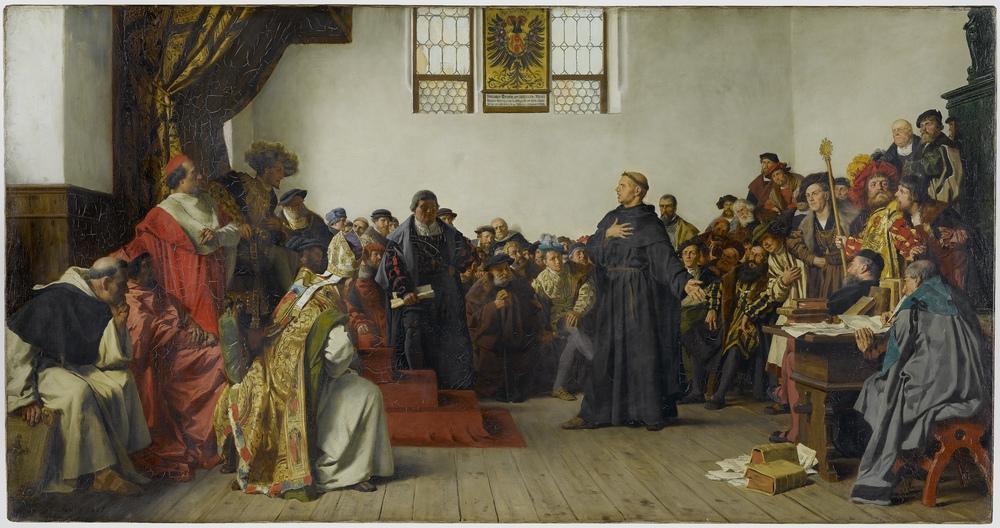
1517年10月31日,一位名叫马丁·路德的修士兼神学教授,发表了他的《九十五条论纲》。传统叙述说他把论纲钉在维滕贝格教堂门上;但究竟是当天张贴,还是寄给阿尔伯特大主教,史料仍有争议。在当时,教堂门可以像公开辩论的公告栏。人们通常把这看作宗教改革的开始。
但按鲍森的说法,较晚的一个日期——将近三年之后——更为重要。那是马丁·路德点燃篝火的日子。
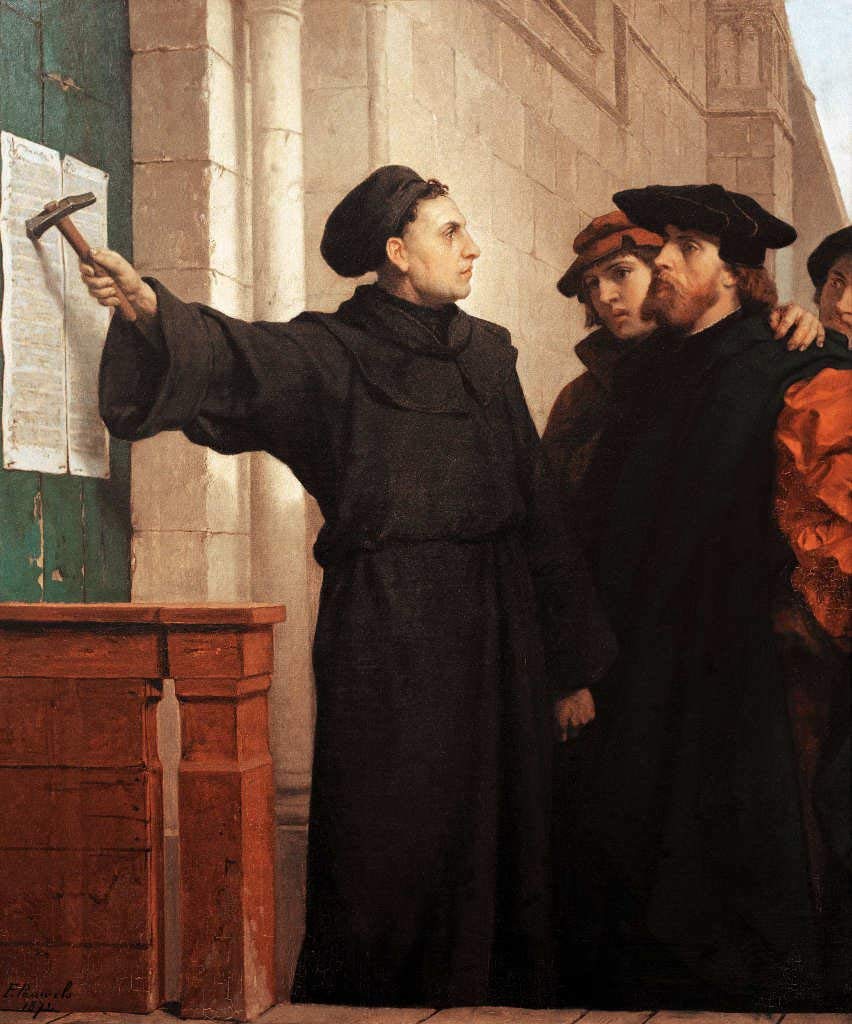
在那三年里,路德从想给教会做一次春季大扫除,走到了想要拆除整个制度。起初,在发表《九十五条论纲》时,他攻击的只是滥用和赎罪券买卖,而不是制度本身。他有一条论纲这样说:*“如果教皇知道赎罪券贩子怎样榨取他的羊群,他宁愿圣彼得教堂被烧成灰,也不愿用他的羊皮和骨头建造它。”*路德天真地以为教皇会站在他这一边。
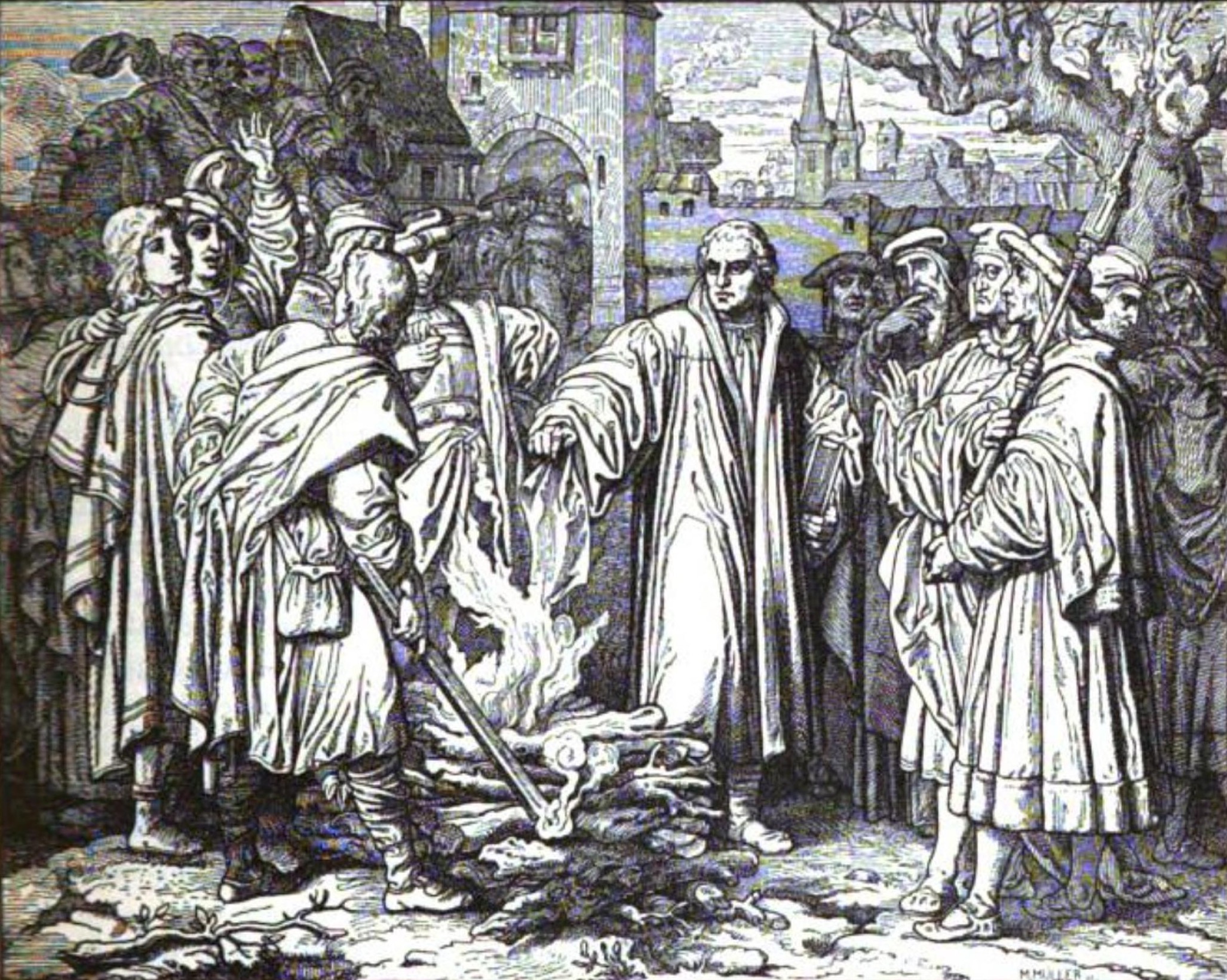
他的幻想很快破灭,而且是被教皇亲自打破的。鲍森这样讲述:当德国的赎罪券收入减少时,教皇发布了威胁将路德逐出教会的诏书。到这时路德才明白:问题不在于几个坏人操纵一套良好制度,制度本身就是错的。
于是他扔了三样东西:
- 一份带有教皇签名、威胁将他逐出教会的羊皮诏书。
- 一本教会法书——他作为修士和牧师生活所遵循的规则。
- 一份伪造的《君士坦丁赠礼》,用来声称教皇在世上拥有权威。
三年前,他想给教会做一次大扫除;三年后,他开始拆除整个制度。
改革还是拆毁?
路德三年间的转折点(1517—1520年)
起初,路德只是想把体系清理一番。三年后,他意识到问题就在体系本身。
📜
1517年10月31日
维滕贝格的《九十五条论纲》
- 目标:激起神学辩论。
- 攻击的是弊端(赎罪券),而不是体系本身。
- 他以为教皇只要知道真相就会同意。
🔥
1520年12月10日
焚烧教皇诏书(埃尔斯特门)
- 目标:彻底决裂。
- 焚烧《Exsurge Domine》诏书(绝罚的威胁)。
- 连同教会法典籍也一并焚烧。
- 意识到体系本身是错误的。
Pawson认为,1520年的焚书比1517年把论纲钉上门更为重要。(关于日期: 《Exsurge Domine》于1520年6月15日在罗马发布;路德于1520年12月10日在维滕贝格焚烧它;正式绝罚随后于1521年1月3日颁布。)
是什么驱使一个和尚走向那场大火?
要了解路德,必须回到把他推入修道院的恐惧。鲍森讲述:路德曾在雷暴中险些丧命,这使他害怕死亡,也害怕在罪未得赦免的情况下面对上帝。他拼命寻找摆脱恐惧的方法。
他向圣徒和马利亚祷告,去朝圣,凝视圣物和圣像。他做了这一切,却没有得到罪已蒙赦免的确据。后来,他与属灵上司冯·施陶皮茨交谈,对方问了一个决定性的问题:“如果拿走这些摇摇欲坠的信仰拐杖——马利亚、圣徒、圣像、告解和朝圣——你要用什么取代它们?”正如鲍森会众刚看过的电影所说,路德只有一个答案:**“耶稣基督。人只需要耶稣基督。”
那是后来一切的种子。
宗教改革已经是无关紧要的问题了吗?
在这篇发表于1967年、适逢宗教改革450周年的讲道中,鲍森并置讲述了两个故事。有一次,他参加新教牧师和会众的会议,偶然提到宗教改革,却被明确告知新教徒已经不再关心它。他们说那是“死人的历史”,不该再把它当作尚未完成的事情。他离开时耳边仍嗡嗡作响。
然而就在下一个周末,他受邀到爱尔兰东南部一所罗马天主教神学院,与导师和讲师谈论宗教改革。他们想听听他的看法,希望有一个开放论坛。他说:“我认为当时提出的问题仍然存在,而且还没有解决。”他们回答:“我们也这样认为。”三小时友好讨论之后,大家喝了茶,便各自回家。
这是个非凡的反差:他可以和罗马天主教徒讨论宗教改革,却不能和新教徒讨论。鲍森的简短回答是:宗教改革并没有过时。不是因为我们要与天主教徒或新教徒争战,而是因为我们要对抗使人看不见真理的制度和主义。只是,今天的前线已与路德时代大不相同。
路德的伟大之处就在这里。他恢复了七项优先次序,也就是被颠倒次序的七件事,把它们重新放回原位。
七项优先次序
路德置于首位的事
路德的伟大之处,在于他把优先次序摆对了。七件原本被置于次要位置的事,他重新放回首位。
在良心里遵行上帝的话语,比屈从教会或国家的压力更好。(“违背良心既不安全,也不诚实。”)
没有福音真理的合一毫无意义。拯救人的是真理,而不是一个机构。
每项教会传统(向圣徒祈祷、炼狱……)都必须由圣经检验(唯独圣经)。
不是行为,也不是信心加行为。“义人必因信得生”(唯独信心)。得救不是靠善行,而是为了行善。
恩典不是被神奇地分装在圣礼里。没有信心,圣礼就是无用的。这拒绝了把洗礼和圣餐看作“魔法”的观念。
所有信徒皆为祭司。它消除了教职人员与平信徒的分界。牧者的职能不同,但地位并不不同。
只有一位祭司(基督)和一位代理者(圣灵)。教会不能取代基督。谁把自己放在基督的位置上,谁就是敌基督者(取代基督的人)。
让我们一一回顾一下优先事项。
1. 良心先于权威
路德生活在良心自由几乎不存在的时代。不是国家,而是教会告诉你该相信什么、该如何生活。要想象那个世界,可以想想伽利略的悲剧:他用望远镜观察到宇宙,却被告知“你不能相信那个,也不能教导那个”。
路德敢于说:*“我的良心被上帝的话语所掳。违背良心既不安全,也不诚实。”*在沃尔姆斯帝国会议(1521年)上,面对皇帝和整个教会权力体系,他仍不肯撤回立场。
这并非遥远的过去。就在他讲道的那一周,有人递给他一份剪报:苏联有200名持不同政见的浸信会信徒因“违反”严厉的宗教法律而被监禁或等待审判,其中一人在遭受酷刑后死亡;他们的孩子连续数小时追问父母的信仰。鲍森指出,也许仍有一半人类生活在夺走思想和身体自由的极权国家。我们视为理所当然的良心自由,大多数人仍未拥有。
鲍森接着说,世界从来不是由没有脊梁、随波逐流的“水母”带领的,而是由有勇气坚持信念的人带领的。他尖锐警告,即使在今天,自称“不墨守成规”的人也可能轻易彼此迎合。我们需要的是真正敢于独行的人。
2. 真理先于团结
对路德最严重的指控之一,是他分裂了教会,是一个分裂者。近一千年来,西欧只有一个教会、一个共同体;人们对他说:放弃你的立场,让教会保持完整,否则你会把它打碎。
但路德把真理置于团结之上。他的良心不能随意改变,因为它是上帝话语的俘虏。他看清了关键:拯救人的不是教会的团结,而是福音的真理。即使明天把地上的每一间教会联合起来,得救的人数也不会因此增加;真正重要的是这些教会所传讲的福音真理。
鲍森说得直白。我们这个时代有一个流行口号:你要么上船,要么因拒绝它而受恨;这个词就是“团结”。交通使世界不断缩小,教会似乎也听到呼声,不停喊着“团结、团结、团结”。他讲了一个自己喜欢的细节:当诺丁汉英国教会协会说分歧可以在一个已经联合的教会内部解决时,各宗派中唯一的浸信会团体回信说不,必须先把分歧解决,然后才能联合。这就是把真理放在团结之前。
3. 圣经先于传统
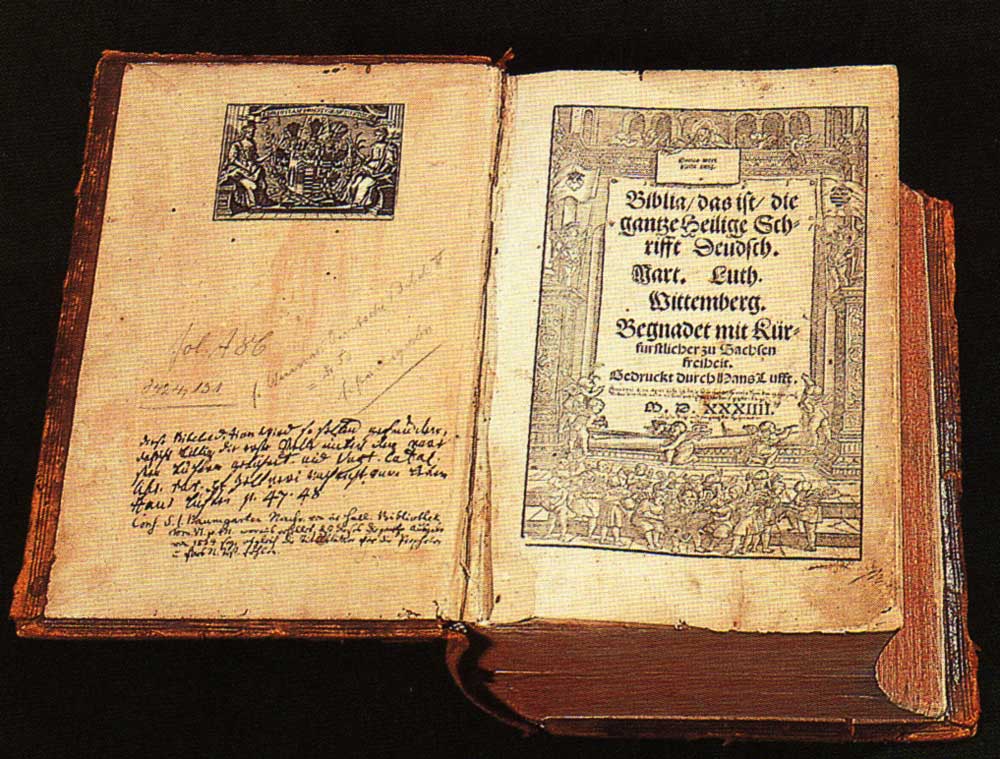
鲍森列举了一个令人震惊的细节:路德直到20岁才第一次拥有并读到完整的圣经。他从小敬虔成长,被训练过圣洁生活;但直到20岁才看见那本书。读到之后,他惊讶地发现,别人告诉他属于基督教信仰和实践的许多“重要部分”,并不在其中:没有向马利亚或圣徒祷告,没有圣物和圣像,没有炼狱,也没有告解制度。
他问:这一切从哪里来?官方回答是:这是传统,是教会的传统,和那本书一样都是上帝的话语。路德站在两种“上帝的话语”面前——一种写在书上,一种口头传承——并被要求两者都接受。但他得出结论:只有那本书才是真理;教会的每一项传统都必须接受圣经这块试金石的检验。由此,他开始拒绝那些传统。
鲍森坦言,即使他自己的教会也有不符合圣经的传统;所有人都必须服在上帝的话语之下。他讲到一位朋友(录音中的名字近似“爱德华多·卢宾克”,我无法从独立来源核实,可能是听录错误),这人曾是罗马耶稣会的杰出新约教授。他越研究圣经,就越无法继续教导学生:那些不在这本书中的事情也是“上帝的话语”。于是他离开教席,开始自学;就像450年前的路德也是神学教授一样。这本书产生了作用。
4. 唯独信心先于行为(Sola Fide)
这是人能提出的最大问题,对路德来说关乎生死:*我怎样与上帝和好?我的罪怎样得到赦免?*早年的雷暴使他害怕在罪未蒙赦免中死去,所以这不是抽象理论。
当约翰·特策尔前来兜售赎罪券时,路德确信那不是道路。宽恕买不来。他又更进一步说:既然买不到宽恕,也就不能靠功德赚取宽恕。鲍森把“人怎样进天堂”归纳成三个答案,每种宗教都倾向于其中一个:
- 世界说:行善。
- 路德时代的教会说:需要信心加上善行。
- 路德说:只需要一件事,就是相信。
从旧约到新约、直到路德,宗教改革的宣言是:“义人必因信得生。” 不是靠善行,也不是靠信心与行为共同作为称义根基,而是因信,句号。拉丁文 Sola Fide(唯独信心)成为宗教改革的伟大旗帜。
那么善行有什么作用?路德说得很好,鲍森说再好不过:我们得救不是因为善行,而是为了善行。 这不是说善行毫无意义,而是说善行不是称义的根基;你不是靠行善赚取通往天堂的门票,而是因为已经领受恩典,才活出善行。
五个“唯独”
概括宗教改革的五句口号
路德的七项优先次序后来被浓缩为五个拉丁语“sola / solus”(唯独)口号。坦率地说,把“五个唯独”包装成统一清单,是19至20世纪后来的系统化,并非16世纪现成的口号;但每个思想确实都植根于改革者自身。
唯独圣经 · 唯独圣经
唯独圣经是信仰至高且无误的权威。
反方: 天主教与东正教:圣经不能与产生它的教会传统割裂。
唯独信心 · 唯独信心
人唯独因信称义,而不是靠功德。
反方: 特利腾会议(1547年): “活的”信心必须包括行为;它谴责“信心不需要任何进一步的东西”。
唯独恩典 · 唯独恩典
救恩完全是上帝白白赐下、不是人配得的礼物。
反方: 最广泛的共同点是:即使特利腾会议第六期(1547年)也教导恩典是非功德性的起点;《因信称义联合声明》(1999年)再次确认这一点。
唯独基督 · 唯独基督
唯独基督是上帝与人之间唯一的中保。
反方: 有争议之处:天主教与东正教传统中,教会、圣徒和马利亚所扮演的中保角色。
唯独归于上帝的荣耀 · 唯独归于上帝的荣耀
一切荣耀唯独属于上帝。
反方: 争议最少,但它构成拒绝向个人或机构给予过度尊崇的理由。
5. 恩典先于圣礼
路德从小相信,恩典包含在七项圣礼中(鲍森说这个数字曾高达十四项,后来降为七项),而且圣礼会自动发生作用,几乎像魔法一样,不论由谁施行或谁领受。洗礼的水会自动拯救一个毫无所知的婴儿;面包和酒在仪式某一刻自动成为基督真实的身体和血,然后由祭司把它作为祭物献上——不是在桌上,而是在祭坛上。
路德思考后说:我知道自己需要上帝的恩典,但这本书没有告诉我,恩典被装在会自动发生作用的圣礼里。他意识到:没有信心,圣礼就不能完成它所指向的功用。“你们得救是本乎恩,也因着信”,不是靠圣礼本身。恩典不是包装好的物品,而像河流一样流动。最简单的信徒,即便未受洗、未领圣餐,也能凭信心认识上帝的恩典。鲍森指着他在救世军的朋友:他们没有圣礼,却显然拥有恩典,总是在歌唱恩典。
关于路德保留的两项圣礼(洗礼和圣餐),鲍森诚实承认,即使路德最亲密的朋友也得承认:路德从未完全推演这套逻辑的结论,对这两项也有些困惑。他正确抓住的次序是:恩典第一,圣礼第二。
6. 人先于祭司(所有信徒皆有祭司职分)
路德出生其中的教会是一个权力金字塔:顶端是教皇,其下是枢机、主教、修会成员,再下是堂区牧师,最底层则是平信徒。“神职人员”和“俗人”之间的界线极其严格,连建筑中的服装和位置都不同:一边穿礼服,另一边穿普通衣服。
鲍森重述路德如何从上到下看着这座金字塔并不断提问:*对上面的那个人,圣经有什么理由?*没有。*对主教呢?*没有。*对居间调停的牧师呢?*也没有。于是路德奇妙地重新发现:所有信徒的祭司职分。每个平信徒都是祭司,每个祭司也都是平信徒,因为在身份上二者没有根本区别。当然仍有职能上的差异,就像一个身体有不同器官。因此他称他们为“服事者”,而不把“牧师”当作属灵阶级。每个信徒都能直接来到上帝面前。
这就是他努力把《圣经》译成通俗德语、交到人民而不是牧师手中的原因。正如鲍森所说,打扫房间的女仆可以比牧师更明白上帝的道。世界上三分之二自称基督徒的人仍生活在神职人员和等级制度的控制下,因此这一抗议仍有必要。
信徒皆祭司
拆毁权力金字塔
中世纪教会是一座金字塔:平信徒在底层,教皇在顶端。路德宣告:没有中间阶层;人人都是祭司。
宗教改革前的结构
宗教改革的理想
7. 基督先于教会
这是高潮。鲍森回忆说,他问一位天主教神学院的教会史导师:宗教改革最大的问题是什么?两人意见一致:路德挑战了一个观念——基督与教会是一体,所以教会可以替人做只有基督能做的事。身体,也就是教会,正在取代头,也就是基督。
鲍森通过三种职分来解决这个问题:
- *我需要一位先知教导我上帝无误的真理。谁是我的先知?*罗马说:身体——无误的教会。路德说:头。
- *我需要一位祭司才能来到上帝面前。谁是我的祭司?*罗马说:身体;向教会承认你的罪。路德说:基督在天上,你随时可以借着他来到上帝面前。
- *我需要一位君王统治我。谁是我的君王?*罗马说:身体,在地上。路德说:我的头在天上。
所以路德敢称教皇为“敌基督”。鲍森仔细解释:这不只是说教皇反对基督。在这个词可能具有的基本意义上,“反”也可以指代替。任何把自己放在基督独有位置上的人或机构,都可以被称为敌基督。罗马告诉人们必须经过教会才能来到上帝面前;在路德看来,这就是把教会放在上帝的位置上。
罗马随后提出重要反驳:头在天上,难道地上的人不能通过身体来到头那里吗?难道教皇不就是基督在地上的代表?如果地上需要一位牧者替基督说话,路德思考后回答:是的,但那位牧者是圣灵,不是教皇。总而言之:“除基督以外没有祭司;除圣灵以外没有牧者。”
鲍森把这一点落实得很实际:他的浸信会教会墙边没有告解亭。“我不能赦免你的罪,金山浸信会也不能。如果你有罪要认,就直接去找天上的祭司——基督自己。”
火从路德手中逃走了
鲍森的主讲对象是路德,因为是路德点燃了导火索。但火很快从他手中蔓延出去。一代人之内,宗教改革分成几个流派,每个流派都有自己的城市、领袖和重点;有些彼此结盟,有些彼此对立,有些争论激烈到再也无法和解。如果你只听说过路德,可能会以为宗教改革是一个单一而坚固的阵营;事实并非如此。
不止一个人
宗教改革的其他面孔
Pawson主要讲路德,因为是路德点燃了引线。但火很快脱离他的掌控。一代人之内,宗教改革分裂成几个流派,各有自己的城市、领袖和重点。
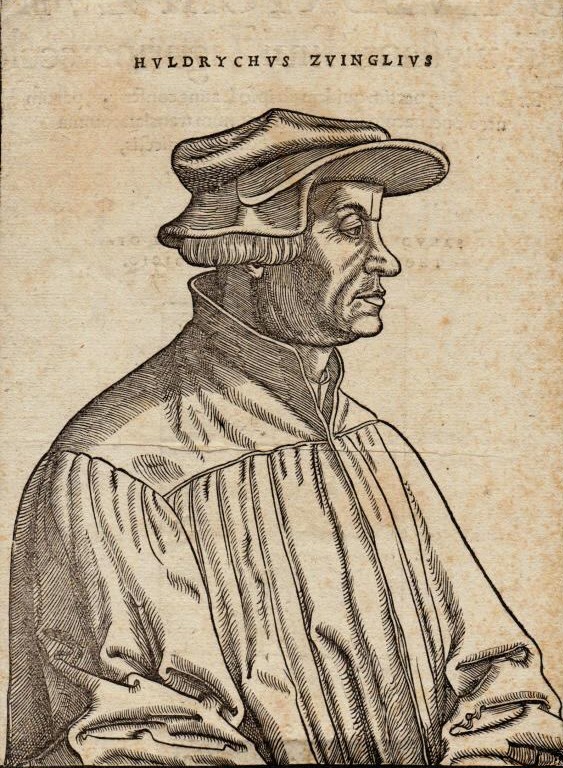
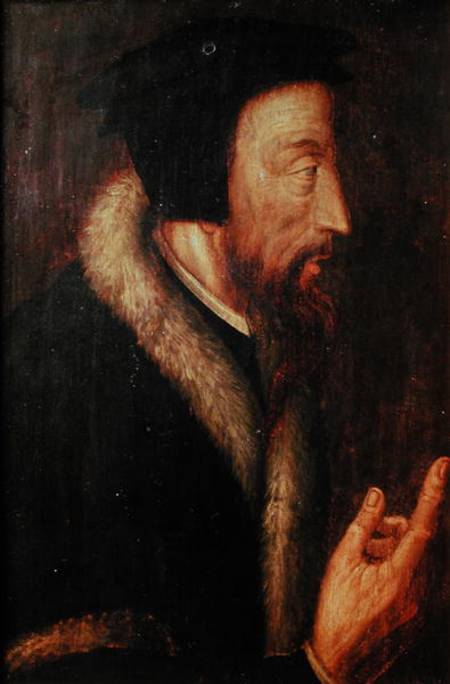
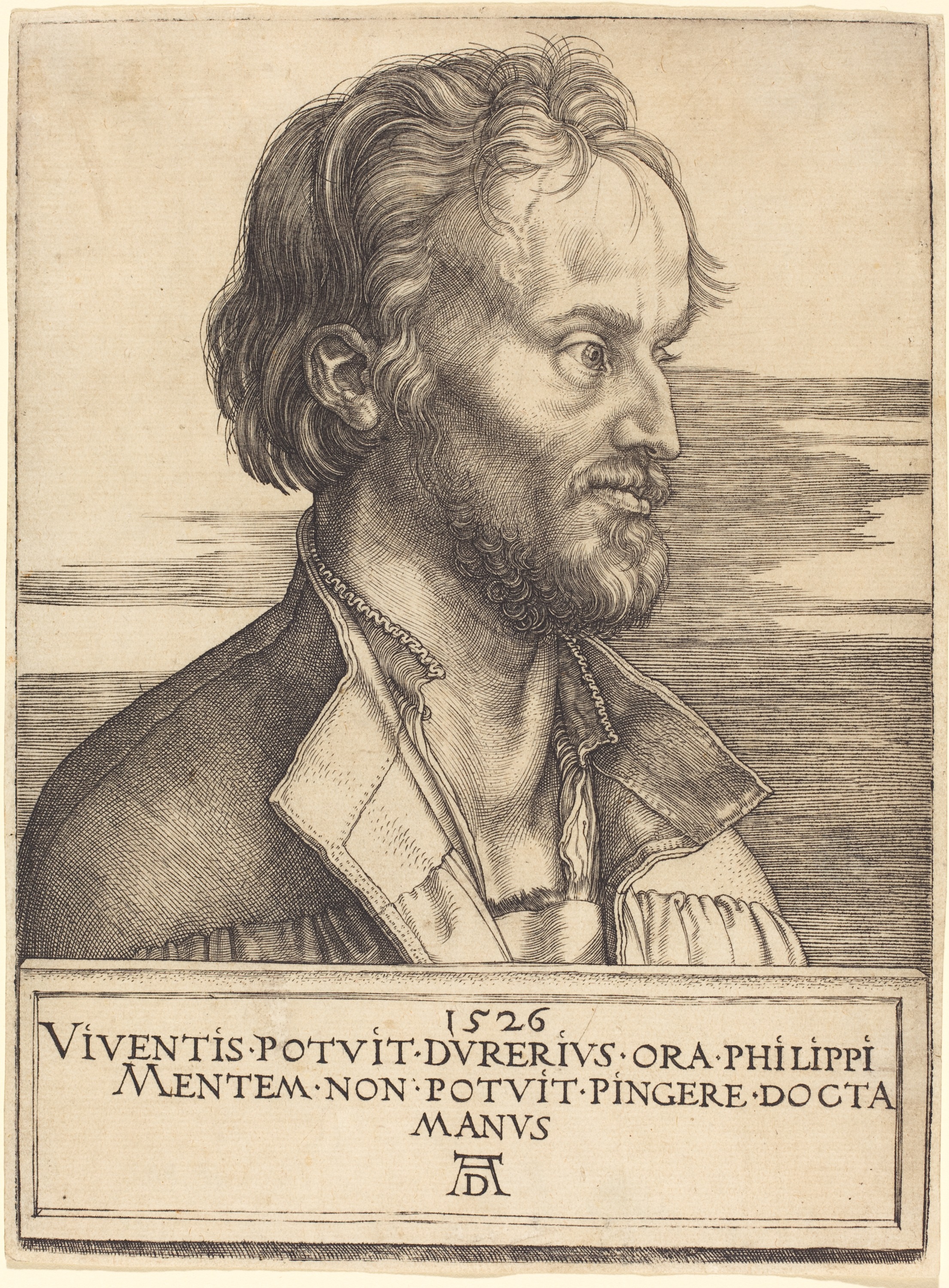
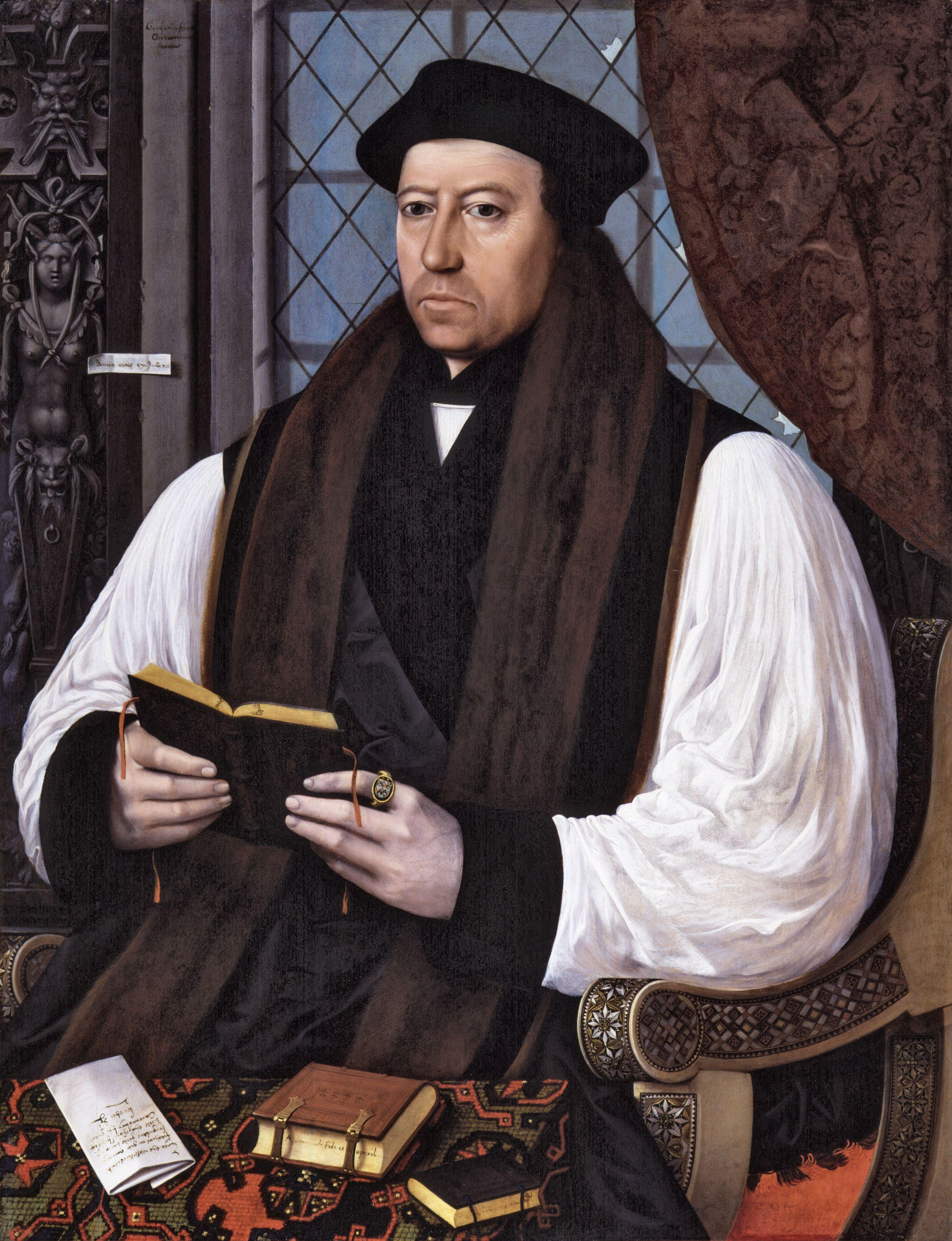
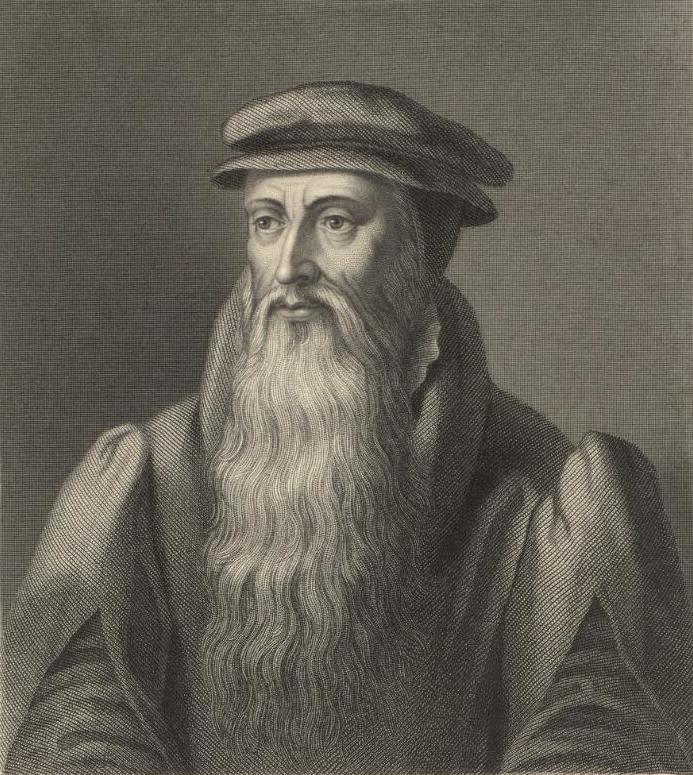
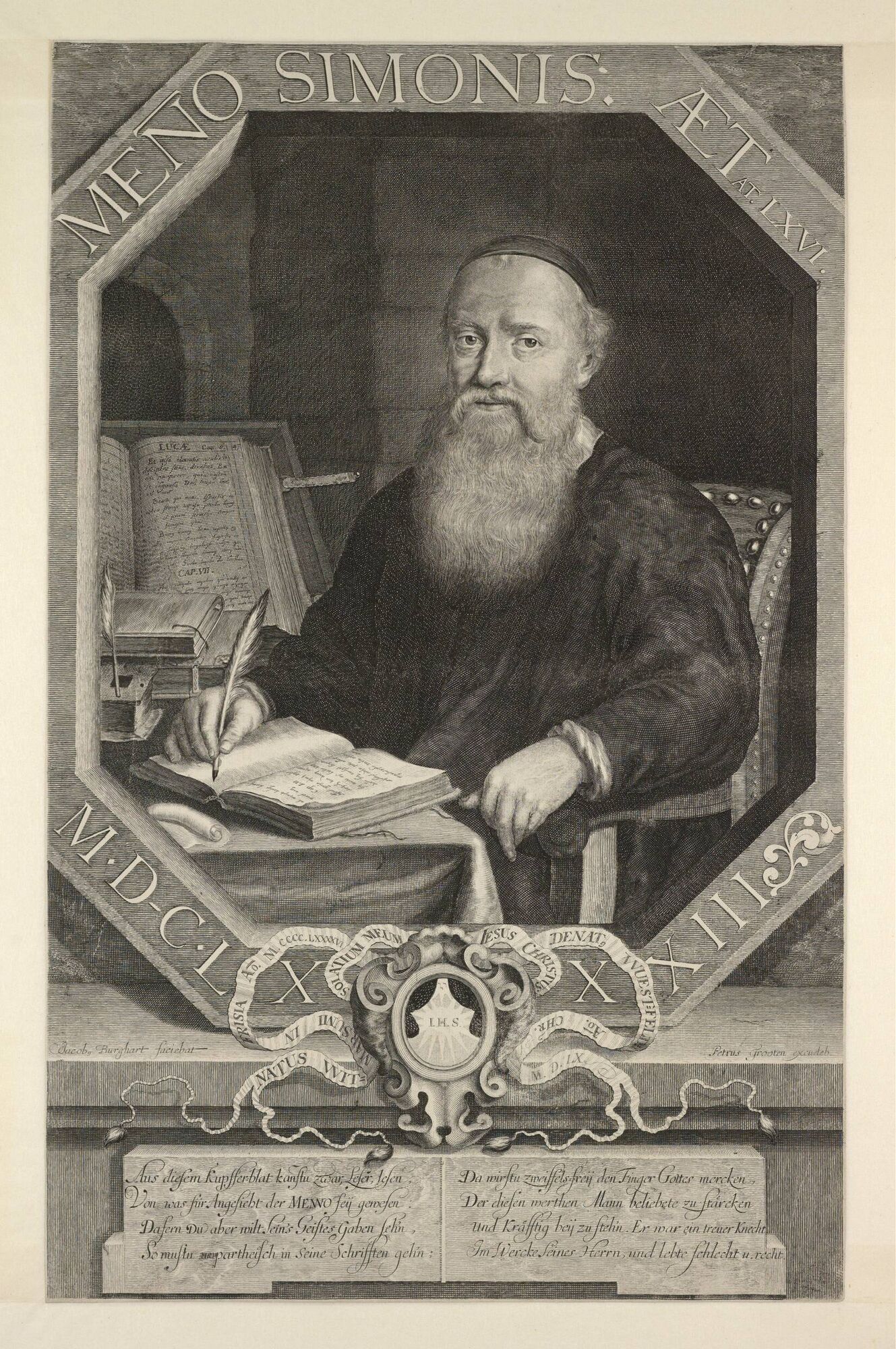
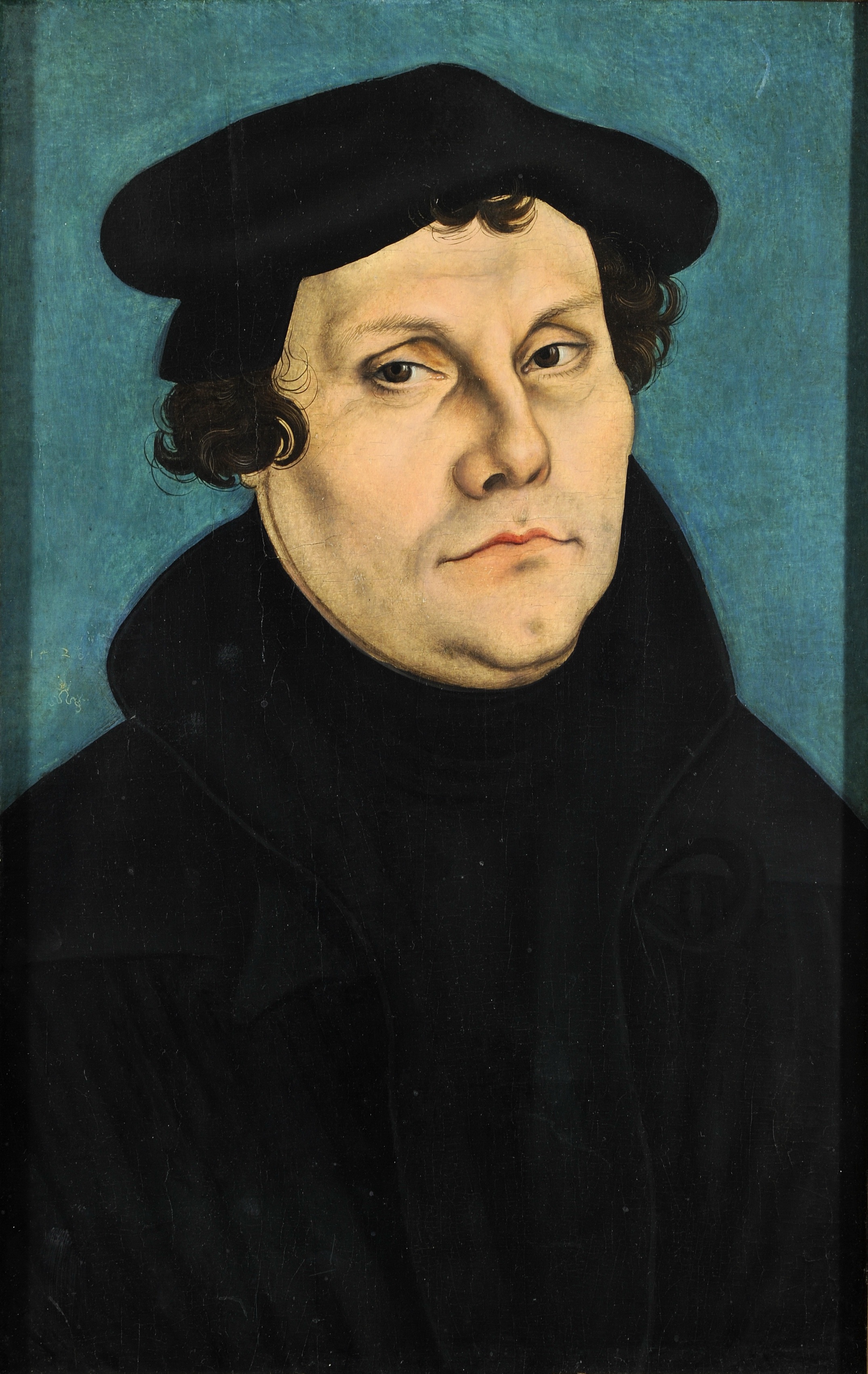
肖像均为公有领域(Wikimedia Commons)。诺克斯和门诺·西门是后来的版画,因为没有同时代的肖像留存。
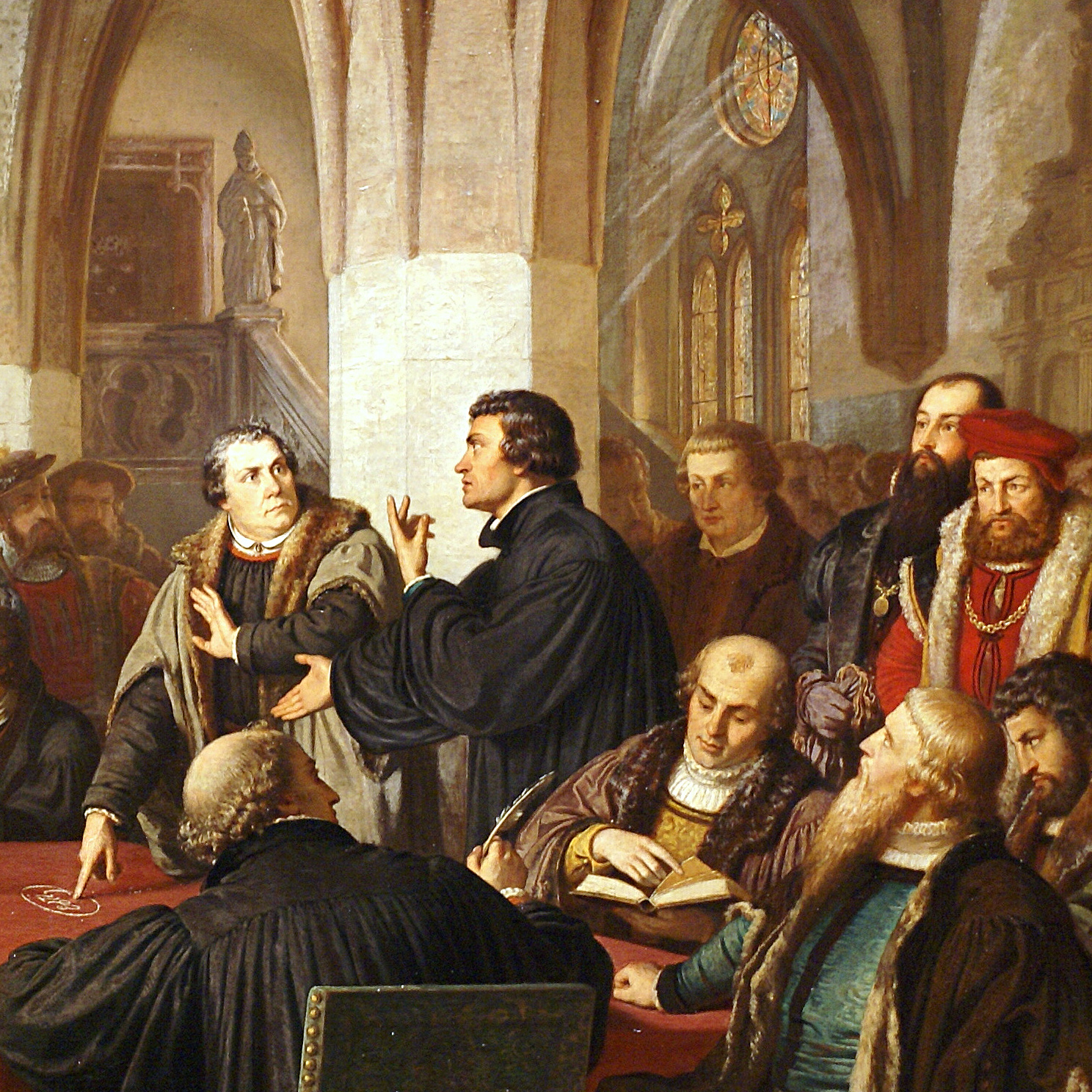
慈运理与圣餐分歧。 在苏黎世,赫尔德里希·慈运理领导了一场独立于路德的改革。两人在几乎所有问题上都同意,只剩一个问题:圣餐中的饼和酒究竟是什么?在1529 年马尔堡会谈中,他们在十五条议题中的十四条上达成一致,却卡在最后一条。路德坚持“这就是我的身体”,用粉笔在桌上写下 hoc est corpus meum(“这是我的身体”),一动不动。慈运理认为那只是纪念性的象征。他们拒绝握手。新教的统一战线就在那里破裂了。这是“真理先于团结”的痛苦例证,也显示捍卫真理与分裂教会之间的界线何等微妙。
加尔文与日内瓦。一代人之后,约翰·加尔文在法国人的背景下,通过《基督教要义》系统整理了改革宗神学,使日内瓦成为全欧洲派人前往的“基督教学校”。他强调上帝在救恩上的绝对主权。
“这是我的身体”
理解主餐的四种方式,以及马尔堡的分裂
没有任何问题像一个问题那样深刻地分裂新教徒彼此之间(也分裂他们与罗马):饼和酒发生了什么?在1529年的马尔堡会谈中,路德和慈运理在15条中同意14条,却在这一条上碰壁。路德把“Hoc est corpus meum”(“这就是我的身体”)粉笔写在桌上,坚持不让步。联合的新教阵线就在这里破裂。
天主教
罗马/特利腾
变质说
饼和酒的本质真正变成基督的身体和血;只留下外在的“偶性”。
路德
维滕贝格
圣礼联合(“在、同、于”)
基督的身体真实地“在饼和酒中、与饼和酒同在、在饼和酒之下”临在,但饼仍是饼。(路德拒绝“同质说”一词。)
加尔文
日内瓦
属灵的真实临在(借着圣灵)
信徒确实领受基督,但这是借着信心,并由圣灵把他们提升到天上的基督那里。
慈运理
苏黎世
纪念/象征
饼和酒只是纪念性的标记。“这是我的身体”意思是“这象征我的身体”。
从左(最具身体性临在)到右(纯粹象征)。这项分歧使路德宗和改革宗分支始终无法完全联合。
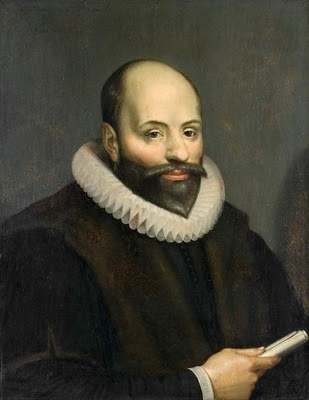
“激进派”及其代价。有些人认为路德和慈运理都没有走得足够远。他们问:如果圣经本身是权威,新约哪里教导婴儿洗礼?1525 年 1 月,在苏黎世附近,他们首次为成年信徒再次施洗,因此被称为再洗礼派。他们主张由自愿信徒组成、与国家分离的教会,拒绝刀剑和誓言。后来门诺·西蒙斯赋予这个破碎运动和平、非暴力的身份,“门诺派”便以他命名。
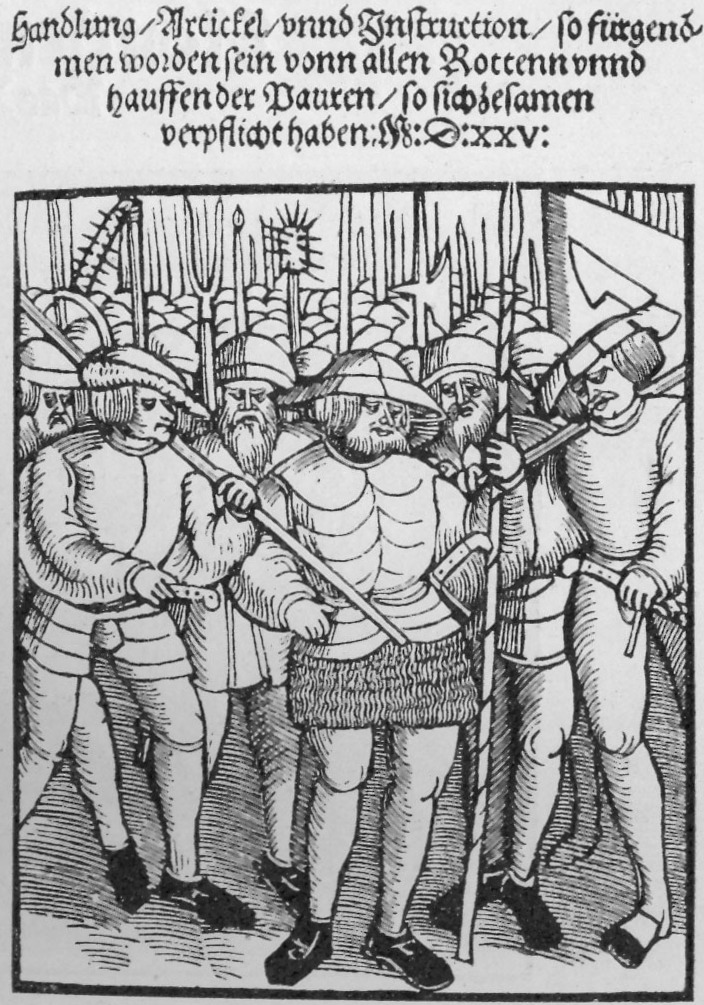
他们付出的代价惨重,而且来自双方。同年(1524–25年)爆发农民战争,德国农民借用“所有信徒皆祭司”和“唯独圣经”的口号表达诉求;这并非路德所打算的用法,他的反应十分激烈,完全站在贵族一边。
加尔文、阿民念与预定论之争。 又过一代,改革宗阵营在一个痛苦问题上分裂:救恩完全由上帝主动成就(他所拣选的人得救),还是人藉自由意志的信心作出回应?荷兰神学家 雅各布·阿民念 挑战加尔文的无条件预定论。他死后,追随者在1610年提出《抗辩文》,分为五点。1618–19年的多特会议谴责阿民念派,并提出后来以缩写 TULIP 闻名的“加尔文主义五要点”。
谁选择谁?
加尔文对阿明尼乌:预定论与自由意志
路德之后一代,新教内部因一个令人痛苦的问题分裂:在救恩中,是上帝做一切事(唯独神作),还是上帝与人合作(协同作工)?多特会议(1618—19年)谴责阿明尼乌派,并提出“加尔文主义五要点”,后来以缩写TULIP为人所记(这是20世纪的造词)。
拣选
赎罪
人的本性
恩典
坚忍
TULIP=全然败坏 · 无条件拣选 · 有限赎罪 · 不可抗拒的恩典 · 圣徒坚忍。阿明尼乌的《抗辩书》(1610年)恰好提出五项反驳。
燃烧的一个世纪
宗教改革如何扩散(1517—1619年)
从一个德国小镇的一位修士出发,一个世纪内火焰传到瑞士、英格兰、苏格兰、荷兰,并迫使罗马本身改革。
另外两把椅子:罗马和君士坦丁堡
鲍森在新教椅子上讲道,语气强烈而清晰。但他本人表示,宗教改革的问题“仍然存在,而且尚未得到解决”。充分听到他们的声音的最佳方法是拉起另外两把椅子。
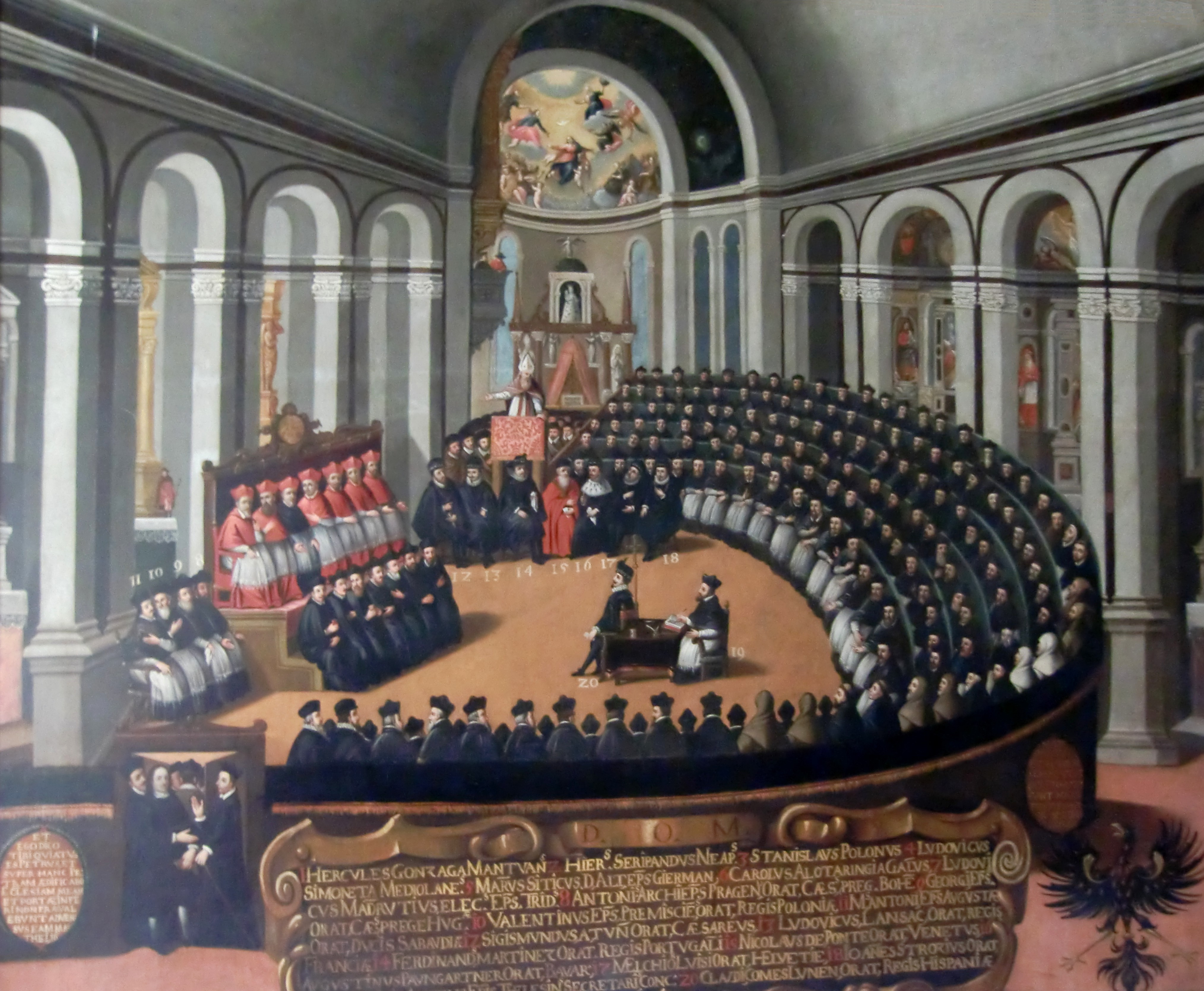
罗马的答案:特伦特会议。天主教教义的最终回应是特伦特会议(1545—1563)。这里需要公平,因为新教徒常把特伦特讽刺为“靠行为得救”。事实上,特伦特教导恩典是不配得的开始(“若是本乎恩,就不在乎行为”),但人必须在自由中与恩典合作;信心必须是活的,并与爱和善行相联。特伦特谴责把唯独信心理解为“单靠信心、无需任何其他事”。它确认圣经和传统(具有“同等的敬虔情感”)、七项圣礼与化质说。关于赎罪券——正是令路德愤怒的事——特伦特没有废除赎罪券,却废除了其中的金钱买卖,这正是《九十五条论纲》所针对的滥用。改革时代另一位重要人物是耶稣会创始人罗耀拉的依纳爵,其修会于1540年获批准。
故事并没有停在16世纪。1999年的《称义教义联合声明》(JDDJ)中,天主教会与世界信义宗联合会宣布在这一“基本真理”上达成共识:“单靠恩典,凭着对基督救赎工作的信心,而不是凭我们的任何功德,我们就被上帝接纳。”2016年6月,教皇方济各说路德的“意图没有错”,他是“一位改革者”,尽管“有些方法并不正确”。同年10月31日,方济各与世界信义宗联合会在瑞典隆德共同主持宗教改革500周年纪念活动。
君士坦丁堡的回答:明确拒绝。第三把椅子属于东正教,常被新教徒和天主教徒遗忘。大约1573至1581年间,图宾根的路德宗神学家致信君士坦丁堡宗主教耶利米二世,希望寻找共同点。他回了三封信,逐一拒绝新教的核心特征:他拒绝把唯独信心理解为不需要活的、由善行证明的信心,也拒绝“唯独圣经”,因为圣经不能脱离教父的解释。随后他礼貌地结束了通信。
对东正教来说,救恩不是法律意义上的宣判(宣布某人为义),而是神化,即真实参与上帝生命的过程。这是协同,也就是合作:“上帝不会违背人的意志来拯救人。”因此,东正教把“信心与行为”的争论视为它从未采用的西方法律框架。后来,一位主教西里尔·卢卡里斯起草了一份明显倾向加尔文主义的信仰告白,东正教在1672年耶路撒冷会议上谴责了它。换言之,东正教正式拒绝了路德和加尔文的立场。
三把椅子
这场争论有三方,而不是两方
Pawson坐在新教的椅子上讲道。但要听见各方声音,把另外两把椅子也摆在旁边。令人意外的是:三者都教导恩典是必要且非人配得的;“新教徒相信恩典,天主教徒/东正教徒相信靠赚取天堂”这一漫画式说法,对三者都不成立。真正的分界在于权威以及称义的含义。
东正教正式拒绝路德(耶利米二世书信,1573—81年)和加尔文(耶路撒冷会议,1672年)两者。
既然如此,为什么还要打仗呢?
现在许多人会问鲍森在讲道结束时提出的问题:为什么要挖掘这些教义问题?既然大家友好相处、敬拜同一位上帝,为什么不为和平与团结妥协?这难道不是把小小的教义争论带回黑暗时代吗?
鲍森的回答直率而沉重:因为不朽灵魂的救恩正处于危险之中。如果你告诉一个人,接受水洗会自动拯救他,那是在把他交给危险;如果你告诉他,善行会为他赢得天堂,那是在给他指一条错误的路。这不是宗教骄傲,而是他认为真理关乎永生;地上的虚假和平,不值得用成千上万灵魂的永恒归宿来交换。
但鲍森也让我们在这里停下来:今天的前线不再位于新教徒和天主教徒之间。鲍森直言,争战如今是在福音派与许多新教徒、罗马天主教徒之间,是一条横穿各宗派标签的界线。他引用法国教授《宗教改革的继承者》一书,追问谁是马丁·路德真正的继承人:不是泛称的“新教徒”,而是无论标签如何,都把圣经和基督置于一切之上的人。因此,那种只朝一个方向开火的做法已经过时。他说得很清楚:“我不反对罗马天主教徒,也不反对新教徒;我反对主义,反对制度。我想爱人,无论他们是谁。”他还讲述,自己如何发现心里真正爱上了与他交谈的天主教导师,爱他们作为人。
除基督以外没有祭司;除圣灵以外没有牧者。把目光从其他人身上移开。冯·施陶皮茨问路德,要用什么取代马利亚、圣徒、圣像和告解,他回答:耶稣基督。人只需要耶稣基督。
这就是鲍森感谢上帝赐下马丁·路德的原因:感谢他的诚实,感谢他有勇气独自坚持所知道的真实与正确。他祈求上帝兴起更多这样的人,让他们带着爱宣讲真理,并引用传统归于路德的“我站在这里,别无选择”;可靠记录的话是:违背良心既不安全也不诚实。我的良心被上帝的话语所掳。
良心先于权威。真理先于团结。圣经先于传统。信心先于行为。恩典先于圣礼。平信徒先于祭司,每个信徒都能直接来到上帝面前。最重要的是:基督先于教会,先于一切人和一切事物。
David Pawson's sermon on the Reformation opens not with a date but with a letter. He reads Paul’s letter to the Galatians onward. It is the epistle Martin Luther loved most, the one on which he wrote a very fine commentary. "A man is justified, not by works of the law, but through faith in Jesus Christ… because by works of the law shall no one be justified." Pawson says those words meant a great deal at the time of the Reformation, over 450 years ago.
On October 31, 1517, a monk and professor of theology named Martin Luther nailed his 95 Theses to the church door in Wittenberg. In those days that door served as a notice board for public debate. People usually treat this as the beginning of the Reformation.
But according to Pawson, there is a later date, nearly three years on, that matters even more. It is the day Martin Luther had a bonfire.
In those three years, Luther moved from wanting to spring clean the church to wanting to demolish the whole system. At first, nailing up the 95 Theses, he attacked only the abuse, the sale of indulgences, not the system itself. One of his theses read: "If the Pope knew how the sellers of indulgences fleece his flock, he would rather St. Peter's church were burnt to ashes than built up out of the skin and bones of his sheep." Luther naively assumed the Pope was on his side.
He was quickly disillusioned, and by the Pope himself. Pawson tells it this way: when the indulgence money from Germany dropped, the Pope excommunicated him. Only then did Luther grasp it. The fault was not a few bad men running a good system. The system itself was wrong.
So he threw three things on the fire:
- The parchment with the Pope's signature, threatening excommunication.
- A book of Canon Law, the code by which he had lived as a monk and priest.
- A document he now knew to be a forgery, used to claim the papacy's right to represent Christ on earth.
Before, he was giving the Church a spring clean. Three years later, he began to tear it down.
Kit's note
A correction on the dating. Pawson places the bonfire on "15 June 1520," but that was actually the day Pope Leo X issued the bull Exsurge Domine in Rome. That bull only threatened excommunication and gave Luther 60 days to recant; it did not excommunicate him. Luther burned it, along with the books of Canon Law, on 10 December 1520 at the Elster Gate in Wittenberg, once the 60-day deadline had expired. His formal excommunication did not come until 3 January 1521, by the bull Decet Romanum Pontificem. As for the "forged document": sources list the burned items as the bull and the canon-law compilations, not a distinct "forged decretal." Still, Luther did know Lorenzo Valla's 1440 work exposing the "Donation of Constantine" as a fake. Pawson's point holds; only the date and a detail or two need fixing.
Reform or Demolish?
Luther's turning point in 3 years (1517–1520)
At first, Luther only meant to spring clean the system. Three years later, he realized the system itself was the problem.
📜
31 October, 1517
The 95 Theses at Wittenberg
- Goal: Spark theological debate.
- Attacking the abuse (indulgences), not the system.
- Assumed the Pope would agree if he knew.
🔥
10 December, 1520
Burning the Papal Bull (Elster Gate)
- Goal: A complete break.
- Burned the bull Exsurge Domine (threat of excommunication).
- Burned the books of Canon Law too.
- Realized the system itself was wrong.
Pawson holds that the bonfire of 1520 was even more significant than nailing the theses in 1517. (On the dating: the bull Exsurge Domine was issued in Rome on 15 June 1520; Luther burned it at Wittenberg on 10 Dec 1520; his formal excommunication followed on 3 Jan 1521.)
What drove a monk to that fire?
To understand Luther, you have to go back to the terror that drove him into the monastery. Pawson tells it: Luther once nearly died in a thunderstorm. It left him afraid to die, afraid to face God with his sins unforgiven. And he searched desperately for a way out of that fear.
He prayed to the saints, prayed to Mary, went on pilgrimages, gazed at relics and images. He did all of it. And none of it gave him any assurance that his sins were forgiven. Later, talking with his saintly superior von Staupitz, he was asked the decisive question: "If you take away all these crutches to a tottering faith, if you take away Mary, the saints, the images, penance and pilgrimages, what will you put in their place?" Luther's answer, as in the film Pawson's congregation had just watched, was one thing only: "Jesus Christ. Man only needs Jesus Christ."
That was the seed of everything that came after.
Kit's note
A few honest footnotes. The Stotternheim thunderstorm (2 July 1505) and the vow "St. Anne, help me, I will become a monk" are genuine. But the figure that Luther "prayed to 21 saints a week, 3 a day," which many sermons quote, I could not verify against any scholarly source, so treat it as rhetorical rounding. The "crutches to a tottering faith" line I also could not trace verbatim in the standard biographies (Bainton, Kittelson). The substance, though, is well attested: Staupitz turned Luther from self-punishment toward reliance on Christ alone. Luther himself said: "If it had not been for Dr. Staupitz, I should have sunk in hell."
Is the Reformation a dead issue?
In his 1967 sermon, marking the Reformation's 450th anniversary, Pawson tells two stories side by side. Once he attended a meeting of Protestant ministers and members, happened to mention the Reformation, and was told in no uncertain terms that Protestants no longer care for it. It is "dead history," they said, and bringing it up is not the done thing. He came away with his ears ringing.
Yet the very next weekend he was invited to a Roman Catholic seminary in the southeast corner of Ireland to speak to the tutors and lecturers, about the Reformation among other things. They wanted to hear what he thought, wanted an open forum. He said: "I think the issues raised then are still alive, and they have not been settled." They replied: "That is exactly what we think too." Three hours of friendly discussion, then a nice tea, then home.
It is an extraordinary position. He could discuss the Reformation with Roman Catholics, but not with Protestants. Pawson's answer in a nutshell: the Reformation is not out of date. Not because we fight people, Catholic or Protestant, but because we fight systems and isms that blind people to the truth. Only, the front line today is drawn very differently than in Luther's day.
Luther's greatness lies in this. He recovered Seven Priorities, seven things that had been pushed into second place, and put them back in first.
Seven Priorities
What Luther put first
Luther's greatness was getting his priorities right. Seven things that had been relegated to second place, he put back in first.
Better to obey God's Word in one's conscience than yield to church or state pressure. (“It is neither safe nor honest to go against conscience.”)
Unity without the truth of the Gospel is meaningless. What saves people is truth, not an institution.
Every church tradition (praying to saints, purgatory…) must be tested by Scripture (Sola Scriptura).
Not works, nor faith + works. “The just shall live by faith” (Sola Fide). Saved NOT BY good deeds, but FOR good deeds.
Grace is not magically parceled up in sacraments. Without faith, sacraments are useless. Rejects the “magical” view of baptism and the Supper.
The priesthood of all believers. Erased the clergy/laity divide. Ministers have a different function, not a different status.
Only one Priest (Christ) and one Vicar (the Holy Spirit). The Church cannot replace Christ. Whoever puts himself in Christ's place is Anti-Christ (instead of Christ).
Let us go through the priorities one by one.
1. Conscience before Authority
Luther lived in an age when freedom of conscience barely existed. It was not the state but the church that told you what to believe and how to behave. To picture that world, remember the tragedy of Galileo. He discovered truths about the universe through his telescope, and was told "you must not believe that, you must not teach that."
Luther was a man who dared to say: "My conscience is captive to the Word of God. It is neither safe nor honest to go against conscience." At the Diet of Worms (1521), before the emperor and the whole machinery of church power, he still would not recant.
And this is no matter of the distant past. The very week he preached, someone handed him a newspaper cutting: over 200 dissident Baptists in the Soviet Union jailed or awaiting trial for "infringing" strict religious laws. One had died after torture; their children questioned for hours about their parents' faith. Pawson notes that perhaps half the human race still lives under totalitarian states that claim the mind as well as the body. The freedom of conscience we take for granted, most of humanity still does not have.
Then Pawson says the world is never led by "jellyfish" with no backbone, drifting with the tide. It is led by people who have the courage of their convictions. And he warns, sharply, that even today's self-styled "non-conformists" conform to one another with astonishing ease. What we need are people who genuinely dare to stand alone.
Kit's note
The most famous line tied to Worms, "Here I stand, I can do no other. So help me God," is almost certainly a later addition. It is absent from the earliest transcripts. The reliably recorded words are: "…I neither can nor will retract anything, since it is neither safe nor right to go against conscience. God help me. Amen." The resolve is genuine; only the "Here I stand" flourish is a later embellishment.
2. Truth before Unity
One of the gravest charges laid against Luther was that he split the Church, that he was a schismatic. For nearly a thousand years, Western Europe had one Church, one denomination. They told him: recant and leave the Church intact; go on like this and you will break it.
But Luther put Truth before Unity. His conscience was not free to follow every whim, because it was captive to the Word of God. He saw the crucial thing clearly. What saves people is not the unity of the Church but the truth of the gospel. Unite every church on earth tomorrow, and the number of the saved will not rise. What is really needed is the truth of the gospel preached in those churches.
Pawson says it plainly. Our age has one catchword you climb aboard or get hated for refusing, and that word is "unity." A whole world is shrinking through transport, and the Church seems to have caught the echo, crying "unity, unity, unity." He tells a detail he relishes. When the British Council of Churches at Nottingham said the disagreements could be sorted out from within an already-united church, the Baptist Union alone among the denominations wrote back that no, they must be sorted first, and then unite. That is putting truth before unity.
3. Scripture before Tradition
Pawson names a startling detail: Luther was 20 years old before he first held and read a complete Bible. He was raised devout, prepared for a holy life, and yet not until he was 20 did he see that book. And when he read it, he was astonished. So much of what he had been told was a "vital part" of Christian belief and practice was simply not in it. Nothing about praying to Mary or the saints, no relics and images, no purgatory, no penance.
He asked: where did all this come from? The official answer was that it is the Tradition of the Church, and Tradition is as much the Word of God as that book. Luther stood before two "Words of God," one written and one spoken, and was told to accept both. But he came to a conclusion. Only that book is the truth, and every tradition of every church must be brought to the touchstone of Scripture and tested by it. Once he did that, he began to throw tradition out.
Pawson admits candidly that even his own church has unscriptural traditions, and all of them must bow to the Word of God. He tells of a friend (named on the recording as something like "Eduardo Lubinque," a name I could not verify in any independent source, most likely a transcription slip), once a professor of New Testament to the cream of Rome's Jesuit priests. The more he studied Scripture, the less he could keep teaching students that things not in this book were "the Word of God." So he taught himself out of that chair, just as Luther, 450 years earlier, was also a professor of theology. This book had done it.
Kit's note
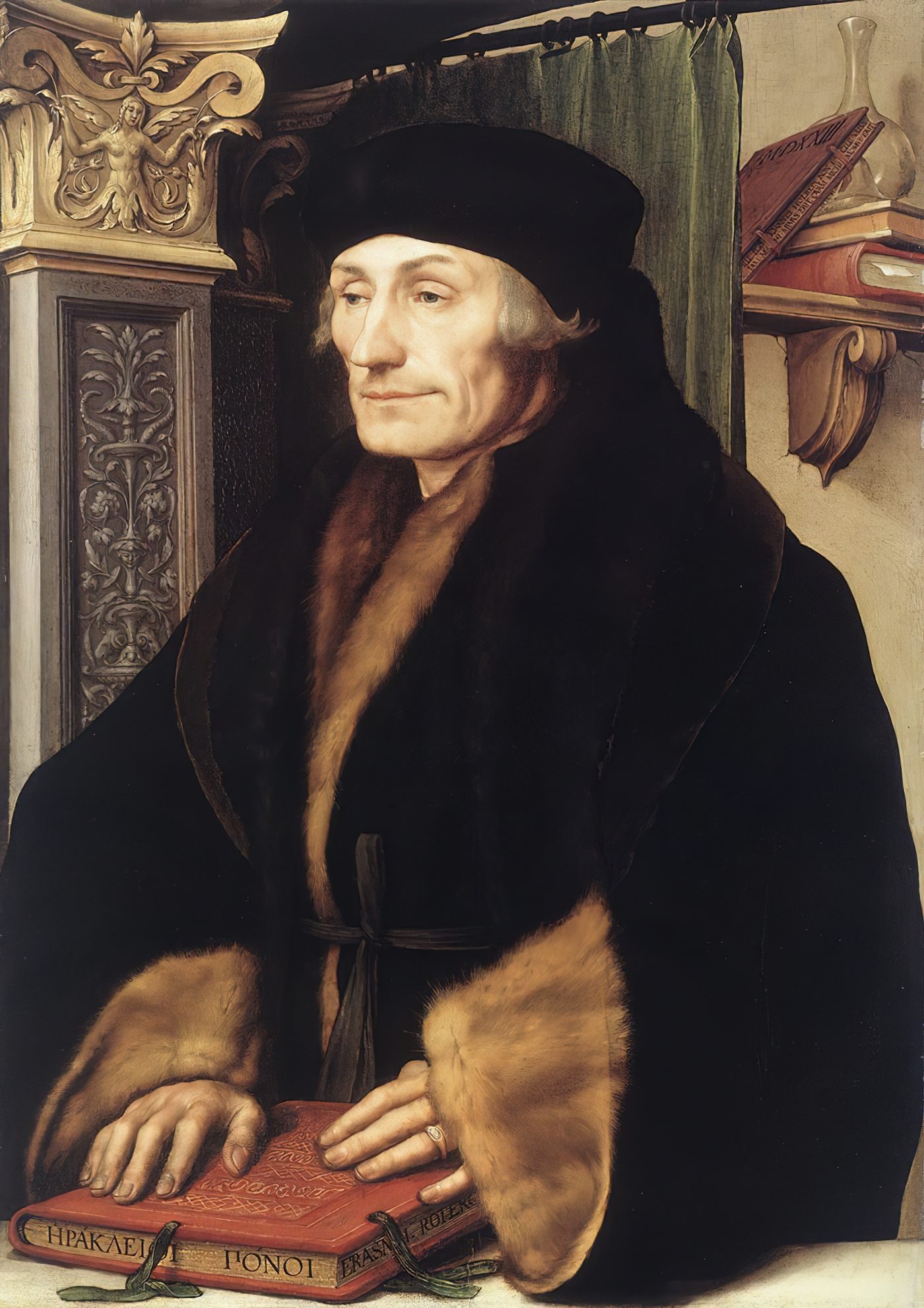
A piece Pawson does not stress but which matters greatly: Erasmus of Rotterdam. In 1516 this scholar printed the Greek New Testament (the Novum Instrumentum), the very base text Luther used to translate the German New Testament. Where the old Latin read "do penance," Erasmus rendered the Greek correctly as "repent." A small change that knocked out the foundation of the whole penance system. They said "Erasmus laid the egg that Luther hatched," though Erasmus rejected the jab and later clashed sharply with Luther over free will (1524–25). He wanted reform from within, not schism.
4. Faith before Works (Sola Fide)
This is the biggest question a person can ask, and for Luther it was life or death: How do I get right with God? How are my sins forgiven? The old thunderstorm had left him afraid to die with sins unforgiven, so this was no theory.
When John Tetzel came round selling indulgences, Luther was sure that was not the way. You cannot buy forgiveness. Then he took a further step: if you cannot buy it, neither can you earn it by merit. Pawson lays out three answers to the question of how to get to heaven, and every religion falls into one of them:
- The world says: do good deeds.
- The church of his day said: you need faith plus good deeds.
- Luther said: only one thing is needed, and that is to believe.
The manifesto of the Reformation, running from the Old Testament through the New and on to Luther, is: "The just shall live by faith." Not by good deeds, not by faith mixed with works, but by faith, full stop. The Latin sola fide (faith alone) became the great banner of the Reformation.
So what part do good deeds play? Luther put it superbly, and Pawson says it cannot be put better: We are saved NOT BY good deeds, but FOR good deeds. You do not do good deeds to earn the ticket to heaven; you do them because you are going to heaven already.
The Five Solas
Five slogans that distil the Reformation
Luther's seven priorities were later distilled into five Latin “sola / solus” (alone) slogans. To be honest: packaging the “five solas” as a unified list is a later (19th–20th c.) systematization, not a ready-made 16th-c. slogan, but each idea is genuinely rooted in the Reformers themselves.
Sola Scriptura · Scripture alone
Scripture alone is the supreme, infallible authority for faith.
Counter: Catholic and Orthodox: Scripture cannot be severed from the Tradition of the Church that produced it.
Sola Fide · Faith alone
One is justified by faith alone, not by merit.
Counter: Trent (1547): a “living” faith must include works; condemns “faith needing nothing further.”
Sola Gratia · Grace alone
Salvation is entirely God's unmerited gift.
Counter: The broadest common ground, even Trent (Session VI, 1547) teaches grace as the unmerited beginning; reaffirmed in the JDDJ, 1999.
Solus Christus · Christ alone
Christ alone is the one mediator between God and man.
Counter: Contested: the mediating role of the Church, the saints, and Mary in Catholic/Orthodox tradition.
Soli Deo Gloria · Glory to God alone
All glory belongs to God alone.
Counter: Least disputed, but grounds the rejection of excessive honor to persons/institutions.
5. Grace before Sacraments
Luther was raised to believe that grace was parceled up in seven sacraments (Pawson says the number had once run as high as fourteen, then dropped to seven), and that they worked automatically, like magic, regardless of who administered or received them. Baptismal water automatically saved an infant who knew nothing. Bread and wine, at a certain point in the service, automatically became Christ's actual body and blood, then were offered by a priest as a sacrifice, not on a table but on an altar.
Luther thought it through and said: I know I need God's grace, but there is nothing in this book to tell me that grace is wrapped up in sacraments that work automatically. He realized: without faith, the sacraments are no use. "By grace are you saved, through faith," not through sacraments. Grace is not packaged; it flows like a river. The simplest believer, never baptized and without the Lord's Supper, yet with faith, still knows the grace of God. Pawson points to his friends in the Salvation Army. They have no sacraments at all, yet plainly have grace; they are always singing about it.
Of the two sacraments Luther kept (baptism and the Lord's Supper), Pawson honestly admits what even Luther's closest friends had to grant: he never thought the matter through to its logical end, and he got a little muddled on both. What he got right was the order: grace first, sacraments second.
6. People before Priests (The priesthood of all believers)
The church Luther was born into was a pyramid of power. At the top the Pope, then down through Cardinals, Bishops, the orders of monks, to the parish priest. And far at the bottom, the laity. The divide between "clergy" and "laity" was so rigid that even dress and position in the building differed: one end in vestments, the other in ordinary clothes.
Pawson retells how Luther looked at that pyramid and asked, from the top down. What scriptural justification is there for one man up there? None. For bishops? None. For mediating priests? None. Then he came to a wonderful rediscovery: the priesthood of all believers. He made every layman a priest and every priest a layman, seeing there was no division between them at all. There were differences of function, yes, like different organs in one body. So he called them "ministers," not "priests." Every believer is a priest.
That is why he labored to translate the Bible into common German, to put it into the hands of the people rather than the priests. As he said, a maid sweeping a room with a broom could understand the Word better than a priest. Pawson notes that two-thirds of the world's professing Christians still live under priesthood and hierarchical control, so this protest is still needed.
Priesthood of All Believers
Demolishing the pyramid of power
The medieval church was a pyramid: laity at the bottom, pope at the top. Luther declared: There is no middle class. All are priests.
Pre-Reformation Structure
The Reformation Ideal
Kit's note
The "maid with a broom" line is a folk phrasing attached to Luther, not a traceable quote of his. The "plowboy knowing Scripture better than the clergy" image actually belongs to William Tyndale in England (echoing Erasmus's NT preface). What is certain, and far more important, is that Luther did translate the Bible for ordinary people. The German New Testament came in 1522 (done in about 11 weeks while he was hidden at the Wartburg), the complete Bible in 1534, and Gutenberg's press multiplied it for a whole nation. That is the real marvel, and it needs no embellishing quote.
7. Christ before the Church
This is the climax. Pawson recalls that when he asked the church-history tutor at that Catholic seminary what the biggest issue of the Reformation was, the two of them agreed. The biggest issue was this: Luther challenged the very idea that Christ and the Church are one, the idea that the Church could do for people what only Christ can do. The Body, that is the Church, was taking the place of the Head, that is Christ.
Pawson works it out through three offices:
- I need a prophet to teach me God's infallible truth. Who is my prophet? Rome says: the body, the infallible Church. Luther says: the Head.
- I need a priest to come to God. Who is my priest? Rome says: the body, confess your sins to the Church. Luther says: Christ in heaven, and you may come to God at any time through Him.
- I need a king to rule me. Who is my king? Rome says: the body on earth. Luther says: my Head in heaven.
So Luther dared to call the papacy "Antichrist." Pawson explains carefully: he did not mean the Pope was against Christ. In its root sense, "anti" means instead of, in the place of. Whoever puts himself in the place of Christ is antichrist. Rome told people that to come to God they must come through it, and that is putting itself in His place.
Then Rome countered with an important argument. When the Head is in heaven and someone on earth wants to come, must they not come through the body? Is not the Pope then Christ's vicar on earth, one standing in His place to convey what He teaches? Luther thought it through and answered: yes, Christ must have a vicar on earth to speak for Him, but that vicar is the Holy Spirit, not the Pope. In sum: "No priest but Christ, and no vicar but the Holy Ghost."
Pawson lands it very practically. That is exactly why there is no confession box anywhere around the walls of his Baptist church. "I cannot forgive your sins, and neither can Gold Hill Baptist Church. If you have sins to confess, go straight to the priest in heaven, who is Christ himself."
Kit's note
On the etymology: reading "anti = instead of" is one valid sense of the Greek prefix anti-, but most standard lexicons treat the primary sense of "antichrist" as "against, opposed to." Both nuances exist in Greek depending on context, and Luther leaned on the "usurper of Christ's place" sense. To call it the only correct meaning (and "against" wrong) overstates it. Better to say Luther drew out a genuine, existing sense of the word to name what he saw: an institution putting itself where Christ alone belongs.
The fire escapes Luther's hands
Pawson preaches mostly about Luther, because Luther lit the fuse. But the fire quickly escaped his hands. Within a single generation the Reformation had split into several streams, each with its own city, its own leader, its own emphasis. Some allied with one another; some quarreled so bitterly they never reconciled. If you hear only of Luther, you would think the Reformation was one solid block. It was not.
More Than One Man
The other faces of the Reformation
Pawson preaches mostly about Luther, because Luther lit the fuse. But the fire quickly escaped his hands. Within a generation the Reformation had split into several streams, each with its own city, its own leader, its own emphasis.
Portraits: all public domain (Wikimedia Commons). Knox and Menno Simons are later engravings, as no contemporary likeness survives.
Zwingli and the split over the Supper. In Zurich, Huldrych Zwingli led a reform independent of Luther. The two agreed on nearly everything, and hit only one question: what happens to the bread and wine in the Lord's Supper? At the Marburg Colloquy (1529) they agreed on 14 of 15 articles, then jammed on the last. Luther clung to the word "IS" in "This is my body." He chalked Hoc est corpus meum ("This IS my body") on the table and would not budge. Zwingli held it was only a memorial symbol. They would not shake hands. The united Protestant front broke right there. It is a painful illustration of the very principle "truth before unity," showing how fine the line is between defending truth and splitting the Church.
Calvin and Geneva. A generation later, John Calvin, a Frenchman, systematized the whole of Protestant theology in his Institutes of the Christian Religion, and made Geneva a "school of Christ" to which all Europe sent its people. He stressed the absolute sovereignty of God in salvation.
“This is my body”
Four ways to read the Lord's Supper and the split at Marburg
Nothing divided Protestants from one another (and from Rome) more deeply than one question: what happens to the bread and wine? At the Marburg Colloquy (1529), Luther and Zwingli agreed on 14 of 15 articles, but hit this one. Luther chalked “Hoc est corpus meum” (“This IS my body”) on the table and would not budge. The united Protestant front broke right there.
Catholic
Rome / Trent
Transubstantiation
The substance of bread and wine truly changes into Christ's body and blood; only the outward ‘accidents’ remain.
Luther
Wittenberg
Sacramental union (“in, with, under”)
Christ's body is truly present “in, with, and under” the bread and wine, yet bread remains bread. (Luther rejected the term “consubstantiation.”)
Calvin
Geneva
Spiritual real presence (by the Spirit)
Believers truly receive Christ, but by faith and through the Spirit lifting them up to Christ in heaven.
Zwingli
Zurich
Memorial / Symbolic
The bread and wine are only memorial signs. “This IS my body” means “this SIGNIFIES my body.”
From left (most physical presence) to right (pure symbol). This disagreement kept the Lutheran and Reformed branches from ever fully uniting.
The "radicals" and their price. Then some saw that neither Luther nor Zwingli had gone far enough. If Scripture alone is the authority, they asked, where in the New Testament is infant baptism? In January 1525 at Zurich, for the first time, they baptized adult believers, and so were called Anabaptists, meaning "re-baptizers." They held to a Church of voluntary believers, separate from the state, refusing the sword and the oath. Later Menno Simons gave the shattered movement a peaceful, nonviolent identity, and the name "Mennonite" came from him.
The price they paid was terrible, and it was exacted by both sides. In those same years (1524–25), the "Peasants' War" erupted as German peasants used the very slogans "priesthood of all believers" and "Scripture alone" to press their demands. It was a use Luther never intended, and he reacted violently, siding squarely with the nobility.
Kit's note
This is one of the painful truths an honest essay should not hide. The Anabaptists were persecuted by both Catholics and the mainstream Reformers. In Zwingli's own Zurich, rebaptism was made a capital crime, and Felix Manz was drowned in the Limmat on 5 Jan 1527, "the first Protestant martyr to die at the hands of other Protestants." Drowning was a calculated mockery of "re-baptism." As for the Peasants' War, Luther wrote "Against the Murderous, Thieving Hordes of Peasants" (1525), urging the lords to "smite, slay, and stab" the rebels like mad dogs; perhaps 100,000 peasants died. Calvin's Geneva has its own stain: the anti-Trinitarian theologian Michael Servetus was burned in 1553 with Calvin's approval (he asked only that the sentence be commuted to the more "humane" sword, and was refused). And the heaviest stain must be named too. Late in life Luther wrote On the Jews and Their Lies (1543), calling for synagogues to be burned. It is a poisonous legacy later exploited by the Nazis, and one that today's Lutheran churches have formally repudiated. The Reformers were real men, with real stains, in a violent age.
Calvin, Arminius, and the war over predestination. Another generation on, the Reformed camp itself split over an aching question: in salvation, does God do it all (whom He chooses is saved), or does man contribute by his own free faith? The Dutch theologian Jacobus Arminius challenged Calvin's unconditional predestination. After his death, his followers drew up the Remonstrance of 1610 in five points. The Synod of Dort (1618–19) met, condemned the Arminian party, and framed the "Five Points of Calvinism," later remembered by the acronym TULIP.
Who chooses whom?
Calvin vs Arminius: Predestination vs Free Will
A generation after Luther, Protestantism split internally over an aching question: in salvation, does God do everything (monergism), or do God and man cooperate (synergism)? The Synod of Dort (1618–19) condemned the Arminian party and framed the “Five Points of Calvinism”, later remembered by the acronym TULIP (a 20th-c. coinage).
Election
Atonement
Human nature
Grace
Perseverance
TULIP = Total depravity · Unconditional election · Limited atonement · Irresistible grace · Perseverance. The Arminian “Remonstrance” (1610) offered exactly five counter-points.
A century on fire
How the Reformation spread (1517–1619)
From one monk in one German town, within a century the fire reached Switzerland, England, Scotland, the Netherlands and forced Rome itself to reform.
The other two chairs: Rome and Constantinople
Pawson preaches from the Protestant chair, strongly and clearly. But he himself says the Reformation's issues "are still alive and have not been settled." And the best way to hear them fully is to pull up the other two chairs.
Rome's answer: the Council of Trent. The definitive Catholic doctrinal response was the Council of Trent (1545–1563). Fairness matters here, because Protestants often caricature Trent as "salvation by works." In fact Trent teaches that grace is the unmerited beginning ("if by grace, it is not now by works"), but that a person must cooperate freely with that grace, and that faith must be a living faith joined to love and good works. Trent condemned sola fide in the sense of "faith alone, nothing further required." It affirmed Scripture and Tradition (with "equal affection of piety"), the seven sacraments, and transubstantiation. On indulgences, the thing that set Luther off, Trent did not abolish indulgences, but abolished the monetized sale of them, exactly what the 95 Theses targeted. The spearhead of this renewal was the Jesuits of Ignatius of Loyola, approved in 1540.
The story does not stop in the 16th century. In 1999 the Joint Declaration on the Doctrine of Justification (JDDJ) between the Catholic Church and the Lutheran World Federation declared a consensus on the basic truths: "by grace alone, in faith in Christ's saving work and not because of any merit on our part, we are accepted by God." In a June 2016 interview, Pope Francis said Luther's "intentions were not mistaken"; he was "a reformer," though "some methods were not correct." Later that year, on 31 October 2016, Francis and the Lutheran World Federation jointly led a common commemoration of the Reformation's 500 years at Lund, Sweden.
Constantinople's answer: a decisive silence. The third chair is Eastern Orthodoxy, usually forgotten by Protestant and Catholic alike. Between roughly 1573 and 1581, Lutheran theologians at Tübingen sent the Augsburg Confession (translated into Greek) to Patriarch Jeremiah II of Constantinople, hoping to find common ground. He replied in three letters, one by one rejecting the core Protestant distinctives. He rejected sola fide ("the Church demands a living faith, made evident by good works") and sola scriptura (Scripture may not be interpreted apart from the Fathers), then politely ended the correspondence.
For Orthodoxy, salvation is not a legal verdict (being declared righteous) but theosis, that is deification, a real process of participating in the life of God. This is synergy, that is cooperation: "God does not save a person against that person's will." So Orthodoxy regards the very "faith versus works" quarrel as a Western, juridical framing it never adopted. Later, when one Patriarch (Cyril Lucaris) drafted a confession leaning heavily toward Calvin, Orthodoxy condemned it at the Synod of Jerusalem (1672). In other words, Orthodoxy formally rejected both Luther and Calvin.
Three Chairs
The debate is three-sided, not two
Pawson preaches from the Protestant chair. But to hear all sides, set the other two chairs beside it. The surprise: all three teach that grace is necessary and unmerited, the caricature “Protestants believe in grace, Catholics/Orthodox believe in earning heaven” is false on all three counts. The real fault lines are authority and the meaning of justification.
Orthodoxy formally rejected BOTH Luther (the Jeremiah II correspondence, 1573–81) AND Calvin (the Synod of Jerusalem, 1672).
So then, why fight?
By now many will ask the question Pawson himself raises at the sermon's close. Why dig up these doctrinal matters? Why not compromise for the sake of peace and unity, when everyone is friendly and worships the same God? Is this not petty doctrinal quibbling, a return to the dark ages?
Pawson's answer is blunt and heavy: Because the salvation of immortal souls is at stake. If you tell a man that baptism in water automatically saves him, you damn him. If you tell him good works will earn him heaven, you point him down a wrong road. This is not religious pride. It is that nothing matters more than the truth that brings people to eternal life. A false peace on earth is not worth the eternal destination of thousands of souls.
But here is where Pawson makes us stop. The front line today is no longer between Protestants and Catholics. Pawson says it plainly: the battle now runs between evangelicals on the one hand, and many Protestants and Roman Catholics on the other, a line that cuts across every denominational label. He cites a book by a French professor, The Heirs of the Reformation, which asks: who are the true heirs of Martin Luther? Not "Protestants" in general, but those who, whatever their label, put Scripture above everything and Christ above everyone. And so, Pawson says, those who fire in only one direction are out of date. He is clear: "I am not against Roman Catholics, and I am not against Protestants. I am against isms, against systems. I want to love people, whoever they are." He tells how he found a genuine love rising in his heart for the Catholic tutors he spoke with, loving them as people.
Kit's note
Context, so this is not misread. Pawson preached this in 1967, just after the Second Vatican Council closed (1962–1965), and after nearly a century in which liberal theology had spread through the mainline Protestant churches. Many of them by then openly doubted the authority of Scripture, the miracles, or the bodily resurrection of Christ. So when he says the front line now runs between "evangelicals" and "many Protestants and Roman Catholics," he does not mean hatred of anyone. He means a conviction: whether or not one puts Scripture above all and Christ above all. A Protestant who has abandoned that core is, in his view, no longer a "true heir of Luther." One thing here can confuse: evangelicals are themselves Protestants, so why set "evangelicals" against "many Protestants"? Because Pawson uses the two words in two different senses. "Evangelical" names a conviction (Scripture and Christ above all), while "Protestant" on the other side is only a denominational label, one that can include liberal or nominal Protestants who have lost that very conviction. His quotation comes from The Heirs of the Reformation (Jacques de Senarclens, SCM Press, 1963); de Senarclens was a French-speaking Swiss Reformed theologian who taught at Geneva, so Pawson's "a French professor" is a little imprecise. Pawson himself stresses that he fights "systems, not people." To hear all sides, including how Catholics and the Orthodox present themselves and where the traditions genuinely converge (the 1999 JDDJ), see the "Other two chairs: Rome and Constantinople" section above.
No priest but Christ, and no vicar but the Holy Ghost. Get your eyes off everyone else. When von Staupitz asked Luther what he would put in the place of Mary, the saints, the images and penance, he answered: Jesus Christ. Man only needs Jesus Christ.
That is why Pawson thanks God for Martin Luther, for his honesty, for the courage to stand alone for what he knew was right and true. And he prays God will raise up more such people, who in love will declare the truth and say: Here I stand, I can do no other. It is neither safe nor honest to go against conscience. My conscience is captive to the Word of God.
Conscience before authority. Truth before unity. Scripture before tradition. Faith before works. Grace before sacraments. People before priests, and making every believer a priest. And above all: Christ before the Church, before everyone and everything else.