
Kirchengeschichte und Reformation
Kirchengeschichte – Teil 3: Die Reformation
David Pawsons Predigt über die Reformation beginnt nicht mit einem Datum, sondern mit einem Brief. Er liest aus der Brief des Paulus an die Galater ff. Es ist der Brief, den Martin Luther am meisten lieb…
Bei diesem Essay half AI bei Quellen, Fakten, Übersetzung und Redaktion; Argument und Schlussfolgerungen stammen vom Autor.
Gedankengang, Bedeutung und Schlussfolgerungen gehören dem Autor selbst. Welche Quellen vertrauenswürdig sind und wie sie zu verstehen sind, entscheidet der Autor, nicht die Werkzeuge.
AI-Werkzeuge wurden genutzt, um Quellen zu suchen, Aussagen mit ihnen abzugleichen, breit zum Thema zu lesen, den Text zwischen Englisch und Vietnamesisch zu übertragen und bei Grammatik, Klarheit und Satzrhythmus zu helfen.
Was sie fanden, war abzuwägendes Material, kein Urteil. Der Autor entschied, was dieser Essay sagen, auslassen und bedeuten sollte.
Der Essay erscheint unter dem Namen des Autors. Der Autor steht dafür ein, auch für alles, was sich darin als falsch erweist.
Parallel
David Pawsons Predigt über die Reformation beginnt nicht mit einem Datum, sondern mit einem Brief. Er liest aus der Brief des Paulus an die Galater ff. Es ist der Brief, den Martin Luther am meisten liebte und zu dem er einen sehr schönen Kommentar schrieb. „Der Mensch wird nicht aus Werken des Gesetzes gerechtfertigt, sondern durch den Glauben an Jesus Christus … denn aus Werken des Gesetzes wird niemand gerechtfertigt.“ Pawson sagt, dass diese Worte zur Zeit der Reformation vor über 450 Jahren eine große Bedeutung hatten.
Am 31. Oktober 1517 nagelte ein Mönch und Theologieprofessor namens Martin Luther seine 95 Thesen an die Kirchentür in Wittenberg. Damals diente diese Tür als Anschlagtafel für öffentliche Debatten. Die Menschen betrachten dies normalerweise als den Beginn der Reformation.
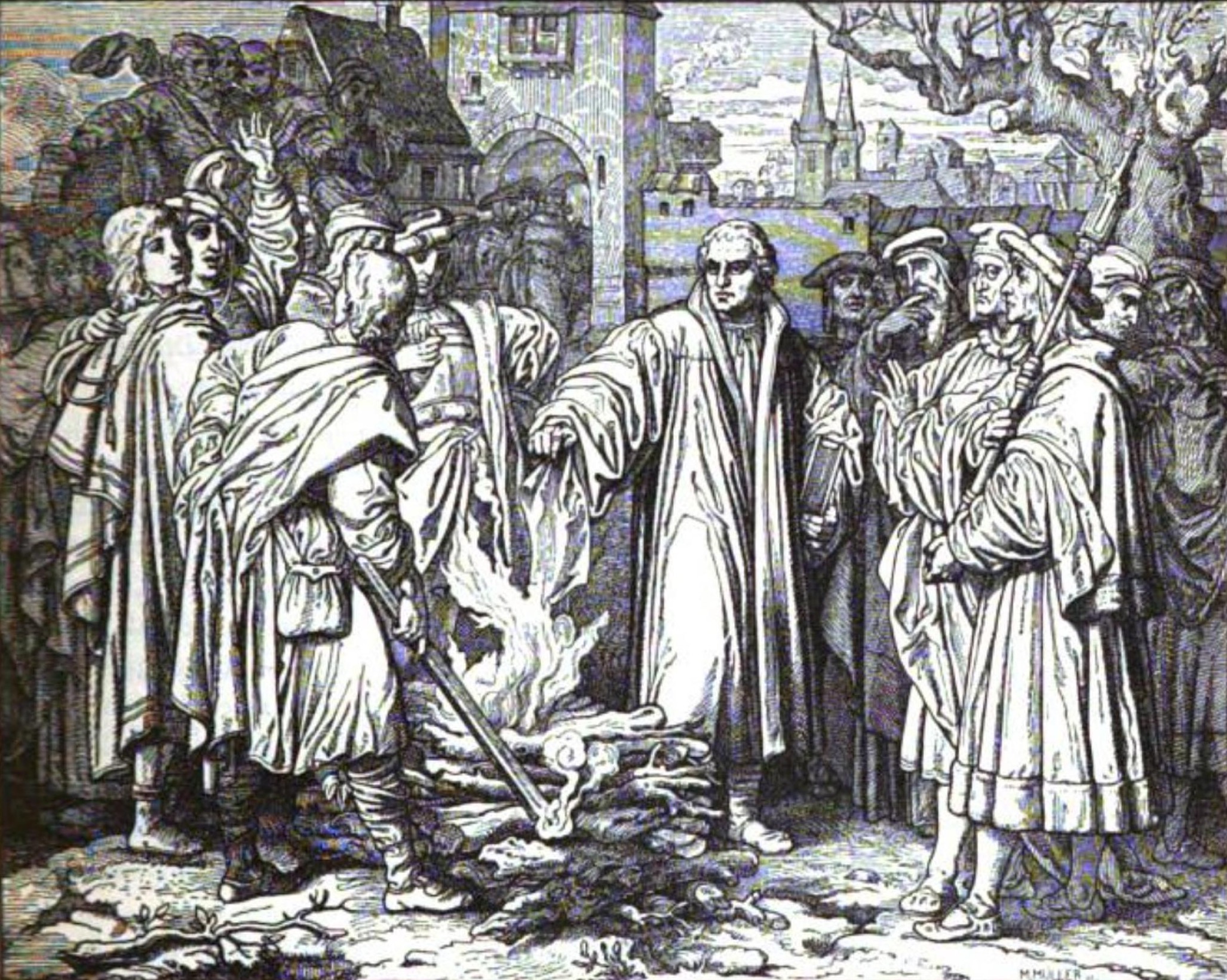
Aber laut Pawson gibt es einen späteren Zeitpunkt, fast drei Jahre später, der noch wichtiger ist: den Tag, an dem Martin Luther ein Feuer entzündete.
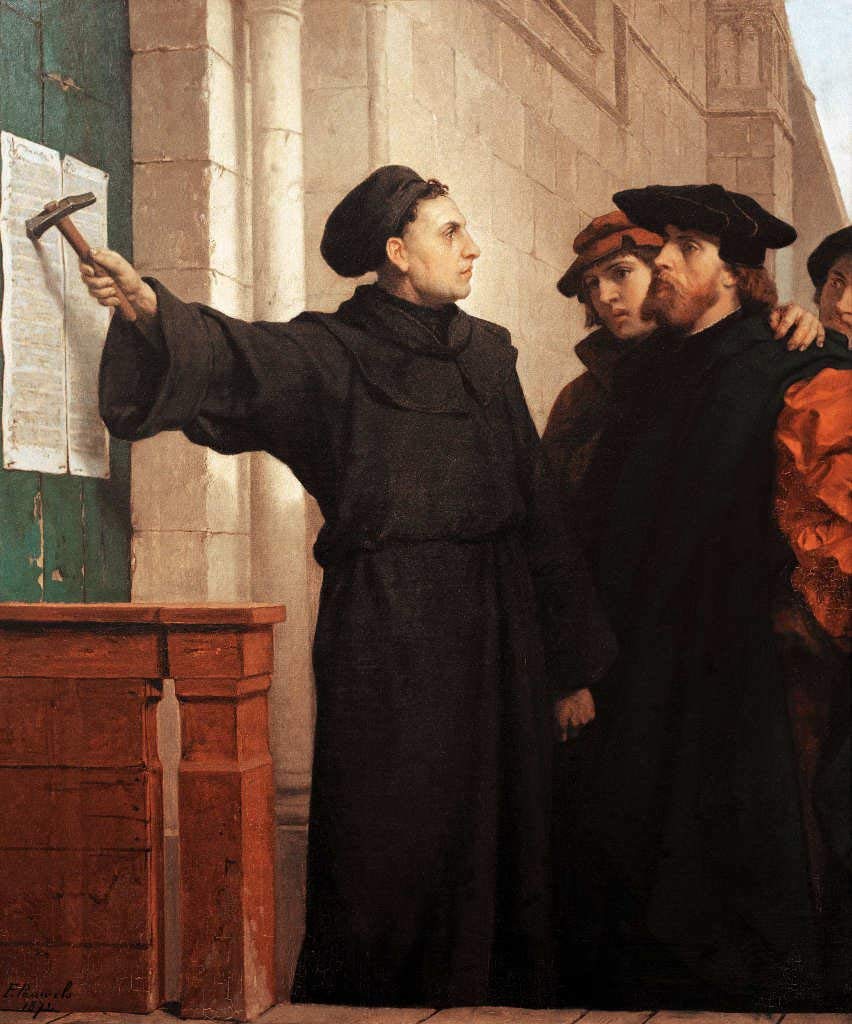
In diesen drei Jahren entfernte sich Luther vom Wunsch nach einem bloßen Frühjahrsputz der Kirche und begann, das ganze System niederzureißen. Mit seinen 95 Thesen griff er zunächst nur Missbrauch und Ablasshandel an, nicht das System selbst. Eine seiner Thesen lautete: „Wenn der Papst wüsste, wie die Ablassverkäufer seine Herde ausplündern, wäre es ihm lieber, dass die Kirche St. Peter zu Asche verbrannt würde, als dass sie aus der Haut und den Knochen seiner Schafe wieder aufgebaut würde.“ Luther ging naiv davon aus, dass der Papst auf seiner Seite sei.
Er war schnell desillusioniert, und zwar vom Papst selbst. Pawson erzählt es so: Als das Ablassgeld aus Deutschland ausblieb, exkommunizierte ihn der Papst. Erst dann begriff Luther: Der Fehler lag nicht bei ein paar schlechten Männern, die ein gutes System leiteten. Das System selbst war falsch.
Also warf er drei Dinge ins Feuer:
- Das Pergament mit der Unterschrift des Papstes und der Androhung der Exkommunikation.
- Ein Buch des kanonischen Rechts, der Kodex, nach dem er als Mönch und Priester gelebt hatte.
- Ein Dokument, von dem er nun wusste, dass es sich um eine Fälschung handelte und mit dem das Papsttum das Recht beanspruchte, Christus auf Erden zu vertreten.
Zuvor hatte er der Kirche einen Frühjahrsputz gegeben. Drei Jahre später begann er mit dem Abriss.
Reformieren oder niederreißen?
Luthers Wendepunkt in drei Jahren (1517–1520)
Zunächst wollte Luther das System nur einem Frühjahrsputz unterziehen. Drei Jahre später erkannte er, dass das System selbst das Problem war.
📜
31. Oktober 1517
Die 95 Thesen in Wittenberg
- Ziel: Eine theologische Debatte anstoßen.
- Angriff auf den Missbrauch (Ablässe), nicht auf das System.
- Er nahm an, der Papst würde zustimmen, wenn er davon wüsste.
🔥
10. Dezember 1520
Verbrennung der Bannbulle (Elstertor)
- Ziel: Ein vollständiger Bruch.
- Verbrennung der Bulle Exsurge Domine (Androhung der Exkommunikation).
- Auch die Bücher des kanonischen Rechts wurden verbrannt.
- Er erkannte, dass das System selbst falsch war.
Pawson hält das Freudenfeuer von 1520 für noch bedeutsamer als das Anschlagen der Thesen 1517. (Zur Datierung: Die Bulle Exsurge Domine wurde am 15. Juni 1520 in Rom erlassen; Luther verbrannte sie am 10. Dezember 1520 in Wittenberg; seine formelle Exkommunikation folgte am 3. Januar 1521.)
Was trieb einen Mönch zu diesem Feuer?
Um Luther zu verstehen, muss man zu der Angst zurückgehen, die ihn ins Kloster trieb. Pawson erzählt es: Luther wäre einst bei einem Gewitter beinahe gestorben. Es hinterließ bei ihm Angst vor dem Sterben, Angst davor, Gott mit unvergebenen Sünden gegenüberzutreten. Und er suchte verzweifelt nach einem Ausweg aus dieser Angst.
Er betete zu den Heiligen, betete zu Maria, unternahm Pilgerfahrten, betrachtete Reliquien und Bilder. Er hatte alles versucht. Doch nichts davon gab ihm die Gewissheit, dass seine Sünden vergeben waren. Später stellte ihm sein geistlicher Vorgesetzter Johann von Staupitz die entscheidende Frage: „Wenn du einem schwankenden Glauben all diese Krücken wegnimmst, wenn du Maria, die Heiligen, die Bilder, die Buße und die Wallfahrten wegnimmst, was wirst du dann an ihre Stelle setzen?“ Luthers Antwort war, wie in dem Film, den Pawsons Gemeinde gerade gesehen hatte, nur eines: „Jesus Christus. Der Mensch braucht nur Jesus Christus.“
Das war der Keim für alles, was danach kam.
Ist die Reformation ein totes Thema?
In seiner Predigt von 1967 anlässlich des 450. Jubiläums der Reformation erzählt Pawson zwei Geschichten nebeneinander. Als er einmal an einem Treffen protestantischer Pfarrer und Mitglieder teilnahm, erwähnte er zufällig die Reformation und erfuhr unmissverständlich, dass die Protestanten sich nicht mehr für sie interessierten. Es sei „tote Geschichte“, sagten sie, und es sei nicht angebracht, sie zur Sprache zu bringen. Er kam mit klingelnden Ohren davon.
Doch schon am nächsten Wochenende wurde er in ein römisch-katholisches Seminar im Südosten Irlands eingeladen, um mit den Dozenten unter anderem über die Reformation zu sprechen. Sie wollten hören, was er dachte, und wünschten sich ein offenes Forum. Er sagte: „Ich denke, die damals aufgeworfenen Fragen sind immer noch lebendig und nicht gelöst.“ Sie antworteten: „Genau das denken auch wir.“ Es folgten drei Stunden freundschaftlicher Gespräche, dann ein schöner Tee und die Heimfahrt.
Es ist eine außergewöhnliche Situation. Er konnte mit Katholiken über die Reformation diskutieren, mit Protestanten jedoch nicht. Pawsons Antwort, kurz gesagt: Die Reformation ist nicht veraltet – nicht weil wir gegen Menschen kämpfen, ob katholisch oder protestantisch, sondern weil wir gegen Systeme und Ismen kämpfen, die Menschen für die Wahrheit blind machen. Nur ist die Frontlinie heute ganz anders gezogen als zu Luthers Zeiten.
Darin liegt Luthers Größe. Er entdeckte sieben Prioritäten wieder, sieben Dinge, die auf den zweiten Platz verdrängt worden waren, und setzte sie wieder an die erste Stelle.
Sieben Prioritäten
Was Luther an die erste Stelle setzte
Luthers Größe lag darin, seine Prioritäten richtig zu ordnen. Sieben Dinge, die auf den zweiten Platz verdrängt worden waren, setzte er wieder an die erste Stelle.
Es ist besser, im Gewissen Gottes Wort zu gehorchen, als dem Druck von Kirche oder Staat nachzugeben. („Es ist weder sicher noch ehrlich, gegen das Gewissen zu handeln.“)
Einheit ohne die Wahrheit des Evangeliums ist bedeutungslos. Was Menschen rettet, ist die Wahrheit, nicht eine Institution.
Jede kirchliche Tradition (Gebete zu Heiligen, Fegefeuer …) muss an der Schrift geprüft werden (Sola Scriptura).
Nicht Werke und nicht Glaube plus Werke. „Der Gerechte wird aus Glauben leben“ (Sola Fide). Gerettet werden wir NICHT DURCH gute Werke, sondern FÜR gute Werke.
Gnade wird nicht magisch in Sakramente portioniert. Ohne Glauben sind Sakramente nutzlos. Sie weist die „magische“ Sicht von Taufe und Abendmahl zurück.
Das Priestertum aller Gläubigen. Die Trennung zwischen Klerus und Laien wurde aufgehoben. Diener haben eine andere Funktion, aber keinen anderen Status.
Es gibt nur einen Priester (Christus) und einen Stellvertreter (den Heiligen Geist). Die Kirche kann Christus nicht ersetzen. Wer sich an die Stelle Christi setzt, ist der Antichrist (statt Christus).
Gehen wir die Prioritäten der Reihe nach durch.
1. Gewissen vor Autorität
Luther lebte in einer Zeit, in der es kaum Gewissensfreiheit gab. Es war nicht der Staat, sondern die Kirche, die Ihnen sagte, was Sie glauben und wie Sie sich verhalten sollten. Um sich diese Welt vorzustellen, erinnern Sie sich an die Tragödie Galileis. Durch sein Teleskop entdeckte er Wahrheiten über das Universum, und ihm wurde gesagt: „Das darf man nicht glauben, das darf man nicht lehren.“
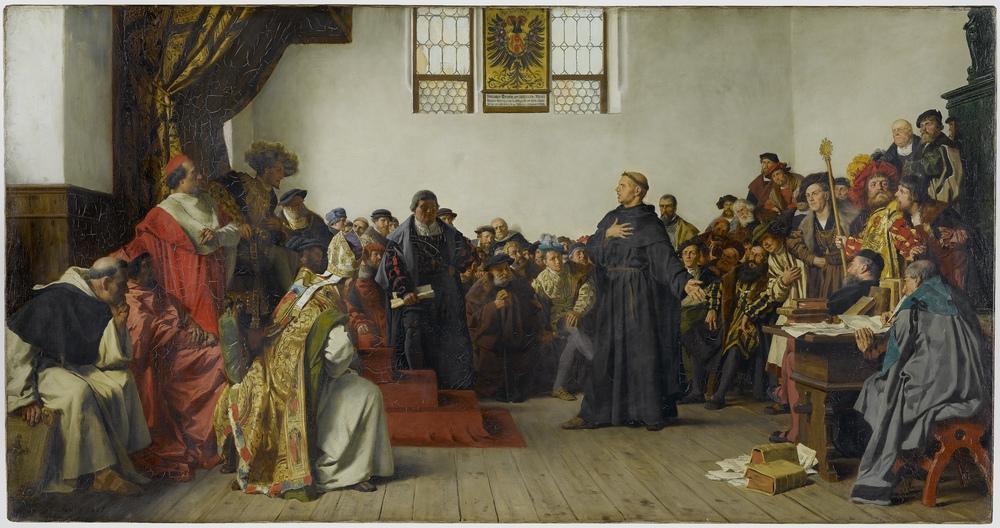
Luther war ein Mann, der es wagte zu sagen: „Mein Gewissen ist vom Wort Gottes gefangen. Es ist weder sicher noch ehrlich, gegen das Gewissen zu verstoßen.“ Auf dem Reichstag zu Worms (1521) wollte er vor dem Kaiser und der gesamten kirchlichen Machtmaschinerie noch immer nicht widerrufen.
Und das ist keine Frage der fernen Vergangenheit. In derselben Woche, in der er predigte, überreichte ihm jemand einen Zeitungsausschnitt: Über 200 dissidente Baptisten in der Sowjetunion sind wegen „Verstoßes“ gegen strenge religiöse Gesetze inhaftiert oder warten auf ihren Prozess. Einer war nach der Folter gestorben; ihre Kinder wurden stundenlang zum Glauben ihrer Eltern befragt. Pawson stellt fest, dass vielleicht die Hälfte der Menschheit immer noch in totalitären Staaten lebt, die sowohl den Geist als auch den Körper beanspruchen. Die Gewissensfreiheit, die wir für selbstverständlich halten, besitzt der Großteil der Menschheit immer noch nicht.
Dann sagt Pawson, dass die Welt niemals von „Quallen“ ohne Rückgrat regiert wird, die mit dem Strom treiben. Sie wird von Menschen geleitet, die den Mut zu ihren Überzeugungen haben. Und er warnt eindringlich davor, dass selbst die heutigen selbsternannten „Nonkonformisten“ sich mit erstaunlicher Leichtigkeit aneinander anpassen. Was wir brauchen, sind Menschen, die es wirklich wagen, allein zu stehen.
2. Wahrheit geht vor Einheit
Einer der schwersten Vorwürfe gegen Luther war, er habe die Kirche gespalten, er sei ein Schismatiker. Fast tausend Jahre lang gab es in Westeuropa eine Kirche, eine Konfession. Man sagte ihm: Widerrufe, und die Kirche bleibt intakt; mach weiter, und du wirst sie zerbrechen.
Aber Luther stellte die Wahrheit vor die Einheit. Sein Gewissen war nicht frei, jeder Laune zu folgen, denn es war vom Wort Gottes gefangen. Er sah das Entscheidende klar. Was Menschen rettet, ist nicht die Einheit der Kirche, sondern die Wahrheit des Evangeliums. Vereinigt morgen alle Kirchen auf der Erde, dann wird die Zahl der Geretteten nicht steigen. Was wirklich nötig ist, ist die Wahrheit des Evangeliums, das in diesen Kirchen gepredigt wird.
Pawson sagt es deutlich. In unserer Zeit gibt es ein Schlagwort, dem man zustimmt oder das man hasst, wenn man es ablehnt, und dieses Wort ist „Einheit“. Eine ganze Welt schrumpft durch den Verkehr, und die Kirche scheint dieses Echo aufgenommen zu haben und ruft „Einheit, Einheit, Einheit“. Er erzählt ein Detail, das ihm Freude macht. Als der British Council of Churches in Nottingham sagte, die Meinungsverschiedenheiten könnten innerhalb einer bereits vereinigten Kirche beigelegt werden, antwortete die Baptistenunion als einzige unter den Konfessionen: Nein, sie müssten zuerst beigelegt werden, und dann könne man sich vereinigen. Das bedeutet, die Wahrheit über die Einheit zu stellen.
3. Schrift vor Tradition
Pawson nennt ein verblüffendes Detail: Luther war 20 Jahre alt, bevor er zum ersten Mal eine vollständige Bibel in der Hand hielt und las. Er wurde fromm erzogen und auf ein heiliges Leben vorbereitet, und doch sah er dieses Buch erst, als er 20 war. Als er es las, war er erstaunt. Vieles von dem, was ihm als „lebenswichtiger Teil“ des christlichen Glaubens und der christlichen Praxis gesagt worden war, stand einfach nicht darin: nichts über das Beten zu Maria oder den Heiligen, keine Reliquien und Bilder, kein Fegefeuer, keine Buße.
Er fragte: Woher kommt das alles? Die offizielle Antwort war, dass dies Tradition der Kirche sei und die Tradition ebenso Wort Gottes sei wie dieses Buch. Luther stand vor zwei „Worten Gottes“, einem geschriebenen und einem gesprochenen, und wurde aufgefordert, beide anzunehmen. Doch er kam zu einem Schluss: Nur dieses Buch ist die Wahrheit, und jede kirchliche Tradition muss vor den Prüfstein der Heiligen Schrift gebracht und von ihr geprüft werden. Nachdem er das getan hatte, begann er, Traditionen zu verwerfen.
Pawson gibt offen zu, dass sogar seine eigene Kirche unbiblische Traditionen hat und dass sie sich alle dem Wort Gottes beugen müssen. Er erzählt von einem Freund, der in der Aufnahme ungefähr „Eduardo Lubinque“ genannt wird – ein Name, den ich in keiner unabhängigen Quelle bestätigen konnte und der wahrscheinlich auf einem Transkriptionsfehler beruht. Dieser Mann war einst Professor für Neues Testament und gehörte zur Elite der Jesuitenpriester Roms. Je mehr er die Heilige Schrift studierte, desto weniger konnte er seinen Schülern Dinge lehren, die nicht darin standen, während er dieses Buch als „Wort Gottes“ anerkannte. So gab er diesen Lehrstuhl auf – wie Luther 450 Jahre zuvor, der ebenfalls Theologieprofessor gewesen war. Dieses Buch hatte sein Werk getan.
4. Glaube vor Werken (Sola Fide)
Dies ist die größte Frage, die ein Mensch stellen kann, und für Luther ging es um Leben oder Tod: Wie komme ich mit Gott ins Reine? Wie werden meine Sünden vergeben? Das alte Gewitter hatte ihm Angst gemacht, mit unvergebenen Sünden zu sterben, also war das keine Theorie.
Als Johann Tetzel vorbeikam und Ablässe verkaufte, war sich Luther sicher, dass das nicht der richtige Weg war. Vergebung kann man nicht kaufen. Dann ging er noch einen Schritt weiter: Wenn man sie nicht kaufen kann, kann man sie auch nicht verdienen. Pawson gibt drei Antworten auf die Frage, wie man in den Himmel kommt, und jede Religion fällt in eine davon:
- Die Welt sagt: Tue Gutes.
- Die Kirche seiner Zeit sagte: Sie brauchen Glauben plus gute Taten.
- Luther sagte: Nur eines ist nötig, nämlich Glaube.
Das Manifest der Reformation, das vom Alten Testament über das Neue Testament bis hin zu Luther reicht, lautet: „Der Gerechte wird aus Glauben leben.“ Nicht durch gute Taten, nicht durch Glauben vermischt mit Werken, sondern durch Glauben allein. Das Latein Sola fide (allein der Glaube) wurde zum großen Banner der Reformation.
Welche Rolle spielen also gute Taten? Luther hat es hervorragend ausgedrückt, und Pawson sagt, es könne nicht besser ausgedrückt werden: Wir werden NICHT DURCH gute Taten gerettet, sondern FÜR gute Taten. Sie tun keine guten Taten, um sich die Eintrittskarte in den Himmel zu verdienen; Sie tun sie, weil Sie bereits in den Himmel kommen.
Die fünf Solas
Fünf Schlagworte, die die Reformation auf den Punkt bringen
Luthers sieben Prioritäten wurden später in fünf lateinischen „sola / solus“-Schlagworten (allein) zusammengefasst. Ehrlicherweise ist die Zusammenstellung der „fünf Solas“ als einheitliche Liste eine spätere Systematisierung des 19. und 20. Jahrhunderts, kein fertiges Schlagwort des 16. Jahrhunderts; doch jede Idee ist tatsächlich in den Reformatoren selbst verwurzelt.
Sola Scriptura · Allein die Schrift
Allein die Schrift ist die höchste, unfehlbare Autorität für den Glauben.
Gegenposition: Katholisch und orthodox: Die Schrift darf nicht von der Tradition der Kirche getrennt werden, die sie hervorgebracht hat.
Sola Fide · Allein der Glaube
Der Mensch wird allein durch den Glauben gerechtfertigt, nicht durch Verdienst.
Gegenposition: Trient (1547): Ein „lebendiger“ Glaube muss Werke einschließen; verurteilt den „Glauben, der nichts Weiteres braucht“.
Sola Gratia · Allein aus Gnade
Die Rettung ist ganz und gar Gottes unverdientes Geschenk.
Gegenposition: Der breiteste gemeinsame Boden: Selbst Trient (Sitzung VI, 1547) lehrt Gnade als unverdienten Anfang; bekräftigt in der JDDJ von 1999.
Solus Christus · Christus allein
Christus allein ist der eine Mittler zwischen Gott und Mensch.
Gegenposition: Umstritten: die vermittelnde Rolle der Kirche, der Heiligen und Marias in katholischer und orthodoxer Tradition.
Soli Deo Gloria · Gott allein die Ehre
Alle Ehre gehört allein Gott.
Gegenposition: Am wenigsten umstritten, begründet aber die Zurückweisung übermäßiger Ehre für Personen und Institutionen.
5. Gnade vor den Sakramenten
Luther wurde in dem Glauben erzogen, dass die Gnade auf sieben Sakramente verteilt sei (Pawson sagt, die Zahl sei einst bis auf vierzehn gestiegen und dann auf sieben gesunken) und dass sie automatisch, wie Magie, wirkten – unabhängig davon, wer sie spendete oder empfing. Das Taufwasser rette automatisch ein unwissendes Kind. Brot und Wein würden zu einem bestimmten Zeitpunkt im Gottesdienst automatisch zum eigentlichen Leib und Blut Christi und dann von einem Priester als Opfer dargebracht, nicht auf einem Tisch, sondern auf einem Altar.
Luther dachte darüber nach und sagte: „Ich weiß, dass ich Gottes Gnade brauche, aber in diesem Buch steht nichts, was mir sagen könnte, dass die Gnade in automatisch wirkenden Sakramenten verankert ist.“ Er erkannte: Ohne Glauben sind die Sakramente nutzlos. „Aus Gnade seid ihr gerettet, durch den Glauben“, nicht durch Sakramente. Gnade ist nicht verpackt; sie fließt wie ein Fluss. Selbst der einfachste Gläubige, der nie getauft wurde und nicht am Abendmahl teilnimmt, kennt im Glauben die Gnade Gottes. Pawson verweist auf seine Freunde in der Heilsarmee. Sie haben überhaupt keine Sakramente, besitzen aber eindeutig Gnade; sie singen ständig davon.
Zu Luthers beiden Sakramenten (Taufe und Abendmahl) gibt Pawson ehrlich zu, was selbst Luthers engste Freunde zugeben mussten: Luther hat die Sache nie zu Ende gedacht und war bei beiden ein wenig verwirrt. Was er richtig verstanden hat, war die Reihenfolge: Zuerst die Gnade, dann die Sakramente.
6. Menschen vor Priestern (Das Priestertum aller Gläubigen)
Die Kirche, in die Luther hineingeboren wurde, war eine Pyramide der Macht: An der Spitze stand der Papst, darunter folgten Kardinäle, Bischöfe, Mönchsorden und schließlich der Pfarrer, ganz unten die Laien. Die Kluft zwischen „Klerus“ und „Laien“ war so streng, dass sich sogar Kleidung und Platz im Kirchengebäude unterschieden: auf der einen Seite Gewänder, auf der anderen gewöhnliche Kleidung.
Pawson erzählt noch einmal, wie Luther diese Pyramide betrachtete und von oben nach unten fragte. Welche biblische Rechtfertigung gibt es für einen Mann dort oben? Keine. Für Bischöfe? Keine. Für vermittelnde Priester? Keine. Dann kam er zu einer wunderbaren Wiederentdeckung: das Priestertum aller Gläubigen. Luther erklärte jeden Laien zum Priester und jeden Priester zum Laien, weil es zwischen ihnen keine geistliche Rangtrennung geben sollte. Unterschiede gab es weiterhin in der Funktion, wie bei verschiedenen Organen in einem Körper. Deshalb nannte er sie „Minister“, nicht „Priester“. Jeder Gläubige ist ein Priester.
Deshalb bemühte er sich, die Bibel ins Alltagsdeutsche zu übersetzen, um sie den Menschen und nicht nur den Priestern in die Hände zu geben. Wie er sagte, könnte eine Magd, die mit einem Besen ein Zimmer fegt, das Wort Gottes besser verstehen als ein Priester. Pawson stellt fest, dass zwei Drittel der bekennenden Christen auf der Welt immer noch unter Priestertum und hierarchischer Kontrolle leben, sodass dieser Protest weiterhin notwendig ist.
Das Priestertum aller Gläubigen
Die Machtpyramide niederreißen
Die mittelalterliche Kirche war eine Pyramide: unten die Laien, oben der Papst. Luther erklärte: Es gibt keine mittlere Klasse. Alle sind Priester.
Vorreformatorische Struktur
Das reformatorische Ideal
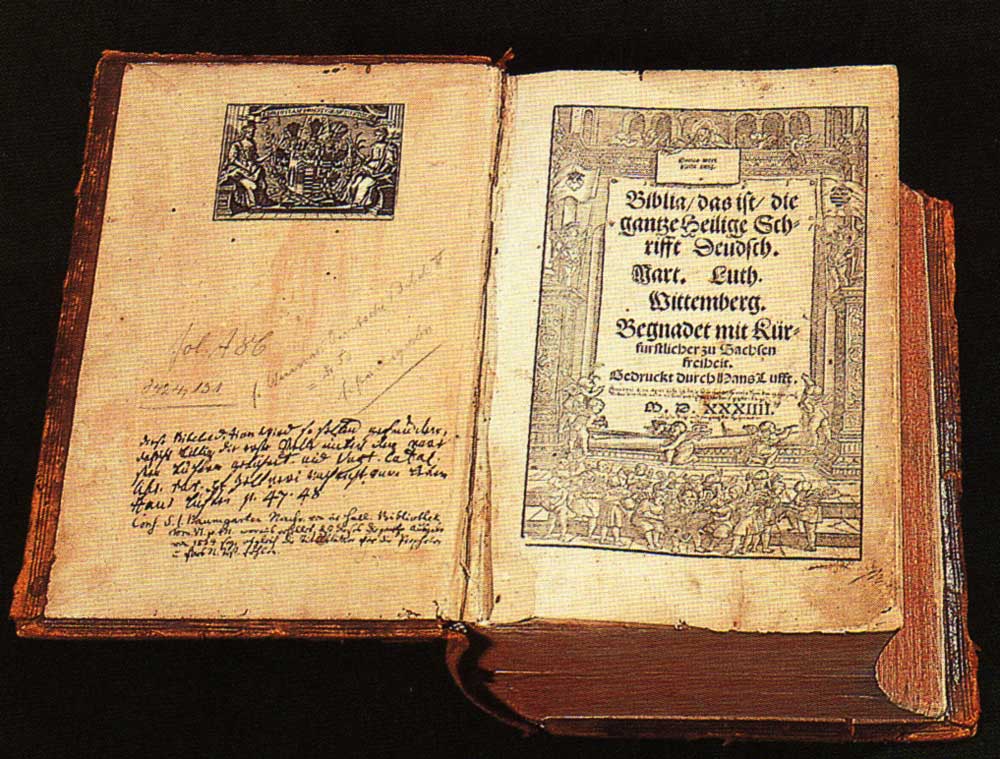
7. Christus vor der Kirche
Das ist der Höhepunkt. Pawson erinnert sich, dass die beiden zustimmten, als er den Dozenten für Kirchengeschichte an diesem katholischen Seminar fragte, was das größte Problem der Reformation sei. Das größte Problem war Folgendes: Luther stellte die Vorstellung „Christus und die Kirche sind eins“ infrage – die Vorstellung, dass die Kirche für Menschen tun könnte, was nur Christus tun kann. Der Leib, also die Kirche, trat an die Stelle des Hauptes, also Christi.
Pawson spricht über drei Ämter:
- Ich brauche einen Propheten, der mir Gottes unfehlbare Wahrheit lehrt. Wer ist mein Prophet? Rom sagt: der Leib, die unfehlbare Kirche. Luther sagt: das Haupt.
- Ich brauche einen Priester, um zu Gott zu kommen. Wer ist mein Priester? Rom sagt: der Leib, die Kirche; bekenne deine Sünden vor ihr. Luther sagt: Christus im Himmel, und du kannst jederzeit durch ihn zu Gott kommen.
- Ich brauche einen König, der mich regiert. Wer ist mein König? Rom sagt: der Körper auf Erden. Luther sagt: Mein Haupt im Himmel.
Also wagte Luther es, das Papsttum als „Antichrist“ zu bezeichnen. Pawson erklärt sorgfältig: Luther meinte nicht, dass der Papst gegen Christus sei. Im Grundsinn kann „anti“ auch statt, anstelle von bedeuten. Wer sich an die Stelle Christi setzt, ist Antichrist. Rom sagte den Menschen, dass sie, um zu Gott zu kommen, durch die Kirche gehen müssten; damit setzte es sich an Christi Stelle.
Dann konterte Rom mit einem wichtigen Argument. Wenn das Haupt im Himmel ist und jemand auf der Erde zu ihm kommen möchte, muss er dann nicht durch den Körper kommen? Ist der Papst dann nicht der Stellvertreter auf Erden, der an Christi Stelle steht und seine Lehre vermittelt? Luther dachte darüber nach und antwortete: Ja, Christus muss einen Stellvertreter auf Erden haben, der für ihn spricht; dieser Stellvertreter ist jedoch der Heilige Geist, nicht der Papst. Zusammenfassend: „Kein Priester außer Christus und kein Stellvertreter außer dem Heiligen Geist.“
Pawson bringt es auf eine praktische Formel. Genau aus diesem Grund gibt es nirgendwo an den Wänden seiner Baptistenkirche einen Beichtstuhl. „Ich kann Ihre Sünden nicht vergeben, und die Gold Hill Baptist Church kann das auch nicht. Wenn Sie Sünden bekennen müssen, gehen Sie direkt zum Priester im Himmel, der Christus selbst ist.“
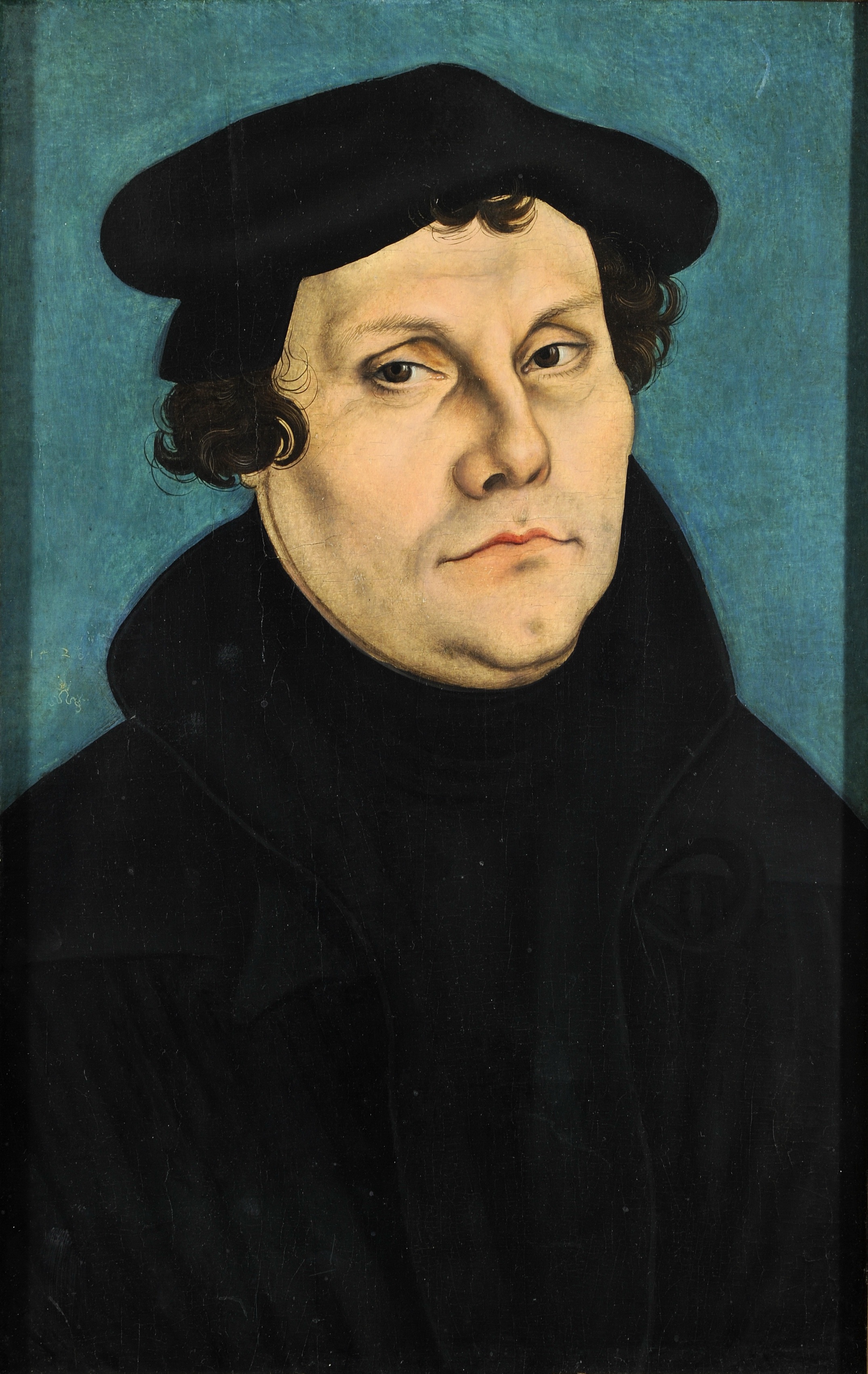
Das Feuer entweicht Luthers Händen
Pawson predigt hauptsächlich über Luther, weil Luther das Feuer entzündete. Doch es griff rasch über seine Hände hinaus. Innerhalb einer einzigen Generation hatte sich die Reformation in mehrere Strömungen gespalten, jede mit ihrer eigenen Stadt, ihrem eigenen Führer und ihrem eigenen Schwerpunkt. Einige verbündeten sich miteinander; einige stritten sich so erbittert, dass sie sich nie versöhnten. Wenn man nur von Luther hört, könnte man meinen, die Reformation sei ein fester Block. Das war sie nicht.
Mehr als ein Mann
Die anderen Gesichter der Reformation
Pawson predigt hauptsächlich über Luther, weil Luther den Funken entzündete. Doch das Feuer entglitt ihm rasch. Innerhalb einer Generation hatte sich die Reformation in mehrere Strömungen geteilt, jede mit eigener Stadt, eigenem Anführer und eigener Ausrichtung.
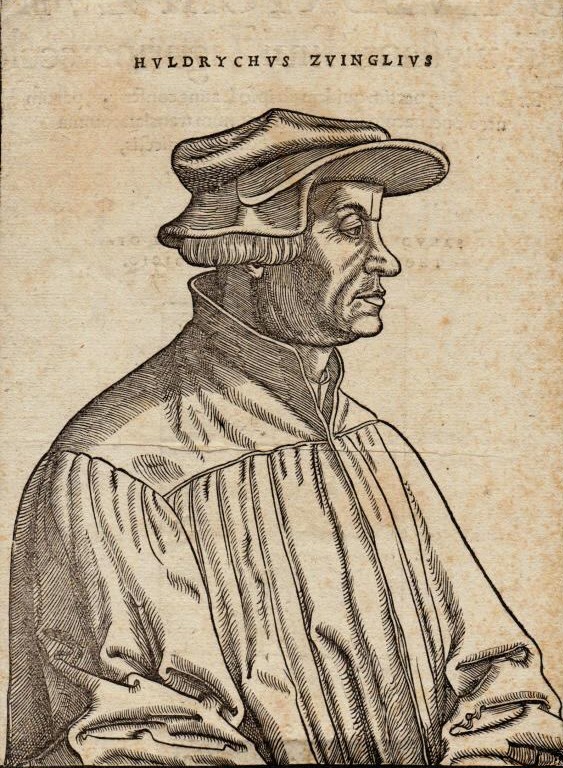
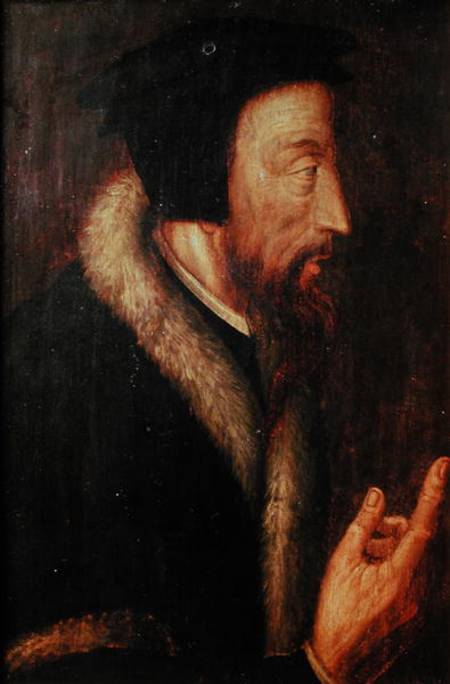
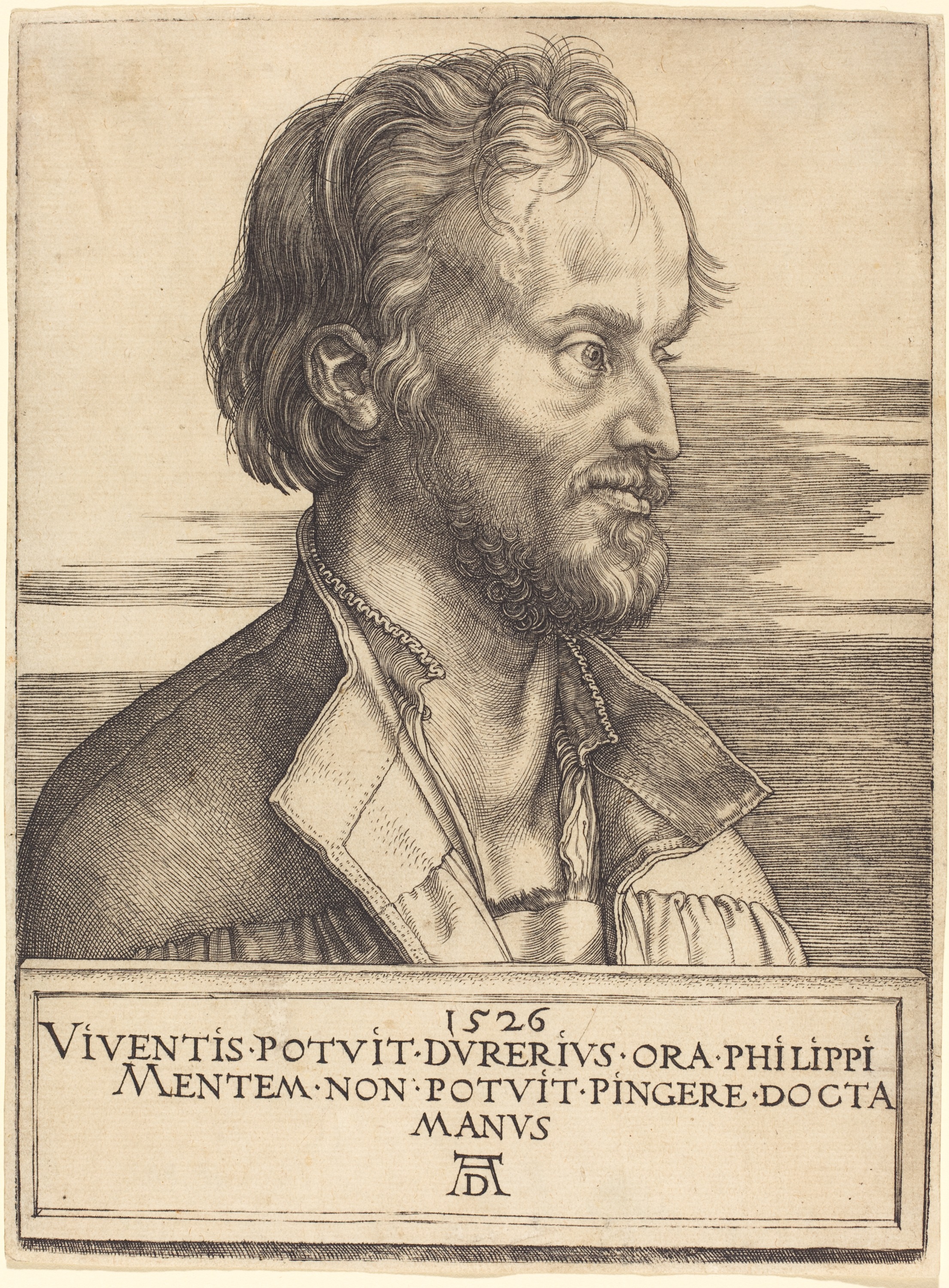
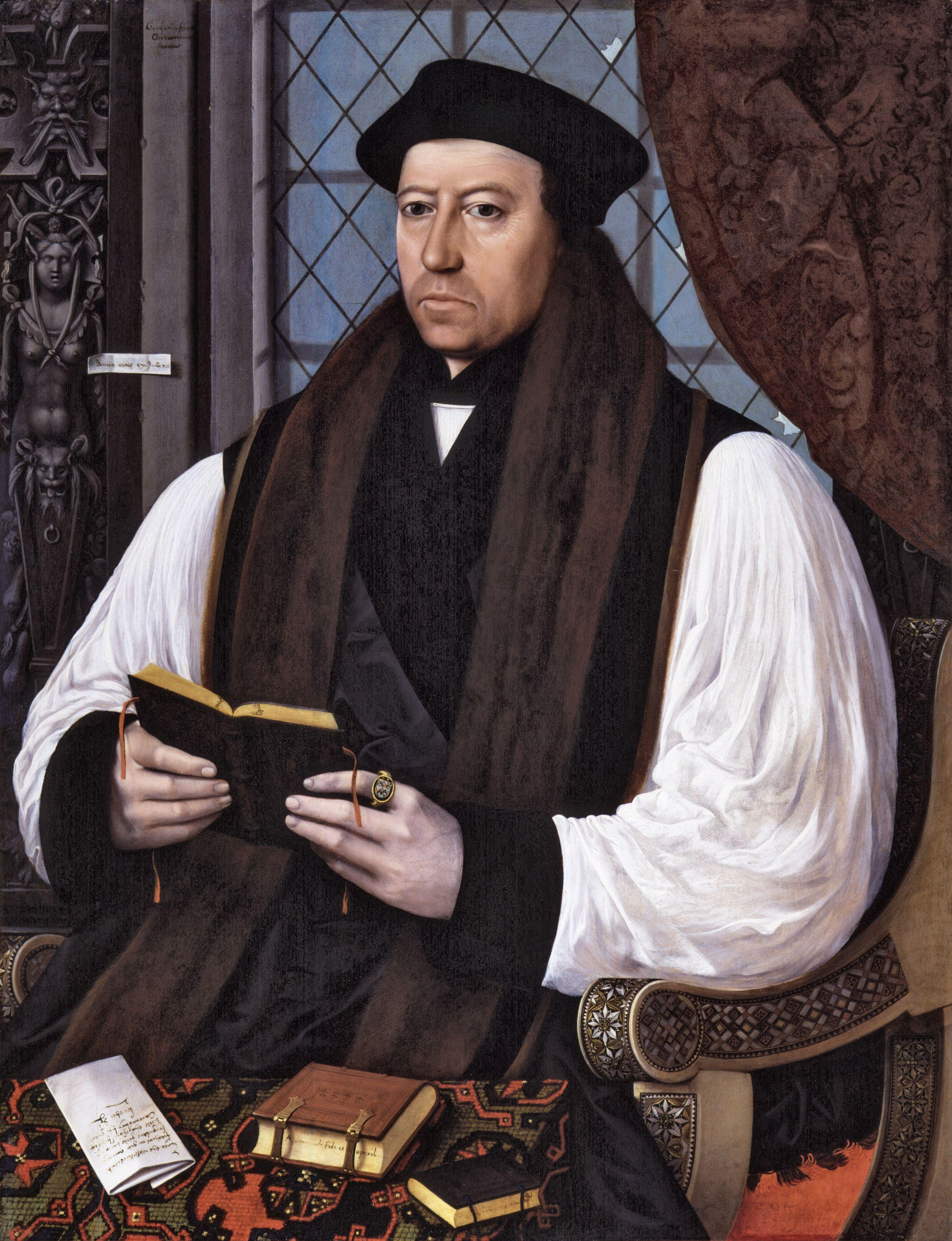
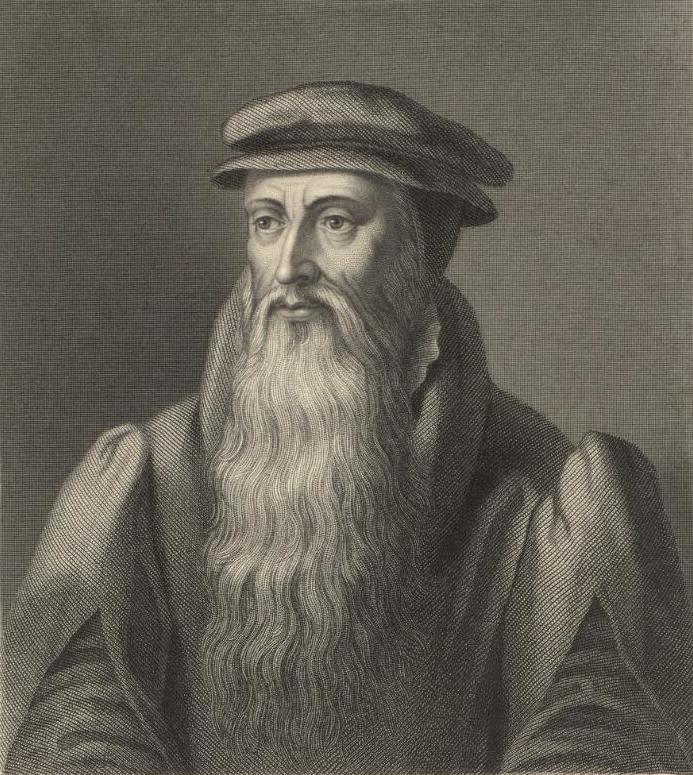
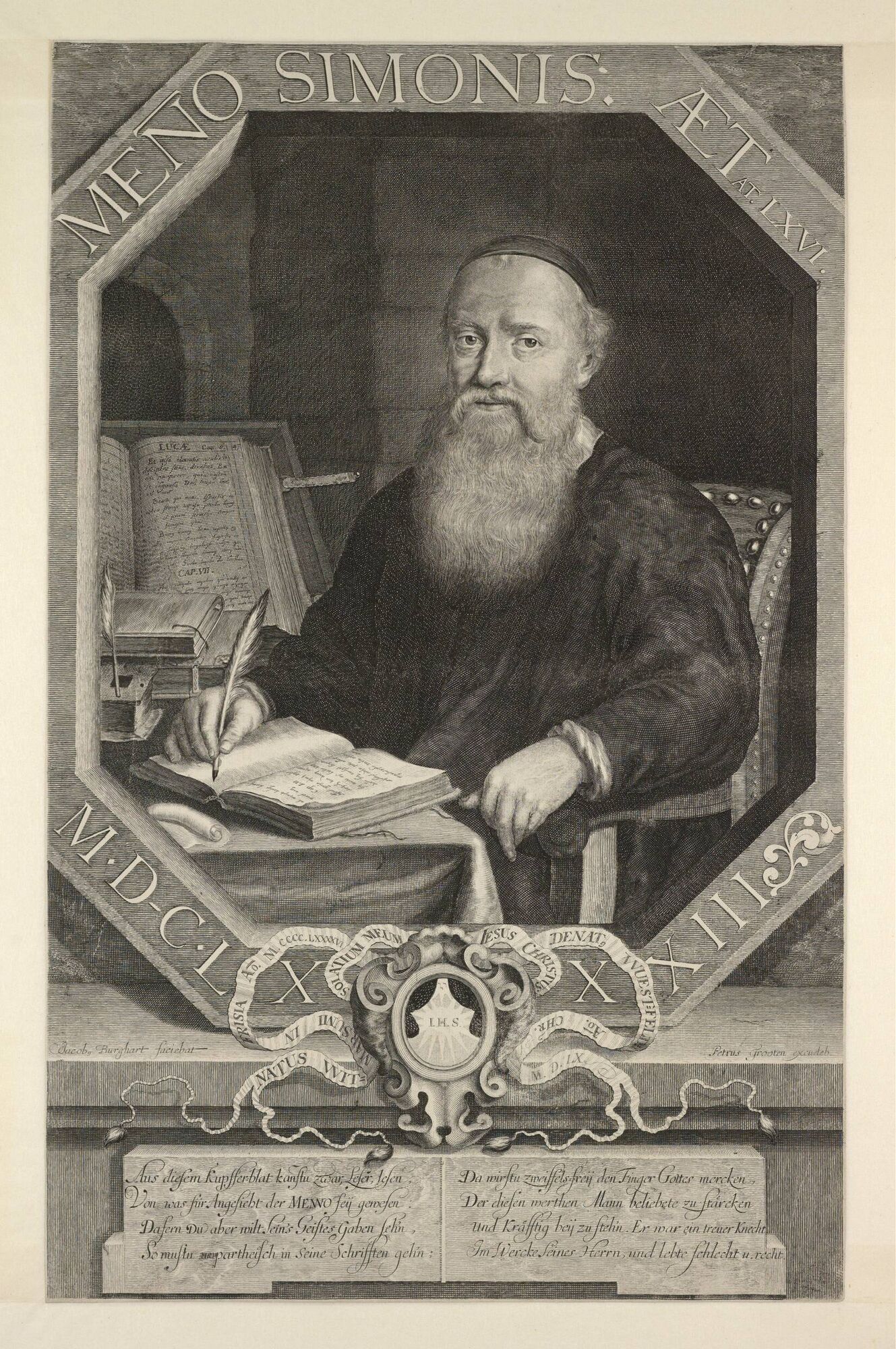
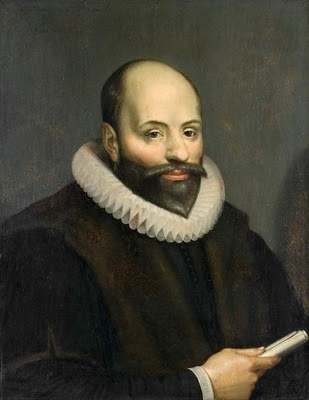
Porträts: alle gemeinfrei (Wikimedia Commons). Knox und Menno Simons sind spätere Stiche, da kein zeitgenössisches Porträt erhalten ist.
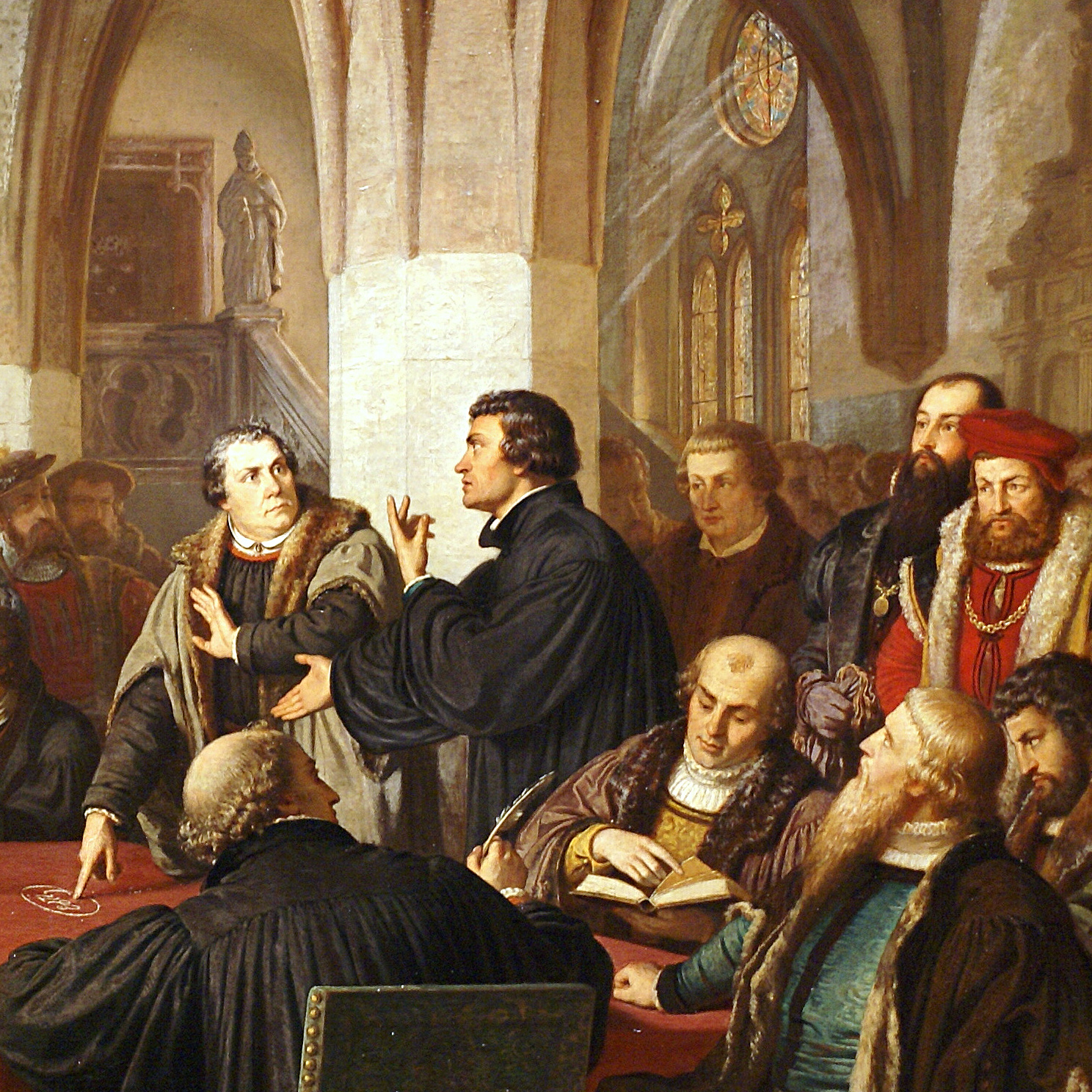
Zwingli und die Spaltung beim Abendmahl. In Zürich führte Huldrych Zwingli eine von Luther unabhängige Reform durch. Die beiden waren sich in fast allem einig und hatten nur eine Frage: Was geschieht mit Brot und Wein beim Abendmahl? Beim Marburger Religionsgespräch (1529) einigten sie sich auf 14 von 15 Artikeln und scheiterten dann am letzten. Luther hielt am Wort „IST“ fest: „Dies ist mein Leib“, schrieb die Worte Hoc est corpus meum („Dies ist mein Leib“) mit Kreide auf den Tisch und wich nicht davon ab. Zwingli meinte, es handle sich nur um ein Gedächtniszeichen. Sie wollten sich nicht die Hand geben. Genau hier brach die protestantische Einheitsfront zusammen. Das veranschaulicht schmerzhaft den Grundsatz „Wahrheit vor Einheit“ und zeigt, wie schmal der Grat zwischen der Verteidigung der Wahrheit und der Spaltung der Kirche ist.
Calvin und Genf. Eine Generation später systematisierte der Franzose Johannes Calvin in seinem Werk Unterweisung in der christlichen Religion die gesamte protestantische Theologie und machte Genf zu einer „Schule Christi“, zu der ganz Europa seine Menschen schickte. Er betonte die absolute Souveränität Gottes bei der Erlösung.
„Dies ist mein Leib“
Vier Deutungen des Abendmahls und die Spaltung in Marburg
Nichts trennte Protestanten untereinander (und von Rom) tiefer als eine Frage: Was geschieht mit Brot und Wein? Beim Marburger Religionsgespräch (1529) stimmten Luther und Zwingli in 14 von 15 Artikeln überein, blieben aber an diesem einen hängen. Luther schrieb „Hoc est corpus meum“ („Dies IST mein Leib“) mit Kreide auf den Tisch und wich nicht zurück. Die vereinte protestantische Front zerbrach genau dort.
Katholisch
Rom / Trient
Transsubstantiation
Die Substanz von Brot und Wein wird tatsächlich in Leib und Blut Christi verwandelt; nur die äußeren „Akzidenzien“ bleiben.
Luther
Wittenberg
Sakramentale Einheit („in, mit, unter“)
Der Leib Christi ist „in, mit und unter“ Brot und Wein wirklich gegenwärtig, doch Brot bleibt Brot. (Luther lehnte den Begriff „Konsubstantiation“ ab.)
Calvin
Genf
Geistige Realpräsenz (durch den Geist)
Die Gläubigen empfangen Christus wirklich, aber durch den Glauben und durch den Geist, der sie zu Christus im Himmel emporhebt.
Zwingli
Zürich
Gedächtnis / Symbolisch
Brot und Wein sind nur Gedächtniszeichen. „Dies IST mein Leib“ bedeutet: „Dies BEZEICHNET meinen Leib.“
Von links (stärkste leibliche Gegenwart) nach rechts (reines Symbol). Diese Uneinigkeit verhinderte, dass sich der lutherische und der reformierte Zweig jemals vollständig vereinigten.
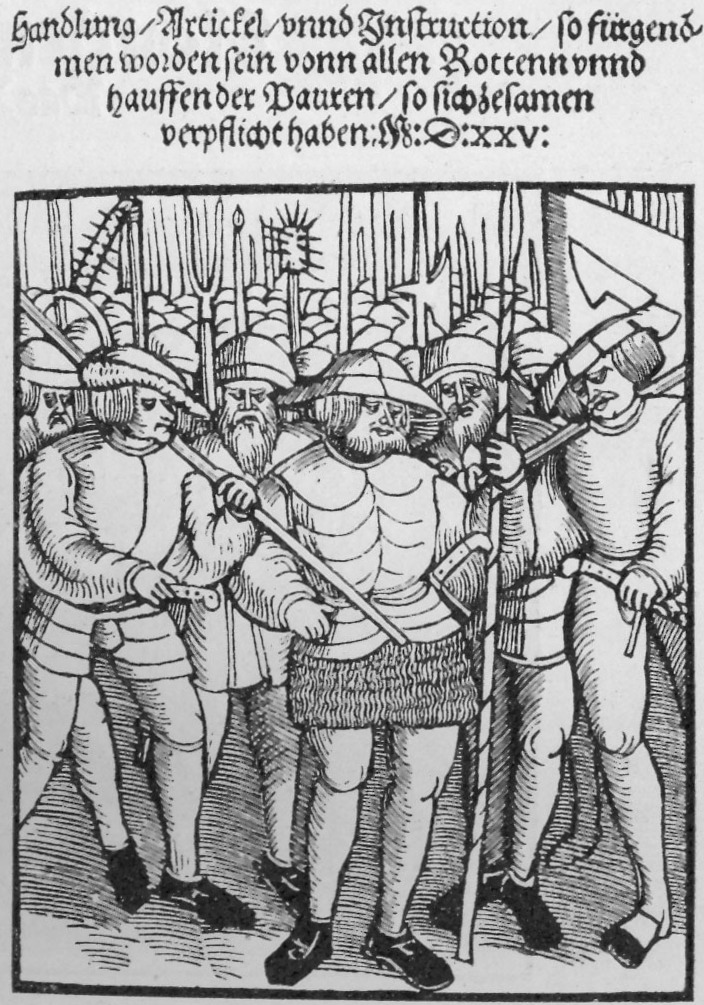
Die „Radikalen“ und ihr Preis. Dann sahen einige, dass weder Luther noch Zwingli weit genug gegangen waren. Wenn die Heilige Schrift allein die Autorität sei, fragten sie, wo im Neuen Testament die Kindertaufe zu finden sei. Im Januar 1525 ließen sich in Zürich erstmals erwachsene Gläubige taufen und wurden so zu Täufern, was ursprünglich „Wiedertäufer“ bedeutet. Sie hielten an einer vom Staat getrennten Kirche freiwilliger Gläubiger fest und lehnten Schwert und Eid ab. Später gab Menno Simons der zerschlagenen Bewegung eine friedliche, gewaltfreie Identität; von ihm stammt der Name „Mennoniten“.
Der Preis, den sie zahlten, war schrecklich, und er wurde von beiden Seiten gefordert. In denselben Jahren (1524–25) brach der „Bauernkrieg“ aus, als deutsche Bauern die Parolen „Priestertum aller Gläubigen“ und „Allein die Heilige Schrift“ nutzten, um ihre Forderungen durchzusetzen. Das war eine Verwendung, die Luther nie beabsichtigt hatte; er reagierte heftig und stellte sich direkt auf die Seite des Adels.
Calvin, Arminius und der Krieg um die Prädestination. Eine weitere Generation später spaltete sich das reformierte Lager selbst über eine schmerzliche Frage: Wirkt Gott die Erlösung aller (wer von ihm erwählt ist, wird gerettet), oder trägt der Mensch durch seinen eigenen freien Glauben dazu bei? Der niederländische Theologe Jacobus Arminius stellte Calvins bedingungslose Prädestination infrage. Nach seinem Tod verfassten seine Anhänger 1610 die Remonstranz in fünf Punkten. Die Synode von Dordrecht (1618–19) trat zusammen, verurteilte die arminianische Partei und formulierte die „Fünf Punkte des Calvinismus“, an die später das Akronym TULPE erinnerte.
Wer wählt wen?
Calvin gegen Arminius: Prädestination gegen freien Willen
Eine Generation nach Luther spaltete sich der Protestantismus intern an einer schmerzlichen Frage: Wirkt Gott bei der Rettung alles (Monergismus), oder wirken Gott und Mensch zusammen (Synergismus)? Der Synod von Dordrecht (1618–19) verurteilte die arminianische Partei und formulierte die „Fünf Punkte des Calvinismus“, später bekannt unter dem Akronym TULIP (eine Prägung des 20. Jahrhunderts).
Erwählung
Sühne
Menschliche Natur
Gnade
Beharrlichkeit
TULIP = Völlige Verderbtheit · Bedingungslose Erwählung · Begrenzte Sühne · Unwiderstehliche Gnade · Beharrlichkeit. Die arminianische „Remonstranz“ von 1610 legte genau fünf Gegenpunkte vor.
Ein Jahrhundert in Flammen
Wie sich die Reformation ausbreitete (1517–1619)
Von einem Mönch in einer deutschen Stadt erreichte das Feuer innerhalb eines Jahrhunderts die Schweiz, England, Schottland und die Niederlande und zwang sogar Rom selbst zur Reform.
Die anderen beiden Stühle: Rom und Konstantinopel
Pawson predigt kraftvoll und klar vom protestantischen Stuhl aus. Aber er selbst sagt, die Fragen der Reformation seien „noch lebendig und nicht gelöst“. Und der beste Weg, sie vollständig zu hören, besteht darin, die anderen beiden Stühle heranzuziehen.
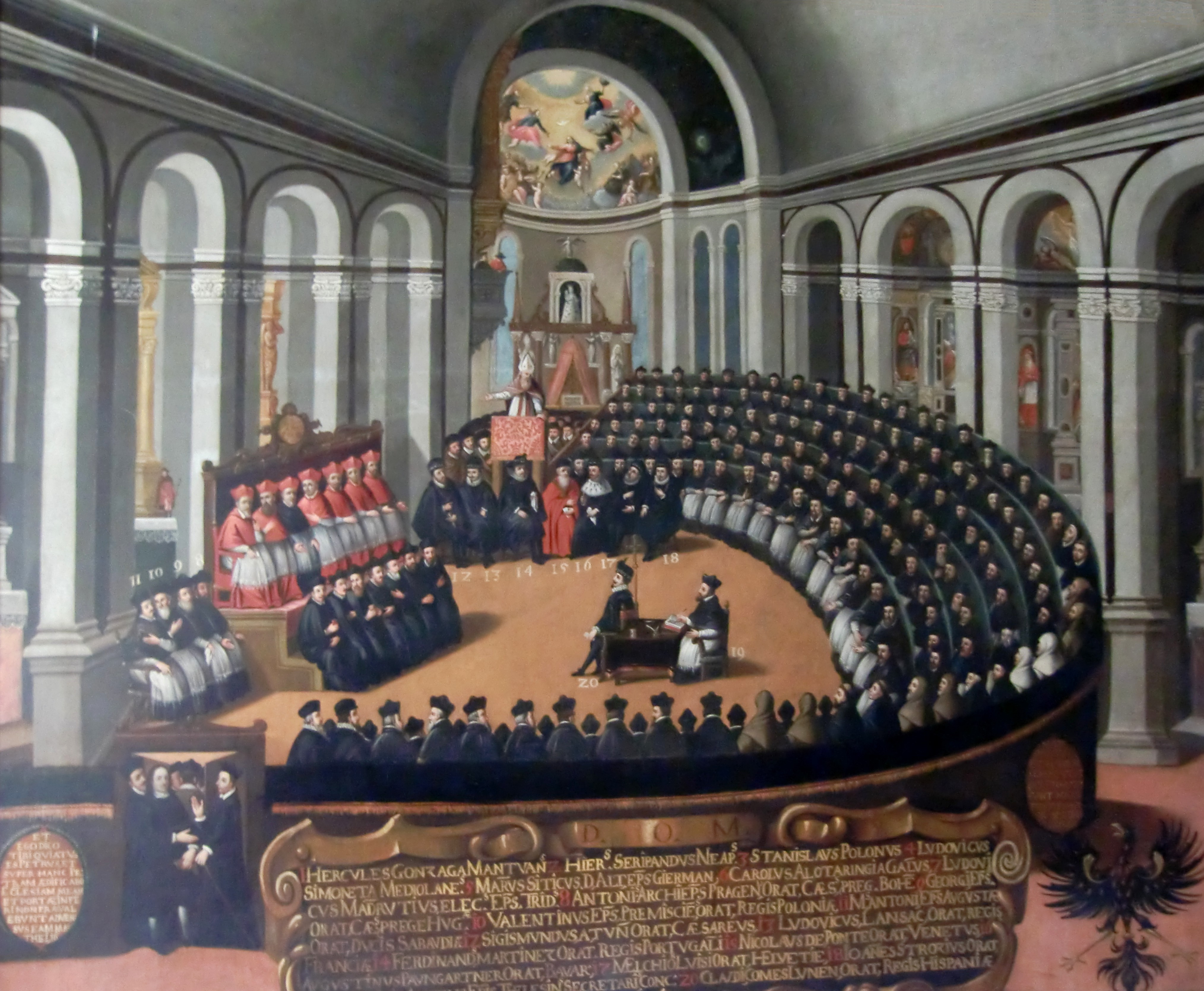
Roms Antwort: das Konzil von Trient. Die endgültige Antwort der katholischen Lehre war das Konzil von Trient (1545–1563). Hier kommt es auf Fairness an, denn Protestanten karikieren Trient oft als „Erlösung durch Werke“. Tatsächlich lehrt Trient, dass die Gnade der unverdiente Anfang der Erlösung ist („Wenn es aus Gnade geschieht, dann nicht aus Werken“), dass der Mensch aber frei mit dieser Gnade zusammenwirken muss und dass dieser Glaube ein lebendiger Glaube sein muss, der mit Liebe und guten Werken verbunden ist. Trient verurteilt Sola fide im Sinn von „Glaube allein, nichts weiter ist erforderlich“. Das Konzil bestätigte die Schrift und die Tradition, die sieben Sakramente und die Transsubstantiation. Was Luther anging, schaffte Trient den Ablasshandel nicht als solchen ab, wohl aber den Verkauf von Ablässen gegen Geld – genau das, worauf die 95 Thesen zielten. Wichtige Träger dieser Erneuerung waren die Jesuiten unter Ignatius von Loyola, die 1540 anerkannt wurden.
Die Geschichte endet nicht im 16. Jahrhundert. 1999 erklärte die Gemeinsame Erklärung zur Rechtfertigungslehre (JDDJ) zwischen der katholischen Kirche und dem Lutherischen Weltbund einen Konsens über Grundwahrheiten: „Allein aus Gnade, im Glauben an das Erlösungswerk Christi und nicht aufgrund irgendwelcher Verdienste unsererseits werden wir von Gott angenommen.“ In einem Interview im Juni 2016 sagte Papst Franziskus, dass Luthers „Absichten nicht falsch waren“; er sei „ein Reformer“ gewesen, obwohl „einige Methoden nicht korrekt waren“. Später in diesem Jahr, am 31. Oktober 2016, leiteten Franziskus und der Lutherische Weltbund gemeinsam eine Gedenkfeier zum 500. Jahrestag der Reformation in Lund, Schweden.
Konstantinopels Antwort: ein entschiedenes Schweigen. Der dritte Stuhl ist die östliche Orthodoxie, die sowohl von Protestanten als auch von Katholiken normalerweise vergessen wird. Zwischen 1573 und 1581 sandten lutherische Theologen in Tübingen das ins Griechische übersetzte Augsburger Bekenntnis an Patriarch Jeremias II. von Konstantinopel, in der Hoffnung, eine gemeinsame Basis zu finden. Er antwortete in drei Briefen, in denen er nacheinander die wesentlichen protestantischen Besonderheiten ablehnte. Er lehnte Sola fide ab („Die Kirche verlangt einen lebendigen Glauben, der durch gute Werke zum Ausdruck kommt“) und ebenso sola scriptura (Die Heilige Schrift darf nicht ohne die Väter ausgelegt werden), und beendete dann höflich die Korrespondenz.
Für die Orthodoxie ist die Erlösung kein Rechtsspruch (jemand wird einfach für gerecht erklärt), sondern Theose, also Vergöttlichung, ein echter Prozess der Teilnahme am Leben Gottes. Das ist Synergie, ein Zusammenwirken: „Gott rettet einen Menschen nicht gegen seinen Willen.“ Daher betrachtet die Orthodoxie den Streit um „Glaube gegen Werke“ als einen westlichen, juristischen Rahmen, den sie nie übernommen hat. Als später ein Patriarch (Cyril Lucaris) ein stark an Calvin orientiertes Bekenntnis verfasste, verurteilte die Orthodoxie es auf der Synode von Jerusalem (1672). Mit anderen Worten: Die Orthodoxie lehnte sowohl Luther als auch Calvin offiziell ab.
Drei Stühle
Die Debatte hat drei Seiten, nicht zwei
Pawson predigt vom protestantischen Stuhl. Um alle Seiten zu hören, stellt man die beiden anderen Stühle daneben. Die Überraschung: Alle drei lehren, dass Gnade notwendig und unverdient ist; die Karikatur „Protestanten glauben an Gnade, Katholiken/Orthodoxe ans Verdienen des Himmels“ ist in allen drei Fällen falsch. Die eigentlichen Bruchlinien liegen bei Autorität und der Bedeutung der Rechtfertigung.
Die Orthodoxie lehnte formal SOWOHL Luther (der Briefwechsel mit Jeremias II., 1573–81) ALS AUCH Calvin (der Jerusalemer Synod, 1672) ab.
Warum also kämpfen?
Inzwischen werden viele die Frage stellen, die Pawson selbst am Ende der Predigt stellt. Warum diese Lehrfragen ausgraben? Warum nicht im Interesse des Friedens und der Einheit Kompromisse eingehen, wenn alle freundlich sind und denselben Gott anbeten? Ist das nicht kleinlicher Streit über die Lehre, eine Rückkehr ins dunkle Zeitalter?
Pawsons Antwort ist unverblümt und schwerwiegend: Denn die Rettung unsterblicher Seelen steht auf dem Spiel. Wenn Sie einem Mann sagen, dass die Wassertaufe ihn automatisch rettet, verfluchen Sie ihn. Wenn Sie ihm sagen, dass gute Taten ihm den Himmel einbringen, weisen Sie ihn auf einen falschen Weg. Das ist kein religiöser Stolz. Es gibt nichts Wichtigeres als die Wahrheit, die Menschen zum ewigen Leben führt. Ein falscher Frieden auf Erden ist die ewige Bestimmung Tausender Seelen nicht wert.
Aber hier lässt uns Pawson innehalten. Die Frontlinie verläuft heute nicht mehr zwischen Protestanten und Katholiken. Pawson sagt es deutlich: Der Kampf läuft jetzt zwischen Evangelikalen einerseits und vielen Protestanten und Katholiken andererseits, eine Linie, die sich durch jedes Konfessionsetikett zieht. Er zitiert ein Buch eines französischen Professors: Die Erben der Reformation, das fragt: Wer sind die wahren Erben Martin Luthers? Nicht „Protestanten“ im Allgemeinen, sondern diejenigen, die, wie auch immer sie sich nennen, die Heilige Schrift über alles und Christus über alle stellen. Und so, sagt Pawson, sind diejenigen, die nur in eine Richtung schießen, nicht mehr auf der Höhe der Zeit. Er ist klar: „Ich bin nicht gegen Katholiken und ich bin nicht gegen Protestanten. Ich bin gegen Ismen, gegen Systeme. Ich möchte Menschen lieben, wer auch immer sie sind.“ Er erzählt, wie in seinem Herzen eine echte Liebe zu den katholischen Lehrern aufstieg, mit denen er sprach, und wie er sie als Menschen liebte.
Kein Priester außer Christus und kein Stellvertreter außer dem Heiligen Geist. Lassen Sie alle anderen aus den Augen. Als Staupitz Luther fragte, was er anstelle von Maria, den Heiligen, den Bildern und der Buße setzen würde, antwortete er: Jesus Christus. Der Mensch braucht nur Jesus Christus.
Deshalb dankt Pawson Gott für Martin Luther, für seine Ehrlichkeit, für den Mut, allein für das einzustehen, von dem er wusste, dass es richtig und wahr war. Und er betet, dass Gott noch mehr solcher Menschen erwecken möge, die in Liebe die Wahrheit verkünden und sagen: Hier stehe ich, ich kann nicht anders. Es ist weder sicher noch ehrlich, gegen das Gewissen zu verstoßen. Mein Gewissen ist vom Wort Gottes gefangen.
Gewissen vor Autorität. Wahrheit vor Einheit. Schrift vor Tradition. Glaube vor Werken. Gnade vor Sakramenten. Menschen vor Priestern, und jeder Gläubige wird zum Priester. Und vor allem: Christus vor der Kirche, vor allen und allem anderen.
David Pawson's sermon on the Reformation opens not with a date but with a letter. He reads Paul’s letter to the Galatians onward. It is the epistle Martin Luther loved most, the one on which he wrote a very fine commentary. "A man is justified, not by works of the law, but through faith in Jesus Christ… because by works of the law shall no one be justified." Pawson says those words meant a great deal at the time of the Reformation, over 450 years ago.
On October 31, 1517, a monk and professor of theology named Martin Luther nailed his 95 Theses to the church door in Wittenberg. In those days that door served as a notice board for public debate. People usually treat this as the beginning of the Reformation.
But according to Pawson, there is a later date, nearly three years on, that matters even more. It is the day Martin Luther had a bonfire.
In those three years, Luther moved from wanting to spring clean the church to wanting to demolish the whole system. At first, nailing up the 95 Theses, he attacked only the abuse, the sale of indulgences, not the system itself. One of his theses read: "If the Pope knew how the sellers of indulgences fleece his flock, he would rather St. Peter's church were burnt to ashes than built up out of the skin and bones of his sheep." Luther naively assumed the Pope was on his side.
He was quickly disillusioned, and by the Pope himself. Pawson tells it this way: when the indulgence money from Germany dropped, the Pope excommunicated him. Only then did Luther grasp it. The fault was not a few bad men running a good system. The system itself was wrong.
So he threw three things on the fire:
- The parchment with the Pope's signature, threatening excommunication.
- A book of Canon Law, the code by which he had lived as a monk and priest.
- A document he now knew to be a forgery, used to claim the papacy's right to represent Christ on earth.
Before, he was giving the Church a spring clean. Three years later, he began to tear it down.
Kit's note
A correction on the dating. Pawson places the bonfire on "15 June 1520," but that was actually the day Pope Leo X issued the bull Exsurge Domine in Rome. That bull only threatened excommunication and gave Luther 60 days to recant; it did not excommunicate him. Luther burned it, along with the books of Canon Law, on 10 December 1520 at the Elster Gate in Wittenberg, once the 60-day deadline had expired. His formal excommunication did not come until 3 January 1521, by the bull Decet Romanum Pontificem. As for the "forged document": sources list the burned items as the bull and the canon-law compilations, not a distinct "forged decretal." Still, Luther did know Lorenzo Valla's 1440 work exposing the "Donation of Constantine" as a fake. Pawson's point holds; only the date and a detail or two need fixing.
Reform or Demolish?
Luther's turning point in 3 years (1517–1520)
At first, Luther only meant to spring clean the system. Three years later, he realized the system itself was the problem.
📜
31 October, 1517
The 95 Theses at Wittenberg
- Goal: Spark theological debate.
- Attacking the abuse (indulgences), not the system.
- Assumed the Pope would agree if he knew.
🔥
10 December, 1520
Burning the Papal Bull (Elster Gate)
- Goal: A complete break.
- Burned the bull Exsurge Domine (threat of excommunication).
- Burned the books of Canon Law too.
- Realized the system itself was wrong.
Pawson holds that the bonfire of 1520 was even more significant than nailing the theses in 1517. (On the dating: the bull Exsurge Domine was issued in Rome on 15 June 1520; Luther burned it at Wittenberg on 10 Dec 1520; his formal excommunication followed on 3 Jan 1521.)
What drove a monk to that fire?
To understand Luther, you have to go back to the terror that drove him into the monastery. Pawson tells it: Luther once nearly died in a thunderstorm. It left him afraid to die, afraid to face God with his sins unforgiven. And he searched desperately for a way out of that fear.
He prayed to the saints, prayed to Mary, went on pilgrimages, gazed at relics and images. He did all of it. And none of it gave him any assurance that his sins were forgiven. Later, talking with his saintly superior von Staupitz, he was asked the decisive question: "If you take away all these crutches to a tottering faith, if you take away Mary, the saints, the images, penance and pilgrimages, what will you put in their place?" Luther's answer, as in the film Pawson's congregation had just watched, was one thing only: "Jesus Christ. Man only needs Jesus Christ."
That was the seed of everything that came after.
Kit's note
A few honest footnotes. The Stotternheim thunderstorm (2 July 1505) and the vow "St. Anne, help me, I will become a monk" are genuine. But the figure that Luther "prayed to 21 saints a week, 3 a day," which many sermons quote, I could not verify against any scholarly source, so treat it as rhetorical rounding. The "crutches to a tottering faith" line I also could not trace verbatim in the standard biographies (Bainton, Kittelson). The substance, though, is well attested: Staupitz turned Luther from self-punishment toward reliance on Christ alone. Luther himself said: "If it had not been for Dr. Staupitz, I should have sunk in hell."
Is the Reformation a dead issue?
In his 1967 sermon, marking the Reformation's 450th anniversary, Pawson tells two stories side by side. Once he attended a meeting of Protestant ministers and members, happened to mention the Reformation, and was told in no uncertain terms that Protestants no longer care for it. It is "dead history," they said, and bringing it up is not the done thing. He came away with his ears ringing.
Yet the very next weekend he was invited to a Roman Catholic seminary in the southeast corner of Ireland to speak to the tutors and lecturers, about the Reformation among other things. They wanted to hear what he thought, wanted an open forum. He said: "I think the issues raised then are still alive, and they have not been settled." They replied: "That is exactly what we think too." Three hours of friendly discussion, then a nice tea, then home.
It is an extraordinary position. He could discuss the Reformation with Roman Catholics, but not with Protestants. Pawson's answer in a nutshell: the Reformation is not out of date. Not because we fight people, Catholic or Protestant, but because we fight systems and isms that blind people to the truth. Only, the front line today is drawn very differently than in Luther's day.
Luther's greatness lies in this. He recovered Seven Priorities, seven things that had been pushed into second place, and put them back in first.
Seven Priorities
What Luther put first
Luther's greatness was getting his priorities right. Seven things that had been relegated to second place, he put back in first.
Better to obey God's Word in one's conscience than yield to church or state pressure. (“It is neither safe nor honest to go against conscience.”)
Unity without the truth of the Gospel is meaningless. What saves people is truth, not an institution.
Every church tradition (praying to saints, purgatory…) must be tested by Scripture (Sola Scriptura).
Not works, nor faith + works. “The just shall live by faith” (Sola Fide). Saved NOT BY good deeds, but FOR good deeds.
Grace is not magically parceled up in sacraments. Without faith, sacraments are useless. Rejects the “magical” view of baptism and the Supper.
The priesthood of all believers. Erased the clergy/laity divide. Ministers have a different function, not a different status.
Only one Priest (Christ) and one Vicar (the Holy Spirit). The Church cannot replace Christ. Whoever puts himself in Christ's place is Anti-Christ (instead of Christ).
Let us go through the priorities one by one.
1. Conscience before Authority
Luther lived in an age when freedom of conscience barely existed. It was not the state but the church that told you what to believe and how to behave. To picture that world, remember the tragedy of Galileo. He discovered truths about the universe through his telescope, and was told "you must not believe that, you must not teach that."
Luther was a man who dared to say: "My conscience is captive to the Word of God. It is neither safe nor honest to go against conscience." At the Diet of Worms (1521), before the emperor and the whole machinery of church power, he still would not recant.
And this is no matter of the distant past. The very week he preached, someone handed him a newspaper cutting: over 200 dissident Baptists in the Soviet Union jailed or awaiting trial for "infringing" strict religious laws. One had died after torture; their children questioned for hours about their parents' faith. Pawson notes that perhaps half the human race still lives under totalitarian states that claim the mind as well as the body. The freedom of conscience we take for granted, most of humanity still does not have.
Then Pawson says the world is never led by "jellyfish" with no backbone, drifting with the tide. It is led by people who have the courage of their convictions. And he warns, sharply, that even today's self-styled "non-conformists" conform to one another with astonishing ease. What we need are people who genuinely dare to stand alone.
Kit's note
The most famous line tied to Worms, "Here I stand, I can do no other. So help me God," is almost certainly a later addition. It is absent from the earliest transcripts. The reliably recorded words are: "…I neither can nor will retract anything, since it is neither safe nor right to go against conscience. God help me. Amen." The resolve is genuine; only the "Here I stand" flourish is a later embellishment.
2. Truth before Unity
One of the gravest charges laid against Luther was that he split the Church, that he was a schismatic. For nearly a thousand years, Western Europe had one Church, one denomination. They told him: recant and leave the Church intact; go on like this and you will break it.
But Luther put Truth before Unity. His conscience was not free to follow every whim, because it was captive to the Word of God. He saw the crucial thing clearly. What saves people is not the unity of the Church but the truth of the gospel. Unite every church on earth tomorrow, and the number of the saved will not rise. What is really needed is the truth of the gospel preached in those churches.
Pawson says it plainly. Our age has one catchword you climb aboard or get hated for refusing, and that word is "unity." A whole world is shrinking through transport, and the Church seems to have caught the echo, crying "unity, unity, unity." He tells a detail he relishes. When the British Council of Churches at Nottingham said the disagreements could be sorted out from within an already-united church, the Baptist Union alone among the denominations wrote back that no, they must be sorted first, and then unite. That is putting truth before unity.
3. Scripture before Tradition
Pawson names a startling detail: Luther was 20 years old before he first held and read a complete Bible. He was raised devout, prepared for a holy life, and yet not until he was 20 did he see that book. And when he read it, he was astonished. So much of what he had been told was a "vital part" of Christian belief and practice was simply not in it. Nothing about praying to Mary or the saints, no relics and images, no purgatory, no penance.
He asked: where did all this come from? The official answer was that it is the Tradition of the Church, and Tradition is as much the Word of God as that book. Luther stood before two "Words of God," one written and one spoken, and was told to accept both. But he came to a conclusion. Only that book is the truth, and every tradition of every church must be brought to the touchstone of Scripture and tested by it. Once he did that, he began to throw tradition out.
Pawson admits candidly that even his own church has unscriptural traditions, and all of them must bow to the Word of God. He tells of a friend (named on the recording as something like "Eduardo Lubinque," a name I could not verify in any independent source, most likely a transcription slip), once a professor of New Testament to the cream of Rome's Jesuit priests. The more he studied Scripture, the less he could keep teaching students that things not in this book were "the Word of God." So he taught himself out of that chair, just as Luther, 450 years earlier, was also a professor of theology. This book had done it.
Kit's note
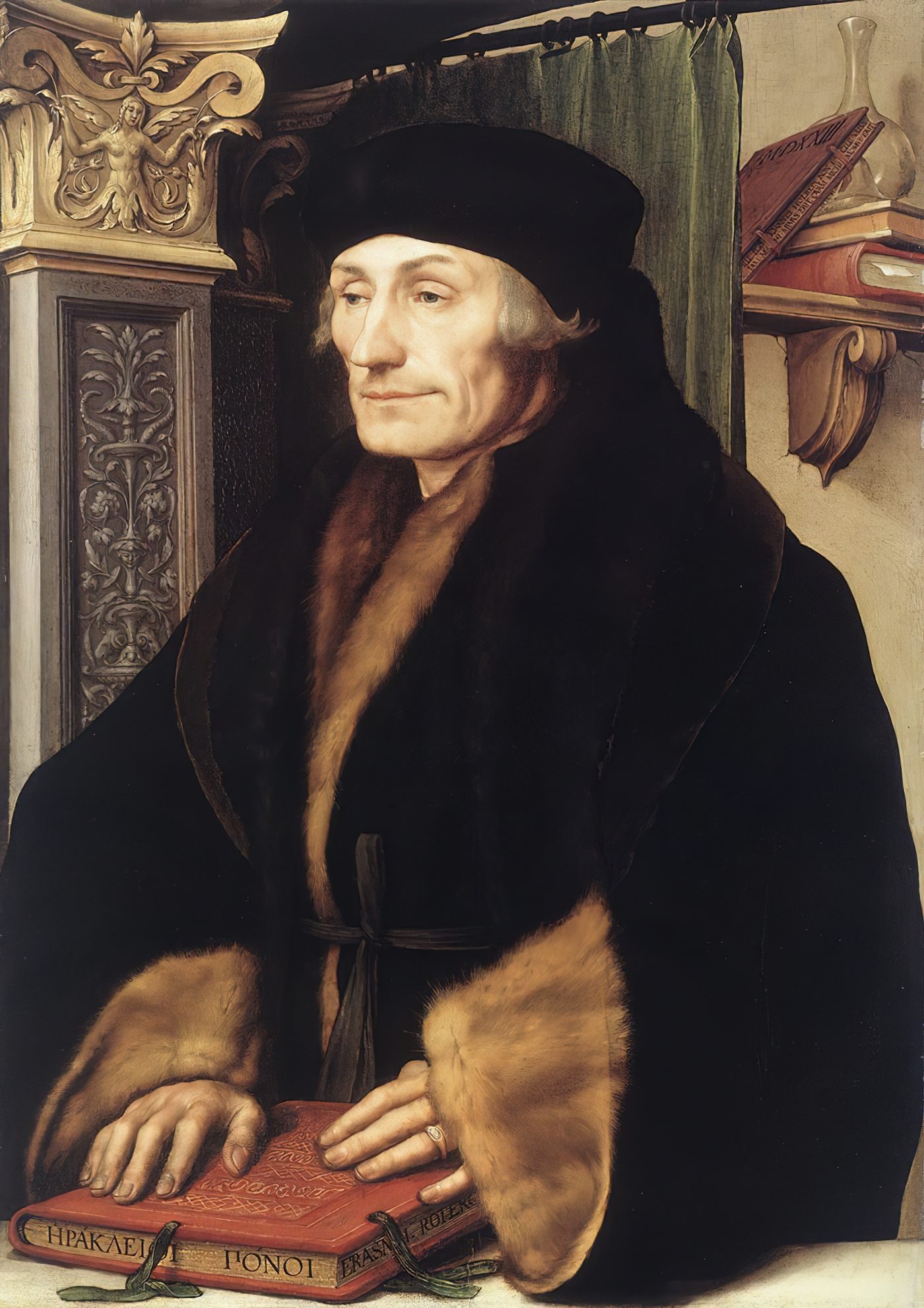
A piece Pawson does not stress but which matters greatly: Erasmus of Rotterdam. In 1516 this scholar printed the Greek New Testament (the Novum Instrumentum), the very base text Luther used to translate the German New Testament. Where the old Latin read "do penance," Erasmus rendered the Greek correctly as "repent." A small change that knocked out the foundation of the whole penance system. They said "Erasmus laid the egg that Luther hatched," though Erasmus rejected the jab and later clashed sharply with Luther over free will (1524–25). He wanted reform from within, not schism.
4. Faith before Works (Sola Fide)
This is the biggest question a person can ask, and for Luther it was life or death: How do I get right with God? How are my sins forgiven? The old thunderstorm had left him afraid to die with sins unforgiven, so this was no theory.
When John Tetzel came round selling indulgences, Luther was sure that was not the way. You cannot buy forgiveness. Then he took a further step: if you cannot buy it, neither can you earn it by merit. Pawson lays out three answers to the question of how to get to heaven, and every religion falls into one of them:
- The world says: do good deeds.
- The church of his day said: you need faith plus good deeds.
- Luther said: only one thing is needed, and that is to believe.
The manifesto of the Reformation, running from the Old Testament through the New and on to Luther, is: "The just shall live by faith." Not by good deeds, not by faith mixed with works, but by faith, full stop. The Latin sola fide (faith alone) became the great banner of the Reformation.
So what part do good deeds play? Luther put it superbly, and Pawson says it cannot be put better: We are saved NOT BY good deeds, but FOR good deeds. You do not do good deeds to earn the ticket to heaven; you do them because you are going to heaven already.
The Five Solas
Five slogans that distil the Reformation
Luther's seven priorities were later distilled into five Latin “sola / solus” (alone) slogans. To be honest: packaging the “five solas” as a unified list is a later (19th–20th c.) systematization, not a ready-made 16th-c. slogan, but each idea is genuinely rooted in the Reformers themselves.
Sola Scriptura · Scripture alone
Scripture alone is the supreme, infallible authority for faith.
Counter: Catholic and Orthodox: Scripture cannot be severed from the Tradition of the Church that produced it.
Sola Fide · Faith alone
One is justified by faith alone, not by merit.
Counter: Trent (1547): a “living” faith must include works; condemns “faith needing nothing further.”
Sola Gratia · Grace alone
Salvation is entirely God's unmerited gift.
Counter: The broadest common ground, even Trent (Session VI, 1547) teaches grace as the unmerited beginning; reaffirmed in the JDDJ, 1999.
Solus Christus · Christ alone
Christ alone is the one mediator between God and man.
Counter: Contested: the mediating role of the Church, the saints, and Mary in Catholic/Orthodox tradition.
Soli Deo Gloria · Glory to God alone
All glory belongs to God alone.
Counter: Least disputed, but grounds the rejection of excessive honor to persons/institutions.
5. Grace before Sacraments
Luther was raised to believe that grace was parceled up in seven sacraments (Pawson says the number had once run as high as fourteen, then dropped to seven), and that they worked automatically, like magic, regardless of who administered or received them. Baptismal water automatically saved an infant who knew nothing. Bread and wine, at a certain point in the service, automatically became Christ's actual body and blood, then were offered by a priest as a sacrifice, not on a table but on an altar.
Luther thought it through and said: I know I need God's grace, but there is nothing in this book to tell me that grace is wrapped up in sacraments that work automatically. He realized: without faith, the sacraments are no use. "By grace are you saved, through faith," not through sacraments. Grace is not packaged; it flows like a river. The simplest believer, never baptized and without the Lord's Supper, yet with faith, still knows the grace of God. Pawson points to his friends in the Salvation Army. They have no sacraments at all, yet plainly have grace; they are always singing about it.
Of the two sacraments Luther kept (baptism and the Lord's Supper), Pawson honestly admits what even Luther's closest friends had to grant: he never thought the matter through to its logical end, and he got a little muddled on both. What he got right was the order: grace first, sacraments second.
6. People before Priests (The priesthood of all believers)
The church Luther was born into was a pyramid of power. At the top the Pope, then down through Cardinals, Bishops, the orders of monks, to the parish priest. And far at the bottom, the laity. The divide between "clergy" and "laity" was so rigid that even dress and position in the building differed: one end in vestments, the other in ordinary clothes.
Pawson retells how Luther looked at that pyramid and asked, from the top down. What scriptural justification is there for one man up there? None. For bishops? None. For mediating priests? None. Then he came to a wonderful rediscovery: the priesthood of all believers. He made every layman a priest and every priest a layman, seeing there was no division between them at all. There were differences of function, yes, like different organs in one body. So he called them "ministers," not "priests." Every believer is a priest.
That is why he labored to translate the Bible into common German, to put it into the hands of the people rather than the priests. As he said, a maid sweeping a room with a broom could understand the Word better than a priest. Pawson notes that two-thirds of the world's professing Christians still live under priesthood and hierarchical control, so this protest is still needed.
Priesthood of All Believers
Demolishing the pyramid of power
The medieval church was a pyramid: laity at the bottom, pope at the top. Luther declared: There is no middle class. All are priests.
Pre-Reformation Structure
The Reformation Ideal
Kit's note
The "maid with a broom" line is a folk phrasing attached to Luther, not a traceable quote of his. The "plowboy knowing Scripture better than the clergy" image actually belongs to William Tyndale in England (echoing Erasmus's NT preface). What is certain, and far more important, is that Luther did translate the Bible for ordinary people. The German New Testament came in 1522 (done in about 11 weeks while he was hidden at the Wartburg), the complete Bible in 1534, and Gutenberg's press multiplied it for a whole nation. That is the real marvel, and it needs no embellishing quote.
7. Christ before the Church
This is the climax. Pawson recalls that when he asked the church-history tutor at that Catholic seminary what the biggest issue of the Reformation was, the two of them agreed. The biggest issue was this: Luther challenged the very idea that Christ and the Church are one, the idea that the Church could do for people what only Christ can do. The Body, that is the Church, was taking the place of the Head, that is Christ.
Pawson works it out through three offices:
- I need a prophet to teach me God's infallible truth. Who is my prophet? Rome says: the body, the infallible Church. Luther says: the Head.
- I need a priest to come to God. Who is my priest? Rome says: the body, confess your sins to the Church. Luther says: Christ in heaven, and you may come to God at any time through Him.
- I need a king to rule me. Who is my king? Rome says: the body on earth. Luther says: my Head in heaven.
So Luther dared to call the papacy "Antichrist." Pawson explains carefully: he did not mean the Pope was against Christ. In its root sense, "anti" means instead of, in the place of. Whoever puts himself in the place of Christ is antichrist. Rome told people that to come to God they must come through it, and that is putting itself in His place.
Then Rome countered with an important argument. When the Head is in heaven and someone on earth wants to come, must they not come through the body? Is not the Pope then Christ's vicar on earth, one standing in His place to convey what He teaches? Luther thought it through and answered: yes, Christ must have a vicar on earth to speak for Him, but that vicar is the Holy Spirit, not the Pope. In sum: "No priest but Christ, and no vicar but the Holy Ghost."
Pawson lands it very practically. That is exactly why there is no confession box anywhere around the walls of his Baptist church. "I cannot forgive your sins, and neither can Gold Hill Baptist Church. If you have sins to confess, go straight to the priest in heaven, who is Christ himself."
Kit's note
On the etymology: reading "anti = instead of" is one valid sense of the Greek prefix anti-, but most standard lexicons treat the primary sense of "antichrist" as "against, opposed to." Both nuances exist in Greek depending on context, and Luther leaned on the "usurper of Christ's place" sense. To call it the only correct meaning (and "against" wrong) overstates it. Better to say Luther drew out a genuine, existing sense of the word to name what he saw: an institution putting itself where Christ alone belongs.
The fire escapes Luther's hands
Pawson preaches mostly about Luther, because Luther lit the fuse. But the fire quickly escaped his hands. Within a single generation the Reformation had split into several streams, each with its own city, its own leader, its own emphasis. Some allied with one another; some quarreled so bitterly they never reconciled. If you hear only of Luther, you would think the Reformation was one solid block. It was not.
More Than One Man
The other faces of the Reformation
Pawson preaches mostly about Luther, because Luther lit the fuse. But the fire quickly escaped his hands. Within a generation the Reformation had split into several streams, each with its own city, its own leader, its own emphasis.
Portraits: all public domain (Wikimedia Commons). Knox and Menno Simons are later engravings, as no contemporary likeness survives.
Zwingli and the split over the Supper. In Zurich, Huldrych Zwingli led a reform independent of Luther. The two agreed on nearly everything, and hit only one question: what happens to the bread and wine in the Lord's Supper? At the Marburg Colloquy (1529) they agreed on 14 of 15 articles, then jammed on the last. Luther clung to the word "IS" in "This is my body." He chalked Hoc est corpus meum ("This IS my body") on the table and would not budge. Zwingli held it was only a memorial symbol. They would not shake hands. The united Protestant front broke right there. It is a painful illustration of the very principle "truth before unity," showing how fine the line is between defending truth and splitting the Church.
Calvin and Geneva. A generation later, John Calvin, a Frenchman, systematized the whole of Protestant theology in his Institutes of the Christian Religion, and made Geneva a "school of Christ" to which all Europe sent its people. He stressed the absolute sovereignty of God in salvation.
“This is my body”
Four ways to read the Lord's Supper and the split at Marburg
Nothing divided Protestants from one another (and from Rome) more deeply than one question: what happens to the bread and wine? At the Marburg Colloquy (1529), Luther and Zwingli agreed on 14 of 15 articles, but hit this one. Luther chalked “Hoc est corpus meum” (“This IS my body”) on the table and would not budge. The united Protestant front broke right there.
Catholic
Rome / Trent
Transubstantiation
The substance of bread and wine truly changes into Christ's body and blood; only the outward ‘accidents’ remain.
Luther
Wittenberg
Sacramental union (“in, with, under”)
Christ's body is truly present “in, with, and under” the bread and wine, yet bread remains bread. (Luther rejected the term “consubstantiation.”)
Calvin
Geneva
Spiritual real presence (by the Spirit)
Believers truly receive Christ, but by faith and through the Spirit lifting them up to Christ in heaven.
Zwingli
Zurich
Memorial / Symbolic
The bread and wine are only memorial signs. “This IS my body” means “this SIGNIFIES my body.”
From left (most physical presence) to right (pure symbol). This disagreement kept the Lutheran and Reformed branches from ever fully uniting.
The "radicals" and their price. Then some saw that neither Luther nor Zwingli had gone far enough. If Scripture alone is the authority, they asked, where in the New Testament is infant baptism? In January 1525 at Zurich, for the first time, they baptized adult believers, and so were called Anabaptists, meaning "re-baptizers." They held to a Church of voluntary believers, separate from the state, refusing the sword and the oath. Later Menno Simons gave the shattered movement a peaceful, nonviolent identity, and the name "Mennonite" came from him.
The price they paid was terrible, and it was exacted by both sides. In those same years (1524–25), the "Peasants' War" erupted as German peasants used the very slogans "priesthood of all believers" and "Scripture alone" to press their demands. It was a use Luther never intended, and he reacted violently, siding squarely with the nobility.
Kit's note
This is one of the painful truths an honest essay should not hide. The Anabaptists were persecuted by both Catholics and the mainstream Reformers. In Zwingli's own Zurich, rebaptism was made a capital crime, and Felix Manz was drowned in the Limmat on 5 Jan 1527, "the first Protestant martyr to die at the hands of other Protestants." Drowning was a calculated mockery of "re-baptism." As for the Peasants' War, Luther wrote "Against the Murderous, Thieving Hordes of Peasants" (1525), urging the lords to "smite, slay, and stab" the rebels like mad dogs; perhaps 100,000 peasants died. Calvin's Geneva has its own stain: the anti-Trinitarian theologian Michael Servetus was burned in 1553 with Calvin's approval (he asked only that the sentence be commuted to the more "humane" sword, and was refused). And the heaviest stain must be named too. Late in life Luther wrote On the Jews and Their Lies (1543), calling for synagogues to be burned. It is a poisonous legacy later exploited by the Nazis, and one that today's Lutheran churches have formally repudiated. The Reformers were real men, with real stains, in a violent age.
Calvin, Arminius, and the war over predestination. Another generation on, the Reformed camp itself split over an aching question: in salvation, does God do it all (whom He chooses is saved), or does man contribute by his own free faith? The Dutch theologian Jacobus Arminius challenged Calvin's unconditional predestination. After his death, his followers drew up the Remonstrance of 1610 in five points. The Synod of Dort (1618–19) met, condemned the Arminian party, and framed the "Five Points of Calvinism," later remembered by the acronym TULIP.
Who chooses whom?
Calvin vs Arminius: Predestination vs Free Will
A generation after Luther, Protestantism split internally over an aching question: in salvation, does God do everything (monergism), or do God and man cooperate (synergism)? The Synod of Dort (1618–19) condemned the Arminian party and framed the “Five Points of Calvinism”, later remembered by the acronym TULIP (a 20th-c. coinage).
Election
Atonement
Human nature
Grace
Perseverance
TULIP = Total depravity · Unconditional election · Limited atonement · Irresistible grace · Perseverance. The Arminian “Remonstrance” (1610) offered exactly five counter-points.
A century on fire
How the Reformation spread (1517–1619)
From one monk in one German town, within a century the fire reached Switzerland, England, Scotland, the Netherlands and forced Rome itself to reform.
The other two chairs: Rome and Constantinople
Pawson preaches from the Protestant chair, strongly and clearly. But he himself says the Reformation's issues "are still alive and have not been settled." And the best way to hear them fully is to pull up the other two chairs.
Rome's answer: the Council of Trent. The definitive Catholic doctrinal response was the Council of Trent (1545–1563). Fairness matters here, because Protestants often caricature Trent as "salvation by works." In fact Trent teaches that grace is the unmerited beginning ("if by grace, it is not now by works"), but that a person must cooperate freely with that grace, and that faith must be a living faith joined to love and good works. Trent condemned sola fide in the sense of "faith alone, nothing further required." It affirmed Scripture and Tradition (with "equal affection of piety"), the seven sacraments, and transubstantiation. On indulgences, the thing that set Luther off, Trent did not abolish indulgences, but abolished the monetized sale of them, exactly what the 95 Theses targeted. The spearhead of this renewal was the Jesuits of Ignatius of Loyola, approved in 1540.
The story does not stop in the 16th century. In 1999 the Joint Declaration on the Doctrine of Justification (JDDJ) between the Catholic Church and the Lutheran World Federation declared a consensus on the basic truths: "by grace alone, in faith in Christ's saving work and not because of any merit on our part, we are accepted by God." In a June 2016 interview, Pope Francis said Luther's "intentions were not mistaken"; he was "a reformer," though "some methods were not correct." Later that year, on 31 October 2016, Francis and the Lutheran World Federation jointly led a common commemoration of the Reformation's 500 years at Lund, Sweden.
Constantinople's answer: a decisive silence. The third chair is Eastern Orthodoxy, usually forgotten by Protestant and Catholic alike. Between roughly 1573 and 1581, Lutheran theologians at Tübingen sent the Augsburg Confession (translated into Greek) to Patriarch Jeremiah II of Constantinople, hoping to find common ground. He replied in three letters, one by one rejecting the core Protestant distinctives. He rejected sola fide ("the Church demands a living faith, made evident by good works") and sola scriptura (Scripture may not be interpreted apart from the Fathers), then politely ended the correspondence.
For Orthodoxy, salvation is not a legal verdict (being declared righteous) but theosis, that is deification, a real process of participating in the life of God. This is synergy, that is cooperation: "God does not save a person against that person's will." So Orthodoxy regards the very "faith versus works" quarrel as a Western, juridical framing it never adopted. Later, when one Patriarch (Cyril Lucaris) drafted a confession leaning heavily toward Calvin, Orthodoxy condemned it at the Synod of Jerusalem (1672). In other words, Orthodoxy formally rejected both Luther and Calvin.
Three Chairs
The debate is three-sided, not two
Pawson preaches from the Protestant chair. But to hear all sides, set the other two chairs beside it. The surprise: all three teach that grace is necessary and unmerited, the caricature “Protestants believe in grace, Catholics/Orthodox believe in earning heaven” is false on all three counts. The real fault lines are authority and the meaning of justification.
Orthodoxy formally rejected BOTH Luther (the Jeremiah II correspondence, 1573–81) AND Calvin (the Synod of Jerusalem, 1672).
So then, why fight?
By now many will ask the question Pawson himself raises at the sermon's close. Why dig up these doctrinal matters? Why not compromise for the sake of peace and unity, when everyone is friendly and worships the same God? Is this not petty doctrinal quibbling, a return to the dark ages?
Pawson's answer is blunt and heavy: Because the salvation of immortal souls is at stake. If you tell a man that baptism in water automatically saves him, you damn him. If you tell him good works will earn him heaven, you point him down a wrong road. This is not religious pride. It is that nothing matters more than the truth that brings people to eternal life. A false peace on earth is not worth the eternal destination of thousands of souls.
But here is where Pawson makes us stop. The front line today is no longer between Protestants and Catholics. Pawson says it plainly: the battle now runs between evangelicals on the one hand, and many Protestants and Roman Catholics on the other, a line that cuts across every denominational label. He cites a book by a French professor, The Heirs of the Reformation, which asks: who are the true heirs of Martin Luther? Not "Protestants" in general, but those who, whatever their label, put Scripture above everything and Christ above everyone. And so, Pawson says, those who fire in only one direction are out of date. He is clear: "I am not against Roman Catholics, and I am not against Protestants. I am against isms, against systems. I want to love people, whoever they are." He tells how he found a genuine love rising in his heart for the Catholic tutors he spoke with, loving them as people.
Kit's note
Context, so this is not misread. Pawson preached this in 1967, just after the Second Vatican Council closed (1962–1965), and after nearly a century in which liberal theology had spread through the mainline Protestant churches. Many of them by then openly doubted the authority of Scripture, the miracles, or the bodily resurrection of Christ. So when he says the front line now runs between "evangelicals" and "many Protestants and Roman Catholics," he does not mean hatred of anyone. He means a conviction: whether or not one puts Scripture above all and Christ above all. A Protestant who has abandoned that core is, in his view, no longer a "true heir of Luther." One thing here can confuse: evangelicals are themselves Protestants, so why set "evangelicals" against "many Protestants"? Because Pawson uses the two words in two different senses. "Evangelical" names a conviction (Scripture and Christ above all), while "Protestant" on the other side is only a denominational label, one that can include liberal or nominal Protestants who have lost that very conviction. His quotation comes from The Heirs of the Reformation (Jacques de Senarclens, SCM Press, 1963); de Senarclens was a French-speaking Swiss Reformed theologian who taught at Geneva, so Pawson's "a French professor" is a little imprecise. Pawson himself stresses that he fights "systems, not people." To hear all sides, including how Catholics and the Orthodox present themselves and where the traditions genuinely converge (the 1999 JDDJ), see the "Other two chairs: Rome and Constantinople" section above.
No priest but Christ, and no vicar but the Holy Ghost. Get your eyes off everyone else. When von Staupitz asked Luther what he would put in the place of Mary, the saints, the images and penance, he answered: Jesus Christ. Man only needs Jesus Christ.
That is why Pawson thanks God for Martin Luther, for his honesty, for the courage to stand alone for what he knew was right and true. And he prays God will raise up more such people, who in love will declare the truth and say: Here I stand, I can do no other. It is neither safe nor honest to go against conscience. My conscience is captive to the Word of God.
Conscience before authority. Truth before unity. Scripture before tradition. Faith before works. Grace before sacraments. People before priests, and making every believer a priest. And above all: Christ before the Church, before everyone and everything else.