
Storia della Chiesa – Parte 3: La Riforma
Il sermone di David Pawson sulla Riforma si apre non con una data ma con una lettera. Legge la lettera di Paolo ai Galati e seguenti. È l'epistola che Martino Lutero amò più di tutte, quella sulla q…
In questo saggio, AI ha aiutato a cercare, verificare, tradurre e curare; argomento e conclusioni sono dell’autore.
Il filo dell’argomentazione, il significato e le conclusioni sono dell’autore. Scegliere a quali fonti affidarsi e come comprenderle è giudizio dell’autore, non degli strumenti.
Gli strumenti AI sono stati usati per cercare fonti, confrontare con esse le affermazioni, leggere ampiamente sul tema, portare il testo tra inglese e vietnamita e aiutare con grammatica, chiarezza e ritmo delle frasi.
Ciò che hanno trovato è materiale da valutare, non un verdetto. L’autore ha deciso cosa dire, cosa omettere e cosa significa questo saggio.
Il saggio esce con il nome dell’autore. L’autore ne risponde, compreso ogni errore che dovesse emergere.
Parallelo
Il sermone di David Pawson sulla Riforma si apre non con una data ma con una lettera. Legge la lettera di Paolo ai Galati e seguenti. È l'epistola che Martino Lutero amò più di tutte, quella sulla quale scrisse un bellissimo commento. «Un uomo è giustificato non per le opere della legge, ma attraverso la fede in Gesù Cristo... perché per le opere della legge nessuno sarà giustificato». Pawson dice che quelle parole significavano molto al tempo della Riforma, oltre 450 anni fa.
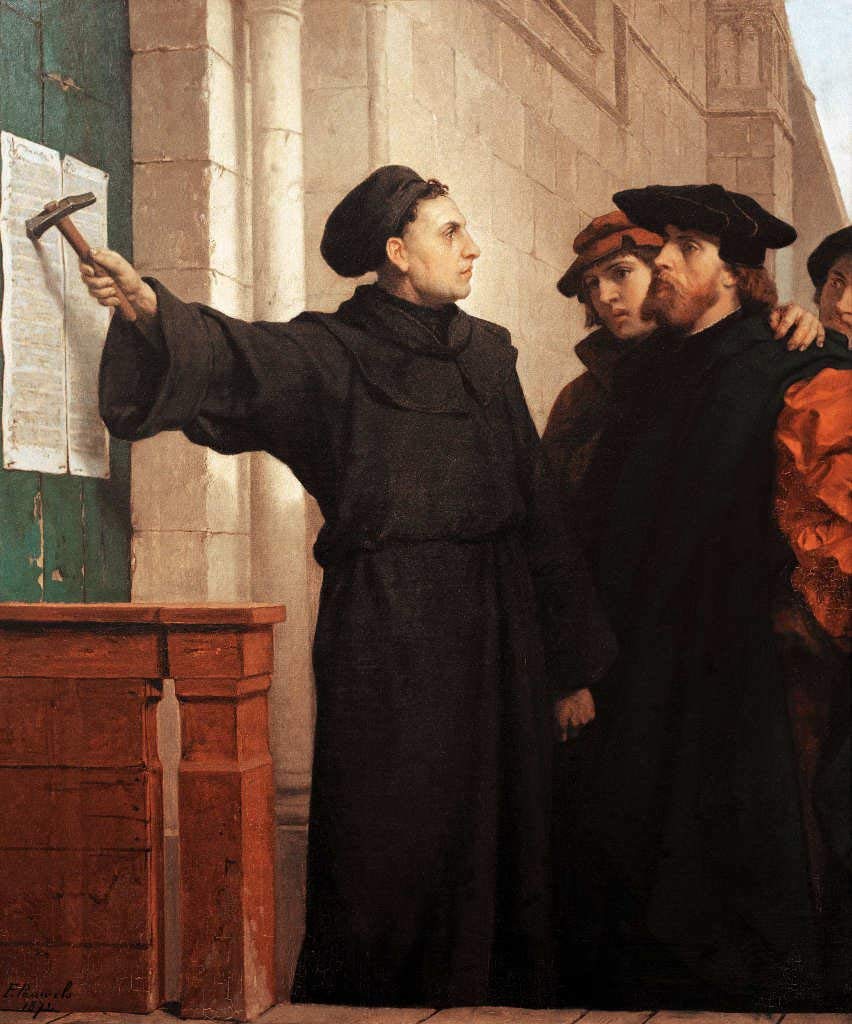
Il 31 ottobre 1517, un monaco e professore di teologia di nome Martino Lutero affisse le sue 95 tesi alla porta della chiesa di Wittenberg. A quei tempi quella porta fungeva da bacheca per il dibattito pubblico. Le persone di solito considerano questo come l'inizio della Riforma.
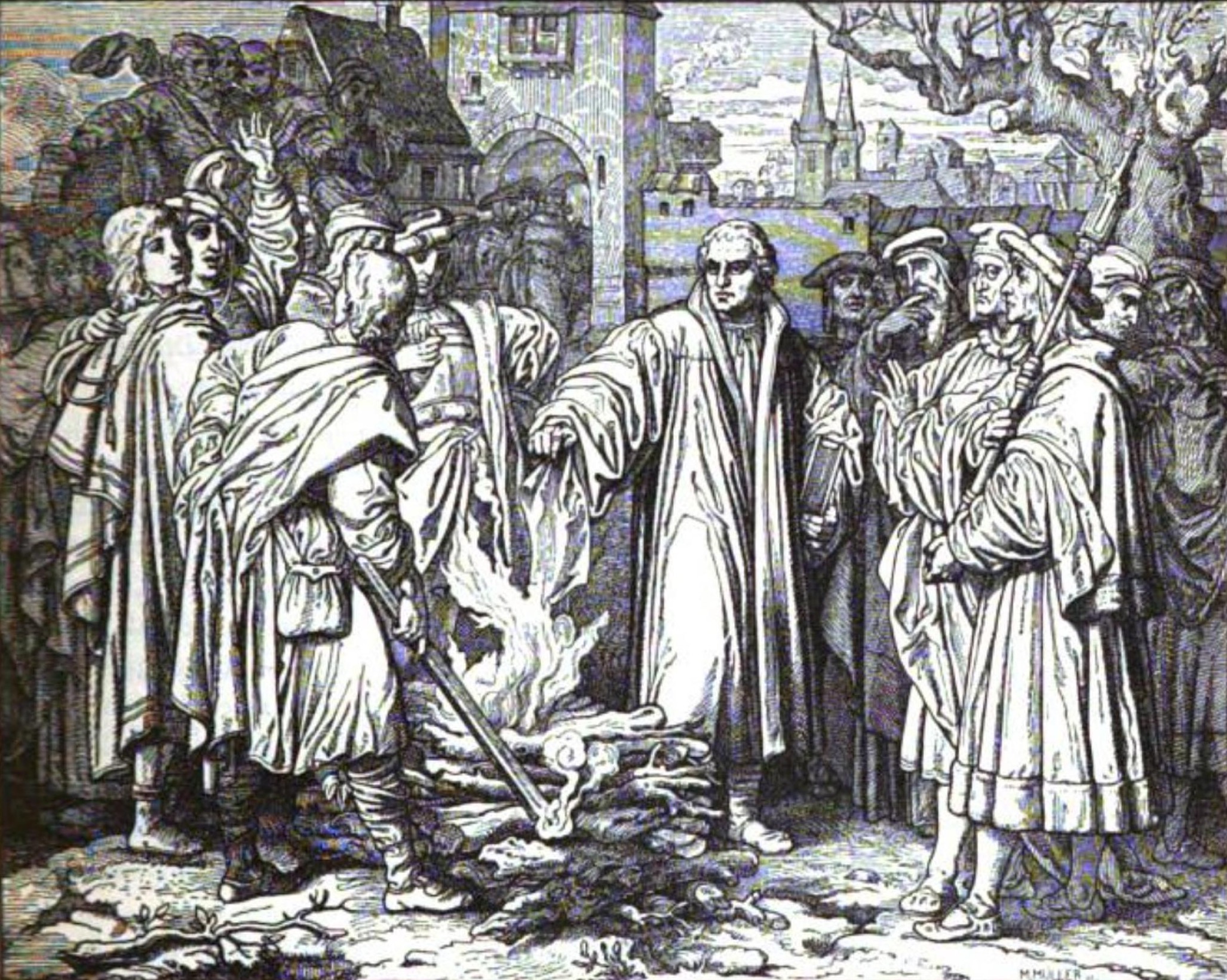
Ma secondo Pawson esiste una data successiva, quasi tre anni dopo, che conta ancora di più. È il giorno in cui Martino Lutero accese un falò.
In quei tre anni, Lutero passò dal voler fare una pulizia di primavera nella Chiesa al voler demolire l'intero sistema. In un primo momento, affiggendo le 95 tesi, attaccò solo gli abusi, la vendita delle indulgenze, non il sistema stesso. Una delle sue tesi diceva: «Se il Papa sapesse come i venditori di indulgenze spennano il suo gregge, preferirebbe che la chiesa di San Pietro fosse ridotta in cenere piuttosto che essere costruita con la pelle e le ossa delle sue pecore». Lutero pensava ingenuamente che il Papa fosse dalla sua parte.
Fu presto disilluso, dal Papa stesso. Pawson lo racconta così: quando il denaro delle indulgenze proveniente dalla Germania diminuì, il Papa lo scomunicò. Solo allora Lutero capì che la colpa non era di pochi uomini cattivi che gestivano un buon sistema. Il sistema stesso era sbagliato.
Allora gettò tre cose sul fuoco:
- La pergamena con la firma del Papa, che minaccia la scomunica.
- Un libro di diritto canonico, il codice secondo il quale aveva vissuto come monaco e prete.
- Un documento che ora sapeva essere una falsificazione, utilizzato per rivendicare il diritto del papato di rappresentare Cristo sulla terra.
Prima faceva la pulizia di primavera alla Chiesa. Tre anni dopo, iniziò a demolirla.
Riformare o demolire?
Il punto di svolta di Lutero in tre anni (1517–1520)
All'inizio Lutero intendeva soltanto fare pulizia nel sistema. Tre anni dopo si rese conto che il sistema stesso era il problema.
📜
31 ottobre 1517
Le 95 tesi a Wittenberg
- Obiettivo: suscitare un dibattito teologico.
- Attaccare l'abuso (le indulgenze), non il sistema.
- Dava per scontato che il papa avrebbe acconsentito se lo avesse saputo.
🔥
10 dicembre 1520
Bruciatura della bolla papale (Porta di Elster)
- Obiettivo: una rottura completa.
- Bruciò la bolla Exsurge Domine (minaccia di scomunica).
- Bruciò anche i libri del diritto canonico.
- Si rese conto che il sistema stesso era sbagliato.
Pawson sostiene che il rogo del 1520 fu ancora più significativo dell'affissione delle tesi nel 1517. (Quanto alla data: la bolla Exsurge Domine fu emanata a Roma il 15 giugno 1520; Lutero la bruciò a Wittenberg il 10 dicembre 1520; la sua scomunica formale seguì il 3 gennaio 1521.)
Cosa ha spinto un monaco a quel fuoco?
Per comprendere Lutero bisogna tornare al terrore che lo spinse al monastero. Pawson lo racconta: Lutero una volta fu quasi colpito da un fulmine durante un temporale. Rimase con la paura di morire e di affrontare Dio con i suoi peccati non perdonati. Cercò disperatamente una via d'uscita da quella paura.
Pregava i santi, pregava Maria, faceva pellegrinaggi, contemplava reliquie e immagini. Fece tutto questo. E nulla di ciò gli dava la certezza che i suoi peccati fossero stati perdonati. Più tardi, parlando con il suo superiore spirituale von Staupitz, gli fu posta la domanda decisiva: «Se togliete tutte queste stampelle a una fede vacillante, se togliete Maria, i santi, le immagini, la penitenza e i pellegrinaggi, cosa metterete al loro posto?» La risposta di Lutero, come nel film che la congregazione di Pawson aveva appena visto, fu una sola: «Gesù Cristo. L'uomo ha bisogno solo di Gesù Cristo».
Quello è stato il seme di tutto quello che è venuto dopo.
La Riforma è una questione morta?
Nel suo sermone del 1967, in occasione del 450º anniversario della Riforma, Pawson racconta due storie fianco a fianco. Una volta partecipò a una riunione di ministri e membri protestanti, menzionò la Riforma e gli fu detto senza mezzi termini che ai protestanti non interessava più. «È storia morta», dissero, e tirarla fuori non era la cosa giusta. Se ne andò con le orecchie che fischiavano.
Eppure il fine settimana successivo fu invitato in un seminario cattolico romano nell'angolo sudorientale dell'Irlanda per parlare ai tutor e ai docenti, tra le altre cose, della Riforma. Loro volevano sentire cosa ne pensasse, volevano un forum aperto. Disse: «Penso che le questioni sollevate allora siano ancora vive e non siano state risolte». Risposero: «Questo è esattamente ciò che pensiamo anche noi». Tre ore di discussione amichevole, poi un buon tè e poi a casa.
È una posizione straordinaria. Poteva discutere della Riforma con i cattolici romani, ma non con i protestanti. La risposta di Pawson in poche parole: la Riforma non è superata. Non perché combattiamo le persone, cattoliche o protestanti, ma perché combattiamo i sistemi e gli ismi che rendono cieche le persone alla verità. Solo che oggi la linea del fronte è tracciata in modo molto diverso rispetto ai tempi di Lutero.
La grandezza di Lutero sta in questo. Recuperò sette priorità, sette cose che erano state messe in secondo piano, e le rimise al primo posto.
Sette priorità
Ciò che Lutero mise al primo posto
La grandezza di Lutero fu mettere in ordine le priorità. Riportò al primo posto sette cose che erano state relegate al secondo posto.
È meglio obbedire alla Parola di Dio nella propria coscienza che cedere alla pressione della Chiesa o dello Stato. («Non è né sicuro né onesto andare contro la coscienza».)
L'unità senza la verità del Vangelo è priva di significato. Ciò che salva le persone è la verità, non un'istituzione.
Ogni tradizione della Chiesa (pregare i santi, il purgatorio…) deve essere messa alla prova dalla Scrittura (Sola Scriptura).
Non le opere, né fede più opere. «Il giusto vivrà per fede» (Sola Fide). Salvati NON DALLE buone opere, ma PER le buone opere.
La grazia non viene distribuita magicamente nei sacramenti. Senza fede, i sacramenti sono inutili. Rifiuta la visione «magica» del battesimo e della Cena.
Il sacerdozio di tutti i credenti. Cancellò la divisione tra clero e laici. I ministri hanno una funzione diversa, non uno status diverso.
C'è un solo Sacerdote (Cristo) e un solo Vicario (lo Spirito Santo). La Chiesa non può sostituire Cristo. Chiunque si metta al posto di Cristo è l'Anti-Cristo (invece di Cristo).
Esaminiamo le priorità una per una.
1. La coscienza prima dell'autorità
Lutero visse in un'epoca in cui la libertà di coscienza esisteva appena. Non era lo Stato ma la Chiesa a dirti cosa credere e come comportarti. Per immaginare quel mondo, ricordiamo la tragedia di Galileo. Scoprì verità sull'universo attraverso il suo telescopio e gli fu detto: «non devi crederci, non devi insegnarlo».
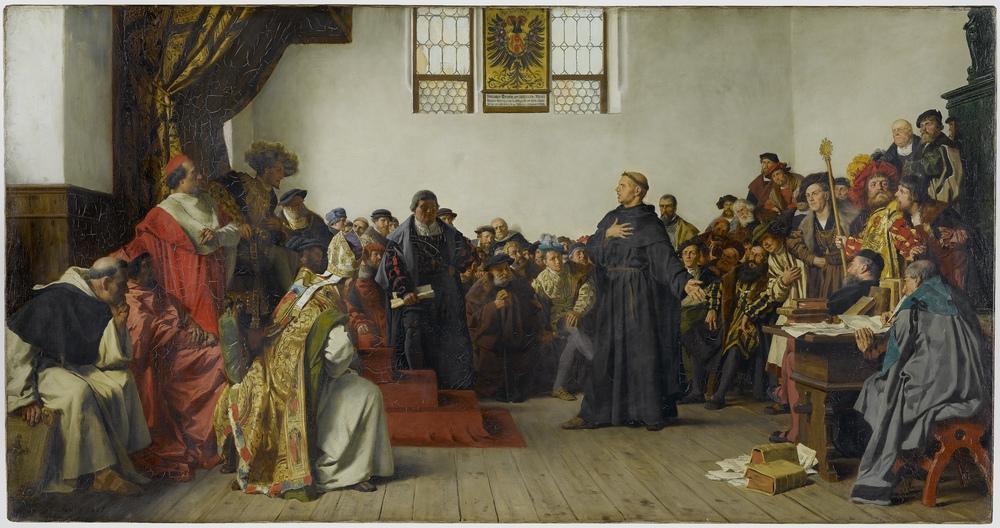
Lutero era un uomo che osò dire: «La mia coscienza è prigioniera della Parola di Dio. Andare contro la coscienza non è né sicuro né onesto». Alla Dieta di Worms (1521), davanti all'imperatore e all'intero meccanismo del potere ecclesiastico, non volle abiurare.
E questo non riguarda il lontano passato. La stessa settimana in cui predicava, qualcuno gli consegnò un ritaglio di giornale: più di 200 battisti dissidenti nell'Unione Sovietica erano in prigione o in attesa di processo per aver «violato» rigide leggi religiose. Uno era morto dopo la tortura; i loro figli venivano interrogati per ore sulla fede dei genitori. Pawson osserva che forse metà della razza umana vive ancora sotto Stati totalitari che rivendicano la mente oltre che il corpo. La libertà di coscienza che diamo per scontata, la maggior parte dell'umanità ancora non la possiede.
Poi Pawson dice che il mondo non è mai guidato da «meduse» senza spina dorsale, che vanno alla deriva con la marea. È guidato da persone che hanno il coraggio delle proprie convinzioni. E avverte, aspramente, che anche i sedicenti «non conformisti» di oggi si conformano gli uni agli altri con sorprendente facilità. Ciò di cui abbiamo bisogno sono persone che osano davvero restare sole.
2. La verità prima dell'unità
Una delle accuse più gravi mosse contro Lutero fu di aver diviso la Chiesa, di essere uno scismatico. Per quasi mille anni l'Europa occidentale aveva avuto una sola Chiesa, una sola denominazione. Gli dissero: abiura e lascia intatta la Chiesa; continua così e la spezzerai.
Ma Lutero antepone la Verità all'Unità. La sua coscienza non era libera di seguire ogni capriccio, perché era prigioniera della Parola di Dio. Vide chiaramente la cosa cruciale. Ciò che salva le persone non è l'unità della Chiesa, ma la verità del Vangelo. Unisci domani ogni chiesa sulla terra e il numero dei salvati non aumenterà. Ciò che è veramente necessario è la verità del Vangelo predicato in quelle chiese.
Pawson lo dice chiaramente. La nostra epoca ha uno slogan al quale devi aderire o per il cui rifiuto vieni odiato, e quella parola è «unità». Il mondo intero si restringe a causa dei trasporti, e la Chiesa sembra averne colto l'eco, gridando «unità, unità, unità». Racconta un dettaglio che gli piace. Quando il British Council of Churches a Nottingham disse che i disaccordi potevano essere risolti all'interno di una chiesa già unita, l'Unione Battista, l'unica tra le denominazioni, rispose di no: dovevano essere risolti prima, e poi ci si sarebbe uniti. Questo è anteporre la verità all'unità.
3. La Scrittura prima della Tradizione
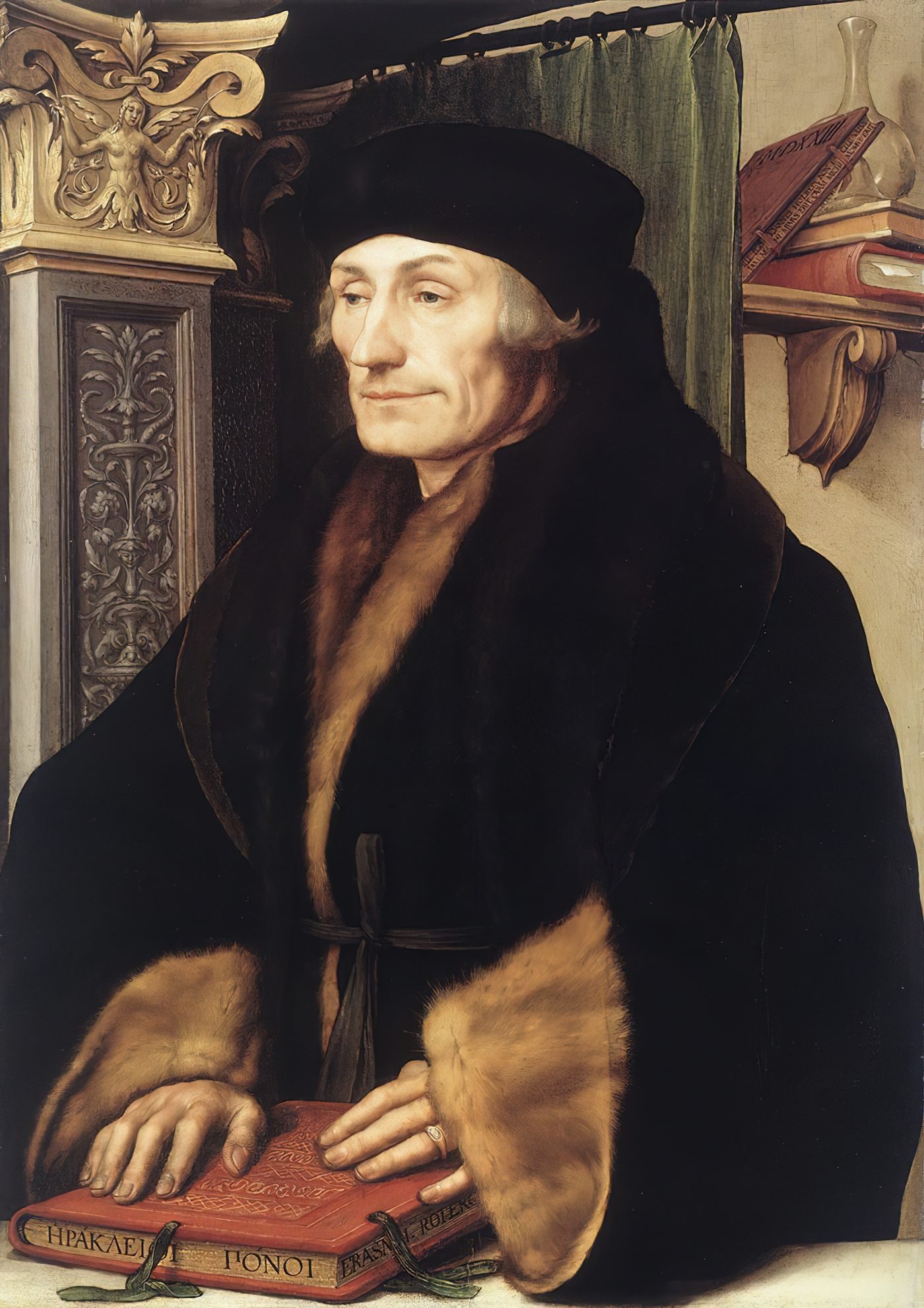
Pawson cita un dettaglio sorprendente: Lutero aveva 20 anni quando tenne in mano e lesse per la prima volta una Bibbia completa. Era cresciuto devoto, preparato per una vita santa, eppure solo all'età di 20 anni aveva visto quel libro. E quando lo lesse rimase stupito. Gran parte di ciò che gli era stato detto essere una «parte vitale» della fede e della pratica cristiana semplicemente non c'era. Niente di pregare Maria o i santi, niente reliquie e immagini, niente purgatorio, niente penitenza.
Chiese: da dove viene tutto questo? La risposta ufficiale fu che si trattava della Tradizione della Chiesa, e che la Tradizione era la Parola di Dio tanto quanto quel libro. Lutero si trovò davanti a due «Parole di Dio», una scritta e l'altra trasmessa, e gli fu detto di accettarle entrambe. Ma giunse a una conclusione: solo quel libro è la verità, e ogni tradizione di ogni Chiesa deve essere portata alla pietra di paragone della Scrittura e messa alla prova da essa. Una volta fatto ciò, iniziò a respingere la tradizione.
Pawson ammette candidamente che anche la sua Chiesa ha tradizioni non scritturali e che tutte devono inchinarsi alla Parola di Dio. Racconta di un amico (chiamato nella registrazione qualcosa come «Eduardo Lubinque», un nome che non ho potuto verificare in alcuna fonte indipendente e molto probabilmente un errore di trascrizione), un tempo professore di Nuovo Testamento presso il principale collegio dei gesuiti di Roma. Più studiava le Scritture, meno poteva continuare a insegnare agli studenti che le cose non presenti in questo libro erano «la Parola di Dio». Così si sedette da solo su quella cattedra e insegnò, proprio come Lutero, che 450 anni prima era stato anche professore di teologia. Questo libro aveva compiuto la sua opera.
4. La fede prima delle opere (Sola Fide)
Questa è la domanda più grande che una persona possa porsi, e per Lutero era la vita o la morte: Come posso andare d'accordo con Dio? Come vengono perdonati i miei peccati? Il vecchio temporale gli aveva lasciato paura di morire con i peccati non perdonati, quindi questa non era una teoria.
Quando Johann Tetzel venne a vendere indulgenze, Lutero era sicuro che non fosse quella la strada giusta. Non puoi comprare il perdono. Poi fece un passo ulteriore: se non puoi comprarlo, non puoi nemmeno guadagnarlo per merito. Pawson fornisce tre risposte alla domanda su come raggiungere il paradiso, e ogni religione rientra in una di queste:
- Il mondo dice: fai buone azioni.
- La Chiesa dei suoi tempi diceva: hai bisogno di fede più buone azioni.
- Lutero ha detto: è necessaria solo una cosa, e cioè credere.
Il manifesto della Riforma, che va dall'Antico Testamento attraverso il Nuovo fino a Lutero, è: «Il giusto vivrà per fede». Non per buone azioni, non per fede mista ad opere, ma per fede, punto. Il latino sola fide (la sola fede) divenne la grande bandiera della Riforma.
Allora che ruolo giocano le buone azioni? Lutero lo ha detto in modo superbo, e Pawson dice che non può essere messo meglio: Siamo salvati NON DA buone azioni, ma PER buone azioni. Non si fanno buone azioni per guadagnare il biglietto per il paradiso; le fai perché stai già andando in paradiso.
Le cinque solae
Cinque motti che condensano la Riforma
Le sette priorità di Lutero furono in seguito condensate in cinque motti latini «sola / solus» (solo). A dire il vero: presentare le «cinque solae» come un elenco unificato è una sistematizzazione posteriore (XIX–XX secolo), non un motto già pronto del XVI secolo, ma ogni idea è autenticamente radicata negli stessi riformatori.
Sola Scriptura · Solo la Scrittura
Solo la Scrittura è l'autorità suprema e infallibile per la fede.
Contrappunto: Cattolici e ortodossi: la Scrittura non può essere separata dalla Tradizione della Chiesa che l'ha prodotta.
Sola Fide · Solo la fede
Si è giustificati solo per fede, non per merito.
Contrappunto: Trento (1547): una fede «viva» deve includere le opere; condanna la «fede che non richiede altro».
Sola Gratia · Solo per grazia
La salvezza è interamente un dono immeritato di Dio.
Contrappunto: Il terreno comune più ampio: persino Trento (Sessione VI, 1547) insegna la grazia come inizio immeritato; riaffermato nella JDDJ, 1999.
Solus Christus · Solo Cristo
Solo Cristo è l'unico mediatore tra Dio e l'umanità.
Contrappunto: Controverso: il ruolo mediatorio della Chiesa, dei santi e di Maria nella tradizione cattolica/ortodossa.
Soli Deo Gloria · Gloria solo a Dio
Tutta la gloria appartiene soltanto a Dio.
Contrappunto: La meno discussa, ma fonda il rifiuto dell'onore eccessivo a persone o istituzioni.
5. La grazia prima dei sacramenti
Lutero fu educato a credere che la grazia fosse suddivisa in sette sacramenti (Pawson dice che una volta il numero era arrivato fino a quattordici, poi era sceso a sette) e che essi funzionassero automaticamente, come per magia, indipendentemente da chi li amministrava o li riceveva. L'acqua battesimale salvava automaticamente un bambino che non sapeva nulla. Pane e vino, a un certo punto del servizio, diventavano automaticamente il vero corpo e sangue di Cristo, quindi venivano offerti da un sacerdote come sacrificio, non su un tavolo ma su un altare.
Lutero ci pensò bene e disse: so di aver bisogno della grazia di Dio, ma non c'è nulla in questo libro che mi dica che la grazia è racchiusa nei sacramenti che funzionano automaticamente. Capì: senza la fede i sacramenti non servono. «Sei salvato per grazia, mediante la fede», non mediante i sacramenti. La grazia non è confezionata; scorre come un fiume. Il credente più semplice, mai battezzato e senza la Cena del Signore, ma con fede, conosce ancora la grazia di Dio. Pawson indica i suoi amici dell'Esercito della Salvezza. Non hanno affatto sacramenti, eppure hanno chiaramente la grazia; ne cantano sempre.
Dei due sacramenti osservati da Lutero (il battesimo e la Cena del Signore), Pawson ammette onestamente ciò che anche gli amici più intimi di Lutero dovevano ammettere: Lutero non aveva mai portato la questione fino alla sua conclusione logica ed era rimasto un po' confuso su entrambi. Ciò che aveva capito bene era l'ordine: prima la grazia, poi i sacramenti.
6. Il popolo prima dei sacerdoti (Il sacerdozio di tutti i credenti)
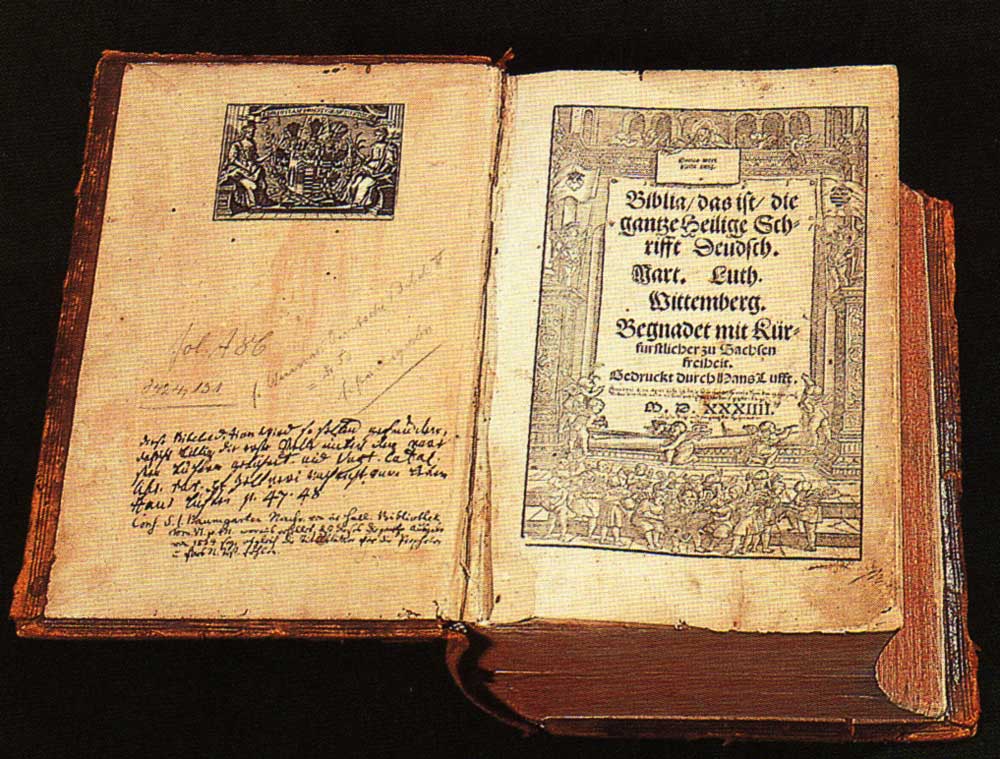
La Chiesa in cui nacque Lutero era una piramide di potere. In alto il Papa, poi giù attraverso i cardinali, i vescovi e gli ordini monastici, fino al parroco. E in fondo, i laici. La divisione tra «clero» e «laici» era così rigida che anche l'abbigliamento e la posizione nell'edificio erano diversi: gli uni in paramenti, gli altri in abiti comuni.
Pawson racconta come Lutero guardò quella piramide e chiese, dall'alto verso il basso: quale giustificazione scritturale c'è per un uomo lassù? Nessuna. Per i vescovi? Nessuna. Per i preti mediatori? Nessuna. Poi arrivò a una meravigliosa riscoperta: il sacerdozio di tutti i credenti. Fece di ogni laico un prete e di ogni prete un laico, vedendo che non c'era alcuna divisione tra loro. C'erano differenze di funzione, sì, come tra diversi organi in un unico corpo. Per questo li chiamava «ministri», non «sacerdoti». Ogni credente è un sacerdote.
Ecco perché si adoperò per tradurre la Bibbia nel tedesco comune, per metterla nelle mani del popolo piuttosto che dei sacerdoti. Come disse, una cameriera che spazzava una stanza con una scopa poteva comprendere la Parola meglio di un prete. Pawson nota che due terzi dei cristiani professanti nel mondo vivono ancora sotto il sacerdozio e il controllo gerarchico, quindi questa protesta è ancora necessaria.
Il sacerdozio di tutti i credenti
Demolire la piramide del potere
La Chiesa medievale era una piramide: i laici in fondo, il papa in cima. Lutero dichiarò: non esiste una classe intermedia. Tutti sono sacerdoti.
Struttura precedente alla Riforma
L'ideale della Riforma
7. Cristo davanti alla Chiesa
Questo è il culmine. Pawson ricorda che quando chiese al tutor di storia della Chiesa in quel seminario cattolico quale fosse il problema più grande della Riforma, i due furono d'accordo. Il problema più grande era questo: Lutero sfidò l'idea stessa che Cristo e la Chiesa sono una cosa sola, l'idea che la Chiesa potesse fare per le persone ciò che solo Cristo può fare. Il Corpo, cioè la Chiesa, prendeva il posto del Capo, cioè Cristo.
Pawson porta il discorso su un piano molto pratico attraverso tre funzioni:
- Ho bisogno di un profeta che mi insegni la verità infallibile di Dio. Chi è il mio profeta? Roma dice: il corpo, la Chiesa infallibile. Lutero dice: il Capo.
- Ho bisogno di un prete per venire a Dio. Chi è il mio sacerdote? Roma dice: il corpo, confessa i tuoi peccati alla Chiesa. Lutero dice: Cristo è nei cieli, e tu puoi venire a Dio in ogni momento per mezzo di Lui.
- Ho bisogno di un re che mi governi. Chi è il mio re? Roma dice: il corpo sulla terra. Lutero dice: il mio Capo in cielo.
Così Lutero osò chiamare il papato «Anticristo». Pawson spiega attentamente: non intendeva dire semplicemente che il Papa fosse contro Cristo. Nella sua radice, «anti» può significare contro oppure invece di, al posto di. Chiunque si mette al posto di Cristo è l'anticristo. Roma diceva alle persone che per giungere a Dio dovevano passare attraverso di essa, e questo significava mettersi al Suo posto.
Poi Roma ribatté con un argomento importante. Quando il Capo è in cielo e qualcuno sulla terra vuole venire a lui, non deve passare attraverso il corpo? Il Papa non è quindi il vicario di Cristo sulla terra, uno che sta al Suo posto per trasmettere ciò che insegna? Lutero ci pensò e rispose: sì, Cristo deve avere un vicario sulla terra che parli per Lui, ma quel vicario è lo Spirito Santo, non il Papa. In sintesi: «Non c'è sacerdote se non Cristo, e non c'è vicario se non lo Spirito Santo».
Pawson porta il discorso su un piano molto concreto. Questo è esattamente il motivo per cui non c'è alcun confessionale attorno alle mura della sua chiesa battista. «Non posso perdonare i tuoi peccati, e nemmeno la Chiesa Battista di Gold Hill. Se hai dei peccati da confessare, vai direttamente dal sacerdote in cielo, che è Cristo stesso».
Il fuoco sfugge dalle mani di Lutero
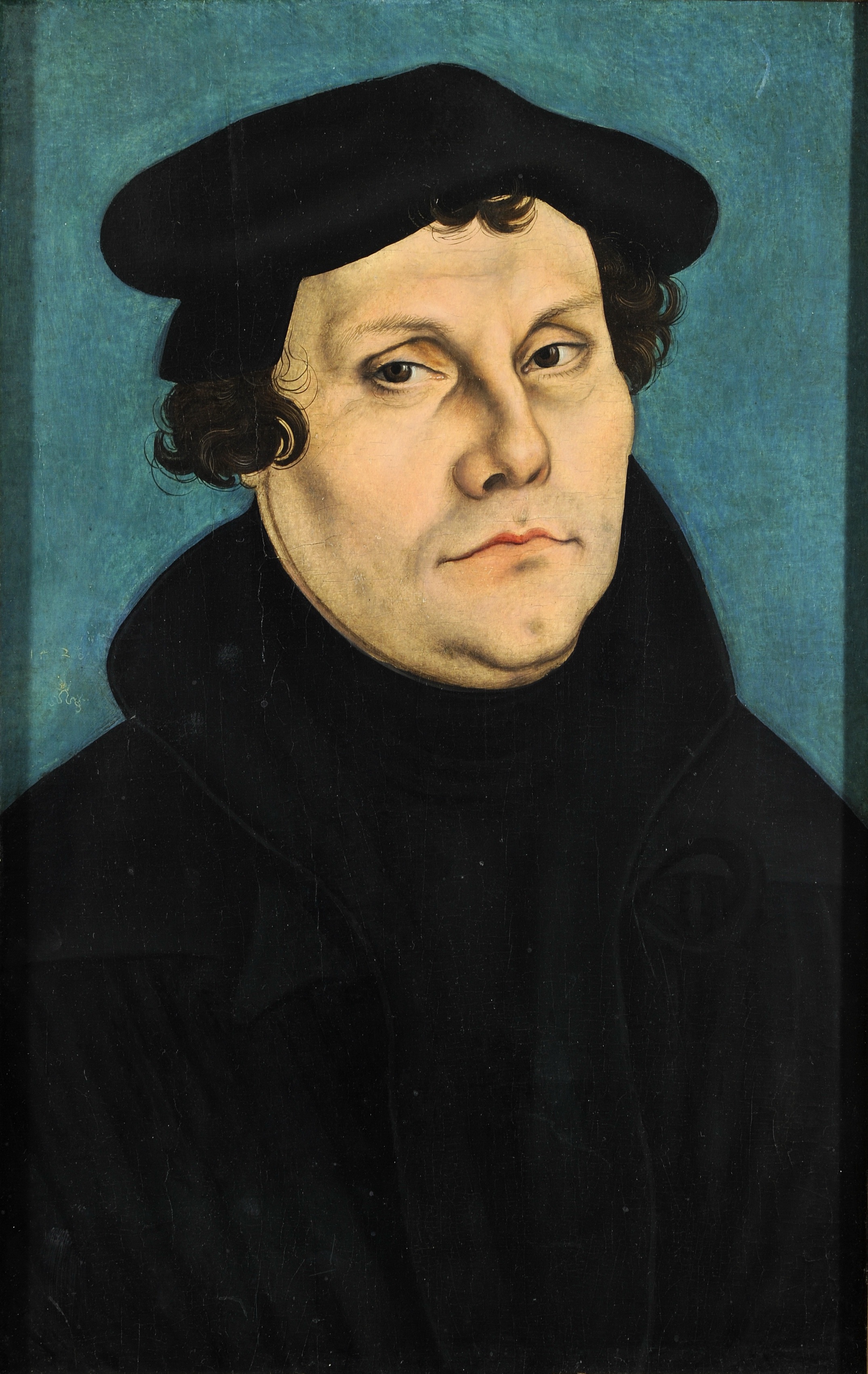
Pawson predica soprattutto su Lutero, perché Lutero ha acceso la miccia. Ma il fuoco gli sfuggì rapidamente dalle mani. Nel giro di una sola generazione la Riforma si era divisa in diverse correnti, ciascuna con la propria città, la propria guida e la propria enfasi. Alcuni si allearono tra loro; alcuni litigarono così aspramente che non si riconciliarono mai. Se sentissi parlare solo di Lutero, penseresti che la Riforma fosse un blocco solido. Non lo era.
Più di un uomo
Gli altri volti della Riforma
Pawson predica soprattutto su Lutero, perché Lutero accese la miccia. Ma il fuoco sfuggì presto dalle sue mani. Nel giro di una generazione la Riforma si era divisa in diverse correnti, ciascuna con la propria città, il proprio leader e il proprio accento.
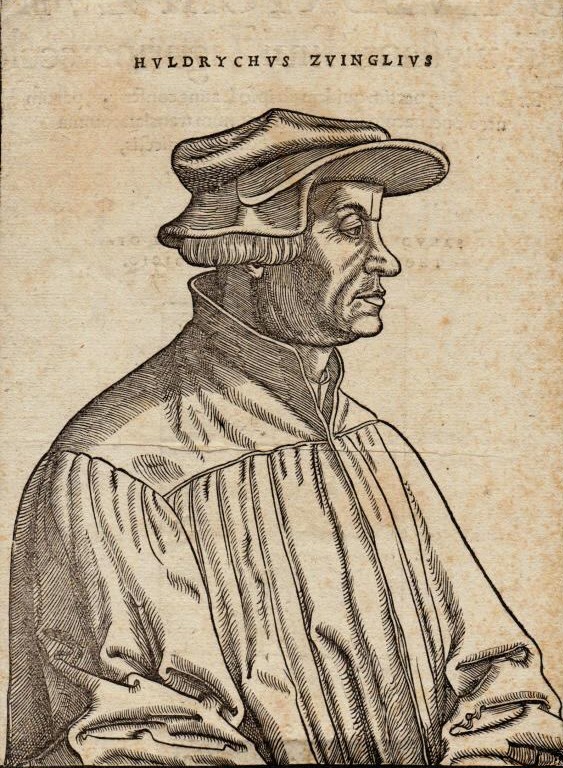
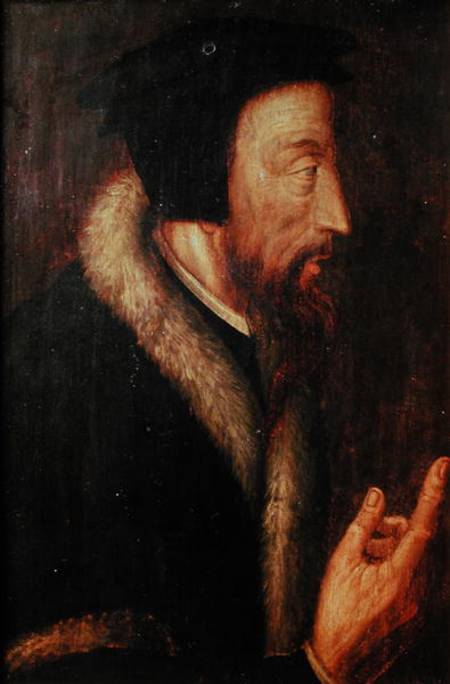
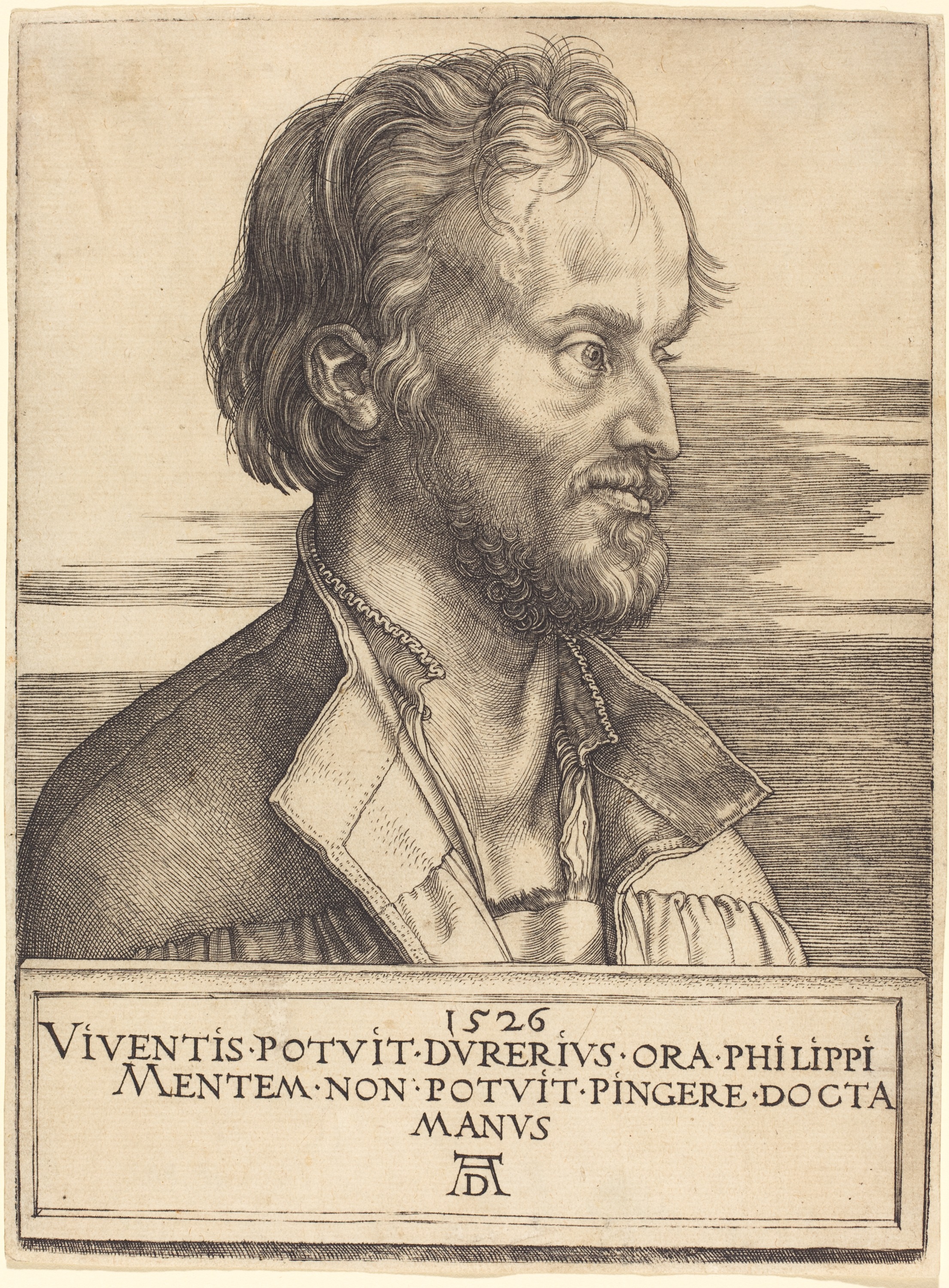
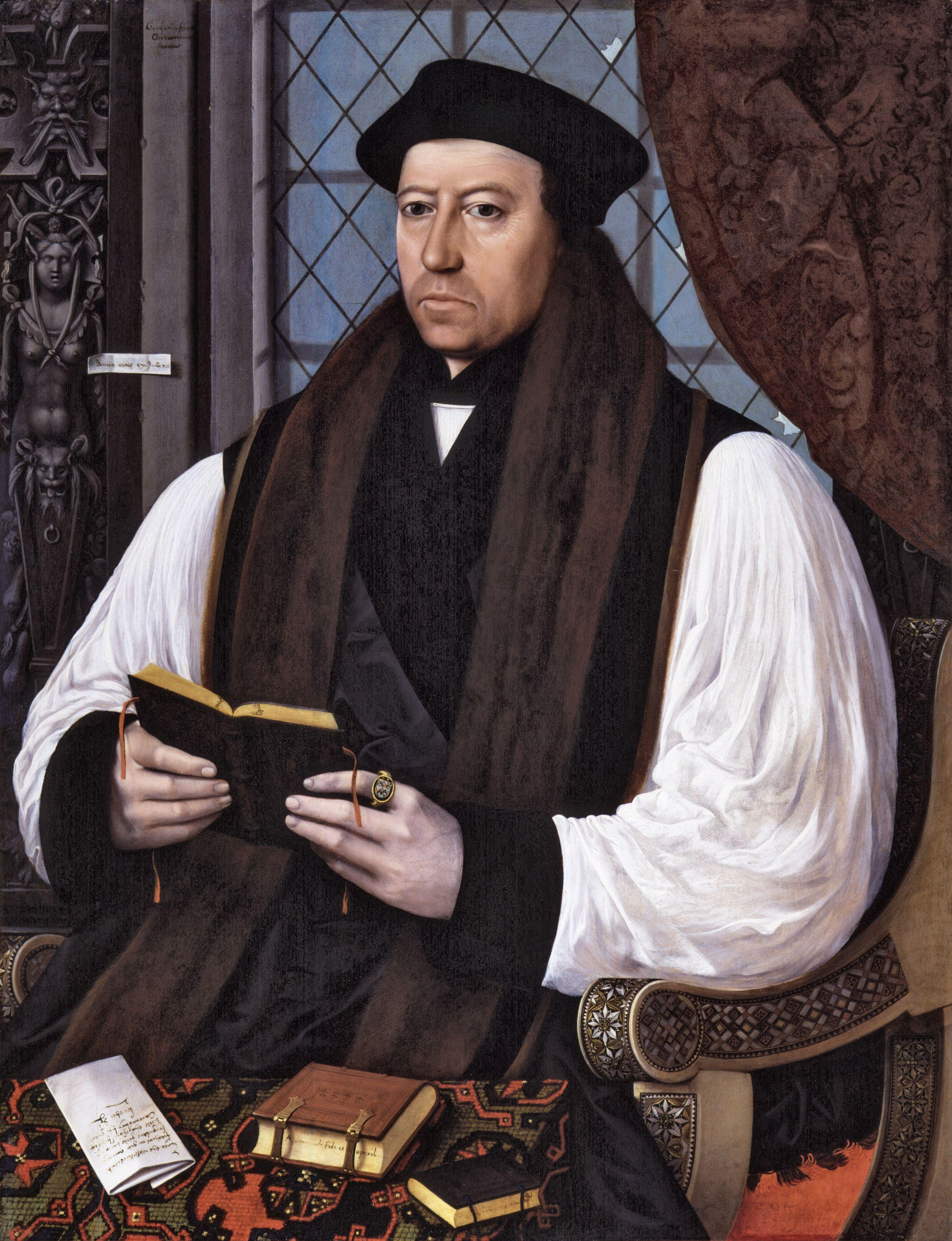
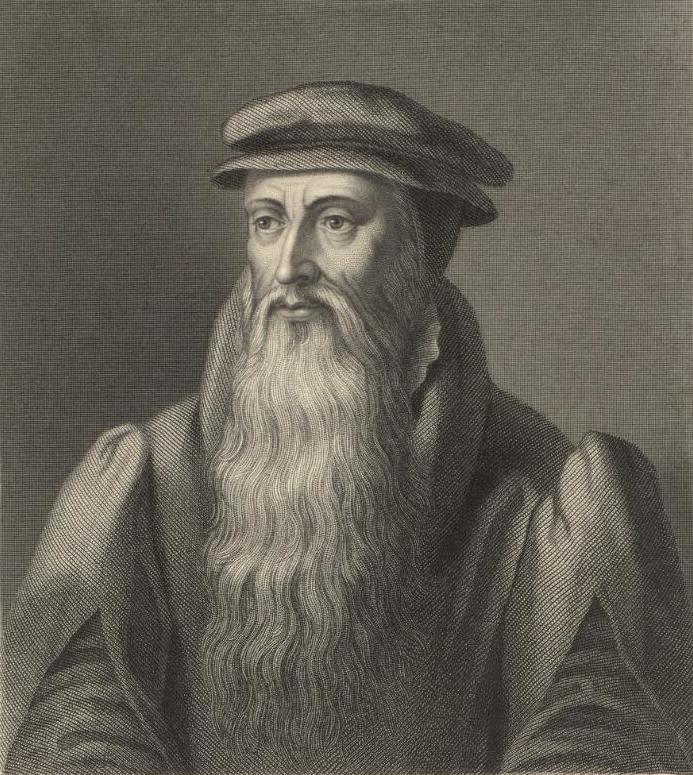
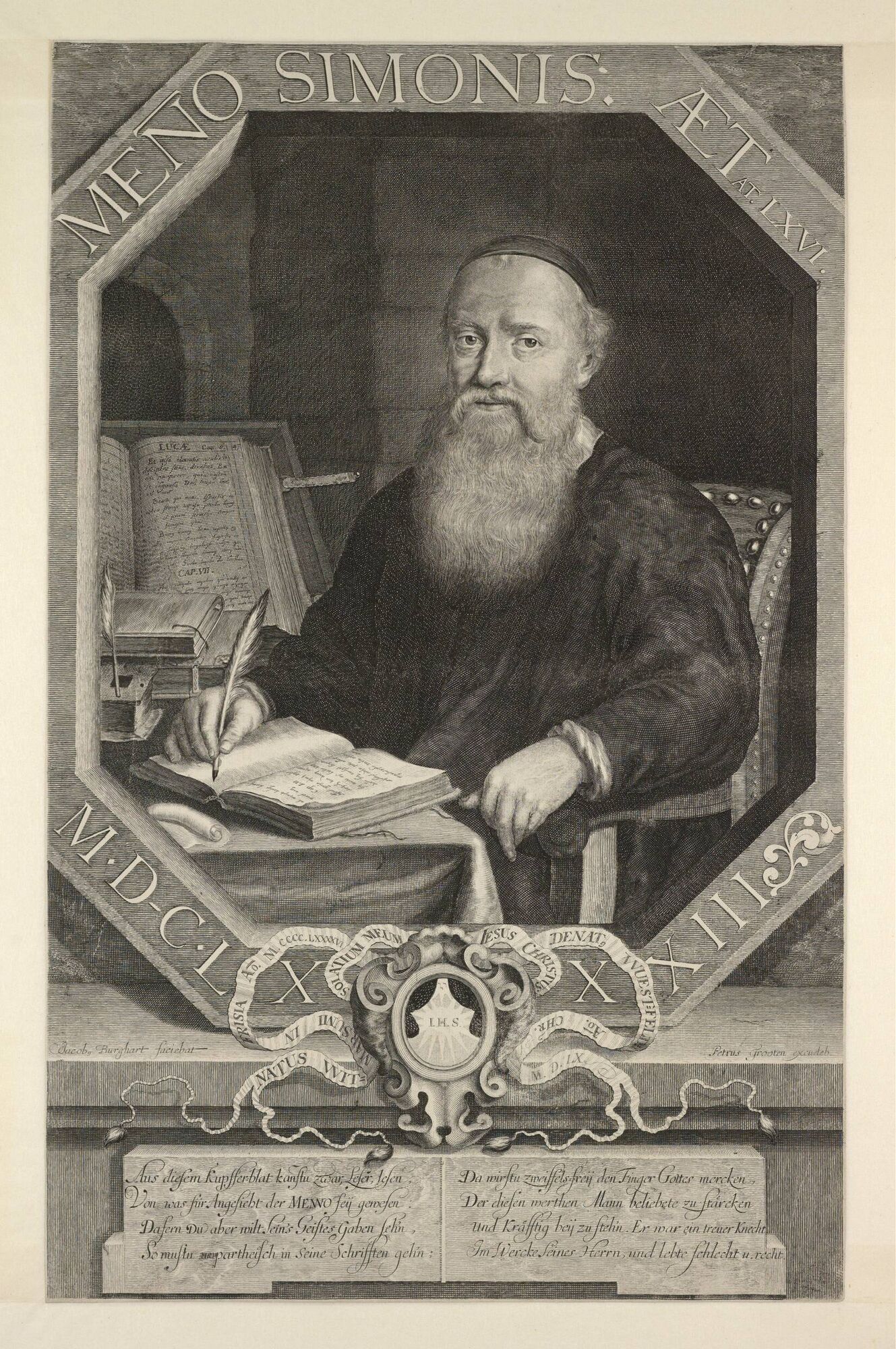
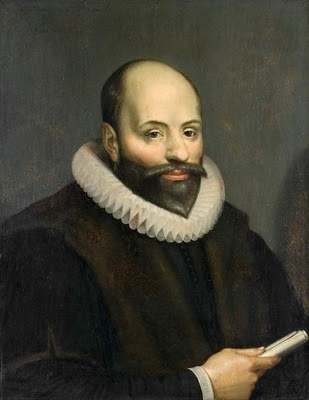
Ritratti: tutti di pubblico dominio (Wikimedia Commons). Knox e Menno Simons sono incisioni posteriori, poiché non è sopravvissuto alcun ritratto contemporaneo.
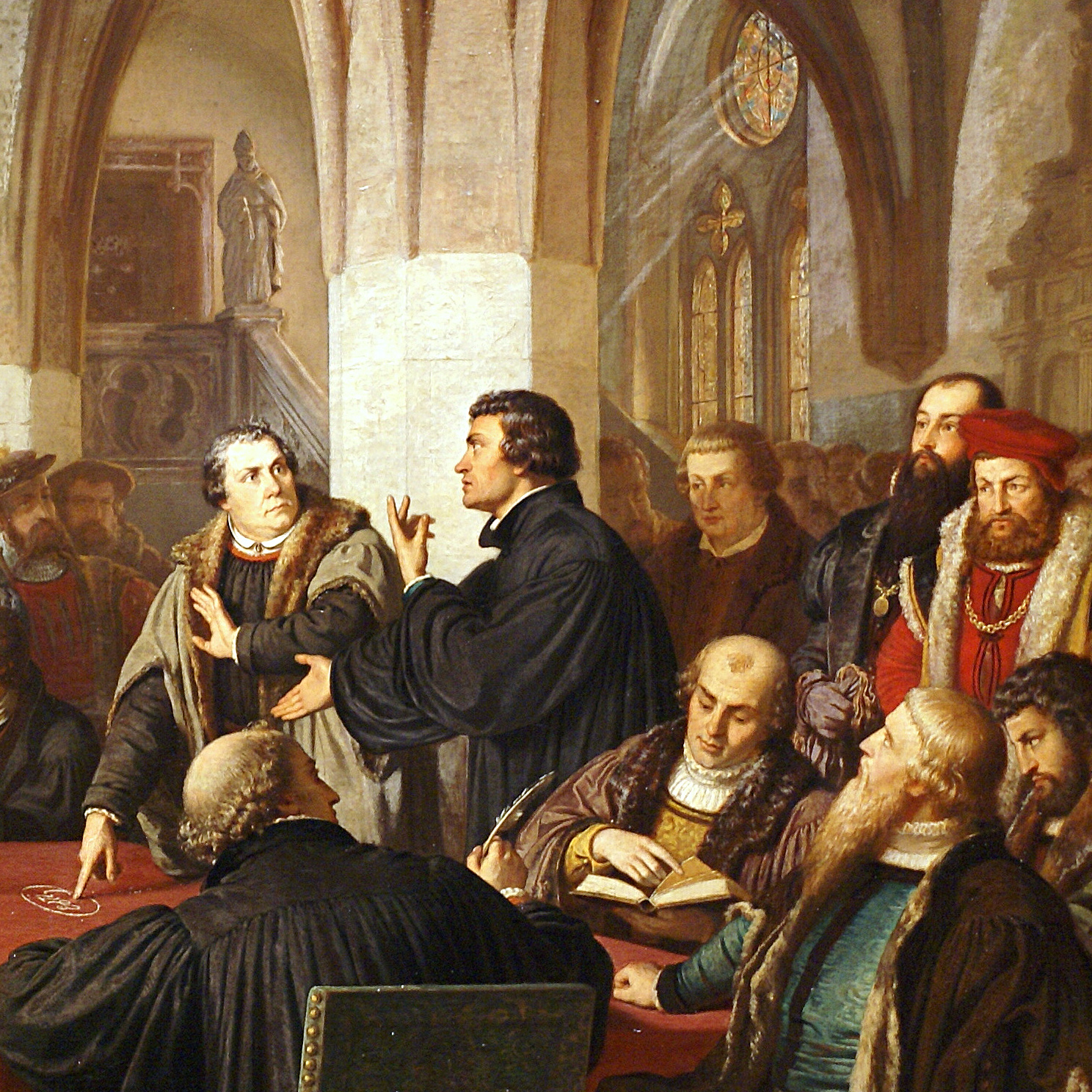
Zwingli e la scissione durante la Cena. A Zurigo Huldrych Zwingli guidò una riforma indipendente da Lutero. I due erano d'accordo su quasi tutto, e si ponevano una sola domanda: cosa succede al pane e al vino nella Cena del Signore? Al Colloquio di Marburgo (1529) si accordarono su 14 dei 15 articoli, poi si concentrarono sull'ultimo. Lutero si aggrappò alla parola «è» in «Questo è il mio corpo». Scrisse Hoc est corpus meum («Questo è il mio corpo») sul tavolo e non si mosse. Zwingli riteneva che fosse solo un simbolo. Non si strinsero la mano. Il fronte unico protestante si spezzò proprio lì. È un'illustrazione dolorosa del principio stesso «la verità prima dell'unità», che mostra quanto sia sottile il confine tra la difesa della verità e la divisione della Chiesa.
Calvino e Ginevra. Una generazione più tardi, Giovanni Calvino, francese, sistematizzò gran parte della teologia protestante nei suoi Istituti della religione cristiana e fece di Ginevra una «scuola di Cristo» alla quale tutta l'Europa mandava i suoi giovani. Sottolineò l'assoluta sovranità di Dio nella salvezza.
«Questo è il mio corpo»
Quattro modi di leggere la Cena del Signore e la divisione a Marburgo
Nulla divise più profondamente i protestanti tra loro (e da Roma) di una domanda: che cosa accade al pane e al vino? Al Colloquio di Marburgo (1529), Lutero e Zwingli concordarono su 14 dei 15 articoli, ma si scontrarono su questo. Lutero scrisse con il gesso sulla tavola «Hoc est corpus meum» («Questo È il mio corpo») e non cedette. Il fronte protestante unito si spezzò proprio lì.
Cattolica
Roma / Trento
Transustanziazione
La sostanza del pane e del vino cambia veramente nel corpo e nel sangue di Cristo; restano soltanto gli «accidenti» esteriori.
Lutero
Wittenberg
Unione sacramentale («in, con, sotto»)
Il corpo di Cristo è veramente presente «nel, con e sotto» il pane e il vino, eppure il pane resta pane. (Lutero rifiutò il termine «consustanziazione».)
Calvino
Ginevra
Presenza reale spirituale (mediante lo Spirito)
I credenti ricevono veramente Cristo, ma per fede e attraverso lo Spirito che li innalza a Cristo in cielo.
Zwingli
Zurigo
Memoriale / simbolica
Il pane e il vino sono soltanto segni commemorativi. «Questo È il mio corpo» significa «questo SIMBOLEGGIA il mio corpo».
Da sinistra (presenza più fisica) a destra (simbolo puro). Questo disaccordo impedì ai rami luterano e riformato di unirsi mai completamente.
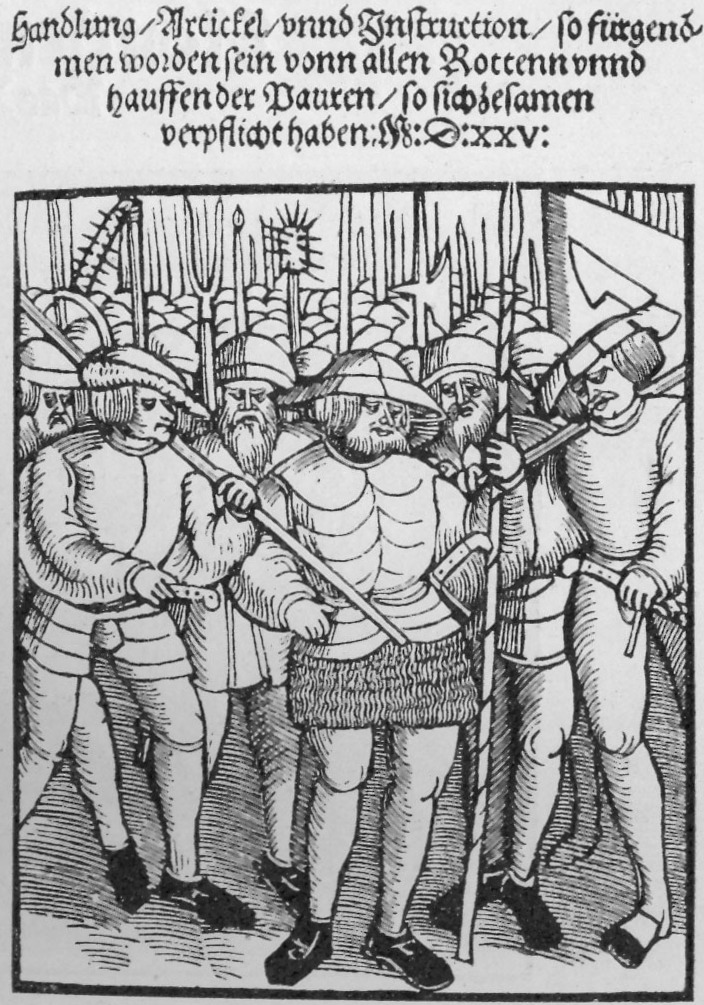
I «radicali» e il loro prezzo. Poi alcuni videro che né Lutero né Zwingli erano andati abbastanza lontano. Se solo la Scrittura è l'autorità, chiesero, dove si trova nel Nuovo Testamento il battesimo dei neonati? Nel gennaio 1525 a Zurigo, per la prima volta, battezzarono credenti adulti, e per questo furono chiamati anabattisti, che significa «ribattezzatori». Si attenevano a una Chiesa di credenti volontari, separata dallo Stato, rifiutando la spada e il giuramento. In seguito Menno Simons diede a quel movimento frantumato un'identità pacifica e non violenta, e il nome «mennonita» venne da lui.
Il prezzo che pagarono fu terribile, ed è stato richiesto da entrambe le parti. In quegli stessi anni (1524–25) scoppiò la «Guerra dei contadini», quando i contadini tedeschi usarono gli stessi slogan — «sacerdozio di tutti i credenti» e «sola Scrittura» — per sostenere le loro richieste. Fu un uso che Lutero non aveva mai previsto, e reagì violentemente, schierandosi direttamente dalla parte della nobiltà.
Calvino, Arminio e la guerra sulla predestinazione. Un'altra generazione dopo, lo stesso campo riformato si divise su una questione dolorosa: nella salvezza, Dio fa tutto (chi Egli sceglie viene salvato), oppure l'uomo contribuisce con la sua libera fede? Il teologo olandese Jacobus Arminius sfidò la predestinazione incondizionata di Calvino. Dopo la sua morte, i suoi seguaci stilarono la Rimostranza del 1610 in cinque punti. Il Sinodo di Dort (1618–19) si riunì, condannò il partito arminiano e formulò i «Cinque punti del calvinismo», poi ricordati con l'acronimo TULIP.
Chi sceglie chi?
Calvino contro Arminio: predestinazione contro libero arbitrio
Una generazione dopo Lutero, il protestantesimo si divise internamente su una domanda dolorosa: nella salvezza, Dio fa tutto (monergismo) oppure Dio e l'uomo cooperano (sinergismo)? Il Sinodo di Dort (1618–19) condannò il partito arminiano e formulò i «cinque punti del calvinismo», ricordati in seguito dall'acronimo TULIP (un conio del XX secolo).
Elezione
Espiazione
Natura umana
Grazia
Perseveranza
TULIP = Depravazione totale · Elezione incondizionata · Espiazione limitata · Grazia irresistibile · Perseveranza. La «Remonstranza» arminiana (1610) offrì esattamente cinque punti di risposta.
Un secolo in fiamme
Come si diffuse la Riforma (1517–1619)
Da un monaco in una città tedesca, nel giro di un secolo il fuoco raggiunse Svizzera, Inghilterra, Scozia e Paesi Bassi e costrinse la stessa Roma a riformarsi.
Le altre due sedie: Roma e Costantinopoli
Pawson predica dalla cattedra protestante, con forza e chiarezza. Ma lui stesso dice che le questioni della Riforma «sono ancora vive e non sono state risolte». E il modo migliore per ascoltarle appieno è considerare le altre due cattedre.
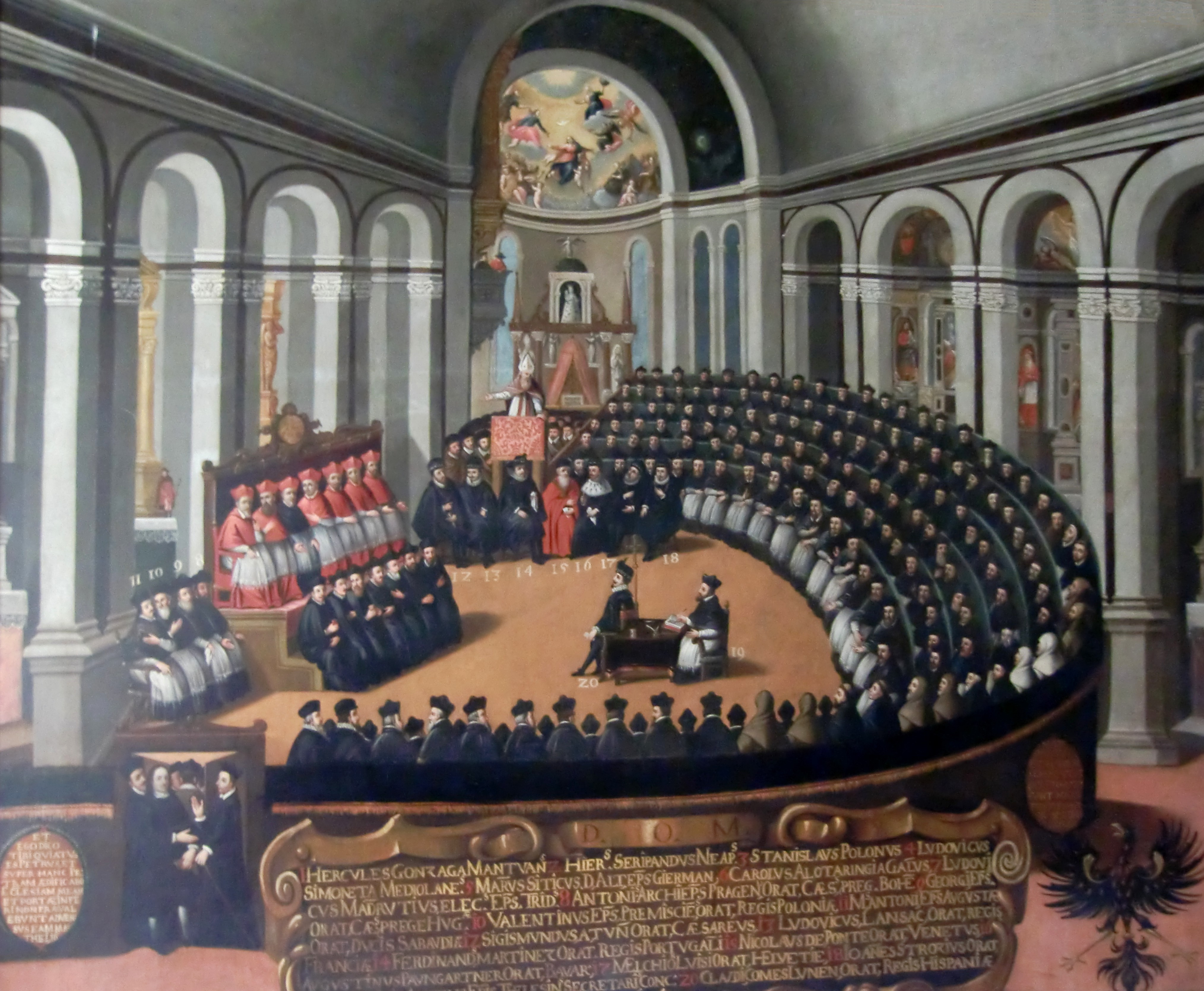
La risposta di Roma: il Concilio di Trento. La risposta dottrinale cattolica definitiva fu il Concilio di Trento (1545–1563). L'equità è importante qui, perché i protestanti spesso caricaturano Trento come «salvezza attraverso le opere». Trento infatti insegna che la grazia è l'inizio immeritato («se è per grazia, non è per opere»), ma che l'uomo deve cooperare liberamente con quella grazia, e che la fede deve essere una fede viva unita all'amore e alle buone opere. Trento condannò sola fide nel senso di «sola fede, niente di più richiesto». Affermò la Scrittura e la Tradizione (con «uguale affetto di pietà»), i sette sacramenti e la transustanziazione. Sulle indulgenze, la cosa che fece arrabbiare Lutero, Trento non abolì le indulgenze, ma abolì la vendita monetizzata di esse, esattamente ciò che miravano le 95 tesi. Punta di diamante di questo rinnovamento furono i Gesuiti di Ignazio di Loyola, approvati nel 1540.
La storia non si ferma al 16° secolo. Nel 1999 la Dichiarazione congiunta sulla dottrina della giustificazione (JDDJ) tra la Chiesa cattolica e la Federazione luterana mondiale dichiarò un consenso sulle verità fondamentali: «solo per grazia, nella fede nell'opera salvifica di Cristo e non per alcun merito da parte nostra, siamo accettati da Dio». In un'intervista del giugno 2016, papa Francesco affermò che le «intenzioni di Lutero non erano sbagliate»; era «un riformatore», anche se «alcuni metodi non erano corretti». Più tardi quell'anno, il 31 ottobre 2016, Francesco e la Federazione luterana mondiale guidarono insieme una commemorazione dei 500 anni della Riforma a Lund, in Svezia.
La risposta di Costantinopoli: un silenzio decisivo. La terza cattedra è l'Ortodossia orientale, solitamente dimenticata sia dai protestanti sia dai cattolici. Tra il 1573 e il 1581 circa, i teologi luterani di Tubinga inviarono la Confessione di Augusta (tradotta in greco) al patriarca Geremia II di Costantinopoli, sperando di trovare un terreno comune. Egli rispose in tre lettere, rifiutando una per una le principali caratteristiche distintive protestanti. Rifiutò sola fide («la Chiesa esige una fede viva, resa evidente dalle buone opere») e sola scriptura (la Scrittura non può essere interpretata separatamente dai Padri), quindi concluse educatamente la corrispondenza.
Per l'Ortodossia, la salvezza non è un verdetto legale (essere dichiarato giusto) ma theosis, cioè deificazione, un vero processo di partecipazione alla vita di Dio. Questa è sinergia, cioè cooperazione: «Dio non salva una persona contro la sua volontà». Quindi l'Ortodossia considera la stessa disputa «fede contro opere» come una cornice giuridica occidentale che non ha mai adottato. Più tardi, quando un patriarca (Cirillo Lucaris) redasse una confessione fortemente orientata a Calvino, l'Ortodossia la condannò al Sinodo di Gerusalemme (1672). In altre parole, l'Ortodossia ha formalmente rifiutato sia Lutero sia Calvino.
Tre sedie
Il dibattito ha tre parti, non due
Pawson predica dalla sedia protestante. Ma per ascoltare tutti i lati, metti accanto le altre due sedie. La sorpresa: tutte e tre insegnano che la grazia è necessaria e immeritata; la caricatura «i protestanti credono nella grazia, mentre cattolici e ortodossi credono nel guadagnarsi il paradiso» è falsa in tutti e tre i casi. Le vere linee di frattura sono l'autorità e il significato della giustificazione.
L'Ortodossia respinse formalmente SIA Lutero (la corrispondenza di Geremia II, 1573–81) SIA Calvino (il Sinodo di Gerusalemme, 1672).
Allora perché combattere?
Ormai in molti si porranno la domanda che lo stesso Pawson solleva al termine del sermone. Perché riesumare queste questioni dottrinali? Perché non scendere a compromessi per amore della pace e dell’unità, quando tutti sono amichevoli e adorano lo stesso Dio? Non si tratta di meschini cavilli dottrinali, di un ritorno ai secoli bui?
La risposta di Pawson è schietta e pesante: Perché è in gioco la salvezza delle anime immortali. Se dici a un uomo che il battesimo in acqua lo salva automaticamente, lo danna. Se gli dici che le buone opere gli faranno guadagnare il paradiso, lo indichi su una strada sbagliata. Questo non è orgoglio religioso. È che niente conta più della verità che porta le persone alla vita eterna. Una falsa pace sulla terra non vale la destinazione eterna di migliaia di anime.
Ma è qui che Pawson ci fa fermare. La prima linea oggi non è più tra protestanti e cattolici. Pawson lo dice chiaramente: la battaglia ormai è aperta tra gli evangelici da un lato e molti protestanti e cattolici romani dall'altro, una linea trasversale a ogni etichetta confessionale. Cita un libro di un professore francese, Gli eredi della Riforma, che si chiede: chi sono i veri eredi di Martino Lutero? Non i «protestanti» in generale, ma coloro che, qualunque sia la loro etichetta, mettono la Scrittura al di sopra di tutto e Cristo al di sopra di tutti. E quindi, dice Pawson, chi spara in una sola direzione è ormai fuori tempo. Lui è chiaro: «Non sono contro i cattolici romani e non sono contro i protestanti. Sono contro gli ismi, contro i sistemi. Voglio amare le persone, chiunque esse siano». Racconta di come ha scoperto che nel suo cuore cresceva un amore genuino per i tutor cattolici con cui ha parlato, amandoli come persone.
Nessun sacerdote tranne Cristo, e nessun vicario tranne lo Spirito Santo. Togli gli occhi da tutti gli altri. Quando von Staupitz chiese a Lutero cosa avrebbe messo al posto di Maria, dei santi, delle immagini e della penitenza, egli rispose: Gesù Cristo. L'uomo ha bisogno solo di Gesù Cristo.
Ecco perché Pawson ringrazia Dio per Martino Lutero, per la sua onestà e per il coraggio di difendere da solo ciò che sapeva essere giusto e vero. E prega che Dio susciti altre persone simili, che, innamorate della verità, la dichiarino e dicano: Sono qui, non posso fare altro. Non è né sicuro né onesto andare contro la coscienza. La mia coscienza è prigioniera della Parola di Dio.
La coscienza prima dell'autorità. La verità prima dell'unità. La Scrittura prima della tradizione. La fede prima delle opere. La grazia prima dei sacramenti. Le persone prima dei sacerdoti, e ogni credente sacerdote. E soprattutto: Cristo davanti alla Chiesa, davanti a tutti e a tutto.
David Pawson's sermon on the Reformation opens not with a date but with a letter. He reads Paul’s letter to the Galatians onward. It is the epistle Martin Luther loved most, the one on which he wrote a very fine commentary. "A man is justified, not by works of the law, but through faith in Jesus Christ… because by works of the law shall no one be justified." Pawson says those words meant a great deal at the time of the Reformation, over 450 years ago.
On October 31, 1517, a monk and professor of theology named Martin Luther nailed his 95 Theses to the church door in Wittenberg. In those days that door served as a notice board for public debate. People usually treat this as the beginning of the Reformation.
But according to Pawson, there is a later date, nearly three years on, that matters even more. It is the day Martin Luther had a bonfire.
In those three years, Luther moved from wanting to spring clean the church to wanting to demolish the whole system. At first, nailing up the 95 Theses, he attacked only the abuse, the sale of indulgences, not the system itself. One of his theses read: "If the Pope knew how the sellers of indulgences fleece his flock, he would rather St. Peter's church were burnt to ashes than built up out of the skin and bones of his sheep." Luther naively assumed the Pope was on his side.
He was quickly disillusioned, and by the Pope himself. Pawson tells it this way: when the indulgence money from Germany dropped, the Pope excommunicated him. Only then did Luther grasp it. The fault was not a few bad men running a good system. The system itself was wrong.
So he threw three things on the fire:
- The parchment with the Pope's signature, threatening excommunication.
- A book of Canon Law, the code by which he had lived as a monk and priest.
- A document he now knew to be a forgery, used to claim the papacy's right to represent Christ on earth.
Before, he was giving the Church a spring clean. Three years later, he began to tear it down.
Kit's note
A correction on the dating. Pawson places the bonfire on "15 June 1520," but that was actually the day Pope Leo X issued the bull Exsurge Domine in Rome. That bull only threatened excommunication and gave Luther 60 days to recant; it did not excommunicate him. Luther burned it, along with the books of Canon Law, on 10 December 1520 at the Elster Gate in Wittenberg, once the 60-day deadline had expired. His formal excommunication did not come until 3 January 1521, by the bull Decet Romanum Pontificem. As for the "forged document": sources list the burned items as the bull and the canon-law compilations, not a distinct "forged decretal." Still, Luther did know Lorenzo Valla's 1440 work exposing the "Donation of Constantine" as a fake. Pawson's point holds; only the date and a detail or two need fixing.
Reform or Demolish?
Luther's turning point in 3 years (1517–1520)
At first, Luther only meant to spring clean the system. Three years later, he realized the system itself was the problem.
📜
31 October, 1517
The 95 Theses at Wittenberg
- Goal: Spark theological debate.
- Attacking the abuse (indulgences), not the system.
- Assumed the Pope would agree if he knew.
🔥
10 December, 1520
Burning the Papal Bull (Elster Gate)
- Goal: A complete break.
- Burned the bull Exsurge Domine (threat of excommunication).
- Burned the books of Canon Law too.
- Realized the system itself was wrong.
Pawson holds that the bonfire of 1520 was even more significant than nailing the theses in 1517. (On the dating: the bull Exsurge Domine was issued in Rome on 15 June 1520; Luther burned it at Wittenberg on 10 Dec 1520; his formal excommunication followed on 3 Jan 1521.)
What drove a monk to that fire?
To understand Luther, you have to go back to the terror that drove him into the monastery. Pawson tells it: Luther once nearly died in a thunderstorm. It left him afraid to die, afraid to face God with his sins unforgiven. And he searched desperately for a way out of that fear.
He prayed to the saints, prayed to Mary, went on pilgrimages, gazed at relics and images. He did all of it. And none of it gave him any assurance that his sins were forgiven. Later, talking with his saintly superior von Staupitz, he was asked the decisive question: "If you take away all these crutches to a tottering faith, if you take away Mary, the saints, the images, penance and pilgrimages, what will you put in their place?" Luther's answer, as in the film Pawson's congregation had just watched, was one thing only: "Jesus Christ. Man only needs Jesus Christ."
That was the seed of everything that came after.
Kit's note
A few honest footnotes. The Stotternheim thunderstorm (2 July 1505) and the vow "St. Anne, help me, I will become a monk" are genuine. But the figure that Luther "prayed to 21 saints a week, 3 a day," which many sermons quote, I could not verify against any scholarly source, so treat it as rhetorical rounding. The "crutches to a tottering faith" line I also could not trace verbatim in the standard biographies (Bainton, Kittelson). The substance, though, is well attested: Staupitz turned Luther from self-punishment toward reliance on Christ alone. Luther himself said: "If it had not been for Dr. Staupitz, I should have sunk in hell."
Is the Reformation a dead issue?
In his 1967 sermon, marking the Reformation's 450th anniversary, Pawson tells two stories side by side. Once he attended a meeting of Protestant ministers and members, happened to mention the Reformation, and was told in no uncertain terms that Protestants no longer care for it. It is "dead history," they said, and bringing it up is not the done thing. He came away with his ears ringing.
Yet the very next weekend he was invited to a Roman Catholic seminary in the southeast corner of Ireland to speak to the tutors and lecturers, about the Reformation among other things. They wanted to hear what he thought, wanted an open forum. He said: "I think the issues raised then are still alive, and they have not been settled." They replied: "That is exactly what we think too." Three hours of friendly discussion, then a nice tea, then home.
It is an extraordinary position. He could discuss the Reformation with Roman Catholics, but not with Protestants. Pawson's answer in a nutshell: the Reformation is not out of date. Not because we fight people, Catholic or Protestant, but because we fight systems and isms that blind people to the truth. Only, the front line today is drawn very differently than in Luther's day.
Luther's greatness lies in this. He recovered Seven Priorities, seven things that had been pushed into second place, and put them back in first.
Seven Priorities
What Luther put first
Luther's greatness was getting his priorities right. Seven things that had been relegated to second place, he put back in first.
Better to obey God's Word in one's conscience than yield to church or state pressure. (“It is neither safe nor honest to go against conscience.”)
Unity without the truth of the Gospel is meaningless. What saves people is truth, not an institution.
Every church tradition (praying to saints, purgatory…) must be tested by Scripture (Sola Scriptura).
Not works, nor faith + works. “The just shall live by faith” (Sola Fide). Saved NOT BY good deeds, but FOR good deeds.
Grace is not magically parceled up in sacraments. Without faith, sacraments are useless. Rejects the “magical” view of baptism and the Supper.
The priesthood of all believers. Erased the clergy/laity divide. Ministers have a different function, not a different status.
Only one Priest (Christ) and one Vicar (the Holy Spirit). The Church cannot replace Christ. Whoever puts himself in Christ's place is Anti-Christ (instead of Christ).
Let us go through the priorities one by one.
1. Conscience before Authority
Luther lived in an age when freedom of conscience barely existed. It was not the state but the church that told you what to believe and how to behave. To picture that world, remember the tragedy of Galileo. He discovered truths about the universe through his telescope, and was told "you must not believe that, you must not teach that."
Luther was a man who dared to say: "My conscience is captive to the Word of God. It is neither safe nor honest to go against conscience." At the Diet of Worms (1521), before the emperor and the whole machinery of church power, he still would not recant.
And this is no matter of the distant past. The very week he preached, someone handed him a newspaper cutting: over 200 dissident Baptists in the Soviet Union jailed or awaiting trial for "infringing" strict religious laws. One had died after torture; their children questioned for hours about their parents' faith. Pawson notes that perhaps half the human race still lives under totalitarian states that claim the mind as well as the body. The freedom of conscience we take for granted, most of humanity still does not have.
Then Pawson says the world is never led by "jellyfish" with no backbone, drifting with the tide. It is led by people who have the courage of their convictions. And he warns, sharply, that even today's self-styled "non-conformists" conform to one another with astonishing ease. What we need are people who genuinely dare to stand alone.
Kit's note
The most famous line tied to Worms, "Here I stand, I can do no other. So help me God," is almost certainly a later addition. It is absent from the earliest transcripts. The reliably recorded words are: "…I neither can nor will retract anything, since it is neither safe nor right to go against conscience. God help me. Amen." The resolve is genuine; only the "Here I stand" flourish is a later embellishment.
2. Truth before Unity
One of the gravest charges laid against Luther was that he split the Church, that he was a schismatic. For nearly a thousand years, Western Europe had one Church, one denomination. They told him: recant and leave the Church intact; go on like this and you will break it.
But Luther put Truth before Unity. His conscience was not free to follow every whim, because it was captive to the Word of God. He saw the crucial thing clearly. What saves people is not the unity of the Church but the truth of the gospel. Unite every church on earth tomorrow, and the number of the saved will not rise. What is really needed is the truth of the gospel preached in those churches.
Pawson says it plainly. Our age has one catchword you climb aboard or get hated for refusing, and that word is "unity." A whole world is shrinking through transport, and the Church seems to have caught the echo, crying "unity, unity, unity." He tells a detail he relishes. When the British Council of Churches at Nottingham said the disagreements could be sorted out from within an already-united church, the Baptist Union alone among the denominations wrote back that no, they must be sorted first, and then unite. That is putting truth before unity.
3. Scripture before Tradition
Pawson names a startling detail: Luther was 20 years old before he first held and read a complete Bible. He was raised devout, prepared for a holy life, and yet not until he was 20 did he see that book. And when he read it, he was astonished. So much of what he had been told was a "vital part" of Christian belief and practice was simply not in it. Nothing about praying to Mary or the saints, no relics and images, no purgatory, no penance.
He asked: where did all this come from? The official answer was that it is the Tradition of the Church, and Tradition is as much the Word of God as that book. Luther stood before two "Words of God," one written and one spoken, and was told to accept both. But he came to a conclusion. Only that book is the truth, and every tradition of every church must be brought to the touchstone of Scripture and tested by it. Once he did that, he began to throw tradition out.
Pawson admits candidly that even his own church has unscriptural traditions, and all of them must bow to the Word of God. He tells of a friend (named on the recording as something like "Eduardo Lubinque," a name I could not verify in any independent source, most likely a transcription slip), once a professor of New Testament to the cream of Rome's Jesuit priests. The more he studied Scripture, the less he could keep teaching students that things not in this book were "the Word of God." So he taught himself out of that chair, just as Luther, 450 years earlier, was also a professor of theology. This book had done it.
Kit's note
A piece Pawson does not stress but which matters greatly: Erasmus of Rotterdam. In 1516 this scholar printed the Greek New Testament (the Novum Instrumentum), the very base text Luther used to translate the German New Testament. Where the old Latin read "do penance," Erasmus rendered the Greek correctly as "repent." A small change that knocked out the foundation of the whole penance system. They said "Erasmus laid the egg that Luther hatched," though Erasmus rejected the jab and later clashed sharply with Luther over free will (1524–25). He wanted reform from within, not schism.
4. Faith before Works (Sola Fide)
This is the biggest question a person can ask, and for Luther it was life or death: How do I get right with God? How are my sins forgiven? The old thunderstorm had left him afraid to die with sins unforgiven, so this was no theory.
When John Tetzel came round selling indulgences, Luther was sure that was not the way. You cannot buy forgiveness. Then he took a further step: if you cannot buy it, neither can you earn it by merit. Pawson lays out three answers to the question of how to get to heaven, and every religion falls into one of them:
- The world says: do good deeds.
- The church of his day said: you need faith plus good deeds.
- Luther said: only one thing is needed, and that is to believe.
The manifesto of the Reformation, running from the Old Testament through the New and on to Luther, is: "The just shall live by faith." Not by good deeds, not by faith mixed with works, but by faith, full stop. The Latin sola fide (faith alone) became the great banner of the Reformation.
So what part do good deeds play? Luther put it superbly, and Pawson says it cannot be put better: We are saved NOT BY good deeds, but FOR good deeds. You do not do good deeds to earn the ticket to heaven; you do them because you are going to heaven already.
The Five Solas
Five slogans that distil the Reformation
Luther's seven priorities were later distilled into five Latin “sola / solus” (alone) slogans. To be honest: packaging the “five solas” as a unified list is a later (19th–20th c.) systematization, not a ready-made 16th-c. slogan, but each idea is genuinely rooted in the Reformers themselves.
Sola Scriptura · Scripture alone
Scripture alone is the supreme, infallible authority for faith.
Counter: Catholic and Orthodox: Scripture cannot be severed from the Tradition of the Church that produced it.
Sola Fide · Faith alone
One is justified by faith alone, not by merit.
Counter: Trent (1547): a “living” faith must include works; condemns “faith needing nothing further.”
Sola Gratia · Grace alone
Salvation is entirely God's unmerited gift.
Counter: The broadest common ground, even Trent (Session VI, 1547) teaches grace as the unmerited beginning; reaffirmed in the JDDJ, 1999.
Solus Christus · Christ alone
Christ alone is the one mediator between God and man.
Counter: Contested: the mediating role of the Church, the saints, and Mary in Catholic/Orthodox tradition.
Soli Deo Gloria · Glory to God alone
All glory belongs to God alone.
Counter: Least disputed, but grounds the rejection of excessive honor to persons/institutions.
5. Grace before Sacraments
Luther was raised to believe that grace was parceled up in seven sacraments (Pawson says the number had once run as high as fourteen, then dropped to seven), and that they worked automatically, like magic, regardless of who administered or received them. Baptismal water automatically saved an infant who knew nothing. Bread and wine, at a certain point in the service, automatically became Christ's actual body and blood, then were offered by a priest as a sacrifice, not on a table but on an altar.
Luther thought it through and said: I know I need God's grace, but there is nothing in this book to tell me that grace is wrapped up in sacraments that work automatically. He realized: without faith, the sacraments are no use. "By grace are you saved, through faith," not through sacraments. Grace is not packaged; it flows like a river. The simplest believer, never baptized and without the Lord's Supper, yet with faith, still knows the grace of God. Pawson points to his friends in the Salvation Army. They have no sacraments at all, yet plainly have grace; they are always singing about it.
Of the two sacraments Luther kept (baptism and the Lord's Supper), Pawson honestly admits what even Luther's closest friends had to grant: he never thought the matter through to its logical end, and he got a little muddled on both. What he got right was the order: grace first, sacraments second.
6. People before Priests (The priesthood of all believers)
The church Luther was born into was a pyramid of power. At the top the Pope, then down through Cardinals, Bishops, the orders of monks, to the parish priest. And far at the bottom, the laity. The divide between "clergy" and "laity" was so rigid that even dress and position in the building differed: one end in vestments, the other in ordinary clothes.
Pawson retells how Luther looked at that pyramid and asked, from the top down. What scriptural justification is there for one man up there? None. For bishops? None. For mediating priests? None. Then he came to a wonderful rediscovery: the priesthood of all believers. He made every layman a priest and every priest a layman, seeing there was no division between them at all. There were differences of function, yes, like different organs in one body. So he called them "ministers," not "priests." Every believer is a priest.
That is why he labored to translate the Bible into common German, to put it into the hands of the people rather than the priests. As he said, a maid sweeping a room with a broom could understand the Word better than a priest. Pawson notes that two-thirds of the world's professing Christians still live under priesthood and hierarchical control, so this protest is still needed.
Priesthood of All Believers
Demolishing the pyramid of power
The medieval church was a pyramid: laity at the bottom, pope at the top. Luther declared: There is no middle class. All are priests.
Pre-Reformation Structure
The Reformation Ideal
Kit's note
The "maid with a broom" line is a folk phrasing attached to Luther, not a traceable quote of his. The "plowboy knowing Scripture better than the clergy" image actually belongs to William Tyndale in England (echoing Erasmus's NT preface). What is certain, and far more important, is that Luther did translate the Bible for ordinary people. The German New Testament came in 1522 (done in about 11 weeks while he was hidden at the Wartburg), the complete Bible in 1534, and Gutenberg's press multiplied it for a whole nation. That is the real marvel, and it needs no embellishing quote.
7. Christ before the Church
This is the climax. Pawson recalls that when he asked the church-history tutor at that Catholic seminary what the biggest issue of the Reformation was, the two of them agreed. The biggest issue was this: Luther challenged the very idea that Christ and the Church are one, the idea that the Church could do for people what only Christ can do. The Body, that is the Church, was taking the place of the Head, that is Christ.
Pawson works it out through three offices:
- I need a prophet to teach me God's infallible truth. Who is my prophet? Rome says: the body, the infallible Church. Luther says: the Head.
- I need a priest to come to God. Who is my priest? Rome says: the body, confess your sins to the Church. Luther says: Christ in heaven, and you may come to God at any time through Him.
- I need a king to rule me. Who is my king? Rome says: the body on earth. Luther says: my Head in heaven.
So Luther dared to call the papacy "Antichrist." Pawson explains carefully: he did not mean the Pope was against Christ. In its root sense, "anti" means instead of, in the place of. Whoever puts himself in the place of Christ is antichrist. Rome told people that to come to God they must come through it, and that is putting itself in His place.
Then Rome countered with an important argument. When the Head is in heaven and someone on earth wants to come, must they not come through the body? Is not the Pope then Christ's vicar on earth, one standing in His place to convey what He teaches? Luther thought it through and answered: yes, Christ must have a vicar on earth to speak for Him, but that vicar is the Holy Spirit, not the Pope. In sum: "No priest but Christ, and no vicar but the Holy Ghost."
Pawson lands it very practically. That is exactly why there is no confession box anywhere around the walls of his Baptist church. "I cannot forgive your sins, and neither can Gold Hill Baptist Church. If you have sins to confess, go straight to the priest in heaven, who is Christ himself."
Kit's note
On the etymology: reading "anti = instead of" is one valid sense of the Greek prefix anti-, but most standard lexicons treat the primary sense of "antichrist" as "against, opposed to." Both nuances exist in Greek depending on context, and Luther leaned on the "usurper of Christ's place" sense. To call it the only correct meaning (and "against" wrong) overstates it. Better to say Luther drew out a genuine, existing sense of the word to name what he saw: an institution putting itself where Christ alone belongs.
The fire escapes Luther's hands
Pawson preaches mostly about Luther, because Luther lit the fuse. But the fire quickly escaped his hands. Within a single generation the Reformation had split into several streams, each with its own city, its own leader, its own emphasis. Some allied with one another; some quarreled so bitterly they never reconciled. If you hear only of Luther, you would think the Reformation was one solid block. It was not.
More Than One Man
The other faces of the Reformation
Pawson preaches mostly about Luther, because Luther lit the fuse. But the fire quickly escaped his hands. Within a generation the Reformation had split into several streams, each with its own city, its own leader, its own emphasis.
Portraits: all public domain (Wikimedia Commons). Knox and Menno Simons are later engravings, as no contemporary likeness survives.
Zwingli and the split over the Supper. In Zurich, Huldrych Zwingli led a reform independent of Luther. The two agreed on nearly everything, and hit only one question: what happens to the bread and wine in the Lord's Supper? At the Marburg Colloquy (1529) they agreed on 14 of 15 articles, then jammed on the last. Luther clung to the word "IS" in "This is my body." He chalked Hoc est corpus meum ("This IS my body") on the table and would not budge. Zwingli held it was only a memorial symbol. They would not shake hands. The united Protestant front broke right there. It is a painful illustration of the very principle "truth before unity," showing how fine the line is between defending truth and splitting the Church.
Calvin and Geneva. A generation later, John Calvin, a Frenchman, systematized the whole of Protestant theology in his Institutes of the Christian Religion, and made Geneva a "school of Christ" to which all Europe sent its people. He stressed the absolute sovereignty of God in salvation.
“This is my body”
Four ways to read the Lord's Supper and the split at Marburg
Nothing divided Protestants from one another (and from Rome) more deeply than one question: what happens to the bread and wine? At the Marburg Colloquy (1529), Luther and Zwingli agreed on 14 of 15 articles, but hit this one. Luther chalked “Hoc est corpus meum” (“This IS my body”) on the table and would not budge. The united Protestant front broke right there.
Catholic
Rome / Trent
Transubstantiation
The substance of bread and wine truly changes into Christ's body and blood; only the outward ‘accidents’ remain.
Luther
Wittenberg
Sacramental union (“in, with, under”)
Christ's body is truly present “in, with, and under” the bread and wine, yet bread remains bread. (Luther rejected the term “consubstantiation.”)
Calvin
Geneva
Spiritual real presence (by the Spirit)
Believers truly receive Christ, but by faith and through the Spirit lifting them up to Christ in heaven.
Zwingli
Zurich
Memorial / Symbolic
The bread and wine are only memorial signs. “This IS my body” means “this SIGNIFIES my body.”
From left (most physical presence) to right (pure symbol). This disagreement kept the Lutheran and Reformed branches from ever fully uniting.
The "radicals" and their price. Then some saw that neither Luther nor Zwingli had gone far enough. If Scripture alone is the authority, they asked, where in the New Testament is infant baptism? In January 1525 at Zurich, for the first time, they baptized adult believers, and so were called Anabaptists, meaning "re-baptizers." They held to a Church of voluntary believers, separate from the state, refusing the sword and the oath. Later Menno Simons gave the shattered movement a peaceful, nonviolent identity, and the name "Mennonite" came from him.
The price they paid was terrible, and it was exacted by both sides. In those same years (1524–25), the "Peasants' War" erupted as German peasants used the very slogans "priesthood of all believers" and "Scripture alone" to press their demands. It was a use Luther never intended, and he reacted violently, siding squarely with the nobility.
Kit's note
This is one of the painful truths an honest essay should not hide. The Anabaptists were persecuted by both Catholics and the mainstream Reformers. In Zwingli's own Zurich, rebaptism was made a capital crime, and Felix Manz was drowned in the Limmat on 5 Jan 1527, "the first Protestant martyr to die at the hands of other Protestants." Drowning was a calculated mockery of "re-baptism." As for the Peasants' War, Luther wrote "Against the Murderous, Thieving Hordes of Peasants" (1525), urging the lords to "smite, slay, and stab" the rebels like mad dogs; perhaps 100,000 peasants died. Calvin's Geneva has its own stain: the anti-Trinitarian theologian Michael Servetus was burned in 1553 with Calvin's approval (he asked only that the sentence be commuted to the more "humane" sword, and was refused). And the heaviest stain must be named too. Late in life Luther wrote On the Jews and Their Lies (1543), calling for synagogues to be burned. It is a poisonous legacy later exploited by the Nazis, and one that today's Lutheran churches have formally repudiated. The Reformers were real men, with real stains, in a violent age.
Calvin, Arminius, and the war over predestination. Another generation on, the Reformed camp itself split over an aching question: in salvation, does God do it all (whom He chooses is saved), or does man contribute by his own free faith? The Dutch theologian Jacobus Arminius challenged Calvin's unconditional predestination. After his death, his followers drew up the Remonstrance of 1610 in five points. The Synod of Dort (1618–19) met, condemned the Arminian party, and framed the "Five Points of Calvinism," later remembered by the acronym TULIP.
Who chooses whom?
Calvin vs Arminius: Predestination vs Free Will
A generation after Luther, Protestantism split internally over an aching question: in salvation, does God do everything (monergism), or do God and man cooperate (synergism)? The Synod of Dort (1618–19) condemned the Arminian party and framed the “Five Points of Calvinism”, later remembered by the acronym TULIP (a 20th-c. coinage).
Election
Atonement
Human nature
Grace
Perseverance
TULIP = Total depravity · Unconditional election · Limited atonement · Irresistible grace · Perseverance. The Arminian “Remonstrance” (1610) offered exactly five counter-points.
A century on fire
How the Reformation spread (1517–1619)
From one monk in one German town, within a century the fire reached Switzerland, England, Scotland, the Netherlands and forced Rome itself to reform.
The other two chairs: Rome and Constantinople
Pawson preaches from the Protestant chair, strongly and clearly. But he himself says the Reformation's issues "are still alive and have not been settled." And the best way to hear them fully is to pull up the other two chairs.
Rome's answer: the Council of Trent. The definitive Catholic doctrinal response was the Council of Trent (1545–1563). Fairness matters here, because Protestants often caricature Trent as "salvation by works." In fact Trent teaches that grace is the unmerited beginning ("if by grace, it is not now by works"), but that a person must cooperate freely with that grace, and that faith must be a living faith joined to love and good works. Trent condemned sola fide in the sense of "faith alone, nothing further required." It affirmed Scripture and Tradition (with "equal affection of piety"), the seven sacraments, and transubstantiation. On indulgences, the thing that set Luther off, Trent did not abolish indulgences, but abolished the monetized sale of them, exactly what the 95 Theses targeted. The spearhead of this renewal was the Jesuits of Ignatius of Loyola, approved in 1540.
The story does not stop in the 16th century. In 1999 the Joint Declaration on the Doctrine of Justification (JDDJ) between the Catholic Church and the Lutheran World Federation declared a consensus on the basic truths: "by grace alone, in faith in Christ's saving work and not because of any merit on our part, we are accepted by God." In a June 2016 interview, Pope Francis said Luther's "intentions were not mistaken"; he was "a reformer," though "some methods were not correct." Later that year, on 31 October 2016, Francis and the Lutheran World Federation jointly led a common commemoration of the Reformation's 500 years at Lund, Sweden.
Constantinople's answer: a decisive silence. The third chair is Eastern Orthodoxy, usually forgotten by Protestant and Catholic alike. Between roughly 1573 and 1581, Lutheran theologians at Tübingen sent the Augsburg Confession (translated into Greek) to Patriarch Jeremiah II of Constantinople, hoping to find common ground. He replied in three letters, one by one rejecting the core Protestant distinctives. He rejected sola fide ("the Church demands a living faith, made evident by good works") and sola scriptura (Scripture may not be interpreted apart from the Fathers), then politely ended the correspondence.
For Orthodoxy, salvation is not a legal verdict (being declared righteous) but theosis, that is deification, a real process of participating in the life of God. This is synergy, that is cooperation: "God does not save a person against that person's will." So Orthodoxy regards the very "faith versus works" quarrel as a Western, juridical framing it never adopted. Later, when one Patriarch (Cyril Lucaris) drafted a confession leaning heavily toward Calvin, Orthodoxy condemned it at the Synod of Jerusalem (1672). In other words, Orthodoxy formally rejected both Luther and Calvin.
Three Chairs
The debate is three-sided, not two
Pawson preaches from the Protestant chair. But to hear all sides, set the other two chairs beside it. The surprise: all three teach that grace is necessary and unmerited, the caricature “Protestants believe in grace, Catholics/Orthodox believe in earning heaven” is false on all three counts. The real fault lines are authority and the meaning of justification.
Orthodoxy formally rejected BOTH Luther (the Jeremiah II correspondence, 1573–81) AND Calvin (the Synod of Jerusalem, 1672).
So then, why fight?
By now many will ask the question Pawson himself raises at the sermon's close. Why dig up these doctrinal matters? Why not compromise for the sake of peace and unity, when everyone is friendly and worships the same God? Is this not petty doctrinal quibbling, a return to the dark ages?
Pawson's answer is blunt and heavy: Because the salvation of immortal souls is at stake. If you tell a man that baptism in water automatically saves him, you damn him. If you tell him good works will earn him heaven, you point him down a wrong road. This is not religious pride. It is that nothing matters more than the truth that brings people to eternal life. A false peace on earth is not worth the eternal destination of thousands of souls.
But here is where Pawson makes us stop. The front line today is no longer between Protestants and Catholics. Pawson says it plainly: the battle now runs between evangelicals on the one hand, and many Protestants and Roman Catholics on the other, a line that cuts across every denominational label. He cites a book by a French professor, The Heirs of the Reformation, which asks: who are the true heirs of Martin Luther? Not "Protestants" in general, but those who, whatever their label, put Scripture above everything and Christ above everyone. And so, Pawson says, those who fire in only one direction are out of date. He is clear: "I am not against Roman Catholics, and I am not against Protestants. I am against isms, against systems. I want to love people, whoever they are." He tells how he found a genuine love rising in his heart for the Catholic tutors he spoke with, loving them as people.
Kit's note
Context, so this is not misread. Pawson preached this in 1967, just after the Second Vatican Council closed (1962–1965), and after nearly a century in which liberal theology had spread through the mainline Protestant churches. Many of them by then openly doubted the authority of Scripture, the miracles, or the bodily resurrection of Christ. So when he says the front line now runs between "evangelicals" and "many Protestants and Roman Catholics," he does not mean hatred of anyone. He means a conviction: whether or not one puts Scripture above all and Christ above all. A Protestant who has abandoned that core is, in his view, no longer a "true heir of Luther." One thing here can confuse: evangelicals are themselves Protestants, so why set "evangelicals" against "many Protestants"? Because Pawson uses the two words in two different senses. "Evangelical" names a conviction (Scripture and Christ above all), while "Protestant" on the other side is only a denominational label, one that can include liberal or nominal Protestants who have lost that very conviction. His quotation comes from The Heirs of the Reformation (Jacques de Senarclens, SCM Press, 1963); de Senarclens was a French-speaking Swiss Reformed theologian who taught at Geneva, so Pawson's "a French professor" is a little imprecise. Pawson himself stresses that he fights "systems, not people." To hear all sides, including how Catholics and the Orthodox present themselves and where the traditions genuinely converge (the 1999 JDDJ), see the "Other two chairs: Rome and Constantinople" section above.
No priest but Christ, and no vicar but the Holy Ghost. Get your eyes off everyone else. When von Staupitz asked Luther what he would put in the place of Mary, the saints, the images and penance, he answered: Jesus Christ. Man only needs Jesus Christ.
That is why Pawson thanks God for Martin Luther, for his honesty, for the courage to stand alone for what he knew was right and true. And he prays God will raise up more such people, who in love will declare the truth and say: Here I stand, I can do no other. It is neither safe nor honest to go against conscience. My conscience is captive to the Word of God.
Conscience before authority. Truth before unity. Scripture before tradition. Faith before works. Grace before sacraments. People before priests, and making every believer a priest. And above all: Christ before the Church, before everyone and everything else.