
教会の歴史 — パート 3: 宗教改革
宗教改革に関するデイビッド・ポーソンの説教は、日付ではなく手紙で始まります。彼はパウロのガラテヤの信徒への手紙 以降を読みます。これはマルティン・ルターが最も愛した書簡であり、彼は非常に優れた注釈を書きました。 「人は律法の行いによってではなく、イエス・キリストへの信仰によって義とされるのです…律法の行いによっては誰も義とされないからです。」 ポーソン氏は、4…
この記事では、AIが資料、事実確認、翻訳、編集を補助しました。論旨と結論は著者のものです。
論旨の流れ、意味、結論は著者自身のものです。どの資料を信頼し、どう理解するかは、ツールではなく著者の判断です。
AIツールは、資料を探し、出典と照らして主張を確認し、主題を広く読み、文章を英語とベトナム語の間で翻訳し、文法・明瞭さ・文のリズムを整えるために使われました。
ツールが見つけたのは、吟味すべき材料であって結論ではありません。何を語り、何を省き、何を意味するかは著者が決めました。
この記事は著者の名で公開されます。記事の内容と、そこに後から見つかる誤りを含め、著者が責任を負います。
パラレル
宗教改革に関するデイビッド・ポーソンの説教は、日付ではなく手紙で始まります。彼はパウロのガラテヤの信徒への手紙 以降を読みます。これはマルティン・ルターが最も愛した書簡であり、彼は非常に優れた注釈を書きました。 「人は律法の行いによってではなく、イエス・キリストへの信仰によって義とされるのです…律法の行いによっては誰も義とされないからです。」 ポーソン氏は、450年以上前の宗教改革当時、これらの言葉は大きな意味を持っていたと言います。
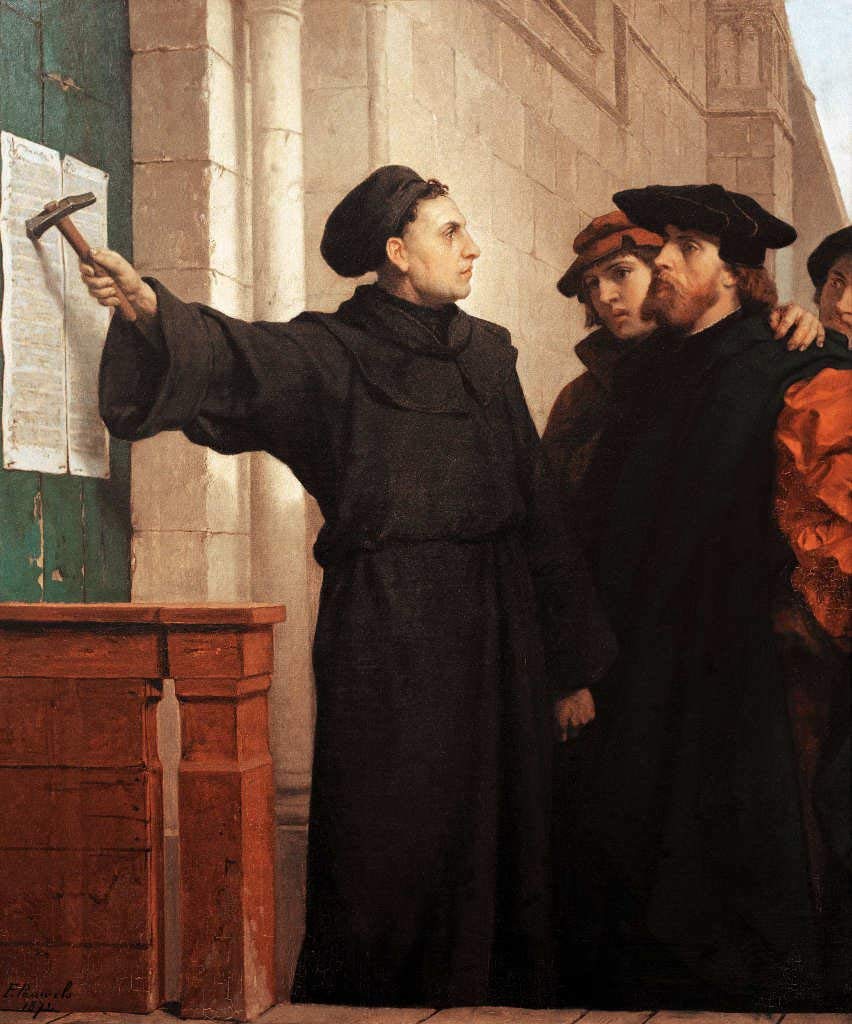
1517年10月31日、修道士で神学教授でもあったマルティン・ルターは、ヴィッテンベルクの教会の扉に95箇条の論題を掲示しました。当時、その扉は公開討論の掲示板として機能していました。一般に、これが宗教改革の始まりとされています。
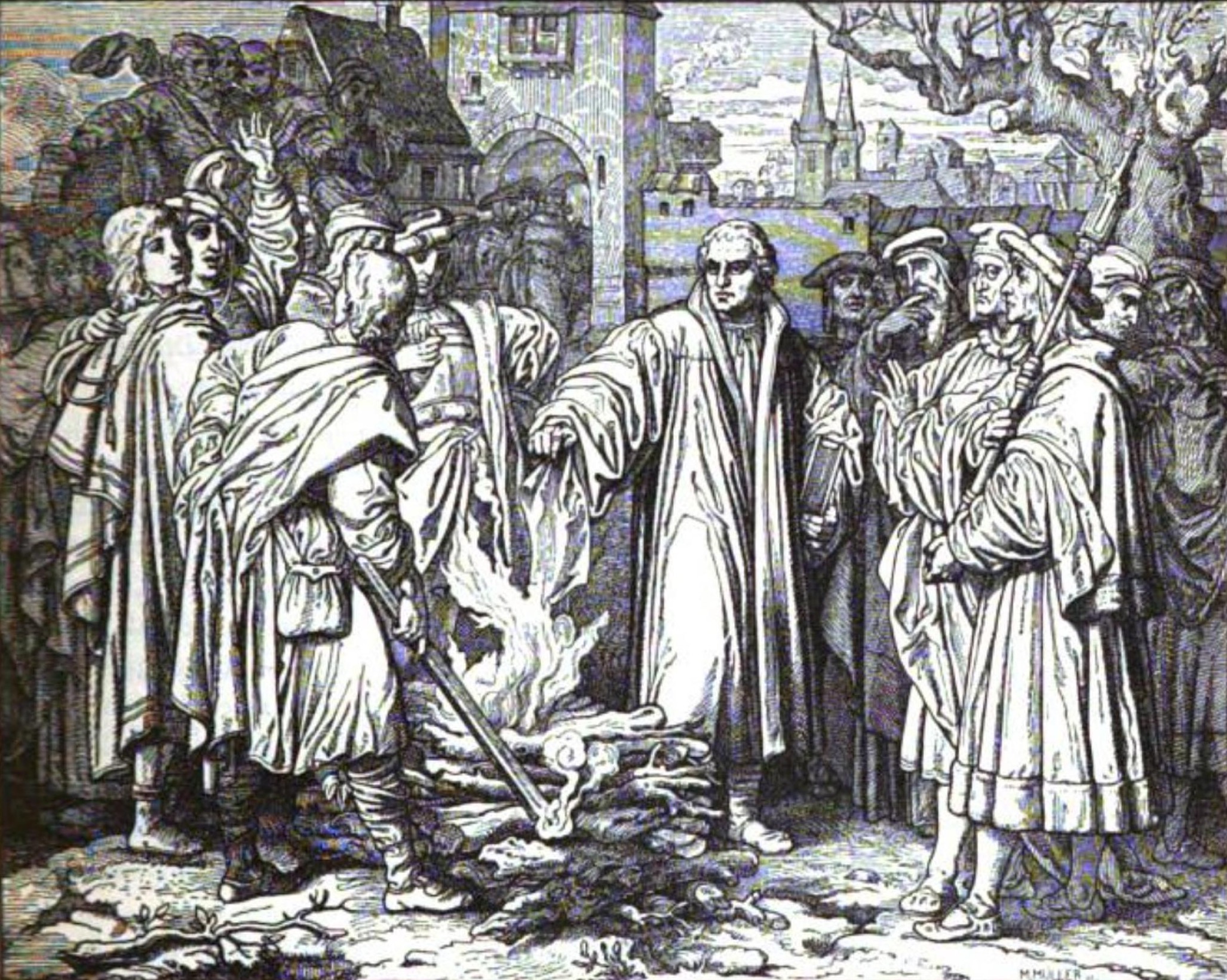
しかし、ポーソンによれば、それからほぼ3年後に、さらに重要な日付があります。それは、マルティン・ルターが教皇の大勅書を火に投じた日です。
この年間、ルターは教会を本来の姿へ戻すための春の大掃除を望み、最終的には制度全体を取り壊すことになりました。当初、95箇条で攻撃したのは制度そのものではなく、虐待と免罪符の販売でした。その論題の一つにはこうあります。「教皇が免罪符の販売人が自分の群れから金を巻き上げていることを知っているなら、聖ペテロ大聖堂が羊の皮と骨で建てられるより、焼けて灰になることを望むだろう。」 ルターは、教皇が自分の側に立つと思い込んでいました。
彼はすぐに幻滅し、教皇によっても幻滅させられました。ドイツからの免罪符収入が減ると、教皇は彼を破門しました。そのとき初めてルターは理解しました。悪かったのは、良い制度を運営していた数人の悪人ではありません。 制度そのものが間違っていたのです。
そこで彼は3つのものを火に投げ入れました。
- 破門を脅かす教皇の署名が入った羊皮紙。
- 彼が修道士および司祭として生きた規範である教会法を記した本。
- 彼が偽造だと知っていた文書。地上でキリストを代表する教皇庁の権利を主張するために使われていた文書です。
以前、彼は教会に春の大掃除を行っていました。 3年後、彼はそれを取り壊し始めた。
改革か、解体か?
3年間におけるルターの転換点(1517—1520年)
初めルターは、体制を大掃除するつもりにすぎなかった。3年後、問題は体制そのものだと気づいた。
📜
1517年10月31日
ヴィッテンベルクの95か条の論題
- 目的:神学的な論争を引き起こす。
- 濫用(免罪符)を攻撃したのであって、体制そのものではなかった。
- 教皇が知れば同意するだろうと思っていた。
🔥
1520年12月10日
教皇勅書を燃やす(エルスター門)
- 目的:完全な決裂。
- 破門の脅威である勅書『Exsurge Domine』を燃やした。
- 教会法の書物も燃やした。
- 体制そのものが誤りだと悟った。
パウソンは、1520年の焚書は1517年に論題を貼ったことよりも重要だったと考える。(日付について:勅書『Exsurge Domine』は1520年6月15日にローマで発布され、ルターは1520年12月10日にヴィッテンベルクでそれを燃やし、正式な破門は1521年1月3日に続いた。)
何が修道士をあの火に駆り立てたのでしょうか?
ルターを理解するには、彼を修道院に追いやった恐怖に立ち返る必要があります。ポーソンは、ルターがかつて雷雨で死にそうになったと語ります。そのせいで彼は死ぬのが怖くなり、赦されていない罪を抱えて神と向き合うのが怖くなりました。そして彼はその恐怖から抜け出す方法を必死に探しました。
彼は聖人に祈り、マリアに祈り、巡礼に出かけ、遺物や聖像を見つめました。しかし、そのどれも彼に罪が赦される保証を与えませんでした。その後、彼の霊的な上司フォン・シュタウピッツとの会話の中で、決定的な問いを受けます。「よろめきそうな信仰の松葉杖をすべて取り去り、マリア、聖人、像、苦行、巡礼を取り去ったら、その代わりに何を置きますか?」 ルターの答えは一つでした。「イエス・キリスト。人に必要なのはイエス・キリストだけです。」
それがその後に起こるすべての種でした。
宗教改革は死んだ問題なのでしょうか?
1967年、宗教改革450周年を記念する説教で、ポーソンは二つの物語を並べて語ります。かつて彼はプロテスタントの牧師と信徒の集会に出席し、宗教改革に言及したところ、プロテスタントはもう宗教改革に関心がないと率直に告げられました。それは「死んだ歴史」であり、取り上げるべきことは終わったのだ、と彼らは言いました。彼は耳鳴りがする思いで帰りました。
しかし翌週末、彼はアイルランド南東部のローマ・カトリック神学校に招かれ、教師や講師たちと宗教改革などについて話しました。彼らは彼の考えを聞きたがり、開かれた議論の場を必要としていました。ポーソンは「当時提起された問題は今も生きており、解決されていないと思う」と語り、彼らは「まさに私たちもそう考えています」と答えました。三時間にわたって友好的に議論し、その後お茶を飲んで帰りました。
奇妙な立場です。彼はローマ・カトリック教徒とは宗教改革を話し合えましたが、プロテスタントとは話し合えませんでした。ポーソン の答えを一言で言えば、宗教改革は時代遅れではありません。カトリックかプロテスタントかという人々と戦うのではなく、人々を真理から盲目にする制度や主義と戦うからです。ただし、今日の最前線はルターの時代とは大きく異なります。
ルターの偉大さはそこにあります。彼は、二次的なものへと押し下げられていた七つの優先事項を、本来の第一の位置へ戻しました。
七つの優先事項
ルターが第一に置いたもの
ルターの偉大さは、優先順位を正しくしたことにある。二番目に追いやられていた七つの事柄を、彼は第一の位置に戻した。
教会や国家の圧力に屈するより、良心において神の言葉に従うほうがよい。(「良心に逆らうことは、安全でも正直でもない。」)
福音の真理を欠く一致には意味がない。人を救うのは制度ではなく真理である。
聖人への祈りや煉獄など、あらゆる教会の伝統は聖書によって吟味されなければならない(聖書のみ)。
行いでも、信仰と行いの組合せでもない。「正しい者は信仰によって生きる」(信仰のみ)。善い行いによってではなく、善い行いのために救われる。
恵みは聖礼典の中に魔法のように小分けされているのではない。信仰がなければ聖礼典は役に立たない。洗礼と聖餐を「魔術的」に見る考えを退ける。
すべての信徒が祭司である。聖職者と平信徒の区別を取り除いた。牧師は機能が異なるのであって、身分が異なるのではない。
祭司はただ一人(キリスト)、代理者はただ一人(聖霊)である。教会はキリストに取って代われない。自分をキリストの位置に置く者は反キリスト(キリストに代わる者)である。
優先順位を一つずつ見ていきましょう。
1. 権威よりも良心を
ルターは、良心の自由がほとんど存在しなかった時代に生きました。何を信じ、どう行動すべきかを教えたのは国家ではなく、教会でした。その世界を思い描くには、ガリレオの悲劇を思い出してください。彼は望遠鏡を通して宇宙の真実を見いだしましたが、「それを信じてはいけない、教えてはいけない」と言われたのです。
ルターは大胆にもこう言った人でした。 「私の良心は神の言葉に囚われています。良心に反することは安全でも正直でもありません。」 ヴォルムスの国会 (1521) で、皇帝と教会権力機構全体の前で、彼は依然として撤回しようとはしませんでした。
そして、これは遠い過去の話ではありません。彼が説教したその週に、誰かが新聞の切り抜きを彼に手渡した。それは、ソビエト連邦で200人以上の反体制派バプテスト派が、厳格な宗教法を「侵害した」として投獄されているか、裁判を待っているというものだった。一人は拷問の末に死亡した。彼らの子供たちは両親の信仰について何時間も質問しました。ポーソン氏は、おそらく人類の半数が今も身体だけでなく精神も要求する全体主義国家のもとで暮らしていると指摘する。私たちが当然だと思っている良心の自由は、人類のほとんどがまだ持っていません。
そしてポーソン氏は、世界は決して、潮流とともに漂う背骨のない「クラゲ」によって導かれているわけではないと言う。それは、自分の信念を貫く勇気を持った人々によって率いられています。そして彼は、今日の自称「不適合者」でさえ、驚くほど簡単に互いに同調してしまうと厳しく警告する。私たちが必要としているのは、真に孤独に立ち向かう勇気のある人々です。
2. 統一よりも真理を
ルターに対する最も重大な非難の一つは、彼が教会を分裂させたということでした。ほぼ千年にわたり、西ヨーロッパには一つの教会、一つの宗派しかありませんでした。人々は彼に「撤回して教会をそのままにしなさい。このままでは壊れてしまう」と言いました。
しかしルターは統一よりも真理を優先しました。彼の良心は気まぐれに従うことができず、神の言葉に捕らわれていたからです。彼は重要なことをはっきりと見ました。人々を救うのは教会の一致ではなく、福音の真理です。明日、地上のすべての教会が団結しても、救われる人の数は増えません。本当に必要なのは、教会で宣べ伝えられる福音の真理です。
ポーソン ははっきりそう言います。私たちの時代の合言葉は「一致」で、これに乗らない者は嫌われます。世界が交通によって小さくなり、教会もその反響として「一致、一致、一致」と叫んでいるようです。しかし、ノッティンガムの英国教会協議会が、すでに一つの教会なのだから教派間の意見の違いは「内側から」解決できると言った時、バプテスト同盟だけは「いいえ、まず違いを認め、その上で一致しなければならない」と答えました。これは一致よりも真理を優先することです。
3. 伝統よりも聖書を
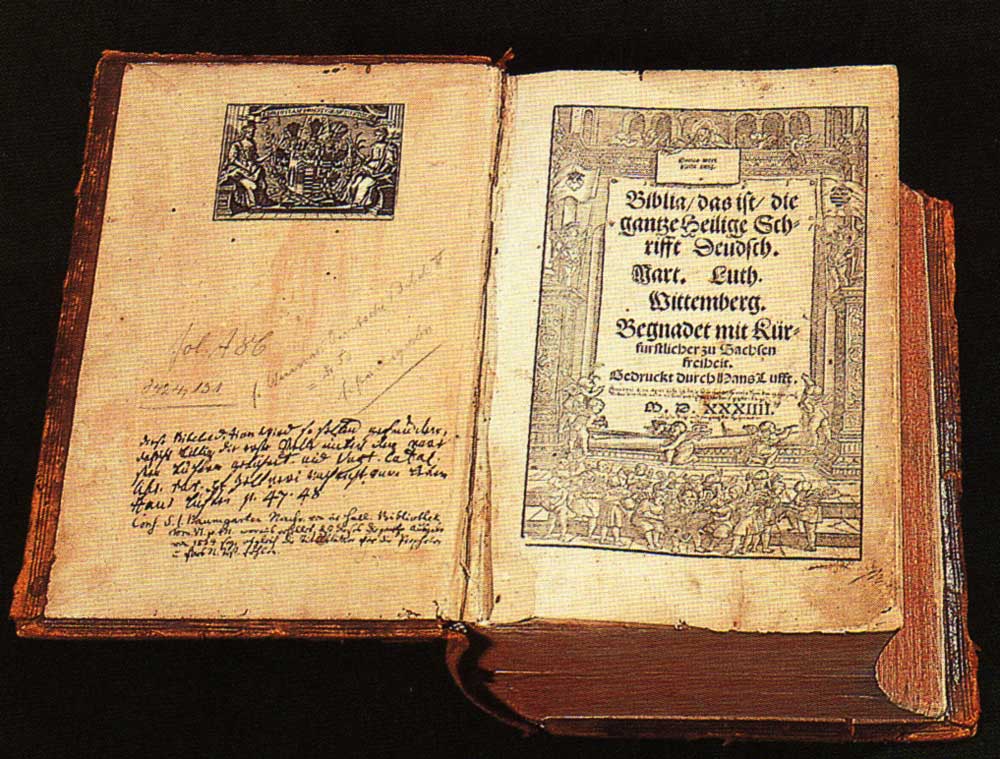
ポーソンは驚くべき詳細を挙げます。ルターが初めて完全な聖書を手に取って読んだのは20歳の時でした。敬虔に育てられ、聖なる生活を教えられていたにもかかわらず、20歳になるまで聖書を知りませんでした。読んでみると、キリスト教の信仰と実践にとって「極めて重要だ」と教えられてきた多くのことが、聖書には含まれていないことに驚きました。マリアや聖人への祈り、遺物や像、煉獄や苦行については何も書かれていなかったのです。
彼はこう尋ねました。「これは一体どこから来たのですか?」公式の答えは、伝統でした。伝統も、その本と同じように神の言葉だというのです。ルターは、書かれたものと語られたものという二つの「神の言葉」の前に立ち、両方を受け入れるよう求められました。しかし彼は、その本だけが真理だという結論に達しました。あらゆる教会のあらゆる伝統は聖書という試金石にかけられ、聖書によって吟味されなければならない。それを実行すると、彼は伝統を捨て始めました。
ポーソンは、自分の教会にも非聖書的な伝統があり、そのすべてが神の言葉に従わなければならないことを率直に認めています。彼は、かつてローマのイエズス会で新約聖書を教えていた友人について語ります。録音ではその名を「エドゥアルド・ルビンケ」と聞き取れますが、独立した情報源では確認できず、転写の誤りかもしれません。その人物は聖書を学ぶほど、生徒たちに「この本に含まれていない教えも神の言葉だ」と教え続けられなくなりました。そこで、450年前に神学教授だったルターと同じように、自分の職を離れたのです。聖書そのものが彼をそうさせました。
4. 行いよりも信仰(Sola Fide)
これは人が尋ねることができる最大の質問であり、ルターにとってそれは生か死でした。 どうしたら神様と仲良くなれるでしょうか?私の罪はどのようにして赦されるのでしょうか? 昔の雷雨のせいで、彼は罪を赦されずに死ぬのではないかと恐れていたのですから、これは理屈ではありません。
ジョン・テッツェルが免罪符を売りに来た時、ルターはそれが間違いだと確信しました。赦しを買うことはできません。そしてさらに一歩進み、「買えないなら、功績によって得ることもできない」と言いました。ポーソン は、どうすれば天国へ行けるかという問いに三つの答えを示し、あらゆる宗教はそのいずれかに当てはまると述べます。
- 世間 は言います。「善い行いをしなさい。」
- ルターの時代の教会 は言います。「信仰が必要です。それに加えて善行も必要です。」
- ルター は言います。「必要なのはただ一つ、信じることです。」
旧約聖書から新約聖書、そしてルターに至る宗教改革の宣言はこうです。*「義人は信仰によって生きる。」*善行によるのでも、行いと信仰の組み合わせによるのでもなく、信仰、それだけです。ラテン語 Sola Fide(信仰のみ)は宗教改革の大きな旗印となりました。
では、善行はどんな役割を果たすのでしょうか。ルターは見事にこう表現しました。私たちは善行によって救われるのではなく、救われた者として善行を行います。善行をして天国への切符を得るのではなく、すでに天国へ向かう者だから善行をするのです。
五つのソラ
宗教改革を凝縮する五つの標語
ルターの七つの優先事項は、後に五つのラテン語の「sola / solus」(のみ)という標語に凝縮された。率直に言えば、「五つのソラ」を一つの一覧としてまとめたのは19—20世紀の後世の体系化であり、16世紀に完成していた標語ではない。しかし各思想は改革者自身に確かに根ざしている。
Sola Scriptura · 聖書のみ
聖書のみが、信仰における最高で無謬の権威である。
反論: カトリックと正教会:聖書を生み出した教会の伝統から切り離すことはできない。
Sola Fide · 信仰のみ
人は功績によらず、信仰のみによって義とされる。
反論: トリエント公会議(1547年):「生きた」信仰には行いが含まれなければならず、「信仰だけで何もさらに必要としない」という考えを退けた。
Sola Gratia · 恵みのみ
救いは完全に、功績によらない神の賜物である。
反論: 最も広い共通点は、トリエント公会議(1547年、第6会期)でさえ恵みを功績によらない始まりとして教えていることである。これはJDDJ(1999年)でも再確認された。
Solus Christus · キリストのみ
キリストだけが、神と人との間の唯一の仲介者である。
反論: 論争点:カトリック/正教会の伝統における教会、聖人、マリアの仲介的役割。
Soli Deo Gloria · 神のみに栄光
すべての栄光は神だけに属する。
反論: 最も争われない点だが、人や制度への過度な栄誉を退ける根拠となる。
5. 秘跡よりも恵みを
ルターは、恵みが七つの秘跡に分けられ、秘跡は、誰が執行し誰が受けるかにかかわらず、魔法のように自動的に働くと教えられて育ちました。洗礼の水は何も知らない幼児を自動的に救い、パンとワインは礼拝の中でキリストの真の体と血になり、祭司によって祭壇の上で犠牲として捧げられる、と考えられていたのです。
ルターはそれを熟考してこう言いました。「私には神の恵みが必要であることはわかっていますが、この本には、恵みが自動的に働く秘跡の中に包まれているとは書かれていません。」彼は次のように気づきました。信仰がなければ秘跡は役に立ちません。 秘跡によってではなく、「信仰によって、恵みによってあなたは救われます」。恵みはパッケージ化されたものではありません。川のように流れるものです。最も素朴な信者は、洗礼も主の晩餐も受けていなくても、信仰によって神の恵みを知っています。ポーソンは救世軍の友人たちを指し示します。彼らには秘跡がまったくありませんが、明らかに恵みがあります。彼らはいつもその恵みについて歌っています。
ルターが守った二つの秘跡(洗礼と主の晩餐)について、ポーソンは、ルターの最も親しい友人でさえ問題を最後まで論理的に考え抜けず、両者を少し混同していたことを率直に認めています。ルターが正しく捉えた順序は次のとおりです。恵みが第一で、秘跡は二番目です。
6. 司祭よりも人々を(すべての信者の祭司職)
ルターが生まれた教会は、権力のピラミッドでした。頂点に教皇がおり、その下に枢機卿、司教、修道会を経て教区司祭がいる。そして最下位にいるのが信徒です。「聖職者」と「平信徒」の間の隔たりは非常に厳格で、服装や建物内での立場さえ異なり、一方は祭服を着て、もう一方は私服を着ていました。
ポーソンは、ルターがあのピラミッドを上から下へ見ながら、どのように問いかけたかを改めて語ります。そこに一人の人間を置く聖書的根拠はあるのか。 ない。司教はどうか。 ない。司祭の仲介はどうか。 ない。そこで彼は素晴らしい再発見に至りました。すべての信者の祭司職。 彼は、彼らの間に身分の違いはないと見て、すべての平信徒を祭司とし、すべての祭司を信徒としました。違いがあるとすれば、それは職務です。一つの体にあるさまざまな器官のようなものです。そこで彼は彼らを「司祭」ではなく「牧師」と呼びました。すべての信者は祭司です。
だからこそ、彼は聖書を日常のドイツ語に訳し、人々の手に届けようと努力したのです。司祭ではなく、人々のために。ポーソンによれば、ルターは、箒で部屋を掃除する女中でさえ司祭より御言葉をよく理解できると言いました。彼は、世界の自称キリスト者の3分の2が今も聖職者と階層の管理下にあり、この抗議はいまだ必要だと指摘します。
万人祭司
権力のピラミッドを解体する
中世の教会はピラミッドだった。平信徒が底辺に、教皇が頂点にいる。ルターは「中間階級はない。皆が祭司だ」と宣言した。
宗教改革前の構造
宗教改革の理想
7. 教会よりもキリストを
ここがクライマックスです。ポーソンは、カトリック神学校の教会史の教師に宗教改革の最大の問題は何かと尋ね、二人とも同じ答えに至ったと語ります。ルターは、キリストと教会を同一視し、キリストにしかできないことを教会が人々のために行えるという考えに異議を唱えました。体、つまり教会が、頭であるキリストの代わりをしていたのです。
ポーソンは、これを三つの職務に分けて説明します。
- 神の絶対の真実を教えてくれる預言者が必要です。私の預言者は誰ですか? ローマは「体、すなわち絶対に誤りのない教会」と言います。ルターは「頭、すなわちキリスト」と言います。
- 神のところに来るには司祭が必要です。私の司祭は誰ですか? ローマはこう言います、「体よ、あなたの罪を教会に告白してください。」ルターはこう言います:キリストは天におられます、そしてあなたはいつでも彼を通して神のもとに来ることができます。
- 私を統治してくれる王が必要です。私の王は誰ですか? ローマはこう言います:肉体は地上にあります。ルターはこう言います、「私の頭は天国にあります。」
そこでルターはあえて教皇制を「反キリスト」と呼びました。ポーソンは、これは教皇がキリストに反対したという意味ではなく、「アンチ」が本来「代わりに」を意味することに注意を促します。キリストの場所に自分を置くものが反キリストなのです。ローマは、人々が神のもとに来るには教会を通らなければならないと教え、それによって自らを神の立場に置きました。
するとローマは重要な議論で反論しました。頭が天にいて、地上の誰かが神のもとへ来ようとするなら、体を通して来るべきではないでしょうか?では教皇は、地上におけるキリストの代理者、神の代わりに立って神の教えを伝える人ではないのでしょうか?ルターはそれをよく考えて答えました。「はい、キリストにはご自分の代わりに語る代理者が地上にいるはずですが、その代理者は聖霊であって、教皇ではありません。」要約すると、「キリストのほかに祭司はなく、聖霊のほかに代理者はいない。」
ポーソンはそれを非常に実践的に着地させた。それがまさに、彼のバプテスト教会の壁のどこにも懺悔箱がない理由です。 「私はあなたの罪を許すことはできませんし、ゴールドヒルバプテスト教会も許すことはできません。告白したい罪があるなら、すぐに天国の司祭、つまりキリストご自身のところに行ってください。」
火はルターの手から逃れる
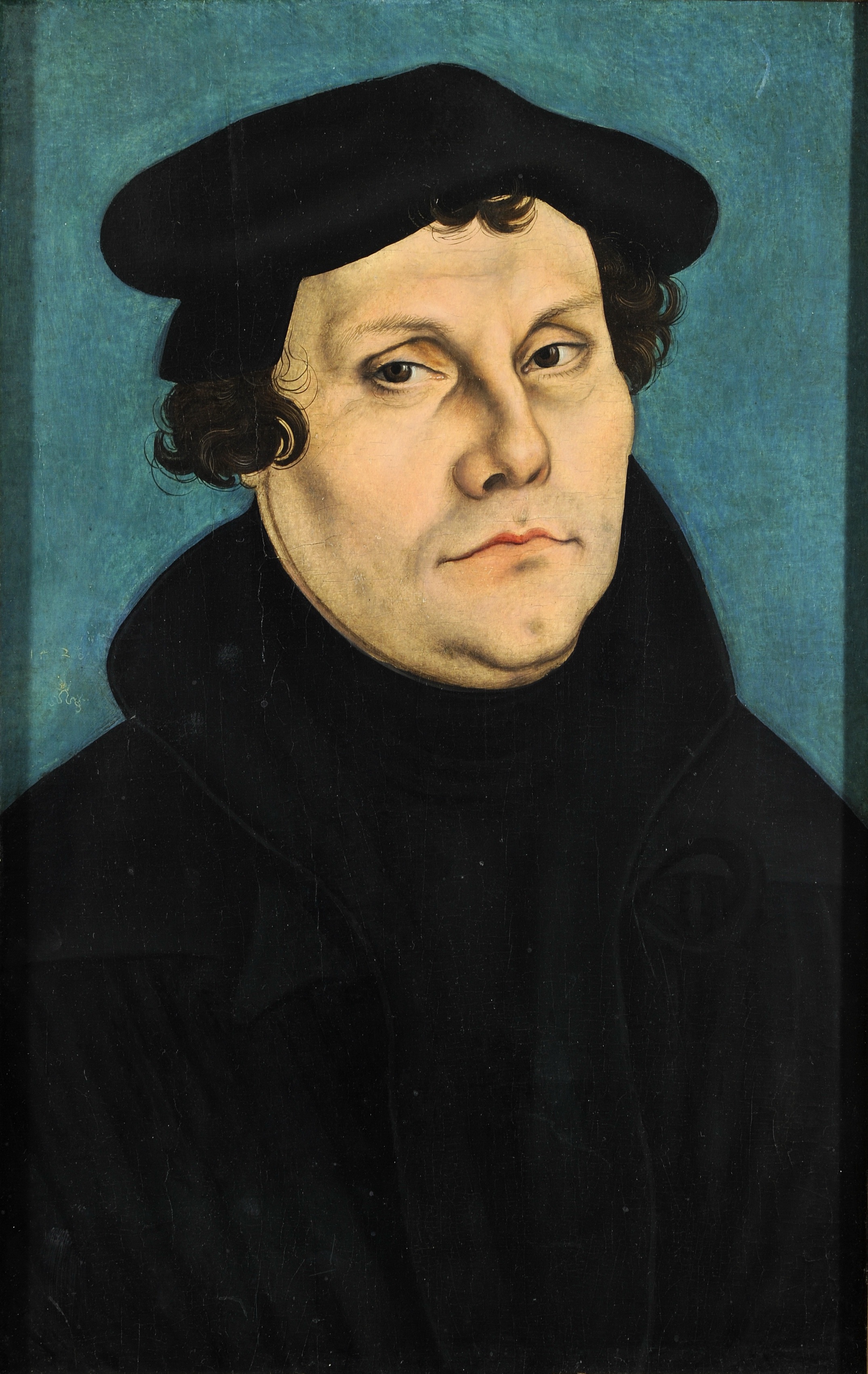
ルターが導火線に火をつけたので、ポーソンは主にルターについて説教します。しかし、火はすぐに彼の手を離れました。一世代のうちに宗教改革はいくつもの流れに分かれ、それぞれに独自の都市、指導者、重点が置かれました。互いに同盟を結んだ者もいれば、激しく争って決して和解しなかった者もいます。ルターのことだけを聞くと、宗教改革は一枚岩だったと思うでしょう。そうではありませんでした。
一人だけではない
宗教改革のもう一つの顔
パウソンは主にルターについて説教する。火種をつけたのがルターだからだ。しかし火はすぐに彼の手を離れた。一世代のうちに宗教改革は複数の流れに分かれ、それぞれに都市、指導者、強調点が生まれた。
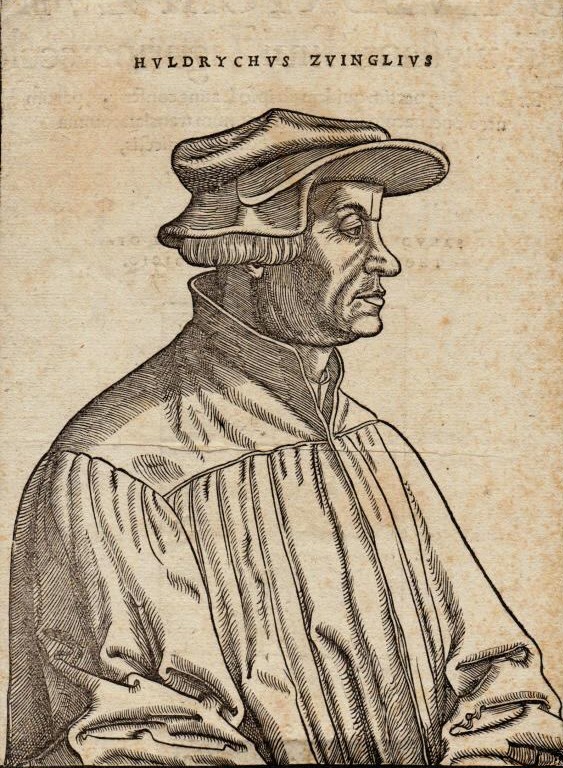
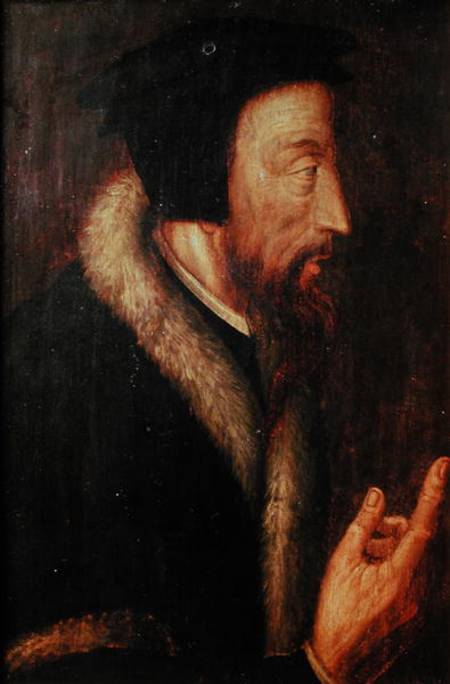
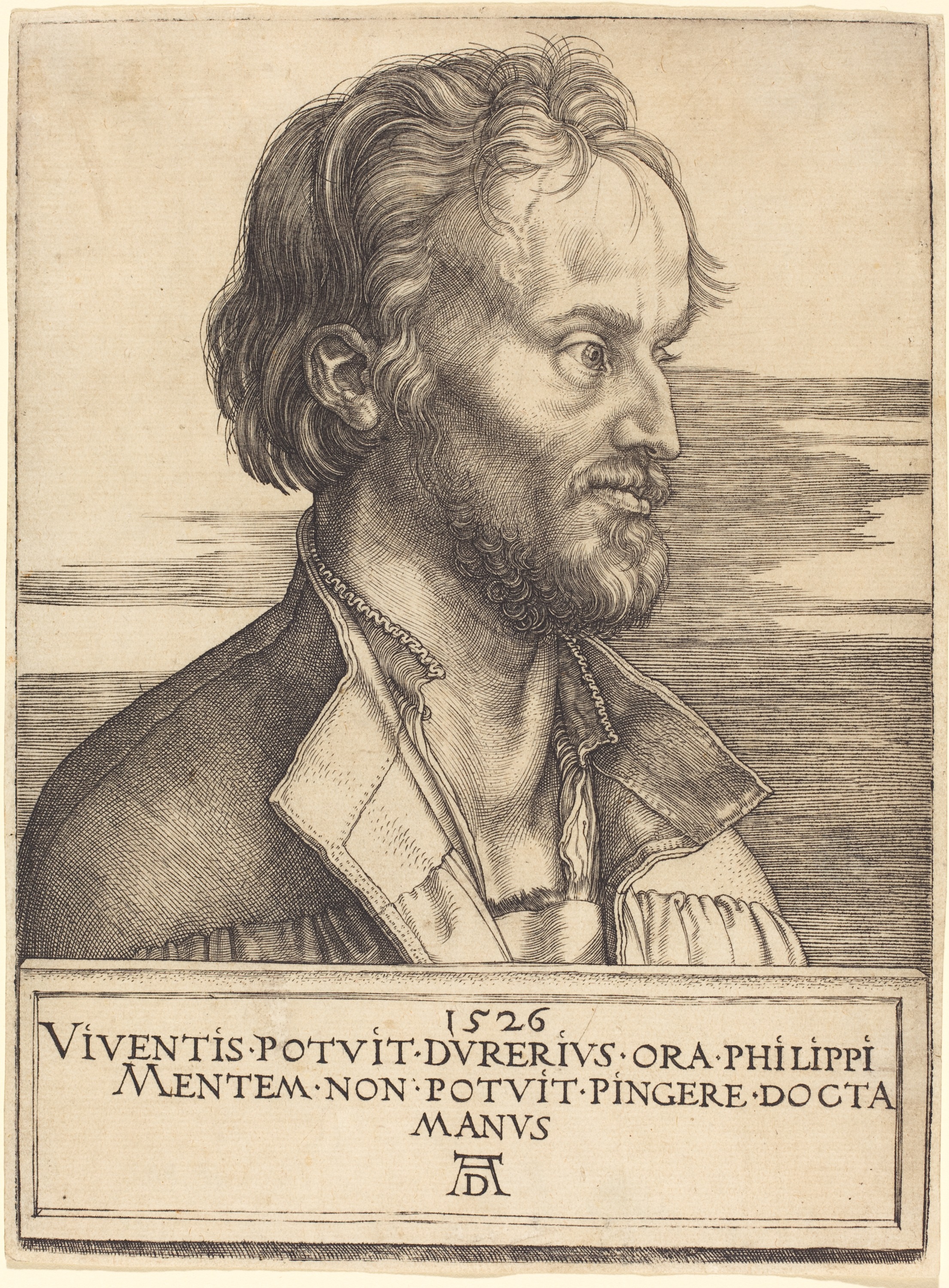
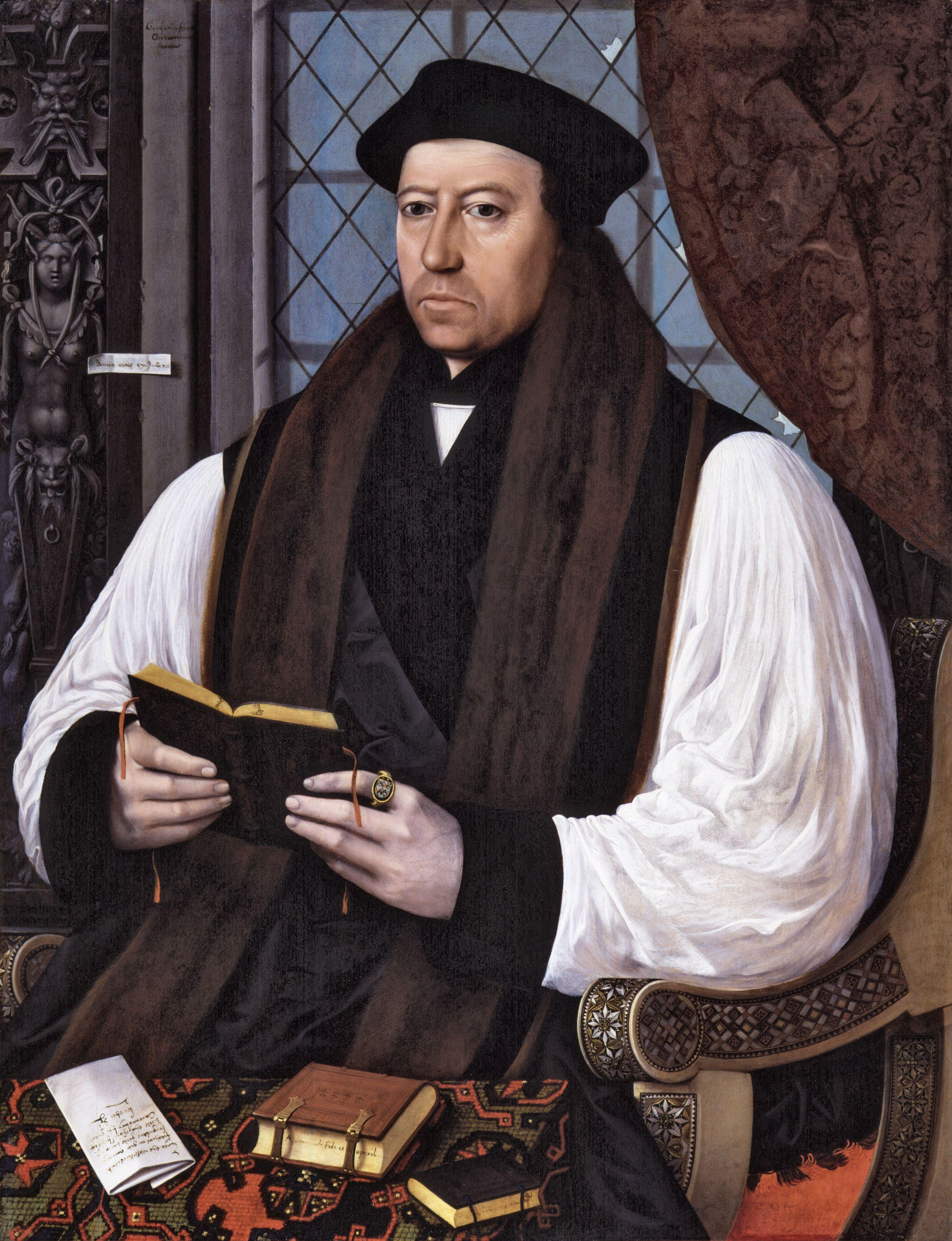
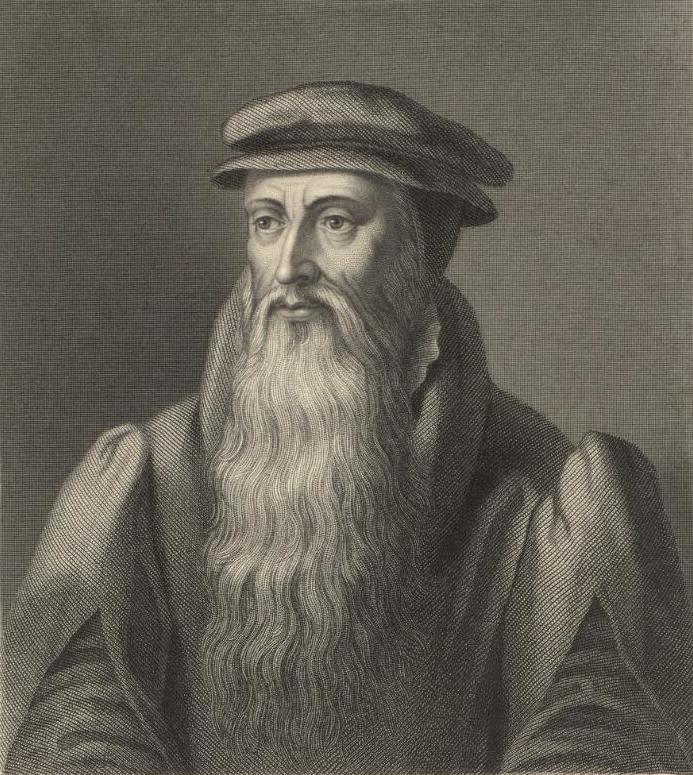
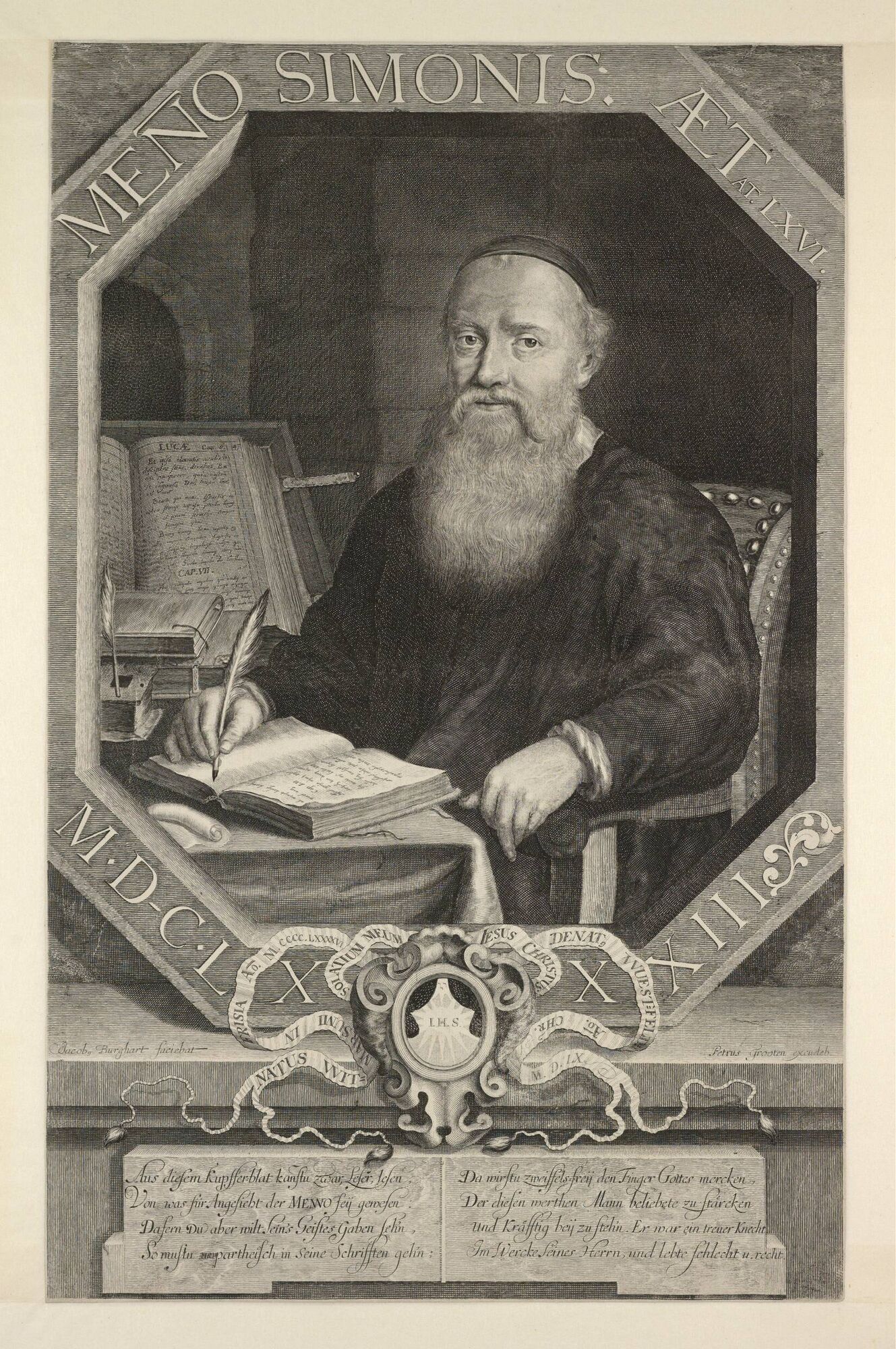
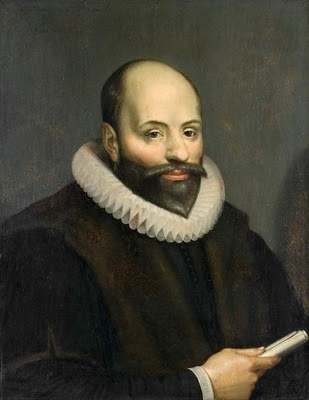
肖像はすべてパブリックドメイン(Wikimedia Commons)。ノックスとメンノ・シモンズは同時代の肖像が残っていないため、後世の版画である。
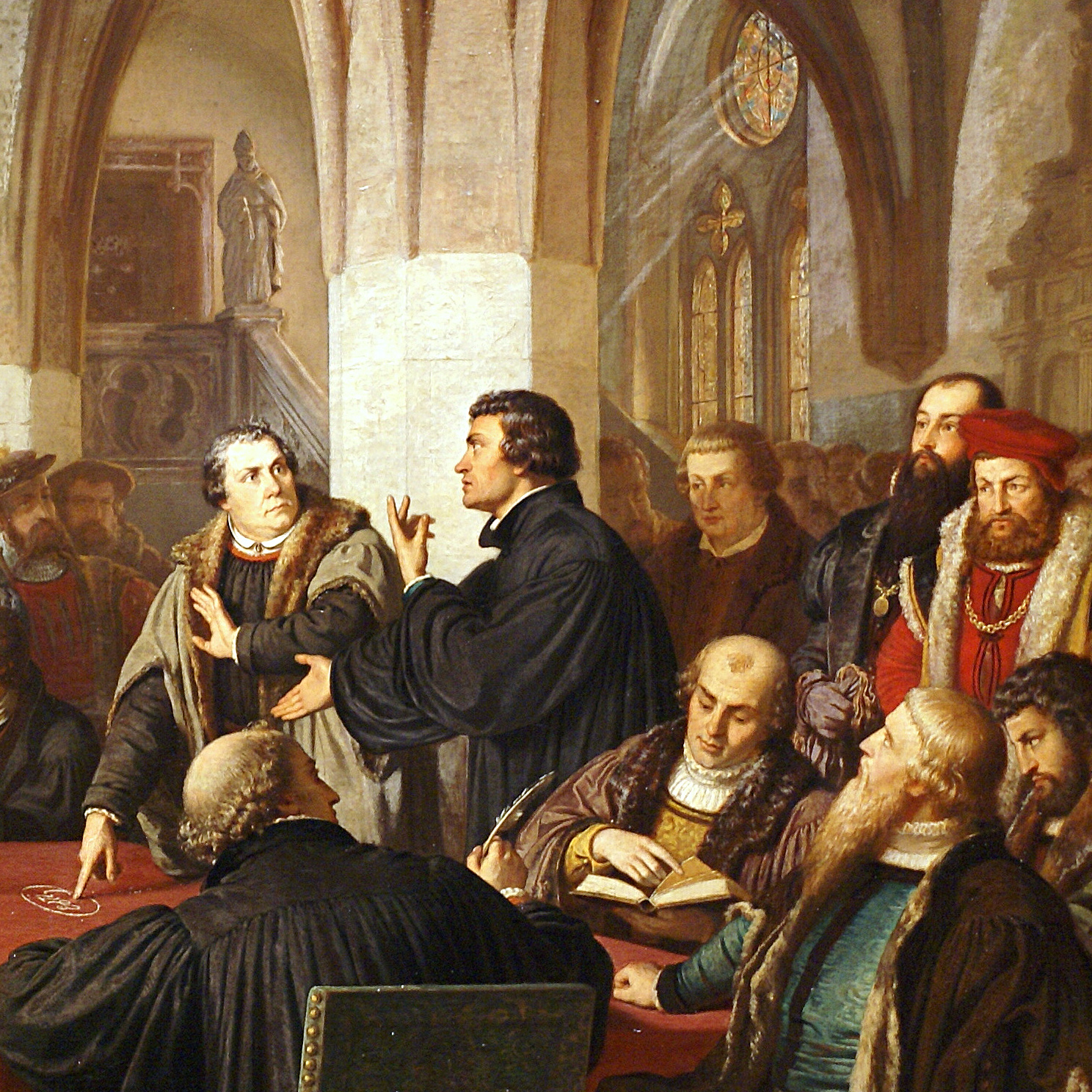
ツヴィングリと聖餐をめぐる決裂。 チューリヒでは、フルドリッヒ・ツヴィングリがルターとは独立に改革を導きました。二人はほとんどすべてに同意しましたが、主の晩餐のパンとぶどう酒が何であるかという一つの問いで一致できませんでした。マールブルク会談(1529年)では、15箇条のうち14箇条に同意しましたが、最後の一点で決裂しました。ルターは「これはわたしの体である」の「ある」という言葉に固執し、Hoc est corpus meum(これはわたしの体である)とテーブルにチョークで書きました。ツヴィングリは、それは単なる記念の象徴だと主張しました。握手は交わされず、プロテスタントの統一戦線はそこで崩れました。これは「一致よりも真理」という原則の痛ましい実例です。
カルバンとジュネーブ。 一世代後、フランス人のジョン・カルヴァンは『キリスト教綱要』でプロテスタント神学を体系化し、ジュネーブをヨーロッパ中から人々が送り込まれる「キリストの学校」としました。彼は救いにおける神の絶対的な主権を強調しました。
「これはわたしの体である」
主の晩餐を読む四つの方法とマールブルクでの分裂
パンとぶどう酒に何が起こるのかという一つの問いほど、プロテスタント同士(またローマとの間)を深く分けたものはなかった。1529年のマールブルク会談でルターとツヴィングリは15箇条中14箇条に同意したが、この点で行き詰まった。ルターはテーブルに「Hoc est corpus meum」(「これはわたしの体である」)とチョークで書き、譲らなかった。統一されたプロテスタントの前線はまさにそこで崩れた。
カトリック
ローマ/トリエント
化体説
パンとぶどう酒の実体が本当にキリストの体と血に変わり、外見上の「偶性」だけが残る。
ルター
ヴィッテンベルク
聖礼典的結合(「中に、共に、下に」)
キリストの体はパンとぶどう酒の「中に、共に、下に」真に臨在するが、パンはなおパンである。(ルターは「共体説」という語を退けた。)
カルヴァン
ジュネーブ
霊による真の臨在
信者は真にキリストを受けるが、それは信仰によって、また霊によって彼らが天のキリストへ引き上げられることによる。
ツヴィングリ
チューリヒ
記念/象徴
パンとぶどう酒は記念のしるしにすぎない。「これはわたしの体である」とは「これはわたしの体を表す」という意味である。
左(最も物理的な臨在)から右(純粋な象徴)へ。この不一致のため、ルター派と改革派の流れは完全に一つになることがなかった。
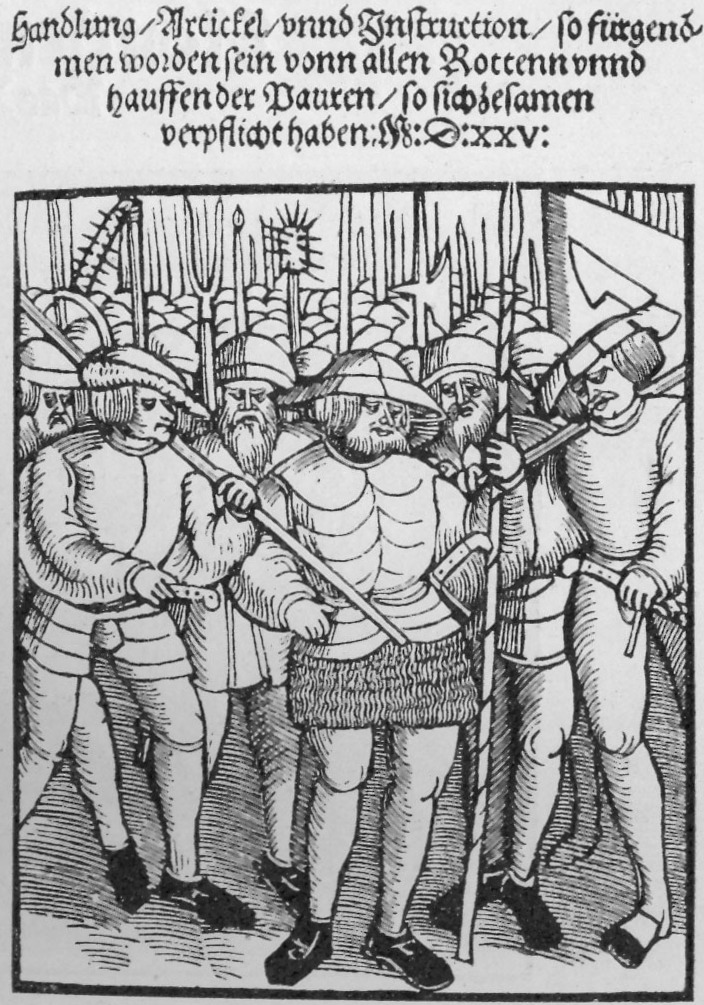
「急進派」とその代償。 その後、ルターもツヴィングリも十分に改革を進めていないと考える人々が現れました。聖書だけが権威なら、新約聖書のどこに幼児洗礼があるのか、と彼らは尋ねました。1525年1月、彼らはチューリヒで初めて成人の信者に洗礼を授け、再洗礼派(「再び洗礼を授ける者」)と呼ばれました。彼らは国家から独立した自発的な信者の教会を主張し、剣と誓約を拒みました。後にメノ・シモンズが、打ち砕かれた運動に平和的で非暴力的なアイデンティティを与え、「メノナイト」の名は彼に由来します。
彼らが支払った代償は恐ろしいもので、カトリック側と主流派の改革派側の双方から迫害を受けました。同じ時期(1524〜1525年)には、ドイツの農民が「すべての信者の祭司職」と「聖書のみ」というスローガンを使って要求を主張し、農民戦争が勃発しました。ルターが意図しなかった利用法であり、彼は貴族側に立って激しく反応しました。
カルヴァン、アルミニウス、そして予定説をめぐる戦争。 さらに世代が経つと、改革派陣営自体が「救いにおいて、すべてを神がなさるのか、それとも人間は自由な信仰によって参与するのか」という問いをめぐって分裂しました。オランダの神学者ヤコブス・アルミニウスはカルヴァンの無条件の予定説に異議を唱えました。彼の死後、追随者たちは1610年に『抗議書』を提出し、ドルト会議(1618〜1619年)はアルミニウス派を退け、後にTULIPとして記憶されるカルヴァン主義の5つの要点をまとめました。
誰が誰を選ぶのか?
カルヴァン対アルミニウス:予定説と自由意志
ルターから一世代後、プロテスタントは痛切な問いをめぐって内部で分裂した。救いにおいて、神がすべてを行うのか(単働論)、それとも神と人が協働するのか(協働論)。ドルト会議(1618—19年)はアルミニウス派を退け、「カルヴァン主義の五箇条」をまとめた。後にTULIPという頭字語で記憶されたが、これは20世紀の造語である。
選び
贖罪
人間の本性
恵み
忍耐
TULIP=全的堕落 · 無条件の選び · 限定的贖罪 · 不可抗力の恵み · 聖徒の忍耐。アルミニウスの「抗議書」(1610年)は、まさに五つの反論を示した。
燃え上がる一世紀
宗教改革の広がり(1517—1619年)
一つのドイツの町にいた一人の修道士から始まり、一世紀のうちに火はスイス、イングランド、スコットランド、ネーデルラントへ広がり、ローマそのものを改革へと迫った。
残る二つの椅子:ローマとコンスタンティノープル
ポーソンはプロテスタントの椅子に座って力強く明確に説教します。しかし彼自身、宗教改革の問題は「まだ生きており、解決されていない」と述べました。そこで、他の二つの椅子にも耳を傾ける必要があるのです。
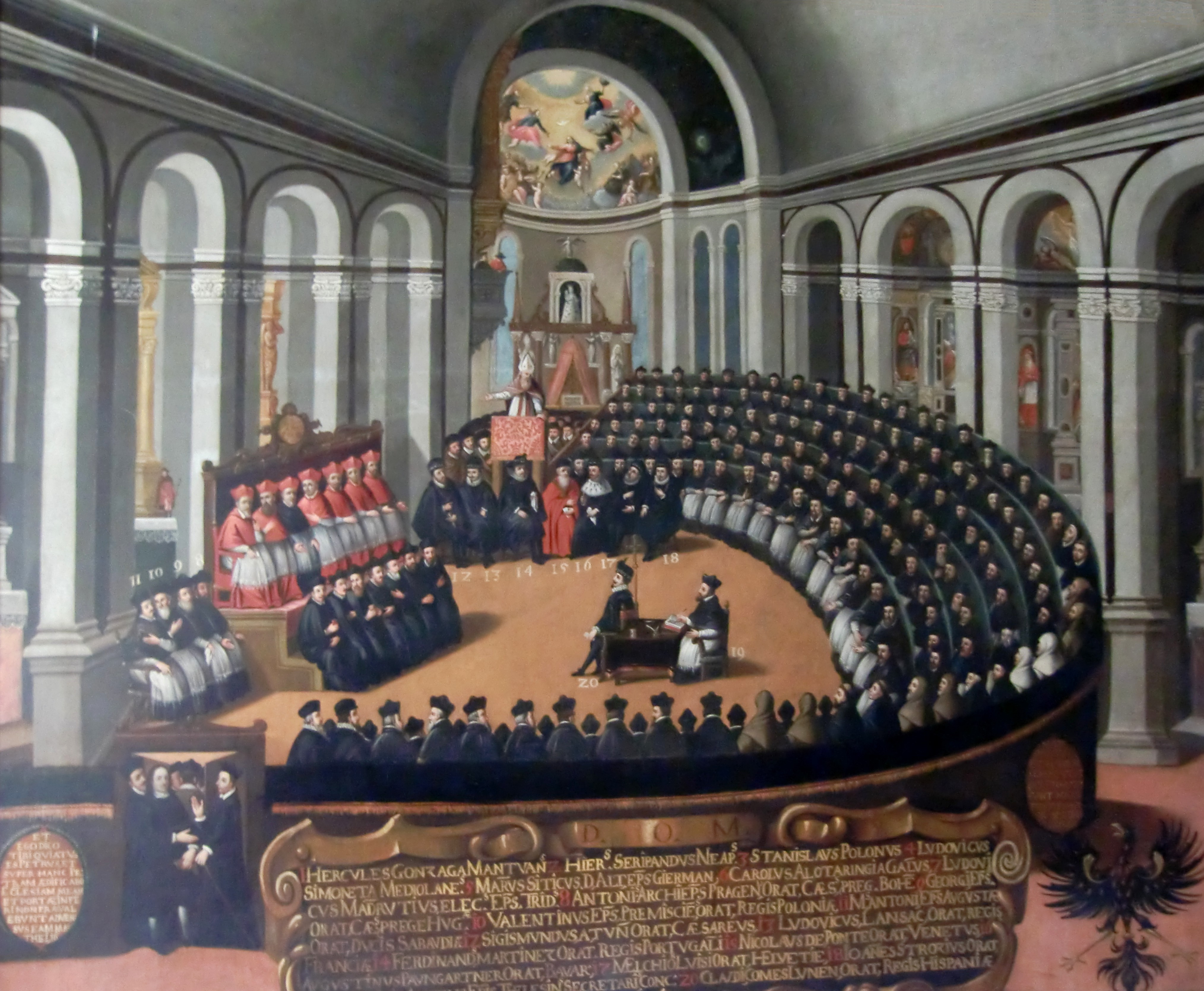
ローマの答えは「トリエント公会議」です。カトリック教義の決定的な応答は、トリエント公会議(1545〜1563年)でした。プロテスタントはトリエントを「行いによる救い」と風刺しがちですが、公平さが必要です。トリエントは、恵みが救いの始まりである一方、人間もそれに協力し、信仰は愛と善行を伴う生きた信仰でなければならないと教えました。公会議が退けた Sola Fide は、「信仰だけで、それ以上は何も必要ない」という意味です。同時に、聖書と伝統、七つの秘跡、実体変化を肯定しました。免罪符については廃止しませんでしたが、95箇条が批判したような免罪符の販売の金銭化を拒みました。この改革を推進したのが、1540年に承認されたイエズス会(イグナティオ・デ・ロヨラ)です。
物語は16世紀で終わりません。1999年、カトリック教会とルーテル世界連盟は、義認の教理に関する共同宣言(JDDJ)に署名し、「私たちは、自分の功績によってではなく、ただ恵みにより、キリストの救いの御業への信仰によって神に受け入れられる」という基本的真理を確認しました。2016年6月のインタビューで教皇フランシスコは、ルターの「意図は間違っていなかった」が、「方法のいくつかは正しくなかった」と述べました。同年10月31日、フランシスコとルーテル世界連盟はスウェーデンのルンドで、宗教改革500周年を記念する共同式典を行いました。
コンスタンティノープルの答えは、決定的な沈黙でした。第三の議長は東方正教会ですが、通常はプロテスタントとカトリックの双方から忘れられています。1573〜1581年頃、テュービンゲンのルター派神学者たちは、共通点を見いだそうとして、ギリシャ語訳のアウグスブルク信仰告白をコンスタンティノープル総主教エレミアス2世へ送りました。彼は三通の手紙で返答し、プロテスタントの中核的特徴を一つずつ退けました。Sola Fide(教会は善行によって示される生きた信仰を求める)も、Sola Scriptura(教父たちから離れて聖書を解釈することはできない)も拒み、礼儀正しく通信を終えました。
正教会にとって、救いは法的な判決(義と認められること)だけではなく、テオシス、つまり神の命にあずかる現実の過程である神化です。これは協働、すなわち神の恵みへの協力です。「神は人の意志に反して人を救わない」。したがって正教会は、「信仰対行い」という争いを西方の法的枠組みとして捉え、それを採用しませんでした。後に総主教キリル・ルカリスがカルヴァン寄りの信仰告白を起草すると、正教会は1672年のエルサレム公会議でそれを非難しました。つまり正教会は、ルターとカルヴァンの双方を公式には退けたのです。
三つの椅子
論争は二面ではなく三面である
パウソンはプロテスタントの椅子から説教する。しかし全ての側を聞くため、他の二つの椅子も横に置こう。驚くべきことに、三者とも恵みは必要であり、功績によらないと教える。「プロテスタントは恵みを信じ、カトリック/正教会は天国を稼ぐと信じる」という風刺は、三者すべてについて誤りである。本当の分岐点は権威と義認の意味にある。
正教会はルター(エレミヤ2世との書簡、1573—81年)とカルヴァン(エルサレム会議、1672年)の双方を正式に退けた。
では、なぜ戦うのでしょうか?
今では多くの人が、説教の終わりにポーソン自身が提起した質問をするだろう。なぜこれらの教義的な問題を掘り下げるのでしょうか?誰もが友好的で同じ神を崇拝しているのに、平和と団結のために妥協してはどうでしょうか?これはつまらない教義上の屁理屈、暗黒時代への逆戻りではないでしょうか?
ポーソンの答えは単刀直入かつ重いものである。 不滅の魂の救いが危機に瀕しているからです。 水のバプテスマを受ければ自動的に救われるなんて人に言うなら、あなたはその人をダメにするでしょう。もしあなたが彼に、良い行いをすれば天国に行けると言うなら、あなたは彼を間違った道に導くことになります。これは宗教上の誇りではありません。人々を永遠の命に導くのは、真理以上に重要なことはないということです。地上の偽りの平和は、何千もの魂の永遠の目的地となる価値はありません。
しかし、ここで ポーソン は私たちを立ち止まらせます。今日の最前線は、もはや単純にプロテスタントとカトリックの間ではありません。彼が言う戦いは、あらゆる教派のラベルを横断し、一方に福音派、もう一方に多くのプロテスタントとローマ・カトリック教徒がいる線です。彼はフランス語圏の教授の本『宗教改革の継承者たち』を引用し、マルティン・ルターの真の後継者は誰かと問います。それは一般的な「プロテスタント」ではなく、ラベルにかかわらず、何よりも聖書とキリストを優先する人々です。ポーソン は「一方向にだけ発砲する者は時代遅れだ」と言い、こう述べます。「私はローマ・カトリック教徒にもプロテスタントにも反対しません。私は主義と制度に反対します。人が誰であっても愛したいのです。」
キリストのほかに司祭はなく、聖霊のほかに牧師はいない。他のみんなから目を離してください。フォン・シュタウピッツがルターに、マリア、聖人、像、そして悔い改めの代わりに何を置くだろうかと尋ねたとき、彼は答えました:イエス・キリスト。人間に必要なのはイエス・キリストだけです。
だからこそポーソンは、マルティン・ルーサーと、自分が正しく真実だと知っていることのために一人で立ち上がる勇気を、その誠実さに対して神に感謝しているのである。そして彼は、神が愛をもって真実を宣言し、こう言うような人々をもっと立ち上げてくださるようにと祈ります。 私はここに立っている、他には何もできない。良心に反することは安全でも正直でもありません。私の良心は神の言葉に囚われています。
権威よりも良心を。統一よりも真理を。伝統よりも聖書を。行いよりも信仰を。秘跡よりも恵みを。司祭よりも人々を、すべての信者を祭司として。そして何よりも、教会より、すべての人と物事より、キリストを。
David Pawson's sermon on the Reformation opens not with a date but with a letter. He reads Paul’s letter to the Galatians onward. It is the epistle Martin Luther loved most, the one on which he wrote a very fine commentary. "A man is justified, not by works of the law, but through faith in Jesus Christ… because by works of the law shall no one be justified." Pawson says those words meant a great deal at the time of the Reformation, over 450 years ago.
On October 31, 1517, a monk and professor of theology named Martin Luther nailed his 95 Theses to the church door in Wittenberg. In those days that door served as a notice board for public debate. People usually treat this as the beginning of the Reformation.
But according to Pawson, there is a later date, nearly three years on, that matters even more. It is the day Martin Luther had a bonfire.
In those three years, Luther moved from wanting to spring clean the church to wanting to demolish the whole system. At first, nailing up the 95 Theses, he attacked only the abuse, the sale of indulgences, not the system itself. One of his theses read: "If the Pope knew how the sellers of indulgences fleece his flock, he would rather St. Peter's church were burnt to ashes than built up out of the skin and bones of his sheep." Luther naively assumed the Pope was on his side.
He was quickly disillusioned, and by the Pope himself. Pawson tells it this way: when the indulgence money from Germany dropped, the Pope excommunicated him. Only then did Luther grasp it. The fault was not a few bad men running a good system. The system itself was wrong.
So he threw three things on the fire:
- The parchment with the Pope's signature, threatening excommunication.
- A book of Canon Law, the code by which he had lived as a monk and priest.
- A document he now knew to be a forgery, used to claim the papacy's right to represent Christ on earth.
Before, he was giving the Church a spring clean. Three years later, he began to tear it down.
Kit's note
A correction on the dating. Pawson places the bonfire on "15 June 1520," but that was actually the day Pope Leo X issued the bull Exsurge Domine in Rome. That bull only threatened excommunication and gave Luther 60 days to recant; it did not excommunicate him. Luther burned it, along with the books of Canon Law, on 10 December 1520 at the Elster Gate in Wittenberg, once the 60-day deadline had expired. His formal excommunication did not come until 3 January 1521, by the bull Decet Romanum Pontificem. As for the "forged document": sources list the burned items as the bull and the canon-law compilations, not a distinct "forged decretal." Still, Luther did know Lorenzo Valla's 1440 work exposing the "Donation of Constantine" as a fake. Pawson's point holds; only the date and a detail or two need fixing.
Reform or Demolish?
Luther's turning point in 3 years (1517–1520)
At first, Luther only meant to spring clean the system. Three years later, he realized the system itself was the problem.
📜
31 October, 1517
The 95 Theses at Wittenberg
- Goal: Spark theological debate.
- Attacking the abuse (indulgences), not the system.
- Assumed the Pope would agree if he knew.
🔥
10 December, 1520
Burning the Papal Bull (Elster Gate)
- Goal: A complete break.
- Burned the bull Exsurge Domine (threat of excommunication).
- Burned the books of Canon Law too.
- Realized the system itself was wrong.
Pawson holds that the bonfire of 1520 was even more significant than nailing the theses in 1517. (On the dating: the bull Exsurge Domine was issued in Rome on 15 June 1520; Luther burned it at Wittenberg on 10 Dec 1520; his formal excommunication followed on 3 Jan 1521.)
What drove a monk to that fire?
To understand Luther, you have to go back to the terror that drove him into the monastery. Pawson tells it: Luther once nearly died in a thunderstorm. It left him afraid to die, afraid to face God with his sins unforgiven. And he searched desperately for a way out of that fear.
He prayed to the saints, prayed to Mary, went on pilgrimages, gazed at relics and images. He did all of it. And none of it gave him any assurance that his sins were forgiven. Later, talking with his saintly superior von Staupitz, he was asked the decisive question: "If you take away all these crutches to a tottering faith, if you take away Mary, the saints, the images, penance and pilgrimages, what will you put in their place?" Luther's answer, as in the film Pawson's congregation had just watched, was one thing only: "Jesus Christ. Man only needs Jesus Christ."
That was the seed of everything that came after.
Kit's note
A few honest footnotes. The Stotternheim thunderstorm (2 July 1505) and the vow "St. Anne, help me, I will become a monk" are genuine. But the figure that Luther "prayed to 21 saints a week, 3 a day," which many sermons quote, I could not verify against any scholarly source, so treat it as rhetorical rounding. The "crutches to a tottering faith" line I also could not trace verbatim in the standard biographies (Bainton, Kittelson). The substance, though, is well attested: Staupitz turned Luther from self-punishment toward reliance on Christ alone. Luther himself said: "If it had not been for Dr. Staupitz, I should have sunk in hell."
Is the Reformation a dead issue?
In his 1967 sermon, marking the Reformation's 450th anniversary, Pawson tells two stories side by side. Once he attended a meeting of Protestant ministers and members, happened to mention the Reformation, and was told in no uncertain terms that Protestants no longer care for it. It is "dead history," they said, and bringing it up is not the done thing. He came away with his ears ringing.
Yet the very next weekend he was invited to a Roman Catholic seminary in the southeast corner of Ireland to speak to the tutors and lecturers, about the Reformation among other things. They wanted to hear what he thought, wanted an open forum. He said: "I think the issues raised then are still alive, and they have not been settled." They replied: "That is exactly what we think too." Three hours of friendly discussion, then a nice tea, then home.
It is an extraordinary position. He could discuss the Reformation with Roman Catholics, but not with Protestants. Pawson's answer in a nutshell: the Reformation is not out of date. Not because we fight people, Catholic or Protestant, but because we fight systems and isms that blind people to the truth. Only, the front line today is drawn very differently than in Luther's day.
Luther's greatness lies in this. He recovered Seven Priorities, seven things that had been pushed into second place, and put them back in first.
Seven Priorities
What Luther put first
Luther's greatness was getting his priorities right. Seven things that had been relegated to second place, he put back in first.
Better to obey God's Word in one's conscience than yield to church or state pressure. (“It is neither safe nor honest to go against conscience.”)
Unity without the truth of the Gospel is meaningless. What saves people is truth, not an institution.
Every church tradition (praying to saints, purgatory…) must be tested by Scripture (Sola Scriptura).
Not works, nor faith + works. “The just shall live by faith” (Sola Fide). Saved NOT BY good deeds, but FOR good deeds.
Grace is not magically parceled up in sacraments. Without faith, sacraments are useless. Rejects the “magical” view of baptism and the Supper.
The priesthood of all believers. Erased the clergy/laity divide. Ministers have a different function, not a different status.
Only one Priest (Christ) and one Vicar (the Holy Spirit). The Church cannot replace Christ. Whoever puts himself in Christ's place is Anti-Christ (instead of Christ).
Let us go through the priorities one by one.
1. Conscience before Authority
Luther lived in an age when freedom of conscience barely existed. It was not the state but the church that told you what to believe and how to behave. To picture that world, remember the tragedy of Galileo. He discovered truths about the universe through his telescope, and was told "you must not believe that, you must not teach that."
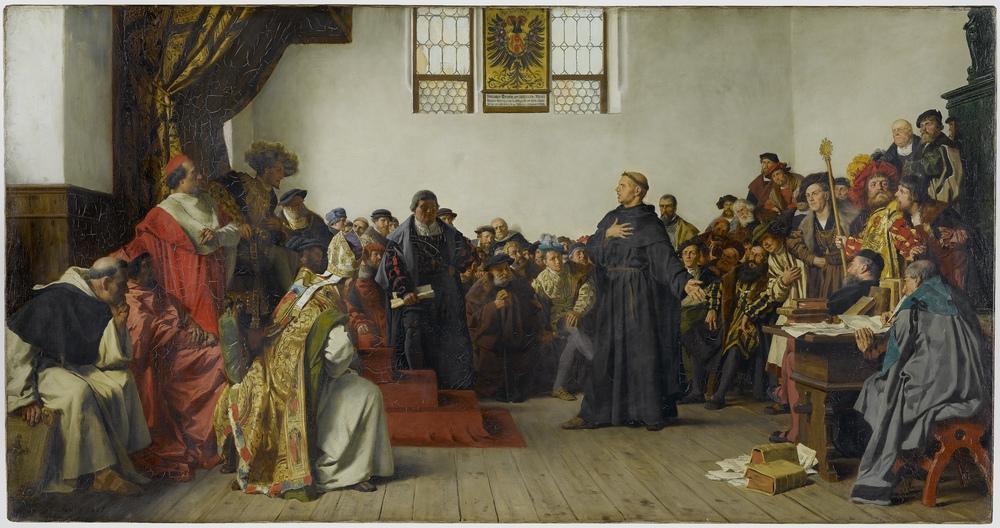
Luther was a man who dared to say: "My conscience is captive to the Word of God. It is neither safe nor honest to go against conscience." At the Diet of Worms (1521), before the emperor and the whole machinery of church power, he still would not recant.
And this is no matter of the distant past. The very week he preached, someone handed him a newspaper cutting: over 200 dissident Baptists in the Soviet Union jailed or awaiting trial for "infringing" strict religious laws. One had died after torture; their children questioned for hours about their parents' faith. Pawson notes that perhaps half the human race still lives under totalitarian states that claim the mind as well as the body. The freedom of conscience we take for granted, most of humanity still does not have.
Then Pawson says the world is never led by "jellyfish" with no backbone, drifting with the tide. It is led by people who have the courage of their convictions. And he warns, sharply, that even today's self-styled "non-conformists" conform to one another with astonishing ease. What we need are people who genuinely dare to stand alone.
Kit's note
The most famous line tied to Worms, "Here I stand, I can do no other. So help me God," is almost certainly a later addition. It is absent from the earliest transcripts. The reliably recorded words are: "…I neither can nor will retract anything, since it is neither safe nor right to go against conscience. God help me. Amen." The resolve is genuine; only the "Here I stand" flourish is a later embellishment.
2. Truth before Unity
One of the gravest charges laid against Luther was that he split the Church, that he was a schismatic. For nearly a thousand years, Western Europe had one Church, one denomination. They told him: recant and leave the Church intact; go on like this and you will break it.
But Luther put Truth before Unity. His conscience was not free to follow every whim, because it was captive to the Word of God. He saw the crucial thing clearly. What saves people is not the unity of the Church but the truth of the gospel. Unite every church on earth tomorrow, and the number of the saved will not rise. What is really needed is the truth of the gospel preached in those churches.
Pawson says it plainly. Our age has one catchword you climb aboard or get hated for refusing, and that word is "unity." A whole world is shrinking through transport, and the Church seems to have caught the echo, crying "unity, unity, unity." He tells a detail he relishes. When the British Council of Churches at Nottingham said the disagreements could be sorted out from within an already-united church, the Baptist Union alone among the denominations wrote back that no, they must be sorted first, and then unite. That is putting truth before unity.
3. Scripture before Tradition
Pawson names a startling detail: Luther was 20 years old before he first held and read a complete Bible. He was raised devout, prepared for a holy life, and yet not until he was 20 did he see that book. And when he read it, he was astonished. So much of what he had been told was a "vital part" of Christian belief and practice was simply not in it. Nothing about praying to Mary or the saints, no relics and images, no purgatory, no penance.
He asked: where did all this come from? The official answer was that it is the Tradition of the Church, and Tradition is as much the Word of God as that book. Luther stood before two "Words of God," one written and one spoken, and was told to accept both. But he came to a conclusion. Only that book is the truth, and every tradition of every church must be brought to the touchstone of Scripture and tested by it. Once he did that, he began to throw tradition out.
Pawson admits candidly that even his own church has unscriptural traditions, and all of them must bow to the Word of God. He tells of a friend (named on the recording as something like "Eduardo Lubinque," a name I could not verify in any independent source, most likely a transcription slip), once a professor of New Testament to the cream of Rome's Jesuit priests. The more he studied Scripture, the less he could keep teaching students that things not in this book were "the Word of God." So he taught himself out of that chair, just as Luther, 450 years earlier, was also a professor of theology. This book had done it.
Kit's note
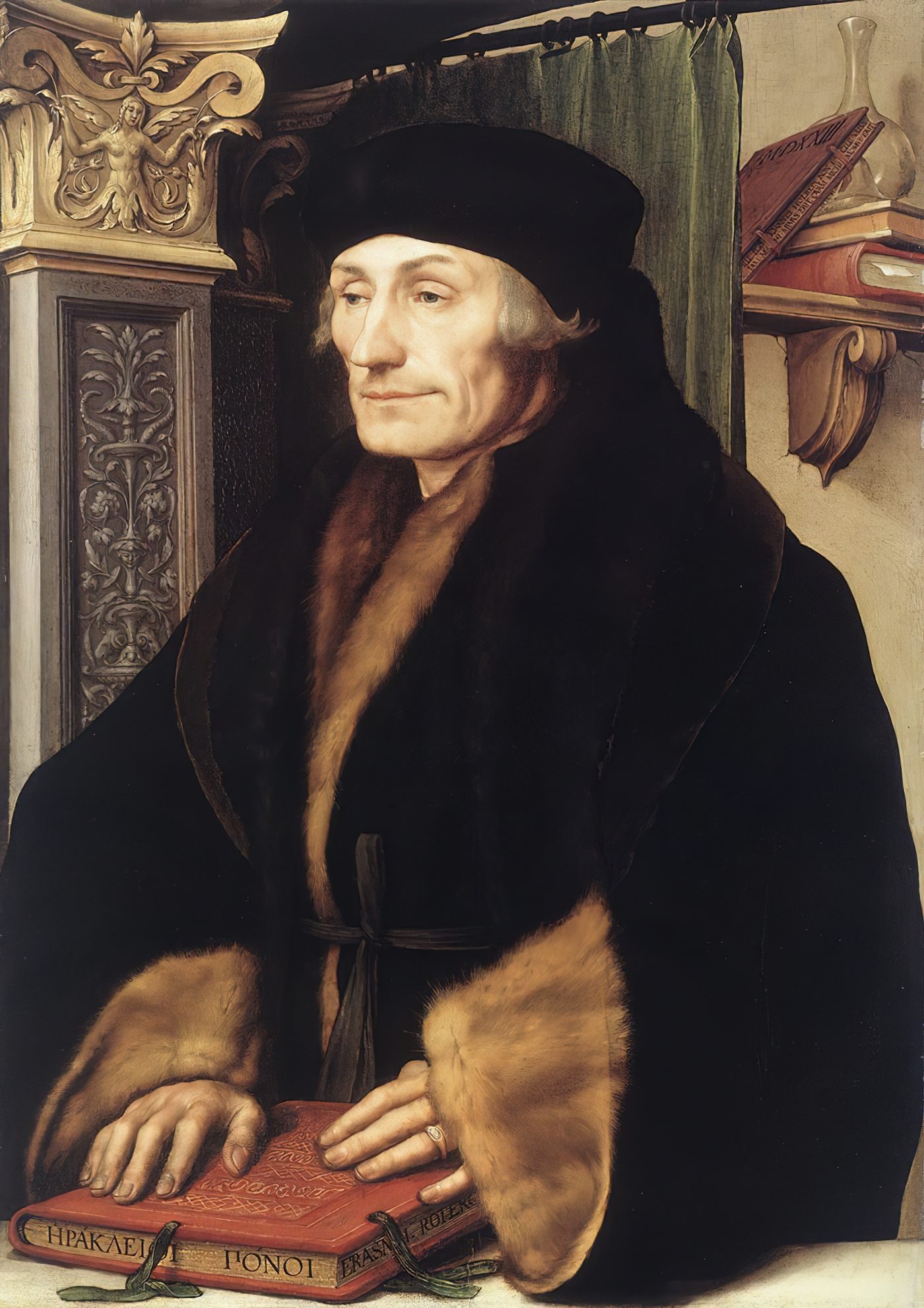
A piece Pawson does not stress but which matters greatly: Erasmus of Rotterdam. In 1516 this scholar printed the Greek New Testament (the Novum Instrumentum), the very base text Luther used to translate the German New Testament. Where the old Latin read "do penance," Erasmus rendered the Greek correctly as "repent." A small change that knocked out the foundation of the whole penance system. They said "Erasmus laid the egg that Luther hatched," though Erasmus rejected the jab and later clashed sharply with Luther over free will (1524–25). He wanted reform from within, not schism.
4. Faith before Works (Sola Fide)
This is the biggest question a person can ask, and for Luther it was life or death: How do I get right with God? How are my sins forgiven? The old thunderstorm had left him afraid to die with sins unforgiven, so this was no theory.
When John Tetzel came round selling indulgences, Luther was sure that was not the way. You cannot buy forgiveness. Then he took a further step: if you cannot buy it, neither can you earn it by merit. Pawson lays out three answers to the question of how to get to heaven, and every religion falls into one of them:
- The world says: do good deeds.
- The church of his day said: you need faith plus good deeds.
- Luther said: only one thing is needed, and that is to believe.
The manifesto of the Reformation, running from the Old Testament through the New and on to Luther, is: "The just shall live by faith." Not by good deeds, not by faith mixed with works, but by faith, full stop. The Latin sola fide (faith alone) became the great banner of the Reformation.
So what part do good deeds play? Luther put it superbly, and Pawson says it cannot be put better: We are saved NOT BY good deeds, but FOR good deeds. You do not do good deeds to earn the ticket to heaven; you do them because you are going to heaven already.
The Five Solas
Five slogans that distil the Reformation
Luther's seven priorities were later distilled into five Latin “sola / solus” (alone) slogans. To be honest: packaging the “five solas” as a unified list is a later (19th–20th c.) systematization, not a ready-made 16th-c. slogan, but each idea is genuinely rooted in the Reformers themselves.
Sola Scriptura · Scripture alone
Scripture alone is the supreme, infallible authority for faith.
Counter: Catholic and Orthodox: Scripture cannot be severed from the Tradition of the Church that produced it.
Sola Fide · Faith alone
One is justified by faith alone, not by merit.
Counter: Trent (1547): a “living” faith must include works; condemns “faith needing nothing further.”
Sola Gratia · Grace alone
Salvation is entirely God's unmerited gift.
Counter: The broadest common ground, even Trent (Session VI, 1547) teaches grace as the unmerited beginning; reaffirmed in the JDDJ, 1999.
Solus Christus · Christ alone
Christ alone is the one mediator between God and man.
Counter: Contested: the mediating role of the Church, the saints, and Mary in Catholic/Orthodox tradition.
Soli Deo Gloria · Glory to God alone
All glory belongs to God alone.
Counter: Least disputed, but grounds the rejection of excessive honor to persons/institutions.
5. Grace before Sacraments
Luther was raised to believe that grace was parceled up in seven sacraments (Pawson says the number had once run as high as fourteen, then dropped to seven), and that they worked automatically, like magic, regardless of who administered or received them. Baptismal water automatically saved an infant who knew nothing. Bread and wine, at a certain point in the service, automatically became Christ's actual body and blood, then were offered by a priest as a sacrifice, not on a table but on an altar.
Luther thought it through and said: I know I need God's grace, but there is nothing in this book to tell me that grace is wrapped up in sacraments that work automatically. He realized: without faith, the sacraments are no use. "By grace are you saved, through faith," not through sacraments. Grace is not packaged; it flows like a river. The simplest believer, never baptized and without the Lord's Supper, yet with faith, still knows the grace of God. Pawson points to his friends in the Salvation Army. They have no sacraments at all, yet plainly have grace; they are always singing about it.
Of the two sacraments Luther kept (baptism and the Lord's Supper), Pawson honestly admits what even Luther's closest friends had to grant: he never thought the matter through to its logical end, and he got a little muddled on both. What he got right was the order: grace first, sacraments second.
6. People before Priests (The priesthood of all believers)
The church Luther was born into was a pyramid of power. At the top the Pope, then down through Cardinals, Bishops, the orders of monks, to the parish priest. And far at the bottom, the laity. The divide between "clergy" and "laity" was so rigid that even dress and position in the building differed: one end in vestments, the other in ordinary clothes.
Pawson retells how Luther looked at that pyramid and asked, from the top down. What scriptural justification is there for one man up there? None. For bishops? None. For mediating priests? None. Then he came to a wonderful rediscovery: the priesthood of all believers. He made every layman a priest and every priest a layman, seeing there was no division between them at all. There were differences of function, yes, like different organs in one body. So he called them "ministers," not "priests." Every believer is a priest.
That is why he labored to translate the Bible into common German, to put it into the hands of the people rather than the priests. As he said, a maid sweeping a room with a broom could understand the Word better than a priest. Pawson notes that two-thirds of the world's professing Christians still live under priesthood and hierarchical control, so this protest is still needed.
Priesthood of All Believers
Demolishing the pyramid of power
The medieval church was a pyramid: laity at the bottom, pope at the top. Luther declared: There is no middle class. All are priests.
Pre-Reformation Structure
The Reformation Ideal
Kit's note
The "maid with a broom" line is a folk phrasing attached to Luther, not a traceable quote of his. The "plowboy knowing Scripture better than the clergy" image actually belongs to William Tyndale in England (echoing Erasmus's NT preface). What is certain, and far more important, is that Luther did translate the Bible for ordinary people. The German New Testament came in 1522 (done in about 11 weeks while he was hidden at the Wartburg), the complete Bible in 1534, and Gutenberg's press multiplied it for a whole nation. That is the real marvel, and it needs no embellishing quote.
7. Christ before the Church
This is the climax. Pawson recalls that when he asked the church-history tutor at that Catholic seminary what the biggest issue of the Reformation was, the two of them agreed. The biggest issue was this: Luther challenged the very idea that Christ and the Church are one, the idea that the Church could do for people what only Christ can do. The Body, that is the Church, was taking the place of the Head, that is Christ.
Pawson works it out through three offices:
- I need a prophet to teach me God's infallible truth. Who is my prophet? Rome says: the body, the infallible Church. Luther says: the Head.
- I need a priest to come to God. Who is my priest? Rome says: the body, confess your sins to the Church. Luther says: Christ in heaven, and you may come to God at any time through Him.
- I need a king to rule me. Who is my king? Rome says: the body on earth. Luther says: my Head in heaven.
So Luther dared to call the papacy "Antichrist." Pawson explains carefully: he did not mean the Pope was against Christ. In its root sense, "anti" means instead of, in the place of. Whoever puts himself in the place of Christ is antichrist. Rome told people that to come to God they must come through it, and that is putting itself in His place.
Then Rome countered with an important argument. When the Head is in heaven and someone on earth wants to come, must they not come through the body? Is not the Pope then Christ's vicar on earth, one standing in His place to convey what He teaches? Luther thought it through and answered: yes, Christ must have a vicar on earth to speak for Him, but that vicar is the Holy Spirit, not the Pope. In sum: "No priest but Christ, and no vicar but the Holy Ghost."
Pawson lands it very practically. That is exactly why there is no confession box anywhere around the walls of his Baptist church. "I cannot forgive your sins, and neither can Gold Hill Baptist Church. If you have sins to confess, go straight to the priest in heaven, who is Christ himself."
Kit's note
On the etymology: reading "anti = instead of" is one valid sense of the Greek prefix anti-, but most standard lexicons treat the primary sense of "antichrist" as "against, opposed to." Both nuances exist in Greek depending on context, and Luther leaned on the "usurper of Christ's place" sense. To call it the only correct meaning (and "against" wrong) overstates it. Better to say Luther drew out a genuine, existing sense of the word to name what he saw: an institution putting itself where Christ alone belongs.
The fire escapes Luther's hands
Pawson preaches mostly about Luther, because Luther lit the fuse. But the fire quickly escaped his hands. Within a single generation the Reformation had split into several streams, each with its own city, its own leader, its own emphasis. Some allied with one another; some quarreled so bitterly they never reconciled. If you hear only of Luther, you would think the Reformation was one solid block. It was not.
More Than One Man
The other faces of the Reformation
Pawson preaches mostly about Luther, because Luther lit the fuse. But the fire quickly escaped his hands. Within a generation the Reformation had split into several streams, each with its own city, its own leader, its own emphasis.
Portraits: all public domain (Wikimedia Commons). Knox and Menno Simons are later engravings, as no contemporary likeness survives.
Zwingli and the split over the Supper. In Zurich, Huldrych Zwingli led a reform independent of Luther. The two agreed on nearly everything, and hit only one question: what happens to the bread and wine in the Lord's Supper? At the Marburg Colloquy (1529) they agreed on 14 of 15 articles, then jammed on the last. Luther clung to the word "IS" in "This is my body." He chalked Hoc est corpus meum ("This IS my body") on the table and would not budge. Zwingli held it was only a memorial symbol. They would not shake hands. The united Protestant front broke right there. It is a painful illustration of the very principle "truth before unity," showing how fine the line is between defending truth and splitting the Church.
Calvin and Geneva. A generation later, John Calvin, a Frenchman, systematized the whole of Protestant theology in his Institutes of the Christian Religion, and made Geneva a "school of Christ" to which all Europe sent its people. He stressed the absolute sovereignty of God in salvation.
“This is my body”
Four ways to read the Lord's Supper and the split at Marburg
Nothing divided Protestants from one another (and from Rome) more deeply than one question: what happens to the bread and wine? At the Marburg Colloquy (1529), Luther and Zwingli agreed on 14 of 15 articles, but hit this one. Luther chalked “Hoc est corpus meum” (“This IS my body”) on the table and would not budge. The united Protestant front broke right there.
Catholic
Rome / Trent
Transubstantiation
The substance of bread and wine truly changes into Christ's body and blood; only the outward ‘accidents’ remain.
Luther
Wittenberg
Sacramental union (“in, with, under”)
Christ's body is truly present “in, with, and under” the bread and wine, yet bread remains bread. (Luther rejected the term “consubstantiation.”)
Calvin
Geneva
Spiritual real presence (by the Spirit)
Believers truly receive Christ, but by faith and through the Spirit lifting them up to Christ in heaven.
Zwingli
Zurich
Memorial / Symbolic
The bread and wine are only memorial signs. “This IS my body” means “this SIGNIFIES my body.”
From left (most physical presence) to right (pure symbol). This disagreement kept the Lutheran and Reformed branches from ever fully uniting.
The "radicals" and their price. Then some saw that neither Luther nor Zwingli had gone far enough. If Scripture alone is the authority, they asked, where in the New Testament is infant baptism? In January 1525 at Zurich, for the first time, they baptized adult believers, and so were called Anabaptists, meaning "re-baptizers." They held to a Church of voluntary believers, separate from the state, refusing the sword and the oath. Later Menno Simons gave the shattered movement a peaceful, nonviolent identity, and the name "Mennonite" came from him.
The price they paid was terrible, and it was exacted by both sides. In those same years (1524–25), the "Peasants' War" erupted as German peasants used the very slogans "priesthood of all believers" and "Scripture alone" to press their demands. It was a use Luther never intended, and he reacted violently, siding squarely with the nobility.
Kit's note
This is one of the painful truths an honest essay should not hide. The Anabaptists were persecuted by both Catholics and the mainstream Reformers. In Zwingli's own Zurich, rebaptism was made a capital crime, and Felix Manz was drowned in the Limmat on 5 Jan 1527, "the first Protestant martyr to die at the hands of other Protestants." Drowning was a calculated mockery of "re-baptism." As for the Peasants' War, Luther wrote "Against the Murderous, Thieving Hordes of Peasants" (1525), urging the lords to "smite, slay, and stab" the rebels like mad dogs; perhaps 100,000 peasants died. Calvin's Geneva has its own stain: the anti-Trinitarian theologian Michael Servetus was burned in 1553 with Calvin's approval (he asked only that the sentence be commuted to the more "humane" sword, and was refused). And the heaviest stain must be named too. Late in life Luther wrote On the Jews and Their Lies (1543), calling for synagogues to be burned. It is a poisonous legacy later exploited by the Nazis, and one that today's Lutheran churches have formally repudiated. The Reformers were real men, with real stains, in a violent age.
Calvin, Arminius, and the war over predestination. Another generation on, the Reformed camp itself split over an aching question: in salvation, does God do it all (whom He chooses is saved), or does man contribute by his own free faith? The Dutch theologian Jacobus Arminius challenged Calvin's unconditional predestination. After his death, his followers drew up the Remonstrance of 1610 in five points. The Synod of Dort (1618–19) met, condemned the Arminian party, and framed the "Five Points of Calvinism," later remembered by the acronym TULIP.
Who chooses whom?
Calvin vs Arminius: Predestination vs Free Will
A generation after Luther, Protestantism split internally over an aching question: in salvation, does God do everything (monergism), or do God and man cooperate (synergism)? The Synod of Dort (1618–19) condemned the Arminian party and framed the “Five Points of Calvinism”, later remembered by the acronym TULIP (a 20th-c. coinage).
Election
Atonement
Human nature
Grace
Perseverance
TULIP = Total depravity · Unconditional election · Limited atonement · Irresistible grace · Perseverance. The Arminian “Remonstrance” (1610) offered exactly five counter-points.
A century on fire
How the Reformation spread (1517–1619)
From one monk in one German town, within a century the fire reached Switzerland, England, Scotland, the Netherlands and forced Rome itself to reform.
The other two chairs: Rome and Constantinople
Pawson preaches from the Protestant chair, strongly and clearly. But he himself says the Reformation's issues "are still alive and have not been settled." And the best way to hear them fully is to pull up the other two chairs.
Rome's answer: the Council of Trent. The definitive Catholic doctrinal response was the Council of Trent (1545–1563). Fairness matters here, because Protestants often caricature Trent as "salvation by works." In fact Trent teaches that grace is the unmerited beginning ("if by grace, it is not now by works"), but that a person must cooperate freely with that grace, and that faith must be a living faith joined to love and good works. Trent condemned sola fide in the sense of "faith alone, nothing further required." It affirmed Scripture and Tradition (with "equal affection of piety"), the seven sacraments, and transubstantiation. On indulgences, the thing that set Luther off, Trent did not abolish indulgences, but abolished the monetized sale of them, exactly what the 95 Theses targeted. The spearhead of this renewal was the Jesuits of Ignatius of Loyola, approved in 1540.
The story does not stop in the 16th century. In 1999 the Joint Declaration on the Doctrine of Justification (JDDJ) between the Catholic Church and the Lutheran World Federation declared a consensus on the basic truths: "by grace alone, in faith in Christ's saving work and not because of any merit on our part, we are accepted by God." In a June 2016 interview, Pope Francis said Luther's "intentions were not mistaken"; he was "a reformer," though "some methods were not correct." Later that year, on 31 October 2016, Francis and the Lutheran World Federation jointly led a common commemoration of the Reformation's 500 years at Lund, Sweden.
Constantinople's answer: a decisive silence. The third chair is Eastern Orthodoxy, usually forgotten by Protestant and Catholic alike. Between roughly 1573 and 1581, Lutheran theologians at Tübingen sent the Augsburg Confession (translated into Greek) to Patriarch Jeremiah II of Constantinople, hoping to find common ground. He replied in three letters, one by one rejecting the core Protestant distinctives. He rejected sola fide ("the Church demands a living faith, made evident by good works") and sola scriptura (Scripture may not be interpreted apart from the Fathers), then politely ended the correspondence.
For Orthodoxy, salvation is not a legal verdict (being declared righteous) but theosis, that is deification, a real process of participating in the life of God. This is synergy, that is cooperation: "God does not save a person against that person's will." So Orthodoxy regards the very "faith versus works" quarrel as a Western, juridical framing it never adopted. Later, when one Patriarch (Cyril Lucaris) drafted a confession leaning heavily toward Calvin, Orthodoxy condemned it at the Synod of Jerusalem (1672). In other words, Orthodoxy formally rejected both Luther and Calvin.
Three Chairs
The debate is three-sided, not two
Pawson preaches from the Protestant chair. But to hear all sides, set the other two chairs beside it. The surprise: all three teach that grace is necessary and unmerited, the caricature “Protestants believe in grace, Catholics/Orthodox believe in earning heaven” is false on all three counts. The real fault lines are authority and the meaning of justification.
Orthodoxy formally rejected BOTH Luther (the Jeremiah II correspondence, 1573–81) AND Calvin (the Synod of Jerusalem, 1672).
So then, why fight?
By now many will ask the question Pawson himself raises at the sermon's close. Why dig up these doctrinal matters? Why not compromise for the sake of peace and unity, when everyone is friendly and worships the same God? Is this not petty doctrinal quibbling, a return to the dark ages?
Pawson's answer is blunt and heavy: Because the salvation of immortal souls is at stake. If you tell a man that baptism in water automatically saves him, you damn him. If you tell him good works will earn him heaven, you point him down a wrong road. This is not religious pride. It is that nothing matters more than the truth that brings people to eternal life. A false peace on earth is not worth the eternal destination of thousands of souls.
But here is where Pawson makes us stop. The front line today is no longer between Protestants and Catholics. Pawson says it plainly: the battle now runs between evangelicals on the one hand, and many Protestants and Roman Catholics on the other, a line that cuts across every denominational label. He cites a book by a French professor, The Heirs of the Reformation, which asks: who are the true heirs of Martin Luther? Not "Protestants" in general, but those who, whatever their label, put Scripture above everything and Christ above everyone. And so, Pawson says, those who fire in only one direction are out of date. He is clear: "I am not against Roman Catholics, and I am not against Protestants. I am against isms, against systems. I want to love people, whoever they are." He tells how he found a genuine love rising in his heart for the Catholic tutors he spoke with, loving them as people.
Kit's note
Context, so this is not misread. Pawson preached this in 1967, just after the Second Vatican Council closed (1962–1965), and after nearly a century in which liberal theology had spread through the mainline Protestant churches. Many of them by then openly doubted the authority of Scripture, the miracles, or the bodily resurrection of Christ. So when he says the front line now runs between "evangelicals" and "many Protestants and Roman Catholics," he does not mean hatred of anyone. He means a conviction: whether or not one puts Scripture above all and Christ above all. A Protestant who has abandoned that core is, in his view, no longer a "true heir of Luther." One thing here can confuse: evangelicals are themselves Protestants, so why set "evangelicals" against "many Protestants"? Because Pawson uses the two words in two different senses. "Evangelical" names a conviction (Scripture and Christ above all), while "Protestant" on the other side is only a denominational label, one that can include liberal or nominal Protestants who have lost that very conviction. His quotation comes from The Heirs of the Reformation (Jacques de Senarclens, SCM Press, 1963); de Senarclens was a French-speaking Swiss Reformed theologian who taught at Geneva, so Pawson's "a French professor" is a little imprecise. Pawson himself stresses that he fights "systems, not people." To hear all sides, including how Catholics and the Orthodox present themselves and where the traditions genuinely converge (the 1999 JDDJ), see the "Other two chairs: Rome and Constantinople" section above.
No priest but Christ, and no vicar but the Holy Ghost. Get your eyes off everyone else. When von Staupitz asked Luther what he would put in the place of Mary, the saints, the images and penance, he answered: Jesus Christ. Man only needs Jesus Christ.
That is why Pawson thanks God for Martin Luther, for his honesty, for the courage to stand alone for what he knew was right and true. And he prays God will raise up more such people, who in love will declare the truth and say: Here I stand, I can do no other. It is neither safe nor honest to go against conscience. My conscience is captive to the Word of God.
Conscience before authority. Truth before unity. Scripture before tradition. Faith before works. Grace before sacraments. People before priests, and making every believer a priest. And above all: Christ before the Church, before everyone and everything else.