
Histoire de l’Église et Réforme
Histoire de l'Église — Partie 3 : La Réforme
Le sermon de David Pawson sur la Réforme ne s'ouvre pas sur une date, mais sur une lettre. Il lit la lettre de Paul aux Galates et suivants. C’est l’épître que Martin Luther aimait le plus, celle s…
Pour cet essai, AI a aidé à chercher, vérifier, traduire et éditer ; l’argument et les conclusions sont à l’auteur.
La ligne d’argument, le sens et les conclusions appartiennent à l’auteur. Le choix des sources et leur interprétation relèvent du jugement de l’auteur, non des outils.
Des outils AI ont servi à rechercher des sources, confronter les arguments à ces sources, lire largement sur le sujet, faire passer le texte de l’anglais au vietnamien et aider pour la grammaire, la clarté et le rythme.
Ce qu’ils ont trouvé est une matière à examiner, pas un verdict. L’auteur a décidé ce que cet essai dirait, ce qu’il omettrait et ce qu’il signifie.
L’essai paraît sous le nom de l’auteur. L’auteur en répond, y compris de toute erreur qui s’y révélerait.
Parallèle
Le sermon de David Pawson sur la Réforme ne s'ouvre pas sur une date, mais sur une lettre. Il lit la lettre de Paul aux Galates et suivants. C’est l’épître que Martin Luther aimait le plus, celle sur laquelle il a écrit un très beau commentaire. « Un homme n'est pas justifié par les œuvres de la loi, mais par la foi en Jésus-Christ… car par les œuvres de la loi, personne ne sera justifié. » Pawson dit que ces mots comptaient beaucoup à l'époque de la Réforme, il y a plus de 450 ans.
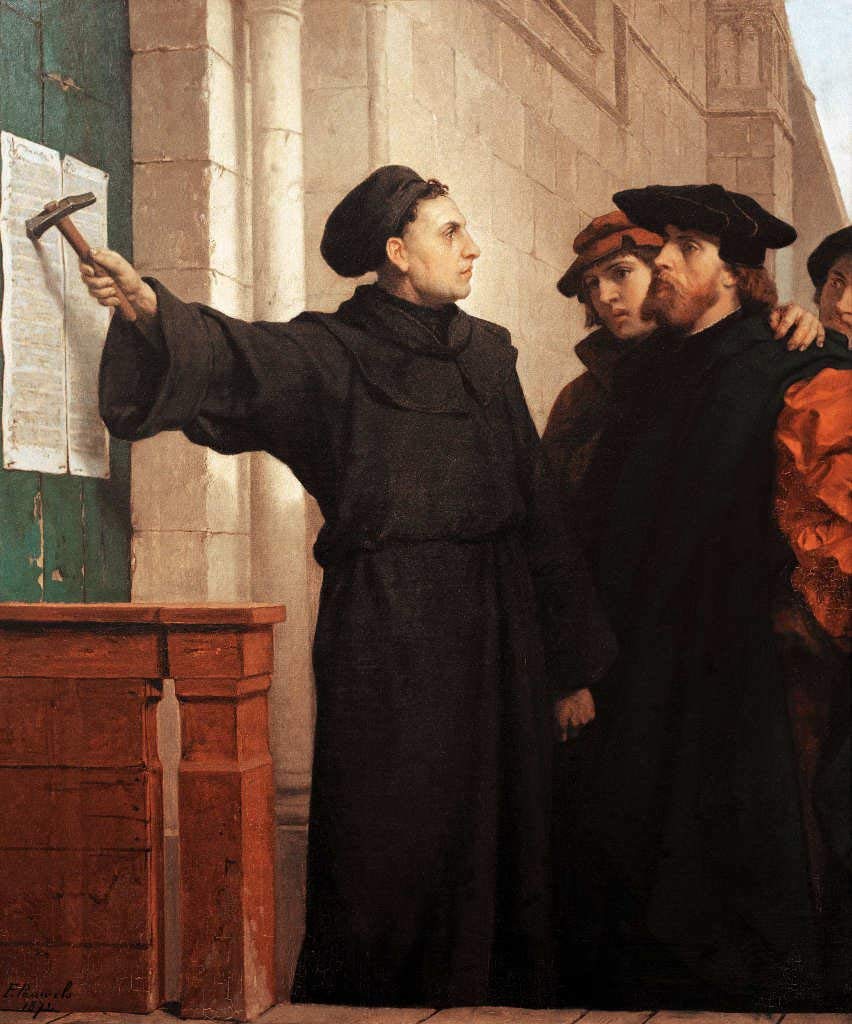
Le 31 octobre 1517, un moine et professeur de théologie nommé Martin Luther a cloué ses 95 thèses sur la porte de l'église de Wittenberg. À cette époque, cette porte servait de panneau d'affichage pour le débat public. Les gens considèrent généralement cela comme le début de la Réforme.
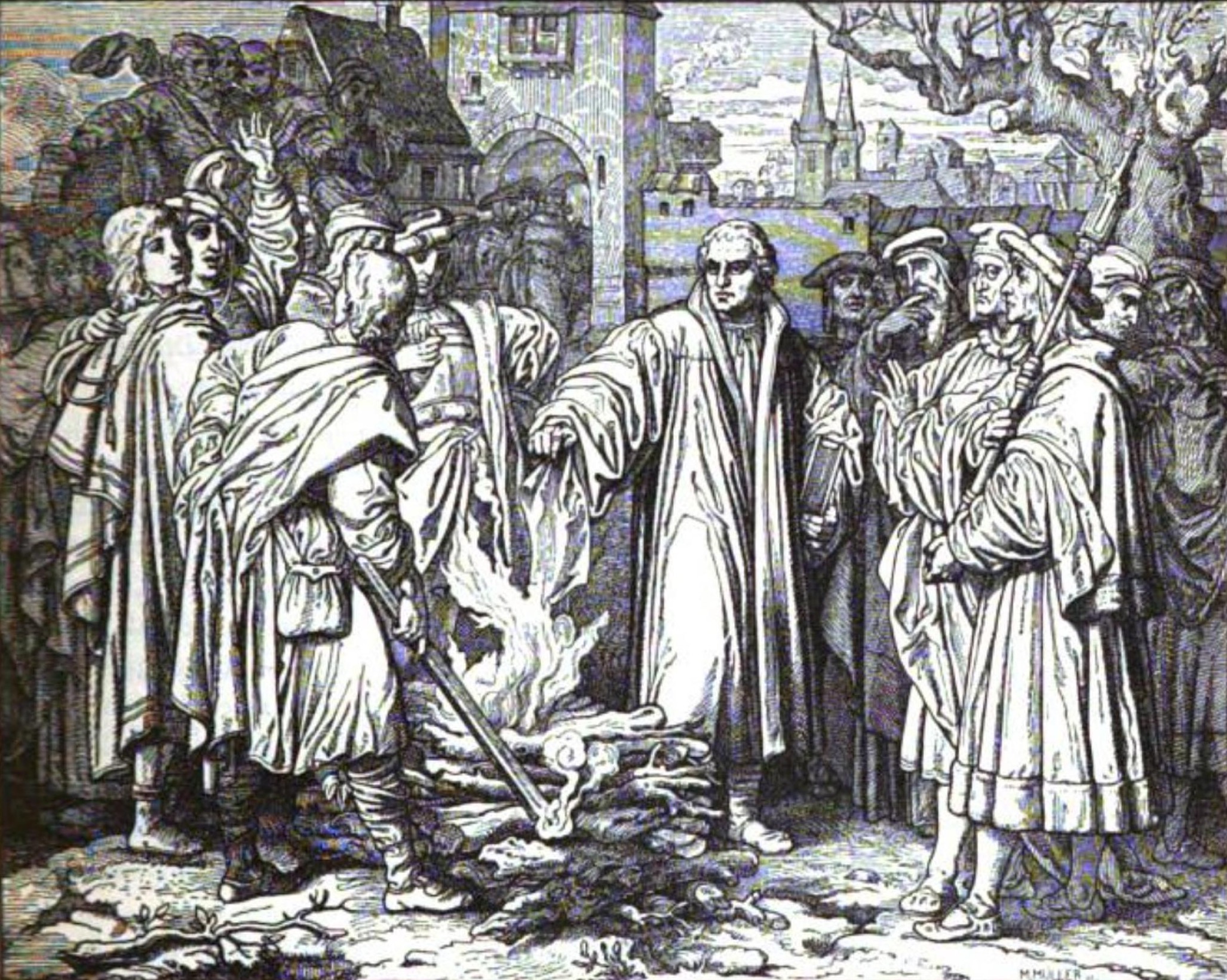
Mais selon Pawson, une date ultérieure, près de trois ans plus tard, compte encore davantage. C'est le jour où Martin Luther alluma un bûcher.
Au cours de ces trois années, Luther passa du désir de faire un nettoyage de printemps dans l'Église à la volonté de démolir tout le système. Au début, en rédigeant les 95 thèses, il s’en prit uniquement aux abus et à la vente des indulgences, non au système lui-même. L'une de ses thèses disait : « Si le pape savait comment les vendeurs d'indulgences volent son troupeau, il préférerait que l'église Saint-Pierre soit réduite en cendres plutôt que construite avec la peau et les os de ses moutons. » Luther supposa naïvement que le pape était de son côté.
Il fut rapidement désillusionné, et par le Pape lui-même. Pawson le raconte ainsi : lorsque l'argent des indulgences en provenance d'Allemagne a chuté, le pape l'a excommunié. C’est alors seulement que Luther l’a compris. La faute ne venait pas de quelques mauvais hommes qui dirigeaient un bon système. Le système lui-même était erroné.
Alors il jeta trois choses au feu :
- Le parchemin avec la signature du Pape, menaçant d'excommunication.
- Un livre de droit canonique, le code selon lequel il avait vécu en tant que moine et prêtre.
- Un document dont il savait désormais qu'il s'agissait d'une falsification, qui revendiquait à la papauté le droit de représenter le Christ sur terre.
Avant, il faisait le ménage de printemps de l’Église. Trois ans plus tard, il commença à le démolir.
Réformer ou démolir ?
Le tournant de Luther en 3 ans (1517–1520)
Au départ, Luther voulait simplement faire un grand ménage dans le système. Trois ans plus tard, il comprend que le problème, c’est le système lui-même.
📜
31 octobre 1517
Les 95 thèses à Wittenberg
- Objectif : ouvrir un débat théologique.
- S’attaquer aux abus (les indulgences), pas au système.
- Il pensait que le pape lui donnerait raison s’il était au courant.
🔥
10 décembre 1520
La bulle papale brûlée (porte de l’Elster)
- Objectif : rompre définitivement.
- Il brûle la bulle Exsurge Domine, qui le menace d’excommunication.
- Il brûle aussi les livres de droit canonique.
- Il comprend que le système lui-même est en cause.
Selon Pawson, le feu de 1520 est encore plus significatif que l’affichage des thèses en 1517. Précision sur les dates : la bulle Exsurge Domine a été promulguée à Rome le 15 juin 1520 ; Luther l’a brûlée à Wittenberg le 10 décembre 1520 ; son excommunication officielle a suivi le 3 janvier 1521.
Qu'est-ce qui a poussé un moine à ce feu ?
Pour comprendre Luther, il faut remonter à la terreur qui l’a poussé au monastère. Pawson le raconte : Luther a failli mourir un jour dans un orage. Cela lui a fait peur de mourir, peur de faire face à Dieu avec ses péchés non pardonnés. Et il cherchait désespérément un moyen de sortir de cette peur.
Il priait les saints, priait Marie, faisait des pèlerinages, contemplait des reliques et des images. Il fit tout cela. Et rien de tout cela ne lui donnait la moindre assurance que ses péchés étaient pardonnés. Plus tard, en discutant avec son supérieur réputé pour sa sainteté, von Staupitz, il entendit la question décisive : « Si vous enlevez toutes ces béquilles à une foi chancelante, si vous enlevez Marie, les saints, les images, la pénitence et les pèlerinages, que mettrez-vous à leur place ? » La réponse de Luther, comme dans le film que la congrégation de Pawson venait de regarder, tenait en un seul nom : « Jésus-Christ. L'homme n'a besoin que de Jésus-Christ. »
C’était la graine de tout ce qui a suivi.
La Réforme est-elle une question morte ?
Dans son sermon de 1967, qui marquait le 450e anniversaire de la Réforme, Pawson raconte deux histoires côte à côte. Un jour, il assista à une réunion de ministres et de membres protestants. Lorsqu'il mentionna la Réforme, on lui dit sans équivoque que les protestants ne s'en souciaient plus. C’était une « histoire morte », disaient-ils, et il n’était pas question de la ressusciter. Il repartit avec les oreilles qui bourdonnaient.
Pourtant, le week-end suivant, il fut invité dans un séminaire catholique romain du sud-est de l'Irlande pour parler aux tuteurs et aux conférenciers, entre autres choses, de la Réforme. Ils souhaitaient entendre ce qu'il pensait et voulaient un forum ouvert. Il déclara : « Je pense que les problèmes soulevés alors sont toujours d'actualité et n'ont pas été réglés. » Ils répondirent : « C'est exactement ce que nous pensons aussi. » Trois heures de discussion amicale, puis un bon thé, puis le retour à la maison.
C'est une position extraordinaire. Il pouvait discuter de la Réforme avec les catholiques romains, mais pas avec les protestants. La réponse de Pawson, en un mot, est que la Réforme n'est pas obsolète. Non parce que nous combattons les gens, catholiques ou protestants, mais parce que nous combattons les systèmes et les « -ismes » qui aveuglent les gens à la vérité. Mais la ligne de front est aujourd’hui tracée très différemment de ce qu’elle était à l’époque de Luther.
C'est là la grandeur de Luther. Il a retrouvé sept priorités, sept choses qui avaient été reléguées au deuxième rang, et les a remises au premier plan.
Sept priorités
Ce que Luther a placé en premier
La grandeur de Luther tient à sa façon de remettre les priorités dans le bon ordre. Il a rendu la première place à sept choses qui avaient été reléguées au second plan.
Mieux vaut obéir en conscience à la Parole de Dieu que céder aux pressions de l’Église ou de l’État. (« Il n’est ni sûr ni honnête d’agir contre sa conscience. »)
Une unité privée de la vérité de l’Évangile n’a pas de sens. Ce qui sauve, c’est la vérité, pas une institution.
Toute tradition de l’Église — prière aux saints, purgatoire… — doit être examinée à la lumière de l’Écriture (Sola Scriptura).
Ni les œuvres seules, ni la foi ajoutée aux œuvres. « Le juste vivra par la foi » (Sola Fide). Nous sommes sauvés, non PAR les bonnes œuvres, mais POUR les accomplir.
La grâce ne se distribue pas par portions magiques dans les sacrements. Sans la foi, les sacrements sont inutiles. Luther rejette une conception « magique » du baptême et de la Cène.
Le sacerdoce de tous les croyants. Il efface la séparation entre clercs et laïcs. Les ministres ont une fonction différente, pas un statut différent.
Il n’y a qu’un seul Prêtre, le Christ, et qu’un seul Vicaire, le Saint-Esprit. L’Église ne peut pas remplacer le Christ. Quiconque se met à sa place est un antichrist — quelqu’un qui prend la place du Christ.
Passons en revue les priorités une par une.
1. La conscience avant l'autorité
Luther a vécu à une époque où la liberté de conscience existait à peine. Ce n'était pas l'État, mais l'Église, qui vous disait quoi croire et comment vous comporter. Pour imaginer ce monde, rappelons-nous la tragédie de Galilée. Il a découvert des vérités sur l'univers grâce à son télescope, et on lui a dit : « Vous ne devez pas croire cela, vous ne devez pas l'enseigner. »
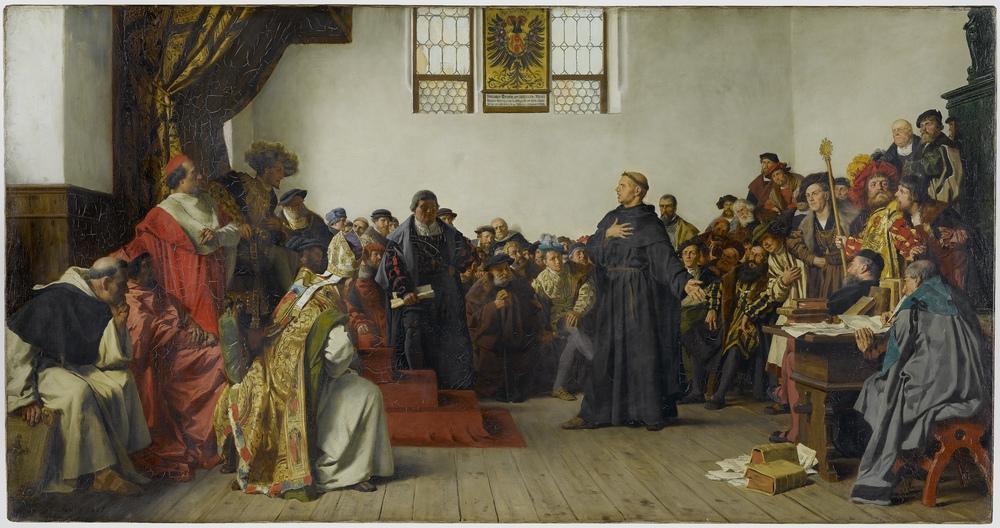
Luther était un homme qui osait dire : « Ma conscience est captive de la Parole de Dieu. Il n'est ni sûr ni honnête d'aller à l'encontre de ma conscience. » À la Diète de Worms (1521), devant l'empereur et tout l'appareil du pouvoir de l'Église, il ne voulait toujours pas se rétracter.
Et cela n’a rien à voir avec un passé lointain. La semaine même où il prêchait, quelqu'un lui tendait une coupure de journal : plus de 200 baptistes dissidents en Union soviétique étaient emprisonnés ou attendaient d'être jugés pour avoir « enfreint » des lois religieuses strictes. L'un d'eux était mort après avoir été torturé ; leurs enfants étaient interrogés pendant des heures sur la foi de leurs parents. Pawson note que peut-être la moitié de la race humaine vit encore sous des États totalitaires qui revendiquent leur emprise sur l'esprit comme sur le corps. La liberté de conscience que nous tenons pour acquise, la majeure partie de l’humanité ne la possède toujours pas.
Ensuite Pawson dit que le monde n'est jamais dirigé par des « méduses » sans colonne vertébrale, dérivant avec la marée. Il est dirigé par des gens qui ont le courage de leurs convictions. Et il prévient clairement que même les soi-disant « non-conformistes » d’aujourd’hui se conforment les uns aux autres avec une étonnante facilité. Ce dont nous avons besoin, ce sont des gens qui osent véritablement se tenir seuls.
2. La vérité avant l'unité
L'une des accusations les plus graves portées contre Luther était d'avoir divisé l'Église, d'être un schismatique. Pendant près de mille ans, l’Europe occidentale n'avait connu qu'une seule Église, une seule confession. On lui disait : « Rétracte-toi et laisse l'Église intacte ; continue ainsi et tu la briseras. »
Mais Luther a fait passer la vérité avant l'unité. Sa conscience n'était pas libre de suivre tous ses caprices, car elle était captive de la Parole de Dieu. Il avait vu clairement l’essentiel. Ce qui sauve les gens, ce n'est pas l'unité de l'Église, mais la vérité de l'Évangile. Unissez toutes les églises de la terre demain, et le nombre de ceux qui sont sauvés n’augmentera pas. Ce qui est réellement nécessaire, c’est la vérité de l’Évangile prêchée dans ces églises.
Pawson le dit clairement. Notre époque a un mot d’ordre auquel on doit adhérer sous peine d’être détesté : « unité ». Le monde entier se resserre grâce aux transports, et l'Église semble avoir repris cet écho en criant « unité, unité, unité ». Il raconte un détail qu'il apprécie. Lorsque le Conseil britannique des Églises de Nottingham déclara que les désaccords pouvaient être résolus à l'intérieur d'une église déjà unie, l'Union baptiste fut la seule dénomination à répondre que non : il fallait d'abord les régler, puis s'unir. C’est faire passer la vérité avant l’unité.
3. L'Écriture avant la Tradition
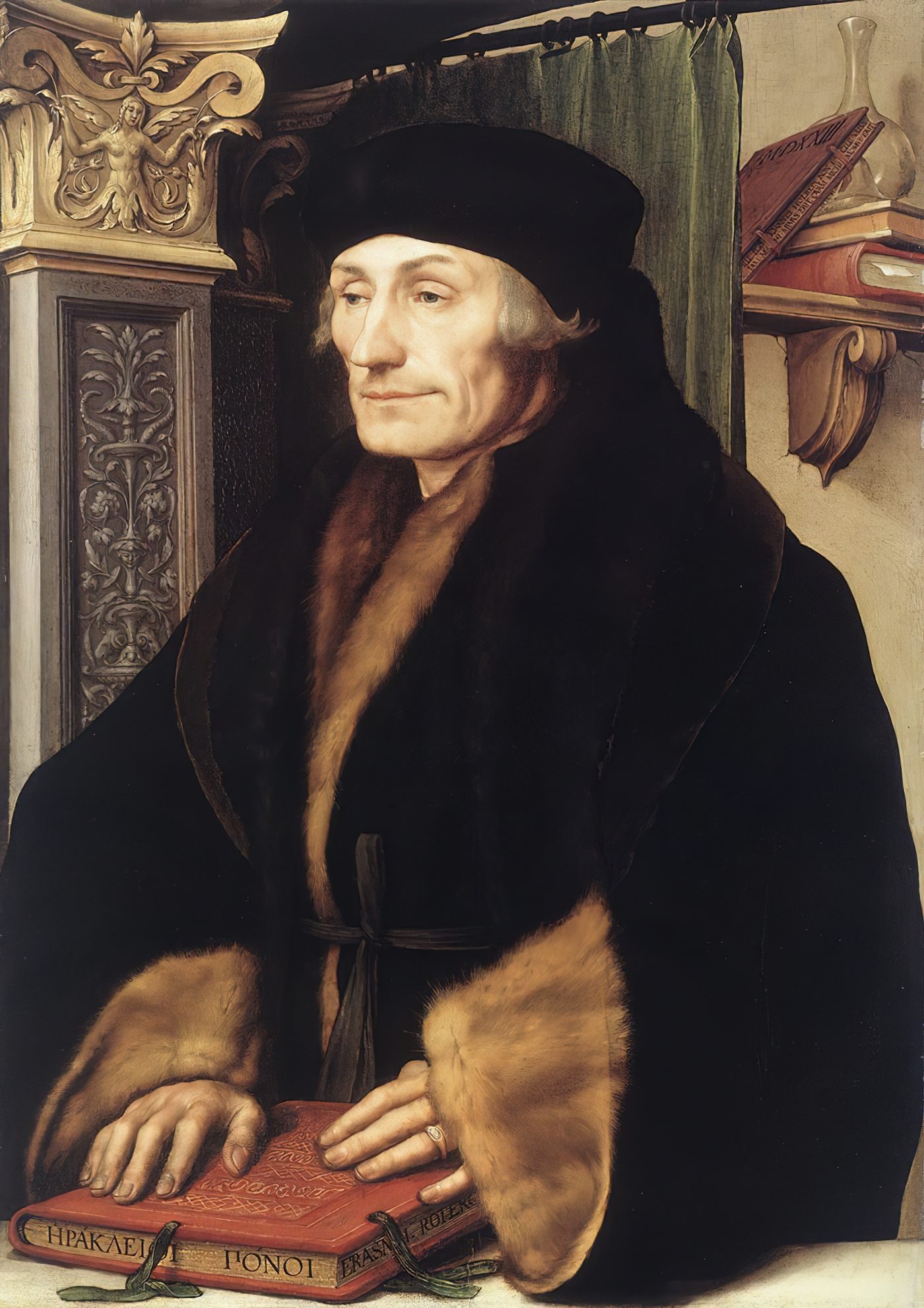
Pawson cite un détail surprenant : Luther n'eut sa première Bible complète entre les mains qu'à l'âge de vingt ans. Il avait été élevé dans la dévotion et préparé à une vie sainte ; pourtant, ce ne fut qu'à cet âge qu'il vit ce livre. Et quand il le lut, il fut étonné. Une grande partie de ce qu'on lui avait présenté comme une « partie vitale » de la croyance et de la pratique chrétiennes n'y figurait tout simplement pas. Rien sur la prière à Marie ou aux saints, pas de reliques ni d'images, pas de purgatoire, pas de pénitence.
Il demanda : d'où vient tout cela ? La réponse officielle était que c'était la Tradition de l'Église, et que la Tradition était autant la Parole de Dieu que ce livre. Luther se trouvait devant deux « Paroles de Dieu », l'une écrite et l'autre transmise, et on lui demandait d'accepter les deux. Mais il parvint à une conclusion : seul ce livre est la vérité, et chaque tradition de chaque église doit être confrontée à l'Écriture et éprouvée par elle. Une fois cela fait, il commença à se débarrasser des traditions.
Pawson admet franchement que même sa propre église a des traditions non bibliques et que toutes doivent se plier à la Parole de Dieu. Il parle d'un ami (nommé sur l'enregistrement comme quelque chose comme « Eduardo Lubinque », un nom que je n'ai pu vérifier dans aucune source indépendante, très probablement une fiche de transcription), autrefois professeur de Nouveau Testament auprès de l'élite des prêtres jésuites de Rome. Plus il étudiait les Écritures, moins il pouvait continuer à enseigner aux étudiants que les choses qui ne figuraient pas dans ce livre étaient « la Parole de Dieu ». Il s'est donc lui-même éloigné de cette chaire, tout comme Luther, 450 ans plus tôt, était lui aussi professeur de théologie. Ce livre l'y avait conduit.
4. La foi avant les œuvres (Sola Fide)
C’est la plus grande question qu’une personne puisse se poser, et pour Luther, c’était une question de vie ou de mort : Comment puis-je être en accord avec Dieu ? Comment mes péchés sont-ils pardonnés ? L’ancien orage lui avait laissé la peur de mourir avec des péchés non pardonnés ; ce n'était donc pas une théorie.
Lorsque John Tetzel est venu vendre des indulgences, Luther était sûr que ce n'était pas ainsi. Vous ne pouvez pas acheter le pardon. Puis il a franchi une étape supplémentaire : si vous ne pouvez pas l'acheter, vous ne pouvez pas non plus le gagner par le mérite. Pawson propose trois réponses à la question de savoir comment aller au paradis, et chaque religion relève de l'une d'entre elles :
- Le monde dit : faites de bonnes actions.
- L'Église de son époque a dit : tu as besoin de la foi plus les bonnes actions.
- Luther a dit : une seule chose est nécessaire, c'est de croire.
Le manifeste de la Réforme, allant de l’Ancien Testament au Nouveau et jusqu’à Luther, est le suivant : « Le juste vivra par la foi. » Non pas par de bonnes actions, non par la foi mêlée aux œuvres, mais par la foi, point final. Le latin sola fide (« par la foi seule ») est devenu la grande bannière de la Réforme.
Alors, quel rôle jouent les bonnes actions ? Luther l'a superbement exprimé, et Pawson dit qu'il ne peut pas être mieux exprimé : Nous sommes sauvés NON PAR de bonnes actions, mais POUR de bonnes actions. Vous ne faites pas de bonnes actions pour gagner le billet pour le paradis ; vous les faites parce que vous allez déjà au paradis.
Les cinq solas
Cinq formules qui résument la Réforme
Les sept priorités de Luther ont ensuite été condensées en cinq formules latines avec « sola / solus » (« seul »). Soyons précis : présenter les « cinq solas » comme une liste unifiée relève d’une systématisation ultérieure, aux 19e–20e siècles, et non d’un slogan déjà constitué au 16e siècle. Mais chacune de ces idées trouve bien ses racines chez les réformateurs eux-mêmes.
Sola Scriptura · L’Écriture seule
L’Écriture seule est l’autorité suprême et infaillible en matière de foi.
Objection : Pour les catholiques et les orthodoxes, on ne peut séparer l’Écriture de la Tradition de l’Église qui l’a produite.
Sola Fide · La foi seule
On est justifié par la foi seule, et non par ses mérites.
Objection : Trente (1547) : une foi « vivante » doit inclure les œuvres ; le concile condamne l’idée d’une foi « qui n’aurait besoin de rien d’autre ».
Sola Gratia · La grâce seule
Le salut est entièrement un don immérité de Dieu.
Objection : C’est le terrain d’entente le plus large : même Trente (session VI, 1547) enseigne que la grâce est le commencement immérité du salut ; la Déclaration commune sur la doctrine de la justification le réaffirme en 1999.
Solus Christus · Le Christ seul
Le Christ seul est l’unique médiateur entre Dieu et les êtres humains.
Objection : Le désaccord porte sur le rôle médiateur de l’Église, des saints et de Marie dans les traditions catholique et orthodoxe.
Soli Deo Gloria · À Dieu seul la gloire
Toute gloire appartient à Dieu seul.
Objection : C’est le point le moins contesté, mais il fonde le refus d’un honneur excessif rendu aux personnes ou aux institutions.
5. La grâce avant les sacrements
Luther a été élevé dans la croyance que la grâce était divisée en sept sacrements (Pawson dit que le nombre avait autrefois atteint quatorze, puis est tombé à sept), et qu'ils travaillaient automatiquement, comme par magie, peu importe qui les avait administrés ou reçus. L’eau du baptême sauvait automatiquement un enfant qui ne savait rien. Le pain et le vin, à un certain moment du service, devenaient automatiquement le corps et le sang réels du Christ, puis étaient offerts par un prêtre comme un sacrifice, non pas sur une table mais sur un autel.
Luther réfléchit et dit : « Je sais que j'ai besoin de la grâce de Dieu, mais rien dans ce livre ne me dit que la grâce est enveloppée dans des sacrements qui fonctionnent automatiquement. » Il réalisa : sans la foi, les sacrements ne servent à rien. « C'est par la grâce que vous êtes sauvés, par la foi », et non par les sacrements. La grâce n’est pas emballée ; elle s'écoule comme une rivière. Le croyant le plus simple, jamais baptisé et sans le Repas du Seigneur, mais avec la foi, connaît encore la grâce de Dieu. Pawson montre du doigt ses amis de l'Armée du Salut. Ils n'ont aucun sacrement, mais ils ont clairement la grâce ; ils en chantent toujours.
Concernant les deux sacrements que Luther a conservés (le baptême et la Cène du Seigneur), Pawson admet honnêtement ce que même les amis les plus proches de Luther ont dû lui accorder : il n'a jamais réfléchi à la question jusqu'à son terme logique et il s'est un peu embrouillé sur les deux. Ce qu'il a bien compris, c'est l'ordre : la grâce d’abord, les sacrements ensuite.
6. Les gens devant les prêtres (Le sacerdoce de tous les croyants)
L'Église dans laquelle Luther est né était une pyramide du pouvoir. Au sommet se trouvait le pape, puis venaient les cardinaux, les évêques, les ordres monastiques et enfin le curé. Tout en bas se trouvaient les laïcs. La division entre « clergé » et « laïcs » était si rigide que même la tenue vestimentaire et la position dans le bâtiment différaient : les uns portaient des vêtements liturgiques, les autres des vêtements ordinaires.
Pawson raconte comment Luther a regardé cette pyramide et a demandé, de haut en bas. Quelle justification scripturaire y a-t-il pour un homme là-haut ? Aucun. Pour les évêques ? Aucun. Pour les prêtres médiateurs ? Aucun. Puis il fit une merveilleuse redécouverte : le sacerdoce de tous les croyants. Il a fait de chaque laïc un prêtre et de chaque prêtre un laïc, voyant qu'il n'y avait aucune division entre eux. Il y avait des différences de fonction, oui, comme différents organes dans un même corps. Il les appelait donc « ministres » et non « prêtres ». Tout croyant est prêtre.
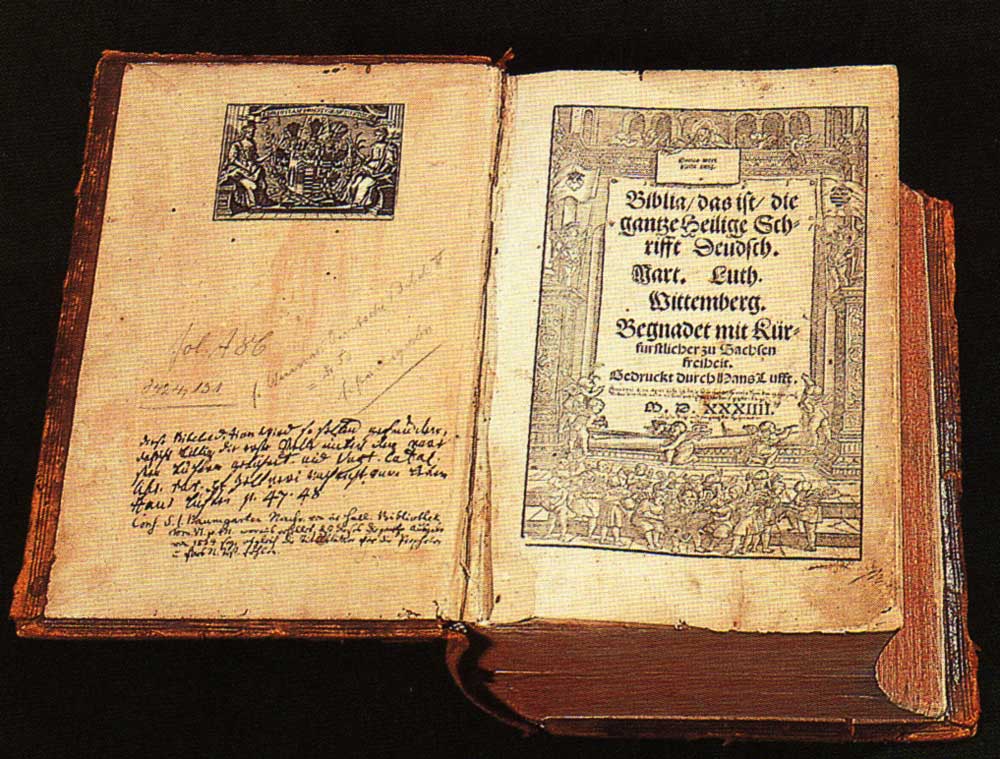
C'est pourquoi il s'est efforcé de traduire la Bible en allemand courant, de la remettre entre les mains des personnes plutôt que des prêtres. Comme il le disait, une servante balayant une pièce avec un balai pouvait mieux comprendre la Parole qu'un prêtre. Pawson note que les deux tiers des chrétiens qui se réclament du christianisme dans le monde vivent encore sous le contrôle du sacerdoce et de la hiérarchie, et que cette protestation est donc toujours nécessaire.
Le sacerdoce de tous les croyants
Démolir la pyramide du pouvoir
L’Église médiévale formait une pyramide : les laïcs en bas, le pape au sommet. Luther déclare qu’il n’existe pas de catégorie intermédiaire : tous sont prêtres.
La structure avant la Réforme
L’idéal de la Réforme
7. Le Christ devant l'Église
C'est le point culminant. Pawson se souvient que lorsqu'il a demandé au professeur d'histoire de l'Église de ce séminaire catholique quel était le plus gros problème de la Réforme, ils ont tous deux été d'accord. Le plus gros problème était le suivant : Luther remettait en question l’idée même selon laquelle le Christ et l'Église ne font qu'un, l'idée que l'Église pourrait faire pour les hommes ce que seul le Christ peut faire. Le Corps, c'est-à-dire l'Église, prenait la place de la Tête, c'est-à-dire le Christ.
Pawson présente ce point à travers trois fonctions :
- J'ai besoin d'un prophète pour m'enseigner la vérité infaillible de Dieu. Qui est mon prophète ? Rome dit : le corps, l'Église infaillible. Luther dit : la Tête.
- J'ai besoin d'un prêtre pour venir à Dieu. Qui est mon prêtre ? Rome dit : le corps, confesse tes péchés à l'Église. Luther dit : Christ est au ciel, et vous pouvez venir à Dieu à tout moment par Lui.
- J'ai besoin d'un roi pour me gouverner. Qui est mon roi ? Rome dit : le corps sur terre. Luther dit : ma Tête au ciel.
Alors Luther a osé appeler la papauté « Antéchrist ». Pawson explique soigneusement qu'il ne voulait pas dire que le pape était simplement contre le Christ. Dans son sens étymologique, le préfixe grec anti- signifie à la place de. Quiconque se met à la place du Christ est l'Antéchrist. Rome disait aux gens que, pour venir à Dieu, ils devaient passer par elle, et cela revenait à prendre sa place.
Alors Rome a répliqué avec un argument important. Quand la Tête est au ciel et que quelqu'un sur terre veut venir, ne doit-il pas passer par le corps ? Le Pape n'est-il donc pas le vicaire du Christ sur terre, quelqu'un qui se tient à sa place pour transmettre ce qu'il enseigne ? Luther réfléchit et répondit : oui, le Christ doit avoir un vicaire sur terre pour parler en sa faveur, mais ce vicaire est le Saint-Esprit, pas le pape. En somme : « Pas de prêtre sinon le Christ, et pas de vicaire sinon le Saint-Esprit. »
Pawson le formule de manière très pratique. C’est exactement pourquoi il n’y a aucun confessionnal le long des murs de son église baptiste. « Je ne peux pas pardonner vos péchés, et l'église baptiste de Gold Hill non plus. Si vous avez des péchés à confesser, allez directement chez le prêtre au ciel, qui est le Christ lui-même. »
Le feu échappe aux mains de Luther
Pawson prêche principalement sur Luther, parce que Luther a allumé la mèche. Mais le feu lui a rapidement échappé des mains. En une seule génération, la Réforme s'était divisée en plusieurs courants, chacun avec sa propre ville, son propre chef, son propre accent. Certains se sont alliés les uns aux autres ; certains se sont disputés si amèrement qu’ils ne se sont jamais réconciliés. Si vous entendez seulement parler de Luther, vous penseriez que la Réforme était un bloc solide. Ce n’était pas le cas.
Plus d’un homme
Les autres visages de la Réforme
Pawson parle surtout de Luther dans ses prédications, car c’est Luther qui a allumé la mèche. Mais le feu lui a vite échappé. En une génération, la Réforme s’est divisée en plusieurs courants, chacun avec sa ville, son chef de file et ses propres accents.
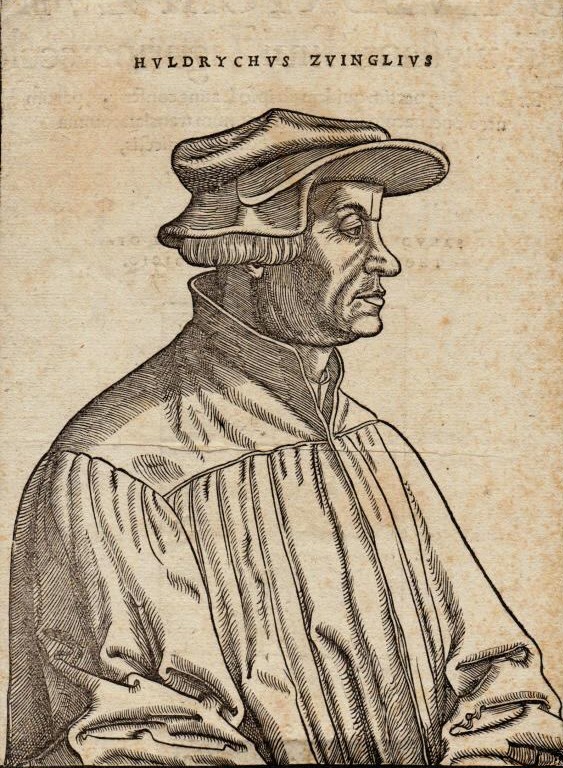
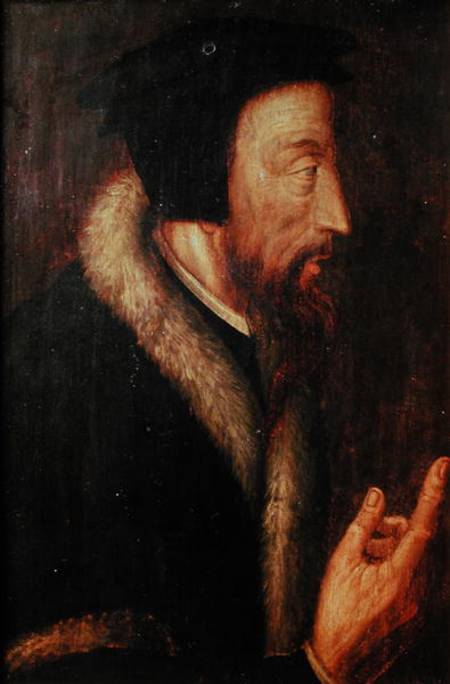
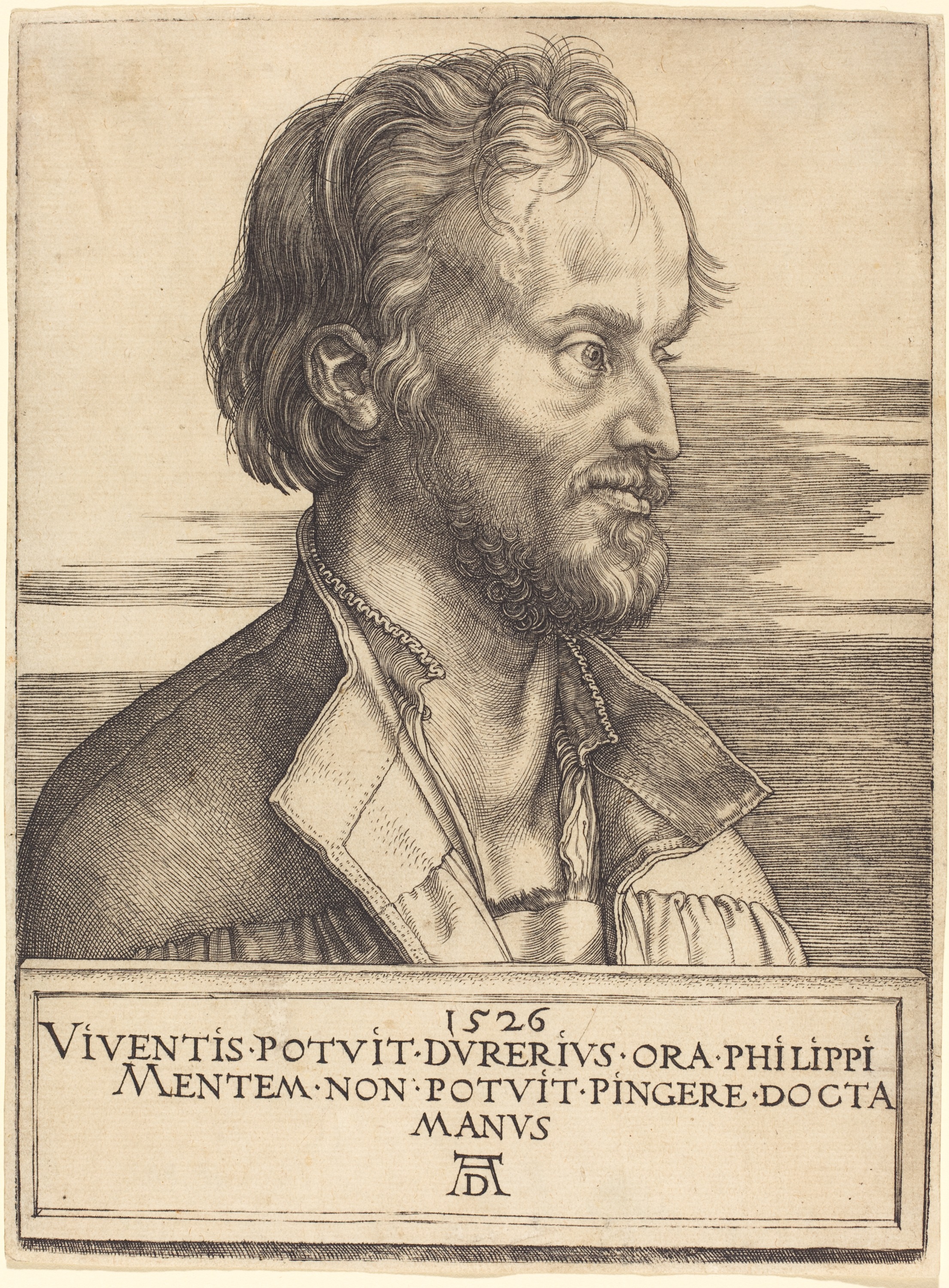
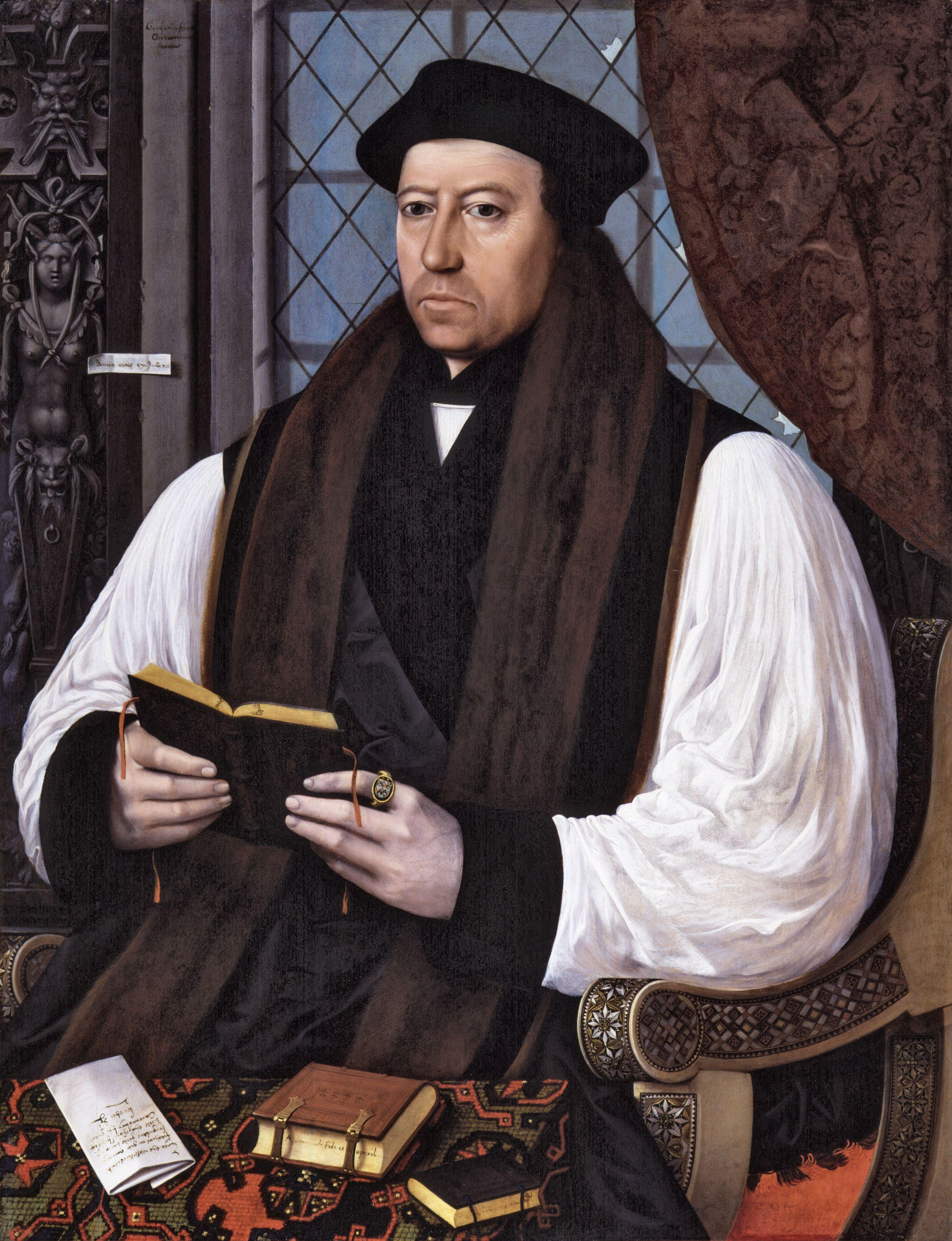
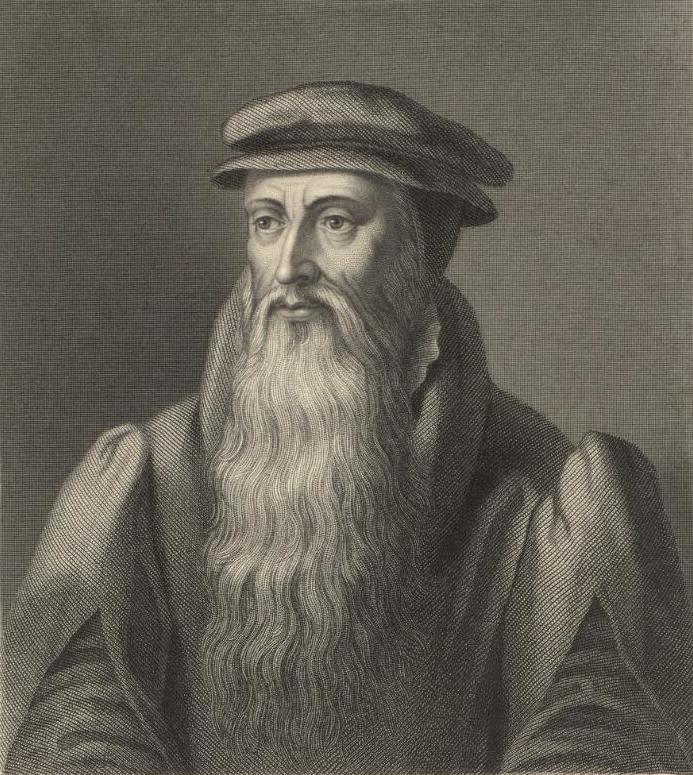
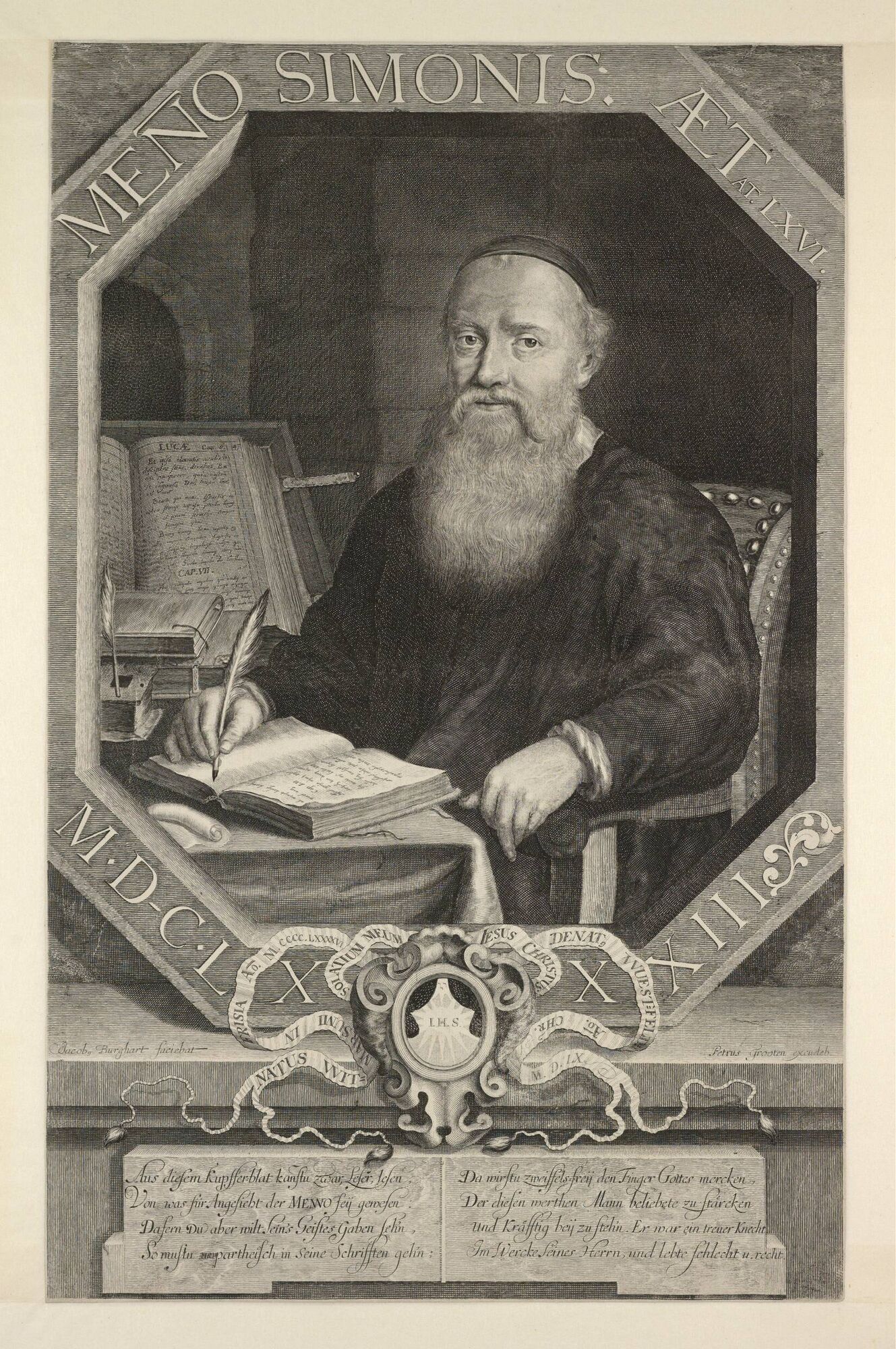
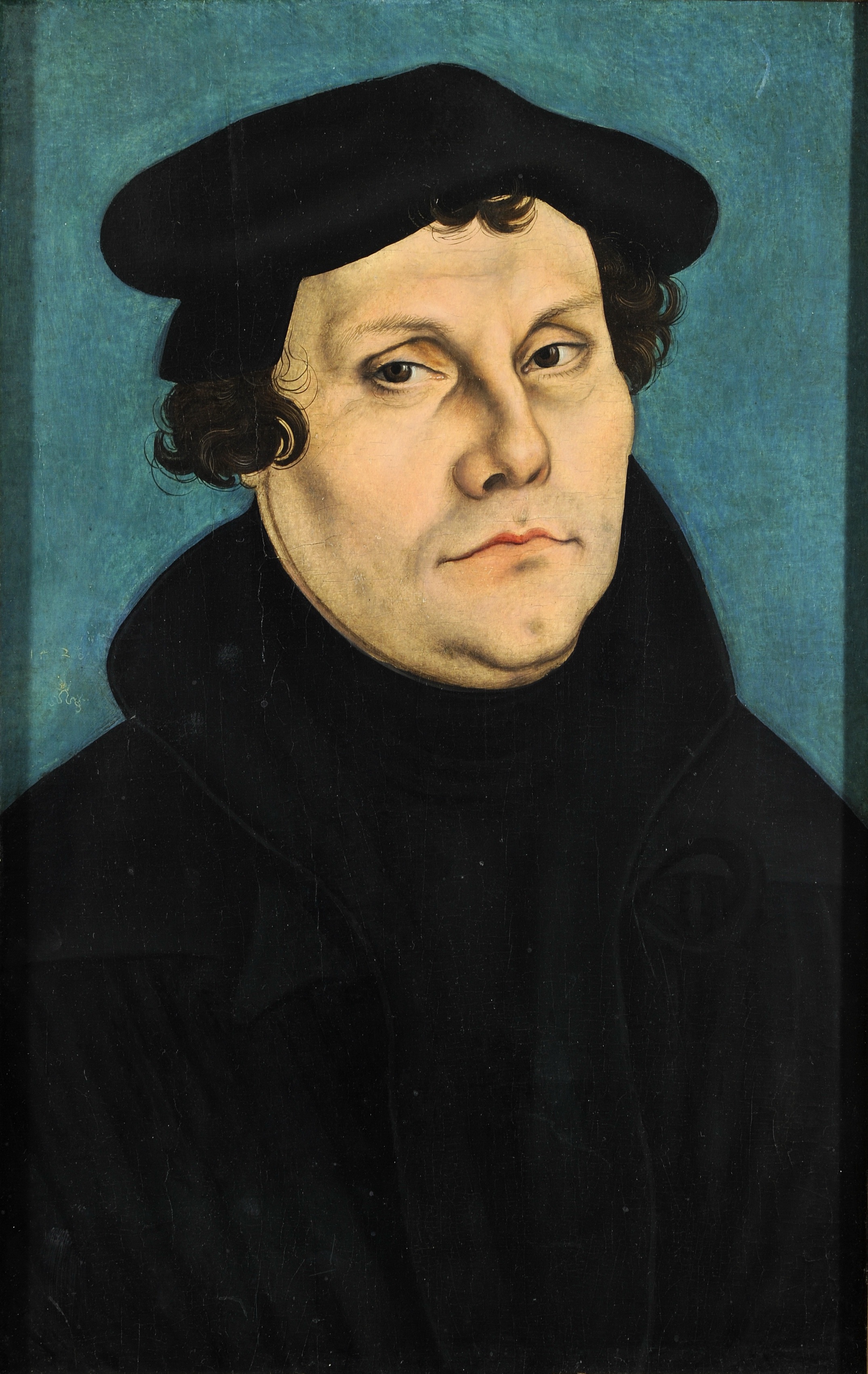
Portraits : tous dans le domaine public (Wikimedia Commons). Ceux de Knox et de Menno Simons sont des gravures postérieures, aucun portrait réalisé de leur vivant n’ayant été conservé.
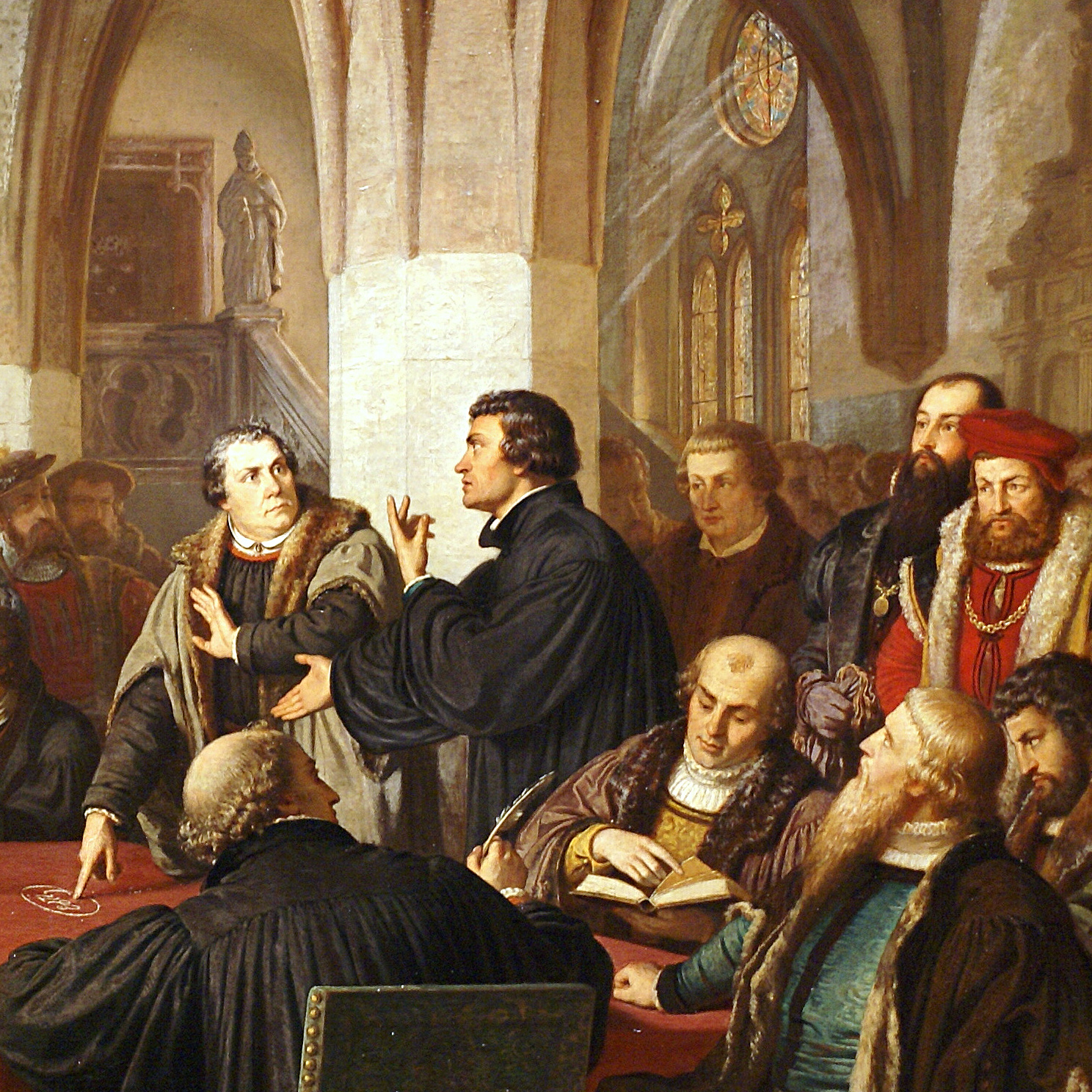
Zwingli et la scission autour de la Cène. À Zurich, Huldrych Zwingli mena une réforme indépendante de Luther. Les deux hommes étaient d'accord sur presque tout et ne se posaient qu'une seule question : qu'arrive-t-il au pain et au vin lors de la Cène du Seigneur ? Au Colloque de Marbourg (1529), ils se mirent d'accord sur 14 des 15 articles, puis se bloquèrent sur le dernier. Luther s'accrochait au mot « EST » dans « Ceci est mon corps ». Il écrivit à la craie Hoc est corpus meum (« C'EST mon corps ») sur la table et ne bougea pas. Zwingli pensait qu'il ne s'agissait que d'un symbole commémoratif. Ils ne voulurent pas se serrer la main. Le front protestant uni se brisa là-bas. C'est une illustration douloureuse du principe même « la vérité avant l'unité », montrant à quel point la frontière est ténue entre la défense de la vérité et la division de l'Église.
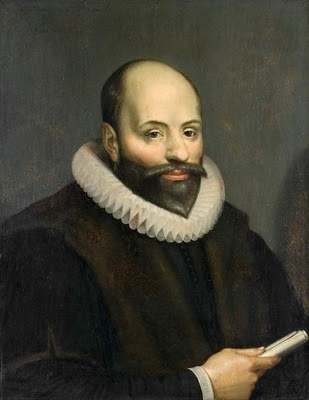
Calvin et Genève. Une génération plus tard, Jean Calvin, un Français, systématisa toute la théologie protestante dans son Institution de la religion chrétienne et fit de Genève une « école du Christ » à laquelle toute l'Europe envoyait des étudiants. Il souligna la souveraineté absolue de Dieu dans le salut.
« Ceci est mon corps »
Quatre façons de comprendre la Cène et la rupture de Marbourg
Rien n’a plus profondément divisé les protestants entre eux — et avec Rome — que cette question : que deviennent le pain et le vin ? Au colloque de Marbourg (1529), Luther et Zwingli s’accordent sur 14 des 15 articles, mais butent sur celui-ci. Luther écrit à la craie sur la table « Hoc est corpus meum » (« Ceci EST mon corps ») et refuse de céder. C’est là que se brise le front protestant uni.
Catholicisme
Rome / Trente
Transsubstantiation
La substance du pain et du vin devient réellement le corps et le sang du Christ ; seuls demeurent les « accidents », c’est-à-dire les apparences extérieures.
Luther
Wittenberg
Union sacramentelle (« dans, avec et sous »)
Le corps du Christ est réellement présent « dans, avec et sous » le pain et le vin, tandis que le pain reste du pain. Luther rejetait le terme de « consubstantiation ».
Calvin
Genève
Présence réelle spirituelle (par l’Esprit)
Les croyants reçoivent réellement le Christ, mais par la foi et par l’Esprit, qui les élève vers le Christ au ciel.
Zwingli
Zurich
Commémoration / Symbole
Le pain et le vin ne sont que des signes commémoratifs. « Ceci EST mon corps » signifie « ceci REPRÉSENTE mon corps ».
De gauche à droite : de la présence la plus physique au pur symbole. Ce désaccord a empêché les branches luthérienne et réformée de s’unir pleinement.
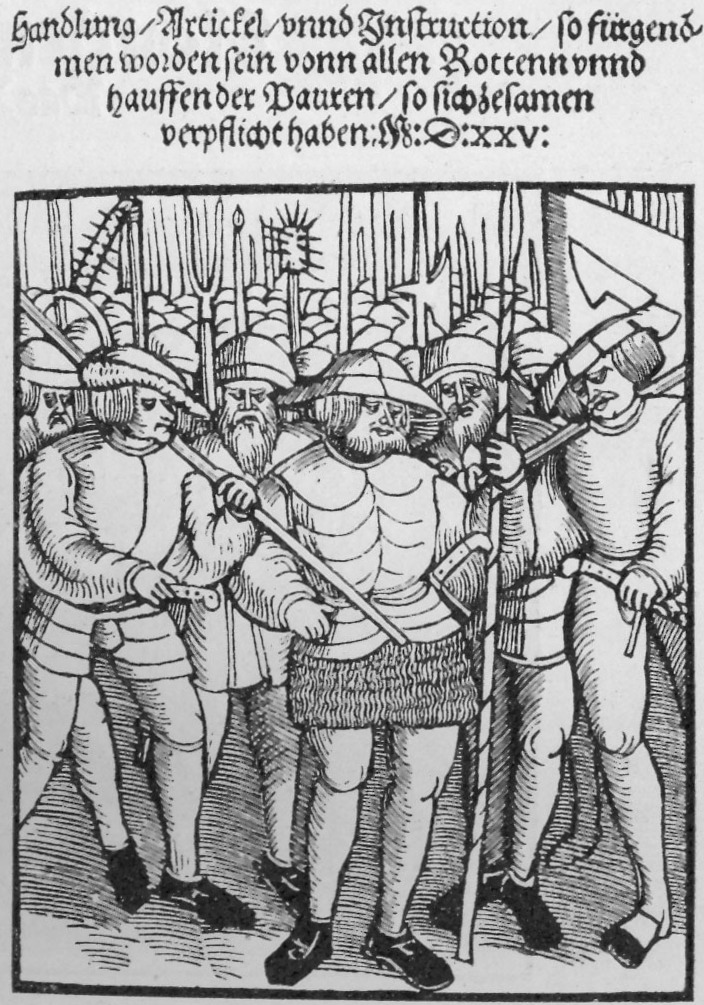
Les « radicaux » et leur prix. Certains virent alors que ni Luther ni Zwingli n’étaient allés assez loin. Si l'Écriture seule fait autorité, se demandèrent-ils, où trouve-t-on le baptême des enfants dans le Nouveau Testament ? En janvier 1525, à Zurich, ils baptisèrent pour la première fois des croyants adultes ; on les appela ainsi anabaptistes, terme signifiant « rebaptiseurs ». Ils défendaient une Église de croyants volontaires, séparée de l'État, et refusaient le glaive et le serment. Plus tard, Menno Simons donna au mouvement morcelé une identité pacifique et non violente ; le nom « mennonite » vient de lui.
Le prix qu'ils ont payé était terrible, et il a été exigé par les deux côtés. Au cours de ces mêmes années (1524–25), la « guerre des paysans » a éclaté lorsque les paysans allemands ont utilisé les slogans mêmes « le sacerdoce de tous les croyants » et « l'Écriture seule » pour faire valoir leurs revendications. C’était un usage que Luther n’avait jamais prévu, et il réagit violemment, se rangeant carrément du côté de la noblesse.
Calvin, Arminius et la guerre pour la prédestination. Une autre génération plus tard, le camp réformé lui-même était divisé sur une question douloureuse : dans le salut, Dieu fait-il tout (sauvant ceux qu'il choisit), ou l'homme contribue-t-il par sa propre foi libre ? Le théologien néerlandais Jacobus Arminius contesta la prédestination inconditionnelle de Calvin. Après sa mort, ses partisans rédigèrent la Remontrance de 1610 en cinq points. Le Synode de Dort (1618–1619) se réunit, condamna le parti arminien et formula les « cinq points du calvinisme », rappelés plus tard par l'acronyme TULIPE.
Qui choisit qui ?
Calvin et Arminius : prédestination et libre arbitre
Une génération après Luther, le protestantisme se divise sur une question douloureuse : dans le salut, Dieu fait-il tout — le monergisme — ou Dieu et l’être humain coopèrent-ils — le synergisme ? Le synode de Dordrecht (1618–19) condamne le parti arminien et formule les « cinq points du calvinisme », connus plus tard sous l’acronyme TULIP, forgé au 20e siècle.
L’élection
L’expiation
La nature humaine
La grâce
La persévérance
TULIP résume les termes anglais correspondant à : corruption totale · élection inconditionnelle · expiation limitée · grâce irrésistible · persévérance. La « Remontrance » arminienne (1610) proposait exactement cinq points en réponse.
Un siècle en feu
La propagation de la Réforme (1517–1619)
Parti d’un moine dans une ville allemande, le feu atteint en un siècle la Suisse, l’Angleterre, l’Écosse et les Pays-Bas, obligeant Rome elle-même à se réformer.
Les deux autres chaires : Rome et Constantinople
Pawson prêche depuis la chaire protestante, avec force et clarté. Mais il affirme lui-même que les problèmes de la Réforme « sont toujours d'actualité et n'ont pas été réglés ». Et la meilleure façon de les entendre pleinement est de considérer les deux autres chaires.
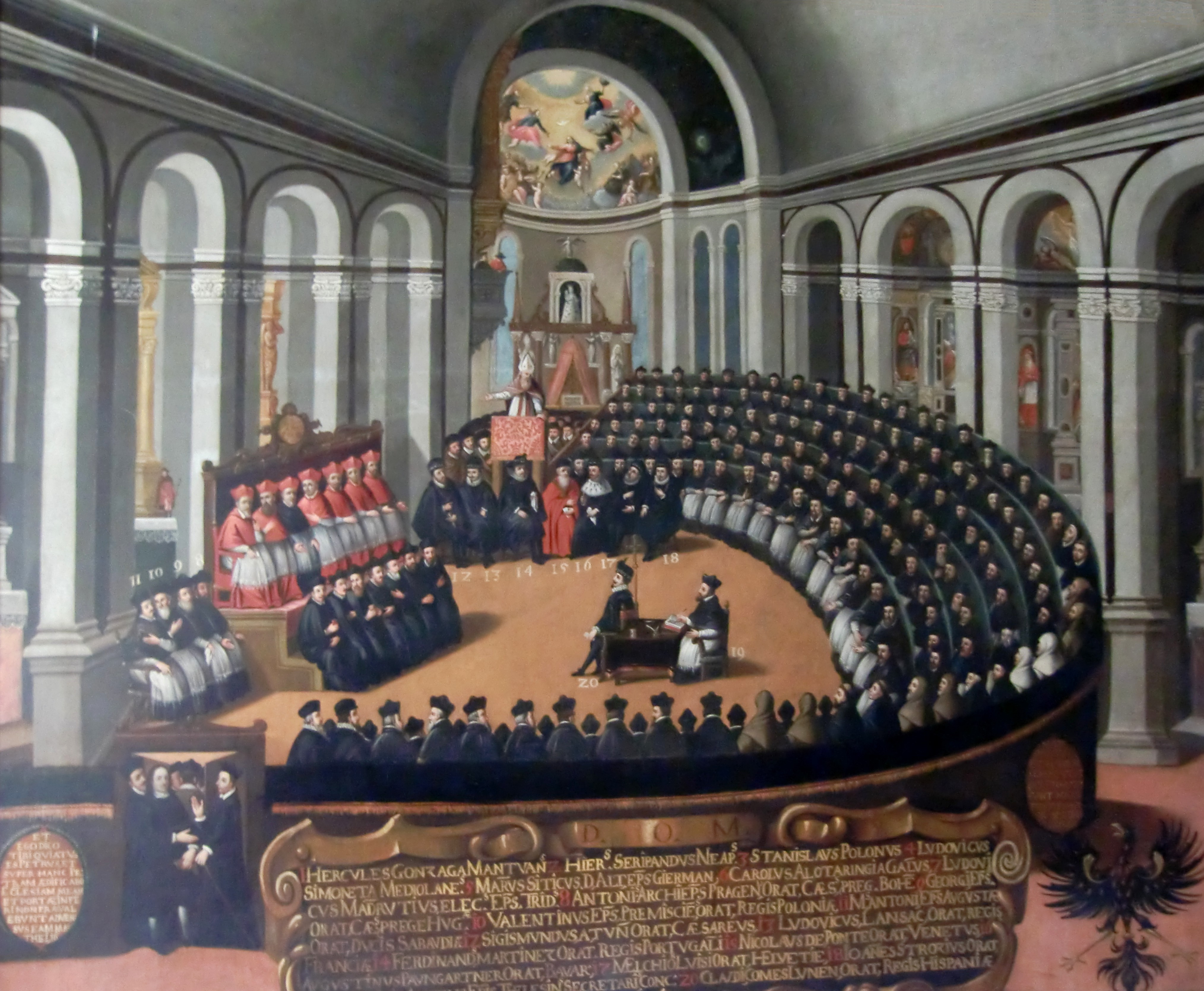
La réponse de Rome : le Concile de Trente. La réponse doctrinale catholique définitive fut le Concile de Trente (1545–1563). L'équité compte ici, car les protestants caricaturent souvent Trente en le décrivant comme « le salut par les œuvres ». En fait, Trente enseigne que la grâce est un commencement immérité (« si c'est par grâce, ce n'est plus par les œuvres »), mais qu'une personne doit coopérer librement avec cette grâce et que cette foi doit être une foi vivante, unie à l'amour et aux bonnes œuvres. Trente condamna la doctrine de la sola fide au sens de « la foi seule, rien d'autre n'est requis ». Le concile affirma l'Écriture et la Tradition, avec « une égale affection de piété », les sept sacrements et la transsubstantiation. Concernant les indulgences, Trente n'abolit pas les indulgences, mais la vente d'indulgences contre de l'argent, exactement ce que visaient les 95 thèses. Le fer de lance de ce renouveau fut la Compagnie de Jésus, fondée par Ignace de Loyola et approuvée en 1540.
L’histoire ne s’arrête pas au XVIe siècle. En 1999, la Déclaration commune sur la doctrine de la justification (JDDJ), signée par l'Église catholique et la Fédération luthérienne mondiale, formula un consensus sur les vérités fondamentales : « par la grâce seule, dans la foi en l'œuvre salvifique du Christ et non à cause d'un quelconque mérite de notre part, nous sommes acceptés par Dieu. » Dans une interview de juin 2016, le pape François déclara que les « intentions de Luther n'étaient pas erronées » ; il était « un réformateur », même si « certaines méthodes n'étaient pas correctes ». Plus tard cette année-là, le 31 octobre 2016, François et la Fédération luthérienne mondiale célébrèrent conjointement le 500e anniversaire de la Réforme à Lund, en Suède.
Réponse de Constantinople : un silence décisif. La troisième chaire est celle de l’Orthodoxie orientale, généralement oubliée aussi bien par les protestants que par les catholiques. Entre 1573 et 1581 environ, des théologiens luthériens de Tübingen envoyèrent la Confession d'Augsbourg, traduite en grec, au patriarche Jérémie II de Constantinople, espérant trouver un terrain d'entente. Il répondit dans trois lettres successives, rejetant les principales caractéristiques protestantes. Il rejeta la sola fide (« L'Église exige une foi vivante, rendue évidente par les bonnes œuvres ») et la sola scriptura (« L'Écriture ne peut être interprétée indépendamment des Pères »), puis mit poliment fin à la correspondance.
Pour l'Orthodoxie, le salut n'est pas un verdict juridique, où l'on serait simplement déclaré juste, mais la théosis, c'est-à-dire la déification, un véritable processus de participation à la vie de Dieu. C'est une synergie, c'est-à-dire une coopération : « Dieu ne sauve pas une personne contre sa volonté. » Ainsi, l’Orthodoxie considère la querelle « foi contre œuvres » comme un cadre juridique occidental qu’elle n’a jamais adopté. Plus tard, lorsqu'un patriarche, Cyrille Lucaris, rédigea une confession fortement influencée par Calvin, l'Orthodoxie la condamna au Synode de Jérusalem (1672). En d’autres termes, l’Orthodoxie rejeta formellement aussi bien Luther que Calvin.
Trois chaises
Le débat se joue à trois, pas à deux
Pawson prêche depuis la chaise protestante. Mais pour entendre tous les points de vue, plaçons les deux autres à côté. Surprise : les trois traditions enseignent que la grâce est nécessaire et imméritée. La caricature selon laquelle « les protestants croient à la grâce, tandis que les catholiques et les orthodoxes croient qu’il faut gagner le ciel » est fausse pour chacune des trois traditions. Les vraies lignes de désaccord concernent l’autorité et le sens de la justification.
L’orthodoxie a formellement rejeté AUSSI BIEN Luther — correspondance avec Jérémie II, 1573–81 — QUE Calvin — synode de Jérusalem, 1672.
Alors pourquoi se battre ?
Beaucoup se poseront désormais la question que Pawson lui-même soulève à la fin du sermon. Pourquoi déterrer ces questions doctrinales ? Pourquoi ne pas faire de compromis au nom de la paix et de l’unité, alors que tout le monde est amical et adore le même Dieu ? N’est-ce pas là de mesquines chicanes doctrinales, un retour aux âges obscurs ?
La réponse de Pawson est directe et lourde : Car il y va du salut des âmes immortelles. Si vous dites à un homme que le baptême d’eau le sauve automatiquement, vous le damnez. Si vous lui dites que les bonnes œuvres lui rapporteront le paradis, vous l’orientez sur une mauvaise voie. Ce n'est pas de la fierté religieuse. C’est que rien n’a plus d’importance que la vérité qui amène les gens à la vie éternelle. Une fausse paix sur terre ne vaut pas la destination éternelle de milliers d’âmes.
Mais c’est ici que Pawson nous fait nous arrêter. La ligne de front aujourd'hui n'est plus celle qui oppose protestants et catholiques. Pawson le dit clairement : la bataille se situe désormais entre les évangéliques d’une part et de nombreux protestants et catholiques romains d’autre part, une ligne qui traverse toutes les étiquettes confessionnelles. Il cite un livre d'un professeur français, Les héritiers de la Réforme, qui demande : qui sont les véritables héritiers de Martin Luther ? Non pas les « protestants » en général, mais ceux qui, quelle que soit leur étiquette, mettent l'Écriture au-dessus de tout et le Christ au-dessus de tout le monde. Et donc, dit Pawson, ceux qui ne tirent que dans une seule direction sont dépassés. Il est clair : « Je ne suis pas contre les catholiques romains, ni contre les protestants. Je suis contre les -ismes, contre les systèmes. Je veux aimer les gens, quels qu'ils soient. » Il raconte comment il a trouvé un véritable amour naissant dans son cœur pour les tuteurs catholiques avec lesquels il a parlé, les aimant en tant que personnes.
Pas de prêtre sinon le Christ, et pas de vicaire sinon le Saint-Esprit. Détournez les yeux de tous les autres. Lorsque von Staupitz demanda à Luther ce qu'il mettrait à la place de Marie, des saints, des images et de la pénitence, il répondit : Jésus-Christ. L'homme n'a besoin que de Jésus-Christ.
C'est pourquoi Pawson remercie Dieu pour Martin Luther, pour son honnêteté, pour le courage de défendre seul ce qu'il savait être juste et vrai. Et il prie pour que Dieu suscite davantage de telles personnes, qui, avec amour, déclareront la vérité et diront : Me voici, je ne peux rien faire d'autre. Il n’est ni sûr ni honnête d’aller à l’encontre de la conscience. Ma conscience est captive de la Parole de Dieu.
La conscience avant l'autorité. La vérité avant l'unité. L'Écriture avant la tradition. La foi avant les œuvres. La grâce avant les sacrements. Les gens avant les prêtres, et faire de chaque croyant un prêtre. Et surtout : le Christ devant l'Église, devant tous et devant tout le reste.
David Pawson's sermon on the Reformation opens not with a date but with a letter. He reads Paul’s letter to the Galatians onward. It is the epistle Martin Luther loved most, the one on which he wrote a very fine commentary. "A man is justified, not by works of the law, but through faith in Jesus Christ… because by works of the law shall no one be justified." Pawson says those words meant a great deal at the time of the Reformation, over 450 years ago.
On October 31, 1517, a monk and professor of theology named Martin Luther nailed his 95 Theses to the church door in Wittenberg. In those days that door served as a notice board for public debate. People usually treat this as the beginning of the Reformation.
But according to Pawson, there is a later date, nearly three years on, that matters even more. It is the day Martin Luther had a bonfire.
In those three years, Luther moved from wanting to spring clean the church to wanting to demolish the whole system. At first, nailing up the 95 Theses, he attacked only the abuse, the sale of indulgences, not the system itself. One of his theses read: "If the Pope knew how the sellers of indulgences fleece his flock, he would rather St. Peter's church were burnt to ashes than built up out of the skin and bones of his sheep." Luther naively assumed the Pope was on his side.
He was quickly disillusioned, and by the Pope himself. Pawson tells it this way: when the indulgence money from Germany dropped, the Pope excommunicated him. Only then did Luther grasp it. The fault was not a few bad men running a good system. The system itself was wrong.
So he threw three things on the fire:
- The parchment with the Pope's signature, threatening excommunication.
- A book of Canon Law, the code by which he had lived as a monk and priest.
- A document he now knew to be a forgery, used to claim the papacy's right to represent Christ on earth.
Before, he was giving the Church a spring clean. Three years later, he began to tear it down.
Kit's note
A correction on the dating. Pawson places the bonfire on "15 June 1520," but that was actually the day Pope Leo X issued the bull Exsurge Domine in Rome. That bull only threatened excommunication and gave Luther 60 days to recant; it did not excommunicate him. Luther burned it, along with the books of Canon Law, on 10 December 1520 at the Elster Gate in Wittenberg, once the 60-day deadline had expired. His formal excommunication did not come until 3 January 1521, by the bull Decet Romanum Pontificem. As for the "forged document": sources list the burned items as the bull and the canon-law compilations, not a distinct "forged decretal." Still, Luther did know Lorenzo Valla's 1440 work exposing the "Donation of Constantine" as a fake. Pawson's point holds; only the date and a detail or two need fixing.
Reform or Demolish?
Luther's turning point in 3 years (1517–1520)
At first, Luther only meant to spring clean the system. Three years later, he realized the system itself was the problem.
📜
31 October, 1517
The 95 Theses at Wittenberg
- Goal: Spark theological debate.
- Attacking the abuse (indulgences), not the system.
- Assumed the Pope would agree if he knew.
🔥
10 December, 1520
Burning the Papal Bull (Elster Gate)
- Goal: A complete break.
- Burned the bull Exsurge Domine (threat of excommunication).
- Burned the books of Canon Law too.
- Realized the system itself was wrong.
Pawson holds that the bonfire of 1520 was even more significant than nailing the theses in 1517. (On the dating: the bull Exsurge Domine was issued in Rome on 15 June 1520; Luther burned it at Wittenberg on 10 Dec 1520; his formal excommunication followed on 3 Jan 1521.)
What drove a monk to that fire?
To understand Luther, you have to go back to the terror that drove him into the monastery. Pawson tells it: Luther once nearly died in a thunderstorm. It left him afraid to die, afraid to face God with his sins unforgiven. And he searched desperately for a way out of that fear.
He prayed to the saints, prayed to Mary, went on pilgrimages, gazed at relics and images. He did all of it. And none of it gave him any assurance that his sins were forgiven. Later, talking with his saintly superior von Staupitz, he was asked the decisive question: "If you take away all these crutches to a tottering faith, if you take away Mary, the saints, the images, penance and pilgrimages, what will you put in their place?" Luther's answer, as in the film Pawson's congregation had just watched, was one thing only: "Jesus Christ. Man only needs Jesus Christ."
That was the seed of everything that came after.
Kit's note
A few honest footnotes. The Stotternheim thunderstorm (2 July 1505) and the vow "St. Anne, help me, I will become a monk" are genuine. But the figure that Luther "prayed to 21 saints a week, 3 a day," which many sermons quote, I could not verify against any scholarly source, so treat it as rhetorical rounding. The "crutches to a tottering faith" line I also could not trace verbatim in the standard biographies (Bainton, Kittelson). The substance, though, is well attested: Staupitz turned Luther from self-punishment toward reliance on Christ alone. Luther himself said: "If it had not been for Dr. Staupitz, I should have sunk in hell."
Is the Reformation a dead issue?
In his 1967 sermon, marking the Reformation's 450th anniversary, Pawson tells two stories side by side. Once he attended a meeting of Protestant ministers and members, happened to mention the Reformation, and was told in no uncertain terms that Protestants no longer care for it. It is "dead history," they said, and bringing it up is not the done thing. He came away with his ears ringing.
Yet the very next weekend he was invited to a Roman Catholic seminary in the southeast corner of Ireland to speak to the tutors and lecturers, about the Reformation among other things. They wanted to hear what he thought, wanted an open forum. He said: "I think the issues raised then are still alive, and they have not been settled." They replied: "That is exactly what we think too." Three hours of friendly discussion, then a nice tea, then home.
It is an extraordinary position. He could discuss the Reformation with Roman Catholics, but not with Protestants. Pawson's answer in a nutshell: the Reformation is not out of date. Not because we fight people, Catholic or Protestant, but because we fight systems and isms that blind people to the truth. Only, the front line today is drawn very differently than in Luther's day.
Luther's greatness lies in this. He recovered Seven Priorities, seven things that had been pushed into second place, and put them back in first.
Seven Priorities
What Luther put first
Luther's greatness was getting his priorities right. Seven things that had been relegated to second place, he put back in first.
Better to obey God's Word in one's conscience than yield to church or state pressure. (“It is neither safe nor honest to go against conscience.”)
Unity without the truth of the Gospel is meaningless. What saves people is truth, not an institution.
Every church tradition (praying to saints, purgatory…) must be tested by Scripture (Sola Scriptura).
Not works, nor faith + works. “The just shall live by faith” (Sola Fide). Saved NOT BY good deeds, but FOR good deeds.
Grace is not magically parceled up in sacraments. Without faith, sacraments are useless. Rejects the “magical” view of baptism and the Supper.
The priesthood of all believers. Erased the clergy/laity divide. Ministers have a different function, not a different status.
Only one Priest (Christ) and one Vicar (the Holy Spirit). The Church cannot replace Christ. Whoever puts himself in Christ's place is Anti-Christ (instead of Christ).
Let us go through the priorities one by one.
1. Conscience before Authority
Luther lived in an age when freedom of conscience barely existed. It was not the state but the church that told you what to believe and how to behave. To picture that world, remember the tragedy of Galileo. He discovered truths about the universe through his telescope, and was told "you must not believe that, you must not teach that."
Luther was a man who dared to say: "My conscience is captive to the Word of God. It is neither safe nor honest to go against conscience." At the Diet of Worms (1521), before the emperor and the whole machinery of church power, he still would not recant.
And this is no matter of the distant past. The very week he preached, someone handed him a newspaper cutting: over 200 dissident Baptists in the Soviet Union jailed or awaiting trial for "infringing" strict religious laws. One had died after torture; their children questioned for hours about their parents' faith. Pawson notes that perhaps half the human race still lives under totalitarian states that claim the mind as well as the body. The freedom of conscience we take for granted, most of humanity still does not have.
Then Pawson says the world is never led by "jellyfish" with no backbone, drifting with the tide. It is led by people who have the courage of their convictions. And he warns, sharply, that even today's self-styled "non-conformists" conform to one another with astonishing ease. What we need are people who genuinely dare to stand alone.
Kit's note
The most famous line tied to Worms, "Here I stand, I can do no other. So help me God," is almost certainly a later addition. It is absent from the earliest transcripts. The reliably recorded words are: "…I neither can nor will retract anything, since it is neither safe nor right to go against conscience. God help me. Amen." The resolve is genuine; only the "Here I stand" flourish is a later embellishment.
2. Truth before Unity
One of the gravest charges laid against Luther was that he split the Church, that he was a schismatic. For nearly a thousand years, Western Europe had one Church, one denomination. They told him: recant and leave the Church intact; go on like this and you will break it.
But Luther put Truth before Unity. His conscience was not free to follow every whim, because it was captive to the Word of God. He saw the crucial thing clearly. What saves people is not the unity of the Church but the truth of the gospel. Unite every church on earth tomorrow, and the number of the saved will not rise. What is really needed is the truth of the gospel preached in those churches.
Pawson says it plainly. Our age has one catchword you climb aboard or get hated for refusing, and that word is "unity." A whole world is shrinking through transport, and the Church seems to have caught the echo, crying "unity, unity, unity." He tells a detail he relishes. When the British Council of Churches at Nottingham said the disagreements could be sorted out from within an already-united church, the Baptist Union alone among the denominations wrote back that no, they must be sorted first, and then unite. That is putting truth before unity.
3. Scripture before Tradition
Pawson names a startling detail: Luther was 20 years old before he first held and read a complete Bible. He was raised devout, prepared for a holy life, and yet not until he was 20 did he see that book. And when he read it, he was astonished. So much of what he had been told was a "vital part" of Christian belief and practice was simply not in it. Nothing about praying to Mary or the saints, no relics and images, no purgatory, no penance.
He asked: where did all this come from? The official answer was that it is the Tradition of the Church, and Tradition is as much the Word of God as that book. Luther stood before two "Words of God," one written and one spoken, and was told to accept both. But he came to a conclusion. Only that book is the truth, and every tradition of every church must be brought to the touchstone of Scripture and tested by it. Once he did that, he began to throw tradition out.
Pawson admits candidly that even his own church has unscriptural traditions, and all of them must bow to the Word of God. He tells of a friend (named on the recording as something like "Eduardo Lubinque," a name I could not verify in any independent source, most likely a transcription slip), once a professor of New Testament to the cream of Rome's Jesuit priests. The more he studied Scripture, the less he could keep teaching students that things not in this book were "the Word of God." So he taught himself out of that chair, just as Luther, 450 years earlier, was also a professor of theology. This book had done it.
Kit's note
A piece Pawson does not stress but which matters greatly: Erasmus of Rotterdam. In 1516 this scholar printed the Greek New Testament (the Novum Instrumentum), the very base text Luther used to translate the German New Testament. Where the old Latin read "do penance," Erasmus rendered the Greek correctly as "repent." A small change that knocked out the foundation of the whole penance system. They said "Erasmus laid the egg that Luther hatched," though Erasmus rejected the jab and later clashed sharply with Luther over free will (1524–25). He wanted reform from within, not schism.
4. Faith before Works (Sola Fide)
This is the biggest question a person can ask, and for Luther it was life or death: How do I get right with God? How are my sins forgiven? The old thunderstorm had left him afraid to die with sins unforgiven, so this was no theory.
When John Tetzel came round selling indulgences, Luther was sure that was not the way. You cannot buy forgiveness. Then he took a further step: if you cannot buy it, neither can you earn it by merit. Pawson lays out three answers to the question of how to get to heaven, and every religion falls into one of them:
- The world says: do good deeds.
- The church of his day said: you need faith plus good deeds.
- Luther said: only one thing is needed, and that is to believe.
The manifesto of the Reformation, running from the Old Testament through the New and on to Luther, is: "The just shall live by faith." Not by good deeds, not by faith mixed with works, but by faith, full stop. The Latin sola fide (faith alone) became the great banner of the Reformation.
So what part do good deeds play? Luther put it superbly, and Pawson says it cannot be put better: We are saved NOT BY good deeds, but FOR good deeds. You do not do good deeds to earn the ticket to heaven; you do them because you are going to heaven already.
The Five Solas
Five slogans that distil the Reformation
Luther's seven priorities were later distilled into five Latin “sola / solus” (alone) slogans. To be honest: packaging the “five solas” as a unified list is a later (19th–20th c.) systematization, not a ready-made 16th-c. slogan, but each idea is genuinely rooted in the Reformers themselves.
Sola Scriptura · Scripture alone
Scripture alone is the supreme, infallible authority for faith.
Counter: Catholic and Orthodox: Scripture cannot be severed from the Tradition of the Church that produced it.
Sola Fide · Faith alone
One is justified by faith alone, not by merit.
Counter: Trent (1547): a “living” faith must include works; condemns “faith needing nothing further.”
Sola Gratia · Grace alone
Salvation is entirely God's unmerited gift.
Counter: The broadest common ground, even Trent (Session VI, 1547) teaches grace as the unmerited beginning; reaffirmed in the JDDJ, 1999.
Solus Christus · Christ alone
Christ alone is the one mediator between God and man.
Counter: Contested: the mediating role of the Church, the saints, and Mary in Catholic/Orthodox tradition.
Soli Deo Gloria · Glory to God alone
All glory belongs to God alone.
Counter: Least disputed, but grounds the rejection of excessive honor to persons/institutions.
5. Grace before Sacraments
Luther was raised to believe that grace was parceled up in seven sacraments (Pawson says the number had once run as high as fourteen, then dropped to seven), and that they worked automatically, like magic, regardless of who administered or received them. Baptismal water automatically saved an infant who knew nothing. Bread and wine, at a certain point in the service, automatically became Christ's actual body and blood, then were offered by a priest as a sacrifice, not on a table but on an altar.
Luther thought it through and said: I know I need God's grace, but there is nothing in this book to tell me that grace is wrapped up in sacraments that work automatically. He realized: without faith, the sacraments are no use. "By grace are you saved, through faith," not through sacraments. Grace is not packaged; it flows like a river. The simplest believer, never baptized and without the Lord's Supper, yet with faith, still knows the grace of God. Pawson points to his friends in the Salvation Army. They have no sacraments at all, yet plainly have grace; they are always singing about it.
Of the two sacraments Luther kept (baptism and the Lord's Supper), Pawson honestly admits what even Luther's closest friends had to grant: he never thought the matter through to its logical end, and he got a little muddled on both. What he got right was the order: grace first, sacraments second.
6. People before Priests (The priesthood of all believers)
The church Luther was born into was a pyramid of power. At the top the Pope, then down through Cardinals, Bishops, the orders of monks, to the parish priest. And far at the bottom, the laity. The divide between "clergy" and "laity" was so rigid that even dress and position in the building differed: one end in vestments, the other in ordinary clothes.
Pawson retells how Luther looked at that pyramid and asked, from the top down. What scriptural justification is there for one man up there? None. For bishops? None. For mediating priests? None. Then he came to a wonderful rediscovery: the priesthood of all believers. He made every layman a priest and every priest a layman, seeing there was no division between them at all. There were differences of function, yes, like different organs in one body. So he called them "ministers," not "priests." Every believer is a priest.
That is why he labored to translate the Bible into common German, to put it into the hands of the people rather than the priests. As he said, a maid sweeping a room with a broom could understand the Word better than a priest. Pawson notes that two-thirds of the world's professing Christians still live under priesthood and hierarchical control, so this protest is still needed.
Priesthood of All Believers
Demolishing the pyramid of power
The medieval church was a pyramid: laity at the bottom, pope at the top. Luther declared: There is no middle class. All are priests.
Pre-Reformation Structure
The Reformation Ideal
Kit's note
The "maid with a broom" line is a folk phrasing attached to Luther, not a traceable quote of his. The "plowboy knowing Scripture better than the clergy" image actually belongs to William Tyndale in England (echoing Erasmus's NT preface). What is certain, and far more important, is that Luther did translate the Bible for ordinary people. The German New Testament came in 1522 (done in about 11 weeks while he was hidden at the Wartburg), the complete Bible in 1534, and Gutenberg's press multiplied it for a whole nation. That is the real marvel, and it needs no embellishing quote.
7. Christ before the Church
This is the climax. Pawson recalls that when he asked the church-history tutor at that Catholic seminary what the biggest issue of the Reformation was, the two of them agreed. The biggest issue was this: Luther challenged the very idea that Christ and the Church are one, the idea that the Church could do for people what only Christ can do. The Body, that is the Church, was taking the place of the Head, that is Christ.
Pawson works it out through three offices:
- I need a prophet to teach me God's infallible truth. Who is my prophet? Rome says: the body, the infallible Church. Luther says: the Head.
- I need a priest to come to God. Who is my priest? Rome says: the body, confess your sins to the Church. Luther says: Christ in heaven, and you may come to God at any time through Him.
- I need a king to rule me. Who is my king? Rome says: the body on earth. Luther says: my Head in heaven.
So Luther dared to call the papacy "Antichrist." Pawson explains carefully: he did not mean the Pope was against Christ. In its root sense, "anti" means instead of, in the place of. Whoever puts himself in the place of Christ is antichrist. Rome told people that to come to God they must come through it, and that is putting itself in His place.
Then Rome countered with an important argument. When the Head is in heaven and someone on earth wants to come, must they not come through the body? Is not the Pope then Christ's vicar on earth, one standing in His place to convey what He teaches? Luther thought it through and answered: yes, Christ must have a vicar on earth to speak for Him, but that vicar is the Holy Spirit, not the Pope. In sum: "No priest but Christ, and no vicar but the Holy Ghost."
Pawson lands it very practically. That is exactly why there is no confession box anywhere around the walls of his Baptist church. "I cannot forgive your sins, and neither can Gold Hill Baptist Church. If you have sins to confess, go straight to the priest in heaven, who is Christ himself."
Kit's note
On the etymology: reading "anti = instead of" is one valid sense of the Greek prefix anti-, but most standard lexicons treat the primary sense of "antichrist" as "against, opposed to." Both nuances exist in Greek depending on context, and Luther leaned on the "usurper of Christ's place" sense. To call it the only correct meaning (and "against" wrong) overstates it. Better to say Luther drew out a genuine, existing sense of the word to name what he saw: an institution putting itself where Christ alone belongs.
The fire escapes Luther's hands
Pawson preaches mostly about Luther, because Luther lit the fuse. But the fire quickly escaped his hands. Within a single generation the Reformation had split into several streams, each with its own city, its own leader, its own emphasis. Some allied with one another; some quarreled so bitterly they never reconciled. If you hear only of Luther, you would think the Reformation was one solid block. It was not.
More Than One Man
The other faces of the Reformation
Pawson preaches mostly about Luther, because Luther lit the fuse. But the fire quickly escaped his hands. Within a generation the Reformation had split into several streams, each with its own city, its own leader, its own emphasis.
Portraits: all public domain (Wikimedia Commons). Knox and Menno Simons are later engravings, as no contemporary likeness survives.
Zwingli and the split over the Supper. In Zurich, Huldrych Zwingli led a reform independent of Luther. The two agreed on nearly everything, and hit only one question: what happens to the bread and wine in the Lord's Supper? At the Marburg Colloquy (1529) they agreed on 14 of 15 articles, then jammed on the last. Luther clung to the word "IS" in "This is my body." He chalked Hoc est corpus meum ("This IS my body") on the table and would not budge. Zwingli held it was only a memorial symbol. They would not shake hands. The united Protestant front broke right there. It is a painful illustration of the very principle "truth before unity," showing how fine the line is between defending truth and splitting the Church.
Calvin and Geneva. A generation later, John Calvin, a Frenchman, systematized the whole of Protestant theology in his Institutes of the Christian Religion, and made Geneva a "school of Christ" to which all Europe sent its people. He stressed the absolute sovereignty of God in salvation.
“This is my body”
Four ways to read the Lord's Supper and the split at Marburg
Nothing divided Protestants from one another (and from Rome) more deeply than one question: what happens to the bread and wine? At the Marburg Colloquy (1529), Luther and Zwingli agreed on 14 of 15 articles, but hit this one. Luther chalked “Hoc est corpus meum” (“This IS my body”) on the table and would not budge. The united Protestant front broke right there.
Catholic
Rome / Trent
Transubstantiation
The substance of bread and wine truly changes into Christ's body and blood; only the outward ‘accidents’ remain.
Luther
Wittenberg
Sacramental union (“in, with, under”)
Christ's body is truly present “in, with, and under” the bread and wine, yet bread remains bread. (Luther rejected the term “consubstantiation.”)
Calvin
Geneva
Spiritual real presence (by the Spirit)
Believers truly receive Christ, but by faith and through the Spirit lifting them up to Christ in heaven.
Zwingli
Zurich
Memorial / Symbolic
The bread and wine are only memorial signs. “This IS my body” means “this SIGNIFIES my body.”
From left (most physical presence) to right (pure symbol). This disagreement kept the Lutheran and Reformed branches from ever fully uniting.
The "radicals" and their price. Then some saw that neither Luther nor Zwingli had gone far enough. If Scripture alone is the authority, they asked, where in the New Testament is infant baptism? In January 1525 at Zurich, for the first time, they baptized adult believers, and so were called Anabaptists, meaning "re-baptizers." They held to a Church of voluntary believers, separate from the state, refusing the sword and the oath. Later Menno Simons gave the shattered movement a peaceful, nonviolent identity, and the name "Mennonite" came from him.
The price they paid was terrible, and it was exacted by both sides. In those same years (1524–25), the "Peasants' War" erupted as German peasants used the very slogans "priesthood of all believers" and "Scripture alone" to press their demands. It was a use Luther never intended, and he reacted violently, siding squarely with the nobility.
Kit's note
This is one of the painful truths an honest essay should not hide. The Anabaptists were persecuted by both Catholics and the mainstream Reformers. In Zwingli's own Zurich, rebaptism was made a capital crime, and Felix Manz was drowned in the Limmat on 5 Jan 1527, "the first Protestant martyr to die at the hands of other Protestants." Drowning was a calculated mockery of "re-baptism." As for the Peasants' War, Luther wrote "Against the Murderous, Thieving Hordes of Peasants" (1525), urging the lords to "smite, slay, and stab" the rebels like mad dogs; perhaps 100,000 peasants died. Calvin's Geneva has its own stain: the anti-Trinitarian theologian Michael Servetus was burned in 1553 with Calvin's approval (he asked only that the sentence be commuted to the more "humane" sword, and was refused). And the heaviest stain must be named too. Late in life Luther wrote On the Jews and Their Lies (1543), calling for synagogues to be burned. It is a poisonous legacy later exploited by the Nazis, and one that today's Lutheran churches have formally repudiated. The Reformers were real men, with real stains, in a violent age.
Calvin, Arminius, and the war over predestination. Another generation on, the Reformed camp itself split over an aching question: in salvation, does God do it all (whom He chooses is saved), or does man contribute by his own free faith? The Dutch theologian Jacobus Arminius challenged Calvin's unconditional predestination. After his death, his followers drew up the Remonstrance of 1610 in five points. The Synod of Dort (1618–19) met, condemned the Arminian party, and framed the "Five Points of Calvinism," later remembered by the acronym TULIP.
Who chooses whom?
Calvin vs Arminius: Predestination vs Free Will
A generation after Luther, Protestantism split internally over an aching question: in salvation, does God do everything (monergism), or do God and man cooperate (synergism)? The Synod of Dort (1618–19) condemned the Arminian party and framed the “Five Points of Calvinism”, later remembered by the acronym TULIP (a 20th-c. coinage).
Election
Atonement
Human nature
Grace
Perseverance
TULIP = Total depravity · Unconditional election · Limited atonement · Irresistible grace · Perseverance. The Arminian “Remonstrance” (1610) offered exactly five counter-points.
A century on fire
How the Reformation spread (1517–1619)
From one monk in one German town, within a century the fire reached Switzerland, England, Scotland, the Netherlands and forced Rome itself to reform.
The other two chairs: Rome and Constantinople
Pawson preaches from the Protestant chair, strongly and clearly. But he himself says the Reformation's issues "are still alive and have not been settled." And the best way to hear them fully is to pull up the other two chairs.
Rome's answer: the Council of Trent. The definitive Catholic doctrinal response was the Council of Trent (1545–1563). Fairness matters here, because Protestants often caricature Trent as "salvation by works." In fact Trent teaches that grace is the unmerited beginning ("if by grace, it is not now by works"), but that a person must cooperate freely with that grace, and that faith must be a living faith joined to love and good works. Trent condemned sola fide in the sense of "faith alone, nothing further required." It affirmed Scripture and Tradition (with "equal affection of piety"), the seven sacraments, and transubstantiation. On indulgences, the thing that set Luther off, Trent did not abolish indulgences, but abolished the monetized sale of them, exactly what the 95 Theses targeted. The spearhead of this renewal was the Jesuits of Ignatius of Loyola, approved in 1540.
The story does not stop in the 16th century. In 1999 the Joint Declaration on the Doctrine of Justification (JDDJ) between the Catholic Church and the Lutheran World Federation declared a consensus on the basic truths: "by grace alone, in faith in Christ's saving work and not because of any merit on our part, we are accepted by God." In a June 2016 interview, Pope Francis said Luther's "intentions were not mistaken"; he was "a reformer," though "some methods were not correct." Later that year, on 31 October 2016, Francis and the Lutheran World Federation jointly led a common commemoration of the Reformation's 500 years at Lund, Sweden.
Constantinople's answer: a decisive silence. The third chair is Eastern Orthodoxy, usually forgotten by Protestant and Catholic alike. Between roughly 1573 and 1581, Lutheran theologians at Tübingen sent the Augsburg Confession (translated into Greek) to Patriarch Jeremiah II of Constantinople, hoping to find common ground. He replied in three letters, one by one rejecting the core Protestant distinctives. He rejected sola fide ("the Church demands a living faith, made evident by good works") and sola scriptura (Scripture may not be interpreted apart from the Fathers), then politely ended the correspondence.
For Orthodoxy, salvation is not a legal verdict (being declared righteous) but theosis, that is deification, a real process of participating in the life of God. This is synergy, that is cooperation: "God does not save a person against that person's will." So Orthodoxy regards the very "faith versus works" quarrel as a Western, juridical framing it never adopted. Later, when one Patriarch (Cyril Lucaris) drafted a confession leaning heavily toward Calvin, Orthodoxy condemned it at the Synod of Jerusalem (1672). In other words, Orthodoxy formally rejected both Luther and Calvin.
Three Chairs
The debate is three-sided, not two
Pawson preaches from the Protestant chair. But to hear all sides, set the other two chairs beside it. The surprise: all three teach that grace is necessary and unmerited, the caricature “Protestants believe in grace, Catholics/Orthodox believe in earning heaven” is false on all three counts. The real fault lines are authority and the meaning of justification.
Orthodoxy formally rejected BOTH Luther (the Jeremiah II correspondence, 1573–81) AND Calvin (the Synod of Jerusalem, 1672).
So then, why fight?
By now many will ask the question Pawson himself raises at the sermon's close. Why dig up these doctrinal matters? Why not compromise for the sake of peace and unity, when everyone is friendly and worships the same God? Is this not petty doctrinal quibbling, a return to the dark ages?
Pawson's answer is blunt and heavy: Because the salvation of immortal souls is at stake. If you tell a man that baptism in water automatically saves him, you damn him. If you tell him good works will earn him heaven, you point him down a wrong road. This is not religious pride. It is that nothing matters more than the truth that brings people to eternal life. A false peace on earth is not worth the eternal destination of thousands of souls.
But here is where Pawson makes us stop. The front line today is no longer between Protestants and Catholics. Pawson says it plainly: the battle now runs between evangelicals on the one hand, and many Protestants and Roman Catholics on the other, a line that cuts across every denominational label. He cites a book by a French professor, The Heirs of the Reformation, which asks: who are the true heirs of Martin Luther? Not "Protestants" in general, but those who, whatever their label, put Scripture above everything and Christ above everyone. And so, Pawson says, those who fire in only one direction are out of date. He is clear: "I am not against Roman Catholics, and I am not against Protestants. I am against isms, against systems. I want to love people, whoever they are." He tells how he found a genuine love rising in his heart for the Catholic tutors he spoke with, loving them as people.
Kit's note
Context, so this is not misread. Pawson preached this in 1967, just after the Second Vatican Council closed (1962–1965), and after nearly a century in which liberal theology had spread through the mainline Protestant churches. Many of them by then openly doubted the authority of Scripture, the miracles, or the bodily resurrection of Christ. So when he says the front line now runs between "evangelicals" and "many Protestants and Roman Catholics," he does not mean hatred of anyone. He means a conviction: whether or not one puts Scripture above all and Christ above all. A Protestant who has abandoned that core is, in his view, no longer a "true heir of Luther." One thing here can confuse: evangelicals are themselves Protestants, so why set "evangelicals" against "many Protestants"? Because Pawson uses the two words in two different senses. "Evangelical" names a conviction (Scripture and Christ above all), while "Protestant" on the other side is only a denominational label, one that can include liberal or nominal Protestants who have lost that very conviction. His quotation comes from The Heirs of the Reformation (Jacques de Senarclens, SCM Press, 1963); de Senarclens was a French-speaking Swiss Reformed theologian who taught at Geneva, so Pawson's "a French professor" is a little imprecise. Pawson himself stresses that he fights "systems, not people." To hear all sides, including how Catholics and the Orthodox present themselves and where the traditions genuinely converge (the 1999 JDDJ), see the "Other two chairs: Rome and Constantinople" section above.
No priest but Christ, and no vicar but the Holy Ghost. Get your eyes off everyone else. When von Staupitz asked Luther what he would put in the place of Mary, the saints, the images and penance, he answered: Jesus Christ. Man only needs Jesus Christ.
That is why Pawson thanks God for Martin Luther, for his honesty, for the courage to stand alone for what he knew was right and true. And he prays God will raise up more such people, who in love will declare the truth and say: Here I stand, I can do no other. It is neither safe nor honest to go against conscience. My conscience is captive to the Word of God.
Conscience before authority. Truth before unity. Scripture before tradition. Faith before works. Grace before sacraments. People before priests, and making every believer a priest. And above all: Christ before the Church, before everyone and everything else.