
История Церкви. Часть 3: Реформация
Проповедь Дэвида Поусона о Реформации начинается не с даты, а с письма. Он читает послание Павла к Галатам и далее. Это послание Мартин Лютер любил больше всего, к которому он написал прекрасн…
В этом эссе AI помогал искать источники, проверять факты, переводить и редактировать; аргументы и выводы — автора.
Линия рассуждения, смысл и выводы принадлежат самому автору. Решение, каким источникам доверять и как их понимать, остаётся с автором, а не с инструментами.
Инструменты AI использовались для поиска источников, проверки тезисов по ним, широкого чтения по теме, перевода текста между английским и вьетнамским, а также для грамматики, ясности и ритма фраз.
Найденное ими — материал для взвешивания, а не вердикт. Автор решил, что сказать в эссе, что опустить и что это означает.
Эссе выходит под именем автора. Автор отвечает за него, включая всё, что впоследствии окажется ошибочным.
Параллельно
Проповедь Дэвида Поусона о Реформации начинается не с даты, а с письма. Он читает послание Павла к Галатам и далее. Это послание Мартин Лютер любил больше всего, к которому он написал прекрасный комментарий. «Человек оправдывается не делами закона, но верою в Иисуса Христа… потому что делами закона никто не оправдается». Поусон говорит, что эти слова имели большое значение во времена Реформации, более 450 лет назад.
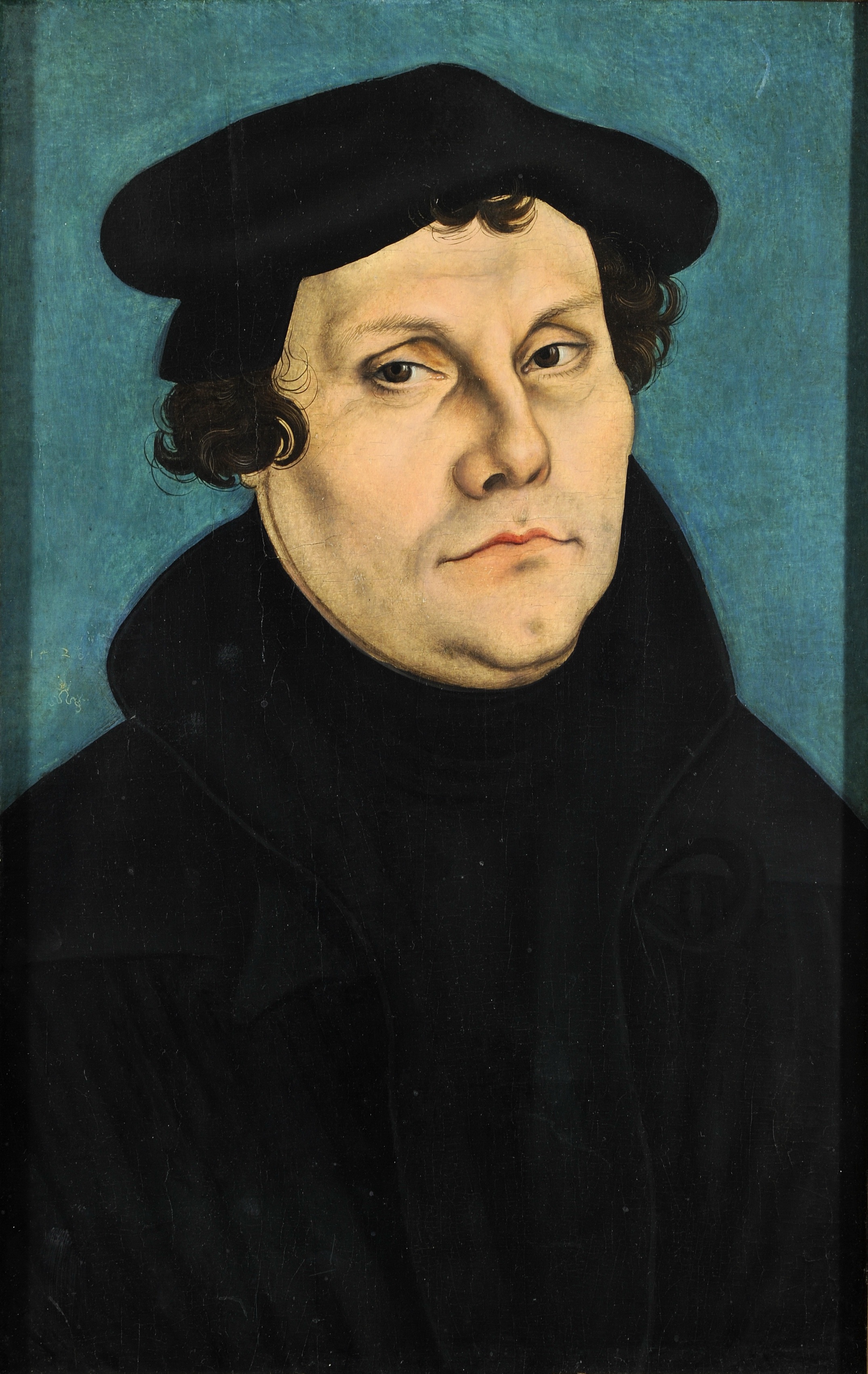
31 октября 1517 года монах и профессор богословия по имени Мартин Лютер прибил свои 95 тезисы к дверям церкви в Виттенберге. В те времена эта дверь служила доской объявлений для публичных дебатов. Люди обычно воспринимают это как начало Реформации.
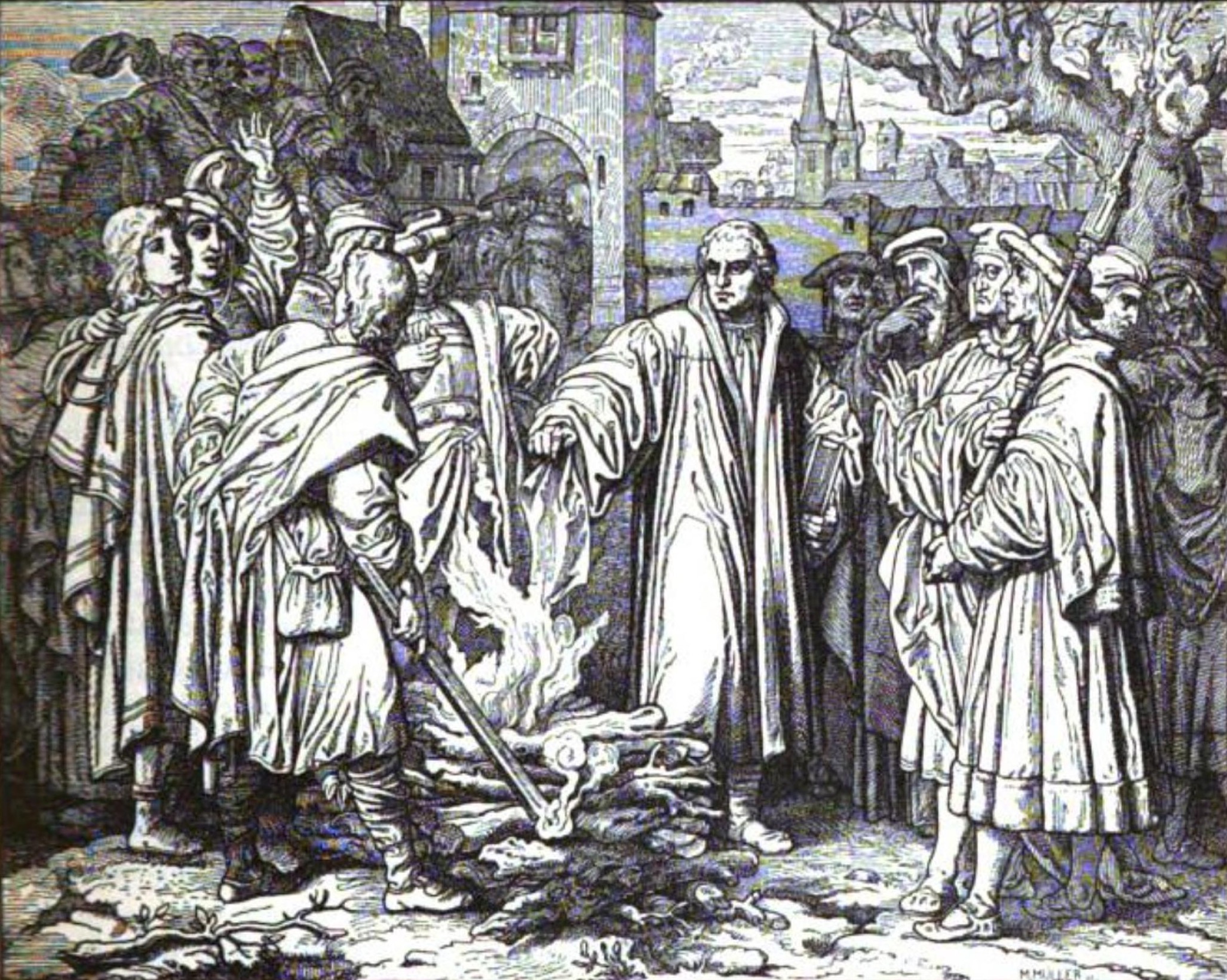
Но, по словам Поусона, есть более поздний момент, почти три года спустя, когда произошло нечто ещё более значимое. Это был день, когда Мартин Лютер устроил костёр.
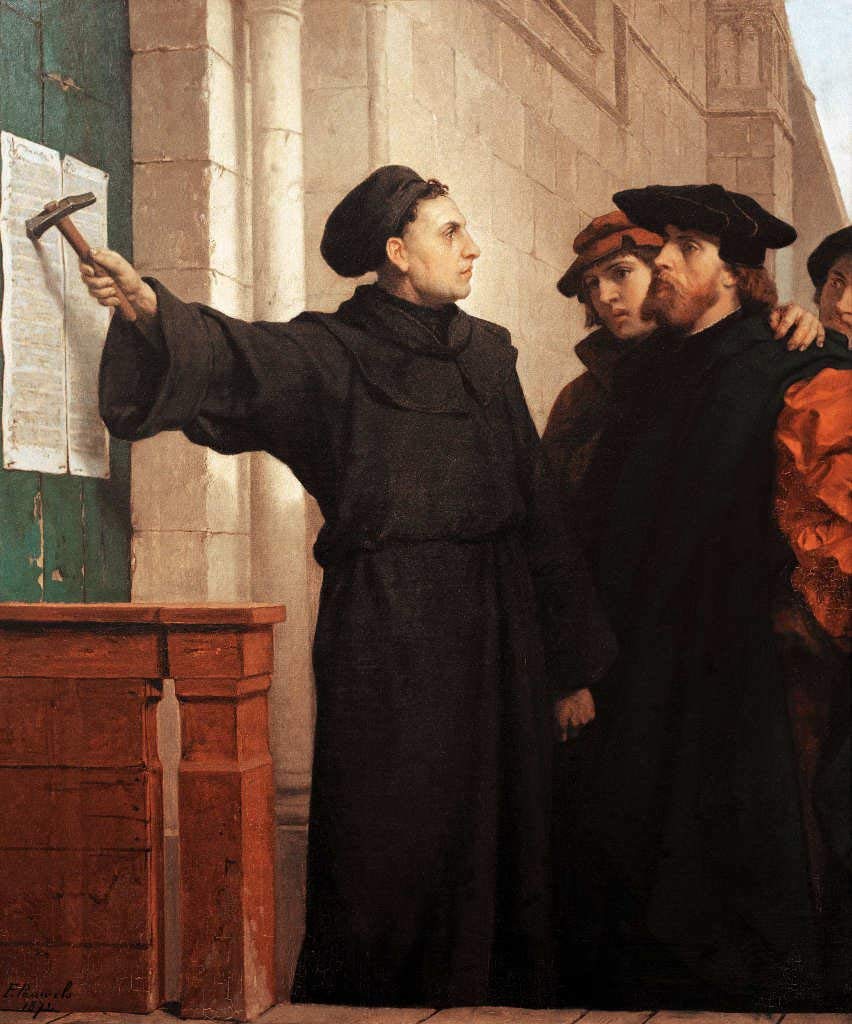
За эти три года Лютер перешёл от желания сделать церкви лишь генеральную уборку к желанию снести всю систему. Поначалу, выдвигая 95 Тезисы, он нападал только на злоупотребления, на продажу индульгенций, а не на саму систему. Один из его тезисов гласил: «Если бы Папа знал, как продавцы индульгенций обирают его паству, он предпочел бы, чтобы церковь Святого Петра была сожжена дотла, чем построена из шкур и костей его овец». Лютер наивно полагал, что Папа на его стороне.
Он быстро разочаровался, в том числе и в самом Папе. Поусон рассказывает об этом так: когда деньги на индульгенции из Германии сократились, папа отлучил его от церкви. Только тогда Лютер понял смысл происходящего. Вина была не в том, что несколько плохих людей управляли хорошей системой. Сама система была неправильной.
Поэтому он бросил в огонь три вещи:
- Пергамент с подписью папы, угрожавшей отлучением.
- Книга канонического права — кодекс, по которому он жил как монах и священник.
- Документ, который, как он теперь знал, был подделкой и использовался для утверждения права папства представлять Христа на земле.
Раньше он проводил генеральную уборку в церкви. Три года спустя он начал её сносить.
Реформировать или разрушить?
Поворот Лютера за три года (1517–1520)
Сначала Лютер хотел лишь навести порядок в системе. Через три года он понял, что проблема — сама система.
📜
31 октября 1517 года
95 тезисов в Виттенберге
- Цель: вызвать богословскую дискуссию.
- Нападение на злоупотребление (индульгенции), а не на систему.
- Он полагал, что папа согласится, если узнает правду.
🔥
10 декабря 1520 года
Сожжение папской буллы (Эльстерские ворота)
- Цель: полный разрыв.
- Сжёг буллу Exsurge Domine (угрозу отлучения).
- Сжёг также книги канонического права.
- Понял, что сама система ошибочна.
Пэусон считает, что костёр 1520 года был ещё значительнее, чем прибивание тезисов в 1517-м. (О датировке: булла Exsurge Domine издана в Риме 15 июня 1520 года; Лютер сжёг её в Виттенберге 10 декабря 1520 года; формальное отлучение последовало 3 января 1521 года.)
Что заставило монаха пойти на этот пожар?
Чтобы понять Лютера, вам придется вернуться к ужасу, который загнал его в монастырь. Поусон рассказывает: Однажды Лютер чуть не погиб во время грозы. Это заставило его бояться умереть, бояться предстать перед Богом со своими непрощенными грехами. И он отчаянно искал выход из этого страха.
Он молился святым, молился Марии, совершал паломничество, созерцал мощи и образы. Он сделал все это. И ничто из этого не давало ему никакой уверенности в том, что его грехи прощены. Позже его духовный наставник Иоганн фон Штаупиц задал ему решающий вопрос: «Если вы уберете все эти костыли шаткой веры, если вы уберете Марию, святых, образы, покаяние и паломничество, что вы поставите вместо них?» Ответ Лютера, как и в фильме, который только что посмотрели прихожане в церкви Поусона, заключался только в одном: «Иисус Христос. Человеку нужен только Иисус Христос».
Это было семенем всего, что произошло после.
Является ли Реформация мертвой проблемой?
В своей проповеди 1967 года, посвященной 450-летию Реформации, Поусон рассказывает две истории одновременно. Однажды он присутствовал на собрании протестантских служителей и членов, случайно упомянул Реформацию, и ему недвусмысленно сказали, что протестантов она больше не волнует. Они сказали, что это «мертвая история» и что поднимать её не следует. Он ушел со звоном в ушах.
Однако уже на следующих выходных его пригласили в римско-католическую семинарию в юго-восточной части Ирландии, чтобы поговорить с наставниками и лекторами, среди прочего, о Реформации. Они хотели услышать его мнение и устроить открытое обсуждение. Он сказал: "Я думаю, что вопросы, поднятые тогда, всё ещё живы и не решены". Они ответили: «Мы тоже так же думаем». Три часа дружеской беседы, потом хороший чай, потом домой.
Это исключительная позиция. Он мог обсуждать Реформацию с католиками, но не с протестантами. В двух словах ответ Поусона: Реформация не устарела. Не потому, что мы боремся с людьми, католиками или протестантами, а потому, что мы боремся с системами и «измами», которые ослепляют людей и мешают им видеть истину. При этом сегодня линия фронта проходит совсем иначе, чем во времена Лютера.
В этом величие Лютера. Он вновь открыл семь приоритетов — семь вещей, отодвинутых на второе место, — и вернул их на первое.
Семь приоритетов
Что Лютер поставил на первое место
Величие Лютера состояло в правильном выборе приоритетов. Семь вещей, отодвинутых на второе место, он вернул на первое.
Лучше повиноваться Божьему Слову в совести, чем уступать давлению церкви или государства. («Идти против совести небезопасно и нечестно».)
Единство без истины Евангелия бессмысленно. Спасает истина, а не учреждение.
Всякая церковная традиция (молитвы святым, чистилище…) должна проверяться Писанием (Sola Scriptura).
Не дела и не вера плюс дела. «Праведный верою жив будет» (Sola Fide). Спасение НЕ ЗА добрые дела, а ДЛЯ добрых дел.
Благодать не распределяется магически через таинства. Без веры таинства бесполезны. Он отвергает «магическое» понимание крещения и Вечери.
Всеобщее священство верующих. Оно стирает разделение духовенства и мирян. Служители выполняют другую функцию, но имеют не иной статус.
Есть только один Священник (Христос) и один Наместник (Святой Дух). Церковь не может заменить Христа. Тот, кто ставит себя на место Христа, — антихрист (вместо Христа).
Давайте пройдемся по приоритетам один за другим.
1. Совесть превыше власти
Лютер жил в эпоху, когда свобода совести практически не существовала. Не государство, а церковь говорила вам, во что верить и как себя вести. Чтобы представить себе этот мир, вспомните трагедию Галилея. Он открыл истины о Вселенной через свой телескоп, и ему сказали: «Вы не должны этому верить, вы не должны этому учить».
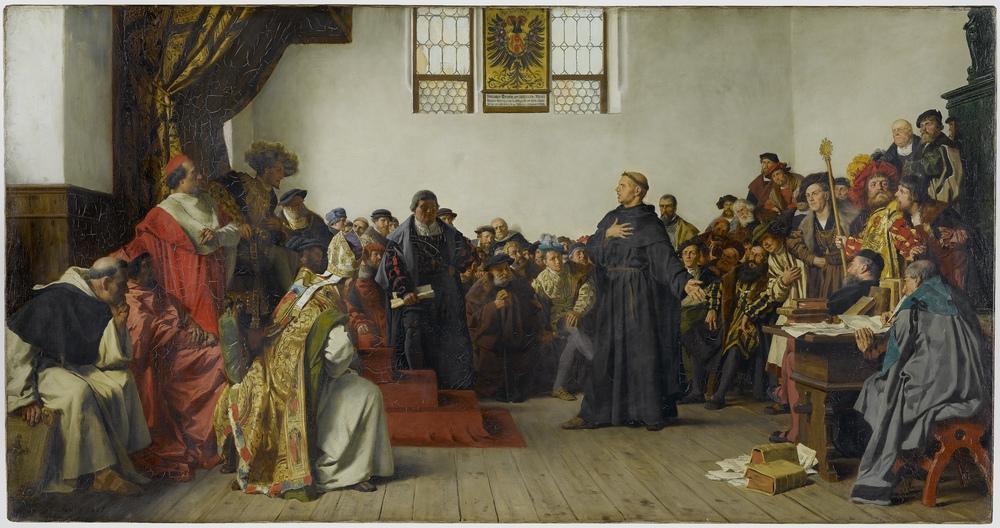
Лютер был человеком, который осмелился сказать: «Моя совесть пленна Слова Божьего. Идти против совести небезопасно и нечестно». На Вормском сейме (1521), перед императором и всей машиной церковной власти, он все равно не отрекся.
И это не дело далекого прошлого. На той самой неделе, когда он проповедовал, кто-то вручил ему газетную вырезку: более 200 диссидентов-баптистов в Советском Союзе заключены в тюрьму или ожидают суда за «нарушение» строгих религиозных законов. Один умер после пыток; их дети часами расспрашивали о вере своих родителей. Поусон отмечает, что, возможно, половина человечества все еще живет в тоталитарных государствах, которые претендуют и на разум, и на тело. Свободы совести, которую мы считаем само собой разумеющейся, у большей части человечества до сих пор нет.
Затем Поусон говорит, что миром никогда не управляют «медузы» без позвоночника, дрейфующие по течению. Им управляют люди, у которых хватает смелости отстаивать свои убеждения. И он резко предупреждает, что даже сегодняшние самозваные «нонконформисты» подражают друг другу с поразительной легкостью. Нам нужны люди, которые искренне осмеливаются стоять в стороне.
2. Истина прежде Единства
Одно из самых серьёзных обвинений, выдвинутых против Лютера, заключалось в том, что он расколол Церковь, что он был раскольник. Почти тысячу лет в Западной Европе была одна Церковь, одна деноминация. Ему сказали: откажись и оставь Церковь нетронутой; продолжай в том же духе, и ты разрушишь её.
Но Лютер ставил Истину выше Единства. Его совесть не была свободна следовать любой прихоти, потому что она была пленна Словом Божьим. Он ясно видел самое главное. Людей спасает не единство Церкви, а истина Евангелия. Объедините все церкви на земле завтра, и число спасенных не увеличится. Что действительно необходимо, так это истина Евангелия, проповедуемая в этих церквях.
Поусон говорит это прямо. В нашем веке есть один лозунг, на котором можно строить карьеру или за отказ от которого могут возненавидеть, и это слово — «единство». Целый мир сжимается из-за транспорта, и Церковь, кажется, уловила это эхо, крича «единство, единство, единство». Он рассказывает подробности, которые ему нравятся. Когда Британский совет церквей в Ноттингеме заявил, что разногласия можно уладить изнутри уже объединённой церкви, только Союз баптистов среди конфессий ответил, что нет, их нужно разрешить сначала, а затем объединиться. Это ставит истину выше единства.
3. Священное Писание до традиции
Поусон называет поразительную деталь: Лютеру было 20 лет, прежде чем он впервые взял в руки и прочитал полную Библию. Он был воспитан набожным, подготовленным к святой жизни, но только когда ему исполнилось 20, он увидел эту книгу. И когда он прочитал это, он был поражен. Так многое из того, что ему говорили, было «жизненно важной частью» христианской веры и практики, было просто не в этом. Ни молитв Марии и святым, ни мощей и образов, ни чистилища, ни покаяния.
Он спросил: откуда все это взялось? Официальный ответ заключался в том, что это Традиция Церкви, а Предание — такое же Слово Божие, как и эта книга. Лютер предстал перед двумя «Словами Божьими», написанными и устными, и ему было сказано принять оба. Но он пришёл к выводу: Только эта книга — истина, и каждая традиция каждой церкви должна быть приведена к пробному камню Писания и проверена им. Как только он это сделал, он начал отбрасывать традиции.
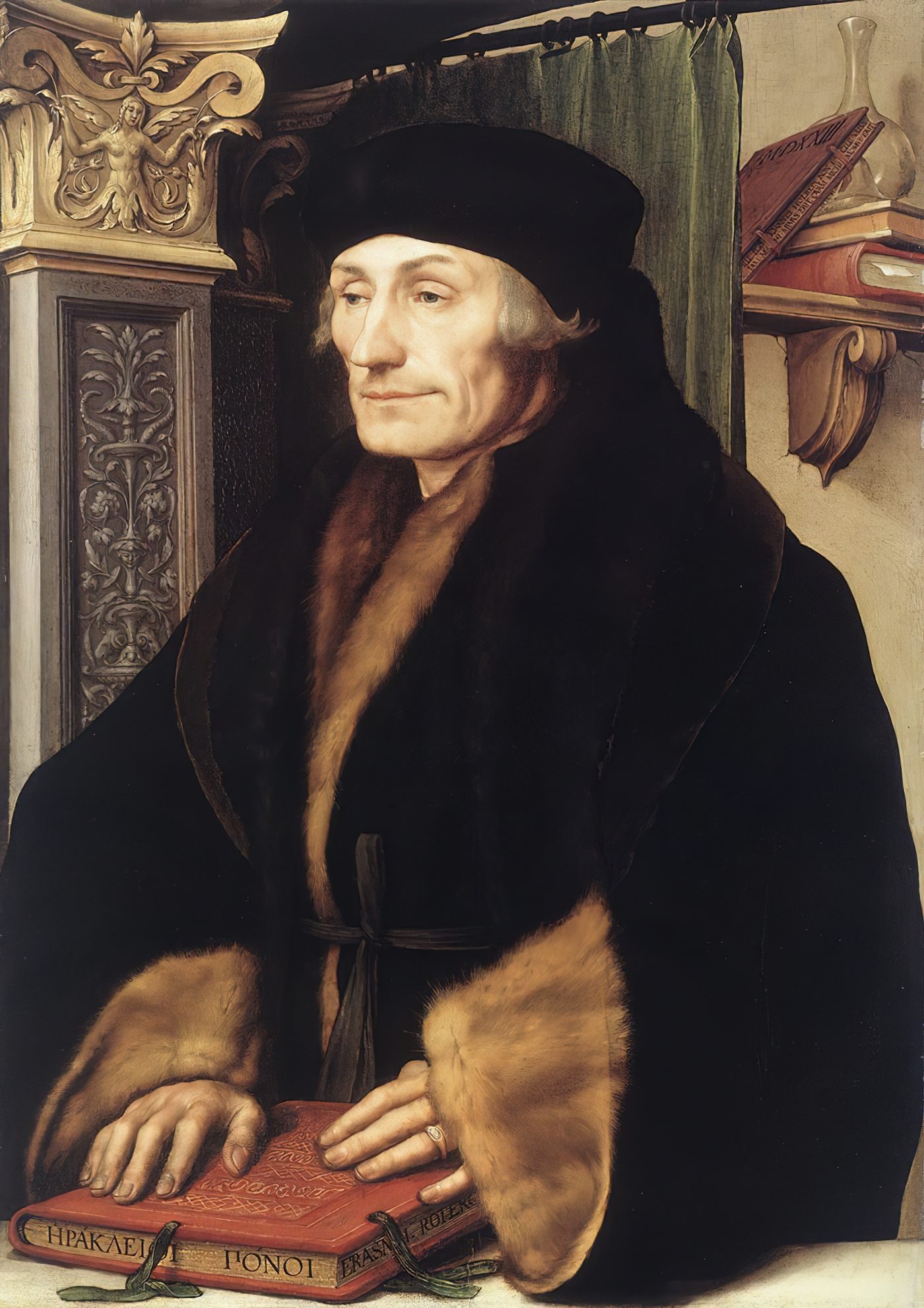
Поусон откровенно признает, что даже в его собственной церкви есть небиблейские традиции, и все они должны подчиняться Слову Божьему. Он рассказывает о друге (названном на записи как-то вроде «Эдуардо Любинке», имя, которое я не смог проверить ни в одном независимом источнике и которое, скорее всего, является ошибкой транскрипции), некогда профессоре Нового Завета для лучших римских священников-иезуитов. Чем больше тот изучал Священное Писание, тем меньше мог продолжать учить студентов тому, чего не было в этой книге, хотя и признавал её «Словом Божьим». Поэтому он сам отказался от этой кафедры — точно так же, как Лютер, который 450 лет назад тоже был профессором богословия. Эта книга сделала своё дело.
4. Вера прежде дел (Sola Fide)
Это самый большой вопрос, который может задать человек, и для Лютера это был вопрос жизни и смерти: Как мне наладить отношения с Богом? Как прощаются мои грехи? Старая гроза заставила его бояться умереть с непрощенными грехами, так что это не было теорией.
Когда Джон Тецель начал продавать индульгенции, Лютер был уверен, что это не тот путь. Вы не можете купить прощение. Затем он сделал еще один шаг: если вы не можете это купить, вы не сможете и зарабатывать это по заслугам. Поусон предлагает три ответа на вопрос, как попасть на небеса, и каждая религия попадает в один из них:
- Мир говорит: делайте добрые дела.
- Церковь его времени говорила: вам нужна вера плюс добрые дела.
- Лютер говорил: нужно только одно — верить.
Манифест Реформации, простирающийся от Ветхого Завета через Новый и далее к Лютеру, таков: «Праведный верою жив будет». Не добрыми делами, не верой, смешанной с делами, но вера — и точка. Латинское выражение sola fide («только вера») стало великим знаменем Реформации.
Так какую же роль играют добрые дела? Лютер выразил это великолепно, а Поусон говорит, что лучше и не скажешь: Мы спасаемся НЕ добрыми делами, а ДЛЯ добрых дел. Вы не делаете добрых дел, чтобы зарабатывать билет в рай; вы делаете их потому что уже попадёте в рай.
Пять «только»
Пять лозунгов, выражающих суть Реформации
Позднее семь приоритетов Лютера свели к пяти латинским лозунгам «sola / solus» («только»). Честно говоря, оформление «пяти только» как единого списка — систематизация XIX–XX веков, а не готовый лозунг XVI века; но каждая идея действительно укоренена в самих реформаторах.
Sola Scriptura · Только Писание
Только Писание — высшая и непогрешимая власть в вопросах веры.
Возражение: Католики и православные: Писание нельзя отделить от Предания Церкви, которая его породила.
Sola Fide · Только вера
Человек оправдывается только верой, а не заслугами.
Возражение: Тридент (1547): «живая» вера должна включать дела; осуждает «веру, которой больше ничего не нужно».
Sola Gratia · Только благодать
Спасение целиком является незаслуженным даром Бога.
Возражение: Самая широкая общая почва: даже Тридент (VI сессия, 1547) учит о благодати как о незаслуженном начале; это подтверждено JDDJ в 1999 году.
Solus Christus · Только Христос
Только Христос — единственный посредник между Богом и человеком.
Возражение: Спорно: посредническая роль Церкви, святых и Марии в католической и православной традиции.
Soli Deo Gloria · Только Богу слава
Вся слава принадлежит одному Богу.
Возражение: Наименее спорное положение, но оно лежит в основе отказа от чрезмерного почитания лиц и учреждений.
5. Благодать перед Таинствами
Лютера воспитали с верой в то, что благодать разделяется на семь таинств (Поусон говорит, что когда-то их число достигало четырнадцати, а затем упало до семи) и что они действовали автоматически, как по волшебству, независимо от того, кто их применял или получал. Крещальная вода автоматически спасала ничего не знающего младенца. Хлеб и вино в определенный момент службы автоматически становились телом и кровью Христа, а затем священник приносил их как жертву — не на столе, а на алтаре.
Лютер обдумал это и сказал: Я знаю, что мне нужна Божья благодать, но в этой книге нет ничего, что могло бы сказать мне, что благодать заключена в таинствах, которые действуют автоматически. Он понял: без веры таинства бесполезны. «Благодатью вы спасены через веру», а не через таинства. Благодать не упакована; она течёт, как река. Самый простой верующий, никогда не крещеный и не причащавшийся Вечери Господней, но с верой все же познает благодать Божию. Поусон указывает на своих друзей из Армии Спасения. У них вообще нет таинств, но явно есть благодать; они всегда поют об этом.
Что касается двух таинств, которые соблюдал Лютер (крещение и Вечеря Господня), Поусон честно признает то, что даже самые близкие друзья Лютера должны были признать: он никогда не продумывал этот вопрос до логического конца и немного запутался в обоих. Правильно он расставил порядок: на первом месте благодать, на втором — таинства.
6. Люди перед священниками (Священство всех верующих)
Церковь, в которой родился Лютер, была пирамидой власти. Наверху стоял папа, ниже — кардиналы, епископы, монашеские ордена и приходской священник, а в самом низу — миряне. Разделение между «духовенством» и «мирянами» было настолько жёстким, что различались даже одежда и места в церковном здании: одни носили облачения, другие — обычную одежду.
Поусон пересказывает, как Лютер посмотрел на пирамиду и спросил сверху вниз. Какое библейское оправдание существует для одного человека там, наверху? Никто. Для епископов? Никто. Для посредничества священников? Никто. Затем он пришел к чудесному открытию: священство всех верующих. Он сделал всякого мирянина священником и всякого священника мирянином, потому что между ними вообще не было духовного разделения. Да, между ними оставались функциональные различия — как между разными органами одного тела. Поэтому он называл их «служителями», а не «священниками». Каждый верующий – священник.
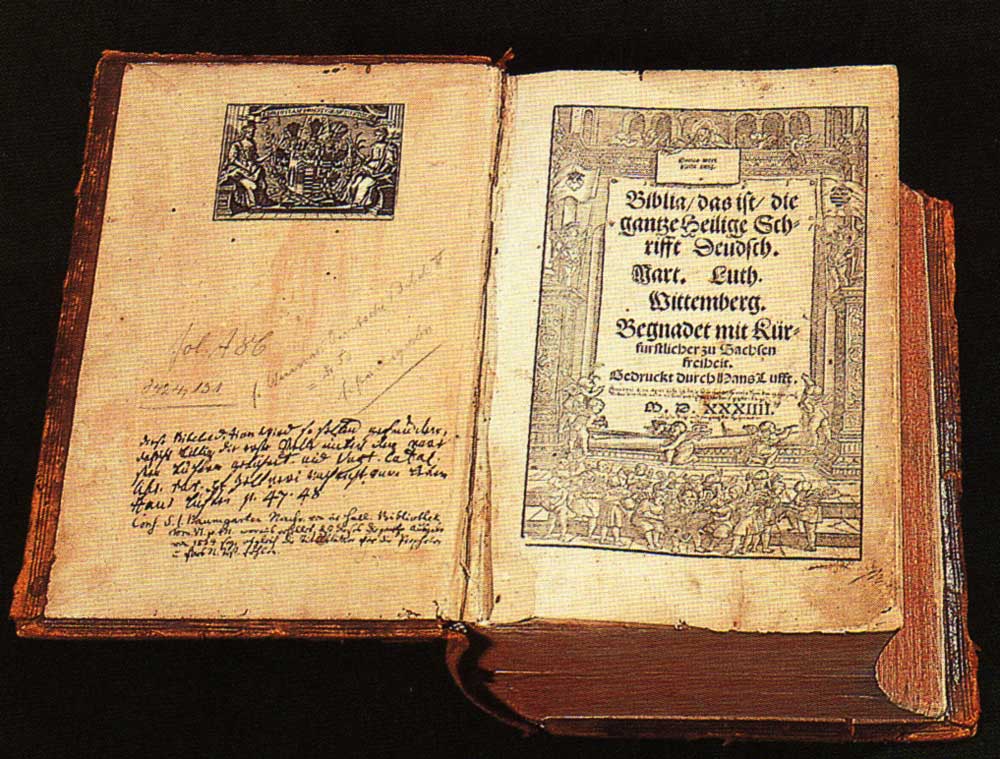
Вот почему он трудился над переводом Библии на обычный немецкий язык, чтобы передать её в руки людей, а не только священников. По его словам, служанка, подметающая комнату метлой, могла понять Слово лучше, чем священник. Поусон отмечает, что две трети исповедующих христианство в мире все еще живут под священством и иерархическим контролем, поэтому этот протест все еще необходим.
Священство всех верующих
Разрушение пирамиды власти
Средневековая церковь была пирамидой: миряне внизу, папа наверху. Лютер заявил: среднего класса нет. Все — священники.
Структура до Реформации
Идеал Реформации
7. Христос перед Церковью
Это кульминация. Поусон вспоминает, что, когда он спросил преподавателя истории церкви в католической семинарии, в чем заключалась самая большая проблема Реформации, они оба согласились. Самая большая проблема заключалась в следующем: Лютер бросил вызов самой идее, что Христос и Церковь едины, идею о том, что Церковь может сделать для людей то, что может сделать только Христос. Тело, то есть Церковь, заняло место Главы, то есть Христа.
Поусон объясняет это через три служения:
- Мне нужен пророк, который научил бы меня непогрешимой истине Бога. Кто мой пророк? Рим говорит: тело, непогрешимая Церковь. Лютер говорит: Глава.
- Мне нужен священник, чтобы прийти к Богу. Кто мой священник? Рим говорит: тело, исповедуй грехи свои перед Церковью. Лютер говорит: Христос на небесах, и вы можете прийти к Богу в любое время через Него.
- Мне нужен король, который будет управлять мной. Кто мой король? Рим говорит: тело на земле. Лютер говорит: Моя Глава на небесах.
Поэтому Лютер осмелился призвать папство «Антихрист». Поусон осторожно объясняет: он не имел в виду, что папа лично был против Христа. В своём первоначальном смысле слово «анти» означает вместо, на месте. Тот, кто ставит себя на место Христа, — антихрист. Рим говорил людям, что для того, чтобы прийти к Богу, они должны пройти через это, а это значит поставить себя на Его место.
Тогда Рим возразил важным аргументом. Когда Глава находится на небесах и кто-то на земле хочет прийти, не должны ли они прийти через тело? Разве папа не может быть Христовым наместником на земле, стоящим на Его месте, чтобы передавать то, чему Он учит? Лютер обдумал это и ответил: да, у Христа должен быть наместник на земле, который мог бы говорить от Его имени, но этот наместник — Святой Дух, а не папа. Итак: «Нет священника, кроме Христа, и нет наместника, кроме Святого Духа».
Поусон делает это очень практично. Именно поэтому у стен его баптистской церкви нет исповедальни. «Я не могу простить ваши грехи, как и баптистская церковь Голд-Хилл. Если вам нужно исповедоваться в грехах, идите прямо к небесному священнику, которым является Сам Христос».
Огонь вырывается из рук Лютера
Поусон проповедует в основном о Лютере, потому что Лютер зажег фитиль. Но огонь быстро вырвался из его рук. В течение одного поколения Реформация разделилась на несколько потоков, каждый из которых имел свой город, своего лидера и свои акценты. Некоторые вступили в союз друг с другом; некоторые так сильно ссорились, что так и не помирились. Если вы слышите только о Лютере, вы можете подумать, что Реформация представляла собой один сплошной блок. Это не так.
Не один человек
Другие лица Реформации
Пэусон в основном говорит о Лютере, потому что Лютер зажёг фитиль. Но огонь быстро вышел из-под его контроля. За одно поколение Реформация разделилась на несколько потоков, каждый со своим городом, лидером и акцентом.
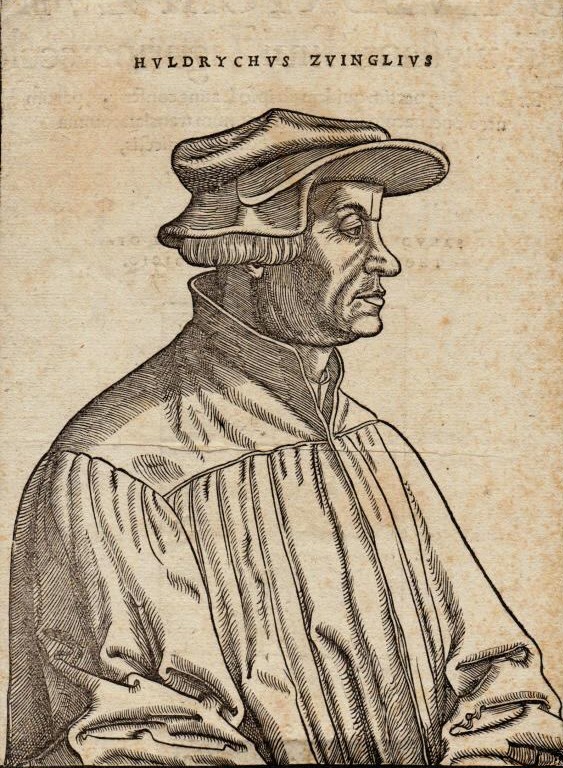
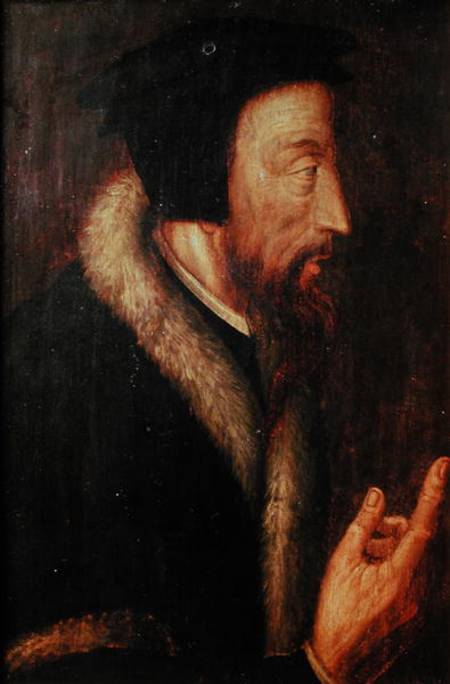
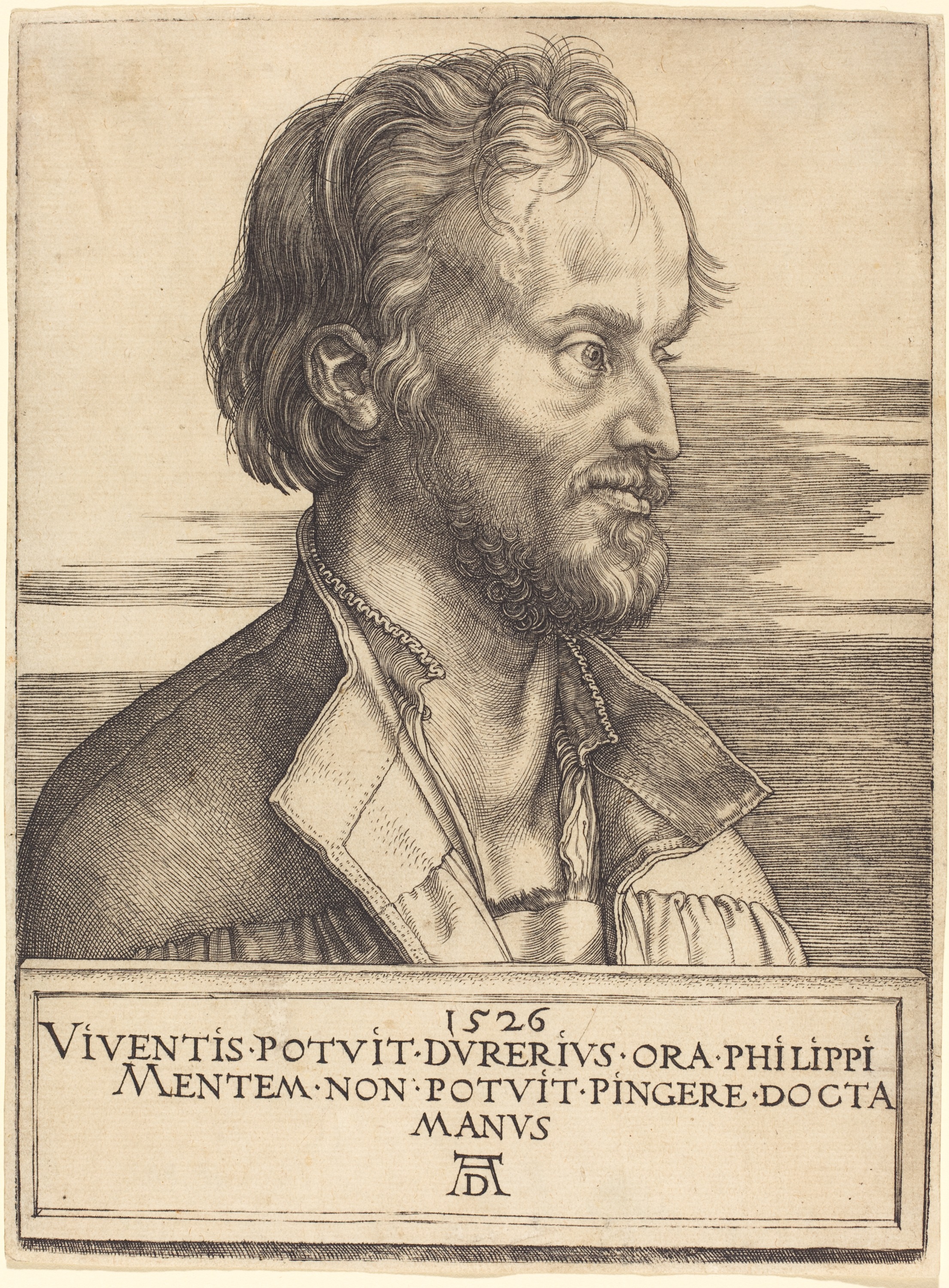
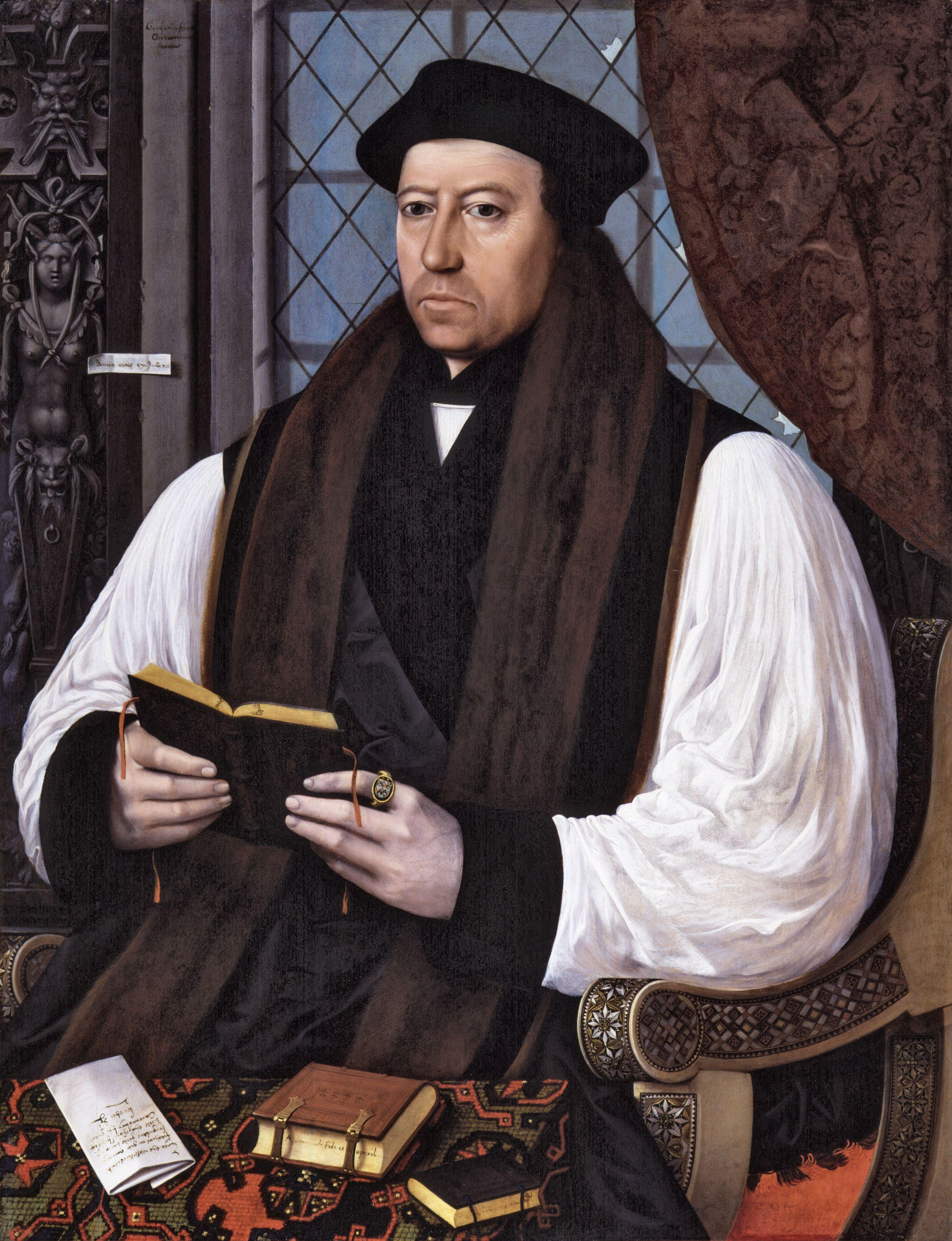
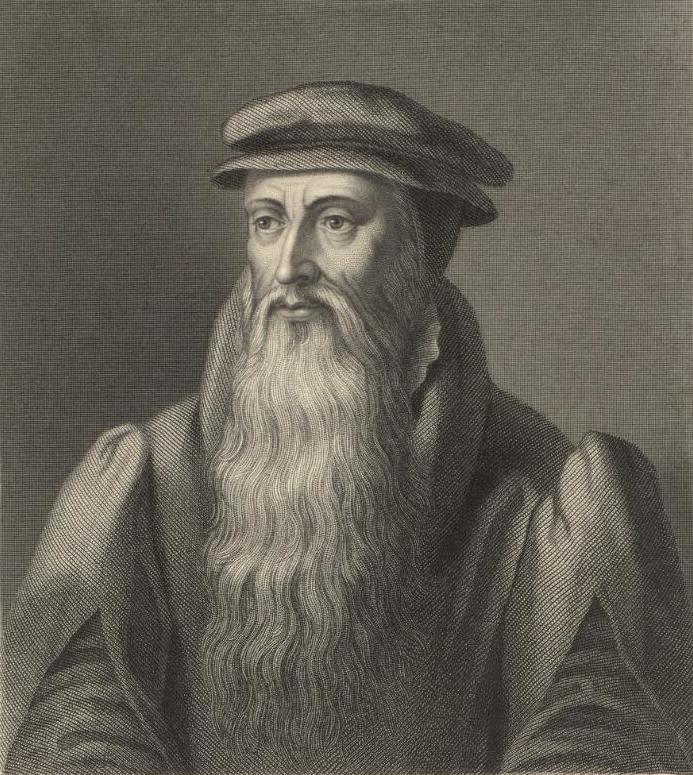
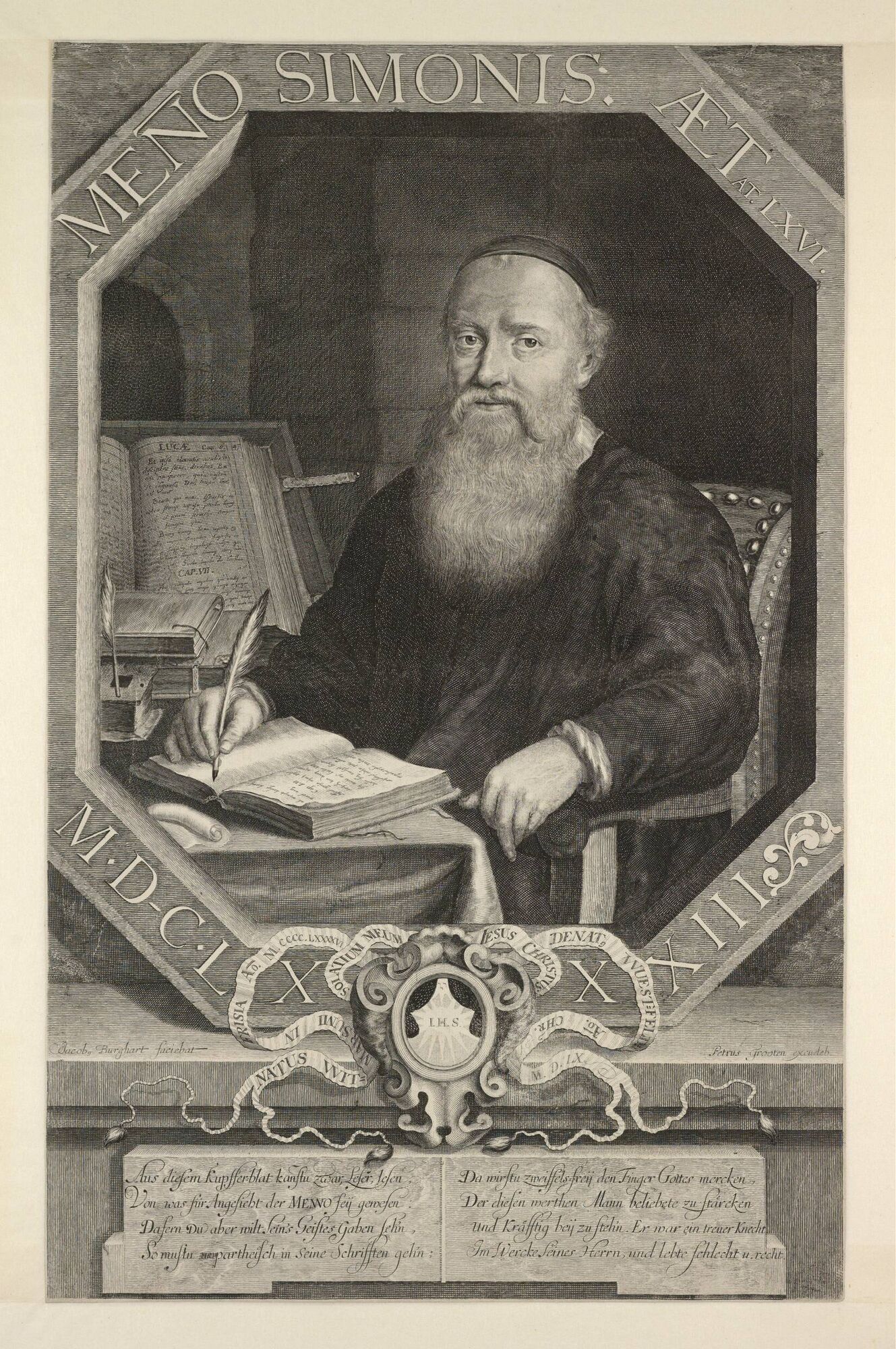
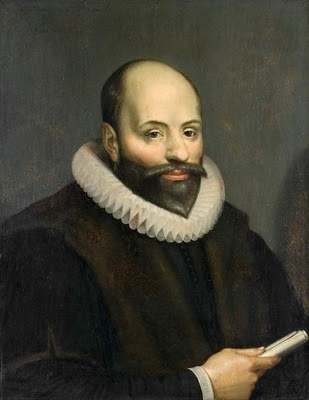
Портреты: все общественное достояние (Wikimedia Commons). Нокс и Менон Симонс — позднейшие гравюры, поскольку прижизненных изображений не сохранилось.
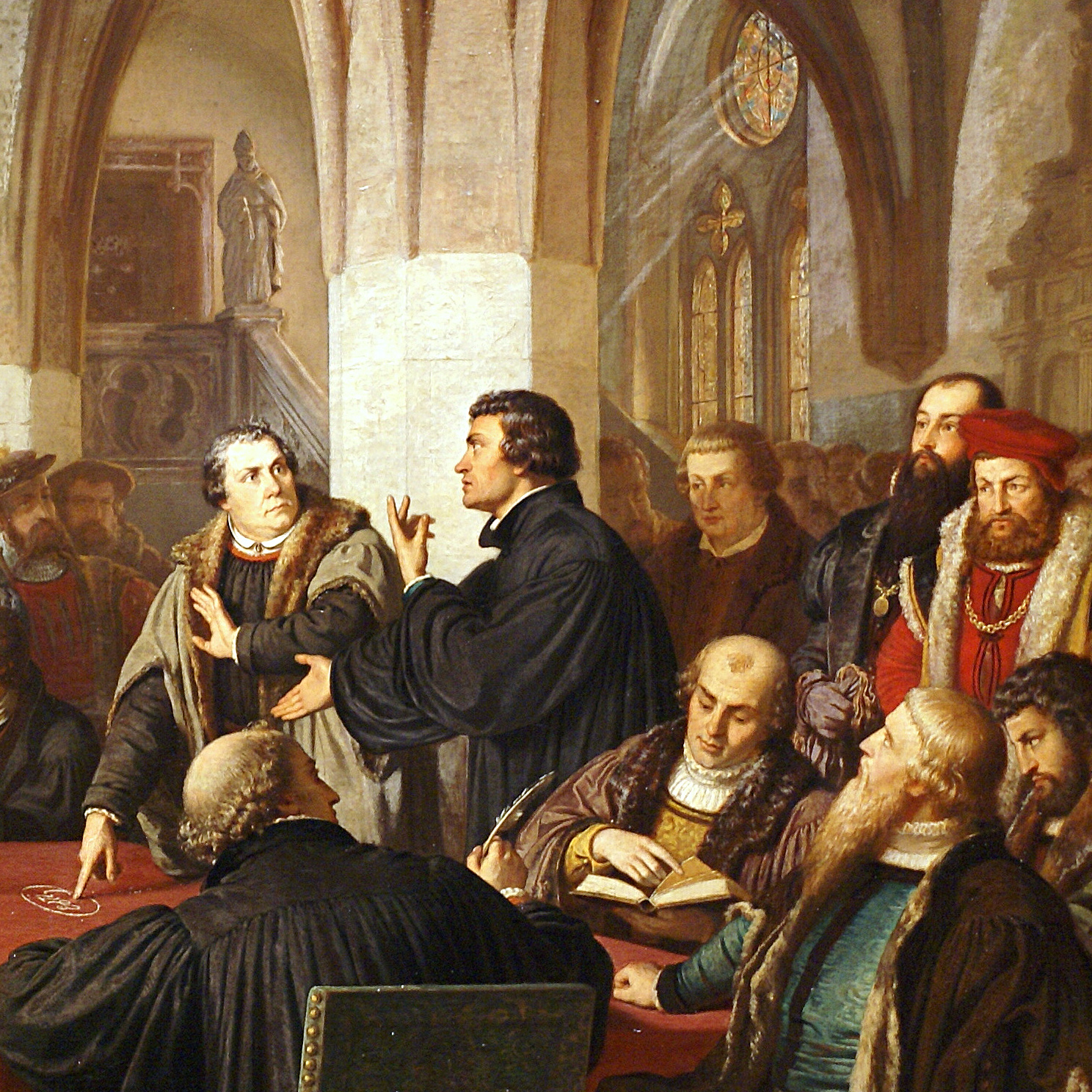
Цвингли и раскол из-за Вечери Господней. В Цюрихе Хульдрих Цвингли возглавил реформу независимо от Лютера. Они согласились почти во всем и задали только один вопрос: что происходит с хлебом и вином на Вечере Господней? На Марбургском коллоквиуме (1529) они согласовали 14 из 15 статей, а затем остановились на последней. Лютер цеплялся за слово «ЕСТЬ» в «Это моё тело». Он нарисовал мелом Hoc est corpus meum («Это мое тело») на столе и не сдвинулся с места. Цвингли считал, что это лишь памятный символ. Они не пожимали друг другу руки. Единый протестантский фронт рухнул прямо там. Это болезненная иллюстрация самого принципа «истина превыше единства», показывающая, насколько тонка грань между защитой истины и расколом Церкви.
Кальвин и Женева. Поколение спустя француз Жан Кальвин систематизировал протестантское богословие в своей книге Наставление в христианской вере и сделал Женеву «школой Христа», куда направляла своих людей вся Европа. Он подчеркивал абсолютный суверенитет Бога в спасении.
«Сие есть тело Моё»
Четыре способа понимать Вечерю Господню и раскол в Марбурге
Ничто не разделяло протестантов между собой (и с Римом) глубже, чем вопрос: что происходит с хлебом и вином? На Марбургском диспуте (1529) Лютер и Цвингли согласились по 14 из 15 статей, но столкнулись на этой. Лютер написал мелом на столе «Hoc est corpus meum» («Сие ЕСТЬ тело Моё») и не отступил. Единый протестантский фронт распался именно там.
Католики
Рим / Тридент
Пресуществление
Сущность хлеба и вина действительно превращается в тело и кровь Христа; остаются лишь внешние «акциденции».
Лютер
Виттенберг
Таинственный союз («в, с, под»)
Тело Христа действительно присутствует «в, с и под» хлебом и вином, но хлеб остаётся хлебом. (Лютер отвергал термин «сосуществование».)
Кальвин
Женева
Духовное реальное присутствие (Духом)
Верующие действительно получают Христа, но верой и через Духа, возносящего их к Христу на небесах.
Цвингли
Цюрих
Воспоминание / символ
Хлеб и вино — лишь памятные знаки. «Сие ЕСТЬ тело Моё» означает «это ЗНАЧИТ моё тело».
Слева (наиболее физическое присутствие) направо (чистый символ). Это разногласие не позволило лютеранской и реформатской ветвям полностью объединиться.
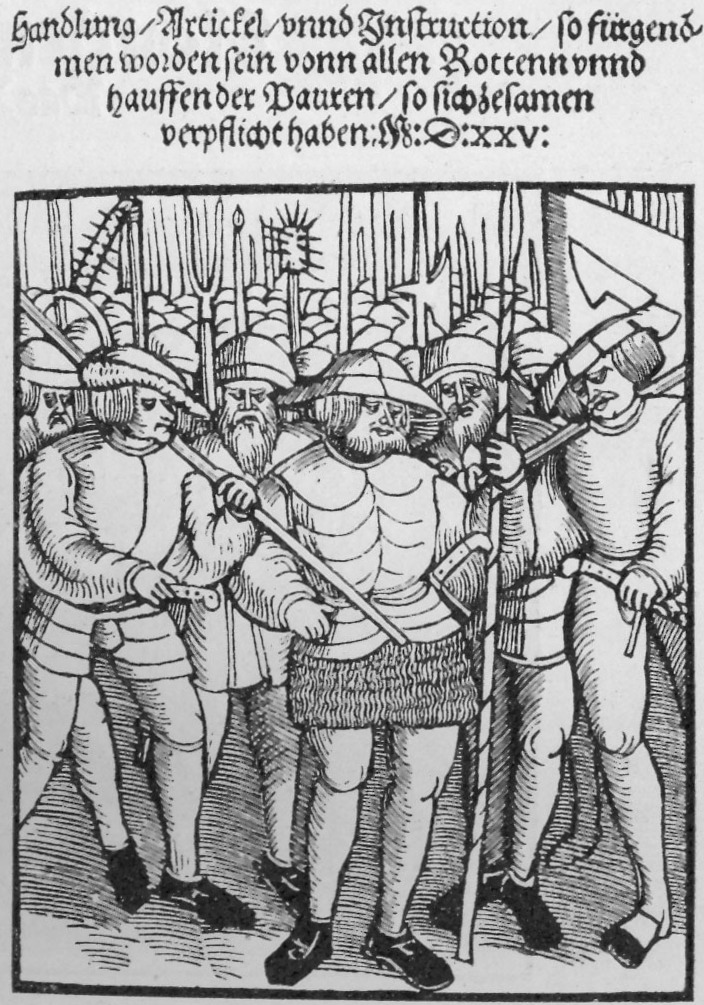
«Радикалы» и их цена. Тогда некоторые увидели, что ни Лютер, ни Цвингли не зашли достаточно далеко. Если только Священное Писание является авторитетным, спросили они, то где в Новом Завете крещение младенца? В январе 1525 в Цюрихе впервые крестили взрослых верующих, поэтому их назвали анабаптистами, что означает «перекрещенцы». Они отстаивали Церковь добровольно верующих, отдельной от государства, отказываясь от меча и клятвы. Позже Менно Симонс придал разрушенному движению мирный, ненасильственный характер, и от него произошло название «меннониты».
Цена, которую они заплатили, была ужасной, и её взыскали обе стороны. В те же годы (1524–25) разразилась «Крестьянская война», когда немецкие крестьяне использовали лозунги «священство всех верующих» и «только Писание», чтобы настоять на своих требованиях. Лютер никогда не планировал такого использования, и он отреагировал яростно, полностью приняв сторону знати.
Кальвин, Арминий и война за предопределение. Прошло ещё одно поколение, и сам реформатский лагерь раскололся из-за болезненного вопроса: совершает ли Бог всё в деле спасения (кого Он изберёт, тот и спасётся), или человек вносит свой вклад собственной свободной верой? Голландский богослов Якоб Арминий бросил вызов безусловному предопределению Кальвина. После его смерти его последователи составили в 1610 году Ремонстрацию из пяти пунктов. Синод Дорта (1618–19) собрался, осудил арминианскую партию и сформулировал «Пять пунктов кальвинизма», которые позже стали известны под аббревиатурой ТЮЛЬПАН.
Кто кого избирает?
Кальвин против Арминия: предопределение против свободной воли
Через поколение после Лютера протестантизм внутренне разделился из-за мучительного вопроса: в спасении Бог делает всё (монергизм) или Бог и человек сотрудничают (синергизм)? Дортский синод (1618–19) осудил арминианскую партию и сформулировал «пять пунктов кальвинизма», позже известных под акронимом TULIP (название XX века).
Избрание
Искупление
Человеческая природа
Благодать
Стойкость
TULIP = полная испорченность · безусловное избрание · ограниченное искупление · неодолимая благодать · стойкость. Арминианская «Ремонстрация» (1610) предложила ровно пять возражений.
Век в огне
Как распространялась Реформация (1517–1619)
От одного монаха в одном немецком городе за столетие огонь достиг Швейцарии, Англии, Шотландии и Нидерландов и заставил сам Рим реформироваться.
Два других кресла: Рим и Константинополь.
Поусон проповедует с протестантской кафедры, решительно и ясно. Но сам он говорит, что проблемы Реформации "все еще живы и не решены". И лучший способ услышать их полностью — пододвинуть два других стула.
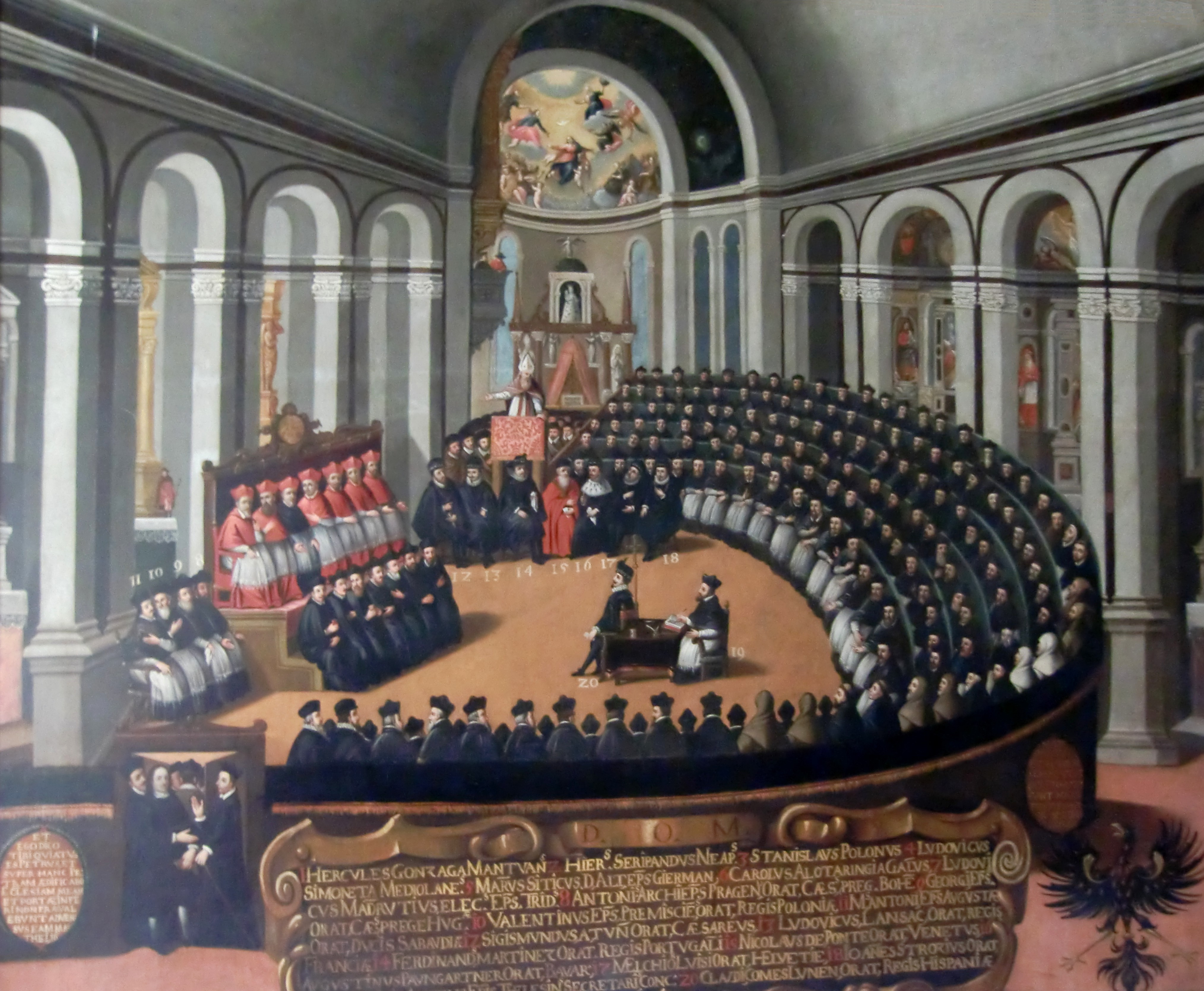
Ответ Рима: Тридентский собор. Окончательным католическим доктринальным ответом стал Тридентский собор (1545–1563). Здесь важна справедливость, потому что протестанты часто карикатурно изображают Трента как «спасение делами». Фактически Трент учит, что благодать — это незаслуженное начало («если по благодати, то не по делам»), но человек должен свободно сотрудничать с этой благодатью, и эта вера должна быть живой верой, соединенной с любовью и добрыми делами. Тридент осудил sola fide в смысле «одна вера, больше ничего не требуется». Он подтвердил и Писание, и Предание (с «равным благочестием»), семь таинств и пресуществление. Что касается индульгенций, то Тридент не отменил их как таковые, но отменил их продажу ради прибыли — именно это осуждали 95 тезисов. Остриём этого обновления стали иезуиты Игнатия Лойолы, утверждённые в 1540 году.
История не заканчивается в XVI веке. В 1999 году Совместная декларация о доктрине оправдания (JDDJ) между Католической церковью и Всемирной лютеранской федерацией провозгласила консенсус по основным истинам: «только по благодати, по вере в спасительное дело Христово, а не по каким-либо заслугам с нашей стороны мы приняты Богом». В июньском интервью 2016 Папа Франциск заявил, что «намерения Лютера не были ошибочными»; он был «реформатором», хотя «некоторые методы были неправильными». Позже в том же году, 31 октября 2016 года, Франциск и Всемирная лютеранская федерация совместно провели празднование 500-летия Реформации в Лунде, Швеция.
Ответ Константинополя: решительное молчание. Третья кафедра – восточное православие, о котором обычно забывают как протестанты, так и католики. Примерно между 1573 и 1581 годами лютеранские богословы из Тюбингена отправили Аугсбургское исповедание (переведённое на греческий язык) патриарху Иеремии II в Константинополе, надеясь найти общий язык. Он ответил тремя письмами, поочерёдно отвергая основные протестантские особенности. Он отверг sola fide («Церковь требует живой веры, проявляющейся в добрых делах») и sola scriptura (Писание не может быть истолковано отдельно от Отцов), затем вежливо завершил переписку.
Для православия спасение — не юридический приговор и не простое объявление человека праведным, а обожение, то есть обожествление: реальный процесс участия в жизни Бога. Это синергия, то есть сотрудничество: «Бог не спасает человека против его воли». Таким образом, православие рассматривает сам спор «вера против дел» как западную юридическую схему, которую оно никогда не принимало. Позже, когда один патриарх (Кирилл Лукарис) составил исповедание, в значительной степени склоняющееся к Кальвину, православие осудило это исповедание на Иерусалимском синоде (1672). Иными словами, православие формально отвергло и Лютера, и Кальвина.
Три кафедры
Дебат ведётся с трёх сторон, а не с двух
Пэусон проповедует с протестантской кафедры. Но чтобы услышать все стороны, поставьте рядом с ней две другие. Сюрприз: все три учат, что благодать необходима и незаслуженна; карикатура «протестанты верят в благодать, католики и православные считают, что небо зарабатывается» ложна во всех трёх случаях. Настоящие линии разлома — власть и смысл оправдания.
Православие формально отвергло И Лютера (переписка с Иеремией II, 1573–81), И Кальвина (Иерусалимский собор, 1672).
Тогда зачем бороться?
К этому моменту у многих возникнет вопрос, который сам Поусон поднимает в конце проповеди. Зачем копаться в этих доктринальных вопросах? Почему бы не пойти на компромисс ради мира и единства, когда все дружны и поклоняются одному и тому же Богу? Не являются ли это мелкими доктринальными придирками и возвращением в тёмные века?
Ответ Поусона резкий и тяжелый: Потому что на кону стоит спасение бессмертных душ. Если вы скажете человеку, что крещение в воде автоматически спасает его, вы проклянете его. Если вы скажете ему, что добрые дела принесут ему небеса, вы укажете ему неверный путь. Это не религиозная гордость. Ничто не имеет большего значения, чем истина, которая приводит людей к вечной жизни. Ложный мир на земле не стоит вечного предназначения тысяч душ.
Но здесь Поусон заставляет нас остановиться. Линия фронта сегодня больше не проходит между протестантами и католиками. Поусон говорит это прямо: битва теперь идёт между евангелистами, с одной стороны, и многими протестантами и католиками — с другой, и эта линия пересекает каждую конфессиональную этикетку. Он цитирует книгу французского профессора: Наследники Реформации, который спрашивает: кто истинные наследники Мартина Лютера? Не «протестанты» вообще, а те, кто, как бы их ни называли, ставят Писание превыше всего и Христа выше всех. И потому, говорит Поусон, те, кто направляет огонь лишь в одну сторону, устарели. Он ясен: «Я не против католиков и не против протестантов. Я против измов, против систем. Я хочу любить людей, кем бы они ни были». Он рассказывает, как в его сердце возникла искренняя любовь к католическим наставникам, с которыми он разговаривал, — любовь к ним как к людям.
Нет священника, кроме Христа, и нет наместника, кроме Святого Духа. Отведите взгляд от всех остальных. Когда фон Штаупиц спросил Лютера, что бы он поставил на место Марии, святых, изображений и покаяния, он ответил: Иисуса Христа. Человеку нужен только Иисус Христос.
Вот почему Поусон благодарит Бога за Мартина Лютера, за его честность, за смелость стоять в одиночку за то, что, как он знал, было правильным и истинным. И он молится, чтобы Бог поднял больше таких людей, которые в любви провозгласят истину и скажут: Вот я стою и не могу поступить иначе. Идти против совести небезопасно и нечестно. Моя совесть пленна Слову Божьему.
Совесть превыше власти. Истина прежде единства. Писание прежде традиции. Вера прежде дела. Благодать перед таинствами. Люди перед священниками, и каждый верующий становится священником. И прежде всего: Христос прежде Церкви, прежде всех и всего остального.
David Pawson's sermon on the Reformation opens not with a date but with a letter. He reads Paul’s letter to the Galatians onward. It is the epistle Martin Luther loved most, the one on which he wrote a very fine commentary. "A man is justified, not by works of the law, but through faith in Jesus Christ… because by works of the law shall no one be justified." Pawson says those words meant a great deal at the time of the Reformation, over 450 years ago.
On October 31, 1517, a monk and professor of theology named Martin Luther nailed his 95 Theses to the church door in Wittenberg. In those days that door served as a notice board for public debate. People usually treat this as the beginning of the Reformation.
But according to Pawson, there is a later date, nearly three years on, that matters even more. It is the day Martin Luther had a bonfire.
In those three years, Luther moved from wanting to spring clean the church to wanting to demolish the whole system. At first, nailing up the 95 Theses, he attacked only the abuse, the sale of indulgences, not the system itself. One of his theses read: "If the Pope knew how the sellers of indulgences fleece his flock, he would rather St. Peter's church were burnt to ashes than built up out of the skin and bones of his sheep." Luther naively assumed the Pope was on his side.
He was quickly disillusioned, and by the Pope himself. Pawson tells it this way: when the indulgence money from Germany dropped, the Pope excommunicated him. Only then did Luther grasp it. The fault was not a few bad men running a good system. The system itself was wrong.
So he threw three things on the fire:
- The parchment with the Pope's signature, threatening excommunication.
- A book of Canon Law, the code by which he had lived as a monk and priest.
- A document he now knew to be a forgery, used to claim the papacy's right to represent Christ on earth.
Before, he was giving the Church a spring clean. Three years later, he began to tear it down.
Kit's note
A correction on the dating. Pawson places the bonfire on "15 June 1520," but that was actually the day Pope Leo X issued the bull Exsurge Domine in Rome. That bull only threatened excommunication and gave Luther 60 days to recant; it did not excommunicate him. Luther burned it, along with the books of Canon Law, on 10 December 1520 at the Elster Gate in Wittenberg, once the 60-day deadline had expired. His formal excommunication did not come until 3 January 1521, by the bull Decet Romanum Pontificem. As for the "forged document": sources list the burned items as the bull and the canon-law compilations, not a distinct "forged decretal." Still, Luther did know Lorenzo Valla's 1440 work exposing the "Donation of Constantine" as a fake. Pawson's point holds; only the date and a detail or two need fixing.
Reform or Demolish?
Luther's turning point in 3 years (1517–1520)
At first, Luther only meant to spring clean the system. Three years later, he realized the system itself was the problem.
📜
31 October, 1517
The 95 Theses at Wittenberg
- Goal: Spark theological debate.
- Attacking the abuse (indulgences), not the system.
- Assumed the Pope would agree if he knew.
🔥
10 December, 1520
Burning the Papal Bull (Elster Gate)
- Goal: A complete break.
- Burned the bull Exsurge Domine (threat of excommunication).
- Burned the books of Canon Law too.
- Realized the system itself was wrong.
Pawson holds that the bonfire of 1520 was even more significant than nailing the theses in 1517. (On the dating: the bull Exsurge Domine was issued in Rome on 15 June 1520; Luther burned it at Wittenberg on 10 Dec 1520; his formal excommunication followed on 3 Jan 1521.)
What drove a monk to that fire?
To understand Luther, you have to go back to the terror that drove him into the monastery. Pawson tells it: Luther once nearly died in a thunderstorm. It left him afraid to die, afraid to face God with his sins unforgiven. And he searched desperately for a way out of that fear.
He prayed to the saints, prayed to Mary, went on pilgrimages, gazed at relics and images. He did all of it. And none of it gave him any assurance that his sins were forgiven. Later, talking with his saintly superior von Staupitz, he was asked the decisive question: "If you take away all these crutches to a tottering faith, if you take away Mary, the saints, the images, penance and pilgrimages, what will you put in their place?" Luther's answer, as in the film Pawson's congregation had just watched, was one thing only: "Jesus Christ. Man only needs Jesus Christ."
That was the seed of everything that came after.
Kit's note
A few honest footnotes. The Stotternheim thunderstorm (2 July 1505) and the vow "St. Anne, help me, I will become a monk" are genuine. But the figure that Luther "prayed to 21 saints a week, 3 a day," which many sermons quote, I could not verify against any scholarly source, so treat it as rhetorical rounding. The "crutches to a tottering faith" line I also could not trace verbatim in the standard biographies (Bainton, Kittelson). The substance, though, is well attested: Staupitz turned Luther from self-punishment toward reliance on Christ alone. Luther himself said: "If it had not been for Dr. Staupitz, I should have sunk in hell."
Is the Reformation a dead issue?
In his 1967 sermon, marking the Reformation's 450th anniversary, Pawson tells two stories side by side. Once he attended a meeting of Protestant ministers and members, happened to mention the Reformation, and was told in no uncertain terms that Protestants no longer care for it. It is "dead history," they said, and bringing it up is not the done thing. He came away with his ears ringing.
Yet the very next weekend he was invited to a Roman Catholic seminary in the southeast corner of Ireland to speak to the tutors and lecturers, about the Reformation among other things. They wanted to hear what he thought, wanted an open forum. He said: "I think the issues raised then are still alive, and they have not been settled." They replied: "That is exactly what we think too." Three hours of friendly discussion, then a nice tea, then home.
It is an extraordinary position. He could discuss the Reformation with Roman Catholics, but not with Protestants. Pawson's answer in a nutshell: the Reformation is not out of date. Not because we fight people, Catholic or Protestant, but because we fight systems and isms that blind people to the truth. Only, the front line today is drawn very differently than in Luther's day.
Luther's greatness lies in this. He recovered Seven Priorities, seven things that had been pushed into second place, and put them back in first.
Seven Priorities
What Luther put first
Luther's greatness was getting his priorities right. Seven things that had been relegated to second place, he put back in first.
Better to obey God's Word in one's conscience than yield to church or state pressure. (“It is neither safe nor honest to go against conscience.”)
Unity without the truth of the Gospel is meaningless. What saves people is truth, not an institution.
Every church tradition (praying to saints, purgatory…) must be tested by Scripture (Sola Scriptura).
Not works, nor faith + works. “The just shall live by faith” (Sola Fide). Saved NOT BY good deeds, but FOR good deeds.
Grace is not magically parceled up in sacraments. Without faith, sacraments are useless. Rejects the “magical” view of baptism and the Supper.
The priesthood of all believers. Erased the clergy/laity divide. Ministers have a different function, not a different status.
Only one Priest (Christ) and one Vicar (the Holy Spirit). The Church cannot replace Christ. Whoever puts himself in Christ's place is Anti-Christ (instead of Christ).
Let us go through the priorities one by one.
1. Conscience before Authority
Luther lived in an age when freedom of conscience barely existed. It was not the state but the church that told you what to believe and how to behave. To picture that world, remember the tragedy of Galileo. He discovered truths about the universe through his telescope, and was told "you must not believe that, you must not teach that."
Luther was a man who dared to say: "My conscience is captive to the Word of God. It is neither safe nor honest to go against conscience." At the Diet of Worms (1521), before the emperor and the whole machinery of church power, he still would not recant.
And this is no matter of the distant past. The very week he preached, someone handed him a newspaper cutting: over 200 dissident Baptists in the Soviet Union jailed or awaiting trial for "infringing" strict religious laws. One had died after torture; their children questioned for hours about their parents' faith. Pawson notes that perhaps half the human race still lives under totalitarian states that claim the mind as well as the body. The freedom of conscience we take for granted, most of humanity still does not have.
Then Pawson says the world is never led by "jellyfish" with no backbone, drifting with the tide. It is led by people who have the courage of their convictions. And he warns, sharply, that even today's self-styled "non-conformists" conform to one another with astonishing ease. What we need are people who genuinely dare to stand alone.
Kit's note
The most famous line tied to Worms, "Here I stand, I can do no other. So help me God," is almost certainly a later addition. It is absent from the earliest transcripts. The reliably recorded words are: "…I neither can nor will retract anything, since it is neither safe nor right to go against conscience. God help me. Amen." The resolve is genuine; only the "Here I stand" flourish is a later embellishment.
2. Truth before Unity
One of the gravest charges laid against Luther was that he split the Church, that he was a schismatic. For nearly a thousand years, Western Europe had one Church, one denomination. They told him: recant and leave the Church intact; go on like this and you will break it.
But Luther put Truth before Unity. His conscience was not free to follow every whim, because it was captive to the Word of God. He saw the crucial thing clearly. What saves people is not the unity of the Church but the truth of the gospel. Unite every church on earth tomorrow, and the number of the saved will not rise. What is really needed is the truth of the gospel preached in those churches.
Pawson says it plainly. Our age has one catchword you climb aboard or get hated for refusing, and that word is "unity." A whole world is shrinking through transport, and the Church seems to have caught the echo, crying "unity, unity, unity." He tells a detail he relishes. When the British Council of Churches at Nottingham said the disagreements could be sorted out from within an already-united church, the Baptist Union alone among the denominations wrote back that no, they must be sorted first, and then unite. That is putting truth before unity.
3. Scripture before Tradition
Pawson names a startling detail: Luther was 20 years old before he first held and read a complete Bible. He was raised devout, prepared for a holy life, and yet not until he was 20 did he see that book. And when he read it, he was astonished. So much of what he had been told was a "vital part" of Christian belief and practice was simply not in it. Nothing about praying to Mary or the saints, no relics and images, no purgatory, no penance.
He asked: where did all this come from? The official answer was that it is the Tradition of the Church, and Tradition is as much the Word of God as that book. Luther stood before two "Words of God," one written and one spoken, and was told to accept both. But he came to a conclusion. Only that book is the truth, and every tradition of every church must be brought to the touchstone of Scripture and tested by it. Once he did that, he began to throw tradition out.
Pawson admits candidly that even his own church has unscriptural traditions, and all of them must bow to the Word of God. He tells of a friend (named on the recording as something like "Eduardo Lubinque," a name I could not verify in any independent source, most likely a transcription slip), once a professor of New Testament to the cream of Rome's Jesuit priests. The more he studied Scripture, the less he could keep teaching students that things not in this book were "the Word of God." So he taught himself out of that chair, just as Luther, 450 years earlier, was also a professor of theology. This book had done it.
Kit's note
A piece Pawson does not stress but which matters greatly: Erasmus of Rotterdam. In 1516 this scholar printed the Greek New Testament (the Novum Instrumentum), the very base text Luther used to translate the German New Testament. Where the old Latin read "do penance," Erasmus rendered the Greek correctly as "repent." A small change that knocked out the foundation of the whole penance system. They said "Erasmus laid the egg that Luther hatched," though Erasmus rejected the jab and later clashed sharply with Luther over free will (1524–25). He wanted reform from within, not schism.
4. Faith before Works (Sola Fide)
This is the biggest question a person can ask, and for Luther it was life or death: How do I get right with God? How are my sins forgiven? The old thunderstorm had left him afraid to die with sins unforgiven, so this was no theory.
When John Tetzel came round selling indulgences, Luther was sure that was not the way. You cannot buy forgiveness. Then he took a further step: if you cannot buy it, neither can you earn it by merit. Pawson lays out three answers to the question of how to get to heaven, and every religion falls into one of them:
- The world says: do good deeds.
- The church of his day said: you need faith plus good deeds.
- Luther said: only one thing is needed, and that is to believe.
The manifesto of the Reformation, running from the Old Testament through the New and on to Luther, is: "The just shall live by faith." Not by good deeds, not by faith mixed with works, but by faith, full stop. The Latin sola fide (faith alone) became the great banner of the Reformation.
So what part do good deeds play? Luther put it superbly, and Pawson says it cannot be put better: We are saved NOT BY good deeds, but FOR good deeds. You do not do good deeds to earn the ticket to heaven; you do them because you are going to heaven already.
The Five Solas
Five slogans that distil the Reformation
Luther's seven priorities were later distilled into five Latin “sola / solus” (alone) slogans. To be honest: packaging the “five solas” as a unified list is a later (19th–20th c.) systematization, not a ready-made 16th-c. slogan, but each idea is genuinely rooted in the Reformers themselves.
Sola Scriptura · Scripture alone
Scripture alone is the supreme, infallible authority for faith.
Counter: Catholic and Orthodox: Scripture cannot be severed from the Tradition of the Church that produced it.
Sola Fide · Faith alone
One is justified by faith alone, not by merit.
Counter: Trent (1547): a “living” faith must include works; condemns “faith needing nothing further.”
Sola Gratia · Grace alone
Salvation is entirely God's unmerited gift.
Counter: The broadest common ground, even Trent (Session VI, 1547) teaches grace as the unmerited beginning; reaffirmed in the JDDJ, 1999.
Solus Christus · Christ alone
Christ alone is the one mediator between God and man.
Counter: Contested: the mediating role of the Church, the saints, and Mary in Catholic/Orthodox tradition.
Soli Deo Gloria · Glory to God alone
All glory belongs to God alone.
Counter: Least disputed, but grounds the rejection of excessive honor to persons/institutions.
5. Grace before Sacraments
Luther was raised to believe that grace was parceled up in seven sacraments (Pawson says the number had once run as high as fourteen, then dropped to seven), and that they worked automatically, like magic, regardless of who administered or received them. Baptismal water automatically saved an infant who knew nothing. Bread and wine, at a certain point in the service, automatically became Christ's actual body and blood, then were offered by a priest as a sacrifice, not on a table but on an altar.
Luther thought it through and said: I know I need God's grace, but there is nothing in this book to tell me that grace is wrapped up in sacraments that work automatically. He realized: without faith, the sacraments are no use. "By grace are you saved, through faith," not through sacraments. Grace is not packaged; it flows like a river. The simplest believer, never baptized and without the Lord's Supper, yet with faith, still knows the grace of God. Pawson points to his friends in the Salvation Army. They have no sacraments at all, yet plainly have grace; they are always singing about it.
Of the two sacraments Luther kept (baptism and the Lord's Supper), Pawson honestly admits what even Luther's closest friends had to grant: he never thought the matter through to its logical end, and he got a little muddled on both. What he got right was the order: grace first, sacraments second.
6. People before Priests (The priesthood of all believers)
The church Luther was born into was a pyramid of power. At the top the Pope, then down through Cardinals, Bishops, the orders of monks, to the parish priest. And far at the bottom, the laity. The divide between "clergy" and "laity" was so rigid that even dress and position in the building differed: one end in vestments, the other in ordinary clothes.
Pawson retells how Luther looked at that pyramid and asked, from the top down. What scriptural justification is there for one man up there? None. For bishops? None. For mediating priests? None. Then he came to a wonderful rediscovery: the priesthood of all believers. He made every layman a priest and every priest a layman, seeing there was no division between them at all. There were differences of function, yes, like different organs in one body. So he called them "ministers," not "priests." Every believer is a priest.
That is why he labored to translate the Bible into common German, to put it into the hands of the people rather than the priests. As he said, a maid sweeping a room with a broom could understand the Word better than a priest. Pawson notes that two-thirds of the world's professing Christians still live under priesthood and hierarchical control, so this protest is still needed.
Priesthood of All Believers
Demolishing the pyramid of power
The medieval church was a pyramid: laity at the bottom, pope at the top. Luther declared: There is no middle class. All are priests.
Pre-Reformation Structure
The Reformation Ideal
Kit's note
The "maid with a broom" line is a folk phrasing attached to Luther, not a traceable quote of his. The "plowboy knowing Scripture better than the clergy" image actually belongs to William Tyndale in England (echoing Erasmus's NT preface). What is certain, and far more important, is that Luther did translate the Bible for ordinary people. The German New Testament came in 1522 (done in about 11 weeks while he was hidden at the Wartburg), the complete Bible in 1534, and Gutenberg's press multiplied it for a whole nation. That is the real marvel, and it needs no embellishing quote.
7. Christ before the Church
This is the climax. Pawson recalls that when he asked the church-history tutor at that Catholic seminary what the biggest issue of the Reformation was, the two of them agreed. The biggest issue was this: Luther challenged the very idea that Christ and the Church are one, the idea that the Church could do for people what only Christ can do. The Body, that is the Church, was taking the place of the Head, that is Christ.
Pawson works it out through three offices:
- I need a prophet to teach me God's infallible truth. Who is my prophet? Rome says: the body, the infallible Church. Luther says: the Head.
- I need a priest to come to God. Who is my priest? Rome says: the body, confess your sins to the Church. Luther says: Christ in heaven, and you may come to God at any time through Him.
- I need a king to rule me. Who is my king? Rome says: the body on earth. Luther says: my Head in heaven.
So Luther dared to call the papacy "Antichrist." Pawson explains carefully: he did not mean the Pope was against Christ. In its root sense, "anti" means instead of, in the place of. Whoever puts himself in the place of Christ is antichrist. Rome told people that to come to God they must come through it, and that is putting itself in His place.
Then Rome countered with an important argument. When the Head is in heaven and someone on earth wants to come, must they not come through the body? Is not the Pope then Christ's vicar on earth, one standing in His place to convey what He teaches? Luther thought it through and answered: yes, Christ must have a vicar on earth to speak for Him, but that vicar is the Holy Spirit, not the Pope. In sum: "No priest but Christ, and no vicar but the Holy Ghost."
Pawson lands it very practically. That is exactly why there is no confession box anywhere around the walls of his Baptist church. "I cannot forgive your sins, and neither can Gold Hill Baptist Church. If you have sins to confess, go straight to the priest in heaven, who is Christ himself."
Kit's note
On the etymology: reading "anti = instead of" is one valid sense of the Greek prefix anti-, but most standard lexicons treat the primary sense of "antichrist" as "against, opposed to." Both nuances exist in Greek depending on context, and Luther leaned on the "usurper of Christ's place" sense. To call it the only correct meaning (and "against" wrong) overstates it. Better to say Luther drew out a genuine, existing sense of the word to name what he saw: an institution putting itself where Christ alone belongs.
The fire escapes Luther's hands
Pawson preaches mostly about Luther, because Luther lit the fuse. But the fire quickly escaped his hands. Within a single generation the Reformation had split into several streams, each with its own city, its own leader, its own emphasis. Some allied with one another; some quarreled so bitterly they never reconciled. If you hear only of Luther, you would think the Reformation was one solid block. It was not.
More Than One Man
The other faces of the Reformation
Pawson preaches mostly about Luther, because Luther lit the fuse. But the fire quickly escaped his hands. Within a generation the Reformation had split into several streams, each with its own city, its own leader, its own emphasis.
Portraits: all public domain (Wikimedia Commons). Knox and Menno Simons are later engravings, as no contemporary likeness survives.
Zwingli and the split over the Supper. In Zurich, Huldrych Zwingli led a reform independent of Luther. The two agreed on nearly everything, and hit only one question: what happens to the bread and wine in the Lord's Supper? At the Marburg Colloquy (1529) they agreed on 14 of 15 articles, then jammed on the last. Luther clung to the word "IS" in "This is my body." He chalked Hoc est corpus meum ("This IS my body") on the table and would not budge. Zwingli held it was only a memorial symbol. They would not shake hands. The united Protestant front broke right there. It is a painful illustration of the very principle "truth before unity," showing how fine the line is between defending truth and splitting the Church.
Calvin and Geneva. A generation later, John Calvin, a Frenchman, systematized the whole of Protestant theology in his Institutes of the Christian Religion, and made Geneva a "school of Christ" to which all Europe sent its people. He stressed the absolute sovereignty of God in salvation.
“This is my body”
Four ways to read the Lord's Supper and the split at Marburg
Nothing divided Protestants from one another (and from Rome) more deeply than one question: what happens to the bread and wine? At the Marburg Colloquy (1529), Luther and Zwingli agreed on 14 of 15 articles, but hit this one. Luther chalked “Hoc est corpus meum” (“This IS my body”) on the table and would not budge. The united Protestant front broke right there.
Catholic
Rome / Trent
Transubstantiation
The substance of bread and wine truly changes into Christ's body and blood; only the outward ‘accidents’ remain.
Luther
Wittenberg
Sacramental union (“in, with, under”)
Christ's body is truly present “in, with, and under” the bread and wine, yet bread remains bread. (Luther rejected the term “consubstantiation.”)
Calvin
Geneva
Spiritual real presence (by the Spirit)
Believers truly receive Christ, but by faith and through the Spirit lifting them up to Christ in heaven.
Zwingli
Zurich
Memorial / Symbolic
The bread and wine are only memorial signs. “This IS my body” means “this SIGNIFIES my body.”
From left (most physical presence) to right (pure symbol). This disagreement kept the Lutheran and Reformed branches from ever fully uniting.
The "radicals" and their price. Then some saw that neither Luther nor Zwingli had gone far enough. If Scripture alone is the authority, they asked, where in the New Testament is infant baptism? In January 1525 at Zurich, for the first time, they baptized adult believers, and so were called Anabaptists, meaning "re-baptizers." They held to a Church of voluntary believers, separate from the state, refusing the sword and the oath. Later Menno Simons gave the shattered movement a peaceful, nonviolent identity, and the name "Mennonite" came from him.
The price they paid was terrible, and it was exacted by both sides. In those same years (1524–25), the "Peasants' War" erupted as German peasants used the very slogans "priesthood of all believers" and "Scripture alone" to press their demands. It was a use Luther never intended, and he reacted violently, siding squarely with the nobility.
Kit's note
This is one of the painful truths an honest essay should not hide. The Anabaptists were persecuted by both Catholics and the mainstream Reformers. In Zwingli's own Zurich, rebaptism was made a capital crime, and Felix Manz was drowned in the Limmat on 5 Jan 1527, "the first Protestant martyr to die at the hands of other Protestants." Drowning was a calculated mockery of "re-baptism." As for the Peasants' War, Luther wrote "Against the Murderous, Thieving Hordes of Peasants" (1525), urging the lords to "smite, slay, and stab" the rebels like mad dogs; perhaps 100,000 peasants died. Calvin's Geneva has its own stain: the anti-Trinitarian theologian Michael Servetus was burned in 1553 with Calvin's approval (he asked only that the sentence be commuted to the more "humane" sword, and was refused). And the heaviest stain must be named too. Late in life Luther wrote On the Jews and Their Lies (1543), calling for synagogues to be burned. It is a poisonous legacy later exploited by the Nazis, and one that today's Lutheran churches have formally repudiated. The Reformers were real men, with real stains, in a violent age.
Calvin, Arminius, and the war over predestination. Another generation on, the Reformed camp itself split over an aching question: in salvation, does God do it all (whom He chooses is saved), or does man contribute by his own free faith? The Dutch theologian Jacobus Arminius challenged Calvin's unconditional predestination. After his death, his followers drew up the Remonstrance of 1610 in five points. The Synod of Dort (1618–19) met, condemned the Arminian party, and framed the "Five Points of Calvinism," later remembered by the acronym TULIP.
Who chooses whom?
Calvin vs Arminius: Predestination vs Free Will
A generation after Luther, Protestantism split internally over an aching question: in salvation, does God do everything (monergism), or do God and man cooperate (synergism)? The Synod of Dort (1618–19) condemned the Arminian party and framed the “Five Points of Calvinism”, later remembered by the acronym TULIP (a 20th-c. coinage).
Election
Atonement
Human nature
Grace
Perseverance
TULIP = Total depravity · Unconditional election · Limited atonement · Irresistible grace · Perseverance. The Arminian “Remonstrance” (1610) offered exactly five counter-points.
A century on fire
How the Reformation spread (1517–1619)
From one monk in one German town, within a century the fire reached Switzerland, England, Scotland, the Netherlands and forced Rome itself to reform.
The other two chairs: Rome and Constantinople
Pawson preaches from the Protestant chair, strongly and clearly. But he himself says the Reformation's issues "are still alive and have not been settled." And the best way to hear them fully is to pull up the other two chairs.
Rome's answer: the Council of Trent. The definitive Catholic doctrinal response was the Council of Trent (1545–1563). Fairness matters here, because Protestants often caricature Trent as "salvation by works." In fact Trent teaches that grace is the unmerited beginning ("if by grace, it is not now by works"), but that a person must cooperate freely with that grace, and that faith must be a living faith joined to love and good works. Trent condemned sola fide in the sense of "faith alone, nothing further required." It affirmed Scripture and Tradition (with "equal affection of piety"), the seven sacraments, and transubstantiation. On indulgences, the thing that set Luther off, Trent did not abolish indulgences, but abolished the monetized sale of them, exactly what the 95 Theses targeted. The spearhead of this renewal was the Jesuits of Ignatius of Loyola, approved in 1540.
The story does not stop in the 16th century. In 1999 the Joint Declaration on the Doctrine of Justification (JDDJ) between the Catholic Church and the Lutheran World Federation declared a consensus on the basic truths: "by grace alone, in faith in Christ's saving work and not because of any merit on our part, we are accepted by God." In a June 2016 interview, Pope Francis said Luther's "intentions were not mistaken"; he was "a reformer," though "some methods were not correct." Later that year, on 31 October 2016, Francis and the Lutheran World Federation jointly led a common commemoration of the Reformation's 500 years at Lund, Sweden.
Constantinople's answer: a decisive silence. The third chair is Eastern Orthodoxy, usually forgotten by Protestant and Catholic alike. Between roughly 1573 and 1581, Lutheran theologians at Tübingen sent the Augsburg Confession (translated into Greek) to Patriarch Jeremiah II of Constantinople, hoping to find common ground. He replied in three letters, one by one rejecting the core Protestant distinctives. He rejected sola fide ("the Church demands a living faith, made evident by good works") and sola scriptura (Scripture may not be interpreted apart from the Fathers), then politely ended the correspondence.
For Orthodoxy, salvation is not a legal verdict (being declared righteous) but theosis, that is deification, a real process of participating in the life of God. This is synergy, that is cooperation: "God does not save a person against that person's will." So Orthodoxy regards the very "faith versus works" quarrel as a Western, juridical framing it never adopted. Later, when one Patriarch (Cyril Lucaris) drafted a confession leaning heavily toward Calvin, Orthodoxy condemned it at the Synod of Jerusalem (1672). In other words, Orthodoxy formally rejected both Luther and Calvin.
Three Chairs
The debate is three-sided, not two
Pawson preaches from the Protestant chair. But to hear all sides, set the other two chairs beside it. The surprise: all three teach that grace is necessary and unmerited, the caricature “Protestants believe in grace, Catholics/Orthodox believe in earning heaven” is false on all three counts. The real fault lines are authority and the meaning of justification.
Orthodoxy formally rejected BOTH Luther (the Jeremiah II correspondence, 1573–81) AND Calvin (the Synod of Jerusalem, 1672).
So then, why fight?
By now many will ask the question Pawson himself raises at the sermon's close. Why dig up these doctrinal matters? Why not compromise for the sake of peace and unity, when everyone is friendly and worships the same God? Is this not petty doctrinal quibbling, a return to the dark ages?
Pawson's answer is blunt and heavy: Because the salvation of immortal souls is at stake. If you tell a man that baptism in water automatically saves him, you damn him. If you tell him good works will earn him heaven, you point him down a wrong road. This is not religious pride. It is that nothing matters more than the truth that brings people to eternal life. A false peace on earth is not worth the eternal destination of thousands of souls.
But here is where Pawson makes us stop. The front line today is no longer between Protestants and Catholics. Pawson says it plainly: the battle now runs between evangelicals on the one hand, and many Protestants and Roman Catholics on the other, a line that cuts across every denominational label. He cites a book by a French professor, The Heirs of the Reformation, which asks: who are the true heirs of Martin Luther? Not "Protestants" in general, but those who, whatever their label, put Scripture above everything and Christ above everyone. And so, Pawson says, those who fire in only one direction are out of date. He is clear: "I am not against Roman Catholics, and I am not against Protestants. I am against isms, against systems. I want to love people, whoever they are." He tells how he found a genuine love rising in his heart for the Catholic tutors he spoke with, loving them as people.
Kit's note
Context, so this is not misread. Pawson preached this in 1967, just after the Second Vatican Council closed (1962–1965), and after nearly a century in which liberal theology had spread through the mainline Protestant churches. Many of them by then openly doubted the authority of Scripture, the miracles, or the bodily resurrection of Christ. So when he says the front line now runs between "evangelicals" and "many Protestants and Roman Catholics," he does not mean hatred of anyone. He means a conviction: whether or not one puts Scripture above all and Christ above all. A Protestant who has abandoned that core is, in his view, no longer a "true heir of Luther." One thing here can confuse: evangelicals are themselves Protestants, so why set "evangelicals" against "many Protestants"? Because Pawson uses the two words in two different senses. "Evangelical" names a conviction (Scripture and Christ above all), while "Protestant" on the other side is only a denominational label, one that can include liberal or nominal Protestants who have lost that very conviction. His quotation comes from The Heirs of the Reformation (Jacques de Senarclens, SCM Press, 1963); de Senarclens was a French-speaking Swiss Reformed theologian who taught at Geneva, so Pawson's "a French professor" is a little imprecise. Pawson himself stresses that he fights "systems, not people." To hear all sides, including how Catholics and the Orthodox present themselves and where the traditions genuinely converge (the 1999 JDDJ), see the "Other two chairs: Rome and Constantinople" section above.
No priest but Christ, and no vicar but the Holy Ghost. Get your eyes off everyone else. When von Staupitz asked Luther what he would put in the place of Mary, the saints, the images and penance, he answered: Jesus Christ. Man only needs Jesus Christ.
That is why Pawson thanks God for Martin Luther, for his honesty, for the courage to stand alone for what he knew was right and true. And he prays God will raise up more such people, who in love will declare the truth and say: Here I stand, I can do no other. It is neither safe nor honest to go against conscience. My conscience is captive to the Word of God.
Conscience before authority. Truth before unity. Scripture before tradition. Faith before works. Grace before sacraments. People before priests, and making every believer a priest. And above all: Christ before the Church, before everyone and everything else.