
当更深入的研究动摇你的信仰时
混乱不是你的敌人 我认识两个人。 第一个人喜欢阅读神学和护教学材料。他常常一听播客就是几个小时,也在线观看教义辩论,努力把每一个知识论点都弄明白;但最后,他决定放下一切。 第二个人也挖得同样深。但他越往下挖,脚下的地面就越往下陷。一天晚上,这一切的重量变得如此沉重,以至于他站到了一个我不想在这里命名的边缘。 他们都不是肤浅的人。他们比我们大多数人更认真地对待…
这篇文章的形成过程中,AI 协助了资料搜集、事实核查、翻译和编辑;论证与结论属于作者。
论证、意义与结论均出自作者本人。哪些来源值得信任,以及如何理解这些来源,是作者的判断,而不是工具的判断。
AI 工具用于寻找资料、对照来源核查论点、广泛阅读相关主题,将文章在英语和越南语之间转换,并帮助处理语法、清晰度与句子节奏。
工具找到的是需要权衡的材料,而不是结论。作者决定文章要说什么、舍弃什么,以及它意味着什么。
文章以作者的名字发表。作者对文章所说的一切负责,包括其中后来发现的错误。
并行
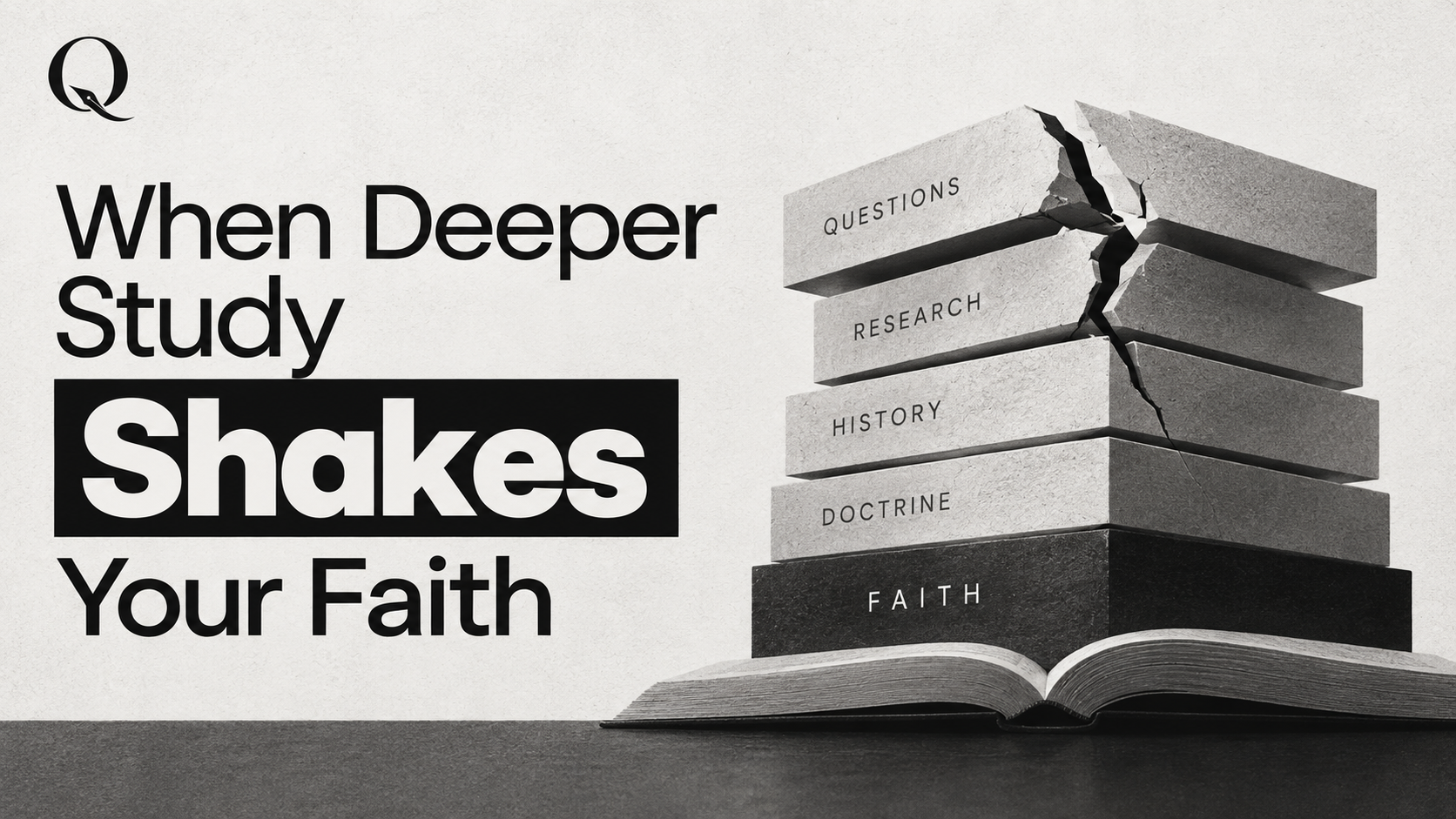
混乱不是你的敌人
我认识两个人。
第一个人喜欢阅读神学和护教学材料。他常常一听播客就是几个小时,也在线观看教义辩论,努力把每一个知识论点都弄明白;但最后,他决定放下一切。
第二个人也挖得同样深。但他越往下挖,脚下的地面就越往下陷。一天晚上,这一切的重量变得如此沉重,以至于他站到了一个我不想在这里命名的边缘。
他们都不是肤浅的人。他们比我们大多数人更认真地对待自己的信仰;正是这种认真把他们推向了边缘。这是很少有人事先告诉你的事:知道得越多,原先的一切就越可能开始摇晃。
我写这篇文章,是因为我自己也曾站在那片摇摇欲坠的土地上。虽然我从未真正站到那个边缘,却足够靠近,知道脚下那块你所信任的地面开始变软时是什么感觉。
有一个术语叫作解构:你走出从家庭或教会继承而来的、整齐而黑白分明的信仰,第一次亲手撬开一块块砖头,看看它们里面是什么。那感觉就像地板要塌了。詹姆斯·福勒(James Fowler)多年研究信仰发展,提供了一个理解这一过程的视角。对有些人来说,这可以是信仰成长而非单纯消亡的一种路径,使人从借来的信仰走向自己承担责任的信仰。但这个模型不是诊断,也不保证每个人都会抵达同一个终点。
有时,动摇是信仰逐渐成形的过程。但我们不应把每一道裂痕都说成通往某个已知终点的道路。
蒂姆·凯勒(Tim Keller)直截了当地说:“没有疑问的信仰,就像没有抗体的身体。” 从未与难题搏斗过的人未必比我们更有信心;他们只是还没有需要抗体。
所以,在继续之前,先要说清楚:你的困惑不是你的敌人。你不是问得太多,只是没有人给过你一张地图,告诉你这些问题究竟属于哪里。
但这只是一个观察角度,不是对你的诊断。危机可能源于理智、道德或存在层面的挣扎,可能由教会虐待造成,也可能与抑郁和疲惫交织在一起。不同的原因需要不同的照护。并不是每个人都会以同样的方式重建信仰:有人改变传统,有人暂停宗教活动,也有人离开宗教。受伤者的尊严与安全,不取决于是否得出了作者所盼望的结论。
为什么更多的知识会让你摇摇欲坠
想象有人递给你一张地图,地图上的每个地标都画得一模一样大。末世的时间、如何施洗、三位一体的奥秘,甚至能不能喝酒,都用同样的字号呈现。当每条教义看起来同等重要时,只要发现基督徒在一个细节上意见不同,就足以让整座根基开始摇晃:如果他们对安息日的理解错了,他们对复活的理解会不会也错了?
这就是陷阱。出路不是少读书,而是换一张更好的地图。
2005年,神学家阿尔伯特·莫勒(Albert Mohler)借用了急诊分诊的概念:当十几个病人同时涌入时,护士必须判断哪些伤势危及生命,哪些可以等候,哪些只是擦伤。跳过排序,就会让所有问题被同样对待,或把每个人都当作危重病患。莫勒认为,信仰也需要类似的分辨。2020年,加文·奥特伦德(Gavin Ortlund)专门写了 Finding the Right Hills to Die On 一书。二者都是出自新教神学的牧养性启发法,并不是圣经本身建立的一套尺度。
核心思想很简单,却能把人从边缘拉回来:传统并没有把每一项教义都看得同等重要。有些信念构成广泛基督教共同体的基石;有些信念划出教会之间的界线;各传统也会在它们与救恩的关系上产生分歧。还有些事要求信徒在爱中运用良心。分诊式的排序帮助我们提出更好的问题,却不许可我们草率判断谁属于上帝。
如何阅读此图: 这是一个新教框架,不是圣经规定的尺度,也不是适用于每个传统的中立地图。每项圣经真理都重要;这些标签只是帮助我们避免把每场争论都看作事关同等利害。
此图采用阿尔伯特·莫勒在《神学分诊与基督徒成熟》中的三层框架(2005年发布),以及加文·奥特伦德在《寻找值得为之舍命的山》(Crossway,2020)中扩展的四层框架。这是新教的分辨工具,不是普世教会的裁决。
让信念经过这三个层次的筛选,会发生一件奇妙的事:困惑变小了。你会发现,过去令你彻夜难眠的大多数争论,根本没有触及房子的地基;它们只是在二楼和三楼争吵,而地基仍然稳固。
我们所有人赖以生存的基石
在讨论彼此的差异之前,先停下来留意一件焦虑的人很少注意的事:我们的共同点惊人地多。
想一想:罗马天主教、东正教和新教这三个被历史上最严重的分裂隔开的传统,仍然共同诵读尼西亚信经(在325年和381年形成的信经)。三者都承认独一而三位一体的上帝,都相信耶稣是“出于真神的真神”,与父同一本体,真实成为人,被钉十字架、受死,并且身体复活,正如“圣经所说”。三者都等候他的再来。
《尼西亚信经》展示了悠久基督教传统共同拥有的广阔根基。但共同承认一份信经,不表示三者会以同样方式回答权威、教会、圣礼和救恩的每一个问题。下表的目的,是显示共同立场与真实分歧,而不是用一行文字决定任何人的身份或永恒命运。
下表显示了共享基础(绿色),以及按层排序的真正差异。
✓ 共同根基 · 三者都承认
尼西亚信经(325/381):一位三位一体的上帝 · 基督是“从真神而来的真神”,与父同质 · 按照“圣经所说”被钉十字架、受死并身体复活。这是广泛共享的信仰告白,并非对权威、圣礼或救恩所有问题的完整答案。
| 问题 | 罗马天主教 | 东正教 | 新教 |
|---|---|---|---|
| 最终权威 | 圣经 + 神圣传统 + 训导权(同一信仰宝库) | 活在神圣传统中的圣经:礼仪、教父、信经与大公会议 | 宗教改革信条以圣经为最终规范;教会和信条帮助解释圣经 |
| 称义/救恩 | 注入的恩典 + 与行为相配合的信心(特利腾会议,1547) | 神化:与上帝联合并经历改变(神化) | 唯独信心(sola fide);法庭式的宣判,将基督的义归给信徒 |
| 圣餐 | 变质说:本质变为基督的身体和血 | “奥秘”:真实发生改变,但哲学上不作定义 | 多种理解:纪念、属灵同在或圣礼性同在 |
| 洗礼 | 婴儿洗礼 | 婴儿洗礼(三次浸礼) | 各有不同:婴儿洗礼(路德宗、长老宗、圣公会)或信徒洗礼(浸信会、五旬节派) |
| 教会治理 | 教宗首位;在梵蒂冈第一届大公会议所定义的条件下享有无误性 | 自治的牧首区(自主教会),地位平等 | 主教制/长老制/会众制,因教会而异 |
| “和子”条款(Filioque) | 圣灵由父“和子”发出 | 拒绝该条款,只承认“由父”发出(381年原始信经) | 与西方传统相同:“和子” |
| 玛利亚 · 圣徒 · 炼狱 | 敬礼 + 圣母无染原罪 + 圣母升天 + 炼狱 | 敬礼玛利亚,但拒绝无染原罪;没有拉丁式炼狱 | 明确拒绝向圣徒祈求,也拒绝炼狱教义 |
此表描述各传统立场,并非所有传统都接受的中立排名。天主教来源:《天主的启示》;东正教来源:美国东正教会《圣经》;新教来源:宗教改革信条;共同根基:尼西亚信经与1999年《称义教义联合声明》(JDDJ)。
真正的差异及其背后的问题
我不会假装这些差异只是误会。它们是真实的,而且有些根深蒂固。权威是一个重要的轴心,但并不是所有的分歧都会归结为谁拥有最终决定权。意义、历史、教会、救赎、伦理和宗教经历也很重要。
根据 Dei Verbum,天主教认为《圣经》和《神圣传统》构成了一份神圣的宝库,而教权则服务和解释圣言,而不是站在圣言之上。东正教认为,圣经存在于神圣传统、礼拜仪式、教父、信条、大公会议和教会生活中,而不仅仅是存在于七个大公会议的清单中。新教的传统也不尽相同。许多宗教改革信仰将圣经视为最终规范,同时仍然使用信条和教会来阅读圣经。
从这里开始,我是从改革宗新教的信念出发,而不是假装为每一种传统提供一张中立地图。我不是神学家,更不是牧师;我只是一个仍在努力面对这些问题的基督徒。但我会坦白说出自己的立场,因为诚实本身就是尊重。我相信宗教改革的答案最忠于圣经。正确理解的 Sola scriptura 并不是“只要圣经、丢掉一切传统”(那是把它扭曲成 solo scriptura),而是说圣经是检验每项传统和教义的最终规范,不受任何更高的人为法庭审判。在这一信念下,教皇、会议和牧师都可能犯错,都必须按上帝的话语加以衡量。保罗称赞庇哩亚人,因为他们*“天天查考圣经”*,检验自己听见的教导(使徒行传)。
保罗写给提摩太的第二封信 — 圣经都是上帝所默示的,于教训、督责、使人归正、教导人学义都是有益的,叫属上帝的人得以完全,预备行各样的善事。
但诚实也让我提出了对方最强烈的反对意见,而且这些反对意见确实很强烈:
一、正典。 教会历史表明,27卷新约书目由亚他那修在公元367年的完整书目清单中列出,随后在四世纪末得到希坡和迦太基地方会议的接纳。但是,主教列出书卷、会议接纳书卷、全教会承认书卷,以及神学上宣称这些书卷是上帝所默示的,是不同的命题。历史加深了权威问题;它本身并不能解决这个问题。
二、传统。 保罗写道:“所以,弟兄们,你们要站立得稳,凡所领受的教训,不拘是我们的口传,是我们的信上,都要坚守。”(保罗写给帖撒罗尼迦信徒的第二封信)这显示了早期教会中使徒口头与书面教导的重要性,但这节经文本身并没有把所有后来的传统都定义为使徒传统。
三、称义。 全本圣经中唯一直接使用“唯独信心”这组措辞的段落,似乎说了相反的话:“这样看来,人称义是因着行为,不是单因着信。”(雅各书)改革宗的解释会把这节经文与保罗写给罗马人的信、保罗写给加拉太人的信和保罗写给以弗所人的信放在一起,区分称义的根基与信心所结的果子和所显出的证据。这是一个实质性的神学解释,并非每个传统都接受的中立结论。
四、圣礼。 天主教徒和东正教徒认为,圣礼或奥秘不能被简化为外在的象征。对他们而言,这是基督所设立、对教会生活至关重要的恩典途径。说明例外情况,并不等于把圣礼降格为可有可无的做法。
诚实的寻求者必须在这里停下来回答,而不是躲开问题。简而言之,宗教改革的回答是:教会承认正典,却没有创造正典,就像天文学家发现星星而不是创造星星。Sola scriptura 没有抛弃传统,而是把传统置于圣言的审判之下。至于雅各书,R.C.斯普劳尔说得很简洁:“称义的信心从来不是孤立的。” 保罗谈称义的根据,雅各谈称义所显出的证据和果子;路德、加尔文和诺克斯都会与雅各一同点头。我把这作为改革宗的解释呈现,而不是约束每个传统的中立结论。
至于第四个关于圣礼必要性的反对意见,答案在于区分信仰的本质核心与承载它的制度形式。
首先,即使在主流罗马天主教神学中,《天主教教理》1257段也指出:*“上帝把救恩与洗礼圣事联系在一起,但他自己并不受圣事的束缚。”因此天主教承认“血洗”和“愿洗”。东正教也有类似的谦卑,常说:“我们知道教会在哪里,却不知道她不在哪里。”*他们承认圣礼是基督设立的可靠道路,却拒绝用这些仪式限制上帝在特殊处境中的主权与自由怜悯。
改革宗对这篇文章的解读把上帝的恩典和对基督的信靠视为根基,把圣礼看作上帝通常使用的途径。但上帝不受圣礼限制,并不能证明天主教徒或东正教徒应当把圣礼归入第二级。一个传统可以肯定通常的道路是必要的,同时也肯定上帝在特殊处境中自由施怜悯。谦卑的做法,是把这里描述为真实分歧,而不是用一个推论结束辩论。
最清楚的圣经证据是路加福音中十字架上的悔罪贼。
在上述场景中,耶稣被钉在两个罪犯之间,代表了人类对苦难和基督的两种基本反应。第一个嘲笑他,要求立即营救。但第二个强盗经历了一个深刻清晰的时刻。他斥责嘲笑者,承认对他们的惩罚是公正的,同时又肯定耶稣的清白。然后,他怀着纯粹的信心转向耶稣:“耶稣,当你进入你的国度时,请记得我。”
这个垂死的人被钉在十字架上,无法接受水洗,无法领受圣餐,也无法完成任何宗教仪式。然而耶稣回答他:*“我实在告诉你,今日你要同我在乐园里了。”*这个救赎的宣告是绝对的,不附带任何圣礼条件。
这个强盗的得救说明,上帝能拯救无法走通常道路的人。在改革宗的解释中,这显示了恩典和信心的优先性;但它本身不能证明每项圣礼都属于第二级,因为天主教和东正教神学区分了通常途径与上帝在特殊处境中的自由作为。
焦虑的心应当知道:在某些问题上,差距可能比我们以为的更窄。1999年,世界信义宗联合会与天主教会签署了《称义教义联合声明》,谈到“基本真理的共识”;卫理公会在2006年确认了这一共识,英国圣公会在2016年也确认了。这并不表示双方在权威、教会、圣礼或救恩的每一种解释上完全一致。共同点很重要,却不会消除仍然存在的分歧。
差异是真实存在的。但在所有这些背后隐藏着一个问题:谁拥有最终决定权?回答它,你手里拿着的是指南针,而不是一阵旋风。
“但是安息日和那杯酒呢?”
现在谈谈那些日常争论——它们常常破坏友谊、分裂小群体:究竟应守第七日安息日,还是在星期日敬拜?基督徒可以饮酒吗?
关于星期日,有一种流行说法,认为君士坦丁皇帝在321年把敬拜“改到”星期日。现存的早期基督教见证——包括《十二使徒遗训》(一世纪末)、伊格内修斯致马格尼西亚人的书信(约107年)以及殉道者游斯丁的记述(约155年)——都显示,在君士坦丁的法律之前,基督徒已经在一周的第一日聚会。321年的法律只是赋予这一天民事假日地位,并不能证明君士坦丁发明了星期日聚会。不过,第一日聚会的事实本身,也不能解决安息日是否被取代的全部问题。基督复临安息日会等基督徒对第四诫有不同解释,并认为它并未废除。
关于酒精,圣经在某些处境下谈到适量使用(诗篇;耶稣在迦拿的神迹,约翰福音;保罗劝提摩太“稍微用点酒”,保罗写给提摩太的第一封信),同时谴责醉酒(保罗写给以弗所人的信;第一处引用段落(见于箴言) 和 第二处引用段落(见于箴言))。在许多经文语境中,这个词和所处情境指向发酵酒,但语言学观察不应被当作每次出现都适用的绝对规则。十九世纪的禁酒运动推动了一些新教传统中的完全戒酒,但这不是所有自我节制传统的唯一来源。戒酒可以是明智选择,却不应被变成强加给所有人的律法。
让我感到震动的是,圣经直接谈到了这类争论。在保罗写给罗马人的信,保罗提到日子以及食物和饮料,随后强调良心、信心与爱。他不容强者轻看软弱者,也不容自由成为绊倒弟兄的理由。保罗写给罗马人的信是在分歧中共同生活的有力指南,但必须放在上下文中阅读,不能把它当作每场现代争论的自动印章。
保罗写给罗马人的信 — 有人看这日比那日强,有人看日日都是一样。各人心里要意见坚定。
保罗写给歌罗西人的信 — 所以,不拘在饮食上,或节期、月朔、安息日,都不可让人论断你们。这些原是后事的影儿;那形体却是基督。
这或许是 adiaphora——“非本质之事”的例子,不应成为衡量每个信徒的尺。基督徒的自由仍然受责任和爱约束,也要拒绝让弟兄再次跌倒。这座山不值得我们失去一个弟兄。
神的话语下的议会
我不能把上帝召到会议上,也不能把自己的声音变成上帝的直接神谕。但我们可以在圣经的光照下提出尖锐问题,让多种声音以谦卑的态度彼此聆听。这样的会议至少会听见以下声音:
- 圣经: 庇哩亚人查考圣经来检验讲道(使徒行传)。保罗说要试验一切并持守良善(保罗写给帖撒罗尼迦信徒的第一封信),同时拒绝回避神的全部旨意(使徒行传)。从上下文中提取的句子不应成为结束对话的锤子。
- 改革宗新教声音: 圣经是最终规范,神学上的分层有助于区分核心主张与有争议的主张;但分层是一种神学启发法,不是把其他信念都称为叛乱的许可。
- 天主教的声音: 圣经和神圣传统构成信仰的宝库,而教权必须服务于圣言。这种回应迫使新教徒回答正典问题以及谁可以给出具有约束力的解释的问题。
- 东正教的声音: 圣经与礼拜仪式、教父、信条、大公会议和教会生活并不分离。这一回应提醒我们,忠实的阅读不仅仅是靠一句引文赢得一场辩论。
- 受伤者的声音: 如果危机来自精神虐待、威胁、羞耻、强迫宽恕、强迫服从,或者教会否认伤害,那么在返回群体之前,必须先处理安全和界限问题。与牧师交谈并不总是安全的。可能需要独立的专业人员。
- 怀疑论者的声音: 把证据、解释、传统、推论和未知分开。缺少现有证据不能自动证明某事错误,但知识上的空白也不应自动被称为神迹。
听过这些声音之后,我的暂定结论是:紧紧抓住圣经明确教导的内容;在上下文中阅读有争议的段落;用真理与果子检验教导;说清楚自己所依循的传统;让爱来管理分歧。这不是“每个人都以自己的方式正确”,而是一种寻求真理、又不把信念变成轻蔑的方式。
那么最终到底哪一方是正确的呢?
这是你真正来问的问题,我不会回避。
在共同的信仰告白中,我们看见这三种传统都站在三位一体、基督的神性和身体复活这些核心宣告上。但尼西亚信经并没有解决权威、救恩或一个人如何归属于教会的全部问题。那位“什么都知道却不相信”的朋友或许会拒绝共同核心,但我无权从一个短故事诊断他的动机或灵魂命运。
在有争议的问题上,权威仍是决定性问题,我已在上文回答。作为新教基督徒,我坚持圣经是最终规范,也坚持本乎恩、因着信得救的福音;这是我认为值得为之舍命的真理。我这样坚持,不是为了轻蔑别人。我可以称承认基督的天主教徒或东正教徒为弟兄,同时承认我们的传统在重大问题上有分歧。这张表不能取代上帝对人的审判。
我刚才说的不是相对主义,不是“每个人都以自己的方式正确,谁又能说得准”。但这也不能让我把每一个分歧都视为小事。分类是一种工具,用于询问有争议的内容、证据是什么以及由此得出的结论。我相信有些答案更好,也应当向读者说明理由、圣经和历史依据,以及我自己阅读的限度。
四百年前,在三十年战争中期,一句通常归于路德宗神学家鲁珀图斯·梅尔德尼乌斯(Rupertus Meldenius)的格言,大约在1626–27年间成为许多人的指南针。这个格言的来源和早期形式仍有争议,因此我不把归属说成已经确定的历史事实:
本质上,团结;在非核心之事上,自由;凡事以爱相待。
这就是答案。不是“每一方都正确”,也不是“只有我的阵营得救”。而是:紧紧抓住核心,对边缘保持宽厚,把爱置于一切之上。
致站在边缘的那个人
安全注意事项: 本节提到绝望和自杀念头。如果你有计划、有意图,或不确定自己能否保持安全,请立即联系当地急救服务或前往急诊室。不要独处;告诉一位可信任的人,并联系心理健康专业人员。本文不能替代紧急照护。
让我暂时停止争论,因为也许你不是来这里看图表的。也许你是在黑暗中来到的,就像我一开始提到的第二个人一样,他的困惑使他接近了我不会轻易说出的边缘。如果那是你,请慢慢听。
怀疑并不是对你的判决。圣经不会因怀疑者而感到尴尬。当多马说他要摸伤口才会相信时,耶稣并没有责备他。他伸出了手。当施洗约翰坐在监狱里,派人问“你是那要来的吗?”时,主并没有羞辱他软弱的信心。他给了他证据。甚至还有一首诗篇(诗篇)从黑暗到……黑暗,以“黑暗是我最亲密的朋友”结尾。不管怎样,上帝把它留在了圣经里,好像在说诚实的哀悼也是祈祷。
马可福音 — 我信!但我信不足,求你帮助!
这可能是整本圣经中最诚实的祷告:一个人同时持有信心和软弱,耶稣回应了他。
并听清楚这部分。如果绝望变得如此沉重,以至于你有意图、有计划,或者不确定自己能否保持安全,那么这不再只是一个神学问题。致电当地紧急服务部门或前往急诊室,不要独处,告诉值得信任且不会伤害你的人,并立即联系心理健康专家。如果牧师值得信任、不会伤害你并尊重你的界限,牧师可能会提供帮助,但不应该是你唯一的支持。如果教会或牧师伤害了你,你不需要回到危险中来证明你的信仰;首先寻求独立的帮助。
至于上帝如何看待那些没有走出黑暗的人,基督教传统并不会以完全相同的方式回答;我也不能代替上帝审判,或代表你解决这个问题。按我自己的信念,我能说的是:上帝比我们任何人都更清楚地看见这些念头背后的痛苦、疾病、困惑和疲惫。但这种安慰绝不能成为忽视眼前危险的理由;首要任务是确保人身安全。
至于“我正在失去信仰”的恐惧,数字所讲述的故事与恐惧所讲述的完全不同。
有些读者可能会在第3阶段 → 第4阶段的过渡中认出自己。 这里是检视继承而来信仰的阶段。福勒提供的是描述性视角,不是临床诊断,也不是属灵承诺。有些人重建信仰、改变传统、暂停实践,或离开宗教;不应强迫任何人走向某一种结果。
框架:James W. Fowler,《信仰的阶段》(1981),此处用作诠释视角,而非诊断。Tim Keller:“没有一点疑问的信仰,就像没有任何抗体的人体。”
背景 · 美国无宗教归属者
事实:这一比例确实在上升。但Pew(2025)强调,基督徒比例的下降已经 趋于稳定,在2019–2024年间维持在约62%。
在认真经历过怀疑的基督徒中(65%经历过)……
以下所有数字都只表示曾经怀疑的群体中的结果:53%更坚定,28%不变,7%变弱,12%失去信仰。不要把它们呈现为全体样本中的比例。
42% 的美国成年人表示自己“解构”了年轻时的信仰。这描述的是这种现象的普遍程度,不是原因或结果。有些人重建信仰,有些人改变传统,有些人离开宗教。
来源:皮尤研究中心,《宗教景观研究》2023–24(n=36,908)及2025年报告;巴纳集团2017年属灵怀疑研究(n=1,015);Barna/Gloo,《教会现状》2024(n=2,003)。
慢慢阅读这些数字,但不要让它们声称超过调查真正知道的范围。你的困惑不是判决。有些人说自己的信仰变得更坚定;有人说没有变化;也有人说信仰减弱或已经失去。一次调查不能证明怀疑必然导致任何结果,也没有人需要为了配合一张图表而假装一切都很好。
一周测试一下问题,不伤自己
如果你想诚实地继续前行,不要一次打开二十多个标签页。在一周内选定一个问题,然后做五件事:
- 把它写成一个可测试的问题,而不是“一切都是假的吗?”
- 将每个声明标记为 事实(FACT)、解读(INTERPRETATION)、传统(TRADITION) 或 未知(UNKNOWN)。
- 阅读上下文中的圣经段落,然后阅读受到质疑的传统的官方来源。
- 阅读支持该主张的来源和质疑该观点的来源。不要用一个引文来代表所有天主教徒、东正教徒或新教徒。
- 与有能力且安全的人交谈。如果涉及虐待、抑郁或自残风险,请优先寻求独立专业人士和紧急帮助。
要聆听牧师和传道人在怀疑中工作,请从 蒂姆·凯勒,《面对怀疑》、蒂姆·凯勒,“信仰即理解”、约翰·派博,《你是否在怀疑中挣扎?》 和 唐·卡森《怀疑》 开始。这些是新教的声音,而不是取代圣经阅读和来源检查的判决。
要聆听传统的说法,请阅读《天主的启示》、《美国东正教对圣经的记载》和《称义论联合声明》。要检查数据,请参阅 巴纳关于怀疑的研究 和 Barna/Gloo 谈解构。这些来源描述了不同的事物,因此不应将它们混入同一个因果故事中。
指南针,不是笼子
我认为我们误解了教义的用途。
我们把它想象成一个笼子,一个密封的系统,让我们对一切都有绝对的确定性,因此任何问题都不允许存在。因此,当笼子的一根杆子破裂时,我们会认为整个监狱正在倒塌,我们会感到恐慌。
但教义是一枚指南针,从来不是一座笼子。指南针不能回答地形的所有问题,也不会告诉你路上的每一块石头;它只做一件事,而且把这件事做好:即使浓雾遮住道路,它仍使你朝向北方。对基督徒来说,那北方就是基督。
如果你抓住自己认为的核心,同时对边缘保持谦卑,那么曾经震撼你的深入研究,反而可以成为使你扎根的东西。知道很多的人可能仍在寻找;站在边缘的人可能同时需要盼望与专业照护。如果那就是你,最后请记住:你不必知道一切才能保持安全。寻求真相、可靠而安全的陪伴,以及下一步。
你不必每件事都正确,才能被基督托住;你只需要让他托住你。
The confusion is not your enemy
I know two people.
The first is someone who loves reading theology and apologetics. He spent hours listening to podcasts, watching doctrinal debates online, and trying to grasp all the intellectual arguments inside out. Yet, in the end, he chose to walk away from it all.
The second dug just as deep. But the deeper he went, the more the ground gave way beneath him. One night, the weight of it became so heavy that he stood close to an edge I don't want to name here.
Neither of them is shallow. They take their faith more seriously than most of us do. And it was that very seriousness that pushed them to the edge. Here is the thing no one warns you about: the deeper you understand, the easier it is for everything to wobble.
I'm writing this because I've stood on that shaky ground myself, never quite at the edge, but close enough to know what it feels like when a floor you trusted goes soft under you.
There's a term for it: deconstruction. It's the moment you step out of the tidy, black-and-white faith you inherited from your family or church, and start prying up the bricks to look at them yourself for the first time. It feels like the floor is dropping out. James Fowler, who spent years studying faith development, offers a lens that can help us understand this process. For some people, it can be one way faith grows rather than simply dies, a movement from borrowed faith to faith they have taken responsibility for themselves. But the model is not a diagnosis, and it does not promise one destination for everyone.
Sometimes the shaking is faith growing into its own shape. But we should not call every fracture a known destination.
Tim Keller put it bluntly: “A faith without some doubts is like a human body without any antibodies in it.” Someone who's never wrestled with hard questions probably isn't stronger in faith than the rest of us. They just haven't needed the antibodies yet.
So before going any further, here's the first thing worth saying: your confusion is not your enemy. You're not asking too many questions. Nobody ever handed you a map to show where those questions actually belong, that's all.
But this is a lens, not a diagnosis of you. A crisis may be intellectual, moral, existential, shaped by church abuse, or entangled with depression and exhaustion. Different causes need different kinds of care. Not everyone reconstructs faith in the same way. Some change traditions, pause religious practice, or leave religion. A hurting person's dignity and safety do not depend on reaching the conclusion the writer hopes for.
Why more knowledge makes you wobble
Picture being handed a map where every landmark is drawn the exact same size. The timing of the end times, how to baptize, the mystery of the Trinity, or whether you can drink wine—all in the same font. When every doctrine looks equally important, just finding out that Christians disagree on one detail is enough to make your entire foundation shake. If they're wrong about the Sabbath, maybe they're wrong about the resurrection, too?
That's the trap. The way out isn't reading less. It's getting a better map.
In 2005, a theologian named Albert Mohler borrowed a concept from the ER: triage. When a dozen patients rush in at once, the nurses have to sort them. Which injury is life-threatening, which can wait, and which is just a scratch? Skip the sorting, and either everyone gets treated the same, or everyone is treated as critical. Mohler argued that our faith needs a similar act of discernment. In 2020, Gavin Ortlund wrote a book dedicated to this: Finding the Right Hills to Die On. Both are pastoral heuristics from Protestant theology, not a scale established by Scripture itself.
The core idea is simple, but it pulls people back from the edge: traditions do not assign every doctrine the same weight. Some confessions form a broad Christian bedrock. Other beliefs draw lines between churches, while traditions disagree about their relation to salvation. And some matters call believers to exercise conscience in love. Triage helps us ask better questions; it does not give us permission to judge quickly who belongs to God.
How to read it: this is a Protestant framework, not a biblical scale or a neutral map for every tradition. Every biblical truth matters; the labels simply keep us from treating every dispute as if it carried the same stakes.
This figure uses Albert Mohler's three-tier frame from “A Call for Theological Triage and Christian Maturity” (posted 2005), alongside Gavin Ortlund's four-level expansion in Finding the Right Hills to Die On (Crossway, 2020). It is a Protestant heuristic, not an ecumenical verdict.
Filter your beliefs through these three tiers, and something strange happens: the confusion shrinks. You realize that most of the debates that used to keep you up at night aren't touching the foundation of the house at all. They're just arguments on the second and third floors. The foundation is still standing.
The bedrock we all stand on
Before we get to what sets us apart, let's stop for a second on something anxious people rarely notice: the common ground is staggering.
Think about it: Roman Catholicism, Eastern Orthodoxy, and Protestantism—three branches split by the most bitter schisms in history—still recite the very same confession: the Nicene Creed (settled in 325 and 381). All three confess one triune God. All three believe Jesus is “true God from true God,” of one being with the Father, truly made man, crucified, dead, and bodily resurrected “in accordance with the Scriptures.” And all three are waiting for his return.
The Nicene Creed shows a broad bedrock shared by historic Christian traditions. But confessing one creed does not mean they answer every question about authority, church, sacraments, and salvation in the same way. The table is meant to show both shared ground and real disagreement, not to decide a person's identity or eternal destiny from one line of text.
The table below shows that shared ground (in green), and only then the real differences, sorted by tier.
✓ The shared bedrock · all three confess it
The Nicene Creed (325/381): one triune God · Christ “true God from true God,” consubstantial with the Father · crucified, died and bodily risen “in accordance with the Scriptures.” It is a broad shared confession, not a complete answer to every question about authority, sacraments, or salvation.
| Question | Roman Catholic | Eastern Orthodox | Protestant |
|---|---|---|---|
| Final authority | Scripture + Sacred Tradition + Magisterium (one deposit) | Scripture within the life of Holy Tradition: liturgy, Fathers, creeds, and councils | Reformation confessions treat Scripture as the final norm; church and confessions aid interpretation |
| Justification / salvation | Infused grace + faith cooperating with works (Trent, 1547) | Theosis: transformative union with God (deification) | By faith alone (sola fide); a forensic verdict, Christ's righteousness imputed |
| The Eucharist | Transubstantiation: the substance becomes Christ's body & blood | “The Mystery”: a real change, left philosophically undefined | A range: memorial, spiritual presence, or sacramental |
| Baptism | Infant baptism | Infant baptism (triple immersion) | Split: infant (Lutheran, Presbyterian, Anglican) vs believer's (Baptist, Pentecostal) |
| Church government | Papal primacy; infallibility under Vatican I's defined conditions | Self-governing patriarchates (autocephaly), equal in rank | Episcopal / presbyterian / congregational, varies |
| The Filioque clause | The Spirit proceeds from the Father “and the Son” | Rejected, “from the Father” only (original 381 Creed) | With the West: “and the Son” |
| Mary · saints · purgatory | Veneration + Immaculate Conception + Assumption + purgatory | Veneration of Mary but rejects the Immaculate Conception; no Latin purgatory | Rejects invocation of saints and purgatory |
This table is descriptive, not a neutral ranking accepted by every tradition. Catholic: Dei Verbum; Orthodox: Orthodox Church in America, Bible; Protestant: Reformation confessions; shared ground: the Nicene Creed and the 1999 JDDJ.
The real differences, and the question underneath them all
I won't pretend the differences are just misunderstandings. They are real, and some run deep. Authority is one important axis, but not every disagreement reduces to who has the final say. Meaning, history, church, salvation, ethics, and religious experience matter too.
According to Dei Verbum, Catholicism says Scripture and Sacred Tradition form one sacred deposit, while the Magisterium serves and interprets the Word rather than standing above it. Orthodoxy says Scripture lives within Holy Tradition, liturgy, the Fathers, creeds, councils, and the life of the Church, not merely within a list of seven councils. Protestant traditions are not identical either; many Reformation confessions treat Scripture as the final norm while still using creeds and the church to read Scripture.
From here on, I am speaking from a Reformed Protestant conviction, not pretending to offer a neutral map for every tradition or religion. I’m no theologian, and I'm certainly not a pastor. I’m just a Christian who has wrestled with these exact questions himself. But I'll tell you straight what I believe, because honesty is its own kind of respect. I believe the Reformation’s answer is the most faithful to Scripture. Sola scriptura, properly understood, doesn't mean “only the Bible, throw out all tradition” (that's solo scriptura, a distortion). It means Scripture is the final norm by which every tradition and teaching is tested, while it is not placed beneath a higher human court. Popes, councils, and pastors can all be wrong under this conviction, and all must be weighed against the Word. Paul praises the Bereans because they “examined the Scriptures daily” to test the preaching they heard (Acts).
"All Scripture is breathed out by God and profitable for teaching, for reproof, for correction, and for training in righteousness, that the man of God may be complete, equipped for every good work."
— Paul’s second letter to Timothy
But honesty also makes me lay out the other side's strongest objections, and they really are strong:
One, the canon. Church history shows the 27-book New Testament list in Athanasius's full list of 367 and in the reception of local councils at Hippo and Carthage late in the fourth century. But a bishop listing books, a council receiving them, the whole Church recognizing them, and a theological claim that those books are God-breathed are different propositions. The history deepens the authority question; it does not settle it by itself.
Two, tradition. Paul writes: “Stand firm and hold to the traditions that you were taught by us, either by our spoken word or by our letter” (Paul’s second letter to the Thessalonians). That shows the importance of apostolic teaching in both spoken and written form in the early Church. It does not, by itself, identify every later tradition as apostolic.
Three, justification. The one verse in the whole Bible that uses the phrase “faith alone” says the opposite: “a person is justified by works and not by faith alone” (James’s letter). A Reformed reading sets this beside Paul’s letter to the Romans, Paul’s letter to the Galatians, and Paul’s letter to the Ephesians, distinguishing the ground of justification from the fruit and evidence of faith. That is a substantial theological reading, not a neutral solution accepted by every tradition.
Four, the sacraments. Catholics and Orthodox argue that sacraments, or mysteries, cannot be reduced to an external vehicle. For them, these are means established by Christ and essential to the life of the Church; explaining an exception does not place them in the same category as a merely optional practice.
An honest seeker has to stop right here and answer instead of dodging. The Reformation's reply, in short, is this: The church recognized the canon, it didn't create it (just as an astronomer finds a star rather than creating it). Sola scriptura doesn't throw out tradition; it places tradition beneath the judgment of the Word. As for James, R.C. Sproul put it simply: “the faith that justifies is never alone.” Paul is talking about the ground of justification, James about its evidence and fruit. Luther, Calvin, and Knox would all nod along with James. I am presenting this as a Reformed reading, not as a neutral conclusion binding every tradition.
As for the fourth objection regarding the necessity of sacraments, the answer lies in the distinction between the essential core and the structural vehicle.
First, even within mainstream Roman Catholic theology, paragraph 1257 of the Catechism of the Catholic Church states: "God has bound salvation to the sacrament of Baptism, but he himself is not bound by his sacraments." This is why Catholic dogma recognizes the baptism of blood and the baptism of desire. The Eastern Orthodox Church shares a similar humility, often stating: "We know where the Church is, but we do not know where she is not." They confess the sacraments as the sure path established by Christ, yet they refuse to limit God's sovereign and free mercy outside of those rituals.
A Reformed reading of this article treats God's grace and trust in Christ as the foundation, with the sacraments as the ordinary means God uses. But the fact that God is not limited by a sacrament does not prove that Catholics or Orthodox should classify that sacrament as Tier 2. A tradition can affirm an ordinary path as necessary while also affirming God's freedom to show mercy in exceptional circumstances. That is a real disagreement to describe humbly, not a deduction that ends the debate.
The clearest biblical evidence for this is the penitent thief on the cross in Luke’s Gospel.
In the immediate context, Jesus is crucified between two criminals, representing two fundamental human responses to suffering and to Christ. The first mocks him, demanding immediate rescue. But the second thief experiences a moment of profound clarity. He rebukes the mocker, admitting that their punishment is just, while affirming Jesus' innocence. He then turns to Jesus with pure faith: "Jesus, remember me when you come into your kingdom."
Physically pinned to the cross, this dying man could not receive water baptism, partake in the Eucharist, or perform any religious deeds. Yet Jesus replies: "Truly, I say to you, today you will be with me in paradise." This declaration of salvation is absolute and carries no sacramental conditions.
The thief's salvation shows that God can save someone who cannot take the ordinary path. In a Reformed reading, it illustrates the priority of grace and faith. It does not by itself prove that every sacrament belongs in Tier 2, because Catholic and Orthodox theology distinguishes ordinary means from God's freedom in exceptional cases.
And here's something an anxious heart should know: the gap can be narrower than we assume on some questions. In 1999, the Lutheran World Federation and the Catholic Church signed the Joint Declaration on the Doctrine of Justification, speaking of a “consensus in basic truths.” The Methodists affirmed it in 2006, the Anglicans in 2016. That is not full convergence on authority, church, sacraments, or every account of salvation. Shared ground matters, but it does not erase the remaining differences.
The differences are real. But underneath all of them lies a single question: who has the final say? Answer it, and what you're holding is a compass, not a whirlwind.
“But what about the Sabbath, and the glass of wine?”
Now for the very everyday fights, the ones that fray friendships and split small groups: keep the seventh-day Sabbath, or worship on Sunday? Can a Christian drink?
On the day of worship, there's a popular myth that the emperor Constantine “switched” worship to Sunday in 321. The surviving Christian witnesses we have, including the Didache (late first century), Ignatius's letter to the Magnesians (around 107), and Justin Martyr's description (around 155), show first-day gatherings before Constantine's law. The 321 law gave that day civil force; it is not evidence that Constantine invented Sunday gathering. But first-day gathering does not by itself settle every question about replacing the Sabbath. Seventh-day Christians, including Seventh-day Adventists, read the fourth commandment differently and regard it as unrepealed.
On alcohol, Scripture speaks of moderate use in some contexts (the book of Psalms; Jesus's miracle at Cana, John 2; the advice to Timothy to “use a little wine,” Paul’s first letter to Timothy) and condemns drunkenness (Paul’s letter to the Ephesians; first cited passage in the book of Proverbs and second cited passage in the book of Proverbs). In many biblical contexts the word and setting refer to fermented wine, but a linguistic observation should not become an absolute rule for every occurrence. The nineteenth-century temperance movement helped popularize total abstinence in some Protestant traditions; it was not the sole origin of every form of self-restraint. Abstinence can be a wise choice, but it should not become a law imposed on everyone.
What gets me is that Scripture speaks directly to these kinds of disputes. In Paul’s letter to the Romans, Paul names days and food and drink, then emphasizes conscience, faith, and love. He does not let the strong despise the weak, or freedom become a reason to make a brother stumble. Paul’s letter to the Romans is a powerful guide for living amid disagreement, but it must be read in context rather than used as an automatic stamp on every modern debate.
"One person esteems one day as better than another, while another esteems all days alike. Each one should be fully convinced in his own mind."
— Paul’s letter to the Romans
"Therefore let no one pass judgment on you in questions of food and drink, or with regard to a festival or a new moon or a Sabbath. These are a shadow of the things to come, but the substance belongs to Christ."
— Paul’s letter to the Colossians
This may be an example of adiaphora, “things indifferent,” matters that should not become a measuring stick for judging every believer. Christian freedom still carries responsibility, love, and a refusal to make another stumble. This hill is not worth losing a brother over.
A council under the Word
I cannot summon God into a meeting, and I cannot turn my voice into a direct oracle from him. But we can place hard questions under the light of Scripture and let several voices meet with humility. Such a council would hear at least these:
- Scripture: The Bereans examined the Scriptures to test preaching (Acts). Paul says to test everything and hold fast to what is good (Paul’s first letter to the Thessalonians), while refusing to shrink from the whole counsel of God (Acts). A sentence pulled from its context should not become a hammer that ends the conversation.
- The Reformed Protestant voice: Scripture is the final norm, and theological triage helps distinguish core claims from disputable ones. But triage is a theological heuristic, not a license to call every other conviction rebellion.
- The Catholic voice: Scripture and Sacred Tradition belong to one deposit of faith, while the Magisterium must serve the Word. This response forces a Protestant to answer the canon question and the question of who may give a binding interpretation.
- The Orthodox voice: Scripture is not separated from liturgy, the Fathers, creeds, councils, and the life of the Church. This response reminds us that faithful reading is not only winning a debate with one quotation.
- The wounded person's voice: If a crisis comes from spiritual abuse, threats, shame, coerced forgiveness, coerced submission, or a church denying harm, safety and boundaries come before returning to a community. Speaking to a pastor is not always safe; an independent professional may be necessary.
- The skeptic's voice: Separate evidence, interpretation, tradition, inference, and what remains UNKNOWN. A lack of present evidence is not automatically proof that something is false, but a gap in knowledge should not automatically be called a miracle.
After hearing these voices, my working conclusion is this: hold tightly to what Scripture makes clear, read disputed passages in context, test teaching by both truth and fruit, name the tradition from which you are speaking, and let love govern disagreement. That is not “every side is right.” It is a way of seeking truth without turning conviction into contempt.
So in the end, which side is right?
This is the question you actually came here to ask, and I won't dodge it.
In the shared confession, we can see all three traditions standing before important claims about the Trinity, Christ's deity, and the resurrection. But the Nicene Creed does not settle every question about authority, salvation, or how a person belongs to the Church. My friend who “knows it all and doesn't believe” may be rejecting the shared core, but I do not have the right to diagnose his motives or spiritual destiny from a short story.
On the disputed questions, authority remains a deciding issue, and I have answered it above. As a Protestant Christian, I stand on Scripture as the final norm, and on the gospel of grace, saved by grace through faith, as the hill worth dying on. I hold that with conviction, not contempt. I can call a Catholic or Orthodox Christian who confesses Christ my brother while admitting that our traditions disagree about serious questions. This table does not replace God's judgment of a person.
What I just said isn't relativism, not "everyone's right in their own way, who can say." But it also does not let me call every disagreement minor. Triage is a tool for asking what is being disputed, what the evidence is, and what follows from it. I believe some answers are better, and I owe the reader reasons, Scripture, history, and the limits of my own reading.
Four centuries ago, in the middle of the Thirty Years' War, a line often attributed to the Lutheran theologian Rupertus Meldenius, around 1626–27, became a compass for many people. The line's origins and earlier forms remain contested, so I do not want to present the attribution as locked history:
In essentials, unity; in non-essentials, liberty; in all things, charity.
That's the answer. Not “every side is right,” and not “only my camp is saved.” It's this: hold the core tightly, hold the edges loosely, and lay love over all of it.
To the one standing at the edge
Safety note: This section mentions despair and suicidal thoughts. If you have a plan, intent, or are unsure you can stay safe, call local emergency services or go to an emergency department now. Do not stay alone. Tell a trusted person and contact a mental-health professional. This article is not a substitute for urgent care.
Let me stop arguing for a moment, because maybe you didn't come here for a diagram. Maybe you came in the dark, like the second person I mentioned at the start, the one whose confusion drove him near an edge I won't name lightly. If that's you, please hear this slowly.
Doubt is not a verdict against you. Scripture is not embarrassed by doubters. When Thomas said he wouldn't believe until he touched the wounds, Jesus didn't scold him. He held out his hand. When John the Baptist, sitting in prison, sent word to ask “Are you the one who is to come?”, the Lord didn't shame his weak faith. He gave him evidence. There's even a psalm (the book of Psalms) that goes from darkness to… darkness, ending on “darkness is my closest friend.” And God left it in the Bible anyway, as if to say that honest lament is also prayer.
"I believe; help my unbelief!"
— Mark’s Gospel
That might be the most honest prayer in all of Scripture: a man holding faith and weakness in the same breath, and Jesus answered him.
And hear this part clearly. If the despair has become so heavy that you have intent, a plan, or are unsure you can stay safe, this is no longer only a theology problem. Call local emergency services or go to an emergency department, do not stay alone, tell a safe person, and contact a mental-health professional today. A pastor may help if that person is genuinely safe and respects your boundaries, but should not be your only support. If a church or pastor has harmed you, you are not required to return to danger to prove your faith; seek independent help first.
As for what God makes of someone who didn't make it out of that darkness, Christian traditions don't all answer that question the same way, and this isn't the place for me to judge for God or settle it on your behalf. What I can say from my own conviction is that God sees the full weight of the pain, illness, confusion, and exhaustion behind a thought like that more clearly than any of us ever could. That comfort must never become a reason to minimize immediate danger; the first task is to keep the person safe.
As for the fear that “I'm losing my faith,” the numbers tell a very different story than that fear does.
Some readers may recognize the 3 → 4 passage. This is where inherited faith gets examined. Fowler offers a descriptive lens, not a clinical diagnosis or spiritual promise. Some reconstruct faith, change traditions, pause, or leave religion; no one should be forced into one outcome.
Framework: James W. Fowler, Stages of Faith (1981), used here as an interpretive lens, not a diagnosis. Tim Keller: “A faith without some doubts is like a human body without any antibodies in it.”
Context · the US religiously unaffiliated
Real: the share is rising. But Pew (2025) stresses that the Christian decline has levelled off, holding near 62% across 2019–2024.
Among Christians who wrestled with serious doubt (65% have)…
All figures below are outcomes within the group who had doubted: 53% stronger, 28% unchanged, 7% weaker, 12% lost faith. Do not present them as shares of the full sample.
42% of US adults say they “deconstructed” their youthful faith. That describes prevalence, not cause or outcome. Some reconstruct, some change traditions, and some leave religion.
Sources: Pew Research Center, Religious Landscape Study 2023–24 (n=36,908) & 2025 report; Barna Group, spiritual-doubt study 2017 (n=1,015); Barna/Gloo, State of the Church 2024 (n=2,003).
Read those numbers slowly, but do not make them say more than they know. Your confusion is not a verdict. Some people report stronger faith; others report no change, weaker faith, or loss of faith. A survey does not prove that doubt caused any outcome, and no one needs to pretend to be fine for the sake of a chart.
One week to test the questions without breaking yourself
If you want to continue honestly, do not open twenty more tabs at once. For one week, choose one question and do five things:
- Write it as a testable question, rather than “is everything false?”
- Label each claim FACT, INTERPRETATION, TRADITION, or UNKNOWN.
- Read the biblical passage in context, then read an official source from the tradition being questioned.
- Read one source that supports the claim and one that challenges it. Do not use one quotation to represent all Catholics, Orthodox, or Protestants.
- Speak with someone competent and safe. If abuse, depression, or self-harm risk is involved, prioritize an independent professional and urgent help.
To hear pastors and preachers work through doubt, start with Tim Keller, “Facing Doubt”, Tim Keller, “Faith as Understanding”, John Piper, “Do You Struggle with Doubts?”, and Don Carson, “Doubt”. These are Protestant voices, not verdicts that replace Scripture reading and source checking.
To hear traditions speak for themselves, read Dei Verbum, the Orthodox Church in America's account of the Bible, and the Joint Declaration on the Doctrine of Justification. To check the data, see Barna on doubt and Barna/Gloo on deconstruction. These sources describe different things, so they should not be blended into one causal story.
A compass, not a cage
I think we've misunderstood what doctrine is for.
We imagined it as a cage, a sealed system that hands us absolute certainty about everything, so that no question is allowed to stay alive. So when one bar of the cage cracks, we think the whole prison is collapsing, and we panic.
But doctrine is a compass, and it was never a cage. A compass doesn't answer every question about the terrain; it won't tell you about every stone on the path. It does one thing, and does it completely: it keeps you pointed north, even when the fog is so thick you can't see the way. For a Christian, that north is Christ.
The deep study that once shook you can become the very thing that roots you, if you hold what you believe is core while staying humble about the edges. Someone who knows a great deal may still be searching; someone at the edge may need both hope and professional care. If that's you, here's the last word: you don't have to know everything to be safe. Seek truth, safe companionship, and the next small step.
You don't have to be right about everything to be held by Christ. You only have to be held by him.