
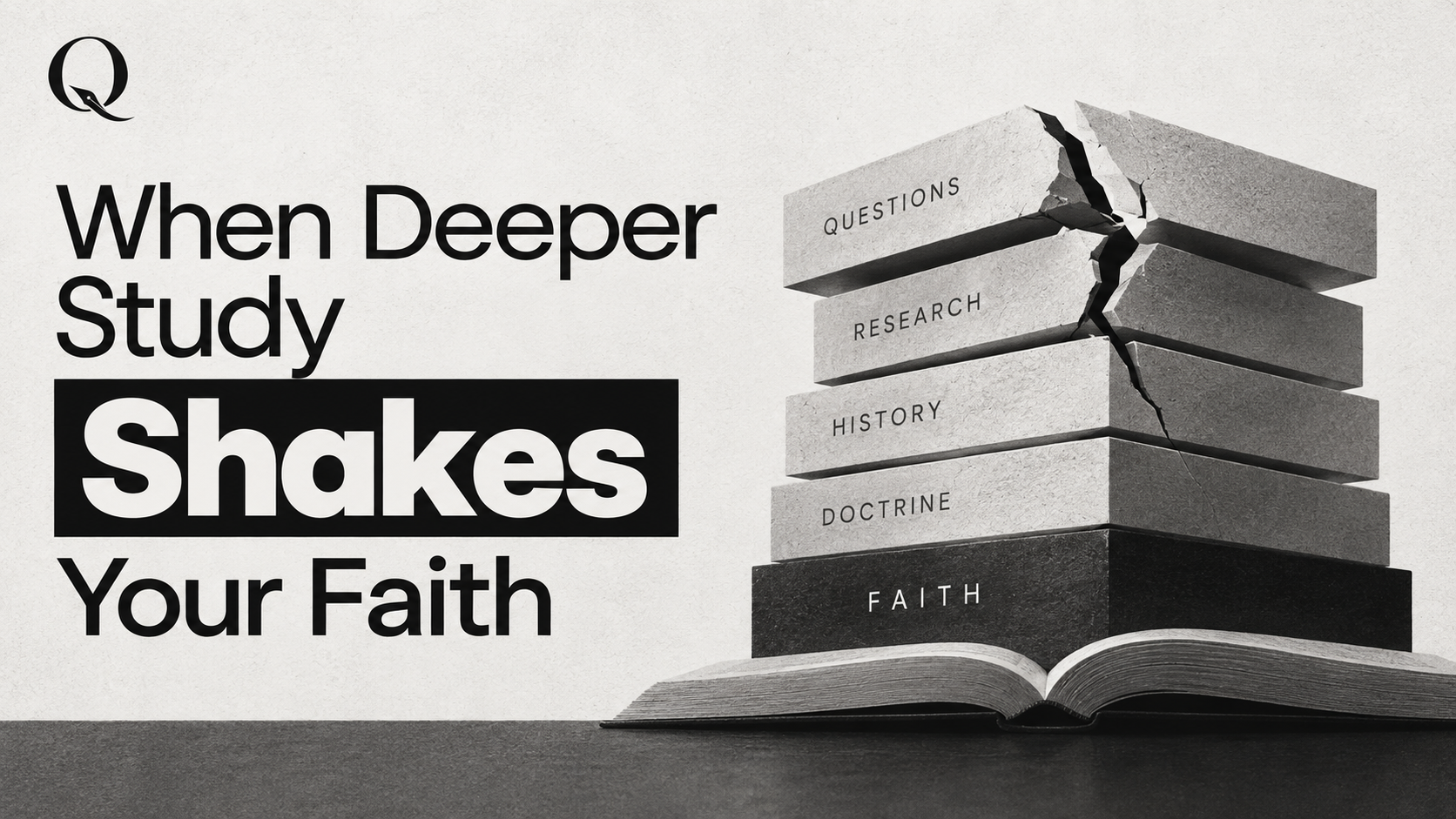
Cuando un estudio más profundo sacude tu fe
La confusión no es tu enemiga Conozco a dos personas. El primero es alguien a quien le encanta leer teología y apologética. Pasó horas escuchando podcasts, viendo debates doctrinal…
Al preparar este ensayo, AI ayudó a buscar, comprobar, traducir y editar; el argumento y las conclusiones son del autor.
La línea argumental, el sentido y las conclusiones son del propio autor. Elegir en qué fuentes confiar y cómo entenderlas es juicio del autor, no de las herramientas.
Se usaron herramientas de AI para buscar fuentes, contrastar con ellas las afirmaciones, leer ampliamente sobre el tema, pasar el texto entre inglés y vietnamita y ayudar con la gramática, la claridad y el ritmo.
Lo que encontraron fue material para sopesar, no un veredicto. El autor decidió qué diría este ensayo, qué dejaría fuera y qué significa.
El ensayo aparece bajo el nombre del autor. El autor responde por él, incluso por cualquier error que contenga.
Paralelo
La confusión no es tu enemiga
Conozco a dos personas.
El primero es alguien a quien le encanta leer teología y apologética. Pasó horas escuchando podcasts, viendo debates doctrinales en línea y tratando de comprender todos los argumentos intelectuales a fondo. Sin embargo, al final decidió alejarse de todo.
El segundo también se sumergió en el estudio. Pero cuanto más ahondaba, más cedía el suelo bajo sus pies. Una noche, la carga se volvió tan pesada que quedó cerca de un borde que no quiero nombrar aquí.
Ninguno de ellos es superficial. Toman su fe más en serio que la mayoría de nosotros. Y fue esa misma seriedad la que los llevó al límite. Esto es lo que nadie te advierte: cuanto más comprendas a fondo, más fácil será que todo se tambalee.
Escribo esto porque yo mismo he estado en ese terreno inestable, nunca justo al borde, pero lo bastante cerca como para saber qué se siente cuando el suelo en el que confiabas se ablanda bajo tus pies.
Hay un término para ello: deconstrucción. Es el momento en que sales de la fe ordenada y en blanco y negro que heredaste de tu familia o de tu iglesia y comienzas a levantar los ladrillos para examinarlos tú mismo por primera vez. Se siente como si el suelo desapareciera bajo tus pies. James Fowler, que pasó años estudiando el desarrollo de la fe, ofrece una perspectiva que puede ayudarnos a comprender este proceso. Para algunas personas, puede ser una manera en que la fe crece en lugar de simplemente morir, un movimiento de una fe prestada a una fe de la que han asumido la responsabilidad. Pero el modelo no es un diagnóstico y no promete un destino único para todos.
A veces, el temblor es la fe que va tomando su propia forma. Pero no deberíamos considerar cada fractura como un destino ya conocido.
Tim Keller lo expresó sin rodeos: “Una fe sin algunas dudas es como un cuerpo humano sin anticuerpos”. Alguien que nunca ha luchado con preguntas difíciles probablemente no tenga una fe más fuerte que el resto de nosotros. Simplemente todavía no ha necesitado esos anticuerpos.
Entonces, antes de continuar, esto es lo primero que vale la pena decir: tu confusión no es tu enemiga. No estás haciendo demasiadas preguntas. Simplemente nadie te entregó un mapa para mostrarte dónde encaja cada una.
Pero esto es una lente, no un diagnóstico tuyo. Una crisis puede ser intelectual, moral, existencial, moldeada por el abuso de la iglesia o entrelazada con la depresión y el agotamiento. Diferentes causas necesitan diferentes tipos de atención. No todo el mundo reconstruye la fe de la misma manera. Algunos cambian tradiciones, suspenden la práctica religiosa o abandonan la religión. La dignidad y la seguridad de una persona herida no dependen de llegar a la conclusión que el escritor espera.
¿Por qué más conocimiento te hace tambalear?
Imagina que te entregan un mapa donde cada punto de referencia está dibujado exactamente del mismo tamaño. El momento del fin de los tiempos, cómo bautizar, el misterio de la Trinidad o si se puede beber vino, todo en la misma fuente. Cuando todas las doctrinas parecen igualmente importantes, descubrir que los cristianos no están de acuerdo en un detalle basta para hacer temblar todos tus cimientos. Si están equivocados acerca del sábado, ¿tal vez también estén equivocados acerca de la resurrección?
Ésa es la trampa. La salida no es leer menos, sino obtener un mapa mejor.
En 2005, un teólogo llamado Albert Mohler tomó prestado un concepto de las urgencias médicas: el triaje. Cuando llega una docena de pacientes a la vez, las enfermeras tienen que clasificarlos. ¿Qué lesión pone en peligro la vida, cuál puede esperar y cuál es sólo un rasguño? Si se omite la clasificación, o todos reciben el mismo trato o todos son tratados como casos críticos. Mohler sostuvo que nuestra fe necesita un acto similar de discernimiento. En 2020, Gavin Ortlund escribió un libro dedicado a esto: Finding the Right Hills to Die On. Ambas son heurísticas pastorales de la teología protestante, no una escala establecida por las Escrituras mismas.
La idea central es simple, pero devuelve a la gente del borde: las tradiciones no atribuyen a todas las doctrinas el mismo peso. Algunas confesiones de fe forman una amplia base cristiana. Otras creencias trazan líneas divisorias entre iglesias, mientras que las tradiciones no están de acuerdo sobre su relación con la salvación. Y algunas cuestiones llaman a los creyentes a ejercitar la conciencia con amor. La clasificación nos ayuda a hacer mejores preguntas; no nos da permiso para juzgar rápidamente quién pertenece a Dios.
Cómo leerlo: este es un marco protestante, no una escala establecida por la Biblia ni un mapa neutral para todas las tradiciones. Toda verdad bíblica importa; las categorías simplemente nos ayudan a no tratar todas las disputas como si en ellas estuviera en juego lo mismo.
Esta figura utiliza los tres niveles de Albert Mohler en «A Call for Theological Triage and Christian Maturity» (publicado en 2005), junto con la ampliación a cuatro niveles de Gavin Ortlund en Finding the Right Hills to Die On (Crossway, 2020). Es una herramienta de discernimiento protestante, no un veredicto ecuménico.
Filtra tus creencias a través de estos tres niveles y sucede algo extraño: la confusión se reduce. Te das cuenta de que la mayoría de los debates que solían mantenerte despierto por la noche no tocan en absoluto los cimientos de la casa. Son sólo discusiones en el segundo y tercer piso. Los cimientos siguen en pie.
La base sobre la que todos nos encontramos
Antes de llegar a lo que nos diferencia, detengámonos por un segundo en algo que las personas ansiosas rara vez notan: el terreno común es asombroso.
Piénsalo: el catolicismo romano, la ortodoxia oriental y el protestantismo (tres ramas divididas por los cismas más amargos de la historia) todavía recitan la misma confesión: el Credo de Nicea (establecido en 325 y 381). Los tres confiesan un Dios trino. Los tres creen que Jesús es “Dios verdadero de Dios verdadero”, de la misma naturaleza que el Padre, verdaderamente hecho hombre, crucificado, muerto y resucitado corporalmente “de acuerdo con las Escrituras”. Y los tres esperan su regreso.
El Credo de Nicea muestra un amplio fundamento compartido por las tradiciones cristianas históricas. Pero confesar un credo no significa que respondan todas las preguntas sobre la autoridad, la iglesia, los sacramentos y la salvación de la misma manera. La tabla pretende mostrar tanto el terreno compartido como el desacuerdo real, no decidir la identidad de una persona o su destino eterno a partir de una línea de texto.
La siguiente tabla muestra ese terreno compartido (en verde), y solo luego las diferencias reales, ordenadas por niveles.
✓ El fundamento común · las tres tradiciones lo confiesan
El Credo de Nicea (325/381): un solo Dios trino · Cristo, «Dios verdadero de Dios verdadero», de la misma naturaleza que el Padre · crucificado, muerto y corporalmente resucitado «según las Escrituras». Es una amplia confesión de fe compartida, no una respuesta completa a todas las preguntas sobre autoridad, sacramentos o salvación.
| Cuestión | Catolicismo romano | Ortodoxia oriental | Protestantismo |
|---|---|---|---|
| Autoridad final | Escritura + Sagrada Tradición + Magisterio (un solo depósito de la fe) | La Escritura dentro de la vida de la Santa Tradición: liturgia, Padres, credos y concilios | Las confesiones de la Reforma consideran la Escritura la norma final; la iglesia y las confesiones de fe ayudan a interpretarla |
| Justificación y salvación | Gracia infundida + fe que coopera con las obras (Trento, 1547) | Theosis: unión transformadora con Dios (divinización) | Solo por la fe (sola fide); un veredicto de carácter jurídico, con la justicia de Cristo imputada al creyente |
| Eucaristía | Transubstanciación: la sustancia se convierte en el cuerpo y la sangre de Cristo | «El Misterio»: un cambio real, sin una definición filosófica | Diversas posturas: memorial, presencia espiritual o sacramental |
| Bautismo | Bautismo de niños | Bautismo de niños (por triple inmersión) | Posturas distintas: bautismo de niños (luteranos, presbiterianos, anglicanos) o de creyentes (bautistas, pentecostales) |
| Gobierno de la iglesia | Primacía papal; infalibilidad bajo las condiciones definidas por el Vaticano I | Patriarcados autónomos (autocefalia), de igual rango | Según la iglesia: episcopal, presbiteriano o congregacional |
| La cláusula Filioque | El Espíritu procede del Padre «y del Hijo» | Cláusula rechazada: solo «del Padre» (Credo original de 381) | Con la tradición occidental: «y del Hijo» |
| María · santos · purgatorio | Veneración + Inmaculada Concepción + Asunción + purgatorio | Veneración de María, pero rechazo de la Inmaculada Concepción; sin purgatorio en el sentido latino | Rechazo de la invocación de los santos y del purgatorio |
Esta tabla es descriptiva, no una clasificación neutral aceptada por todas las tradiciones. Fuentes católicas: Dei Verbum; ortodoxas: Orthodox Church in America, Bible; protestantes: las confesiones de la Reforma; fundamento compartido: el Credo de Nicea y la Declaración conjunta sobre la doctrina de la justificación de 1999 (JDDJ).
Las diferencias reales y la pregunta subyacente a todas ellas
No pretendo que las diferencias sean sólo malentendidos. Son reales y algunas son profundas. La autoridad es un eje importante, pero no todos los desacuerdos se reducen a quién tiene la última palabra. El significado, la historia, la Iglesia, la salvación, la ética y la experiencia religiosa también importan.
Según Dei Verbum, el catolicismo dice que la Escritura y la Sagrada Tradición forman un depósito sagrado, mientras que el Magisterio sirve e interpreta la Palabra en lugar de estar por encima de ella. La ortodoxia dice que las Escrituras viven dentro de la Sagrada Tradición, la liturgia, los Padres, los credos, los concilios y la vida de la Iglesia, no simplemente dentro de una lista de siete concilios. Las tradiciones protestantes tampoco son idénticas: muchas confesiones de la Reforma tratan las Escrituras como la norma final y al mismo tiempo utilizan los credos y la Iglesia para leerlas.
De aquí en adelante hablo desde una convicción protestante reformada, sin pretender ofrecer un mapa neutral para cada tradición o religión. No soy teólogo y ciertamente no soy pastor. Sólo soy un cristiano que ha luchado con estas mismas preguntas. Pero te diré claramente lo que creo, porque la honestidad es una forma de respeto. Creo que la respuesta de la Reforma es la más fiel a las Escrituras. Sola scriptura, correctamente entendido, no significa "sólo la Biblia, desecha toda tradición" (eso es solo scriptura, una distorsión). Significa que las Escrituras son la norma final por la cual se prueba cada tradición y enseñanza, sin someterlas a un tribunal humano superior. Los papas, los concilios y los pastores pueden estar equivocados bajo esta convicción, y todo debe sopesarse con la Palabra. Pablo elogia a los bereanos porque "examinaban las Escrituras diariamente" para probar la predicación que escuchaban (los Hechos de los Apóstoles).
la segunda carta de Pablo a Timoteo — Toda Escritura es inspirada por Dios y útil para enseñar, para reprender, para corregir y para instruir en justicia, a fin de que el hombre de Dios sea perfecto, enteramente preparado para toda buena obra.
Pero la honestidad también me hace exponer las objeciones más fuertes de la otra parte, y realmente son fuertes:
Uno, el canon. La historia de la Iglesia muestra la lista de 27 libros del Nuevo Testamento en la lista completa que Atanasio presentó en 367 y en la recepción de los concilios locales de Hipona y Cartago a finales del siglo IV. Pero que un obispo enumere libros, que un concilio los reciba, que toda la Iglesia los reconozca y que se afirme teológicamente que esos libros son inspirados por Dios son proposiciones diferentes. La historia profundiza la cuestión de la autoridad; no la resuelve por sí sola.
Dos, tradición. Pablo escribe: “Estad firmes y guardad las tradiciones que os enseñamos, ya sea por nuestra palabra hablada o por nuestra carta” (la segunda carta de Pablo a los Tesalonicenses). Esto muestra la importancia de la enseñanza apostólica tanto en forma hablada como escrita en la Iglesia primitiva. Por sí solo, no identifica todas las tradiciones posteriores como apostólicas.
Tres, justificación. El único versículo en toda la Biblia que usa la frase “solo por fe” dice lo contrario: “una persona es justificada por las obras y no solo por la fe” (la carta de Santiago). Una lectura reformada coloca esto al lado de la carta de Pablo a los Romanos, la carta de Pablo a los Gálatas y la carta de Pablo a los Efesios, distinguiendo la base de la justificación del fruto y la evidencia de la fe. Se trata de una lectura teológica sustancial, no de una solución neutral aceptada por todas las tradiciones.
Cuatro, los sacramentos. Los católicos y los ortodoxos sostienen que los sacramentos o misterios no pueden reducirse a un vehículo externo. Para ellos, son medios establecidos por Cristo y esenciales para la vida de la Iglesia; explicar una excepción no los coloca en la misma categoría que una práctica meramente opcional.
Un buscador honesto tiene que detenerse aquí y responder en lugar de esquivar. La respuesta de la Reforma, en resumen, es ésta: la Iglesia reconoció el canon, no lo creó (así como un astrónomo encuentra una estrella en lugar de crearla). Sola scriptura no descarta la tradición; coloca la tradición bajo el juicio de la Palabra. En cuanto a Santiago, R. C. Sproul lo expresó sencillamente: "la fe que justifica nunca está sola". Pablo habla del fundamento de la justificación; Santiago, de su evidencia y fruto. Lutero, Calvino y Knox asentirían junto con Santiago. Presento esto como una lectura reformada, no como una conclusión neutral que vincule a todas las tradiciones.
En cuanto a la cuarta objeción relativa a la necesidad de los sacramentos, la respuesta reside en la distinción entre el núcleo esencial y el vehículo estructural.
Primero, incluso dentro de la teología católica romana dominante, el párrafo 1257 del Catecismo de la Iglesia Católica establece: "Dios ha vinculado la salvación al sacramento del bautismo, pero él mismo no está vinculado a sus sacramentos". Esta es la razón por la que el dogma católico reconoce el bautismo de sangre y el bautismo de deseo. La Iglesia Ortodoxa Oriental comparte una humildad similar, afirmando a menudo: "Sabemos dónde está la Iglesia, pero no sabemos dónde no está". Confiesan los sacramentos como el camino seguro establecido por Cristo, pero se niegan a limitar la misericordia soberana y gratuita de Dios fuera de esos rituales.
Una lectura reformada de este artículo trata la gracia de Dios y la confianza en Cristo como el fundamento, con los sacramentos como el medio ordinario que Dios usa. Pero el hecho de que Dios no esté limitado por un sacramento no prueba que los católicos u ortodoxos deban clasificar ese sacramento como Nivel 2. Una tradición puede afirmar que un camino ordinario es necesario y al mismo tiempo afirmar la libertad de Dios para mostrar misericordia en circunstancias excepcionales. Se trata de un verdadero desacuerdo que se puede describir con humildad, no de una deducción que ponga fin al debate.
La evidencia bíblica más clara de esto es el ladrón arrepentido en la cruz en el Evangelio según Lucas.
En el contexto inmediato, Jesús es crucificado entre dos criminales, lo que representa dos respuestas humanas fundamentales al sufrimiento y a Cristo. El primero se burla de él y exige un rescate inmediato. Pero el segundo ladrón experimenta un momento de profunda claridad. Reprende al burlador, admitiendo que su castigo es justo, al tiempo que afirma la inocencia de Jesús. Luego se dirige a Jesús con fe pura: "Jesús, acuérdate de mí cuando vengas a tu reino."
Físicamente clavado en la cruz, este moribundo no podía recibir el bautismo en agua, participar en la Eucaristía ni realizar ningún acto religioso. Sin embargo, Jesús responde: "En verdad te digo que hoy estarás conmigo en el paraíso". Esta declaración de salvación es absoluta y no conlleva condiciones sacramentales.
La salvación del ladrón muestra que Dios puede salvar a alguien que no puede seguir el camino ordinario. En una lectura reformada, ilustra la prioridad de la gracia y la fe. No prueba por sí solo que cada sacramento pertenezca al Nivel 2, porque la teología católica y ortodoxa distingue los medios ordinarios de la libertad de Dios en casos excepcionales.
Y hay algo que un corazón ansioso debería saber: la brecha puede ser más estrecha de lo que suponemos en algunas cuestiones. En 1999, la Federación Luterana Mundial y la Iglesia Católica firmaron la Declaración Conjunta sobre la Doctrina de la Justificación, hablando de un “consenso en verdades básicas”. Los metodistas la afirmaron en 2006 y los anglicanos, en 2016. Eso no representa una convergencia total sobre la autoridad, la Iglesia, los sacramentos o cada explicación de la salvación. El terreno compartido importa, pero no borra las diferencias restantes.
Las diferencias son reales. Pero detrás de todas ellas se esconde una única pregunta: ¿quién tiene la última palabra? Respóndela y lo que tendrás en la mano será una brújula, no un torbellino.
“¿Pero qué pasa con el sábado y la copa de vino?”
Ahora, pasemos a las peleas cotidianas, las que desgastan amistades y dividen grupos pequeños: ¿guardar el séptimo día como sábado o adorar en domingo? ¿Puede un cristiano beber?
En cuanto al día de adoración, circula un mito popular según el cual el emperador Constantino “cambió” el culto al domingo en 321. Los testimonios cristianos conservados de los que disponemos, incluido el Didajé (finales del primer siglo), la carta de Ignacio a los magnesianos (alrededor del 107) y la descripción de Justino Mártir (alrededor del 155), muestran reuniones del primer día antes de la ley de Constantino. La ley de 321 le dio fuerza civil a ese día; no es evidencia de que Constantino haya inventado la reunión dominical. Pero la reunión del primer día no resuelve por sí sola todas las cuestiones sobre la sustitución del sábado. Los cristianos del séptimo día, incluidos los adventistas del séptimo día, leen el cuarto mandamiento de manera diferente y lo consideran no derogado.
En cuanto al alcohol, la Escritura habla de un uso moderado en algunos contextos (el libro de los Salmos; el milagro de Jesús en Caná, el Evangelio según Juan; el consejo a Timoteo de "usar un poco de vino", la primera carta de Pablo a Timoteo) y condena la embriaguez (la carta de Pablo a los Efesios; el primer pasaje citado en el libro de los Proverbios y el segundo pasaje citado en el libro de los Proverbios). En muchos contextos bíblicos, la palabra y el escenario se refieren al vino fermentado, pero una observación lingüística no debería convertirse en una regla absoluta para cada ocurrencia. El movimiento por la templanza del siglo XIX ayudó a popularizar la abstinencia total en algunas tradiciones protestantes; no fue el único origen de toda forma de autocontrol. La abstinencia puede ser una elección acertada, pero no debería convertirse en una ley impuesta a todos.
Lo que me llama la atención es que las Escrituras hablan directamente de este tipo de disputas. En la carta de Pablo a los Romanos, Pablo nombra días y comida y bebida, luego enfatiza la conciencia, la fe y el amor. No permite que el fuerte desprecie al débil, ni que la libertad se convierta en motivo para hacer tropezar al hermano. la carta de Pablo a los Romanos es una guía poderosa para vivir en medio del desacuerdo, pero debe leerse en contexto en lugar de usarse como un sello automático en cada debate moderno.
la carta de Pablo a los Romanos — Uno considera un día superior a otro; otro considera iguales todos los días. Cada uno esté plenamente convencido en su propia mente.
la carta de Pablo a los Colosenses — Por tanto, que nadie os juzgue en cuestiones de comida o bebida, o con respecto a una fiesta, una luna nueva o un sábado. Todo esto es sombra de lo que ha de venir, pero la realidad pertenece a Cristo.
Este puede ser un ejemplo de adiaphora, “cosas indiferentes”, asuntos que no deberían convertirse en una vara de medir para juzgar a cada creyente. La libertad cristiana todavía conlleva responsabilidad, amor y el rechazo de hacer tropezar a otro. No vale la pena perder a un hermano por esta colina.
Un concilio bajo la Palabra
No puedo convocar a Dios a una reunión y no puedo convertir mi voz en un oráculo directo de él. Pero podemos plantear las preguntas difíciles a la luz de las Escrituras y dejar que varias voces se encuentren con humildad. Un concilio así escucharía al menos estas voces:
- Escritura: Los bereanos examinaron las Escrituras para probar la predicación (los Hechos de los Apóstoles). Pablo dice que hay que probarlo todo y retener lo bueno (la primera carta de Pablo a los Tesalonicenses), mientras se niega a alejarse de todo el consejo de Dios (los Hechos de los Apóstoles). Una frase sacada de su contexto no debe convertirse en un martillo que ponga fin a la conversación.
- La voz protestante reformada: Las Escrituras son la norma final, y la clasificación teológica ayuda a distinguir las afirmaciones fundamentales de las discutibles. Pero la clasificación es una heurística teológica, no una licencia para llamar rebelión a cualquier otra convicción.
- La voz católica: La Escritura y la Sagrada Tradición pertenecen a un solo depósito de la fe, mientras que el Magisterio debe servir a la Palabra. Esta respuesta obliga al protestante a responder la pregunta canónica y la pregunta de quién puede dar una interpretación vinculante.
- La voz ortodoxa: Las Escrituras no están separadas de la liturgia, los Padres, los credos, los concilios y la vida de la Iglesia. Esta respuesta nos recuerda que leer fielmente no es solo ganar un debate con una cita.
- La voz de la persona herida: Si una crisis proviene del abuso espiritual, las amenazas, la vergüenza, el perdón forzado, la sumisión forzada o una iglesia que niega el daño, la seguridad y los límites vienen antes de regresar a una comunidad. Hablar con un pastor no siempre es seguro; puede ser necesario un profesional independiente.
- La voz del escéptico: Separa la evidencia, la interpretación, la tradición, la inferencia y lo que permanece DESCONOCIDO. La falta de evidencia presente no es automáticamente una prueba de que algo sea falso, pero una laguna en el conocimiento no debe considerarse automáticamente un milagro.
Después de escuchar estas voces, mi conclusión de trabajo es la siguiente: aferrarse firmemente a lo que las Escrituras dejan claro, leer pasajes en disputa en contexto, probar la enseñanza tanto por la verdad como por el fruto, nombrar la tradición desde la cual estás hablando y dejar que el amor gobierne el desacuerdo. Eso no es “todas las partes tienen razón”. Es una forma de buscar la verdad sin convertir la convicción en desprecio.
Entonces, al final, ¿qué lado tiene la razón?
Esta es la pregunta que realmente viniste a hacer y no la eludiré.
En la confesión compartida, podemos ver las tres tradiciones unidas en importantes afirmaciones sobre la Trinidad, la deidad de Cristo y la resurrección. Pero el Credo de Nicea no resuelve todas las cuestiones sobre la autoridad, la salvación o cómo una persona pertenece a la Iglesia. Mi amigo que “lo sabe todo y no cree” puede estar rechazando el núcleo compartido, pero no tengo derecho a diagnosticar sus motivos o su destino espiritual a partir de una historia corta.
En las cuestiones en disputa, la autoridad sigue siendo una cuestión decisiva y ya la he respondido anteriormente. Como cristiano protestante, considero las Escrituras como la norma final, y el evangelio de la gracia —salvados por gracia mediante la fe— como la verdad por la que vale la pena dar la vida. Lo sostengo con convicción, no con desprecio. Puedo llamar hermano a un cristiano católico u ortodoxo que confiesa a Cristo y al mismo tiempo admitir que nuestras tradiciones no están de acuerdo en cuestiones serias. Esta tabla no reemplaza el juicio de Dios sobre una persona.
Lo que acabo de decir no es relativismo, no es "cada uno tiene razón a su manera, ¿quién puede decirlo?". Pero tampoco me permite calificar cada desacuerdo como menor. La clasificación es una herramienta para preguntar qué se está disputando, cuáles son las pruebas y qué se desprende de ellas. Creo que algunas respuestas son mejores y le debo al lector razones, Escrituras, historia y los límites de mi propia lectura.
Hace cuatro siglos, en plena Guerra de los Treinta Años, una frase frecuentemente atribuida al teólogo luterano Rupertus Meldenius, alrededor de 1626–27, se convirtió en una brújula para muchas personas. Los orígenes de esta fórmula y sus formas anteriores siguen siendo controvertidos, por lo que no quiero presentar la atribución como un hecho histórico establecido:
En lo esencial, unidad; en lo no esencial, libertad; en todo, caridad.
Ésa es la respuesta. No “todos los bandos tienen razón” ni “sólo mi grupo se salva”. Es esto: sostén el núcleo con firmeza, sostén los bordes sin apretar y pon el amor por encima de todo lo demás.
Al que está parado en el borde
Nota de seguridad: Esta sección menciona la desesperación y los pensamientos suicidas. Si tienes un plan, una intención o no estás seguro de poder mantenerte a salvo, llama a los servicios de emergencia locales o ve ahora a un servicio de urgencias. No te quedes solo. Díselo a una persona de confianza y contacta a un profesional de salud mental. Este artículo no sustituye la atención de urgencia.
Déjame dejar de discutir por un momento, porque tal vez no viniste aquí por un diagrama. Tal vez llegaste en la oscuridad, como la segunda persona que mencioné al principio, aquella cuya confusión la llevó cerca de un límite que no nombraré a la ligera. Si eres tú, escucha esto lentamente.
La duda no es un veredicto en tu contra. Las Escrituras no se avergüenzan de quienes dudan. Cuando Tomás dijo que no creería hasta tocar las heridas, Jesús no lo regañó: extendió la mano. Cuando Juan el Bautista, sentado en la cárcel, envió un mensaje para preguntar: “¿Eres tú el que ha de venir?”, el Señor no avergonzó su débil fe; le dio pruebas. Incluso hay un salmo (el libro de los Salmos) que va de la oscuridad a... la oscuridad y termina con "la oscuridad es mi única compañía". Y Dios lo dejó de todos modos en la Biblia, como diciendo que el lamento honesto también es oración.
el Evangelio según Marcos — ¡Creo; ayuda mi incredulidad!
Esa podría ser la oración más honesta de toda la Escritura: un hombre que tenía fe y debilidad al mismo tiempo, y Jesús le respondió.
Y escucha esta parte claramente. Si la desesperación se ha vuelto tan intensa que tienes una intención, un plan o no estás seguro de poder mantenerte a salvo, esto ya no es sólo un problema teológico. Llama a los servicios de emergencia locales o ve a un servicio de urgencias; no te quedes solo, díselo a una persona de confianza y comunícate hoy con un profesional de salud mental. Un pastor puede ayudar si es realmente una persona digna de confianza y respeta tus límites, pero no debe ser tu único apoyo. Si una iglesia o un pastor te ha hecho daño, no estás obligado a regresar al peligro para demostrar tu fe; busca ayuda independiente primero.
En cuanto a lo que Dios hace con alguien que no logró salir de esa oscuridad, no todas las tradiciones cristianas responden esa pregunta de la misma manera, y este no es el lugar para que yo juzgue ocupando el lugar de Dios o resuelva el asunto por ti. Lo que puedo decir desde mi propia convicción es que Dios ve todo el peso del dolor, la enfermedad, la confusión y el cansancio detrás de un pensamiento como ese con mayor claridad que cualquiera de nosotros. Ese consuelo nunca debe convertirse en una razón para minimizar el peligro inmediato; la primera tarea es mantener a la persona a salvo.
En cuanto al miedo de “estoy perdiendo la fe”, las cifras cuentan una historia muy diferente a la de ese miedo.
Algunos lectores quizá se reconozcan en el paso de la etapa 3 a la 4. Es el momento de examinar la fe heredada. Fowler ofrece una perspectiva descriptiva, no un diagnóstico clínico ni una promesa espiritual. Algunos reconstruyen su fe, cambian de tradición, hacen una pausa o dejan la religión; nadie debería verse obligado a llegar a un resultado determinado.
Marco: James W. Fowler, Stages of Faith (1981), utilizado aquí como perspectiva interpretativa, no como diagnóstico. Tim Keller: «Una fe sin ninguna duda es como un cuerpo humano sin ningún anticuerpo».
Contexto · personas sin afiliación religiosa en Estados Unidos
Su proporción sí está aumentando. Pero Pew (2025) subraya que el descenso del cristianismo se ha estabilizado, con la proporción de cristianos cerca del 62 % entre 2019 y 2024.
Entre los cristianos que han tenido dudas profundas (el 65 % las ha tenido)…
Todas las cifras siguientes corresponden al grupo que había dudado: fe más fuerte en el 53 %, sin cambios en el 28 %, más débil en el 7 % y perdida en el 12 %. No deben presentarse como porcentajes de la muestra completa.
42% de los adultos estadounidenses dicen haber «deconstruido» la fe de su juventud. El dato describe la frecuencia del fenómeno, no su causa ni su desenlace. Algunos reconstruyen su fe, otros cambian de tradición y otros dejan la religión.
Fuentes: Pew Research Center, Religious Landscape Study 2023–24 (n = 36.908) e informe de 2025; Barna Group, estudio sobre la duda espiritual de 2017 (n = 1.015); Barna/Gloo, State of the Church 2024 (n = 2.003).
Lee esos números lentamente, pero no les hagas decir más de lo que saben. Tu confusión no es un veredicto. Algunas personas reportan una fe más fuerte; otras no reportan ningún cambio, una fe más débil o pérdida de fe. Una encuesta no prueba que la duda haya causado algún resultado, y nadie necesita pretender estar bien por el bien de un gráfico.
Una semana para probar las preguntas sin romperte
Si quieres continuar honestamente, no abras veinte pestañas más a la vez. Durante una semana, elige una pregunta y haz cinco cosas:
- Escríbela como una pregunta comprobable, en lugar de "¿es todo falso?"
- Etiqueta cada afirmación como HECHO, INTERPRETACIÓN, TRADICIÓN o DESCONOCIDO.
- Lee el pasaje bíblico en contexto y luego lee una fuente oficial de la tradición que se cuestiona.
- Lee una fuente que respalde la afirmación y otra que la desafíe. No utilices una cita para representar a todos los católicos, ortodoxos o protestantes.
- Habla con alguien competente y digno de confianza. Si hay riesgo de abuso, depresión o autolesión, prioriza la ayuda urgente y profesional independiente.
Para escuchar a pastores y predicadores resolver dudas, comienza con Tim Keller, "Enfrentando la duda", Tim Keller, “La fe como comprensión”, John Piper, "¿Luchas con las dudas?" y Don Carson, “Duda”. Estas son voces protestantes, no veredictos que reemplazan la lectura de las Escrituras y la verificación de fuentes.
Para escuchar las tradiciones hablar por sí mismas, lee Dei Verbum, El relato de la Biblia de la Iglesia Ortodoxa en Estados Unidos y Declaración conjunta sobre la doctrina de la justificación. Para comprobar los datos, consulta Barna sobre la duda y Barna/Gloo sobre la deconstrucción. Estas fuentes describen cosas diferentes, por lo que no deben mezclarse en una sola historia causal.
Una brújula, no una jaula
Creo que hemos entendido mal para qué sirve la doctrina.
Lo imaginamos como una jaula, un sistema sellado que nos brinda certeza absoluta sobre todo, de modo que ninguna pregunta puede permanecer viva. Entonces, cuando una barra de la jaula se rompe, pensamos que toda la prisión se está derrumbando y entramos en pánico.
Pero la doctrina es una brújula, y nunca fue una jaula. Una brújula no responde todas las preguntas sobre el terreno; no te informará sobre cada piedra del camino. Hace una cosa, y la hace por completo: te mantiene apuntando hacia el norte, incluso cuando la niebla es tan espesa que no puedes ver el camino. Para un cristiano, ese norte es Cristo.
El estudio profundo que una vez te sacudió puede convertirse en lo que te arraiga, si mantienes lo que crees que es fundamental y al mismo tiempo conservas la humildad en las cuestiones secundarias. Alguien que sepa mucho puede que todavía esté buscando; alguien que se encuentra al borde del abismo puede necesitar tanto esperanza como atención profesional. Si ése eres tú, ésta es la última palabra: no es necesario que lo sepas todo para estar a salvo. Busca la verdad, una persona digna de confianza y el siguiente pequeño paso.
No es necesario tener razón en todo para ser sostenido por Cristo. Sólo tienes que ser sostenido por él.
The confusion is not your enemy
I know two people.
The first is someone who loves reading theology and apologetics. He spent hours listening to podcasts, watching doctrinal debates online, and trying to grasp all the intellectual arguments inside out. Yet, in the end, he chose to walk away from it all.
The second dug just as deep. But the deeper he went, the more the ground gave way beneath him. One night, the weight of it became so heavy that he stood close to an edge I don't want to name here.
Neither of them is shallow. They take their faith more seriously than most of us do. And it was that very seriousness that pushed them to the edge. Here is the thing no one warns you about: the deeper you understand, the easier it is for everything to wobble.
I'm writing this because I've stood on that shaky ground myself, never quite at the edge, but close enough to know what it feels like when a floor you trusted goes soft under you.
There's a term for it: deconstruction. It's the moment you step out of the tidy, black-and-white faith you inherited from your family or church, and start prying up the bricks to look at them yourself for the first time. It feels like the floor is dropping out. James Fowler, who spent years studying faith development, offers a lens that can help us understand this process. For some people, it can be one way faith grows rather than simply dies, a movement from borrowed faith to faith they have taken responsibility for themselves. But the model is not a diagnosis, and it does not promise one destination for everyone.
Sometimes the shaking is faith growing into its own shape. But we should not call every fracture a known destination.
Tim Keller put it bluntly: “A faith without some doubts is like a human body without any antibodies in it.” Someone who's never wrestled with hard questions probably isn't stronger in faith than the rest of us. They just haven't needed the antibodies yet.
So before going any further, here's the first thing worth saying: your confusion is not your enemy. You're not asking too many questions. Nobody ever handed you a map to show where those questions actually belong, that's all.
But this is a lens, not a diagnosis of you. A crisis may be intellectual, moral, existential, shaped by church abuse, or entangled with depression and exhaustion. Different causes need different kinds of care. Not everyone reconstructs faith in the same way. Some change traditions, pause religious practice, or leave religion. A hurting person's dignity and safety do not depend on reaching the conclusion the writer hopes for.
Why more knowledge makes you wobble
Picture being handed a map where every landmark is drawn the exact same size. The timing of the end times, how to baptize, the mystery of the Trinity, or whether you can drink wine—all in the same font. When every doctrine looks equally important, just finding out that Christians disagree on one detail is enough to make your entire foundation shake. If they're wrong about the Sabbath, maybe they're wrong about the resurrection, too?
That's the trap. The way out isn't reading less. It's getting a better map.
In 2005, a theologian named Albert Mohler borrowed a concept from the ER: triage. When a dozen patients rush in at once, the nurses have to sort them. Which injury is life-threatening, which can wait, and which is just a scratch? Skip the sorting, and either everyone gets treated the same, or everyone is treated as critical. Mohler argued that our faith needs a similar act of discernment. In 2020, Gavin Ortlund wrote a book dedicated to this: Finding the Right Hills to Die On. Both are pastoral heuristics from Protestant theology, not a scale established by Scripture itself.
The core idea is simple, but it pulls people back from the edge: traditions do not assign every doctrine the same weight. Some confessions form a broad Christian bedrock. Other beliefs draw lines between churches, while traditions disagree about their relation to salvation. And some matters call believers to exercise conscience in love. Triage helps us ask better questions; it does not give us permission to judge quickly who belongs to God.
How to read it: this is a Protestant framework, not a biblical scale or a neutral map for every tradition. Every biblical truth matters; the labels simply keep us from treating every dispute as if it carried the same stakes.
This figure uses Albert Mohler's three-tier frame from “A Call for Theological Triage and Christian Maturity” (posted 2005), alongside Gavin Ortlund's four-level expansion in Finding the Right Hills to Die On (Crossway, 2020). It is a Protestant heuristic, not an ecumenical verdict.
Filter your beliefs through these three tiers, and something strange happens: the confusion shrinks. You realize that most of the debates that used to keep you up at night aren't touching the foundation of the house at all. They're just arguments on the second and third floors. The foundation is still standing.
The bedrock we all stand on
Before we get to what sets us apart, let's stop for a second on something anxious people rarely notice: the common ground is staggering.
Think about it: Roman Catholicism, Eastern Orthodoxy, and Protestantism—three branches split by the most bitter schisms in history—still recite the very same confession: the Nicene Creed (settled in 325 and 381). All three confess one triune God. All three believe Jesus is “true God from true God,” of one being with the Father, truly made man, crucified, dead, and bodily resurrected “in accordance with the Scriptures.” And all three are waiting for his return.
The Nicene Creed shows a broad bedrock shared by historic Christian traditions. But confessing one creed does not mean they answer every question about authority, church, sacraments, and salvation in the same way. The table is meant to show both shared ground and real disagreement, not to decide a person's identity or eternal destiny from one line of text.
The table below shows that shared ground (in green), and only then the real differences, sorted by tier.
✓ The shared bedrock · all three confess it
The Nicene Creed (325/381): one triune God · Christ “true God from true God,” consubstantial with the Father · crucified, died and bodily risen “in accordance with the Scriptures.” It is a broad shared confession, not a complete answer to every question about authority, sacraments, or salvation.
| Question | Roman Catholic | Eastern Orthodox | Protestant |
|---|---|---|---|
| Final authority | Scripture + Sacred Tradition + Magisterium (one deposit) | Scripture within the life of Holy Tradition: liturgy, Fathers, creeds, and councils | Reformation confessions treat Scripture as the final norm; church and confessions aid interpretation |
| Justification / salvation | Infused grace + faith cooperating with works (Trent, 1547) | Theosis: transformative union with God (deification) | By faith alone (sola fide); a forensic verdict, Christ's righteousness imputed |
| The Eucharist | Transubstantiation: the substance becomes Christ's body & blood | “The Mystery”: a real change, left philosophically undefined | A range: memorial, spiritual presence, or sacramental |
| Baptism | Infant baptism | Infant baptism (triple immersion) | Split: infant (Lutheran, Presbyterian, Anglican) vs believer's (Baptist, Pentecostal) |
| Church government | Papal primacy; infallibility under Vatican I's defined conditions | Self-governing patriarchates (autocephaly), equal in rank | Episcopal / presbyterian / congregational, varies |
| The Filioque clause | The Spirit proceeds from the Father “and the Son” | Rejected, “from the Father” only (original 381 Creed) | With the West: “and the Son” |
| Mary · saints · purgatory | Veneration + Immaculate Conception + Assumption + purgatory | Veneration of Mary but rejects the Immaculate Conception; no Latin purgatory | Rejects invocation of saints and purgatory |
This table is descriptive, not a neutral ranking accepted by every tradition. Catholic: Dei Verbum; Orthodox: Orthodox Church in America, Bible; Protestant: Reformation confessions; shared ground: the Nicene Creed and the 1999 JDDJ.
The real differences, and the question underneath them all
I won't pretend the differences are just misunderstandings. They are real, and some run deep. Authority is one important axis, but not every disagreement reduces to who has the final say. Meaning, history, church, salvation, ethics, and religious experience matter too.
According to Dei Verbum, Catholicism says Scripture and Sacred Tradition form one sacred deposit, while the Magisterium serves and interprets the Word rather than standing above it. Orthodoxy says Scripture lives within Holy Tradition, liturgy, the Fathers, creeds, councils, and the life of the Church, not merely within a list of seven councils. Protestant traditions are not identical either; many Reformation confessions treat Scripture as the final norm while still using creeds and the church to read Scripture.
From here on, I am speaking from a Reformed Protestant conviction, not pretending to offer a neutral map for every tradition or religion. I’m no theologian, and I'm certainly not a pastor. I’m just a Christian who has wrestled with these exact questions himself. But I'll tell you straight what I believe, because honesty is its own kind of respect. I believe the Reformation’s answer is the most faithful to Scripture. Sola scriptura, properly understood, doesn't mean “only the Bible, throw out all tradition” (that's solo scriptura, a distortion). It means Scripture is the final norm by which every tradition and teaching is tested, while it is not placed beneath a higher human court. Popes, councils, and pastors can all be wrong under this conviction, and all must be weighed against the Word. Paul praises the Bereans because they “examined the Scriptures daily” to test the preaching they heard (Acts).
"All Scripture is breathed out by God and profitable for teaching, for reproof, for correction, and for training in righteousness, that the man of God may be complete, equipped for every good work."
— Paul’s second letter to Timothy
But honesty also makes me lay out the other side's strongest objections, and they really are strong:
One, the canon. Church history shows the 27-book New Testament list in Athanasius's full list of 367 and in the reception of local councils at Hippo and Carthage late in the fourth century. But a bishop listing books, a council receiving them, the whole Church recognizing them, and a theological claim that those books are God-breathed are different propositions. The history deepens the authority question; it does not settle it by itself.
Two, tradition. Paul writes: “Stand firm and hold to the traditions that you were taught by us, either by our spoken word or by our letter” (Paul’s second letter to the Thessalonians). That shows the importance of apostolic teaching in both spoken and written form in the early Church. It does not, by itself, identify every later tradition as apostolic.
Three, justification. The one verse in the whole Bible that uses the phrase “faith alone” says the opposite: “a person is justified by works and not by faith alone” (James’s letter). A Reformed reading sets this beside Paul’s letter to the Romans, Paul’s letter to the Galatians, and Paul’s letter to the Ephesians, distinguishing the ground of justification from the fruit and evidence of faith. That is a substantial theological reading, not a neutral solution accepted by every tradition.
Four, the sacraments. Catholics and Orthodox argue that sacraments, or mysteries, cannot be reduced to an external vehicle. For them, these are means established by Christ and essential to the life of the Church; explaining an exception does not place them in the same category as a merely optional practice.
An honest seeker has to stop right here and answer instead of dodging. The Reformation's reply, in short, is this: The church recognized the canon, it didn't create it (just as an astronomer finds a star rather than creating it). Sola scriptura doesn't throw out tradition; it places tradition beneath the judgment of the Word. As for James, R.C. Sproul put it simply: “the faith that justifies is never alone.” Paul is talking about the ground of justification, James about its evidence and fruit. Luther, Calvin, and Knox would all nod along with James. I am presenting this as a Reformed reading, not as a neutral conclusion binding every tradition.
As for the fourth objection regarding the necessity of sacraments, the answer lies in the distinction between the essential core and the structural vehicle.
First, even within mainstream Roman Catholic theology, paragraph 1257 of the Catechism of the Catholic Church states: "God has bound salvation to the sacrament of Baptism, but he himself is not bound by his sacraments." This is why Catholic dogma recognizes the baptism of blood and the baptism of desire. The Eastern Orthodox Church shares a similar humility, often stating: "We know where the Church is, but we do not know where she is not." They confess the sacraments as the sure path established by Christ, yet they refuse to limit God's sovereign and free mercy outside of those rituals.
A Reformed reading of this article treats God's grace and trust in Christ as the foundation, with the sacraments as the ordinary means God uses. But the fact that God is not limited by a sacrament does not prove that Catholics or Orthodox should classify that sacrament as Tier 2. A tradition can affirm an ordinary path as necessary while also affirming God's freedom to show mercy in exceptional circumstances. That is a real disagreement to describe humbly, not a deduction that ends the debate.
The clearest biblical evidence for this is the penitent thief on the cross in Luke’s Gospel.
In the immediate context, Jesus is crucified between two criminals, representing two fundamental human responses to suffering and to Christ. The first mocks him, demanding immediate rescue. But the second thief experiences a moment of profound clarity. He rebukes the mocker, admitting that their punishment is just, while affirming Jesus' innocence. He then turns to Jesus with pure faith: "Jesus, remember me when you come into your kingdom."
Physically pinned to the cross, this dying man could not receive water baptism, partake in the Eucharist, or perform any religious deeds. Yet Jesus replies: "Truly, I say to you, today you will be with me in paradise." This declaration of salvation is absolute and carries no sacramental conditions.
The thief's salvation shows that God can save someone who cannot take the ordinary path. In a Reformed reading, it illustrates the priority of grace and faith. It does not by itself prove that every sacrament belongs in Tier 2, because Catholic and Orthodox theology distinguishes ordinary means from God's freedom in exceptional cases.
And here's something an anxious heart should know: the gap can be narrower than we assume on some questions. In 1999, the Lutheran World Federation and the Catholic Church signed the Joint Declaration on the Doctrine of Justification, speaking of a “consensus in basic truths.” The Methodists affirmed it in 2006, the Anglicans in 2016. That is not full convergence on authority, church, sacraments, or every account of salvation. Shared ground matters, but it does not erase the remaining differences.
The differences are real. But underneath all of them lies a single question: who has the final say? Answer it, and what you're holding is a compass, not a whirlwind.
“But what about the Sabbath, and the glass of wine?”
Now for the very everyday fights, the ones that fray friendships and split small groups: keep the seventh-day Sabbath, or worship on Sunday? Can a Christian drink?
On the day of worship, there's a popular myth that the emperor Constantine “switched” worship to Sunday in 321. The surviving Christian witnesses we have, including the Didache (late first century), Ignatius's letter to the Magnesians (around 107), and Justin Martyr's description (around 155), show first-day gatherings before Constantine's law. The 321 law gave that day civil force; it is not evidence that Constantine invented Sunday gathering. But first-day gathering does not by itself settle every question about replacing the Sabbath. Seventh-day Christians, including Seventh-day Adventists, read the fourth commandment differently and regard it as unrepealed.
On alcohol, Scripture speaks of moderate use in some contexts (the book of Psalms; Jesus's miracle at Cana, John 2; the advice to Timothy to “use a little wine,” Paul’s first letter to Timothy) and condemns drunkenness (Paul’s letter to the Ephesians; first cited passage in the book of Proverbs and second cited passage in the book of Proverbs). In many biblical contexts the word and setting refer to fermented wine, but a linguistic observation should not become an absolute rule for every occurrence. The nineteenth-century temperance movement helped popularize total abstinence in some Protestant traditions; it was not the sole origin of every form of self-restraint. Abstinence can be a wise choice, but it should not become a law imposed on everyone.
What gets me is that Scripture speaks directly to these kinds of disputes. In Paul’s letter to the Romans, Paul names days and food and drink, then emphasizes conscience, faith, and love. He does not let the strong despise the weak, or freedom become a reason to make a brother stumble. Paul’s letter to the Romans is a powerful guide for living amid disagreement, but it must be read in context rather than used as an automatic stamp on every modern debate.
"One person esteems one day as better than another, while another esteems all days alike. Each one should be fully convinced in his own mind."
— Paul’s letter to the Romans
"Therefore let no one pass judgment on you in questions of food and drink, or with regard to a festival or a new moon or a Sabbath. These are a shadow of the things to come, but the substance belongs to Christ."
— Paul’s letter to the Colossians
This may be an example of adiaphora, “things indifferent,” matters that should not become a measuring stick for judging every believer. Christian freedom still carries responsibility, love, and a refusal to make another stumble. This hill is not worth losing a brother over.
A council under the Word
I cannot summon God into a meeting, and I cannot turn my voice into a direct oracle from him. But we can place hard questions under the light of Scripture and let several voices meet with humility. Such a council would hear at least these:
- Scripture: The Bereans examined the Scriptures to test preaching (Acts). Paul says to test everything and hold fast to what is good (Paul’s first letter to the Thessalonians), while refusing to shrink from the whole counsel of God (Acts). A sentence pulled from its context should not become a hammer that ends the conversation.
- The Reformed Protestant voice: Scripture is the final norm, and theological triage helps distinguish core claims from disputable ones. But triage is a theological heuristic, not a license to call every other conviction rebellion.
- The Catholic voice: Scripture and Sacred Tradition belong to one deposit of faith, while the Magisterium must serve the Word. This response forces a Protestant to answer the canon question and the question of who may give a binding interpretation.
- The Orthodox voice: Scripture is not separated from liturgy, the Fathers, creeds, councils, and the life of the Church. This response reminds us that faithful reading is not only winning a debate with one quotation.
- The wounded person's voice: If a crisis comes from spiritual abuse, threats, shame, coerced forgiveness, coerced submission, or a church denying harm, safety and boundaries come before returning to a community. Speaking to a pastor is not always safe; an independent professional may be necessary.
- The skeptic's voice: Separate evidence, interpretation, tradition, inference, and what remains UNKNOWN. A lack of present evidence is not automatically proof that something is false, but a gap in knowledge should not automatically be called a miracle.
After hearing these voices, my working conclusion is this: hold tightly to what Scripture makes clear, read disputed passages in context, test teaching by both truth and fruit, name the tradition from which you are speaking, and let love govern disagreement. That is not “every side is right.” It is a way of seeking truth without turning conviction into contempt.
So in the end, which side is right?
This is the question you actually came here to ask, and I won't dodge it.
In the shared confession, we can see all three traditions standing before important claims about the Trinity, Christ's deity, and the resurrection. But the Nicene Creed does not settle every question about authority, salvation, or how a person belongs to the Church. My friend who “knows it all and doesn't believe” may be rejecting the shared core, but I do not have the right to diagnose his motives or spiritual destiny from a short story.
On the disputed questions, authority remains a deciding issue, and I have answered it above. As a Protestant Christian, I stand on Scripture as the final norm, and on the gospel of grace, saved by grace through faith, as the hill worth dying on. I hold that with conviction, not contempt. I can call a Catholic or Orthodox Christian who confesses Christ my brother while admitting that our traditions disagree about serious questions. This table does not replace God's judgment of a person.
What I just said isn't relativism, not "everyone's right in their own way, who can say." But it also does not let me call every disagreement minor. Triage is a tool for asking what is being disputed, what the evidence is, and what follows from it. I believe some answers are better, and I owe the reader reasons, Scripture, history, and the limits of my own reading.
Four centuries ago, in the middle of the Thirty Years' War, a line often attributed to the Lutheran theologian Rupertus Meldenius, around 1626–27, became a compass for many people. The line's origins and earlier forms remain contested, so I do not want to present the attribution as locked history:
In essentials, unity; in non-essentials, liberty; in all things, charity.
That's the answer. Not “every side is right,” and not “only my camp is saved.” It's this: hold the core tightly, hold the edges loosely, and lay love over all of it.
To the one standing at the edge
Safety note: This section mentions despair and suicidal thoughts. If you have a plan, intent, or are unsure you can stay safe, call local emergency services or go to an emergency department now. Do not stay alone. Tell a trusted person and contact a mental-health professional. This article is not a substitute for urgent care.
Let me stop arguing for a moment, because maybe you didn't come here for a diagram. Maybe you came in the dark, like the second person I mentioned at the start, the one whose confusion drove him near an edge I won't name lightly. If that's you, please hear this slowly.
Doubt is not a verdict against you. Scripture is not embarrassed by doubters. When Thomas said he wouldn't believe until he touched the wounds, Jesus didn't scold him. He held out his hand. When John the Baptist, sitting in prison, sent word to ask “Are you the one who is to come?”, the Lord didn't shame his weak faith. He gave him evidence. There's even a psalm (the book of Psalms) that goes from darkness to… darkness, ending on “darkness is my closest friend.” And God left it in the Bible anyway, as if to say that honest lament is also prayer.
"I believe; help my unbelief!"
— Mark’s Gospel
That might be the most honest prayer in all of Scripture: a man holding faith and weakness in the same breath, and Jesus answered him.
And hear this part clearly. If the despair has become so heavy that you have intent, a plan, or are unsure you can stay safe, this is no longer only a theology problem. Call local emergency services or go to an emergency department, do not stay alone, tell a safe person, and contact a mental-health professional today. A pastor may help if that person is genuinely safe and respects your boundaries, but should not be your only support. If a church or pastor has harmed you, you are not required to return to danger to prove your faith; seek independent help first.
As for what God makes of someone who didn't make it out of that darkness, Christian traditions don't all answer that question the same way, and this isn't the place for me to judge for God or settle it on your behalf. What I can say from my own conviction is that God sees the full weight of the pain, illness, confusion, and exhaustion behind a thought like that more clearly than any of us ever could. That comfort must never become a reason to minimize immediate danger; the first task is to keep the person safe.
As for the fear that “I'm losing my faith,” the numbers tell a very different story than that fear does.
Some readers may recognize the 3 → 4 passage. This is where inherited faith gets examined. Fowler offers a descriptive lens, not a clinical diagnosis or spiritual promise. Some reconstruct faith, change traditions, pause, or leave religion; no one should be forced into one outcome.
Framework: James W. Fowler, Stages of Faith (1981), used here as an interpretive lens, not a diagnosis. Tim Keller: “A faith without some doubts is like a human body without any antibodies in it.”
Context · the US religiously unaffiliated
Real: the share is rising. But Pew (2025) stresses that the Christian decline has levelled off, holding near 62% across 2019–2024.
Among Christians who wrestled with serious doubt (65% have)…
All figures below are outcomes within the group who had doubted: 53% stronger, 28% unchanged, 7% weaker, 12% lost faith. Do not present them as shares of the full sample.
42% of US adults say they “deconstructed” their youthful faith. That describes prevalence, not cause or outcome. Some reconstruct, some change traditions, and some leave religion.
Sources: Pew Research Center, Religious Landscape Study 2023–24 (n=36,908) & 2025 report; Barna Group, spiritual-doubt study 2017 (n=1,015); Barna/Gloo, State of the Church 2024 (n=2,003).
Read those numbers slowly, but do not make them say more than they know. Your confusion is not a verdict. Some people report stronger faith; others report no change, weaker faith, or loss of faith. A survey does not prove that doubt caused any outcome, and no one needs to pretend to be fine for the sake of a chart.
One week to test the questions without breaking yourself
If you want to continue honestly, do not open twenty more tabs at once. For one week, choose one question and do five things:
- Write it as a testable question, rather than “is everything false?”
- Label each claim FACT, INTERPRETATION, TRADITION, or UNKNOWN.
- Read the biblical passage in context, then read an official source from the tradition being questioned.
- Read one source that supports the claim and one that challenges it. Do not use one quotation to represent all Catholics, Orthodox, or Protestants.
- Speak with someone competent and safe. If abuse, depression, or self-harm risk is involved, prioritize an independent professional and urgent help.
To hear pastors and preachers work through doubt, start with Tim Keller, “Facing Doubt”, Tim Keller, “Faith as Understanding”, John Piper, “Do You Struggle with Doubts?”, and Don Carson, “Doubt”. These are Protestant voices, not verdicts that replace Scripture reading and source checking.
To hear traditions speak for themselves, read Dei Verbum, the Orthodox Church in America's account of the Bible, and the Joint Declaration on the Doctrine of Justification. To check the data, see Barna on doubt and Barna/Gloo on deconstruction. These sources describe different things, so they should not be blended into one causal story.
A compass, not a cage
I think we've misunderstood what doctrine is for.
We imagined it as a cage, a sealed system that hands us absolute certainty about everything, so that no question is allowed to stay alive. So when one bar of the cage cracks, we think the whole prison is collapsing, and we panic.
But doctrine is a compass, and it was never a cage. A compass doesn't answer every question about the terrain; it won't tell you about every stone on the path. It does one thing, and does it completely: it keeps you pointed north, even when the fog is so thick you can't see the way. For a Christian, that north is Christ.
The deep study that once shook you can become the very thing that roots you, if you hold what you believe is core while staying humble about the edges. Someone who knows a great deal may still be searching; someone at the edge may need both hope and professional care. If that's you, here's the last word: you don't have to know everything to be safe. Seek truth, safe companionship, and the next small step.
You don't have to be right about everything to be held by Christ. You only have to be held by him.