
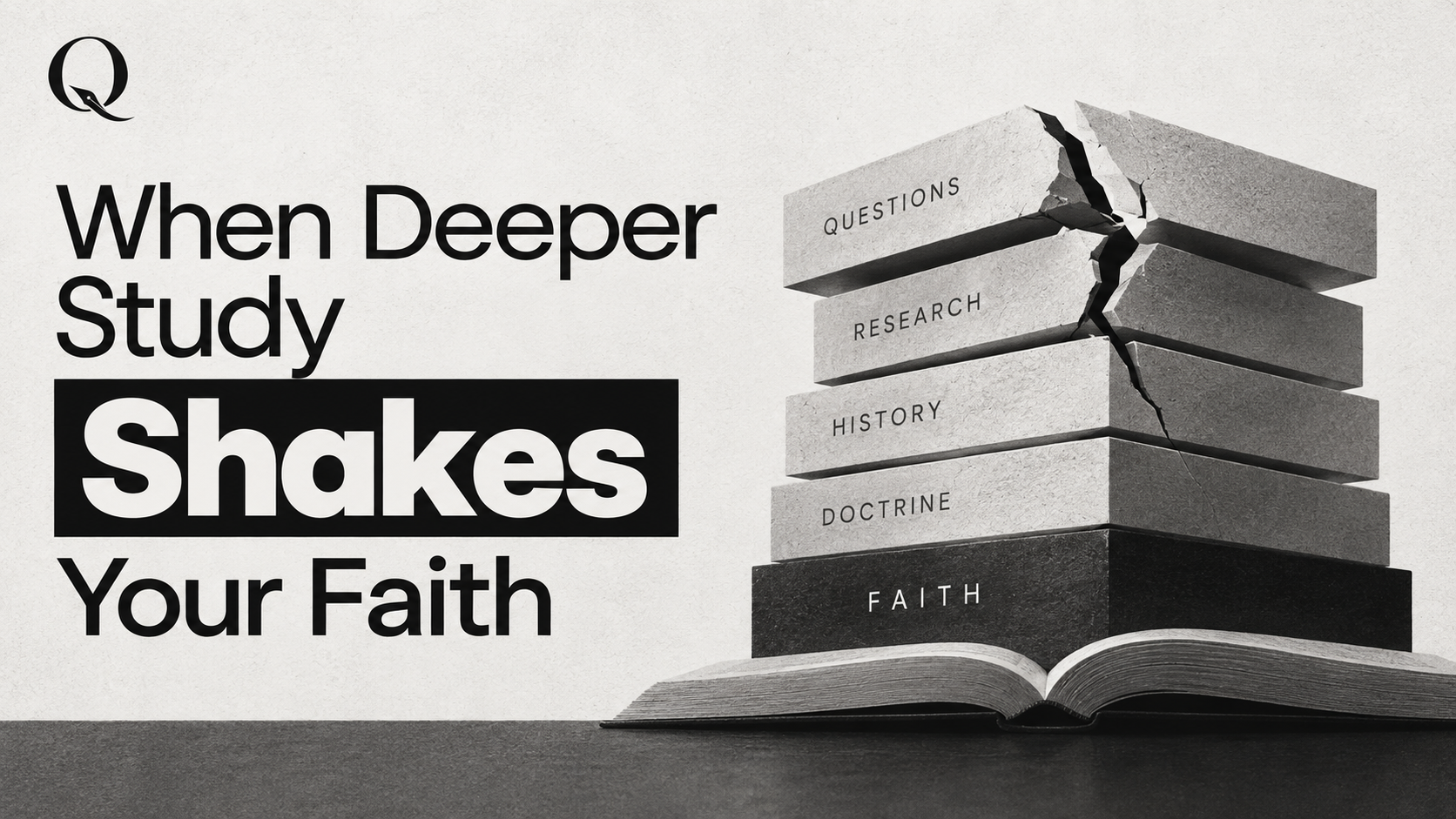
Quando lo studio più profondo scuote la tua fede
La confusione non è tua nemica Conosco due persone. La prima persona ama leggere di teologia e apologetica. Ha trascorso ore ad ascoltare podcast, a guardare dibattiti dottrinali o…
In questo saggio, AI ha aiutato a cercare, verificare, tradurre e curare; argomento e conclusioni sono dell’autore.
Il filo dell’argomentazione, il significato e le conclusioni sono dell’autore. Scegliere a quali fonti affidarsi e come comprenderle è giudizio dell’autore, non degli strumenti.
Gli strumenti AI sono stati usati per cercare fonti, confrontare con esse le affermazioni, leggere ampiamente sul tema, portare il testo tra inglese e vietnamita e aiutare con grammatica, chiarezza e ritmo delle frasi.
Ciò che hanno trovato è materiale da valutare, non un verdetto. L’autore ha deciso cosa dire, cosa omettere e cosa significa questo saggio.
Il saggio esce con il nome dell’autore. L’autore ne risponde, compreso ogni errore che dovesse emergere.
Parallelo
La confusione non è tua nemica
Conosco due persone.
La prima persona ama leggere di teologia e apologetica. Ha trascorso ore ad ascoltare podcast, a guardare dibattiti dottrinali online e a cercare di comprendere a fondo tutti gli argomenti intellettuali. Eppure, alla fine, ha scelto di abbandonare tutto.
La seconda persona ha scavato altrettanto in profondità. Ma più andava in profondità, più il terreno cedeva sotto i suoi piedi. Una notte, il peso di tutto questo divenne così opprimente che si trovò vicino a un precipizio che non voglio nominare qui.
Nessuno dei due è superficiale. Prendono la loro fede più seriamente della maggior parte di noi. Ed è stata proprio quella serietà a spingerli al limite. Ecco la cosa di cui nessuno ti avvisa: più profondamente comprendi, più è facile che tutto vacilli.
Scrivo questo perché anch'io mi sono trovato su quel terreno traballante, mai del tutto al limite, ma abbastanza vicino da sapere come ci si sente quando un pavimento di cui ti fidavi si ammorbidisce sotto di te.
C'è un termine per descriverlo: decostruzione. È il momento in cui esci dalla fede ordinata e in bianco e nero che hai ereditato dalla tua famiglia o dalla chiesa, e inizi a sollevare i mattoni per esaminarli tu stesso per la prima volta. Sembra che il pavimento stia cedendo. James Fowler, che ha trascorso anni a studiare lo sviluppo della fede, offre una lente che può aiutarci a comprendere questo processo. Per alcune persone, può essere un modo in cui la fede cresce anziché semplicemente morire, un passaggio dalla fede presa in prestito a una fede di cui si sono assunti la responsabilità. Ma il modello non è una diagnosi e non promette una destinazione per tutti.
A volte lo scuotimento è la fede che prende la sua forma propria. Ma non dovremmo considerare ogni frattura una destinazione conosciuta.
Tim Keller lo ha detto senza mezzi termini: “Una fede senza dubbi è come un corpo umano senza anticorpi”. Chi non ha mai lottato con domande difficili probabilmente non ha una fede più forte del resto di noi. Semplicemente non ha ancora avuto bisogno degli anticorpi.
Quindi, prima di andare oltre, ecco la prima cosa che vale la pena dire: la tua confusione non è tua nemica. Non stai facendo troppe domande. Nessuno ti ha mai dato una mappa per mostrare dove effettivamente appartengono quelle domande, tutto qui.
Ma questa è una lente, non una diagnosi che ti riguarda. Una crisi può essere intellettuale, morale, esistenziale, segnata dall’abuso nella chiesa o intrecciata alla depressione e all’esaurimento. Cause diverse richiedono forme diverse di cura. Non tutti ricostruiscono la fede allo stesso modo. Alcuni cambiano tradizione, interrompono la pratica religiosa o abbandonano la religione. La dignità e la sicurezza di chi soffre non dipendono dal raggiungimento della conclusione auspicata dall’autore.
Perché sapere di più ti fa vacillare
Immagina di ricevere una mappa in cui ogni punto di riferimento è disegnato con le stesse identiche dimensioni. Il momento della fine dei tempi, il modo di battezzare, il mistero della Trinità o la possibilità di bere vino: tutto con lo stesso carattere. Quando ogni dottrina sembra ugualmente importante, anche solo scoprire che i cristiani non sono d'accordo su un dettaglio è sufficiente per far vacillare tutte le tue fondamenta. Se hanno torto riguardo al sabato, forse hanno torto anche riguardo alla risurrezione?
Questa è la trappola. La via d'uscita non è leggere di meno. Consiste nell'avere una mappa migliore.
Nel 2005, un teologo di nome Albert Mohler ha preso in prestito un concetto dal pronto soccorso: il triage. Quando arrivano una dozzina di pazienti contemporaneamente, le infermiere devono smistarli. Quale infortunio è pericoloso per la vita, quale può attendere e quale è solo un graffio? Senza questa valutazione, o tutti verranno trattati allo stesso modo, oppure tutti verranno trattati come pazienti in condizioni critiche. Mohler sosteneva che la nostra fede necessita di un simile atto di discernimento. Nel 2020, Gavin Ortlund ha scritto un libro dedicato a questo: Trovare le colline giuste su cui morire. Entrambe sono euristiche pastorali della teologia protestante, non una scala stabilita dalla Scrittura stessa.
L’idea centrale è semplice, ma allontana le persone dal limite: le tradizioni non attribuiscono a ogni dottrina lo stesso peso. Alcune confessioni costituiscono un ampio fondamento cristiano. Altre credenze tracciano confini tra le chiese, mentre le tradizioni non sono d'accordo sulla loro relazione con la salvezza. E alcune questioni chiamano i credenti a esercitare la coscienza nell’amore. Il triage ci aiuta a porre domande migliori; non ci dà il permesso di giudicare rapidamente chi appartiene a Dio.
Come leggere lo schema: è un modello protestante, non una scala stabilita dalla Bibbia né una mappa neutrale per tutte le tradizioni. Ogni verità biblica conta; queste categorie ci aiutano semplicemente a non trattare ogni disaccordo come se avesse la stessa posta in gioco.
La figura riprende il modello a tre livelli di Albert Mohler in «A Call for Theological Triage and Christian Maturity» (pubblicato nel 2005), insieme al suo ampliamento a quattro livelli proposto da Gavin Ortlund in Finding the Right Hills to Die On (Crossway, 2020). È uno strumento di discernimento protestante, non un verdetto ecumenico.
Filtra le tue convinzioni attraverso questi tre livelli e accade qualcosa di strano: la confusione si riduce. Ti rendi conto che la maggior parte dei dibattiti che ti tenevano sveglio la notte non toccano affatto le fondamenta della casa. Sono solo discussioni al secondo e terzo piano. La fondazione è ancora in piedi.
Il fondamento su cui poggiamo tutti
Prima di arrivare a ciò che ci distingue, fermiamoci un secondo su qualcosa che le persone ansiose raramente notano: il terreno comune è sconcertante.
Pensaci: il cattolicesimo romano, l'ortodossia orientale e il protestantesimo — tre rami divisi dagli scismi più aspri della storia — recitano ancora la stessa confessione: il Credo niceno (formulato nel 325 e nel 381). Tutti e tre confessano un Dio trino. Tutti e tre credono che Gesù sia “Dio vero da Dio vero”, della stessa sostanza del Padre, veramente fatto uomo, crocifisso, morto e risorto corporalmente “secondo le Scritture”. E tutti e tre aspettano il suo ritorno.
Il Credo niceno mostra un ampio fondamento condiviso dalle tradizioni cristiane storiche. Ma confessare un credo non significa che esse rispondano allo stesso modo a tutte le domande sull’autorità, sulla chiesa, sui sacramenti e sulla salvezza. La tabella ha lo scopo di mostrare sia il terreno condiviso sia il reale disaccordo, non di decidere l'identità o il destino eterno di una persona da una riga di testo.
La tabella seguente mostra il terreno condiviso (in verde), e solo successivamente le reali differenze, ordinate per livello.
✓ Il fondamento condiviso · tutte e tre le tradizioni lo professano
Il Credo niceno (325/381): un solo Dio trino · Cristo, «Dio vero da Dio vero», della stessa sostanza del Padre · crocifisso, morto e risorto corporalmente «secondo le Scritture». È un’ampia confessione condivisa, non una risposta completa a ogni domanda sull’autorità, sui sacramenti o sulla salvezza.
| Questione | Cattolicesimo romano | Ortodossia orientale | Protestantesimo |
|---|---|---|---|
| Autorità ultima | Scrittura + Sacra Tradizione + Magistero (un unico deposito) | La Scrittura nella vita della Sacra Tradizione: liturgia, Padri, credi e concili | Le confessioni della Riforma considerano la Scrittura la norma ultima; la chiesa e le confessioni di fede aiutano a interpretarla |
| Giustificazione e salvezza | Grazia infusa + fede che coopera con le opere (Trento, 1547) | Theosis: unione con Dio che trasforma la persona (divinizzazione) | Per sola fede (sola fide); un verdetto giuridico, con la giustizia di Cristo imputata al credente |
| L’Eucaristia | Transustanziazione: la sostanza diventa il corpo e il sangue di Cristo | «Il Mistero»: un cambiamento reale, senza una definizione filosofica | Posizioni diverse: memoriale, presenza spirituale o sacramentale |
| Battesimo | Battesimo dei bambini | Battesimo dei bambini (triplice immersione) | Due posizioni: battesimo dei bambini (luterani, presbiteriani, anglicani) o dei credenti (battisti, pentecostali) |
| Governo della chiesa | Primato del papa; infallibilità alle condizioni definite dal Vaticano I | Patriarcati autogovernati (autocefalia), di pari rango | Episcopale, presbiteriano o congregazionalista, a seconda della tradizione |
| La clausola Filioque | Lo Spirito procede dal Padre «e dal Figlio» | Respinta: soltanto «dal Padre» (Credo originale del 381) | Come l’Occidente: «e dal Figlio» |
| Maria · santi · purgatorio | Venerazione + Immacolata Concezione + Assunzione + purgatorio | Venerazione di Maria, ma rifiuto dell’Immacolata Concezione; nessun purgatorio nel senso latino | Rifiuto dell’invocazione dei santi e del purgatorio |
Questa tabella è descrittiva, non una graduatoria neutrale accettata da tutte le tradizioni. Cattolicesimo: Dei Verbum; ortodossia: Orthodox Church in America, Bible; protestantesimo: confessioni della Riforma; terreno comune: il Credo niceno e la Dichiarazione congiunta sulla dottrina della giustificazione del 1999.
Le vere differenze e la domanda sottostante
Non farò finta che le differenze siano solo malintesi. Sono reali e alcune sono profonde. L’autorità è un asse importante, ma non tutti i disaccordi si riducono a chi ha l’ultima parola. Anche il significato, la storia, la chiesa, la salvezza, l’etica e l’esperienza religiosa contano.
Secondo Dei Verbum, il cattolicesimo afferma che la Scrittura e la Sacra Tradizione formano un unico sacro deposito, mentre il Magistero serve e interpreta la Parola piuttosto che stare al di sopra di essa. L'Ortodossia afferma che la Scrittura vive all'interno della Sacra Tradizione, della liturgia, dei Padri, dei credi, dei concili e della vita della Chiesa, non semplicemente all'interno di un elenco di sette concili. Anche le tradizioni protestanti non sono identiche; molte confessioni della Riforma trattano la Scrittura come la norma finale mentre usano ancora i credi e la chiesa per leggere la Scrittura.
Da qui in poi, parlo da una convinzione protestante riformata, senza la pretesa di offrire una mappa neutrale per ogni tradizione o religione. Non sono un teologo e certamente non sono un pastore. Sono solo un cristiano che ha lottato lui stesso con queste esatte domande. Ma ti dirò chiaramente quello in cui credo, perché l'onestà è una specie di rispetto. Credo che la risposta della Riforma sia la più fedele alla Scrittura. Sola scriptura, propriamente inteso, non significa “solo la Bibbia, buttare via tutta la tradizione” (questa è solo scriptura, una distorsione). Significa che la Scrittura è la norma finale attraverso la quale ogni tradizione e insegnamento viene messo alla prova, mentre non è posta sotto una corte umana superiore. Papi, concili e pastori possono tutti sbagliarsi sotto questa convinzione, e tutto deve essere soppesato rispetto alla Parola. Paolo loda i bereani perché “esaminavano quotidianamente le Scritture” per verificare la predicazione che ascoltavano (gli Atti degli Apostoli).
la seconda lettera di Paolo a Timoteo — Tutta la Scrittura è ispirata da Dio e utile per insegnare, riprendere, correggere e educare alla giustizia, affinché l’uomo di Dio sia completo e preparato per ogni opera buona.
Ma l'onestà mi spinge anche a esporre le obiezioni più forti della controparte, e sono davvero forti:
Uno, il canone. La storia della Chiesa mostra l'elenco dei 27 libri del Nuovo Testamento nella lista completa di Atanasio del 367 e nella ricezione dei concili locali a Ippona e Cartagine alla fine del IV secolo. Ma un vescovo che elenca i libri, un concilio che li riceve, l’intera Chiesa che li riconosce e un’affermazione teologica secondo cui quei libri sono ispirati da Dio sono proposizioni diverse. La storia approfondisce la questione dell'autorità; da sola non la risolve.
Due, tradizione. Paolo scrive: “Rimanete saldi e mantenete le tradizioni che vi sono state insegnate da noi, sia con le nostre parole che con le nostre lettere” (la seconda lettera di Paolo ai Tessalonicesi). Ciò dimostra l’importanza dell’insegnamento apostolico sia in forma parlata che scritta nella Chiesa primitiva. Di per sé non identifica ogni tradizione successiva come apostolica.
Tre, la giustificazione. L'unico versetto in tutta la Bibbia che usa la frase "sola fede" dice il contrario: "una persona è giustificata per le opere e non per la sola fede" (la lettera di Giacomo). Una lettura riformata pone questo versetto accanto a la lettera di Paolo ai Romani, la lettera di Paolo ai Galati ed la lettera di Paolo agli Efesini, distinguendo il fondamento della giustificazione dal frutto e dall'evidenza della fede. Questa è una lettura teologica sostanziale, non una soluzione neutra accettata da ogni tradizione.
Quattro, i sacramenti. Cattolici e ortodossi sostengono che i sacramenti, o misteri, non possono essere ridotti a un veicolo esterno. Per loro si tratta di mezzi stabiliti da Cristo ed essenziali per la vita della Chiesa; spiegare un'eccezione non li colloca nella stessa categoria di una pratica meramente facoltativa.
Un ricercatore onesto deve fermarsi proprio qui e rispondere invece di schivare. La risposta della Riforma, in breve, è questa: la chiesa ha riconosciuto il canone, non lo ha creato (proprio come un astronomo trova una stella invece di crearla). Sola scriptura non elimina la tradizione; pone la tradizione sotto il giudizio della Parola. Per quanto riguarda Giacomo, R.C. Sproul lo dice semplicemente: “la fede che giustifica non è mai sola”. Paolo sta parlando del fondamento della giustificazione, Giacomo della sua evidenza e del suo frutto. Lutero, Calvino e Knox avrebbero tutti annuito a Giacomo. Sto presentando questo come una lettura riformata, non come una conclusione neutrale che vincola ogni tradizione.
Quanto alla quarta obiezione relativa alla necessità dei sacramenti, la risposta sta nella distinzione tra nucleo essenziale e veicolo strutturale.
In primo luogo, anche all'interno della teologia cattolica romana tradizionale, il paragrafo 1257 del Catechismo della Chiesa Cattolica afferma: "Dio ha legato la salvezza al sacramento del Battesimo, ma egli stesso non è vincolato dai suoi sacramenti." Questo è il motivo per cui il dogma cattolico riconosce il battesimo di sangue e il battesimo di desiderio. La Chiesa ortodossa orientale condivide un'umiltà simile, affermando spesso: "Sappiamo dov'è la Chiesa, ma non sappiamo dove non è." Confessano i sacramenti come il percorso sicuro stabilito da Cristo, ma si rifiutano di limitare la misericordia sovrana e gratuita di Dio al di fuori di quei rituali.
Una lettura riformata di questo articolo tratta la grazia di Dio e la fiducia in Cristo come il fondamento, con i sacramenti come i mezzi ordinari che Dio usa. Ma il fatto che Dio non sia limitato da un sacramento non prova che cattolici o ortodossi debbano classificare quel sacramento come Livello 2. Una tradizione può affermare che un percorso ordinario è necessario affermando allo stesso tempo la libertà di Dio di mostrare misericordia in circostanze eccezionali. Si tratta di un vero disaccordo da descrivere con umiltà, non di una deduzione che pone fine al dibattito.
La prova biblica più chiara di ciò è il ladrone pentito sulla croce in il Vangelo secondo Luca.
Nel contesto immediato, Gesù è crocifisso tra due criminali, che rappresentano due risposte umane fondamentali alla sofferenza e a Cristo. Il primo lo schernisce, chiedendo il salvataggio immediato. Ma il secondo ladro vive un momento di profonda chiarezza. Rimprovera lo schernitore, ammettendo che la loro punizione è giusta, pur affermando l'innocenza di Gesù. Poi si rivolge a Gesù con fede pura: "Gesù, ricordati di me quando entrerai nel tuo regno."
Fisicamente inchiodato alla croce, quest'uomo morente non poteva ricevere il battesimo in acqua, prendere parte all'Eucaristia o compiere alcun atto religioso. Eppure Gesù risponde: "In verità ti dico, oggi sarai con me in paradiso." Questa dichiarazione di salvezza è assoluta e non comporta condizioni sacramentali.
La salvezza del ladro mostra che Dio può salvare qualcuno che non può percorrere la via ordinaria. In una lettura riformata, illustra la priorità della grazia e della fede. Ciò non prova di per sé che ogni sacramento appartenga al livello 2, perché la teologia cattolica e ortodossa distingue i mezzi ordinari dalla libertà di Dio in casi eccezionali.
Ed ecco qualcosa che un cuore ansioso dovrebbe sapere: il divario può essere più ridotto di quanto supponiamo su alcune questioni. Nel 1999, la Federazione luterana mondiale e la Chiesa cattolica hanno firmato la Dichiarazione congiunta sulla dottrina della giustificazione, parlando di un “consenso sulle verità fondamentali”. I metodisti lo affermarono nel 2006 e gli anglicani nel 2016. Questa non è una piena convergenza sull’autorità, sulla chiesa, sui sacramenti o su ogni descrizione della salvezza. Il terreno condiviso è importante, ma non cancella le restanti differenze.
Le differenze sono reali. Ma alla base di tutte c’è una sola domanda: chi ha l’ultima parola? Rispondi e ciò che hai in mano sarà una bussola, non una tromba d'aria.
"Ma che dire del sabato e del bicchiere di vino?"
Veniamo ora alle lotte quotidiane, quelle che mettono in discussione le amicizie e dividono piccoli gruppi: osservare il sabato del settimo giorno o adorare la domenica? Può un cristiano bere?
Quanto al giorno di culto, circola un mito popolare secondo cui l'imperatore Costantino avrebbe "spostato" il culto alla domenica nel 321. Le testimonianze cristiane conservate di cui disponiamo, incluso il Didaché (fine del I secolo), la lettera di Ignazio ai Magnesiani (intorno al 107) e la descrizione di Giustino Martire (intorno al 155), mostrano riunioni nel primo giorno prima della legge di Costantino. La legge del 321 diede a quel giorno forza civile; non è una prova che Costantino abbia inventato il raduno domenicale. Ma il raduno del primo giorno non risolve da solo ogni questione relativa alla sostituzione del sabato. I cristiani del settimo giorno, compresi gli avventisti del settimo giorno, leggono il quarto comandamento in modo diverso e lo considerano non abrogato.
Quanto all'alcol, la Scrittura parla di un uso moderato in alcuni contesti (il libro dei Salmi; il miracolo di Gesù a Cana, il Vangelo secondo Giovanni; il consiglio a Timoteo di “usare un po' di vino”, la prima lettera di Paolo a Timoteo) e condanna l'ubriachezza (la lettera di Paolo agli Efesini; il primo passo citato — il libro dei Proverbi e il secondo passo citato — il libro dei Proverbi). In molti contesti biblici i termini e il contesto si riferiscono al vino fermentato, ma un'osservazione linguistica non deve diventare una regola assoluta per ogni occorrenza. Il movimento per la temperanza del diciannovesimo secolo contribuì a rendere popolare l'astinenza totale in alcune tradizioni protestanti; non era l'unica origine di ogni forma di autocontrollo. L’astinenza può essere una scelta saggia, ma non deve diventare una legge imposta a tutti.
Ciò che mi colpisce è che la Scrittura parla direttamente di questo tipo di controversie. In la lettera di Paolo ai Romani, Paolo nomina giorni e cibo e bevanda, quindi enfatizza coscienza, fede e amore. Non permette che il forte disprezzi il debole, né che la libertà diventi motivo di inciampo del fratello. la lettera di Paolo ai Romani è una guida potente per vivere in mezzo al disaccordo, ma deve essere letto nel contesto piuttosto che usato come timbro automatico su ogni dibattito moderno.
la lettera di Paolo ai Romani — Uno considera un giorno superiore a un altro; un altro considera uguali tutti i giorni. Ciascuno sia pienamente convinto nella propria mente.
la lettera di Paolo ai Colossesi — Nessuno dunque vi giudichi in fatto di cibo o di bevanda, o riguardo a una festa, a un novilunio o a un sabato. Queste cose sono un’ombra di quelle future, ma la realtà appartiene a Cristo.
Questo potrebbe essere un esempio di adiaphora, “cose indifferenti”, questioni che non dovrebbero diventare un metro per giudicare ogni credente. La libertà cristiana comporta ancora responsabilità, amore e il rifiuto di far inciampare un fratello. Non vale la pena perdere un fratello per questa collina.
Un concilio sotto la Parola
Non posso convocare Dio a una riunione e non posso trasformare la mia voce in un oracolo diretto da parte sua. Ma possiamo porre domande difficili alla luce della Scrittura e lasciare che diverse voci si incontrino con umiltà. Un tale concilio ascolterebbe almeno queste voci:
- La Scrittura: I bereani esaminarono le Scritture per mettere alla prova la predicazione (gli Atti degli Apostoli). Paolo dice di mettere alla prova ogni cosa e di attenersi a ciò che è buono (la prima lettera di Paolo ai Tessalonicesi), rifiutandosi di rifuggire dall'intero consiglio di Dio (gli Atti degli Apostoli). Una frase estrapolata dal suo contesto non dovrebbe diventare un martello che pone fine alla conversazione.
- La voce del protestante riformato: La Scrittura è la norma finale e il triage teologico aiuta a distinguere le affermazioni fondamentali da quelle discutibili. Ma il triage è un’euristica teologica, non una licenza per chiamare ribellione ogni altra convinzione.
- La voce cattolica: Scrittura e Sacra Tradizione appartengono ad un unico deposito di fede, mentre il Magistero deve servire la Parola. Questa risposta costringe un protestante a rispondere alla questione del canone e alla domanda su chi può dare un'interpretazione vincolante.
- La voce ortodossa: La Scrittura non è separata dalla liturgia, dai Padri, dai credi, dai concili e dalla vita della Chiesa. Questa risposta ci ricorda che leggere fedelmente non significa vincere un dibattito solo con una citazione.
- La voce della persona ferita: Se una crisi deriva da un abuso spirituale, minacce, vergogna, perdono forzato, sottomissione forzata o una chiesa che nega il danno, la sicurezza e i confini vengono prima del ritorno in una comunità. Parlare con un pastore non è sempre sicuro; potrebbe essere necessario un professionista indipendente.
- La voce dello scettico: Prove, interpretazione, tradizione, inferenza e ciò che rimane SCONOSCIUTO. La mancanza di prove attuali non è automaticamente la prova che qualcosa sia falso, ma una lacuna nella conoscenza non dovrebbe essere automaticamente definita un miracolo.
Dopo aver ascoltato queste voci, la mia conclusione operativa è questa: attieniti saldamente a ciò che la Scrittura chiarisce, leggi i passaggi controversi nel contesto, verifica l’insegnamento sia con la verità che con il frutto, nomina la tradizione da cui stai parlando e lascia che l’amore governi il disaccordo. Questo non è “tutte le parti hanno ragione”. È un modo di cercare la verità senza trasformare la convinzione in disprezzo.
Quindi, alla fine, quale parte ha ragione?
Questa è la domanda che sei venuto qui a porre, e non la eviterò.
Nella confessione condivisa, possiamo vedere tutte e tre le tradizioni unite nell’affermare verità importanti sulla Trinità, sulla divinità di Cristo e sulla risurrezione. Ma il Credo niceno non risolve ogni questione sull’autorità, sulla salvezza o su come una persona appartiene alla Chiesa. Il mio amico che “sa tutto e non crede” potrebbe rifiutare il nucleo condiviso, ma non ho il diritto di diagnosticare le sue motivazioni o il suo destino spirituale da un racconto.
Sulle questioni controverse, l’autorità rimane una questione decisiva, e ho risposto sopra. Come cristiano protestante, ritengo che la Scrittura sia la norma finale e che il vangelo della grazia — la salvezza per grazia mediante la fede — sia la collina su cui vale la pena morire. Lo sostengo con convinzione, non con disprezzo. Posso definire mio fratello un cristiano cattolico o ortodosso che confessa Cristo, pur ammettendo che le nostre tradizioni non sono d'accordo su questioni serie. Questa tabella non sostituisce il giudizio di Dio su una persona.
Quello che ho appena detto non è relativismo, non "ognuno ha ragione a modo suo, chi può dirlo". Ma non mi permette nemmeno di considerare minore ogni disaccordo. Il triage è uno strumento per chiedere cosa viene contestato, quali sono le prove e cosa ne consegue. Credo che alcune risposte siano migliori e devo al lettore le ragioni, la Scrittura, la storia e i limiti della mia lettura.
Quattro secoli fa, nel mezzo della Guerra dei Trent'anni, una formula spesso attribuita al teologo luterano Rupertus Meldenius, intorno al 1626–27, divenne una bussola per molte persone. Le origini di questa formula e le forme precedenti rimangono contestate, quindi non voglio presentare l'attribuzione come un fatto storico accertato:
Nelle cose essenziali, unità; nelle cose non essenziali, la libertà; in ogni cosa, la carità.
Questa è la risposta. Non “tutte le parti hanno ragione” e non “solo il mio campo si salva”. È questa: tieni stretto il nucleo, lascia flessibili i confini e poni l’amore sopra ogni cosa.
A chi sta sul bordo
Nota sulla sicurezza: Questa sezione menziona la disperazione e i pensieri suicidi. Se hai un piano, un intento o non sei sicuro di poter stare al sicuro, chiama i servizi di emergenza locali o vai subito al pronto soccorso. Non restare solo. Dillo a una persona di fiducia e contatta un professionista della salute mentale. Questo articolo non sostituisce le cure urgenti.
Permettimi di smettere un attimo di discutere, perché forse non sei venuto qui per un diagramma. Forse sei arrivato nell'oscurità, come la seconda persona che ho menzionato all'inizio, quella la cui confusione l'ha portata vicino a un limite che non nominerò alla leggera. Se sei tu, per favore ascolta lentamente queste parole.
Il dubbio non è un verdetto contro di te. La Scrittura non è imbarazzata dai dubbiosi. Quando Tommaso disse che non avrebbe creduto finché non avesse toccato le ferite, Gesù non lo rimproverò. Tese la mano. Quando Giovanni Battista, seduto in prigione, mandò a dire: “Sei tu colui che deve venire?”, il Signore non svergognò la sua debole fede. Gli fornì le prove. C'è persino un salmo (il libro dei Salmi) che va dall'oscurità all'oscurità, terminando con "l'oscurità è la mia più cara amica". E Dio lo ha comunque lasciato nella Bibbia, come a dire che il lamento onesto è anche preghiera.
il Vangelo secondo Marco — Io credo; aiuta la mia incredulità!
Questa potrebbe essere la preghiera più onesta di tutta la Scrittura: un uomo che racchiude fede e debolezza nello stesso respiro, e Gesù gli risponde.
E ascolta questa parte chiaramente. Se la disperazione è diventata così grave che hai un intento, un piano o non sei sicuro di poter stare al sicuro, questo non è più solo un problema teologico. Chiama i servizi di emergenza locali o vai al pronto soccorso, non restare da solo, dillo a una persona di fiducia e contatta oggi stesso un professionista della salute mentale. Un pastore può aiutarti se è davvero una persona degna di fiducia e rispetta i tuoi limiti, ma non dovrebbe essere il tuo unico supporto. Se una chiesa o un pastore ti ha fatto del male, non sei obbligato a tornare in pericolo per dimostrare la tua fede; cerca prima un aiuto indipendente.
Per quanto riguarda ciò che Dio fa di qualcuno che non è riuscito a uscire da quell'oscurità, le tradizioni cristiane non rispondono tutte a questa domanda allo stesso modo, e non è questo il luogo in cui posso giudicare per conto di Dio o risolvere la questione per tuo conto. Ciò che posso dire in base alla mia convinzione è che Dio vede tutto il peso del dolore, della malattia, della confusione e dell’esaurimento dietro un pensiero del genere più chiaramente di quanto chiunque di noi potrebbe mai fare. Questa consolazione non deve mai diventare un motivo per minimizzare il pericolo immediato; il primo compito è mantenere la persona al sicuro.
Per quanto riguarda la paura di “perdere la fede”, i numeri raccontano una storia molto diversa da quella paura.
Alcuni lettori potrebbero riconoscersi nel passaggio dal livello 3 al 4. È qui che la fede ereditata viene esaminata. Fowler offre una chiave di lettura descrittiva, non una diagnosi clinica né una promessa spirituale. Alcuni ricostruiscono la fede, cambiano tradizione, si fermano o lasciano la religione; nessuno dovrebbe essere costretto a un unico esito.
Modello: James W. Fowler, Stages of Faith (1981), usato qui come chiave interpretativa, non come diagnosi. Tim Keller: «Una fede senza qualche dubbio è come un corpo umano senza anticorpi».
Contesto · le persone senza appartenenza religiosa negli Stati Uniti
È vero: la loro quota è in aumento. Ma Pew (2025) sottolinea che il calo dei cristiani si è arrestato, con una quota rimasta intorno al 62% tra il 2019 e il 2024.
Tra i cristiani che hanno affrontato dubbi seri (il 65% ne ha avuti)…
Tutte le percentuali seguenti descrivono gli esiti all’interno del gruppo che aveva avuto dubbi: fede più forte per il 53%, invariata per il 28%, più debole per il 7%, persa per il 12%. Non vanno presentate come percentuali dell’intero campione.
42% degli adulti statunitensi afferma di aver «decostruito» la fede della propria giovinezza. Il dato descrive quanto sia diffusa questa esperienza, non le sue cause o i suoi esiti. Alcuni ricostruiscono la fede, altri cambiano tradizione e altri ancora lasciano la religione.
Fonti: Pew Research Center, Religious Landscape Study 2023–24 (n=36.908) e rapporto del 2025; Barna Group, studio sul dubbio spirituale del 2017 (n=1.015); Barna/Gloo, State of the Church 2024 (n=2.003).
Leggi quei numeri lentamente, ma non fargli dire più di quello che sanno. La tua confusione non è un verdetto. Alcune persone riferiscono di una fede più forte; altri non riferiscono alcun cambiamento, fede più debole o perdita di fede. Un sondaggio non dimostra che il dubbio abbia causato un risultato, e nessuno ha bisogno di fingere di stare bene per il bene di un grafico.
Una settimana per testare le domande senza romperti
Se vuoi continuare onestamente, non aprire altre venti schede contemporaneamente. Per una settimana, scegli una domanda e fai cinque cose:
- Scrivila come una domanda verificabile, piuttosto che "è tutto falso?"
- Etichetta ciascuna affermazione FATTO, INTERPRETAZIONE, TRADIZIONE o SCONOSCIUTO.
- Leggi il passaggio biblico nel contesto, quindi leggi una fonte ufficiale della tradizione messa in discussione.
- Leggi una fonte che supporta l'affermazione e una che la contesta. Non utilizzare una citazione per rappresentare tutti i cattolici, gli ortodossi o i protestanti.
- Parla con qualcuno competente e degno di fiducia. Se è coinvolto il rischio di abuso, depressione o autolesionismo, dai la priorità a un professionista indipendente e a un aiuto urgente.
Per ascoltare pastori e predicatori lavorare attraverso il dubbio, inizia con Tim Keller, “Di fronte al dubbio”, Tim Keller, “Fede come comprensione”, John Piper, “Lotti con i dubbi?” e Don Carson, “Il dubbio”. Queste sono voci protestanti, non verdetti che sostituiscono la lettura della Scrittura e il controllo delle fonti.
Per sentire le tradizioni parlare da sole, leggi Dei Verbum, Il resoconto della Bibbia della Chiesa ortodossa in America e Dichiarazione congiunta sulla dottrina della giustificazione. Per verificare i dati, consulta Barna sul dubbio e Barna/Gloo sulla decostruzione. Queste fonti descrivono cose diverse, quindi non dovrebbero essere fuse in un'unica storia causale.
Una bussola, non una gabbia
Penso che abbiamo frainteso a cosa serve la dottrina.
L'abbiamo immaginata come una gabbia, un sistema sigillato che ci dà la certezza assoluta su tutto, affinché nessuna domanda possa restare in vita. Quindi, quando una sbarra della gabbia si rompe, pensiamo che l'intera prigione stia crollando e andiamo nel panico.
Ma la dottrina è una bussola, e non è mai stata una gabbia. Una bussola non risponde a tutte le domande sul terreno; non ti parlerà di ogni pietra sul sentiero. Fa una cosa, e la fa completamente: ti mantiene orientato verso nord, anche quando la nebbia è così fitta che non riesci a vedere la strada. Per un cristiano, quel nord è Cristo.
Lo studio profondo che una volta ti scuoteva può diventare proprio ciò che ti radica, se mantieni ciò che ritieni fondamentale pur conservando umiltà nelle questioni secondarie. Qualcuno che sa molto potrebbe ancora essere alla ricerca; qualcuno al limite potrebbe aver bisogno sia di speranza che di cure professionali. Se sei tu, ecco l'ultima parola: non devi sapere tutto per essere al sicuro. Cerca la verità, una persona degna di fiducia e il prossimo piccolo passo.
Non devi avere ragione su tutto per essere sostenuto da Cristo. Devi solo essere sostenuto da lui.
The confusion is not your enemy
I know two people.
The first is someone who loves reading theology and apologetics. He spent hours listening to podcasts, watching doctrinal debates online, and trying to grasp all the intellectual arguments inside out. Yet, in the end, he chose to walk away from it all.
The second dug just as deep. But the deeper he went, the more the ground gave way beneath him. One night, the weight of it became so heavy that he stood close to an edge I don't want to name here.
Neither of them is shallow. They take their faith more seriously than most of us do. And it was that very seriousness that pushed them to the edge. Here is the thing no one warns you about: the deeper you understand, the easier it is for everything to wobble.
I'm writing this because I've stood on that shaky ground myself, never quite at the edge, but close enough to know what it feels like when a floor you trusted goes soft under you.
There's a term for it: deconstruction. It's the moment you step out of the tidy, black-and-white faith you inherited from your family or church, and start prying up the bricks to look at them yourself for the first time. It feels like the floor is dropping out. James Fowler, who spent years studying faith development, offers a lens that can help us understand this process. For some people, it can be one way faith grows rather than simply dies, a movement from borrowed faith to faith they have taken responsibility for themselves. But the model is not a diagnosis, and it does not promise one destination for everyone.
Sometimes the shaking is faith growing into its own shape. But we should not call every fracture a known destination.
Tim Keller put it bluntly: “A faith without some doubts is like a human body without any antibodies in it.” Someone who's never wrestled with hard questions probably isn't stronger in faith than the rest of us. They just haven't needed the antibodies yet.
So before going any further, here's the first thing worth saying: your confusion is not your enemy. You're not asking too many questions. Nobody ever handed you a map to show where those questions actually belong, that's all.
But this is a lens, not a diagnosis of you. A crisis may be intellectual, moral, existential, shaped by church abuse, or entangled with depression and exhaustion. Different causes need different kinds of care. Not everyone reconstructs faith in the same way. Some change traditions, pause religious practice, or leave religion. A hurting person's dignity and safety do not depend on reaching the conclusion the writer hopes for.
Why more knowledge makes you wobble
Picture being handed a map where every landmark is drawn the exact same size. The timing of the end times, how to baptize, the mystery of the Trinity, or whether you can drink wine—all in the same font. When every doctrine looks equally important, just finding out that Christians disagree on one detail is enough to make your entire foundation shake. If they're wrong about the Sabbath, maybe they're wrong about the resurrection, too?
That's the trap. The way out isn't reading less. It's getting a better map.
In 2005, a theologian named Albert Mohler borrowed a concept from the ER: triage. When a dozen patients rush in at once, the nurses have to sort them. Which injury is life-threatening, which can wait, and which is just a scratch? Skip the sorting, and either everyone gets treated the same, or everyone is treated as critical. Mohler argued that our faith needs a similar act of discernment. In 2020, Gavin Ortlund wrote a book dedicated to this: Finding the Right Hills to Die On. Both are pastoral heuristics from Protestant theology, not a scale established by Scripture itself.
The core idea is simple, but it pulls people back from the edge: traditions do not assign every doctrine the same weight. Some confessions form a broad Christian bedrock. Other beliefs draw lines between churches, while traditions disagree about their relation to salvation. And some matters call believers to exercise conscience in love. Triage helps us ask better questions; it does not give us permission to judge quickly who belongs to God.
How to read it: this is a Protestant framework, not a biblical scale or a neutral map for every tradition. Every biblical truth matters; the labels simply keep us from treating every dispute as if it carried the same stakes.
This figure uses Albert Mohler's three-tier frame from “A Call for Theological Triage and Christian Maturity” (posted 2005), alongside Gavin Ortlund's four-level expansion in Finding the Right Hills to Die On (Crossway, 2020). It is a Protestant heuristic, not an ecumenical verdict.
Filter your beliefs through these three tiers, and something strange happens: the confusion shrinks. You realize that most of the debates that used to keep you up at night aren't touching the foundation of the house at all. They're just arguments on the second and third floors. The foundation is still standing.
The bedrock we all stand on
Before we get to what sets us apart, let's stop for a second on something anxious people rarely notice: the common ground is staggering.
Think about it: Roman Catholicism, Eastern Orthodoxy, and Protestantism—three branches split by the most bitter schisms in history—still recite the very same confession: the Nicene Creed (settled in 325 and 381). All three confess one triune God. All three believe Jesus is “true God from true God,” of one being with the Father, truly made man, crucified, dead, and bodily resurrected “in accordance with the Scriptures.” And all three are waiting for his return.
The Nicene Creed shows a broad bedrock shared by historic Christian traditions. But confessing one creed does not mean they answer every question about authority, church, sacraments, and salvation in the same way. The table is meant to show both shared ground and real disagreement, not to decide a person's identity or eternal destiny from one line of text.
The table below shows that shared ground (in green), and only then the real differences, sorted by tier.
✓ The shared bedrock · all three confess it
The Nicene Creed (325/381): one triune God · Christ “true God from true God,” consubstantial with the Father · crucified, died and bodily risen “in accordance with the Scriptures.” It is a broad shared confession, not a complete answer to every question about authority, sacraments, or salvation.
| Question | Roman Catholic | Eastern Orthodox | Protestant |
|---|---|---|---|
| Final authority | Scripture + Sacred Tradition + Magisterium (one deposit) | Scripture within the life of Holy Tradition: liturgy, Fathers, creeds, and councils | Reformation confessions treat Scripture as the final norm; church and confessions aid interpretation |
| Justification / salvation | Infused grace + faith cooperating with works (Trent, 1547) | Theosis: transformative union with God (deification) | By faith alone (sola fide); a forensic verdict, Christ's righteousness imputed |
| The Eucharist | Transubstantiation: the substance becomes Christ's body & blood | “The Mystery”: a real change, left philosophically undefined | A range: memorial, spiritual presence, or sacramental |
| Baptism | Infant baptism | Infant baptism (triple immersion) | Split: infant (Lutheran, Presbyterian, Anglican) vs believer's (Baptist, Pentecostal) |
| Church government | Papal primacy; infallibility under Vatican I's defined conditions | Self-governing patriarchates (autocephaly), equal in rank | Episcopal / presbyterian / congregational, varies |
| The Filioque clause | The Spirit proceeds from the Father “and the Son” | Rejected, “from the Father” only (original 381 Creed) | With the West: “and the Son” |
| Mary · saints · purgatory | Veneration + Immaculate Conception + Assumption + purgatory | Veneration of Mary but rejects the Immaculate Conception; no Latin purgatory | Rejects invocation of saints and purgatory |
This table is descriptive, not a neutral ranking accepted by every tradition. Catholic: Dei Verbum; Orthodox: Orthodox Church in America, Bible; Protestant: Reformation confessions; shared ground: the Nicene Creed and the 1999 JDDJ.
The real differences, and the question underneath them all
I won't pretend the differences are just misunderstandings. They are real, and some run deep. Authority is one important axis, but not every disagreement reduces to who has the final say. Meaning, history, church, salvation, ethics, and religious experience matter too.
According to Dei Verbum, Catholicism says Scripture and Sacred Tradition form one sacred deposit, while the Magisterium serves and interprets the Word rather than standing above it. Orthodoxy says Scripture lives within Holy Tradition, liturgy, the Fathers, creeds, councils, and the life of the Church, not merely within a list of seven councils. Protestant traditions are not identical either; many Reformation confessions treat Scripture as the final norm while still using creeds and the church to read Scripture.
From here on, I am speaking from a Reformed Protestant conviction, not pretending to offer a neutral map for every tradition or religion. I’m no theologian, and I'm certainly not a pastor. I’m just a Christian who has wrestled with these exact questions himself. But I'll tell you straight what I believe, because honesty is its own kind of respect. I believe the Reformation’s answer is the most faithful to Scripture. Sola scriptura, properly understood, doesn't mean “only the Bible, throw out all tradition” (that's solo scriptura, a distortion). It means Scripture is the final norm by which every tradition and teaching is tested, while it is not placed beneath a higher human court. Popes, councils, and pastors can all be wrong under this conviction, and all must be weighed against the Word. Paul praises the Bereans because they “examined the Scriptures daily” to test the preaching they heard (Acts).
"All Scripture is breathed out by God and profitable for teaching, for reproof, for correction, and for training in righteousness, that the man of God may be complete, equipped for every good work."
— Paul’s second letter to Timothy
But honesty also makes me lay out the other side's strongest objections, and they really are strong:
One, the canon. Church history shows the 27-book New Testament list in Athanasius's full list of 367 and in the reception of local councils at Hippo and Carthage late in the fourth century. But a bishop listing books, a council receiving them, the whole Church recognizing them, and a theological claim that those books are God-breathed are different propositions. The history deepens the authority question; it does not settle it by itself.
Two, tradition. Paul writes: “Stand firm and hold to the traditions that you were taught by us, either by our spoken word or by our letter” (Paul’s second letter to the Thessalonians). That shows the importance of apostolic teaching in both spoken and written form in the early Church. It does not, by itself, identify every later tradition as apostolic.
Three, justification. The one verse in the whole Bible that uses the phrase “faith alone” says the opposite: “a person is justified by works and not by faith alone” (James’s letter). A Reformed reading sets this beside Paul’s letter to the Romans, Paul’s letter to the Galatians, and Paul’s letter to the Ephesians, distinguishing the ground of justification from the fruit and evidence of faith. That is a substantial theological reading, not a neutral solution accepted by every tradition.
Four, the sacraments. Catholics and Orthodox argue that sacraments, or mysteries, cannot be reduced to an external vehicle. For them, these are means established by Christ and essential to the life of the Church; explaining an exception does not place them in the same category as a merely optional practice.
An honest seeker has to stop right here and answer instead of dodging. The Reformation's reply, in short, is this: The church recognized the canon, it didn't create it (just as an astronomer finds a star rather than creating it). Sola scriptura doesn't throw out tradition; it places tradition beneath the judgment of the Word. As for James, R.C. Sproul put it simply: “the faith that justifies is never alone.” Paul is talking about the ground of justification, James about its evidence and fruit. Luther, Calvin, and Knox would all nod along with James. I am presenting this as a Reformed reading, not as a neutral conclusion binding every tradition.
As for the fourth objection regarding the necessity of sacraments, the answer lies in the distinction between the essential core and the structural vehicle.
First, even within mainstream Roman Catholic theology, paragraph 1257 of the Catechism of the Catholic Church states: "God has bound salvation to the sacrament of Baptism, but he himself is not bound by his sacraments." This is why Catholic dogma recognizes the baptism of blood and the baptism of desire. The Eastern Orthodox Church shares a similar humility, often stating: "We know where the Church is, but we do not know where she is not." They confess the sacraments as the sure path established by Christ, yet they refuse to limit God's sovereign and free mercy outside of those rituals.
A Reformed reading of this article treats God's grace and trust in Christ as the foundation, with the sacraments as the ordinary means God uses. But the fact that God is not limited by a sacrament does not prove that Catholics or Orthodox should classify that sacrament as Tier 2. A tradition can affirm an ordinary path as necessary while also affirming God's freedom to show mercy in exceptional circumstances. That is a real disagreement to describe humbly, not a deduction that ends the debate.
The clearest biblical evidence for this is the penitent thief on the cross in Luke’s Gospel.
In the immediate context, Jesus is crucified between two criminals, representing two fundamental human responses to suffering and to Christ. The first mocks him, demanding immediate rescue. But the second thief experiences a moment of profound clarity. He rebukes the mocker, admitting that their punishment is just, while affirming Jesus' innocence. He then turns to Jesus with pure faith: "Jesus, remember me when you come into your kingdom."
Physically pinned to the cross, this dying man could not receive water baptism, partake in the Eucharist, or perform any religious deeds. Yet Jesus replies: "Truly, I say to you, today you will be with me in paradise." This declaration of salvation is absolute and carries no sacramental conditions.
The thief's salvation shows that God can save someone who cannot take the ordinary path. In a Reformed reading, it illustrates the priority of grace and faith. It does not by itself prove that every sacrament belongs in Tier 2, because Catholic and Orthodox theology distinguishes ordinary means from God's freedom in exceptional cases.
And here's something an anxious heart should know: the gap can be narrower than we assume on some questions. In 1999, the Lutheran World Federation and the Catholic Church signed the Joint Declaration on the Doctrine of Justification, speaking of a “consensus in basic truths.” The Methodists affirmed it in 2006, the Anglicans in 2016. That is not full convergence on authority, church, sacraments, or every account of salvation. Shared ground matters, but it does not erase the remaining differences.
The differences are real. But underneath all of them lies a single question: who has the final say? Answer it, and what you're holding is a compass, not a whirlwind.
“But what about the Sabbath, and the glass of wine?”
Now for the very everyday fights, the ones that fray friendships and split small groups: keep the seventh-day Sabbath, or worship on Sunday? Can a Christian drink?
On the day of worship, there's a popular myth that the emperor Constantine “switched” worship to Sunday in 321. The surviving Christian witnesses we have, including the Didache (late first century), Ignatius's letter to the Magnesians (around 107), and Justin Martyr's description (around 155), show first-day gatherings before Constantine's law. The 321 law gave that day civil force; it is not evidence that Constantine invented Sunday gathering. But first-day gathering does not by itself settle every question about replacing the Sabbath. Seventh-day Christians, including Seventh-day Adventists, read the fourth commandment differently and regard it as unrepealed.
On alcohol, Scripture speaks of moderate use in some contexts (the book of Psalms; Jesus's miracle at Cana, John 2; the advice to Timothy to “use a little wine,” Paul’s first letter to Timothy) and condemns drunkenness (Paul’s letter to the Ephesians; first cited passage in the book of Proverbs and second cited passage in the book of Proverbs). In many biblical contexts the word and setting refer to fermented wine, but a linguistic observation should not become an absolute rule for every occurrence. The nineteenth-century temperance movement helped popularize total abstinence in some Protestant traditions; it was not the sole origin of every form of self-restraint. Abstinence can be a wise choice, but it should not become a law imposed on everyone.
What gets me is that Scripture speaks directly to these kinds of disputes. In Paul’s letter to the Romans, Paul names days and food and drink, then emphasizes conscience, faith, and love. He does not let the strong despise the weak, or freedom become a reason to make a brother stumble. Paul’s letter to the Romans is a powerful guide for living amid disagreement, but it must be read in context rather than used as an automatic stamp on every modern debate.
"One person esteems one day as better than another, while another esteems all days alike. Each one should be fully convinced in his own mind."
— Paul’s letter to the Romans
"Therefore let no one pass judgment on you in questions of food and drink, or with regard to a festival or a new moon or a Sabbath. These are a shadow of the things to come, but the substance belongs to Christ."
— Paul’s letter to the Colossians
This may be an example of adiaphora, “things indifferent,” matters that should not become a measuring stick for judging every believer. Christian freedom still carries responsibility, love, and a refusal to make another stumble. This hill is not worth losing a brother over.
A council under the Word
I cannot summon God into a meeting, and I cannot turn my voice into a direct oracle from him. But we can place hard questions under the light of Scripture and let several voices meet with humility. Such a council would hear at least these:
- Scripture: The Bereans examined the Scriptures to test preaching (Acts). Paul says to test everything and hold fast to what is good (Paul’s first letter to the Thessalonians), while refusing to shrink from the whole counsel of God (Acts). A sentence pulled from its context should not become a hammer that ends the conversation.
- The Reformed Protestant voice: Scripture is the final norm, and theological triage helps distinguish core claims from disputable ones. But triage is a theological heuristic, not a license to call every other conviction rebellion.
- The Catholic voice: Scripture and Sacred Tradition belong to one deposit of faith, while the Magisterium must serve the Word. This response forces a Protestant to answer the canon question and the question of who may give a binding interpretation.
- The Orthodox voice: Scripture is not separated from liturgy, the Fathers, creeds, councils, and the life of the Church. This response reminds us that faithful reading is not only winning a debate with one quotation.
- The wounded person's voice: If a crisis comes from spiritual abuse, threats, shame, coerced forgiveness, coerced submission, or a church denying harm, safety and boundaries come before returning to a community. Speaking to a pastor is not always safe; an independent professional may be necessary.
- The skeptic's voice: Separate evidence, interpretation, tradition, inference, and what remains UNKNOWN. A lack of present evidence is not automatically proof that something is false, but a gap in knowledge should not automatically be called a miracle.
After hearing these voices, my working conclusion is this: hold tightly to what Scripture makes clear, read disputed passages in context, test teaching by both truth and fruit, name the tradition from which you are speaking, and let love govern disagreement. That is not “every side is right.” It is a way of seeking truth without turning conviction into contempt.
So in the end, which side is right?
This is the question you actually came here to ask, and I won't dodge it.
In the shared confession, we can see all three traditions standing before important claims about the Trinity, Christ's deity, and the resurrection. But the Nicene Creed does not settle every question about authority, salvation, or how a person belongs to the Church. My friend who “knows it all and doesn't believe” may be rejecting the shared core, but I do not have the right to diagnose his motives or spiritual destiny from a short story.
On the disputed questions, authority remains a deciding issue, and I have answered it above. As a Protestant Christian, I stand on Scripture as the final norm, and on the gospel of grace, saved by grace through faith, as the hill worth dying on. I hold that with conviction, not contempt. I can call a Catholic or Orthodox Christian who confesses Christ my brother while admitting that our traditions disagree about serious questions. This table does not replace God's judgment of a person.
What I just said isn't relativism, not "everyone's right in their own way, who can say." But it also does not let me call every disagreement minor. Triage is a tool for asking what is being disputed, what the evidence is, and what follows from it. I believe some answers are better, and I owe the reader reasons, Scripture, history, and the limits of my own reading.
Four centuries ago, in the middle of the Thirty Years' War, a line often attributed to the Lutheran theologian Rupertus Meldenius, around 1626–27, became a compass for many people. The line's origins and earlier forms remain contested, so I do not want to present the attribution as locked history:
In essentials, unity; in non-essentials, liberty; in all things, charity.
That's the answer. Not “every side is right,” and not “only my camp is saved.” It's this: hold the core tightly, hold the edges loosely, and lay love over all of it.
To the one standing at the edge
Safety note: This section mentions despair and suicidal thoughts. If you have a plan, intent, or are unsure you can stay safe, call local emergency services or go to an emergency department now. Do not stay alone. Tell a trusted person and contact a mental-health professional. This article is not a substitute for urgent care.
Let me stop arguing for a moment, because maybe you didn't come here for a diagram. Maybe you came in the dark, like the second person I mentioned at the start, the one whose confusion drove him near an edge I won't name lightly. If that's you, please hear this slowly.
Doubt is not a verdict against you. Scripture is not embarrassed by doubters. When Thomas said he wouldn't believe until he touched the wounds, Jesus didn't scold him. He held out his hand. When John the Baptist, sitting in prison, sent word to ask “Are you the one who is to come?”, the Lord didn't shame his weak faith. He gave him evidence. There's even a psalm (the book of Psalms) that goes from darkness to… darkness, ending on “darkness is my closest friend.” And God left it in the Bible anyway, as if to say that honest lament is also prayer.
"I believe; help my unbelief!"
— Mark’s Gospel
That might be the most honest prayer in all of Scripture: a man holding faith and weakness in the same breath, and Jesus answered him.
And hear this part clearly. If the despair has become so heavy that you have intent, a plan, or are unsure you can stay safe, this is no longer only a theology problem. Call local emergency services or go to an emergency department, do not stay alone, tell a safe person, and contact a mental-health professional today. A pastor may help if that person is genuinely safe and respects your boundaries, but should not be your only support. If a church or pastor has harmed you, you are not required to return to danger to prove your faith; seek independent help first.
As for what God makes of someone who didn't make it out of that darkness, Christian traditions don't all answer that question the same way, and this isn't the place for me to judge for God or settle it on your behalf. What I can say from my own conviction is that God sees the full weight of the pain, illness, confusion, and exhaustion behind a thought like that more clearly than any of us ever could. That comfort must never become a reason to minimize immediate danger; the first task is to keep the person safe.
As for the fear that “I'm losing my faith,” the numbers tell a very different story than that fear does.
Some readers may recognize the 3 → 4 passage. This is where inherited faith gets examined. Fowler offers a descriptive lens, not a clinical diagnosis or spiritual promise. Some reconstruct faith, change traditions, pause, or leave religion; no one should be forced into one outcome.
Framework: James W. Fowler, Stages of Faith (1981), used here as an interpretive lens, not a diagnosis. Tim Keller: “A faith without some doubts is like a human body without any antibodies in it.”
Context · the US religiously unaffiliated
Real: the share is rising. But Pew (2025) stresses that the Christian decline has levelled off, holding near 62% across 2019–2024.
Among Christians who wrestled with serious doubt (65% have)…
All figures below are outcomes within the group who had doubted: 53% stronger, 28% unchanged, 7% weaker, 12% lost faith. Do not present them as shares of the full sample.
42% of US adults say they “deconstructed” their youthful faith. That describes prevalence, not cause or outcome. Some reconstruct, some change traditions, and some leave religion.
Sources: Pew Research Center, Religious Landscape Study 2023–24 (n=36,908) & 2025 report; Barna Group, spiritual-doubt study 2017 (n=1,015); Barna/Gloo, State of the Church 2024 (n=2,003).
Read those numbers slowly, but do not make them say more than they know. Your confusion is not a verdict. Some people report stronger faith; others report no change, weaker faith, or loss of faith. A survey does not prove that doubt caused any outcome, and no one needs to pretend to be fine for the sake of a chart.
One week to test the questions without breaking yourself
If you want to continue honestly, do not open twenty more tabs at once. For one week, choose one question and do five things:
- Write it as a testable question, rather than “is everything false?”
- Label each claim FACT, INTERPRETATION, TRADITION, or UNKNOWN.
- Read the biblical passage in context, then read an official source from the tradition being questioned.
- Read one source that supports the claim and one that challenges it. Do not use one quotation to represent all Catholics, Orthodox, or Protestants.
- Speak with someone competent and safe. If abuse, depression, or self-harm risk is involved, prioritize an independent professional and urgent help.
To hear pastors and preachers work through doubt, start with Tim Keller, “Facing Doubt”, Tim Keller, “Faith as Understanding”, John Piper, “Do You Struggle with Doubts?”, and Don Carson, “Doubt”. These are Protestant voices, not verdicts that replace Scripture reading and source checking.
To hear traditions speak for themselves, read Dei Verbum, the Orthodox Church in America's account of the Bible, and the Joint Declaration on the Doctrine of Justification. To check the data, see Barna on doubt and Barna/Gloo on deconstruction. These sources describe different things, so they should not be blended into one causal story.
A compass, not a cage
I think we've misunderstood what doctrine is for.
We imagined it as a cage, a sealed system that hands us absolute certainty about everything, so that no question is allowed to stay alive. So when one bar of the cage cracks, we think the whole prison is collapsing, and we panic.
But doctrine is a compass, and it was never a cage. A compass doesn't answer every question about the terrain; it won't tell you about every stone on the path. It does one thing, and does it completely: it keeps you pointed north, even when the fog is so thick you can't see the way. For a Christian, that north is Christ.
The deep study that once shook you can become the very thing that roots you, if you hold what you believe is core while staying humble about the edges. Someone who knows a great deal may still be searching; someone at the edge may need both hope and professional care. If that's you, here's the last word: you don't have to know everything to be safe. Seek truth, safe companionship, and the next small step.
You don't have to be right about everything to be held by Christ. You only have to be held by him.