
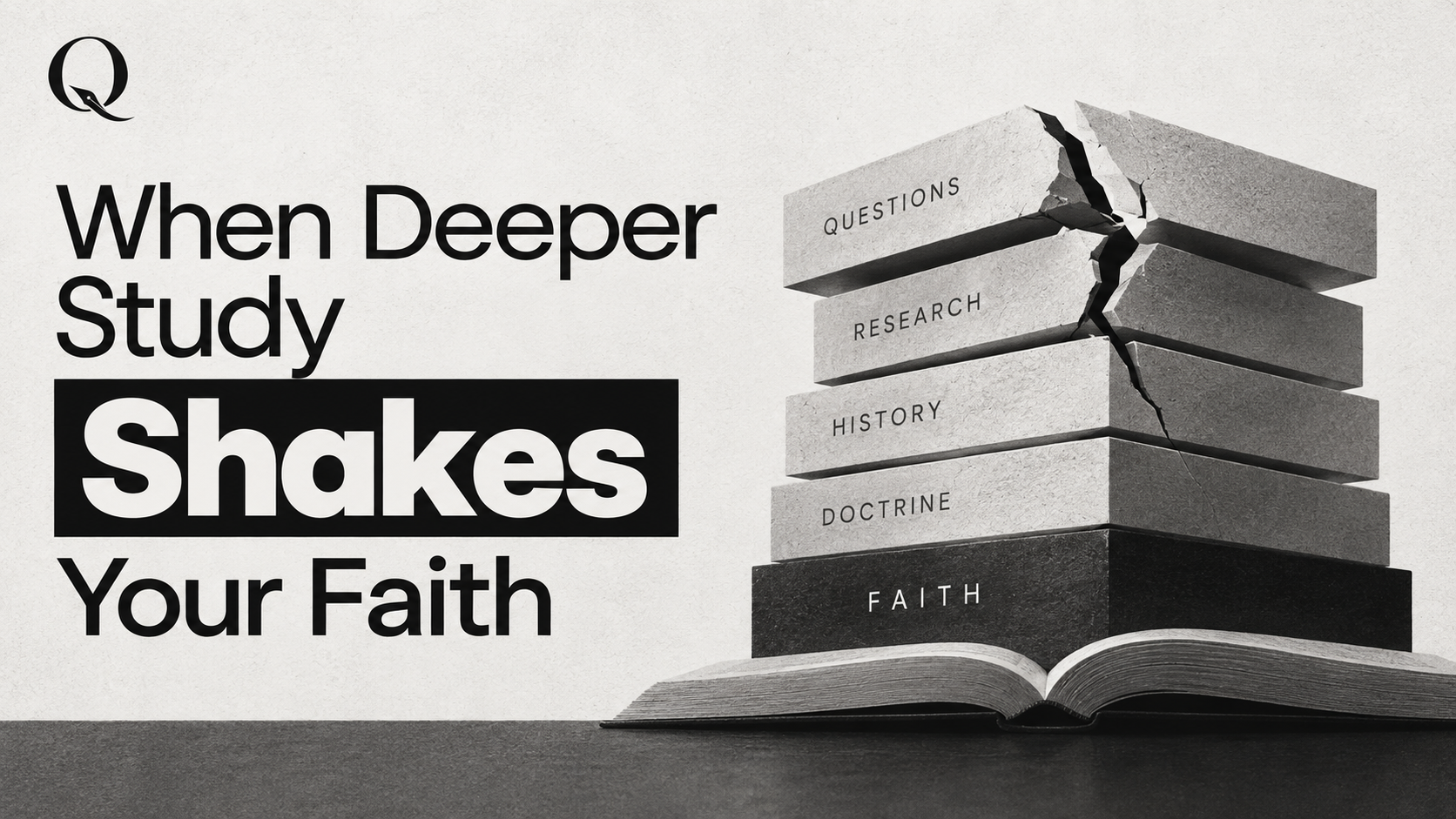
더 깊이 공부하면 믿음이 흔들릴 때
혼란은 적이 아니다 나는 두 사람을 알고 있습니다. 첫 번째는 신학과 변증학을 읽기 좋아하는 사람입니다. 그는 팟캐스트를 듣고 온라인으로 교리 논쟁을 시청하며, 모든 지적 주장을 속속들이 파악하려고 몇 시간을 보냈습니다. 그러나 결국 그는 믿음을 떠나기로 선택했습니다. 두 번째도 마찬가지로 깊이 파헤쳤습니다. 그러나 그가…
이 글을 만드는 동안 AI가 자료 조사, 사실 확인, 번역과 편집을 도왔습니다. 논지와 결론은 저자의 것입니다.
논지의 흐름과 의미, 결론은 모두 저자의 것입니다. 어떤 자료를 신뢰하고 어떻게 해석할지는 도구가 아니라 저자의 판단입니다.
AI 도구는 자료를 찾고 출처와 대조해 주장을 확인하며 주제를 폭넓게 읽고, 글을 영어와 베트남어 사이에서 옮기고, 문법과 명료성 및 문장 리듬을 다듬는 데 사용되었습니다.
도구가 찾아낸 것은 판단해야 할 자료이지 결론이 아닙니다. 무엇을 말하고 무엇을 덜어 내며 어떤 의미를 부여할지는 저자가 결정했습니다.
이 글은 저자의 이름으로 나갑니다. 글의 내용과 그 안에서 드러나는 오류를 포함해 저자가 책임집니다.
병렬
혼란은 적이 아니다
나는 두 사람을 알고 있습니다.
첫 번째는 신학과 변증학을 읽기 좋아하는 사람입니다. 그는 팟캐스트를 듣고 온라인으로 교리 논쟁을 시청하며, 모든 지적 주장을 속속들이 파악하려고 몇 시간을 보냈습니다. 그러나 결국 그는 믿음을 떠나기로 선택했습니다.
두 번째도 마찬가지로 깊이 파헤쳤습니다. 그러나 그가 더 깊이 들어갈수록 발밑의 땅은 더욱 무너져 내렸습니다. 어느 날 밤, 그 무게가 너무 무거워져서 그는 여기서 이름을 언급하고 싶지 않은 가장자리 가까이에 서 있었습니다.
두 사람 모두 피상적이지 않습니다. 그들은 우리 대부분보다 자신의 믿음을 더 진지하게 받아들입니다. 그리고 그들을 벼랑 끝으로 몰아넣은 것은 바로 그 진지함이었습니다. 아무도 미리 경고해 주지 않는 사실은 다음과 같습니다. 더 깊이 이해할수록 모든 것이 흔들리기 쉬워진다.
이 글을 쓰는 이유는 나 자신도 그 흔들리는 땅 위에 서 본 적이 있기 때문입니다. 가장자리에 이르지는 않았지만, 믿고 있던 바닥이 발밑에서 무너지는 듯할 때 어떤 느낌인지 알 만큼 가까이 있었습니다.
이 과정에는 이름이 있습니다. 신앙 해체(deconstruction)는 가족이나 교회에서 물려받은 단정하고 흑백적인 신앙에서 한 걸음 벗어나, 처음으로 그 믿음의 벽돌을 들어 올려 안을 살펴보는 과정입니다. 발밑의 땅이 빠져나가는 듯한 느낌일 수 있습니다. 수년간 신앙 발달을 연구한 제임스 파울러(James Fowler)는 우리가 이 과정을 이해하는 데 도움이 되는 렌즈를 제공합니다. 어떤 사람들에게는 믿음이 단순히 죽는 것이 아니라 한 방식으로 성장하는 과정일 수 있고, 빌린 믿음에서 스스로 책임지는 믿음으로 움직이는 일이 될 수 있습니다. 그러나 이 모델은 진단이 아니며 모든 사람에게 하나의 목적지를 약속하지 않습니다.
때때로 흔들림은 믿음이 자기만의 모습으로 자라나는 것을 의미합니다. 그러나 모든 균열을 이미 정해진 목적지라고 불러서는 안 됩니다.
Tim Keller는 다음과 같이 직설적으로 말했습니다. “의심이 없는 믿음은 항체가 없는 인체와 같습니다.” 어려운 질문과 씨름해 본 적이 없는 사람은 아마도 다른 사람들보다 믿음이 더 강한 것이 아닐 것입니다. 아직 항체가 필요하지 않았을 뿐입니다.
더 나아가기 전에 먼저 말씀드릴 가치가 있는 사항은 다음과 같습니다. 혼란은 적이 아닙니다. 질문을 너무 많이 하고 있는 것이 아닙니다. 그 질문이 실제로 어디에 속하는지 보여 주는 지도를 아무도 건네주지 않았을 뿐입니다.
그러나 이것은 누군가를 진단하는 말이 아니라 하나의 렌즈입니다. 위기는 지적·도덕적·실존적일 수도 있고, 교회의 학대로 형성되거나 우울증과 피로에 얽힐 수도 있습니다. 원인에 따라 필요한 돌봄도 달라집니다. 모든 사람이 같은 방식으로 신앙을 재구성하는 것은 아닙니다. 일부는 전통을 바꾸거나 종교 활동을 중단하거나 종교를 떠납니다. 상처받은 사람의 존엄성과 안전은 저자가 바라는 결론에 도달하는 데 달려 있지 않습니다.
더 많이 알수록 흔들리는 이유
모든 지형지물이 똑같은 크기로 그려진 지도를 건네받는 장면을 상상해 보십시오. 종말의 시기, 세례를 베푸는 방법, 삼위일체의 신비, 포도주를 마실 수 있는지 여부가 모두 같은 글꼴로 적혀 있습니다. 모든 교리가 똑같이 중요해 보이면, 그리스도인들이 한 가지 세부 사항에 동의하지 않는다는 사실만으로도 전체 기초가 흔들립니다. 안식일에 대해 틀렸다면 부활에 대해서도 틀릴 수 있지 않을까요?
그게 함정입니다. 탈출구는 독서를 줄이는 것이 아니라 지도를 더 나은 것으로 바꾸는 데 있습니다.
2005년 신학자 앨버트 몰러(Albert Mohler)는 응급실(ER)의 분류 개념을 빌려 왔습니다. 환자 열두 명이 한꺼번에 몰려오면 간호사들은 어떤 부상이 생명을 위협하는지, 어떤 부상은 기다릴 수 있는지, 어떤 부상은 그저 긁힌 상처인지 분류해야 합니다. 분류를 건너뛰면 모두를 똑같이 치료하거나 모두를 위급한 환자로 취급하게 됩니다. 몰러는 우리의 신앙에도 이와 비슷한 식별이 필요하다고 주장했습니다. 2020년에는 개빈 오틀런드(Gavin Ortlund)가 이 주제를 다룬 Finding the Right Hills to Die On을 썼습니다. 둘 다 성경 자체가 세운 척도라기보다 개신교 신학에서 사용하는 목회적 판단 도구입니다.
핵심 아이디어는 단순하지만 사람들을 가장자리의 공포에서 뒤로 끌어당깁니다. 전통은 모든 교리에 동일한 비중을 두지 않습니다. 일부 고백은 폭넓은 그리스도교의 기반을 형성합니다. 다른 교리들은 교회 사이에 선을 긋지만, 그 선이 구원과 어떤 관계가 있는지는 전통마다 다르게 봅니다. 어떤 문제는 신자들에게 사랑 안에서 양심을 행사하도록 요구합니다. 분류는 더 나은 질문을 하는 데 도움을 주지만, 누가 하나님께 속해 있는지 속히 판단할 권한을 우리에게 주지는 않습니다.
이 그림을 읽는 방법: 이것은 개신교적 틀이며, 성경이 정한 등급표도 모든 전통에 중립적인 지도도 아닙니다. 성경의 모든 진리는 중요합니다. 이 분류는 모든 논쟁의 무게가 같다고 여기지 않도록 돕기 위한 것입니다.
이 그림은 앨버트 몰러의 「A Call for Theological Triage and Christian Maturity」(2005년 게시)에 나온 세 단계 틀과, 개빈 오틀런드가 Finding the Right Hills to Die On(Crossway, 2020)에서 이를 네 단계로 확장한 논의를 함께 참고했습니다. 개신교적 분별 도구이지, 모든 교회가 합의한 판정은 아닙니다.
이 세 가지 계층을 통해 믿음을 필터링하면 이상한 일이 발생합니다. 즉, 혼란이 줄어듭니다. 밤잠을 이루지 못하게 했던 대부분의 논쟁이 집의 기초에 전혀 영향을 미치지 않는다는 것을 깨닫게 됩니다. 2층과 3층에서는 그냥 논쟁일 뿐입니다. 기초는 아직 서있습니다.
우리 모두가 서 있는 기반
무엇이 우리를 갈라놓는지 살펴보기 전에, 불안한 사람들이 거의 알아차리지 못하는 것에 대해 잠시 멈춰 보겠습니다. 공통점이 어마어마하다.
생각해 보십시오. 로마 가톨릭, 동방 정교회, 개신교(역사상 가장 심한 분열을 겪은 세 전통)는 여전히 니케아 신경(325년과 381년에 정착)을 함께 고백하고 있습니다. 세 전통 모두 삼위일체 하나님을 고백합니다. 세 전통 모두 예수님이 “성경대로” 아버지와 하나이시며, 참 하나님에게서 나신 참 하나님, 참 사람이 되시고 십자가에 못 박혀 죽으셨으며 몸으로 부활하신 분이라고 믿습니다. 그리고 모두 그분의 다시 오심을 기다립니다.
니케아 신경은 역사적인 그리스도교 전통이 공유하는 넓은 기반을 보여줍니다. 그러나 하나의 신조를 고백한다고 해서 권위, 교회, 성례전, 구원에 관한 모든 질문에 같은 방식으로 대답한다는 의미는 아닙니다. 이 표는 한 줄의 텍스트로 개인의 정체성이나 영원한 운명을 결정하는 것이 아니라 공유된 근거와 실제 불일치를 모두 보여주기 위한 것입니다.
아래 표에는 공통의 기반(녹색)과 계층별로 정렬된 실제 차이점이 나와 있습니다.
✓ 공통 토대 · 세 전통 모두 고백하는 내용
니케아 신경(325/381년): 한 분이신 삼위일체 하나님 · 성부와 동일 본질이신 그리스도, ‘참하나님에게서 나신 참하나님’ · 십자가에 못 박혀 죽으시고 ‘성경대로’ 육체로 부활하심. 이는 폭넓게 공유하는 신앙고백이지, 권위와 성례, 구원에 관한 모든 질문에 대한 완전한 답은 아닙니다.
| 질문 | 로마 가톨릭 | 동방 정교회 | 개신교 |
|---|---|---|---|
| 최종 권위 | 성경 + 성전(거룩한 전승) + 교도권(하나의 신앙 유산) | 거룩한 전승의 삶 안에 있는 성경: 전례, 교부, 신경, 공의회 | 종교개혁 신앙고백들은 성경을 최종 규범으로 보며, 교회와 신앙고백은 해석을 돕습니다 |
| 칭의와 구원 | 주입되는 은총 + 행위와 협력하는 믿음(트리엔트 공의회, 1547년) | 테오시스: 사람을 변화시키는 하나님과의 연합(신화) | 오직 믿음으로(sola fide); 그리스도의 의가 전가되는 법정적 선언 |
| 성찬 | 실체변화: 실체가 그리스도의 몸과 피로 바뀜 | ‘신비’: 실제 변화이지만 철학적으로 규정하지 않음 | 다양한 견해: 기념, 영적 임재, 성례적 이해 |
| 세례 | 유아세례 | 유아세례(세 번 물에 잠기게 함) | 서로 다른 입장: 유아세례(루터교, 장로교, 성공회) 또는 신자 세례(침례교, 오순절 교회) |
| 교회 정치 | 교황의 수위권; 제1차 바티칸 공의회가 정한 조건 아래에서의 무류성 | 자체적으로 통치하는 총대주교구(오토케팔리아), 서로 동등한 지위 | 전통에 따라 감독제, 장로제, 회중제 |
| 필리오케 조항 | 성령은 성부‘와 성자’에게서 발출하심 | 거부: ‘성부에게서’만 발출하심(381년 신경 원문) | 서방 교회와 함께 ‘성자에게서도’를 고백 |
| 마리아 · 성인 · 연옥 | 공경 + 원죄 없는 잉태 + 성모 승천 + 연옥 | 마리아를 공경하지만 원죄 없는 잉태 교리는 거부; 라틴 교회식 연옥은 인정하지 않음 | 성인에게 기도를 청하는 것과 연옥을 거부 |
이 표는 각 입장을 설명하며, 모든 전통이 받아들이는 중립적 순위표가 아닙니다. 가톨릭: Dei Verbum; 정교회: 미국 정교회(Orthodox Church in America)의 Bible; 개신교: 종교개혁 신앙고백들; 공통 토대: 니케아 신경과 1999년 칭의 교리에 관한 공동선언.
실제 차이점과 그 밑에 숨어 있는 질문
차이점이 단지 오해인 척하지는 않겠습니다. 그것들은 실제이며 일부는 깊이 뿌리내리고 있습니다. 권위는 중요한 축이지만, 모든 불일치가 최종 결정권자가 누구인지에 관한 것만은 아닙니다. 의미, 역사, 교회, 구원, 윤리, 종교적 경험도 중요합니다.
Dei Verbum에 따르면, 가톨릭교는 성경과 신성한 전통이 하나의 신성한 유산을 형성하는 반면, 교도권은 말씀 위에 서기보다는 말씀을 섬기고 해석한다고 말합니다. 정교회는 성경이 단지 7개의 공의회 목록 안에만 있는 것이 아니라 거룩한 전통, 전례, 교부, 신조, 공의회, 교회 생활 안에 살아 있다고 말합니다. 개신교 전통도 동일하지 않습니다. 많은 종교개혁 신앙고백에서는 성경을 최종 규범으로 다루면서도 여전히 신조와 교회를 사용하여 성경을 읽습니다.
이제부터 나는 모든 전통이나 종교에 대해 중립적인 지도를 제시하는 척하지 않고, 개혁파 개신교의 신념에 따라 이야기하겠습니다. 나는 신학자도 목사도 아닙니다. 다만 이런 질문들과 씨름해 본 그리스도교인일 뿐입니다. 그래도 내가 믿는 바를 솔직하게 말하겠습니다. 정직은 그 자체로 일종의 존중이기 때문입니다. 나는 종교개혁의 대답이 성경에 가장 충실하다고 믿습니다. Sola scriptura를 제대로 이해하면 “성경만 믿고 모든 전통을 버리라”(즉 solo scriptura라는 왜곡)는 뜻이 아닙니다. 성경이 모든 전통과 가르침을 시험하는 최종 규범이며, 더 높은 인간의 법정 아래 놓이지 않는다는 뜻입니다. 이러한 확신 아래에서는 교황, 공의회, 목회자 모두가 틀릴 수 있으며, 모두를 말씀에 비추어 판단해야 합니다. 바울은 베뢰아 사람들이 들은 설교를 시험하려고 *“날마다 성경을 연구”*했기 때문에 그들을 칭찬합니다(사도행전).
바울의 디모데후서 — 모든 성경은 하나님의 감동으로 된 것으로 교훈과 책망과 바르게 함과 의로 교육하기에 유익하니 이는 하나님의 사람이 온전하게 되어 모든 선한 일을 행할 능력을 갖추게 하려 함이라.
그러나 정직함은 상대방의 가장 강력한 반대 의견을 제시하게 하며, 그 반대 의견은 정말 강력합니다.
하나, 정경. 교회 역사는 아타나시우스가 367년에 신약성경 27권의 전체 목록을 제시했고, 4세기 후반 히포와 카르타고의 지방 공의회에서도 같은 목록을 받아들였음을 보여줍니다. 그러나 주교가 책을 나열하는 것, 공의회가 그것을 받아들이는 것, 전체 교회가 그것을 인정하는 것, 그 책들이 하나님의 영감으로 기록되었다고 신학적으로 주장하는 것은 서로 다른 문제입니다. 역사는 권위 문제를 더 깊게 만들 뿐, 그 자체로 해결하지는 않습니다.
둘, 전통. 바울은 다음과 같이 썼습니다. “너희는 굳게 서서 우리의 말로나 우리의 편지로 배운 전통을 지키라” (바울의 데살로니가후서). 이는 초대 교회에서 말과 글로 표현된 사도적 가르침의 중요성을 보여줍니다. 그 자체로는 이후의 모든 전통을 사도적 전통으로 규정하지 않습니다.
셋, 칭의. 성경 전체에서 “믿음만으로”라는 문구를 사용하는 한 구절은 그 반대를 말합니다: “사람이 행위로 의롭게 되고 믿음만으로가 아닙니다” (야고보서). 개혁파 독서에서는 이것을 바울의 로마서, 바울의 갈라디아서, 바울의 에베소서 옆에 두고 칭의의 근거를 믿음의 열매와 증거와 구별합니다. 그것은 모든 전통에서 받아들여지는 중립적인 해결책이 아니라 실질적인 신학적 해석입니다.
넷째, 성례전. 가톨릭과 정교회는 성례와 신비를 단순한 외적 수단으로 축소할 수 없다고 주장합니다. 그들에게 성례는 그리스도께서 세우신 수단이며 교회 생활에 필수적입니다. 예외를 설명하는 일은 성례를 단순히 선택 사항으로 취급하는 것과 같은 범주가 아닙니다.
정직한 구도자는 회피하는 대신 바로 여기서 멈추고 대답해야 합니다. 간단히 말해서 종교개혁의 대답은 다음과 같습니다. 교회는 정경을 인정했지만 정경을 만들지는 않았습니다(천문학자가 별을 만드는 것이 아니라 별을 찾는 것과 같습니다). Sola scriptura는 전통을 버리지 않습니다. 그것은 말씀의 판단 아래에 전통을 두는 것입니다. 야고보서의 경우 R.C. Sproul은 다음과 같이 간단히 표현했습니다. “의롭게 하는 믿음은 결코 혼자가 아닙니다.” 바울은 칭의의 근거에 대해 말하고 있고 야고보는 그 증거와 열매에 대해 이야기하고 있습니다. 루터·칼뱅·녹스도 야고보의 말과 일치했습니다. 나는 이것을 모든 전통을 묶는 중립적인 결론이 아니라 개혁주의적 해석으로 제시하고 있습니다.
성례전의 필요성에 관한 네 번째 반대에 대한 대답은 본질적인 핵심과 구조적 수단의 구별에 있습니다.
첫째, 주류 로마 가톨릭 신학 안에서도 중요한 구별이 있습니다. 가톨릭 교회 교리서 제1257항은 다음과 같이 명시합니다. “하느님께서는 구원을 세례성사와 묶으셨지만, 그분 자신은 성사에 묶이시지 않습니다.” 이것이 가톨릭 교리가 피의 세례와 열망의 세례를 인정하는 이유입니다. 동방 정교회도 비슷한 겸손을 공유하며 종종 다음과 같이 말합니다. “우리는 교회가 어디에 있는지는 알지만 교회가 어디에 있지 않은지는 모릅니다.” 그들은 성례가 그리스도께서 세우신 확실한 길임을 고백하지만, 그 의식 밖에서 베푸시는 하나님의 주권과 자유로운 자비를 제한하기를 거부합니다.
이 글을 개혁파 관점에서 읽으면 하나님의 은혜와 그리스도에 대한 신뢰를 기초로 삼고, 성례전은 하나님이 사용하는 일반적인 수단으로 취급합니다. 그러나 하나님이 성례전에 의해 제한되지 않는다는 사실이 가톨릭이나 정교회가 그 성례전을 2 등급으로 분류해야 한다는 것을 증명하지는 않습니다. 전통은 필요한 경우 일반적인 길을 확인하는 동시에 예외적인 상황에서 자비를 베푸실 수 있는 하느님의 자유를 확인합니다. 그것은 논쟁을 끝내는 추론이 아니라 겸손하게 설명하는 진정한 불일치입니다.
이에 대한 가장 분명한 성경적 증거는 누가복음에 나오는 십자가 위에서 회개한 도둑입니다.
직접적인 맥락에서 예수님은 두 범죄자 사이에 십자가에 못 박히셨습니다. 이는 고통과 그리스도에 대한 인간의 두 가지 근본적인 반응을 나타냅니다. 첫 번째 사람은 그를 조롱하며 즉각적인 구출을 요구합니다. 그러나 두 번째 도둑은 깊은 깨달음의 순간을 경험합니다. 그는 조롱하는 자를 꾸짖으며 그들의 형벌이 정당하다는 것을 인정하면서 동시에 예수의 무죄를 확증합니다. 그런 다음 그는 순수한 믿음으로 예수님께로 향합니다. "예수님, 당신의 나라에 임하실 때 나를 기억해 주십시오."
십자가에 육체적으로 고정되어 죽어가는 이 사람은 물세례를 받을 수도, 성례전에 참여할 수도, 어떤 종교적 행위도 할 수 없었습니다. 그러나 예수께서는 이렇게 대답하셨습니다. "내가 진실로 네게 이르노니 오늘 네가 나와 함께 낙원에 있으리라." 이 구원 선언은 절대적이며 성례전적 조건을 수반하지 않습니다.
도둑의 구원은 하나님께서 평범한 길을 가지 못하는 사람도 구원하실 수 있음을 보여줍니다. 개혁주의적으로 읽으면 은혜와 믿음의 우선순위를 보여 줍니다. 가톨릭과 정교회 신학은 예외적인 경우에 하나님의 자유와 일반적인 수단을 구별하기 때문에, 그 자체로는 모든 성례전이 2 계층에 속한다는 것을 증명하지 못합니다.
그리고 여기 불안한 마음이 알아야 할 것이 있습니다. 일부 질문에서는 우리가 가정하는 것보다 격차가 좁을 수 있습니다. 1999년에 루터교 세계연맹과 가톨릭교회는 “칭의 교리에 관한 공동 선언”에 서명하며 기본 진리에 대한 합의를 확인했습니다. 감리교인들은 2006년에, 성공회는 2016년에 이를 확인했습니다. 이것은 권위·교회·성례·구원에 관한 모든 문제에서 완전히 수렴했다는 뜻은 아닙니다. 공유된 기반은 중요하지만 남아 있는 차이점을 없애지는 않습니다.
차이점은 실제입니다. 하지만 그 밑에는 단 하나의 질문이 놓여 있습니다. 마지막으로 결정할 권한은 누구에게 있습니까? 대답해 보세요. 손에 든 것은 회오리바람이 아니라 나침반입니다.
“그러나 안식일과 포도주 잔은 어떻습니까?”
이제 우정을 약화시키고 소그룹을 분열시키는 매우 일상적인 논쟁을 살펴보겠습니다. 제칠일 안식일을 지킬 것인가, 아니면 일요일에 예배를 드릴 것인가? 그리스도교인은 술을 마셔도 될까요?
예배일에 콘스탄티누스 황제가 321년에 예배일을 일요일로 “전환”했다는 대중적인 신화가 있습니다. Didache(1세기 말), 이그나티우스가 마그네시아인들에게 보낸 편지(약 107년), 저스틴 순교자의 설명(155년)을 포함한 초기 그리스도교 증언은 콘스탄티누스 법 이전부터 첫날 모임이 있었음을 보여줍니다. 321년 법은 그날에 일을 쉴 수 있게 했을 뿐, 콘스탄티누스가 일요일 모임을 창안했다는 증거는 아닙니다. 그러나 첫날 모임만으로는 안식일 대체에 관한 모든 문제가 해결되지 않습니다. 재림교인을 포함한 제칠일 교인들은 넷째 계명을 다르게 읽고 폐지되지 않은 것으로 간주합니다.
술에 관해 성경은 일부 문맥에서 절제된 사용을 말합니다(시편; 가나에서의 예수님의 기적, 요한복음; 디모데에게 “포도주를 조금 쓰라”고 한 권면, 바울의 디모데전서). 또한 술 취함을 정죄합니다(바울의 에베소서; 잠언의 첫 번째 인용 본문 및 잠언의 두 번째 인용 본문). 많은 성경 본문에서 단어와 배경은 발효된 포도주를 가리키지만, 언어학적 관찰이 모든 경우에 절대적인 규칙이 되어서는 안 됩니다. 19세기의 금주 운동은 일부 개신교 전통에서 완전한 금주를 대중화하는 데 도움을 주었습니다. 그것이 모든 형태의 절제의 유일한 기원은 아니었습니다. 금주는 현명한 선택일 수 있지만 모든 사람에게 부과되는 법이 되어서는 안 됩니다.
나를 감동시키는 것은 성경이 이러한 종류의 논쟁에 대해 직접적으로 말하고 있다는 것입니다. 바울의 로마서에서 바울은 일과 음식과 음료를 명명한 다음 양심과 믿음과 사랑을 강조합니다. 강한 자가 약한 자를 업신여기지 말고, 자유가 형제를 걸려 넘어지게 하지 않도록 하라고 권합니다. 바울의 로마서은 의견 불일치 속에서 살아가는 데 도움이 되는 강력한 지침이지만, 현대의 모든 논쟁에 자동으로 적용되기보다는 맥락에 맞게 읽어야 합니다.
바울의 로마서 — 어떤 사람은 이 날을 저 날보다 낫게 여기고 어떤 사람은 모든 날을 같게 여깁니다. 각 사람은 자기 마음에 확신을 가져야 합니다.
바울의 골로새서 — 그러므로 먹고 마시는 일이나 절기나 초하루나 안식일로 누구든지 여러분을 비판하지 못하게 하십시오. 이것들은 장차 올 것들의 그림자이고 실체는 그리스도께 속합니다.
이것은 모든 신자를 판단하는 척도가 되어서는 안 되는 adiaphora, “무관심한 것”의 예일 수 있습니다. 그리스도인의 자유에는 여전히 책임과 사랑이 따르며, 다른 사람을 걸려 넘어지게 하지 않으려는 태도가 따릅니다. 이 언덕은 형제를 잃을 가치가 없습니다.
말씀 아래의 공의회
나는 하나님을 모임에 불러들일 수 없고, 내 목소리를 하나님의 직접적인 신탁으로 바꿀 수도 없습니다. 그러나 우리는 성경의 빛 아래 어려운 질문을 던질 수 있고 여러 목소리가 겸손하게 만나도록 할 수 있습니다. 그러한 평의회는 적어도 다음을 듣게 될 것입니다:
- 성경: 베뢰아 사람들은 설교를 시험하기 위해 성경을 조사했습니다(사도행전). 바울은 모든 것을 시험하여 선한 것을 굳게 잡으라고(바울의 데살로니가전서) 하나님의 모든 뜻을 전하는 일에서 물러서지 말라고 말합니다(사도행전). 맥락에서 뽑아낸 문장이 대화를 끝내는 망치가 되어서는 안 됩니다.
- 개혁 개신교의 목소리: 성경이 최종 규범이며, 신학적 분류는 핵심 주장과 논쟁의 여지가 있는 주장을 구별하는 데 도움이 됩니다. 그러나 분류는 신학적 발견법이지, 다른 모든 신념을 반역이라고 부르는 면허가 아닙니다.
- 가톨릭의 목소리: 성경과 신성한 전통은 하나의 신앙 유산에 속하며, 교도권은 말씀을 섬겨야 합니다. 이 반응은 개신교로 하여금 정경 질문과 구속력 있는 해석을 제공할 수 있는 사람이 누구인지에 대한 질문에 대답하도록 강요합니다.
- 정교회의 목소리: 성경은 전례, 교부들, 신조, 공의회, 교회 생활과 분리되지 않습니다. 이 답변은 충실한 독서가 한 인용문으로 논쟁에서 승리하는 것만이 아니라는 점을 상기시켜 줍니다.
- 상처받은 사람의 목소리: 영적인 학대, 위협, 수치심, 강요된 용서, 강요된 복종, 피해 사실을 부인하는 교회로 인해 위기가 찾아오면 공동체로 돌아가기 전에 안전과 경계를 우선해야 합니다. 목회자와 대화하는 것이 항상 안전한 것은 아닙니다. 독립적인 전문가가 필요할 수도 있습니다.
- 회의론자의 목소리: 증거, 해석, 전통, 추론 및 아직 알려지지 않은 사항을 분리합니다. 현재 증거가 부족하다고 해서 무엇이 거짓이라는 것이 자동으로 증명되는 것은 아니지만, 지식의 격차가 자동으로 기적이라고 불려서는 안 됩니다.
이러한 음성을 들은 후 내린 결론은 다음과 같습니다. 성경이 분명히 밝히는 것을 굳게 붙잡고, 논란이 되는 구절을 문맥에 맞게 읽고, 진리와 열매로 가르침을 시험하고, 말하는 전통이 무엇인지 밝히고, 불일치를 사랑으로 다스리십시오. 그것은 “모든 면이 옳다”는 것이 아닙니다. 그것은 신념을 경멸로 바꾸지 않고 진리를 추구하는 방법입니다.
그렇다면 결국 어느 쪽이 옳은가?
실제로 답을 구해 여기 온 질문이므로 피하지 않겠습니다.
공유된 고백에서 우리는 삼위일체, 그리스도의 신성, 부활에 대한 중요한 주장 앞에 세 가지 전통이 모두 서 있는 것을 볼 수 있습니다. 그러나 니케아 신경은 권위, 구원, 개인이 교회에 어떻게 속해 있는지에 관한 모든 문제를 해결하지 못합니다. “모든 것을 알면서 믿지 않는” 내 친구는 공유된 핵심을 거부하고 있을지 모르지만, 나는 짧은 이야기에서 그의 동기나 영적 운명을 진단할 권리가 없습니다.
논쟁의 여지가 있는 질문에 대해서는 권위가 결정적인 문제로 남아 있으며, 나는 위에서 답변했습니다. 개혁파 개신교인으로서 나는 성경을 최종 규범으로 삼고, 믿음을 통해 은혜로 구원받는 복음을 죽을 가치가 있는 언덕으로 삼습니다. 나는 이를 경멸이 아니라 확신으로 받아들입니다. 심각한 문제에서 우리 전통이 서로 다르다는 점을 인정하면서도, 그리스도를 고백하는 가톨릭 신자나 정교회 신자를 내 형제라고 부를 수 있습니다. 이 표는 사람에 대한 하나님의 심판을 대체하지 않습니다.
내가 방금 말한 것은 상대주의도 아니고, "누구든지 자기 방식대로 옳다고 말할 수 있다"는 것도 아닙니다. 그러나 그것은 또한 모든 불일치를 사소한 것으로 부르도록 허용하지 않습니다. 분류는 무엇이 논쟁거리인지, 증거는 무엇인지, 그리고 그에 따른 결과는 무엇인지 묻는 도구입니다. 나는 일부 답변이 더 낫다고 믿으며, 그 믿음을 뒷받침할 이유와 성경과 역사를 독자에게 제시하고 내 독서의 한계도 밝혀야 합니다.
4세기 전, 30년 전쟁 중에, 루터교 신학자 루페르투스 멜데니우스에게 흔히 귀속되는(약 1626~1627년) 한 문장이 많은 사람들에게 나침반이 되었습니다. 이 문구의 기원과 이전 형태는 여전히 논쟁의 여지가 있으므로 그 귀속을 확정된 기록으로 제시하고 싶지 않습니다.
본질적인 것에서는 통일성, 본질적이지 않은 것에서는 자유, 모든 일에서는 사랑.
그것이 답입니다. “모든 면이 옳다”도 아니고, “오직 내 진영만 구원받았다”도 아니다. 핵심은 단단히 잡고, 가장자리는 느슨하게 잡고, 그 전체에 사랑을 가하는 것입니다.
가장자리에 서 있는 사람에게
안전 참고 사항: 이 섹션에서는 절망과 자살 충동에 대해 언급합니다. 계획이나 의도가 있거나 안전을 유지할 수 있는지 확실하지 않은 경우, 지금 지역 응급 서비스에 전화하거나 응급실로 가십시오. 혼자 있지 마십시오. 믿을 수 있는 사람에게 알리고 정신 건강 전문가에게 문의하세요. 이 기사는 긴급 진료를 대신할 수 없습니다.
잠시 논쟁을 멈추겠습니다. 아마 다이어그램을 보러 여기 온 것은 아닐 테니까요. 어쩌면 처음에 언급한 두 번째 사람처럼 어둠 속에서 왔을 수도 있습니다. 혼란이 그 사람을 가장자리 근처로 몰고 갔다는 사실을 가볍게 말하고 싶지는 않습니다. 만약 그렇다면 이 말을 천천히 들어 보세요.
의심은 누구를 향한 평결이 아닙니다. 성경은 의심하는 사람들을 부끄럽게 여기지 않습니다. 도마가 상처에 손을 대어 보기 전에는 믿지 않겠다고 말했을 때 예수님은 그를 꾸짖지 않으셨습니다. 그는 손을 내밀었다. 감옥에 갇힌 세례 요한이 사람을 보내 “오실 그이가 당신이오니이까?”라고 물었을 때 주님은 그의 약한 믿음을 부끄럽게 여기지 않으셨습니다. 예수님은 요한에게 증거를 주셨습니다. 심지어 어둠에서 어둠으로 나아가는 시편(시편)도 있는데, “어둠은 나의 가장 가까운 친구입니다”로 끝납니다. 그리고 하나님께서는 정직한 탄식도 기도라고 말씀하시듯이 성경에 그것을 남겨 두셨습니다.
마가복음 — 내가 믿습니다. 나의 믿음 없는 것을 도와주십시오!
그것은 아마도 성경 전체에서 가장 정직한 기도일 것입니다. 한 사람이 믿음과 연약함을 동시에 갖고 있었고 예수님은 그에게 응답하셨습니다.
그리고 이 부분을 또렷하게 들어보세요. 절망이 너무 무거워서 의도나 계획이 있거나 안전할 수 있을지 확신할 수 없다면 이는 더 이상 신학만의 문제가 아닙니다. 지역 응급 서비스에 전화하거나 응급실로 가세요. 혼자 있지 말고, 믿을 수 있는 사람에게 알리고, 오늘 바로 정신 건강 전문가에게 연락하세요. 목사는 진정으로 믿을 수 있고 경계를 존중한다면 도움을 줄 수 있지만, 유일한 지원자가 되어서는 안 됩니다. 교회나 목사가 해를 끼쳤다고 해서 당신의 믿음을 증명하기 위해 위험 속으로 돌아갈 필요는 없습니다. 먼저 독립적인 도움을 구하십시오.
그 어둠에서 벗어나지 못한 사람을 하나님께서 어떻게 대하시는지에 대해 그리스도교 전통은 모두 같은 방식으로 대답하지 않습니다. 이곳은 내가 하나님을 대신해 판단하거나 누구를 대신해 결론을 내리는 곳도 아닙니다. 내 자신의 확신에 비추어 말할 수 있는 것은, 하나님께서 그러한 생각 뒤에 숨은 고통·질병·혼란·탈진의 무게를 우리 중 누구보다도 분명히 보신다는 것입니다. 그 위로가 즉각적인 위험을 과소평가하는 이유가 되어서는 안 됩니다. 첫 번째 임무는 사람을 안전하게 지키는 것입니다.
“나는 믿음을 잃고 있다”는 두려움에 대해 숫자는 그 두려움과는 매우 다른 이야기를 말해줍니다.
어떤 독자는 3단계에서 4단계로 넘어가는 과정에서 자신의 모습을 발견할 수 있습니다. 물려받은 신앙을 검토하는 지점입니다. 파울러가 제시하는 것은 경험을 설명하는 틀이지, 임상적 진단이나 영적 약속이 아닙니다. 신앙을 재구성하거나 전통을 바꾸고, 잠시 멈추거나 종교를 떠나는 사람도 있습니다. 누구에게도 특정한 결과를 강요해서는 안 됩니다.
이론적 틀: 제임스 W. 파울러, Stages of Faith(1981). 여기서는 진단이 아닌 해석의 틀로 사용합니다. 팀 켈러: ‘의심이 전혀 없는 믿음은 항체가 하나도 없는 사람의 몸과 같다.’
배경 · 미국의 무종교 인구
사실입니다. 무종교인의 비율은 늘고 있습니다. 다만 퓨 리서치 센터(2025)는 기독교인 비율의 감소세가 멈추면서 2019~2024년에는 약 62%를 유지했다고 강조합니다.
심각한 의심을 겪은 기독교인 가운데(65%가 그런 경험이 있습니다)…
아래 수치는 모두 의심을 겪었던 집단 안에서 나타난 결과입니다. 53%는 믿음이 강해졌고, 28%는 변화가 없었으며, 7%는 약해졌고, 12%는 믿음을 잃었습니다. 전체 표본에 대한 비율로 제시해서는 안 됩니다.
42% 의 미국 성인이 젊은 시절의 신앙을 ‘해체’했다고 답했습니다. 이는 그 경험이 얼마나 흔한지를 보여 줄 뿐, 원인이나 결과를 설명하지는 않습니다. 신앙을 재구성하는 사람도, 전통을 바꾸는 사람도, 종교를 떠나는 사람도 있습니다.
출처: 퓨 리서치 센터, Religious Landscape Study 2023–24(n=36,908) 및 2025년 보고서; 바나 그룹, 2017년 영적 의심 연구(n=1,015); 바나/글루, State of the Church 2024(n=2,003).
그 숫자를 천천히 읽으십시오. 그러나 숫자가 보여 주는 것보다 더 많은 의미를 읽어 내지는 마십시오. 혼란은 평결이 아닙니다. 어떤 사람들은 믿음이 더 강하다고 보고합니다. 다른 사람들은 변화가 없거나 믿음이 약하거나 믿음의 상실을 보고합니다. 설문 조사는 의심이 결과를 초래했음을 입증하지 않으며 누구도 차트를 위해 괜찮은 척할 필요가 없습니다.
자신을 무너뜨리지 않고 질문을 테스트하는 데 일주일
정직하게 계속하려면 한 번에 20개의 탭을 더 열지 마십시오. 일주일 동안 하나의 질문을 선택하고 다섯 가지 일을 하십시오:
- “모든 것이 거짓인가요?”가 아니라 검증할 수 있는 질문으로 작성하십시오.
- 각 주장에 사실, 해석, 전통 또는 미상으로 라벨을 붙이십시오.
- 문맥에 맞게 성경 구절을 읽고, 문제가 되고 있는 전통의 공식 출처를 읽으십시오.
- 주장을 뒷받침하는 출처와 이의를 제기하는 출처를 읽으십시오. 가톨릭, 정교회, 개신교 전체를 대표하는 것처럼 하나의 인용문을 사용하지 마십시오.
- 유능하고 믿을 수 있는 사람과 대화하십시오. 학대, 우울증 또는 자해 위험이 관련된 경우 우선적으로 독립적인 전문가와 긴급 지원을 받으십시오.
목사와 설교자가 의심을 통해 일하는 것을 들으려면 팀 켈러, '의심에 직면하다', 팀 켈러, 『이해로서의 믿음』, 존 파이퍼, “의심으로 인해 어려움을 겪고 계십니까?” 및 돈 카슨, <의심>로 시작하십시오. 이것은 개신교의 목소리이지 성경 읽기와 자료 확인을 대체하는 평결이 아닙니다.
전통이 스스로 말하는 것을 들으려면 다음을 읽으십시오. Dei Verbum, 미국 정교회의 성경에 대한 설명, 그리고 칭의 교리에 관한 공동 선언. 데이터를 확인하려면 의심에 관한 Barna와 해체에 관한 Barna/Gloo를 참조하세요. 이 출처들은 서로 다른 내용을 설명하므로 하나의 인과관계 이야기로 섞어서는 안 됩니다.
새장이 아닌 나침반
내 생각에는 우리가 교리가 무엇을 위한 것인지 오해한 것 같습니다.
우리는 그것을 모든 것에 대한 절대적인 확실성을 전달해 어떤 질문도 살아남을 수 없게 하는 봉인된 시스템인 새장으로 상상했습니다. 그래서 철창 하나가 깨지면 감옥 전체가 무너지는 줄 알고 당황하게 됩니다.
그러나 교리는 나침반이며 애초에 새장이 아니었습니다. 나침반은 지형에 관한 모든 질문에 답해 주지는 않습니다. 길에 있는 모든 돌에 대해 말해 주지도 않을 것입니다. 다만 한 가지 일을 온전히 수행합니다. 안개가 너무 짙어 길을 볼 수 없을 때에도 북쪽을 계속 가리킵니다. 그리스도인에게 그 북쪽은 그리스도입니다.
한때 믿음을 흔들었던 깊은 공부는, 핵심을 붙잡고 가장자리에서는 겸손을 유지한다면 오히려 뿌리를 내리게 할 수 있습니다. 많은 것을 아는 사람도 여전히 찾고 있을 수 있습니다. 위기에 처한 사람에게는 희망과 전문적인 돌봄이 모두 필요할 수 있습니다. 만약 그렇다면 마지막으로 말씀드리고 싶은 것은 이것입니다. 안전을 위해 모든 것을 알 필요는 없습니다. 진실, 안전한 교제, 그리고 다음의 작은 단계를 추구하십시오.
그리스도께 붙들리기 위해 모든 일에서 옳을 필요는 없습니다. 그분께 붙들려 있기만 하면 됩니다.
The confusion is not your enemy
I know two people.
The first is someone who loves reading theology and apologetics. He spent hours listening to podcasts, watching doctrinal debates online, and trying to grasp all the intellectual arguments inside out. Yet, in the end, he chose to walk away from it all.
The second dug just as deep. But the deeper he went, the more the ground gave way beneath him. One night, the weight of it became so heavy that he stood close to an edge I don't want to name here.
Neither of them is shallow. They take their faith more seriously than most of us do. And it was that very seriousness that pushed them to the edge. Here is the thing no one warns you about: the deeper you understand, the easier it is for everything to wobble.
I'm writing this because I've stood on that shaky ground myself, never quite at the edge, but close enough to know what it feels like when a floor you trusted goes soft under you.
There's a term for it: deconstruction. It's the moment you step out of the tidy, black-and-white faith you inherited from your family or church, and start prying up the bricks to look at them yourself for the first time. It feels like the floor is dropping out. James Fowler, who spent years studying faith development, offers a lens that can help us understand this process. For some people, it can be one way faith grows rather than simply dies, a movement from borrowed faith to faith they have taken responsibility for themselves. But the model is not a diagnosis, and it does not promise one destination for everyone.
Sometimes the shaking is faith growing into its own shape. But we should not call every fracture a known destination.
Tim Keller put it bluntly: “A faith without some doubts is like a human body without any antibodies in it.” Someone who's never wrestled with hard questions probably isn't stronger in faith than the rest of us. They just haven't needed the antibodies yet.
So before going any further, here's the first thing worth saying: your confusion is not your enemy. You're not asking too many questions. Nobody ever handed you a map to show where those questions actually belong, that's all.
But this is a lens, not a diagnosis of you. A crisis may be intellectual, moral, existential, shaped by church abuse, or entangled with depression and exhaustion. Different causes need different kinds of care. Not everyone reconstructs faith in the same way. Some change traditions, pause religious practice, or leave religion. A hurting person's dignity and safety do not depend on reaching the conclusion the writer hopes for.
Why more knowledge makes you wobble
Picture being handed a map where every landmark is drawn the exact same size. The timing of the end times, how to baptize, the mystery of the Trinity, or whether you can drink wine—all in the same font. When every doctrine looks equally important, just finding out that Christians disagree on one detail is enough to make your entire foundation shake. If they're wrong about the Sabbath, maybe they're wrong about the resurrection, too?
That's the trap. The way out isn't reading less. It's getting a better map.
In 2005, a theologian named Albert Mohler borrowed a concept from the ER: triage. When a dozen patients rush in at once, the nurses have to sort them. Which injury is life-threatening, which can wait, and which is just a scratch? Skip the sorting, and either everyone gets treated the same, or everyone is treated as critical. Mohler argued that our faith needs a similar act of discernment. In 2020, Gavin Ortlund wrote a book dedicated to this: Finding the Right Hills to Die On. Both are pastoral heuristics from Protestant theology, not a scale established by Scripture itself.
The core idea is simple, but it pulls people back from the edge: traditions do not assign every doctrine the same weight. Some confessions form a broad Christian bedrock. Other beliefs draw lines between churches, while traditions disagree about their relation to salvation. And some matters call believers to exercise conscience in love. Triage helps us ask better questions; it does not give us permission to judge quickly who belongs to God.
How to read it: this is a Protestant framework, not a biblical scale or a neutral map for every tradition. Every biblical truth matters; the labels simply keep us from treating every dispute as if it carried the same stakes.
This figure uses Albert Mohler's three-tier frame from “A Call for Theological Triage and Christian Maturity” (posted 2005), alongside Gavin Ortlund's four-level expansion in Finding the Right Hills to Die On (Crossway, 2020). It is a Protestant heuristic, not an ecumenical verdict.
Filter your beliefs through these three tiers, and something strange happens: the confusion shrinks. You realize that most of the debates that used to keep you up at night aren't touching the foundation of the house at all. They're just arguments on the second and third floors. The foundation is still standing.
The bedrock we all stand on
Before we get to what sets us apart, let's stop for a second on something anxious people rarely notice: the common ground is staggering.
Think about it: Roman Catholicism, Eastern Orthodoxy, and Protestantism—three branches split by the most bitter schisms in history—still recite the very same confession: the Nicene Creed (settled in 325 and 381). All three confess one triune God. All three believe Jesus is “true God from true God,” of one being with the Father, truly made man, crucified, dead, and bodily resurrected “in accordance with the Scriptures.” And all three are waiting for his return.
The Nicene Creed shows a broad bedrock shared by historic Christian traditions. But confessing one creed does not mean they answer every question about authority, church, sacraments, and salvation in the same way. The table is meant to show both shared ground and real disagreement, not to decide a person's identity or eternal destiny from one line of text.
The table below shows that shared ground (in green), and only then the real differences, sorted by tier.
✓ The shared bedrock · all three confess it
The Nicene Creed (325/381): one triune God · Christ “true God from true God,” consubstantial with the Father · crucified, died and bodily risen “in accordance with the Scriptures.” It is a broad shared confession, not a complete answer to every question about authority, sacraments, or salvation.
| Question | Roman Catholic | Eastern Orthodox | Protestant |
|---|---|---|---|
| Final authority | Scripture + Sacred Tradition + Magisterium (one deposit) | Scripture within the life of Holy Tradition: liturgy, Fathers, creeds, and councils | Reformation confessions treat Scripture as the final norm; church and confessions aid interpretation |
| Justification / salvation | Infused grace + faith cooperating with works (Trent, 1547) | Theosis: transformative union with God (deification) | By faith alone (sola fide); a forensic verdict, Christ's righteousness imputed |
| The Eucharist | Transubstantiation: the substance becomes Christ's body & blood | “The Mystery”: a real change, left philosophically undefined | A range: memorial, spiritual presence, or sacramental |
| Baptism | Infant baptism | Infant baptism (triple immersion) | Split: infant (Lutheran, Presbyterian, Anglican) vs believer's (Baptist, Pentecostal) |
| Church government | Papal primacy; infallibility under Vatican I's defined conditions | Self-governing patriarchates (autocephaly), equal in rank | Episcopal / presbyterian / congregational, varies |
| The Filioque clause | The Spirit proceeds from the Father “and the Son” | Rejected, “from the Father” only (original 381 Creed) | With the West: “and the Son” |
| Mary · saints · purgatory | Veneration + Immaculate Conception + Assumption + purgatory | Veneration of Mary but rejects the Immaculate Conception; no Latin purgatory | Rejects invocation of saints and purgatory |
This table is descriptive, not a neutral ranking accepted by every tradition. Catholic: Dei Verbum; Orthodox: Orthodox Church in America, Bible; Protestant: Reformation confessions; shared ground: the Nicene Creed and the 1999 JDDJ.
The real differences, and the question underneath them all
I won't pretend the differences are just misunderstandings. They are real, and some run deep. Authority is one important axis, but not every disagreement reduces to who has the final say. Meaning, history, church, salvation, ethics, and religious experience matter too.
According to Dei Verbum, Catholicism says Scripture and Sacred Tradition form one sacred deposit, while the Magisterium serves and interprets the Word rather than standing above it. Orthodoxy says Scripture lives within Holy Tradition, liturgy, the Fathers, creeds, councils, and the life of the Church, not merely within a list of seven councils. Protestant traditions are not identical either; many Reformation confessions treat Scripture as the final norm while still using creeds and the church to read Scripture.
From here on, I am speaking from a Reformed Protestant conviction, not pretending to offer a neutral map for every tradition or religion. I’m no theologian, and I'm certainly not a pastor. I’m just a Christian who has wrestled with these exact questions himself. But I'll tell you straight what I believe, because honesty is its own kind of respect. I believe the Reformation’s answer is the most faithful to Scripture. Sola scriptura, properly understood, doesn't mean “only the Bible, throw out all tradition” (that's solo scriptura, a distortion). It means Scripture is the final norm by which every tradition and teaching is tested, while it is not placed beneath a higher human court. Popes, councils, and pastors can all be wrong under this conviction, and all must be weighed against the Word. Paul praises the Bereans because they “examined the Scriptures daily” to test the preaching they heard (Acts).
"All Scripture is breathed out by God and profitable for teaching, for reproof, for correction, and for training in righteousness, that the man of God may be complete, equipped for every good work."
— Paul’s second letter to Timothy
But honesty also makes me lay out the other side's strongest objections, and they really are strong:
One, the canon. Church history shows the 27-book New Testament list in Athanasius's full list of 367 and in the reception of local councils at Hippo and Carthage late in the fourth century. But a bishop listing books, a council receiving them, the whole Church recognizing them, and a theological claim that those books are God-breathed are different propositions. The history deepens the authority question; it does not settle it by itself.
Two, tradition. Paul writes: “Stand firm and hold to the traditions that you were taught by us, either by our spoken word or by our letter” (Paul’s second letter to the Thessalonians). That shows the importance of apostolic teaching in both spoken and written form in the early Church. It does not, by itself, identify every later tradition as apostolic.
Three, justification. The one verse in the whole Bible that uses the phrase “faith alone” says the opposite: “a person is justified by works and not by faith alone” (James’s letter). A Reformed reading sets this beside Paul’s letter to the Romans, Paul’s letter to the Galatians, and Paul’s letter to the Ephesians, distinguishing the ground of justification from the fruit and evidence of faith. That is a substantial theological reading, not a neutral solution accepted by every tradition.
Four, the sacraments. Catholics and Orthodox argue that sacraments, or mysteries, cannot be reduced to an external vehicle. For them, these are means established by Christ and essential to the life of the Church; explaining an exception does not place them in the same category as a merely optional practice.
An honest seeker has to stop right here and answer instead of dodging. The Reformation's reply, in short, is this: The church recognized the canon, it didn't create it (just as an astronomer finds a star rather than creating it). Sola scriptura doesn't throw out tradition; it places tradition beneath the judgment of the Word. As for James, R.C. Sproul put it simply: “the faith that justifies is never alone.” Paul is talking about the ground of justification, James about its evidence and fruit. Luther, Calvin, and Knox would all nod along with James. I am presenting this as a Reformed reading, not as a neutral conclusion binding every tradition.
As for the fourth objection regarding the necessity of sacraments, the answer lies in the distinction between the essential core and the structural vehicle.
First, even within mainstream Roman Catholic theology, paragraph 1257 of the Catechism of the Catholic Church states: "God has bound salvation to the sacrament of Baptism, but he himself is not bound by his sacraments." This is why Catholic dogma recognizes the baptism of blood and the baptism of desire. The Eastern Orthodox Church shares a similar humility, often stating: "We know where the Church is, but we do not know where she is not." They confess the sacraments as the sure path established by Christ, yet they refuse to limit God's sovereign and free mercy outside of those rituals.
A Reformed reading of this article treats God's grace and trust in Christ as the foundation, with the sacraments as the ordinary means God uses. But the fact that God is not limited by a sacrament does not prove that Catholics or Orthodox should classify that sacrament as Tier 2. A tradition can affirm an ordinary path as necessary while also affirming God's freedom to show mercy in exceptional circumstances. That is a real disagreement to describe humbly, not a deduction that ends the debate.
The clearest biblical evidence for this is the penitent thief on the cross in Luke’s Gospel.
In the immediate context, Jesus is crucified between two criminals, representing two fundamental human responses to suffering and to Christ. The first mocks him, demanding immediate rescue. But the second thief experiences a moment of profound clarity. He rebukes the mocker, admitting that their punishment is just, while affirming Jesus' innocence. He then turns to Jesus with pure faith: "Jesus, remember me when you come into your kingdom."
Physically pinned to the cross, this dying man could not receive water baptism, partake in the Eucharist, or perform any religious deeds. Yet Jesus replies: "Truly, I say to you, today you will be with me in paradise." This declaration of salvation is absolute and carries no sacramental conditions.
The thief's salvation shows that God can save someone who cannot take the ordinary path. In a Reformed reading, it illustrates the priority of grace and faith. It does not by itself prove that every sacrament belongs in Tier 2, because Catholic and Orthodox theology distinguishes ordinary means from God's freedom in exceptional cases.
And here's something an anxious heart should know: the gap can be narrower than we assume on some questions. In 1999, the Lutheran World Federation and the Catholic Church signed the Joint Declaration on the Doctrine of Justification, speaking of a “consensus in basic truths.” The Methodists affirmed it in 2006, the Anglicans in 2016. That is not full convergence on authority, church, sacraments, or every account of salvation. Shared ground matters, but it does not erase the remaining differences.
The differences are real. But underneath all of them lies a single question: who has the final say? Answer it, and what you're holding is a compass, not a whirlwind.
“But what about the Sabbath, and the glass of wine?”
Now for the very everyday fights, the ones that fray friendships and split small groups: keep the seventh-day Sabbath, or worship on Sunday? Can a Christian drink?
On the day of worship, there's a popular myth that the emperor Constantine “switched” worship to Sunday in 321. The surviving Christian witnesses we have, including the Didache (late first century), Ignatius's letter to the Magnesians (around 107), and Justin Martyr's description (around 155), show first-day gatherings before Constantine's law. The 321 law gave that day civil force; it is not evidence that Constantine invented Sunday gathering. But first-day gathering does not by itself settle every question about replacing the Sabbath. Seventh-day Christians, including Seventh-day Adventists, read the fourth commandment differently and regard it as unrepealed.
On alcohol, Scripture speaks of moderate use in some contexts (the book of Psalms; Jesus's miracle at Cana, John 2; the advice to Timothy to “use a little wine,” Paul’s first letter to Timothy) and condemns drunkenness (Paul’s letter to the Ephesians; first cited passage in the book of Proverbs and second cited passage in the book of Proverbs). In many biblical contexts the word and setting refer to fermented wine, but a linguistic observation should not become an absolute rule for every occurrence. The nineteenth-century temperance movement helped popularize total abstinence in some Protestant traditions; it was not the sole origin of every form of self-restraint. Abstinence can be a wise choice, but it should not become a law imposed on everyone.
What gets me is that Scripture speaks directly to these kinds of disputes. In Paul’s letter to the Romans, Paul names days and food and drink, then emphasizes conscience, faith, and love. He does not let the strong despise the weak, or freedom become a reason to make a brother stumble. Paul’s letter to the Romans is a powerful guide for living amid disagreement, but it must be read in context rather than used as an automatic stamp on every modern debate.
"One person esteems one day as better than another, while another esteems all days alike. Each one should be fully convinced in his own mind."
— Paul’s letter to the Romans
"Therefore let no one pass judgment on you in questions of food and drink, or with regard to a festival or a new moon or a Sabbath. These are a shadow of the things to come, but the substance belongs to Christ."
— Paul’s letter to the Colossians
This may be an example of adiaphora, “things indifferent,” matters that should not become a measuring stick for judging every believer. Christian freedom still carries responsibility, love, and a refusal to make another stumble. This hill is not worth losing a brother over.
A council under the Word
I cannot summon God into a meeting, and I cannot turn my voice into a direct oracle from him. But we can place hard questions under the light of Scripture and let several voices meet with humility. Such a council would hear at least these:
- Scripture: The Bereans examined the Scriptures to test preaching (Acts). Paul says to test everything and hold fast to what is good (Paul’s first letter to the Thessalonians), while refusing to shrink from the whole counsel of God (Acts). A sentence pulled from its context should not become a hammer that ends the conversation.
- The Reformed Protestant voice: Scripture is the final norm, and theological triage helps distinguish core claims from disputable ones. But triage is a theological heuristic, not a license to call every other conviction rebellion.
- The Catholic voice: Scripture and Sacred Tradition belong to one deposit of faith, while the Magisterium must serve the Word. This response forces a Protestant to answer the canon question and the question of who may give a binding interpretation.
- The Orthodox voice: Scripture is not separated from liturgy, the Fathers, creeds, councils, and the life of the Church. This response reminds us that faithful reading is not only winning a debate with one quotation.
- The wounded person's voice: If a crisis comes from spiritual abuse, threats, shame, coerced forgiveness, coerced submission, or a church denying harm, safety and boundaries come before returning to a community. Speaking to a pastor is not always safe; an independent professional may be necessary.
- The skeptic's voice: Separate evidence, interpretation, tradition, inference, and what remains UNKNOWN. A lack of present evidence is not automatically proof that something is false, but a gap in knowledge should not automatically be called a miracle.
After hearing these voices, my working conclusion is this: hold tightly to what Scripture makes clear, read disputed passages in context, test teaching by both truth and fruit, name the tradition from which you are speaking, and let love govern disagreement. That is not “every side is right.” It is a way of seeking truth without turning conviction into contempt.
So in the end, which side is right?
This is the question you actually came here to ask, and I won't dodge it.
In the shared confession, we can see all three traditions standing before important claims about the Trinity, Christ's deity, and the resurrection. But the Nicene Creed does not settle every question about authority, salvation, or how a person belongs to the Church. My friend who “knows it all and doesn't believe” may be rejecting the shared core, but I do not have the right to diagnose his motives or spiritual destiny from a short story.
On the disputed questions, authority remains a deciding issue, and I have answered it above. As a Protestant Christian, I stand on Scripture as the final norm, and on the gospel of grace, saved by grace through faith, as the hill worth dying on. I hold that with conviction, not contempt. I can call a Catholic or Orthodox Christian who confesses Christ my brother while admitting that our traditions disagree about serious questions. This table does not replace God's judgment of a person.
What I just said isn't relativism, not "everyone's right in their own way, who can say." But it also does not let me call every disagreement minor. Triage is a tool for asking what is being disputed, what the evidence is, and what follows from it. I believe some answers are better, and I owe the reader reasons, Scripture, history, and the limits of my own reading.
Four centuries ago, in the middle of the Thirty Years' War, a line often attributed to the Lutheran theologian Rupertus Meldenius, around 1626–27, became a compass for many people. The line's origins and earlier forms remain contested, so I do not want to present the attribution as locked history:
In essentials, unity; in non-essentials, liberty; in all things, charity.
That's the answer. Not “every side is right,” and not “only my camp is saved.” It's this: hold the core tightly, hold the edges loosely, and lay love over all of it.
To the one standing at the edge
Safety note: This section mentions despair and suicidal thoughts. If you have a plan, intent, or are unsure you can stay safe, call local emergency services or go to an emergency department now. Do not stay alone. Tell a trusted person and contact a mental-health professional. This article is not a substitute for urgent care.
Let me stop arguing for a moment, because maybe you didn't come here for a diagram. Maybe you came in the dark, like the second person I mentioned at the start, the one whose confusion drove him near an edge I won't name lightly. If that's you, please hear this slowly.
Doubt is not a verdict against you. Scripture is not embarrassed by doubters. When Thomas said he wouldn't believe until he touched the wounds, Jesus didn't scold him. He held out his hand. When John the Baptist, sitting in prison, sent word to ask “Are you the one who is to come?”, the Lord didn't shame his weak faith. He gave him evidence. There's even a psalm (the book of Psalms) that goes from darkness to… darkness, ending on “darkness is my closest friend.” And God left it in the Bible anyway, as if to say that honest lament is also prayer.
"I believe; help my unbelief!"
— Mark’s Gospel
That might be the most honest prayer in all of Scripture: a man holding faith and weakness in the same breath, and Jesus answered him.
And hear this part clearly. If the despair has become so heavy that you have intent, a plan, or are unsure you can stay safe, this is no longer only a theology problem. Call local emergency services or go to an emergency department, do not stay alone, tell a safe person, and contact a mental-health professional today. A pastor may help if that person is genuinely safe and respects your boundaries, but should not be your only support. If a church or pastor has harmed you, you are not required to return to danger to prove your faith; seek independent help first.
As for what God makes of someone who didn't make it out of that darkness, Christian traditions don't all answer that question the same way, and this isn't the place for me to judge for God or settle it on your behalf. What I can say from my own conviction is that God sees the full weight of the pain, illness, confusion, and exhaustion behind a thought like that more clearly than any of us ever could. That comfort must never become a reason to minimize immediate danger; the first task is to keep the person safe.
As for the fear that “I'm losing my faith,” the numbers tell a very different story than that fear does.
Some readers may recognize the 3 → 4 passage. This is where inherited faith gets examined. Fowler offers a descriptive lens, not a clinical diagnosis or spiritual promise. Some reconstruct faith, change traditions, pause, or leave religion; no one should be forced into one outcome.
Framework: James W. Fowler, Stages of Faith (1981), used here as an interpretive lens, not a diagnosis. Tim Keller: “A faith without some doubts is like a human body without any antibodies in it.”
Context · the US religiously unaffiliated
Real: the share is rising. But Pew (2025) stresses that the Christian decline has levelled off, holding near 62% across 2019–2024.
Among Christians who wrestled with serious doubt (65% have)…
All figures below are outcomes within the group who had doubted: 53% stronger, 28% unchanged, 7% weaker, 12% lost faith. Do not present them as shares of the full sample.
42% of US adults say they “deconstructed” their youthful faith. That describes prevalence, not cause or outcome. Some reconstruct, some change traditions, and some leave religion.
Sources: Pew Research Center, Religious Landscape Study 2023–24 (n=36,908) & 2025 report; Barna Group, spiritual-doubt study 2017 (n=1,015); Barna/Gloo, State of the Church 2024 (n=2,003).
Read those numbers slowly, but do not make them say more than they know. Your confusion is not a verdict. Some people report stronger faith; others report no change, weaker faith, or loss of faith. A survey does not prove that doubt caused any outcome, and no one needs to pretend to be fine for the sake of a chart.
One week to test the questions without breaking yourself
If you want to continue honestly, do not open twenty more tabs at once. For one week, choose one question and do five things:
- Write it as a testable question, rather than “is everything false?”
- Label each claim FACT, INTERPRETATION, TRADITION, or UNKNOWN.
- Read the biblical passage in context, then read an official source from the tradition being questioned.
- Read one source that supports the claim and one that challenges it. Do not use one quotation to represent all Catholics, Orthodox, or Protestants.
- Speak with someone competent and safe. If abuse, depression, or self-harm risk is involved, prioritize an independent professional and urgent help.
To hear pastors and preachers work through doubt, start with Tim Keller, “Facing Doubt”, Tim Keller, “Faith as Understanding”, John Piper, “Do You Struggle with Doubts?”, and Don Carson, “Doubt”. These are Protestant voices, not verdicts that replace Scripture reading and source checking.
To hear traditions speak for themselves, read Dei Verbum, the Orthodox Church in America's account of the Bible, and the Joint Declaration on the Doctrine of Justification. To check the data, see Barna on doubt and Barna/Gloo on deconstruction. These sources describe different things, so they should not be blended into one causal story.
A compass, not a cage
I think we've misunderstood what doctrine is for.
We imagined it as a cage, a sealed system that hands us absolute certainty about everything, so that no question is allowed to stay alive. So when one bar of the cage cracks, we think the whole prison is collapsing, and we panic.
But doctrine is a compass, and it was never a cage. A compass doesn't answer every question about the terrain; it won't tell you about every stone on the path. It does one thing, and does it completely: it keeps you pointed north, even when the fog is so thick you can't see the way. For a Christian, that north is Christ.
The deep study that once shook you can become the very thing that roots you, if you hold what you believe is core while staying humble about the edges. Someone who knows a great deal may still be searching; someone at the edge may need both hope and professional care. If that's you, here's the last word: you don't have to know everything to be safe. Seek truth, safe companionship, and the next small step.
You don't have to be right about everything to be held by Christ. You only have to be held by him.