
¿Quién "borró" estos versículos de tu Biblia?
Un sermón de YouTube y la semilla de la duda Me topé con ese video por pura casualidad, el tipo de recomendación que un algoritmo coloca en tu lista de reproducción cuando estás es…
Al preparar este ensayo, AI ayudó a buscar, comprobar, traducir y editar; el argumento y las conclusiones son del autor.
La línea argumental, el sentido y las conclusiones son del propio autor. Elegir en qué fuentes confiar y cómo entenderlas es juicio del autor, no de las herramientas.
Se usaron herramientas de AI para buscar fuentes, contrastar con ellas las afirmaciones, leer ampliamente sobre el tema, pasar el texto entre inglés y vietnamita y ayudar con la gramática, la claridad y el ritmo.
Lo que encontraron fue material para sopesar, no un veredicto. El autor decidió qué diría este ensayo, qué dejaría fuera y qué significa.
El ensayo aparece bajo el nombre del autor. El autor responde por él, incluso por cualquier error que contenga.
Paralelo
Un sermón de YouTube y la semilla de la duda
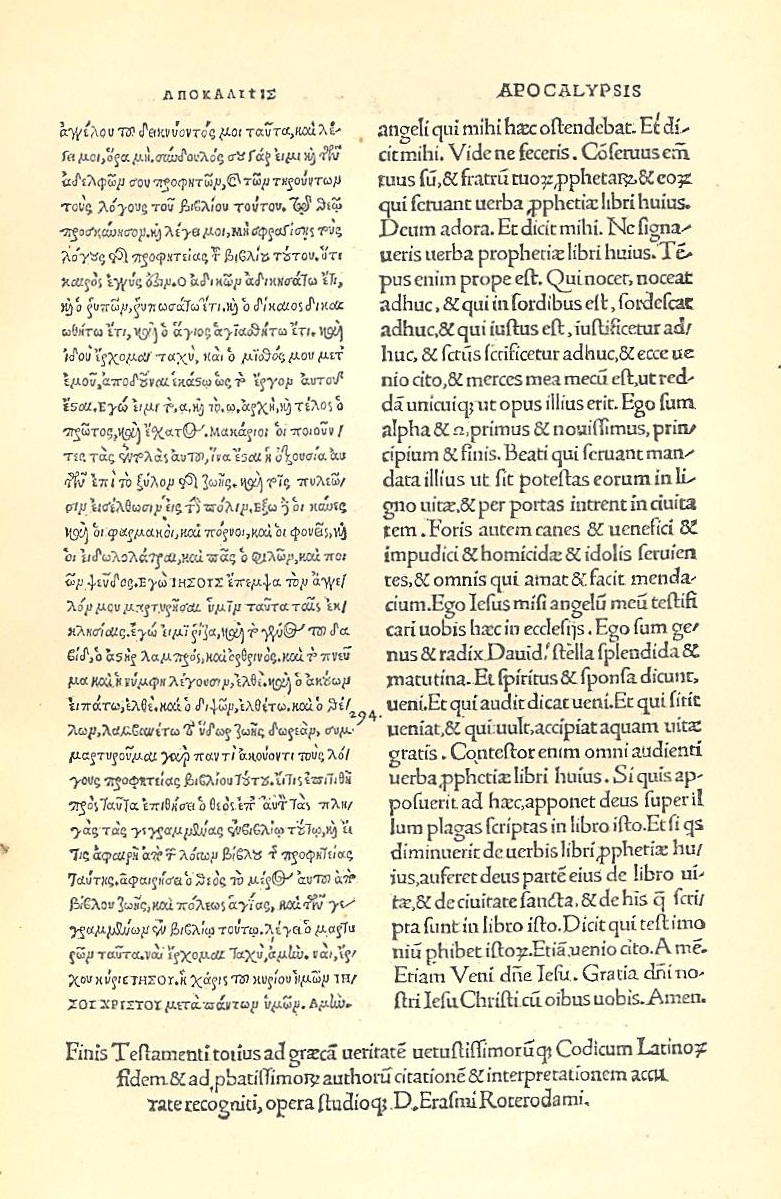
Me topé con ese video por pura casualidad, el tipo de recomendación que un algoritmo coloca en tu lista de reproducción cuando estás escuchando algo completamente diferente. En la pantalla aparecía un pastor de modales cuidados y voz suave hablando con absoluta convicción acerca de los versículos de la Biblia que "faltan" en las traducciones modernas. Los recitó de memoria con precisión de capítulos y versículos: el pasaje de Mateo sobre el ayuno y la liberación sobre el ayuno y la expulsión de demonios, las palabras de Mateo sobre buscar a los perdidos sobre la misión de Cristo de salvar a los perdidos, el llamado a escuchar en el Evangelio según Marcos, la segunda parte discutida del pasaje sobre el estanque de Betesda en el Evangelio según Juan sobre el ángel que agita las aguas, y la confesión de fe del funcionario etíope en Hechos sobre la confesión del eunuco etíope.
La historia que pintó era ordenada y alarmante: alguien había recortado deliberadamente la Palabra de Dios y las Biblias modernas que teníamos en nuestras manos habían sido manipuladas. Fue lo suficientemente convincente como para que, incluso siendo alguien familiarizado con las variantes textuales, me sentara y observara todo el sermón de principio a fin.
Un sentimiento de inquietud me impulsó a buscar en sus páginas de redes sociales para ver quién era en realidad. Dirigía un ministerio activo con su propia comunidad de adoración, contenido regular y un número considerable de seguidores. Pero cuanto más leía, más inquieto me sentía. Se trataba de un grupo sectario que rechazaba rotundamente la Trinidad, la base fundamental compartida por católicos, ortodoxos y protestantes durante dos milenios. El sermón sobre los "versículos borrados" no fue un estudio aislado. Fue un gancho psicológico deliberado, utilizando la sensación de haber sido engañado para alejar a los espectadores desprevenidos de la ortodoxia histórica.
Lo que me mantuvo despierto esa noche no fueron sólo los versículos en sí, sino lo plausible que sonó su discurso. Había estado en la iglesia durante años, pero en ese momento no pude contrarrestar sus afirmaciones con nada más sólido que un presentimiento intuitivo de que algo andaba mal.
Pasé las siguientes tres semanas leyendo. No sólo para encontrar rápidamente contraargumentos, sino para comprender genuinamente lo que sucedió a lo largo de dos mil años de historia, desde el momento en que los apóstoles escribieron sus cartas hasta la Biblia física que hoy descansa sobre mi escritorio. Este ensayo reúne todo lo que descubrí. Es minucioso porque una pregunta seria merece una respuesta paciente y honesta.
El viaje de 2.000 años: cómo las Escrituras llegaron a nuestras manos
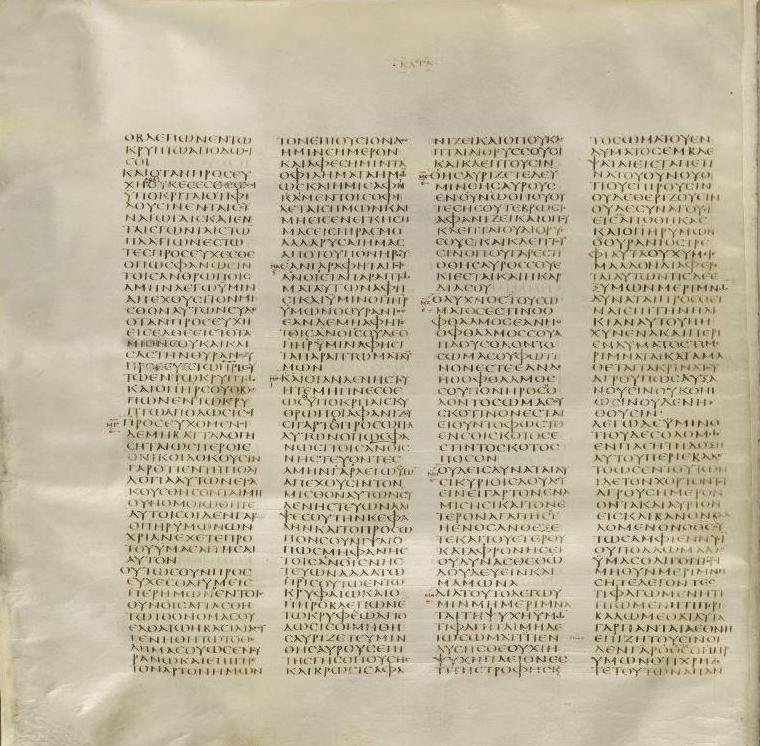
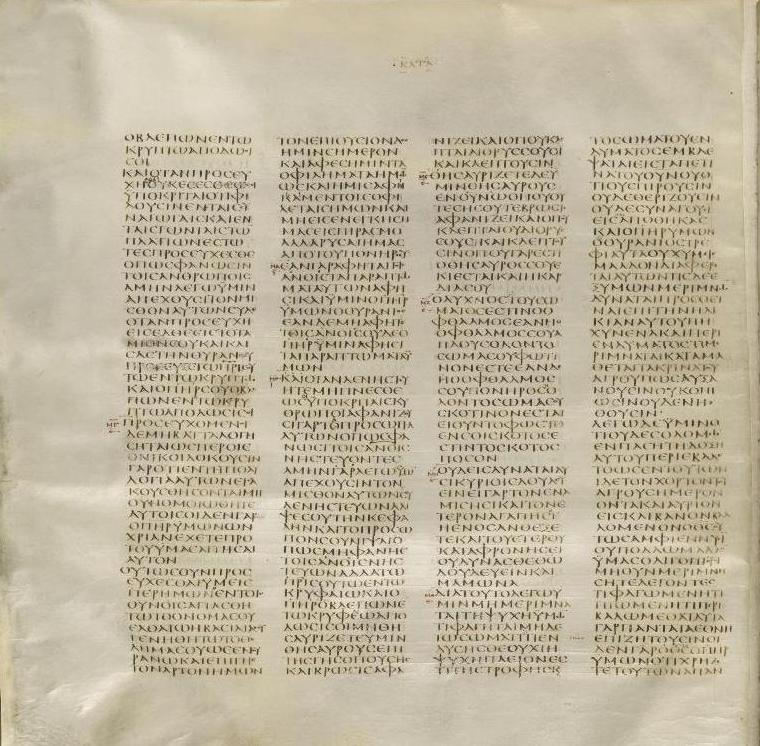
He aquí el primer hecho fundamental: nadie posee los autógrafos originales escritos por los propios autores del Nuevo Testamento. Hoy en día no sobrevive ni un solo fragmento de papiro escrito por Pablo, Lucas o Juan. Todo lo que tenemos es una copia, o una copia de una copia, hecha a mano a lo largo de siglos y regiones geográficas antes de que Johannes Gutenberg introdujera los tipos móviles a mediados del siglo XV.
Esto puede parecer alarmante al principio, pero la evidencia directa cuenta una historia completamente diferente. Hoy en día poseemos más de 5.800 manuscritos griegos supervivientes del Nuevo Testamento, que van desde frágiles fragmentos de papiro de los siglos II y III, hasta magníficos códices unciales de pergamino del siglo IV y miles de manuscritos medievales en escritura minúscula. Ningún otro texto antiguo de la historia de la humanidad, desde Homero hasta Platón o Julio César, tiene nada parecido a esta abundancia de testimonios manuscritos. El desafío en los estudios del Nuevo Testamento es nunca una escasez de pruebas, sino más bien una desconcertante abundancia, con copias que no siempre se alinean palabra por palabra.
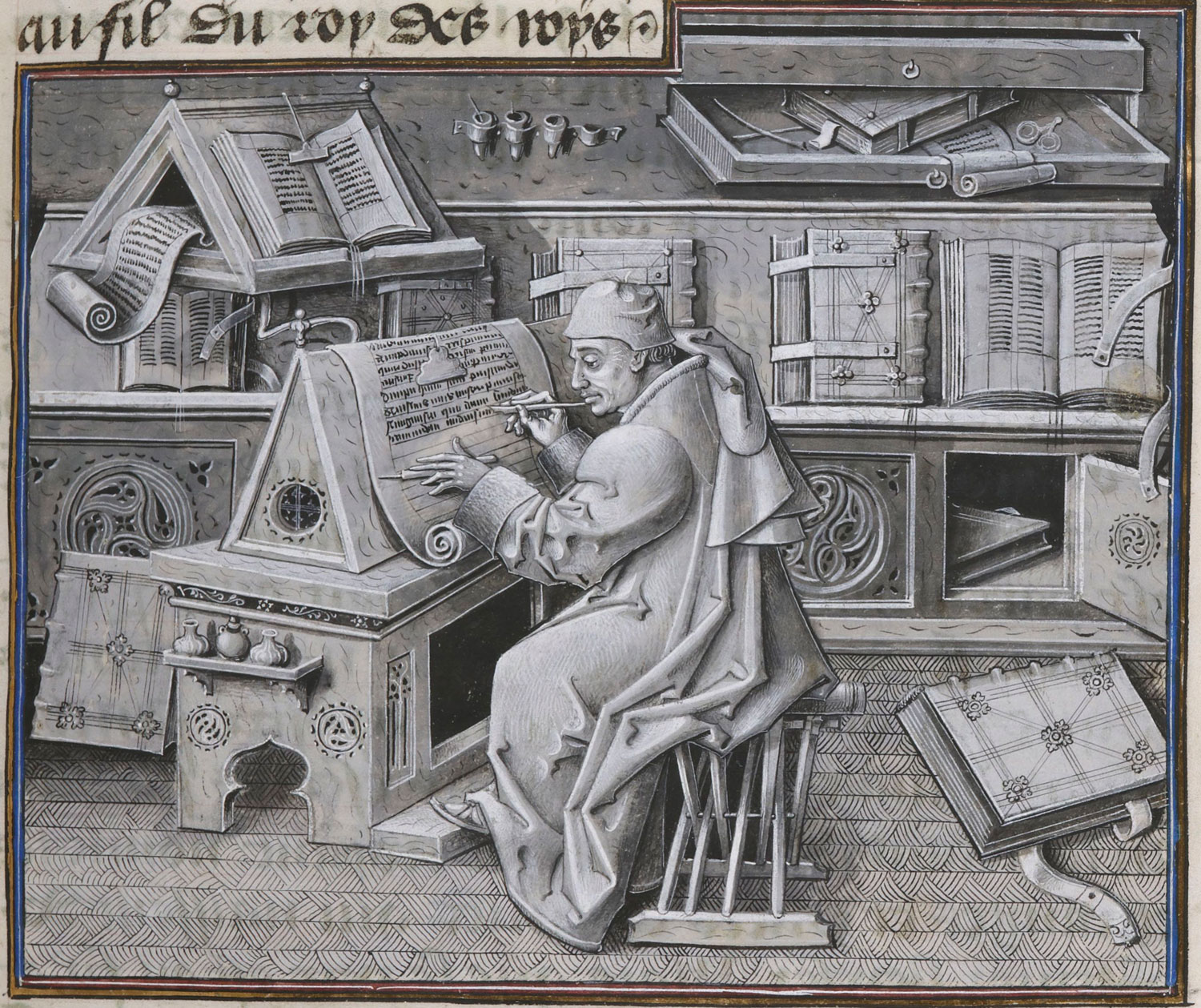
¿Por qué varían estas copias? La razón es simple: copiar a mano era trabajo humano, repetido miles de veces a lo largo de cientos de años. Cada vez que un escriba se sentaba ante un manuscrito bajo la tenue luz de una lámpara, sus ojos podían saltarse una línea, su pluma podía duplicar una palabra o escribir una nota explicativa en el margen. Aquí no hay ninguna conspiración. Es simplemente la realidad inevitable de la copia humana antes de que existieran las imprentas.
un único punto de origen, cuyo manuscrito ya no se conservamiles de copias manuscritas que se abren en abanico a lo largo de los siglosReconstrucción
lo más cercano al original, mediante la comprobación cruzada
Una ilustración conceptual: la mitad superior es divergencia (cada copia puede apartarse ligeramente de aquello que copió); la mitad inferior es convergencia (comprobar miles de copias para reconstruir la redacción más cercana al original). No es la genealogía real de ningún grupo específico de manuscritos.
Cómo los textos escritos a mano cambian naturalmente con el tiempo
Cuando comencé a explorar esto, compartía la misma suposición que muchos otros: cada vez que faltaba un versículo en una traducción moderna, asumía que alguien debía haberlo eliminado. Pero la crítica textual, la disciplina académica que consiste en comparar manuscritos antiguos para reconstruir la redacción más antigua, revela un panorama mucho más rico. En el mundo de los textos copiados a mano, existen cuatro mecanismos principales por los que la redacción va cambiando, y sólo dos de ellos acortan el texto.
El primer grupo incluye deslices involuntarios que acortan un texto:
- Paráblepsis (mirando más allá): Cuando el ojo de un copista salta de una frase a otra similar más abajo en la página, omitiendo por accidente las palabras intermedias. Cuando las terminaciones de las frases coinciden, esto se conoce como homoioteleuton. Probablemente lo hayas hecho al tomar notas: tu atención capta la palabra "y" en la línea dos, salta a "y" en la línea cuatro y omite la línea tres por completo.
- Ditografía: El copista escribe accidentalmente una palabra o frase dos veces seguidas, muy parecido a escribir accidentalmente una palabra duplicada cuando se escribe rápidamente en un teclado. Ambos errores dejan huellas físicas inconfundibles en páginas antiguas.
El segundo grupo hace exactamente lo contrario, ampliando el texto con el tiempo:
- Notas marginales (glosas): Un lector temprano escribe una frase explicativa en el margen para aclarar una oración difícil. Un copista posterior asume que la nota fue una omisión accidental y la incorpora directamente al texto principal. Es como comprar un libro usado con notas escritas a mano en el margen y confundir esas notas con las palabras originales del autor.
- Armonización: Un escriba íntimamente familiarizado con un pasaje paralelo en otro Evangelio ajusta inconsciente o intencionalmente la redacción para que ambos relatos coincidan. Al volver a contar una historia familiar, nuestra mente se dirige naturalmente hacia la frase que mejor recordamos.
El ojo del copista salta de una frase a otra semejante que aparece más adelante y omite lo que hay entre ambas.
El ojo salta del primer «…y» al segundo y omite la B que queda entre ellos.
El ojo o la mano del copista repite una palabra, una frase o, ocasionalmente, una cláusula entera que acaba de escribir.
La mano del copista repite la «B» justo después de escribirla y añade una copia adicional.
Un lector escribe una explicación en el margen; un copista posterior la trata como una omisión accidental y la incorpora al texto corrido.
Un copista posterior confunde la nota marginal de un lector anterior con una omisión accidental.
Un copista familiarizado con un pasaje paralelo de los Evangelios, consciente o inconscientemente, hace que ambos relatos se parezcan más.
El copista, familiarizado con el pasaje paralelo (C′), escribe inconscientemente eso en lugar de C.
El punto clave: los cuatro mecanismos están documentados en los propios manuscritos, no son especulación. Los dos primeros acortan un texto; los dos últimos alargan el texto. No hay razón para suponer por defecto que toda diferencia sea una supresión.
Definiciones y ejemplos según Bruce M. Metzger y Bart D. Ehrman, The Text of the New Testament (4.ª ed.); Paul D. Wegner, A Student's Guide to Textual Criticism of the Bible.
Estos cuatro mecanismos no son teorías abstractas. Son físicamente visibles en miles de manuscritos supervivientes, donde los estudiosos pueden observar notas marginales que migran a las columnas principales del texto a lo largo de siglos sucesivos. Una vez que entiendas cómo funcionaba la copia antigua, la suposición simplista de que toda diferencia surge de una eliminación deliberada se desmorona. La verdadera pregunta no es quién eliminó un versículo, sino qué mecanismo de copia explica mejor lo que vemos en la página.
Cuatro mecanismos de copia naturales, no una conspiración oscura. Cada error de copia y cada nota añadida tienen una explicación muy humana que deja su huella en la página, sin necesidad de una sala secreta.
La ilusión de los números de los versículos: Lucas nunca escribió una línea numerada
Este es un punto clave en el que muchas personas tropiezan. Cuando alguien afirma que "la confesión de fe del funcionario etíope en Hechos fue eliminado", naturalmente imaginamos a Lucas sentado y escribiendo la confesión que luego se encuentra en la confesión de fe del funcionario etíope en Hechos, seguido de un conspirador tomando una cuchilla para cortarla.
La realidad histórica es bastante diferente: en el primer siglo, los manuscritos del Nuevo Testamento no contenían divisiones en capítulos ni en versículos.
- Las divisiones capitulares modernas fueron creadas alrededor del 1205 d. C. por Stephen Langton, arzobispo de Canterbury, más de un milenio después de la era apostólica.
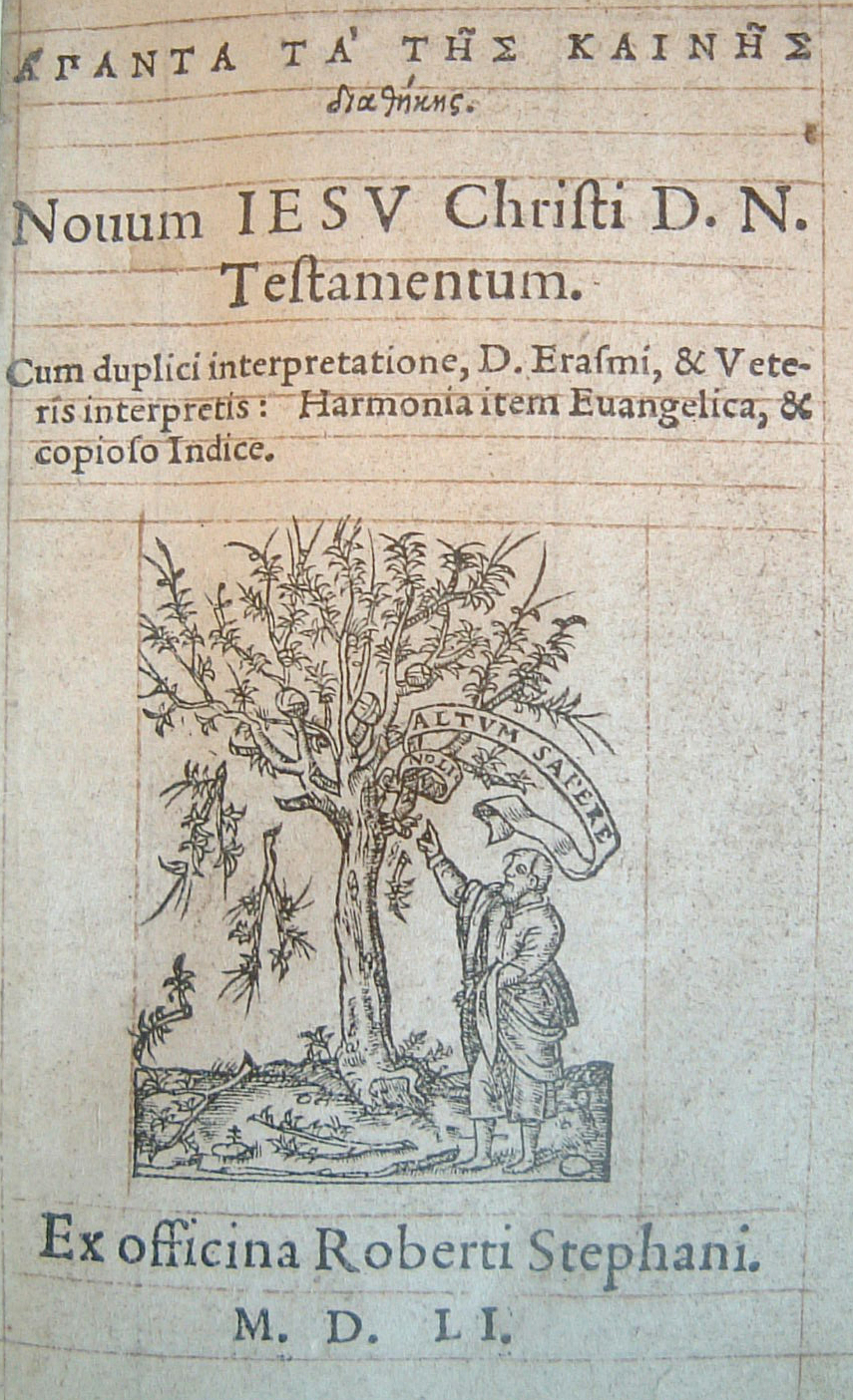
- Los números de versículo fueron introducidos en 1551 d. C. por el impresor francés Robert Estienne (Stephanus) en su Nuevo Testamento griego para facilitar las referencias cruzadas.
Los números de versículo son simplemente una cuadrícula de indexación tardía inventada por editores del siglo XVI; no forman parte del texto inspirado original.
Comprender esto cambia toda la conversación. Cuando los estudiosos afirman que un antiguo manuscrito del siglo IV carece de la confesión que tradicionalmente se encuentra en la confesión de fe del funcionario etíope en Hechos, no significa que haya una mancha en blanco raspada en el pergamino. Simplemente significa que, en el lugar asignado posteriormente a esa confesión por un editor del siglo XVI, los ejemplares más antiguos que se conservan nunca tuvieron esa frase en primer lugar. Describe una ausencia relativa a un sistema de referencia moderno, no la eliminación de una oración original.
En qué fijarse: Esta es una secuencia de copias, descubrimientos e hitos editoriales, no una sola cadena ininterrumpida que sobreviva desde los autógrafos.
- 01~50–100AutógrafosNinguno sobrevive hoy
- 02~175–225Primeros fragmentos de papiroP45, P66, P75… copiados en Egipto
- 03siglo IVLos grandes códices mayúsculosSinaiticus, Vaticanus, Alexandrinus
- 04siglos IV–XVCorriente de copia bizantinaImperio romano de Oriente, miles de copias
- 051516El primer Nuevo Testamento griego impreso de ErasmoNovum Instrumentum omne, basado en unos 5–6 manuscritos tardíos (en su mayoría del siglo XII)
- 061551Estienne numera los versículosEdición griega de Robert Estienne (Stephanus)
- 071633El nombre «Textus Receptus»Prefacio de la edición impresa de los hermanos Elzevir
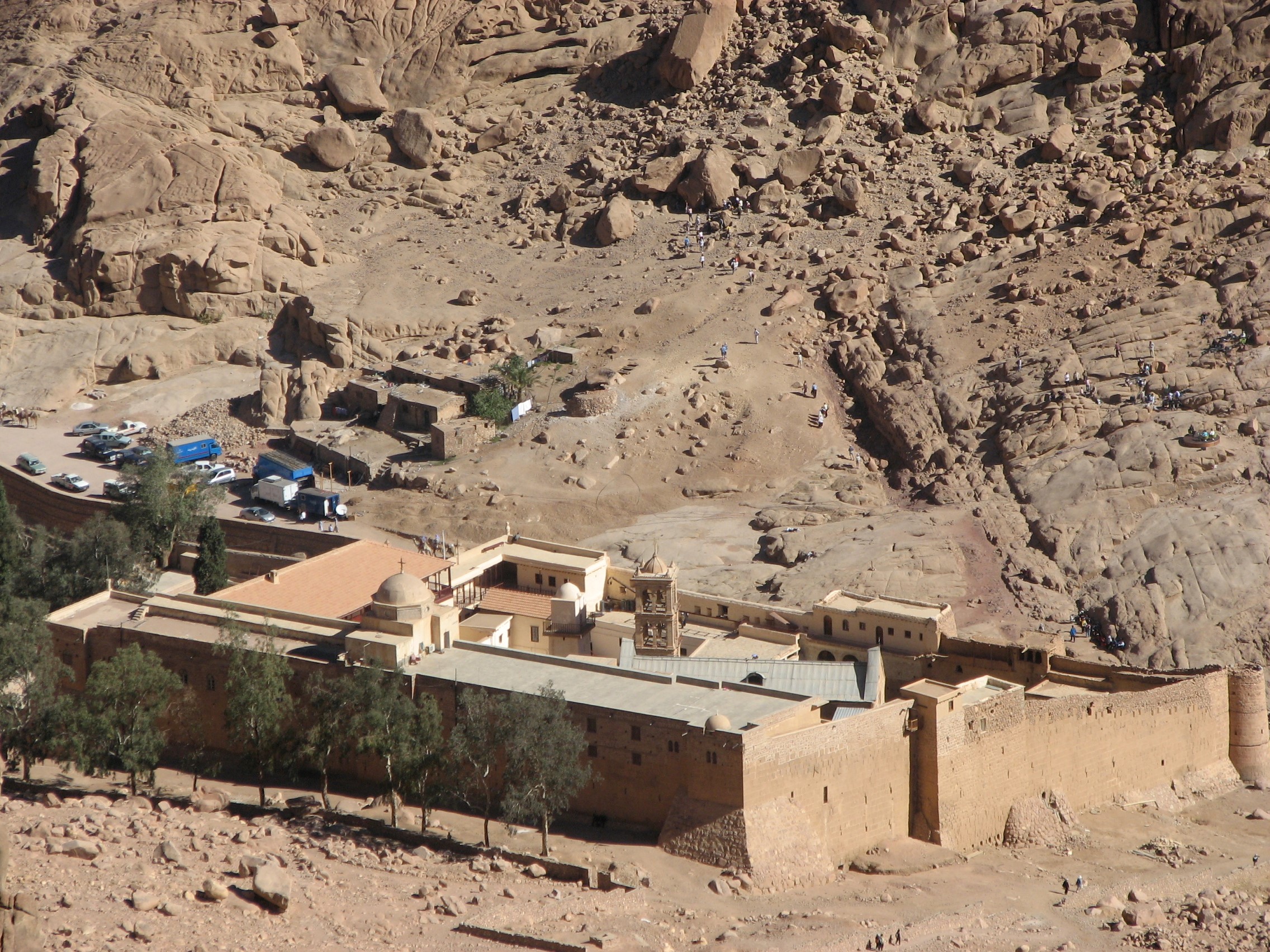
- 081844–59Se descubre el SinaiticusTischendorf en el monasterio de Santa Catalina
- 091930–60Los grandes hallazgos de papirosChester Beatty (P45…), Bodmer (P66, P75…)
- 10hoyNA28 / UBS5 / ECMMétodo CBGM; el proyecto ECM todavía se está ampliando a los libros restantes
Fuentes: INTF (Kurzgefasste Liste); CSNTM; la historia de la impresión de Erasmo/Estienne/Elzevir según consta en estudios estándar de crítica textual (Metzger y Ehrman, The Text of the New Testament); el proyecto Editio Critica Maior (Deutsche Bibelgesellschaft).
Si observas la línea de tiempo de arriba, puedes ver hasta dónde llega la brecha entre los autógrafos y ambos hitos de numeración. Ese no es un detalle baladí. Es la base para hacer las preguntas correctas con claridad.
Un versículo ausente no significa que alguien cortó el pergamino con un cuchillo. Simplemente significa que, en las coordenadas donde un sistema inventado mil años después asignó un número, el manuscrito más antiguo que se conserva nunca contuvo esa frase.
Dos falacias clásicas: ¿manda la mayoría? ¿Gana la lectura más antigua?
Antes de examinar pasajes específicos, debemos aclarar una trampa metodológica en la que tropiezan muchos debates.
Tanto los creyentes como los escépticos frecuentemente apelan a dos reglas generales intuitivas:
- Regla uno: Cualquiera que sea la lectura que tenga la gran mayoría de los manuscritos debe ser correcta ("Manda la mayoría").
- Regla dos: Cualquier lectura que provenga del manuscrito más antiguo debe ser correcta ("Gana la lectura más antigua").
Ambos supuestos se desmoronan cuando se los trata como fórmulas rígidas, porque la evidencia de manuscritos antiguos no funciona como una votación democrática o una carrera de velocidad.
Antes de seguir adelante, aclaremos la lente analítica tomada de las estadísticas. Estos seis conceptos nos ayudan a evaluar la evidencia con rigor académico:
La población es todo lo que existió alguna vez, incluido lo que se ha perdido. La muestra es lo que realmente observamos: los más de 5.800 manuscritos supervivientes, no todo lo que se copió.
Dos observaciones son independientes cuando conocer una no te dice nada sobre la otra. Muchas copias bizantinas están correlacionadas porque comparten un antepasado de copia, así que no pueden contarse como papeletas separadas.
Una cifra desnuda como «80 manuscritos tienen X» no dice nada por sí sola. 80 de 100 es muy distinto de 80 de 5.800. Sin denominador, el número solo sirve para causar efecto.
Contar cuántos manuscritos contienen una lectura determinada es descriptivo. Inferir qué lectura es más probablemente original es un paso inferencial separado, que necesita supuestos adicionales sobre la genealogía y el mecanismo de copia, no algo que el recuento bruto te entregue automáticamente.
La muestra que tenemos (los manuscritos supervivientes) no fue extraída al azar de la población original: quedó filtrada por el clima, la guerra y los hábitos regionales de copia. El sesgo de supervivencia es una forma específica de sesgo muestral.
Las conclusiones extraídas de los cinco versículos de este ensayo se aplican a esos cinco versículos, basándose en la evidencia comprobada aquí. No deben convertirse en una regla general para toda variante del Nuevo Testamento.
Estos seis términos reaparecen a lo largo del resto del ensayo; usa esto como consulta rápida si olvidas qué significa alguno.
Por qué las "manda la mayoría" se quedan cortas La cuestión central es la dependencia genealógica. La gran mayoría de los manuscritos bizantinos posteriores no son testigos independientes. Son descendientes de un pequeño grupo de ejemplares ancestrales copiados en masa dentro de los centros eclesiásticos bizantinos durante siglos (más del 80% de los manuscritos griegos conservados en escritura minúscula pertenecen a esta tradición). Si una copia ancestral contenía una nota marginal o una armonización, todas las copias posteriores la heredaban, no porque fuera original, sino porque compartían el mismo linaje de copia. Contar manuscritos sin rastrear árboles genealógicos es como fotocopiar mil veces un solo error tipográfico y afirmar que mil testigos independientes lo verificaron.
El mismo número «80», pero uno está 80%, el otro está por debajo de 1.4%. Siempre que un argumento cite un recuento de manuscritos sin indicar el denominador, ese es el momento de detenerse y pedirlo.
Una ilustración aritmética sencilla, no las cifras reales de ningún versículo específico de este ensayo.
Úsalo como prueba rápida: contar copias físicas es una tarea; identificar líneas independientes de transmisión es otra.
Un árbol puede producir muchas copias y seguir representando una sola línea de evidencia. Los orígenes diferentes son los que aportan independencia.
Cincuenta apariciones de X todavía pueden ser un solo acontecimiento de copia multiplicado.
Cuando fuentes de lugares y épocas diferentes coinciden sin copiarse entre sí, su independencia importa.
Regla de lectura: la cantidad física indica el tamaño de la muestra; la genealogía y la difusión indican cuán independiente es. No conviertas los manuscritos en papeletas separadas cuando comparten un antepasado.
Una ilustración conceptual, no la genealogía real de ningún manuscrito específico. Principio subyacente: el método local-genealógico de Kurt y Barbara Aland, The Text of the New Testament; el enfoque de ponderar, no contar, del eclecticismo razonado contemporáneo (Daniel B. Wallace).
Por qué "gana la lectura más antigua" no basta por sí sola La edad física nos dice cuándo se escribió un manuscrito, pero no garantiza que el escriba fuera cuidadoso o que el ejemplar estuviera limpio. Un manuscrito del siglo IX copiado fielmente de un ejemplar antiguo y prístino con pocos pasos intermedios puede estar mucho más cerca del original que una copia del siglo IV hecha descuidadamente. Es por eso que los estudiosos del texto evalúan múltiples flujos de evidencia juntos en lugar de confiar únicamente en la edad o los recuentos brutos.
Cómo leerlo: Haz seis preguntas diferentes y luego sopesa las respuestas juntas; no se suman en una sola puntuación.
Evidencia externa
¿Qué sobrevive fuera de la propia redacción?
Fecha del manuscrito
Pregunta: ¿En qué siglo se hizo esta copia?
Puede establecer: Sitúa al testigo en el tiempo.
No puede establecer por sí sola: No demuestra que la copia sea exacta.
Ascendencia de la copia
Pregunta: ¿De qué fuente desciende?
Puede establecer: Muestra qué testigos son verdaderamente independientes.
No puede establecer por sí sola: La independencia no puede inferirse solo de la cantidad.
Difusión
Pregunta: ¿Aparece la lectura en distintas regiones o tradiciones?
Puede establecer: Muestra el alcance geográfico y textual de la lectura.
No puede establecer por sí sola: Una amplia difusión aún puede proceder de un solo antepasado.
Versiones antiguas
Pregunta: ¿Qué reflejan las traducciones latinas, siríacas y coptas?
Puede establecer: Añade una ventana desde otra lengua y otro lugar.
No puede establecer por sí sola: Las traducciones tienen sus propias historias de copia.
Cita patrística
Pregunta: ¿Alguien citó ese pasaje o aludió a él en una época temprana?
Puede establecer: Añade evidencia fuera de los manuscritos supervivientes.
No puede establecer por sí sola: Una alusión cercana no es automáticamente una cita segura.
Evidencia interna
¿Qué lectura encaja con el autor y con el proceso de copia?
Probabilidad intrínseca
Pregunta: ¿Qué lectura encaja con el estilo y el argumento del autor?
Puede establecer: Pone a prueba qué pudo haber escrito el autor y qué podría alterar fácilmente un copista.
No puede establecer por sí sola: Es un juicio razonado, no una puntuación mecánica.
Juicio textual: un argumento razonado que explica dónde las corrientes de evidencia se refuerzan o se cuestionan entre sí.
No es una fórmula como «fecha 40 %, difusión 20 %».
El marco externo/interno y el «eclecticismo razonado» siguen a Kurt y Barbara Aland, The Text of the New Testament; Bruce Metzger, A Textual Commentary on the Greek New Testament; las notas docentes de Daniel B. Wallace sobre el método de crítica textual.
Para ser claros, ni el número de manuscritos ni la edad son inútiles. Una lectura confirmada a través de múltiples flujos de copia independientes en distintas regiones geográficas conlleva un profundo peso probatorio. El error radica en elevar una sola variable a regla infalible.
Vale la pena tener en cuenta dos factores históricos adicionales:
- Sesgo de supervivencia: Los más de 5.800 manuscritos que tenemos hoy son simplemente lo que sobrevivió a dos mil años de guerras, incendios y podredumbre. Las arenas secas de Egipto conservaron papiros que se pudrieron en otros lugares. Sólo alrededor de 177 manuscritos griegos supervivientes son anteriores al 900 d. C., en comparación con más de 5.000 producidos después.
- Datos faltantes: La ausencia de una lectura en los registros supervivientes no prueba que nunca existió, del mismo modo que una cita patrística temprana por sí sola no prueba automáticamente que se originó de la mano del autor.
La gran mayoría de las variaciones textuales en el Nuevo Testamento son errores ortográficos menores, cambios en el orden de las palabras o matices gramaticales. Los cinco pasajes siguientes representan variantes sustanciales, razón por la cual cada uno merece un examen cuidadoso e individual.
Contar ejemplares y medir la edad es sólo el punto de partida. La evidencia sólida no es simplemente la más abundante o la más antigua, sino la lectura confirmada a través de corrientes de copia independientes de diferentes regiones y siglos.
Analizando los 5 pasajes en disputa: ¿Qué sucedió realmente?
Ahora veamos directamente cada uno de los cinco pasajes citados con más frecuencia: qué muestran los manuscritos, qué mecanismo explica mejor la variación y si la doctrina cristiana se ve afectada si el versículo no estaba en el autógrafo original.
Es necesario establecer un punto clave desde el principio: Los cinco pasajes representan variantes de adición (texto agregado durante la copia) en lugar de palabras recortadas del original. La pregunta histórica precisa es si cada pasaje comenzó como una nota explicativa o una armonización paralela durante la transmisión.
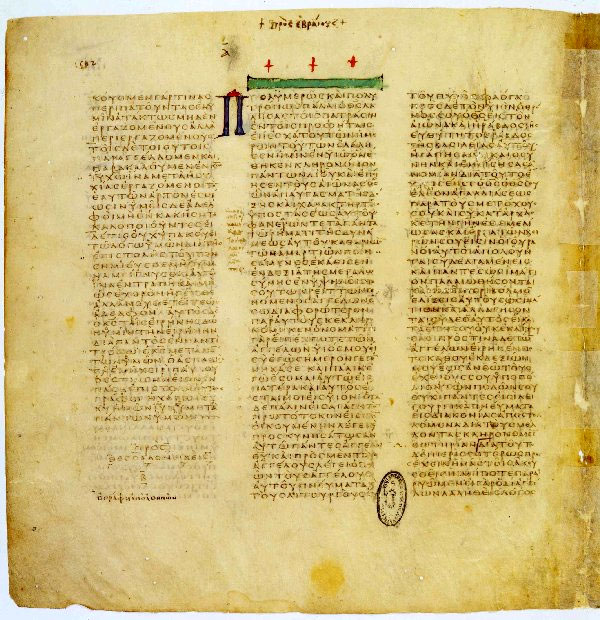
1. el pasaje de Mateo sobre el ayuno y la liberación ("Pero este género no sale sino con oración y ayuno")
- Evidencia manuscrita: Completamente ausente en el Codex Sinaiticus y el Codex Vaticanus (siglo 4), aunque presente en la mayoría de las copias bizantinas posteriores.
- Mecanismo de copia: Un caso claro de armonización a partir del relato paralelo en la enseñanza de Marcos sobre la oración y el ayuno. Los escribas familiarizados con Marcos incorporaron la frase en Mateo.
- Impacto doctrinal: No afectado. El papel de la oración en la guerra espiritual sigue firmemente arraigado en la enseñanza de Marcos sobre la oración y el ayuno, mientras que Jesús enseña de forma independiente el ayuno como disciplina espiritual en la enseñanza de Mateo sobre el ayuno y se practica en la práctica del ayuno y del envío en misión en Hechos.
2. las palabras de Mateo sobre buscar a los perdidos ("Porque el Hijo del Hombre ha venido a salvar lo que se había perdido")
- Evidencia manuscrita: Ausente en Vaticanus, Sinaiticus y las familias de manuscritos 1 y 13; presente en la mayoría bizantina.
- Mecanismo de copia: Armonización de memoria a partir de las palabras de Lucas sobre buscar a los perdidos. Curiosamente, Mateo coincide con Lucas casi palabra por palabra, faltando sólo el verbo griego "buscar" (ζητῆσαι), una señal típica de un copista que cita un pasaje bien conocido de memoria.
- Impacto doctrinal: Ninguno. las palabras de Lucas sobre buscar a los perdidos transmite la verdad en su totalidad, y la parábola de la oveja perdida que sigue inmediatamente en la parábola de la oveja perdida en el Evangelio según Mateo proclama exactamente el mismo corazón de Cristo.
3. el llamado a escuchar en el Evangelio según Marcos ("Si alguno tiene oídos para oír, que oiga")
- Evidencia manuscrita: Ausente en Sinaiticus, Vaticanus, L y Δ; presente en la mayoría bizantina.
- Mecanismo de copia: Escribas que hacen eco de una fórmula familiar. Marcos usa esta exhortación exacta dos veces antes en el primer llamado a escuchar en el Evangelio según Marcos y el llamado posterior a escuchar en el Evangelio según Marcos. Los escribas acostumbrados al modelo lo insertaron después de las enseñanzas de Jesús.
- Impacto doctrinal: Ninguno, ya que la frase ya se encuentra indiscutible dos veces dentro del Evangelio de Marcos.
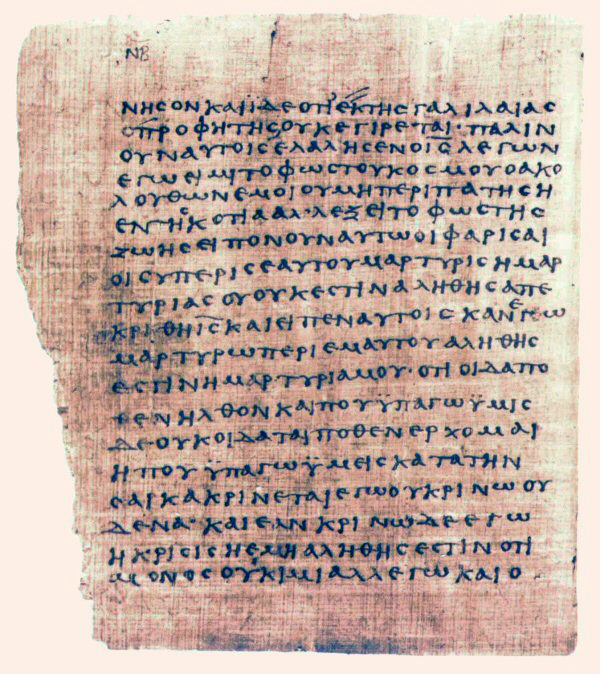
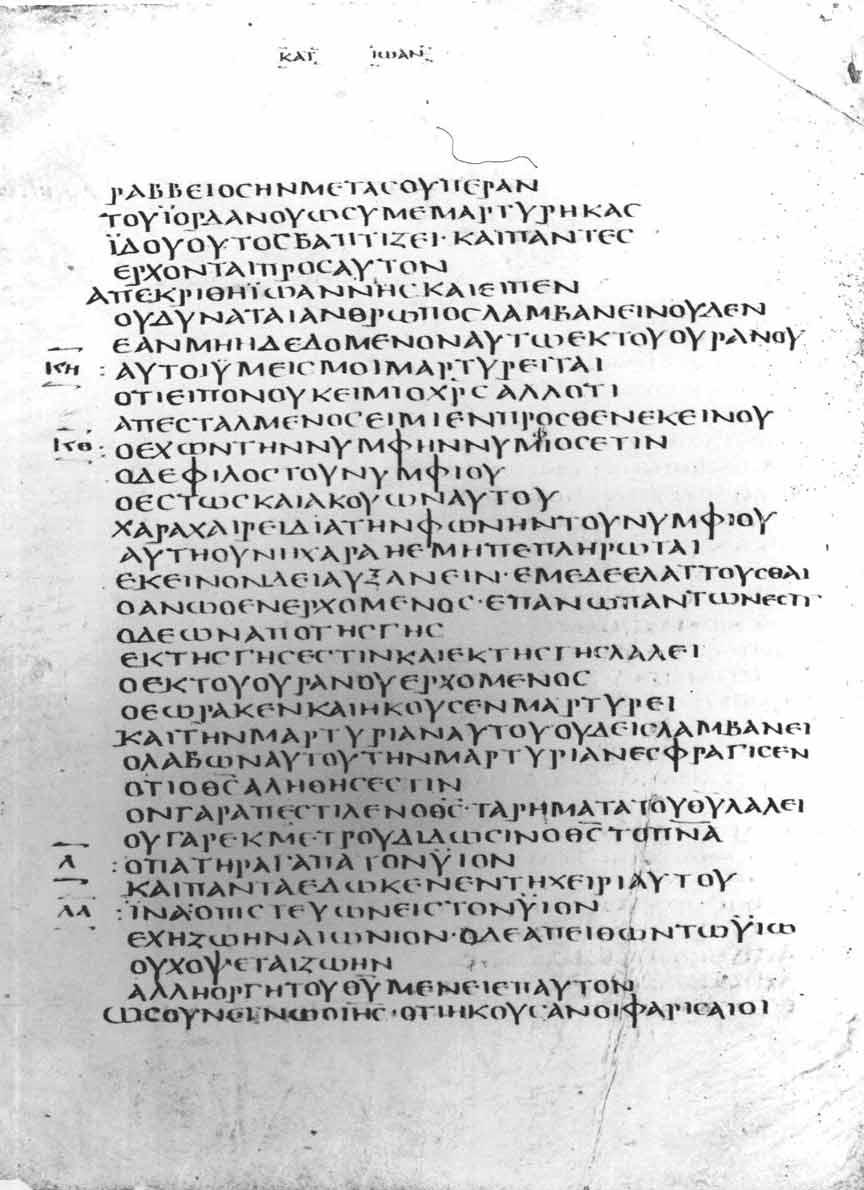
4. la explicación sobre el estanque de Betesda en el Evangelio según Juan (El ángel que agita las aguas de Betesda)
- Evidencia manuscrita: Ausente en los primeros papiros P66 y P75 (c. 200 d. C.), Sinaítico y Vaticano. Presente en Codex Bezae y en la mayoría bizantina.
- Mecanismo de copia: Una glosa explicativa marginal. Los manuscritos que contienen este versículo muestran grandes diferencias de redacción, la señal característica de una nota marginal incorporada al texto principal a lo largo de sucesivas generaciones. Explicaba por qué los enfermos estaban reunidos junto a la piscina.
- Impacto doctrinal: No afectado en absoluto. El milagro de curación de Jesús en los la sanación en Betesda en el Evangelio según Juan ("Levántate, toma tu camilla y anda") nunca dependió de un ángel ni de agua en movimiento. El hombre nunca entró en la piscina; Jesús lo sanó únicamente por la autoridad de Su Palabra.
| Versículo | Evidencia más antigua de la omisión | Evidencia de la inclusión | Mecanismo más probable | ¿La doctrina permanece intacta en otro lugar? |
|---|---|---|---|---|
| el pasaje de Mateo sobre el ayuno y la liberación | Sinaiticus, Vaticanus (siglo IV) | Mayoría bizantina, Bezae, Washingtonianus | Armonización con la enseñanza de Marcos sobre la oración y el ayuno | Sí: la enseñanza de Marcos sobre la oración y el ayuno todavía enseña la oración; el ayuno se enseña de forma independiente (la enseñanza de Mateo sobre el ayuno) |
| las palabras de Mateo sobre buscar a los perdidos | Vaticanus, Sinaiticus, L* y Θ* (manos originales, anteriores a la corrección), familias 1 y 13 | D, mayoría bizantina, las manos posteriormente corregidas de L y Θ | Armonización con las palabras de Lucas sobre buscar a los perdidos (falta «buscar») | Sí: intacto y de forma más completa en las palabras de Lucas sobre buscar a los perdidos |
| el llamado a escuchar en el Evangelio según Marcos | Sinaiticus, Vaticanus, L, Δ | Mayoría bizantina | Glosa que hace eco de el primer llamado a escuchar en el Evangelio según Marcos y el llamado posterior a escuchar en el Evangelio según Marcos | Sí: la fórmula idéntica ya aparece sin discusión dos veces en el propio Marcos |
| la explicación sobre el estanque de Betesda en el Evangelio según Juan | P66, P75 (~siglo III), Sinaiticus, Vaticanus | Bezae (redacción diferente), Alexandrinus, mayoría bizantina | Glosa marginal que explica la respuesta del hombre en Betesda en el Evangelio según Juan | Sí: el milagro de sanación en la sanación en Betesda en el Evangelio según Juan nunca depende del ángel ni de la piscina |
| la confesión de fe del funcionario etíope en Hechos * | P74, Sinaiticus, Vaticanus, Alexandrinus, mayoría bizantina (P45 está dañado justo en este punto, por lo que su testimonio no está claro) | Codex Laudianus (E), algunos manuscritos minúsculos tardíos (1739…), algunos testimonios de antiguas traducciones latinas (las fuentes discrepan sobre su alcance) | Una confesión bautismal temprana, posiblemente no redactada por Lucas |
* la confesión de fe del funcionario etíope en Hechos es el más complejo de los cinco y tiene su propia sección más abajo. Fuentes: notas de los traductores de la Biblia NET; notas de estudio de NABRE (bible.usccb.org); los artículos correspondientes de «Textual variants» en Wikipedia, contrastados con el catálogo de manuscritos de CSNTM.
El enigma más difícil: El caso de la confesión de fe del funcionario etíope en Hechos
Los primeros cuatro versículos tienen explicaciones históricas sencillas a través de armonizaciones o notas marginales, dejando la doctrina cristiana completamente intacta. la confesión de fe del funcionario etíope en Hechos, sin embargo, es más complejo y merece un matiz cuidadoso.
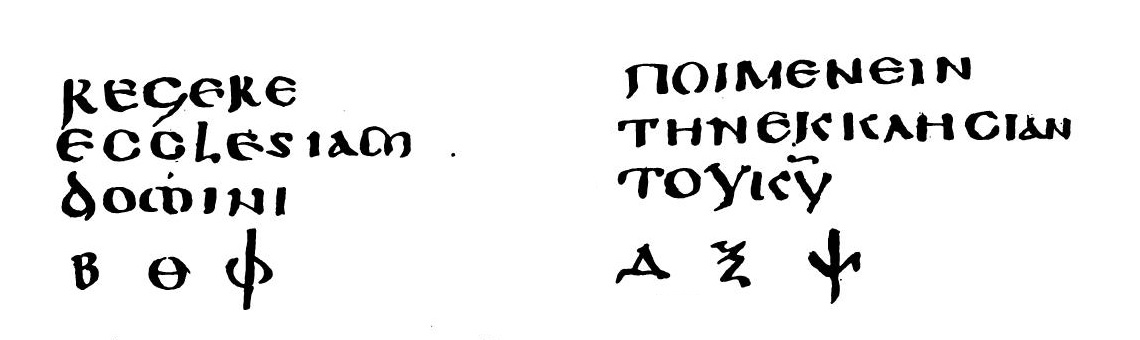
La lectura más larga (familiar por la versión King James y las traducciones tradicionales) registra la confesión del eunuco: "Creo que Jesucristo es el Hijo de Dios". La lectura más corta pasa directamente de la pregunta del eunuco ("¿Qué me impide ser bautizado?") al relato de que ambos bajaron al agua. Los tres primeros unciales del siglo IV, Sinaítico, Vaticano y Alejandrino, carecen de esta confesión.
Sin embargo, aquí es donde el recorrido histórico da un giro fascinante:
- Esta confesión aparece en el Codex Laudianus (siglos VI–VII, texto occidental) y ciertos testimonios de las antiguas versiones latinas que datan de los siglos II y III.
- En particular, el Padre de la Iglesia Ireneo, escribiendo alrededor de 180 d. C. (anterior al papiro de Hechos más antiguo que se conserva, P45), cita una confesión prácticamente idéntica a este versículo.
Esto revela una realidad histórica intrigante: la evidencia de esta confesión como una tradición bautismal de la iglesia primitiva en realidad es anterior a nuestros manuscritos griegos más antiguos que se conservan y que la omiten. Sin embargo, debemos mantener separadas dos cuestiones distintas:
- ¿Se usaba una fórmula de confesión bautismal temprana en la liturgia de la iglesia primitiva? (Ireneo confirma esto).
- ¿Escribió Lucas personalmente este versículo específico en el autógrafo original de Hechos? (La evidencia de los primeros manuscritos griegos no respalda esto).
La explicación más probable es que los escribas incorporaron gradualmente una fórmula de confesión bautismal temprana a la corriente textual occidental, una tradición bien conocida por agregar 8 a 10% más material explicativo a lo largo del Libro de los Hechos.
¿Afecta esto la doctrina del bautismo del creyente? No, en absoluto. Una teología responsable nunca hace depender toda una doctrina de un solo versículo en disputa. El bautismo de los creyentes se establece sobre el patrón consistente e indiscutible a lo largo de todo el Libro de los Hechos: las personas escucharon el mensaje, creyeron en Cristo y fueron bautizadas (el modelo de bautismo en Pentecostés en Hechos y el modelo de bautismo en Samaria en Hechos y la familia del carcelero de Filipos en Hechos y el modelo de bautismo en Corinto en Hechos). Nuestra fe descansa sobre el sólido puente de las Escrituras, no sobre un solo tablón en disputa.
Una confesión puede ser genuinamente antigua y aun así no formar parte de la redacción original del autor. Eso no es una contradicción, sino lo que sucede naturalmente cuando la liturgia viva de la iglesia primitiva se encuentra con el texto narrativo que ellos apreciaban.
El panorama general: ¿hacia dónde apunta realmente la evidencia?
Habiendo examinado los cinco casos, retrocedamos y miremos el panorama más amplio en lugar de fragmentos aislados.
| Versículo | Manuscritos griegos | Versiones antiguas | Cita patrística | Evidencia más antigua |
|---|---|---|---|---|
| el pasaje de Mateo sobre el ayuno y la liberación | Sí (ambos lados) | No establecido dentro del alcance de este ensayo | No se encontró ninguna | siglo IV (tanto en el lado que omite como en el que incluye) |
| las palabras de Mateo sobre buscar a los perdidos | Sí (ambos lados) | Sí (ambos lados, véanse las notas) | No se encontró ninguna | siglo IV |
| el llamado a escuchar en el Evangelio según Marcos | Sí (ambos lados) | Sí (lado que incluye) | No se encontró ninguna | siglo IV |
| la explicación sobre el estanque de Betesda en el Evangelio según Juan | Sí (ambos lados) | Sí (ambos lados) | No se encontró ninguna | ~175–225 (P66/P75), el más antiguo de los cinco |
| la confesión de fe del funcionario etíope en Hechos | Sí (ambos lados) | Afirmada, inconsistente entre las fuentes | Ireneo, ~180 (lenguaje cercano, no una cita segura) | ~180 para la tradición de la confesión; siglos VI–VII para una copia griega que realmente la contiene |
Definición del alcance: esta tabla solo enumera los testigos nombrados explícitamente en las fuentes utilizadas para este ensayo (notas de la Biblia NET, notas de estudio de NABRE, artículos de Wikipedia sobre «Textual variants» contrastados y catálogo de CSNTM). Esta tabla no reúne la totalidad de los más de 5.800 manuscritos griegos supervivientes del Nuevo Testamento, sino solo el segmento de evidencia al que esta investigación pudo atribuir un papel específico mediante fuentes secundarias fiables. Una celda «no se encontró ninguna» significa que no apareció ninguna dentro de la investigación de este ensayo, no que no exista ninguna.
Fuentes: notas de los traductores de la Biblia NET; NABRE (bible.usccb.org); Wikipedia, «Textual variants in the Gospel of Matthew/Mark/John» y «…in the Acts of the Apostles»; CSNTM.
Mirando la descripción general, la explicación sobre el estanque de Betesda en el Evangelio según Juan tiene la evidencia de omisión más antigua entre los cinco pasajes (que se encuentra en dos papiros de principios del siglo III). Mientras tanto, la confesión de fe del funcionario etíope en Hechos exhibe una brecha cronológica única: una confesión bautismal citada por los Padres de la Iglesia ya en el 180 d. C. que solo aparece en los manuscritos griegos supervivientes de los siglos VI o VII.
Una sola lectura añadida, tomada literalmente de la enseñanza de Marcos sobre la oración y el ayuno
Una sola lectura añadida, casi idéntica a las palabras de Lucas sobre buscar a los perdidos
Una sola lectura añadida, que coincide con el primer llamado a escuchar en el Evangelio según Marcos/el llamado posterior a escuchar en el Evangelio según Marcos
Los manuscritos discrepan sobre cuánto incluir: la primera parte discutida del pasaje sobre el estanque de Betesda en el Evangelio según Juan solo, la segunda parte discutida del pasaje sobre el estanque de Betesda en el Evangelio según Juan solo, o ambos, con redacción diferente
Varios manuscritos griegos contienen este versículo, pero con pequeñas diferencias de redacción entre ellos
Esta es una observación descriptiva, limitada a la evidencia que este ensayo pudo verificar. Esto no es una clasificación del «versículo más corrompido», y desde luego no es una medida de la probabilidad de que alguna lectura sea original ni evidencia de quién lo escribió o no. Los tres versículos «estables» simplemente no fueron editados más después de ser añadidos; eso no significa que sean más originales que los otros dos.
Base: los datos manuscritos ya citados en el expediente de cada versículo; notas de los traductores de la Biblia NET para el capítulo sobre Betesda en el Evangelio según Juan y la sección sobre el funcionario etíope en Hechos.
En términos de estabilidad textual: , las palabras de Mateo sobre buscar a los perdidos y el llamado a escuchar en el Evangelio según Marcos representan adiciones estables copiadas con alta consistencia siempre que estén presentes. Por el contrario, la explicación sobre el estanque de Betesda en el Evangelio según Juan muestra una gran variación interna, y los manuscritos no están de acuerdo en la redacción y la estructura.
Cuantitativo
- Contar los testigos a favor y en contra
- Cobertura siglo por siglo
- La difusión cronológica de cada lectura
- El grado de dependencia genealógica de los testigos
- Cuántas redacciones distintas aparecen entre los testigos
Cualitativo
- El mecanismo de copia más plausible (armonización, glosa marginal…)
- Encaje con el contexto y el estilo propios del autor
- El principio de que «la lectura más difícil suele ser más original» (lectio difficilior)
- El contexto de la cita de un padre de la Iglesia
- Por qué una corriente de copia específica (por ejemplo, el texto occidental) tiende a expandir el texto
La evidencia cuantitativa por sí sola se desliza hacia «contar votos», tratando cada manuscrito como una papeleta independiente, exactamente lo que la Figura 6 anterior muestra que es erróneo. La evidencia cualitativa por sí sola se desliza hacia conjeturas sin anclaje. La crítica textual seria necesita ambas, comprobadas entre sí.
Esta es la idea central de esta investigación: contar manuscritos y fechar fragmentos es sólo la mitad de la tarea. La otra mitad requiere comprender el contexto histórico, las tendencias de los escribas y la genealogía de transmisión. Cuando alguien hace un recuento sensacional sin explicar el contexto, está provocando una reacción emocional en lugar de ofrecer una erudición sólida.
¿Quién está realmente detrás de la narrativa de la "Biblia eliminada"?
Es esencial distinguir claramente entre diferentes puntos de vista. Agrupar todas las voces críticas en un solo grupo es injusto e históricamente inexacto.
Hay que distinguir tres perspectivas muy diferentes:
- Académicos defensores de la prioridad bizantina y el texto mayoritario: Representados por académicos como Zane Hodges, Arthur Farstad, Maurice Robinson y William Pierpont. Argumentan a partir de estadísticas de transmisión de manuscritos y proponen que el dominio numérico refleja un flujo de copia estable. Ésta es una posición académica legítima, completamente libre de teorías conspirativas.
- Movimientos radicales que sostienen la exclusividad de la KJV (KJV-Only): Ejemplificados por figuras como Peter Ruckman (Instituto Bíblico de Pensacola, 1965), quien afirmó que la traducción King James de 1611 era una nueva revelación inspirada superior al original hebreo y griego. Los principales eruditos bizantinos rechazan explícitamente este punto de vista. Incluso la conservadora Sociedad Bíblica Trinitaria afirma que "no cree que la Versión Autorizada sea una traducción perfecta, sólo que es la mejor traducción disponible en inglés".
- Teorías de conspiración que rodean a Westcott, Hort y el Vaticano: Afirmaciones infundadas en Internet de que los eruditos del siglo XIX Westcott y Hort albergaban planes secretos de carácter ocultista o estaban en connivencia con Roma. Ningún estudio histórico creíble respalda estas acusaciones. Sus métodos de crítica textual se publicaron abiertamente y han sido examinados y perfeccionados por académicos de todas las denominaciones durante más de un siglo.
Preferir el texto bizantino es una discusión académica legítima. La defensa radical de la exclusividad de la KJV es una ideología dogmática revestida de lenguaje académico. Confundir ambas posturas es errar por completo.
Católicos, ortodoxos y protestantes: ¿una guerra interconfesional?
Muchos se preguntan si los debates sobre manuscritos reflejan un conflicto sectario, en el que el catolicismo oculta un texto, el protestantismo defiende otro y la ortodoxia oriental se mantiene al margen. La realidad histórica muestra exactamente lo contrario: un notable consenso interconfesional en la erudición bíblica moderna.
- Catolicismo romano: La encíclica del papa Pío XII Divino Afflante Spiritu (1943) ordenó a los eruditos católicos estudiar directamente los textos originales hebreo y griego, afirmando que el texto original tiene mayor autoridad que cualquier traducción secundaria. Dei Verbum (1965) del Vaticano II afirmó que el Magisterio "no está por encima de la palabra de Dios, sino que la sirve". La traducción católica estándar NABRE coloca los cinco versículos en disputa entre corchetes con notas explicativas a pie de página, coincidiendo con traducciones protestantes como NIV, ESV y NASB.
- Ortodoxia Oriental: El erudito griego del Nuevo Testamento Ioannis Karavidopoulos sirvió directamente en el comité editorial de la UBS. Hizo una distinción útil: el texto bizantino sirve como el texto litúrgico fiel utilizado en el culto, mientras que las ediciones críticas sirven como herramientas académicas para reconstruir la redacción más antigua disponible.
- Protestantismo: Las principales traducciones modernas (NIV, ESV, NASB, CSB) se basan en las últimas ediciones críticas (NA28 y UBS5). Además, las ediciones del Texto Mayoritario, a pesar de miles de variaciones menores, concuerdan con las ediciones críticas modernas en más del 90% del texto del Nuevo Testamento.
| Pregunta | Católica romana | Ortodoxa oriental | Protestante |
|---|---|---|---|
| Base textual de la traducción actualmente utilizada | NABRE sigue NA28/UBS5 y llega a las mismas conclusiones que otras ediciones críticas | El Texto Patriarcal de 1904 (Antoniades): reconstruye el texto litúrgico bizantino, no afirma ser el autógrafo | NIV/ESV/NASB siguen NA28/UBS5; una minoría usa el Textus Receptus o el texto bizantino |
| ¿Eruditos en el comité del NT griego de UBS? | Sí, mediante la colaboración interconfesional que siguió a Divino Afflante Spiritu (1943) | Sí: Ioannis Karavidopoulos fue invitado personalmente por Kurt Aland para dar voz a la ortodoxia; editó NA26/27 y UBS4/5 | Sí: la mayoría de los miembros fundadores y los editores actuales |
| Postura sobre los cinco versículos discutidos | NABRE los pone entre corchetes con una nota, exactamente como hace NA28/UBS5 | Presentes en el texto litúrgico bizantino utilizado en el culto; ausentes de la reconstrucción crítica académica | La mayoría los pone entre corchetes o en notas al pie; una minoría TR/bizantina los mantiene en el texto corrido, sin plantearlos como una conspiración |
| ¿Es coherente la categoría «la Iglesia manipuló el texto»? | No: Dei Verbum aclara que el Magisterio «sirve», no que «está por encima» de la Palabra | No realmente: Karavidopoulos reconoce claramente los errores de copia como un hecho histórico que requiere estudio, no negación | No: sola scriptura sitúa la autoridad en la Palabra tal como se conserva en toda la tradición manuscrita, no en un único cuerpo eclesial |
Fuentes: Pío XII, Divino Afflante Spiritu (1943); Vaticano II, Dei Verbum (1965); usccb.org (NABRE); I. Karavidopoulos, «The Ecumenical Patriarchate's 1904 New Testament Edition and Future Perspectives», Sacra Scripta X,1 (2012); páginas sobre la filosofía de traducción de Biblica (NIV), Crossway (ESV) y Lockman Foundation (NASB).
Un sentido de escala: las variantes verdaderamente importantes del Nuevo Testamento
Los cinco pasajes que analizamos anteriormente son pequeñas variaciones de un solo versículo. Para ponerlas en perspectiva, considera las cinco variantes textuales genuinamente significativas del Nuevo Testamento:
- El final más largo de el final largo del Evangelio según Marcos: Un pasaje de doce versículos ausente tanto en el Sinaítico como en el Vaticano, que presenta un vocabulario y una sintaxis distintos del resto de Marcos, incluido el pasaje en disputa sobre tomar serpientes y beber veneno mortal.
- La historia de la mujer sorprendida en adulterio (el pasaje de la mujer sorprendida en adulterio en el Evangelio según Juan): Ausente en todos los papiros y códices unciales más antiguos. Si bien preserva una memoria histórica auténtica de Jesús, el pasaje circuló en diferentes lugares en manuscritos antiguos antes de llegar a Juan.
- El Comma Johanneum (el Comma Johanneum en la primera carta de Juan): La fórmula trinitaria explícita ("el Padre, el Verbo y el Espíritu Santo... y estos tres son uno") está prácticamente ausente en los manuscritos griegos anteriores al siglo XIV. Su ausencia de ninguna manera sacude la doctrina de la Trinidad, que fue definida en Nicea casi un milenio antes de que esta frase apareciera en un manuscrito griego.
- El sudor de Cristo como gotas de sangre (el relato de Lucas sobre el ángel y el sudor): Atestiguado por los Padres de la Iglesia del siglo II, este sigue siendo un pasaje debatido donde los eruditos examinan si fue un detalle original omitido durante las primeras disputas cristológicas o una adición litúrgica temprana.
- Doxología del Padrenuestro (la doxología del padrenuestro en el Evangelio según Mateo): "Porque tuyo es el reino, el poder y la gloria por siempre" aparece en la Didajé del siglo II en múltiples formas, reflejando la devoción litúrgica cristiana primitiva.
El veredicto: Separando los hechos históricos de la ficción
En lugar de buscar acuerdos vagos, aquí hay una evaluación directa, basada en evidencia, de las afirmaciones más comunes en torno a las traducciones de la Biblia y los versículos en disputa:
Las lecturas más breves son las atestiguadas más antiguas, de forma independiente, en múltiples corrientes manuscritas (alejandrina, versiones antiguas y algunos Padres de la Iglesia); la erudición católica, ortodoxa y protestante converge en las mismas conclusiones mediante el mismo método compartido, no por decreto de un solo actor.
Una confesión parecida a la confesión de fe del funcionario etíope en Hechosla confesión de fe del funcionario etíope en Hechos está registrada por Ireneo hacia el 180 d. C., antes que cualquier manuscrito griego superviviente de Hechos. Una tradición puede ser antigua sin ser la redacción propia de Lucas.
La mayoría de los manuscritos bizantinos desciende de un número mucho menor de ejemplares antepasados, copiados masivamente durante siglos dentro de un único centro eclesiástico. Contar sin genealogía no es evidencia representativa.
Una copia tardía de un buen ejemplar puede ser más fiel que una copia temprana de uno malo. La antigüedad del manuscrito es solo una parte de la evidencia externa, siempre sopesada junto con la evidencia interna.
NABRE pone los cinco versículos entre corchetes con una nota, la misma convención de NA28/UBS5 que usan NIV, ESV y NASB. La conclusión no se origina en la erudición católica ni le pertenece exclusivamente.
Un erudito ortodoxo (Karavidopoulos) formó parte del propio comité editorial que produjo NA26/27 y UBS4/5; la NABRE católica sigue las mismas conclusiones textuales.
El texto litúrgico ortodoxo es el Texto Patriarcal de 1904, construido a partir de la tradición bizantina para el culto, no el Textus Receptus, y no afirma ser el autógrafo.
Los teólogos bautistas cuidadosos fundamentan la defensa del bautismo de creyentes en el patrón repetido y no discutido de el modelo de bautismo en Pentecostés en Hechos y el modelo de bautismo en Samaria en Hechos y la familia del carcelero de Filipos en Hechos y el modelo de bautismo en Corinto en Hechos, no en un único versículo textualmente incierto.
El ayuno se enseña de forma independiente y repetida en el texto no discutido (la enseñanza de Mateo sobre el ayuno; la práctica del ayuno y del envío en misión en Hechos y el nombramiento de ancianos acompañado de oración en Hechos).
Las ediciones críticas y bizantinas/de la Mayoría, aunque discrepan en miles de puntos pequeños, son reconocidas ampliamente por coincidir en la inmensa mayoría del texto; ninguna variante discutida afecta a una doctrina de nivel 1.
Los veredictos se basan en la evidencia manuscrita, patrística y de crítica textual citada a lo largo de este ensayo, no en la afiliación confesional.
La verdad histórica no pertenece a ningún campo partidista. Se basa en cada palabra y en cada testigo manuscrito evaluado con cuidado y honestidad. Ése es el único estándar que mantiene sólida la investigación.
La pregunta central: si Dios inspiró las Escrituras, ¿por qué permitir variantes?
Más allá de las tablas académicas y los términos técnicos se encuentra una pregunta espiritual más profunda: si Dios realmente inspiró las Escrituras, ¿por qué permitió que el proceso de copia manual acumulara variantes a lo largo del camino?
La respuesta comienza distinguiendo entre seis conceptos que a menudo se combinan por error:
- Inspiración: La obra divina y única en los autógrafos originales tal como los autores escribieron bajo la guía del Espíritu Santo.
- Transmisión: El proceso histórico de siglos de duración de la copia manual humana.
- Traducción: La traducción de textos antiguos a lenguas vernáculas.
- Versificación: Herramientas de navegación introducidas en el siglo XVI como referencia.
- Canon: El reconocimiento por parte de la iglesia de qué libros pertenecen a las Escrituras.
- Doctrina: La verdad general extraída de todo el mensaje de las Escrituras, sin depender nunca de una sola cláusula aislada.
Aquí hay algo sobre lo que vale la pena reflexionar: la preservación providencial de miles de copias dispersas es mucho más segura que la preservación a través de un único manuscrito maestro centralizado.
Si la historia nos hubiera dejado una sola copia oficial encerrada en una bóveda central, cualquier error introducido por un escriba permanecería indetectable para siempre, porque no habría nada con qué compararlo. Pero debido a que sobreviven más de 5.800 manuscritos griegos en diferentes regiones, copiados de forma independiente por diferentes manos, cada variación menor puede identificarse, evaluarse y anotarse de manera transparente en las Biblias modernas.
Una conspiración no publica notas a pie de página detalladas que indiquen a los lectores directamente los lugares de variación textual. Los corchetes y las notas a pie de página en las traducciones modernas no son signos de manipulación, sino evidencia clara de honestidad intelectual y cuidado académico.
Reflexiones finales: cuando la fe se une a la erudición honesta
No sé si el pastor que predicó ese sermón en YouTube alguna vez leerá este ensayo. Pero si lo hace, esto es lo que se puede decir claramente: la evidencia manuscrita que citó no respalda las conclusiones conspirativas que sacó.
Ningún comité secreto se reunió jamás para recortar la Palabra de Dios. Lo que tenemos es el trabajo paciente y honesto de eruditos de todas las generaciones y tradiciones eclesiásticas que trabajan para restaurar el texto más cercano a las plumas de los apóstoles. Usar una variante textual inofensiva para alejar a los creyentes de la Trinidad histórica no es una erudición genuina, sino una distorsión de la misma.
Y para ti, si alguna vez encuentras videos sensacionales sobre "versículos bíblicos eliminados", aférrate a estas verdades:
- Ninguna variante textual entre miles toca la realidad fundamental de que Jesucristo vino al mundo, murió por nuestros pecados y resucitó victorioso de entre los muertos.
- Ninguna variante disminuye la gracia inquebrantable de Dios.
La Biblia que tienes en las manos, cualquiera que sea la traducción fiel que leas y dondequiera que se encuentren sus notas a pie de página, sigue siendo la Palabra viva de Dios que una vez impulsó a un eunuco etíope a detener su carro en el desierto, meterse en el agua y seguir su camino regocijado.
La honestidad no es enemiga de la fe. Una Biblia dispuesta a imprimir los lugares donde varían los manuscritos, en lugar de pretender una certeza absoluta sobre cada palabra, es una Biblia digna de confianza.
Cuando te enfrentes a afirmaciones sensacionalistas, no entres en pánico, pero tampoco abandones tu discernimiento. Abre el texto, lee con paciencia y busca respuestas fundamentadas. Ese viaje lleva tiempo, pero conduce a una fe firmemente anclada en la roca.
A YouTube sermon and the seed of doubt
I stumbled on that video by pure chance, the kind of recommendation an algorithm drops into your playlist when you are listening to something else entirely. On the screen was a polished, soft-spoken pastor speaking with absolute conviction about Bible verses "missing" from modern translations. He rattled them off from memory with chapter and verse precision: Matthew’s fasting-and-deliverance passage on fasting and casting out demons, Matthew’s saying about seeking the lost on Christ's mission to save the lost, Mark’s call to hear, the later disputed portion of John’s Bethesda-pool passage on the angel stirring the waters, and Acts’ Ethiopian official’s confession on the Ethiopian eunuch's confession.
The story he painted was tidy and alarming: someone had deliberately trimmed God's Word, and the modern Bibles in our hands had been tampered with. He was convincing enough that even as someone familiar with textual variants, I sat and watched the entire sermon from beginning to end.
An uneasy feeling prompted me to look up his social media pages to see who he actually was. He ran an active ministry with its own worship community, regular content, and a sizeable following. But the deeper I read, the more unsettled I became. This was a sectarian group that outright rejected the Trinity, the foundational bedrock shared by Catholics, Orthodox, and Protestants for two millennia. The sermon on "deleted verses" was not an isolated study. It was a deliberate psychological hook, using the sensation of being deceived to pull unsuspecting viewers away from historic orthodoxy.
What kept me awake that night was not just the verses themselves, but how plausible his delivery sounded. I had been in church for years, yet in that moment, I could not counter his claims with anything sturdier than an intuitive gut feeling that something was wrong.
I spent the next three weeks reading. Not just to quickly find counterarguments, but to genuinely understand what happened over two thousand years of history, from the moment the apostles penned their letters to the physical Bible resting on my desk today. This essay brings together everything I discovered. It is thorough because a serious question deserves a patient, honest answer.
The 2,000-year journey: How Scripture reached our hands
Here is the first foundational fact: no one possesses the original autographs written by the New Testament authors themselves. Not a single scrap of papyrus penned by Paul, Luke, or John survives today. Everything we have is a copy, or a copy of a copy, made by hand across centuries and geographic regions before Johannes Gutenberg introduced movable type in the mid-15th century.
That might sound alarming at first, but the raw evidence tells a completely different story. Today we possess over 5,800 surviving Greek manuscripts of the New Testament, ranging from fragile papyrus fragments from the 2nd and 3rd centuries, to magnificent 4th-century parchment uncials, to thousands of medieval minuscules. No other ancient text in human history, from Homer to Plato or Julius Caesar, has anything close to this abundance of manuscript witnesses. The challenge in New Testament studies is never a scarcity of evidence, but rather an embarrassment of riches, with copies that do not always align word for word.
Why do these copies vary? The reason is simple: hand-copying was human work, repeated thousands of times across hundreds of years. Every time a scribe sat down before a manuscript under dim lamplight, their eyes could skip a line, their pen could duplicate a word, or they might write an explanatory note in the margin. There is no conspiracy here. It is simply the unavoidable reality of human copying before printing presses existed.
a single point, no longer survivingthousands of hand copies, fanning out across centuriesReconstruction
closest to the original, via cross-checking
A conceptual illustration: the upper half is divergence (each copy can drift slightly from what it copied); the lower half is convergence (cross-checking thousands of copies to reconstruct the wording closest to the original). Not the actual genealogy of any specific manuscript group.
How handwritten texts naturally drift over time
When I first started exploring this, I shared the same assumption as many others: whenever a verse was missing from a modern translation, I assumed someone must have deleted it. But textual criticism, the scholarly discipline of comparing ancient manuscripts to reconstruct the earliest wording, reveals a much richer picture. In the world of hand-copied texts, there are four primary mechanisms by which wording drifts, and only two of them make a text shorter.
The first group includes unintentional slips that shorten a text:
- Parablepsis (looking past): When a copyist's eye skips from one phrase to a similar one further down the page, accidentally dropping the words between them. When phrase endings match, this is known as homoioteleuton. You have likely done this yourself when taking notes: your eye catches the word "and" on line two, jumps to "and" on line four, and leaves out line three entirely.
- Dittography: The copyist accidentally writes a word or phrase twice in succession, much like accidentally typing a duplicate word when writing quickly on a keyboard. Both errors leave unmistakable physical footprints on ancient pages.
The second group does the exact opposite, expanding the text over time:
- Marginal notes (glosses): An early reader writes an explanatory phrase in the margin to clarify a difficult sentence. A later copyist assumes the note was an accidental omission and incorporates it directly into the main text. It is like buying a used book with handwritten notes in the margin and mistaking those notes for the author's original words.
- Harmonization: A scribe intimately familiar with a parallel passage in another Gospel subconsciously or intentionally adjusts the wording to make both accounts match. When retelling a familiar story, our minds naturally drift toward the phrasing we remember best.
The copyist's eye jumps from one phrase to a similar phrase appearing later, skipping what's between them.
The eye jumps from the first “…and” to the second, skipping B in between.
The copyist's eye or hand repeats a word, phrase, or occasionally a whole clause just written.
The copyist's hand repeats “B” right after writing it, adding an extra copy.
A reader writes an explanation in the margin; a later copyist treats it as an accidental omission and folds it into the running text.
An earlier reader's margin note gets mistaken by a later copyist for an accidental omission.
A copyist familiar with a parallel Gospel passage, consciously or not, makes the two accounts read more alike.
The copyist, familiar with the parallel passage (C′), unconsciously writes that instead of C.
The key point: all four mechanisms are documented in the manuscripts themselves, not speculation. The first two shorten a text, the last two lengthen it. There is no reason to default to assuming every difference is a deletion.
Definitions and examples per Bruce M. Metzger & Bart D. Ehrman, The Text of the New Testament (4th ed.); Paul D. Wegner, A Student's Guide to Textual Criticism of the Bible.
These four mechanisms are not abstract theories. They are physically visible across thousands of surviving manuscripts, where scholars can observe marginal notes migrating into main text columns over successive centuries. Once you understand how ancient copying worked, the simplistic assumption that every difference stems from deliberate deletion falls apart. The real question is not who removed a verse, but which scribal mechanism best accounts for what we see on the page.
Four natural copying mechanisms, not a shadowy conspiracy. Every copying slip and added note has a very human explanation that leaves its mark on the page, with no secret room required.
The illusion of verse numbers: Luke never wrote a numbered line
This is a key point where many people stumble. When someone claims that "Acts’ Ethiopian official’s confession was deleted," we naturally picture Luke sitting down and writing the confession later located at Acts’ Ethiopian official’s confession, followed by a conspirator taking a blade to cut it out.
The historical reality is quite different: in the first century, New Testament manuscripts contained neither chapter nor verse divisions.
- Modern chapter divisions were created around 1205 AD by Stephen Langton, Archbishop of Canterbury, more than a millennium after the apostolic era.
- Verse numbers were introduced in 1551 AD by French printer Robert Estienne (Stephanus) in his Greek New Testament to make cross-referencing easier.
Verse numbers are simply a late indexing grid invented by 16th-century publishers, not part of the original inspired text.
Understanding this changes the whole conversation. When scholars state that an ancient 4th-century manuscript lacks the confession traditionally located at Acts’ Ethiopian official’s confession, it does not mean there is a scraped-off blank spot on the parchment. It simply means that at the location later assigned to that confession by a 16th-century editor, the oldest surviving copies never had that sentence in the first place. It describes an absence relative to a modern reference system, not the deletion of an original sentence.
What to notice: This is a sequence of copying, discovery, and editorial milestones—not one uninterrupted chain surviving from the autographs.
- 01~50–100AutographsNone survive today
- 02~175–225Earliest papyrus fragmentsP45, P66, P75… copied in Egypt
- 034th c.The great majuscule codicesSinaiticus, Vaticanus, Alexandrinus
- 044th–15th c.Byzantine copying streamEastern Roman Empire, thousands of copies
- 051516Erasmus's first printed Greek NTNovum Instrumentum omne, based on about 5–6 late manuscripts (mostly 12th c.)
- 061551Estienne numbers the versesRobert Estienne's (Stephanus) Greek edition
- 071633The name “Textus Receptus”Preface of the Elzevir brothers' printed edition
- 081844–59Sinaiticus discoveredTischendorf at St. Catherine's Monastery
- 091930–60The great papyrus findsChester Beatty (P45…), Bodmer (P66, P75…)
- 10todayNA28 / UBS5 / ECMCBGM method, the ECM project is still expanding to the remaining books
Sources: INTF (Kurzgefasste Liste); CSNTM; the Erasmus/Estienne/Elzevir print history as recorded in standard textual-criticism surveys (Metzger & Ehrman, The Text of the New Testament); the Editio Critica Maior project (Deutsche Bibelgesellschaft).
Looking at the timeline above, you can see how far the gap runs between the autographs and both numbering milestones. That is not a trivial detail. It is the foundation for asking the right questions with clarity.
A missing verse does not mean someone took a knife to the parchment. It simply means that at the coordinates where a system invented a thousand years later assigned a number, the oldest surviving manuscript never contained that sentence to begin with.
Two classic fallacies: Majority rules? Oldest wins?
Before examining specific passages, we need to clear up a methodological trap where many debates stumble.
Both believers and skeptics frequently appeal to two intuitive rules of thumb:
- Rule One: Whichever reading has the sheer majority of manuscripts must be right ("Majority rules").
- Rule Two: Whichever reading comes from the oldest manuscript must be correct ("Oldest wins").
Both assumptions break down when treated as rigid formulas, because ancient manuscript evidence does not operate like a democratic ballot or a sprint race.
Before moving forward, let us clarify the analytical lens borrowed from statistics. These six concepts help us evaluate evidence with scholarly rigor:
The population is everything that ever existed, including what's lost. The sample is what we actually observe: the 5,800-plus surviving manuscripts, not everything ever copied.
Two observations are independent when knowing one tells you nothing about the other. Many Byzantine copies are correlated because they share a common copying ancestor, so they can't be counted like separate ballots.
A bare figure like “80 manuscripts have X” says nothing on its own. 80 out of 100 is very different from 80 out of 5,800. Without a denominator, the number is just for effect.
Counting how many manuscripts carry a given reading is descriptive. Inferring which reading is more likely original is a separate inferential step, one that needs added assumptions about genealogy and copying mechanism, not something the raw count hands you automatically.
The sample we have (surviving manuscripts) wasn't drawn at random from the original population, it was filtered by climate, war, and regional copying habits. Survivorship bias is one specific form of sampling bias.
Conclusions drawn from the five verses in this essay apply to those five verses, based on the evidence checked here. They shouldn't be stretched into a blanket rule for every variant across the whole New Testament.
These six terms recur throughout the rest of the essay; use this as a quick lookup if you forget what one of them means.
Why "majority rules" falls short The core issue is genealogical dependence. The vast majority of later Byzantine manuscripts are not independent witnesses. They are descendants of a small group of ancestral exemplars mass-copied within Byzantine church centers over centuries (over 80% of surviving Greek minuscules belong to this tradition). If an ancestral copy contained a marginal note or harmonization, every copy downstream inherited it, not because it was original, but because they shared the same copying lineage. Counting manuscripts without tracing family trees is like photocopying a single typographical error a thousand times and claiming a thousand independent witnesses verified it.
The same number “80,” but one is 80%, the other is under 1.4%. Whenever an argument cites a manuscript count without stating the denominator, that's the moment to pause and ask for it.
A simple arithmetic illustration, not the real figures for any specific verse in this essay.
Use this as a quick test: counting physical copies is one task; identifying independent lines of transmission is another.
One tree can produce many copies and still represent one evidential line. Different origins are what add independence.
Fifty appearances of X can still be one copying event multiplied.
When sources from different places and times agree without copying one another, their independence matters.
Reading rule: physical quantity tells you the sample's size; genealogy and spread tell you how independent it is. Do not turn manuscripts into separate ballots when they share an ancestor.
A conceptual illustration, not the actual genealogy of any specific manuscript. Underlying principle: the local-genealogical method of Kurt & Barbara Aland, The Text of the New Testament; the weighing-not-counting approach of contemporary reasoned eclecticism (Daniel B. Wallace).
Why "oldest wins" cannot stand alone Physical age tells us when a manuscript was penned, but it does not guarantee that the scribe was careful or that the exemplar was clean. A 9th-century manuscript copied faithfully from an early, pristine exemplar with few intermediate steps can easily be closer to the original than a 4th-century copy made carelessly. That is why textual scholars evaluate multiple streams of evidence together rather than relying on age or raw counts alone.
How to read it: Ask six different questions, then weigh the answers together—they are not added into one score.
External evidence
What survives outside the wording itself?
Manuscript date
Question: Which century was this copy made in?
Can establish: Places the witness in time.
Cannot establish alone: Does not prove the copy is accurate.
Copying ancestry
Question: Which source does it descend from?
Can establish: Shows which witnesses are genuinely independent.
Cannot establish alone: Independence cannot be inferred from quantity alone.
Spread
Question: Does the reading appear across regions or traditions?
Can establish: Shows the reading's geographic and textual reach.
Cannot establish alone: Wide spread can still come from one ancestor.
Ancient versions
Question: What do Latin, Syriac, and Coptic translations reflect?
Can establish: Adds a window from another language and place.
Cannot establish alone: Translations have copying histories of their own.
Patristic citation
Question: Did anyone quote or allude to the line early?
Can establish: Adds evidence outside surviving manuscripts.
Cannot establish alone: A close allusion is not automatically a certain quotation.
Internal evidence
Which reading fits the author and the copying process?
Intrinsic probability
Question: Which reading fits the author's style and argument?
Can establish: Tests what the author may have written and what a copyist could easily alter.
Cannot establish alone: This is reasoned judgment, not a mechanical score.
Textual judgment: a reasoned argument explaining where the evidence streams reinforce or challenge one another.
This is not a formula such as “date 40%, spread 20%.”
The external/internal framework and “reasoned eclecticism” follow Kurt & Barbara Aland, The Text of the New Testament; Bruce Metzger, A Textual Commentary on the Greek New Testament; Daniel B. Wallace's teaching notes on text-critical method.
To be clear, neither manuscript count nor age is useless. A reading confirmed across multiple independent copying streams in distinct geographic regions carries profound evidentiary weight. The error lies in elevating a single variable into an infallible rule.
Two additional historical factors are worth keeping in mind:
- Survivorship bias: The 5,800+ manuscripts we have today are simply what survived two thousand years of war, fires, and rot. The dry sands of Egypt preserved papyri that decayed elsewhere. Only about 177 surviving Greek manuscripts predate 900 AD, compared to over 5,000 produced afterward.
- Missing data: The absence of a reading in surviving records does not prove it never existed, just as an early patristic citation alone does not automatically prove it originated from the author's hand.
The vast majority of textual variations in the New Testament are minor spelling quirks, word order shifts, or grammatical nuances. The five passages below represent substantive variants, which is why each deserves careful, individual examination.
Counting copies and measuring age is only the starting point. Strong evidence is not merely the most abundant or the oldest, but the reading confirmed across independent copying streams from different regions and centuries.
Dissecting the 5 disputed passages: What actually happened?
Now let us look directly at each of the five most frequently cited passages: what the manuscripts show, what mechanism best explains the variation, and whether Christian doctrine is affected if the verse was not in the original autograph.
A key point needs to be established upfront: all five passages represent addition variants (text added during copying) rather than words trimmed out from the original. The accurate historical question is whether each passage began as an explanatory note or parallel harmonization during transmission.
1. Matthew’s fasting-and-deliverance passage ("However, this kind does not go out except by prayer and fasting")
- Manuscript evidence: Completely absent from Codex Sinaiticus and Codex Vaticanus (4th century), though present in the majority of later Byzantine copies.
- Scribal mechanism: A clear case of harmonization from the parallel account in Mark’s teaching on prayer and fasting. Scribes familiar with Mark incorporated the phrasing into Matthew.
- Doctrinal impact: Unaffected. The role of prayer in spiritual warfare remains firmly rooted in Mark’s teaching on prayer and fasting, while fasting as a spiritual discipline is independently taught by Jesus in Matthew’s teaching on fasting and practiced in Acts’ fasting and commissioning practice.
2. Matthew’s saying about seeking the lost ("For the Son of Man has come to save that which was lost")
- Manuscript evidence: Absent from Vaticanus, Sinaiticus, and manuscript families 1 and 13; present in the Byzantine majority.
- Scribal mechanism: Memorial harmonization from Luke’s saying about seeking the lost. Interestingly, Matthew matches Luke almost word for word, missing only the single Greek verb "to seek" (ζητῆσαι), a classic tell of a copyist quoting a well-known passage from memory.
- Doctrinal impact: None. Luke’s saying about seeking the lost conveys the truth in full, and the Parable of the Lost Sheep immediately following in Matthew’s parable of the lost sheep proclaims the exact same heart of Christ.
3. Mark’s call to hear ("If anyone has ears to hear, let him hear")
- Manuscript evidence: Absent from Sinaiticus, Vaticanus, L, and Δ; present in the Byzantine majority.
- Scribal mechanism: Scribes echoing a familiar formula. Mark uses this exact exhortation twice earlier in Mark’s earlier call to hear and Mark’s later call to hear. Scribes accustomed to the pattern inserted it after Jesus' teaching.
- Doctrinal impact: None, since the phrase already stands undisputed twice within the Gospel of Mark.
4. John’s Bethesda-pool explanation (The angel stirring the waters of Bethesda)
- Manuscript evidence: Absent from early papyri P66 and P75 (c. 200 AD), Sinaiticus, and Vaticanus. Present in Codex Bezae and the Byzantine majority.
- Scribal mechanism: A marginal explanatory gloss. Manuscripts containing this verse display widespread verbal differences, the hallmark of a margin note being absorbed into running text across successive generations. It explained why the sick were gathered at the pool.
- Doctrinal impact: Completely unaffected. Jesus' healing miracle in the healing at Bethesda in John’s Gospel ("Get up, take up your bed and walk") never depended on an angel or moving water. The man never stepped into the pool; Jesus healed him solely by the authority of His Word.
| Verse | Earliest evidence for omission | Evidence for inclusion | Most likely mechanism | Doctrine intact elsewhere? |
|---|---|---|---|---|
| Matthew’s fasting-and-deliverance passage | Sinaiticus, Vaticanus (4th c.) | Byzantine majority, Bezae, Washingtonianus | Harmonization with Mark’s teaching on prayer and fasting | Yes: Mark’s teaching on prayer and fasting still teaches prayer; fasting is taught independently (Matthew’s teaching on fasting) |
| Matthew’s saying about seeking the lost | Vaticanus, Sinaiticus, L* and Θ* (original hands, pre-correction), families 1 & 13 | D, Byzantine majority, the later-corrected hands of L and Θ | Harmonization with Luke’s saying about seeking the lost (missing “to seek”) | Yes: intact, and fuller, in Luke’s saying about seeking the lost |
| Mark’s call to hear | Sinaiticus, Vaticanus, L, Δ | Byzantine majority | Gloss echoing Mark’s earlier call to hear and Mark’s later call to hear | Yes: the identical formula already stands undisputed twice in Mark itself |
| John’s Bethesda-pool explanation | P66, P75 (~3rd c.), Sinaiticus, Vaticanus | Bezae (differing wording), Alexandrinus, Byzantine majority | Marginal gloss explaining the man’s reply at Bethesda in John’s Gospel | Yes: the healing miracle in the healing at Bethesda in John’s Gospel never depends on the angel/pool at all |
| Acts’ Ethiopian official’s confession * | P74, Sinaiticus, Vaticanus, Alexandrinus, Byzantine majority (P45 is damaged right at this spot, its testimony unclear) | Codex Laudianus (E), a few late minuscules (1739…), some Old Latin (sources disagree on extent) | An early baptismal confession, possibly not Luke's own wording | The pattern stands: Acts’ Pentecost baptism pattern and Acts’ Samaritan baptism pattern and Acts’ Philippian jailer’s household and Acts’ Corinthian baptism pattern |
* Acts’ Ethiopian official’s confession is the most complex of the five and gets its own section below. Sources: the NET Bible translators' notes; the NABRE study notes (bible.usccb.org); the corresponding “Textual variants” articles on Wikipedia, cross-checked against CSNTM's manuscript catalogue.
The hardest puzzle: The case of Acts’ Ethiopian official’s confession
The first four verses have straightforward historical explanations through harmonization or marginal notes, leaving Christian doctrine entirely intact. Acts’ Ethiopian official’s confession, however, is more intricate and deserves careful nuance.
The longer reading (familiar from the King James and traditional translations) records the eunuch's confession: "I believe that Jesus Christ is the Son of God." The shorter reading moves directly from the eunuch's question ("What prevents me from being baptized?") to the account of both of them going down into the water. All three premier 4th-century uncials, Sinaiticus, Vaticanus, and Alexandrinus, lack this confession.
Yet here is where the historical trail takes a fascinating turn:
- This confession appears in Codex Laudianus (6th–7th century, Western text) and certain Old Latin witnesses dating back to the 2nd and 3rd centuries.
- Most notably, Church Father Irenaeus, writing around 180 AD (predating our earliest surviving Acts papyrus P45), quotes a confession virtually identical to this verse.
Kit's note
I almost included Cyprian, the 3rd-century North African bishop, among the early witnesses for this verse, since that citation appears frequently across apologetics articles. But when I traced the reference back to its primary source, what I found was not Cyprian's authentic correspondence (I read his baptism letters, Epistles 69 and 72, and neither mentions the eunuch), but rather a passage from the biography written by the deacon Pontius after Cyprian's death. In other words, those were the biographer's words, not Cyprian's own. I cut that detail from this essay because an investigation committed to evidential integrity should never rely on an unverified citation.
This reveals an intriguing historical reality: evidence of this confession as an early church baptismal tradition actually predates our earliest surviving Greek manuscripts that omit it. Yet we must keep two distinct questions separate:
- Was an early baptismal confession formula used in the liturgy of the early church? (Irenaeus confirms this).
- Did Luke personally write this specific verse in the original autograph of Acts? (Early Greek manuscript evidence does not support this).
The most probable explanation is that an early baptismal confession formula was gradually incorporated by scribes into the Western textual stream, a tradition well known for adding 8 to 10% more explanatory material throughout the Book of Acts.
Does this affect the doctrine of believer's baptism? Not in the slightest. Responsible theology never hangs an entire doctrine on a single disputed verse. Believer's baptism is established upon the consistent, undisputed pattern across the whole Book of Acts: people heard the message, believed in Christ, and were baptized (Acts’ Pentecost baptism pattern and Acts’ Samaritan baptism pattern and Acts’ Philippian jailer’s household and Acts’ Corinthian baptism pattern). Our faith rests upon the bedrock bridge of Scripture, not a single contested plank.
A confession can be genuinely ancient and still not be part of the author's original penning. That is not a contradiction, but what naturally happens when the living liturgy of the early church meets the narrative text they cherished.
The big picture: Where does the evidence truly point?
Having examined all five cases, let us step back and look at the broader landscape rather than isolated fragments.
| Verse | Greek manuscripts | Ancient versions | Patristic citation | Earliest evidence |
|---|---|---|---|---|
| Matthew’s fasting-and-deliverance passage | Yes (both sides) | Not established within this essay's scope | None found | 4th c. (both the omitting and including side) |
| Matthew’s saying about seeking the lost | Yes (both sides) | Yes (both sides, see notes) | None found | 4th c. |
| Mark’s call to hear | Yes (both sides) | Yes (including side) | None found | 4th c. |
| John’s Bethesda-pool explanation | Yes (both sides) | Yes (both sides) | None found | ~175–225 (P66/P75), earliest of the five |
| Acts’ Ethiopian official’s confession | Yes (both sides) | Claimed, inconsistent across sources | Irenaeus, ~180 (close language, not a certain quotation) | ~180 for the confession tradition; 6th–7th c. for a Greek copy actually containing it |
Scope definition: this table only lists witnesses explicitly named in the sources used for this essay (NET Bible notes, NABRE study notes, cross-checked Wikipedia “Textual variants” articles, CSNTM's catalogue). It is not the full 5,800+ surviving Greek New Testament manuscripts, only the slice of evidence this essay could attribute to a specific role through reliable secondary sources. A “none found” cell means none turned up within this essay's research, not that none exists.
Sources: NET Bible translators' notes; NABRE (bible.usccb.org); Wikipedia, “Textual variants in the Gospel of Matthew/Mark/John” and “...in the Acts of the Apostles”; CSNTM.
Looking at the overview, John’s Bethesda-pool explanation has the earliest omission evidence among the five passages (found in two early 3rd-century papyri). Meanwhile, Acts’ Ethiopian official’s confession exhibits a unique chronological gap: a baptismal confession cited by Church Fathers as early as 180 AD that only surfaces in surviving Greek manuscripts by the 6th or 7th century.
One single added reading, borrowed verbatim from Mark’s teaching on prayer and fasting
One single added reading, nearly identical to Luke’s saying about seeking the lost
One single added reading, matching Mark’s earlier call to hear/Mark’s later call to hear
Manuscripts disagree on how much to include: the first disputed portion of John’s Bethesda-pool passage only, the later disputed portion of John’s Bethesda-pool passage only, or both, with differing wording
Several Greek copies carry this verse, but with small wording differences between them
This is a descriptive observation, limited to the evidence this essay could verify. It is not a ranking of “most corrupted verse,” and absolutely not a measure of the probability that any reading is original, nor evidence for who did or didn't write it. The three “stable” verses simply weren't edited further after being added, not that they're more original than the other two.
Basis: the manuscript data already cited in each verse's case file above; NET Bible translators' notes for the Bethesda chapter in John’s Gospel and the Ethiopian official’s section in Acts.
In terms of textual stability: Matthew’s fasting-and-deliverance passage, Matthew’s saying about seeking the lost, and Mark’s call to hear represent stable additions copied with high consistency whenever present. Conversely, John’s Bethesda-pool explanation displays high internal variation, with manuscripts disagreeing on wording and structure.
Quantitative
- Counting witnesses for/against
- Century-by-century coverage
- The chronological spread of each reading
- How genealogically dependent the witnesses are
- How many distinct wordings appear among the witnesses
Qualitative
- The most plausible scribal mechanism (harmonization, marginal gloss…)
- Fit with the author's own context and style
- The “harder reading is often more original” principle (lectio difficilior)
- The context of a church father's citation
- Why a specific copying stream (e.g. the Western text) tends to expand the text
Quantitative evidence alone slides into “counting votes,” treating every manuscript as an independent ballot, exactly what Figure 6 above shows is wrong. Qualitative evidence alone slides into unanchored guesswork. Serious textual criticism needs both, checked against each other.
This is the core insight of this investigation: counting manuscripts and dating fragments is only half the task. The other half requires understanding historical context, scribal tendencies, and transmission genealogy. When someone throws out a sensational raw count without explaining the context, they are triggering an emotional reaction rather than offering sound scholarship.
Who is really behind the "deleted Bible" narrative?
Distinguishing clearly between different viewpoints is essential. Lumping every critical voice into a single basket is unfair and historically inaccurate.
Three very different perspectives must be distinguished:
- Scholarly advocates of Byzantine Priority and the Majority Text: Represented by scholars like Zane Hodges, Arthur Farstad, Maurice Robinson, and William Pierpont. They argue from manuscript transmission statistics, proposing that numerical dominance reflects a stable copying stream. This is a legitimate academic position, completely free of conspiracy theories.
- Radical KJV-Only movements: Exemplified by figures such as Peter Ruckman (Pensacola Bible Institute, 1965), who claimed the 1611 King James translation was an inspired new revelation superior to the original Hebrew and Greek. Mainstream Byzantine scholars explicitly reject this view. Even the conservative Trinitarian Bible Society affirms that it does "not believe the Authorised Version to be a perfect translation, only that it is the best available translation in the English language."
- Conspiracy theories surrounding Westcott, Hort, and the Vatican: Baseless internet claims that 19th-century scholars Westcott and Hort harbored secret occult agendas or colluded with Rome. No credible historical scholarship supports these accusations. Their text-critical methods were published openly and have been examined and refined by scholars across all denominations for over a century.
Preferring the Byzantine text is a legitimate scholarly discussion. Radical KJV-onlyism is dogmatic ideology wearing academic clothing. Lumping the two together misses the mark entirely.
Catholic, Orthodox, and Protestant: An inter-denominational war?
Many wonder whether manuscript debates reflect sectarian conflict, with Catholicism concealing one text, Protestantism championing another, and Eastern Orthodoxy standing apart. Historical reality shows the exact opposite: remarkable cross-confessional consensus in modern Bible scholarship.
- Roman Catholicism: Pope Pius XII's encyclical Divino Afflante Spiritu (1943) directed Catholic scholars to study the original Hebrew and Greek texts directly, affirming that the original text carries higher authority than any secondary translation. Vatican II's Dei Verbum (1965) affirmed that the Magisterium "is not above the word of God, but serves it." The standard Catholic translation NABRE places all five disputed verses in brackets with explanatory footnotes, matching Protestant translations like the NIV, ESV, and NASB.
- Eastern Orthodoxy: Greek New Testament scholar Ioannis Karavidopoulos served directly on the UBS editorial committee. He made a helpful distinction: the Byzantine text serves as the faithful liturgical text used in worship, while critical editions serve as academic tools for reconstructing the earliest available wording.
- Protestantism: Major modern translations (NIV, ESV, NASB, CSB) rely on the latest critical editions (NA28 and UBS5). Furthermore, Majority Text editions, despite thousands of minor variations, agree with modern critical editions on over 90% of the New Testament text.
| Question | Roman Catholic | Eastern Orthodox | Protestant |
|---|---|---|---|
| Textual base of the translation in current use | NABRE follows NA28/UBS5, reaching the same conclusions as other critical editions | The 1904 Patriarchal Text (Antoniades): reconstructs the Byzantine liturgical text, not a claim to the autograph | NIV/ESV/NASB all follow NA28/UBS5; a minority use the Textus Receptus or Byzantine text |
| Scholars seated on the UBS Greek NT committee? | Yes, through the cross-confessional collaboration that followed Divino Afflante Spiritu (1943) | Yes: Ioannis Karavidopoulos was personally invited by Kurt Aland to give Orthodoxy a voice, edited NA26/27 and UBS4/5 | Yes: most founding members and current editors |
| Stance on the five disputed verses | NABRE brackets them with a note, exactly as NA28/UBS5 do | Present in the liturgical Byzantine text used in worship; absent from the scholarly critical reconstruction | Majority brackets/footnotes them; a TR/Byzantine minority keeps them in the running text, without conspiracy framing |
| Is “the Church tampered with the text” a coherent category? | No: Dei Verbum clarifies the Magisterium “serves,” not “stands above,” the Word | Not really: Karavidopoulos plainly acknowledges copying errors as historical fact requiring scholarship, not denial | No: sola scriptura locates authority in the Word as preserved across the whole manuscript tradition, not in any one church body |
Sources: Pius XII, Divino Afflante Spiritu (1943); Vatican II, Dei Verbum (1965); usccb.org (NABRE); I. Karavidopoulos, “The Ecumenical Patriarchate's 1904 New Testament Edition and Future Perspectives,” Sacra Scripta X,1 (2012); Biblica (NIV), Crossway (ESV), Lockman Foundation (NASB) translation-philosophy pages.
A sense of scale: The truly major New Testament variants
The five passages we analyzed earlier are small single-verse variations. For proper perspective, consider the five genuinely significant textual variants in the New Testament:
- The Longer Ending of Mark’s longer-ending passage: A twelve-verse passage absent from both Sinaiticus and Vaticanus, featuring vocabulary and syntax distinct from the rest of Mark, including the disputed passage on taking up serpents and drinking deadly poison.
- The Story of the Woman Caught in Adultery (the woman-caught-in-adultery passage in John’s Gospel): Absent from all the earliest papyri and uncial codices. While preserving an authentic historical memory of Jesus, the passage circulated in different locations in ancient manuscripts before settling into John.
- The Comma Johanneum (the Comma Johanneum in First John): The explicit Trinitarian formula ("the Father, the Word, and the Holy Spirit... and these three are one") is virtually absent from Greek manuscripts before the 14th century. Its absence in no way shakes the doctrine of the Trinity, which was defined at Nicaea nearly a millennium before this phrase ever appeared in a Greek manuscript.
- Christ's Sweat Like Drops of Blood (Luke’s account of the angel and the sweat): Attested by 2nd-century Church Fathers, this remains a debated passage where scholars examine whether it was an original detail omitted during early Christological disputes or an early liturgical addition.
- The Lord's Prayer Doxology (Matthew’s Lord’s Prayer doxology): "For yours is the kingdom, and the power, and the glory forever" appears in the 2nd-century Didache in multiple forms, reflecting early Christian liturgical devotion.
The verdict: Separating historical fact from fiction
Rather than offering vague compromises, here is a direct, evidence-based assessment of the most common claims surrounding Bible translations and disputed verses:
The shorter readings are the earliest attested, independently, across multiple manuscript streams (Alexandrian, ancient versions, some Church Fathers); Catholic, Orthodox, and Protestant scholarship converge on the same conclusions through the same shared method, not one actor's fiat.
A confession resembling Acts’ Ethiopian official’s confession is recorded by Irenaeus around 180 AD, earlier than every surviving Greek manuscript of Acts. A tradition can be ancient without being Luke's own wording.
Most Byzantine manuscripts descend from a far smaller number of ancestor exemplars, mass-copied within one ecclesiastical center over centuries. Raw counting without genealogy is not representative evidence.
A late copy of a good exemplar can be more faithful than an early copy of a bad one. Manuscript age is only one part of external evidence, always weighed against internal evidence.
The NABRE brackets all five verses with a note, the same NA28/UBS5 convention used by the NIV, ESV, and NASB. The conclusion neither originates from, nor belongs uniquely to, Catholic scholarship.
An Orthodox scholar (Karavidopoulos) sat on the very editorial committee that produced NA26/27 and UBS4/5; the Catholic NABRE follows the same textual conclusions.
The Orthodox liturgical text is the 1904 Patriarchal Text, built from the Byzantine tradition for worship, not the Textus Receptus, and it makes no claim to being the autograph.
Careful Baptist theologians build the believer's-baptism case on the repeated, undisputed pattern across Acts’ Pentecost baptism pattern and Acts’ Samaritan baptism pattern and Acts’ Philippian jailer’s household and Acts’ Corinthian baptism pattern, not on one textually uncertain verse.
Fasting is taught independently and repeatedly in undisputed text (Matthew’s teaching on fasting; Acts’ fasting and commissioning practice and Acts’ prayerful appointment of elders).
Critical and Byzantine/Majority editions, despite disagreeing at thousands of small points, are widely recognized as agreeing across the overwhelming majority of the text; no disputed variant touches a Tier-1 doctrine.
Verdicts rest on the manuscript, patristic, and text-critical evidence cited throughout this essay, not on denominational allegiance.
Historical truth does not belong to any partisan camp. It rests in each word and each manuscript witness evaluated with care and honesty. That is the only standard that keeps research sound.
The core question: If God inspired Scripture, why allow variants?
Beyond academic tables and technical terms lies a deeper spiritual question: if God truly inspired Scripture, why did He allow the hand-copying process to accumulate variants along the way?
The answer begins by distinguishing between six concepts that are often mistakenly conflated:
- Inspiration: The unique, divine work on the original autographs as authors wrote under the guidance of the Holy Spirit.
- Transmission: The centuries-long historical process of human hand-copying.
- Translation: The rendering of ancient texts into vernacular languages.
- Versification: Navigational tools introduced in the 16th century for reference.
- Canon: The church's recognition of which books belong to Scripture.
- Doctrine: The overarching truth drawn from the whole message of Scripture, never hanging on a single isolated clause.
Here is something worth pondering: providential preservation across thousands of dispersed copies is vastly more secure than preservation through a single centralized master manuscript.
If history had left us only one single official copy locked in a central vault, any error introduced by a scribe would remain undetectable forever, because there would be nothing to compare it against. But because over 5,800 Greek manuscripts survive across different regions, copied independently by different hands, every minor variation can be identified, evaluated, and transparently noted in modern Bibles.
A conspiracy does not publish detailed footnotes pointing readers directly to places of textual variation. The brackets and footnotes in modern translations are not signs of tampering, but clear evidence of intellectual honesty and scholarly care.
Final thoughts: When faith meets honest scholarship
I do not know whether the pastor who preached that YouTube sermon will ever read this essay. But if he does, here is what can be said plainly: the manuscript evidence he cited does not support the conspiratorial conclusions he drew.
No secret committee ever gathered to trim God's Word. What we have is the patient, honest work of scholars across generations and church traditions laboring to restore the text closest to the apostles' pens. Using a harmless textual variant to pull believers away from the historic Trinity is not genuine scholarship, but a distortion of it.
And to you, if you ever encounter sensational videos about "deleted Bible verses," hold fast to these truths:
- Not one textual variant among thousands touches the bedrock reality that Jesus Christ came into the world, died for our sins, and rose victorious from the dead.
- Not one variant diminishes the unshakeable grace of God.
The Bible in your hands, whichever faithful translation you read and wherever its footnotes fall, remains the living Word of God that once compelled an Ethiopian eunuch to stop his chariot in the desert, step into the water, and go on his way rejoicing.
Honesty is not the enemy of faith. A Bible willing to print the places where manuscripts vary, rather than pretend absolute certainty about every word, is a Bible worthy of trust.
When confronted with sensational claims, do not panic, but do not surrender your discernment either. Open the text, read patiently, and seek grounded answers. That journey takes time, but it leads to a faith anchored firmly upon the rock.